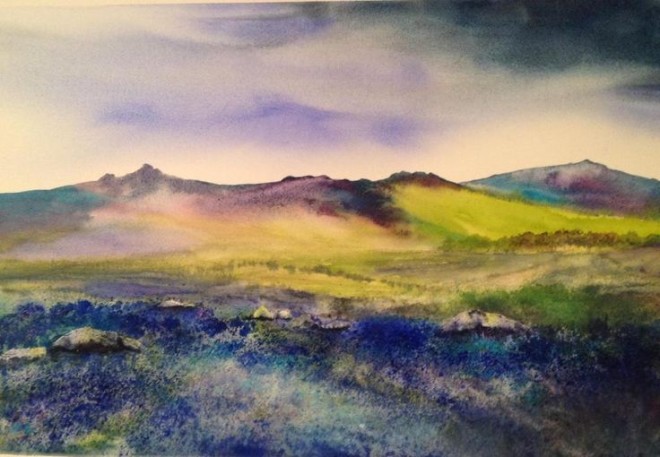
Chris Court’s ‘Bluebells on Dartmoor’ was the winning entry of our #HoradamWatercolour competition back in May. The watercolour made use of luscious colour washes of yellows, greens, violets and blues to evoke the dramatic mountainous setting. In the foreground intensely saturated splatters of paint described the dynamic bluebells, dancing in the wind. We wanted to ask Chris Court more about her highly evocative watercolour landscape paintings.
Lisa: Congratulations for winning the Horadam Watercolour Competition back in May. Have you started to use the Horadam watercolours that you received as a prize and if so, what did you think of them?
Chris: After winning the set of 24 Horadam watercolour tubes I couldn’t wait to start using them. The translucency of the paints lets the white of the paper shine through, the colours are vibrant and the paint stays moist for a long time so there is no danger of over diluting them. I will enjoy the gorgeous colours.
Lisa: When and how did you first start to learn how to paint in watercolour?
Chris: After painting in oils for several years I decided to try watercolours and enrolled on a local course with the talented and enthusiastic watercolour artist Louise Bougourd. Louise taught us all the techniques and was so encouraging that I have continued in watercolours as my first choice of medium.
Lisa: Is there a set process that you follow when painting a watercolour i.e. do you always start using the same brush or colours, and move on to a another set of brushes/colours as the painting develops? Or does the process alter depending on what you are painting?
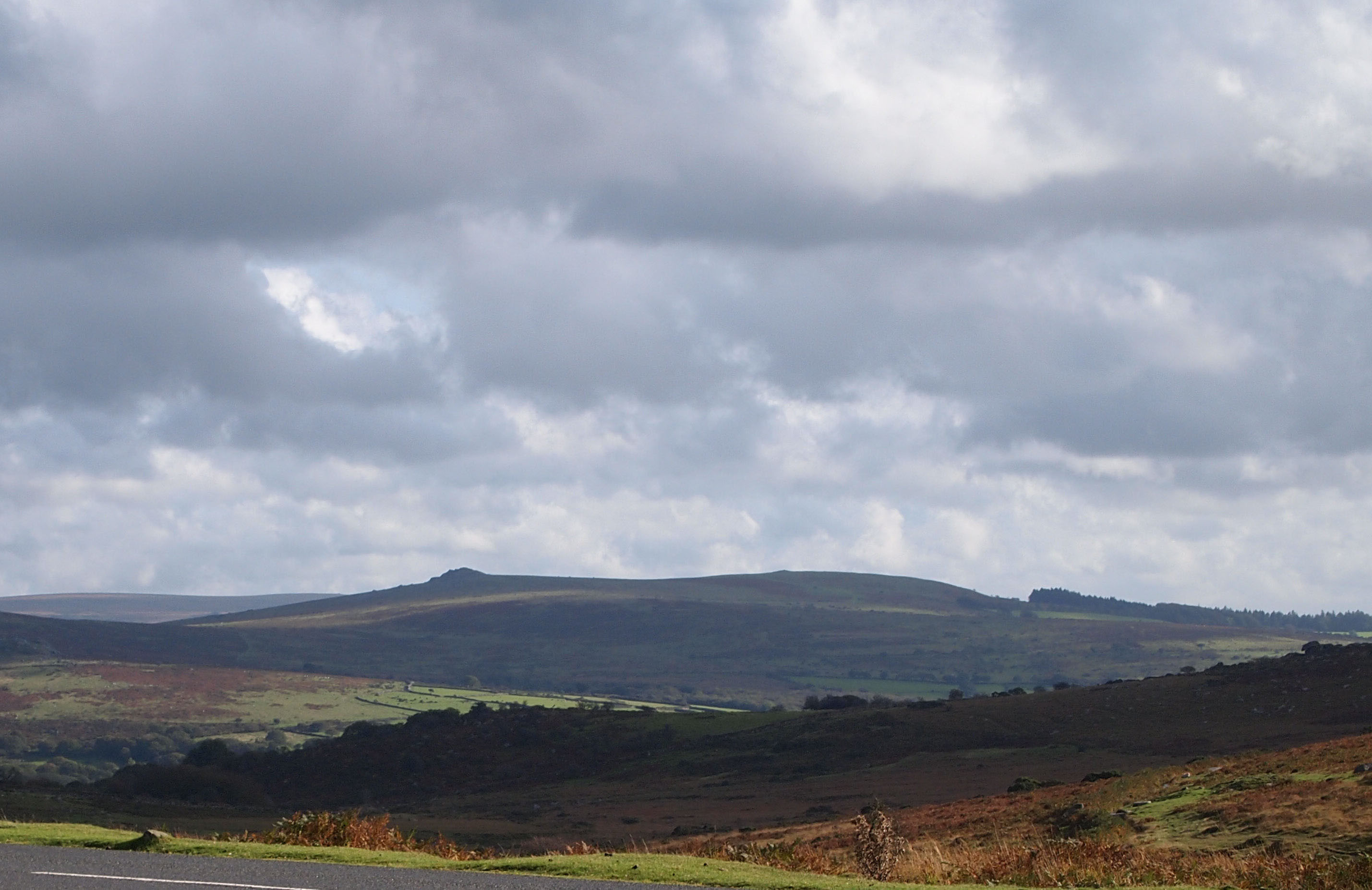
Chris: When inspired by a trip to the moors or coast, making sketches, notes, recording sounds and taking photographs, I come back to my studio to experiment. A lot of time is spent thinking about my approach, and although I may not look busy, my mind is awash with ideas. I like to visualise the image I want to create, how it would look in different colours, temperatures, scale and medium before I start putting paint to paper. When I start my motto is ‘No Fear’ and I just go for it and have fun.
Lisa: What is the one brush you could not live without?
Chris: A good sable brush with a point is ideal, my favourites are sizes 8, 12, 14, I have different makes including Winsor and Newton and Rosemary and Co. I also enjoy using my Escoda size 14 Versatil round pointed brush, very economical and useful when experimenting. Trial and error is the way to find your favourite brushes, but a pointed brush is vital.
Lisa: Do you follow any set principles on how you select the colours that you work with?
Chris: Mixing colours is exciting so I prefer to use a limited palette and learn about how colours react together. Colour theory and the paint properties are interesting to me. Knowledge of each pigment, transparent, opaque, granulated, lightfast, this learning process interests me; there is always something to learn.
Lisa: Which do you prefer, pans or tubes, and why?
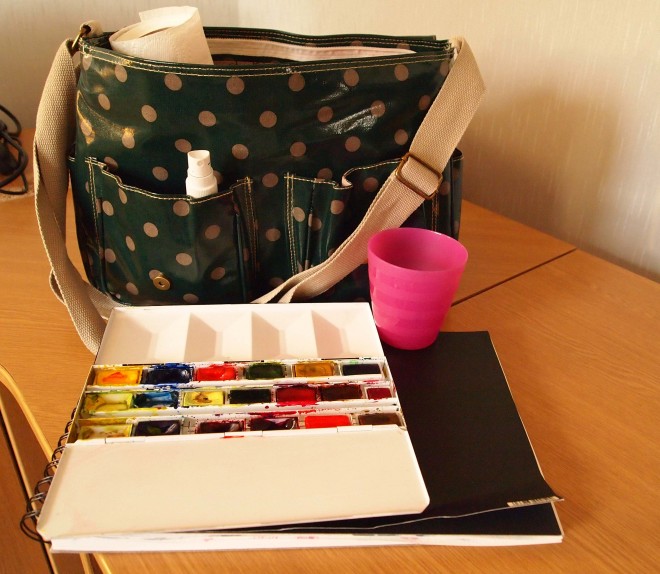
Chris: I use tubes in my studio as I experiment a lot and need the volume of paint in the palette ready to go, I am never mean with paint. On location I use pans in my metal box which sits perfectly in my ready to go painting bag.
Lisa: Do you work with any other media other than watercolour?
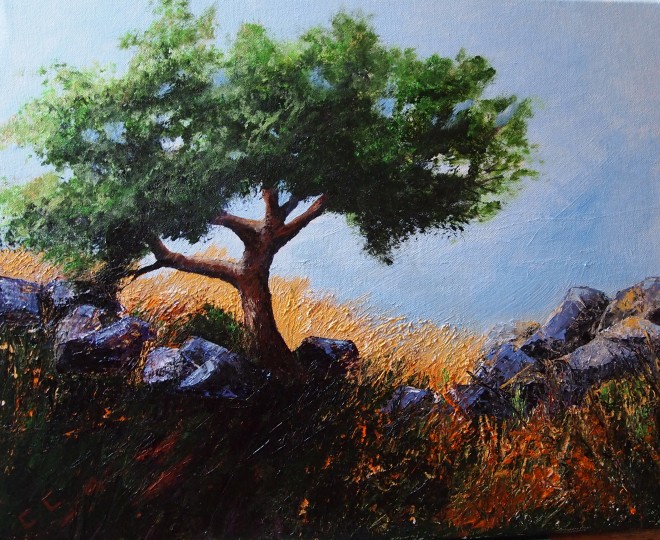
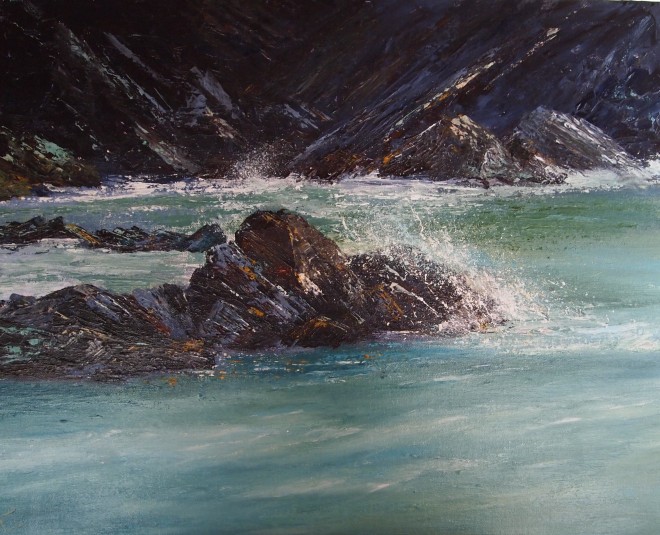
Chris: Acrylics are very versatile and I use Liquitex heavy body tubes. I use acrylics when I want to paint with knives to get extra texture and use canvases and canvas covered boards. It is also a good way of re-using a ruined watercolour, cover it with acrylic! I also enjoy using coloured pencils.
Lisa: Are there any textures you are particularly drawn to painting?
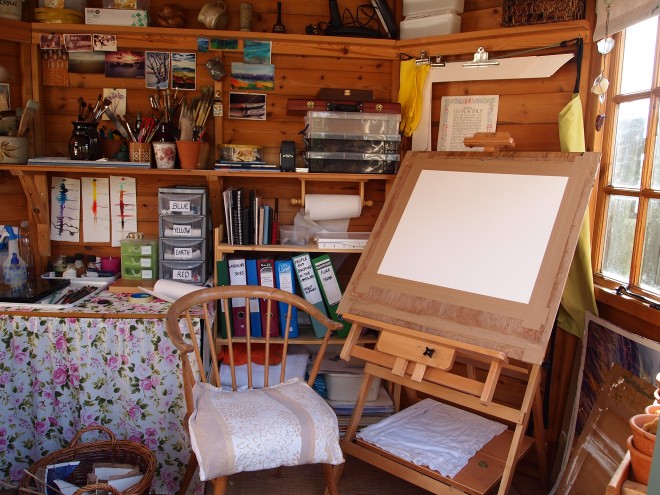
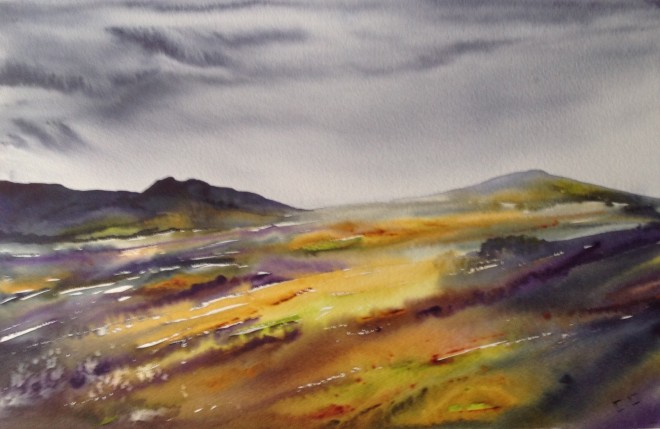
Chris: Textures in the landscape are always good fun, from Tors on the Moors to trees and grasses in the woods, pebbles on the beach and rocks in the cove. This is where learning all the different techniques from splattering to dry brushing, cling film to texture medium all come into play.
Lisa: Do you have a favourite paper for watercolour paper? And do you prepare it in any way prior to painting?
Chris: By experimenting with different quality, size and weight of papers from different manufacturers, you will find a favourite paper. I use either Arches or Saunders Waterford 300gsm weight due to their resilience; I find that both are good value. It’s important to me that I have several different sized boards with paper stretched and ready to go. Preparing to enjoy myself is the best incentive to get organised.
Lisa: Where online or in the flesh can we view more of your work?
Chris: My work is on my website www.chriscourt.co.uk where there is a list of exhibitions where my work will be displayed, and some useful links you may find interesting.