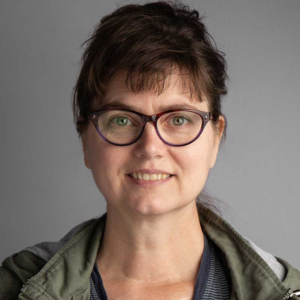
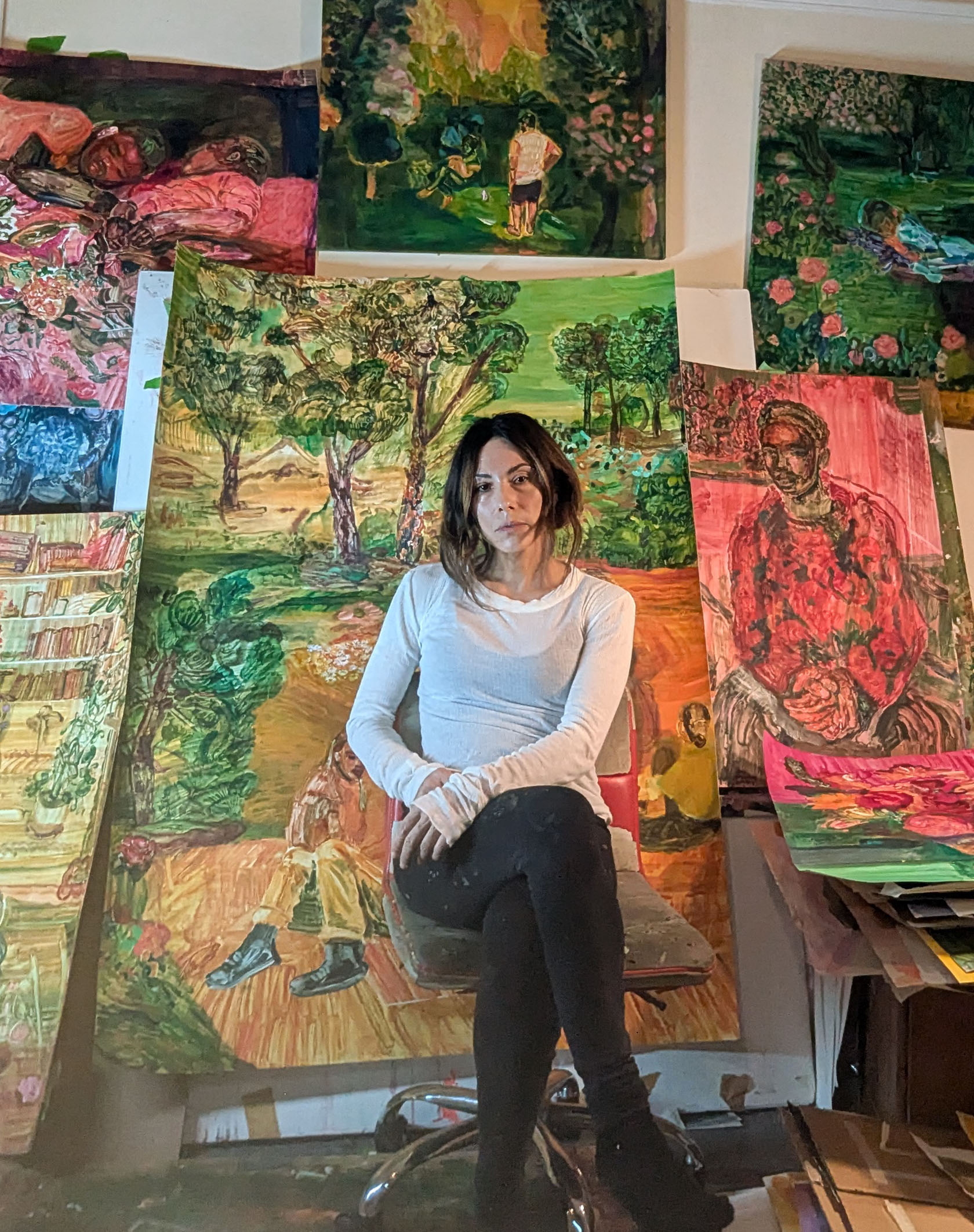
Artist Carol Wyss is fascinated by the ingenious structures of living things. She takes things apart into their components and rebuilds them into something else, building an image, sculpture or installation from smaller pieces. Sue Grayson Ford, Director of the Campaign for Drawing, was one of the judges that selected Carol Wyss for the Ruskin Prize in 2012. She said: “Carol’s work certainly satisfies Ruskin’s entreaty to engage more fully with the world around us through observation and drawing.” I like this description of Carol’s work.
Julie: ‘Into the Wild’ is a series of large etchings of botanical subjects made up of human bones. Why did you use bones to depict flowers?
Carol: I am obsessed with bones, their physicality and ingenious shapes. Mankind’s history can be uncovered through human bones, they are the core of our being. For the last decade I have been working with the human skeleton, taking it apart and putting it back together again differently. These flowers or human bone structures are reminders of the fact that humans are as much part of nature as weeds and in fact a lot more invasive…
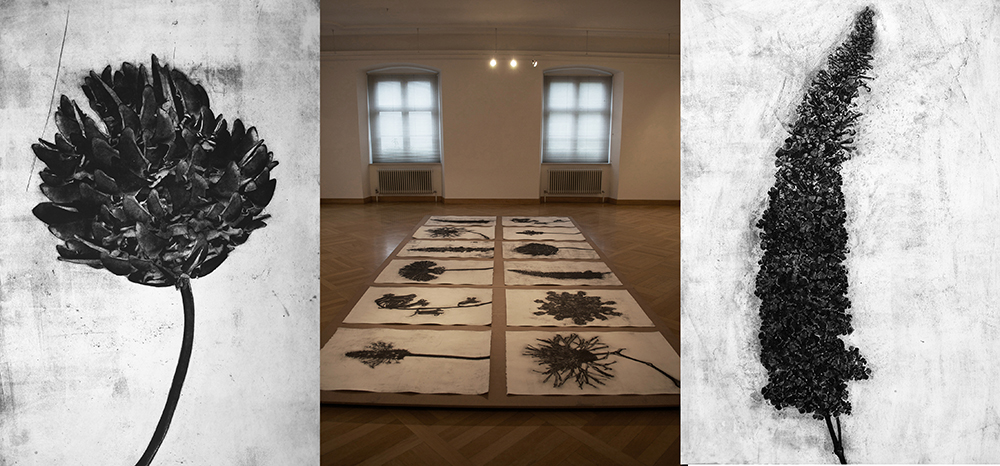
installation with MDF and etchings
Carol Wyss
Julie: The ‘Into the Wild’ project lasted for three to four years. Do you feel you have fully explored the subject?
Carol: Not at all, while doing the series my sketch book filled with notes and sketches about fascinating aspects of plants and structures. For example Arabidopsis thaliana was the first plant to have its genome sequenced, and is a popular tool for biological laboratory experiments… you can also eat it though it is considered a weed.
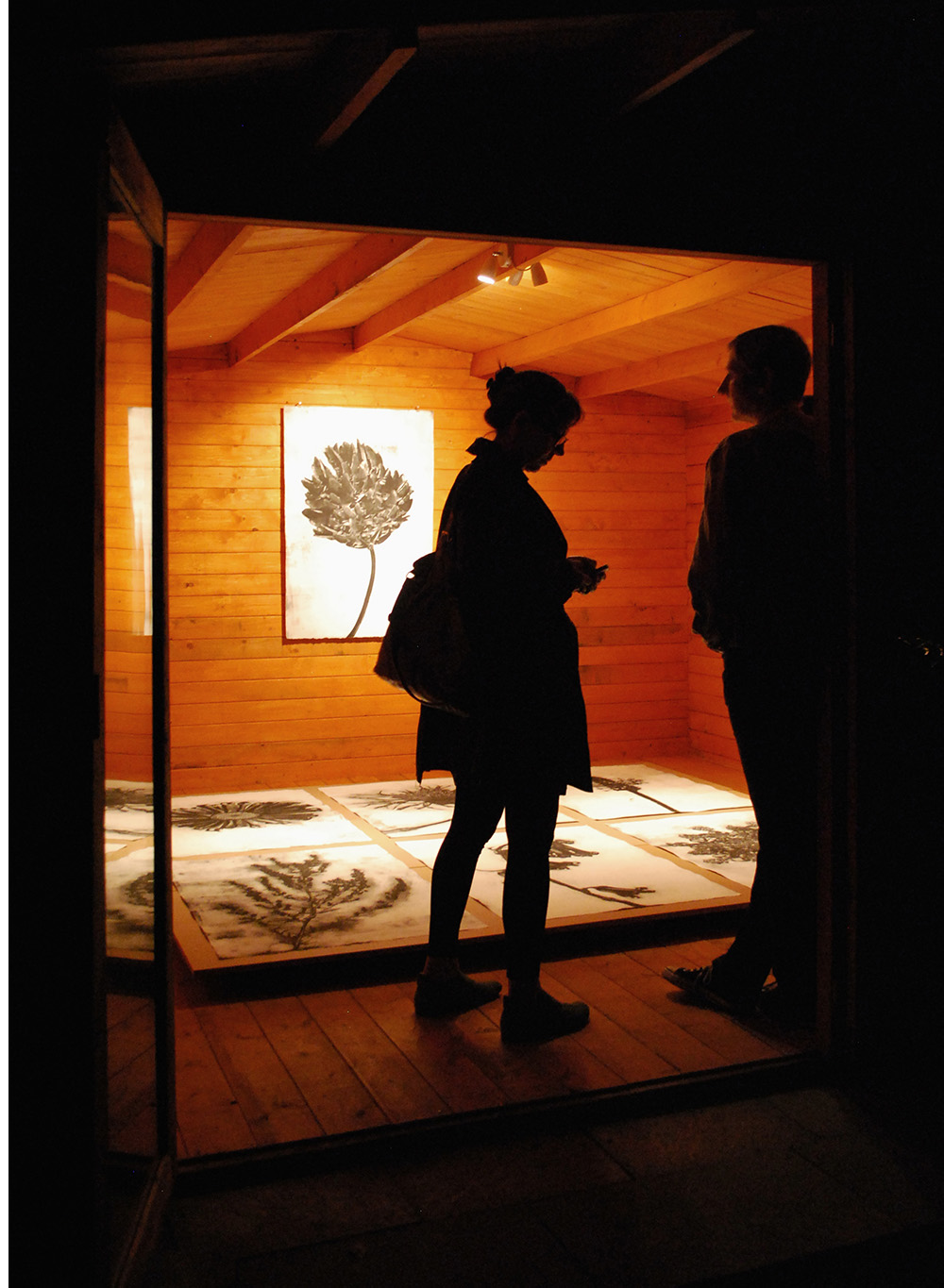
installation with MDF and etchings, Deptford X 2014
Carol Wyss
Julie: One of the works from the ‘Into the Wild’ series won The John Ruskin Prize in 2012. Has that award led to any further opportunities for you?
Carol: Part of the award was to have my work featured in the exhibition THE FORCE OF NATURE, Picturing Ruskin’s Landscape at the Millennium Gallery, Museum Sheffield in 2013. Following on from that I participated in Deptford X in 2014 and got a ‘Special Mention’, and this year have been exhibited in a German museum. Also thanks to winning the prize I have made many new connections with artists, curators and people from the campaign for Drawing and the Guild of St. George, the organisers of the Ruskin Prize.
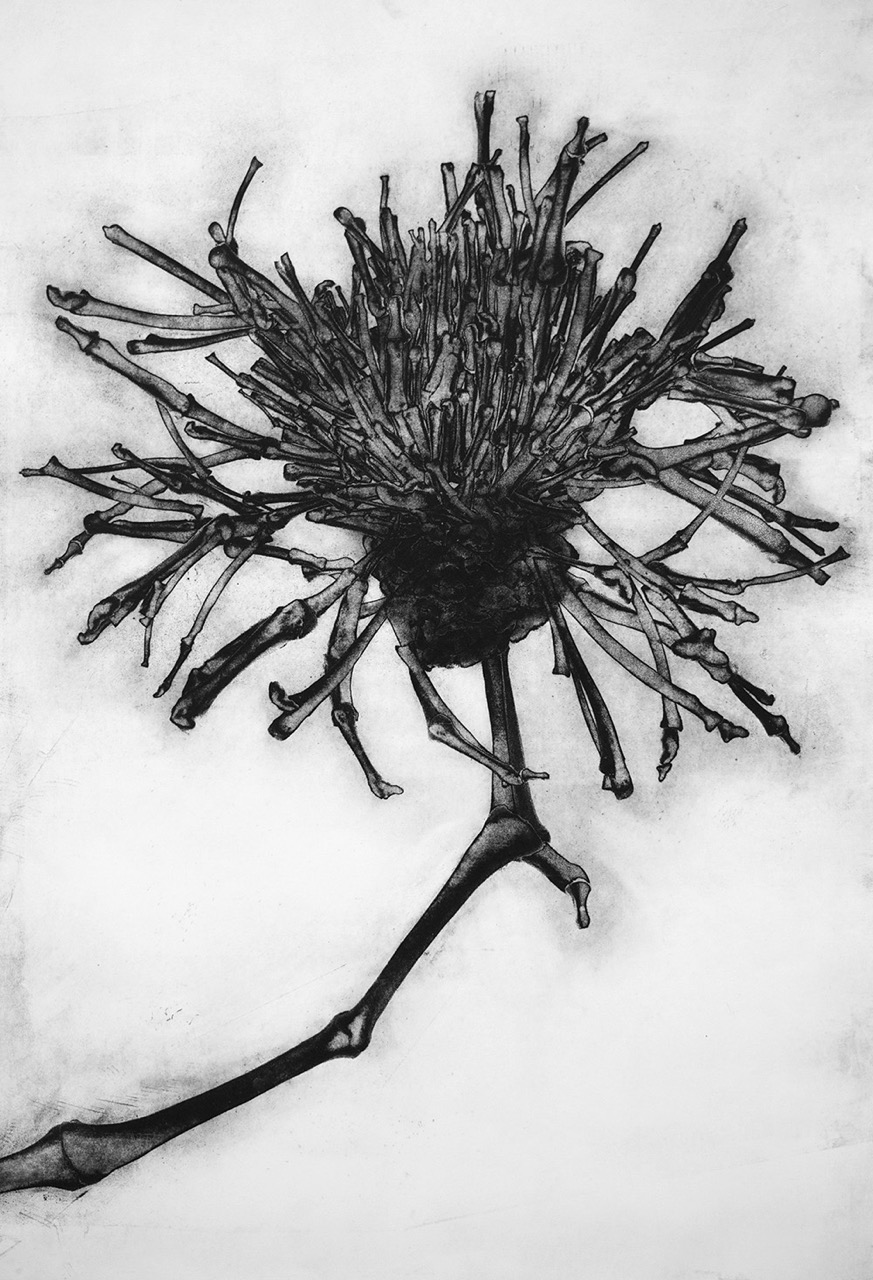
steel etching, winner of the John Ruskin Prize 2012
Carol Wyss
Julie: Printmaking is the primary medium for your work, but you have also made video and sculpture. What do you like about your different media?
Carol: Different ideas will require different media. For example to show the transformations of the sculpture in CHANGE the time element inherent in film is crucial. Or in my collaborative work with Cathy Gale we are currently using casting as the main medium to explore the physicality of the human body. In etching, one of my favourite media, I often play with the relief of a print, am thrilled by the deep black you can achieve and wonder about the mutations an image can go through. The challenge with using several media is creating high quality pieces in all of them and not to be seduced by the superficial attractive ‘effects’ of a particular medium.
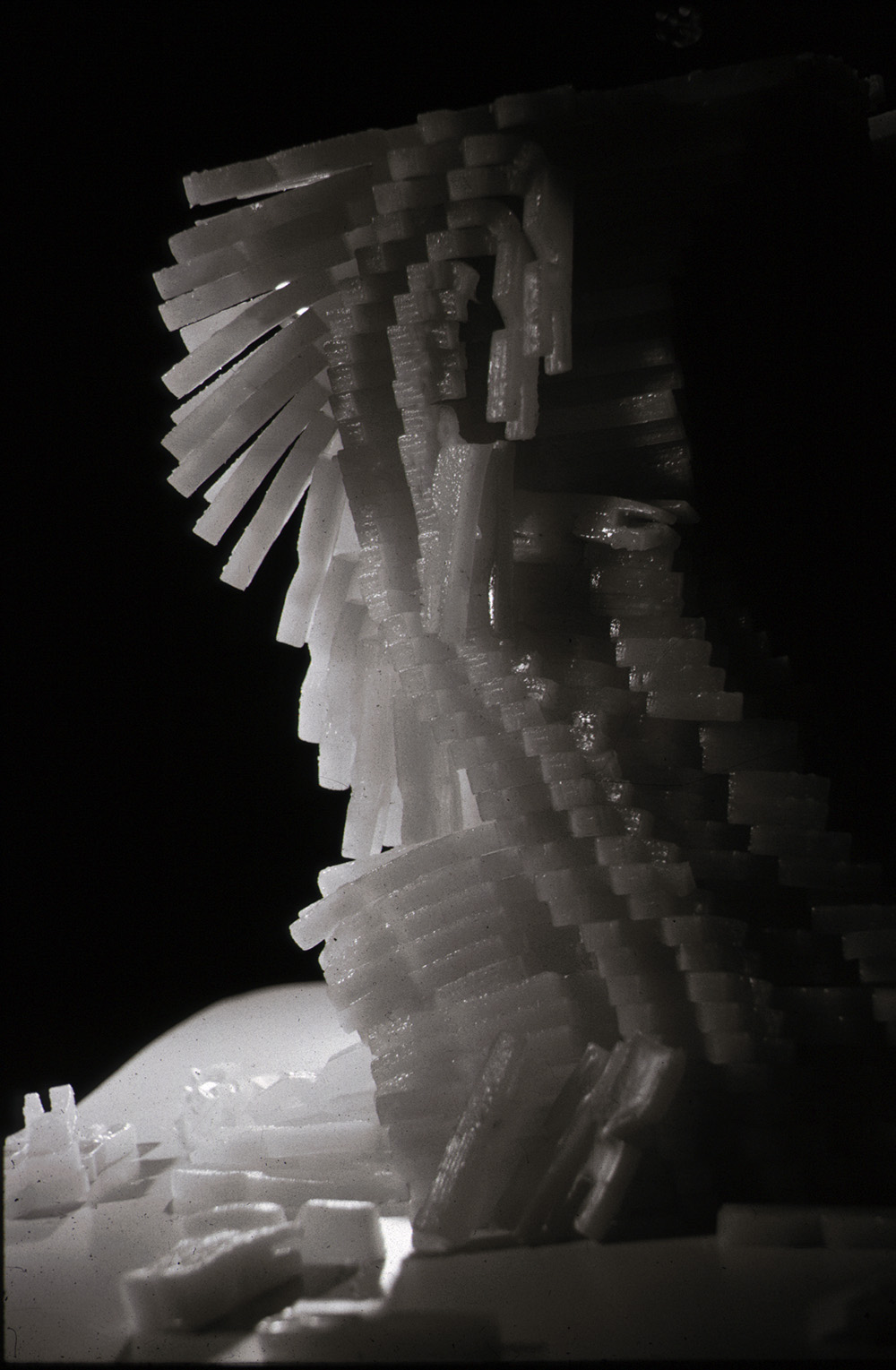
Super8 Film, wax, heat
Carol Wyss
Julie: Is your work usually editioned, in multiples?
Carol: In my printmaking practice about half of my pieces are unique. The other half are in small editions, often of only 3. The only bigger editions I have created were for commissioned pieces. I’m not aiming to create the perfect edition; it is more a renewed interpretation of the plate each time I print it. For INTO THE WILD I inked in the large steel plates and worked on them in almost a reverse painting process. Each print ended up being a bit different. 16M, a 16m long print where all the bones of a male body are laid end to end was a logistic challenge to produce. I kept blocking the fire exit of the print studio and made the manager quite nervous – so far it is still a unique print. Sometimes I use the possibilities of repetition in an installation like MICROCOSMOS where the walls are filled with 5 different motives or in SIGNS where each bone is printed on several strips of paper, which are then folded and installed.
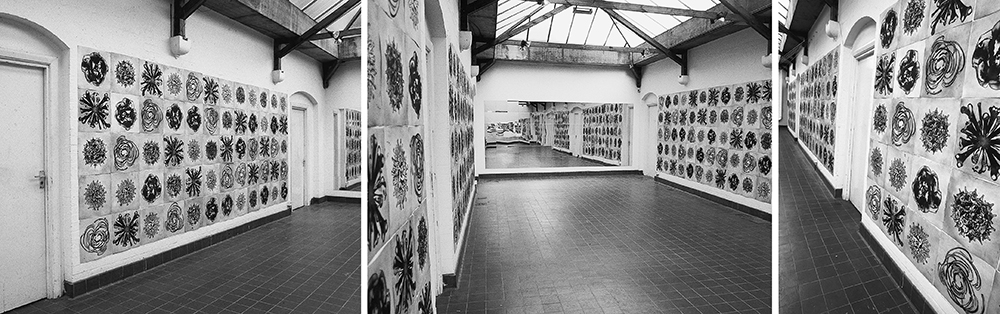
Installation of etchings and mirror tiles
Carol Wyss
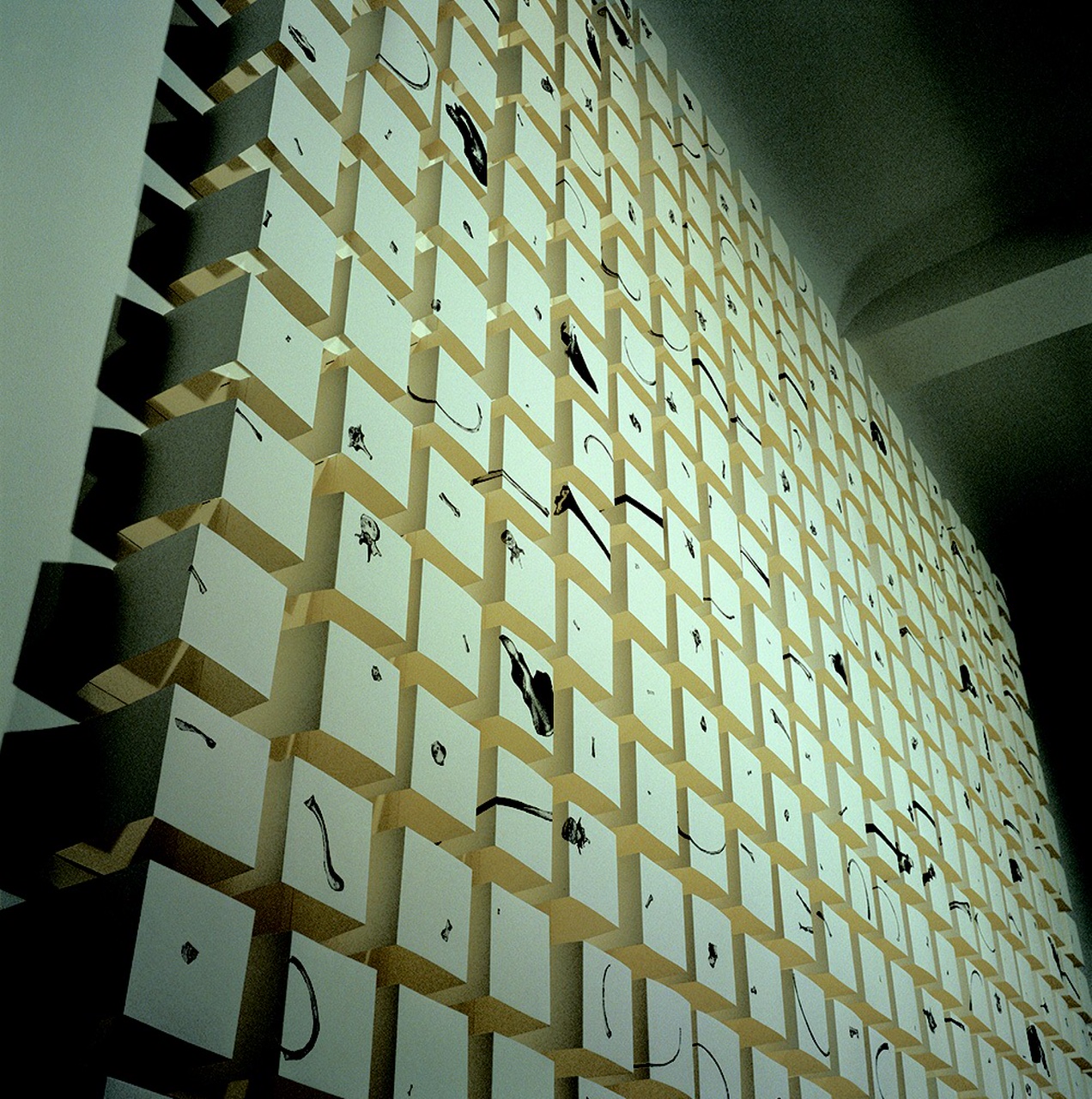
Installation of folded paper units with etching
Carol Wyss
Julie: Can you tell us about your artistic process?
Carol: I am always on a search for the structure of things: dismantling and opposing existing structures like the skeleton through drawing, printmaking and photography I create new formations. I work on these new formations in a range of 2 and 3 dimensional media and present them mostly as installations.
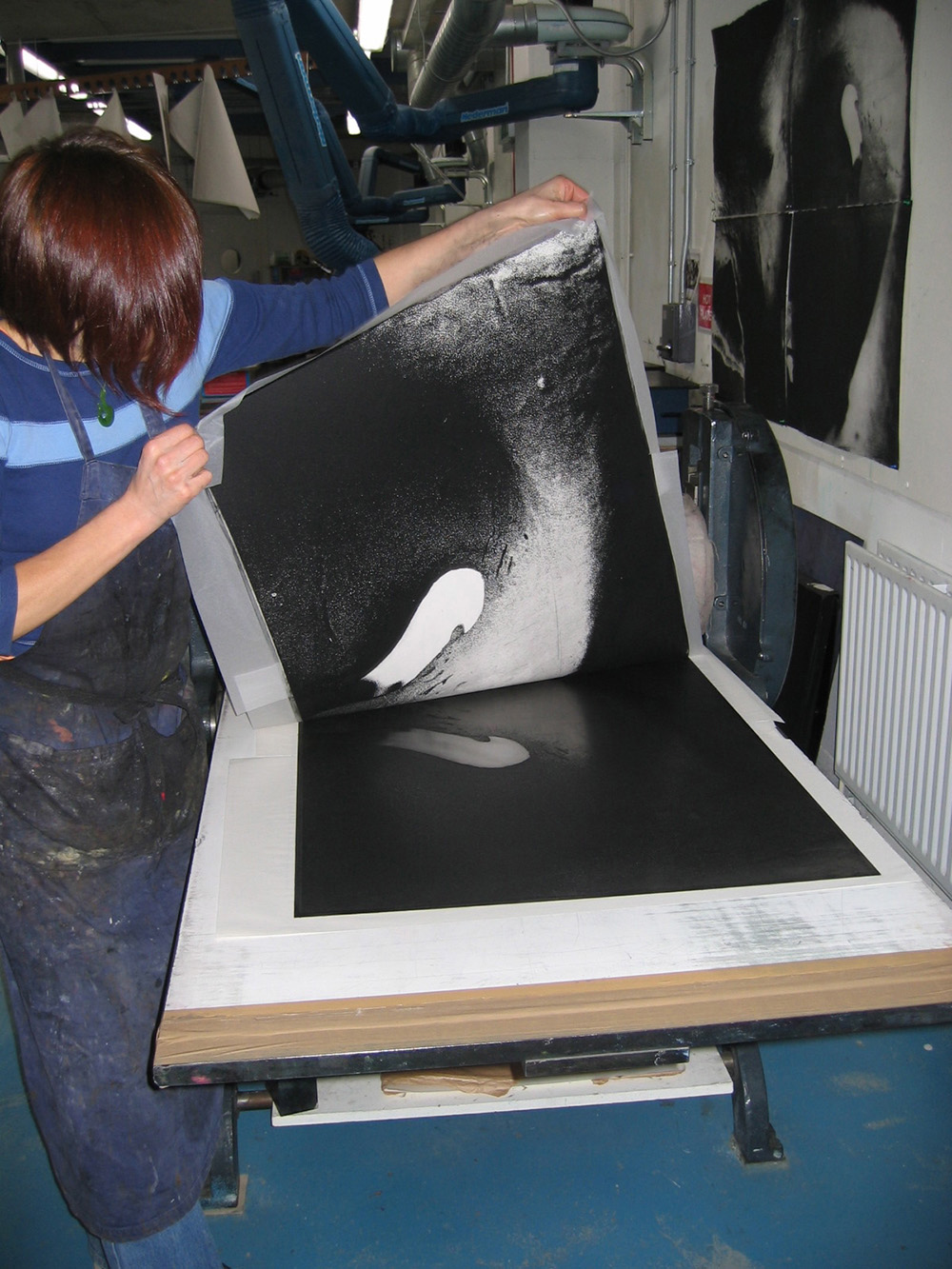
In the case of the series INTO THE WILD it started with the drawing and photographing of wild flowers and weeds which were surviving in most hostile industrial city locations. That led to creating large steel etchings of flowers made of human bones. I wanted the prints to be that size so that the viewers would be able to stand in front of these flowers and relate the bones directly to themselves.
My preferred way of working with steel plates is to scratch, bash and etch into them, to sand them down and to build them up again. I often use a combination of photographic etching and working by hand, into the plate to create the necessary tonal range and 3-dimensionality. Steel etching also enables you to achieve the black, charcoal like depths.
Carol Wyss
Julie: What is your favourite artwork that you have ever done?
Carol: It is ‘Urlandschaft’ which translates into primordial landscape, a twenty-four panel vista, 5.2 by 2.5 meters in size. It features images from the interior space of a human skull and is made of steel plate etchings printed on 350g cotton printing paper, Standing in front of this piece you are looking into the spaces where memory and consciousness reside – at the same time it is reminiscent of the alpine mountainous area I grew up in.
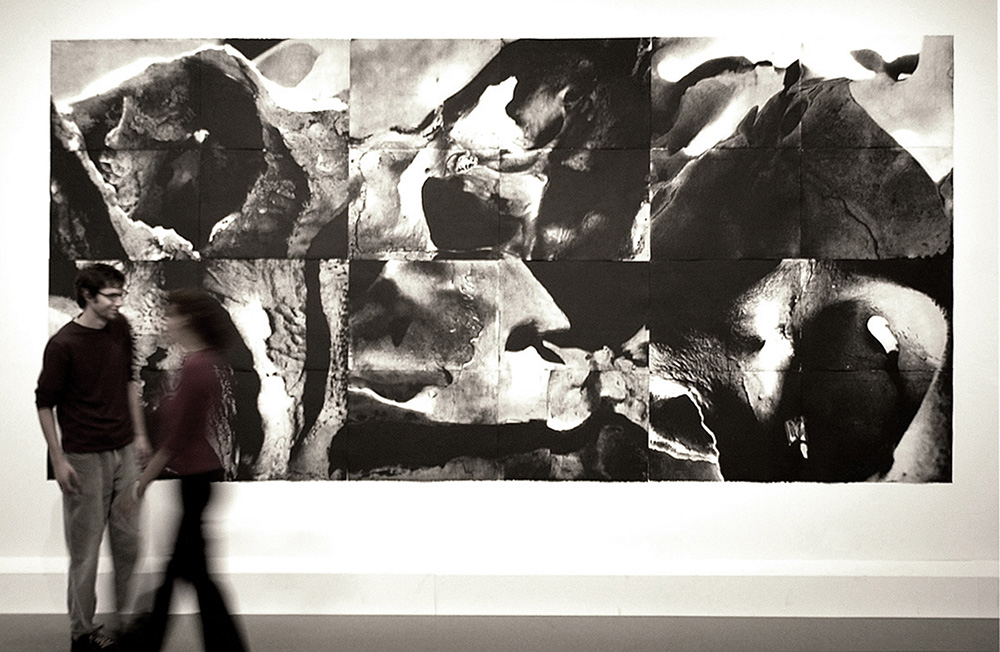
24 panel etching
Carol Wyss
Julie: Who are your artistic influences?
Carol:
Nature
Medical Science
Outsider art
Folk art
Sir John Soane Museum
Writer Robert McFarlane
Arte Povera
… there are so many influences in everyday life, it’s impossible to list them all…
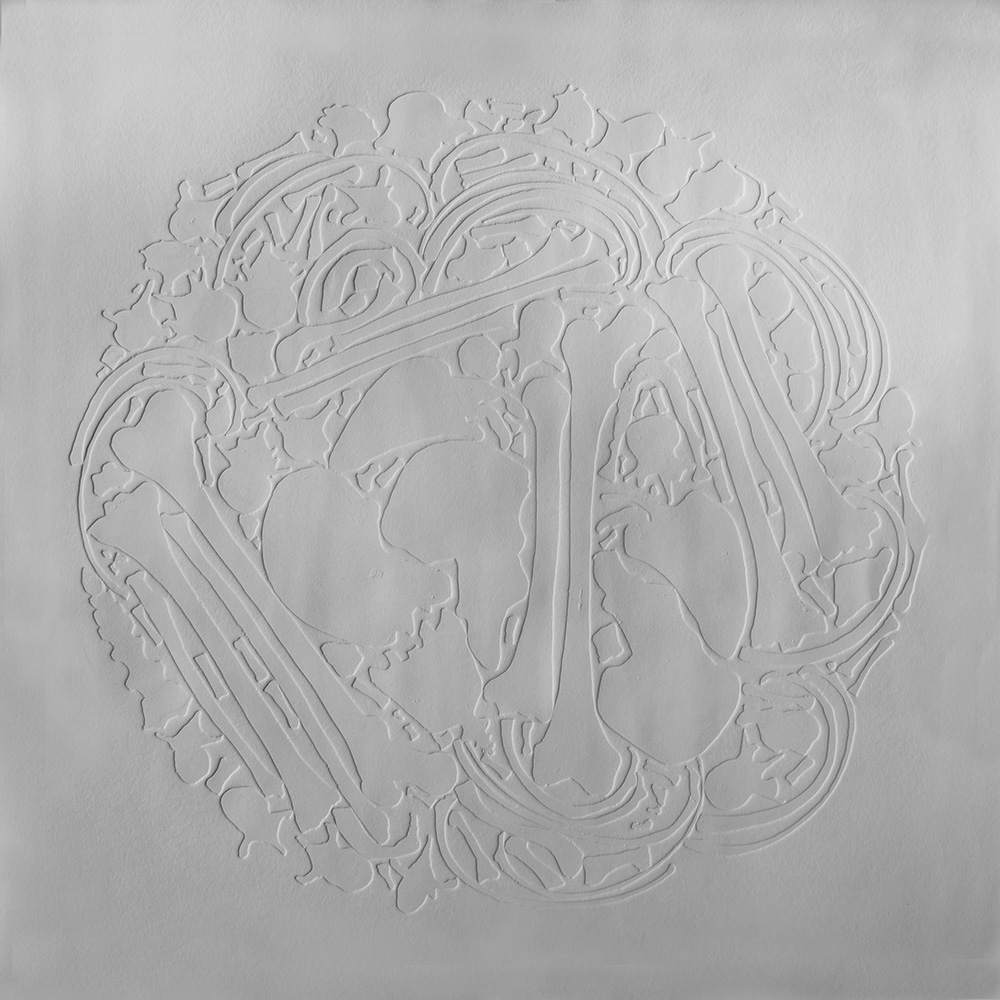
blindembossed etching containing all the bones of a human skeleton
Carol Wyss
Julie: Who are your favourite contemporary artists?
Carol:
Susan Hiller
Fischli and Weiss
Olafur Eliasson
Annette Messager
Christian Boltanski
Helen Chadwick
Jimmie Durham
Eva Hesse
Francesca Woodman
And among many more of course Louise Bourgeois…
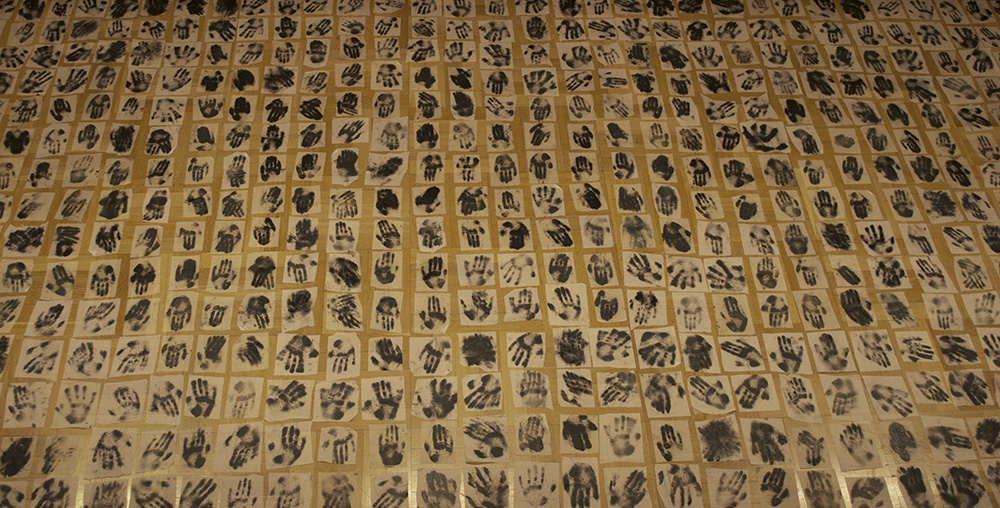
Installation of prints on tissue paper
Carol Wyss
Julie: What is coming up next for you?
Carol: I’ll be taking part in SILENT MOVIES at the Q-Park, Cavendish Square, W1G 0PN in collaboration with Cathy Gale
I am collaborating with sound artist Dominic Murcott on the visual part of his Whitechapel Music for Museums event and I am currently working on 2 new series of prints at the Thames Barrier Print Studio.
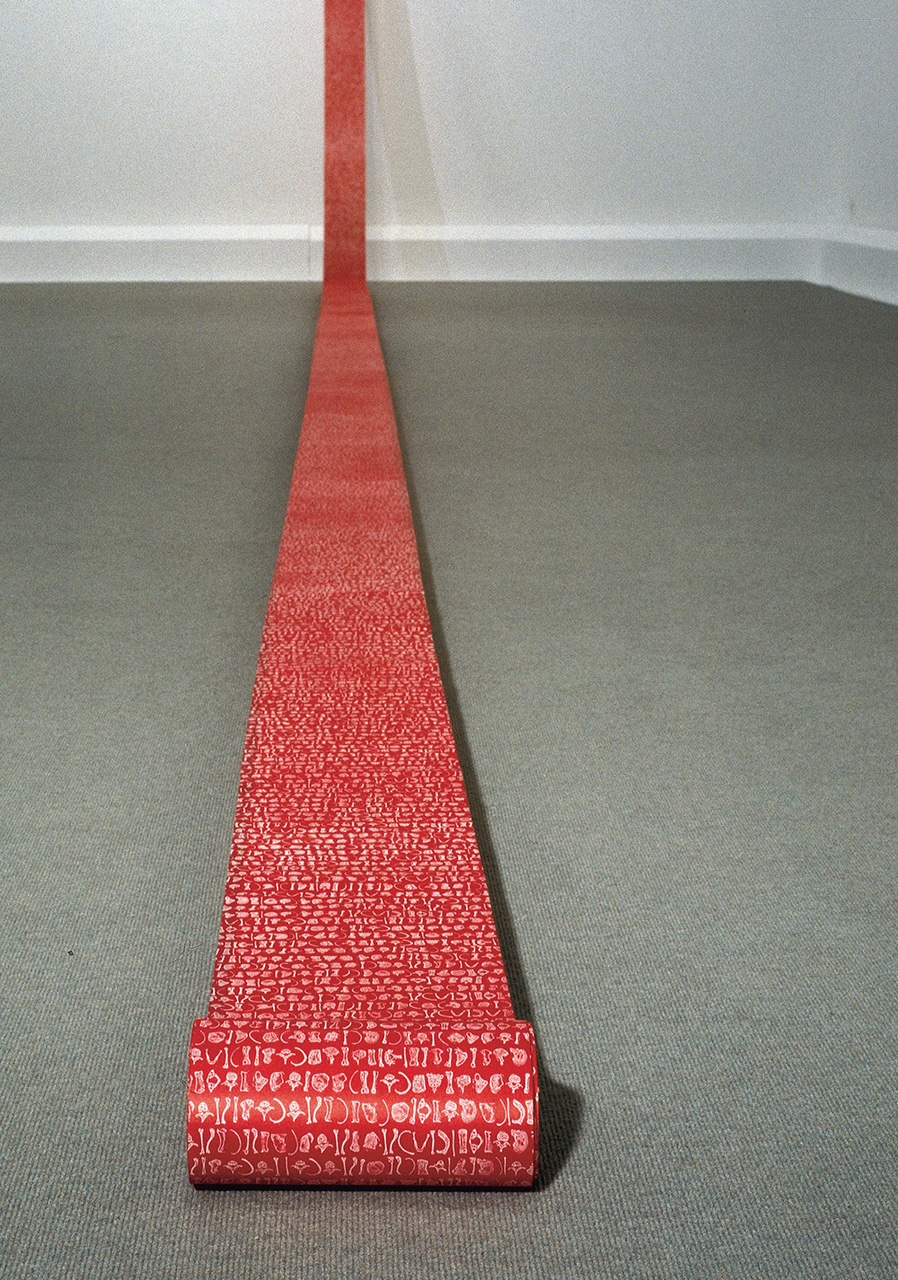
etching on Japanese paper roll, 60meters long and 20cm wide
Carol Wyss
Julie: Where can we see more of your art in the flesh and on-line?
Carol: You can find details of all I am doing at www.carolwyss.net
Or via Twitter @carolwyss
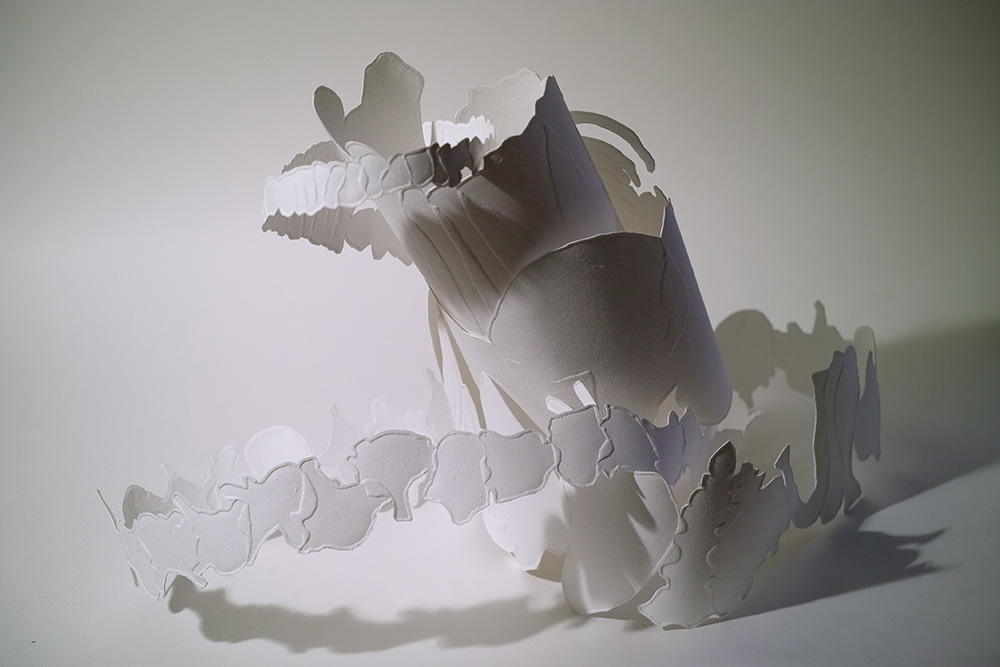
blindembossed etching on paper
Carol Wyss