Last year Simon Parish won our Marker and Pen Competition with this drawing ‘Tojimashita (closed)’. The drawing shows a typical informal flowerpot garden as seen in Tokyo. Simon harnessed the graphic qualities of the Letraset and Sharpie pens he used to make a crisp, vibrant, colour-filled work. Simon Parish’s artwork is driven by his instinctual love of found imagery, which he collects until the time is right to respond to it using paint or drawing media. I wanted to learn more about his approach to making art.
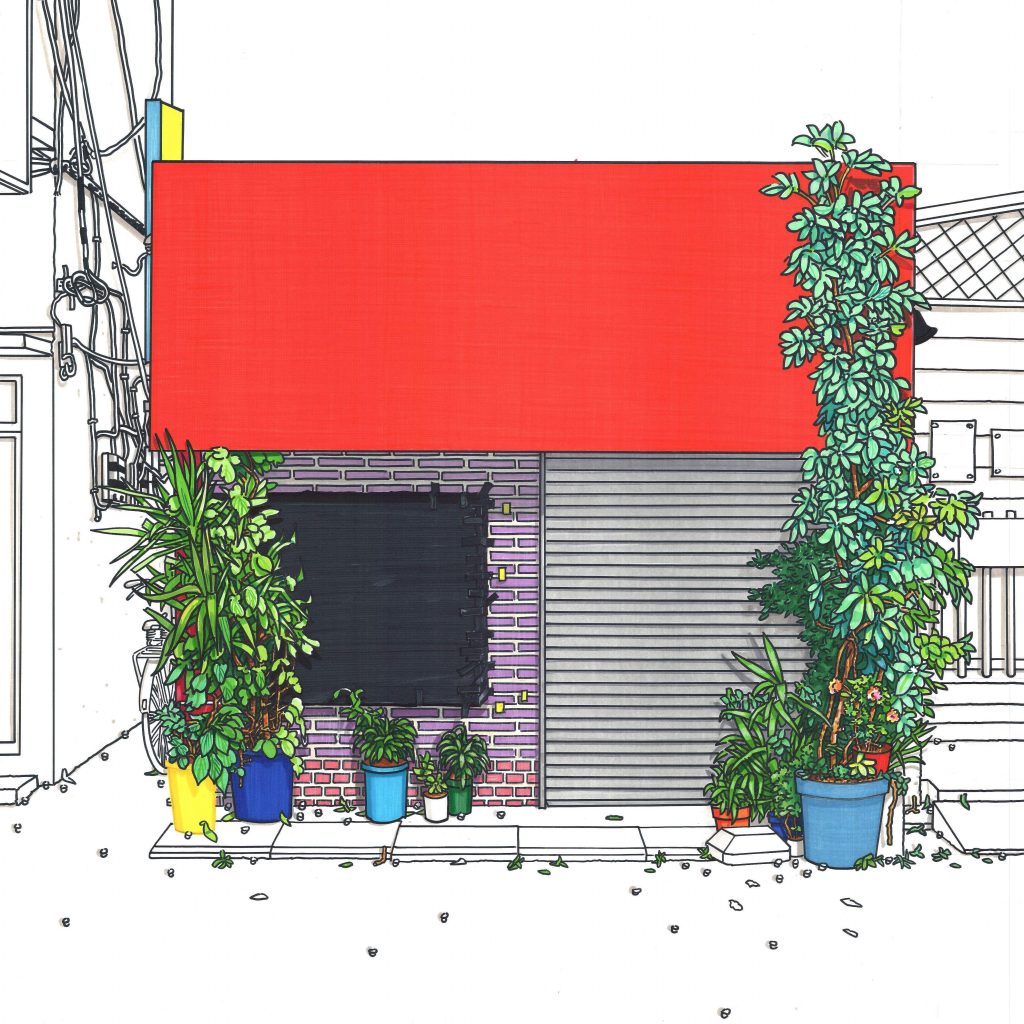
Simon Parish
Letraset Promarkers and Sharpie Permanant Markers, 71x72cm, 2017
Lisa: How did you come to be an artist, and did you go to art school?
Simon: After travelling and working in different parts of the world including, America, Mexico, Belize, India, Nepal, Thailand, Japan and Iceland. I decided I wanted to see if I could explore through photography, drawing and painting some of this experience. I studied fine art at Sunderland University and then post graduate at The Slade School of fine art.
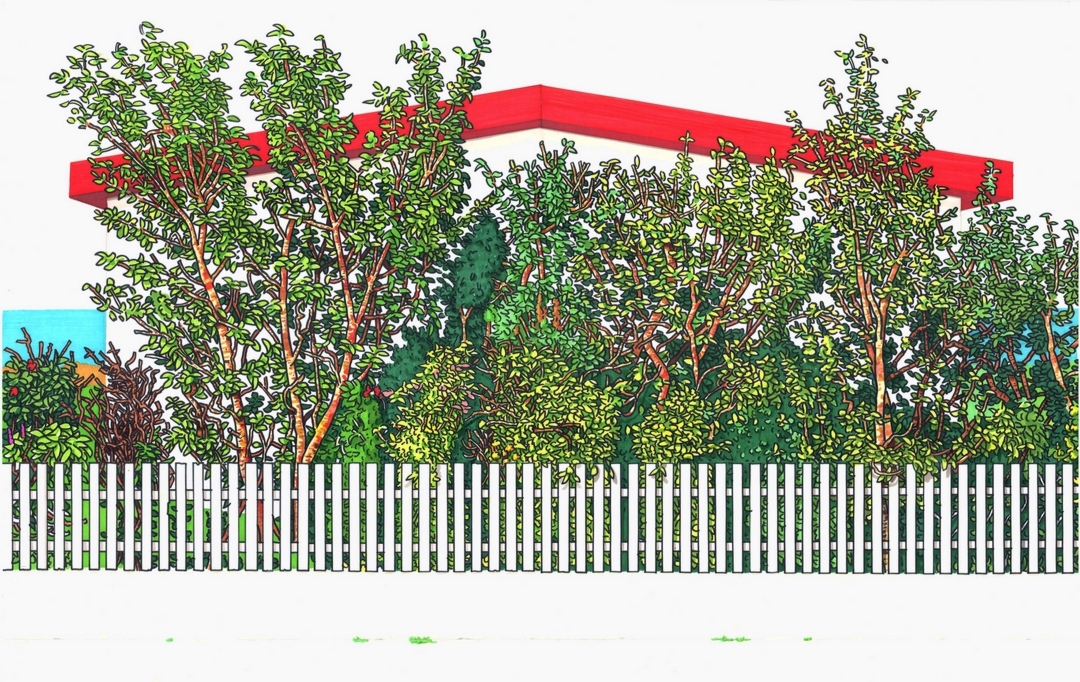
Simon Parish
Marker pen on paper, 57x88cm, 2018
Lisa: ‘Tojimashita’ is one of a series of marker pen drawings of Japanese flower pot gardens on your website. What was it about the medium of marker pen that you felt suited the idea?
Simon: At the time I started this series I was experimenting with new ways of working – away from painting. I was trying to find a new way into looking at and responding to information in images. Drawing started to feel like a way of designing, planning and constructing an image from scratch- this made me think of flat architectural plans. At the same time the potted plants suggested a more organic approach and so I drew them using shadows and highlights to create a sense of an object occupying a space. I liked the contrast between linear flatness and a more three dimensional quality.
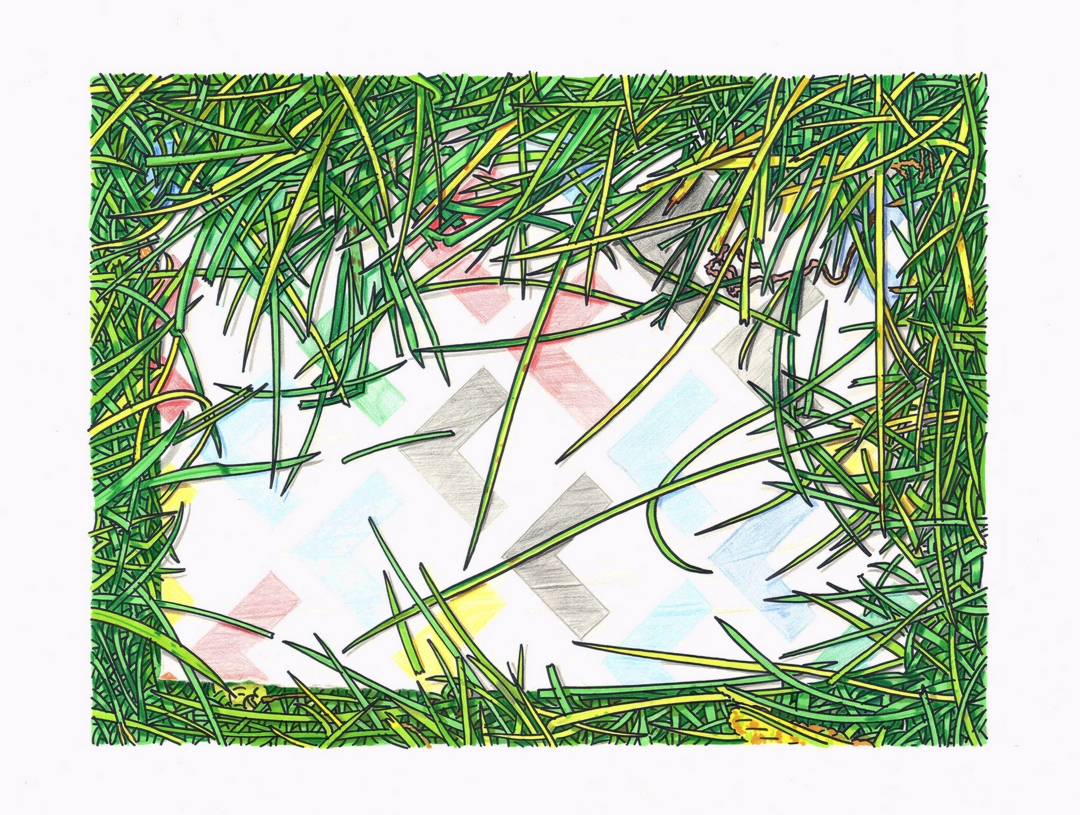
Simon Parish
Marker Pen and Coloured Pencil on Paper, 38x51cm, 2018
Lisa: Why do you particularly enjoy using Letraset Promarkers and Sharpies? and what paper do you like to use when you are drawing with marker pens?
Simon: Letraset promarkers have a very good range of colours-especially the range of greys which I use extensively. Sharpies are just so straightforward and easy to use. Both use inks which seep into the paper well. I use 340gram Accent smooth paper.
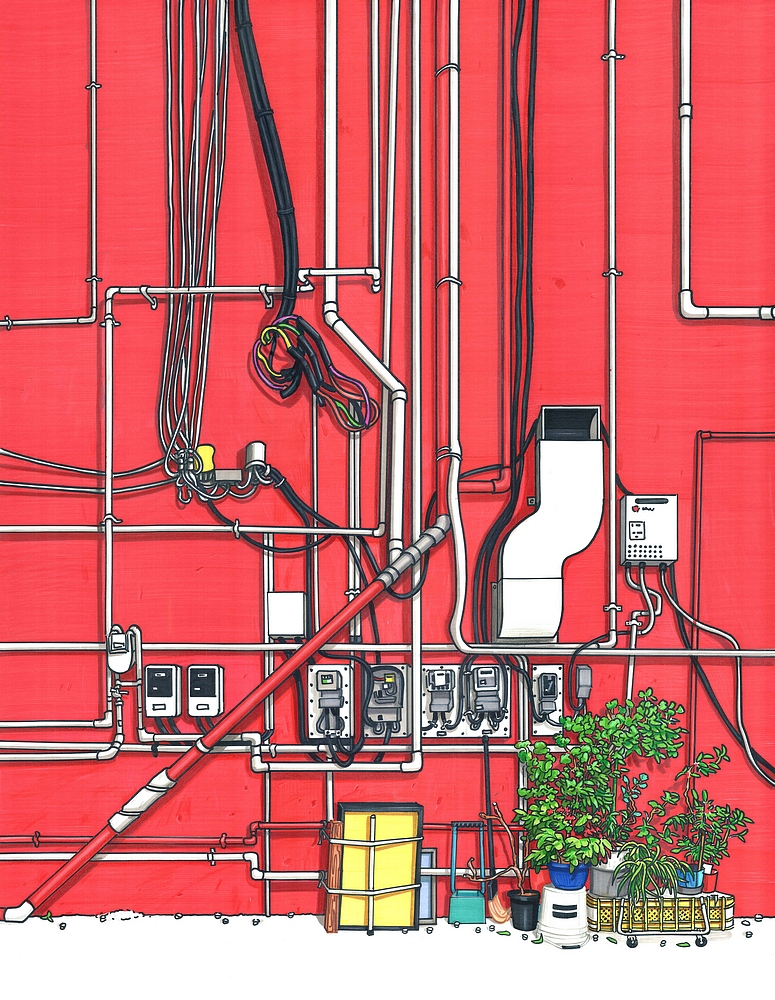
Simon Parish
Marker Pen on Paper, 74x57cm, 2017
Lisa: Have you tried the Posca pens that you received as the prize, and if so what did you think of them?
Simon: I am enjoying the process of finding ways to use them on some new works. They are very different to marker pens in that they put paint onto paper rather than marker pens which seep ink into the paper.
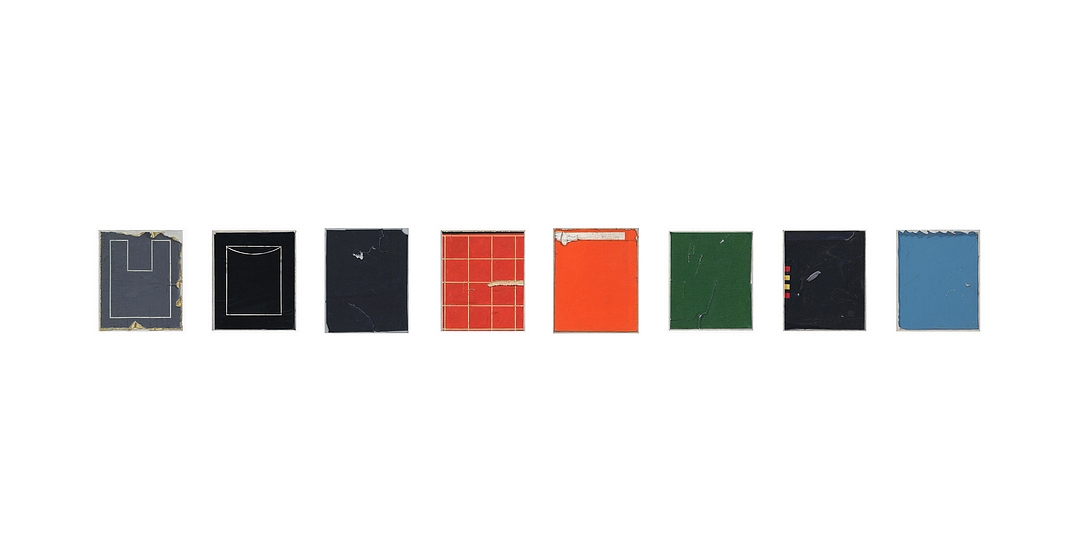
Simon Parish
Acrylic on Board, 8 panels each measuring 24cm x 29cm, 2017 – ongoing
Lisa: Your website indicates that you often work in series, with groups of work being presented that are quite different from one another. But would you say that there is an overriding link between all the art works that you make?
Simon: My work starts from collections of images I collect and archive. These range from my own travel photographs to those found on the internet or newspapers. Looking through images, finding arbitrary connections and making selections of what to draw or paint is a big part of my work. They can be very eclectic at the collection stage but at this point I am only interested in things that interest me on a visual, non- verbal level, whatever that may be – only much later and only with some collections do I choose to use the images. The overriding link is an interest in imagery, urban design, architectural structures, contemporary design and how abstraction can act as a palimpsest behind readable forms.
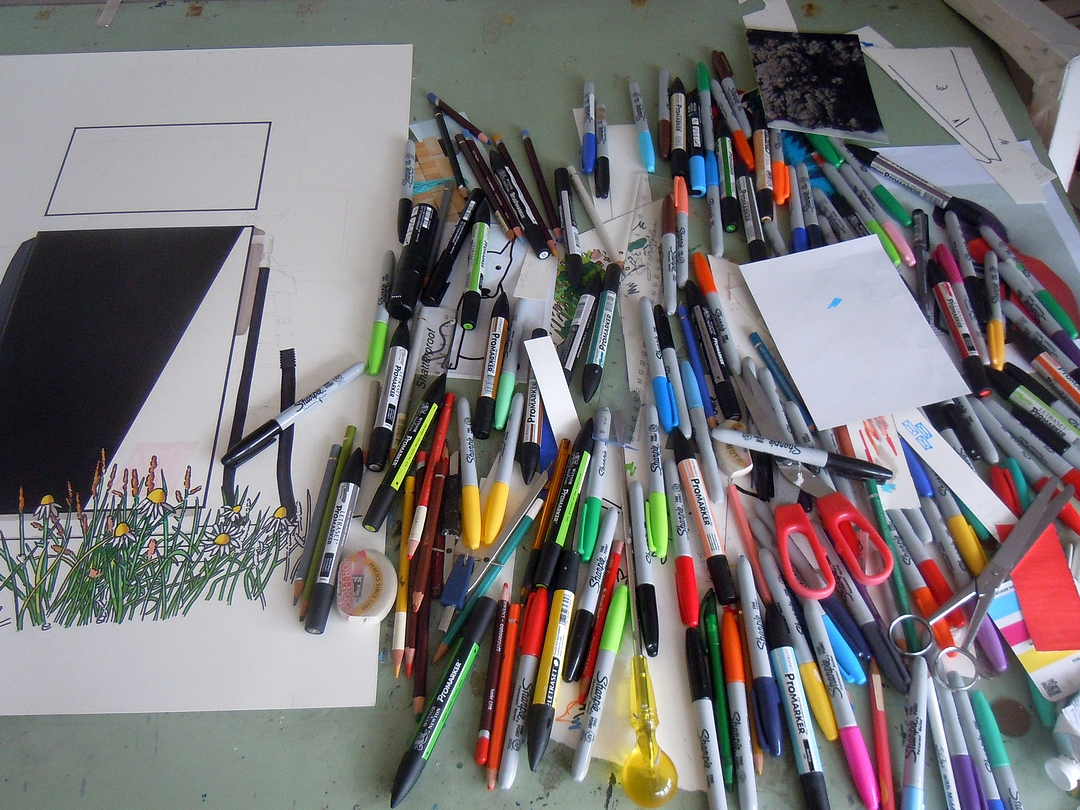
Lisa: How do you see the difference between drawing a picture, and painting one?
Simon: I used to do a lot of drawing to make a painting; this drawing was made only to aid the painting. To make a drawing that’s a finished artwork – required me to really think about qualities of line, the spaces between them, their thickness and the whiteness of the paper itself. Also drawing feels much more like construction; it requires an attention to essentials and the possibility of ideas at the moment of making. Painting requires attention to different things such as colour, the transition of edges, the subtleties of tone.
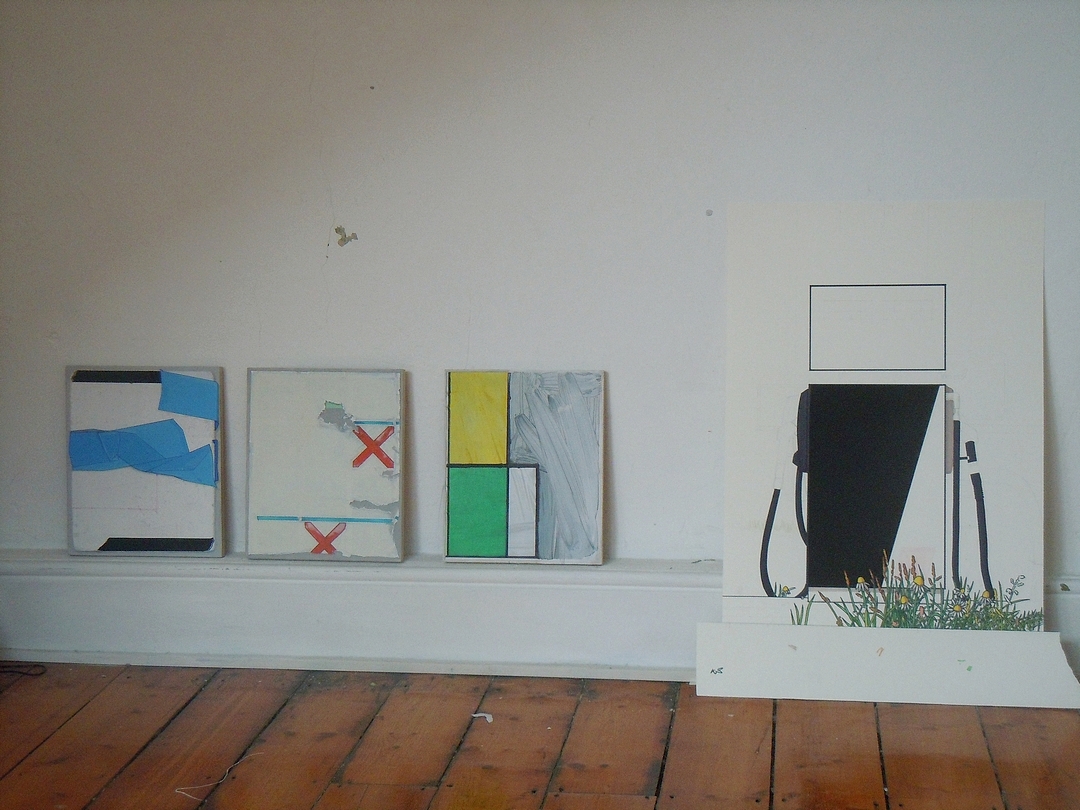
Lisa: What was your cultural highlight of 2017?
Simon:
Wolfgang Tillmans – Tate Modern
Rose Wylie – The Serpentine Gallery
Rachel Whiteread – Tate Britain
Alex Katz – Timothy Taylor Gallery
Claire Kerr – Purdy Hicks Gallery
Lisa: If you had to have a (belated!) creative new year’s resolution, what would it be?
Simon: To see, think and wonder
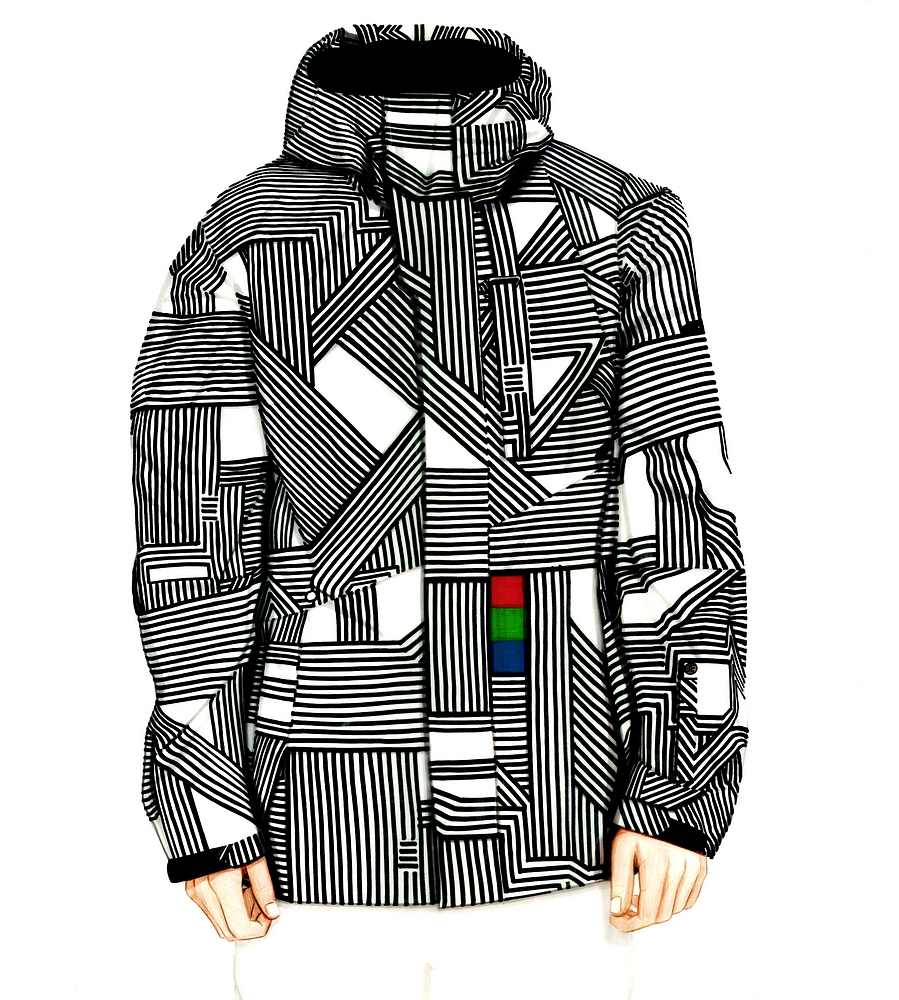
Simon Parish
Marker Pen on Paper, 85cm x 72cm, 2017
Lisa: What are you working on at the moment?
Simon: Some new works based on journeys to Iceland. Just finished a new piece titled ‘Life supports’ for the ‘Hybrid gardens’ (Japan) series. A group of sport shoe paintings titled 3×3 (display) and continue to work on some small paintings based on found scraps of paper I collect on local walks – collectively titled ‘Abjects’ (one of these was recently selected for the Contemporary British painting prize 2017).

Simon Parish
Acrylic on Board, 24cm x 29cm, 2017 – ongoing (From the series ‘Abjects’)
Lisa: Where online or in the flesh can we view more of your work?
Simon: I recently showed work in ‘Contemporary drawings from Britain’ in Xi’an in China which included Rose Wylie, David Hockney and Lucian Freud. A link to this show can be found here:
http://www.contemporarybritishdrawing.com/simon-parish.html
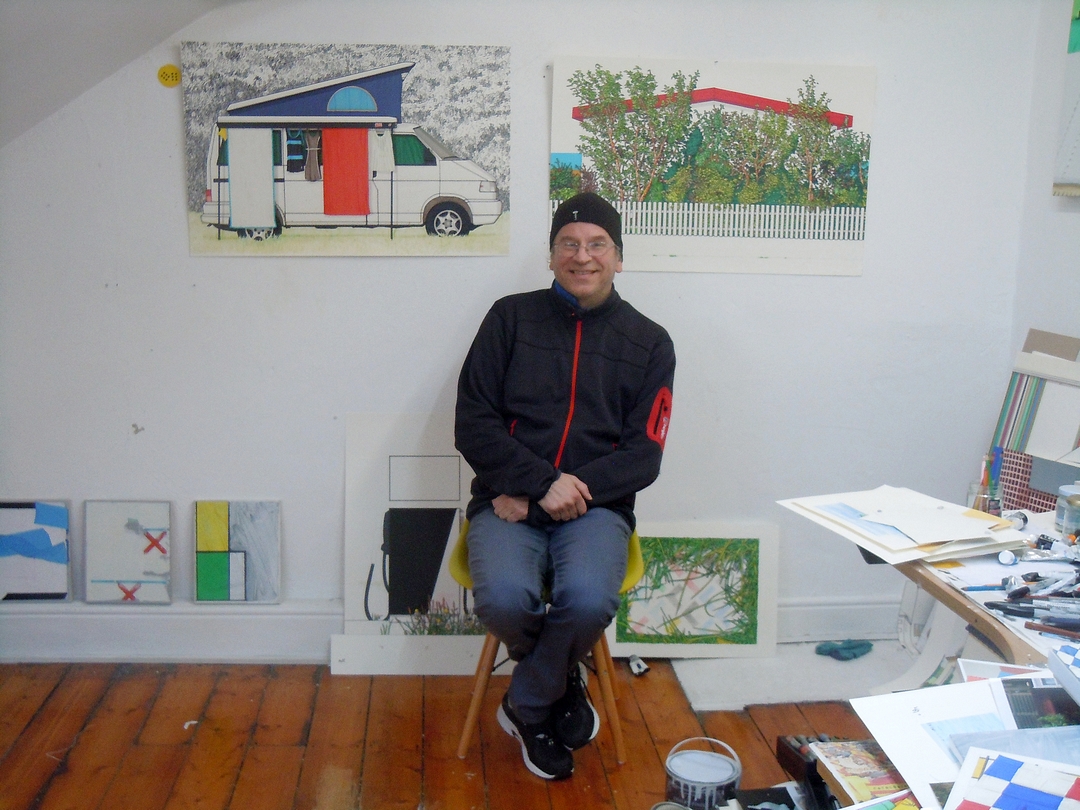
Header Image: ‘3×3’ (display) by Simon Parish, Oil on canvas, 36x53cms x 9, 2017