We were interested in Danielle Pickett’s comment in her product review, that Global Fluid 100 Easy Block was ‘heavy enough to accept plenty of layers for those that enjoy glazing, and it’s durable enough that you can apply pressure with your brush the scrub colour off if need be without ruining the surface’ and her comment about Mijello watercolours: ‘I’m really enjoying these paints. The colours are so rich and translucent, it makes the paint look like stained glass rather than paint on paper. I’ve not found a use for the Opera Pink but the Browns are to die for! I really recommend these paints. I got them after I watched a review video on YouTube.’ We asked her to extend the customer review she left on jacksonsart.com and explain about the quality she looks for in materials.
Choosing a Watercolour Set
After doing some research, I had settled on a set of the Mijello Mission Gold Class paints. It’s a South Korean brand that is probably better known for its Mijello Fusion palettes but offer artist-grade watercolours that boast natural cadmium-free pigments, excellent lightfastness, competitive prices for its 15 ml single tubes compared to other professional brands in UK art retailers, and attractive bundle sets with a palette included and mixing guidelines for those that wish to mix the convenience colours that Mijello offer within their 105 strong colour range themselves rather than buy extra tubes.
I started with the 24 7ml set. Unlike some of the other sets that Mijello have to offer, this set came without a palette included, but was purchased at the time for just under £43, which was roughly £1.80 per 7ml tube and cheaper than the retail price of a Winsor and Newton student grade Cotman 8ml tube at £2.30 currently advertised on the Jacksons Art website. At the time of writing this review, it is priced at £52 on Jackson’s which is £2.16 per 7ml tube, so on price alone, this brand could well appeal to any artist looking to try cheaper alternatives for their most-used colours, or those looking to make the upgrade from student to artist-grade watercolours in the near future. For those on a tight budget, artists and hobbyists might well look forward to upgrading the quality of their materials without necessarily investing much more than the cost of materials they started off with.
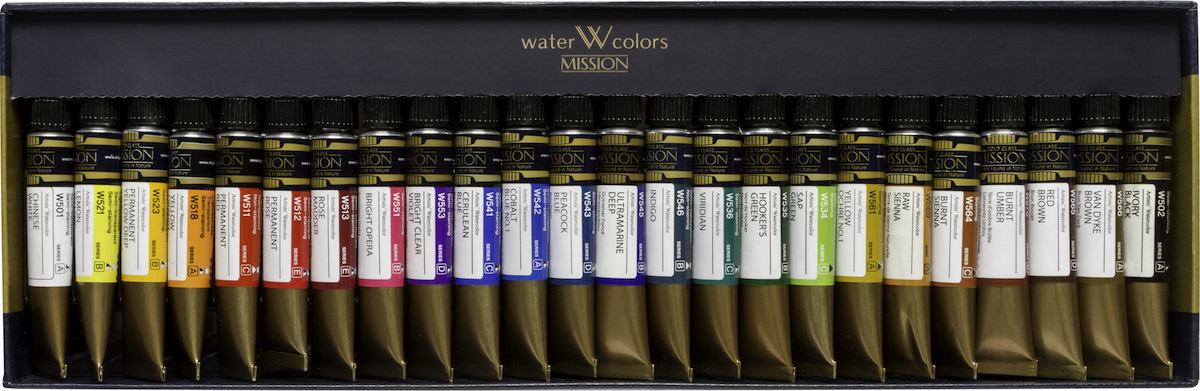
The swatch sheet below shows the colours in the set plus a few extra tubes bought to supplement my collection.

The colours included in the 24 tube set are as follows:
Chinese White, Lemon Yellow, Permanent Yellow Deep, Yellow Orange, Permanent Red, Permanent Red, Permanent Rose, Rose Madder, Bright Opera, Bright Clear Violet, Cerulean Blue, Cobalt Blue No. 1, Peacock Blue, Ultramarine Deep, Indigo, Viridian, Hooker’s Green, Sap Green, Yellow Ochre No. 1, Raw Sienna, Burnt Umber, Red Brown, Van Dyke Brown and Ivory Black.
Consider the Influences on a Watercolour Set’s Colour Palette
For those used to a western palette, you may find some surprises. Namely, the presence of an almost neon pink, and a very brilliant violet, which other artists and illustrators may appreciate but which I haven’t found a use for; and mixes of Yellow Ochre, Burnt Sienna, Raw Sienna and Burnt Umber which are typically derived from a single natural pigment, the latter three from PBr7 but in this set are made from a mixture of including PY150 and at least one other pigment. As for the only two pigments in the set with limited lightfastness, Bright Clear Violet and Bright Opera aren’t exclusive to Eastern hemisphere brands such as Holbein, ShinHan and Mijello—Schmincke, Daniel Smith and Winsor and Newton all offer similar colours as individual tubes–but they only seem to appear as a staple in Eastern watercolour sets, and this is probably due to the influence of acclaimed Studio Ghibli’s director Hayao Miyazaki’s inclusion of these colours as staples in his own recommended watercolour palette. So for those who are struggling to decide if it’s worth buying a set that includes colours you’re not likely to use yourself, it may be worth checking out Miyazaki’s work first and seeing just what you can achieve with an Eastern colour palette.

Mixed Pigment Colours and their Effects
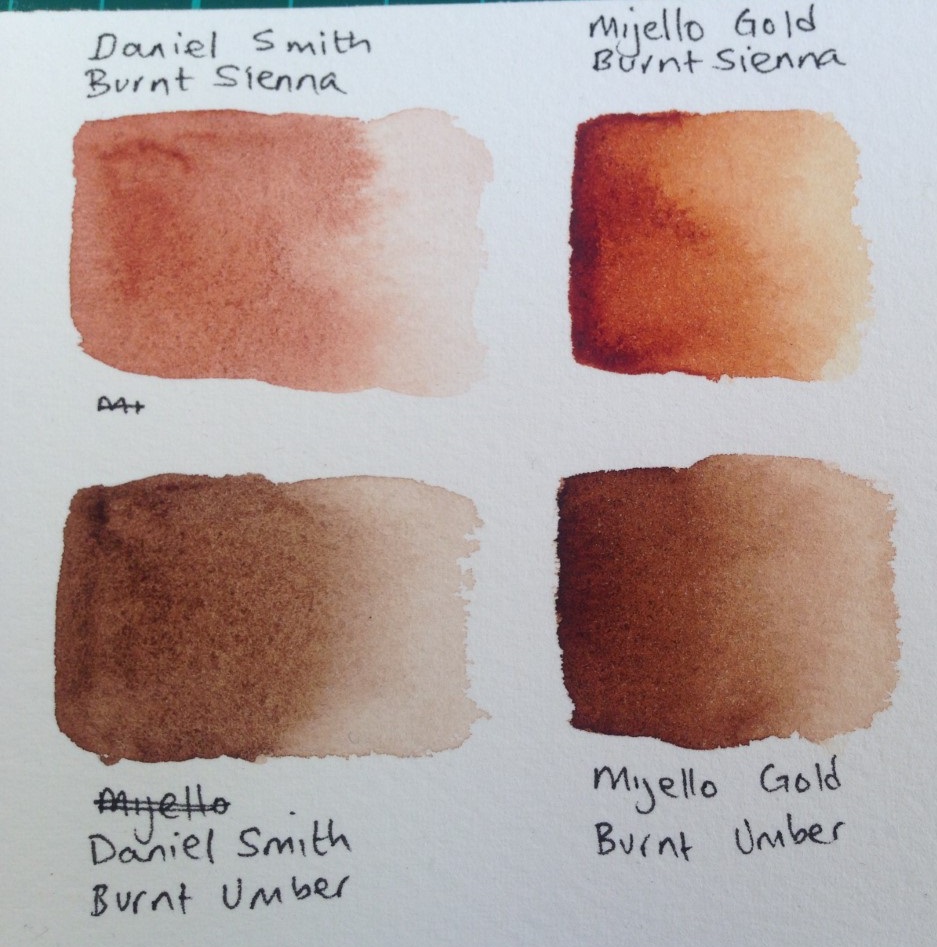
As for the effect of the mixed pigment earth colours stated above, you can see the difference in colour these mixes produce when compared to their single pigmented counterparts from Western brands such as Daniel Smith (left) and Schmincke Horadam (above). You can see that they’re beautiful colours in their own right, but watercolour purists may prefer to either buy the separate single pigment 15ml tubes on Jackson’s or purchase instead the 24 15ml single pigment set that Mijello offer, which has single pigment alternatives of the yellow ochre and burnt sienna. If you’re a fan of using Burnt Umber and Raw Sienna for your mixes, you may have to either find alternative mixing colours within the set or supplement these colours with one from a different brand. With PY150 being used as the base for the mixes of these staple browns for example, you’ll be getting olive and perylene greens rather that greys when you try to neutralise them with blues.
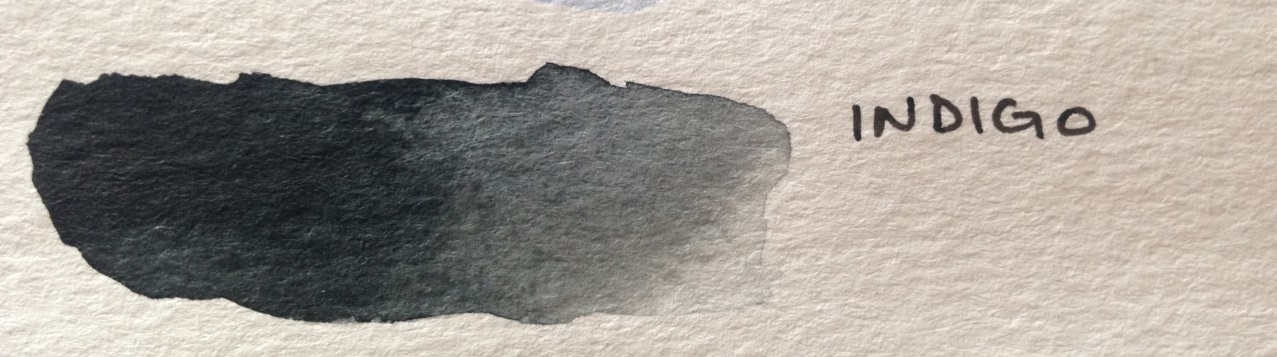
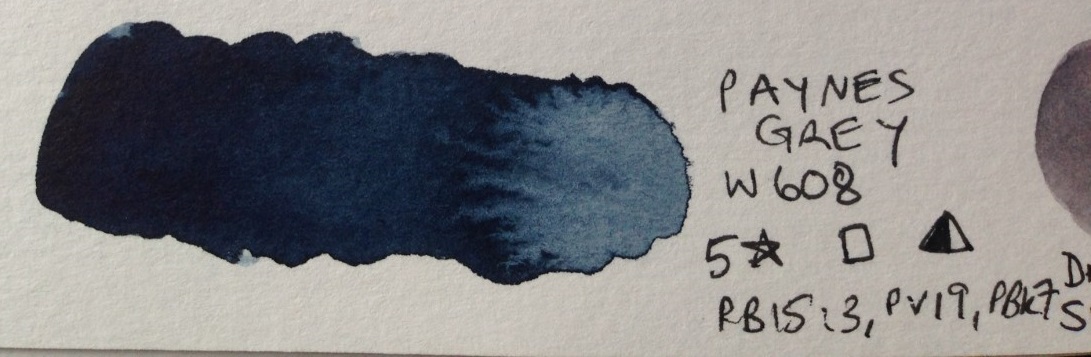
Indigo is another example of where colour output differs from what we may expect: if only because it looks in colour and behaves closer to what I would imagine to be more of a Payne’s Grey and vice versa.
Putting aside some challenges with matching colours with their descriptions, the colour saturation of these paints is really quite amazing. Compared to the swatches of Daniel Smith’s Burnt Sienna and Burnt Umber taken from paint straight out of the tube, their Mijello counterparts may be off in colour comparison but are extremely saturated in colour, even when dry. One thing to consider with such saturated colours is that whilst it may be more difficult to achieve those subtler, muted colours, less effort and fewer layers will be needed to achieve that depth of colour and covering power that you may come across with other more expensive brands.
With the exception of a few heavier pigments such as the Lemon Yellow and Chinese White, you’ll find that even after months of being poured into palette wells, they’ll remain glossy in appearance and have that sticky consistency that those that have ever tried M.Graham paints may be familiar with. These paints rewet beautifully, and whilst they may retain a ‘touch ready’ consistency, they’re not runny, so they are also perfect for outdoor and travel use as well.
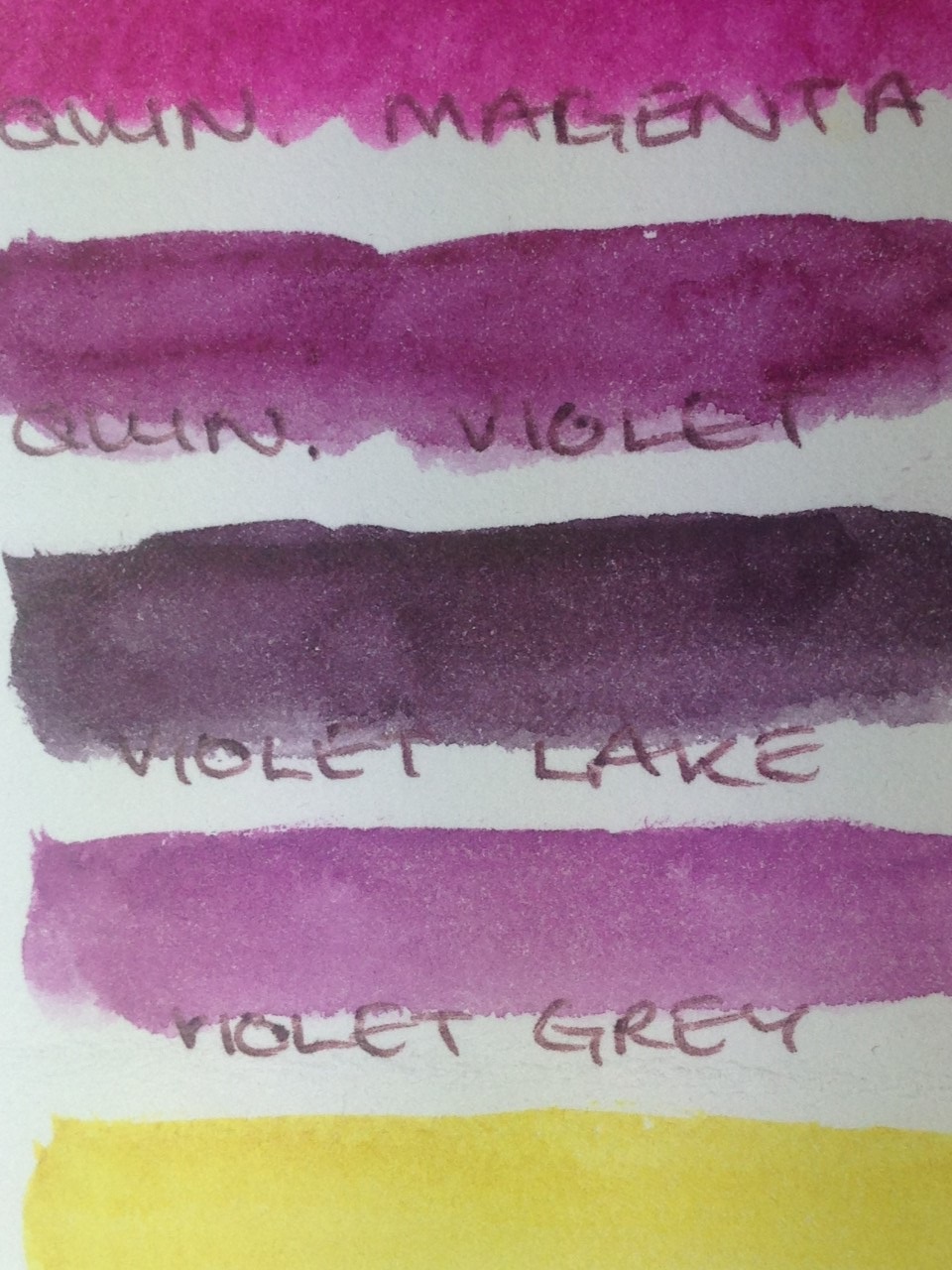
The only downside that I’ve noticed with these watercolours is their performance on some hot-pressed papers. And it’s not only me that’s noticed; some of the YouTube artists that I follow have mentioned it in their own reviews of these paints. The colour swatches above were done on Arches 300gsm Hot Pressed paper, and I’ve done pieces on Global Material’s Fluid 100 HP paper as well. Both are 100% cotton, 300gsm papers, and its almost as if the pigment doesn’t quite sink into the paper, leaving almost imperceptible white dots where the paper below shows through. It’s not particularly off-putting, and it doesn’t appear on all HP papers – Mission Gold watercolours are absolutely beautiful in their translucency on Stillman and Birn’s Zeta series sketchbooks and Stonehenge 100% cotton HP watercolour paper for example–but it is something to consider when choosing your papers with these paints.
Mijello Mission Gold Watercolours
Would I recommend Mijello Mission Gold Watercolours? Absolutely!
Who would I recommend them to? Beginners, Professionals and everyone else!
- Pros:
- Very Pigmented and saturated colour
- Easy to store, travel with and rewet
- A cheap artist quality paint
- The mixing sets that come with the palette are convenient and offer value for money
- They do offer a single pigment set for purists
- They look amazing on cellulose papers for those that can’t afford 100% cotton
- Excellent paints for those who prefer non-granulating colours/ paints
- Mijello do offer a stylish and portable pan set and refills for their Mission Gold and Silver series, but these aren’t widely available in the UK.
- Cons:
- Some single pigment colours are made with mixed pigments and therefore don’t look like or behave how you expect them to be when put down onto paper – they’re still beautiful, and single pigment varieties are offered separately for some of these colours as 15ml tubes
- Does not seem in my current experience to play well with Fluid 100 and Arches 100% Hot Pressed papers – they do however behave beautifully on other brands of HP papers
- Mijello don’t offer a lot of granulating pigments/ colours for those that enjoy granulating pigments
- Can only buy single tubes in UK in 15ml tubes, though these are still predominantly cheaper than other artist quality watercolour brands, starting around the £4.30 mark for their A series, going up to around £14 for their E series
- Includes unconventional, non-lightfast colours in its sets (with the exception of the single pigment sent)
Looking at Global Fluid 100 Easy Block 100% Cotton Paper
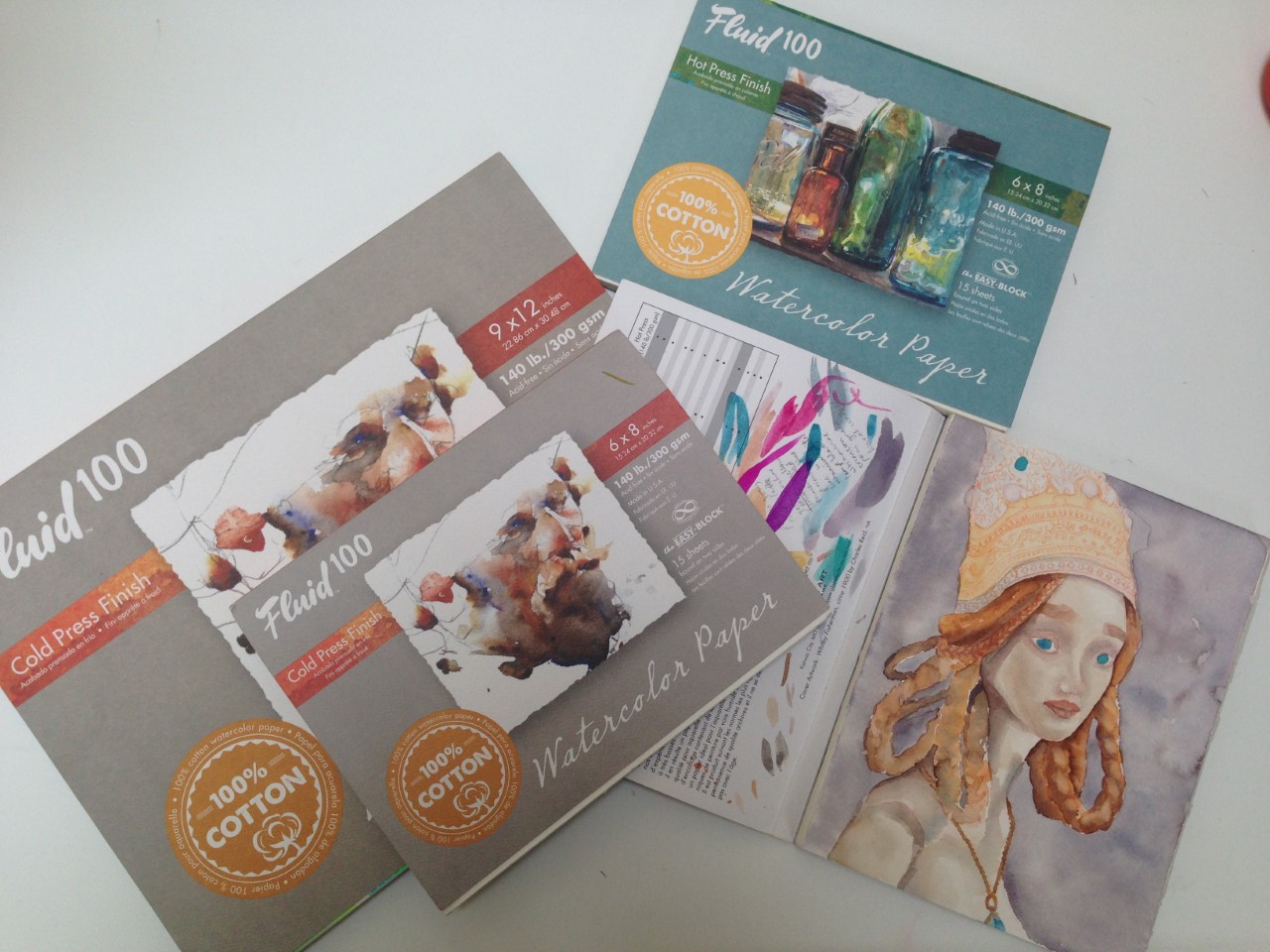
I originally bought the Fluid 100 6 x 8 inch 300gsm cold-pressed watercolour block under recommendation from one of the artists I follow on YouTube. Advertised at 100% cotton it was competitively priced and I was eager to see if it was a cheaper alternative to other watercolour papers I’ve tried.
The following painting was the first one I did on the block mentioned above and featured a study of Stephen King’s Pennywise from the movie IT that had just then been released. It was both drawn and painted whilst commuting to work on the train and during lunch hours with my Winsor and Newton Cotman set.
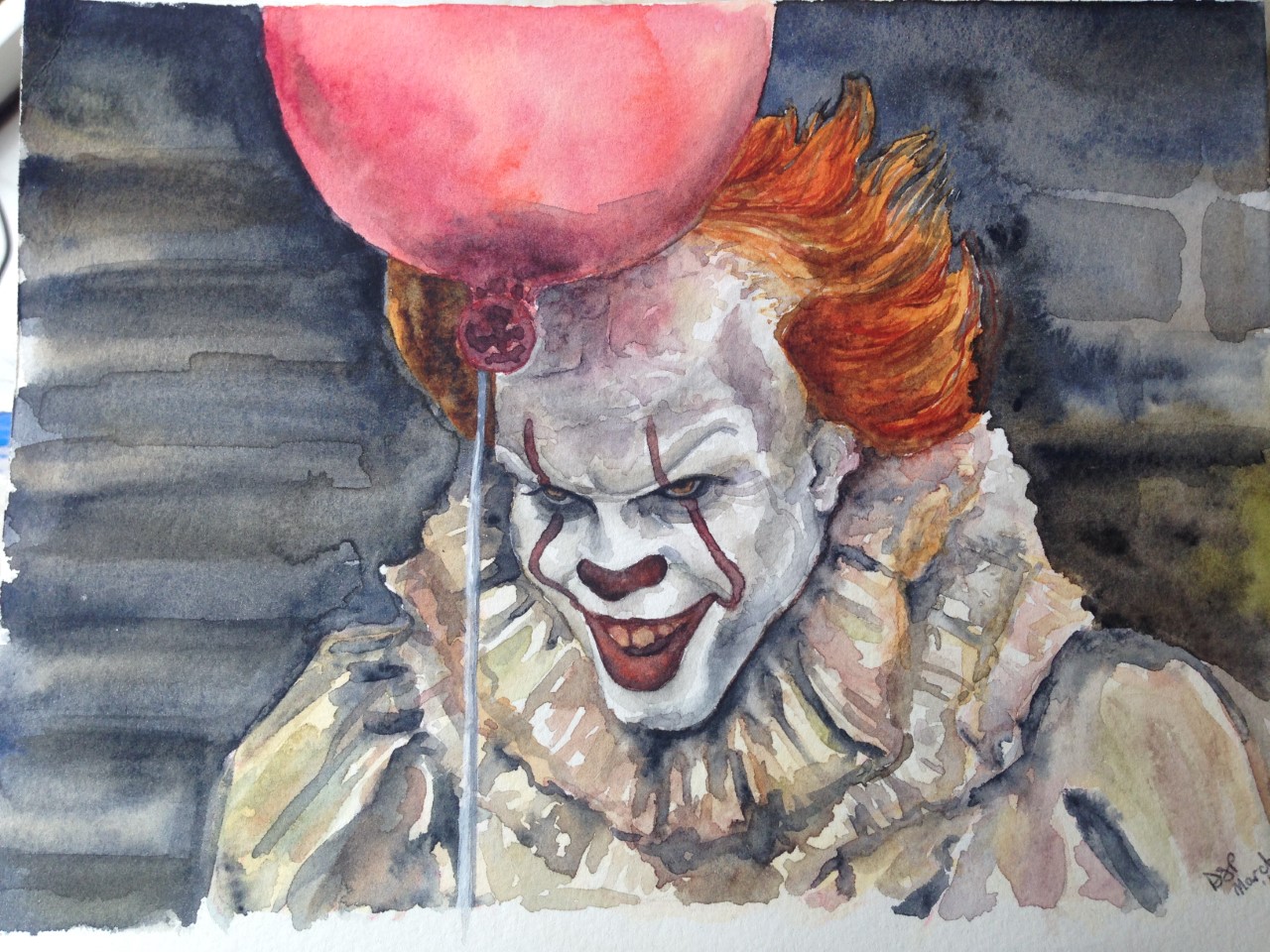
From the very first I was enamoured with this paper. I may have been a relative amateur when it came to watercolours at the time, but by this point I had already tried the more expensive brands such as Arches, Saunders Waterford and Canson blocks that were being recommended by artists during my research. It held up well to multiple washes, allowed for correction by lifting, and for me hit the sweet spot in drying time–giving me time enough to go back and rework an area or continue to block in colour without being worried about leaving undesired hard edges of colour. Most of all I appreciated how free I felt to use it without fearing that I was wasting material, which I feel is not an unusual feeling for creatives when working with such expensive materials. The block was compact enough to take on the go and cheap enough to make expressive marks and test the medium to explore the effects I can achieve with watercolour and my own desired processes without hesitation.

In fact, my only complaint was that I had to finish the painting on top before I could begin a new one, and however inspired I felt by the future projects I’d complete on this paper, it was better for my own practice to finish works rather than rush into others. I enjoyed working with this brand of watercolour paper so much that, like my experience with the Mijello Mission Gold paints (where I was quick to add to my collection of colours with individual tube paints), I ended up buying multiple blocks in different sizes.
As I’m always wary that I’m going to damage the sheet underneath when I go to remove the top sheet of a watercolour block that’s glued on all four edges, I actually preferred a block glued on just its two longest sides. It’s much easier to remove, and I found that even when using my preferred method of using multiple glazes to build up colour, the glue binding was able to hold up, even when getting banged about in my bag when I took it to work on the train with me. Even when given allowances for the sheet’s removal, the warping of the paper is very slight and could be further corrected if pressed. Of course, there are other quality papers and brands out there – and I own and have tried quite a lot of them – but in terms of finding that balance between performance and the creative freedom of knowing you’re not wasting expensive material, this paper sits within arms reach. I’d highly recommend it.
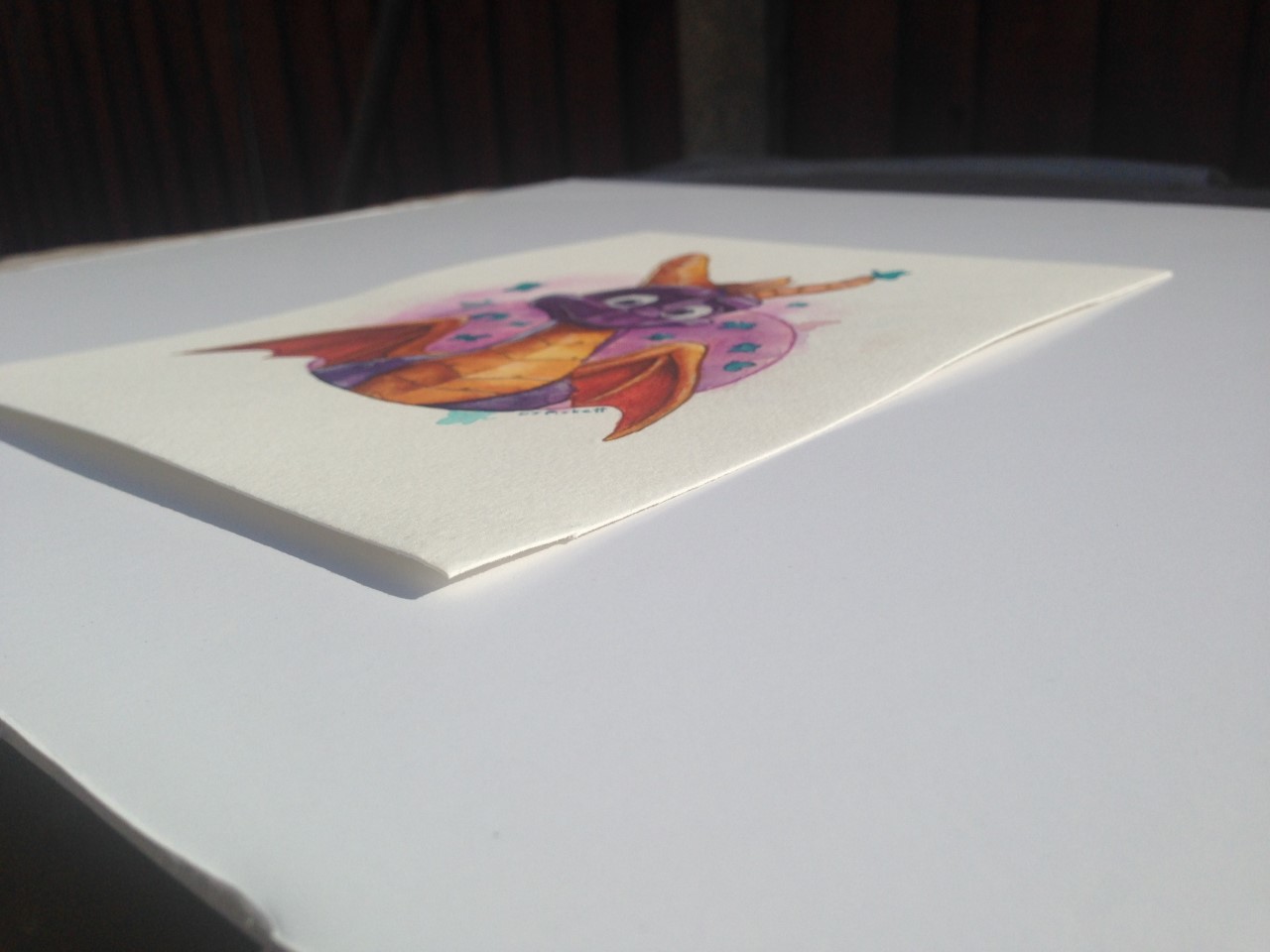
Global Fluid 100 watercolour block
- Pros:
- Warping is minimal for saying it’s only glued on two sides – I prefer it as I always feel as though I may damage the painting side of the next sheet of w/c paper when I remove the top sheet from a 4 side glued block
- Competitive prices for 100% cotton papers
- It’s quality paper, but doesn’t feel too precious to use!
- Handles mixed media
- Available in Hot Pressed and Cold Pressed
- Available in 300gsm in HP and CP, and 640gsm in CP
- Blocks are very easy to travel with for those that enjoy plein air painting
- Cons:
- Only glued down on the two longest sides
- Not widely available in the UK
- Doesn’t play very well with Mijello Mission Gold watercolour paints
About Danielle Pickett

My name is Danielle Pickett, and I’ve been drawing since childhood. Though my parents claim they can’t draw, surprisingly both I and my three older siblings have all possessed a talent for traditional art so I’m not sure where it’s come from. Out of the four of us, I’m the only one to carry it on into adulthood. I made the leap into acrylics in my early to mid-teens and I took my art all the way to university. After a two year hiatus, I began to practice art more seriously and joined a local Art Club who I exhibit with annually. I work primarily on illustrative pieces and portraiture, and keep up a regular creative practice whilst working full-time by keeping a bullet journal: each month I choose a theme, design the weekly spread layouts where I record and organise my days and complete a finished piece to try out everything I’ve learned that month.
I’ve been a big admirer of the watercolourists and illustrators that predominantly use that medium on YouTube, but my own expertise and learning practices throughout my early art education and university have been with opaque mediums such as acrylic, gouache and coloured pencils. Opaque mediums are generally more forgiving, but I’ve found that only with transparent water media can you achieve the luminosity and unique, unpredictable abstractions of colour and pattern that watercolours are so well known for. I made the switch to watercolour about a year ago now, and am enjoying the challenges of discovering a new medium.