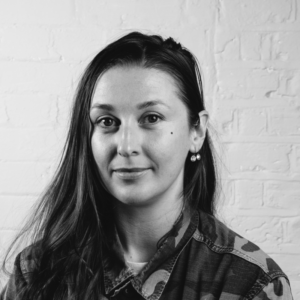
Ali Bannister won the People’s Choice Award in Jackson’s Open Painting Prize 2019 with her skilfully rendered soft pastel portrait of a regal-looking Spanish Horse. The detailed photorealistic drawing is indicative of all of her works, each portrait a carefully observed portrayal of its subject. We caught up with Ali to find out about her incredible attention to detail and people and places she has come across throughout her fascinating career.

Ali Bannister
Pastel pencils & soft pastels on Sennelier pastel card, 35 x 26.5 cm
Clare: Tell us a little bit about your artistic background/education.
Ali: My great, great uncle was a professional artist and member of the Artists Rifles. My grandmother painted in oils and my mum sketched in pencil and painted in watercolour. As kids my sister and I drew for fun; anything and everything and we kept sketchbooks. I did art at GCSE and A-Level, then a years Foundation course in Art and Design at the Kent Institute of Art & Design (KIAD) and a degree in Graphic Design at Brighton University and Wellington Polytechnic (now Massey University) in New Zealand.
In 1999 I was ill and off university and used drawing as a quiet way to keep myself occupied. I started a picture of my horse which I never finished, but a friend saw it and asked me to draw her horse and my career as an artist snowballed slowly from there, started quietly by word of mouth.
I worked in design for a while where I learned invaluable computer skills and I enjoyed working with clients and to a brief but the animal portrait commissions kept coming in and I enjoyed them more. So I made the decision almost two decades ago to draw full time and have never looked back. A lot of artists don’t like working on commissions but I love them.
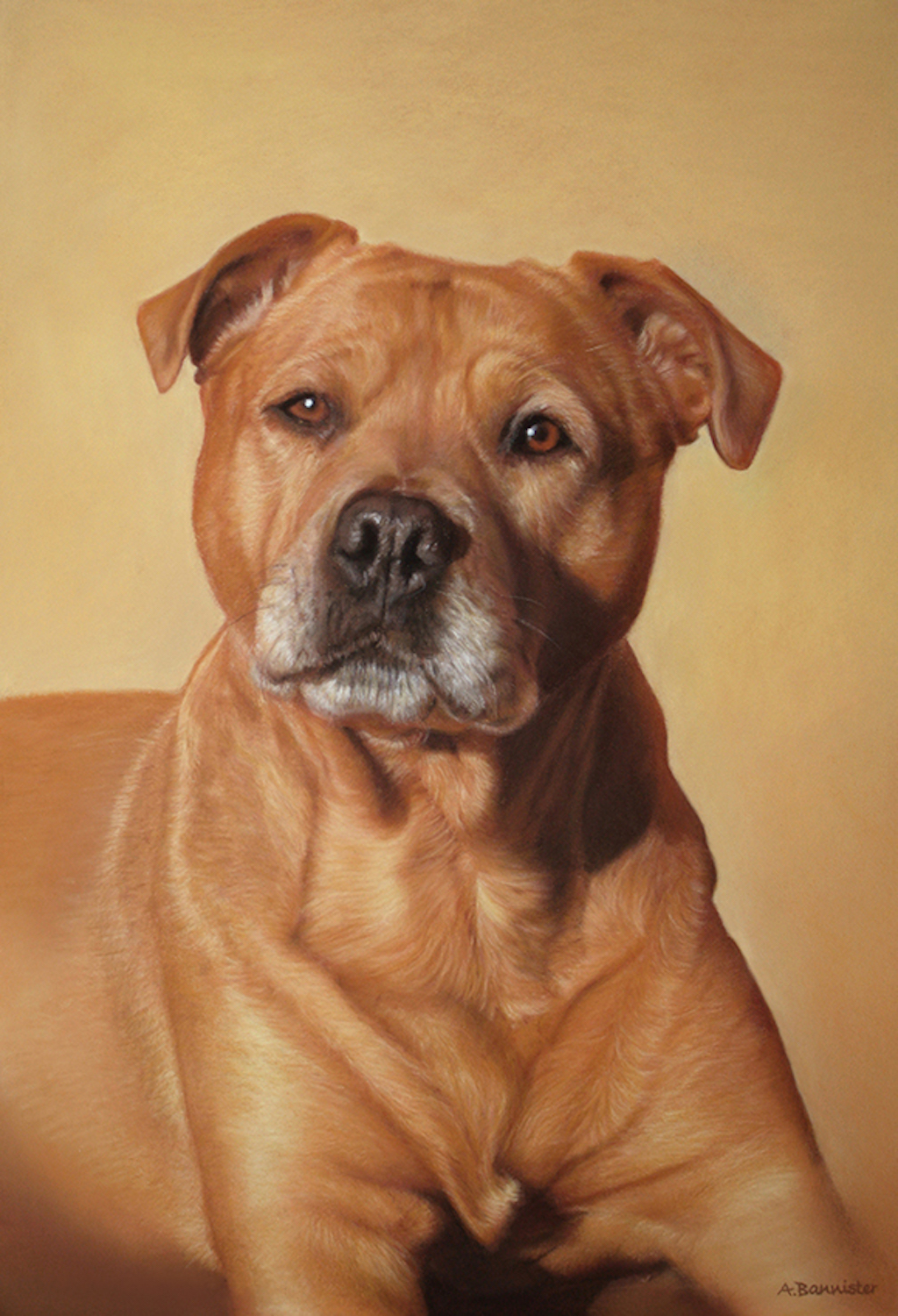
Ali Bannister
Pastel pencils & soft pastels on Sennelier pastel card, 35 x 24 cm
In 2010, I was the Equine Artistic Advisor on Spielberg’s adaptation of War Horse. This involved working on designs for the look of the horses as well as being head of the Equine Hair and Make-Up Department and producing sketches to be used in the film. This lead to a commission from the author, of War Horse, Michael Morpurgo, to produce an oil painting of the horse, ‘Joey’, to match the description of the painting that appears in the author’s note at the beginning of the book.
In 2009 I was commissioned by Ringo Starr to do a portrait for his wife, Bond girl, Barbara Bach, and completed a commission of the legendary dressage stallion, Donnersong, for his owner and breeder, Kate Carter.
England cricketer, Derek Underwood, and the Rt. Hon. Countess Bathurst are clients of mine and my work hangs in the homes of Frankie Dettori and Andrew Strauss. International commissions include work for clients in America, Australia, Switzerland, Hong Kong and Thailand. The renderings of a war horse that I produced for the production ‘Son et Lumiere‘ in Chepstow were projected 12 foot high onto the castle walls. Television appearances include ‘The One Show’, ‘The Alan Titchmarsh Show’, ‘The Book Show’ (Sky Arts) and ‘Rudall’s Round-Up’ on Horse and Country TV. Radio interviews include BBC Gloucestershire.
Having studied art and design in both England and New Zealand, I now live in Gloucestershire. My work covers a wide range of subjects but I specialise in animals.
My aim is to produce drawings where the viewer is conscious only of the subject, not of any artistic style. The challenge I set myself is to create an exact likeness which captures the character of the subject. To do this requires a lot of attention to detail; but detail is what I love. I believe that, if a drawing is done well, it can evoke quite a different emotion from a photograph.
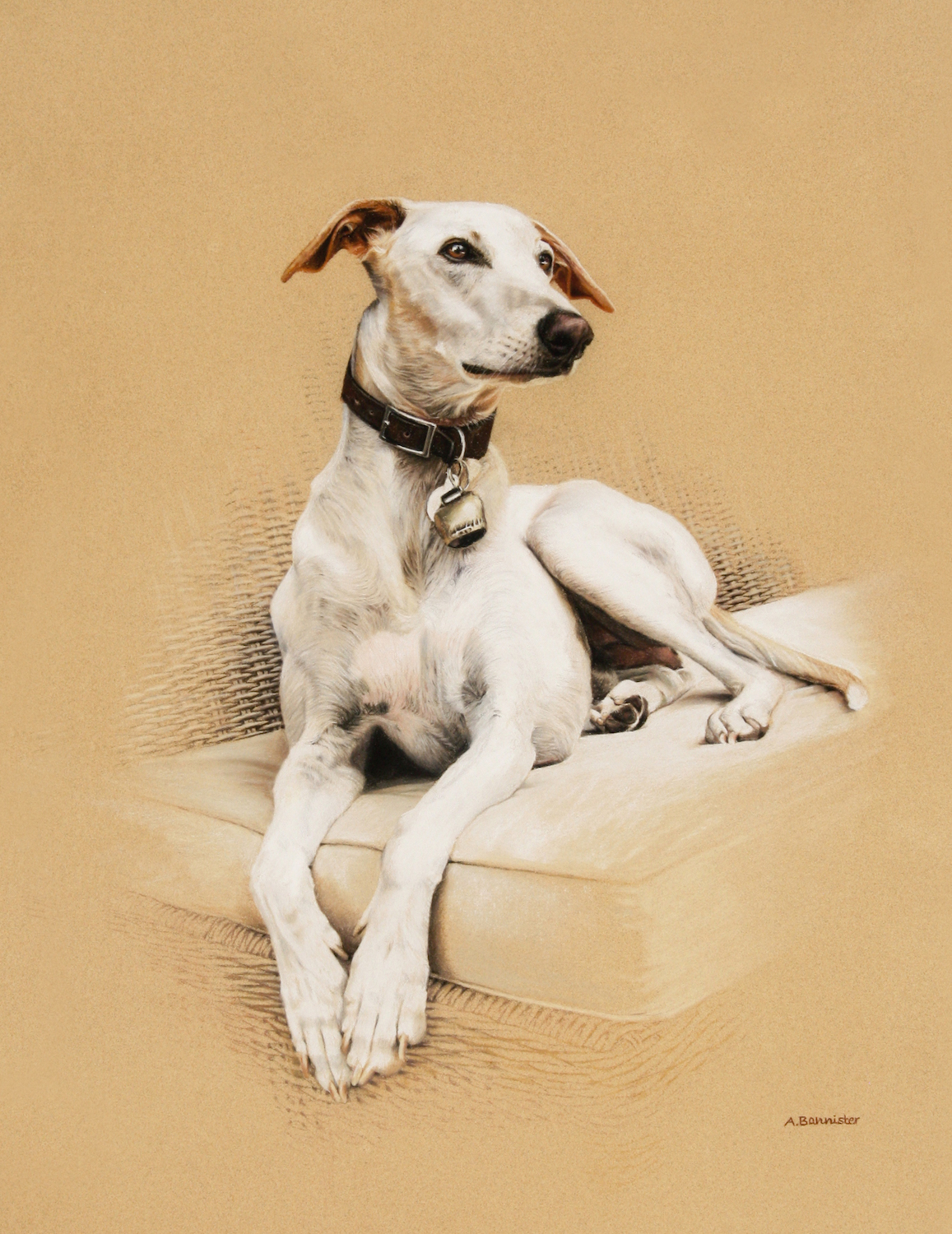
Ali Bannister
Pastel pencils & soft pastels on Sennelier pastel card, 44 x 58 cm
Clare: How would you describe your practice?
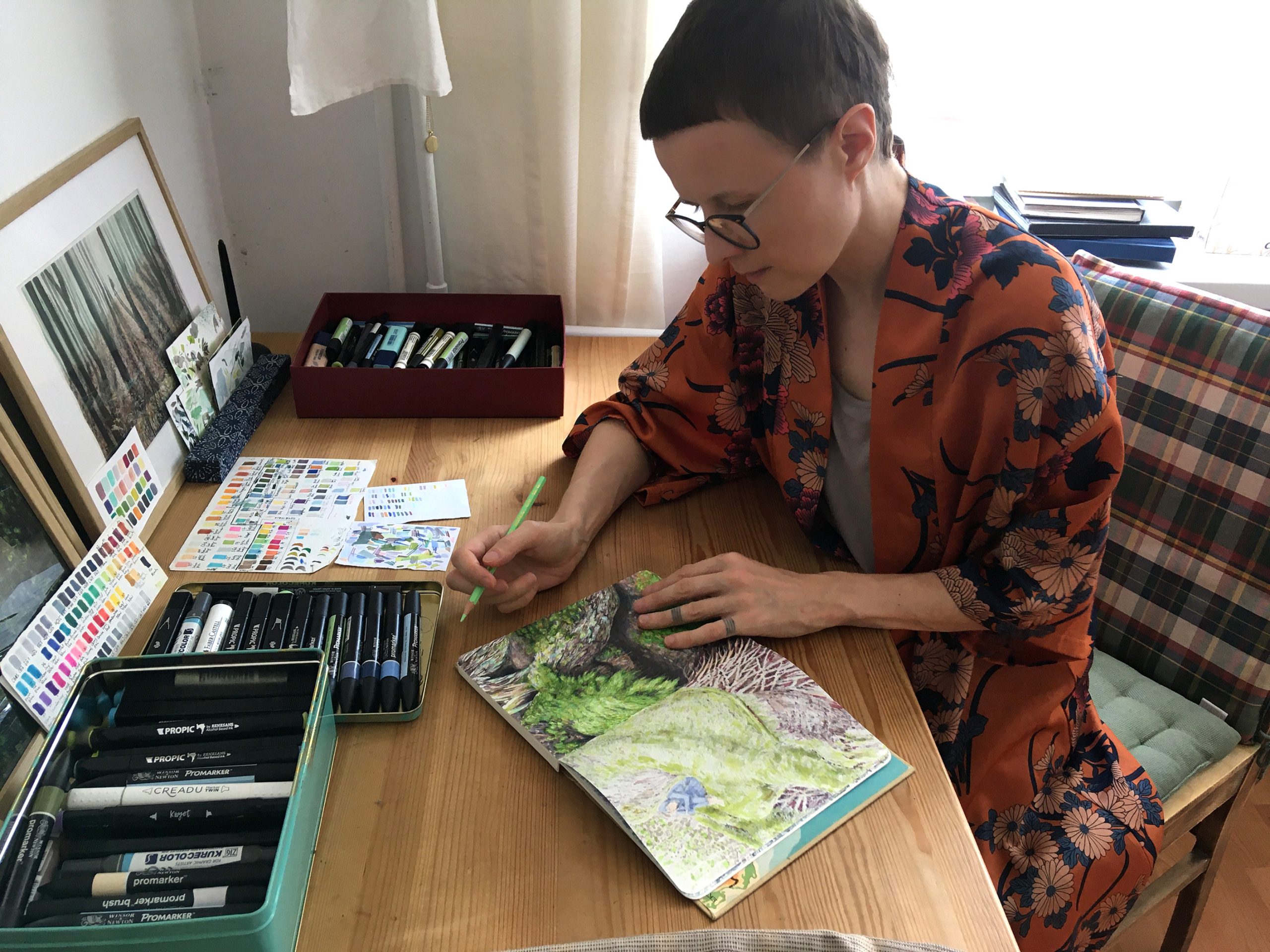
Ali: Every morning I start by checking my emails and messages. Some days are spent with clients taking photos of their animals or children. Others are spent working up digital mock-ups for portraits. These are shown to clients for their approval and/or input before I start drawing or painting so that they are completely happy with how the final piece will look.
On drawing days I like to start with a clean work space: table clear and pastels lined up and sharpened. Apron and music or audio on. All of these things help me get into ‘work mode’. I usually set myself designated hours – this has the dual purpose of keeping me going when I’m flagging and giving me a cut-off time to say, ‘right, my working day is done,’ otherwise I can draw for too long and feel burnt out.
I’ll stop for lunch and carry on until I lose the light or reach my set hours; whichever comes first. Sometimes I’ll stop earlier to produce some vouchers or do prep work for a workshop or art lesson or go to archery or hockey training. After all that sitting still I like to move around.
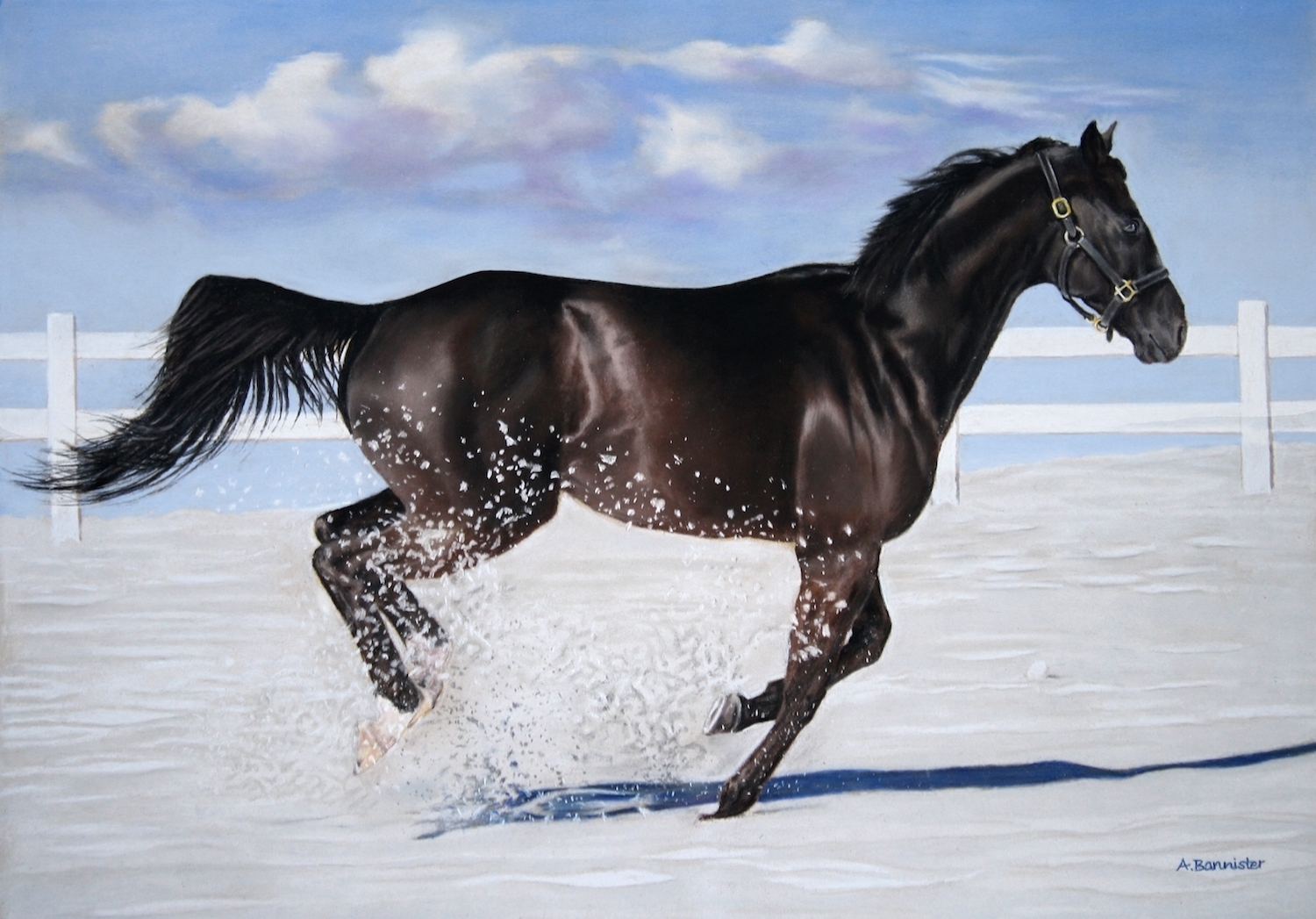
Ali Bannister
Pastel pencil and soft pastel on Sennelier pastel card
Clare: Of all the animals you draw, do you have a favourite texture to illustrate? What have you found to be the most challenging?
Ali: ‘Dapples’ on grey horses are tricky because you’re dealing with shades of the same colour – so it’s easy for the dapples (which are flat colour markings) to look like raised bumps unless you’re very careful.
Areas of hair or fur that are sticking out but pointing at you can be challenging because of the foreshortening. You have to trust the reference picture that you’re working from and stick to it religiously. If it looks right in the photo then it will look right on your drawing if you’re disciplined and careful.
As for favourite textures to illustrate; I like the crispness of the clean edge of a bridle on a horse, the fine detail of stitching on the leather, the shine on a metal bit, the liquid feel of eyes and sharpness of dog teeth. Short-coated dog coats and horses’ summer coats are fine – but longer coats and hair and fur are hard – so anything other than fur is a welcome break! Clean edges are a pleasure …maybe I should draw more cars! I do quite enjoy the texture of stone …but that doesn’t count as an animal. Maybe I should draw more tortoises!
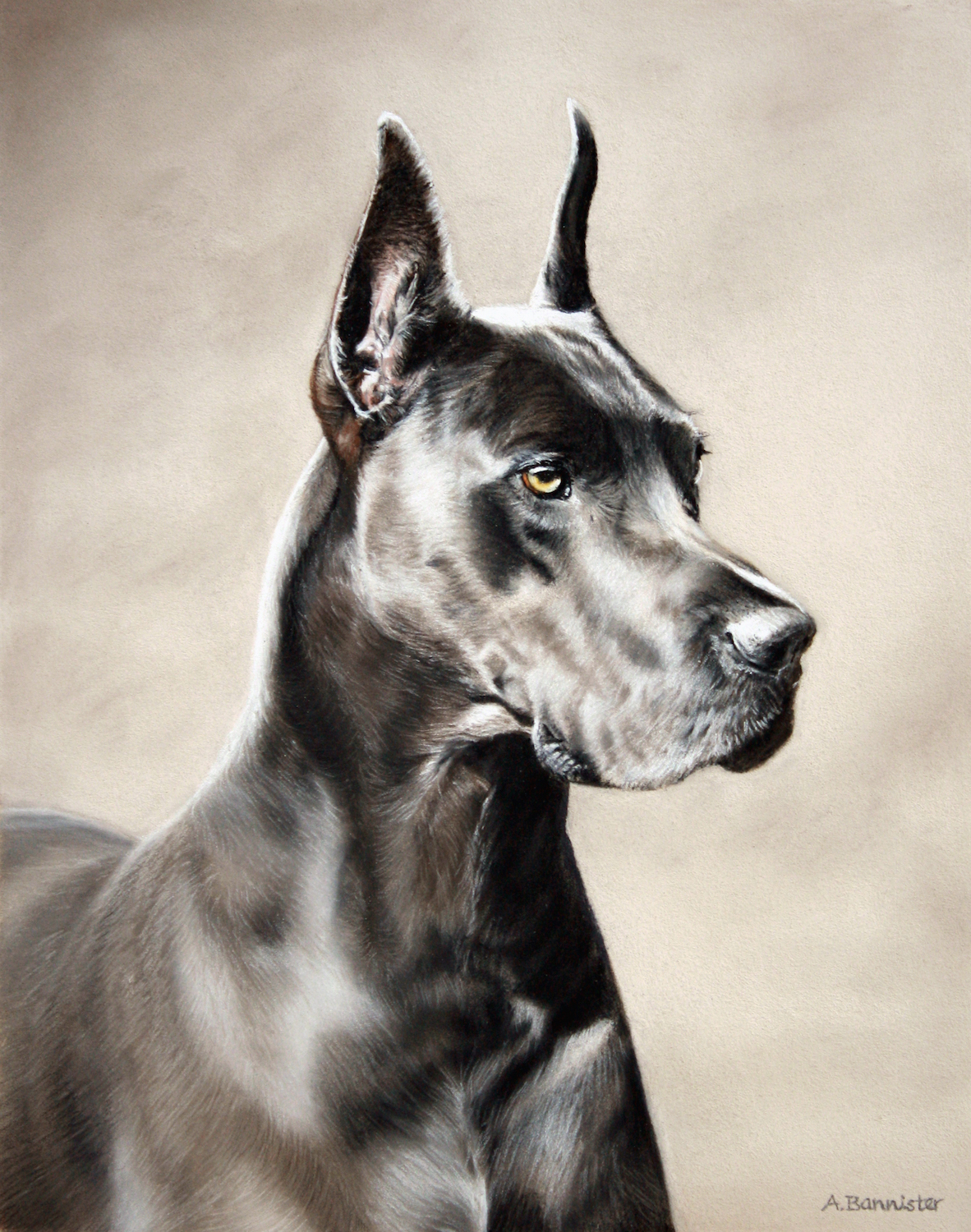
Ali Bannister
Pastel pencil and soft pastel on Sennelier pastel card
Clare: How do you select your pastel and pencil colours for each work? Do you create swatches?
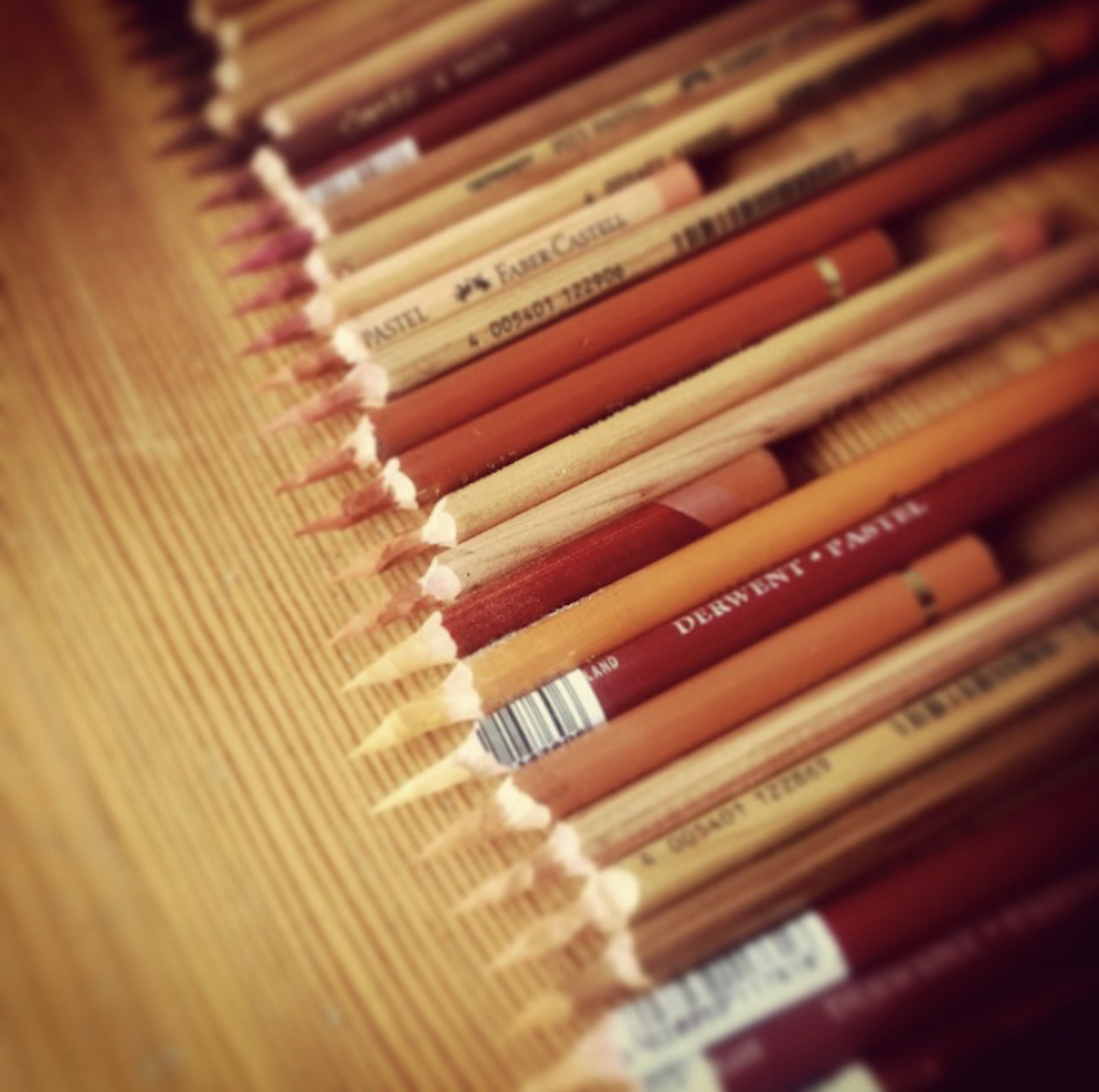
Ali: I look at my reference picture and working from dark to light I pick out all of the pastel pencils that I have that match. If there are any key colours missing I will go through different ranges of pastel pencils at Jacksons until I find something close. From these, I select three colours for the initial sketch and early work: a medium dark, a midtone and a highlight. I do as much as possible with those three to create a simple under-painting of the main tones. Only once that’s done do I allow myself to start bringing in the other colours.
For the backgrounds, I tend to take a good quality print-out of my reference picture to pick out the perfect colour soft pastels from Jackson’s and Unison’s extensive ranges.
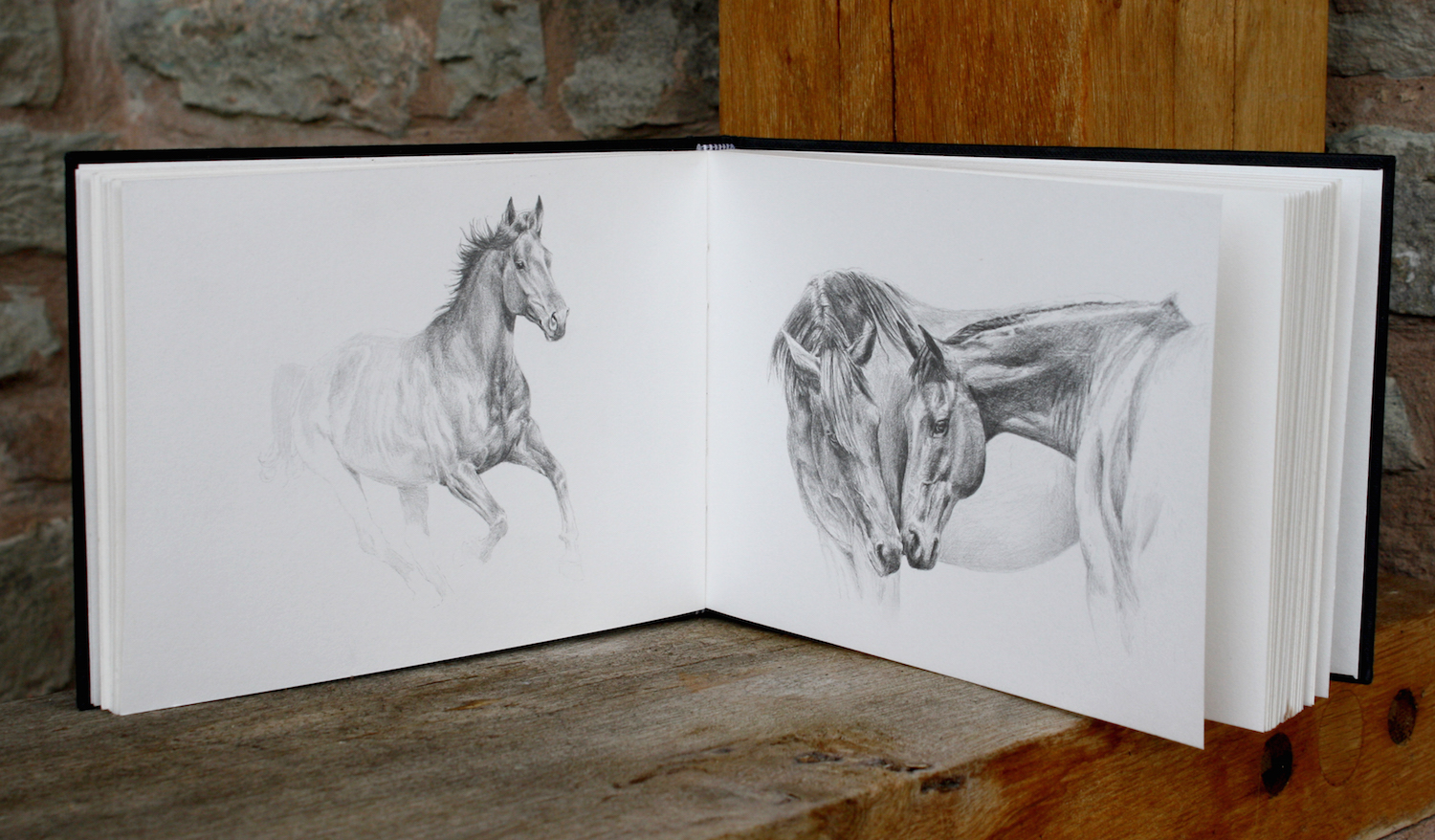
Clare: Your experience on as Equine Artistic Advisor on War Horse sounds really fascinating. Can you talk about how you translated your drawing techniques to Equine make-up?
Ali: Initially it was my knowledge of horses and use of Photoshop that was the most useful. Since I create digital mock-ups of all of my portraits before I start them, I was able to create digital mock-up suggestions for the producer of how the lead horse could look. These were sent to Steven Spielberg who responded with feedback until we had a design for the markings that he was happy with.
I was then put in charge of overseeing this design being applied to the horses by the Equine Makeup team. Within the first 15 minutes this became a hands-on job, using brushes and sponges and special animal-friendly make-up. It was important to keep the head marking in particular consistent across all 14 of the horse, foal to full grown, playing the lead character, Joey. Being able to use photographs of the actual horses was a great help as I could scale the marking to each head and view them all together to check that the proportions were right and that they looked convincing.
I would say that the most translatable skills were an ability to create and tweak a digital mock-up, a critical eye for detail and proportion and an ability to accurately replicate a design from a printed reference.
When it came to making the background horses look as if they had been at the front line for years we used a combination of dust and artificial mud to highlight the ribs and add shadowing, so an understanding of equine anatomy combined with knowledge of tone and ability to blend was important.
As for the drawings that you see of the horse, ‘Joey’ in the film; I produced around 30 sketches and Spielberg chose his favourite 5 or so to feature in the film. Because the film shows the actor working on one of the sketches, I had to produce several ‘stages’ of the drawing to be used in different shots. These ended up having to be amended by hand at speed in a darkened stable building behind the set, leaning on a narrow shelf with one person holding a phone as a torch and another holding a phone for me with a photo of the sketch before to use as a reference! All of this while the 800 or so cast and crew waited. So the skill of having to draw fast, under pressure and to tight deadlines was also useful!
Clare: Why is it, do you think, that a drawing which is an exact copy of a photograph, can elicit a different, more emotional response from the viewer than the original photograph? How does this happen and can you describe the techniques you use?
Ali: I think that there’s a certain magic about a drawing. When we look at a photo we see a still capture of a moment in time. That moment existed and a photo is the capturing of that light from that moment – and I think we mostly regard these pictures as being ‘machine made’. We can take photos so easily now too. We can take hundreds if not thousands in minutes, add filters and edit them using our phones. There is no mystery left to it and it’s a craft that is less and less appreciated.
A drawing isn’t a capture of an actual moment in time. It’s a fiction, a story, but that means that it can be written better than the truth. Small imperfections can be removed, time can be wound back. Backgrounds can be simplified to let the subject stand out. You can control the way that the eye of the viewer moves around the picture. Yes, all of this can be done with photos in Photoshop too but a drawing can be produced on the other side of the world to the subject and yet somehow coloured pigment on paper can become -through careful mark-making -an animal, or person; a much loved and recognisable friend that you could reach out and almost touch. I think the mystery of how that happens is where the magic lies. The brain knows that it’s looking at pastel and paper but the eye sees a liquid eye, a soft muzzle and the heart recognises a loved one. Unlike a photo, every millimetre of the picture has been created by hand, from nothing, without machines. And it’s three dimensional, if only subtly. You can look closely at a drawing or a painting and see the brush marks, the textures of the pastels, see the marks of the creator and the story of it’s creation. I also think that people are drawn to and fascinated by a skill or craft that they don’t themselves have. I certainly feel that way about music. And to be able to look closely and see some of the ‘workings’ can be a fascinating way to learn about and understand the process.
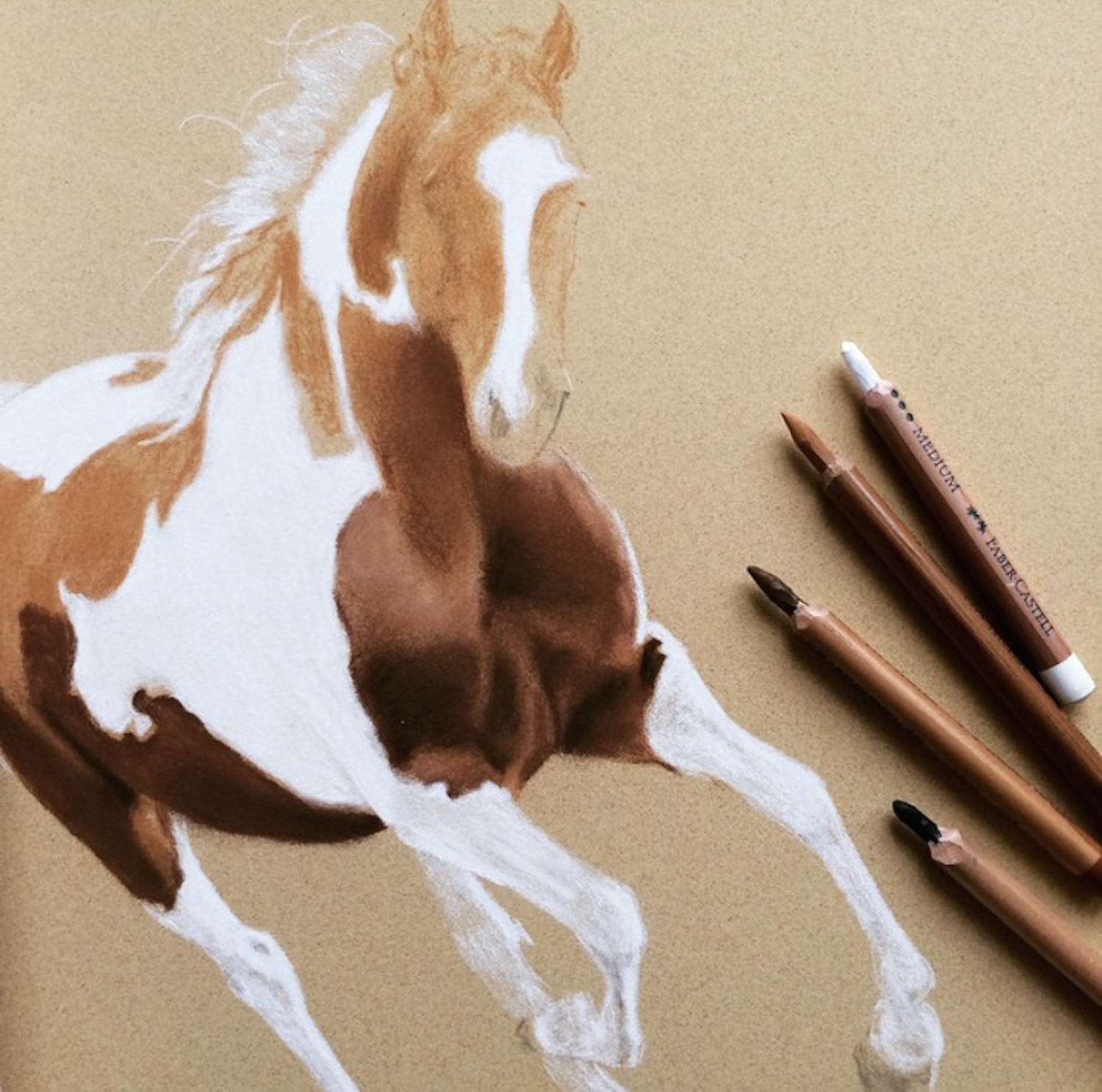
Work in progress
Pastel pencils on Sennelier pastel card
Clare: What are your art influences? Who are your favourite contemporary artists?
Ali: I grew up with a print of Albrecht Durer’s ‘Hare‘ above my bed and I’m sure that the high level of realistic rendering influenced me as I have wanted to draw as realistically as possible for as long as I can remember! Initially, it was my mum’s work that I admired the most though; everything from her posters for school barn dances to her detailed sketches of thistles. I remember being so proud of how good they were.
Later on, I discovered Susan Crawford’s work; especially her oil portraits of horses and her dog – and it was a great honour and genuinely inspiring to talk to her at one of her exhibitions. For a looser, more contemporary style I love Christian Hook’s work.

Ali Bannister
Pastel pencils & soft pastels on Sennelier pastel card, 69 x 38 cm
Clare: What is your favourite artist tool?
Ali: I think I’d have to say my fingers! I do all of my pastel blending with my fingers.
It’s not exactly a tool, but I rate Sennelier’s soft pastel card (360gsm) very highly. It holds so much pastel that you can build up colour in layers for greater depth and it has enough tooth to allow you to work and rework areas. Once you’ve put a few layers of pastel down though it’s smooth enough for even the finest of details. It’s crucial to my method of working. (I use the colours antique sand and light grey a lot). I’m also a fan of tapered soft silicone colour shapers for working in charcoal on paper.
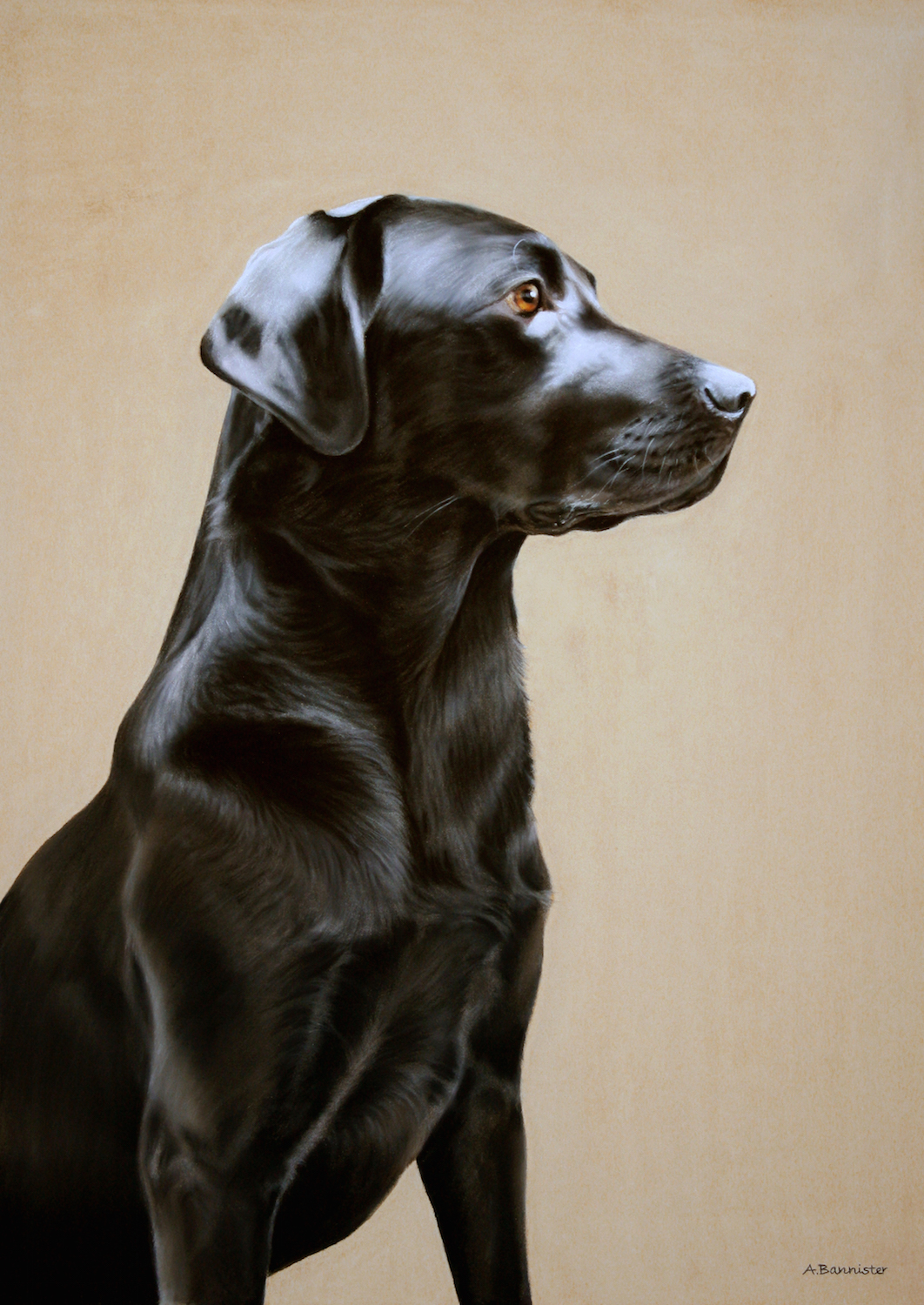
Ali Bannister
Pastel pencils and soft pastels on Sennelier pastel card, xxx
Clare: What makes a good day in the studio for you?
Ali: I love starting a piece – progress is so fast and exciting and dramatic at that stage; full of promise and potential. Everything is quite loose and you can cherry-pick all of the easy and fun bits without worrying too much about the challenging parts. It’s encouraging to see the progress happening at such a pace as the rest of the piece has to be produced very carefully and studiously as the fine detail comes in. This can be quite slow and the results of a day’s drawing are far less obvious.
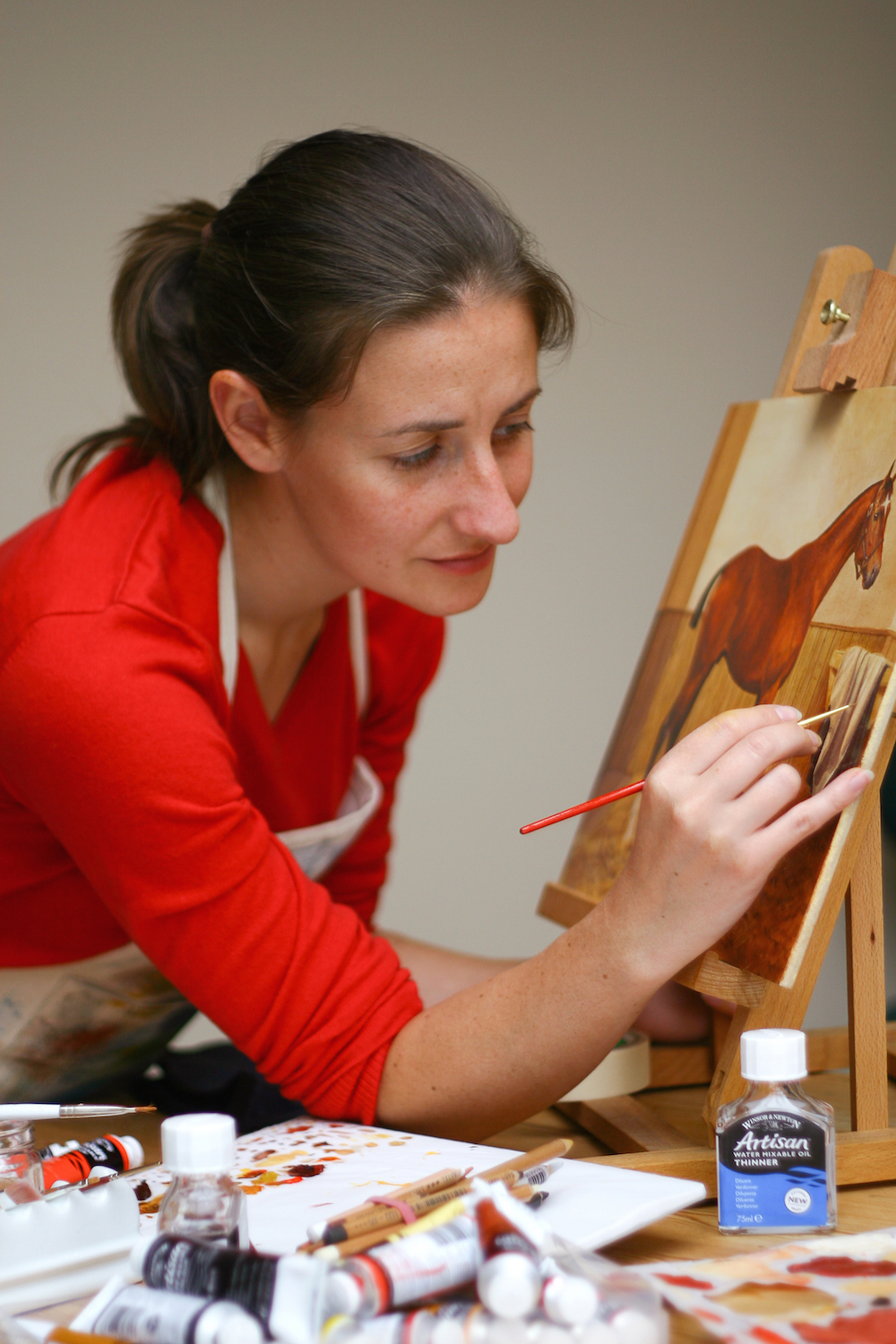
Commission for the author, Michael Morpurgo
Photo credit: Bridget Worth
Clare: In the studio – music, audiobook, podcast, Radio 4 or silence?
Ali: When I’m starting a piece the excitement is all the company that I need. Later on when I’m having to concentrate more I like to listen to music of my choosing, interesting podcasts, interviews, TED Talks etc. I recently discovered the radio play series, ‘Curious Under the Stars‘ and have been enjoying that very much – the time just flies and the tough parts feel less like work. When the going is really tough I have a ‘go-to’ album that soothes and relaxes me.
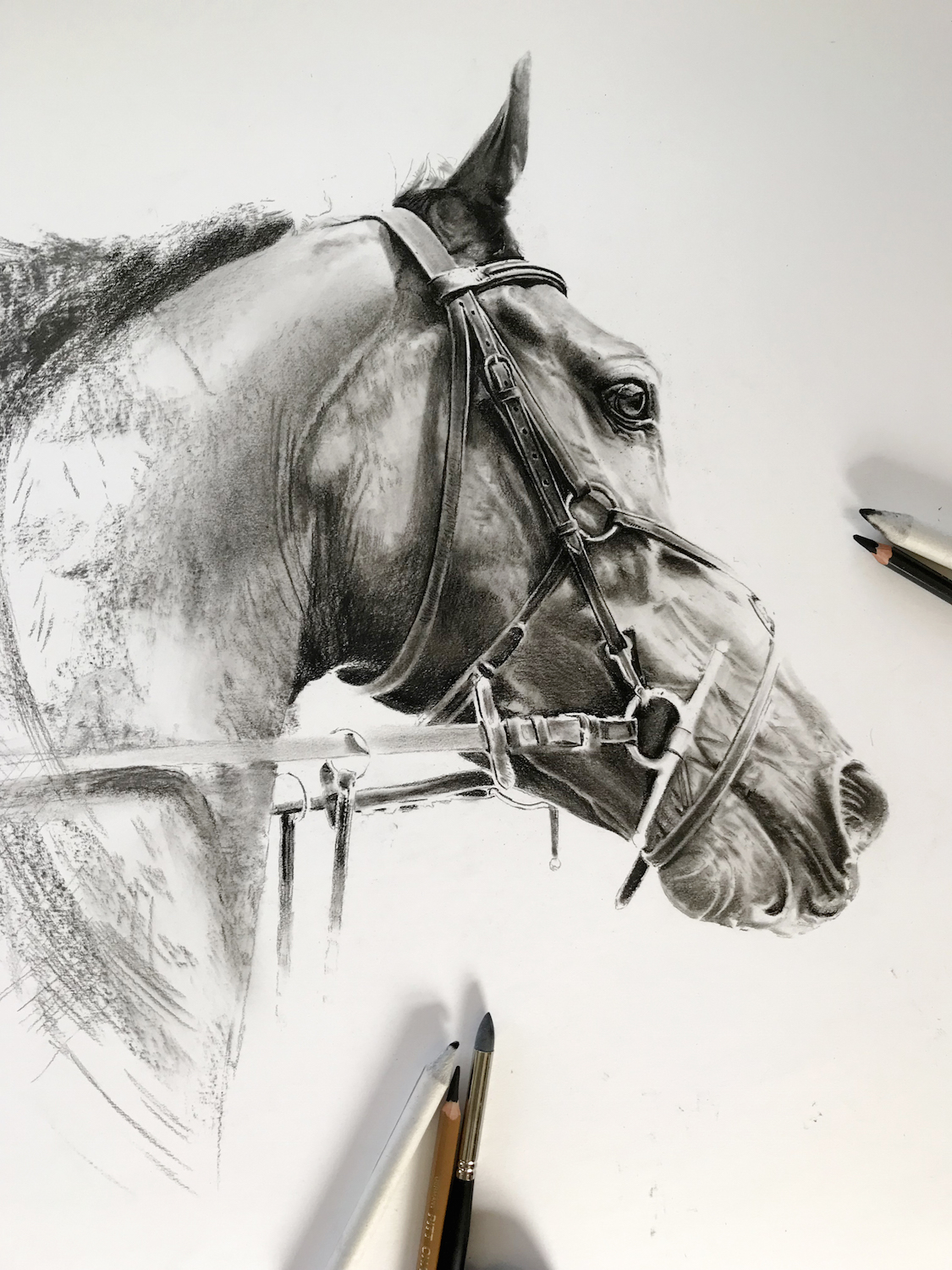
Ali Bannister
Charcoal on paper, 55 x 55cm
Clare: What is coming up next for you and where can we see more of your art in the flesh or online?
Ali: I was thrilled recently to have been given permission to work from some incredible wildlife photographs; and serendipitously in the same week I was contacted by a new gallery in Cirencester, called Bold Eye, so it would be great to produce some work for them. I have some pieces on the go at the moment that will be for sale on my website (www.alibannister.com) once finished; a fiery horse’s head in charcoal and a study of a heron in flight that I’m really excited about. I will share them on my Facebook page (Ali Bannister Portraits) and on Flickr.com (Ali Bannister) and Twitter (@ArtistAliB)
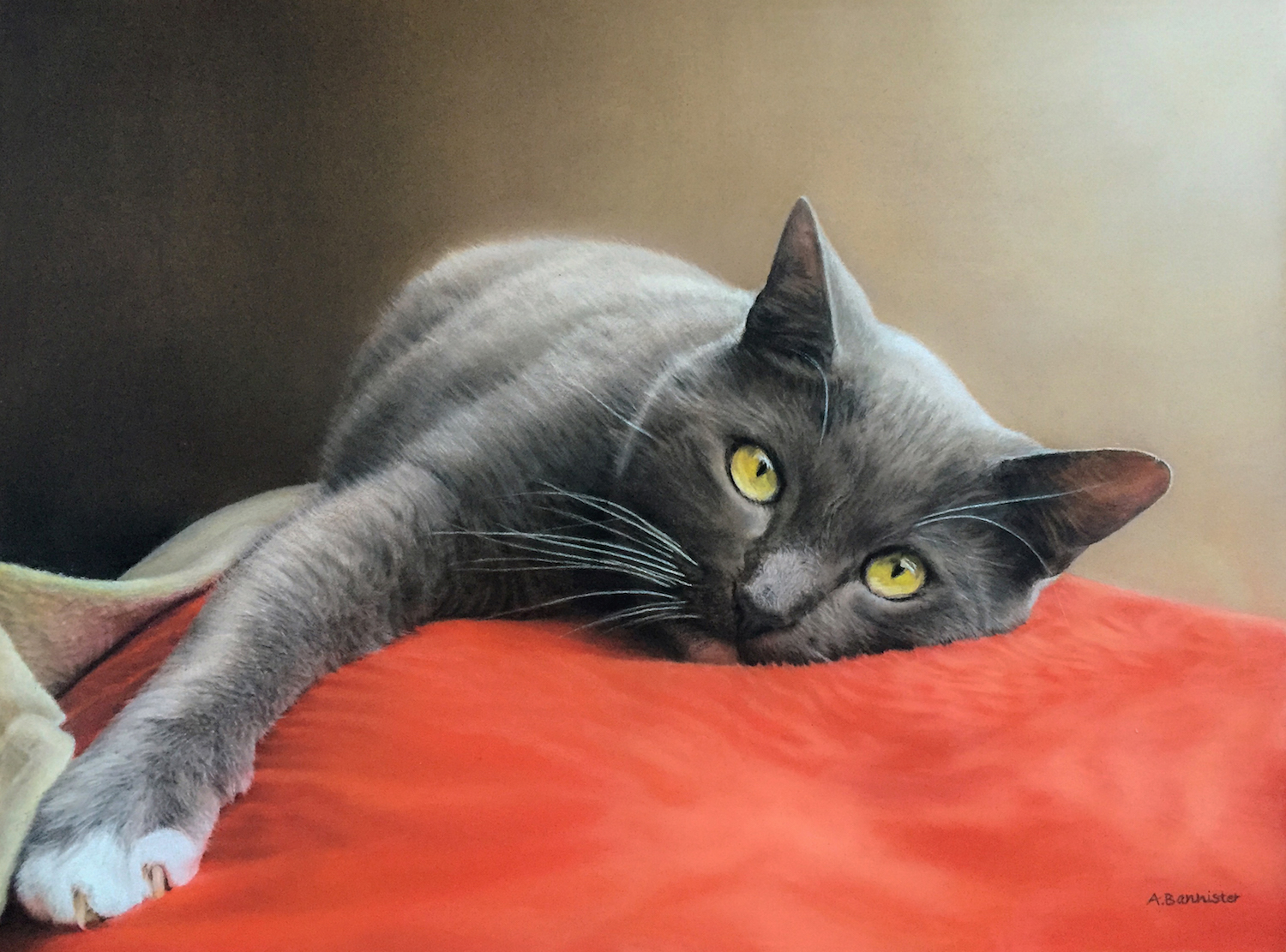
Ali Bannister
Pastel pencils & soft pastels on Sennelier pastel card, 28 x 38 cm