



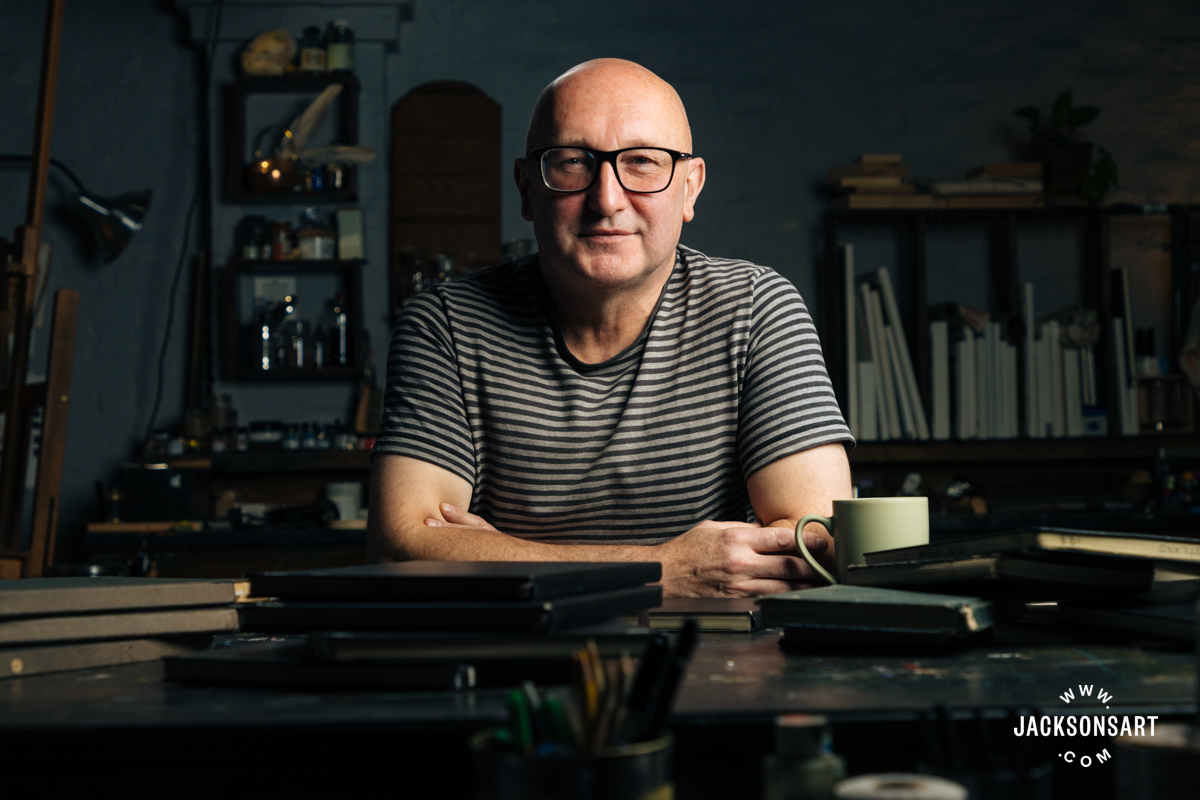
Roy Eastland is an artist and educator based in Margate, UK. He takes a philosophical approach to mark-making, where the process of drawing becomes an act of creating memories, ‘ghosts’, and traces of life. Here, we glimpse inside some of Roy’s many sketchbooks. Drawing primarily from life with mechanical pencils, Roy discusses embracing and learning from every misplaced line, the joy of capturing movement, and drawing for the sake of drawing.
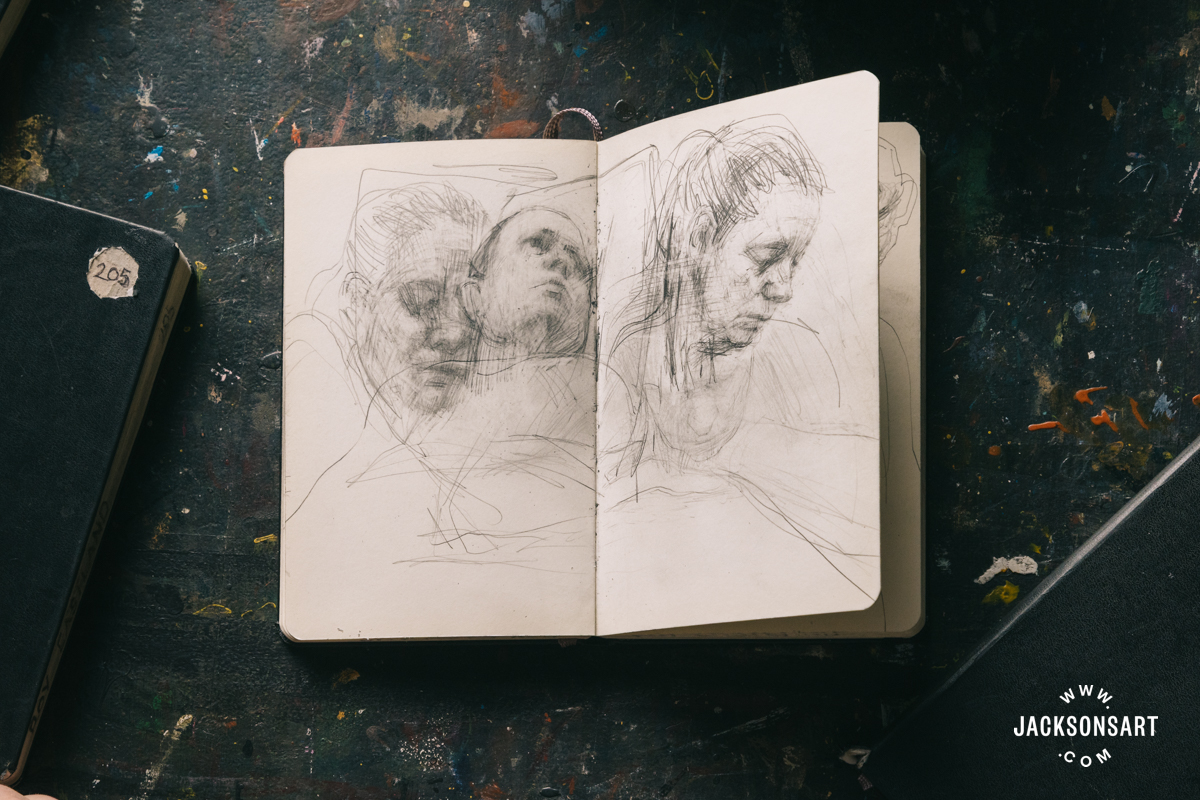
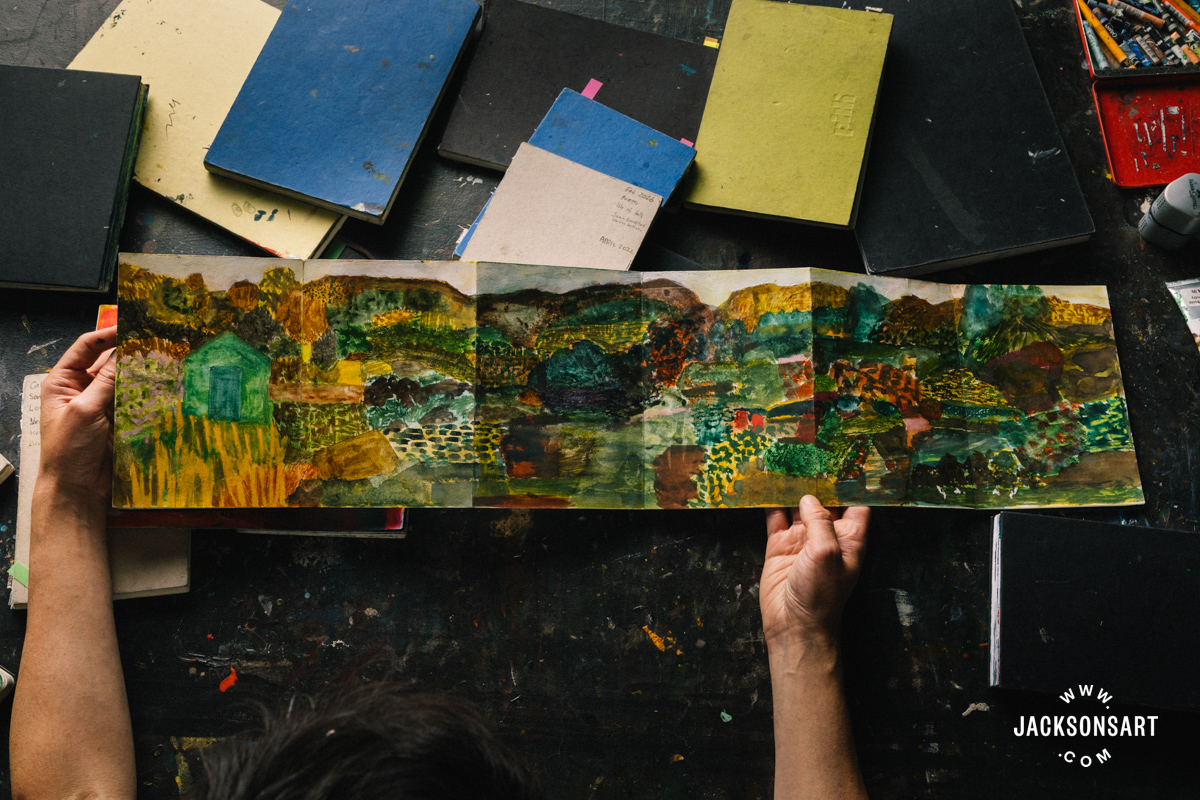
I have just over 200 filled-up sketchbooks going back decades. Some have taken years to fill, and some have taken just weeks. I number them once they are full. I usually have a few sketchbooks on the go at any one time. At present, I have an A4 sketchbook, an A5 one, three slightly smaller ones, and A4 pads.
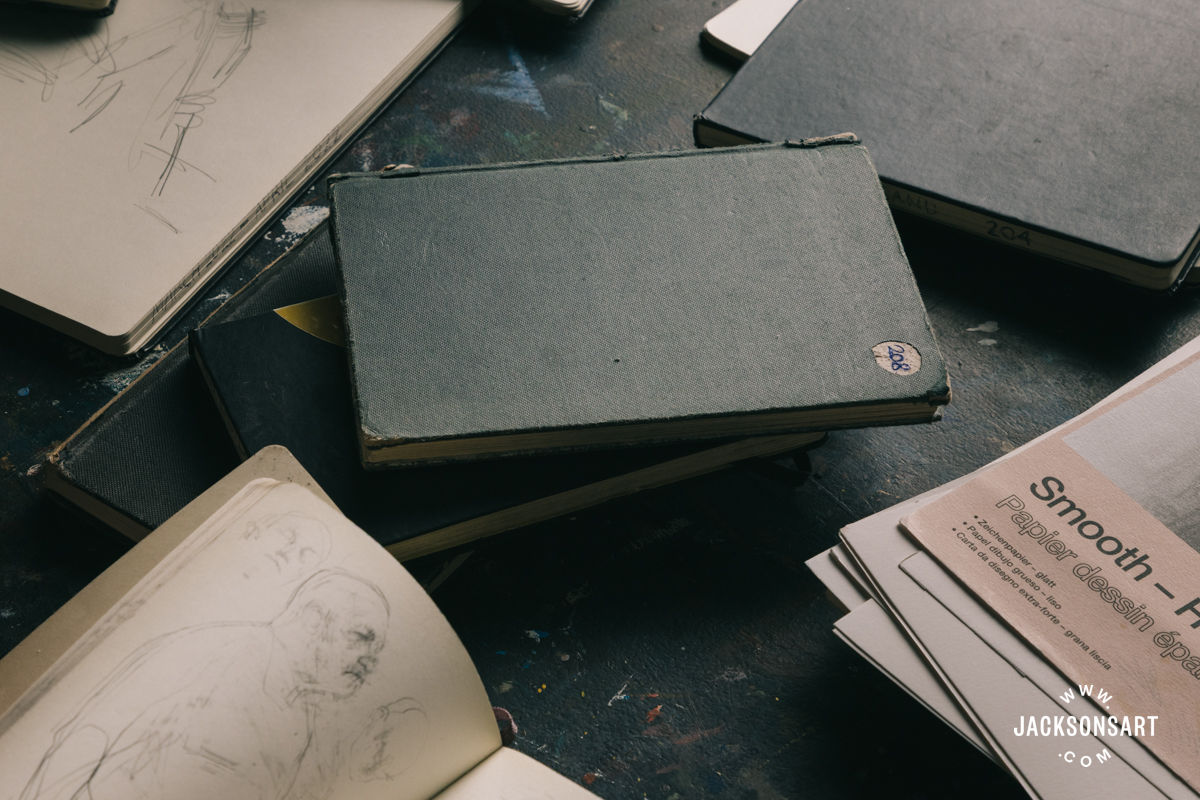
I’m rarely without a sketchbook even though I might only draw in them about once or twice a week. I’ve got so used to having one with me all the time that it feels odd to go out without it. I use them to write notes, lists, and reminders in, as well as for drawings. The end pages are mostly used for writing notes, and these pages might get drawn over as the book fills up.
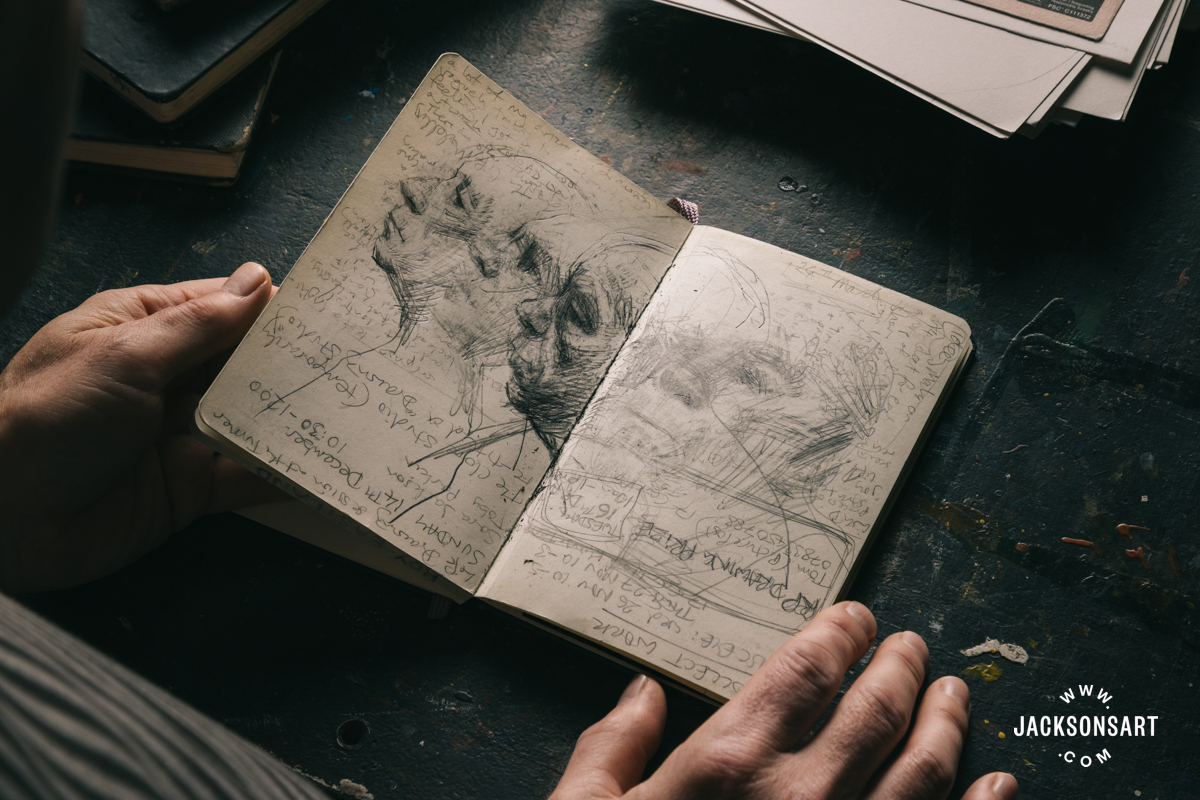
The first drawings I do in a new sketchbook are usually done partway into the book. The opening pages are often among the last pages to be drawn onto. There is no sequence to the drawings, and there are no themes to the drawings other than the act of drawing.
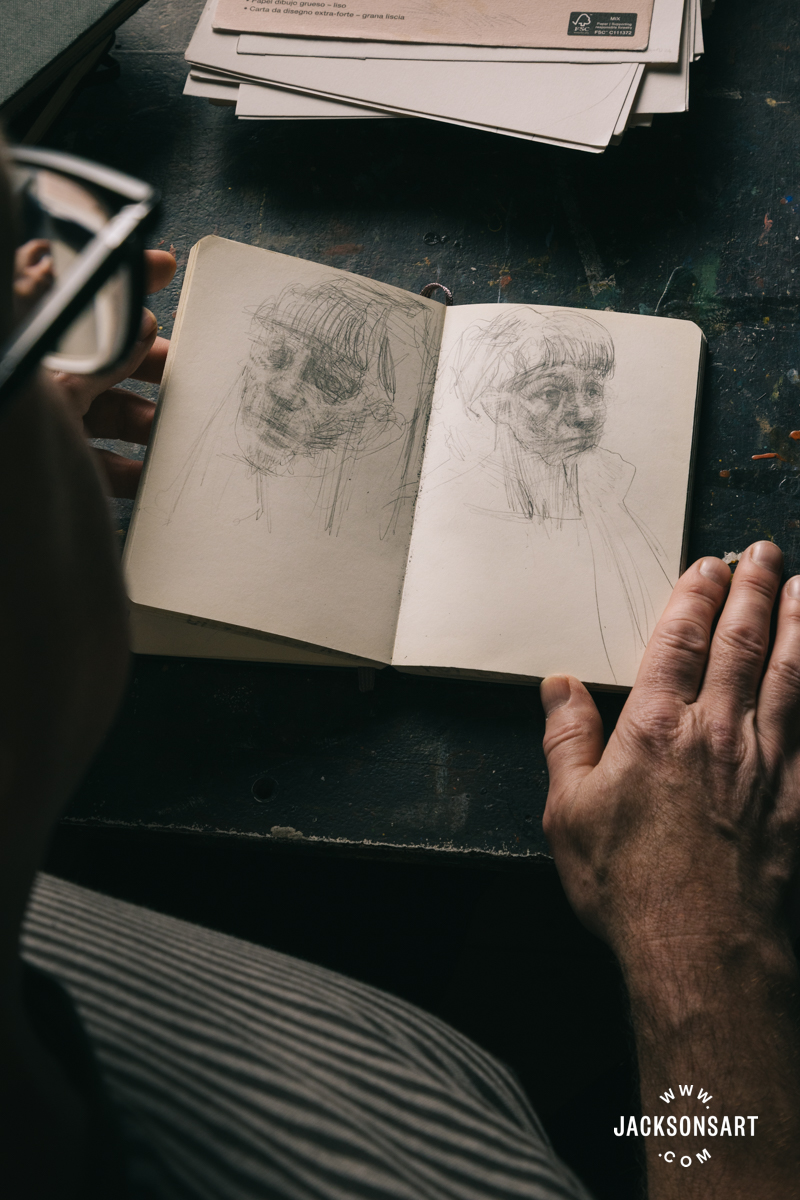
My sketchbook drawings are not preparatory drawings for projects – they are drawings done for their own sake and as a way for me to think about drawing. The drawings in them are mostly of people drawn from life. These are done at odd moments while I’m teaching, at Life Drawing sessions, or drawings of portrait busts done in museums.
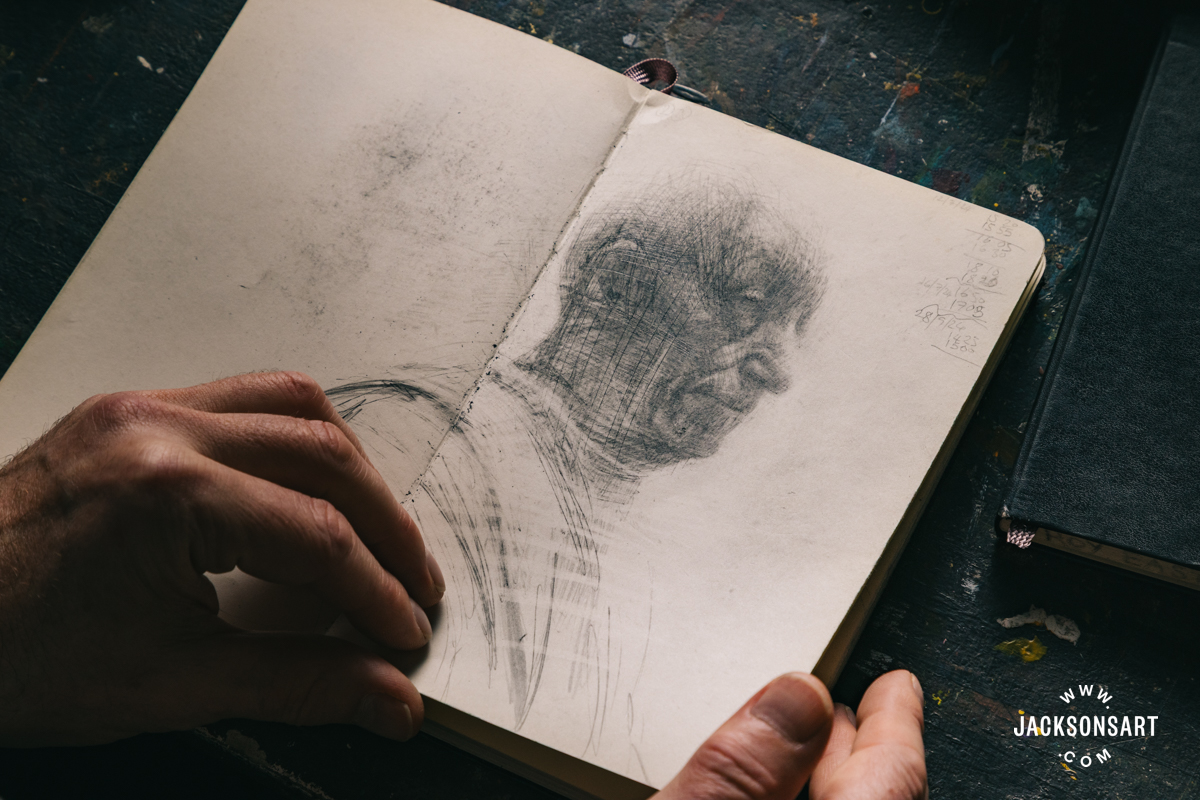
When I’m drawing, I’m always hoping to see a new kind of line or some new way of seeing or thinking. Every now and then something new comes into play. Those new lines arrive in their own time.
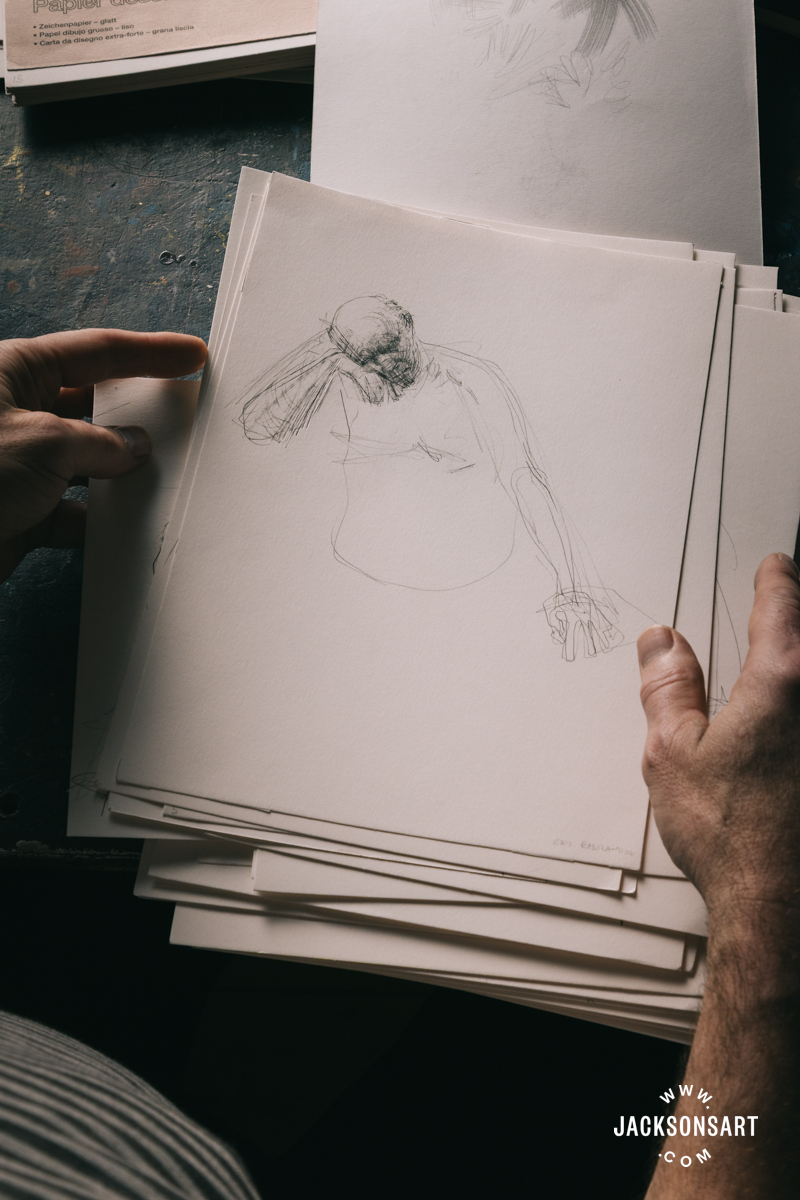
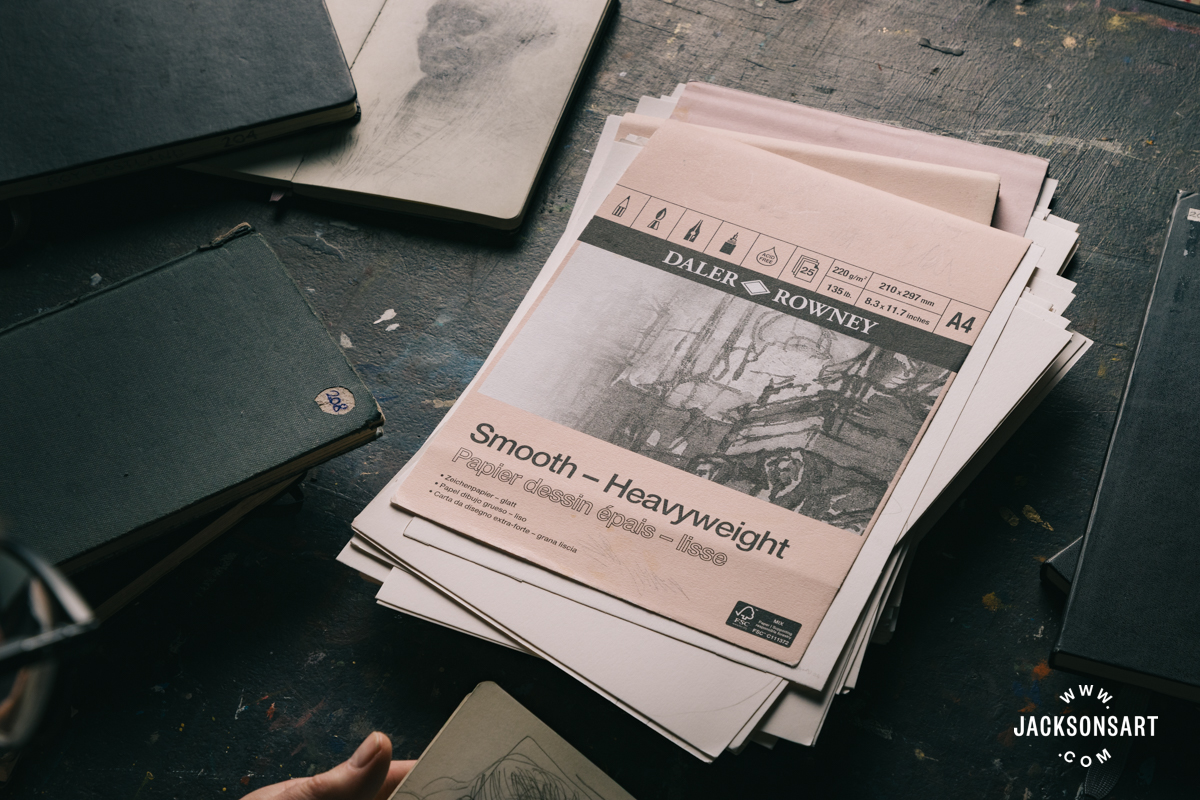
I mostly use Moleskine Sketchbooks (various sizes from A4 to smaller), Daler-Rowney Hardback Sketchbooks 160 gsm A4 and A5, and Daler-Rowney Smooth Heavyweight Cartridge Pads 220 gsm. I find that the slightly card-like paper in the Moleskine sketchbooks is tough enough to withstand a lot of reworking and incisively drawn lines.
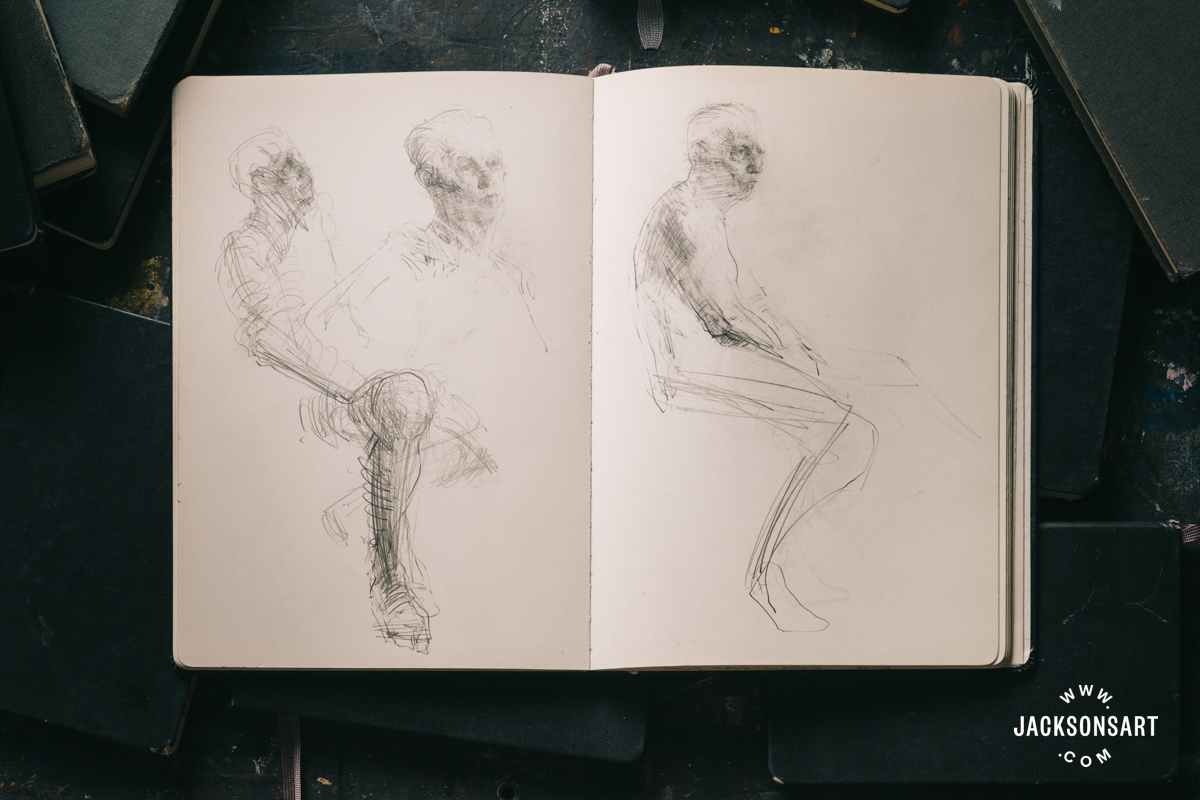
I tend to prefer drawing on the heavier papers because I can work into the surface a little bit more without the paper tearing. Even so, I find that I often tear the surface as I draw. It’s not an intentional effect, but it happens, and I accept it. I’ve yet to discover the ideal paper. Each type of paper forces me to draw differently.
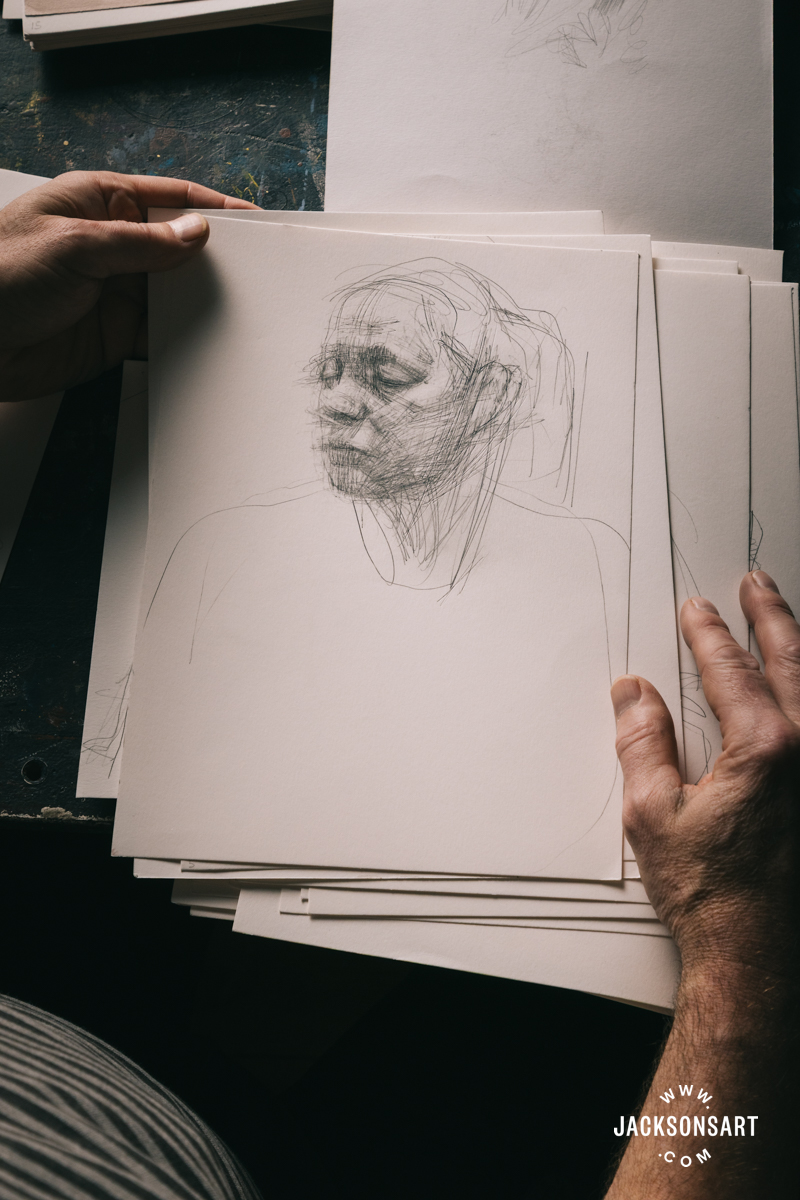
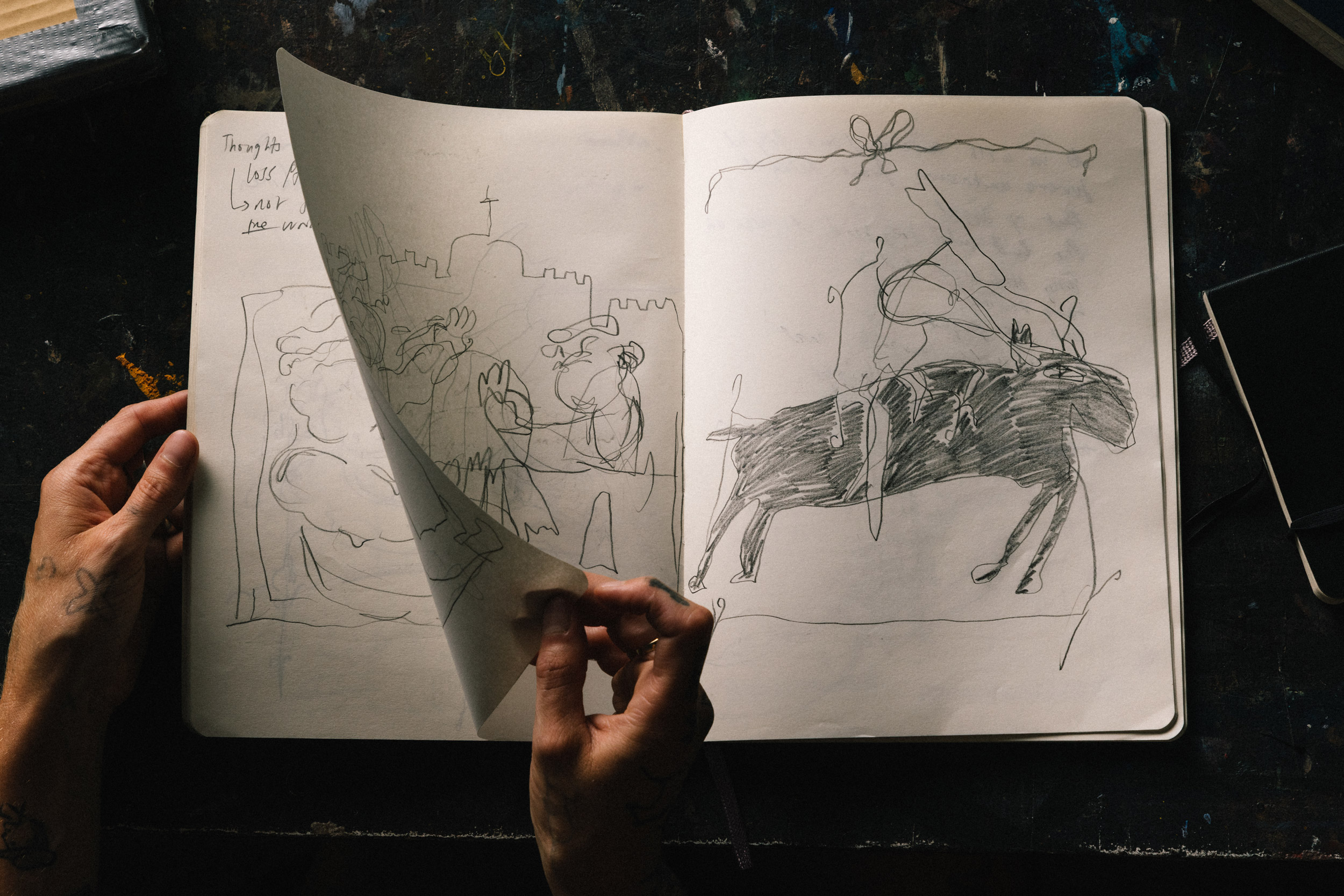
I mostly draw with mechanical pencils because they don’t require sharpening. This allows me to focus totally on drawing without having to stop to resharpen the pencils. I use the rubber to draw with rather than to get rid of unwanted lines. I think of a drawing done from life as an event in which all the moments play their part. My changes of mind are part of the story, and so I allow the ‘errors’ to remain in play.
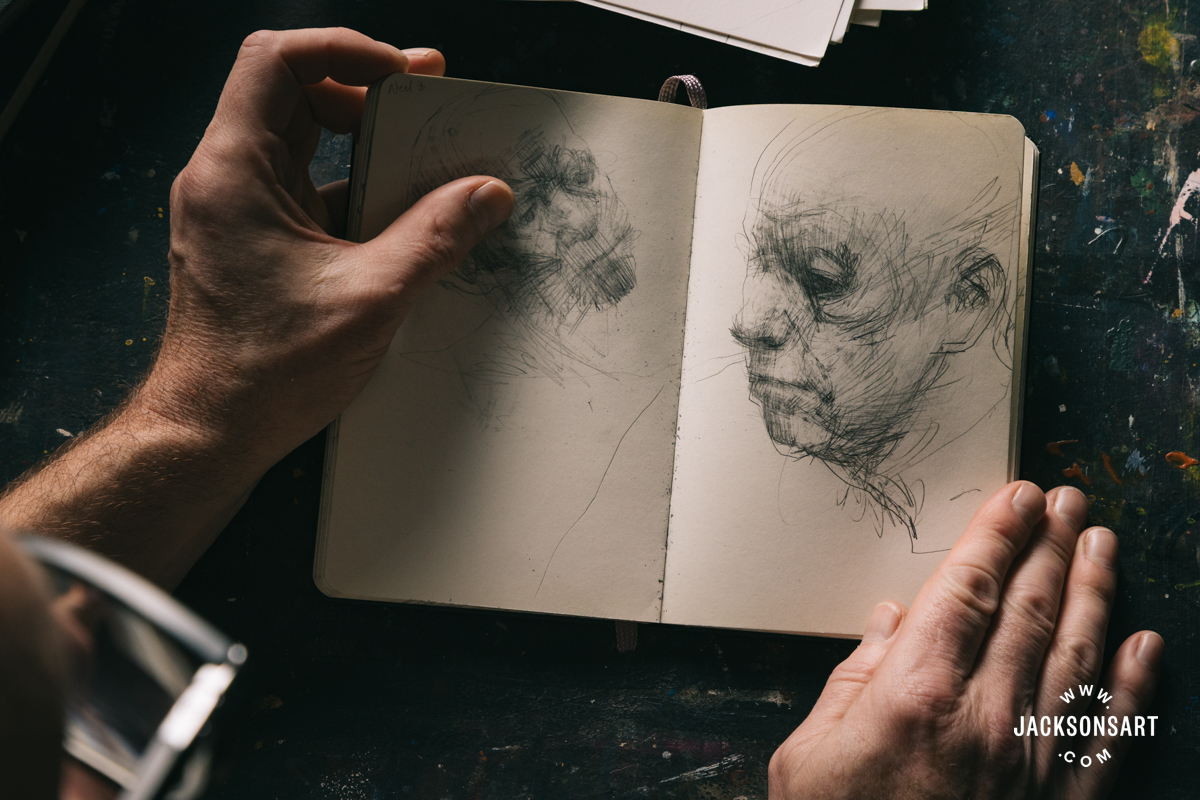
A drawing done from life is never just a copy of a preexisting image; we find and construct our vision of the thing as we draw. Each drawing is a different kind of failure, but they succeed when a part of them works or hints at something which might come into play in future drawings. If as many as one in 20 drawings contain a good line, I’d consider that victory. It’s never about style or good taste. The lines and marks must be the necessary outcome of the drawing process. As soon as a drawing tries too hard to be pleasing, it becomes a cliché. We don’t know what the world really looks like, and drawing gets us closer to that awareness.
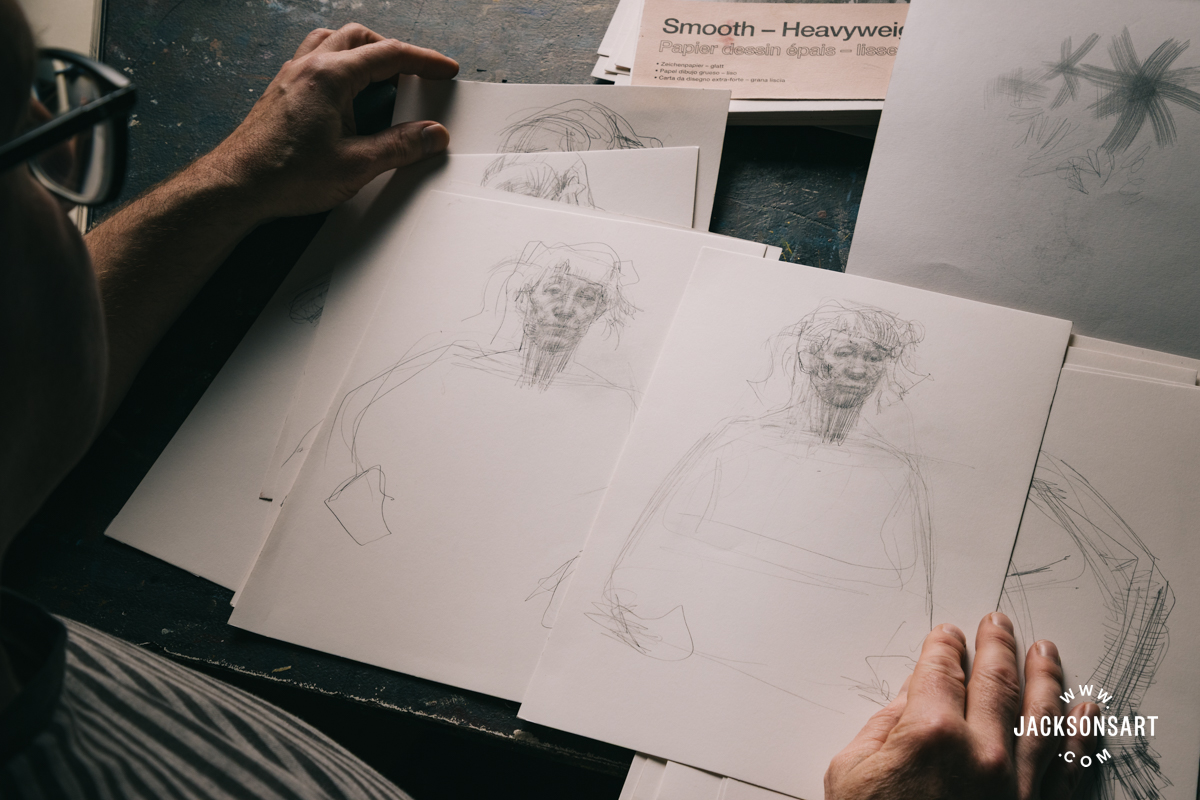
I occasionally look through my old sketchbooks, and when I do, I often find that certain drawings conjure memories. I might remember the moment of drawing a particular line. The drawings might replay feelings connected with those sketchbook pages and certain periods in my life. I notice changes and evolutions in my ways of drawing, and some ways of drawing that seem to always have been with me.
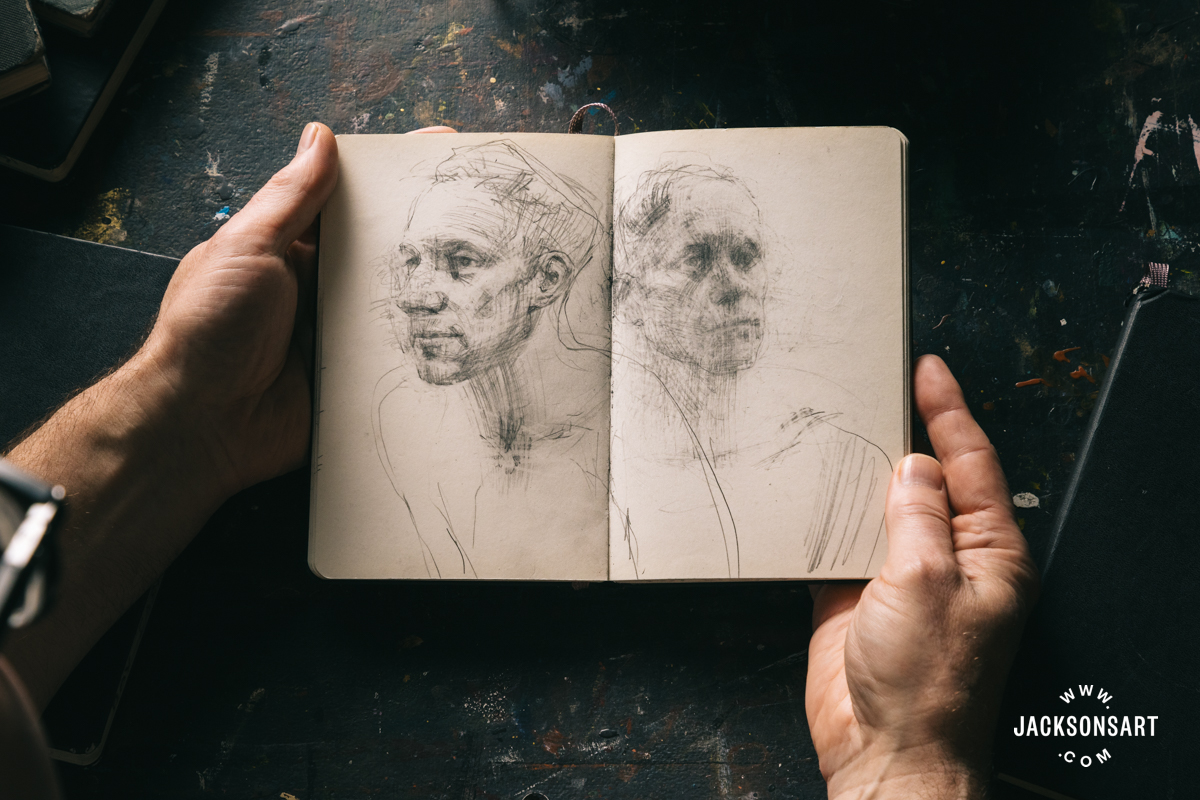
My sketchbook drawings are drawings done for the sake of drawing. They are not preparatory drawings. They are all part of an ongoing effort to learn to draw. Learning to draw is a lifelong project. I haven’t got to the bottom of why I draw or why I find drawings so interesting. I think it has something to do with paying attention to things, pleasure in tracing movement, a way of being in the world, and that feeling of wanting to know what’s around the next corner. Every now and then, a good line, or a new kind of line, comes into play, and that’s a wonderful thing and makes all the bad drawings worthwhile.
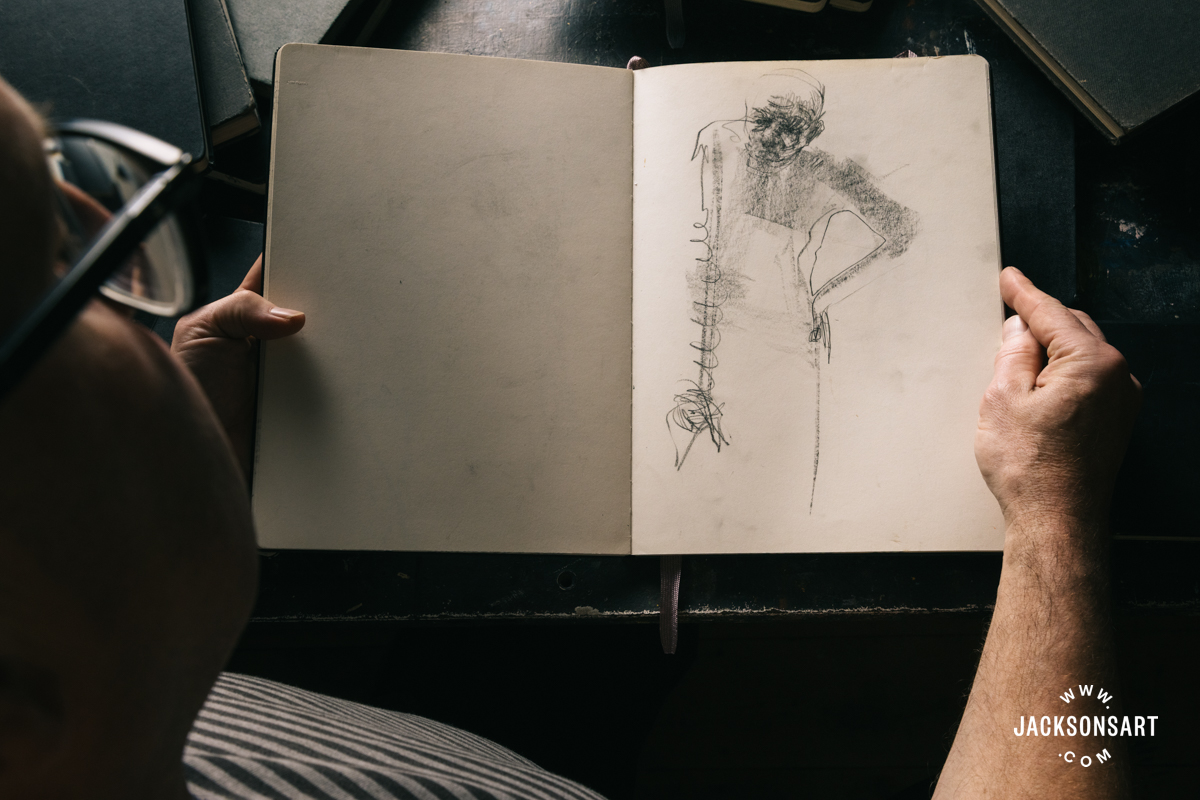
I’m not sure why sketchbooks are so important to me. Maybe they are company. In a funny kind of way, they feel like a familiar but separate part of me. I think there is something about the act of drawing and the act of thinking that are intimately connected. As if movement and touch are ingredients of thoughts and feelings. Drawings are traces of thoughts, intentions, perceptions, and so on.
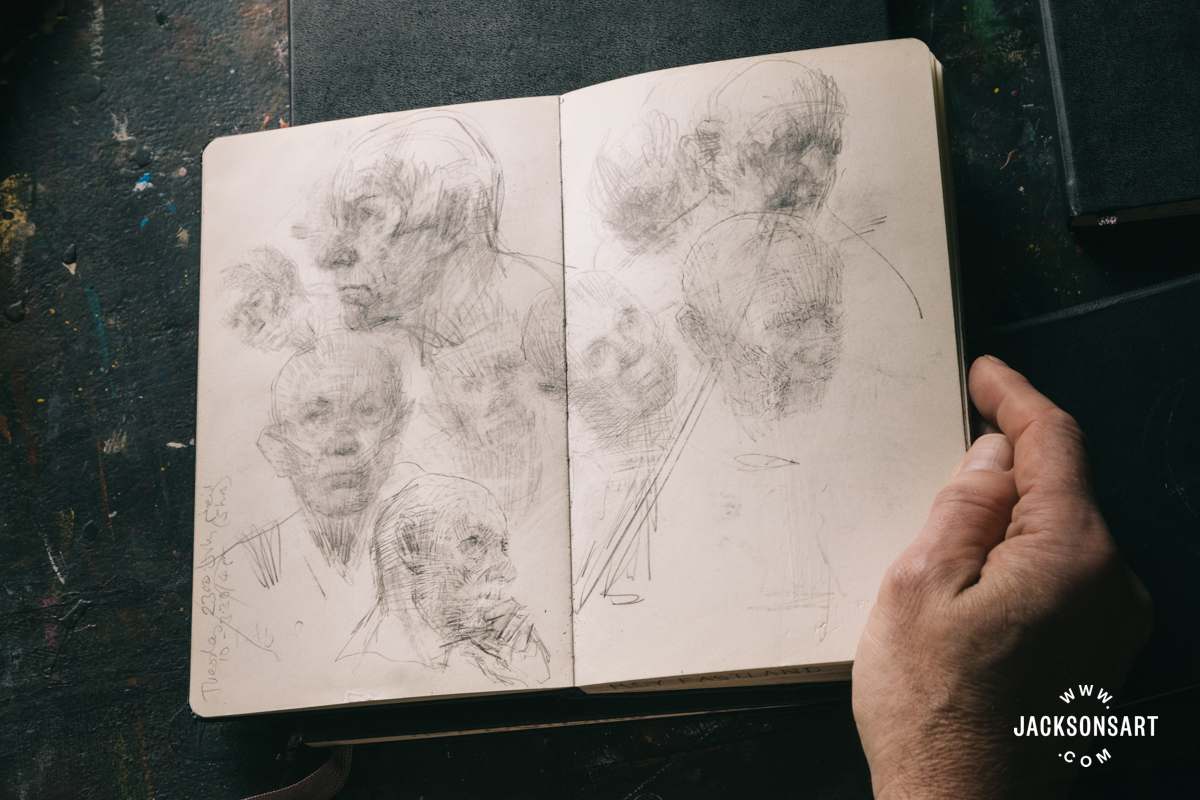
I think of drawing as the art of making meaningful traces. Perhaps drawing is the act of making ghosts? Drawings trace movement, and by implication, life. Each line is its own little life story of beginning somewhere, of change, and of coming to its end.
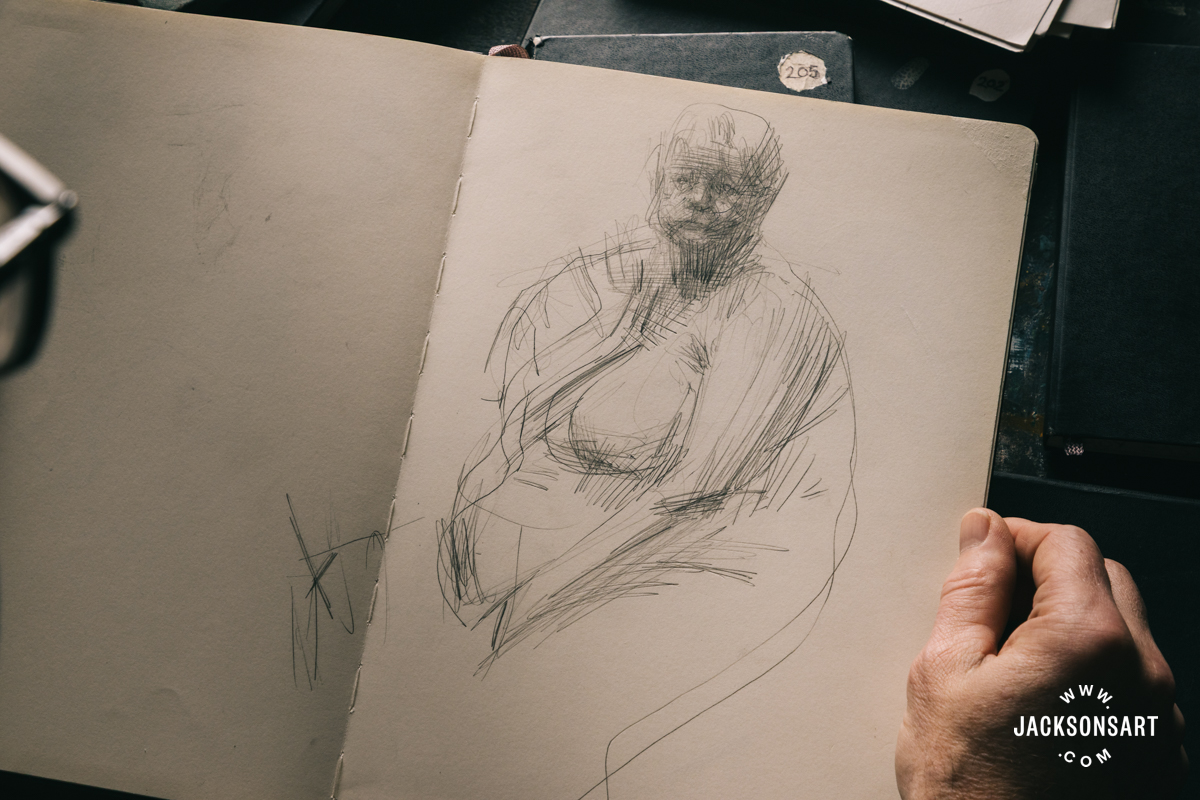
I can’t imagine not using sketchbooks, but they don’t suit everyone’s way of working. I wouldn’t say their use is essential for every artist. I’ve had long periods in my life when I’ve not had the time or means to make art; in those periods, even just occasionally working in a sketchbook has been a way for me to keep myself ‘in the game’. My sketchbooks are entirely personal things. I’m happy for people to look through them, but they are not drawn in with an audience in mind. Even so, I quite like the idea of people who aren’t even born yet flicking through my sketchbooks, somewhere out there in the future.
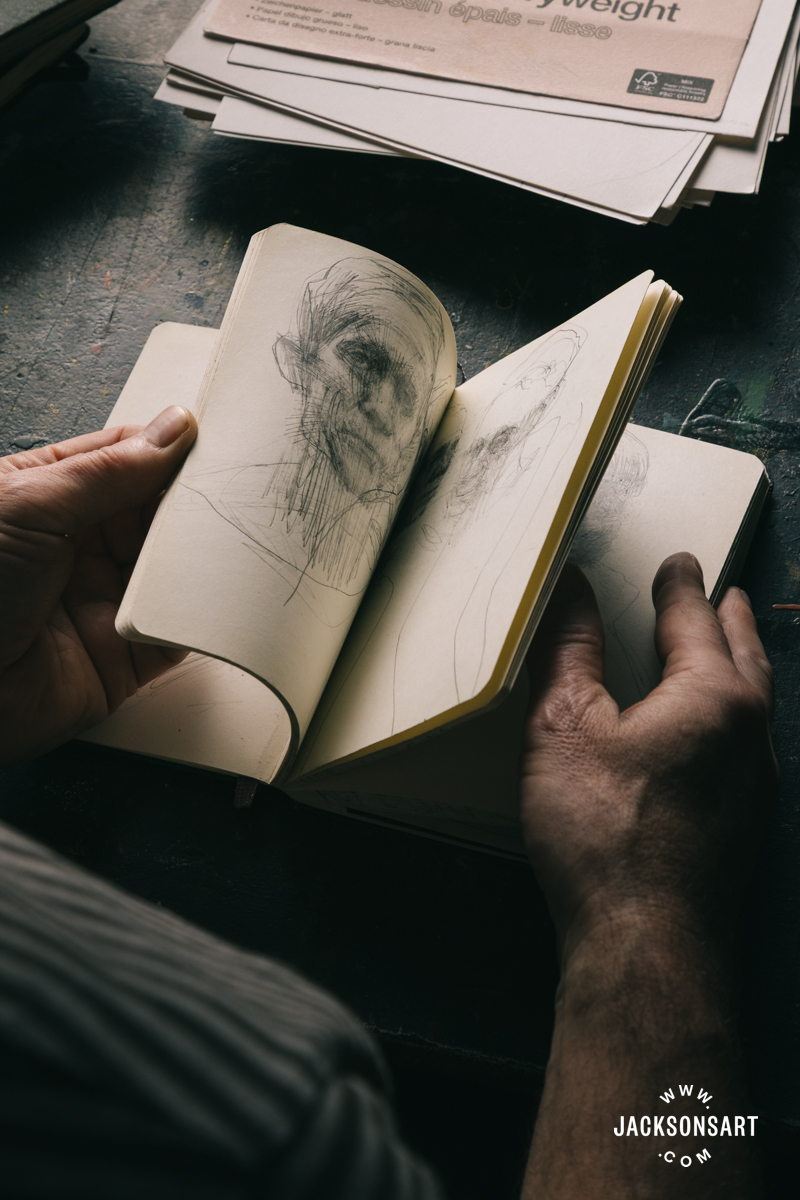
Materials
Moleskine Sketchbooks in A4, 21 x 13 cm, and 18 x 11.5 cm
Daler-Rowney Sketchbooks 160 gsm in A4 and A5
Daler-Rowney Smooth Heavyweight Cartridge Pad 220 gsm
Pentel Mechanical Pencils, HB leads (0.3mm, 0.5mm, and 0.9mm)
Cretacolor Monolith pencil stub, HB, held in a wooden pencil extender
Faber-Castell Grip Eraser Cap (for the end of a wooden pencil extender)
About Roy Eastland
Roy Eastland was born and brought up in Margate, UK. He graduated from Edinburgh College of Art in 1996 and worked as a miniatures sculptor for various games companies, but has focused on art and teaching for the past 16 years. His work is mostly drawing-based. He has taught Life Drawing and given talks about drawing at various places, including The Margate School of Art, University of the Creative Arts in Rochester, Canterbury Christ Church University’s Sidney Cooper Drawing Studios, Draw Brighton, Turner Contemporary, Kent Adult Education, the V&A, and others. Winner of the Royal Birmingham Society of Artists Portrait Prize and the SGFA Small Works Award, his work has been shortlisted for the Jerwood Drawing Prize and The Trinity Buoy Wharf Drawing Prize, The Discerning Eye Drawing Bursary, The Royal Birmingham Society Drawing Prize, The RP Drawing Prize, BP Portrait Award, Wells Art Contemporary and others. He has had solo exhibitions at Anima-Mundi Gallery in St Ives, Archeus Fine Art in London, The Young Gallery in Salisbury, The Beaney Museum and Art Gallery in Canterbury, and various solo shows in Margate.
Further Reading
Jackson’s Art Prompts Course: The Fundamentals of Drawing
The Dark History of the Pencil
The Art of Silverpoint Drawing: History, Materials, and Techniques
Shop Sketchbooks on jacksonsart.com
1 thought on “Inside the Sketchbook of Roy Eastland”
Sorry, I enjoyed this article on drawing. Thank you so much Suzie West.