Today I tried using Winsor and Newton’s Watercolour sticks for the first time. Admittedly, I am not well versed in the world of watercolour sticks. I’m more of a regular watercolour or watercolour pencil kinda lass. However I was interested in seeing how these compared to watercolour pencils. I anticipated I could make intense, broad marks with the flat end of the stick. Combined with gentle watercolour washes, this could turn out to be a mark-making machine of a medium!

Colour
Winsor and Newton sent me 6 sticks of colour: Hooker’s Green, Nickel Titanate Yellow, Opera Rose, Ivory Black, Prussian Blue and Manganese Blue Hue. I was interested in colour strength and whether these really were going to be of a ‘professional’ quality. The verdict is that the saturation varied with each colour. The Opera Rose was very intense, but the yellow was a lot weaker. What I hadn’t anticipated was the difference between watercolour pencil and these. The watercolour sticks are pure watercolour with no wax binder, and they just don’t deposit the same amount of colour on to paper when dry. Not a criticism, but an observation.
Texture
The sticks feel much less oily than a wax crayon, and almost like a stick of chalk, although still very rigid, but not unbreakable! One stick cracked under pressure when I was trying to make some bold dry marks.
How I Used My Watercolour Sticks – Drawing and Then Applying Water
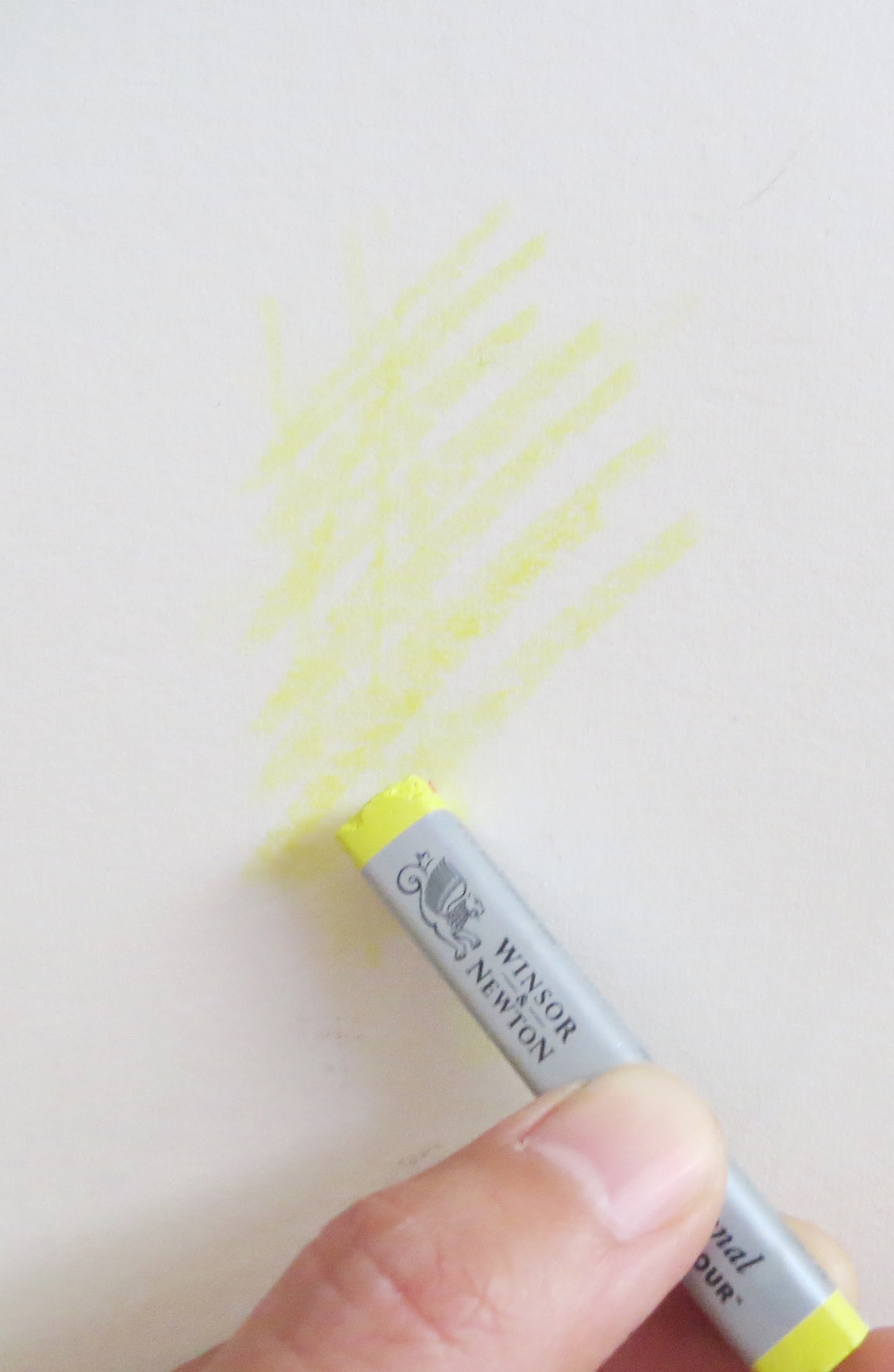
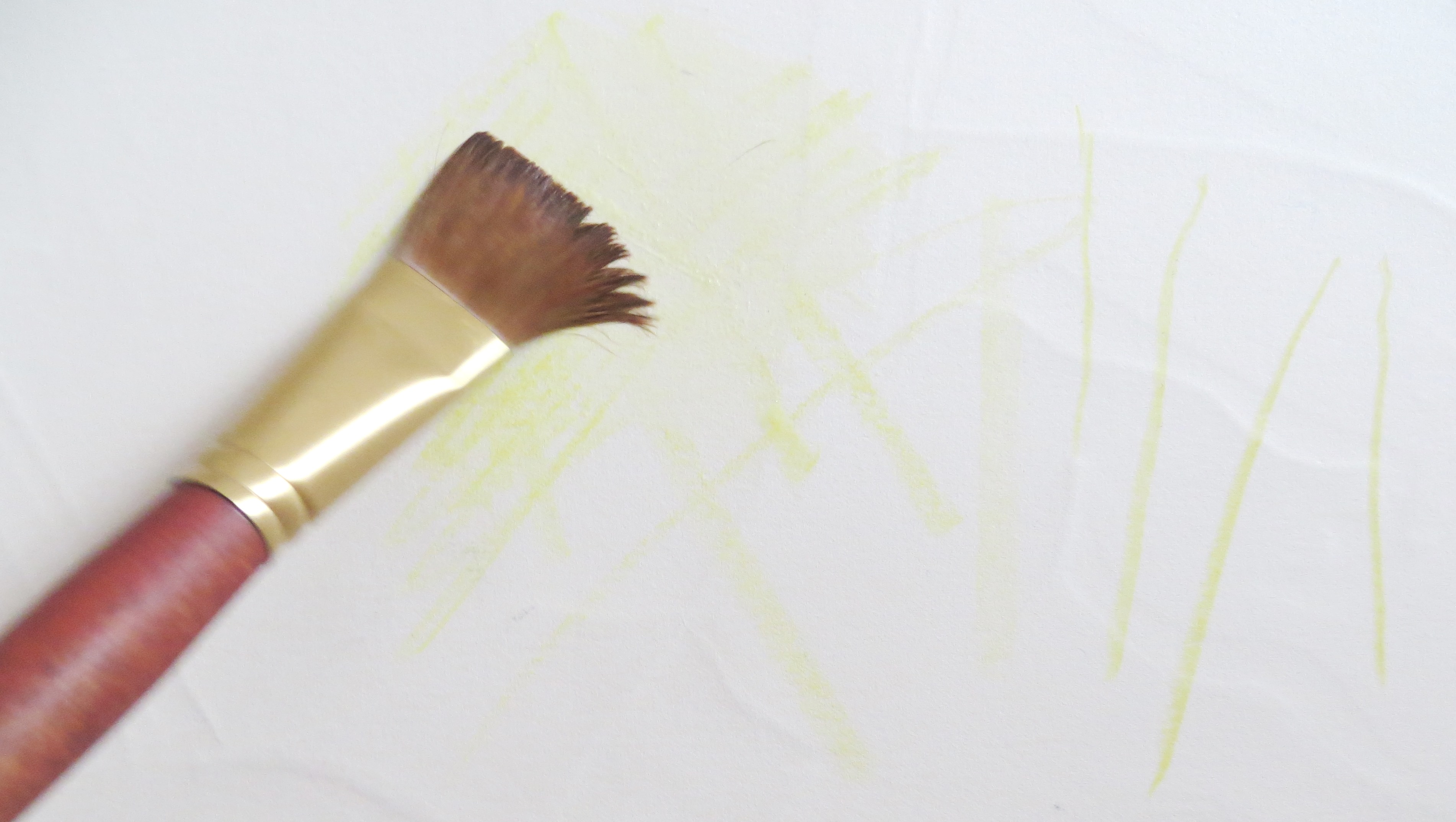
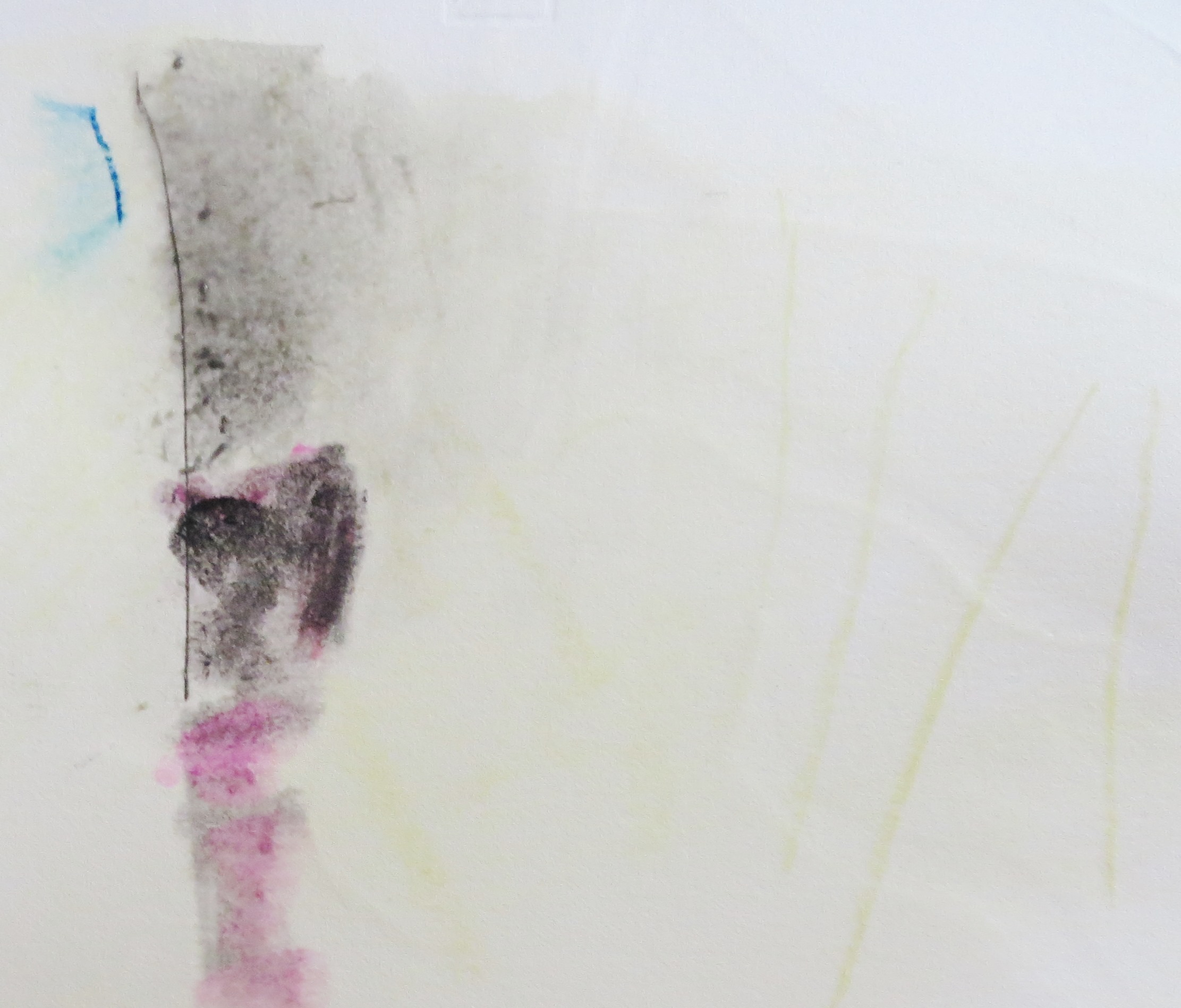
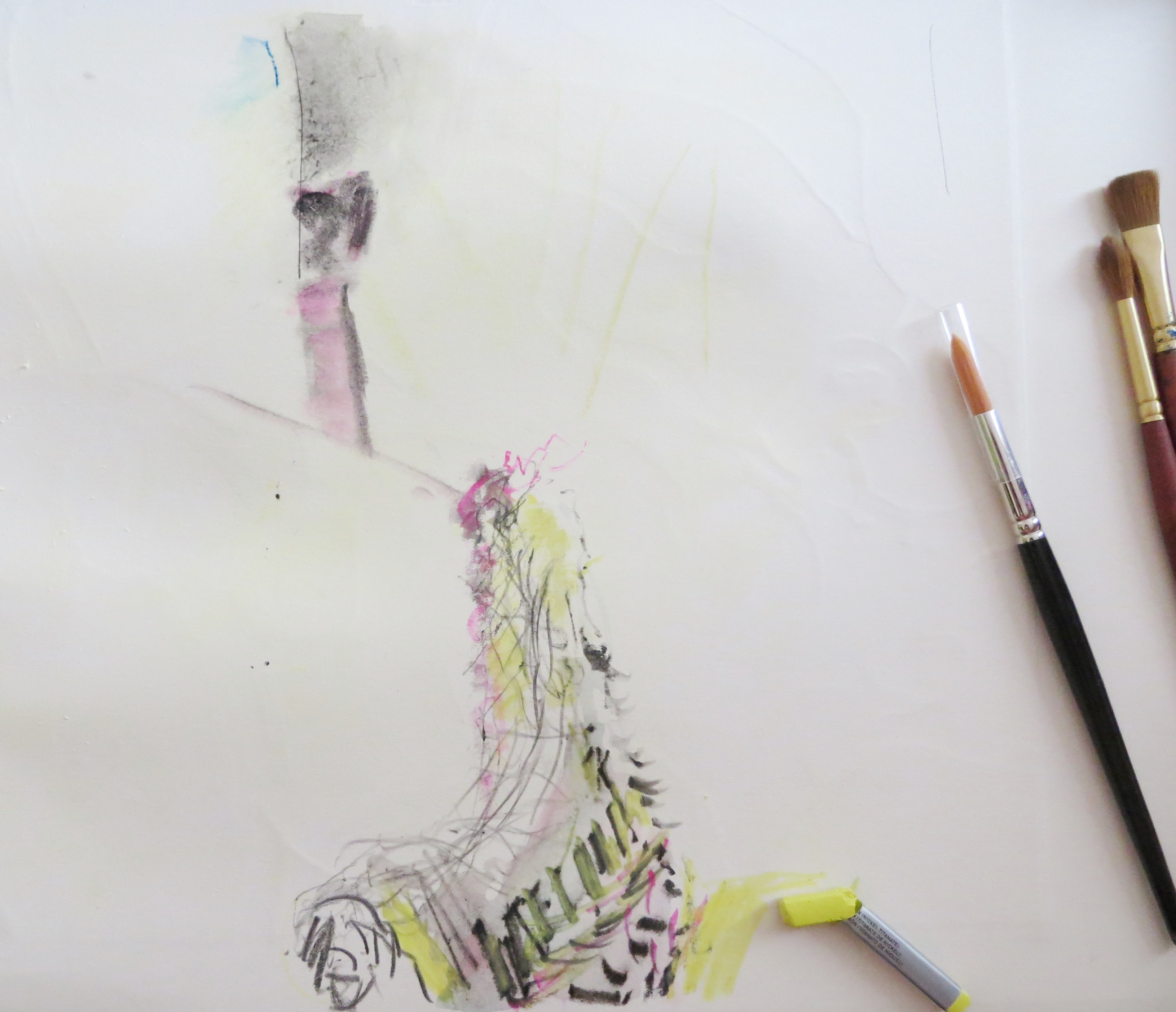
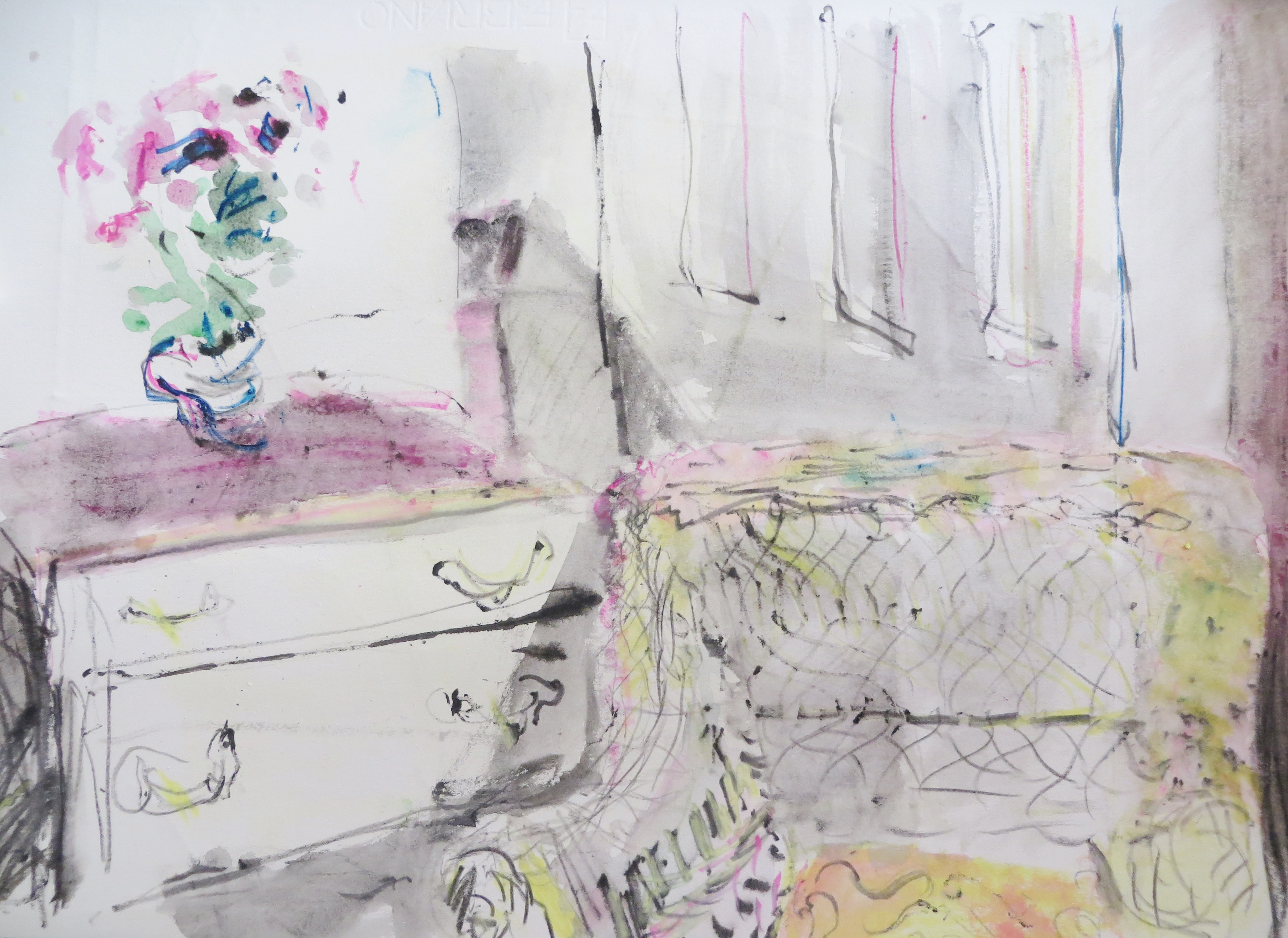
I decided to do a quick study of a wicker chair and a chest of drawers. Firstly, I wanted to put a wash of yellow down first on the paper. I applied the stick dry to begin with as I wanted to see how broad a stroke I could achieve. The colour strength was underwhelming and a lot weaker than I anticipated. However I got a bigger impact when I used the corner of the stick, making pencil-thin lines.
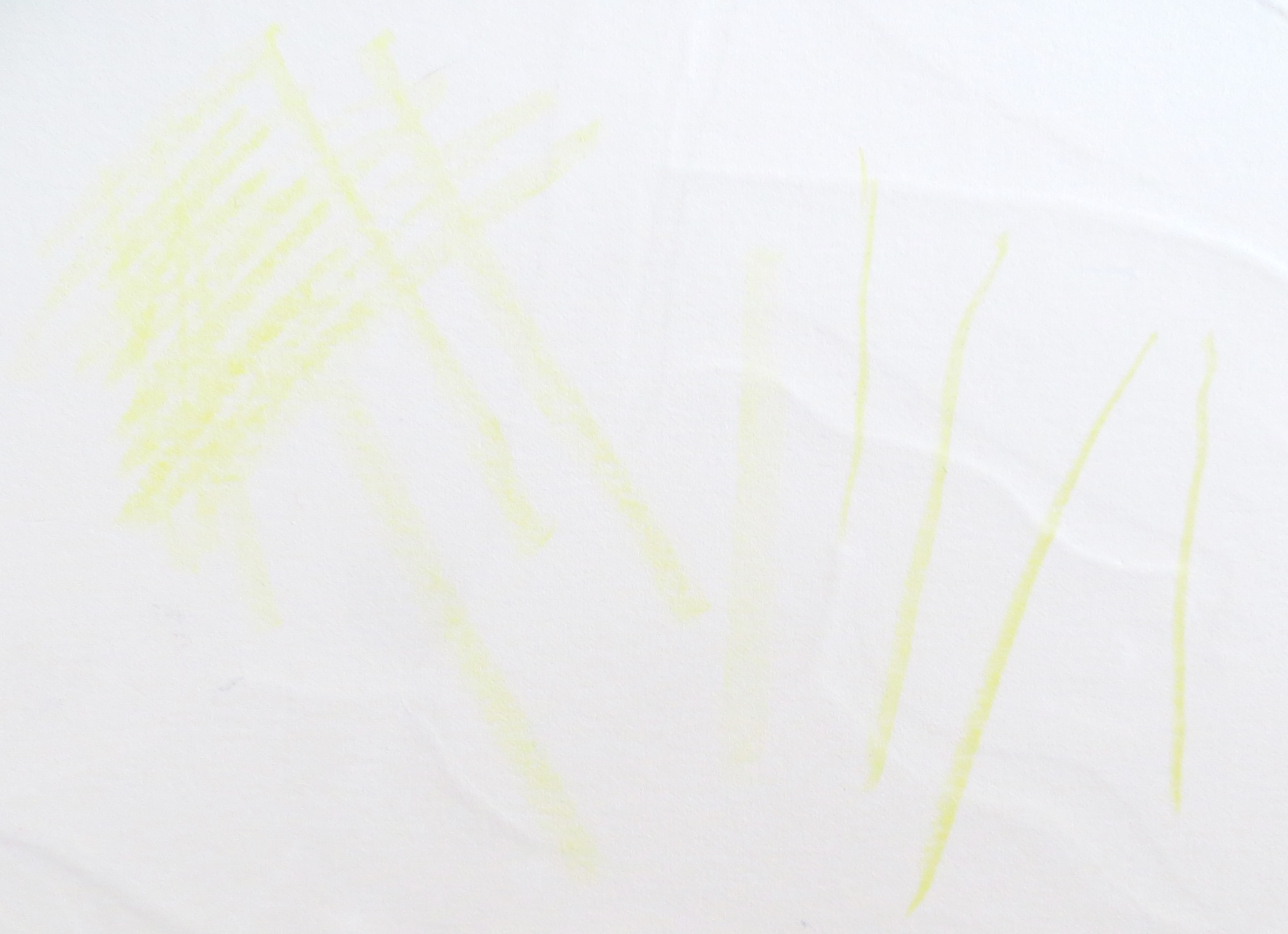
I then applied water over these marks with a broad flat sable brush. I thought the colour would break down and produce an even watercolour wash over the surface – that wasn’t to be either! The drawn marks were still quite prominent, although the water did move some of the colour on to other areas of the paper. Watercolour sticks were not what I expected them to be at all!
Using as Straight Watercolour
I then tried using the sticks as if they were watercolour pans, brushing a wet brush over the stick and applying the colour. This worked very nicely – the colours appeared just like watercolour, and were really easy to use in this way. The sticks didn’t break down too much so I never felt in any danger of applying too much colour at any point. Also I loved how I could work wet-into-wet really easily and how this enabled me to get the saturation I was looking for.
Drawing into Wet
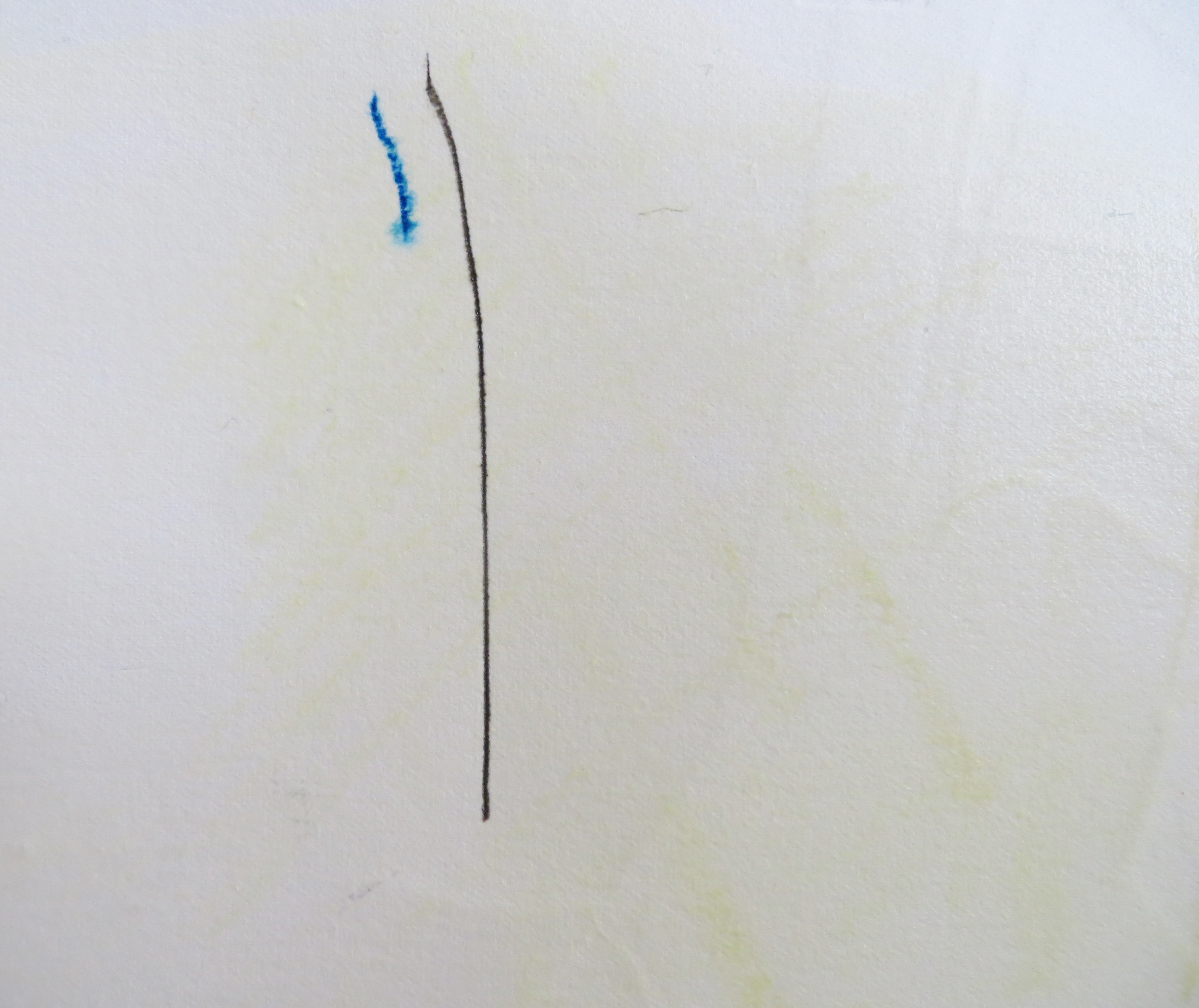
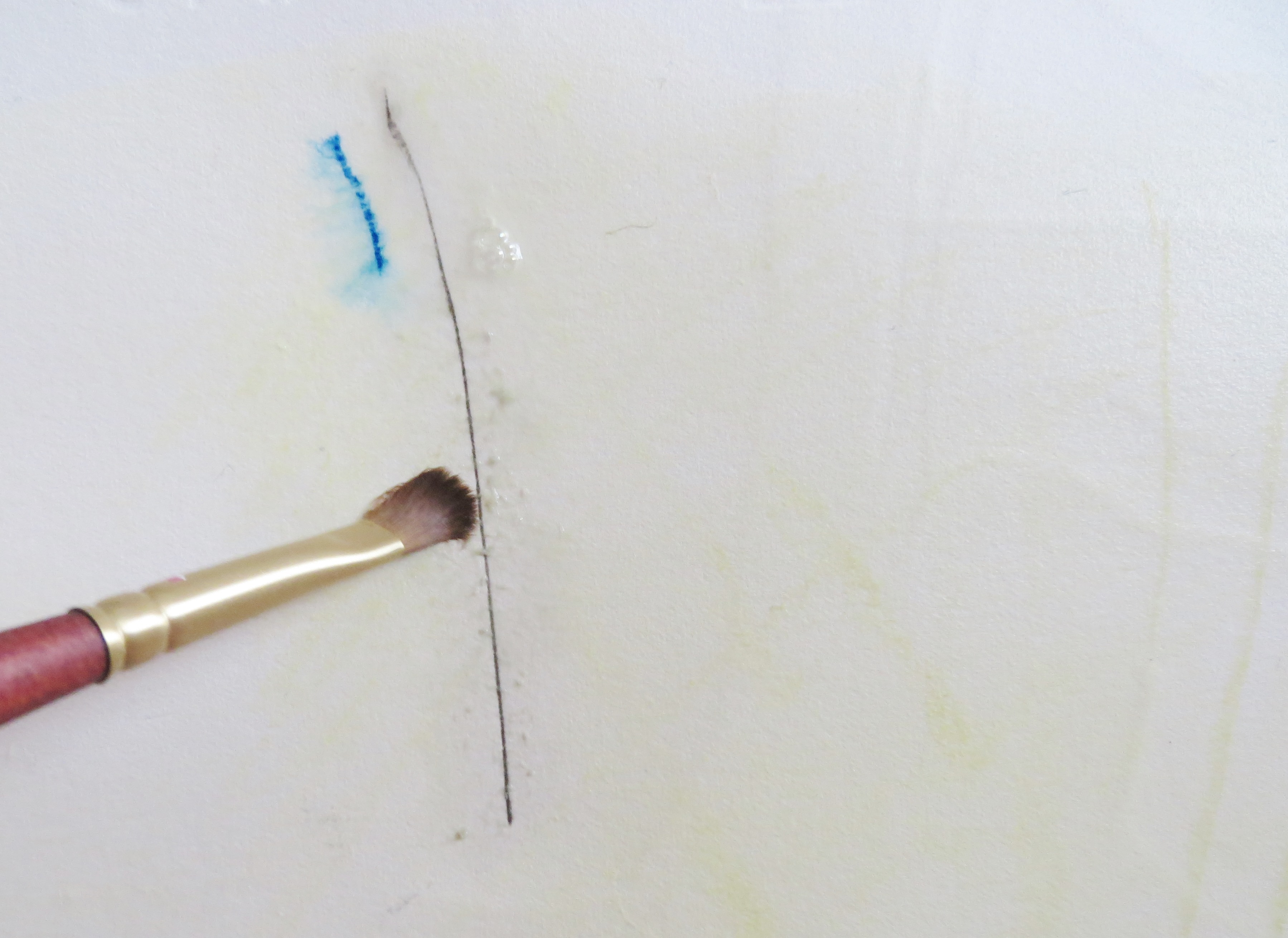
Although I hadn’t realised, my paper was pretty damp across the whole surface at this point. So when I applied my stick of Prussian Blue onto the paper the shock of blue that appeared was a fantastic surprise; so this is how to get dramatic marks! The only downside being I had intended to pick up the Ivory black and not the Prussian blue…we’ve all been there. I was curious as to whether a drawn line on wet paper would be easier to disperse than one drawn on dry paper, so I got my wet brush and dragged it over my drawn line of colour, but yet again, the drawn line was going nowhere, and very little colour moved from the drawn line with the wet brush.
Getting on With It
At this point I realised these sticks were not going to perform in a way that I was expecting. I decided to forget about testing their characteristics and focus on painting my chosen view. This is the point where I started to get somewhere, and started enjoying the medium. I enjoyed the versatility of being able to apply marks in all kinds of ways very quickly. My picture became all about combining water colour marks with very intense saturated marks that had been drawn on to wet paper, and thinner, scratchier marks made by applying drawn marks on to semi-dry or dry paper. I knew I could soften some lines a bit with water, and I knew I could layer scratchy lines onto watercolour washes provided I allowed enough drying time in between.
With the Right Paper Blending Techniques Are Possible
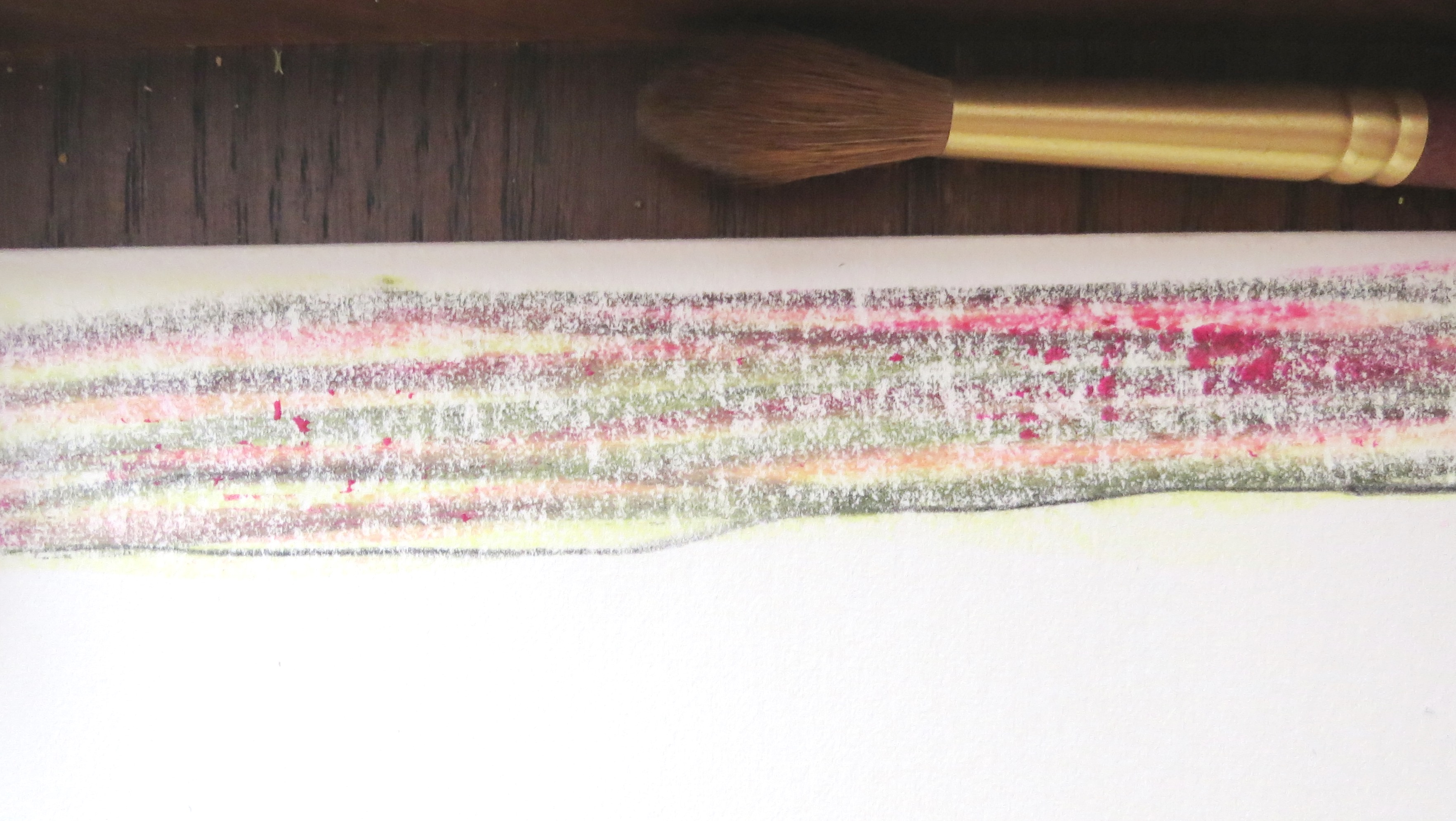
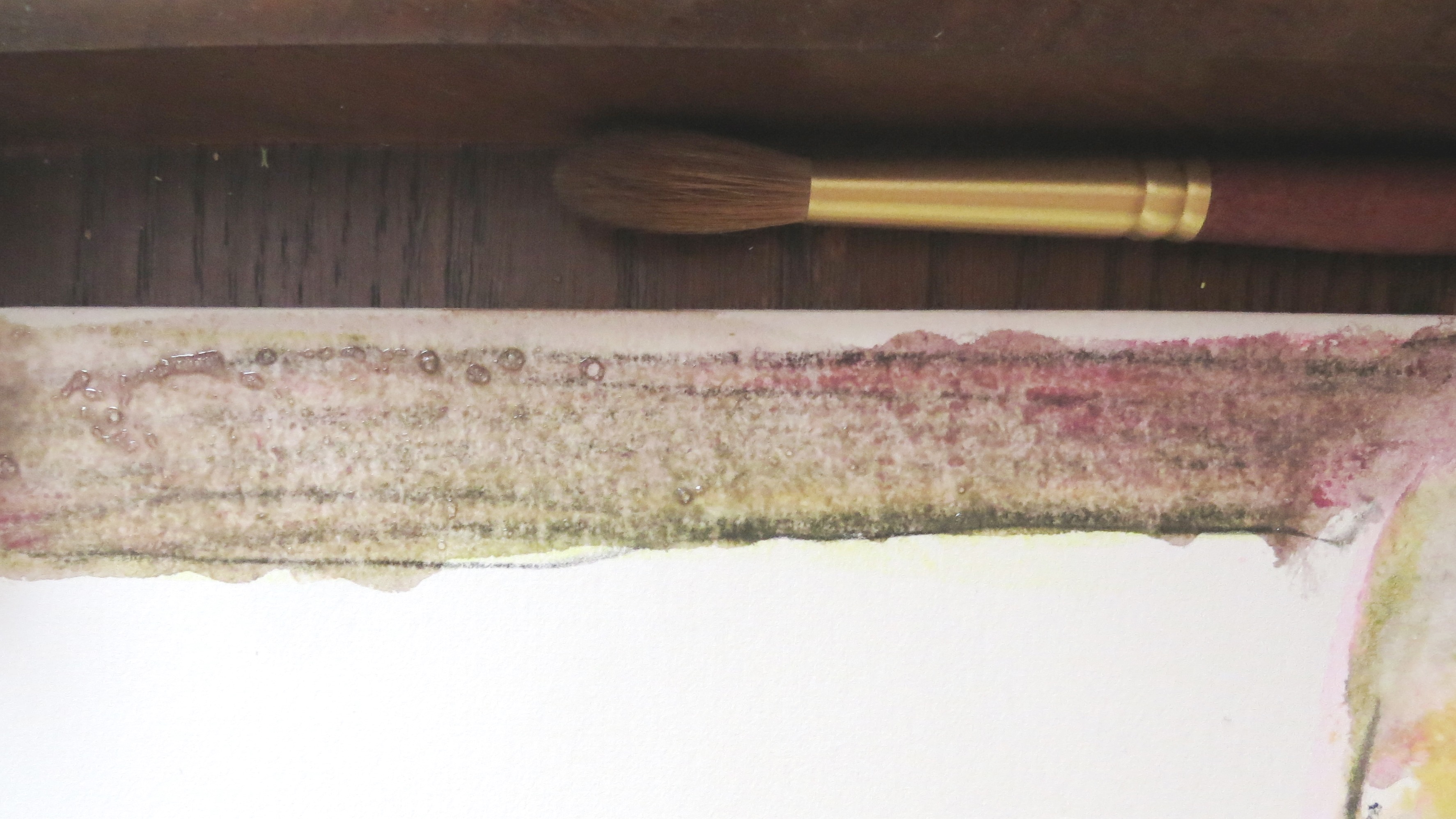
I was using a heavyweight Fabriano paper which did allow me to pile on the water in some areas. The photos below show how I mixed colour – drawing on broad strokes of opera rose, ivory black, hooker’s green and nickel titanate yellow, and then how this looked after a doused it in a lot of water.
My Favourite Marks
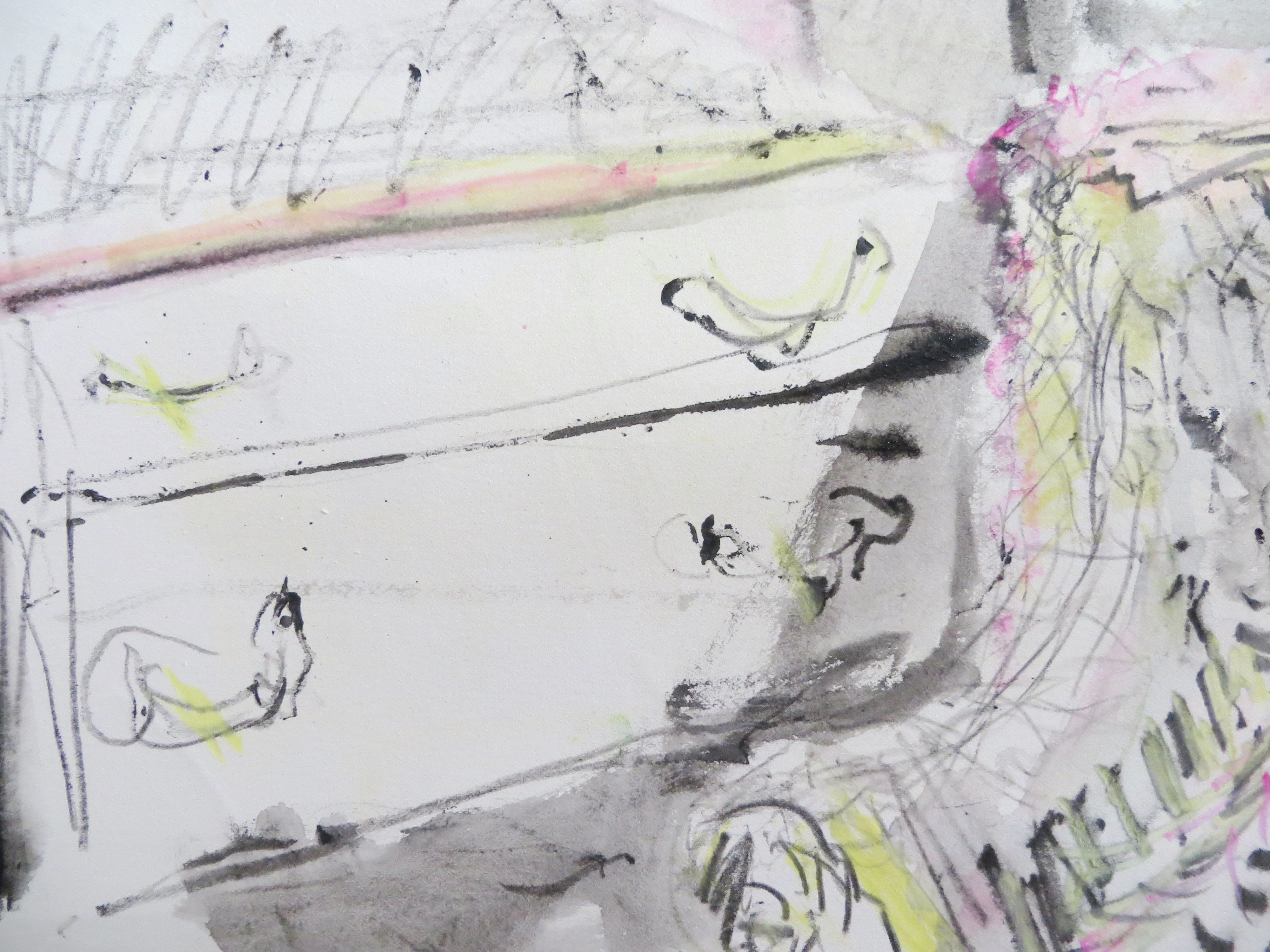
My favourite marks were here on the chest of drawers. I love the alchemy of how the drawn ivory black marks react with the water in wet areas, and then appear all scratchy and thin in the drier areas of the paper. The marks here remind me a bit of using ink and a scratchy uneven nib – I felt I was channelling my inner Ralph Steadman!
The End Result and Verdict
A slow burner of a medium – at first I thought I didn’t like them, but having made this quick little sketch I can see their potential and I would try them again. I see them as a drawing material rather than a painting material, and I certainly don’t see them as a kind of drawing/ painting hybrid as watercolour pencils are. If you are looking to create something expressive, want to work with something unpredictable, and want to use something that isn’t as intense as ink, then try Winsor and Newton Watercolour sticks! I am sure that I have only scratched the surface of their potential.
Shop Winsor and Newton Watercolour Sticks at jacksonsart.com