



Drying Oils
Drying oils are the binders used when making oil paint, the liquid that binds the pigment powder into a paste and then when exposed to air hardens into a durable, dried paint film. We say that oil paint dries, but it doesn’t dry like acrylic or watercolour paints do, by evaporation, rather the paint hardens. Drying oils are used for oil paint because they are polyunsaturated oils. This means that they will absorb oxygen and harden, unlike mono-unsaturated oils like Olive Oil, that will not absorb enough oxygen to ever harden. The drying oils used for oil painting include linseed (flax), safflower, poppy and walnut oils. In addition to being used to make oil paint they are also the ingredients used when making painting mediums to add to the paint to adjust its qualities. Mediums are usually made from a drying oil and either a resin (like damar) or a solvent (like turpentine). You can also use oil on its own as a medium to make the paint flow more, it just takes a drop to make it more liquid. When it is more liquid it leaves less of a brush mark and flows more readily so you can paint finer marks for detail work.
The various drying oils have different drying times and properties. Mixing them with oil paint modifies the characteristics of the paint. They can increase the flow, lengthen or shorten the drying time, make it more transparent or opaque, and change the gloss. Some oils and mediums cause yellowing but dry faster and others do not affect the colour, but dry more slowly. You need to make choices about the qualities most important to you. For instance you might want to be sure to use a non-yellowing oil with white paint even if it means you must wait a longer time for it to dry.
The principle of painting ‘fat over lean’ must not be forgotten as any partially dry layers that are being painted over will continue to dry and change size and may affect the layers on top. By insuring that later, upper layers dry more slowly than earlier, lower layers the paint will not crack or separate. If the layer has more oil it will dry more slowly and be more flexible so you are assured of a stable structure.
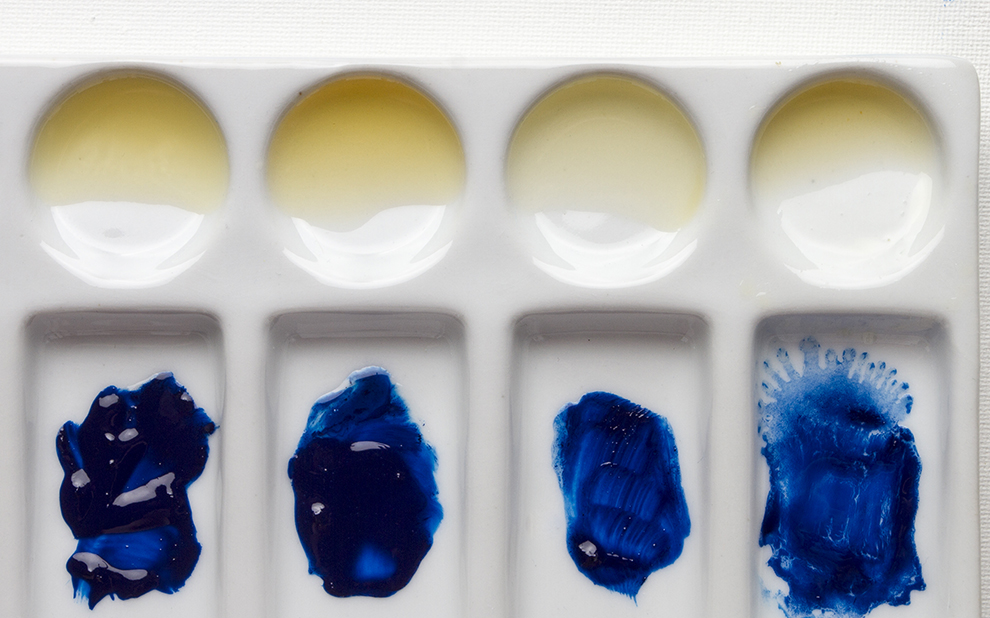
Types of drying oils:
Cold Pressed Linseed Oil (Unrefined):
Pale yellow in colour, increases gloss and transparency. Reduces brush marks. Dries with the most flexible film of all the oils, so less likely to crack. Dries relatively fast. Will yellow over time so many artists and paint manufacturers avoid using it with whites. The traditional oil to use.
Refined Linseed Oil:
Hot (steam) pressed oil, alkali-refined for artists’ use. This pale coloured oil increases gloss and transparency and slows drying time.
Stand Linseed Oil:
Oil heated until it changes at the molecular level. Heavy and thick it may need to be thinned with solvents. It is lighter in colour and yellows less with age than other oils. Dries to a smooth, elastic, enamel-like finish not showing brush strokes. Slow drying.
Poppy Oil and Safflower Oil:
Natural pale or colourless oils that yellow less than linseed oils so are good for making white paint and mixing with whites. They dry more slowly than linseed oil. Weaker film than linseed oils which can promote cracking with aging, so less useful for the lower layers of a painting.
Walnut Oil:
Non-yellowing and dries a little faster than safflower and poppyseed oils. Glossy, and hard-wearing over time. Adds vibrancy, fluidity and resistance to cracking and yellowing.
Drying Oils on the Jackson’s Art website
All seed and nut oils will go rancid (oxidise) when exposed to air. This is part of the natural drying/curing process of the paint. But when still in the bottle they can spoil. So like nut oils for use in the kitchen you will want to keep them cool, in the dark and in small, fully-filled bottles so less air is inside the bottle, and don’t buy too much in advance.


