



Painting wet-into-wet has been around for centuries. It is a technique of direct painting. The Italians call it ‘alla prima’. Some of the Pre-Raphaelites used this technique.
Over the years a number of artists who teach the wet-into-wet method have promoted the use of a ‘liquid white’ oil paint mixture sometimes called ‘magic white’ or ‘flow white’ that is used to thinly coat the canvas with a very large brush before you start painting. The oil paint applied on top blends easily because of this wet layer underneath and mixes into the first layer and dries slowly. (I have heard that ‘liquid whites’ are thicker than ‘magic whites’.) Because there were so many students who wanted an already-mixed ready-to-use version of this paint a number of art supply companies over the years have produced versions of this oil colour. DaVinci Paints used to make it and called it ‘White Painting Base’. It is basically a slow-drying thinned titanium white. Some pre-made versions are considered student-grade and some yellow quite a bit. To make something similar you simply thin the titanium white oil colour with stand linseed oil or regular linseed oil and solvent (turpentine or white spirits).
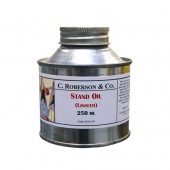
Some artists use a style of painting in oils where they coat the canvas thinly with a clear coating of linseed oil, stand linseed oil or safflower oil (for oil painting) before they start painting to give a ‘couch’ to paint into – a sticky, slippery, slow drying surface. They brush it on and wipe it off with a rag, leaving a bare minimum of coating. Some artists use a bit more on the surface and call it ‘liquid clear’, they usually add a small amount of solvent (odourless mineral spirits or turpentine) to their linseed stand oil to use it as a “liquid clear” (5 parts stand oil : 1 part solvent).
A “liquid white” type of coating:
1 part Titanium White oil colour
1 part Linseed Oil (may eventually yellow a bit) or Safflower Oil (for oil painting) (won’t yellow) or other oil painting oil
1 part Solvent (odourless mineral spirits or turpentine)
Mix it all together, stir well.
You can adjust this ratio to be more “fat” or more “lean” depending on the amount of solvent you add. Fat will dry slower and lean will dry faster. Some artists double the amount of solvent.
Some artists use a similar style but mix it on the canvas by coating the canvas with a very thin coat of linseed stand oil. Then, using a large brush, they apply a thin layer of titanium white.
The advice I have heard over the years is to use as little as possible of any of these mixtures to coat your canvas because adding so much oil early on is not very stable and that you should finish your painting in one go, which is always the idea with wet-into-wet painting anyway.


1 thought on “Liquid White Oil Colour for Alla Prima Techniques”
Very useful info.I am going to start en plein air painting in Cumbria next week.
Comments are closed.