



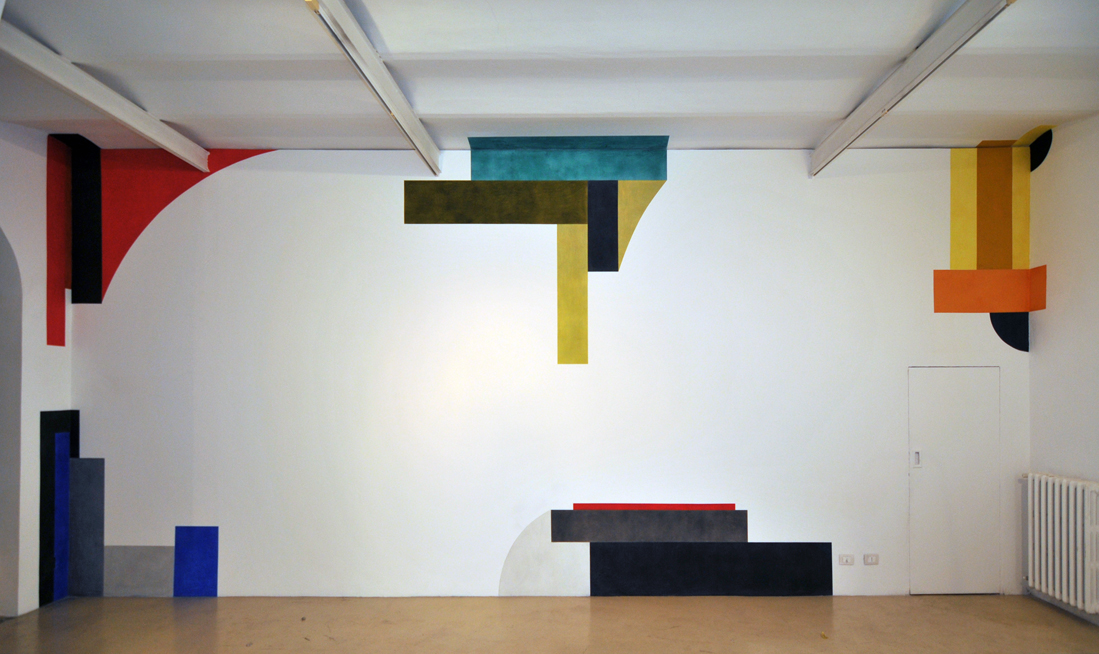
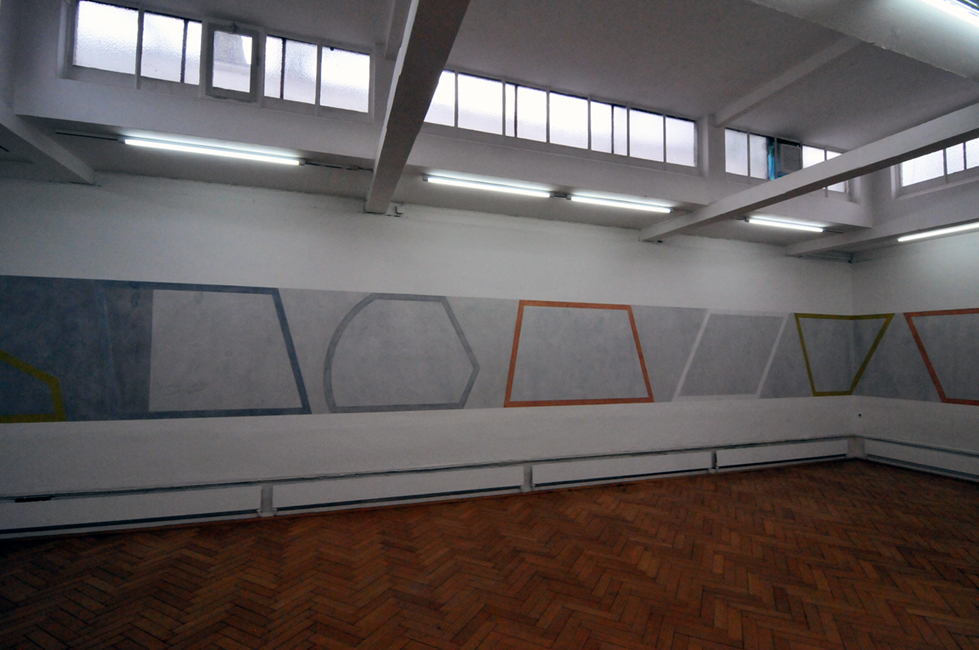
David Tremlett is an English Sculptor, installation artist and photographer. He is best known for his pastel – rendered room installations, where he composes huge designs comprising of bold colour-filled geometric shapes. These arrangements of colour and shape often alter our perception of the room itself and its structure and other formal characteristics, such as its texture and dimensions.
David Tremlett is also known to create large scale outdoor pieces, including the decoration of the Capella Delle Brunate, La Morra Barolo, Italy (with artist friend Sol LeWitt) as well as the stained glass windows for the Church of St. Peter and St. Paul in Villenauxe-la-Grande in France.
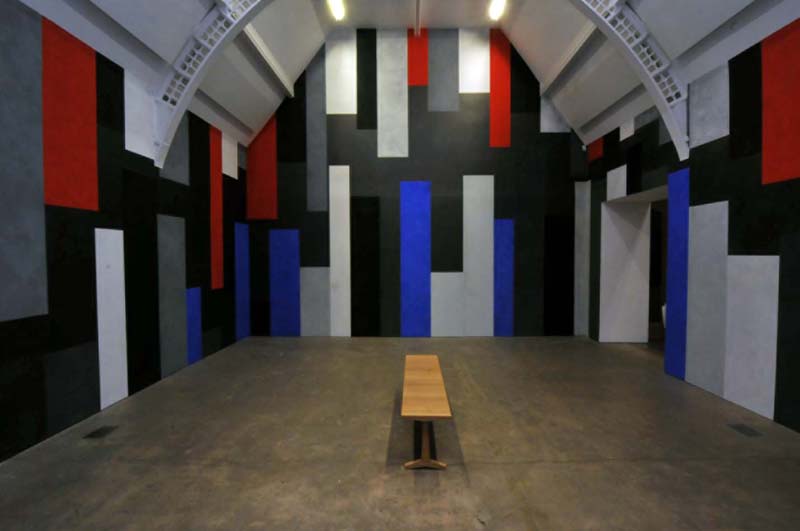
David Tremlett was nominated for the Turner Prize in 1992, and this year brings out his own choice of colours in a new Unison pastel set. We asked him a few questions about his works in pastel.
Lisa: What attracted you to the idea of using pastels for your large scale wall drawings?
David: Pastel is primarily a dry product that comes in a small stick. Yet that small stick, when spread / massaged over a surface covers a large area .
Lisa: What is the process behind making a wall drawing, from design to execution?
David: Once the surface is prepared (normally white Matt paint) the pigment is rubbed on by hand and finger into well prescribed areas, to create a desired finish.
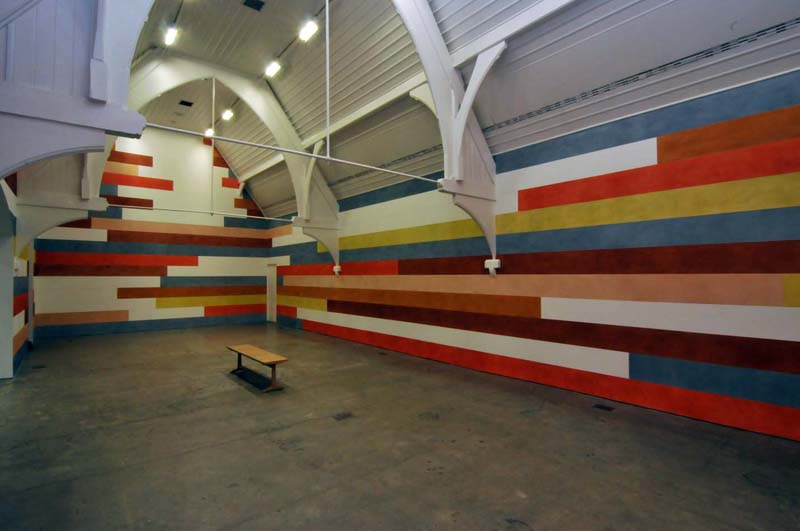
Lisa: What inspires your colour choices?
David: The particular space (room, ceiling etc) that is being drawn on to and many years of travel in different parts of the world.
Lisa: What concerns are you exploring in your wall drawings?
David: To break the symmetry or the particular construction of a space and attempt to create something radically new on the surfaces.
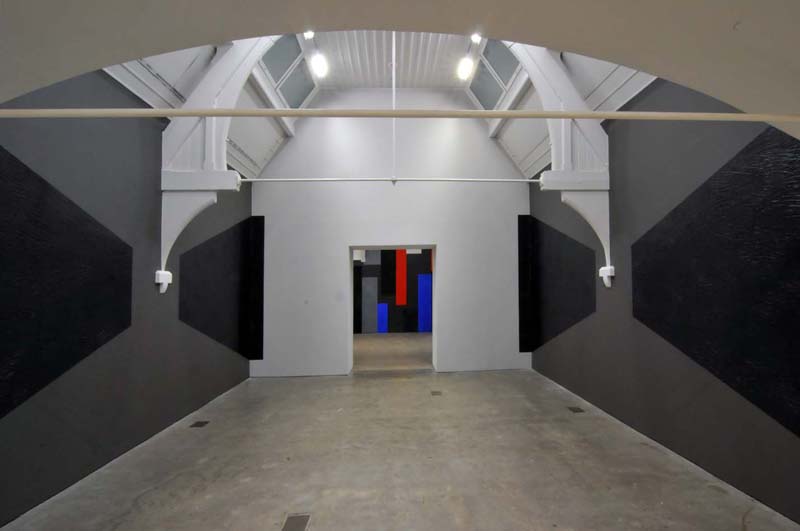
Lisa: To what extent are your works ‘site specific’?
David: They are all site specific in that they deal with or challenge each space.
Lisa: How important is texture to your work, and how the texture of the surface is affected by time?
David: The texture is frequently dictated by the existing wall surface. My work is not about layering new surfaces, but about adding to an existing surface, thus retaining it but renewing it.
Time does weather it on exterior surfaces, on the interior it’s humans that tend to touch, and thus age the drawing.
Lisa: How did you come across Unison pastels and what do you like about them?
David: Saw them in an Art Shop. Had used Talens pastels up till then. I found them larger, better range of colours and generally softer and so easier to spread.
Lisa: What are you working on at the moment?
David: I am doing some design projects (competition stage) for a new wing of Guys Hospital in London and the Bundestag in Berlin. I will be making the new entrance walls of Welwyn Garden City hospital this year an exhibition in Naples and in New York.
Lisa: For your work at the Ikon Gallery last year you combined the pastel with engine grease – what made you do this and do you have any other tips for ways of applying pastel?
David: The engine grease is in my view the opposite in most aspects to the dry, coloured easily portable qualities of pigment. They are the ying yang of materials: wet/dry, permanent/non permanent…a great combination.
Other ways to apply- sponge can be useful on rough areas.
Lisa: How do you want your work to make the viewer feel?
David: It’s never really concerned me, of course I prefer people like or find my work interesting, but it’s the continuation of many years of work that is the most important.
Lisa: Does the impermanence of your work ever trouble you? That people who study your work will only ever see the majority of it in photo documentation?’
David: Not at all, of course permanence is totally desirable but I have learnt that in the case of walls and general building surfaces, they are not the most reliable from the point of view long term durability.
Unison pastels can be viewed on the Jackson’s Art Supplies website by clicking here.
2 thoughts on “David Tremlett: Pushing the Boundaries of Pastel Painting”
Pingback: Unison Colour Soft Pastels | Jackson's Art BlogJackson's Art Blog
Pingback: Unison Colour Soft Pastels - Jackson's Art BlogJackson's Art Blog
Comments are closed.