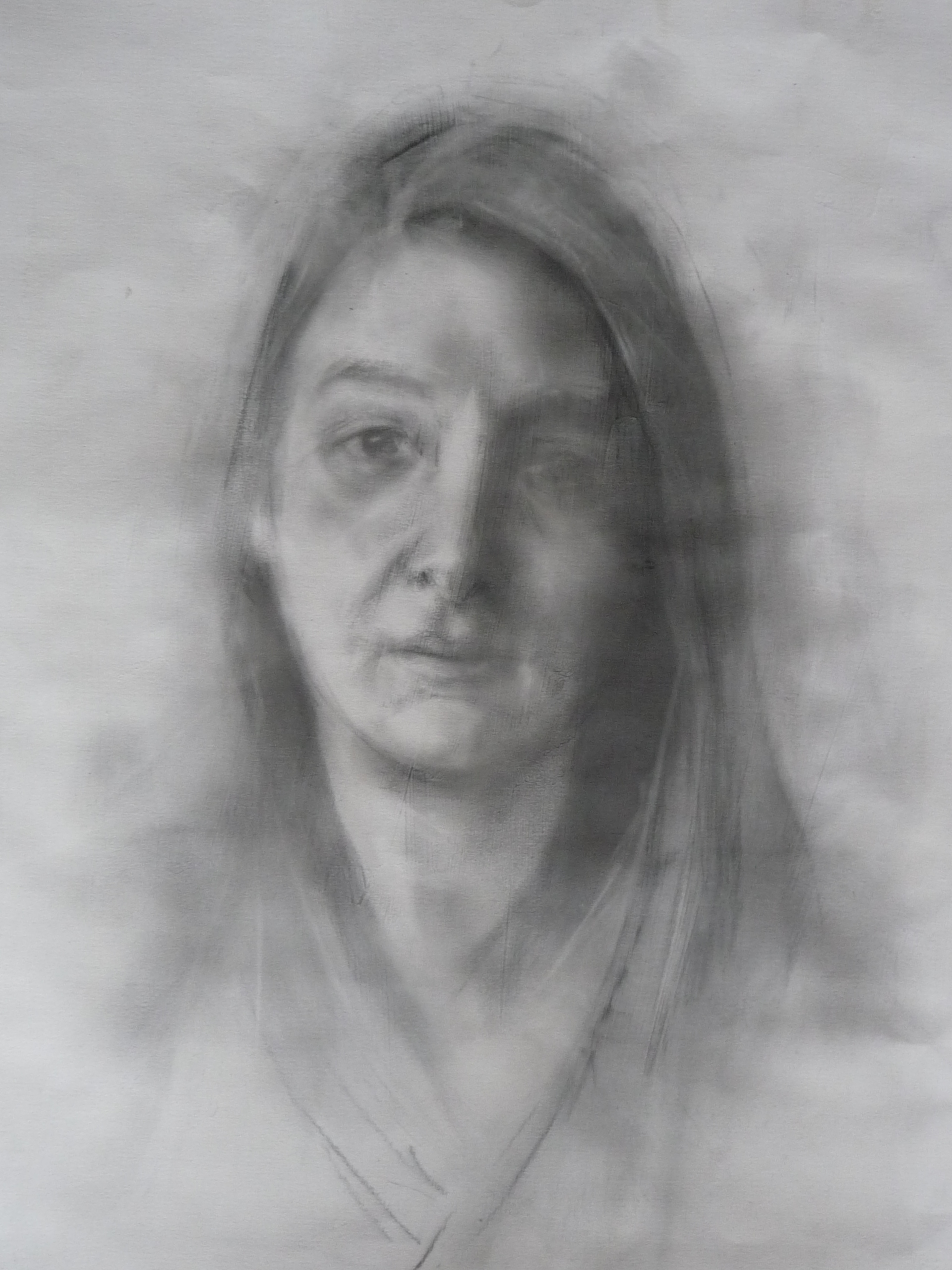
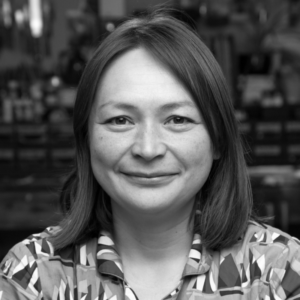
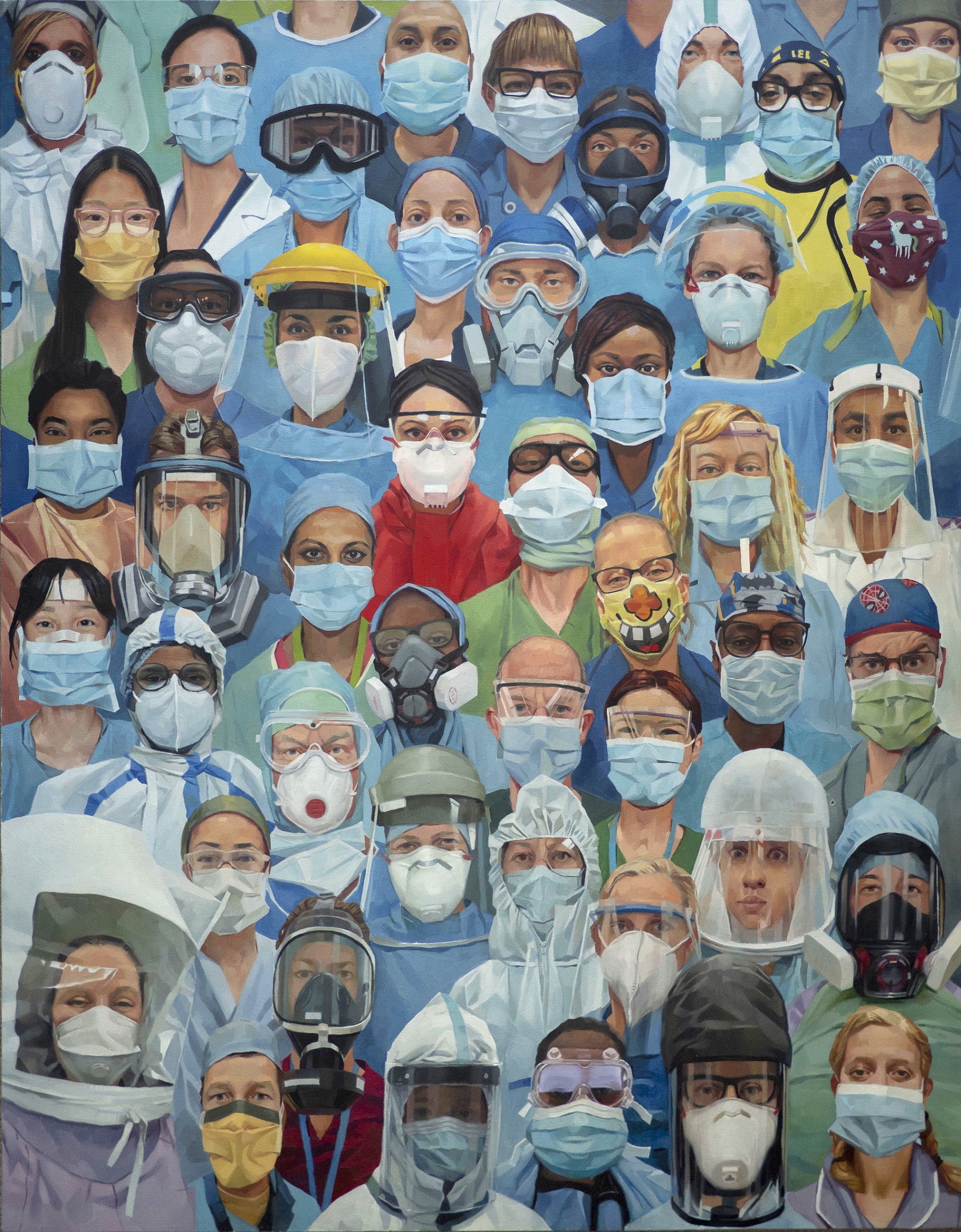
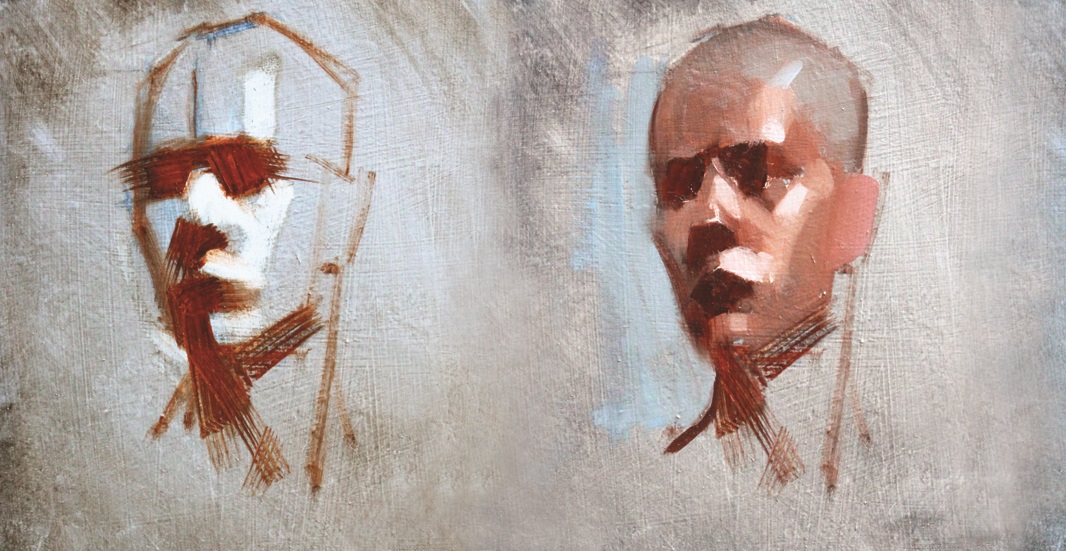
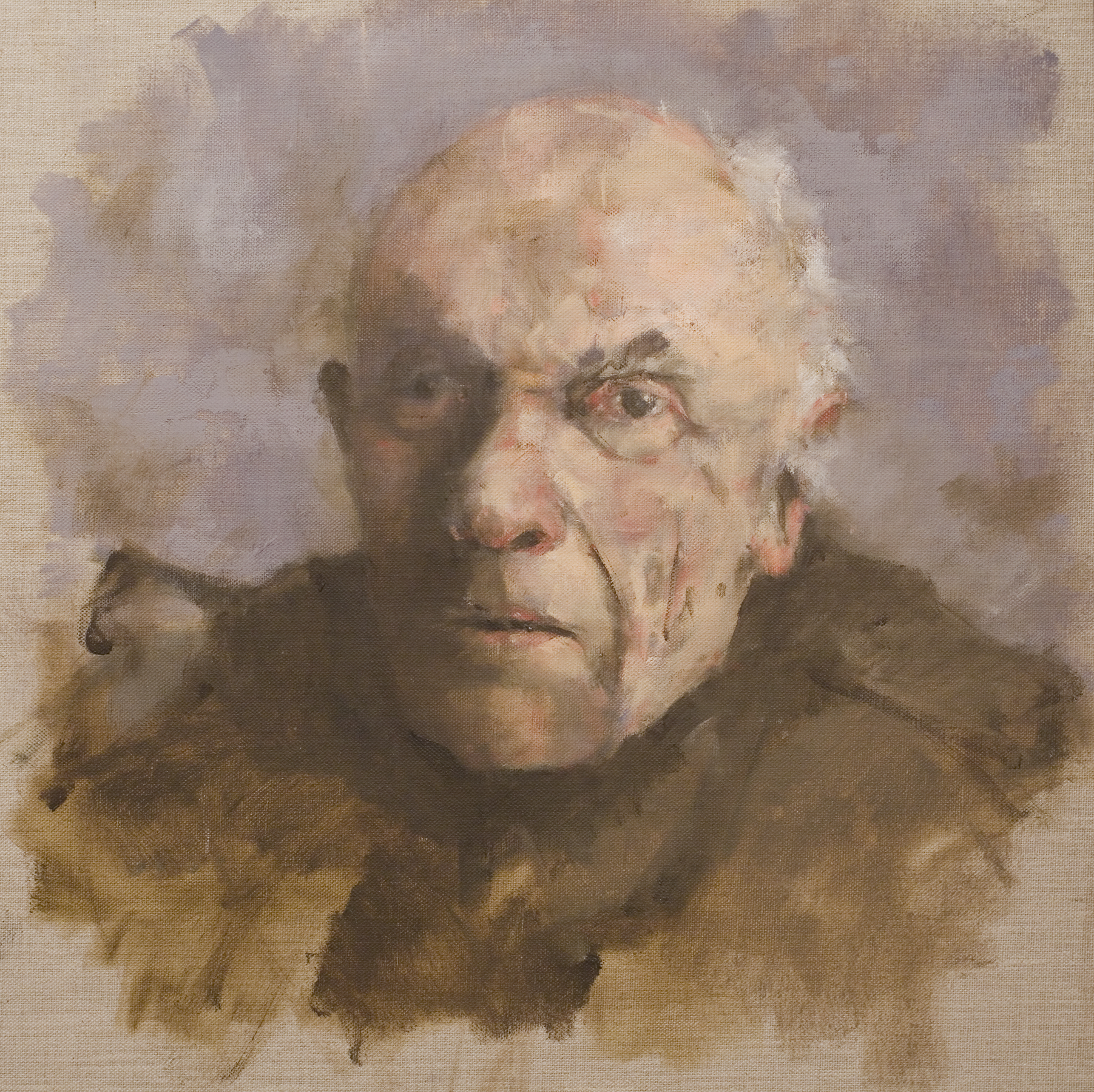
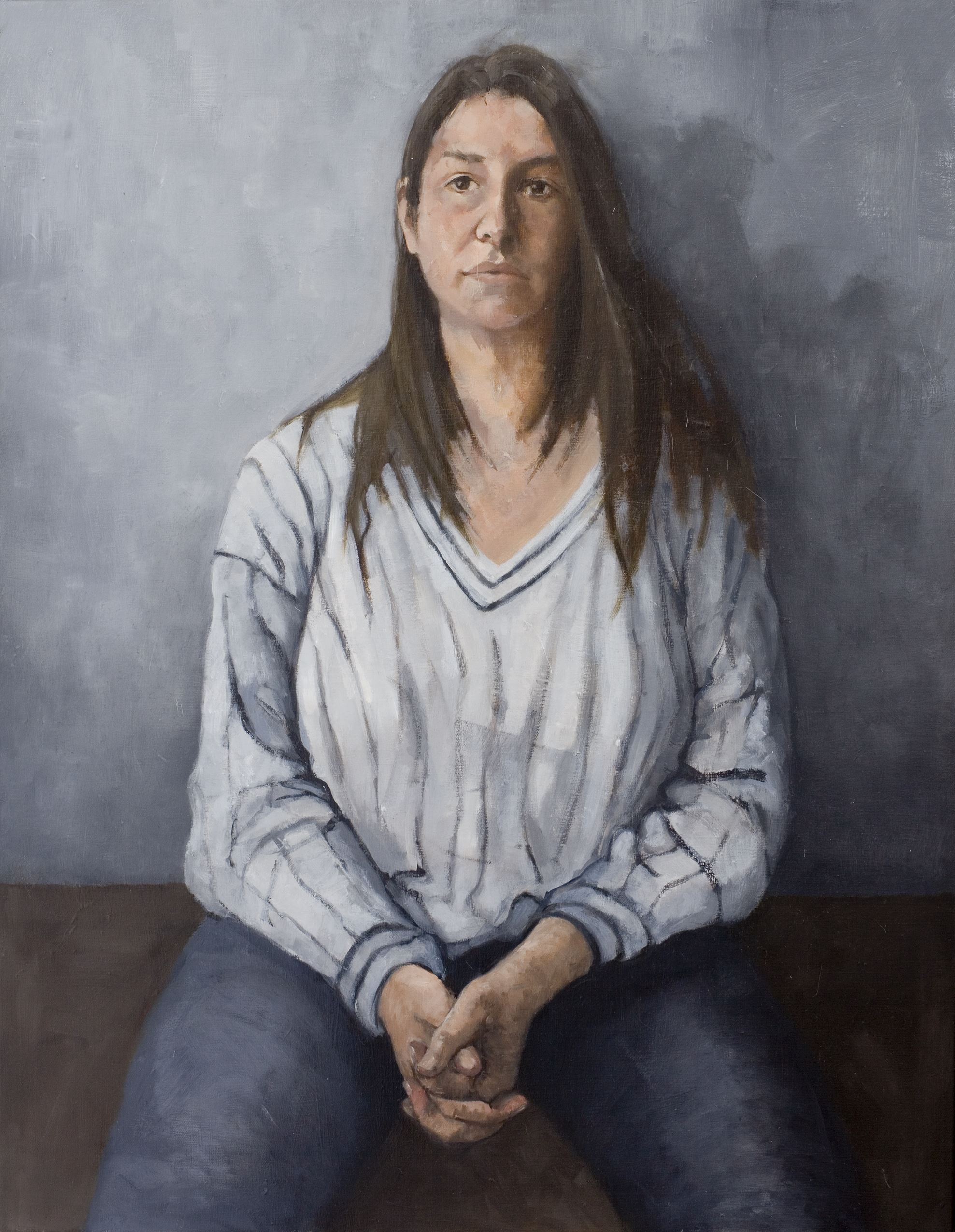
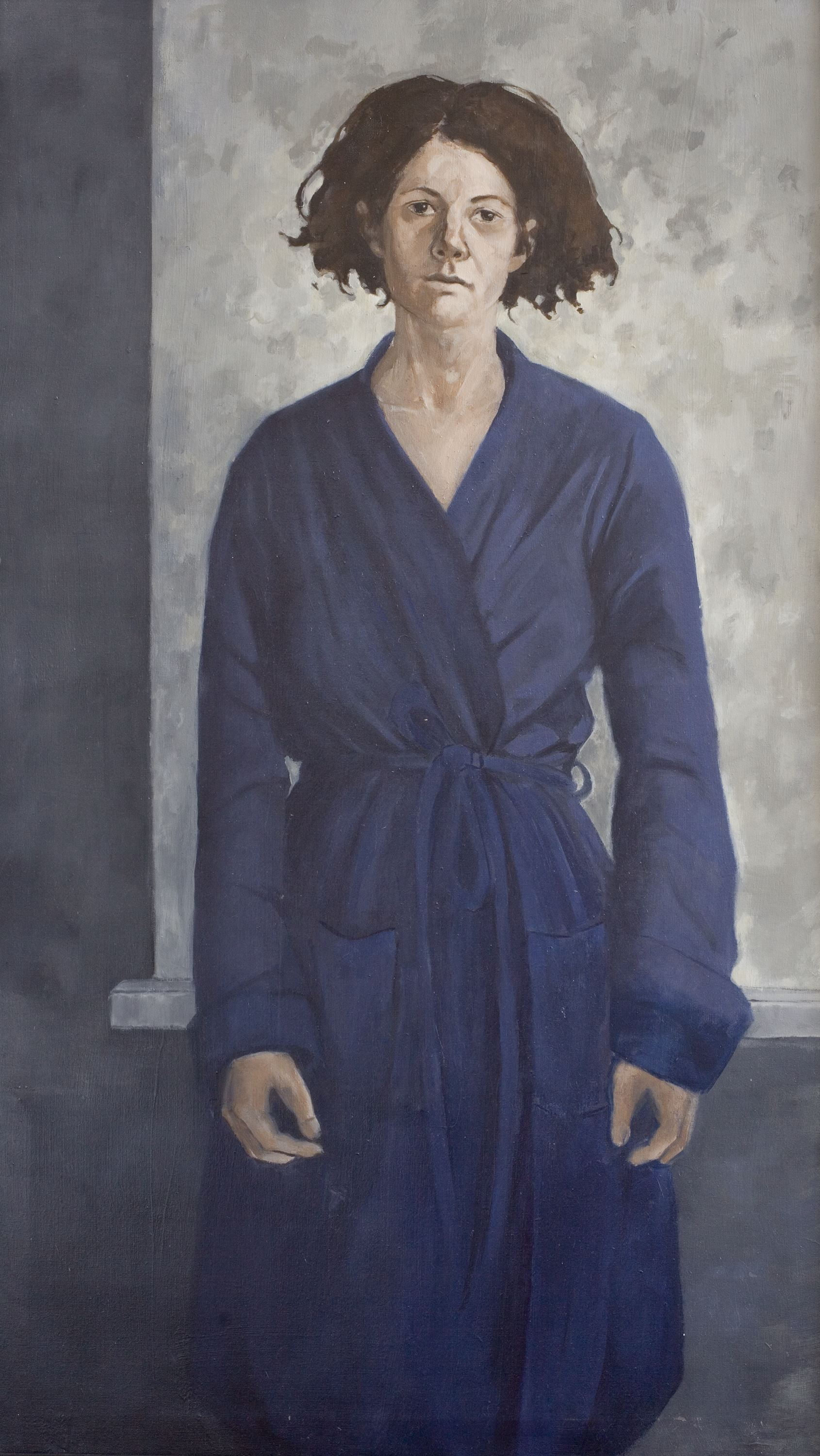
When you look at a portrait by Paulina Pluta, you are faced with a haunting visage of someone in deep contemplation – the eyes stare straight back at you, offering up their little windows to the soul. The works tell us so much about what might be going on inside the mind of the sitter. There is a great intensity to these works – serious and brooding, and rendered in cool and earthy hues that reflect the grittiness of London living. When I look at a portrait by Paulina Pluta I see the influence of the psychology of a Rembrandt, the painterly approach of an Uglow, and the tension of a Freud. Earlier this year Paulina Pluta completed a Diploma in Portraiture at Heatherley’s in London, where she received commendations from the Royal Society of Portrait Painters and the Royal Society of Portrait Sculptors, as well as the Gyllian Foster Prize for Drawing and the Oswald Savage Prize for a whole body of work. Paulina Pluta grew up in Krakow, Poland, but now lives and works in London. I asked Paulina a few questions about her practice.
Lisa: Why do you paint?
Paulina: I often ask myself this question! I think for me painting is about recording aspects of my life and the life of other people surrounding me whether it is my family, friends or places and objects. A painting could act as a silent mark and a reminder of moods, feelings and scenes that could otherwise go missing in time.
Lisa: In your statement you refer to the act of painting as being ‘an attempt to mark our transient existence’ – what is it that you feel it is important to document in your work?
Paulina: I feel what is particularly important for me in the painting is to convey feelings and emotions. I tend to focus on the human figure as I feel this is the best way for me to capture the psychological qualities of my subjects. Exploring moods and emotional states is what interests me the most in people and therefore this is what drives me to paint.
Lisa: Can you describe how you go about making a painting?
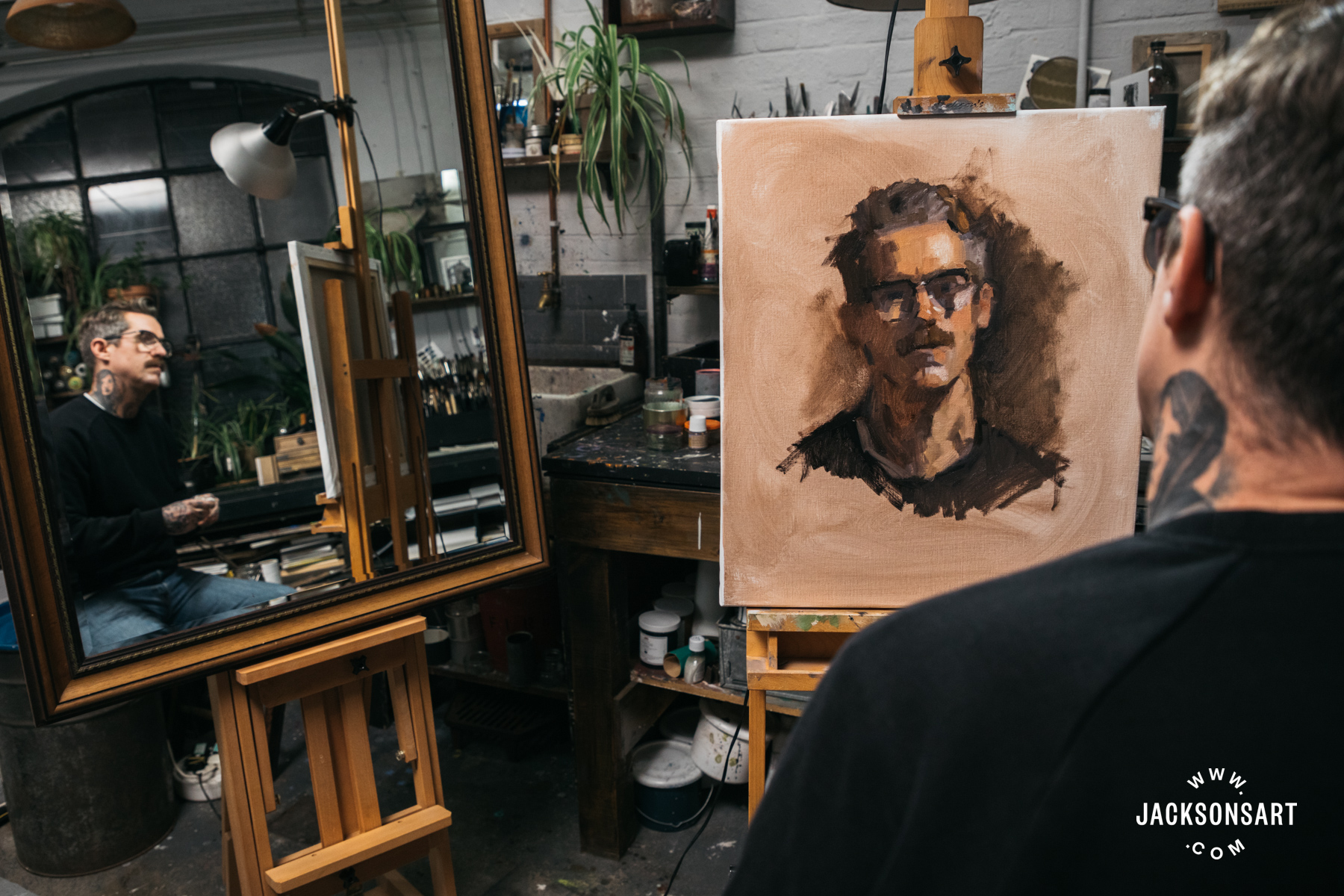
Paulina: I would usually start with a rough drawing in order to decide on the composition and then start by blocking in general shapes. I then spend some time mixing colours and then slowly shift my focus to adjusting tonal relationships, temperature and values in the painting. Once I have the general layout of the painting I will decide on which areas I would want to bring more focus to and which I would want to keep loose.
Lisa:You have completed a number of self portraits as well as painted many other portraits. Is the approach to a self portrait any different?
Paulina: I feel more free when painting self portraits. I do not need to worry about being flattering and I feel self portraiture sometimes results in a better painting. I feel very free when painting myself and don’t have to be worried about being very representational. When painting other people I feel more restrained. With portraiture in particular, people often see themselves in a particular way and that does not always match the way I see them. Often they would be dissatisfied with a painting of them as it would not match their view of themselves – I am not sure if these are the best qualities to be a portrait painter! Mind you – I usually choose the people I would like to paint quite carefully.
Lisa: How important is drawing to your practice?
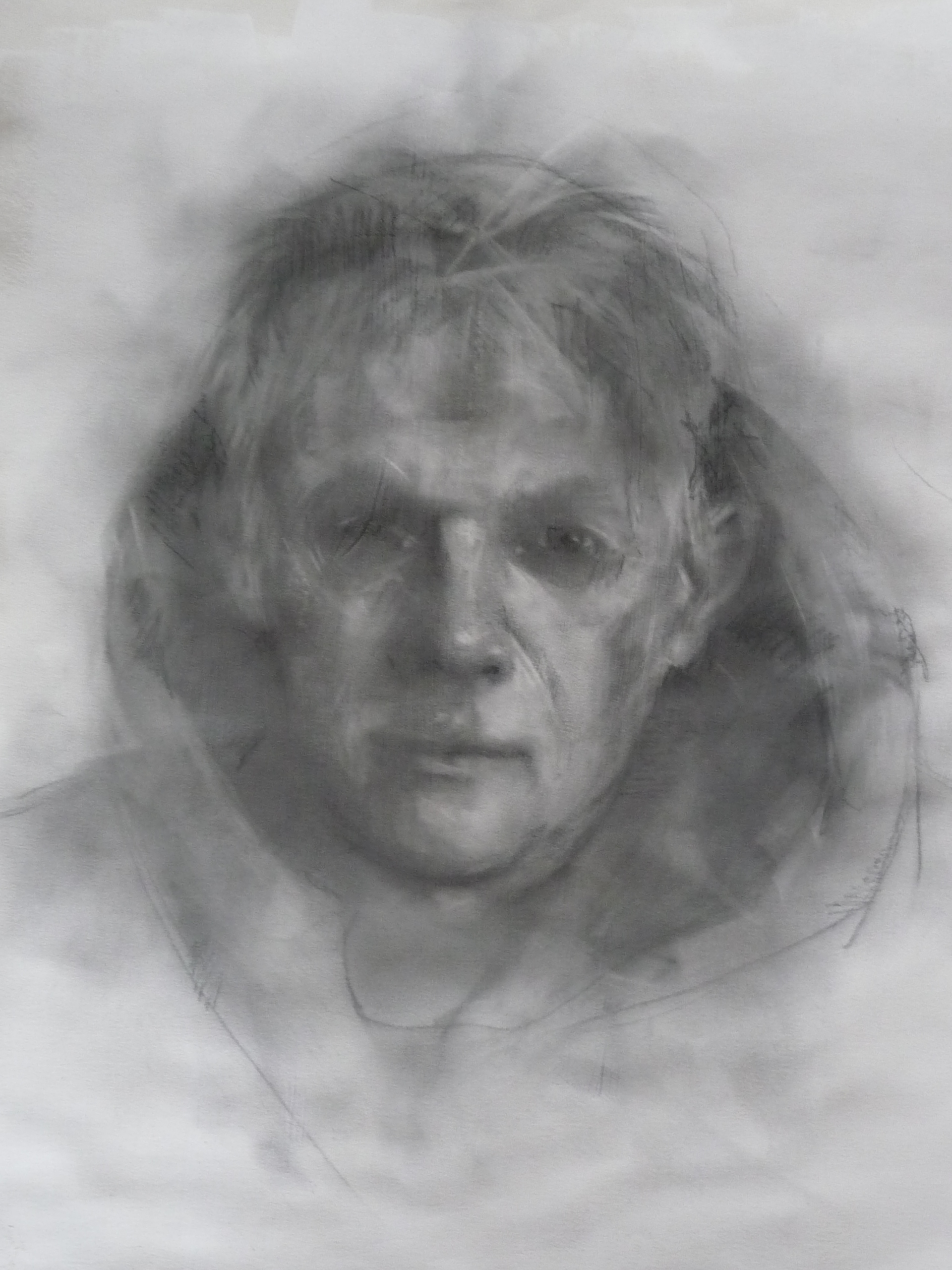
Paulina: Drawing is very important to me – I do believe that the core of a good painting is a solid drawing. I will start with drawing but later try to lose it a bit in order to make my work more painterly. However I strongly feel that the drawing is a starting point to any work I do.
Lisa:What are the best and worst bits about being a painter?
Paulina: I think for me the freedom is one of the best bits of being an artist – you can choose your subjects, choose your audience and even working hours! What is the most difficult I feel is the practical side. Making money from selling your art is still very difficult and this hasn’t changed. It is very difficult to sell an original oil painting nowadays – people invest in art less and less and I think the development of photography and digital images are to blame.
Lisa: Are there any particular colours that you always use in your work, and any brands of paint that you are particularly loyal to?
Paulina: Yes, I have to say that I adore Michael Harding Oil paints – I just love their rich creamy consistency. I would paint only with those if I had unlimited budget! I tend to use quite an earthy palette that would constitute of:Titanium White, Unbleached Titanium Dioxide, Yellow Ochre, Burnt Sienna, Indian Red, Cobalt Blue, Ultramarine Blue, Raw and Burnt Umber, Ivory Black. Sometimes I add specks of Cadmiums to make my palette richer.
Lisa:What is the best bit of advice anyone has ever given to you with regard to making art?
Paulina: I think that would be something I heard quite a lot from tutors while studying on the Portraiture diploma course at Heatherley’s School of Fine Art, which was about spending more time looking at your subject, checking and comparing it with the painting. It might not sound like the most inspirational advice but I think a very important one especially if one is working from direct observation. It has improved my work greatly and taught me to be very disciplined.
Lisa:What inspires you?
Paulina: I think being a figurative painter it is the human figure that would inspire me the most. I often find a lot of inspiration while travelling on the tube or train simply by observing other people. I find myself constantly inspired by faces of people surrounding me. However since my graduation from Heatherley’s School of Fine Art where for 2 years I used to paint only portraits and figures I am now trying to develop other areas of my practice like landscape and still life painting.
Lisa:What would your ideal day in the studio be like?
Paulina: My ideal day in the studio would be a day when I would be able to work from life, in day light, with a sitter of my own choice or a day when I could paint a landscape out of doors. Generally speaking my ideal day would simply be the one when I would be able to paint from life no matter the subject – as painting from life is what stimulates me the most.
Lisa:Where online or in the flesh can we see more of your work?
Paulina: You can see examples of my work on my website at: www.plutaart.com
In terms of seeing my work in flesh I am currently preparing new work for a group show which will be held at the beginning of 2015 at Bankside Gallery on 48 Hopton Street – so keep your eyes open!