



If you’ve ever had the courage to submit work for an open submission show, and then had the heartbreak of receiving the ensuing rejection letter, then chances are you will have thought to yourself ‘Why didn’t they select me?’. As with any heart wrenching rejection, the reasons aren’t always clear cut! You can rationalise the rejection by telling yourself that they had filled their quotient of flower/still life/abstract (delete where applicable) paintings that year, or that yours was too big/small, or they didn’t like the frame. More often than not it also boils down to how the panel are feeling that day, what they saw immediately before the saw your work, the reactions of their colleagues…I’m suggesting it may not even have anything much to do with your work at all! So don’t let rejection deter you from trying again, as you never know what conditions your work will be met with next time around.
Nadia Al-Nuaimi volunteered at the recent selection day for the annual open exhibition at the Royal West of England Academy. Below she shares with us her account of the day and sheds some light on what this particular judging panel was looking for.
The video and all photographs courtesy of Richard Broomhall/fracturedether.co.uk
I Wouldn’t Bet on It!
by Nadia Al-Nuaimi
Selection Day for the Royal West of England Academy’s Annual Open Exhibition will keep you guessing right up to the very last hopeful entry.
There’s a popular Radio Four programme called I’m Sorry I Haven’t A Clue in which the panellists apparently follow a logical path to arrive at an underground station named ‘Mornington Crescent’. You can listen to the steps they follow as many times as you like and you will still be none the wiser. Well, watching the selection panel at the Royal West of England Academy (RWA) making its selection of the entries for this year’s Annual Open Exhibition is a very similar experience.
Of course, there are certain ‘tick’ criteria which are no surprise when listed by this year’s judges – a diverse group picked to reflect a broad range of expertise and taste: Janette Kerr, RWA President; Stephen Jacobson, RWA Vice President; David Alston, Arts Director Arts Council Wales; Julia Carver, Curator Bristol Museum; Will Maw, academician; Jason Lane, academician; Lisa Wright, academician and lecturer; and Lucy MacDonald, Associate Director, Hauser and Wirth Somerset. All the panellists were in agreement that, as the hundreds of artworks were paraded in front of them in rapid succession, they were making judgements based on form, medium and colour.
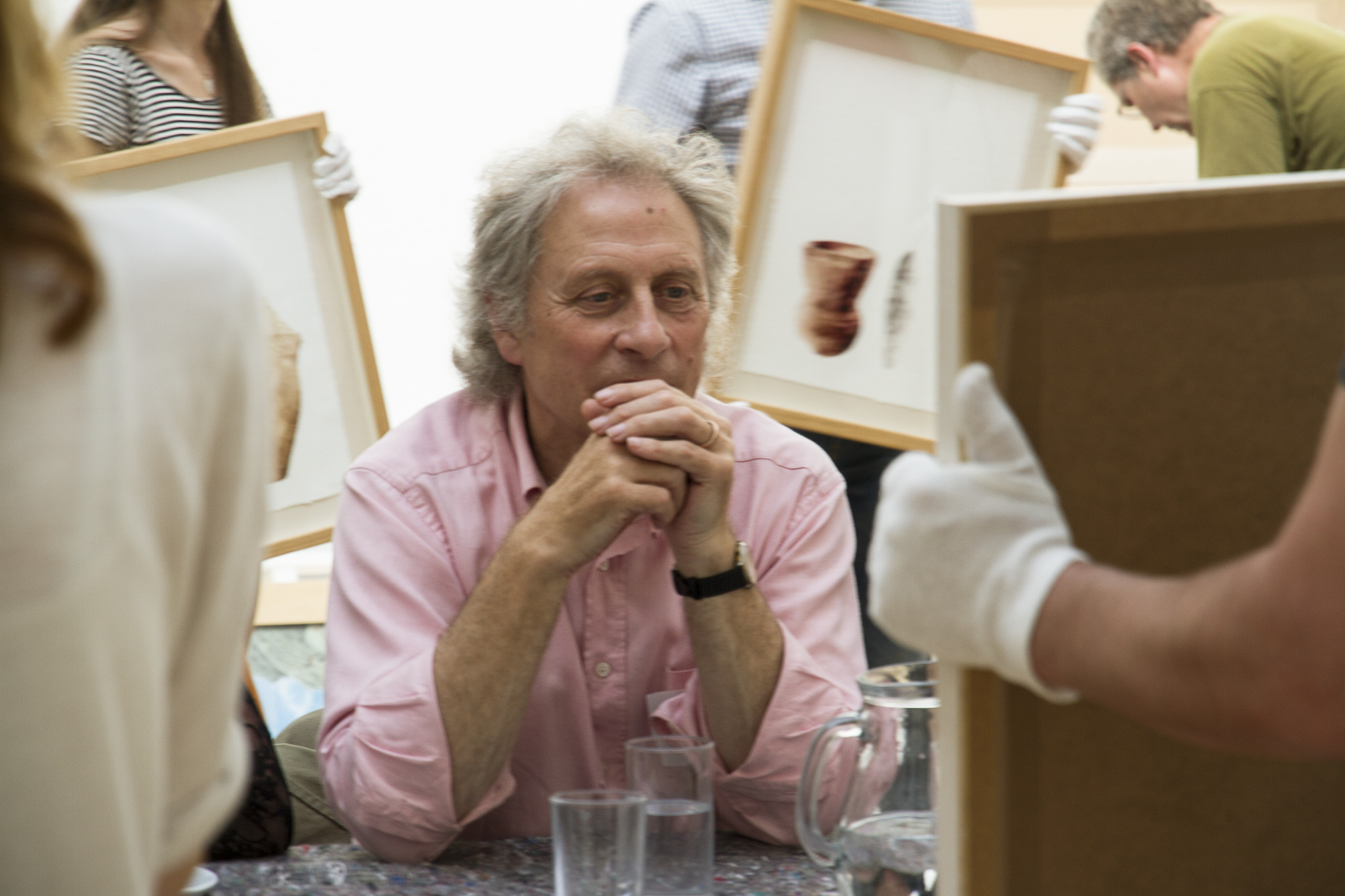
However, the real mystery lies in the non-quantifiable aspect of their judgement. All the panellists are sufficiently experienced to recognise whether a work is well executed, a ‘good’ example of its genre. They also all emphasised – and demonstrated – their desire to rise above their own personal tastes and to think about the overall ‘look’ of the show. Consequently, decisions to include a particular genre of sculptural work, for example, when such a genre is under-represented, is perfectly understandable.
What is less understandable is what constitutes ‘that special something’ when all the obvious criteria have been met. For every one of the judges there was undoubtedly an extra something, a quirk, a mood trigger, a certain something which swung their vote in favour of a yeah or nay. It is this ‘something’ which is the mystery and which will probably always remain so, since a great part of the explanation lies in the idiosyncrasies of the panellists.
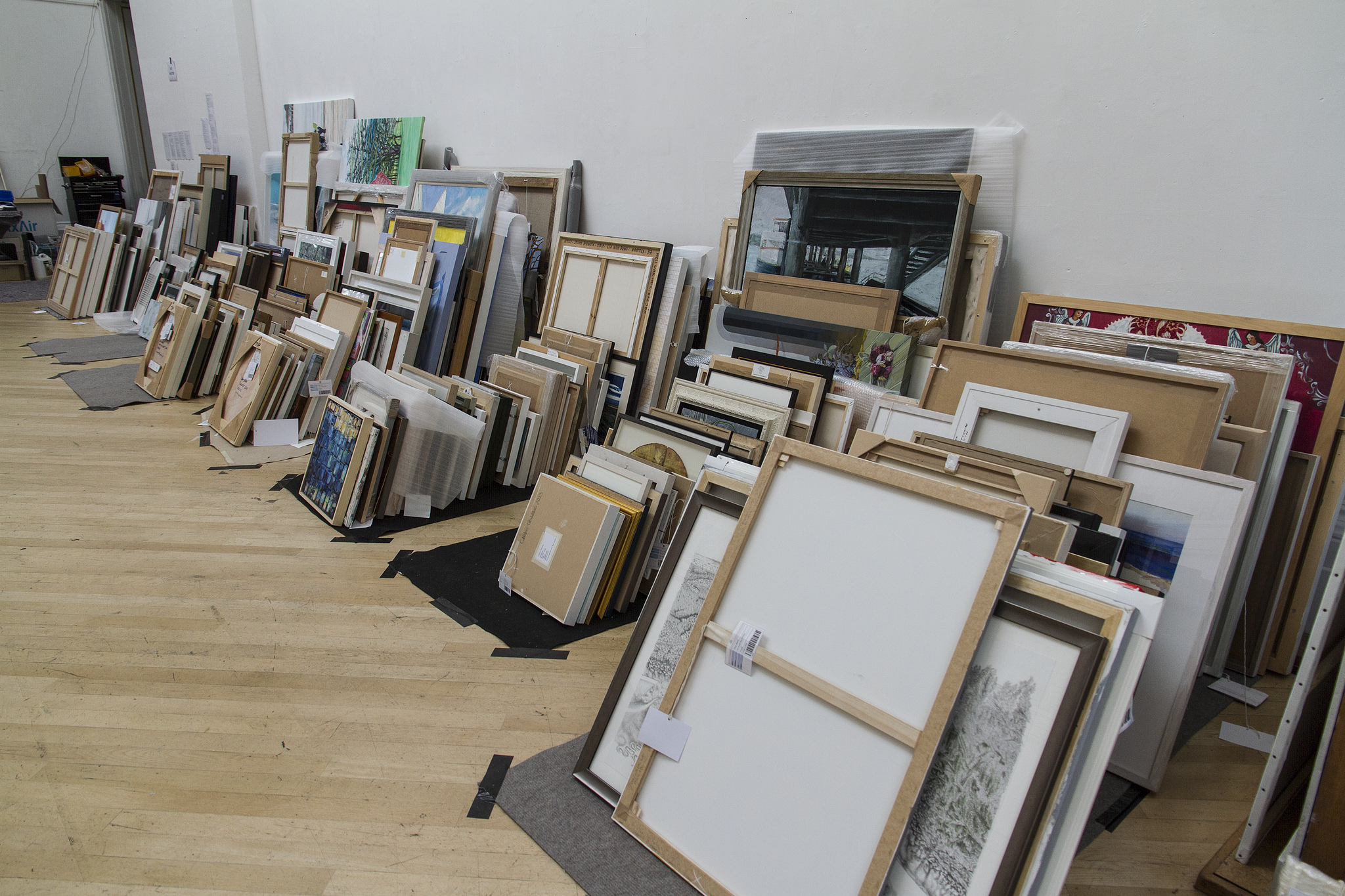
There are, however, a few definite ‘no no’s’ voiced by a large number of the panel regarding presentation. Although there are always the exceptions, it would be better for submitting artists to err on the side of caution regarding signatures, framing, titles and support methods. In general, large signatures scrawled prominently over the canvas were found to be off-putting, as were frames which were deemed to be inappropriate for the enveloped artwork. Plinths and supportive fixtures or required methods of presentation (such as hanging or illumination) could also work to the detriment of the artwork.
There are, of course, no hard and fast rules. If this were so then the excitement, surprise and mystery of the selection process would be completely lost. It is that very element of ‘luck’ which often determines whether an artist is successful this year or next year or never. What is certain is that visitors to the 2014 Annual Open Exhibition will be treated to a stunning diversity of artworks.
All 546 works, including sculptures, on display from 12 October – 7th December will reflect the hours and hours of painstaking work carried out by both the artists and the panellists who chose them. Arguably, the selection day process could merit a category in its own right.
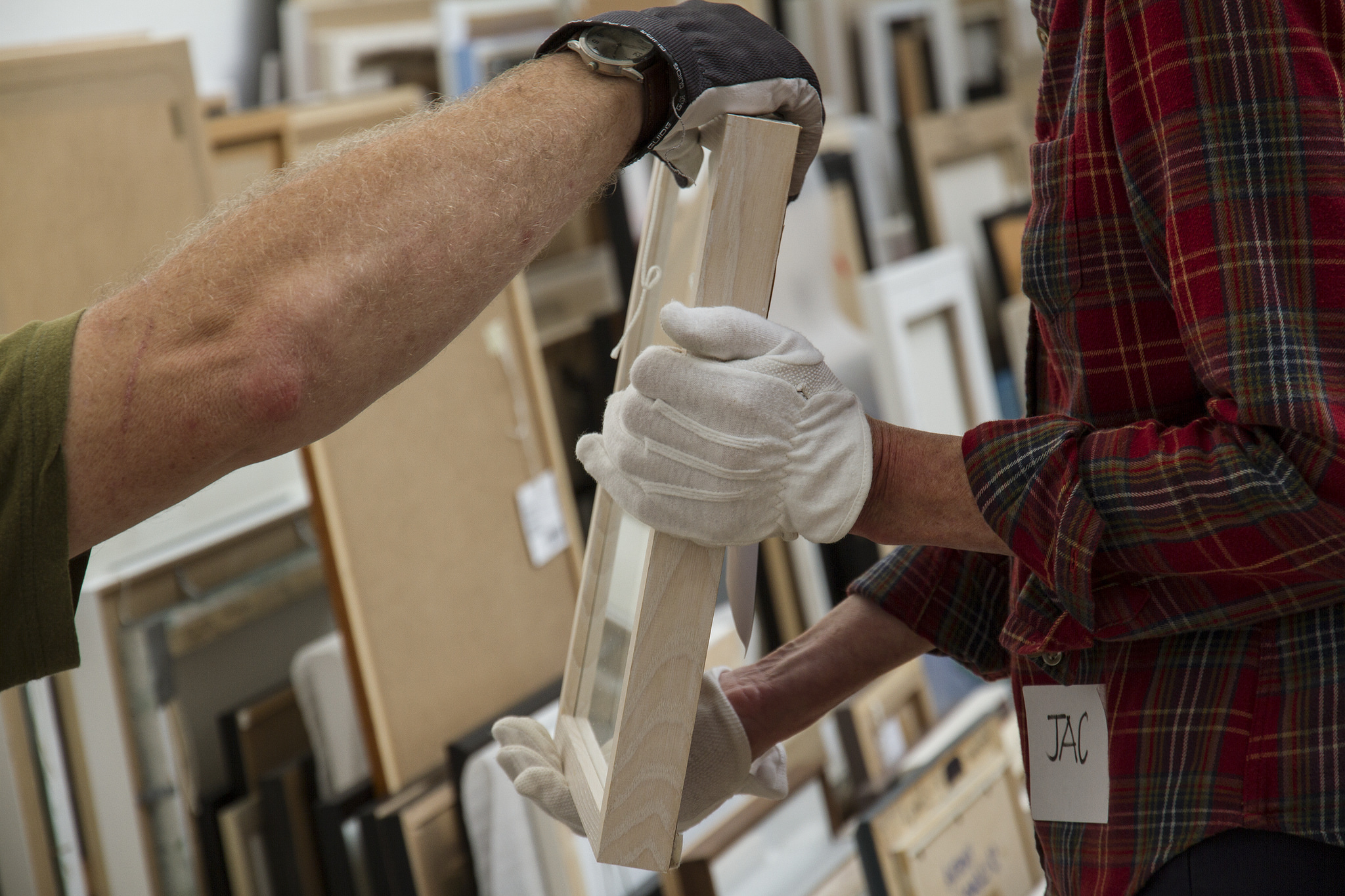
What the panellists were looking for in their own words
David Alston
I’ve looked at so many artworks during the course of my career that I already know whether a piece is a ‘good’ example of its kind. There’s a body language about paintings and what I’m looking for is something which arrests you, something which registers.
Janette Kerr
I’m looking for something which is well executed but which also has an edge, a charm, a spark to it, some kind of quirk. Sometimes the framing is completely disastrous and the signatures are so ridiculously large that they kill off the work. I also need to think about the show as a whole and how all the pieces will work together.
Lisa Wright
I’m looking for a work which is good of its type but also distinctive, whether it be abstract or painterly. I like an economy to the work but also an awareness, something which elicits an emotional response. You know it when you see it, it’s instinctive and intuitive.
I find framing and signatures to be a problem in some instances and strongly advise any artist not to sign on the front of the work. Appropriateness of scale can also be an issue for me, as can the discrepancy you sometimes get between what you see in a digital image and then what you see when the actual work is paraded before you on selection day. For example, the colour key may be too high on screen and so the piece can look underworked in real life.
Stephen Jacobson
One of my main criteria is whether I actually like the piece, whether it has a ‘sparkle’. We have tried to mix up the panel so we get a fair representation of tastes and expertise.
Will Maw
A work might be brilliantly executed but it has got to have something more. It’s inevitable that there’s going to be an element of subjectivity in the decision making process but I try very hard to keep an open mind and look beyond my personal taste. I am aware of the responsibility; I have to think of the show as a whole and to be fair to all the works brought before us.
Jason Lane
I’m looking for something which catches my eye but exactly what does this varies enormously. I like a naive style but also an accomplished one, I like perspective but I also like it when an artist plays with distortion, I like order but I sometimes like a chaotic image – it’s very complicated.
Julia Carver
I think we’re all looking at form, medium and colour but I’m particularly interested in why an artist has chosen a specific medium or form and whether, as a result, the work is innovative.
More information on the annual RWA Open Exhibition can be found here

8 thoughts on “So What Do Judges Look For At An Open Submission Exhibition?”
It’s interesting that some of the judges have advised against signing the work on the front. I can understand that some of the signatures are large and detract from the art, but most of the work I’ve seen (both historical and contemporary) carries a visible–albeit unobstrusive– signature.
I agree Dee, I was quite surprised myself! I guess it is indicative of the time that we live in, maybe it is a fashion, but maybe also it is local to the west country! I can’t say that I’ve ever come across this preference for ‘no signature’ before. But maybe others have?
If selecting or not selecting a work is on the basis of a signature , there’s not much chance for any of us!
I wonder what they think of much of Gavin Turk’s work, I imagine his is an exception to the rule! https://www.google.co.uk/search?q=gavin+turk+signature&es_sm=122&source=lnms&tbm=isch&sa=X&ei=aSs-VM2ALLDY7Aa79YDYDg&ved=0CAgQ_AUoAQ&biw=1366&bih=643
An interesting article, the comments from the judges make interesting reading and really serve to demonstrate, how diverse and often conflicting a group of peoples views can be. I think the best thing anybody submitting work for selection in shows can do is take selection or rejection with an open mind. Try to produce honest work , and be true to yourself and don’t attempt to second guess a judging panel. I speak as someone who has been on both sides of the selection process.
Robin Hunter
Excellent advice Robin, thank you. There is nothing to regret if you have produced honest work. I could not agree more.
I am a 13y.o girl in the 8th grade and i
want to become an artist I just recently
joined an art contest themed ”we are all
connected” and i drew my sketch but i
think i have too much on one canvas.i was
thinking on adding less but i just want to
hear someone elses though process for,
do judges like more or less?
Dear Abby,
This is a really diffiult question to answer! Every judge is different, and whether ‘less or more’ is needed of an artowrk in order for it to be a better work of art really is a question that does not have a universal answer. You have to think about what the reasons for making the work in the first place were, whether you had an intention, and what would communicate your idea or intention the clearest. Trust your gut and follow your instinct – your judgement at the end of the day is the most important one! Trying to second guess your audience is impossible so the best you can do is honour your integrity as an artist do what you feel is right for the work you want to make.
I’m sorry, this might not seem a very helpful answer in the short term but it is the only answer I can offer! If your submission is not selected for this contest then consider trying for another contest…because art is subjective and every judge will be looking for something different – and there is every chance there’s a judge out there looking for exactly your work!
Best of luck
Lisa
Comments are closed.