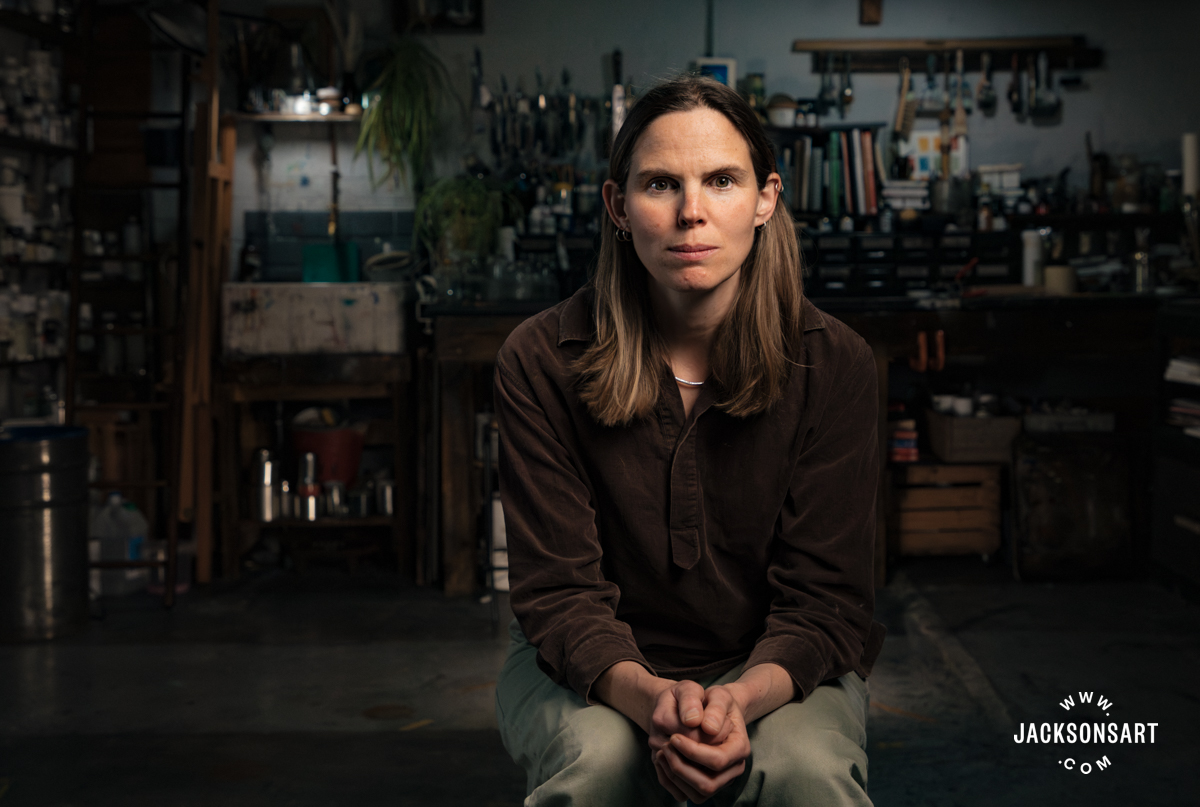
Clive Riggs creates stunning prints of animals and nature with such care and attention to detail that you’d be forgiven for thinking they were hundreds of years old. He utilises the warm velvety qualities of mezzotint, and is also a master in drypoints, etchings, oils, drawings and watercolour. Back in May Clive won our ‘Impressions in Nature’ Printmaking competition. We wanted to know more about his beautiful prints.
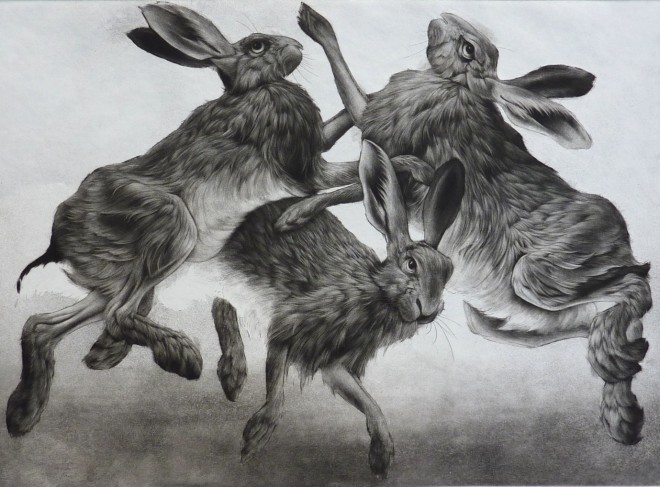
Lisa: How long did it take to make your mezzotint “The Leaping Hare”? And can you tell us a little about the mezzotint process? Is there any room for error?
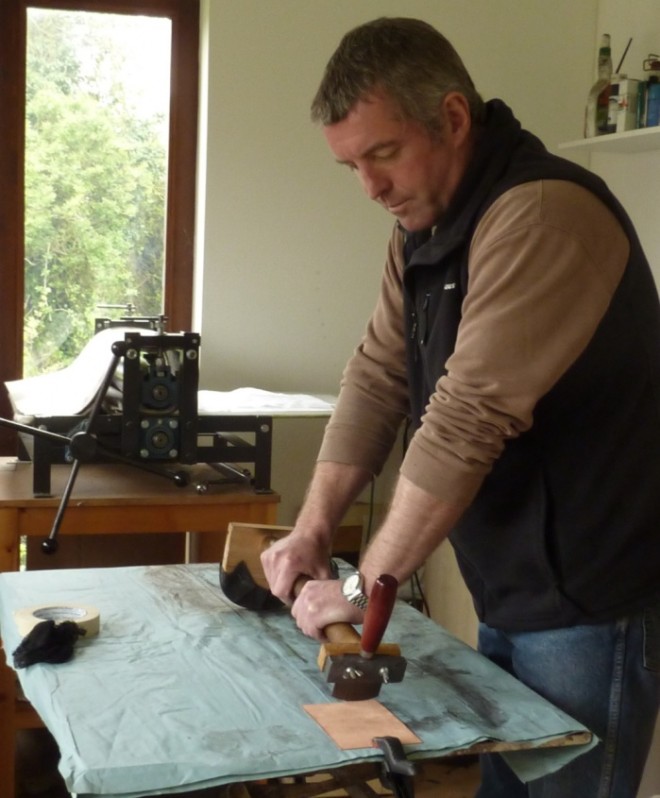
Clive: Mezzotint is very laborious. The plates take a long time to prepare and need special tools (rockers, roulettes, scrapers and burnishers). I prepare my own plates and an A4 plate such as this one takes up to 10 hours to lay a good ground. Once fully prepared, the process of scraping, burnishing and re-grounding the image starts. This can be a long or short process depending on any adjustments you need to make (mistakes can be rectified by re-grounding affected parts of the plate with a rocker). For The Leaping Hare, I would say it took around 20-25 hours, taking proofs at each stage to check progress and correct errors or move things around.
Lisa: How did you learn the mezzotint printing process?
Clive: I first encountered the process at art college studying Turner’s Liber Studiorum prints and am actually self-taught (I learned most of it from a book by Carol Wax and by trial and error. Learning that way I feel helps you to develop an individual approach.
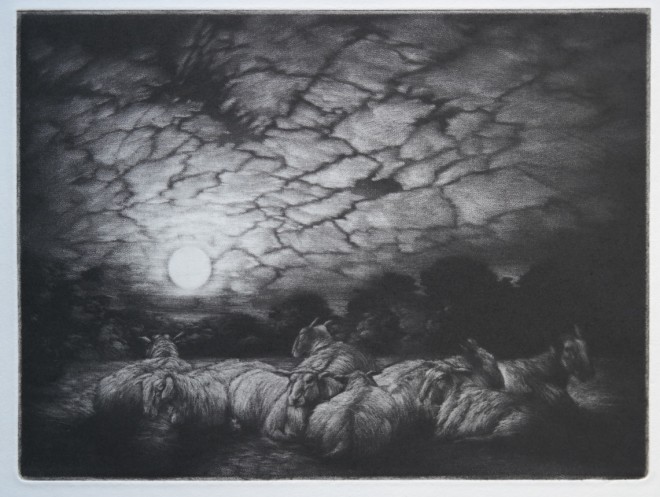
Lisa: You also make drypoints, etchings, oils, drawings and watercolours! How do you find the time to work in these varying media? Do you work across media simultaneously or work in one process at a time?
Clive: I work on one medium at a time. Mostly print, almost exclusively mezzotint now. I have recently rediscovered my passion for painting and am planning to work en plein air this summer, in oils.
Lisa: Why do you make art?
Clive: I work part-time as an adult learning curriculum manager; that is a career choice but making art is a necessity and has been a consistent thing in my life for as long as I can remember.
Lisa: Can you describe where you usually make your work?
Clive: I do a lot of work in sketchbooks from nature and then return to my small studio in my garden to develop and finish work.
Lisa: What are you working on at the moment?
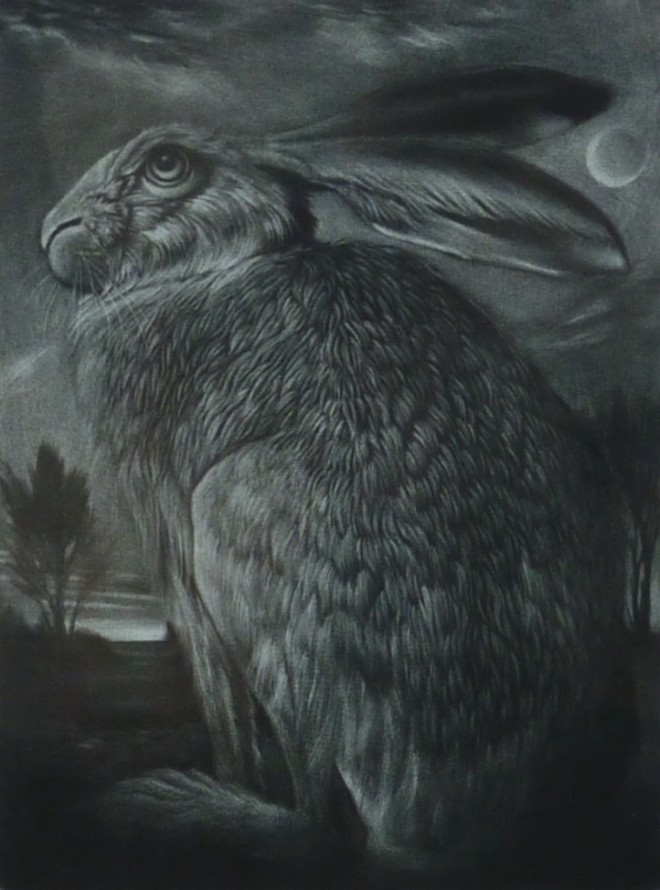
Clive: I have work to complete for an exhibition in the British Library with the Society of Graphic Fine Art so I’m working on that. One piece is a sequel to The Leaping Hare.
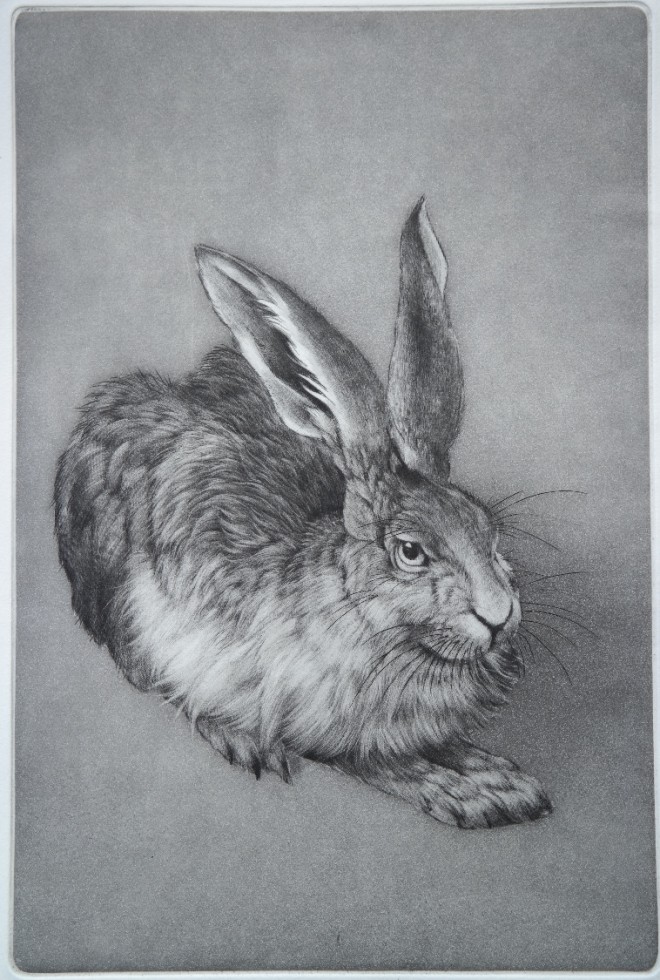
Lisa: What source material do you base your compositions on? Do you ever work from photos?
Clive: I use photos as a reference and have used them exclusively in the past. I found the problem with photographs is you tend to copy the static image as that’s easy. Using your imagination or working from life is a bit more challenging but the results have a different quality. They are responses or interpretations rather than copies. You’re working with what the camera sees and not what you see.
Lisa: Where online or in the flesh can we view more of your work?
Clive: “Drawn Together” SGFA members exhibition. Bankside Gallery 30th June – 7th July 2015
“Draw 15” SGFA Annual Open Exhibition. The Menier Gallery Southwark 5-17th October 2015