



I’ve just got back from a holiday and have spent the past 2 days frantically trying to complete ‘high priority’ administrative tasks. It’s a nightmare, they all seem just important as each other. I wonder when the end will be in sight and I will finally have time to be creative. The conundrum has got me thinking: Creative work can (especially in the early stages) seem messy and directionless, so how can you justify spending time on it, without knowing where the creativity will lead you? I will try and break everything down and offer some handy hints to organising yourself for creative time. Feel free to offer any other suggestions!

1. Make a list
Creativity requires a clear and focussed mind. You need to be able to leave other concerns at the studio door. I have found making a To-Do list a vital step in clearing the mind. It prevents that niggling feeling of ‘I’m sure I have something to do but can’t think what it is’. If you have all your tasks listed and have made a note of when they need to be done by, that feeling will be eradicated. I’ve often made the mistake of thinking I need to have all my admin tasks done before I settle down for creativity – I realise now that that is often an impossibility. But if I know that there is still time to send the birthday card/fill the tax return/do the shopping then I can put those tasks to one side in my mind and feel good about making art.
2. Use a diary and plan
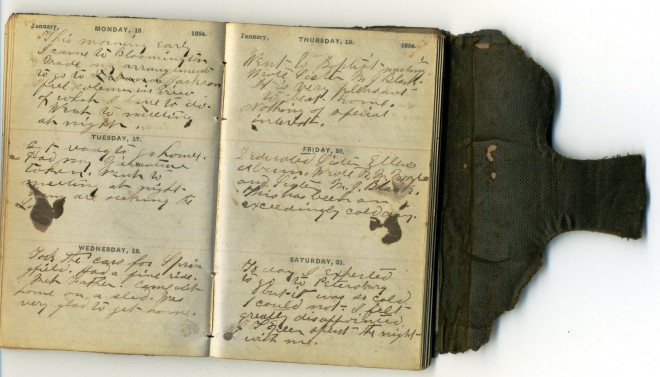
A step on from making a list, why not actually assign a time and date to complete your other non-art tasks, and then allocate creative sessions in and around these. A straight-forward list can be hard to digest, where as entries written in a diary could not be easier.
3. Forgive yourself and allow for the unexpected!
This is the difficult bit. Of course, we don’t know how long a lot of tasks will take. We don’t know if we will be held up in traffic on the way to the post office, nor do we know how long it will take to complete a painting. However, we do know there are only 24 hours in a day, and 7 or 8 of those will probably be spent asleep! Forgive yourself if a task doesn’t get completed in the allocated time, and be prepared to re-allocate tasks in your diary. I am particularly bad at finishing a day of work and having no achievements to show but I recognise how important it is to realise that not all days will bear fruit, but that doesn’t mean there isn’t fruit growing! When entering creative sessions into your diary, do not commit yourself to specific tasks, instead be very broad and say you will spend 3 hours creating on a Tuesday afternoon, for example. Do not plan to ‘finish a drawing in 3 hours on Tuesday afternoon’. You may be setting yourself an impossible task and feel demoralised. All you can plan for is a period of time being focussed on your creative spirit.
Having a list and a diary is good for ensuring you don’t leave tasks out when re-allocating tasks to times.
4. Embrace irregularity
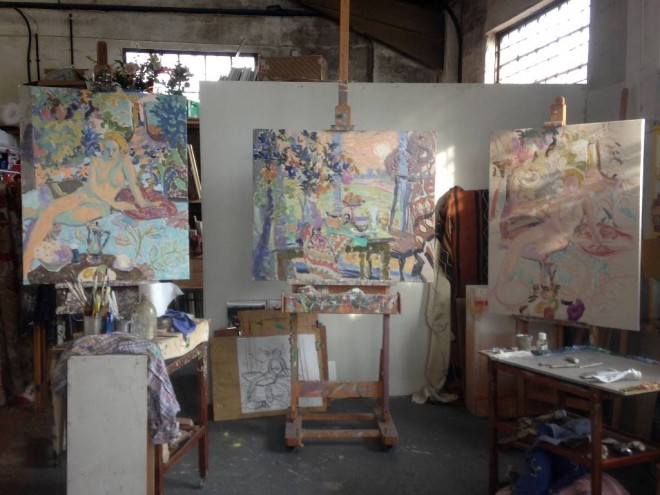
Being creative is an irregular existence. Most creative processes involve stages of different kinds of work. In my painting and printmaking, I will always have a brain-storming period (sketching/making notes/observational drawing), followed by designing and then finished off with execution of the finished work. I personally believe it’s good for morale and for your brain to diversify your working week, and if you have time, try working on a number of projects but on a rotation, so that your working week involves a number of very different tasks and works get completed at different times. Not only is it more interesting for you, but also it naturally allows for a gestation period for ideas. I remember my Foundation course in Art introducing me to this kind of working structure, and it is no coincidence that I think of that year as my most productive time. There are others who are more comfortable adopting a particular mindset for a certain kind of creative process rather than diversifying in a week, for example, an artist might like to spend a week ‘finishing’ half a dozen paintings simultaneously. Identify what works for you and plan your time accordingly, acknowledging too that the way you work might also change at any moment!
5. Be Assertive
Friends and family often don’t understand that creative time is not necessarily recreational time. It isn’t optional for creators of art. So be firm, if you intended to work in the studio on the weekend, do so, and explain that it’s important for you to spend time in the studio. Do not promise to show what you made during your session – you may not make anything, but that doesn’t mean the time was wasted!
6. Allow time for organising your creative space
Creative sessions are often messy, and clearing up can feel like a chore. But entering a work space that requires organising prior to work can feel very demoralising and can impede inspiration! Recognise and plan for the fact that you need to have a workable space in which to create art, and that it is not a waste of time dedicating time to organising, it is essential!
There are sadly no short cuts to creative success, but organisation can help boost creativity and also help minimise stress and anxiety. What other strategies do you use?
If there are any other practical problems that you are facing as an artist that you wish for us to explore on the blog, please let us know, we would love to try and help!
Header image: ‘Peter Davies: ‘The Hip One Hundred’, acrylic on canvas, 1998, 254 x 609.6cm
9 thoughts on “Organising Creative Time”
1. I keep a list of painting ideas, I don’t follow all these up but it gives me plenty to work on.
2 .For figurative paintings I keep a list of subjects and also several folders of photos (culled from magazines or my own photos) organized by subject. Then in mid winter for instance I can paint beaches or summer flowers.
3. Photo folders are also useful as bases for abstract painting. You do have to be careful though legally if you use somebody elses photo for a finished work that you sell!
4. I Keep a negative list too. Things that haven’t worked –make this quite detailed if it helps. This can be really helpful longterm as I either don’t waste my time on subjects that don’t suit me or I can tell if I have made progress technically over time.
5. I put motivational post-it notes up often using maxims I have read or heard that are helpful . It doesn’t matter if they are cliches if they are true. They can really stop me feeling despondent.
One of my favourites of course is “prevarication is the thief of time”. This should be tattooed on the hand of every artist. Don’t tidy the house, do the ironing,sort out your paperwork etc when the muse is upon you, get on with creating and hoover later.
Hope this is of use to other people
These are great pieces of advice Penny, although I worry about the negative list a bit – I’m a firm believer in not ruling anything out. I’d hate to think of you dismissing a particular idea because it didn’t work the first time you tried it – all artists continually evolve, and often it is through the process of struggling with a subject!
I actually see the negative list as paradoxically one of the most positively helpful things. As you say artists do evolve/develop and its really useful to see comments on that list such as ‘really struggled with getting sunlight effect on grass — colours mainly’. Then a year later perhaps I can look at that comment and see I can get that effect right now. I do think though that some subjects just don’t suit or interest you although you may change your mind later in which case the negative list is still informative. Everybody is scared of the word negative nowadays,but it can be a useful learning tool too.
Build in time to get distance fom your project. I first found this helpful with academic work, doing something else that only needs part of your brain, childcare, walking, gardening etc can allow thought processes to take place. When you come back to the project yours,India can be c
Eater and more focussed.
Yes! I agree absolutely. A friend of mine referred to this as ‘gestation’ time. I think that’s right. You have your idea, you water with it colour and marks and then you leave it to grow before you realise what you need to do next. It’s so important to make space for your thoughts, your materials and your processes to realise who and what they are and where they need to go.
I have too many ideas! I also like to diversify and experiment using new ideas and techniques. I make lists to help me but don’t always do the one’s I should be doing at a particular time. I tend to work on a whim and am constantly struggling to be more organised. I do believe that it is important to pick the idea that excites you the most – this helps with the selection process. Also, making notes on each work , technique, materials, ideas, when painted etc. All this helps with future works. I would appreciate any helpful ideas for working on too many things – your article was helpful with this .
Hi Irene,
Thank you so much for your thoughts. Can you work on too many things? Why ‘should’ you be working on certain works but not others? I think creativity by its very nature is not organised, I think it’s useful to think of your creativity as a very fluid form that courses through the work that you make. What drives your creativity? Your curiosity, your intuition and your imagination – all structureless entities. I think it’s important to try and overcome and feelings of guilt or ‘I should be working on X’ by remembering that ideas are not kept contained within specific works of art, and that an unfinished work may have been an opportunity to ask a question or address an idea you want to express but hadn’t realised before. You might address it in another project that you do feel driven to finish. Don’t close doors unless you absolutely have to. Start as many works as you feel inspired to. Don’t feel bad if you start something but then leave it for a while – you will return to it if you need to. If you face a deadline, say for an exhibition or an application, just remember that artworks can only be markers of who and where we are at that specific moment in time – and the journey will go on and on until you are no longer able to create. If you finish a work but still feel theres something to explore or that the odea wasn’t fully resolved, that’s healthy and good! It’s a sign you’re still on the journey. Artworks to their creator will feel like snapshots into a specific time, place and identity, always room for something more, and never absolute.
Thank you – I know you are right of course but sometimes I feel like I’m procrastinating ! I do find what you say encouraging and will try to remember that when I start feeling guilty again. — My mother is also an artist and used to say to me -‘ here’s the brush – there’s the canvas – now just get on with it!’ That is what I try to do!
Thanks for your help.
Yes – your mother is spot on! So difficult to do yet so easy to say! 😉
Comments are closed.