



A successful work of art deserves protection against dirt accumulation, pollution effects, sunlight degradation and other harmful influences so that it remains as the artist intended for many years to come. Schmincke have provided us with some tips and information about products for the final step of painting, the protective coating.
Varnishes and Fixatives
A distinction is generally made between:
- Final fixatives with a binding effect for loose pigment (pastels, pencils and charcoal).
- Workable fixatives that add tooth to dry media that has accumulated so much media that is has become too slick to work on.
- Final lacquers that are permanent and not removable.
- Final varnishes that are removable at any time with a suitable solvent.
- Retouching varnishes for oil painting, used as an intermediary varnish or as temporary protection when it is too soon for a final varnish but the work need to be shown.
All of these final and workable treatments are meant to be applied in the thinnest possible coats to a thoroughly dry and clean picture surface.
Fixatives
Unlike paint, dry media doesn’t contain a binder that allows it to adhere permanently to the support. For works made using dry media (pastels, charcoal or pencil) it is useful to treat them with a suitable fixative at intermediate intervals and again on completion. This will bond the fragile coats of pigment more firmly to the support. You can also fix watercolours but only on completion. Fixative contains natural resin shellac or synthetic polyvinyl resins dissolved in a carrier of alcohol. Some contain UV protection. Fixative is most often applied in a spray, either pump or aerosol.
Fixing the surface of a picture produced using dry media, especially pastels, gouache and watercolours, may cause the colour shade to become significantly darker. Using too much fixative frequently causes a loss of the highlights in a picture and may also make paper more transparent. You should first test fixatives on the painting materials you intend to use. If you have no separate sample available for such a test then you should perform a test on a small area at the edge of the picture. Some pastel artists do not fix their work but frame it with glass instead. I personally fix the painting to stabilise it and then add back the highlights, so at least most of the painting is more stable, with only the white loose and then frame the work with glazing.

Varnishes
Final varnishes are usually used on paintings done in oil, tempera or acrylic. They protect the paintings against dust, soiling, fingerprints and dampness. Because they are removable any dirt that can’t be removed with general cleaning and so builds up over time, can be removed with the varnish and the varnish refreshed in the far future. In addition to protecting the painting a varnish can be used to alter the shine of the surface, either to reduce it, increase it or even it out across the painting.
Varnish contains natural resins like dammar and gum mastic or synthetic resins like acrylic resin, ketone resin or aldehyde resin, dissolved in a carrier of mineral spirits (I believe some brands use other solvents like ammonia). Non-glossy products contain matting agents like wax. Some contain UV protection that protects both the pigments in the artwork and the resins of the varnish by slowing down the natural ageing process. Varnish can be applied with a brush or an aerosol spray.
Tips for using Final Treatments
- The picture surface to be treated must be free of dust or you are just adhering dust to the painting. While the varnish is drying the dust in your workplace can settle on the work so it is useful to create a roof or tent over the work, I balance a blank canvas across jars a few cm above the surface like a floating roof.
- Varnishes can be affected by freezing in the pot and applying varnish to a hot surface can cause it to dry too quickly so it is best to insure that both the varnish and the artwork are at room temperature.
- Varnishes in pots (for brush application) can be thinned if needed using the individual thinner suggested on the label.
- Schmincke do not recommend that you create a satin varnish by mixing gloss and matt, but many manufacturers find this an acceptable practice as long as you mix them thoroughly. I personally like a very small touch of matt in my gloss varnish when painting a final varnish on acrylic paintings, but I mix it the day before and shake it like a maraca, then let any bubbles settle out overnight and give it short shake the next day before I use it.
- Matt or satin varnish is gloss varnish with matting agents. When using a matt or satin varnish, for brush or spray application, the varnish must be shaken very well before use to ensure the even dispersion throughout the solution of any matting agents that may have settled in the container. The time period of the agitation is much longer than you’d think. Shake it a lot! If your matt varnish appears to be gloss varnish on your painting then you haven’t shaken it enough.
- If applying varnish with a brush the artwork can be upright or flat. The varnish or lacquer should be applied in a thin coat quickly and evenly. If a second coat is applied it should be done in the opposite direction.
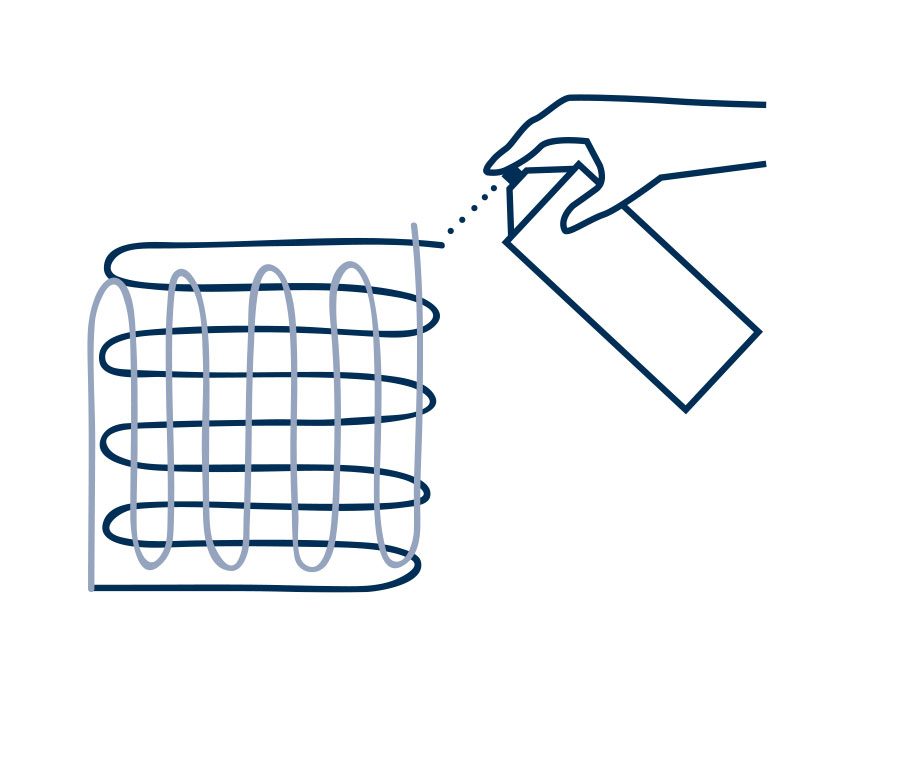
- If applying varnish or fixative with a spray the work is usually upright. The spray is applied in a regular pattern – the first coat from left to right and the second from top to bottom – after the first coat is dry. Spray from a distance of 30 – 40 cm. To insure an even coating be sure that you go past the edge of the painting at each pass of the spray.
- If you plan to use an aerosol spray fixative or varnish on a large surface area, you might wish to try using two cans, alternating between them. When a spray nozzle is held down over a long period of time the pressure drops inside the can and this may lead to an uneven “spitting” effect of the spray. Switching between two cans allows the pressure to build up again in the resting can.
- To avoid clogged-up spray nozzles you should wipe the nozzle directly after each use with a dry cloth. If the nozzle does become clogged you can clean it with acetone or another cleaner with solvents.
- Don’t forget that varnishes and fixatives may contain volatile organic solvents and, therefore, should only be used in well-ventilated rooms. Keep your lungs safe!
Schmincke Painting Mediums and Varnishes
A painting medium or varnish helps you modify a characteristic of your paint: the drying time, amount of shine, thickness, opacity, flow and more. Jackson’s stock 57 Schmincke mediums to help you customise your paints.
- Schmincke Mussini Oil Painting Mediums
- Schmincke Aqua Watercolour Painting Mediums
- Schmincke Aero Acrylic Ink Painting Mediums
- Schmincke Linoprint Mediums
- A wide array of fixatives and varnishes
- Masking fluid, primers, binders, ox gall and bronze medium
Click on the underlined link to go to the entire range of Schmincke Mediums on the Jackson’s Art Supplies website. Postage on orders shipped standard to mainland UK addresses is free for orders of £39.



12 thoughts on “Final Treatments – Schmincke Varnishes and Fixatives”
Thank you for an interesting post! Why can watercolours only be fixed on completion?
Hi Lena.
As always you can actually do anything you want with art. Some people saturate their paper with varnish because they want to make it transparent.
But most people won’t want to spray resin on a watercolour in the middle of the process because fixative is a hard surface meant to seal the paint and paper from water and you will not be able to continue painting as you normally would.
Have you used fixative while painting watercolours?
I have fixed mixed media pieces in the process, and while I find it possible to continue painting after fixing it does indeed seem to affect the surface so that paint does not lay down as evenly as normally.
That’s interesting. So perhaps not as much difference as would be expected. But it might not allow artists working in a pure watercolour to continue working as normal.
Thanks!
Can anyone recommend sealer for
imitation gold foil on acrylic
painting please
Hello.
A common question is what can you seal tarnish-able leaf with that will not itself cause tarnishing. After speaking with a technical expert and testing it ourselves we determined that the Golden MSA varnish is a good choice for sealing metal leaf without damaging it. There may be other varnishes that work as well, you can try experimenting. To keep as much of the shine as possible it would be good to choose a gloss varnish.
Hi there! I’ve been looking at your
products and I’m interested to know if
they have any varnish compatible with
alcohol inks.
thank you
Hi Daniela
It looks like everyone recommends the Krylon Kamar spray varnish for alcohol inks. We will be stocking the Krylon in a few months. Please check back in January when our first order should arrive.
Hi
If I am using essential oils with acrylic,
what can I use to seal the paints but
keep it smelling nice
Hi Jodie
I think most sealants will seal in the scent.
You could experiment and see if a polymer varnish works.
I know that Golden say their Golden Polymer Varnish is still slightly breathable, so the acrylic paint can continue to cure. But it may not be enough for the scent to come through, so I would do a test piece.
I know the Schmincke Spray Fixatives can’t
be sold in the U.S.? How about the
Schmincke Aerosol Spray Fixative?
Hi Mike
Since it’s an issue with shipping solvents by air, all the aerosol sprays will have the same difficulty, I’m afraid.
Comments are closed.