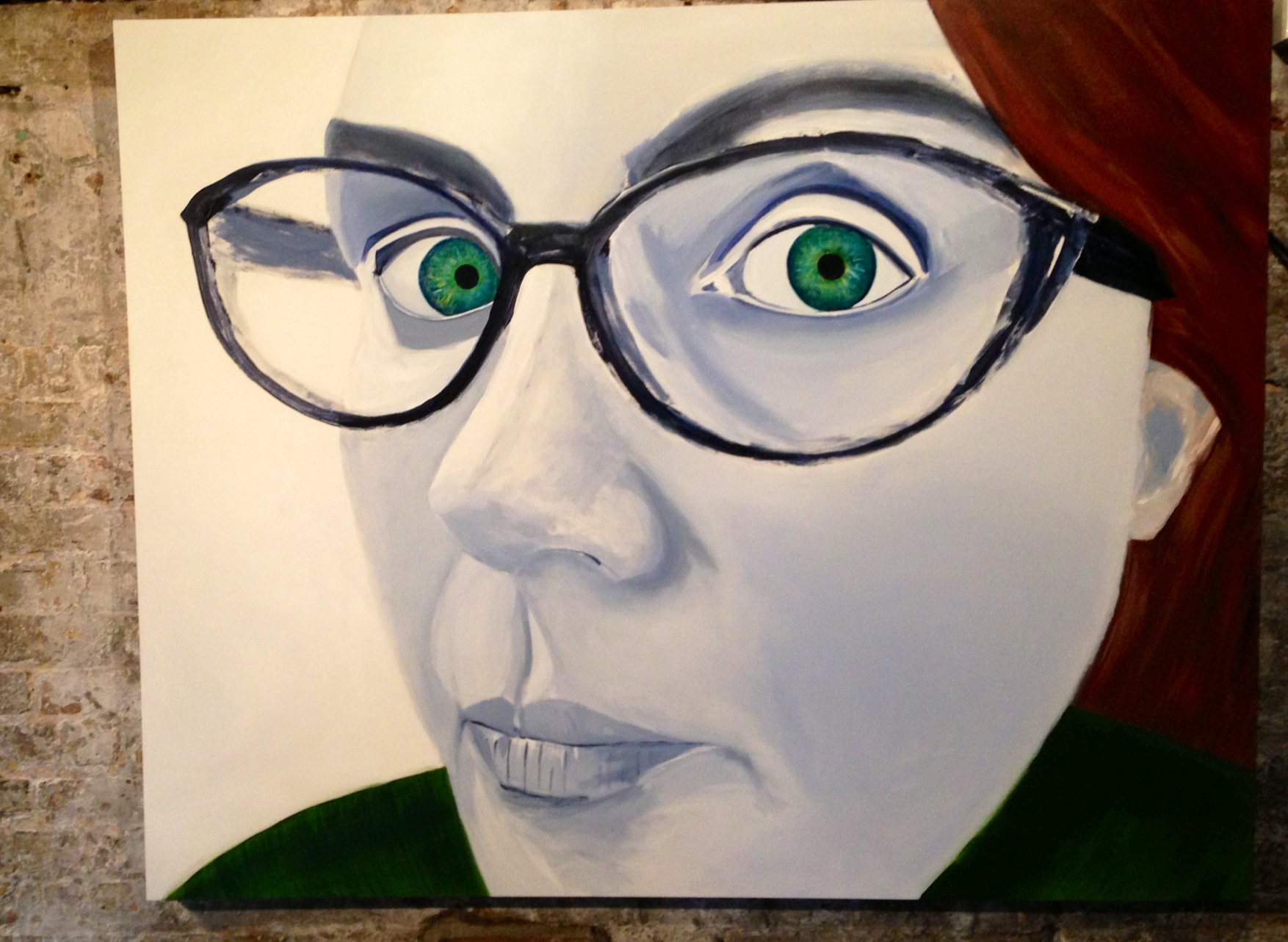
Artists’ rights can seem like a daunting subject. If you don’t know your rights and what you can do to protect your work as a creator, what then? With this in mind, DACS, the UK’s flagship visual arts rights management organisation, whose members include British artists such as Roger Hiorns and Chantal Joffe, was born in the mid Eighties. With exciting new projects on the go and the newly created DACS Foundation now in place, we decided to meet with DACS’ Abby Yolda, Head of Communications and Reema Selhi, Legal & Policy Manager to get their expert advice on artists’ rights and how to tackle the challenges of creating in the digital age.
Above image: British artist Chantal Joffe in her studio. Photo credit: Brian Benson, 2016. Image courtesy of DACS.
Sophie: How was DACS founded? What is the focus of DACS’ work?
Abby: DACS (Design and Artists Copyright Society) was established by artists for artists over thirty years ago. Today, we’ve paid over £75 million in royalties to artists and their estates, which is a really significant amount of income that goes directly back to artists and their estates to help with their livelihood, practice and legacies. We also campaign for artists’ rights and champion their sustained contribution to the creative economy. Through our international network of sister organisations, we act as a trusted broker for over 90,000 artist members. We support artists through our core services, which go across artist’s resale rights, copyright licensing, Artimage and payback.
Sophie: So you liaise between artists and their clients.
Abby: In terms of copyright licensing and Artimage, we would liaise between the artist and the user of the work, such as commercial end clients. But for artist’s resale right, we are liaising with art market professionals: auctioneers, galleries, and dealers. We collect the royalties due on artist’s resale right and distribute it back to our artists and their estates.
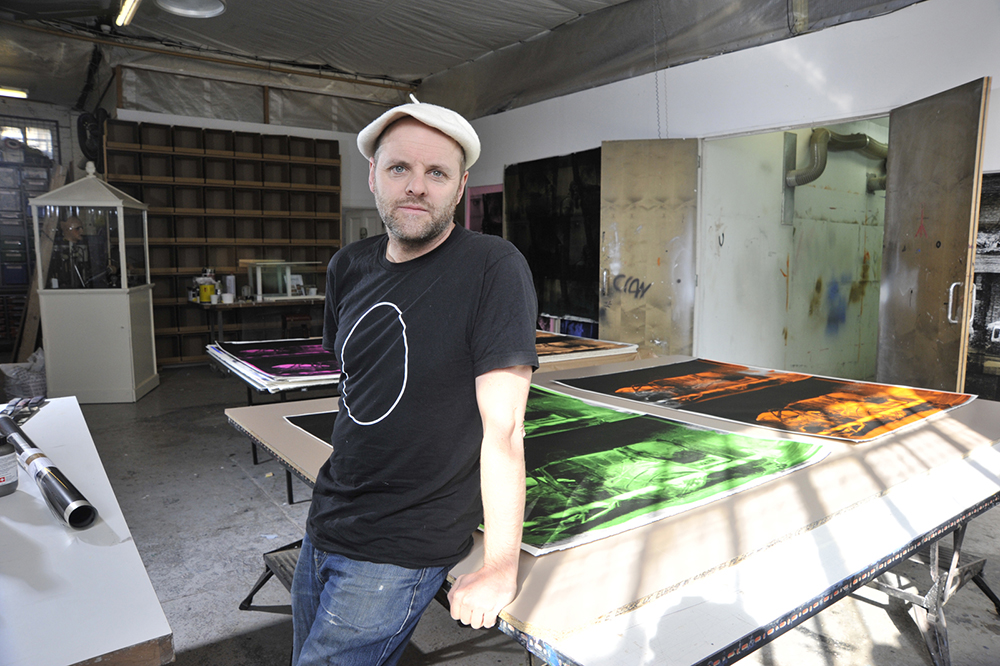
Photo credit: Brian Benson, 2016 – Image courtesy of DACS
Sophie: How has the digital realm changed things for artists and what are the main issues it has created?
Abby: With the rapid expansion of online platforms and digital technologies, I think it’s difficult for artists to keep track of where their artwork is being disseminated, and if it has been infringed, working out the next steps in trying to either get a retrospect license put in place or addressing the matter with a social media platform.
Reema: As we’re a common law system, every time a case happens in the court, it affects copyright law. In that sense, it’s not just for the law to keep up but also for Internet companies and big giants such as Google, Youtube, and Facebook to respond. In recent weeks, we’ve seen a lot of stories about musicians, recording companies and artists not only writing to the US copyright office saying things need to be changed, but also targeting directly Google and Larry Page to say there’s a loophole being used and it’s not fair for artists. So the change needs to happen on both sides. It is obviously a space that artists are finding difficult to do their work in.
Sophie: In recent years, have you seen a surge in artists approaching you with digital-related issues?
Reema: In some ways, yes. In other ways, we’ve seen a lot of opportunity. For example, there’s now a greater uptake for the licensing of content in a digital atmosphere. Traditionally, our licenses were for book publishing, for example. But now we’ve adapted licenses to entail online publishing. We’ve also developed licenses that cover galleries’ use of artworks for their own social media content – so we’re developing solutions in tandem with both the clients and the artists.
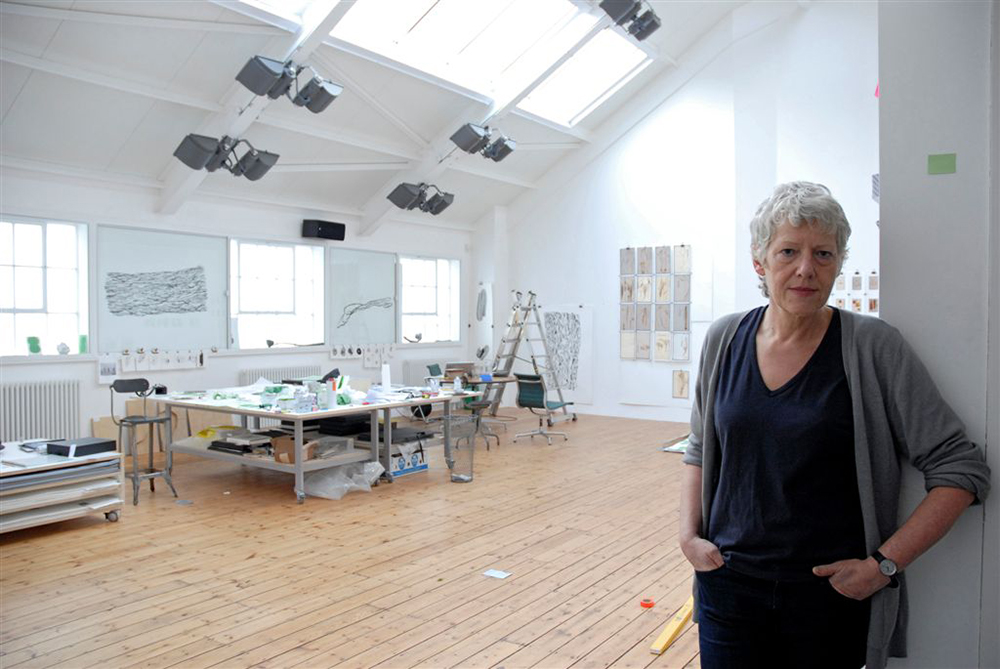
Photo credit: Brian Benson, 2016 – Image courtesy of DACS
Sophie: Can you tell me a bit about the history of copyright in the UK?
Abby & Reema: The notion of ensuring creators’ works are protected from unauthorised copying and distribution is historic – the UK’s first copyright law was developed in the early 1700s. Each era has had technological challenges, whether the printing press or the internet, and each time lawmakers attempt to balance the interests of innovation and protecting creators.
Sophie: What advice would you offer an artist who wants to promote their work online? Is watermarking helpful?
Reema: We think it can be. I think it’s useful for artists to know that under UK law, copyright gives automatic protection to a work of art as soon as it is materialised in a fixed format. So you don’t have to register it or anything like that. Protection lasts for the lifetime of the artist and 70 years after their death. Copyright gives an artist an exclusive right to their work, so the artist’s permission must be sought to use the work or copy it.
Abby: We recognise that artists want to use social media platforms for self promotion. But it’s about being aware of what the terms and conditions are when they’re signing up. Consider not putting all your work on social media and perhaps creating specific works for social media (which direct viewers back to your own website) so that you actually have that control over your own website’s terms and conditions and still have control over how your artwork is presented online. If there are the instances where you find an infringement on social media, there are avenues to go down the infringement complaints process. It might feel like a David and Goliath situation, but we’ve worked with some of our members to advise them how to proceed with this process to get a take-down notice.
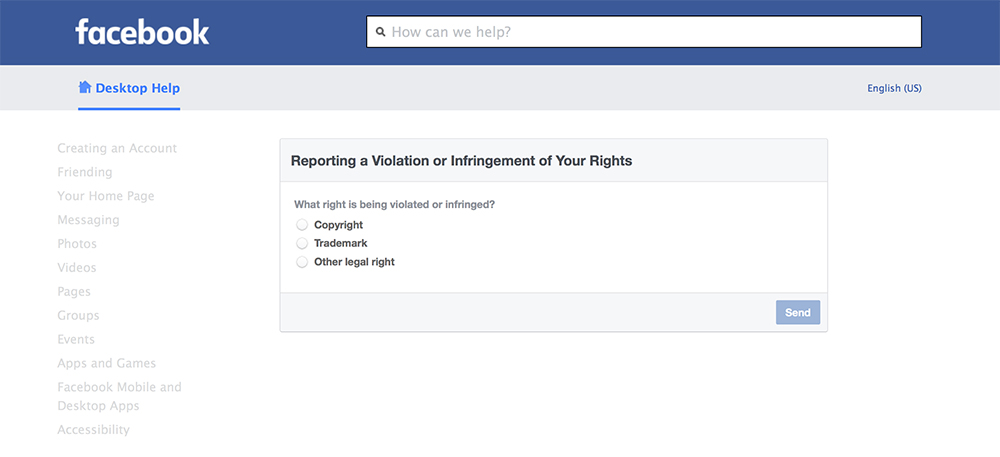
Reema: The take-down request which you can usually find on a social media website will at some point be linked to a take-down notice. It’s free to use and always worth using as a first recourse. The more people are active about that, the more likely it is that artworks will come down if it is a genuine infringement.
Sophie: Do you feel optimistic about how things are progressing for artists’ rights online?
Reema: It’s a long process but the fact that people are being very vocal about it shows that there needs to be a change. I think we may be on the cusp of some big advances – already, there are a lot of technological advances aiming to make tracking and the fingerprinting of works online much more sustainable. These innovations themselves create solutions between licensing and Internet companies that will hopefully be able to remunerate artists and give control back to them.
Sophie: If an artist sees that their work has been used on the show of a major broadcaster, for instance, how should they best proceed?
Reema: Many people see the corporation element as off-putting but it can be quite streamlined. Nowadays, content is disseminated so quickly, and they’re usually pushing content out there before getting the necessary permissions because of a deadline. They probably know that it wasn’t the right thing to do and would be more willing to incorporate it afterwards.
For our copyright licensing members, we’re able to handle infringements on their behalf because they give us an exclusive right in their works. We have an enforcement service, and we’ve often managed to receive a retrospective royalty when a work has been used without permission.
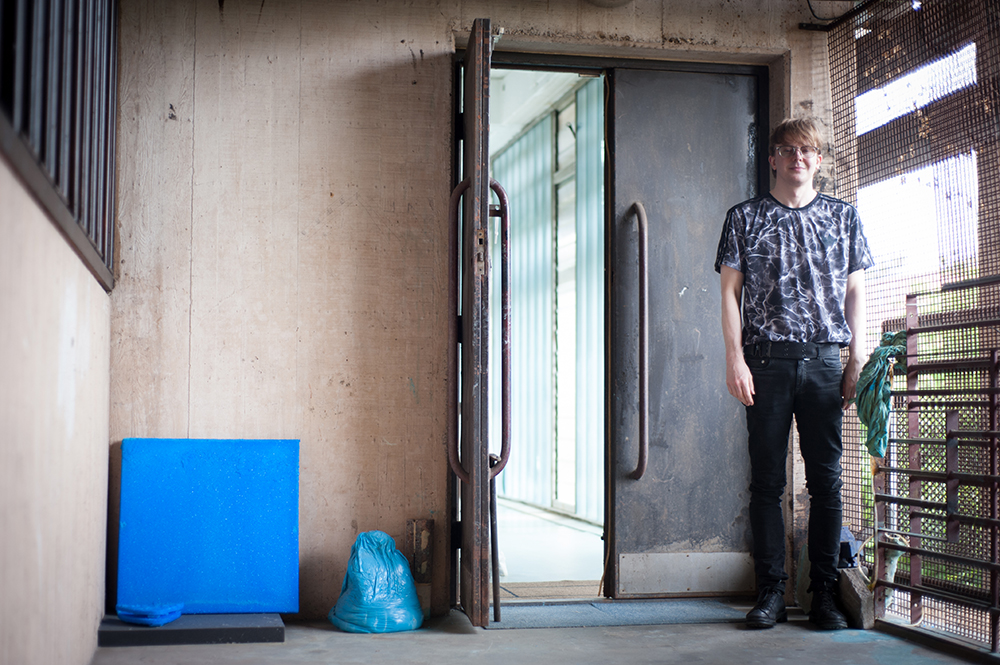
Photo credit: Brian Benson, 2016 – Image courtesy DACS
Sophie: What’s the best way to proceed for licensing artworks?
Abby & Reema: If someone wants to use your work, you may wish to have a licence in place, which is preferable to an assignment of copyright where even the artist is then prevented from using their own work. Contracts can be complicated, but there are certain things to check before signing. Firstly, you should make sure you have the complete contract – if there are any references to a schedule or appendix, ensure you have these too. Look out for the governing law, as not all contracts are governed by English law and copyright differs in other countries. Check whether the licence says it is exclusive or non-exclusive – an exclusive licence could be almost as restrictive as an assignment. It’s also advisable to look out for how long you are granting the licence for and in what territory – terms such as ‘perpetual’ and ‘in the universe’ have no limitation.
Sophie: Can you explain Artist’s Resale Right?
Abby: It is a UK law, and it provides a small royalty back to artists and estates whenever their work is resold by an auctioneer, dealer, or gallery for more than 1,000 Euros. It’s based on a small percentage of the sale price, and it starts at 4 per cent but it’s an accumulative sliding scale down to a quarter of percent. There’s an overall cap of 12, 500 Euros for any work that sells above 2 million euros. Even though it’s based on a EU directive, it is UK law. Over 50% of artists generate less than a quarter of their income through their art, so anything that helps provide income to artists and estates is really crucial. Visual artists and the arts as a sector are key drivers of the UK’s creative economy and creative industries. For every £1 of gross value added and generated by arts and culture, an additional £1.43 is generated back into the wider UK economy – so it really shows that the arts are crucial. The UK is in a strong position because they’re second in the world for art market.
Sophie: How can artists find out more about Artist’s Resale Right?
Reema: In the UK, a collective society has to administer Artist’s Resale Right and it can’t be done by an individual. One good place to go would be the DACS website. Another place to go, on the policy side of things, is the UK government’s Intellectual Property Website.

Photo credit: Brian Benson, 2016 – Image courtesy of DACS
Sophie: How do you envision artists’ rights progressing in a positive way?
Abby: We would love to see an international treaty on the Artist’s Resale Right. 80 countries already recognise it and the world intellectual property organisation is already looking at it. Artists from all around the world would benefit from it. In terms of the definition of artistic works, we would like to see the definition expanded so that it captures the new ways artist are starting to create, particularly in relation to digital technologies and installation artworks. We would love to see effective enforcement of rights on online platforms, so that creators can be fairly remunerated for the works which they created, but also having a more robust and greater transparency in terms of the infringement claims process – to make it a clearer and simpler process for artists in terms of raising these issues with large corporations.
Sophie: On a practical level, how do you see this developing – do you see arts education having a part to play within this? Would that mean having an element of law as part of the arts curriculum?
Reema: One of our board members has always said that he sees artists as being small businesses. As an artist, your work is your job so everything you create is something you can essentially sell. It’s part of your repertoire that you should have a bit more business sense – part of that is knowledge is copyright. Art schools or even higher education are not providing students with the knowledge that works you see online are copyright protected, that your works are copyright protected and you can maximise that. It’s interesting in that sense that there is no education on it – but it’s actually very important, especially considering how the UK’s creative industries are so vital to our economy and it’s one of the growing industries in our country.
For further information, check out:
DACS: www.dacs.org.uk
Celebrating the 10th Anniversary of Artist’s Resale Right – materials
Artimage (for licensing artworks)
DACS Knowledge Base (more Q&As on copyright and factsheets)
Further Reading
Expert Advice on Selling Your Artwork
How to Create the Best Digital Photographs of Your Artwork
Expert Advice on Articulating Your Art Practice
How to Increase the Financial Value of Your Artwork