



Here’s a guide to four popular acrylic mediums offered by Winsor and Newton: Flow Improver, Gloss Medium, Matt Medium and Slow Drying Medium.
NB: This post originally referred to the Winsor and Newton Mediums Mini Intro Set, which is no longer available.
Professional Acrylic Flow Improver (125ml and 250ml)
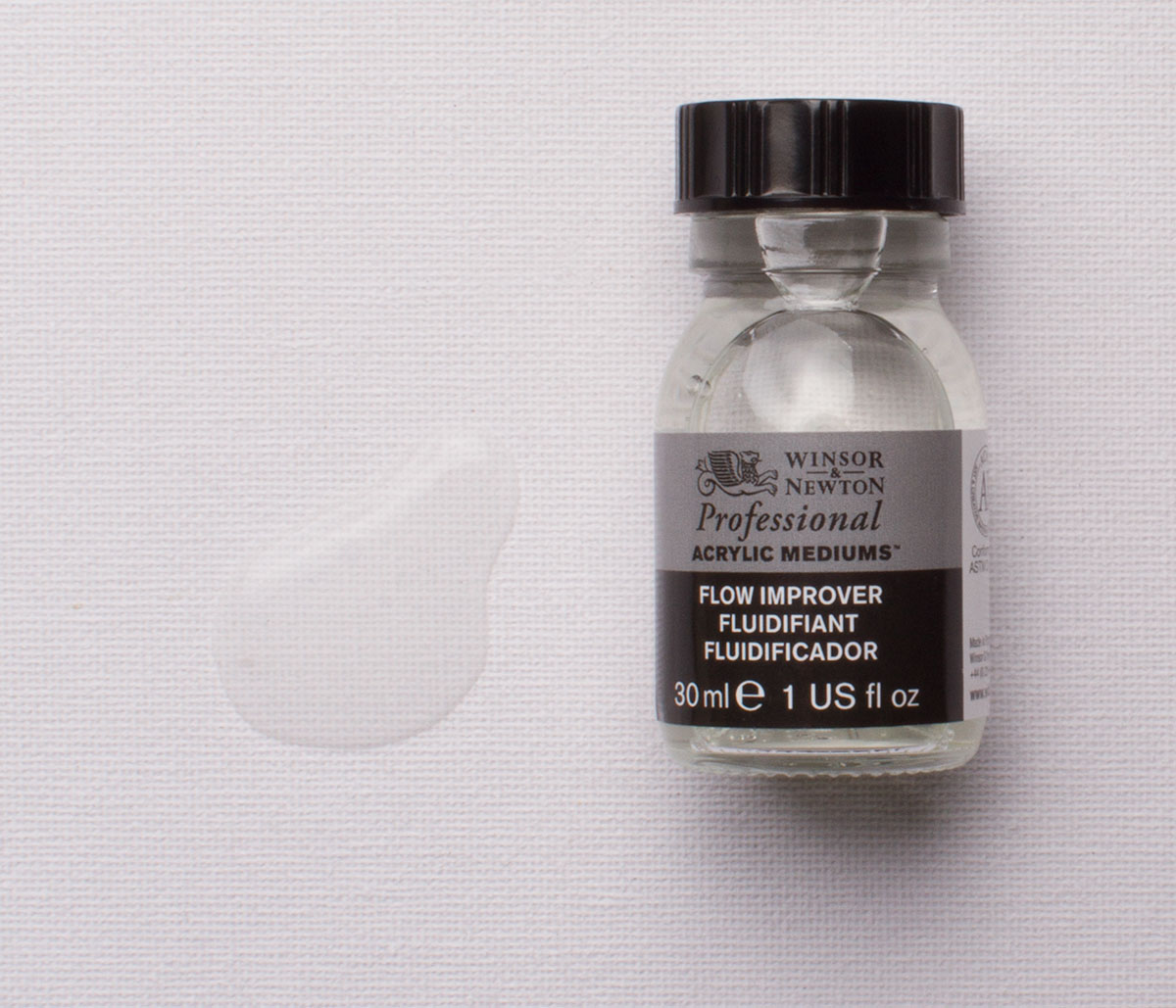
If you want to dilute your colour significantly, it helps to add flow improver to the water as this preserves the integrity of the paint film, ensuring the pigment remains sufficiently bound. Under-bound colour can appear blotchy, may become brittle or not adhere to the canvas well, all issues which are avoided if you use flow improver. This additive increases the flow of acrylic colours by breaking down the surface tension of the water. It is ideal for staining and watercolour techniques. It maintains the stability of the colour and slightly slows drying, so colours will remain usable slightly longer when mixed with this medium.
This is a concentrate, it needs to be diluted first: 10% flow improver to 90% water. Mix with water and then use with colour.

Professional Acrylic Gloss Medium (250ml, 500ml)
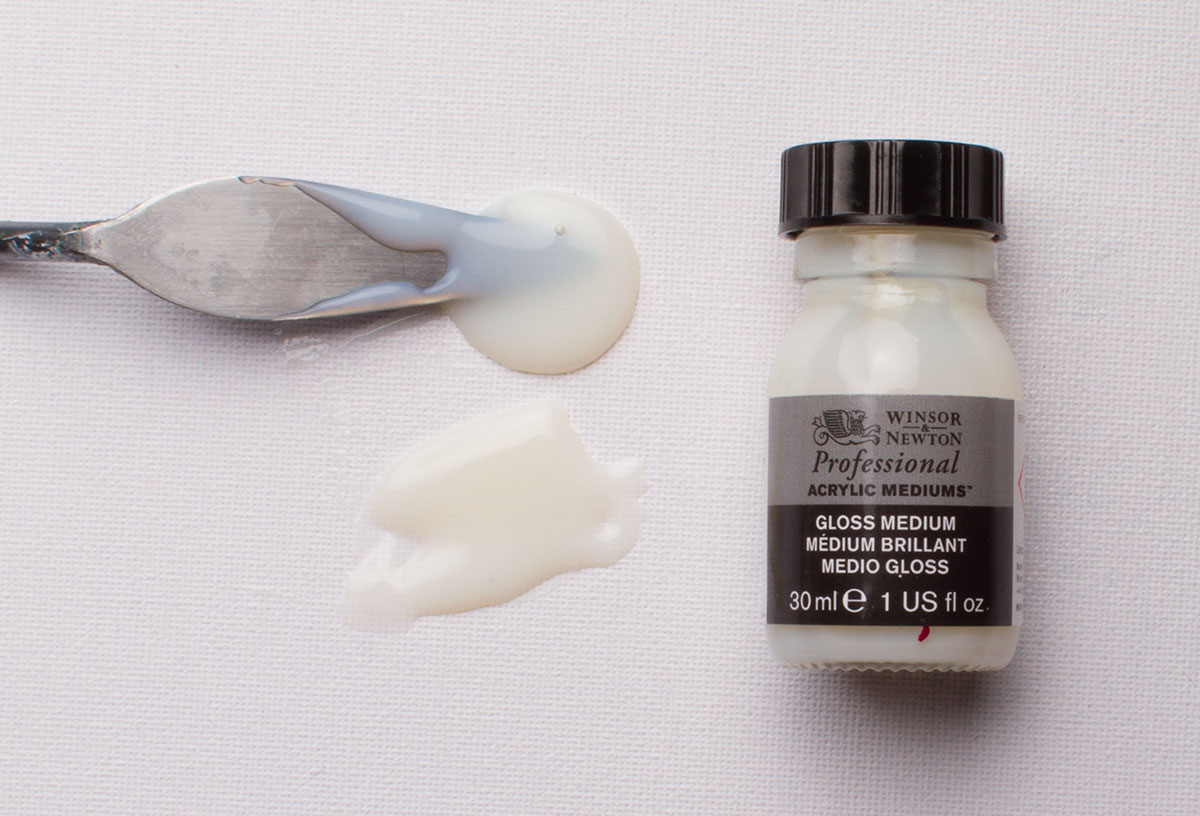
This soft gel medium extends heavy body colour to add transparency and improves flow a bit for blending or painting fine detail. Maintains no colour shift from wet to dry when used with Artists’ Acrylic. Increases the depth of colour and provides an even gloss finish. It can be used in thicker layers than the glazing medium.
It can be mixed straight into colour at any ratio. It can also be used on its own without colour addition as a clear glaze between layers or a mixed media adhesive. Acrylic gloss medium dries completely clear.

(click to see the image larger)
Professional Acrylic Matt Medium (250ml, 500ml)
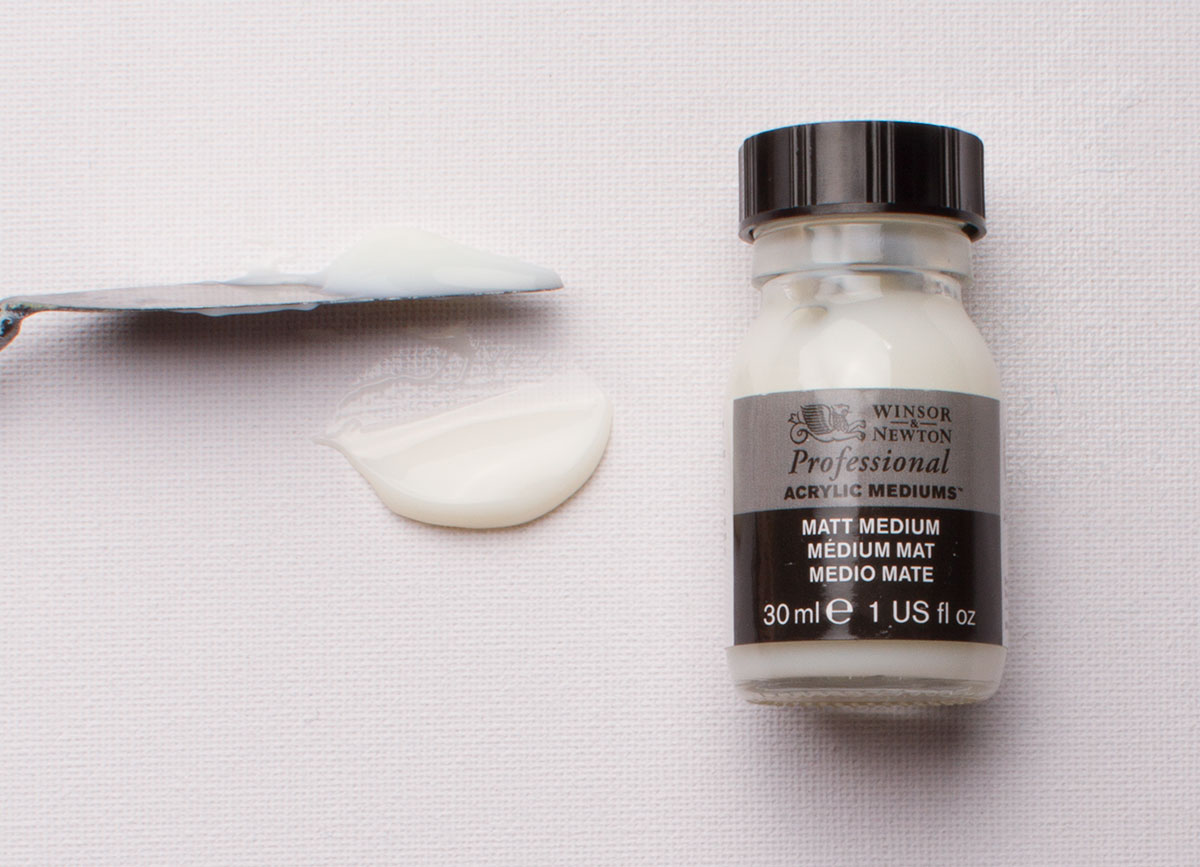
This heavy gel medium extends heavy body colour to add transparency and improves flow a bit for blending or painting fine detail. It provides an even matt finish and increases the water resistance of the colour when dry. This medium contains clear binder and matting agents giving you no loss of colour depth.
It can be mixed straight into colour at any ratio. It can also be used on its own without colour addition as a clear primer for canvas. If you apply many layers of plain matt medium it will no longer be clear but instead will be cloudy because of the matting agent.

(click to see the image larger)
Professional Acrylic Slow Drying Medium (125ml, 250ml)

Slows drying to give more working time of colour for extended blending and manipulation. Maintains no colour shift from wet to dry when used with Artists’ Acrylic. This additive has been formulated to match the consistency of heavy body colour, the texture is thick and creamy. This means that none of the characteristics of the colour are affected, except the drying time. You can also mix slow drying medium with any other medium in the range to slow the drying.
Mix the medium straight into colour. A ratio of 1:1 by volume doubles the drying time. Do not mix with colour above 1:1 as excessive amounts of slow drying medium will cause the colour to become under-bound, thinner and slightly stickier in consistency.

View all Winsor and Newton Acrylic Mediums on Jacksonsart.com



4 thoughts on “Winsor & Newton Professional Acrylic Mediums – A Guide”
Great article, shame the product doesn’t
appear to me stocked anymore.
Hi Louise,
Thanks for bringing this to our attention, unfortunately this product is no longer available although the individual mediums are. I will update the post accordingly.
Best wishes
Lisa
Hi I have a 75ml bottle of Windsor and
NewtonAcrylic matt medium (which I
purchased from you a long time ago..
£2.90!!).. used for painting on kites. It has
gone more gel like now.. is it ok to dilute
with water to give a smoother working
consistency with the pigments? Thanks
Neil
Hi Neil.
I have had acrylic mediums that stayed moist for 20 years and some that dried up in just a couple of years. I assume it is that some containers aren’t quite as well sealed. So if I open a medium I give it a spray of water on top before I close it just to insure it stays viable.
It might be that your medium has started to dry out in which case a small amount of water stirred in gradually should do the trick. But if the medium has been stored in a shed and frozen in the winter, that could be what has caused the gelling and that probably won’t be corrected with the addition of water. Acrylic shouldn’t get below 10C or they become clumpy jelly and are not repairable.
Comments are closed.