



This post is the first in a series exploring the means by which the UK Government can encourage the movement of significant artworks from private collections into public or institutional ownership. In this post, we take a look at temporary export bars, which are placed by the Culture Minister on nationally-significant works of art – ‘National Treasures’ – which have been sold to foreign buyers. The idea is that this gives UK institutions time to raise sufficient funds to match the foreign buyer’s offer.
As a study of the fundraising efforts which follow a temporary export bar, we explore the Bowes Museum’s successful campaign to acquire ‘Saint Luke Drawing the Virgin & Child’, a Dutch fifteenth-century painting which is currently the focus of a major exhibition at its new home.
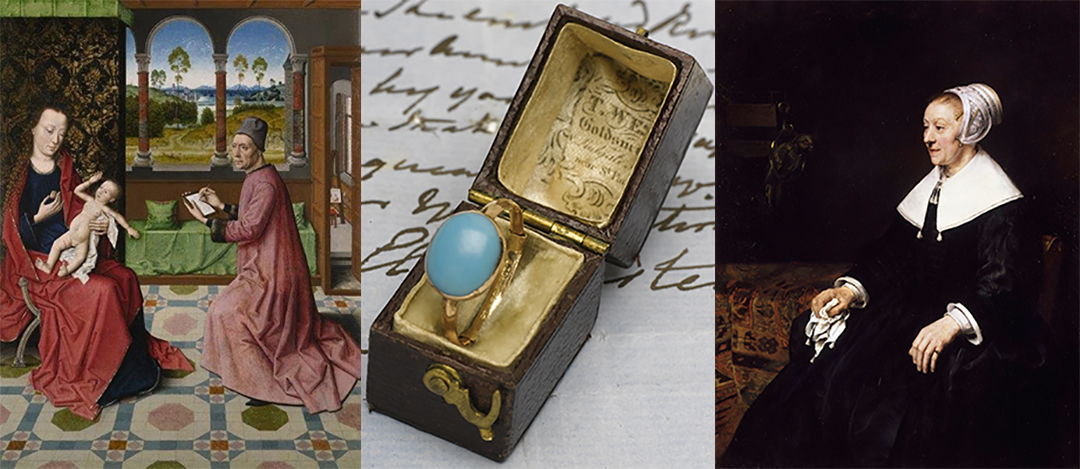
What is a National Treasure and what is a Temporary Export Bar?
As ‘Cultural Goods’, works of art cannot pass freely in and out of the UK if they are over a certain age and monetary value. If an old, expensive work of art which has been in the UK for more than fifty years is sold to a foreign buyer, or is due to leave the UK for sale elsewhere, it requires an export licence.
Between 1 May 2015 and 30 April 2016, there were 10,585 applications for export licences, which covered a staggering 71,731 items. About half of these applications were assessed by Expert Advisers, who are generally curatorial experts from museums and galleries in the UK. They assess each item individually to determine whether or not it is a ‘National Treasure’ – which is the official term used by Whitehall. To be a ‘National Treasure’, the object must meet one or more of the three ‘Waverley Criteria’. These are:
- Historical importance: is it so closely connected with our history and national life that its departure would be a misfortune?
- Aesthetic importance: is it of outstanding aesthetic importance?
- Importance for scholarship: is it of outstanding significance for the study of some particular branch of art, learning or history?
The thresholds for the Waverley Criteria are very high, and consequently the vast majority of cases are waved through by the Expert Adviser. These objects are then free to leave the UK. But if the Expert Adviser judges that an item which is up for export meets one or more of the Waverley Criteria – that it is, for example, ‘of outstanding aesthetic importance’ – the artwork or artworks concerned will then be considered by a panel of experts known as the Reviewing Committee on the Export of Works of Art and Objects of Cultural Interest (RCEWA). It is this body which decides whether an artwork really is a ‘National Treasure’ which should be considered for a temporary export bar by the Secretary of State at the Department for Culture, Media and Sport.
In modern times, Secretaries of State have generally tended to side with the decision of the Reviewing Committee. They then place a temporary export bar on the object, which gives UK institutions up to a year to raise funds to match the foreign offer. If that happens, then the foreign buyer can either sell the object or withdraw the application for an export licence and keep the object in the UK. If they decide to keep hold of the artwork, they can’t request another export licence for ten years. But if there isn’t a museum or consortium which is willing to stump up the cash, the artwork will be free to leave.
Talk of applications, panels, experts and ministers make this sound like a hugely bureaucratic, time- and money-wasting procedure. But it’s worth noting that there’s a high rate of attrition at almost every step of the process. In the year running from 1 May 2014 to 30 April 2015, applications were made for the export of 92,277 objects. Expert Advisers issued export licences to more than 31,000 objects; only 17 cases were referred up to the Reviewing Committee. Of the 17 cases heard by the Committee, only 12 were recommended to the Secretary of State for temporary export bars, and of those 12, only 5 resulted in acquisitions by UK buyers. This means that only 0.01% of the items which were submitted for export in that year were brought to the notice of the Secretary of State as ‘National Treasures’.
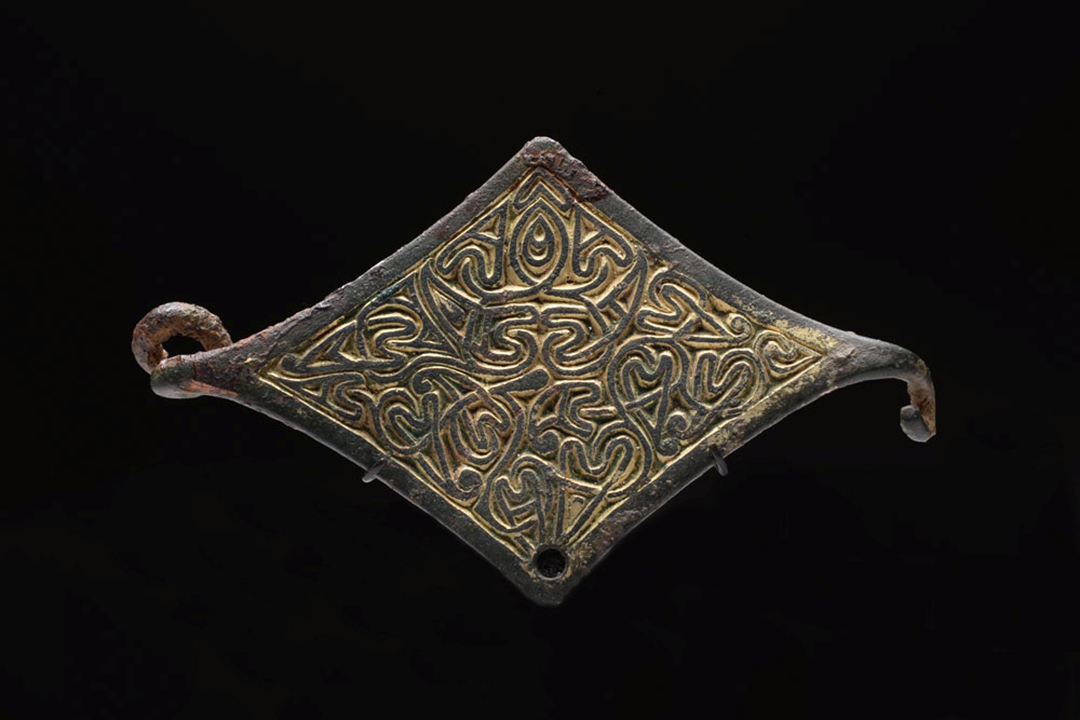
The ones that get that far don’t necessarily have to be staggeringly expensive. In the year ending the 30th April 2016, twenty-one objects were subject to temporary export bars because they were deemed to be National Treasures. One of these was an Anglo-Saxon brooch of gilt bronze (pictured below), dating from the late eighth century and valued at just £10,152. Because of tax advantages (which we’ll look at in a future post), a UK institution would only have had to pay £8,460 to pocket it. Happily, on that occasion, a buyer was found.
Why we can’t keep it all
The rate of success for Temporary Export Bars is not how many are placed, but how many eventually lead to an acquisition by a UK buyer. Over the last three years, the Secretary of State has deferred export licences for an average of 18.3 items a year; on average, 7 of these items a year find new homes in the UK. Item-by-item, that’s not a bad rate of success, but those figures don’t tell the whole story because they include a wide range of items, from the £8,460 brooch pictured above to a £3,383,320 painting by Dieric Bouts the elder, and it’s obviously far easier to save the cheaper items. The average total value of items placed under temporary export bans over those three years was £81.94 million each year, of which £8.9 million was, on average, ‘saved for the nation’.
At this point, the more hard-line believers in the concept of ‘our national heritage’ will probably be asking ‘why can’t we just put a bar on everything and keep what we can?’ For one thing, it weakens the case for the next acquisition; if there are ten appeals for funding and public contributions going on at the same time, we’ve got less chance of retaining the really, really special items. It’s also not great for our art market. This is something which was touched on by a recent piece over on Apollo magazine, where the art-dealer, journalist and TV-personality Bendor Grosvenor pointed out what can happen to a country’s art market when its government decides to take a protectionist approach:
But let us suppose we could keep everything we deem a national treasure. In France, the state has a range of measures in its cultural arsenal to do just this. It can unilaterally declare a work a treasure, and forbid its export outright. Or it can ‘pre-empt’ a work by declaring after an auction that the state will match the price (without having bid itself, that is).
All of which is marvellous for keeping great and even mediocre works of art in France. And yet it’s not much good if you happen to own one. Imagine you wanted to sell your house, but could only market it to people who already lived in your street; you wouldn’t get much for it. The same goes for important works of art in France, which rarely fetch their full open-market value at auction, because buyers outside France do not bother to bid.
Another way of putting it is that France has chosen to have the world’s best art galleries, at the expense of art dealers and private collectors.
In essence, it’s about balancing the interests of dealers and purchasers, scholars and the British public. As the DCMS puts it, ‘The system is designed to strike a balance, as fairly as possible, between the various interests concerned in any application for an export licence – for instance, the protection of the national heritage; the rights of the owners selling the goods; the exporter or overseas purchaser; and the position and reputation of the UK as an international art market.’ (DCMS, ‘Export of Objects of Cultural Interest 2013-14: Statistical Release’, November 2014.)
A Case Study: The Bowes Museum and ‘St Luke Drawing the Virgin and Child’
It’s easier to demonstrate how the whole system works using a case study. Here, we will focus on ‘St Luke Drawing the Virgin and Child’, an oil painting from the workshop of Dieric Bouts the Elder, a fifteenth century Dutch painter, which has been in the UK since the nineteenth century.
The painting shows the Virgin seated in front of a cloth of honour, feeding the infant Jesus an apple. St Luke is shown kneeling, in what is possibly a self-portrait by the artist. He is drawing the scene in silverpoint as a study towards an unfinished painting which stands on an easel in an antechamber. The artist’s studio is full of materials which would have been common in the workshop of a fifteenth century painter: oil paints of various colours, shells to hold the paint, an easel and a stool.
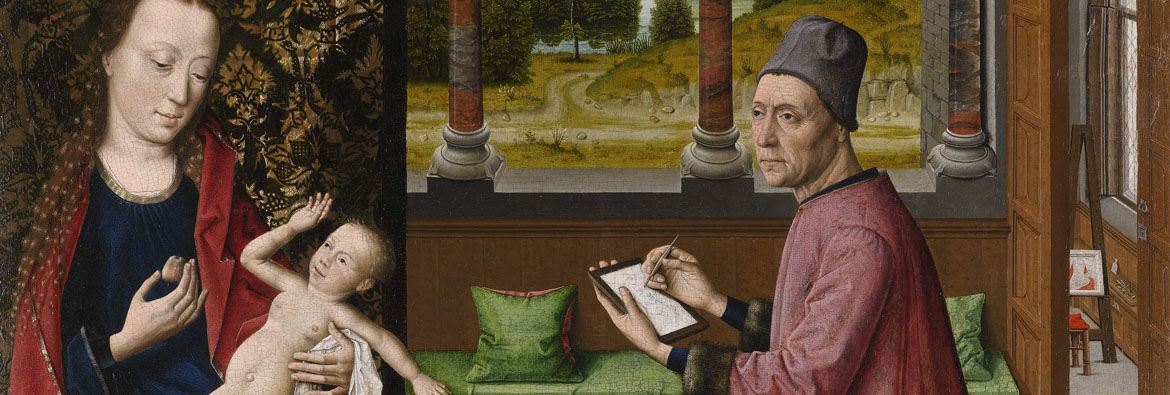
In fact, the painting affords us an insight into the artistic process on two levels. The painting is so luminous that it comes as a surprise to note that St Luke’s robes have clearly faded to their translucent pink; the artist’s preliminary drawings, indicating the position of folds and shadows on the garment, are visible to the naked eye. You can see the artist’s original intentions, which do not always match up with the finished image. This video shows the relationship they have with the final painting.
When this painting was put forward for export in the year 2015-16, the application talked down its significance. The document is available online; you can read it here. It asserts that the painting does not meet any of the three Waverley Criteria, and refers to ‘its deteriorated state of preservation, its derivative composition, and the quality of its execution’, which is ‘not of the same high quality as recognised, autograph works by Bouts’. (You almost wonder why they bought the work in the first place.)
The painting was viewed by an Expert Adviser, who didn’t agree with this rather severe assessment of its significance. The case was referred to the RCEWA, who sided with the Expert Adviser, concluding that the painting was, in fact, a National Treasure:
The painting has an excellent claim to be considered of outstanding aesthetic importance, thus meeting the Waverley 2 criterion. […] As a devotional painting with the capacity to make an outstanding contribution to the study of the St. Luke tradition in the Netherlands, the painting also meets the criterion set out in Waverley 3.
The Secretary of State then put a temporary export bar on the painting, which was valued at £3,383,320. This gave UK institutions time to raise the funds. The Bowes Museum in Barnard Castle, County Durham, launched an appeal and by July of 2016, had raised the necessary total of £2,290,650, thanks to grants from the Art Fund, the Heritage Lottery Fund and a number of private donors. (The government often offer beneficial tax arrangements for such purchases, which explains the difference between the initial valuation and the price paid by the Bowes Museum.)
Understandably proud of their new ‘National Treasure’, the Bowes Museum have given it a solo exhibition, ‘Image and Substance: St Luke Drawing the Virgin and Child‘, which closes on 8 January 2016.
Image and Substance: St Luke Drawing the Virgin and Child runs from 12 November 2016 to 8 January 2017 at the Bowes Museum, Barnard Castle, County Durham.
DCMS reports on the Export of Objects of Cultural Interest 2015-16 can be found here.

2 thoughts on “How can we save our National Treasures?”
The Anglo-Saxon brooch and the Jane Austen ring should
of course be kept within our borders, as they were
produced or owned by native English people; but I am
less enthusiastic about Dutch paintings. Surely the Dutch
galleries should be given a favoured position here?
Hi Malcolm, thanks for your comment. I’m not sure it’s a very practical proposal to have a committee decide whether artworks are sufficiently ‘English’ to be saved…
Also, weren’t the Dutch paintings in question owned by ‘native English people’ too?
Comments are closed.