For our fifth post of the series Advice for Emerging Artists, we’re featuring writing by internationally exhibiting, contemporary realism painter Leslie Watts. Her portraits in egg tempera have been selected for the Kingston Prize in Canada, the BP Portrait Award and the Royal Society of Portrait Painters in London, UK. Her work is featured in collections in Canada, Australia, New Zealand, the EU, and the USA. She has also collaborated with Jackson’s on many blog posts; you can read the wide variety of articles she’s featured in here. View more of her work on her website, www.lesliewatts.ca.

What advice would you give to an emerging artist?
By Leslie Watts
“I’ve been painting full-time for just over a decade, so in many ways, I’m still an emerging artist myself. In that time, however, I’ve come to realize that a career as an artist is actually a continuous cycle of failure and success, not simply a one-chance deal. You’ll have lots of
failures and lots of successes, and none of these are likely to be uniquely life-changing. They will all add up over time to help you understand the next direction to take.
Here’s a personal example: I live in a very small city in Canada. A couple of years ago, I entered a self-portrait into the juried exhibition at my local public gallery. It was not accepted. I might reasonably have assumed that this particular work simply wasn’t good enough for public display. But instead of giving up on it, I entered it into the RP (Royal Society of Portrait Painters) 2017 juried exhibition in London and it was accepted. Moreover, as a result of being included in that exhibition, I recently received a portrait commission through the RP for a client in the UK. It’s important to remember that your work may not be loved by everyone everywhere, but it may very well be loved by someone somewhere, and you should work at exhibiting in as many diverse venues as possible. You might even discover that your art is appreciated in a different country from the one you live in.”
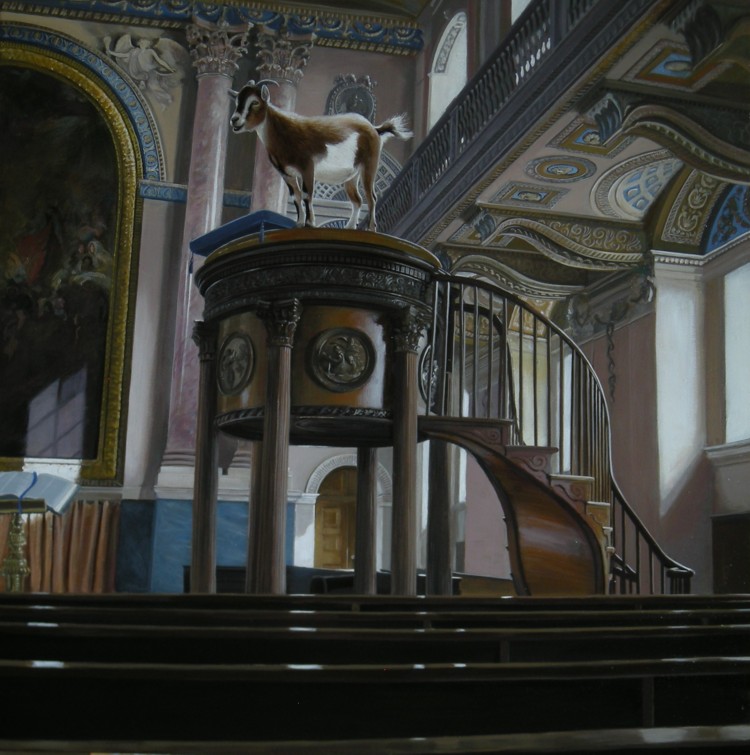
“Finding a part-time job that will bring in a steady income is extremely helpful. It can mean that you’ll have time to paint what you like without worrying about whether your work will sell. For me, this takes the form of teaching five 90-minute private art classes a week to groups of two or three students who paint for fun. Their ages range from 11 to 81. This brings in a small income that just covers my cost of living. Teaching other people to paint is a great way to learn about your own process. You must articulate what you might usually do only by instinct. And the encouraging voice that you use on your students will come in very handy when your own painting is not coming easily and you have to use it on yourself.
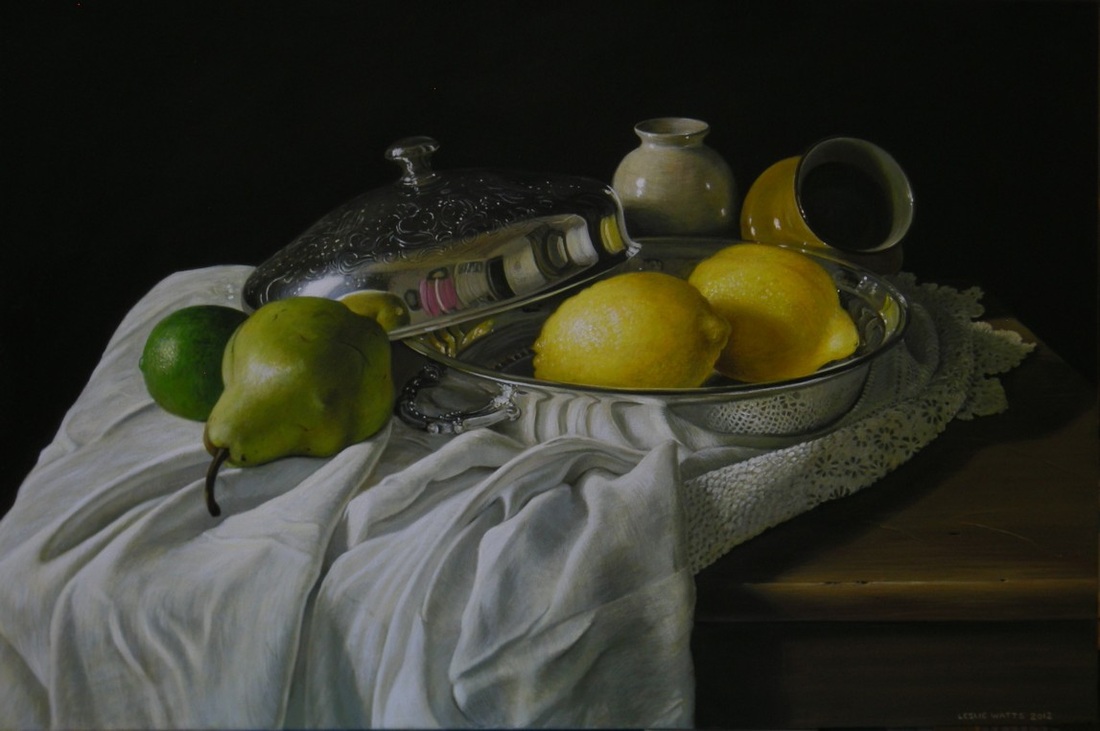
Lastly, you should probably give up any idea of having a normal, balanced life. If you put everything you can into making your art, you will not likely have a clean home or three beautifully prepared meals a day. You might not be able to afford to shop or socialize in the way that other people do. But that’s okay. You’re probably already good at spending a lot of time alone. And you’ll be doing what matters most to you.”
To view the other articles in this series, please click here.
Header image: ‘Pamela Newel Sellers’, Leslie Watts, Egg Tempera on Panel. Exhibitor, BP Portrait Award 2013 (private collection)