



Painting while travelling gives you the chance to pause and really observe new sights, and helps you maintain your art practice while seeing the world. Amy McGurk is an experienced traveller who documents her trips in sketchbooks, and here, she shares her advice on choosing materials to take, how to pack your materials, and where to find inspiration on your travels.
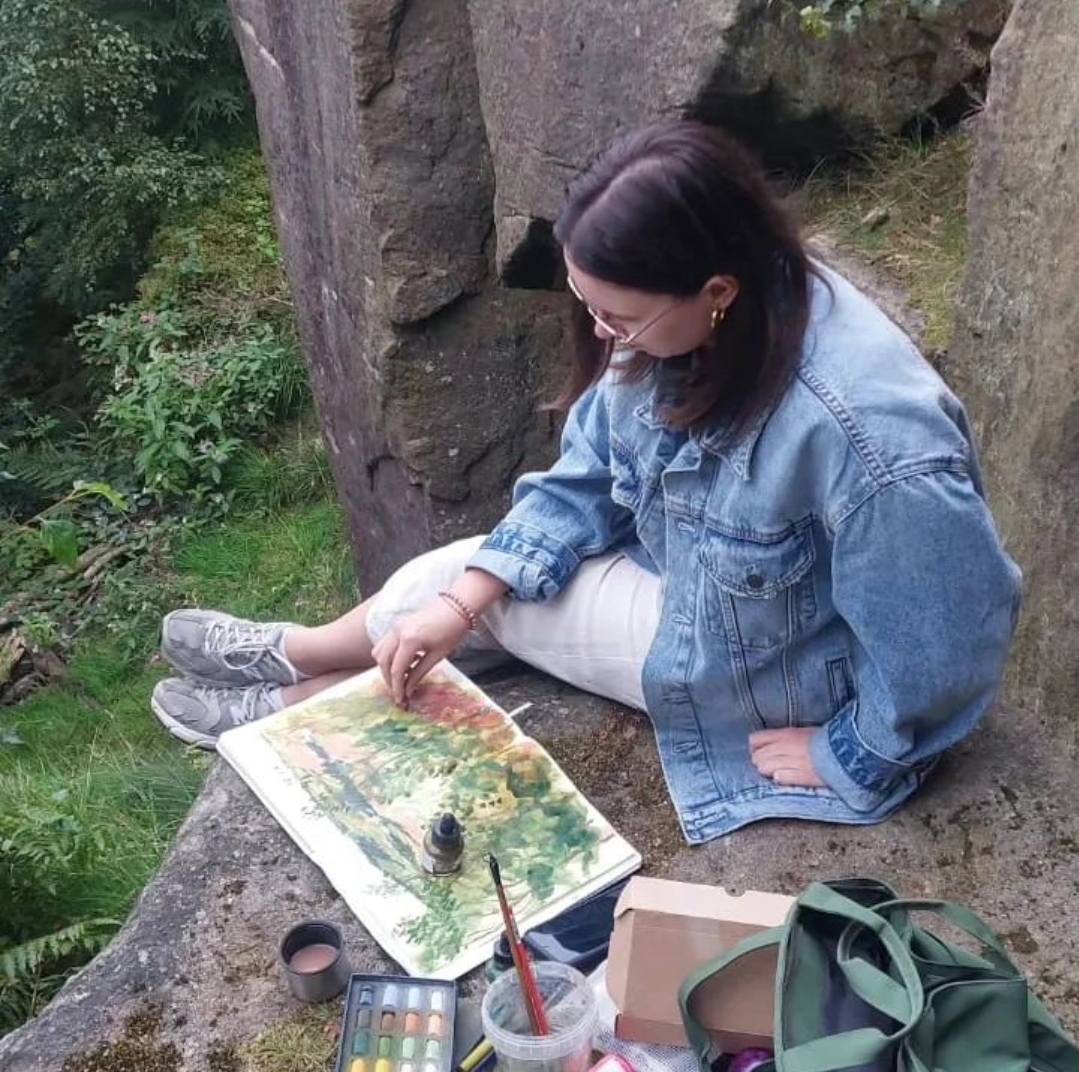
Above image: Painting the landscape in Yogyakarta, Java.
Tips for Painting While Travelling
by Amy McGurk
I am a Leeds based illustrator documenting my travels and local area through my sketchbook. Using watercolour and mixed media, I focus on local wildlife, nature, and use reference photographs from my travels. Currently, I am travelling for three months in Asia and have documented many previous trips to Asia, Europe and The Americas.
Choosing Sketchbooks for Travelling
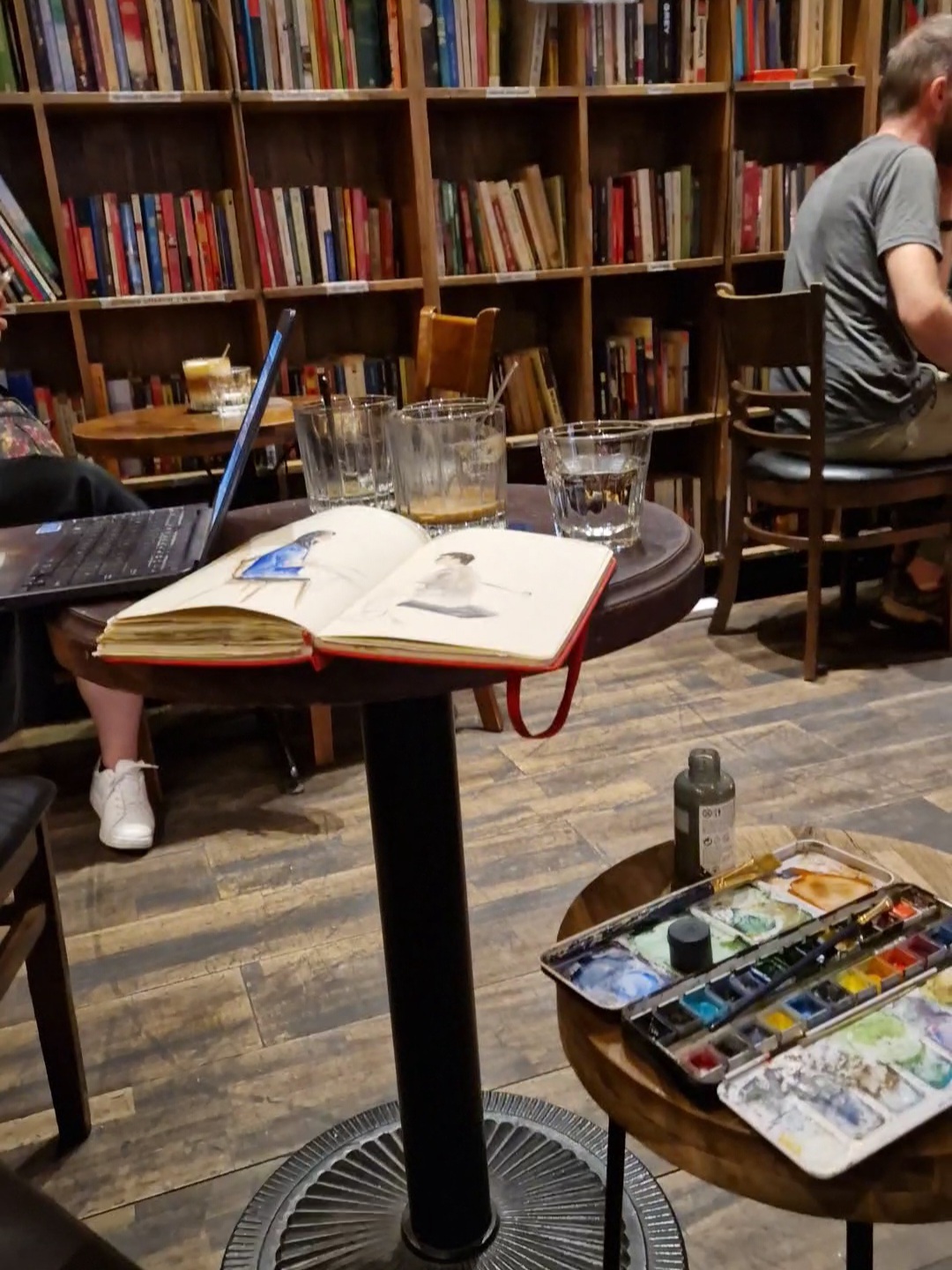
The most important part of my kit for painting while travelling is my sketchbook. I really love working on a bigger scale at home and using watercolour papers, but found if I bring these types of sketchbooks on a trip, they stay in the hotel room and don’t make it out on location.
To find inspiration for drawing and painting while travelling, I love to always take my sketchbook with me for every part of the trip. I would much rather take it and not use it, than find a place that gives so much inspiration to create and have nothing with me. This was a huge deciding factor when choosing which book to take. I wanted one small enough to fit into a tiny day bag, a hard cover to lean on if I don’t have a table or I’m working standing up, and also fairly cheap so I’m not afraid of using it and “wasting” expensive paper.
The Royal Talens Art Creations Hardback Sketchbooks have been my preferred sketchbooks for the last few trips I’ve been on. They meet the above requirements perfectly but also can take a lot of watercolours and wet media too. The paper does buckle a bit, but I quite like it when my travel sketchbooks look used and filled with exciting paintings.
Inspiration and Using a Sketchbook
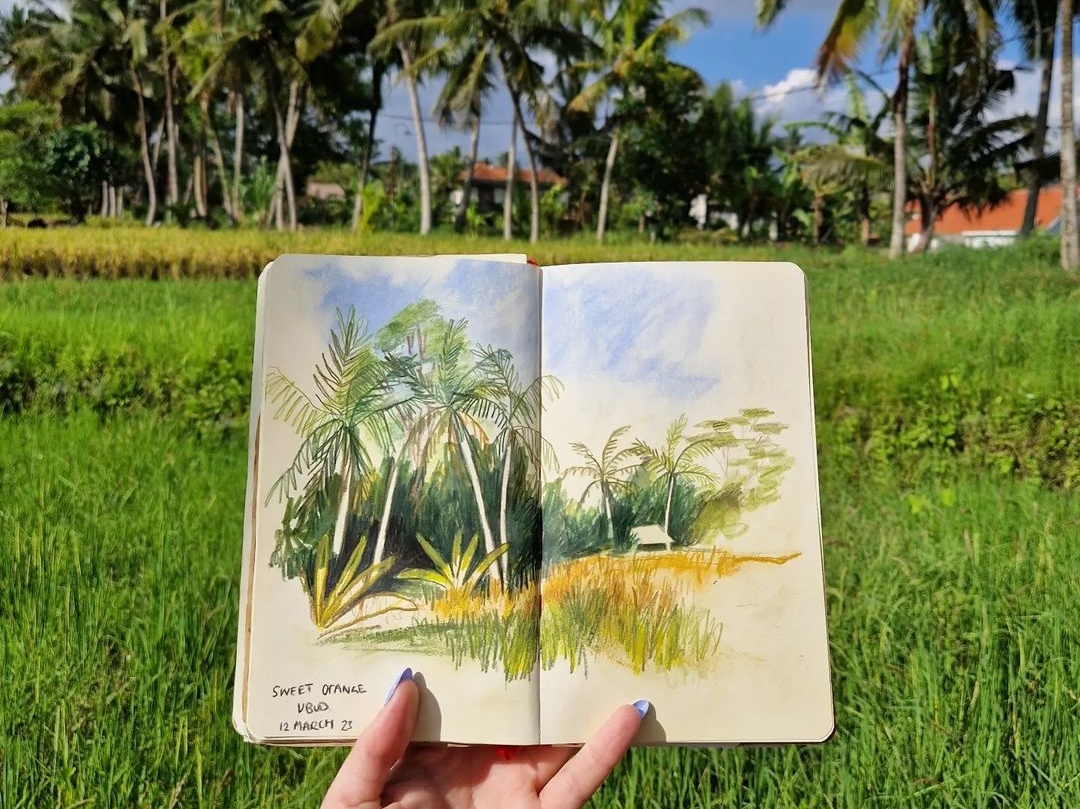
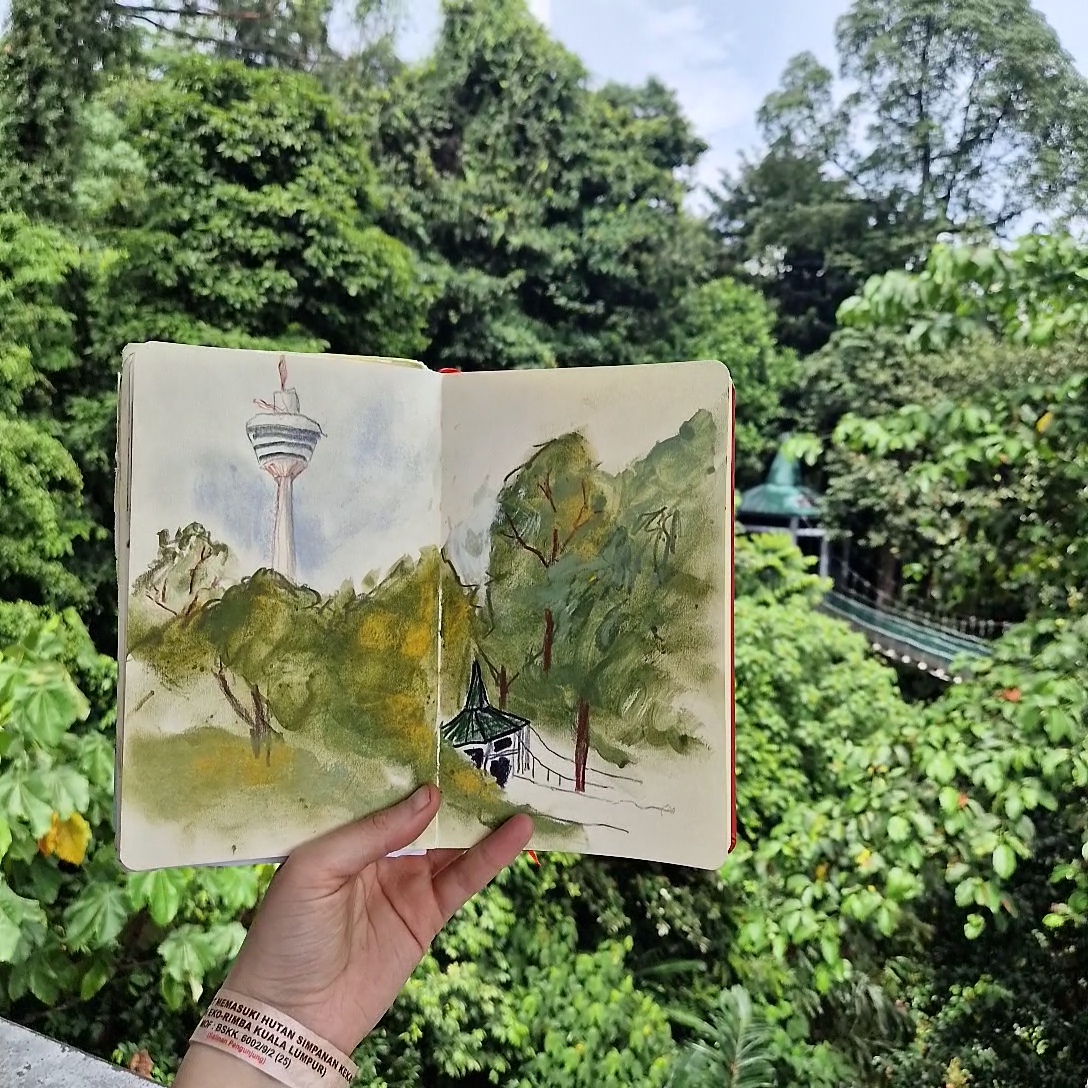
I love painting in different locations and environments, collecting pieces of inspiration from the places I visit. This can be a landscape, people, local wildlife or even my dinner. Whilst travelling, you often have a limited time at each stop and only a small amount of art supplies available. By limiting the amount of time I spend, the materials I use, and stepping out of my comfort zone, I can create some interesting textures, marks, and composition ideas that reflect the uniqueness of each place. These scribbly, messy, imperfect pages become beautiful memories on their own, or can go on to inspire canvases or prints when I return home.
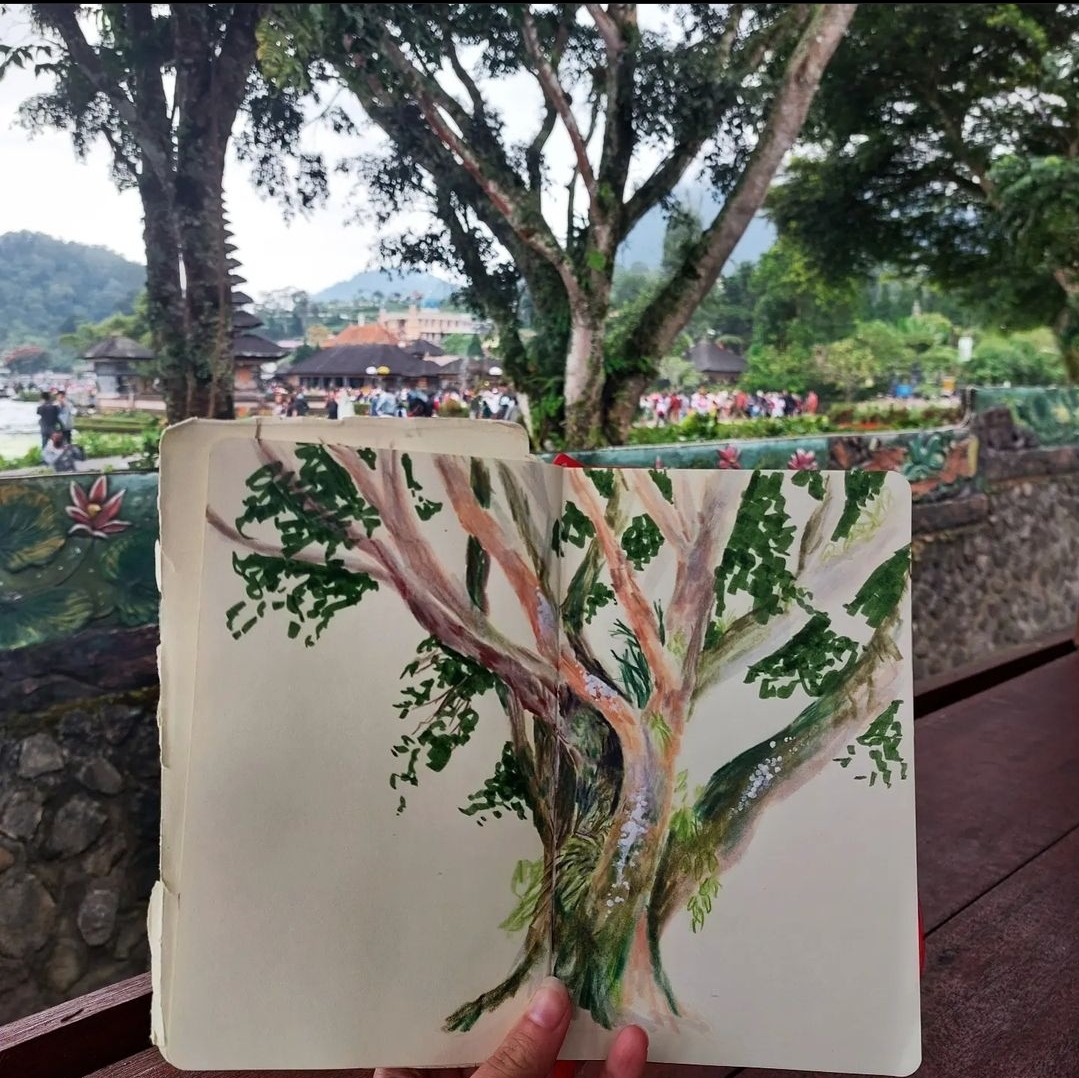
With social media, it’s easy to fall into the trap of drawing things you think you should or things you see from other travel artists. It’s so important to draw what you enjoy and what you like, even if it is not what you expected to draw on your travels. Sketchbooking while travelling should be a fun addition to your trip and not something that feels frustrating or boring. In Bali, we went on a great day trip to one of the most famous temples, and I have a lovely drawing of a tree covered in moss and lichen that captured my attention! You can just make out the temple and crowds in the background.
Sketchbook Materials for Painting While Travelling
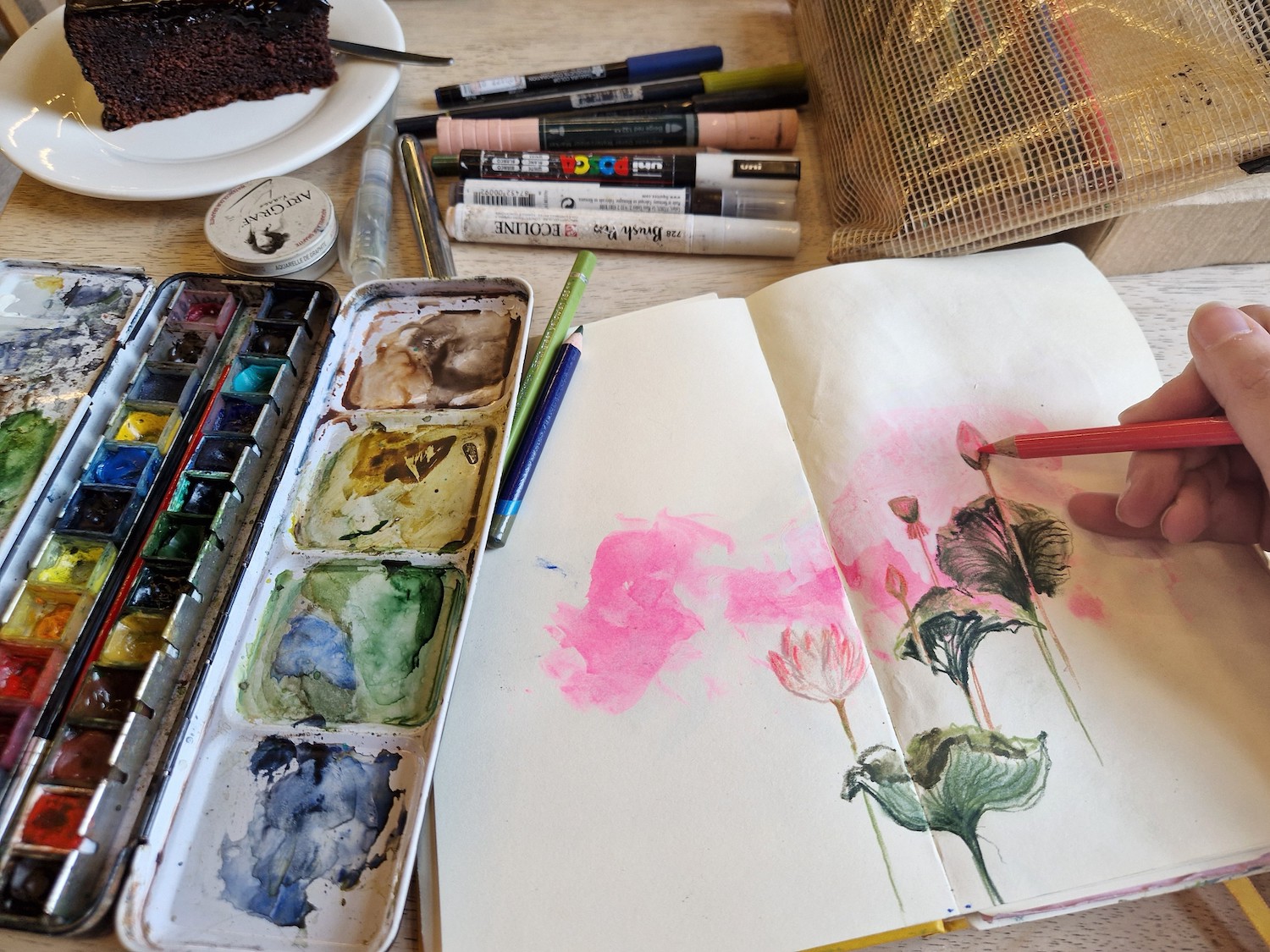
My sketchbook supplies have slowly changed over time. My first trip was to South America where I purchased a Winsor & Newton Cotman Travel Kit and a biro. I loved the compact kit and it was so light and easy to carry. Now, my watercolours have expanded into a much larger tin as I added new colours. I love being able to change the half-pans and have combined my original paints with Schminke and Daniel Smith Watercolours. To save space, I don’t take a separate palette, and mix colours either directly on the page or in the lid of the palette. Mixing directly on the page gives some unexpected colour mixes and textures, so I recommend doing this even at home with more supplies.
Sometimes it is not always practical to use wet supplies as maybe you don’t have enough time for it to dry, or in the case of South America, it was far too humid for my art to dry in time. I have spent many walks carrying my sketchbook home, trying to keep it open to dry. If watercolour isn’t suitable, I use a variety of different pens, pencils and Caran D’ache Neocolor II Artists’ Watercolour Crayons instead. Additionally, these all work well over a watercolour base to create textured mixed media pages.

I love a mixture of Faber-Castell, Caran D’Ache Luminance and Holbein Coloured Pencils and have a couple of Derwent Inktense and drawing pencils too. For pens, I like using Talens Ecoline Brush Pens as they can be refilled before the trip. I have a few Tombow Dual Tip Blendable Brush Pens, Faber-Castell Albrecht Durer Watercolour Markers and some Liquitex Acrylic Markers for a different texture.
More recently, I have loved using soft pastels for an additional softer texture with dry materials and have packed the Unison Colour Soft Pastels Landscape Set on this trip. Travelling is about experiencing new places and trying new things, so if I have space, I sometimes like to add a wildcard material to try out. This time, I packed a small bottle of Liquitex Fluorescent Pink Ink and I am really excited to see how it fits in with the green landscapes and grey city scenes.
For brushes, I mainly use my Escoda Versatil Size 10 Travel Brush and a very cheap children’s scratchy paint brush for texture. I am not so good at taking care of my brushes while travelling and have squashed and ruined the bristles of many brushes in the past. I love that the Escoda Brush can be stored securely in my tin or bag.
Finally, use what you find! Salt in a restaurant can give some beautiful textures in your watercolour paintings and your museum tickets and receipts work really well between the pages of your sketchbook to protect your drawings.
How to Pack Art Supplies for a Long Trip
Firstly, try using your art kit at home. Take it out for a walk in the park or to your favourite nearby places. Use your materials as much as you can rather than saving them for best work or the big trip. Be aware of what supplies feel comfortable to you, and what you are reaching for most often. Whether it is a backpacking trip, you have a suitcase, or you’re travelling with carry on, you will probably have limited space in your luggage so you want to take supplies you are going to use regularly.
I like to separate my items by materials and have tough plastic pencil cases for pens and pencils, big enough to store them all together. For my crayons, I keep them all in a cardboard box recycled from a previous Jackson’s order. Smaller bits and pieces like sharpeners and clips find their way into various pockets of my backpack for easy access when I need them on location.
While taking your supplies on the flight is always a nice experience, this requires its own planning. I like to fill my watercolour kit using tubes of watercolour and allow it to dry over a few days. This means I can save space in my liquids bag for inks, toiletries and other materials that can’t be decanted easily. I’ve had some issues in the past with acrylic markers and fountain pens leaking so I always keep them in a sealed bag just in case (I didn’t the first time I brought them and now have many ink stains in my backpack).
Finally, some supplies like a fountain pen or my favourite travel brush by Escoda often seem to trigger the airport scanners and require multiple scans and queries so if you are worried about time, I recommend packing this in your checked luggage.
For me, my sketchbook isn’t some precious thing to be protected. It should be used and enjoyed, looked through and shared. Many of them are filled with sand from being dropped on the beach, have coffee spills from cafe days or have smudges from being carried home in the rain. All of these things add to the character and memories from each adventure.
About Amy McGurk
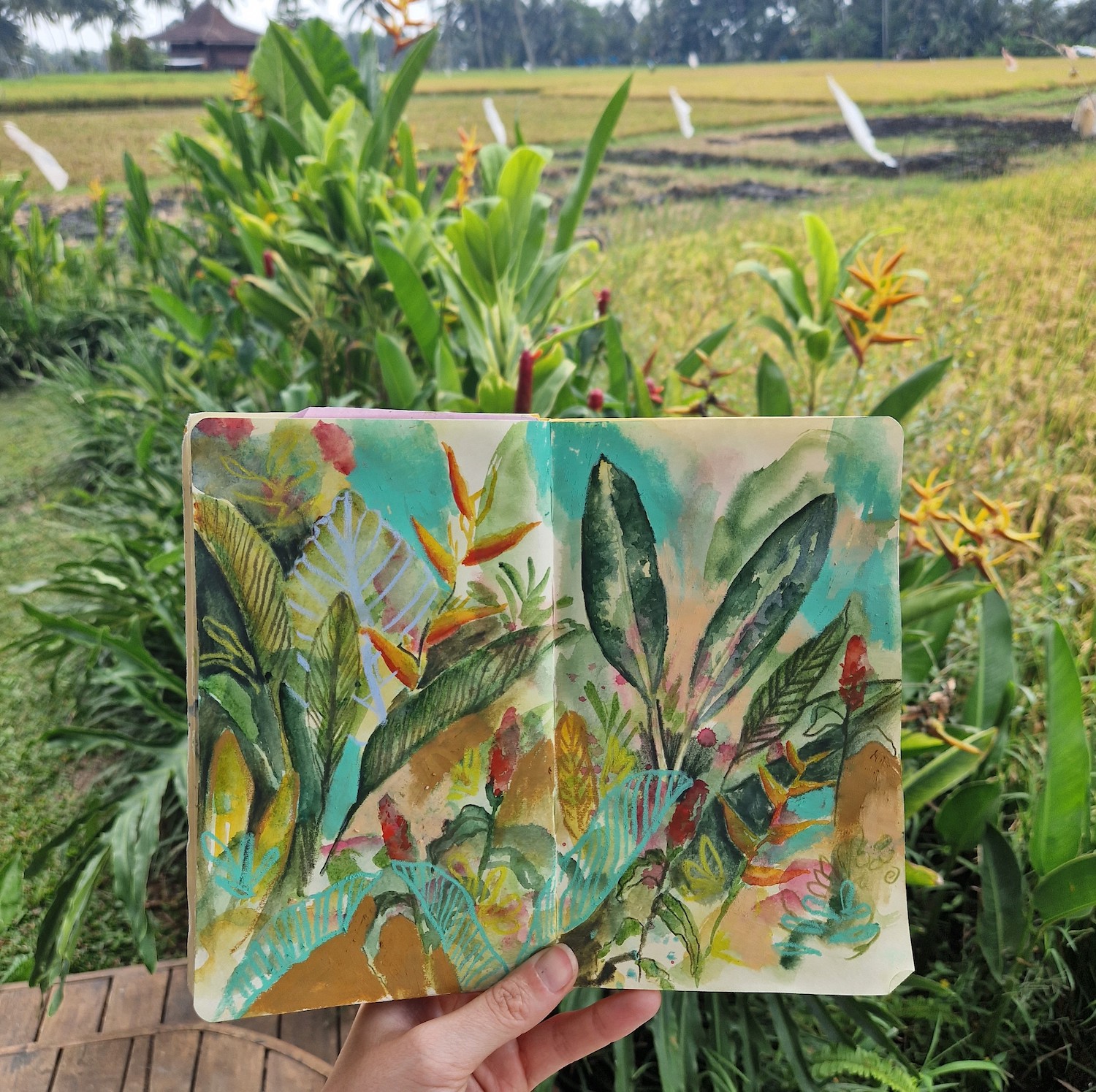
Leeds based travel illustrator Amy McGurk documents her travels throughout her detailed and colourful sketchbooks made. Painting while travelling, using watercolour and mixed media, she creates lasting impressions of the places she has visited. With a particular focus on the nuances of local wildlife and nature, Amy uses reference photographs from her hikes through unfamiliar landscapes. As well as being inspired by nature, she also aims to capture and illustrate an array of cultural experiences and landscapes experienced on her travels.
Further Reading
Preparing a Watercolour Gouache Palette for Painting on Location
Inside the Sketchbook of Louise Reynolds
The Unexpected History of Payne’s Grey
Everything You Ever Wanted to Know About Watercolour Paper
Shop Art Materials on jacksonsart.com

3 thoughts on “Tips for Painting While Travelling”
So true about pens triggering airport scanners: my oversized metal
Fude pen got a careful look more than once! Guess it does look bit
like a barrel.. Worse yet, one time they found a ‘gun & ammo’?
Whaat?! It turns out very cheap paints in very thick metal tubes
may look like ammunition on x-ray screen.. All good, still enjoying
my freedom! 🙂
Super useful! Personally Khadi and
Fabriano Artistico are my favourites so
far! Would love to try other cotton papers
when I feel like I’ve improved more
Super useful to read and good to refer
back to 🙂
Thanks Jasmine, great to hear!
Comments are closed.