



Yiwei Xu is a Chinese-born artist based in London and Kent whose work explores the sensory power of nature and the peace found in its impermanence. In this article, we take a look inside her vivid and expressive sketchbooks, where she finds freedom in unhindered self-expression. Yiwei discusses how her sketches evoke memories, the tactile process of selecting her materials, as well as her philosophy of approaching creativity without being bound by the burden of expectation.

Inside the Sketchbook of Yiwei Xu
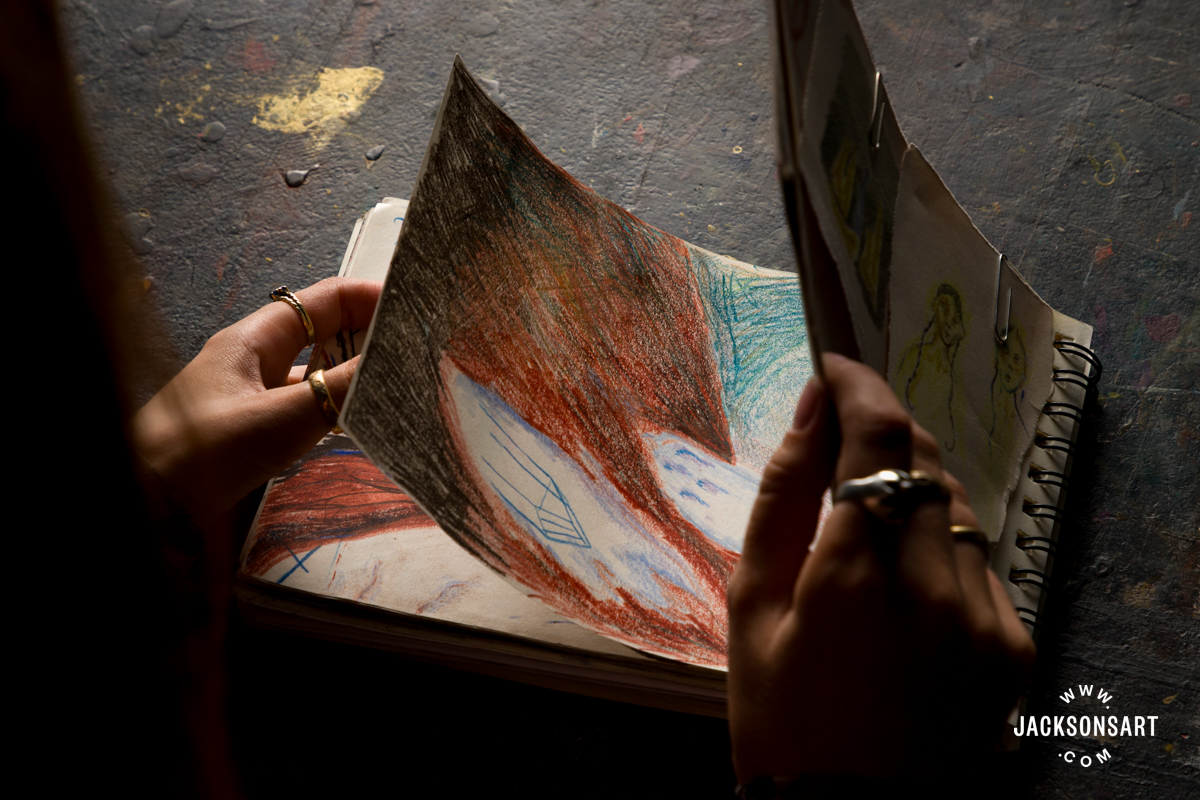
Sketchbooks used to be my biggest comfort zone in my practice. There are no limitations, no specific methods to follow, no standard of what’s right or wrong – I’m free to mess things up. Flipping open a sketchbook, I don’t have to be skilful or professional; the only thing I need to think about is being myself – what I want to see, what I want to record, what I care about. During that time, my sketchbooks were full of random, personal subjects.

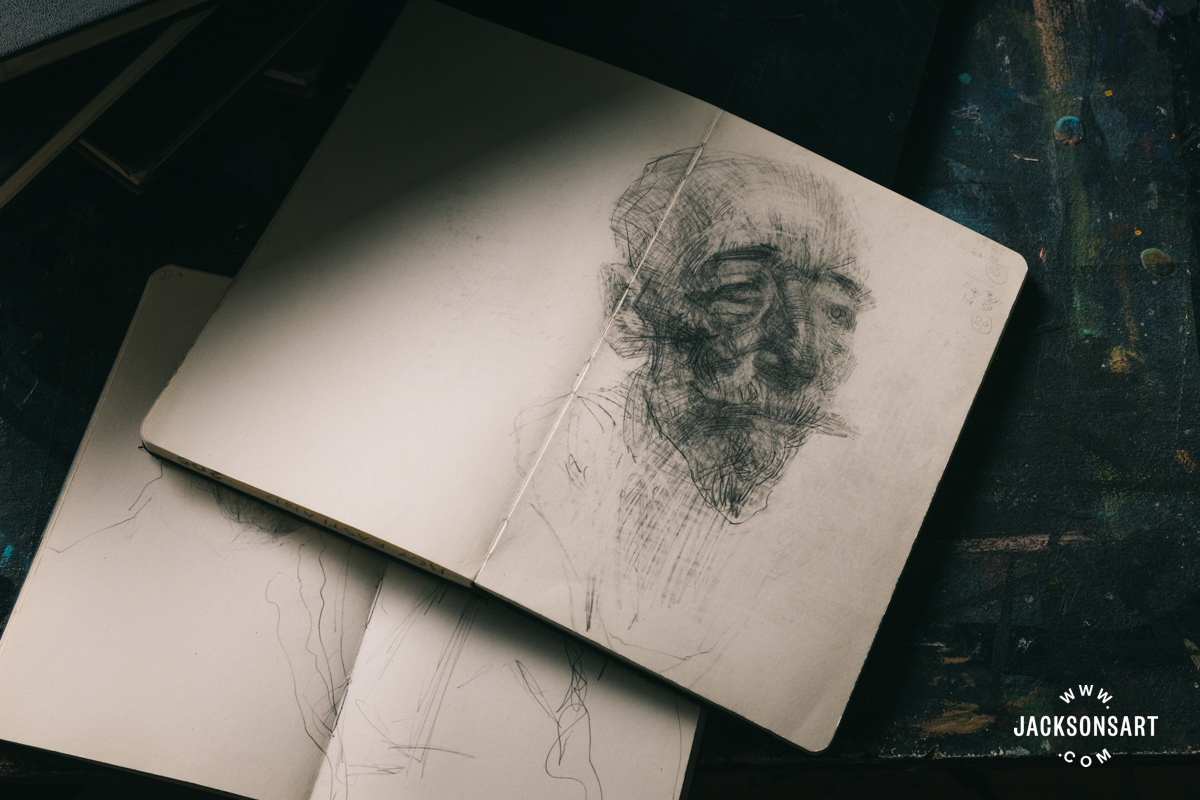
I don’t have a specific preference when choosing sketchbooks, but I do enjoy picking one in person. That way, I can feel the texture of the paper and imagine the feeling of soft pastels or charcoal gliding over the surface. I like to use different sizes of sketchbooks at the same time. A small one, like A6 size, is handy to carry when travelling light. I don’t always expect to draw something while carrying it, but who knows when a brilliant moment or view might appear during a trip? Without a sketchbook, what a pity!

Using a sketchbook has become more functional as I’ve pushed further and developed my practice over time. It is now an in-between space where I build a connection to nature and to myself. Observational drawing plays a crucial role in my practice, and I greatly enjoy being out there. In a way, I treat the places I find inspirational – parks, forests – as my studio. Sketching is how I visualise my experiences and feelings.

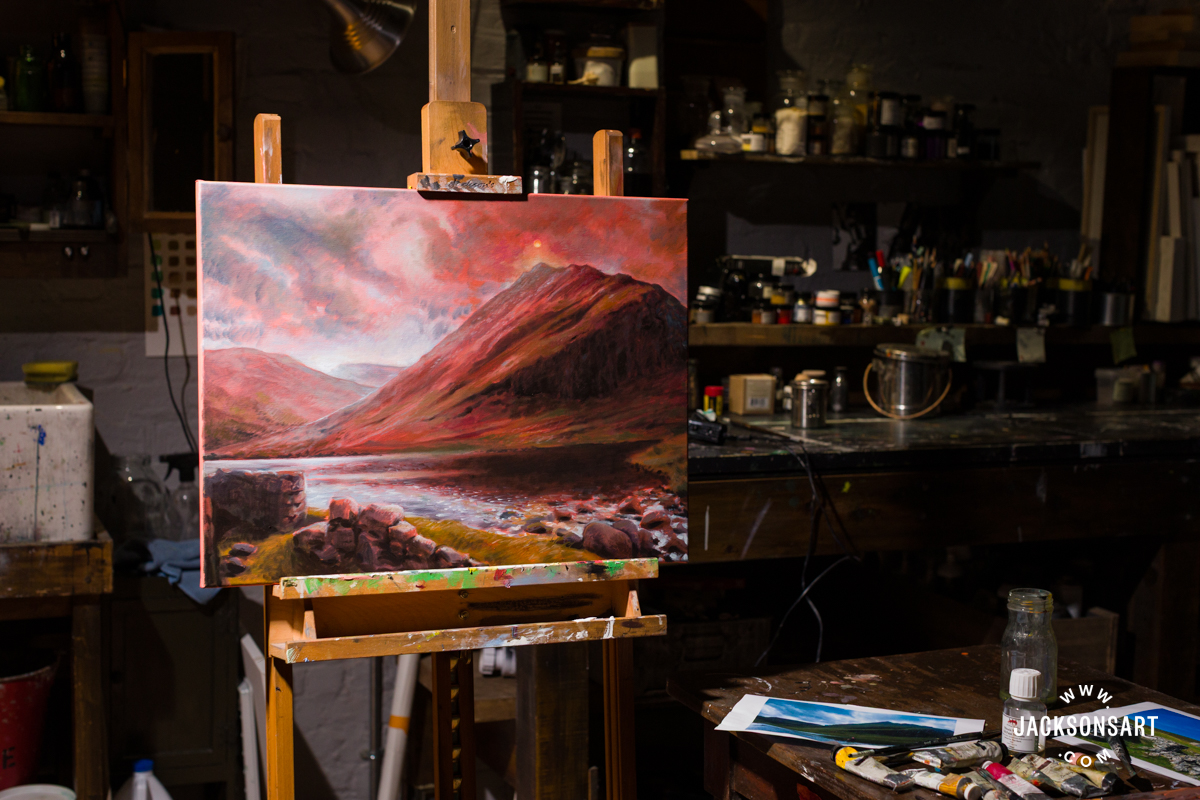
The format of my sketchbook work has changed as well. I like to use loose or pre-prepared papers so I can play with composition, break things up, and mess them up. Some of the sheets I carry are primed with gesso mixed with acrylic. This creates a rough texture and a wash of colour.

I like using textured papers because soft pastel, oil pastel, and charcoal are the materials I tend to reach for when sketching. I find using dry media very straightforward, especially when capturing quick moments, and they’re ideal for mark-making too. I use Sennelier Soft Pastels a lot, as the colours are so vibrant and intense. I love the energy they bring to my work.

A sketch might take a few minutes or an hour or more to finish. The whole process can be smooth, challenging, frustrating, or refreshing, just like working in my actual studio. The most precious part of sketching is that the mixed-up feeling of the process embeds a multisensory memory that holds sound, taste, temperature, and emotion. I like to think of my sketches as fragrances – every time I look at them, it’s as if I catch a familiar scent that instantly transports me back to the moment and place they were made.

Frankly, most of my finished artworks are generated from my sketches, and I always refer back to them. On one hand, the sketches carry my memories and feelings. To me, they are flowing, four-dimensional imageries rather than flattened, two-dimensional snapshots. Working in a studio is very different from working outside – it’s quiet, somehow more serious, very self-focused. The mindset shifts as the present meets the past, creating a kind of chemistry. I refer to several different sketches and translate them into something new. On the other hand, sketches are a space to experiment with materials, to see what surprises arise from mixing them, or whether the colours capture the vibrant light.

There is a pivotal moment in my practice that is strongly linked to using sketchbooks. Many years ago, in late November, I took a nocturnal drawing class near St Paul’s Cathedral. I walked across the Millennium Bridge and sat down. It was drizzling and windy, yet I couldn’t have been more excited, not just because it was my first time drawing in darkness, but also because the darkness freed my vision from ordinary experience. The original colours and forms of the surroundings were blurred and covered by night, the full moon, and artificial lights. My senses seemed to sharpen all at once. The sound of the River Thames rushing beneath me, the wind chilling my hands. I was glad to have my sketchbook rather than loose papers, because I had to work quickly, responding to what I felt before it passed.

I did two quick sketches that night. They never became finished works, but the experience has had a profound meaning in my practice, and I have benefited from it ever since.

If I were to offer any advice on using a sketchbook, it would be to have expectations, but don’t have expectations.
By “have expectations”, I mean the anticipation you feel when you pick up a sketchbook from the shelf; the excitement that this blank book will soon be freed from uniform emptiness and filled with your personality and creativity, becoming a part of your life. By “don’t have expectations”, I mean not expecting every creation in the sketchbook to be an epic work. That kind of expectation can become pressure, making you hesitant or overly cautious. If, like me, you feel fear or tension when looking at a brand-new first page, don’t worry. This is actually a perfect opportunity to experiment. If you have gesso and acrylic paint, you can mix them to prime the paper. Or even simpler, give the page a bit of colour – a wash of watercolour or a layer of pastel – anything to take the edge off that bright white.

Materials
Jackson’s Studio Acrylic Paint
Royal Talens Art Creation Hardback Sketchbooks
Seawhite Art Journal 130 gsm 70 Pages
Fabriano 1264 Series Spiral Sketch Pad
Khadi White Rag Paper 150 gsm Medium 21 x 30 cm
Conté à Paris Compressed Charcoal
Jackson’s Handmade Soft Pastels
Liquitex Professional White Gesso
Caran d’Ache Studio Gouache Paint Sets
Holbein Gouache Cake Pans

About Yiwei Xu
Yiwei Xu is a Chinese-born artist based in London and Kent. After completing the Drawing Year at the Royal Drawing School in 2021, her artistic journey began with a focus on observational drawings using mixed-media techniques. Her creative inspiration stems from the natural forms abundant in city gardens, riversides, canals, lakes, and community green fields – serene sanctuaries where individuals seek refuge from the urban hustle and bustle.
For Yiwei, experiencing the outdoors is deeply therapeutic. It engages more than sight – stimulating hearing, touch, and smell – deepening her connection with time and space. This multisensory interaction profoundly transforms her mindset. She finds comfort in the environment’s unpredictability, embracing the constant change and movement that symbolise life’s dynamic essence.
Yiwei’s artistic practice reflects her belief that “nothing is permanent except change.” The concept of breaking and reshaping permeates both her mindset and artistic approach, instilling in her an open-mindedness that profoundly influences her creative process. It celebrates the transient nature of life and the beauty found in the variations brought about by perpetual movement. Much like the surface of a canal that reflects the reality surrounding it, the reflection can be easily disrupted by a passing boat, a gentle breeze, or a drifting leaf. In these moments, ripples intertwine, shattering the water’s stillness and giving rise to a new visual narrative.
This dynamic interplay between form and abstraction embodies a celebration of the unpredictable. Yiwei’s work seeks to capture and honour the impermanence that defines our existence, inviting the viewer to find beauty in the ever-changing dance of life.
Further Reading
Sarah Dyer Curates Sets of Jackson’s Handmade Soft Pastels
Tips for Landscape Painting on Location
In Conversation With Nicola Coate About Coates Willow Charcoal
Using Soft Pastels for Observational Drawing
Shop Sketchbooks on jacksonsart.com
2 thoughts on “Inside the Sketchbook of Yiwei Xu”
Interesting sketches and a beautiful approach to the process. And wow, did that last paragraph hit home!
Hi Linda,
Thank you so much, it’s wonderful to hear you enjoyed the article. Yiwei offers some really poignant advice in the last paragraph that I think a lot of artists can relate to.
Comments are closed.