



Tereza Horáček is a painter and illustrator based in Oxford – she visited us in the Jackson’s Studio to give us a glimpse inside her vibrant sketchbook practice. Her work takes inspiration from the Old Masters, whose paintings she studies during her frequent gallery visits. Along with her attraction to classical painting, Tereza regularly makes observational sketches from everyday life, rendering the world around her with keen attention – utilising a palette of unexpected colour combinations and gestural mark-making to evoke a strong sense of mood, place, and time.
Inside the Sketchbook of Tereza Horáček
Since I was a child, I have always drawn in sketchbooks. I would use my sketchbook to document family holidays, draw from artworks in museums, and also illustrate story ideas from my imagination. The way I use sketchbooks now hasn’t really changed much from when I was a child.
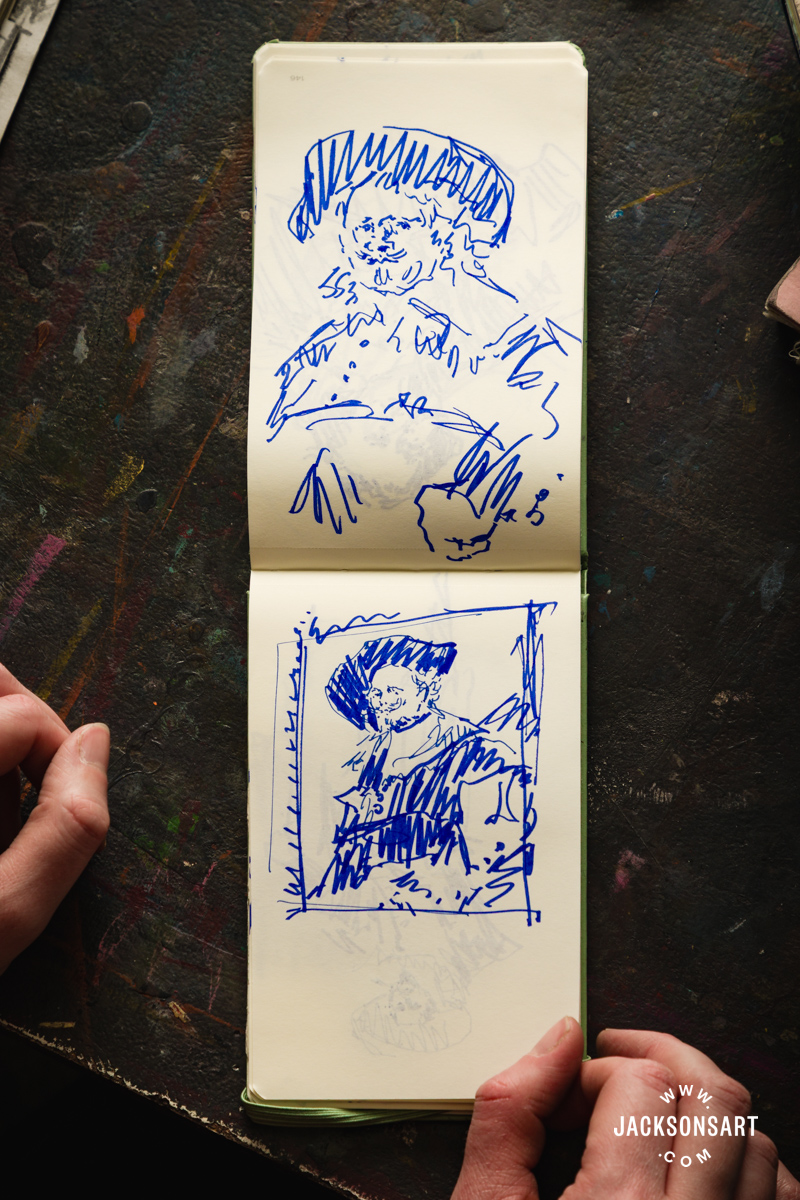
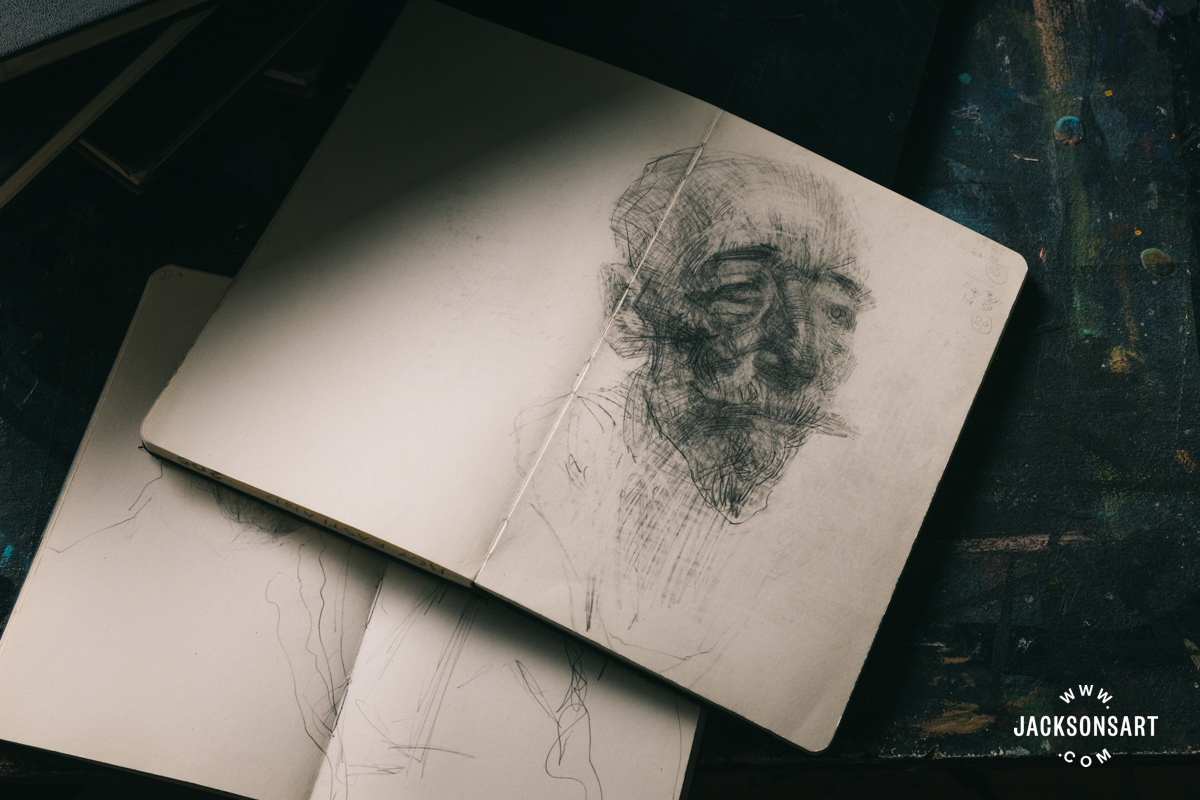
When I started my BA in Fine Art, I was unsure what it was that I wanted to paint. My studio was a short walk from the National Gallery, and I used to go and draw there every morning. I would draw the paintings in front of me, then return to the studio to make paintings based on these drawings and from my memories of the paintings that I had seen that day. I learnt a lot about painting this way, and my current practice is still heavily influenced by Old Master painting.
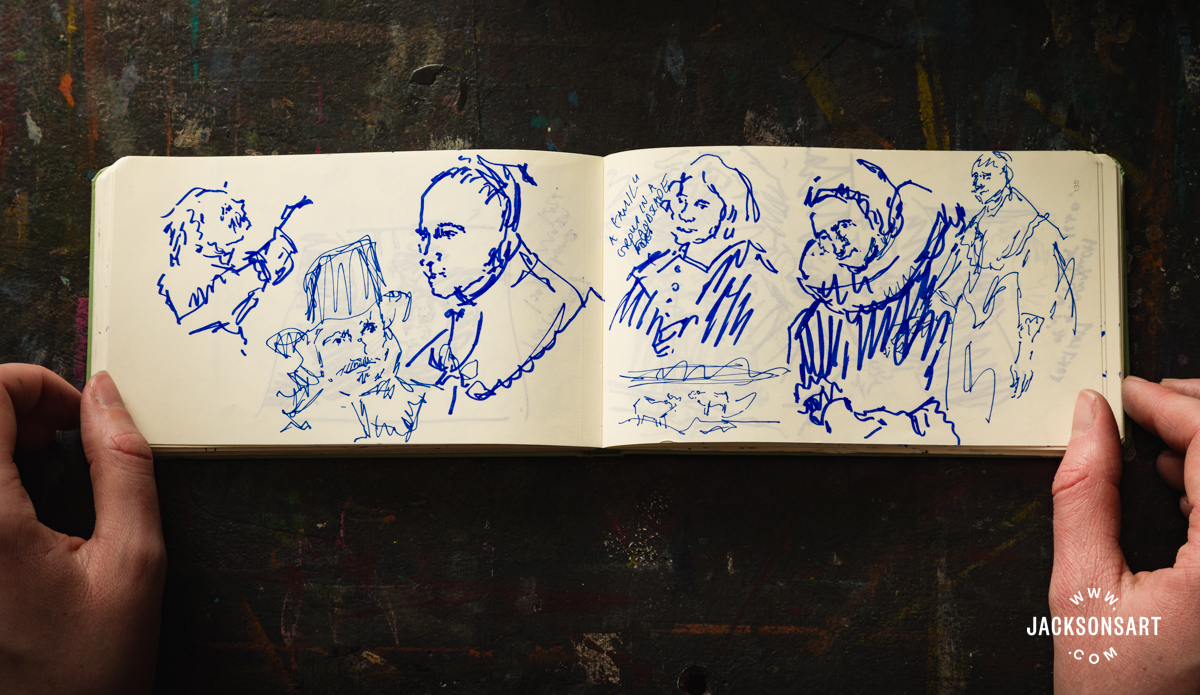
I still bring a sketchbook with me when I visit a gallery. I find drawing from a painting helps me understand the piece better and notice new details. My oil paintings are made intuitively and I don’t plan them in my sketchbooks. However, elements of my paintings are often taken from other paintings, particularly Dutch seventeenth-century landscape paintings, which I have stood in front of and drawn into my sketchbook.
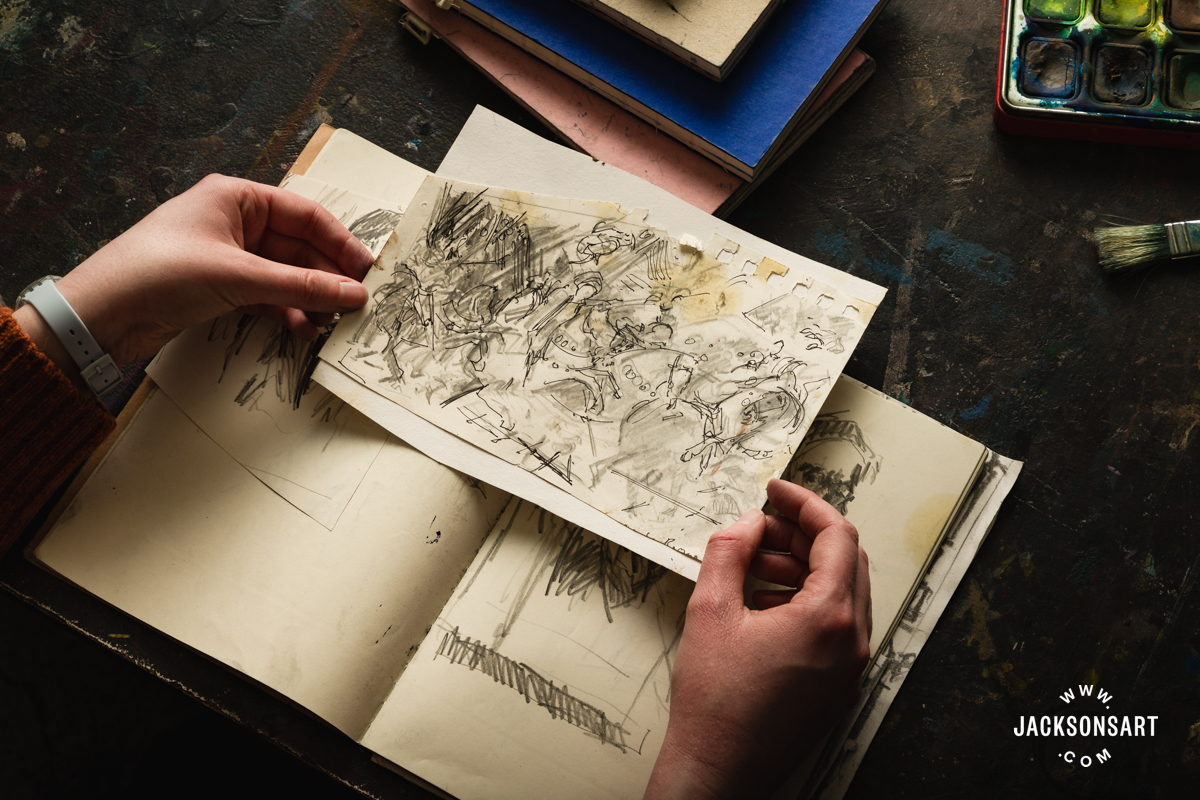
There are also sketches in my sketchbooks of paintings by Constable and Gainsborough, which I have drawn at Tate Britain and The National Gallery. Back in the studio, I make paintings which sometimes directly respond to paintings I have seen and drawn from, or I might use parts of a painting, perhaps a colour or particular tree, to create imagined landscapes.
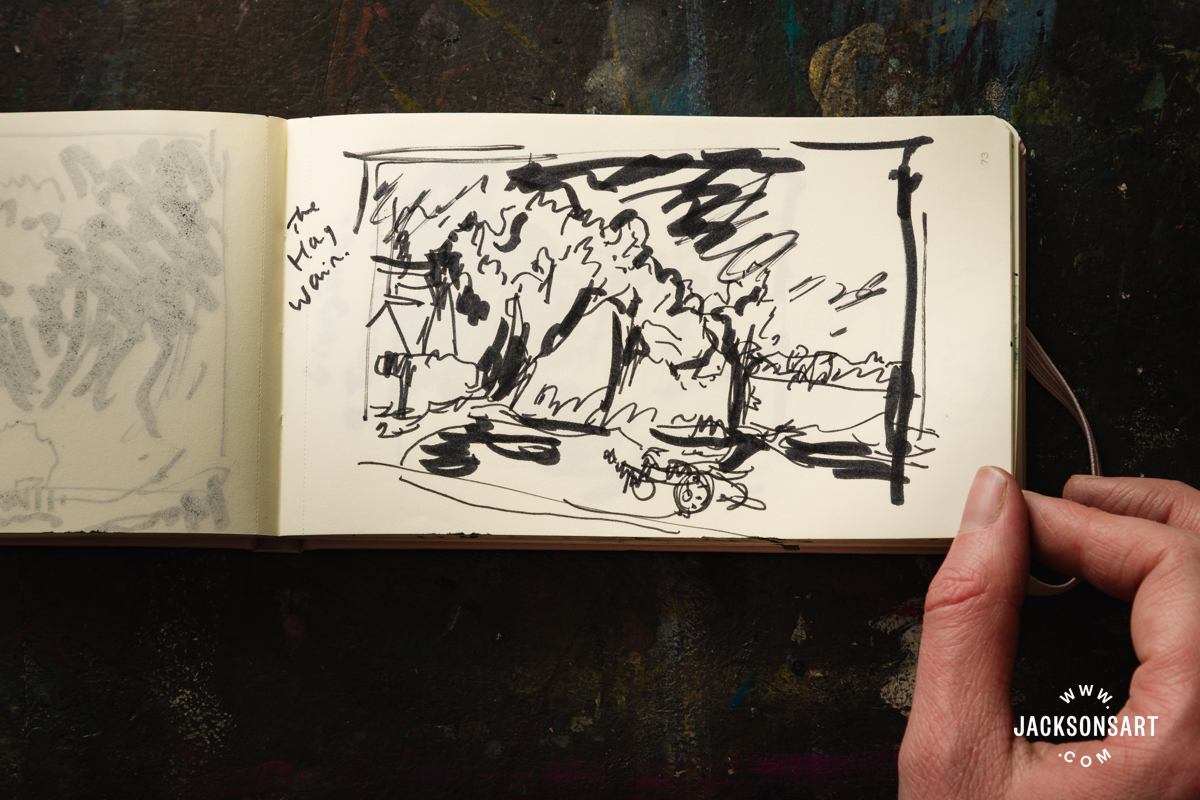
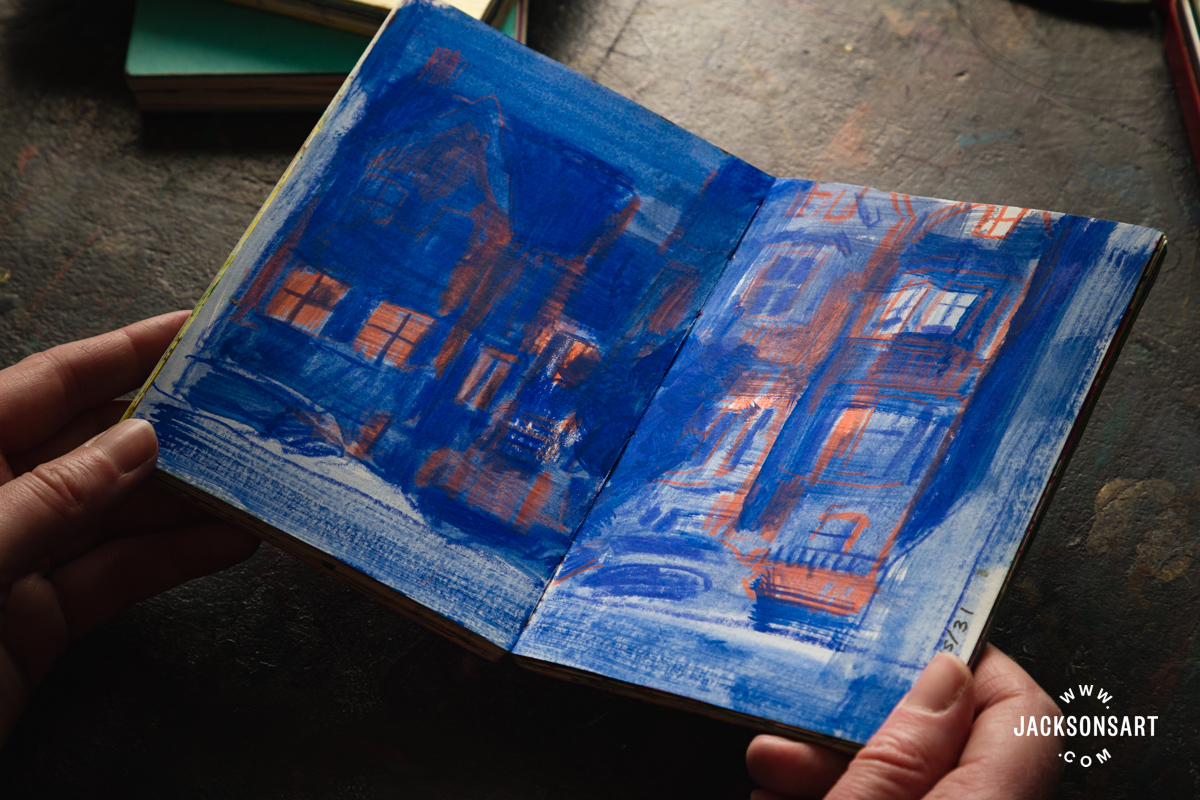
Alongside my painting practice, I have been studying an MA in Children’s Book Illustration at Cambridge School of Art. Since studying at Cambridge School of Art, I have developed a habit of drawing daily and from direct observation. I enjoy drawing from life a lot. I enjoy drawing street scenes, people passing by and capturing the character of a place.
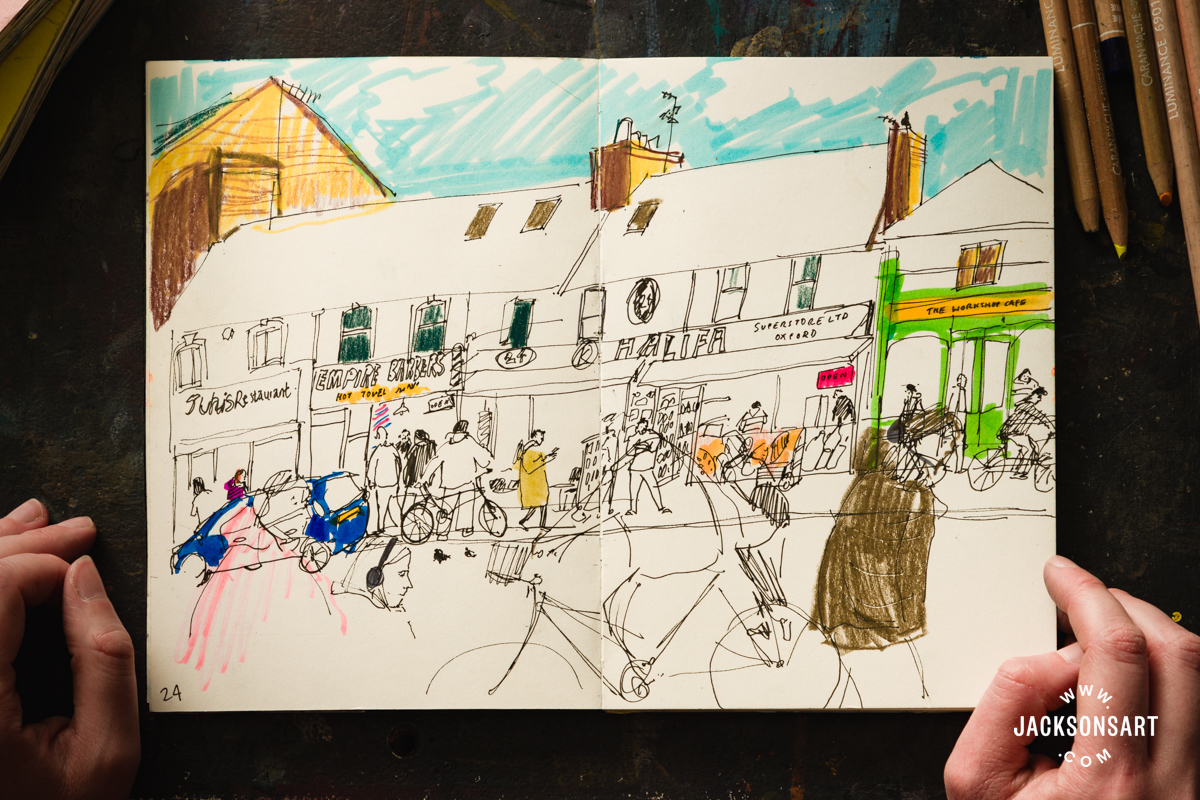
I think it is the challenge of drawing something that is constantly changing that I like. There is excitement in trying to rework a picture when people are walking past or the light keeps changing.
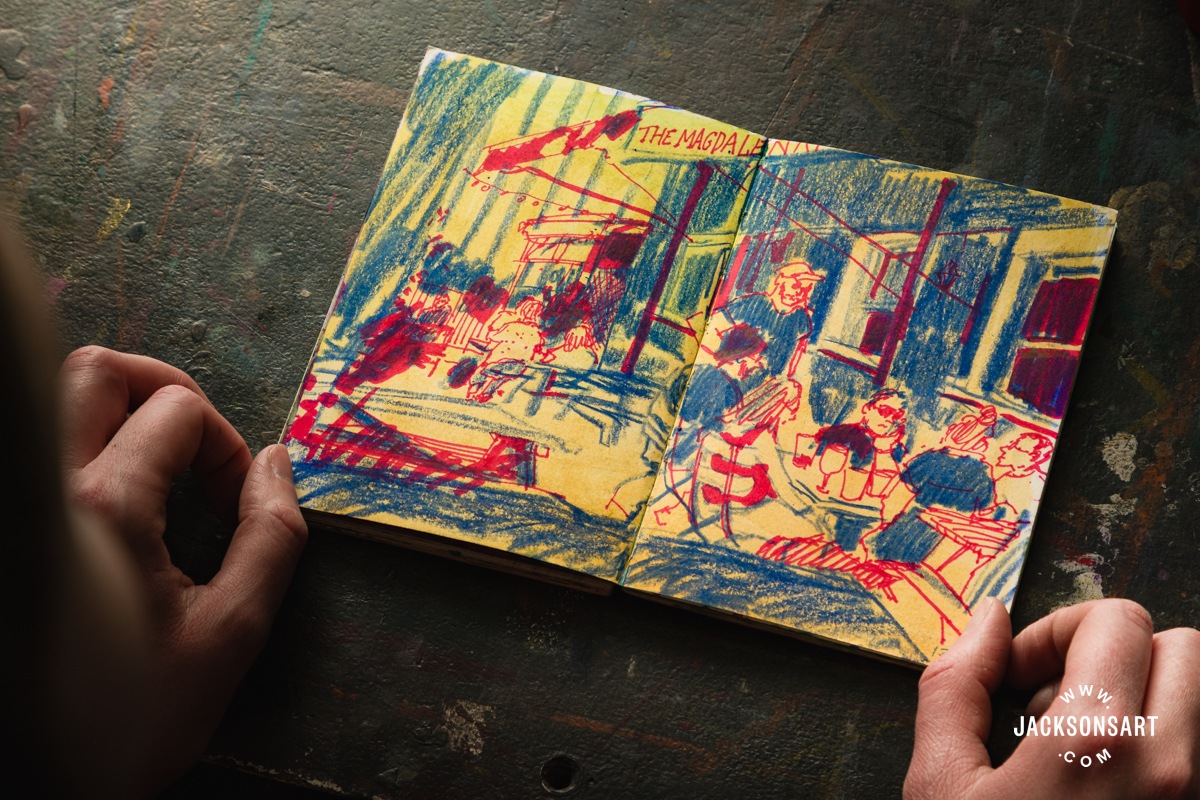
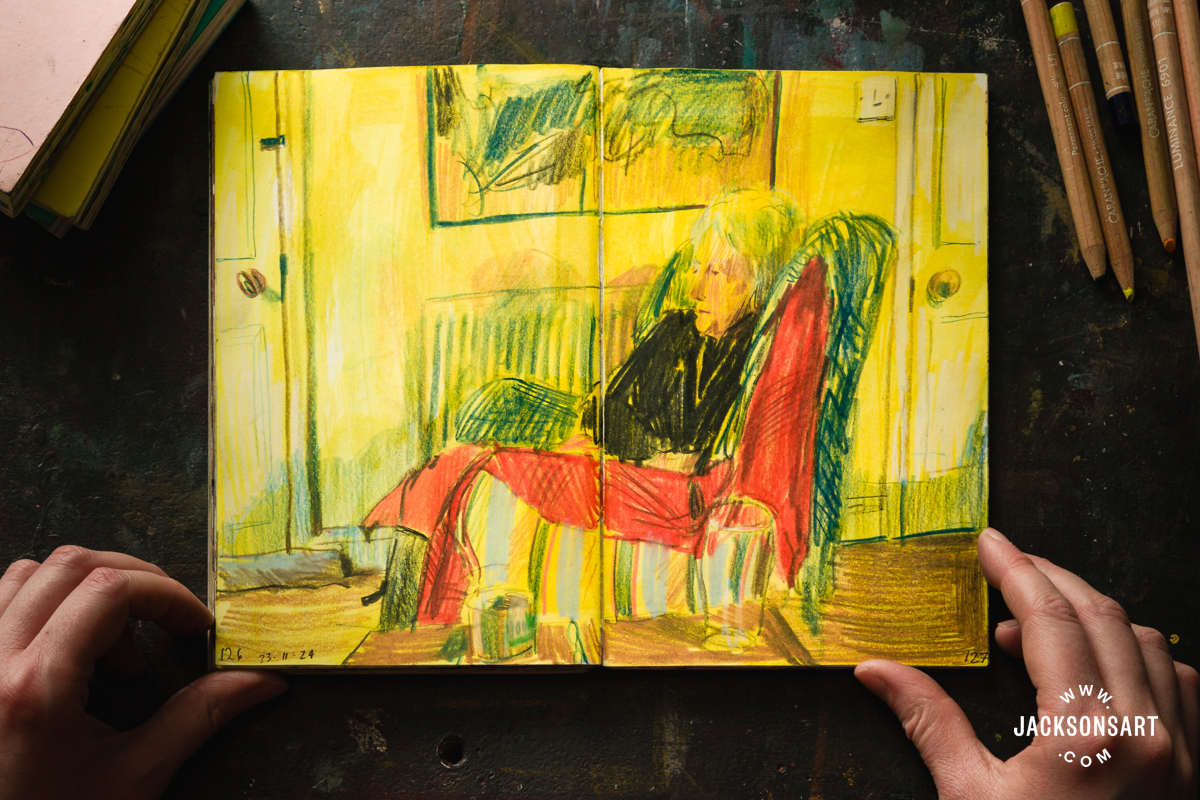
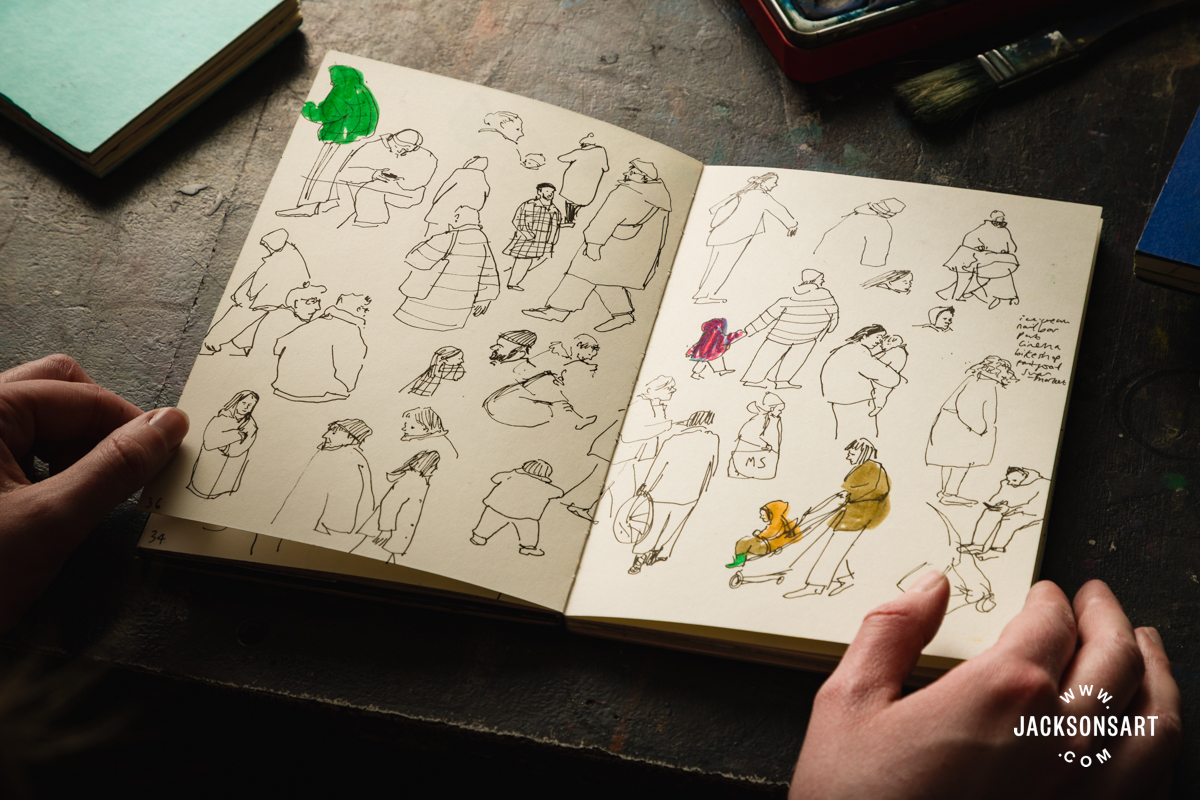
My drawings of people inform the characters in my illustration work, and I usually start a project by going out to draw around my neighbourhood. Studying the way people move, expressions and even clothing help to make my characters feel more believable.
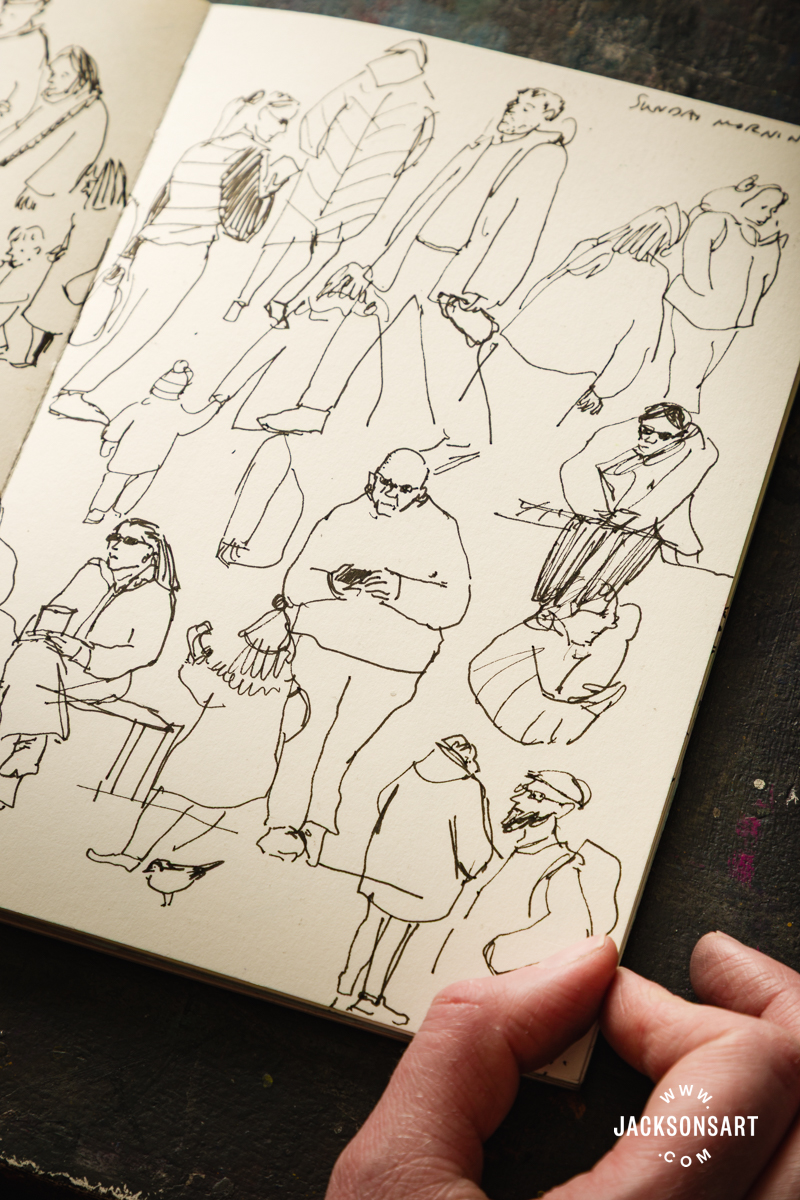
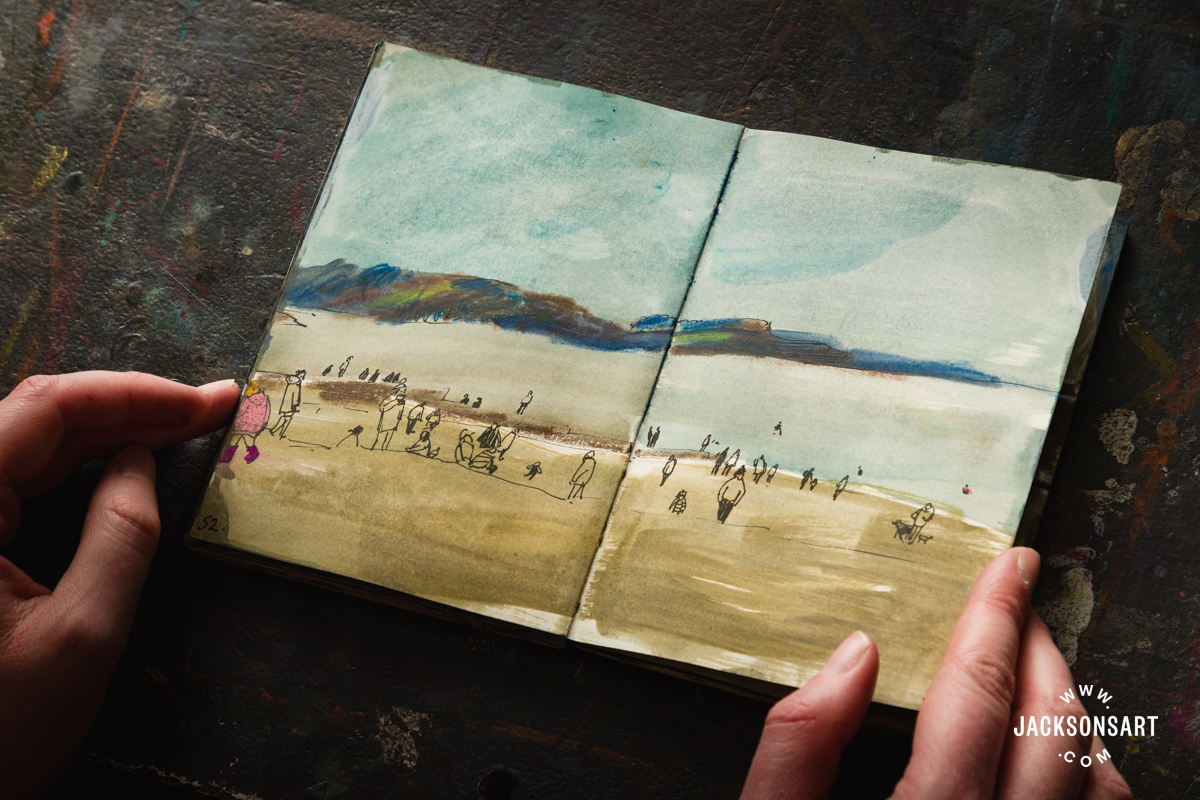
I usually work in a few sketchbooks at the same time. Small sketchbooks are good for sketching people in cafes or on public transport, and longer, larger sketchbooks are best for capturing whole scenes and landscapes.
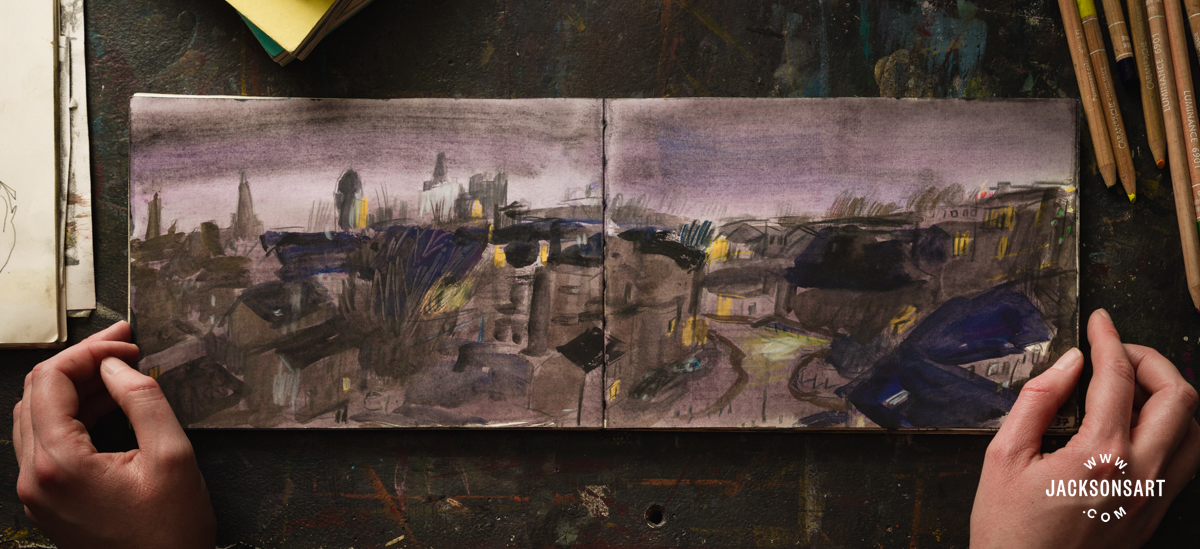
I always carry around a small sketchbook and a pencil case with a few coloured pencils, a black fineliner pen and a couple of felt tips so I can make quick drawings when I am out. If I am going somewhere with the intention of drawing, I will probably take a few more coloured pencils and my set of Caran d’Ache gouache pans or watercolours.
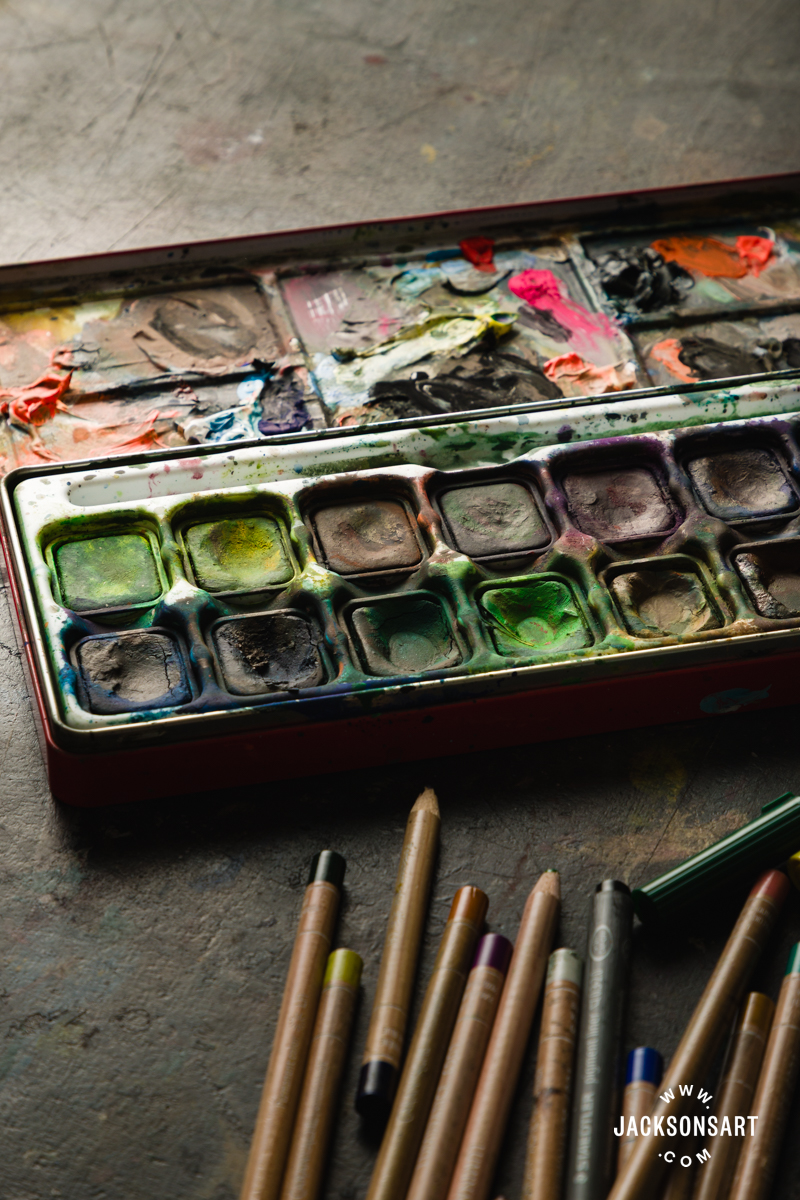
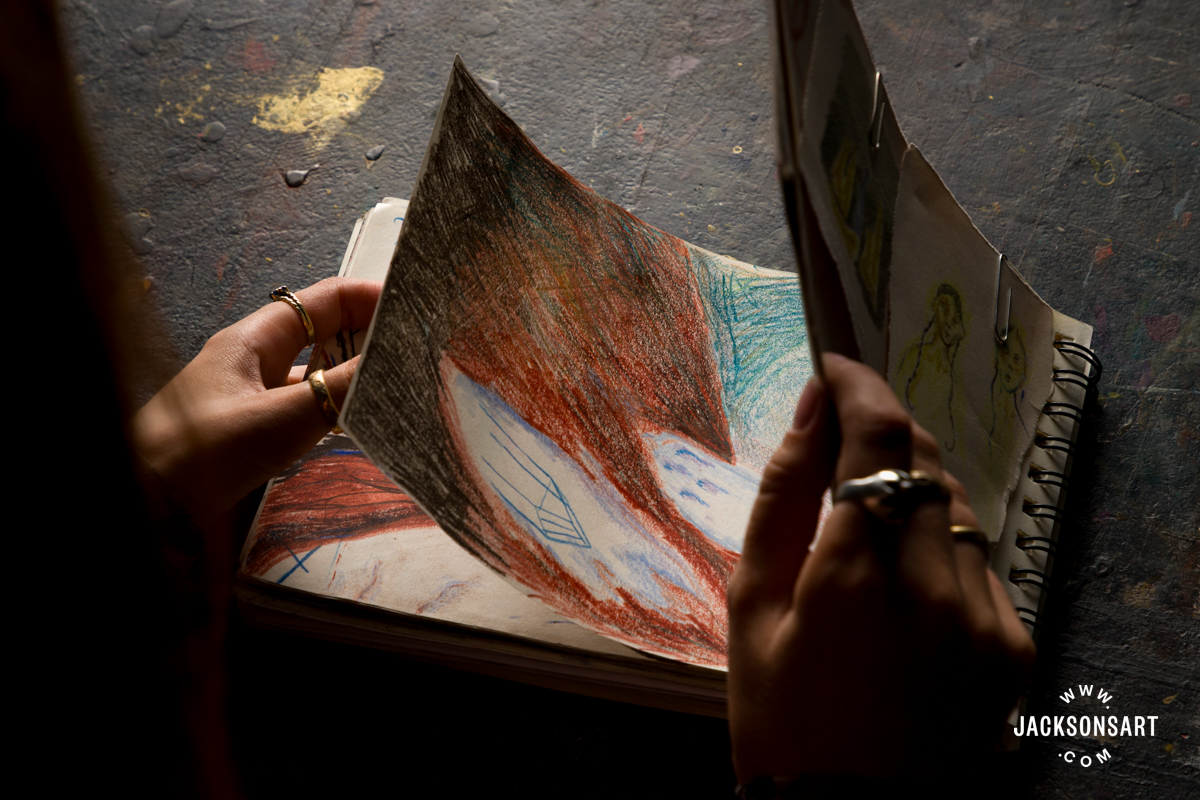
I use a range of materials in my sketchbooks. I like to start with loose washes in gouache or watercolour paint, then draw over the top in coloured pencils and pens. If I am in a rush, a simple fineliner pen will have to do.
Caran d’Ache Luminance Colour Pencils are a favourite as they work really nicely over the top of painted backgrounds and are also water-resistant, which works well if you want to paint back into your picture.
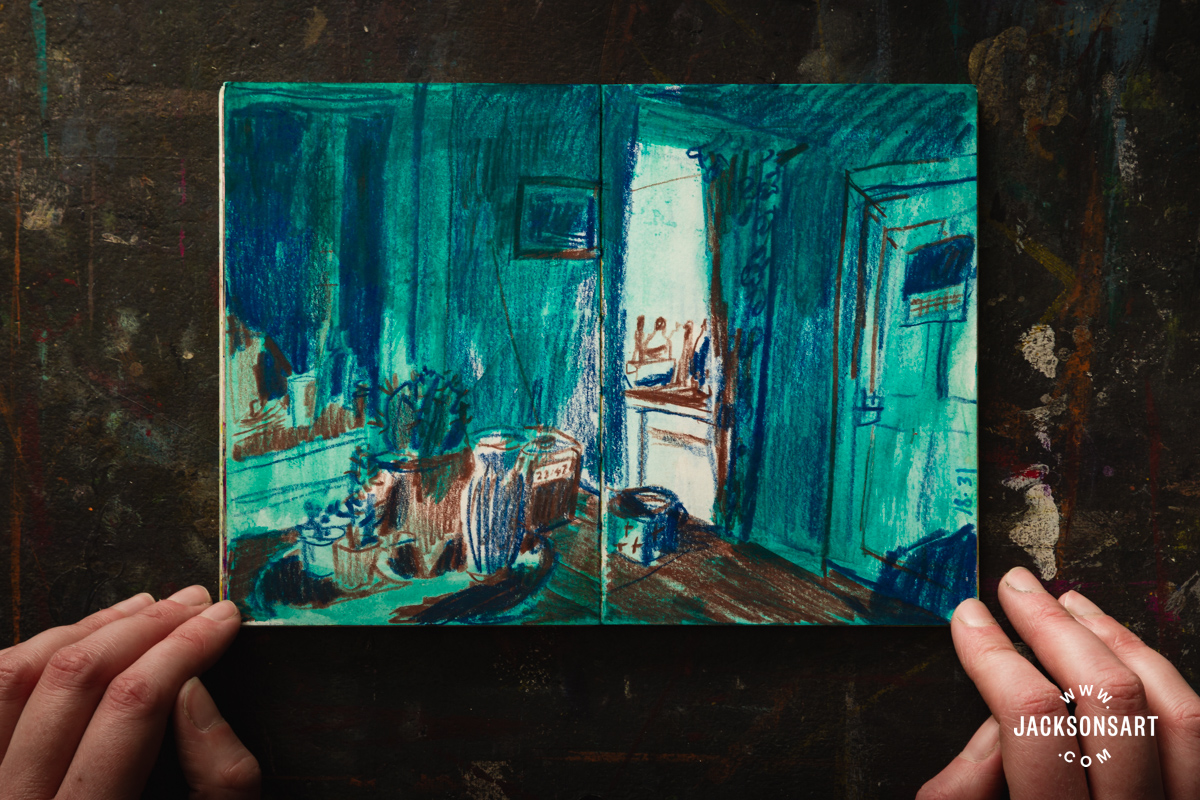
I’m also drawn to the immediacy of Tombow Brush Pens, and I often draw over the top of my drawings with a pen to highlight the people in a scene.
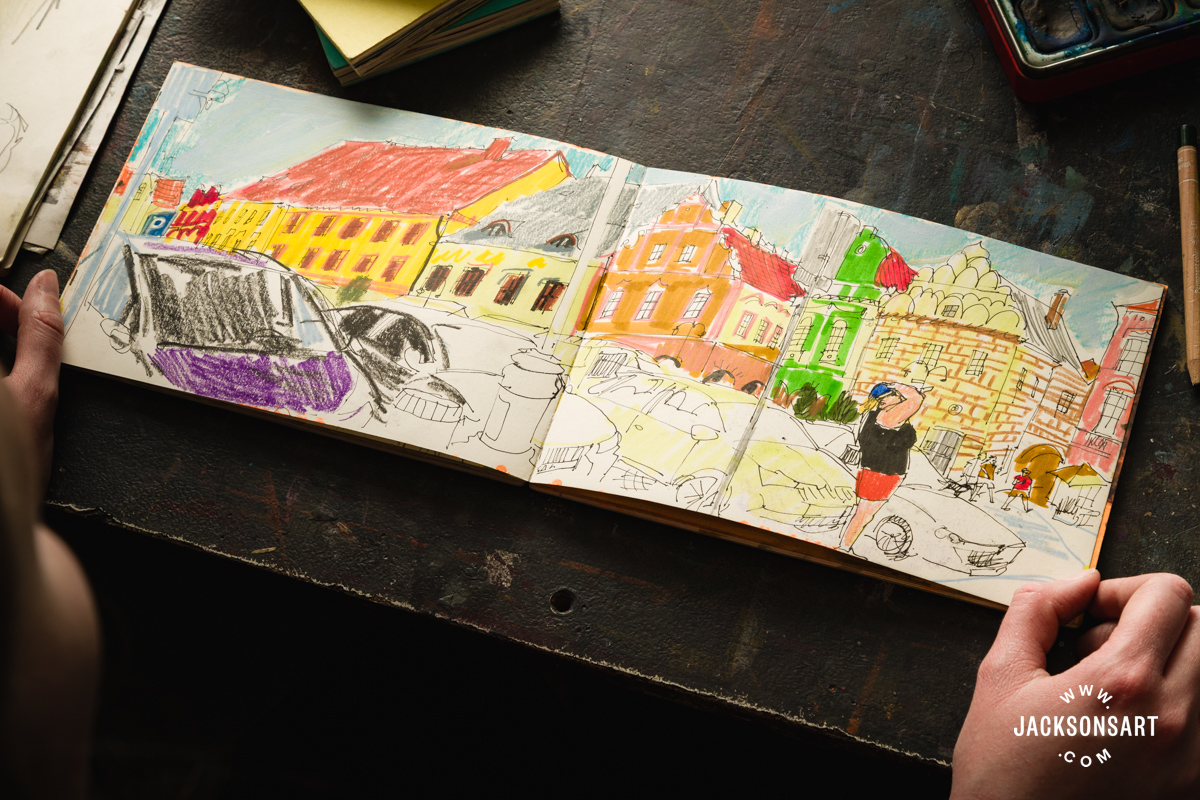
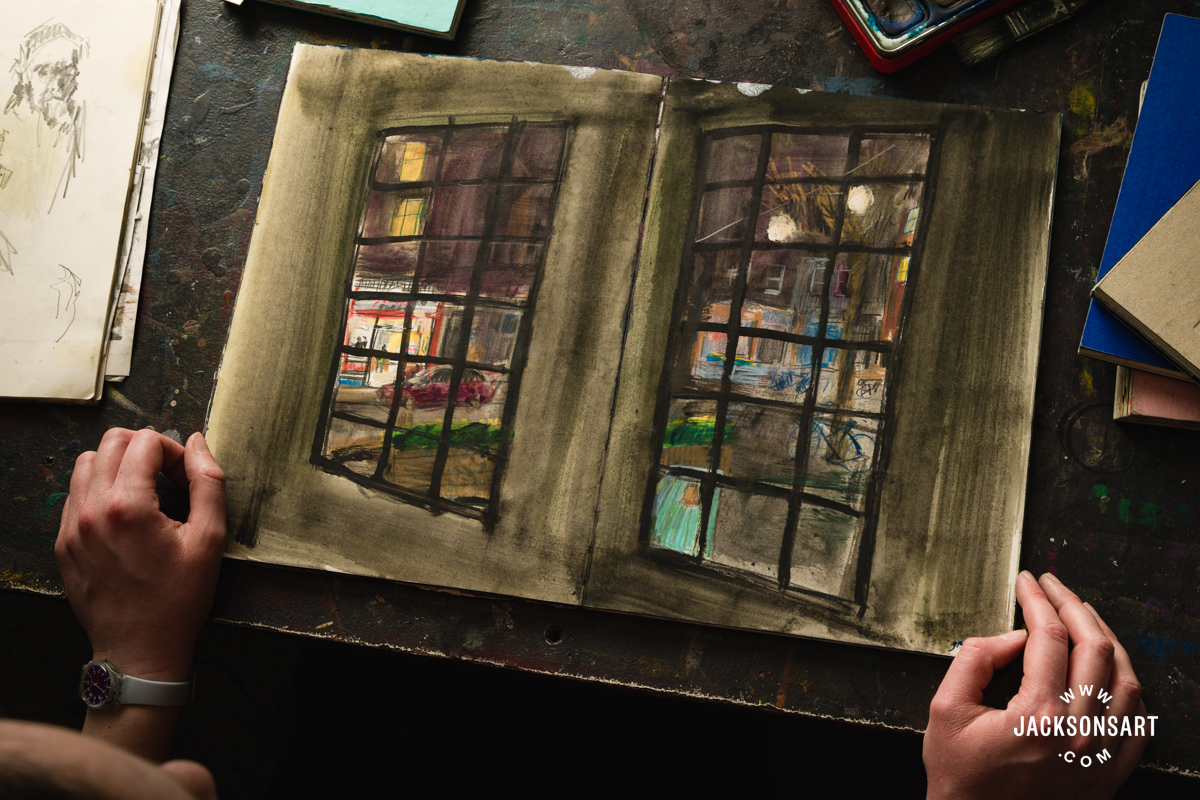
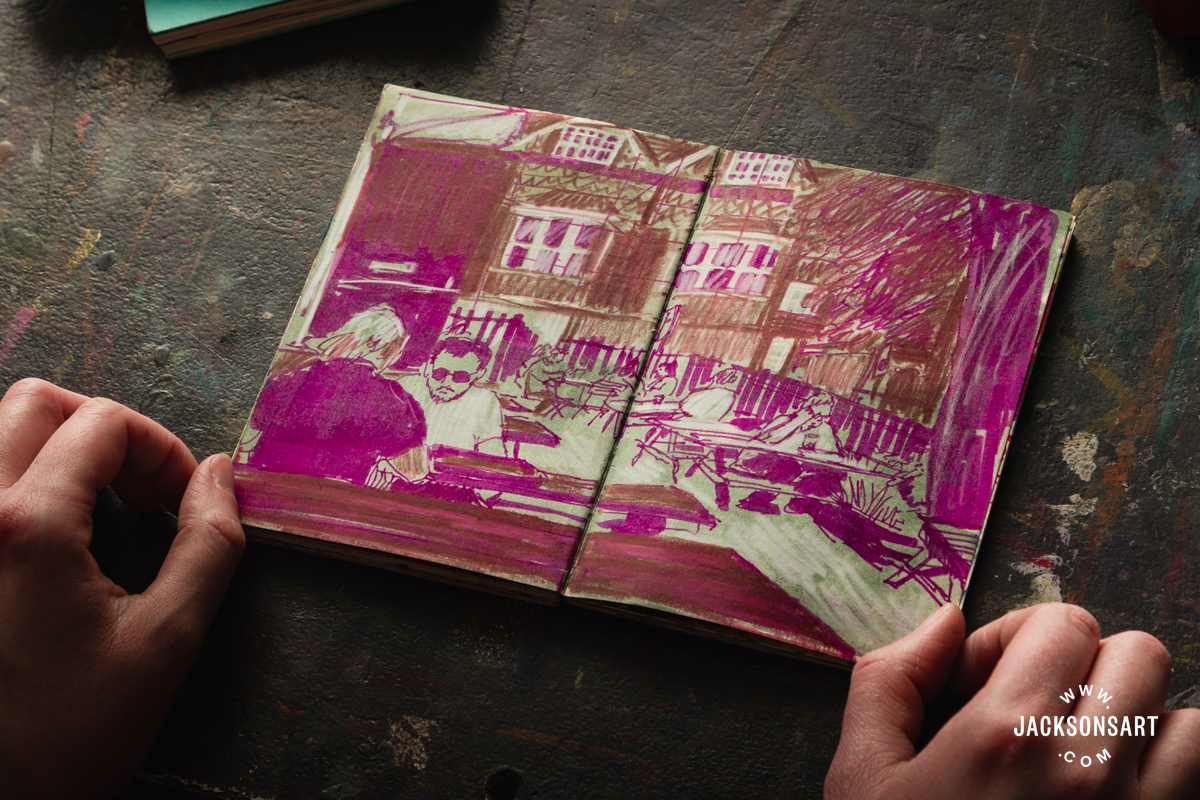
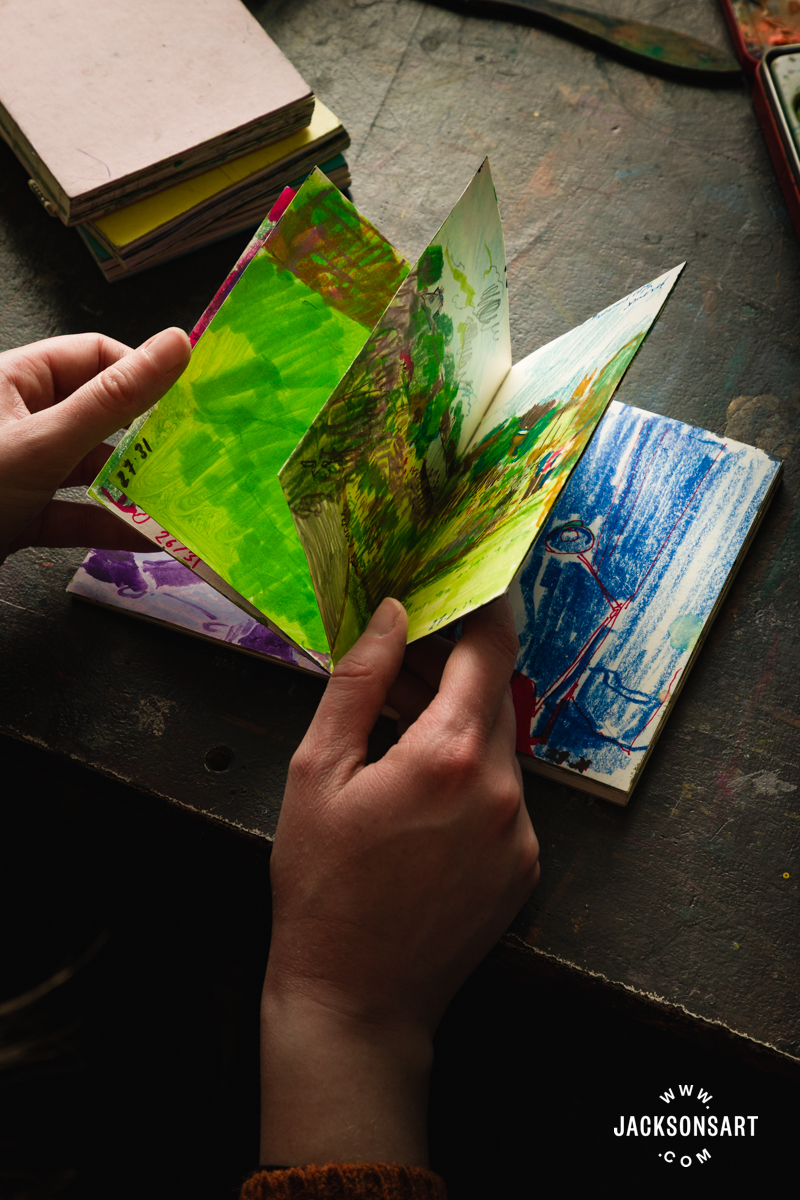
I use unexpected and bright colours, and sometimes prepare my sketchbook pages with a bold, coloured wash which I then work over the top of. I enjoy the challenge of fighting against a coloured ground, and an underlying colour can often bring a picture together.
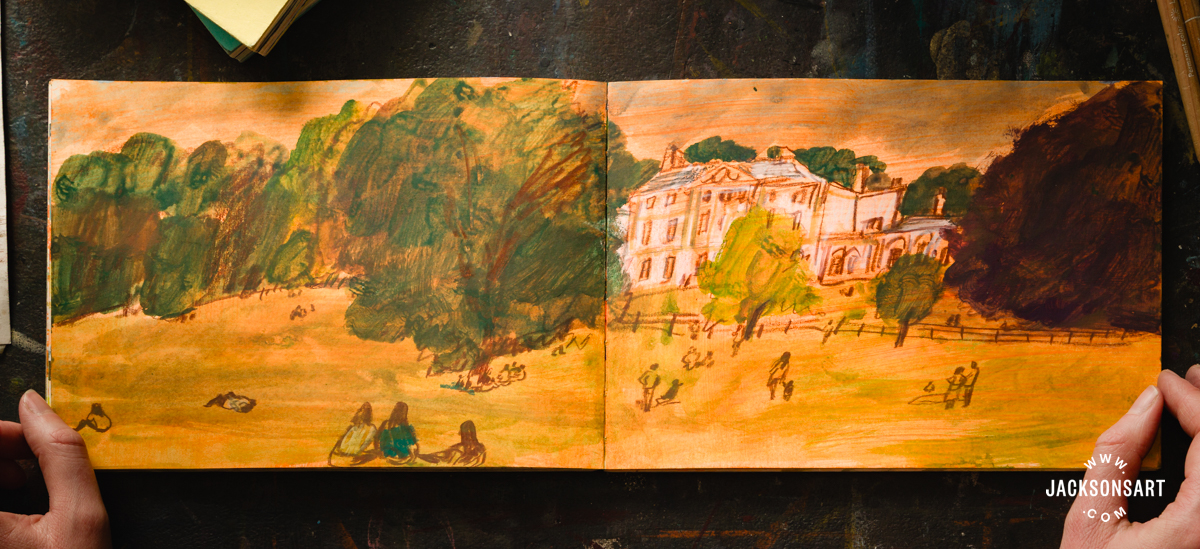
When drawing in galleries, I will take a smaller sketchbook. I use Leuchtturm1917 Hardcover Sketchbooks, which are great for filling up with quick fineliner sketches. In the past year, I have been using Pith sketchbooks. The paper quality allows me to work across both pages and is thick enough to paint on without warping. They come in great colours, and I like how they open out flat too.
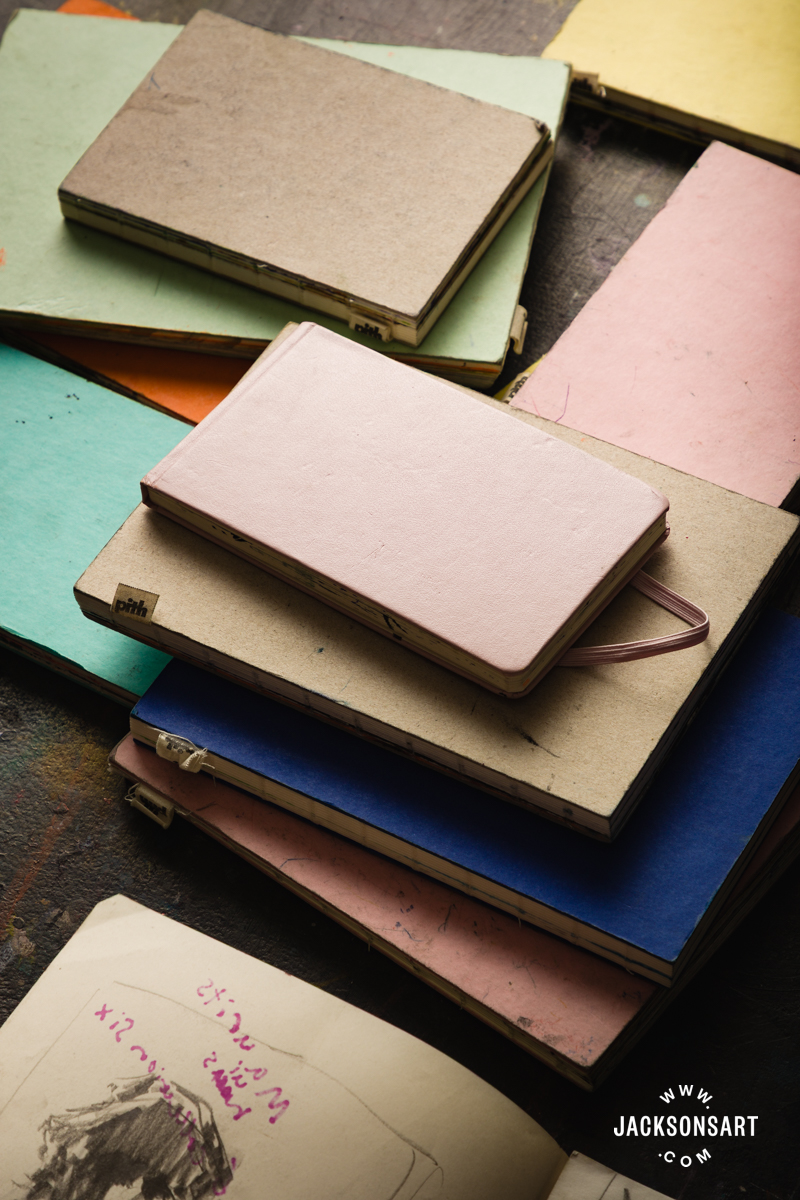
My sketchbooks hold a lot of memories for me. They show my home, family and friends, holidays, and the places I have been.
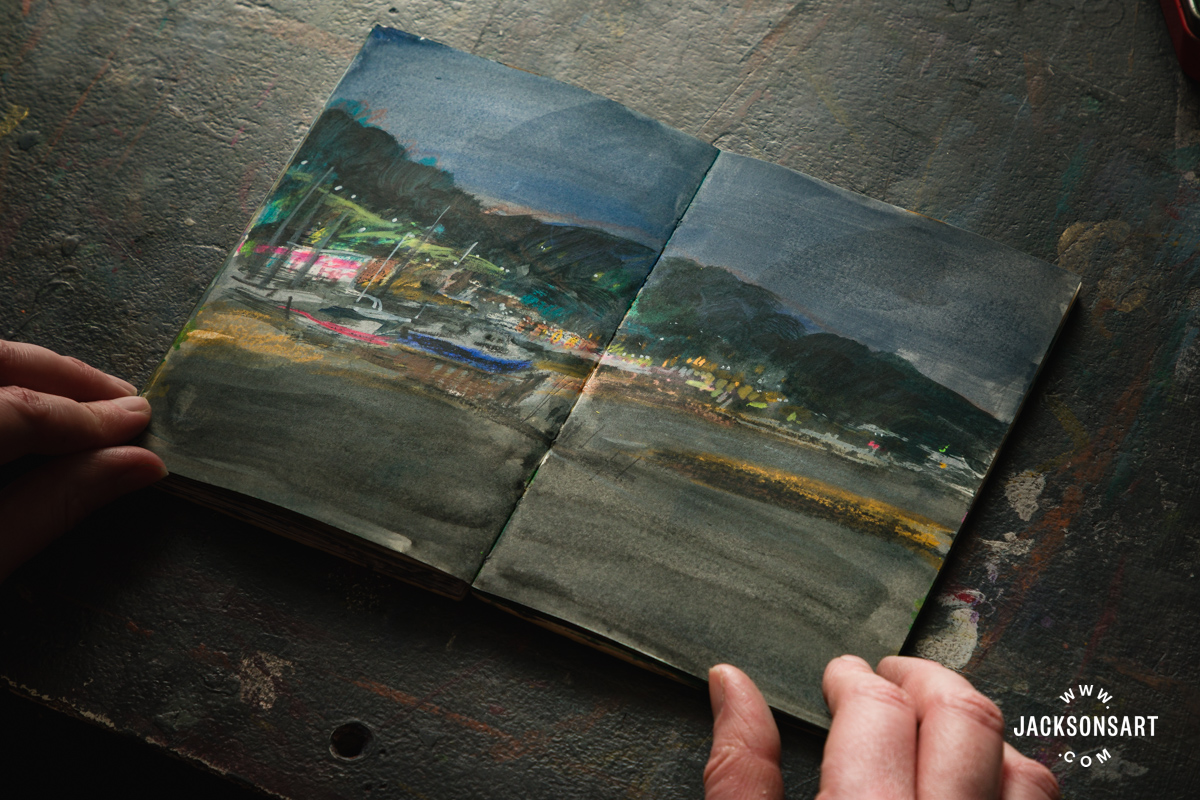
Although drawing in a new place is exciting, I particularly enjoy drawing the places I know well. In my sketchbooks, I have drawn the same view of my street at different times of day, weather conditions and using different materials.
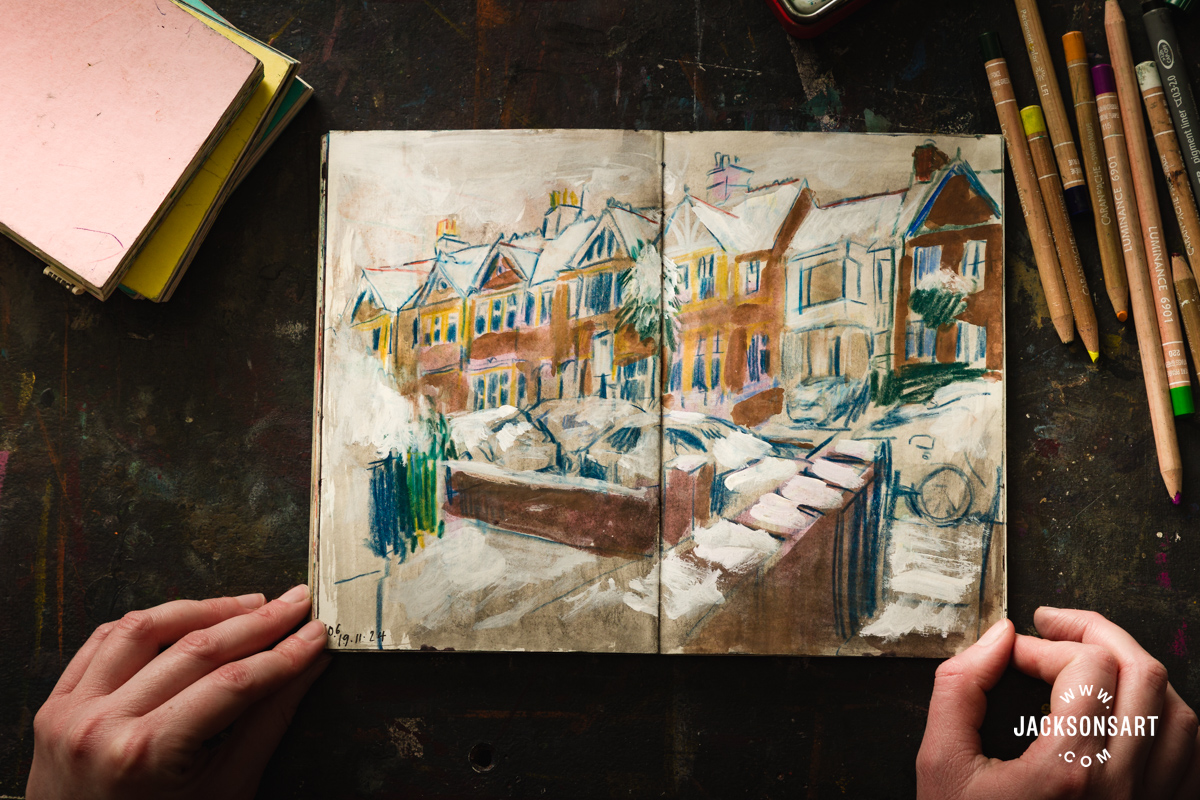
My sketchbooks are my diaries, and when I look through my sketchbooks, I can remember the conversations I was having, the weather and even the tea I was drinking when I made a drawing.
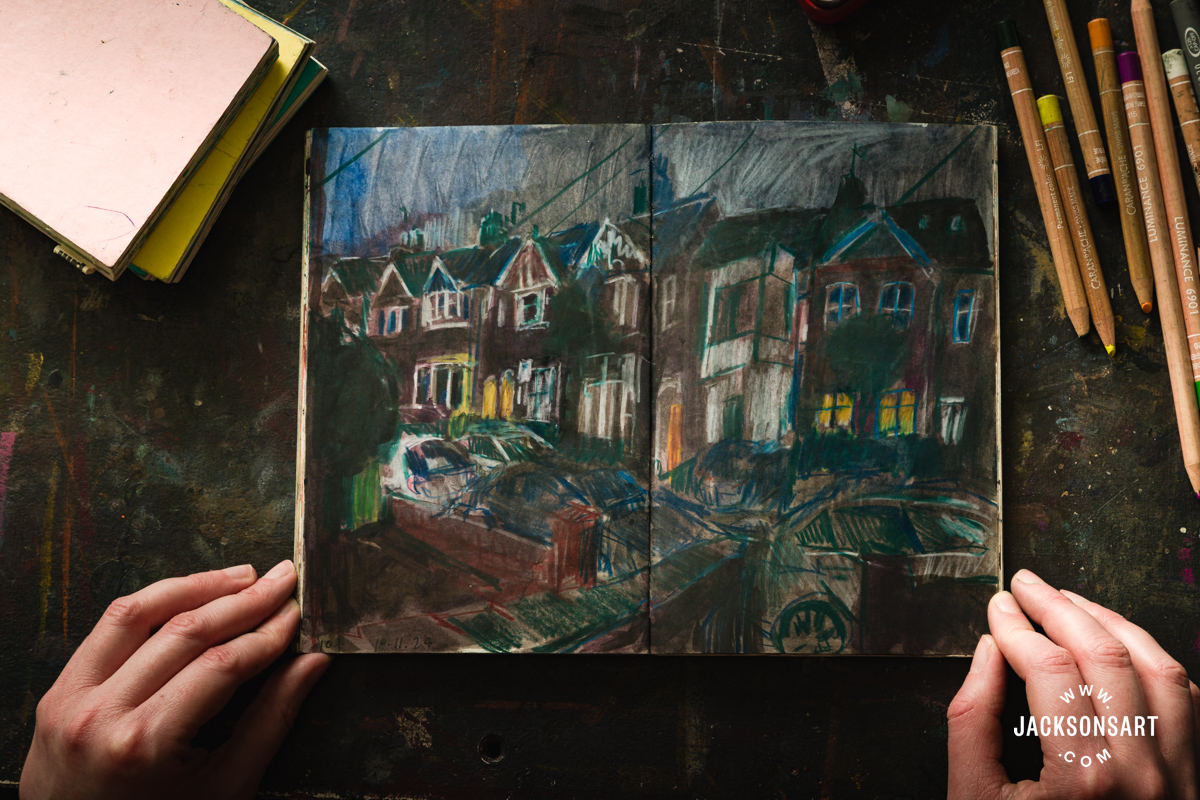
My oil paintings and illustration work can sometimes feel like two separate practices, but my sketchbooks are a place where the two come together. They are an insight into my life. When I paint in oils, I am painting impulsively, and I often rework and layer paint whilst working on a few oil paintings at the same time.
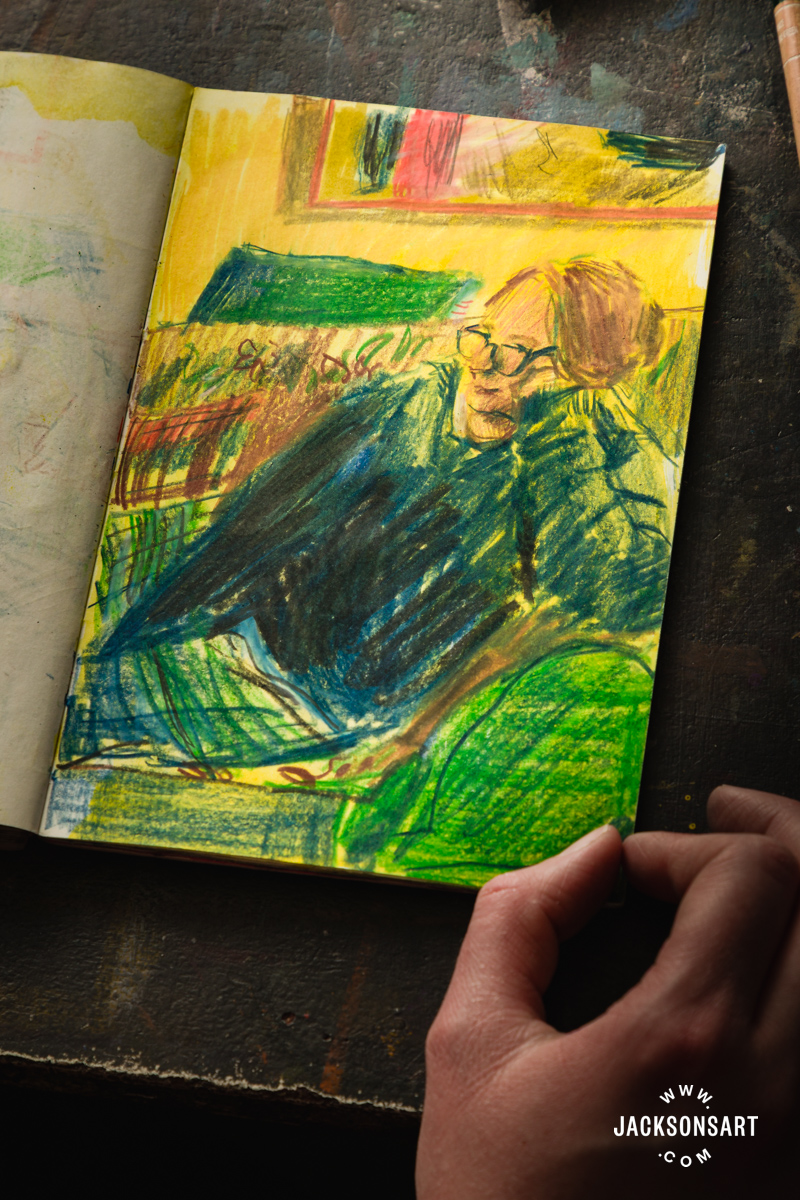
In contrast, drawing from life is a much slower process, and I enjoy the time away from the studio, observing, reflecting, and documenting what is in front of me. There is satisfaction in recording a place and feeling, and also a lot of fun in playing with materials and taking risks. Sketchbooks are a place where you can easily try things out.
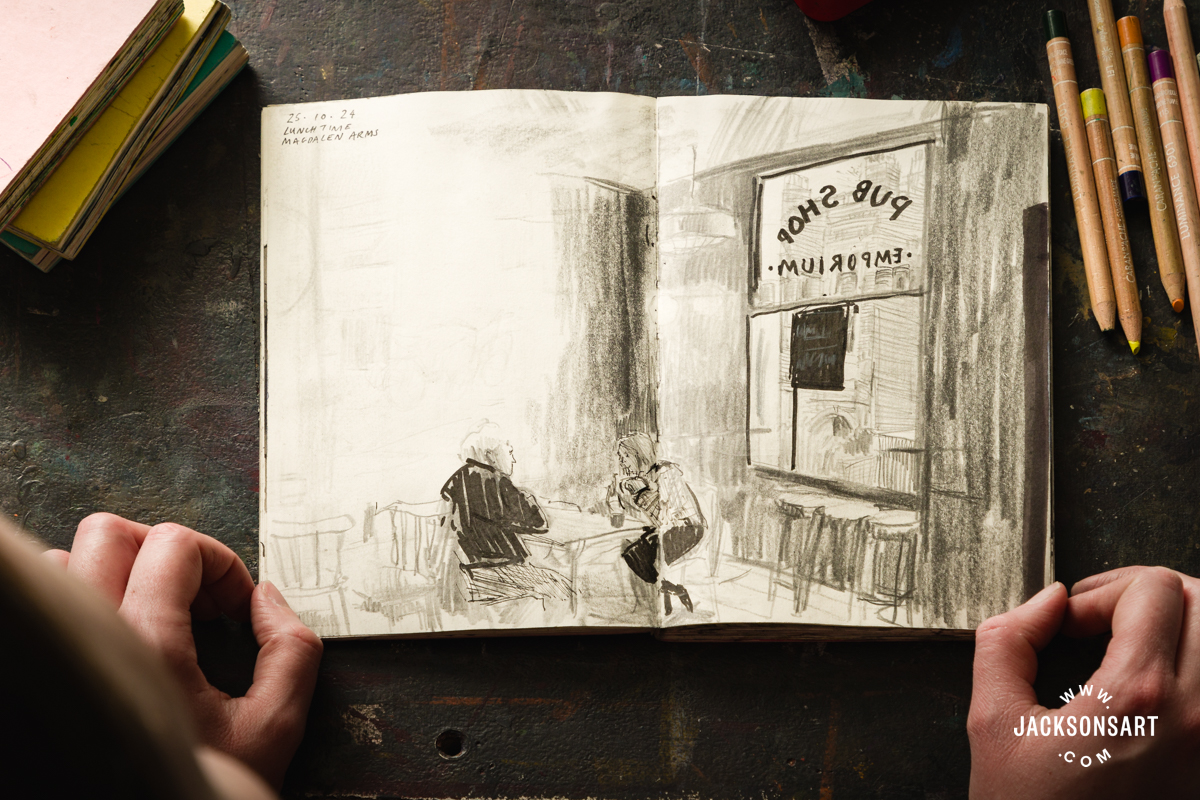
Going drawing with friends is a good way to gain confidence in drawing from life. I will often bring a sketchbook to the pub or a cafe and draw with friends.
Preparing sketchbook pages with coloured washes is a good way to experiment with colour and can result in new and unexpected ways of working. I often limit my colour palette and choose a few colours to work with before making a drawing.
I draw and paint quite quickly, and I have to remind myself to slow down and really look at what it is that I am drawing. Practicing blind contour drawing (when you draw something without looking at your paper) helps me to focus and truly observe what is in front of me.
For me, drawing in a sketchbook is a pretty joyful activity! I love the challenges of drawing from life, the unexpected outcomes and the satisfaction in having worked something out.
Materials
Caran d’Ache Studio Gouache Set of 14 Pans and 10ml White
Caran d’Ache Luminance Colour Pencils
Caran d’Ache Classic Neocolour I
Tombow Dual Tip Blendable Brush Pens
Uni Pin Waterproof Sketching Pens
Leuchtturm1917 Hardcover Sketchbook Landscape (A5)
About Tereza Horáček
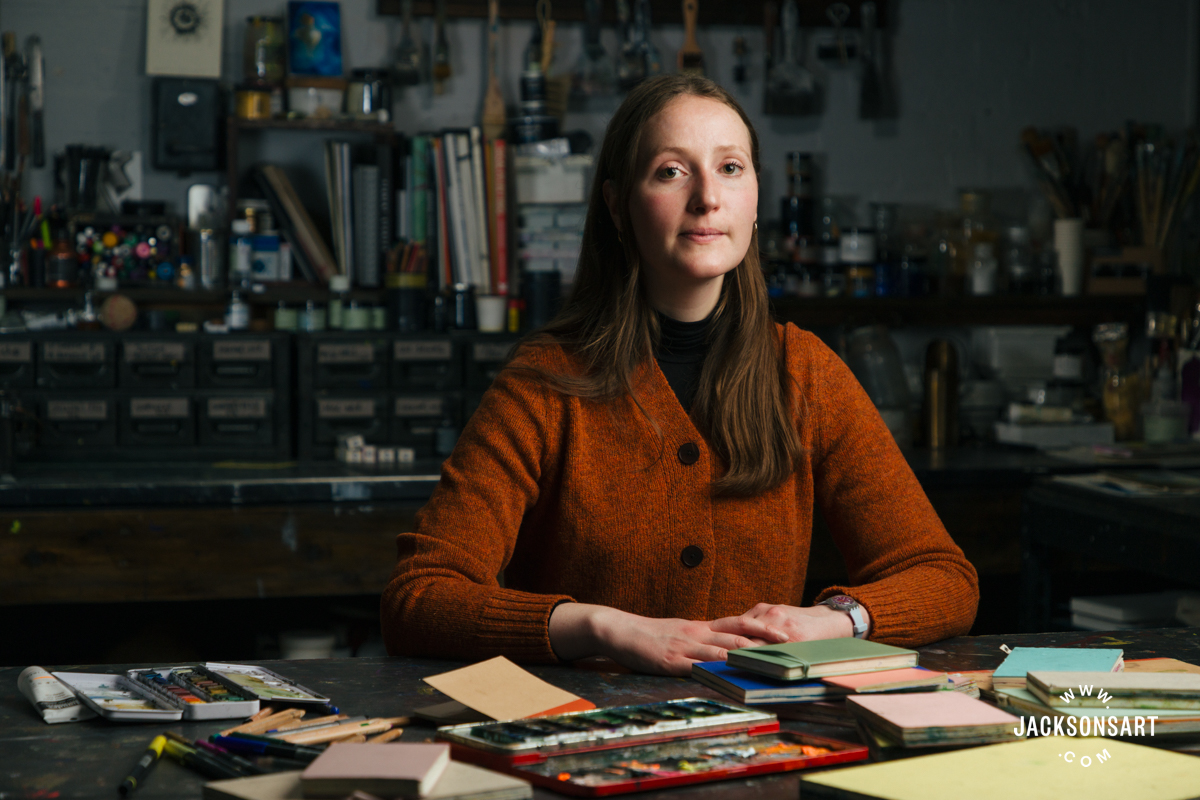
Tereza Horáček studied Fine Art at the Slade School of Fine Art, University College London (2016-2020). Characterised by a combination of evocative colours, textured brushstrokes, fluorescent-orange backgrounds, and loose washes, Horáček reworks and layers paint to combine painting techniques reminiscent of the Old Masters with gestural brushstrokes. Her pastoral scenes draw inspiration from Dutch seventeenth-century paintings. Broad meadows, grazing cattle, poultry, and expansive skies are recurring motifs within her work. Recent exhibitions include Back To My Trees, Terrace Gallery, London; Royal Academy Summer Exhibition 2025, Royal Academy, London; The Irving Open 2025, Irving Gallery, Oxford; Ronapainting Gallery, Oxford. Horáček is studying MA Children’s Book Illustration at Cambridge School of Art. She currently lives and works in Oxford, UK.
Further Reading
A Guide to Drawing in Galleries and Museums
Frances Ives Tests Pith Sketchbooks
A First Look at Holbein Luminous Artists’ Watercolours
A Beginner’s Guide to Urban Sketching
Shop Sketchbooks on jacksonsart.com
4 thoughts on “Inside the Sketchbook of Tereza Horá<strong>č</strong>ek”
Tereza, your work is so vibrant and fast
moving, full of energy – even when
someone is sitting down! The colours
are singing even if they are dark and
your storytelling is clear – loved this
article: truly inspiring
Thank you. Your sketchbook is
inspirational because it can be daunting
to start a sketch outside in an
interesting place. But your book shouts
‘just get on with it!’ . It’s so true that it’s
the mood of the place, the people, the
buzz, the colour that grabs us. All are
too quickly forgotten, or only
remembered as elusive recollections of
somewhere special. You have inspired
me to start my own ‘memories’ sketch
book. Perfection is not guaranteed, but
pleasure in the moment and the memory
certainly will be!
Thank you
Hi Anne,
Thank you for your reflections on this article. I’m so glad to hear Tereza’s sketchbook has inspired you to start your own ‘memories’ sketchbook. Letting go of the pursuit of perfection can be one of the biggest hurdles when starting a new sketchbook – I hope you find it rewarding and joyful!
Thank you Thereza for your words of
inspiration. I love traveling and
sketching every minute of every day.
Sometimes I feel strange while people
look at me at a restaurant or even a the
train as I draw them. All your art is
beautiful. Now I want to purchase the
Caran d’Ache watercolor pencils. They
sound amazing. I am always trying to
detail my paintings and this will be a
wonderful solution.
Comments are closed.