



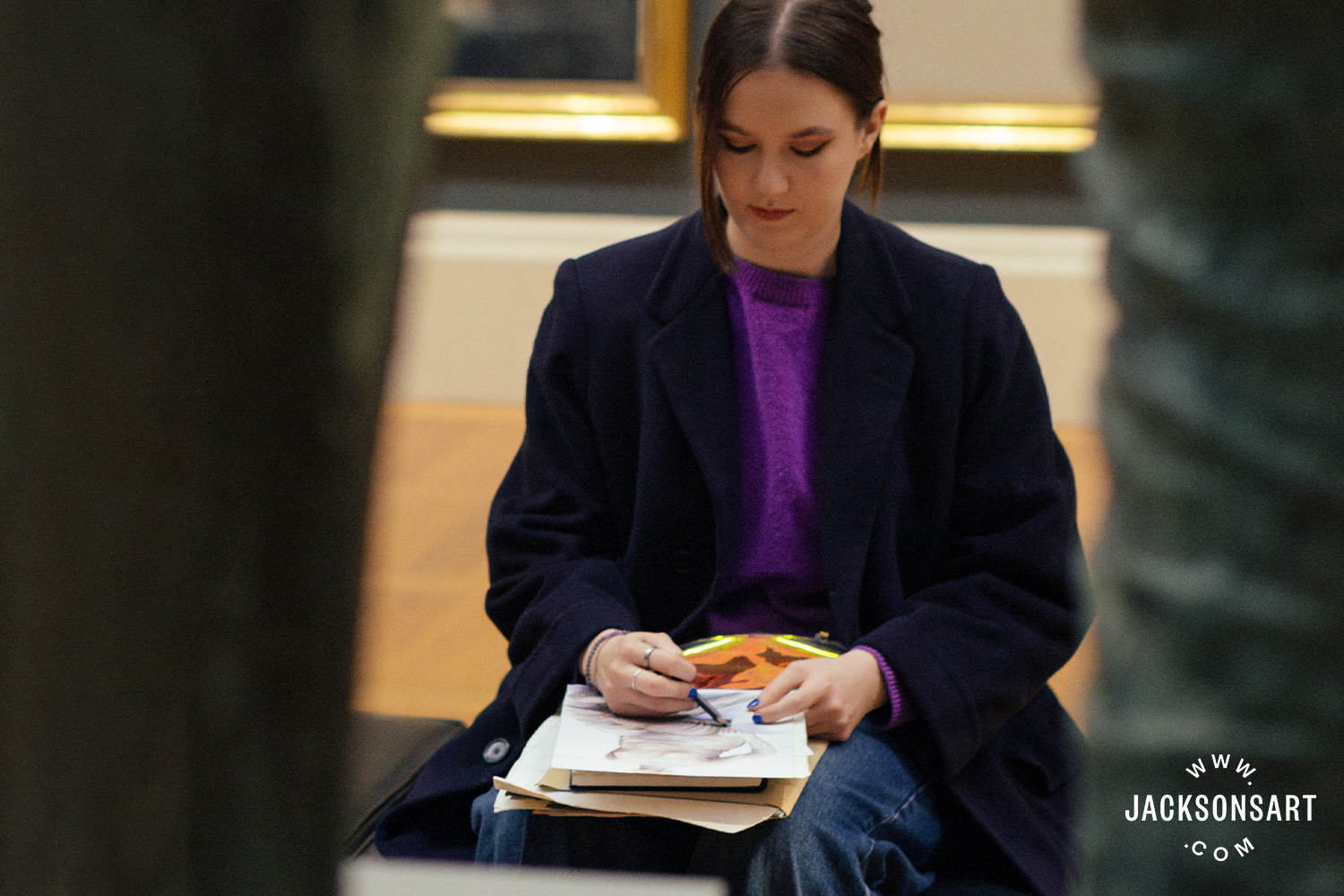
Drawing in galleries and museums can be a daunting experience, but an invaluable one once you find your footing. Through a bit of bravery, trying out some different techniques, and later reflecting on the drawings you’ve made, it can provide an infinite generative source for your own artwork. In this article, I’ll explain the benefits of drawing in collections, some useful materials to bring, a series of ideas for approaching your drawings, and some advice on finding focus in bustling environments.
The Benefits of Drawing in Galleries and Museums
Through drawing in galleries and museums, the images and objects you work from become embedded in your mind. Either consciously or subconsciously, you are actively learning about methods of artmaking. By copying from a painting, without deeper thought about it’s particular construction, you are still absorbing a lot of information subconsciously. You may also be approaching the artwork with a particular question – I wonder how the artist created such a sense of movement? I wonder what leading lines, or shapes are holding the image together? In this way you are consciously investigating the work, and all of the answers can be found through making drawings. Either way, whether you have an exact query or are just drawing because a work appealed to you, it will expand your personal visual library which you’ll have to recall from when making your own work.
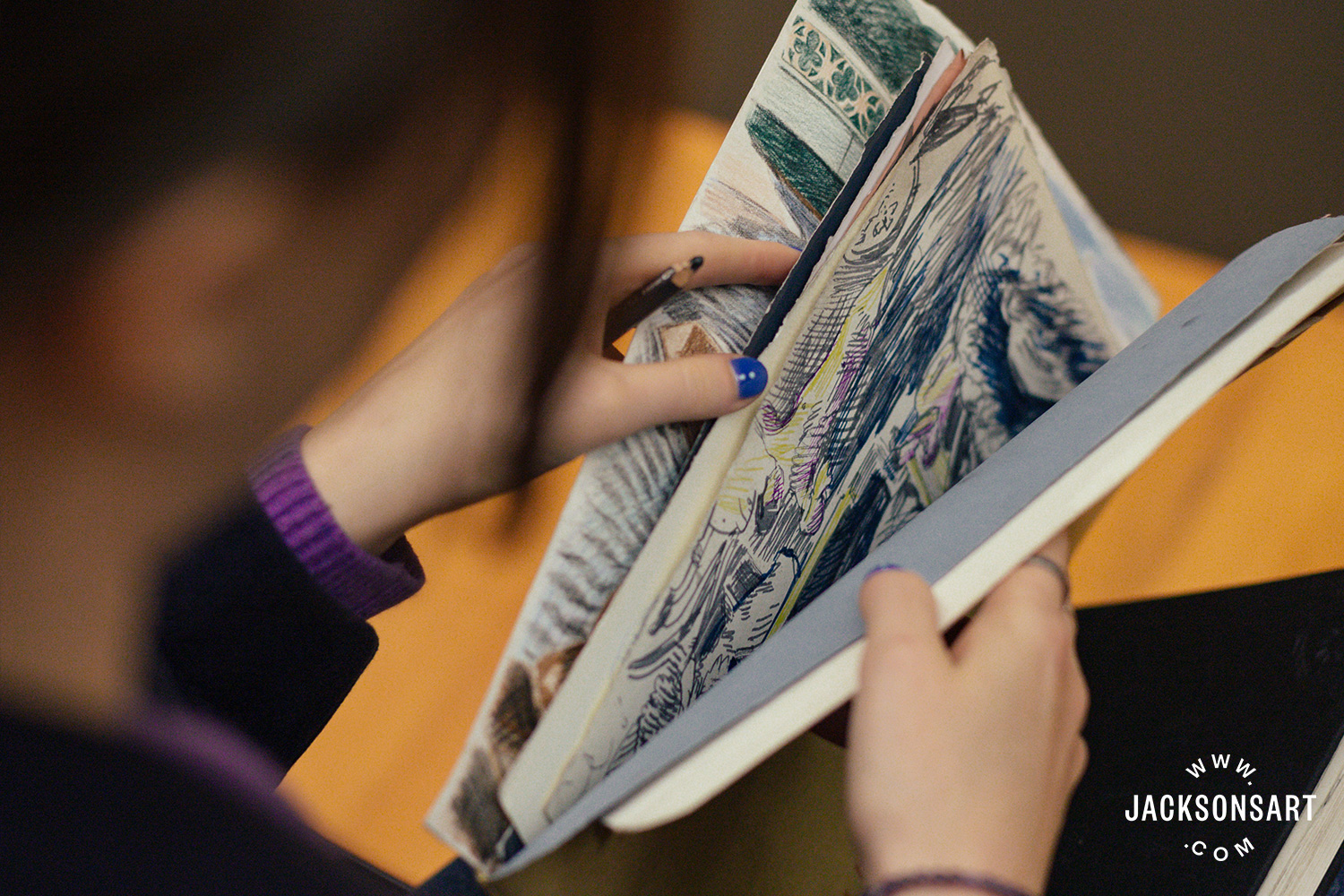
Some of the specific aspects you may wish to research in artworks and objects in collections are: compositional devices, thematic inspiration, interesting imagery, narrative, materials, and the methods they are applied with. Regardless of which of these piques your interest in a work, closer, intense observational study will reveal them.
Drawing in galleries and museums is also invaluable for sharpening your skills. You learn how to draw at speed, and under the pressure of a watching public. There aren’t many scenarios where artists have to make work under the watchful eyes of tourists, school trips, and art lovers alike. This makes you quickly adapt to drawing under pressure. There are also benefits to the conversations you will have in these settings. Quite often you get talking to other people who also love the work you’re looking at, and even talk with people who may be interested in your artistic practice based on what they see you making.
Useful Materials for Drawing in Galleries and Museums
Most galleries and museums don’t allow certain materials to be used for conservation and safety reasons, so it’s always worth checking their individual rules. In general, most sites won’t allow ‘dusty’ materials like charcoal or pastels, or pens incase of vandalism. No major sites will allow paints of any kind. If you ever see an artist painting a study in a major gallery at an easel, it’s because they have been given express permission by the site after an application – they definitely haven’t just turned up!

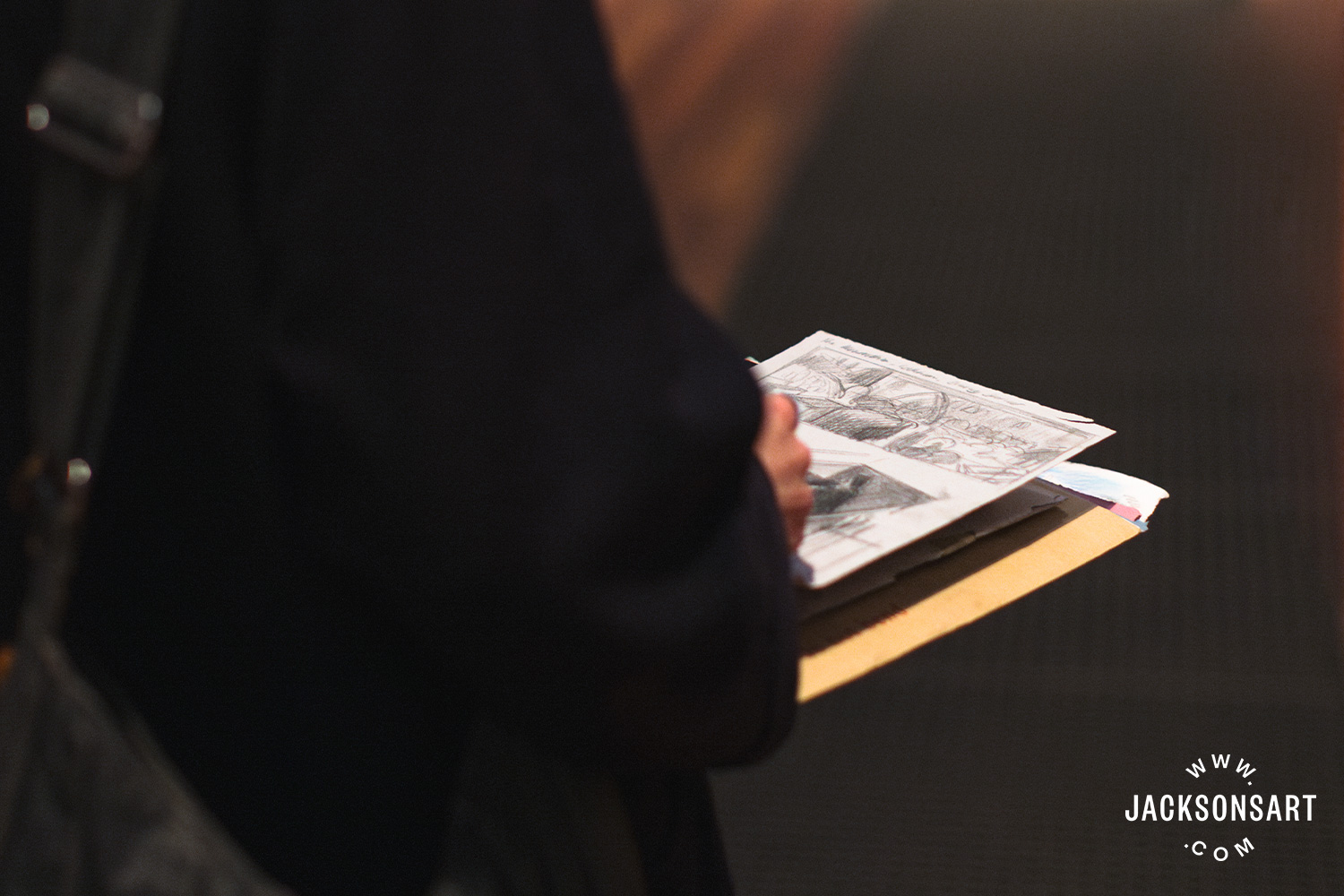
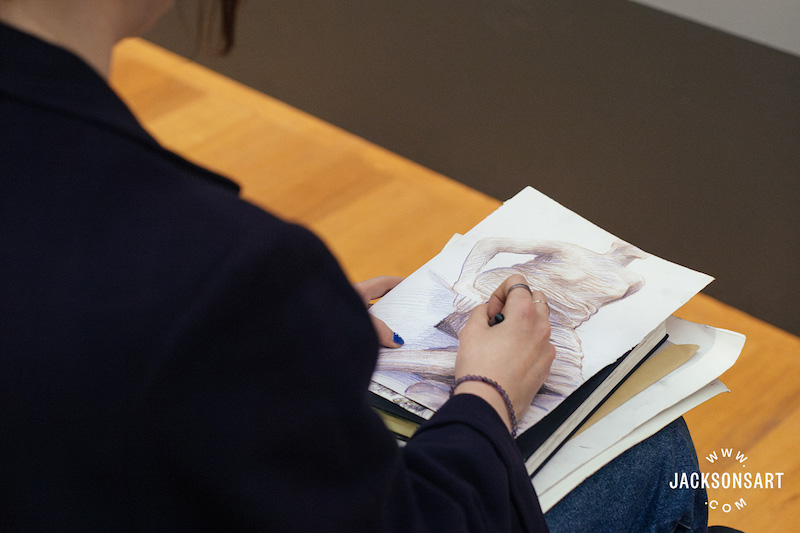
The safest kit you can bring with you that should be allowed in all institutions includes graphite pencils, coloured pencils, a small folder/hardback sketchbook to lean on, a sharpener with a shavings container, and a selection of papers. I usually bring a roll of masking tape to secure the paper I’m using to my leaning support.
I also like to pick up a stool, usually found at the gallery entrance or reception of the site you’re visiting. You can definitely stand and draw too, but having the option to sit allows you to spontaneously decide when to make prolonged drawings that would be difficult to make standing up. You should try both approaches to see what feels best for your investigations.

Drawing Exercises to Try
There are a plethora of approaches you can take to making your drawings in public collections, these are just some suggestions to try out if you aren’t sure where to start, or feel like trying something new.

Spontaneous timed studies of various objects to hunt for inspiration – I use this approach if I’m new to a gallery or museum and want to keep walking around without being too tied to one room or object. Perhaps these drawings are only 2-10 minutes each in length, but you’ll be surprised by what you garner from these brief studies. It allows you to naturally discern what you are connecting to in a collection, and signpost what you may want to investigate further.
Extracting a specific motif – Sometimes a singular element of an artwork or object appeals to us. When you have a feeling of immediate enjoyment in something specific in a work, perhaps by extracting it you will be able to see it in a new context. This could be within your own work, or to learn more about which motifs in various artworks you are most drawn to. This can lead to interesting self reflection once you have built up a series of these extracted drawings.

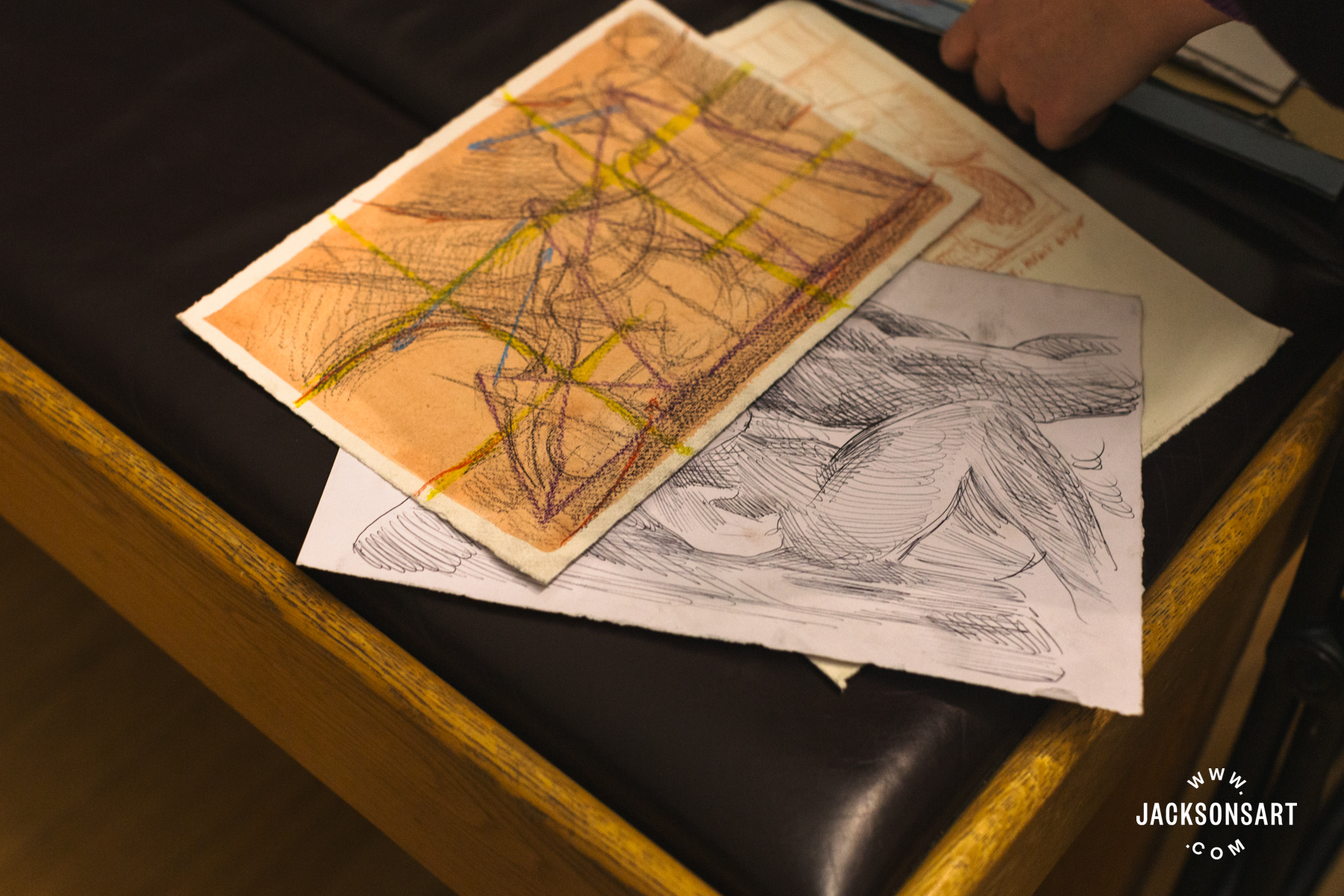
Drawing the composition of an artwork rather than the content of the work itself – If you enjoy looking at an artwork, and find it exciting to stand before, drawing its composition rather than the actual content of the work can help you unpick the technical devices being used to make it satisfying to look at. You can start by loosely drawing the broadest shapes of the image, before considering technical aspects of composition like leading lines, direction of gaze, triangles, and the golden ratio.

By leaving out the imagery of the work, you can reuse a satisfying composition without copying the work itself. This also allows you to refer to works that are of a completely different genre than you may work with – for example, I may borrow the composition from a medieval religious painting, and rework it into a still life. Below is an example of a drawing like this, but really there is no set way to do it, as long as it works for your investigation. I like using different coloured pencils sometimes, to make it easier later to discern between the different visual devices I’ve recognised.
A prolonged and developed study – This is probably the technique we most often associate with drawing in public collections – doing a loyal study of an artwork. By taking a prolonged amount of time to translate something through your own hand, through all of the inevitable mistakes and revisions, making a thorough copy can ingrain an image into your subconscious, make you notice things you otherwise wouldn’t see, and enhance your observational drawing skills.
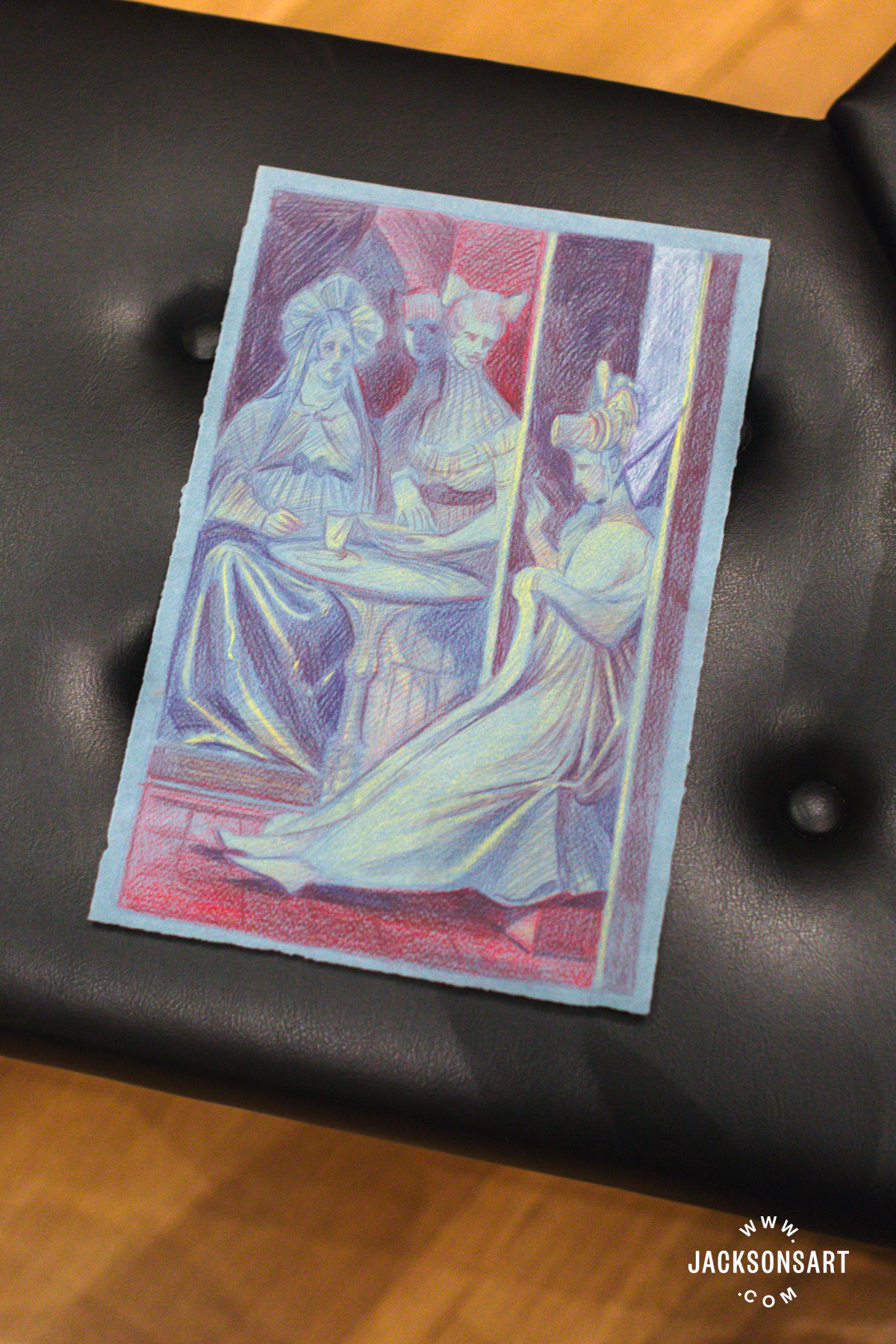
Drawing an object from very close vs far away – Often we can be put off by the technical mastery, detail, or scale of impressive works in collections, thinking that they will be impossible to summarise on paper. By drawing from them from a distance, we remove the finicky details that we often get caught up in, and allow ourselves to make a general drawing that can be a gateway to feeling it isn’t so impossible. In contrast, drawing from something very close up reveals new secrets, such as how materials have been handled, precise mark making, texture, and overpainting. When I do these close studies, I will often also write a couple of notes about what I have observed in the artist’s hand.
Drawing to emphasise the material something is made of – This technique can be challenging, but opens you up to new drawn vocabulary you may not naturally work in. Instead of drawing all objects in collections with the same level of finish, by focusing on the material it is made of, and almost emphasising it, we can discover new ways of drawing that we can carry forward, considering the difference it makes to how you read the drawing. I’ve got a few examples here, of drawings of sculptures made from different kinds of stone.

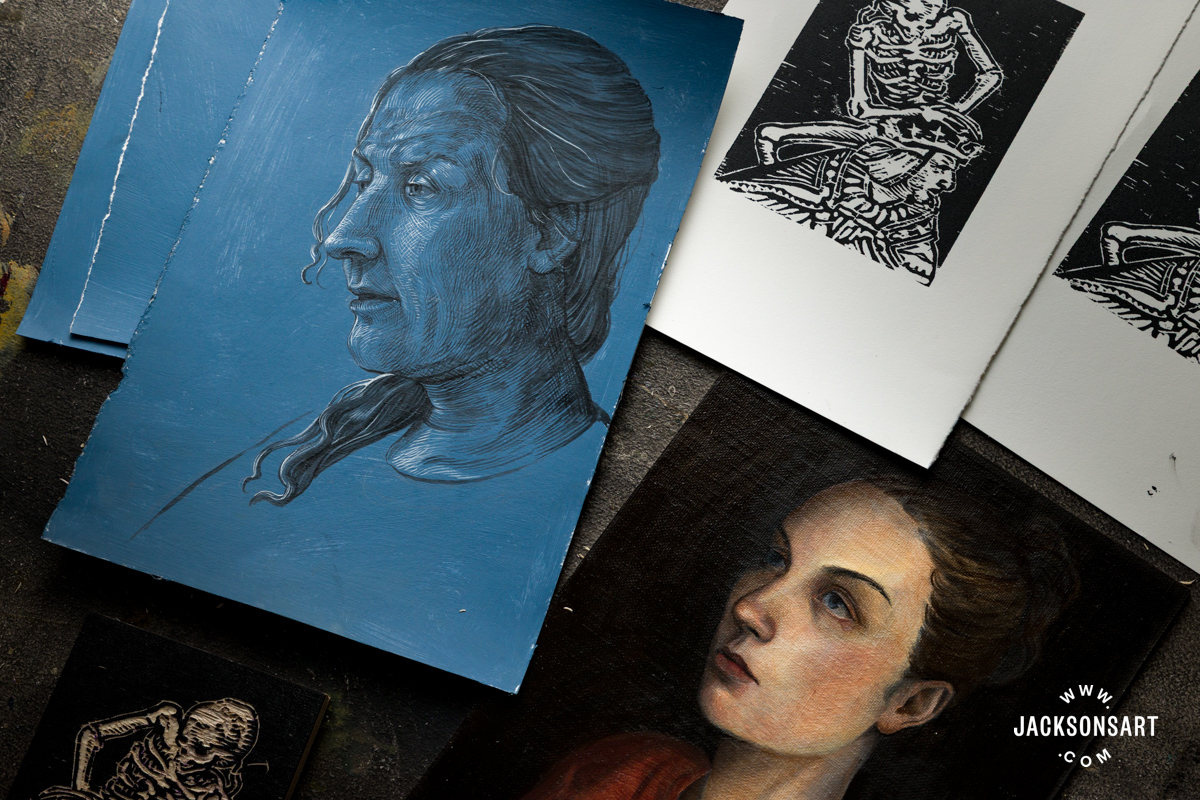
Imaginative drawing inspired by the themes/imagery you have already drawn or are observing – I think it’s important to emphasise that drawing from public collections doesn’t mean you have to abandon your own imagination at the door. By drawing things in collections, and actively transforming them on your page to suit your own vision, it gives a sense of ownership over what you’ve created, perhaps stopping it from being just a study. This is especially helpful if you’re interested in particular themes or imagery in works, and want to personally expand on them. This could also apply to drawing elements of various objects together on the same page to make something entirely new. You’ll be able to see the collection as a bank of imagery that you can use as you please, rather than a place of finality and pure appreciation.
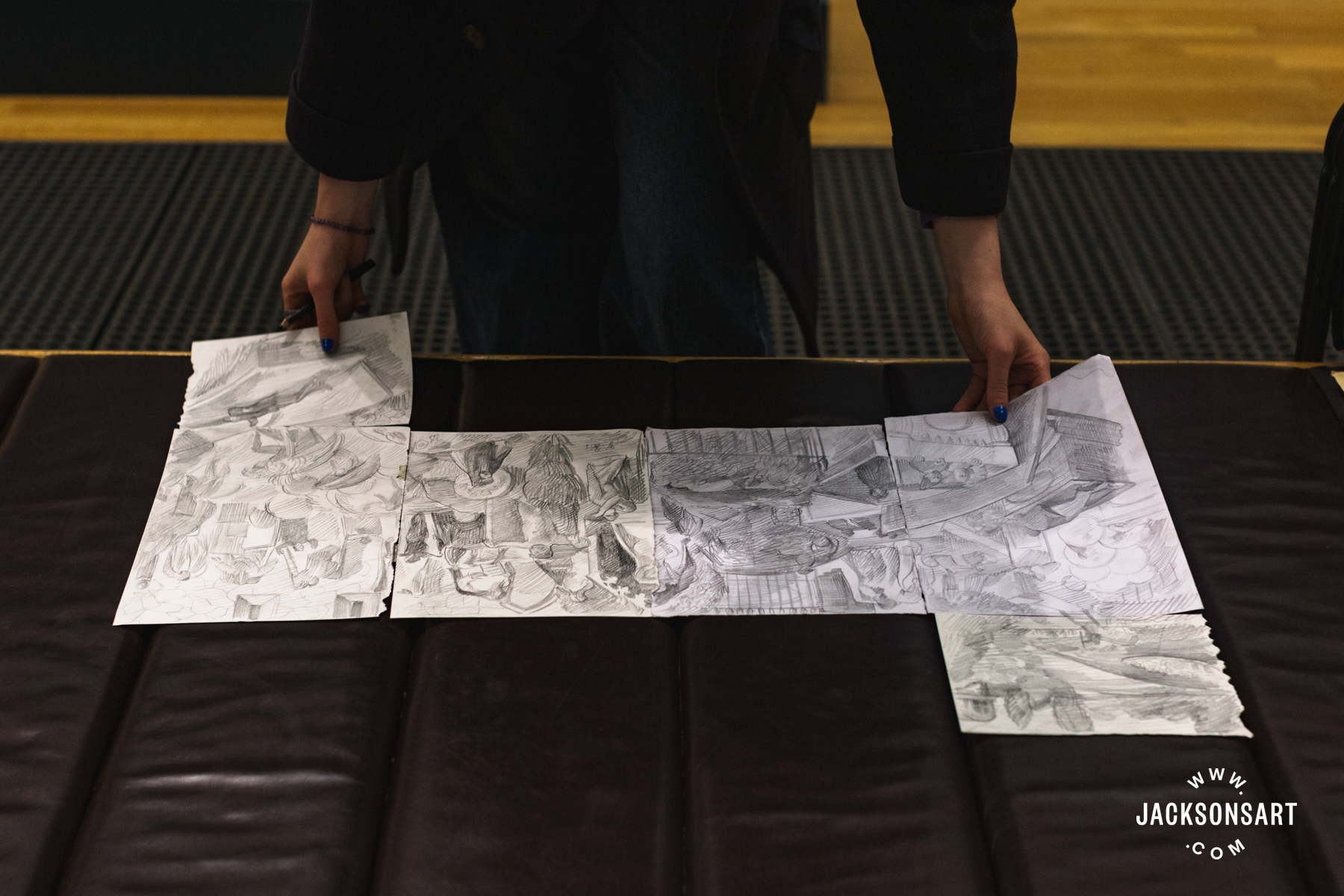
Draw something you think you don’t like – Finally, by drawing a work that you are initially turned away from, you confront your own judgement. Perhaps you’ll find something you do enjoy about it through the work, or you’ll only reinforce your beliefs about it. Either way you will be learning more about what you want from an artwork, and therefore be better equipped to be critical with your own work. If there is just one thing you can specifically identify that you dislike, rather than just dismissing a work as not for you, you’ve spent your time well. Dislike is a fairly common reaction to objects in collections, and is infinitely more useful for you to investigate than something you are just indifferent to.
Finding Focus in Galleries and Museums
Perhaps the most daunting aspect of drawing in galleries and museums is the challenge of being too self conscious to make your work. The more you do these drawings, the easier it becomes. Maybe start drawing from a quieter area, or early on weekdays and work your way up to busier times if this is a challenge. Listening to your own music can also allow you to get into a focused headspace.
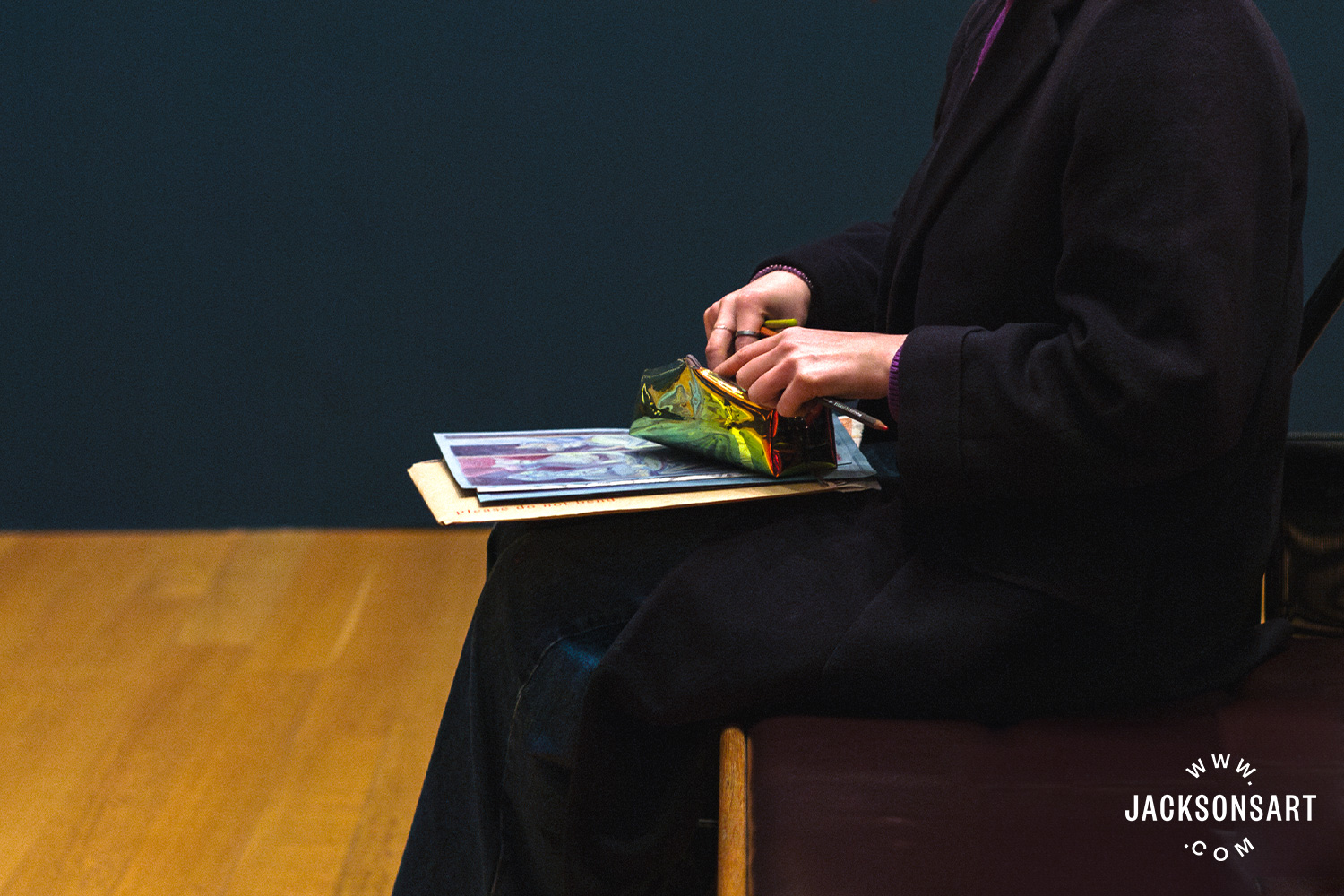
Sometimes the chaos of the environment is inevitable though, especially if you’re drawing from the highlights of a collection. Instead of resisting the heightened energy this may bring about, it can be good to give yourself permission for this to enter into the drawing. The drawing may become quicker and more spontaneous to reflect a bustling environment. This will give a truer reflection of your experience of looking at it, rather than trying to forcibly make something quiet and slow when you feel the opposite way. For balance, it can be good to challenge yourself with a busier drawing and then moving to a quieter area before deciding what to draw next. Take it at your own pace, since it should all be for your own benefit.
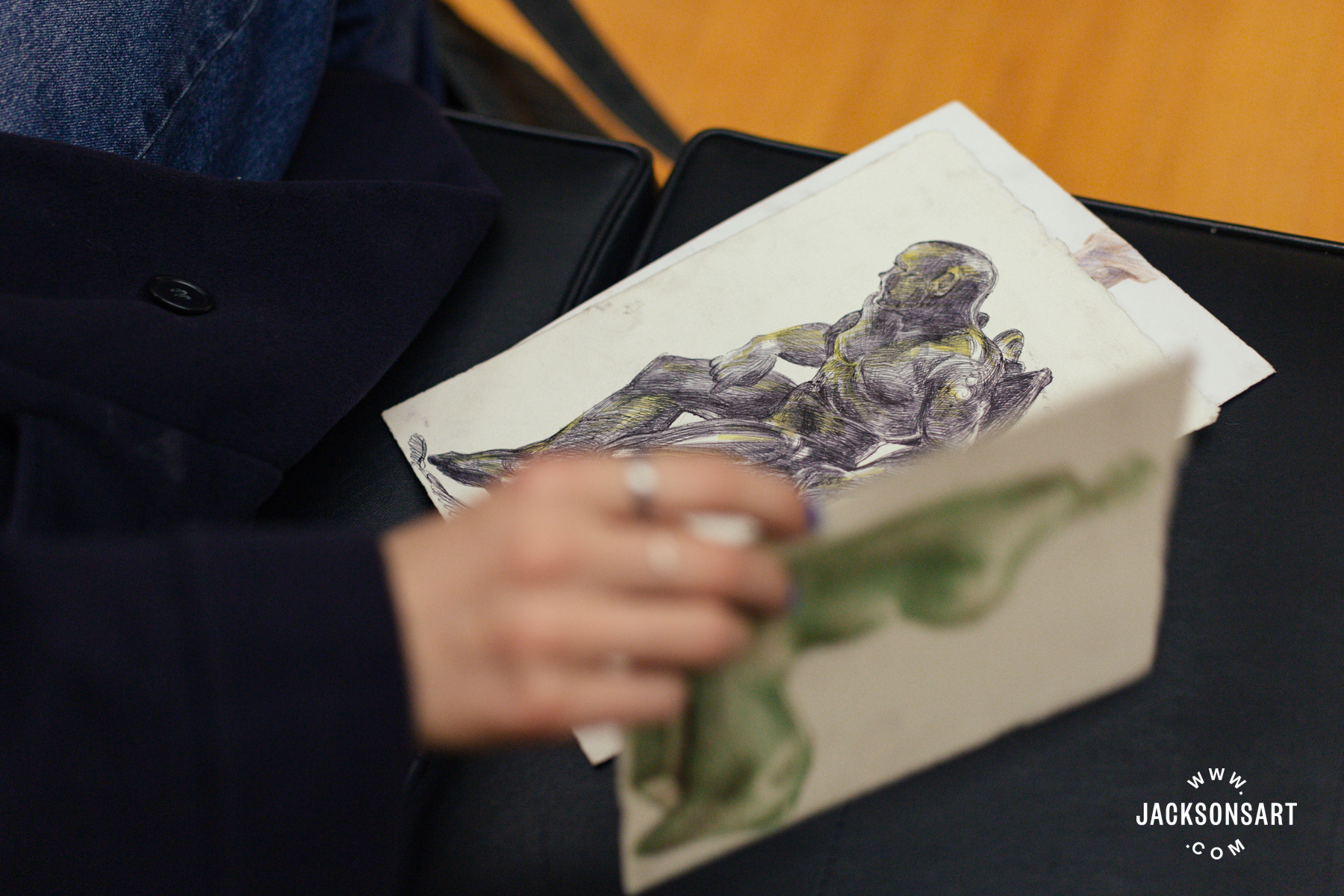
Drawing from gallery and museum collections provides a treasure trove of resources to work with as an artist. Sometimes it feels as though we have to work in isolation to have truly personal ideas, and I find this to almost never be the case. I think the most personal and impactful works are often produced through a series of reactions to other artworks or objects, be that through detailed study, a brief sketch or immediate reaction. I’d encourage everyone who makes art to try it out, you never know until you do what you may discover.
Further Reading
How to Prepare for Your First Life Drawing Class
Art Fair Checklist for Artists
Inside the Pages of a Medieval Sketchbook
Shop Drawing on jacksonsart.com



3 thoughts on “A Guide to Drawing in Galleries and Museums”
Great article! I sketch in museums from time to time, As you say, it’s a really good way to notice things about the artwork that I might miss if I just look at it without sketching. Sometimes I also draw the people who are standing looking the the collection. A museum is a really good place to draw people I find, as they are moving slowly, and often stand still for a little while. Surprisingly often there is a relationship between the person viewing the art and the art itself: the viewer adopts the same position as a saint in a painting, or in some way the viewer’s posture responds to a sculpture, for example. This is great fun to observe and sketch. But I have to be quick, before they move on.
Thanks for a great article and your inspiring prompts: I shall try them!
Hi Jane, thanks for sharing your insights. That’s a great idea to draw people looking at art… and an interesting observation about how they mimic the pose of the subjects in the paintings.
Thanks. Very inspirational article. I’m
drawing on museums in Copenhagen.
Comments are closed.