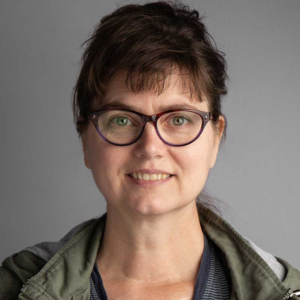
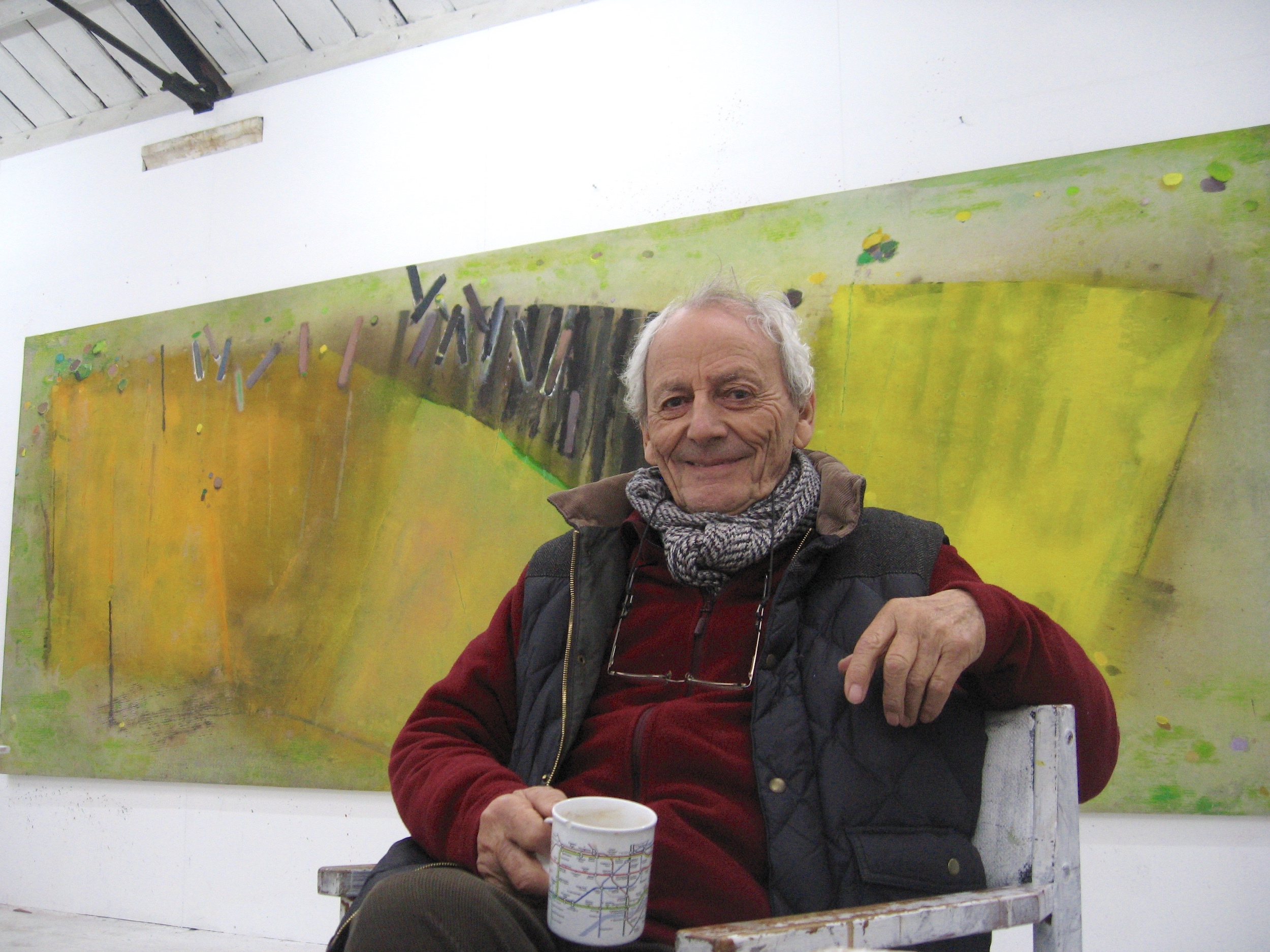
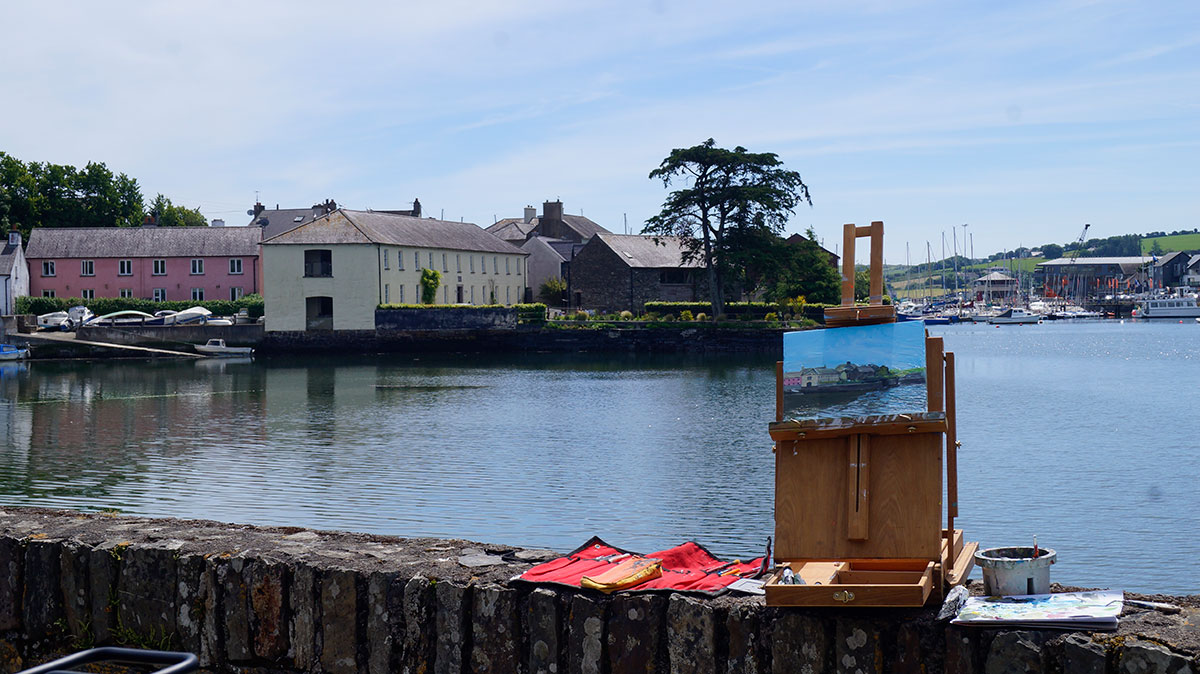
Paul McKenna is an artist based in Cork, Ireland. He is a member of Cork Printmakers and a former member of Sample Studios with his studio now based at home in the north side of Cork City. He studied Graphic Design at Central Saint Martins College of Art and Design. He is primarily a landscape painter working in acrylics, watercolour and printmaking (etching and screenprinting). This summer he went on a painting road trip around the western coast of Ireland. The stunning coastal views were perfect for landscape painting and he shared photos of the scenery and paintings on Instagram as he went along.
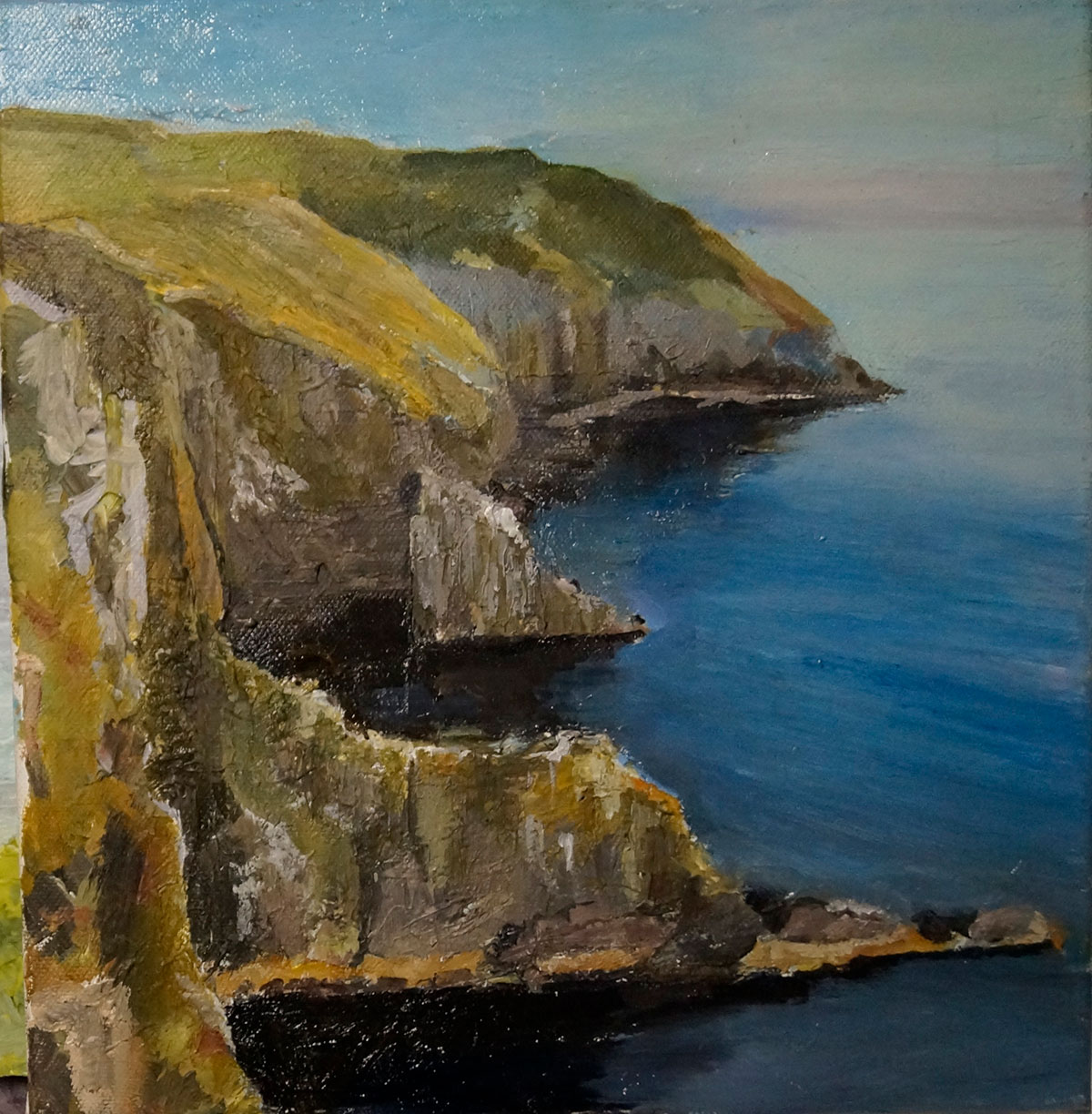
Paul McKenna
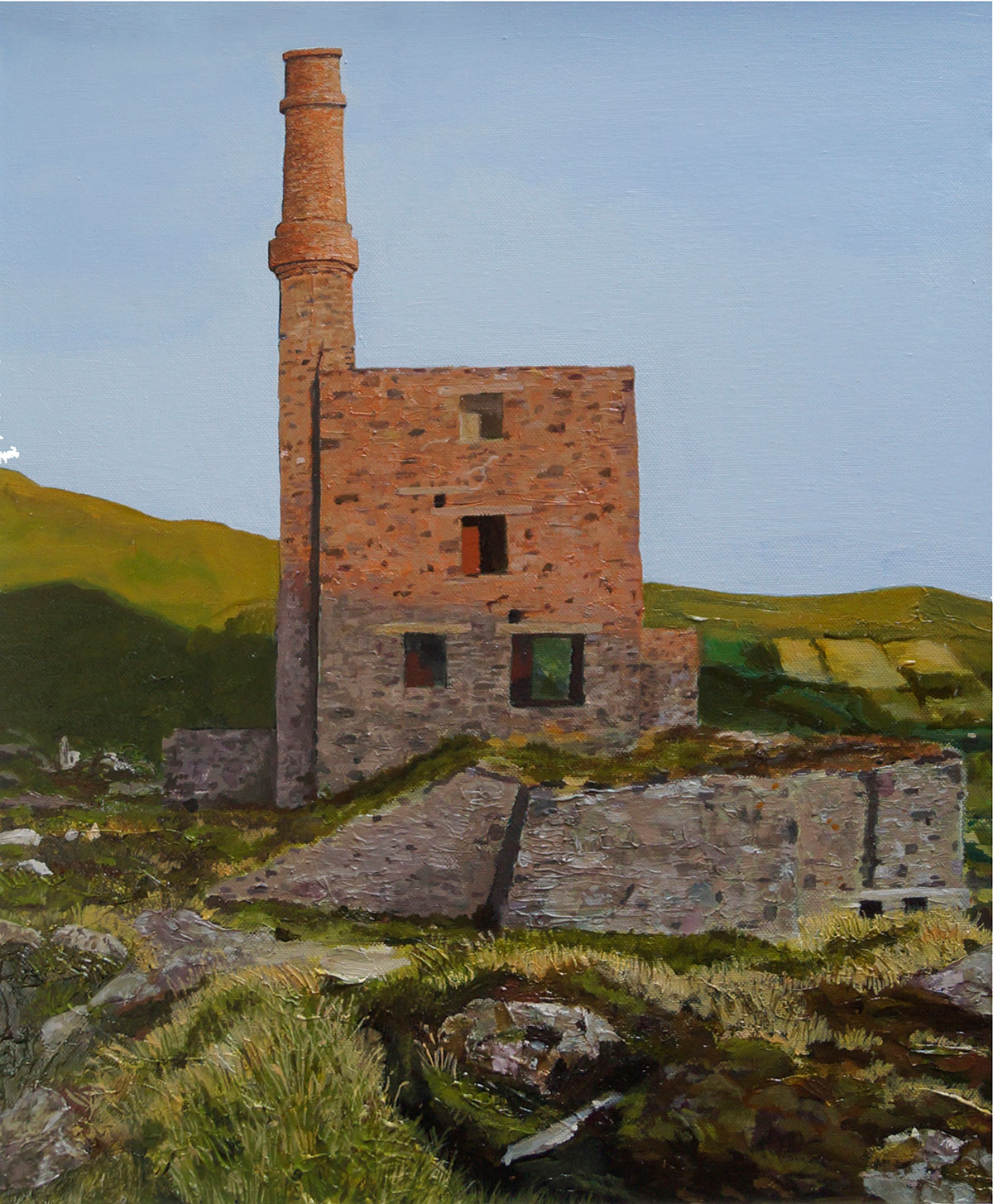
Acrylic on canvas, 30 x 30 cm
Julie: This summer I followed your painting road trip on Instagram. The gorgeous cliffside views of the sea looked like they would be amazing for a landscape painter. How did the trip come about and did you paint every day for six weeks?
Paul: The west coast of Ireland is a gold mine for plein air painters. I have a special affinity with west Cork and Kerry as I spent a lot of my childhood summer holidays in Barley Cove and Rocky Bay in Cork and Glen Bay in Co. Kerry. I had it in my mind to do a trip for a long time, probably since I did a collaborative project with a couple of artist friends a few years ago entitled ‘After Paul Henry’ in which we discovered the landscapes painted by well known Irish artist Paul Henry.
A lot of my teaching work stops for the summer months so the idea to take this time to travel the coast and paint popped up. There was not much planning involved just filled the car and headed along the coast road. Yes, I painted every day. For the first two weeks I was making two paintings a day after which time I was having to go back and finish work. Then I also had a few days here and there where I met up with people. But I pretty much painted every day I was alone.
Paul McKenna
Acrylic on canvas, 50 x 35 cm
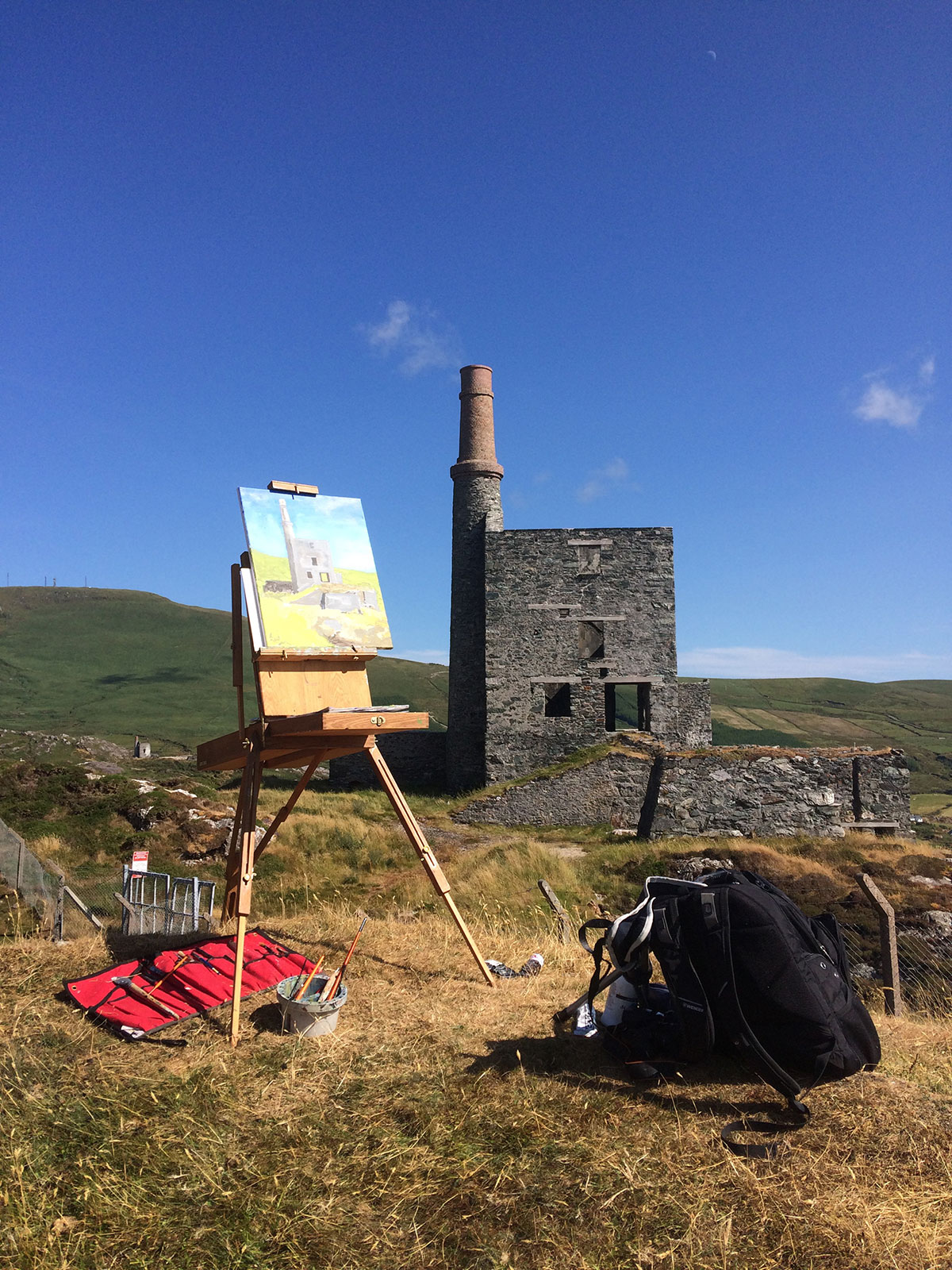
Julie: It looked like you had a bike, tent and you mentioned a caravan. How did you decide what painting kit to take, did you find you forgot anything and were there any challenges that came up?
Paul: I initially wanted to cycle all the way as this would be the best way to see the countryside however between painting equipment and camping equipment it was not really possible. So I filled my car and I brought the bike for good measure. Word of warning if you attach your easel to a bike your make sure you tighten all the nuts and bolts. I lost a bunch as I was going down a hill in Lough Hyne. I brought Golden Open slow drying acrylics in ultramarine blue, phthalo blue, hansa yellow light, cadmium yellow, cadmium red light, quinacridone crimson, sap green, burnt umber, yellow ochre and plenty of titanium white, plus moulding paste, and Open thinner. I brought a dozen canvases panels and I managed to stock up on canvases along the way. Finding somewhere to camp was the most challenging thing, it kind of dictated my day. I would have to stop working at around 6:00 to find somewhere to camp and eat before it got dark.
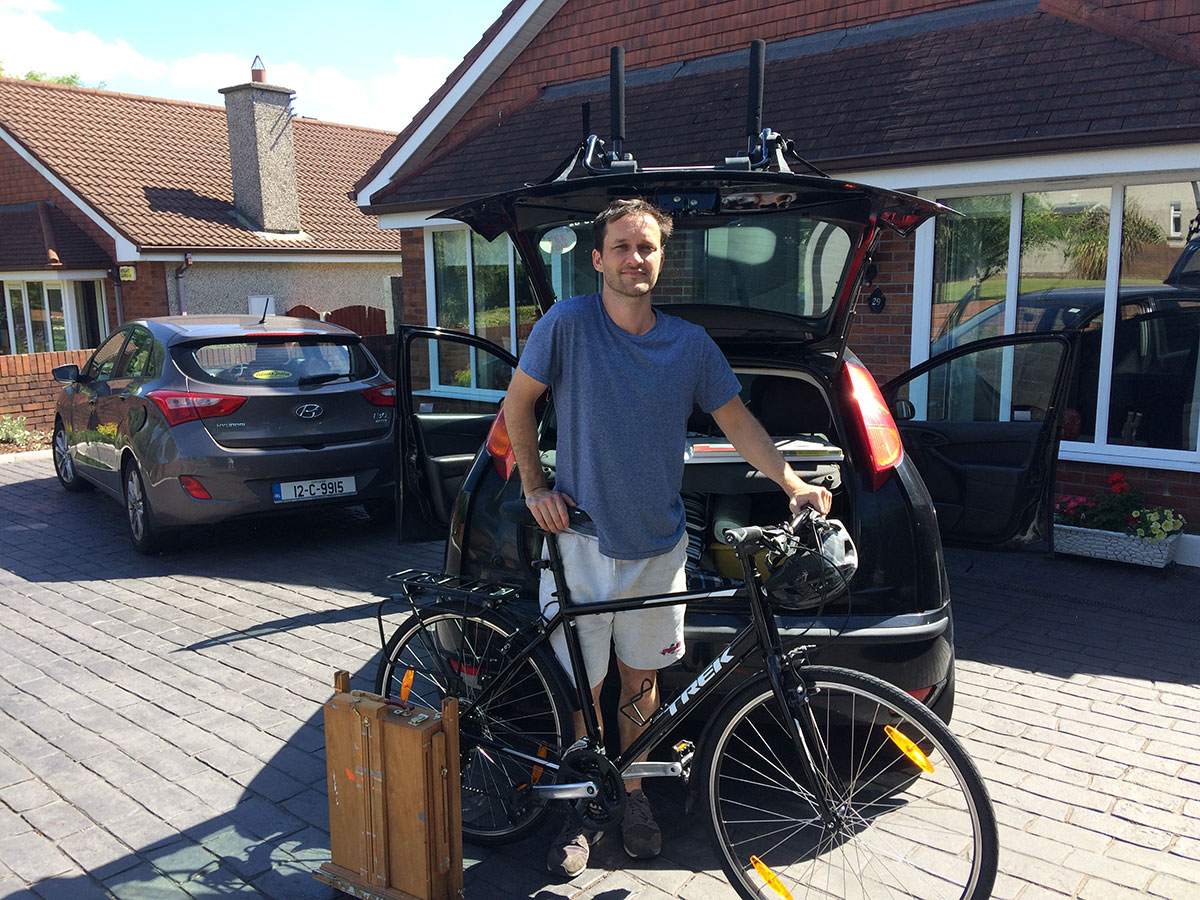
Julie: You mentioned a couple of times that you were finishing paintings in the caravan in the evenings. Where there any difficulties in continuing on the same paintings in a different light situation indoors without the subject in front of you?
Paul: Well I had my colours mixed from earlier in the day. Of course it’s not a good idea to later paint in incandescent light but I worked on small details or textural work. I began to notice throughout my trip that colour references from photos bore little relation to the colour on the scene. Depending on the weather the light changed every minute and there is also the time of day. I had to remember the colours. Of course I took photos and made swatches or thumbnails to get a general sense. Sometimes I found that I would have to rework areas from the start of a session to be in sync with the colouration at the end of a session. Plein air painting is not a snapshot in time, it’s more like 2-4 hour interpretation. It all depends on what you are looking to portray I suppose.
Julie: It looked like you sometimes painted in watercolour on paper and sometimes acrylic on canvas. Could you tell us about your painting process?
Paul: I like exploring various mediums and techniques through my work. I find I bring a different energy to different techniques. Starting with line drawing I like to use acrylic inks and watercolours. This is a very delicate way to work for me and there is an emphasis on preserving the integrity of the line. I would by no means consider myself a watercolour artist. I do have a great appreciation for it though. I most often use acrylics – a regular heavy body paint in combination with acrylic ink and glaze medium to get the more detailed brush work. I go straight into the painting using a burnt umber imprimatura and paint in with a small thin brush. I have more recently started using moulding paste for texture. On this trip I thought because of the nature of plein air painting that a more gestural textured work would suit me for this series.
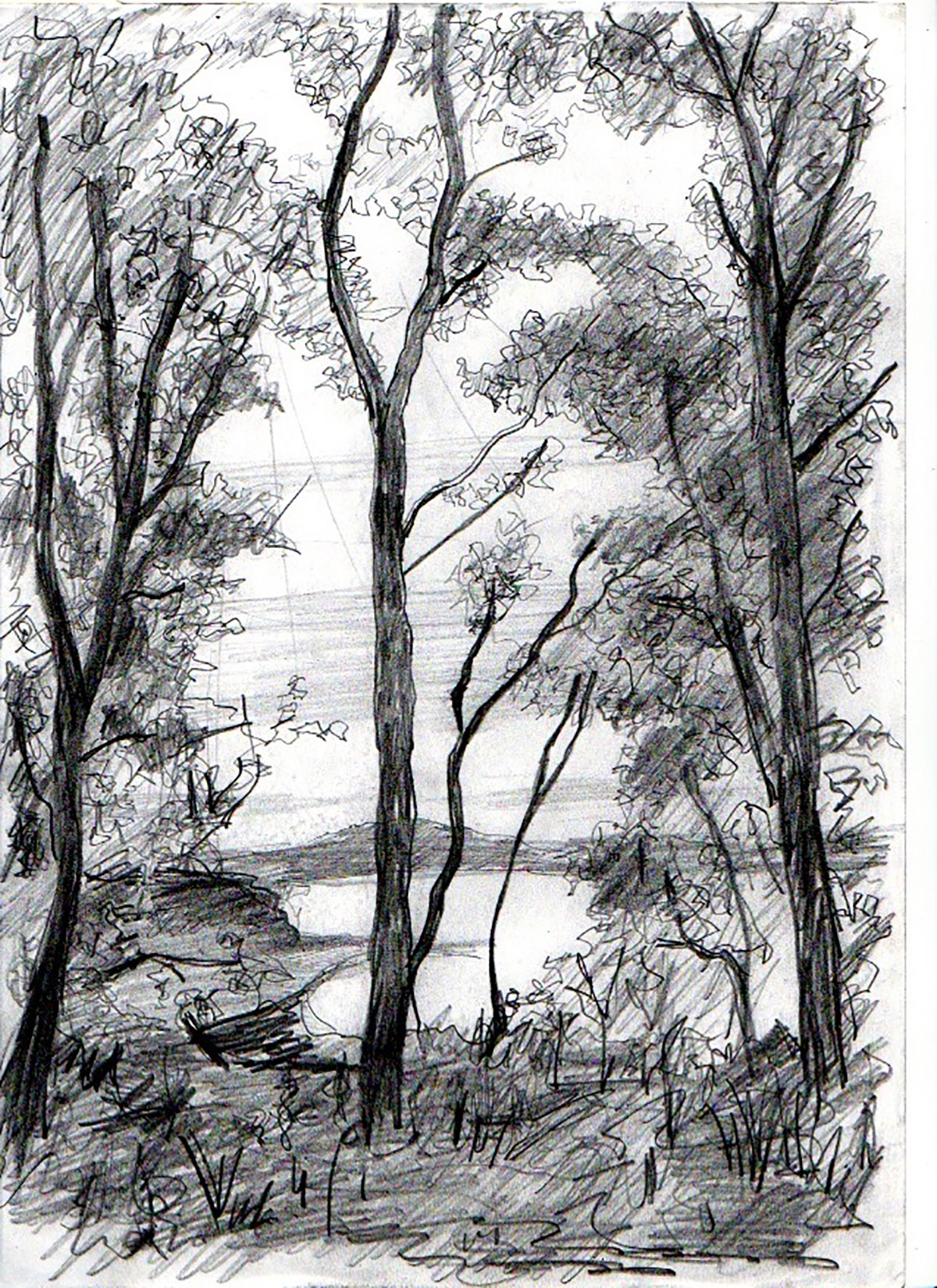
Paul McKenna
A4 pencil sketch on paper
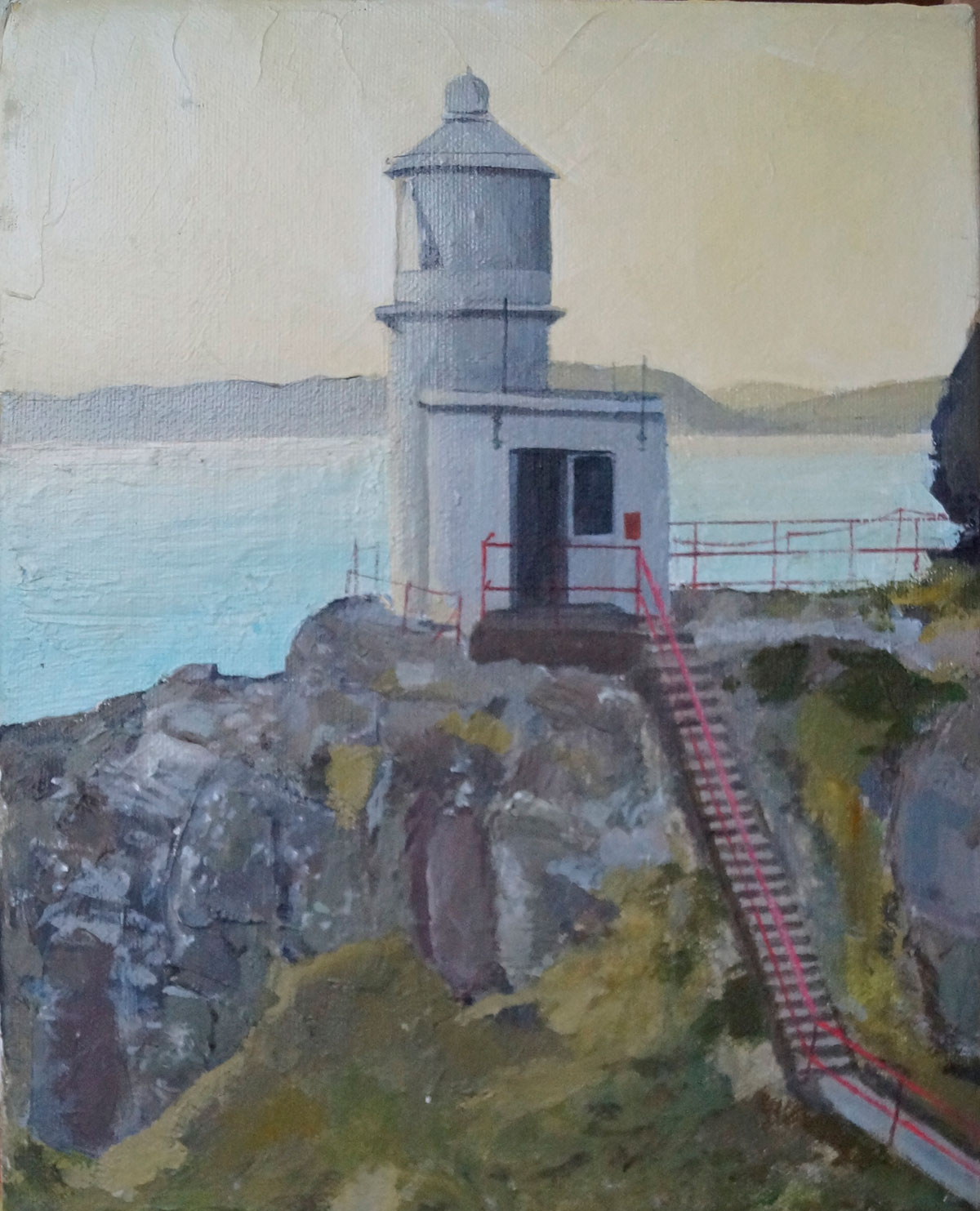
Paul McKenna
Acrylic on canvas, 25 x 30 cm
Julie: It looked like part of the time you were at an artist retreat. Can you tell us about that?
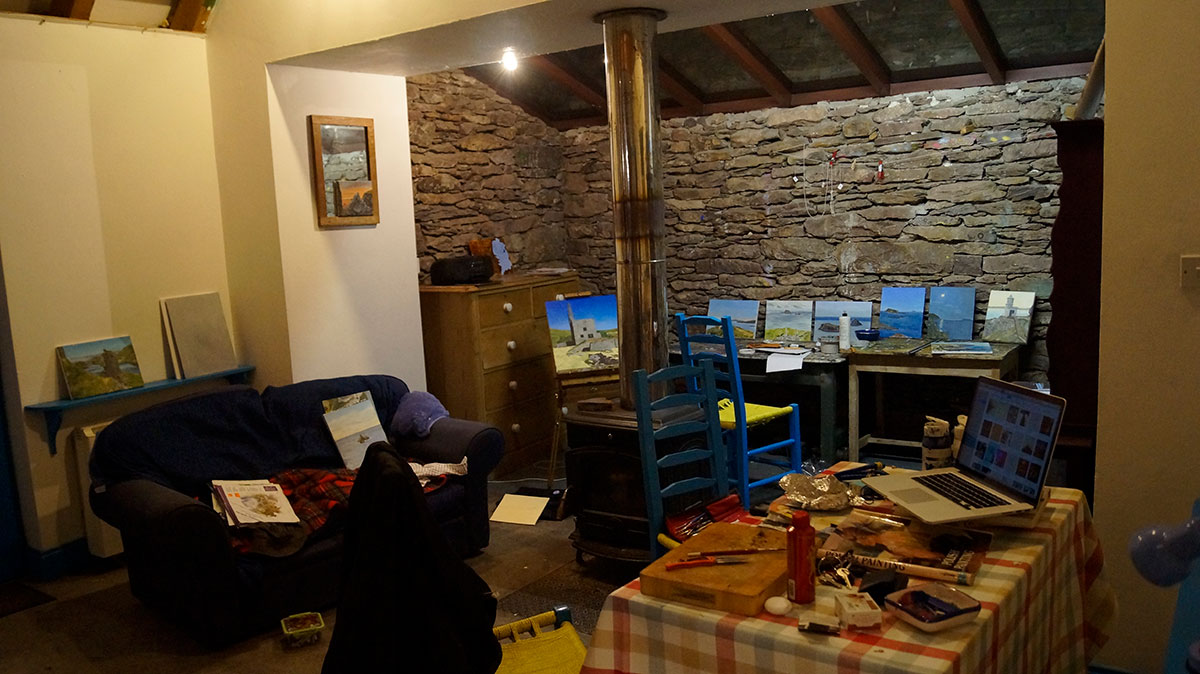
Paul: Cill Railaig Artist retreat is located on Bolus head, the most westerly point of Ireland. It is a pre-famine village that consists of seven self-catering traditional stone cottages with a studio attached, set up high on the cliffs about two miles from Ballinskelligs village in Kerry. This was my third time at the retreat. I also worked there for a summer in 2008 editioning prints for visiting artists – there is also a print studios called Cló Cill Railing in Ballinskelligs. So I already had painted a lot around that area and knew the lay of the land. It was by pure luck that I got a nice self-catering stone cottage with a studio to finish work in, when the weather had changed after having four weeks of beautiful sunny weather. I stayed there for 10 days.
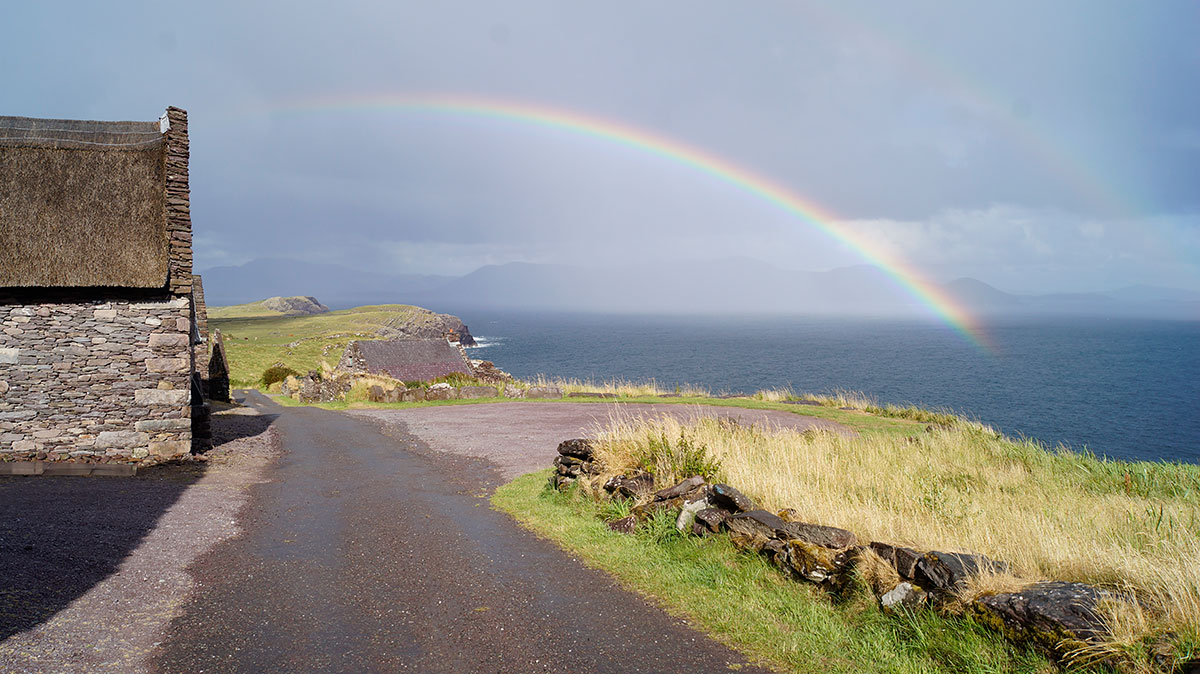
Paul McKenna
August 2018
Julie: Tell us a little bit about your artistic background/education. How would you describe your practice?
Paul: I did graphic design in college, but I always painted. In retrospect I think I just did graphic design to appease my parents, this way I could make art and get a job. I attended Central Saint Martins College of Art and Design. It was a great college and the course was very open ended. I ended up majoring in illustration, animation and print. I moved back home after college and became a member of Cork Printmakers where I did all their courses: etching, photo etching, lithograph and screen printing. I returned to London again in 2004. After a short time spent in post-production in Wardour Street I ended up working for Roberson and for Russell and Chapel in Covent Garden as a canvas stretcher and shop assistant. It was there really that I developed as a painter. My interest in the materials from my time spent working for Roberson resulted in many experiments in using materials. I moved to New Zealand in 2008 for about four years. I was a picture framer there and worked for a great company called John Leech picture framing. I moved home in 2012 and set up my studio in Cork. I have mostly focused my practice on painting my immediate surroundings. A sense of place mostly describes the theme of my urban landscapes. I have a series called oceanicity which explores the issue of plastic in the oceans – a subject which I am quite passionate about. Plein air painting is something I always return to – it is a breathe of fresh air literally and figuratively speaking.
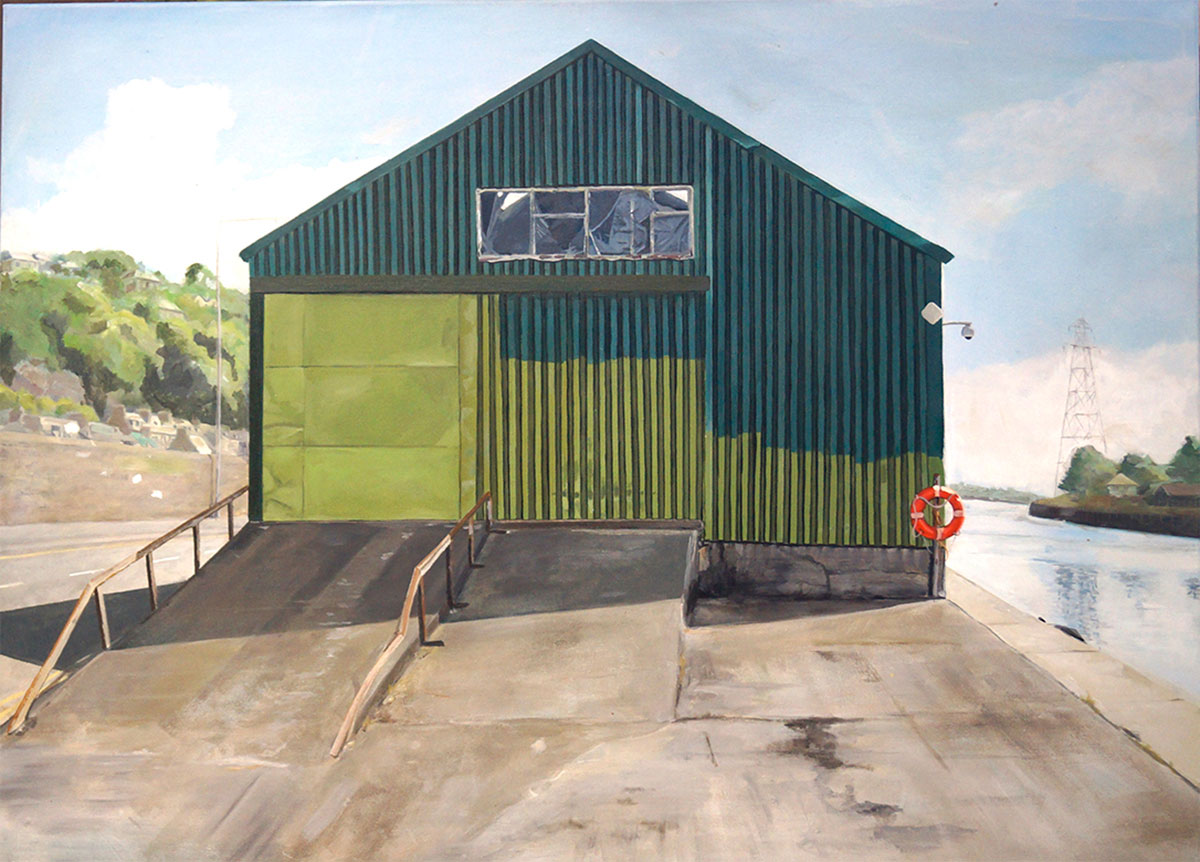
Paul McKenna
Acrylic on canvas, (90 x 120 cm
Julie: What is a good day in the studio?
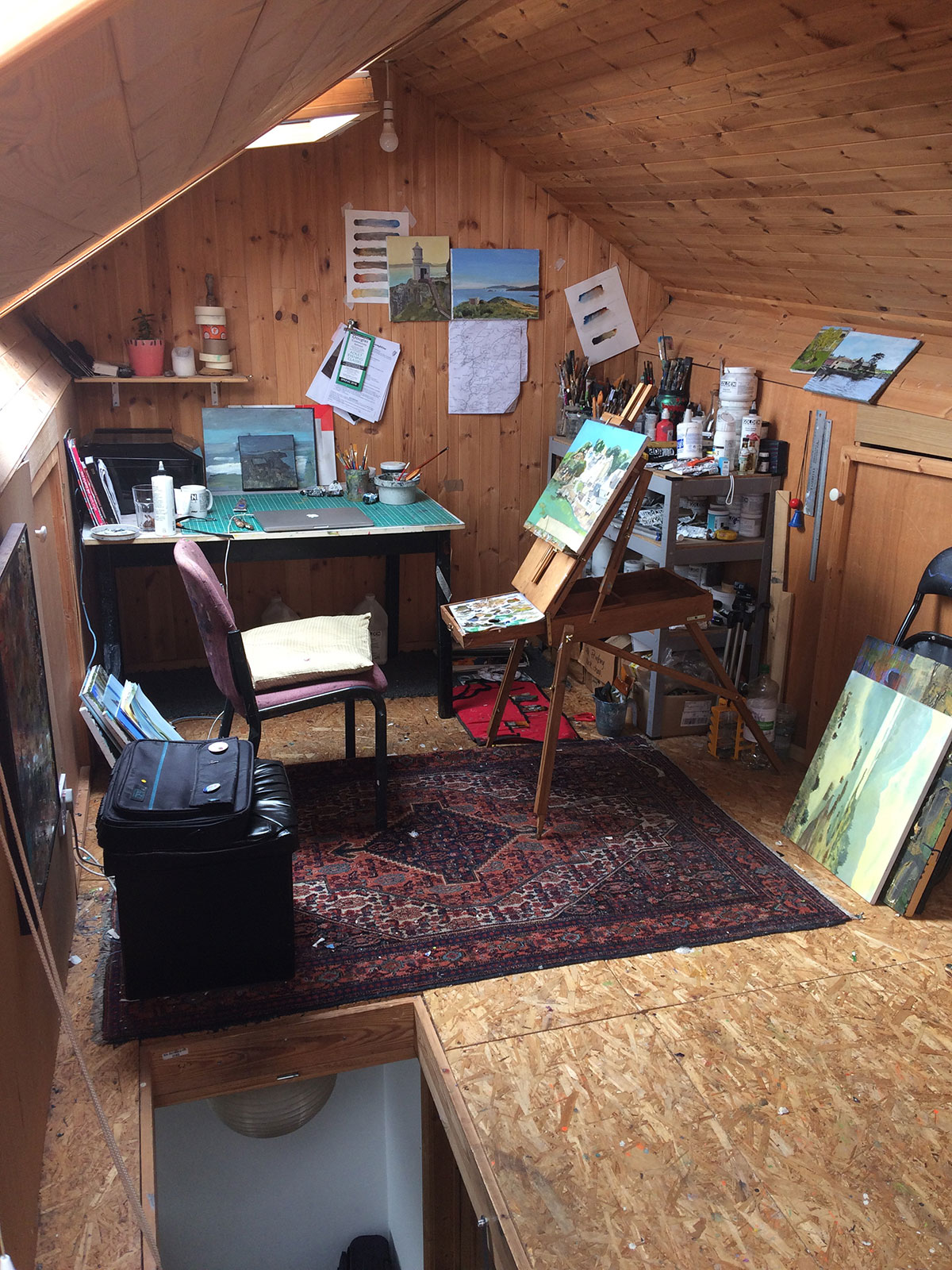
Paul: When hours have gone by without moving from the canvas and you’ve forgotten to eat because your too content to be bothered.
Julie: I’ve seen some lovely prints you have done. What kind of prints do you make and what interests you about printmaking?
Paul: Printmaking brings a whole different dynamic to my work. After being away from it for a number of years I rejoined the Cork Printmakers last year and began to explore my more graphic works. I have always held onto using a computer from my graphic design days and it has served me well. I make a lot of computer generated art works – ‘Linescapes’ I call them – and returned to the printmakers to explore different methods of printing them. I have used photo-polymer etching and screen printing. Printmaking allows me to take the computer out of computer generated work with a more hands on approach so I can play with the method of print.
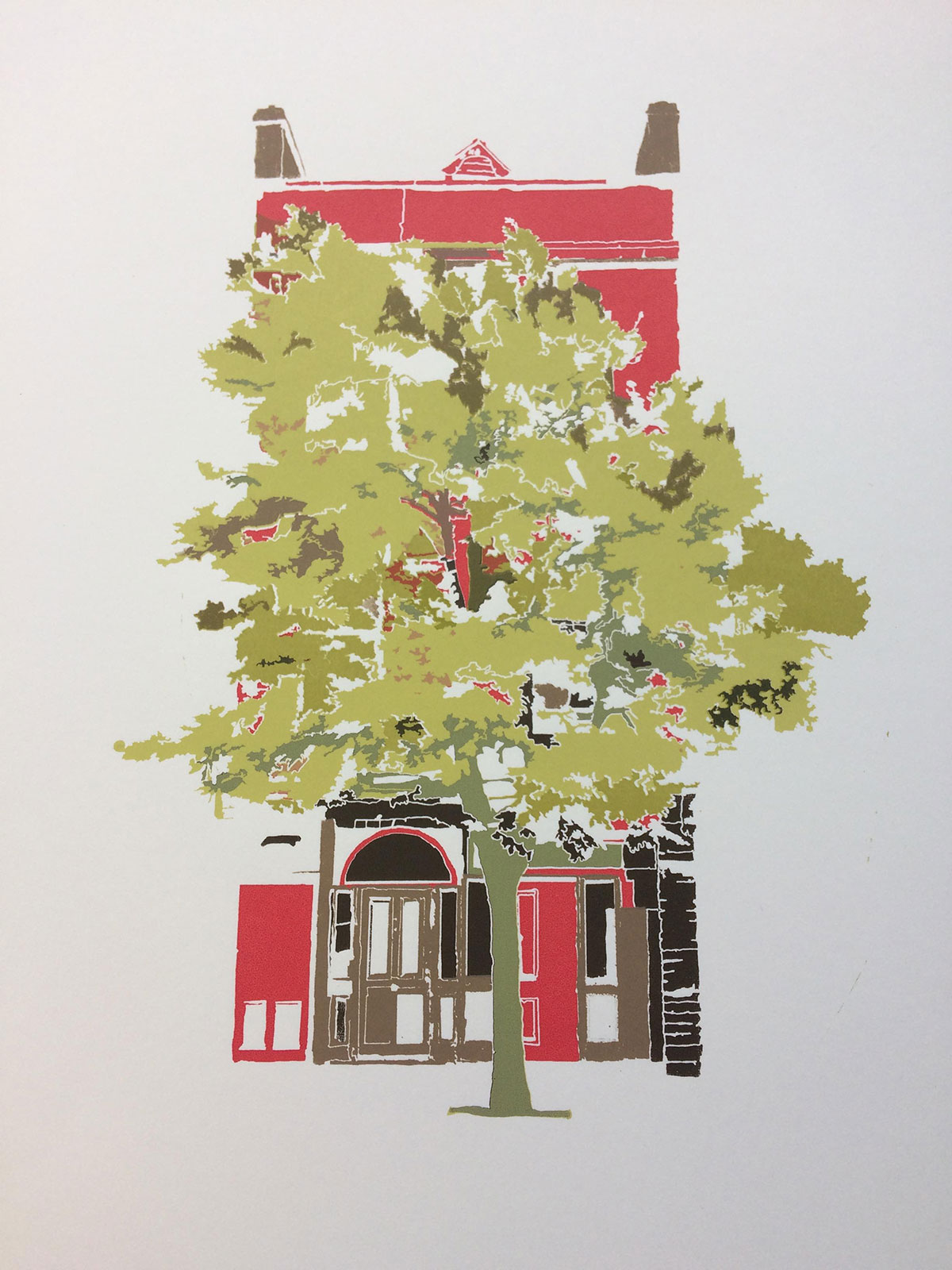
Paul McKenna
A2 screen print
Julie: I am always interested in materials. Most of your work is in acrylic on stretched canvas. Do you have any favourite paints, mediums, brushes or surfaces? After white which colour do you have to replace most often?
Paul: I have been using Golden Acrylics for about 12 years now and to be honest think they are the best. The Golden Open acrylics are great to work with though they seem to be slightly more translucent then their heavy body range. I also use their glaze medium, moulding paste and light moulding paste which is amazing stuff to do water media affects with. I like to work on a well-primed surface usually 5-6 coats of primer on a nice fine linen preferably or maybe a course linen if I am working on more heavily textured work. I used canvas panels for my road trip for ease of storage and use in the wilds. I suppose I think cadmium yellow is probably my next most used colour as I tend to mix my greens.

‘Green Bottle’, ‘Orange Bottle’, ‘Pink Bottle’, ‘Silver Bottle’
Paul McKenna
Acrylic on canvas, 50 x 60 cm
Julie: Can you tell us about your teaching?
Paul: When I returned to Ireland in 2012 I started working for a community art organisation here in Cork calIed Mayfield Arts. I worked with special needs groups and mentored a group of professional artists with special needs called Cúig. I also established my own private classes. I did a Golden Acrylics Artist Educators program in 2015 and give workshops on the use of their materials. At the moment I work with a number of community organisations delivering art class in working class areas around the city. I have also worked with Crawford Art Gallery and the Glucksman gallery as a painting tutor.
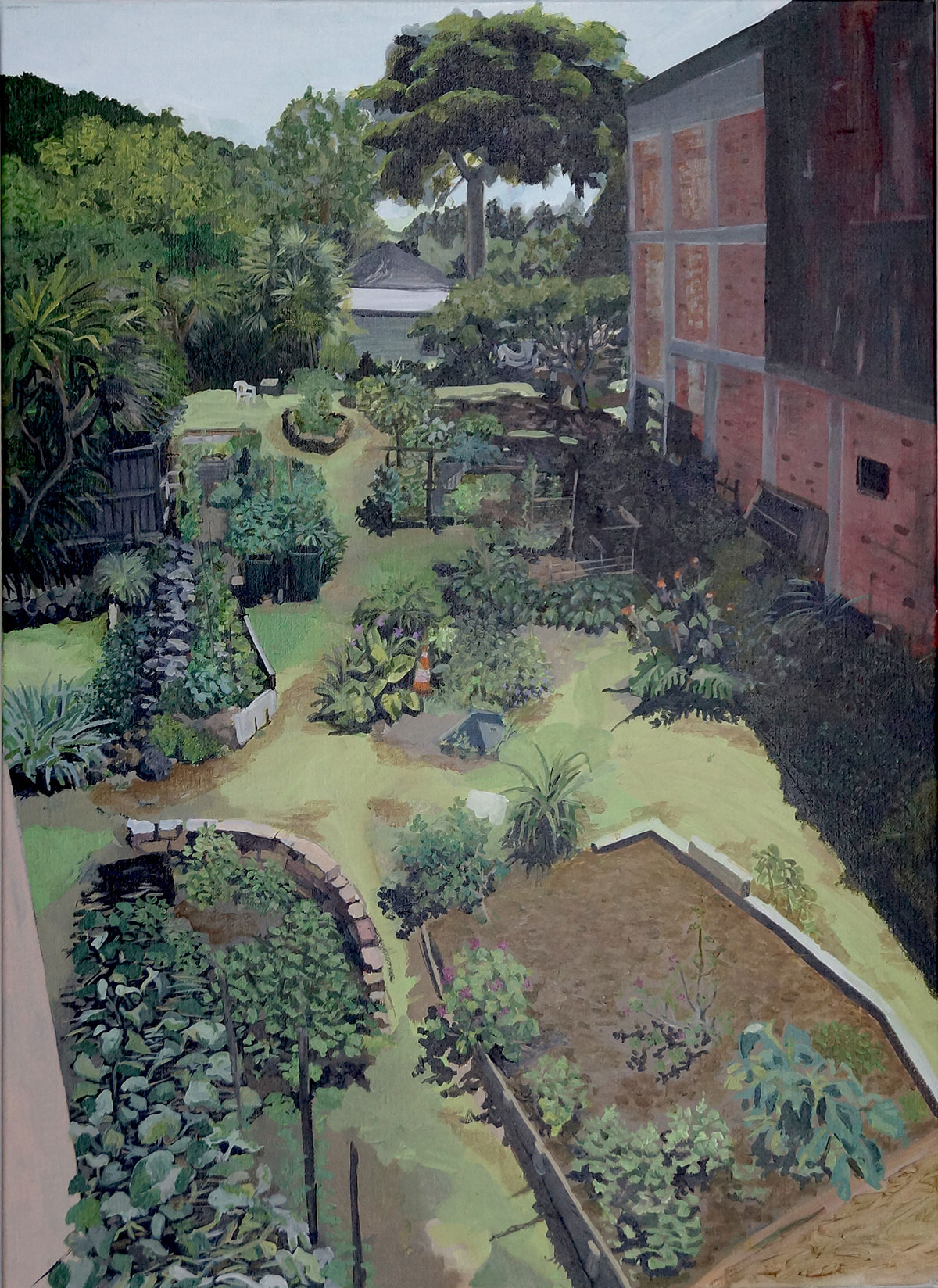
Paul McKenna
Acrylic on canvas
Julie: Who are your art influences? Who are your favourite contemporary artists?
Paul: There are many artists that inspire me. Rembrandt, Turner, Cezanne, Edward Hopper, and David Hockney would be among some of my favourite painters. As far as contemporary artists I like Peter Doig, Anselm Kiefer, Gerhard Richter and many more.
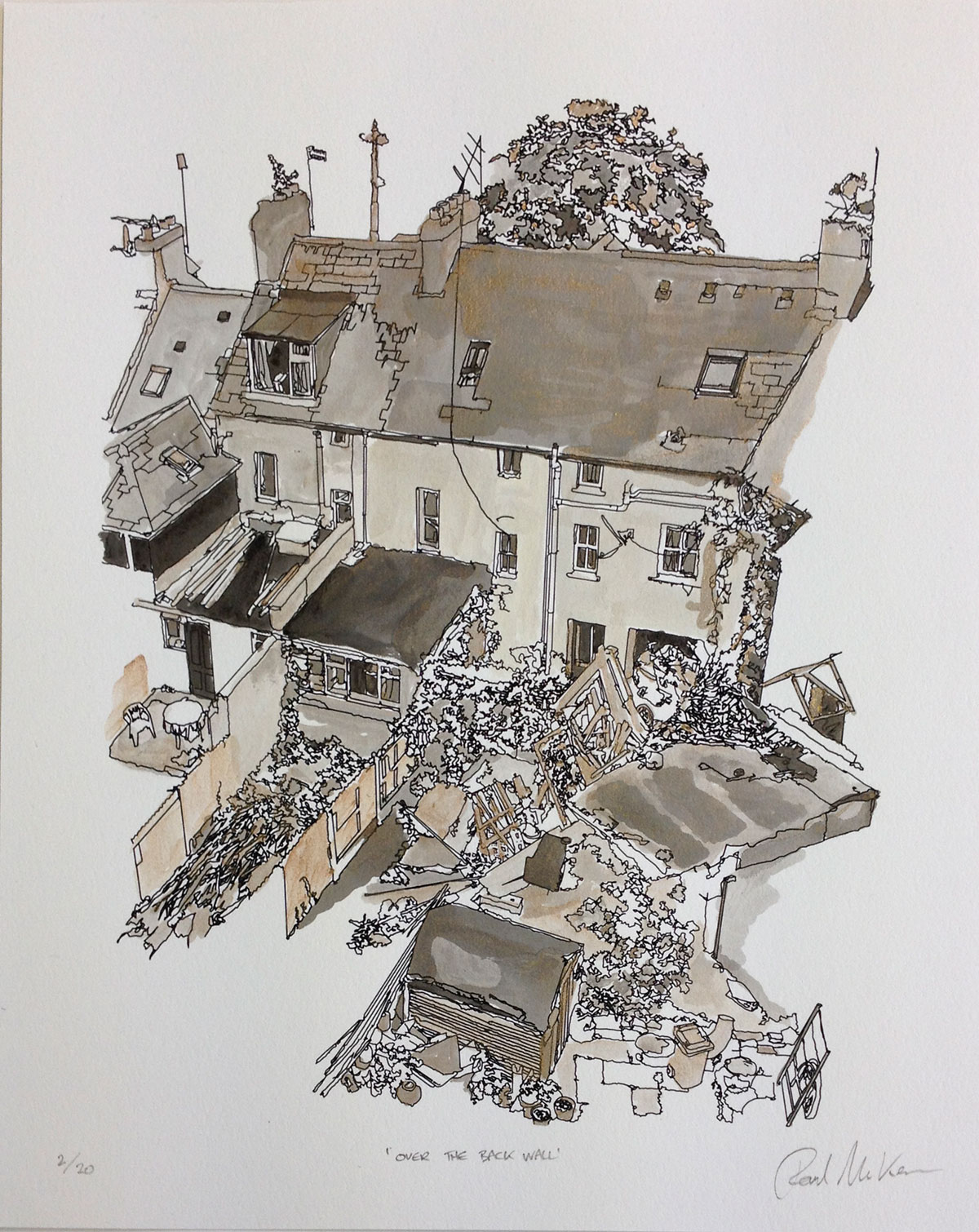
Paul McKenna
line drawing print with acrylic ink, 32 x 26cm
Julie: What is coming up next for you and where can we see more of your art in the flesh or on-line?.
Paul:My show at Srypt cafe in the Triskel Art Centre in Cork will move to On The Pigs Back restaurant in Cork in January. I plan to continue on up the coast next summer and maybe exhibit in west Cork we’ll see. At the moment I am working on a series of urban night scenes of Cork city.
Website: Paul McKenna Artist
Instagram: @paul_mc_kenna
Facebook: Paul McKenna Artist
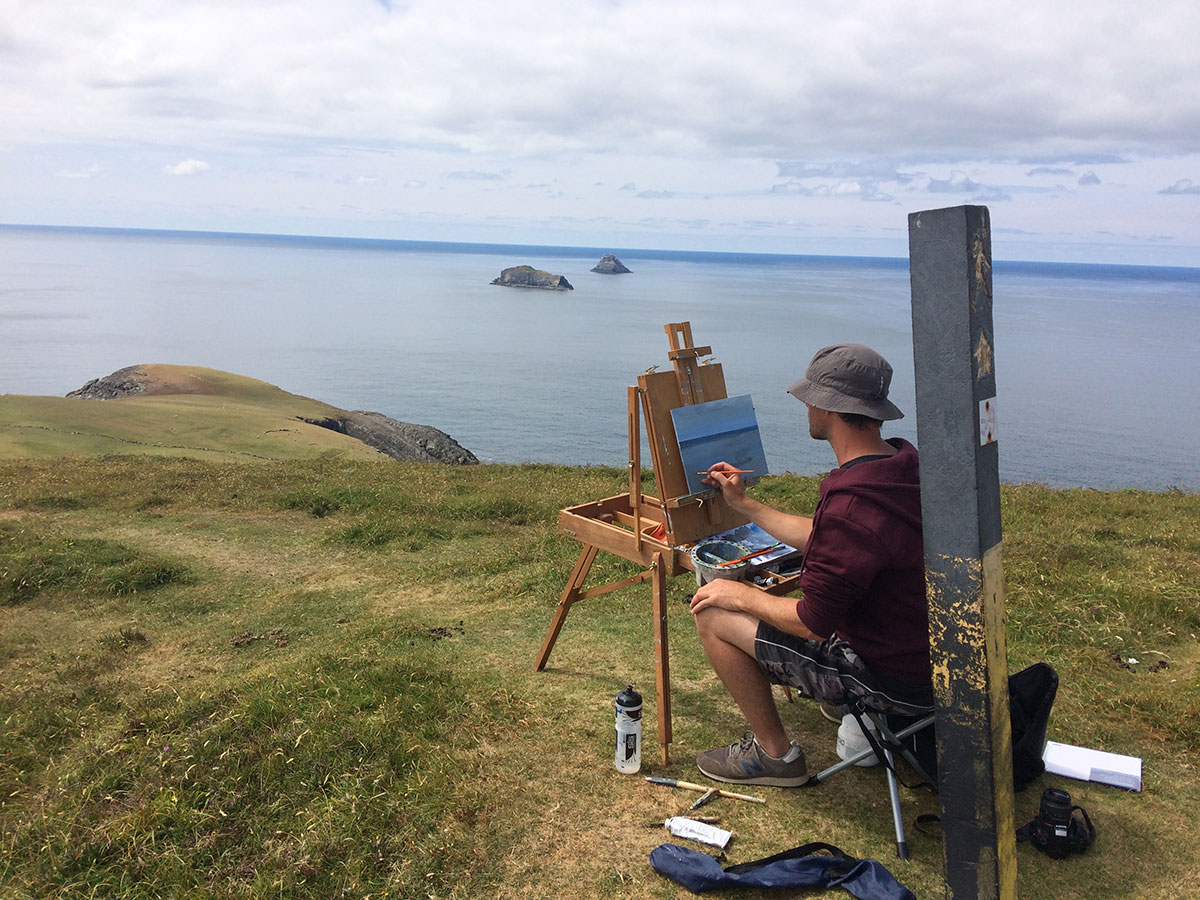
The image at the top is Paul McKenna painting Deenish and Scarify Island from Lambs Head 24th July 2108.