



Fiona Long’s varied practice explores sustainability, consumption and abjection through paintings and sculptures. Her piece, Hey Sucker, was shortlisted in Jackson’s Open Painting Prize 2019 and is characteristic of her work that texturally challenges the viewer. The suckers of the octopus press menacingly against the surface of the painting as if on a glass door. Her works made of symbiotic cultures of bacteria and yeasts have a very skin-like quality that is both comforting and disturbing and her earlier paintings invite or repulse touch with concrete and found elements.
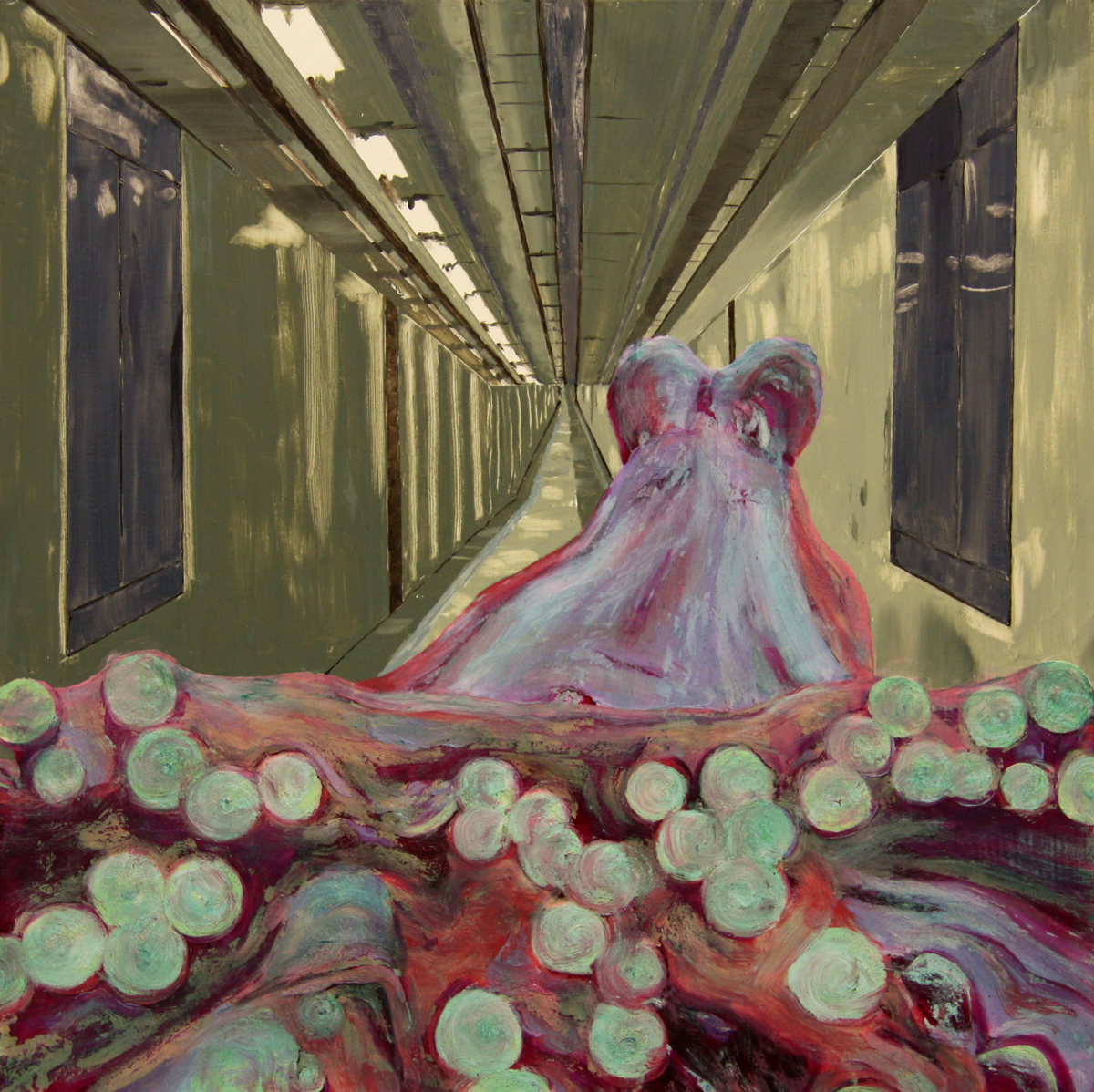
Fiona Long,
oil on board, 50 x 50 cm
Tegen: Tell us a little bit about your artistic background/education.
Fiona: Well, my first degree was in Psychology which I loved, but I was just trying to follow a sensible path in life. I was miserable not making art so I decided I had to be an artist in my twenties. I did a Foundation Diploma in Art and Design and had the time of my life. I then did a degree in Fine Art: Painting at Wimbledon College of Art and learnt so much although it’s funny that I devoted most of my second year there to sculpture! I couldn’t afford to do an MA straight after that but when I found out about the Turps Banana Studio Painting Programme, I applied to that and did that for 2 years. It was incredible. The mentors are amazing, and so were the other painters doing the course.
Fiona long
Tegen: How would you describe your practice?
I create paintings and sculptures that explore consumption, desire and our complex relationship with the living world. Materials are very important to me, and I have a particular focus now on exploring sustainable materials and how they can be used within my artistic practice.
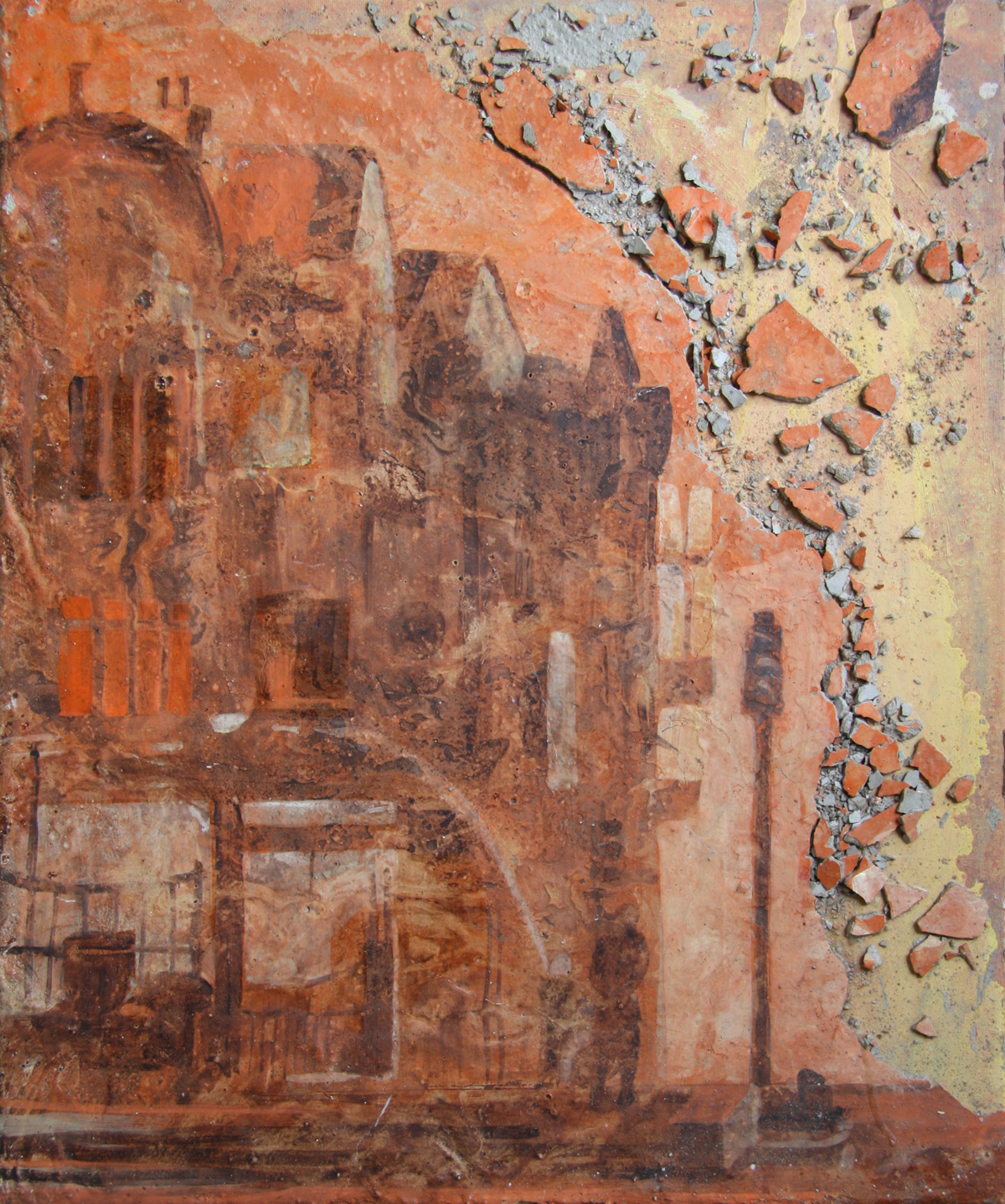
Fiona Long,
oil and concrete on canvas, 50 x 60 cm
Tegen: You’ve recently started working with alternative materials like biofilm and bacteria yeasts rather than oil paint. Why did you make the change and what are these materials like to work with?
I think I first fell in love with oil paint because of the delicious unctuousness of the stuff. Painting is a very tactile and almost visceral experience for me. A few years ago, I started combining oil painting with urban materials such as concrete and bitumen as a reaction to my urban surroundings.
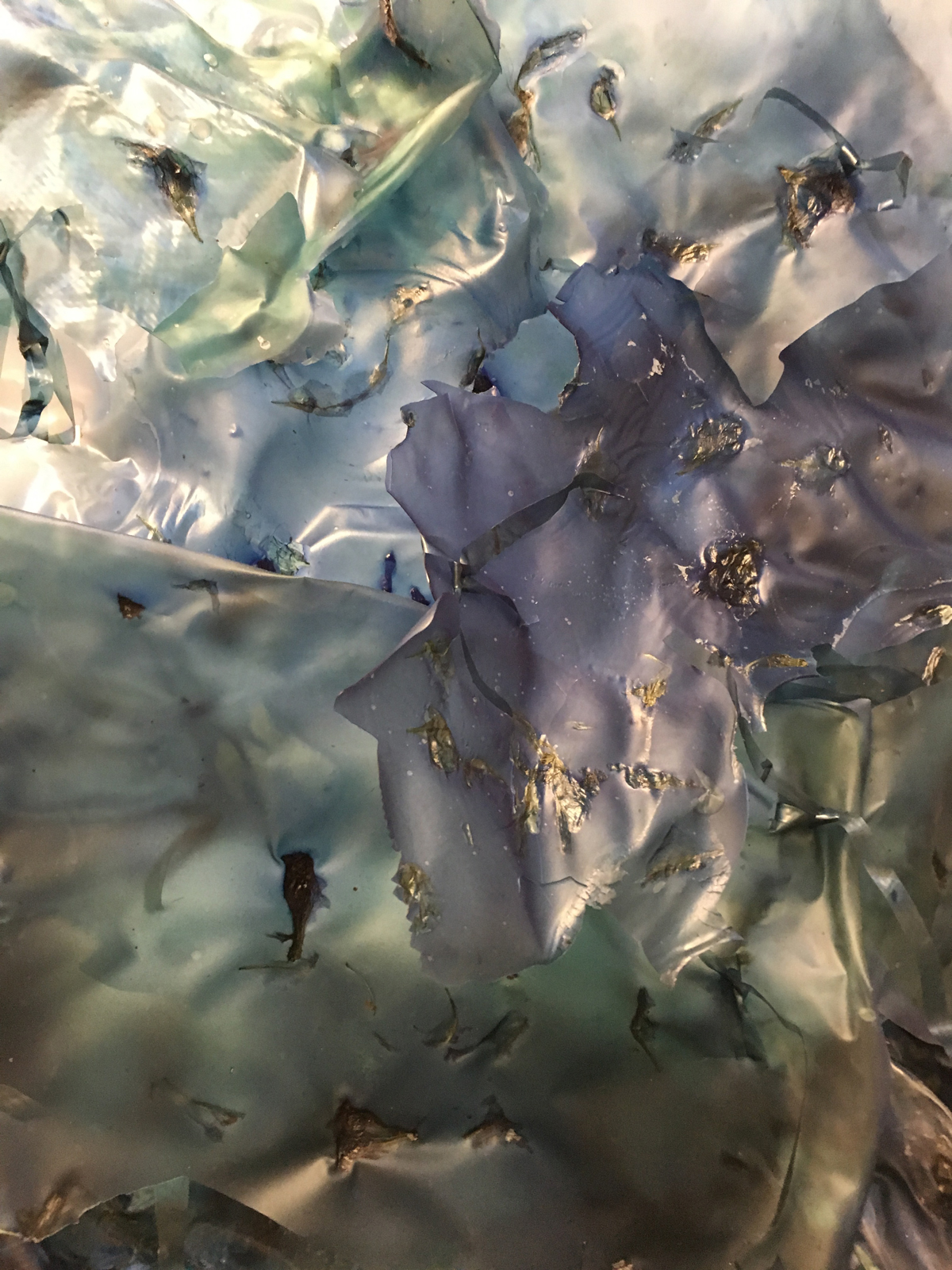
My brother moved back to the UK from San Francisco about 7 years ago and introduced me to kombucha. He was making a skin care range with it. I got to see the brewing process and wondered about the possibilities of using the mother culture which grows an extra protective layer on the top of each brew as a surface. This mother culture is called a “SCOBY” which stands for symbiotic colony of bacteria and yeasts. This complex microbiotic layer of good bacteria and yeasts protects the kombucha below from bad bacteria or mould spores from entering the brew and also reduces evaporation. It’s all very sustainable, creates a drink which benefits your own microbiome with probiotic bacteria, and I’m one of very few fine artists who can legitimately claim tea and sugar as tax-deductible expenses. I played with painting on this surface but this only obscured its beauty so I discovered that tattooing it whilst it’s wet and thick meant that when it dries to a strong membrane, the image is trapped within the surface.
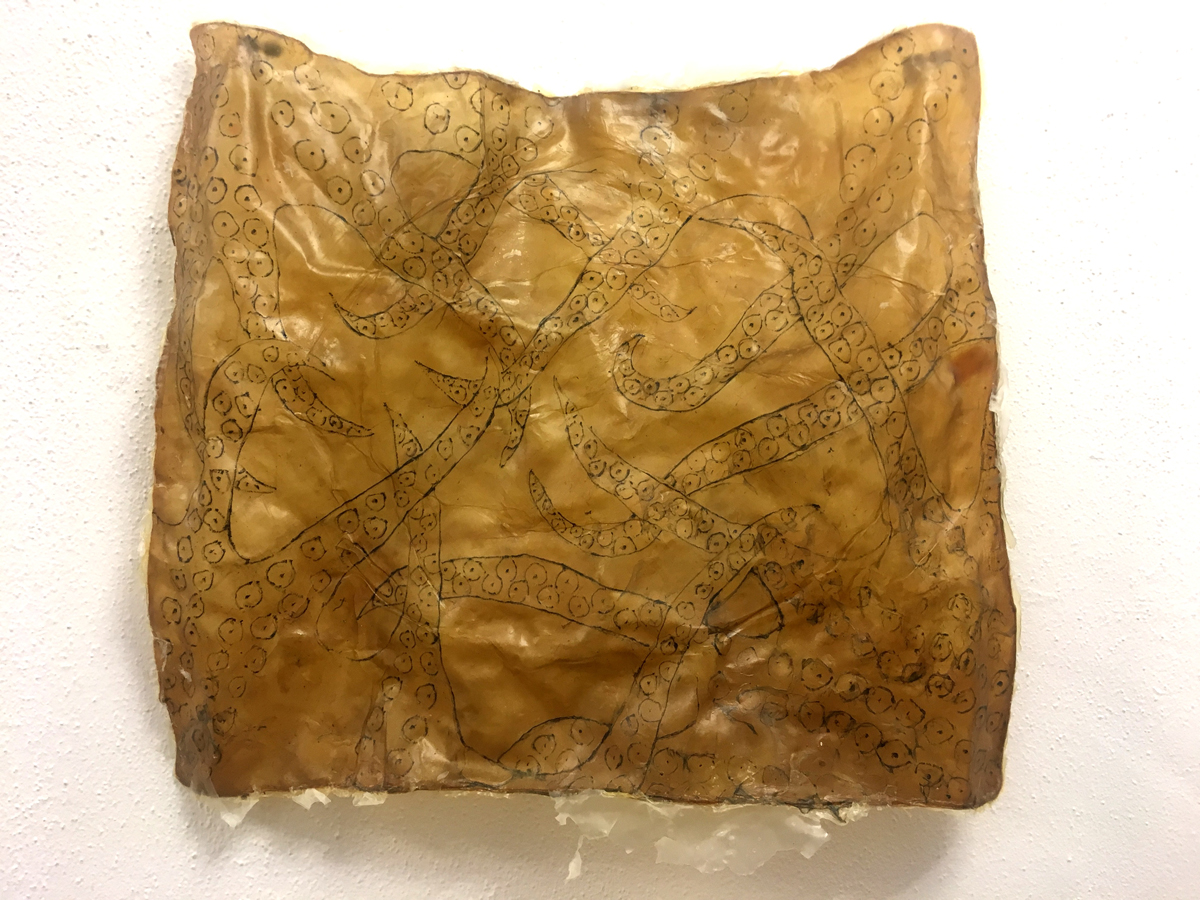
Fiona Long,
tattooed biofilm in seaweed plastic, 50 x 40 cm
It’s all rather deliciously gooey and I enjoy this mad scientist element of my practice. I love cooking and used to love making mud pies as a little child so anything where I get to get my hands dirty and make a mess, is very appealing to me.
I’m also very interested in sustainability and the environment so I think it’s useful to explore this in a poetic way rather than making preachy eco-art.
More recently I’ve been cooking up biodegradable plastic in my studio made from edible ingredients like seaweed, potato starch, and vinegar. I’ve used this in various ways, making it into sheets, putting it into moulds and so on. I can colour it with natural dyes and pigments or with inks.
The challenge of both of those materials is their transparency which I want to highlight but it makes their means of display a trickier challenge than simply framing an artwork.
Their ephemerality also makes collectors more nervous about buying them, but they’re no different from works on paper in that way. You wouldn’t expect to be able to bury a drawing in the ground and have it survive for very long.
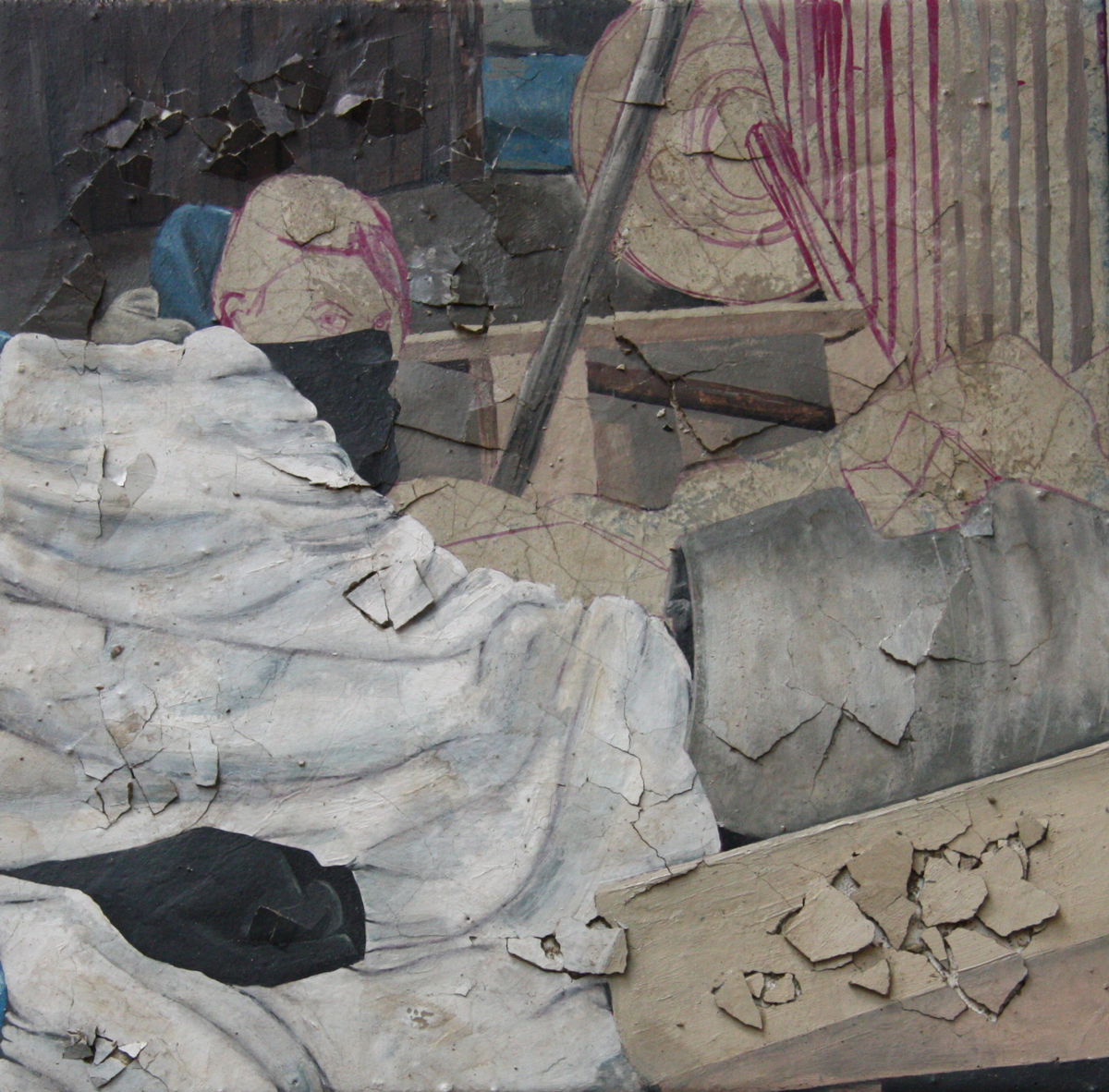
Fiona Long,
oil and concrete on canvas, 50x50cm
Tegen: While your work is very varied in materials and format it feels like you have carried through a signature colour palette. Can you talk about your approach to colour?
I think that’s happened partly by accident, simply because of the nature of the materials I use. Because I tend towards natural materials, that limits the palette. That can lead people to compare some of my work to artists from around the 1950’s. Whilst these are some of my art heroes, it’s something I try to be aware of.
When I was doing my BA, my whole practice was about considering what the archaeology of the future might tell us about our civilisation today. I imagined what a survivor of an apocalyptic event, who didn’t remember what had come before, might make of and from the things they found left behind. For this reason, in my paintings of that time, I only made paints from pigments I felt this character would be able to source. So, I only used earth and metal oxide pigments. Making the oil paints myself made me feel much more in tune with the individual characteristics of each pigment and creative with how I used them. It also made the paintings harmonise well with one another.
I do find just looking at tubes of paint in an art shop inspiring though. Even though I know I’m perfectly capable of painting with a limited palette, I can look at those colours and decide that I need Cinnabar Green or Caesar Purple and it becomes my obsession for a while.

Fiona Long,
symbiotic culture of bacteria and yeasts with natural dyes and pigments, each 30 x 60 cm
Tegen: When creating abstract work do you find you approach composition in the same way as you do for your more representational, yet slightly surrealistic, work? How do you approach it and does a sketching practice inform the compositions?
I approach my abstract works in a much freer way than my more representational work. I think that my grounding in life drawing and representational painting has given me a compositional sense that means that I can just go for it spontaneously and intuitively. I find that enormously liberating.
The representational paintings, however, are a lot more planned out with sketches and collages. It’s a shame when you know what a painting will look like before you start it though so I try to leave enough gaps that making the painting is still a journey in which I’ll learn something. It’s less fun otherwise and I think that can show in the final painting.
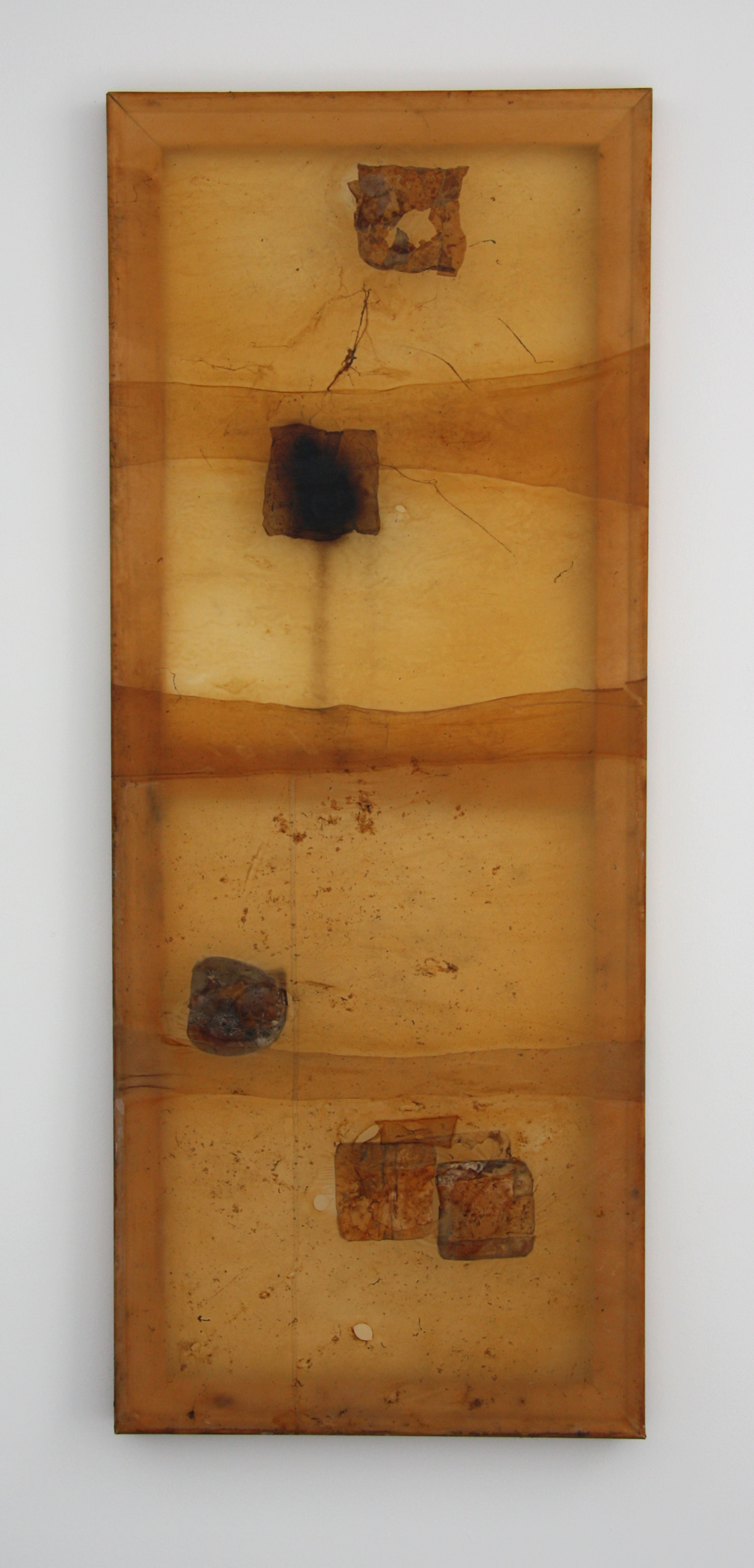
Fiona Long,
symbiotic culture of bacteria and yeasts, 50 x 160 cm
Tegen: What was your intention with the shape of Pipewerk and how do you decide the shape of your artworks?
I’ve long been amused by the idea that there can be an erotic element to the banal. Back when I did my BA, I did a series of paintings of under sink cupboards. I argued that one would happily show people their master bedroom on a tour of their house but would never reveal the contents of their under-sink cupboard. All the pipes and cleaning products make it sordid and secret somehow.
Then I thought about the “Secretum” a sort of private pornography museum gentlemen may have in their houses. A small erotic space. Many artworks are so large that they can have many viewers at one time. I liked the idea of a painting whose shape dictated that the viewer should be drawn in to look more closely and have their own private experience with it. I made a whole series of these “Surface Views” paintings.
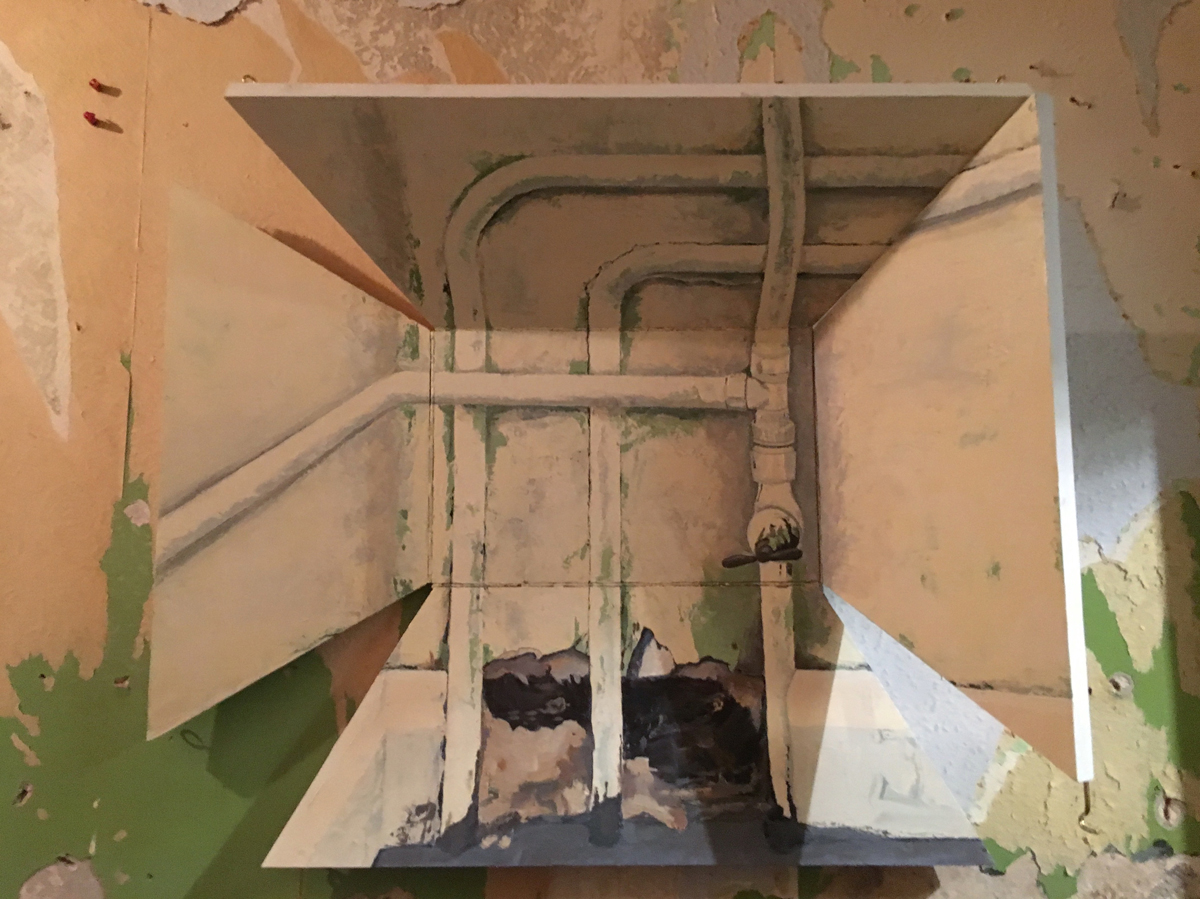
Fiona Long,
oil on hinged board, 70 x 60 x 20 cm
Tegen: You talk about embracing the aesthetic of wabi-sabi and having an interest in decay. Can you tell us how this informs your subject matter, its presentation and your process? Does your knowledge of psychology partially inform this?
I think psychology does have a part to play in this. Artists have long included memento mori in their artworks such as a skull being included in a still life to remind us that we will all die one day. And in our beauty obsessed society, I think it’s important to realise that a lot of beauty isn’t that which is perfect.

Fiona Long,
fox shit, rust, genuine indigo, and concrete on canvas, 30 x 30 cm
I think the main reason though, that I became obsessed with urban decay, was moving from the countryside to London. Whilst I loved the energy of London, I found its greyness oppressive at first. I began to notice that the moments I found most beautiful within the city were not the new, perfect, shiny buildings but the places where nature had begun to attack the human made. The peeling of paint and the cracking of surfaces, rust creeping through concrete, or a little weed bursting through the tarmac. That gave me a lot of comfort and inspiration.
Wabi-sabi is an aesthetic sense of finding beauty in the transience and imperfection of life. I did a residency in Tokyo in 2009 and loved discovering more about it and seeing how I could take that research further in my own work.
I think that throwing a handful of leaves into the air and seeing how they land naturally is likely to lead to a more beautiful arrangement than anything arranged by hand. I therefore allow chance and natural forces to happen in my work as I battle or embrace the consequences of that.
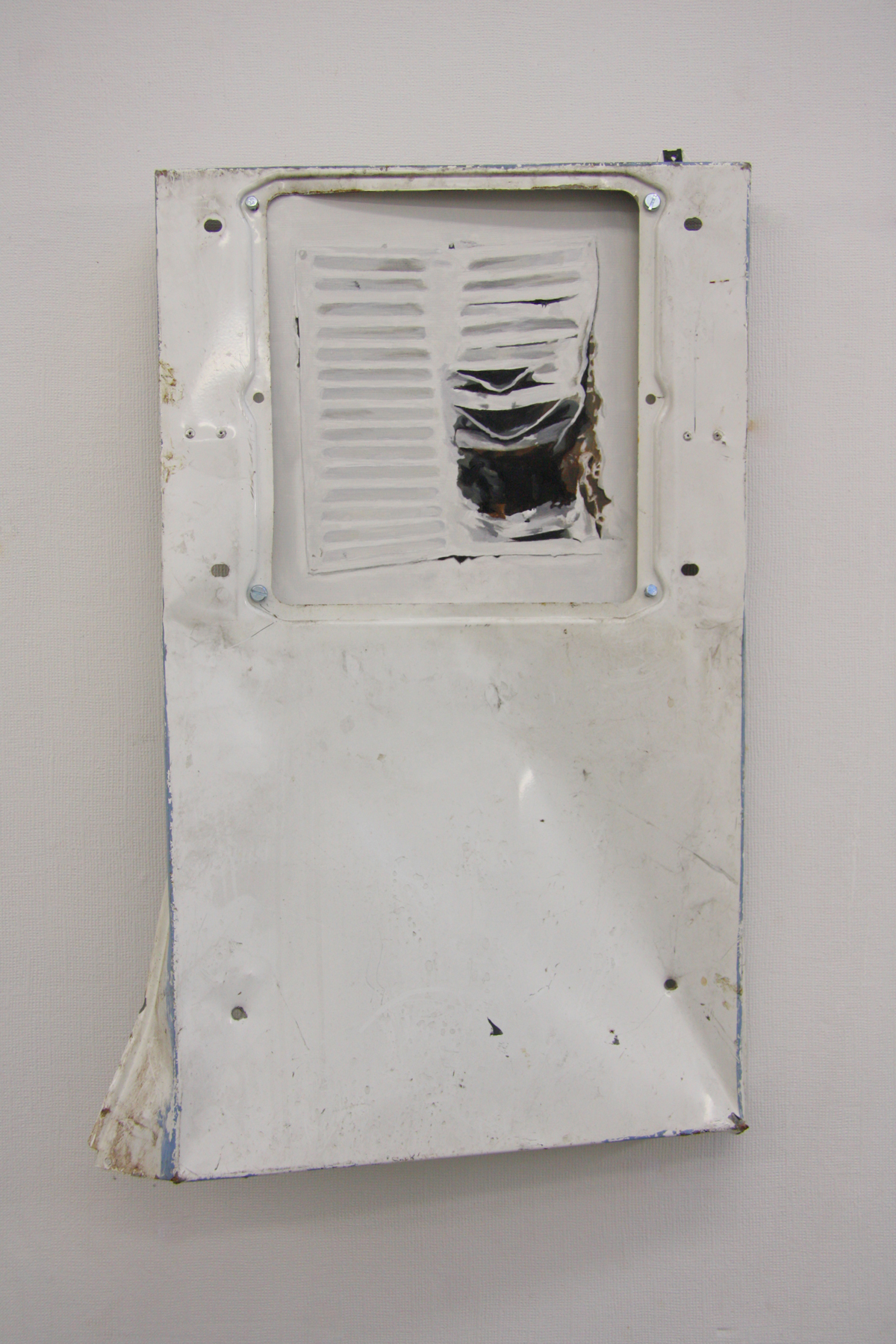
Fiona long,
oil on board in found object, 45 x 75 cm
Tegen: Both your new sculptural work and your oil paintings have a real tactile quality, what materials do you use to create this? Do you find there’s a contradiction in making visual artworks, that are designed to be looked at but that also make you want to reach out and touch them?
Thank you! I consider that a real compliment. I really love it when I exhibit my work and I see people touching it even though they know they probably shouldn’t. For a start it shows a genuine curiosity with the work but also means its portraying or inducing the very material and tactile curiosity which motivates me to make the work in the first place.
Many, many years ago I made a sunflower painting with sunflower seeds all over the surface of the painting. I exhibited it in Poland and most of the visitors touched it and I was thrilled. It also had lots of bees landing on it which was funny.
I actually really enjoy that tension of look and touch in artworks. I’m really obedient and don’t touch artworks I’m not supposed to but find my restraint very difficult at times. I like to make artworks that draw a viewer in like the petals of a flower draw a bee into its centre. I like to encourage the viewer not to look but to see. And if I’ve been at all successful, to feel something as well.
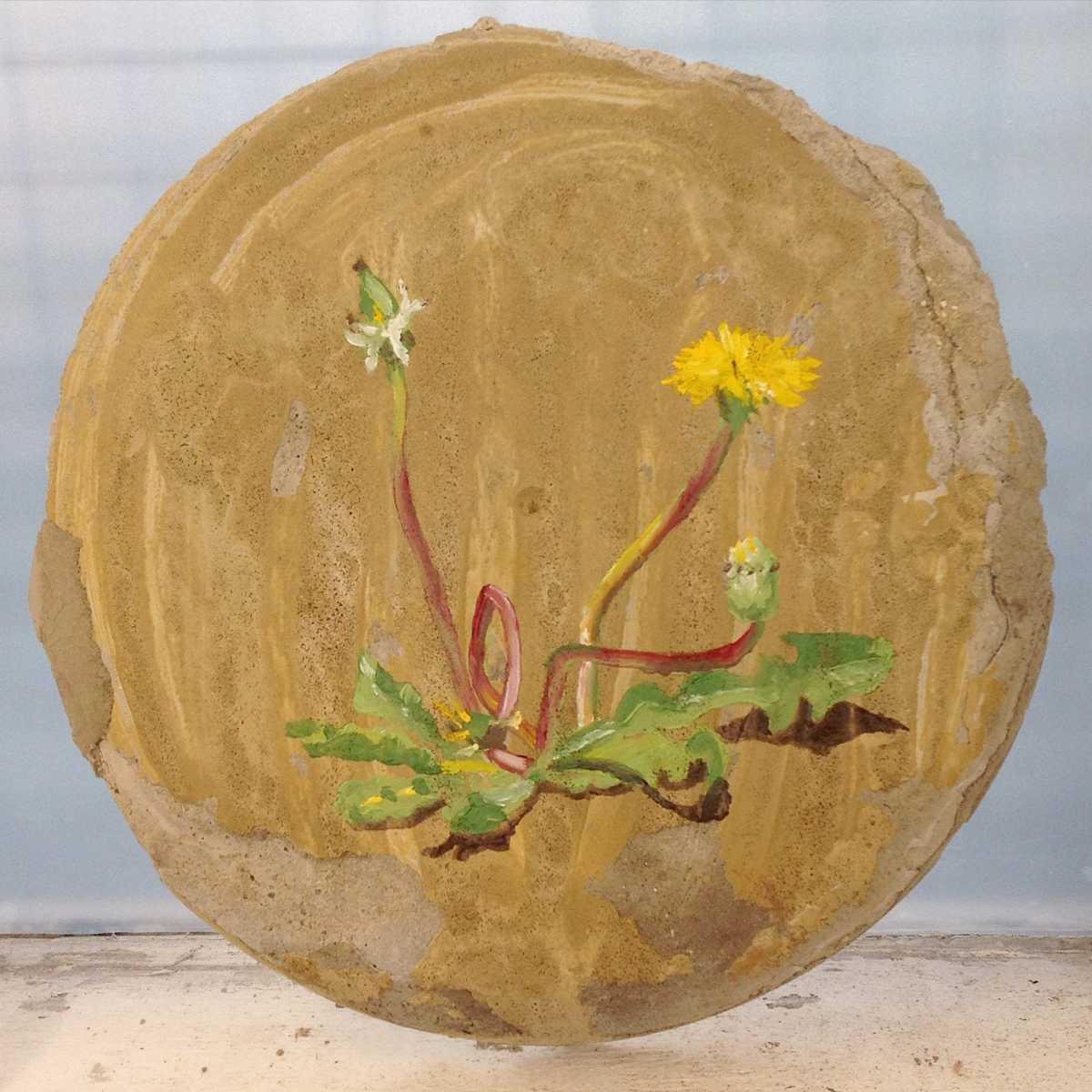
Fiona Long,
oil on concrete, 20 x 20 cm
Tegen: What are your most important artist’s tools? Do you have any favourites?
For oil painting, I love my long handled Da Vinci hog hair brushes. Painting with big, long handled brushes really helps to loosen me up. From time to time I still want to make fine and detailed marks though and I love sable brushes for that.
I’ve tried virtually every medium out there, but I love to just really feel the paint so I’ll seldom use anything other than some triple distilled turpentine and a bit of linseed oil if I need to loosen the paint nowadays.
I used to just wash my brushes in jam jars but having a good brush washer and brush soap allows me to keep painting without stilted brush washing while I’m in the flow, and makes my brushes so much cleaner and last longer. It’s a game changer.
My muller and glass baking tray are vital tools if I’m making my own paints, but if I’m not, I love excellent quality paints like Michael Harding, Old Holland, and Schminke Mussini. Some people criticise Michael Harding paints for behaving differently from one another but I actually like that about them. While some ranges use additives to create that consistency throughout a range, I enjoy really feeling the quality of each of the pigments like I do if I make them myself. That said, I once made a cadmium red deep oil paint, and apart from being a dangerous pigment to handle when in dust form, the colour kept sinking, so with some pigments, making the paint yourself just isn’t worth it at all.
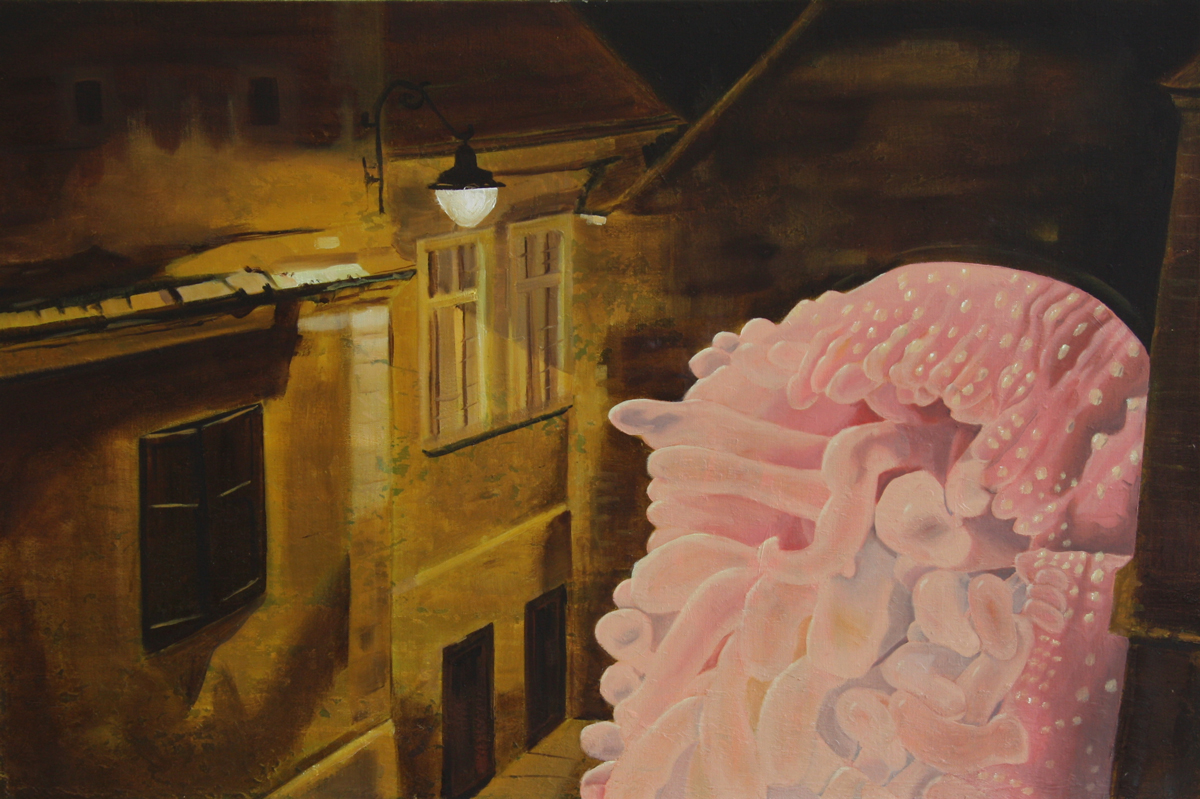
Fiona Long,
oil on linen, 90 x 60 cm
Tegen: What is a good day in the studio for you?
Oh, definitely when I go into flow and lose all track of time. On a really good day one action can lead to another thought and then another experiment, and making another thing and then planning another thing based on that and hours have simply flown by.
I feel that I do my best thinking when doing. I was ill for quite a long time fairly recently and I had so many ideas but not getting to make them straight away made the ideas too daunting to live up to. I guess it’s like people who always say they’ll write a perfect novel one day but never just start writing. You’ve got to be in the studio for the real ideas to flow and also to keep your eye in. Making good paintings takes practice, and having that sanctuary of the studio to make the work in or just be in is vitally important for creativity.
And of course, a great day is one of those magical days where the painting just goes right and it behaves itself. The journey of making a painting can be such an emotional roller coaster, and some of them are just beasts! But if they all went smoothly and exactly according to plan then I don’t think you’re testing yourself enough and it’s not going to be rewarding.
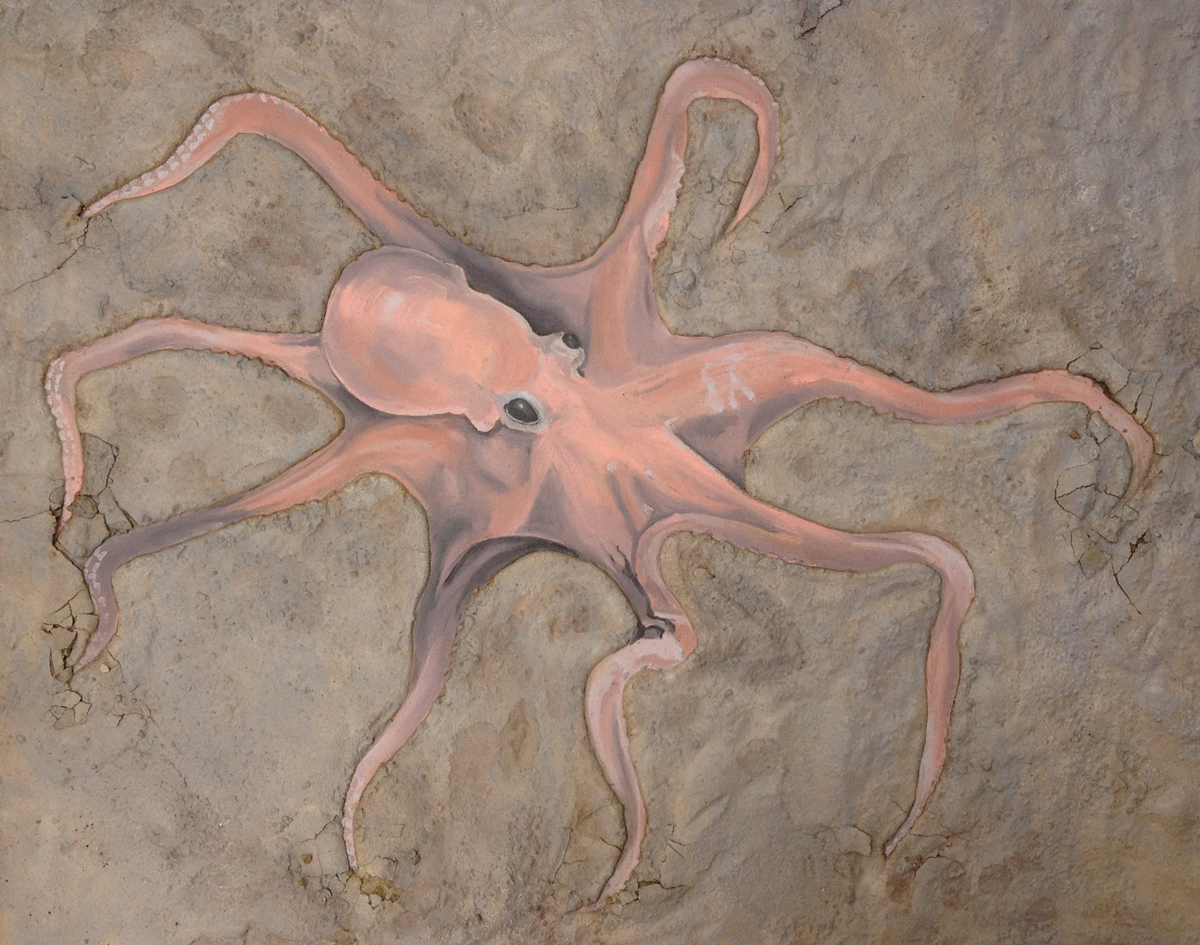
Fiona Long,
oil and concrete on canvas, 40 x 30 cm
Tegen: What are your art influences? Who are your favourite contemporary artists?
My art influences range from cave painting, to Rembrandt, to Ray Mears and Heston Blumenthal. There are so many things that inform my practice from art influences to bush-craft, science, history, ecology, and food. That’s why my practice has appeared so diverse over the years, but in the end, it boiled down to consumption, desire, and sustainability. There are some fascinating relationships and tensions between those paradigms.
Although it’s important to have focus in one’s art practice, I don’t feel the need to do this through on influence or one medium but to have a thematised approach. That gives rise to different values and ethics of art production. Mediality then informs the environment I’m describing. Andrea Zittel is hugely inspirational in this way with her “Designs for life” and how she reconsiders new technologies and new environments she encounters on the way.
Wolfgang Laib is also amazing in his wide influences of nature, medicine, philosophy, and Eastern Spiritualism and I love the way his curious nature for materials can create phenomenal artworks with a deep impact on the viewer.
Thierry De Cordier made his garden as a metaphor for the work and lived a nomadic life reflecting on architecture as a model for social relations. His artwork is like a personal quest to discover his own relationship to the work and identity within it and I find that very inspirational.
I also love Janine Antoni’s Gnaw sculptures which addressed notions of sculpture, performance, body image, and consumption in a single abject object.
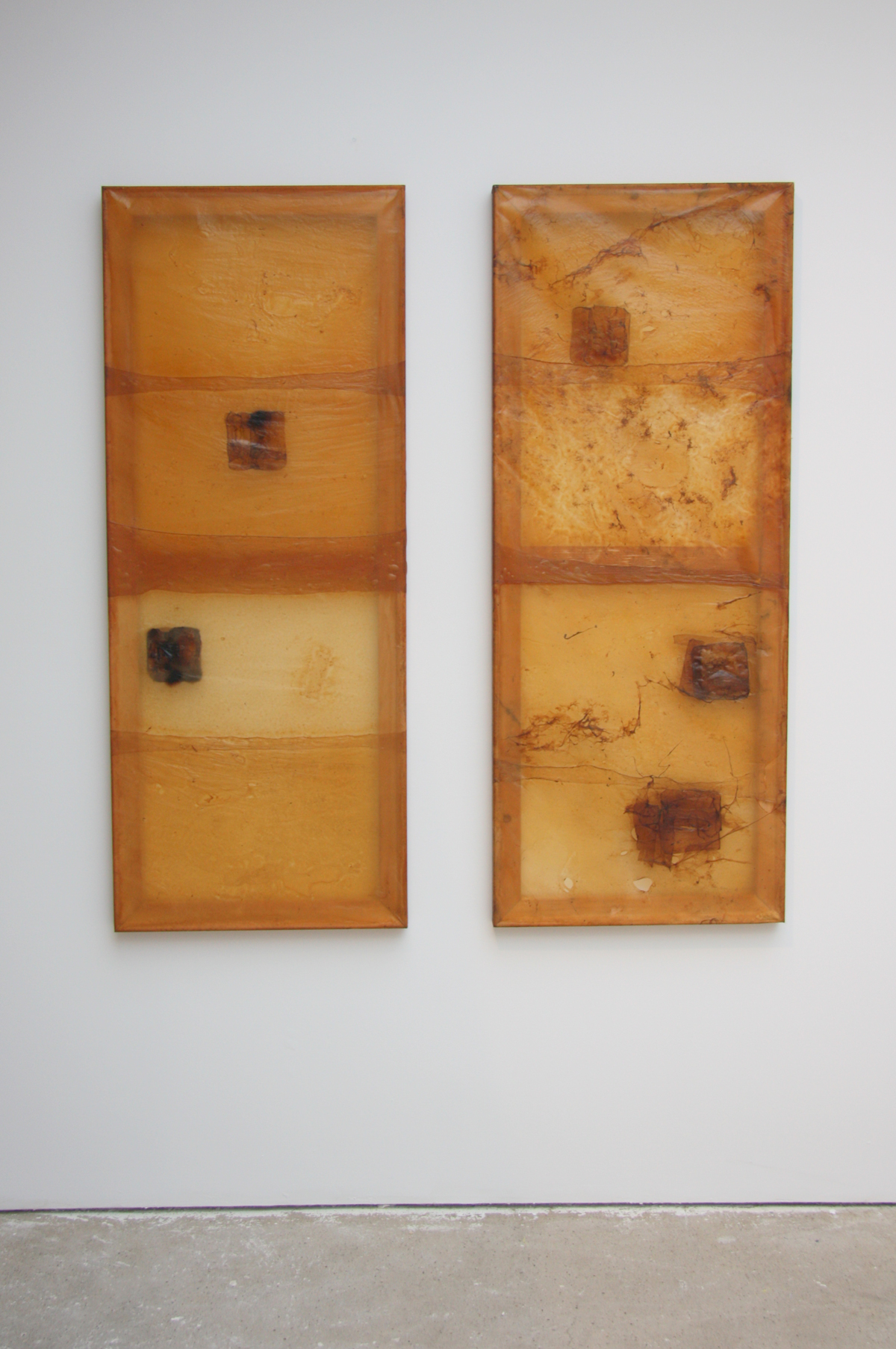
Fiona Long,
symbiotic culture of bacteria and yeasts, each 50 x 160 cm
Tegen: In the studio – music, audiobook, Radio 4 or silence?
In my first studio, I had an old-fashioned radio with a tuning knob and would listen to Radio 4 until I encountered a programme I’d already listened to, then I’d move to the nearest station on the dial which was Capital radio! It was quite a contrast! These days, I listen to a lot of podcasts. But sometimes words interfere with the way I’m thinking so I either need silence or music without words.
I have a beautiful studio at Cubitt but the sound travels so I have to be careful not to listen to music that I’m tempted to sing along to as I’d dread to think what sounds I’d subject my neighbouring artists to! If I’m there when everyone’s gone home though, I sing away to my heart’s content and tend to just be washing brushes etc by then anyway.

Tegen: What is coming up next for you and where can we see more of your art in the flesh or online?
Next year I’m taking part in Recreational Grounds, a site responsive art exhibition in a brutalist former car park curated by Fiona Grady and Tim Ralston Recreational Grounds Instagram
I’m also taking part in a touring exhibition in the USA called Creative Meditations curated by Kim Rodeffer Funk and Dennis Kern.
I’m also curating a Cubitt Salon entitled Human Nature, exploring the relationship between humans and nature in an urban context. Cubitt Artists website.
Illustrated essay of an exhibition I curated last year for Contemporary British Painting.
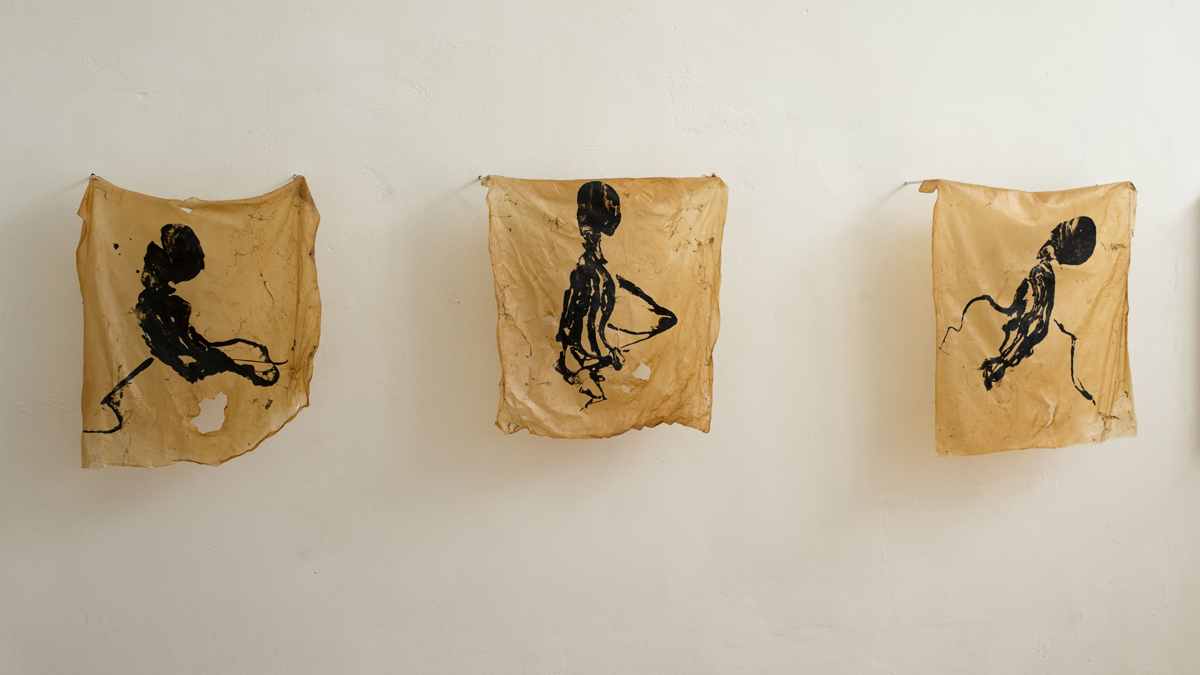
Fiona Long,
squid ink on biofilm, each 40 x 50 cm
2 thoughts on “Fiona Long: Material and Tactile Curiosity”
Really interesting and thought provoking
article, thank you Tegen.
Hi Tim, I’m glad you enjoyed it. I think Fiona’s take on materials is fascinating.
Comments are closed.