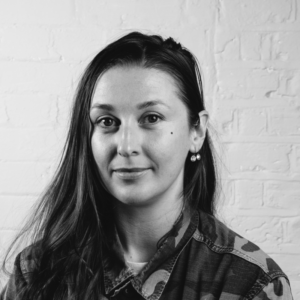
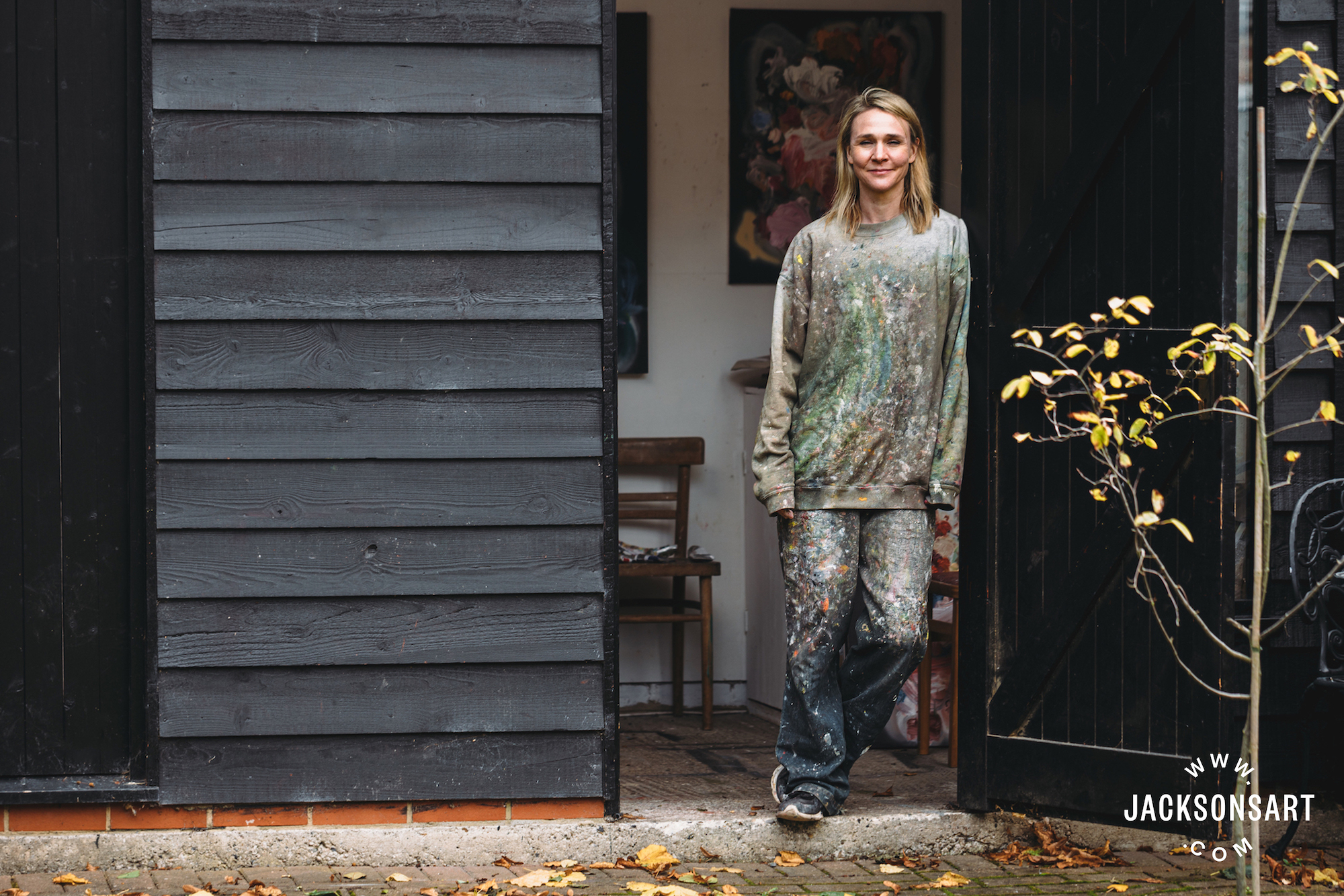
Rhiannon Inman-Simpson won the Abstract/Non-representational Award in the Jackson’s Painting Prize this year with her work I Cannot Find My Feet. Working across numerous surfaces simultaneously, with handwritten notes alongside, Rhiannon seeks to explore air, weight and language in her paintings. Here, she talks about her time spent in Norway, her emotional relationship with the painting process and the seaside studio in St Leonards where she works.
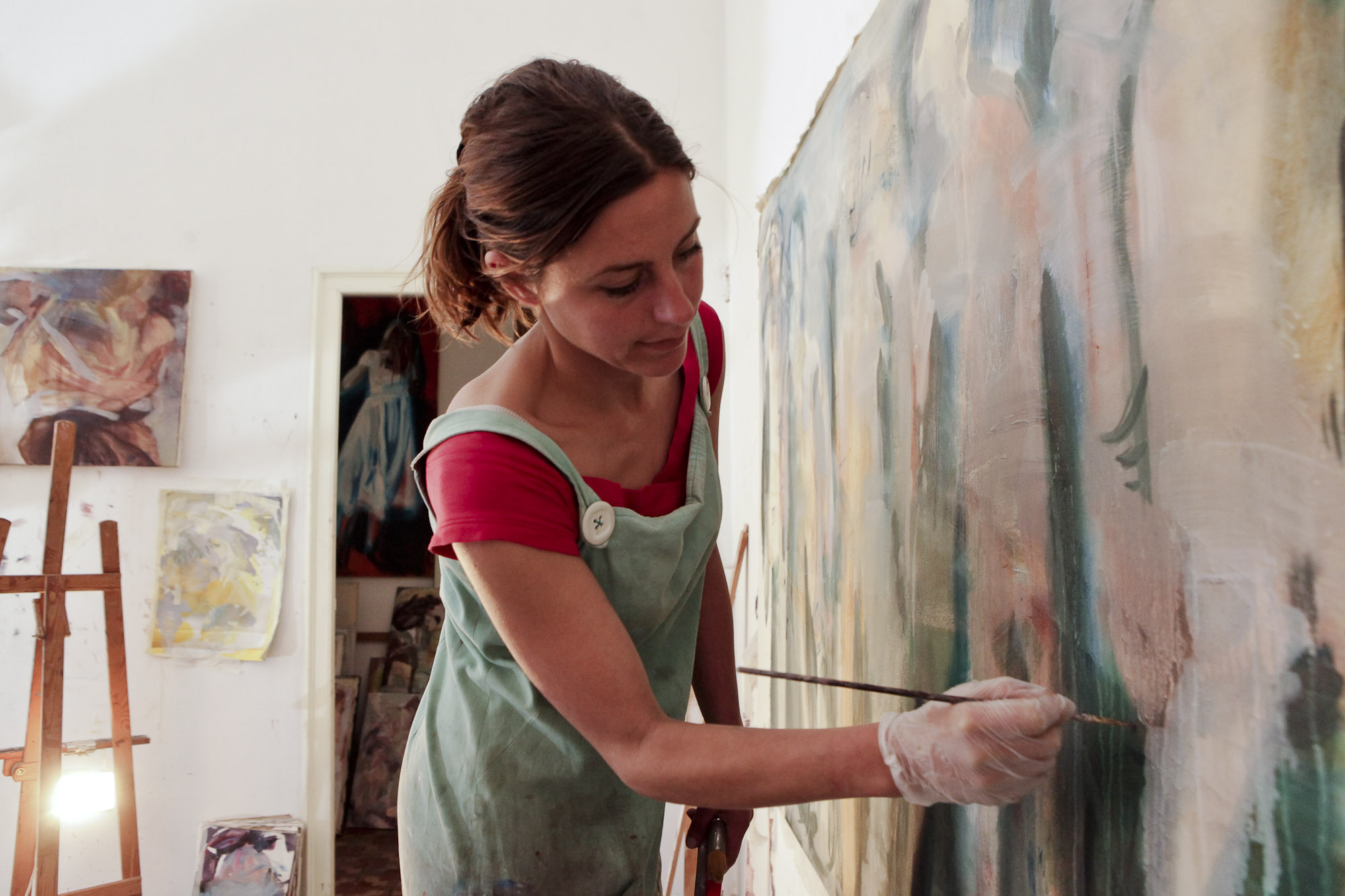
Above image: Rhiannon in her studio in St Leonards.
Clare: Can you tell us about your artistic background/education?
Rhiannon: As a kid I always loved drawing and writing and so it felt natural to just keep doing it as long as I could. I was lucky and had really encouraging art teachers all throughout school. I did a foundation year at Camberwell College of Arts in London and then I moved up to Scotland to do my BFA at The Glasgow School of Art. In my first tutorial on the painting course I was told painting was dead, which was an interesting start. During the course I struggled to really find direction with my work, like I was never quite doing what I wanted to be doing. But I loved the city and being north with all those west coast landscapes around. In my second year at Glasgow I did an exchange to Emily Carr University in Vancouver and spent a magical term there being in a very different and exciting environment.
After a few years back in London, I moved to Norway in 2014 to do an MA at the art school in Bergen. I held back a bit from painting during the MA, and made very small paintings on cardboard alongside objects and words. I did lots of walking and writing and trying to understand my practice from different angles. After finishing the course I stayed in Bergen for another 4 years and whilst there did the Turps Correspondence Course for 2 years. I had been slowly edging back into painting after the MA, and doing the Turps course really allowed me to experiment and push myself, with a regular schedule of reflection and feedback. It felt like the first time I didn’t have to constantly answer the ‘why do you paint’ question, but instead just focus fully on painting. It was perfect timing for me and I loved it.
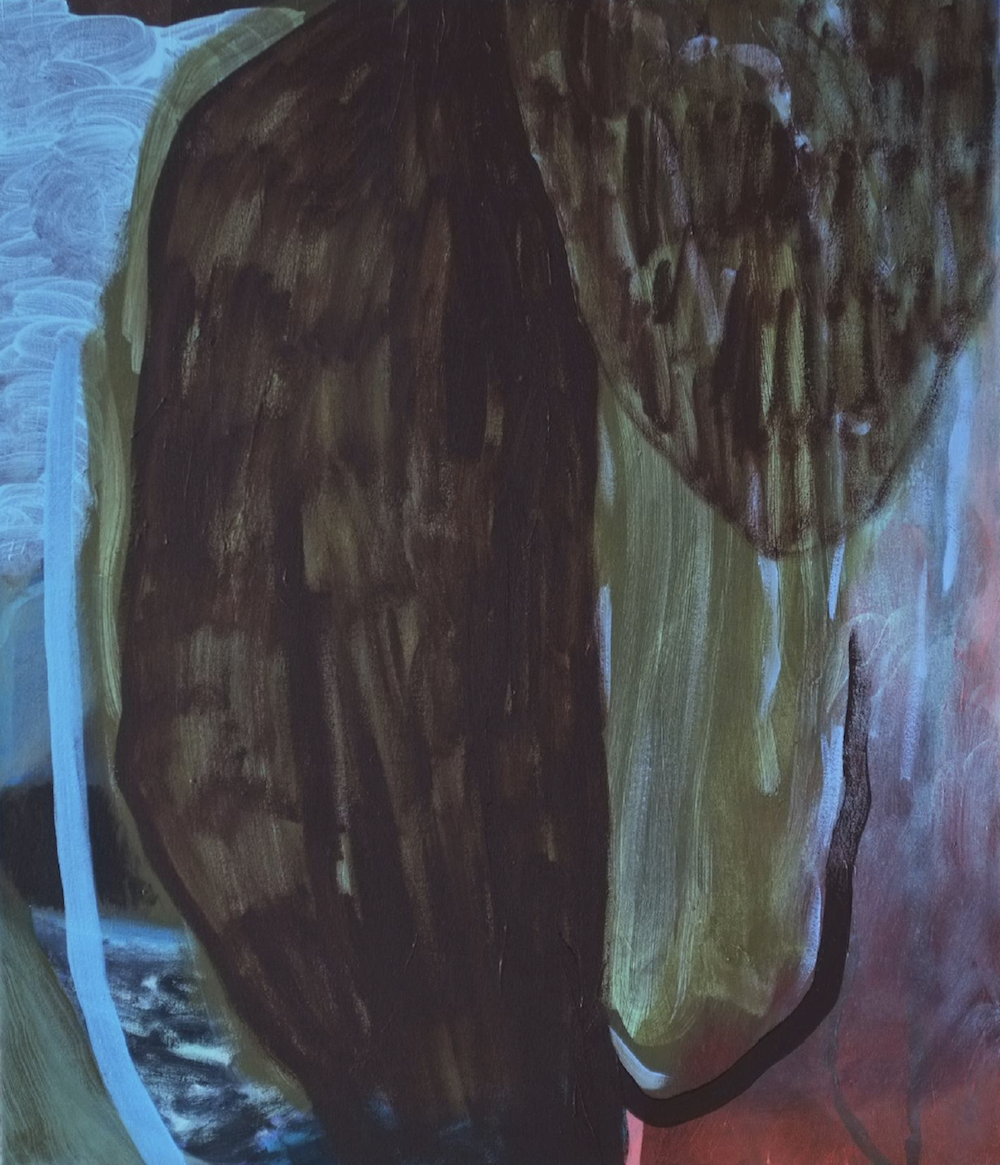
Rhiannon Inman-Simpson
Oil on canvas, 60 x 70 cm | 24 x 28 in
Clare: Where does a drawing begin for you? Can you take us through your process?
Rhiannon: I find the very start is often the most enjoyable part of a painting. I don’t feel much pressure from a blank canvas because I know it will change and that the beginning is just the bones that I can work from. Whilst I don’t usually have a fixed plan for a painting, I will often have a certain colour or combination of colours in mind and will begin with choosing a coloured ground. The beginning is when I often feel the most empty of thoughts, when decisions come naturally and I can just respond to the paint and move easily through the painting.
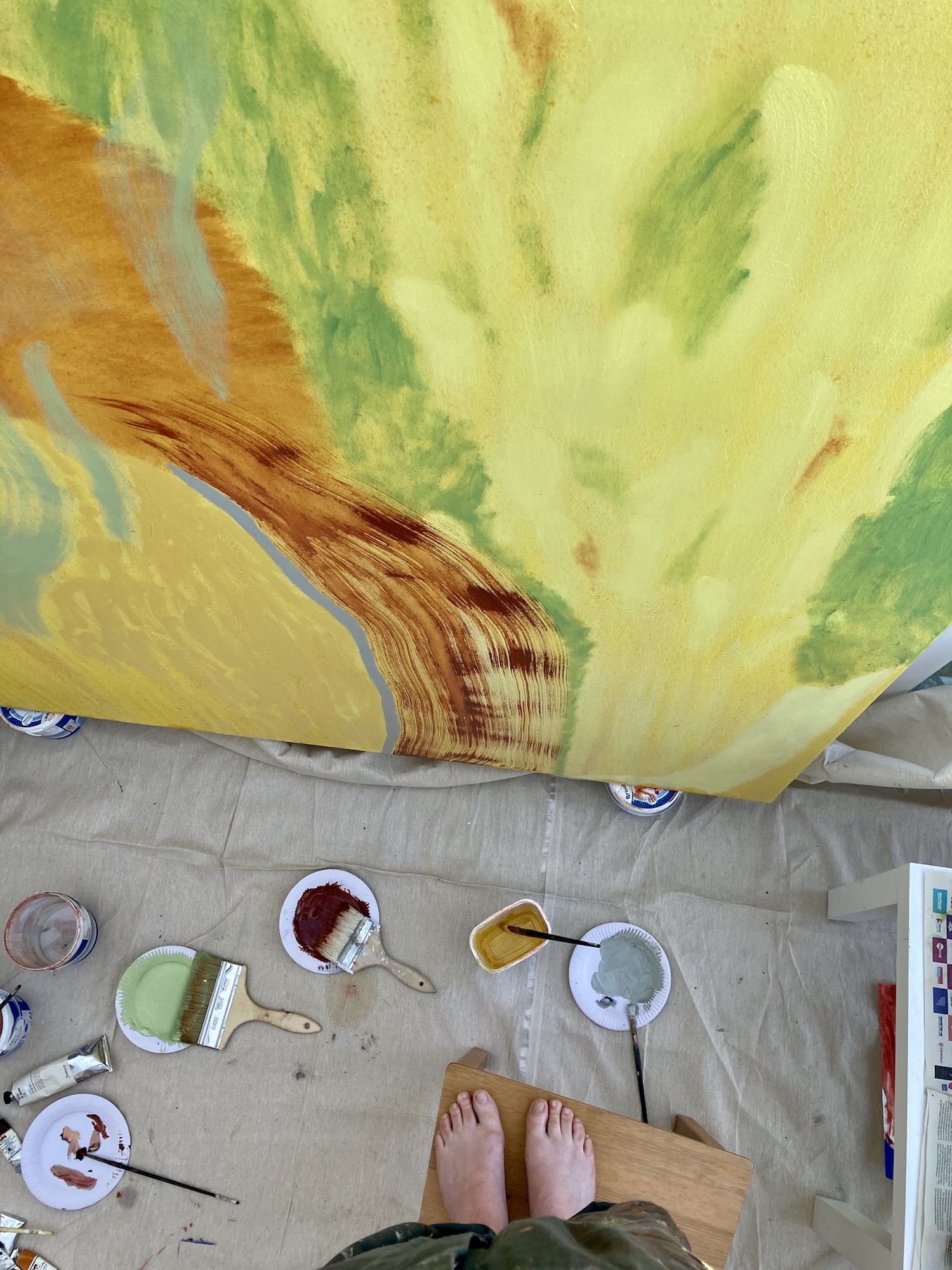
Then there is almost always a tough spot, when the painting is disgusting to me and every decision seems to make it worse. When I’m most frustrated I usually do something rash which I think might destroy the painting but hopefully saves it, and sometimes it does and sometimes it doesn’t. This cycle can go on for a while. Ultimately I want the paintings to feel rooted to the ground but to have air in them to breathe. A painting can take a very long time to finish, with long breaks in between where I keep looking and adding and removing slowly. Or sometimes it comes together much quicker without huge periods of frustration. It’s always a bit of a mystery! I usually work on multiple canvases at once, in very different sizes, and on paper works simultaneously. It allows time for layers to dry in between, and keeps my mind active moving between them.
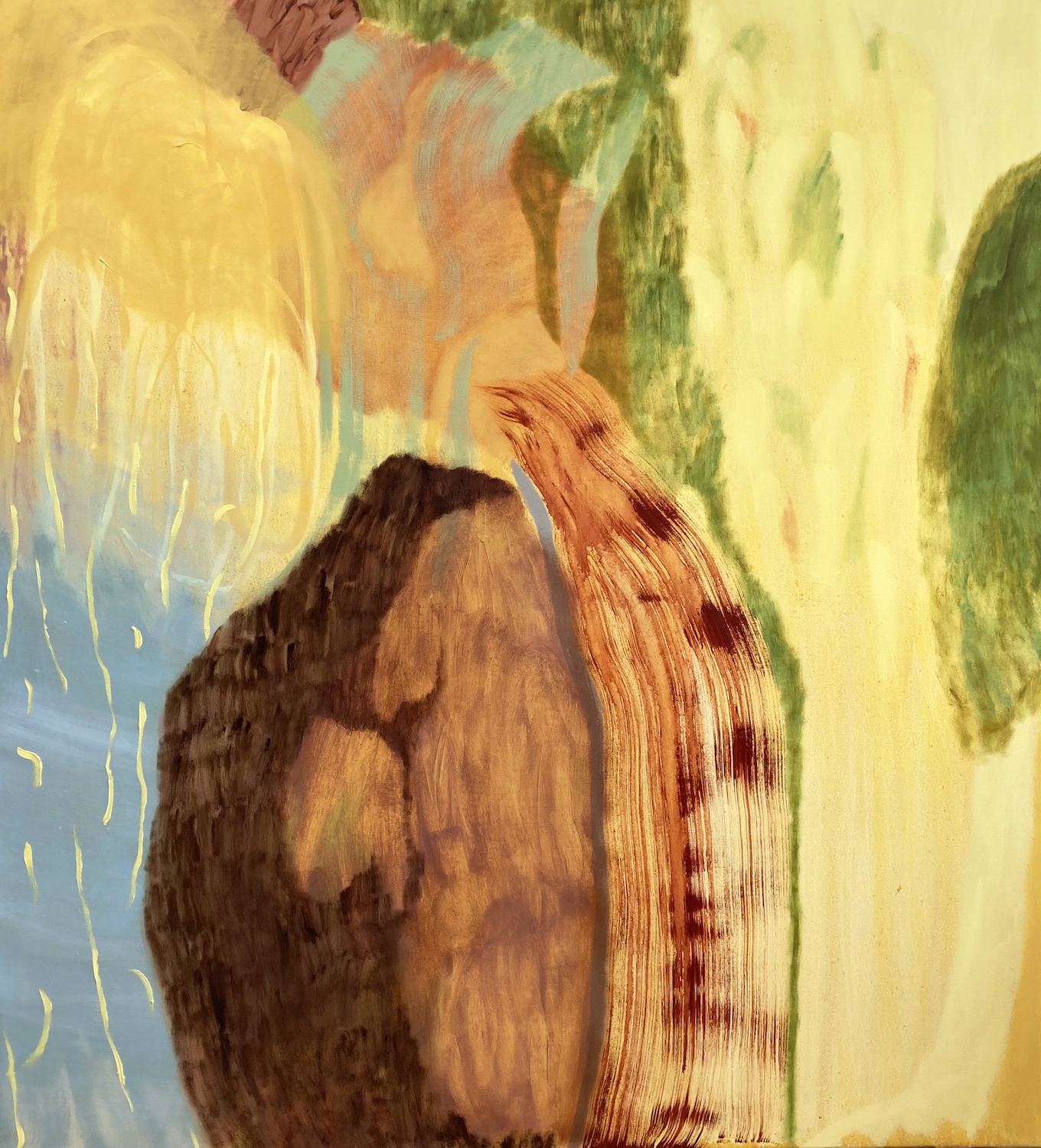
Rhiannon Inman-Simpson
Oil on canvas, 150 x 165 cm | 60 x 65 in
Clare: What canvas do you favour and which brushes and paints do you most enjoy working with?
Rhiannon: I work on 12 oz cotton duck canvas, which I prime with rabbit skin glue and then usually with an oil based primer. I’ve recently been using Michael Harding paints and have fallen in love with them. The colours have such depth and are so rich in pigment. I use different thinning mediums to alter the consistency of the paint and to speed up drying times so I can build up layers in the works. Usually this is Winsor & Newston Liquin or Pip Seymour’s fast drying oil glaze. My favourite brushes at the moment are Omega Round Brushes S.203. They make such soft, blurred marks and can really spread the paint a long way. They’re perfect for misty layers!

Rhiannon Inman-Simpson
Oil on canvas, 60 x 70 cm | 24 x 28 in (in studio)
Clare: There is a sense of action in the titles of your work. How do you come to name each piece?
Rhiannon: I have a writing routine which kind of works alongside the painting process. I often make notes in the studio, sometimes about the paintings or just about the day or a moment or place. The titles usually come from these notes. I think I use writing to try and understand something in the painting, and usually write more when I feel like a painting might be finished, to try and use a different language to work out what the painting is. I like the tension between words and a painting and the titles are really important to me. I want the titles to have a sense of a body and of movement, and to bring something to a painting which can only be expressed with language.
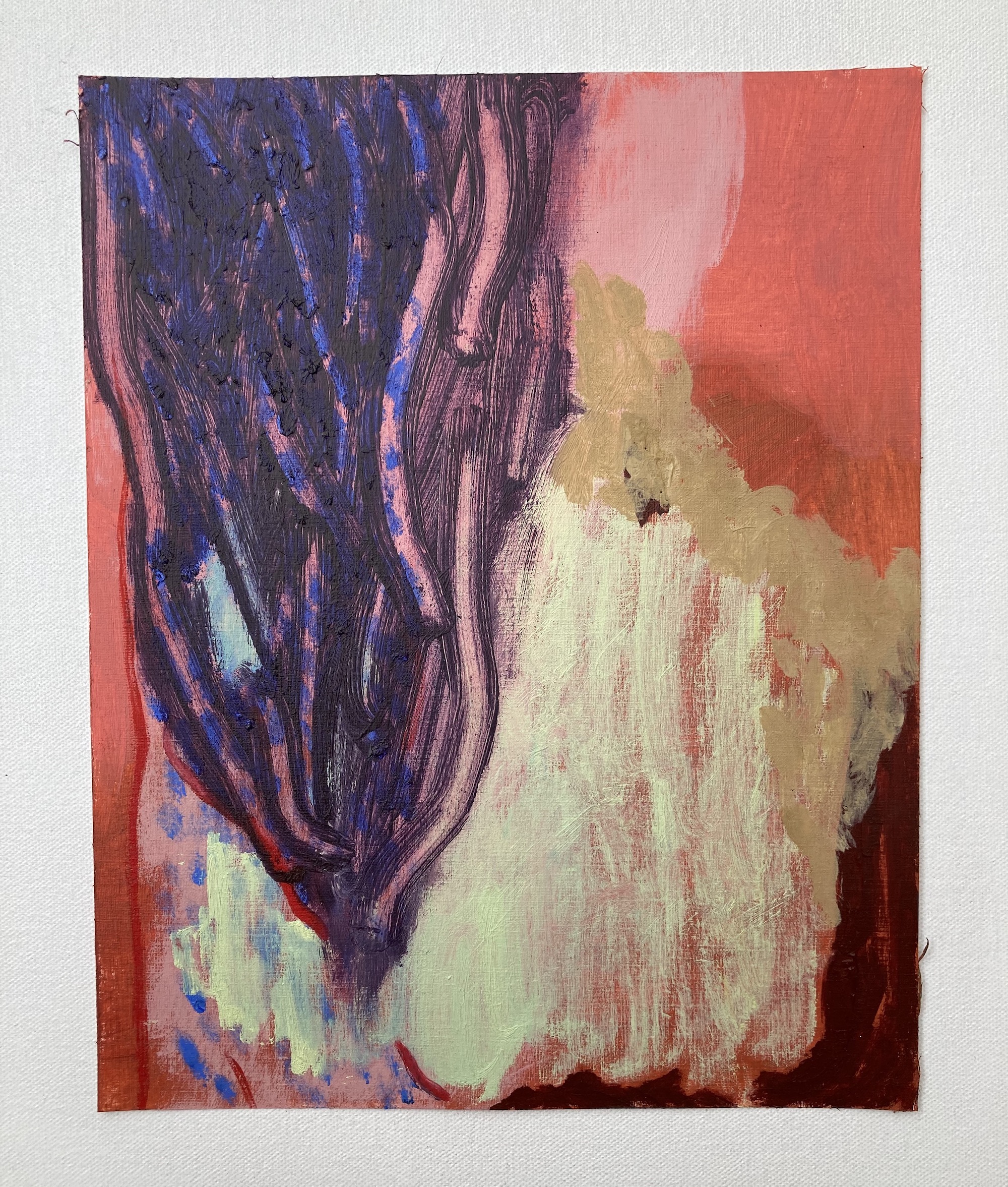
Rhiannon Inman-Simpson
Oil on paper, 25 x 20 cm | 10 x 8 in
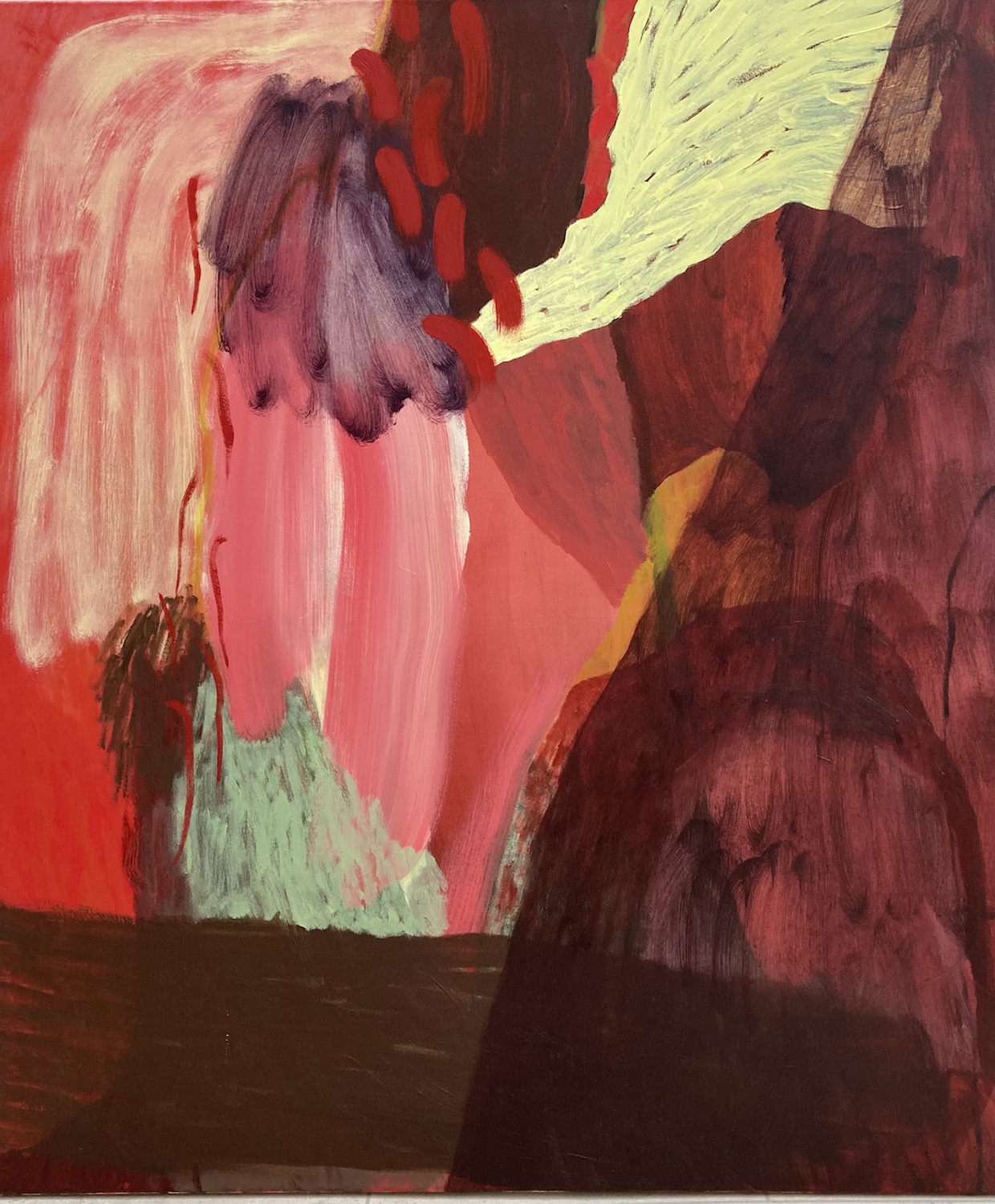
Rhiannon Inman-Simpson
Oil on canvas, 80 x 100 cm | 31 x 40 in
Clare: Can you tell us about your drawing practice? What materials do you use? How often and where do you go to draw?
Rhiannon: I have a pretty inconsistent drawing practice which I always feel a bit ashamed about. I know that drawing is good for me but I find it hard and often feel eager to jump straight into paintings. I go through periods of keeping sketchbooks and then long periods without them. Right now I am keeping a notebook for writing instead of a sketchbook. When I do draw I usually use graphite pencils and oil pastels. I have a fear of drawing outside and usually find it a frustrating process, but I do make myself do it sometimes and there have been moments when I’ve overcome my fear and found a way that works for me. But I’ve lost that recently!
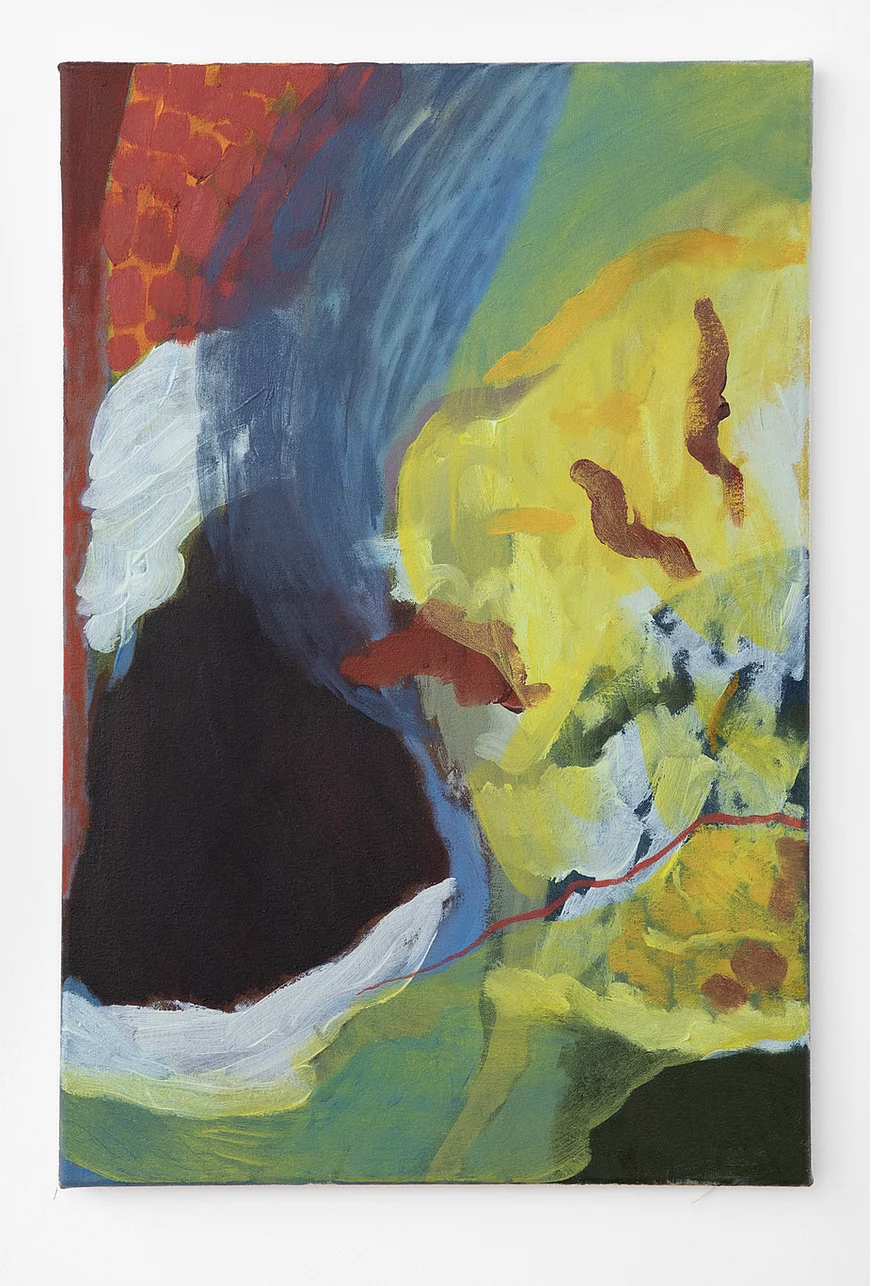
Rhiannon Inman-Simpson
Oil on canvas, 40 x 60 cm | 15 x 24 in
Clare: What would you consider is the greatest source of frustration in your creative life and do you have any tried and tested ways of overcoming this challenge?
Rhiannon: Getting through those tough middle parts of paintings is always frustrating. And knowing when a painting is finished. I think the only way I overcome difficult unfinished paintings is to have patience and give them a bit of time. I maybe leave them for a week or two, work on other things and then come back and look at them with fresh eyes. Usually the time away also means I have have more distance and I’m less protective of the parts I like about the painting, and braver about doing something which might destroy parts but help the painting as a whole. I try to be brave about destroying parts of paintings – I always think about Per Kirkeby who talked so well about this process: “My painting isn’t good until it goes under… one builds upon ruins”.
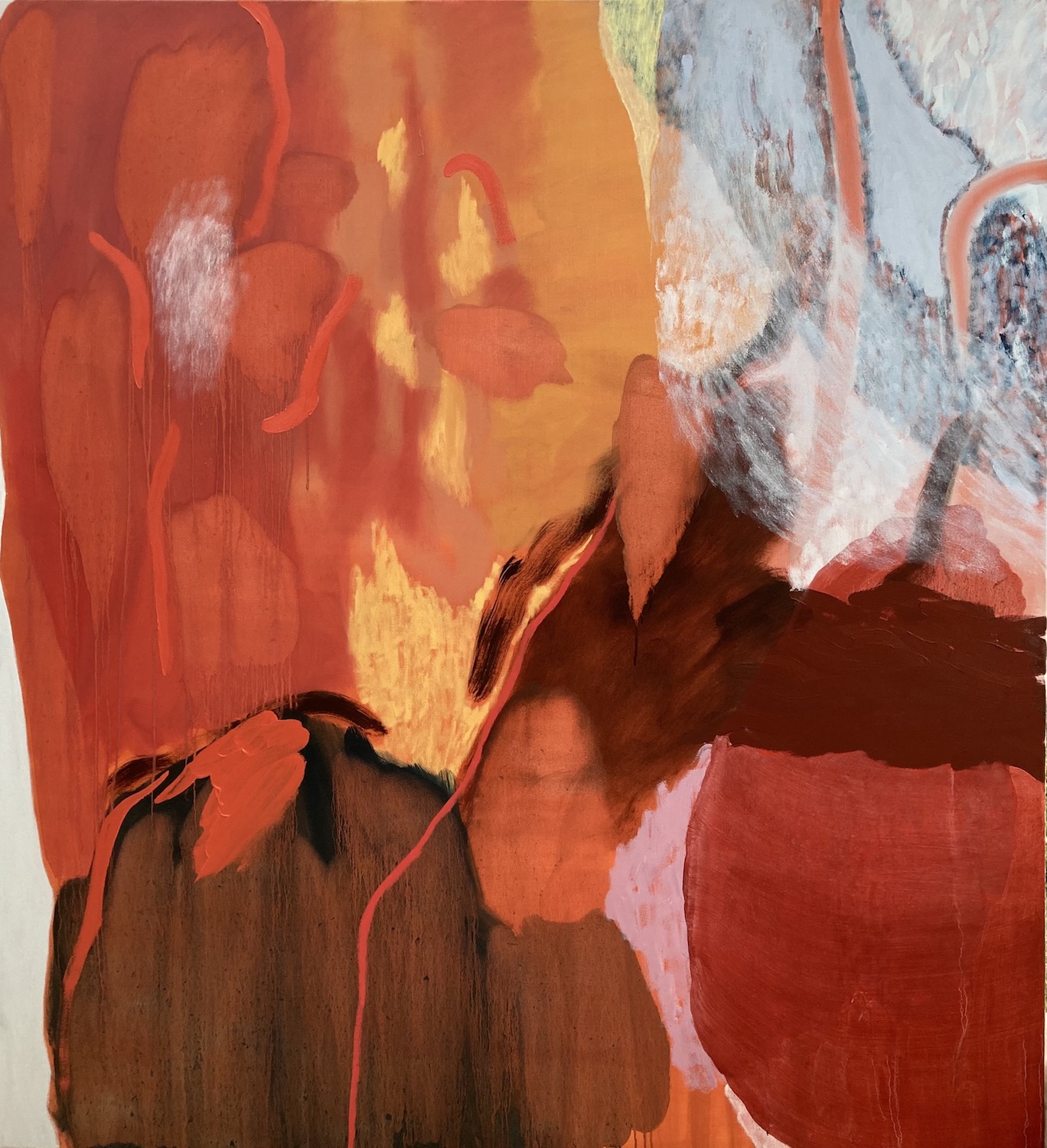
Rhiannon Inman-Simpson
Oil on canvas, 150 x 165 cm | 60 x 65 in
Clare: What are your most important artist’s tools? Do you have any favourites?
Rhiannon: At the moment it’s probably Shellsol T, which is a mineral solvent for cleaning and diluting which doesn’t give me headaches. And Omega brushes, the big flat ones as well as the soft round ones I mentioned earlier.
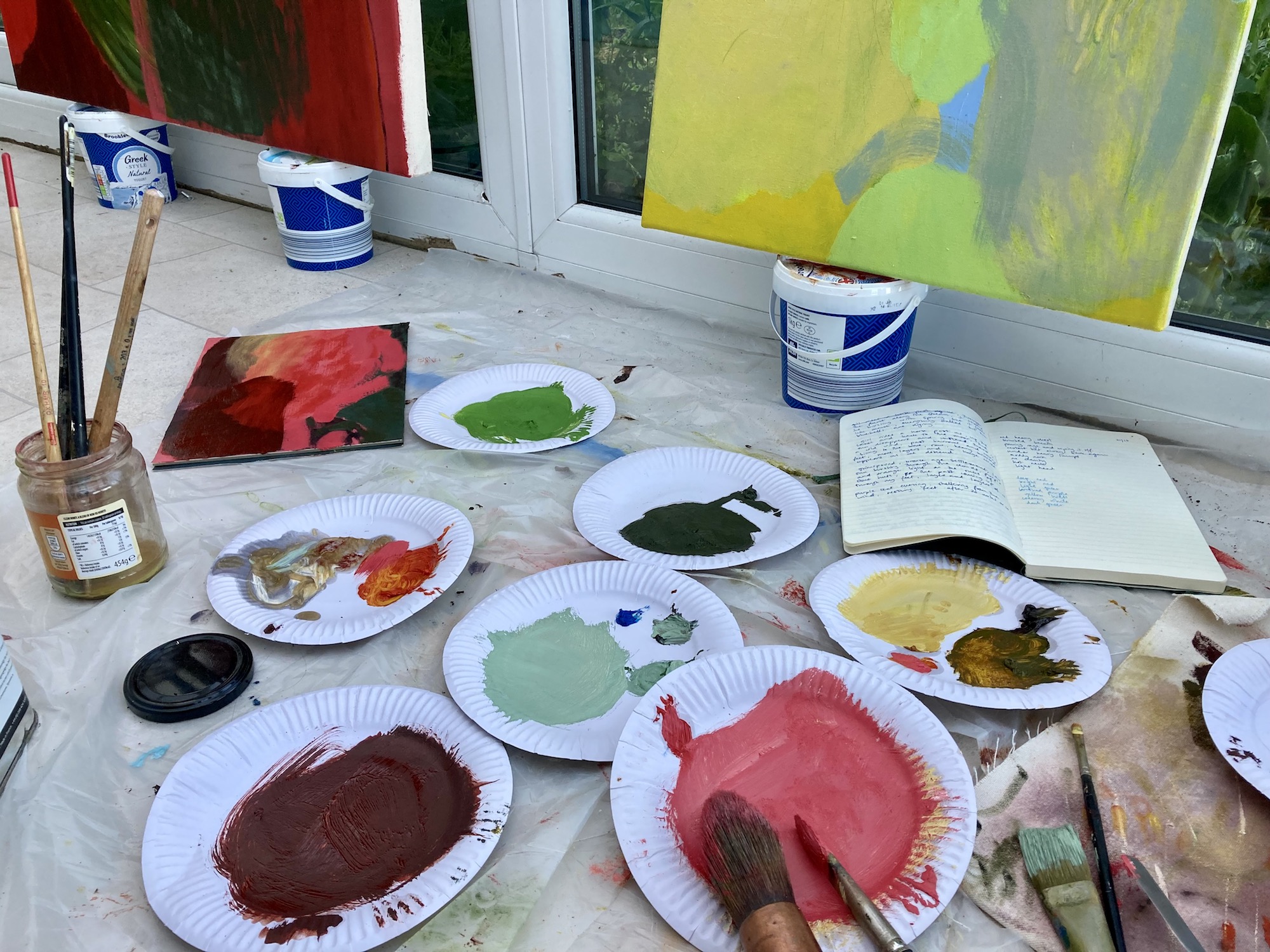
Clare: Can you describe your studio? What are your favourite things about it?
Rhiannon: Last year I moved to St. Leonards in East Sussex, and I’m currently working at home in the conservatory. It’s a small space but has glass on two sides so it’s surrounded by green, full of light and has an amazing sea view. It’s boiling in summer, freezing in winter, and when it rains the noise is deafening, so I feel connected to the outside world in there. I often get distracted by watching the weather and the sea, but I love that about it.

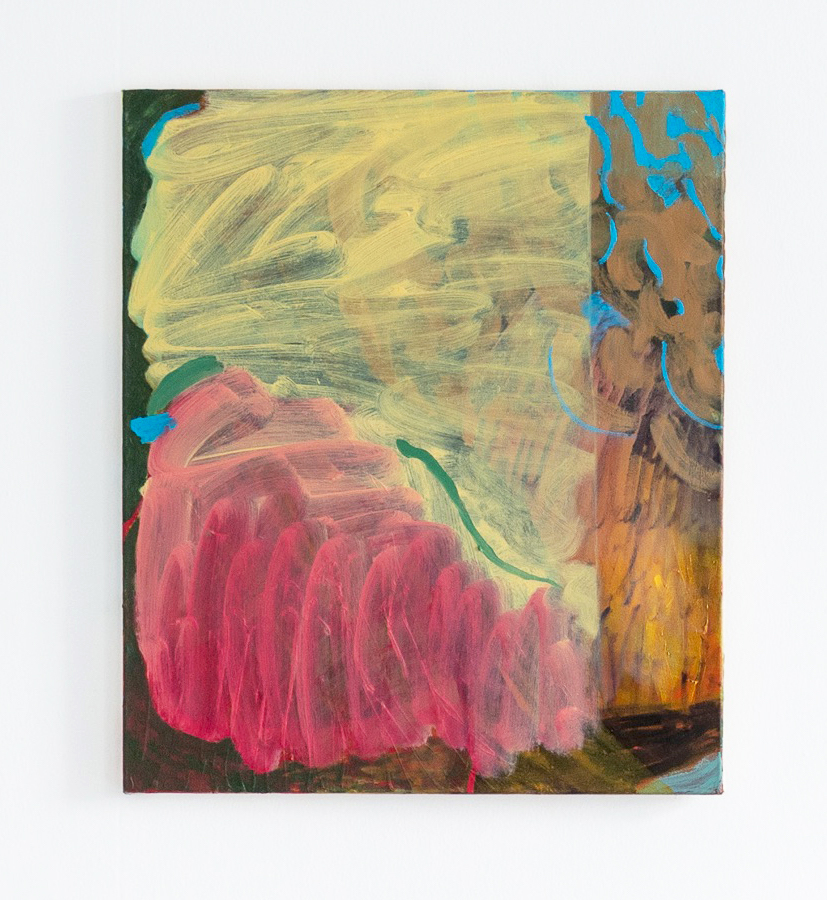
Rhiannon Inman-Simpson
Oil on canvas, 60 x 70 cm | 24 x 28 in
Clare: What are your art influences? Who are your favourite contemporary or historical artists and why?
Rhiannon: A painter who has stayed with me since I was a teenager is Ivon Hitchens. I love what a distinct language he has, his paintings have so much air in them. I also always go back to looking at Per Kirkeby, the energy in his marks and the way that he builds layers. Helen Frankenthaler of course. I recently saw her Gagosian show and was blown away by the paintings, so much boldness and precision at the same time. I love Roni Horn’s work and her writing has been a big influence on me. A contemporary painter I’ve been admiring a lot recently is Clare Grill. I’d love to see her paintings in real life, I can spend ages zooming in on them on a screen. I just read a press release she wrote for a recent show and it really affected me; the way she writes about painting is so direct and honest.
Rhiannon Inman-Simpson
Oil on canvas, 150 x 165 cm | 60 x 65 in
Clare: What makes a good day in the studio for you?
Rhiannon: The best day in the studio is when I finish a painting and I know that it’s finished. But generally a good day is when I can switch off from general life things, emails, washing, that kind of thing, and just paint. And a day when I can get outside and have a swim, too.
Clare: Can you tell us where we can see more of your work online or in the flesh?
Rhiannon: I just had a solo show in Paris at Galerie Julien Cadet that has just ended, but it can be seen online on mine and the gallery’s website. I’m about to start a residency at Kiosken Studio in Bergen, Norway during October and will be showing works in progress during that period. And in November I will be showing three paintings in a group show called ‘Thinking Out Loud’ at Pulpo Gallery in Germany.
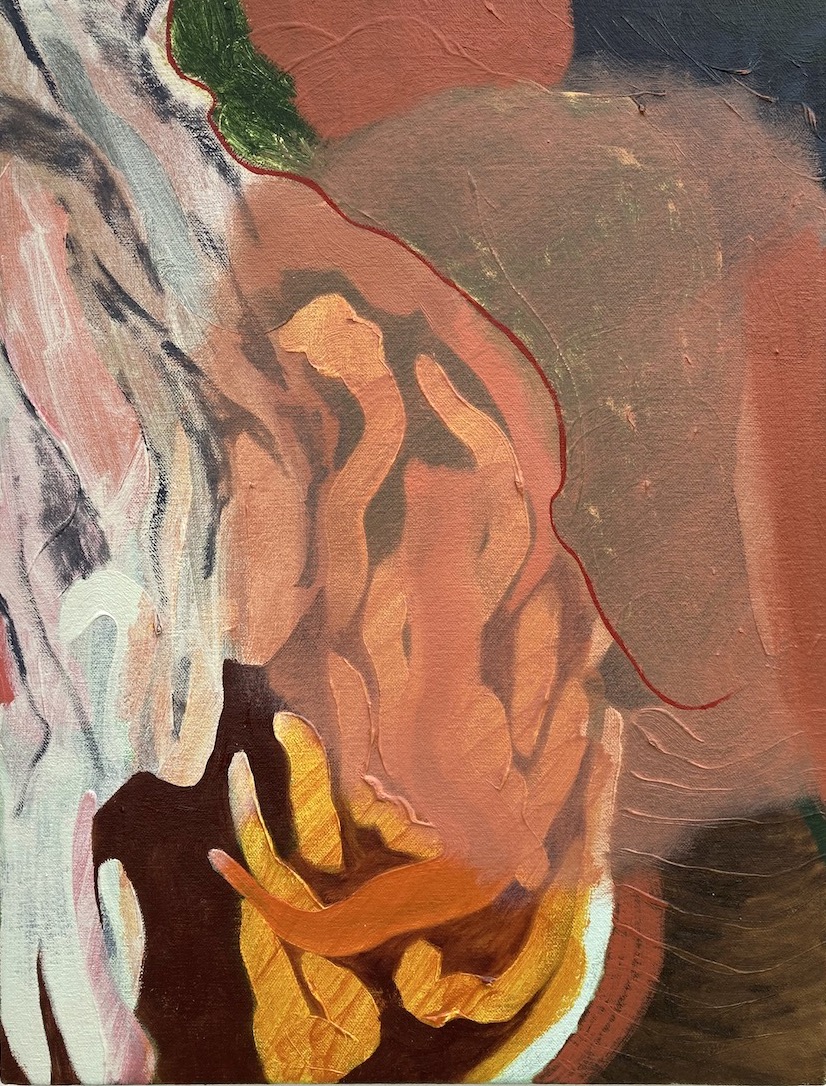
Rhiannon Inman-Simpson
Oil on canvas, 30 x 40 cm | 12 x 15 in