



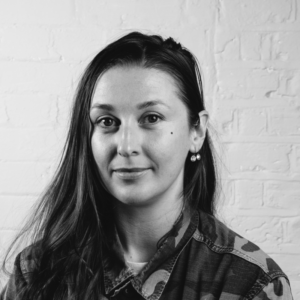
Gemma Thompson is a visual artist and experimental guitarist whose sketchbook practice is informed not only by visual observation, but also by the practice of listening, and responding to sound through mark marking. Here, she expands on this approach, and explains how drawing daily using a variety of media, her sketchbooks reveal how she experiences the world.
Gemma Thompson Takes Us Through Her Sketchbook Practice
I spend a lot of time drawing from observation, so I always have a sketchbook with me. I tend to have a couple on the go at a time, with one as my main sketchbook and another focusing on a specific project, such as a series of drawings that will inform a new body of work in the print studio.
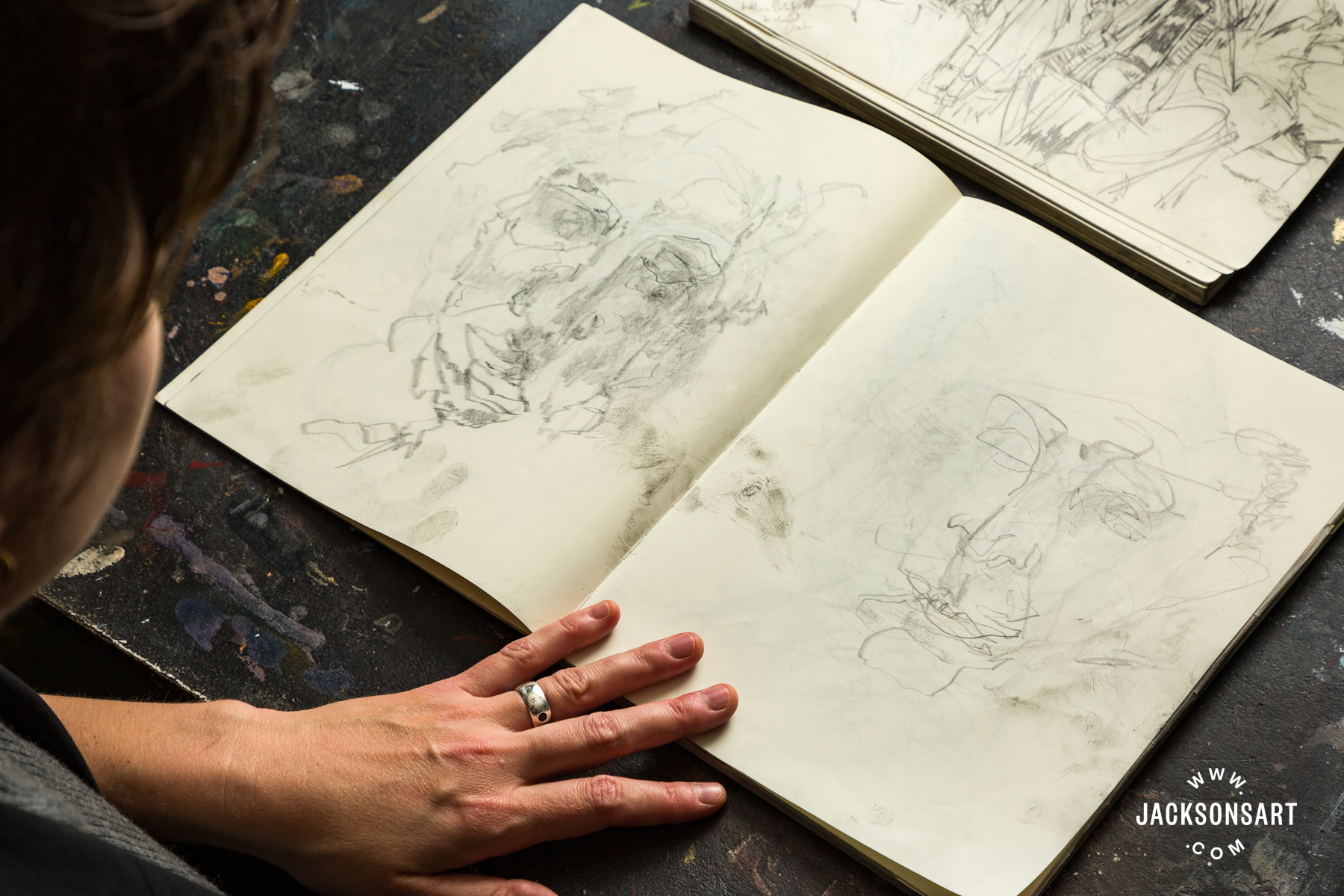
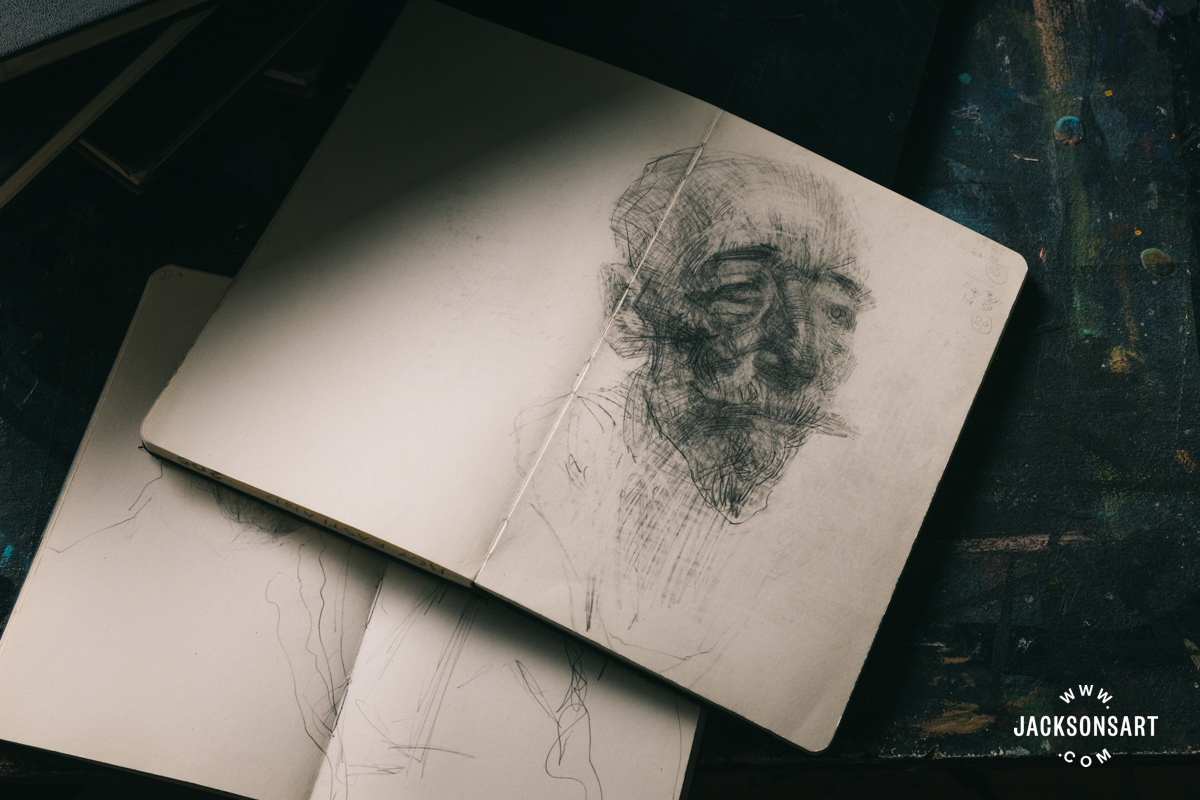
For me, the sketchbook is a record of experience, and when I get into a regular rhythm, a stream of consciousness where each page informs the next. I love working on two extremes of paper – very thin, smooth, and translucent paper, as well as thick, textured Khadi Paper. I enjoy working on the almost translucent paper because it feels like I can have a ‘conversation’ with the previous drawing into the next. Also, in this way, I can use the ‘echo’ or trace of the marks made before.
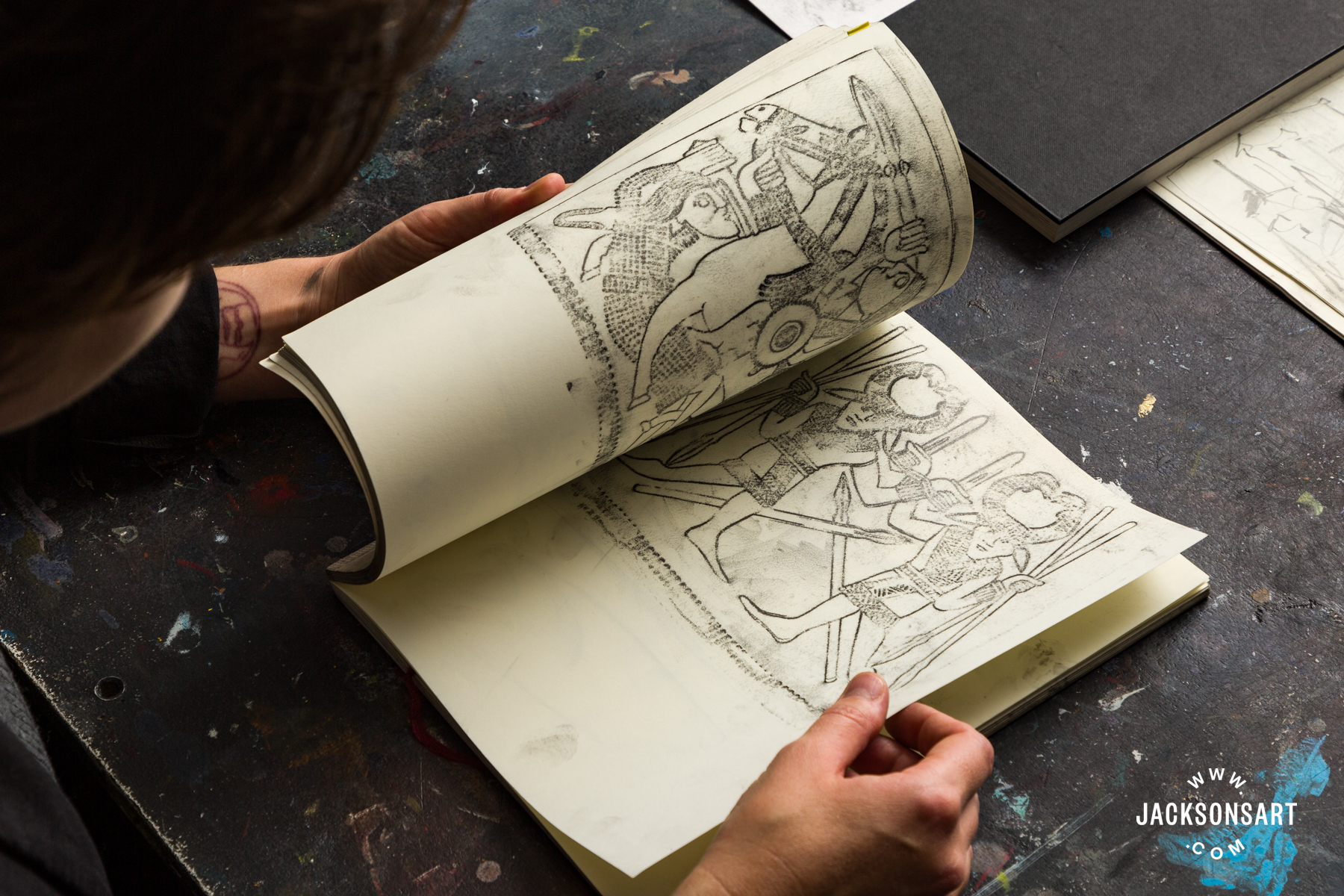
It was only when I studied on the Drawing Year at the Royal Drawing School that I developed a dedicated sketchbook practice. I was incredibly lucky to be able to choose a range of classes that took me from the National Gallery, along the shore of the Thames, to the life drawing room, and down to the print studio tucked away in the basement. The experience of being able to focus on drawing each day for over a year was transformative, and many of the processes I developed remain ingrained in my practice today. My sketchbooks from my time at the Royal Drawing School are filled with life drawing studies, drawings from film, and landscapes, as well as a range of experiments with materials such as inks, graphite, and hard and soft pastels. These sketchbooks are messy and well-worn.
More recently, when I draw from observation, it’s not only from what I see but also from what I hear. Walking, listening, and drawing are my starting points. My work now begins with a listening practice inspired by the composer Pauline Oliveros. Through walking, listening, and drawing, I aim to transform sound to highlight particular contours and meanings that appear as marks, creating a poetical experience of a particular journey.
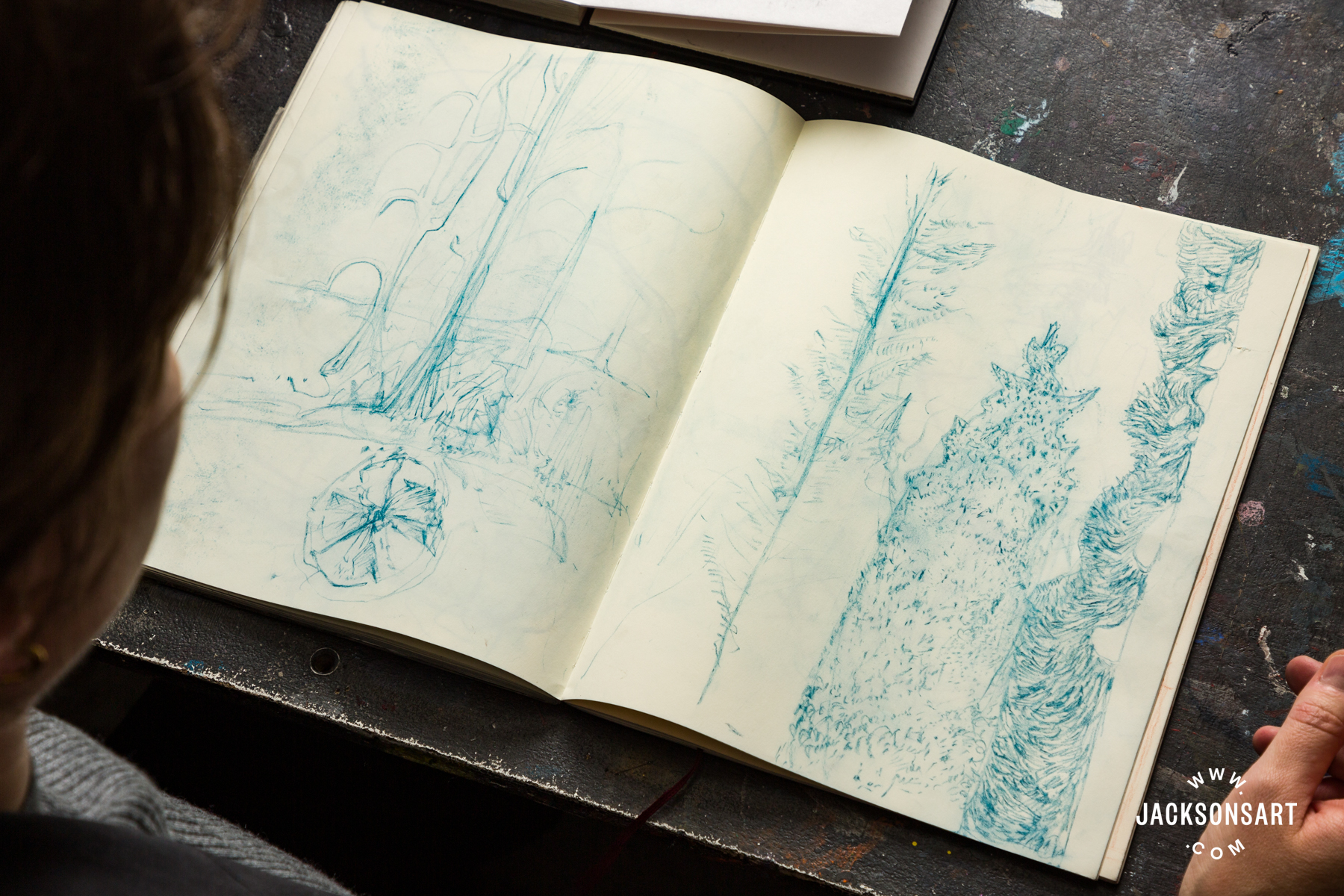
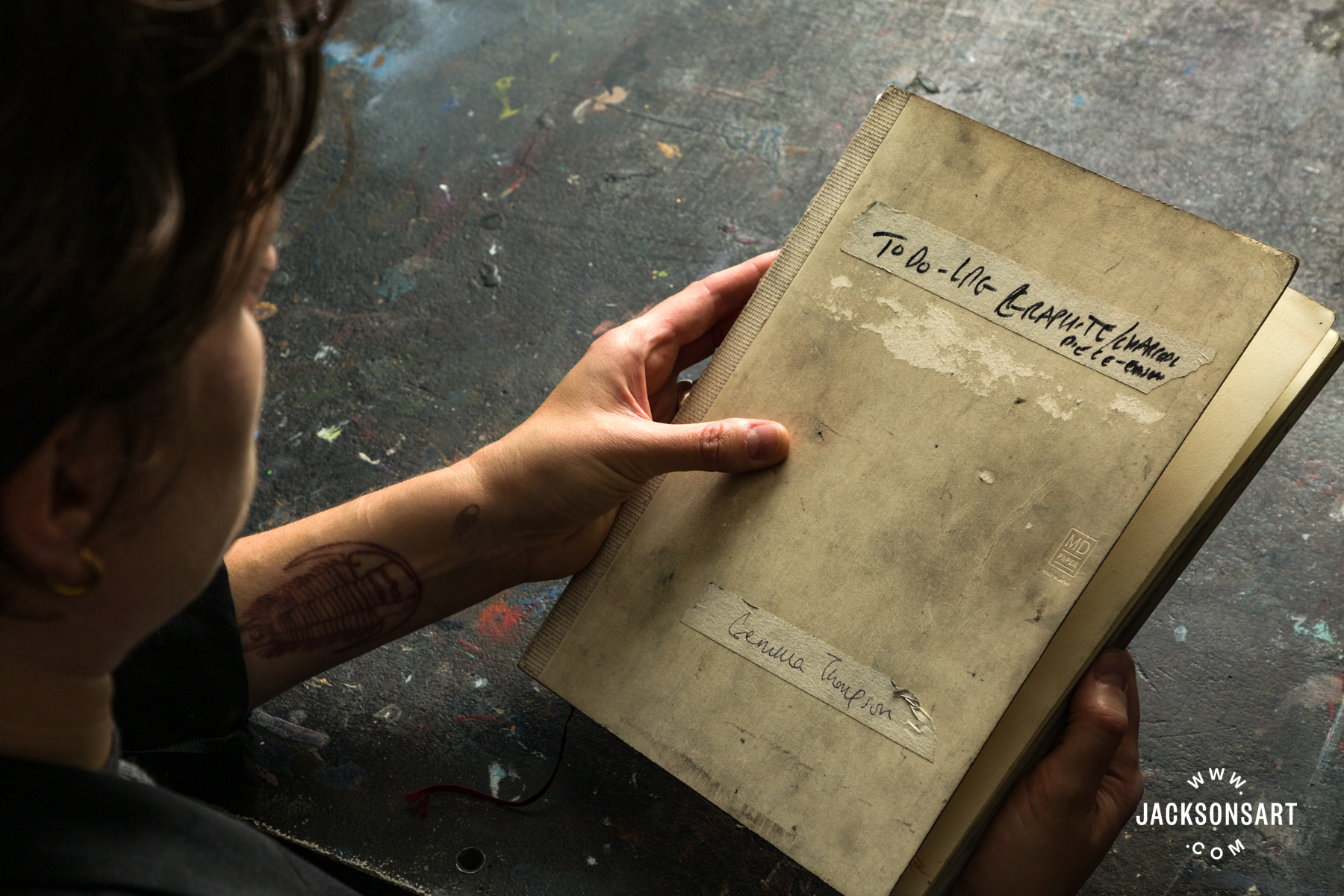
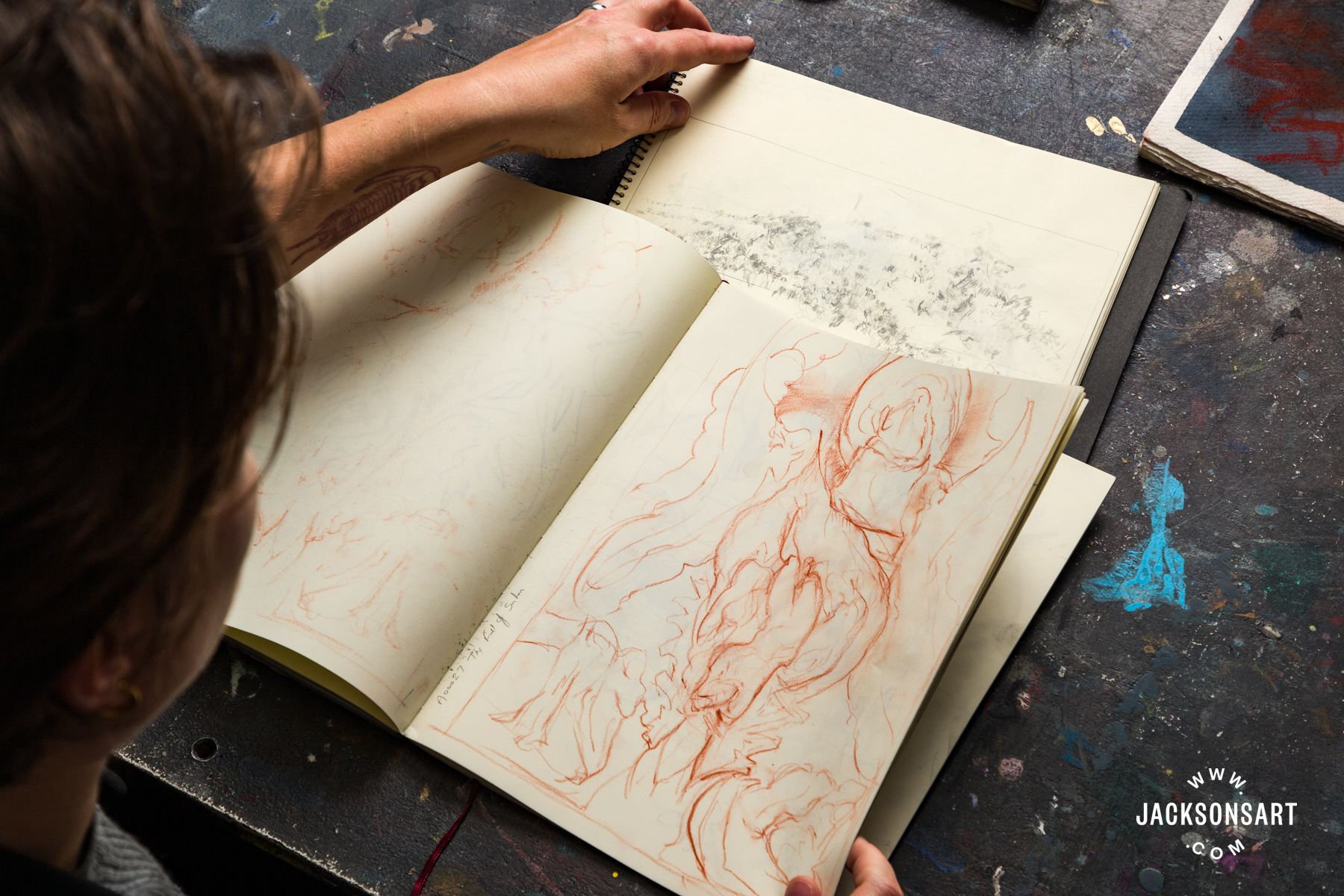
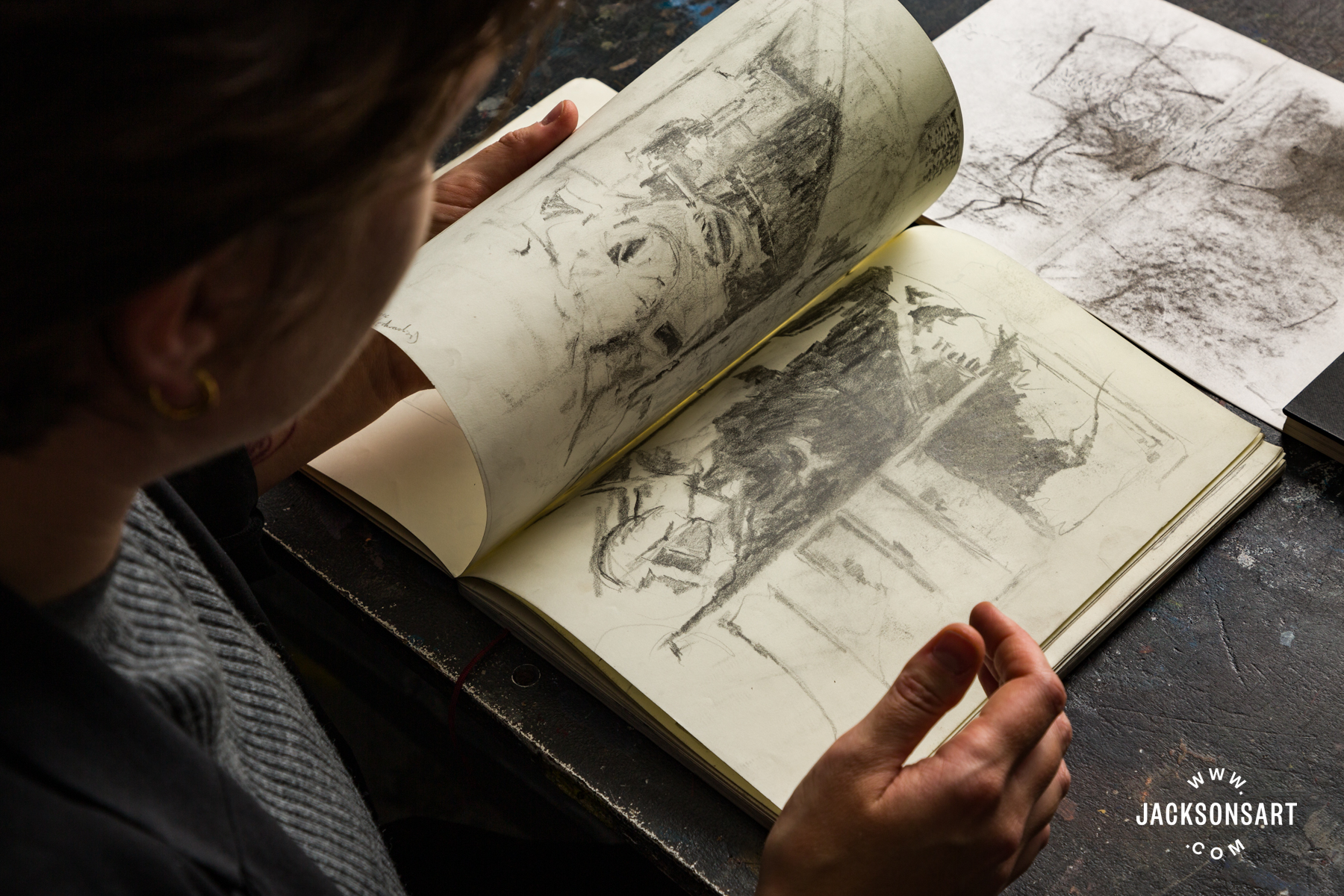
My sketchbooks tend to be just slightly smaller than A4 so that they are easy to take out on the move. For the past few years, I have used Japanese Midori MD Notebooks because I enjoy working on the very smooth, thin, creamy paper. These sketchbooks open flat, and I find them to be compact and easy to work in while walking. The paper is so smooth that graphite and pastel slide and move across the page – I actually really enjoy the movement of these materials, and actively use my fingers to smudge the marks. I am not precious about the work in my main sketchbook and I like to have the freedom of being able to make a mess. Sometimes I even try to replicate these messy marks in a finished work.
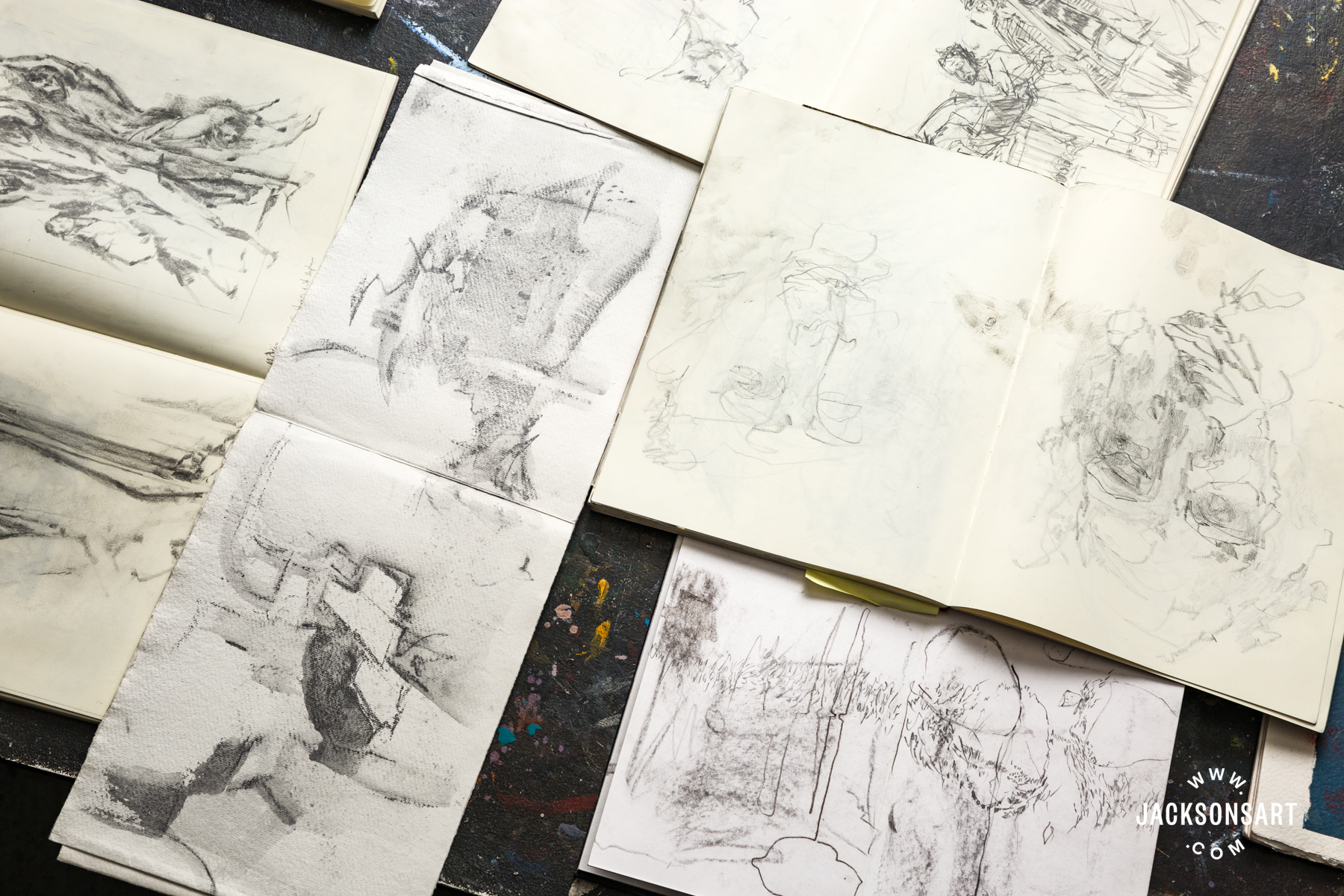
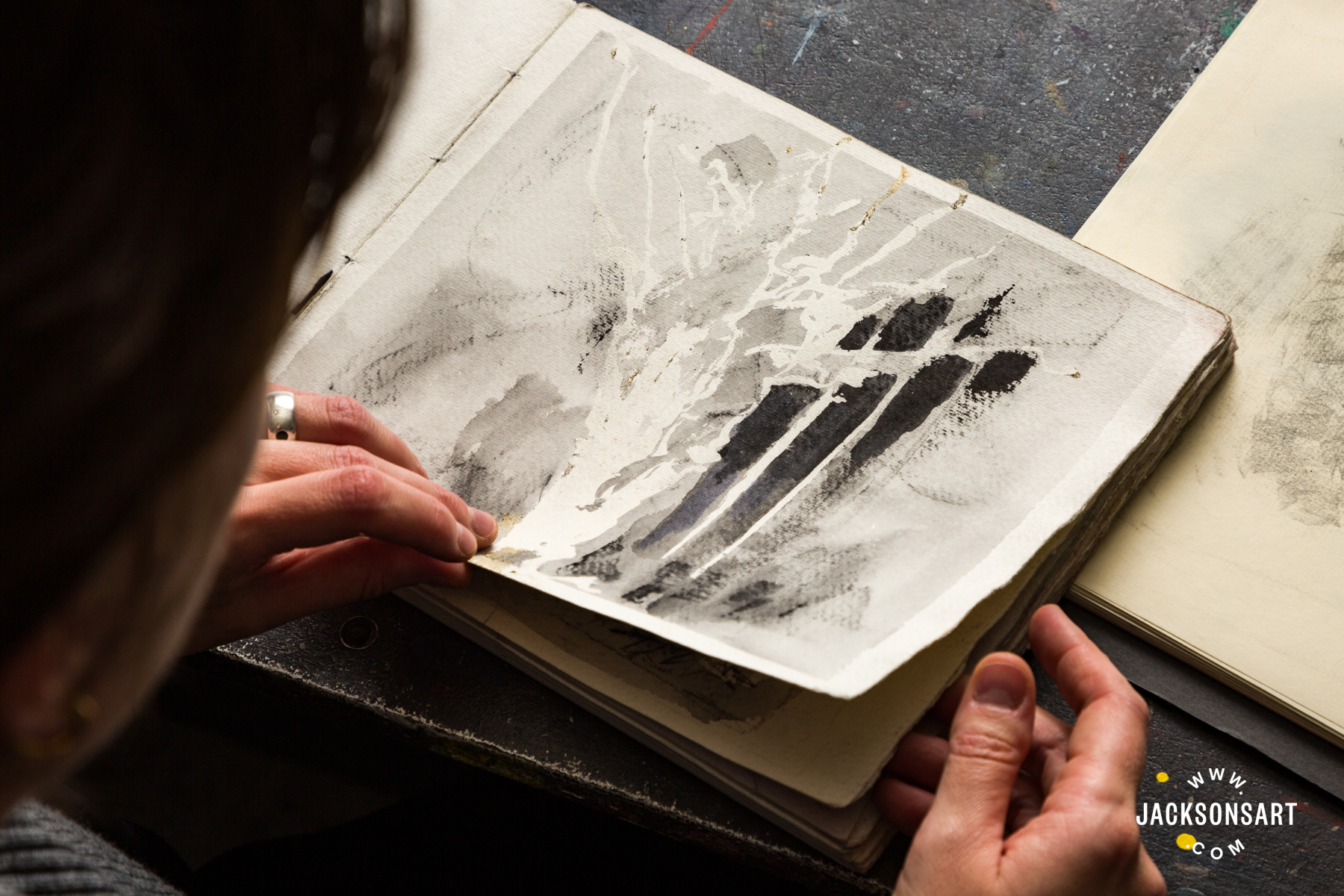
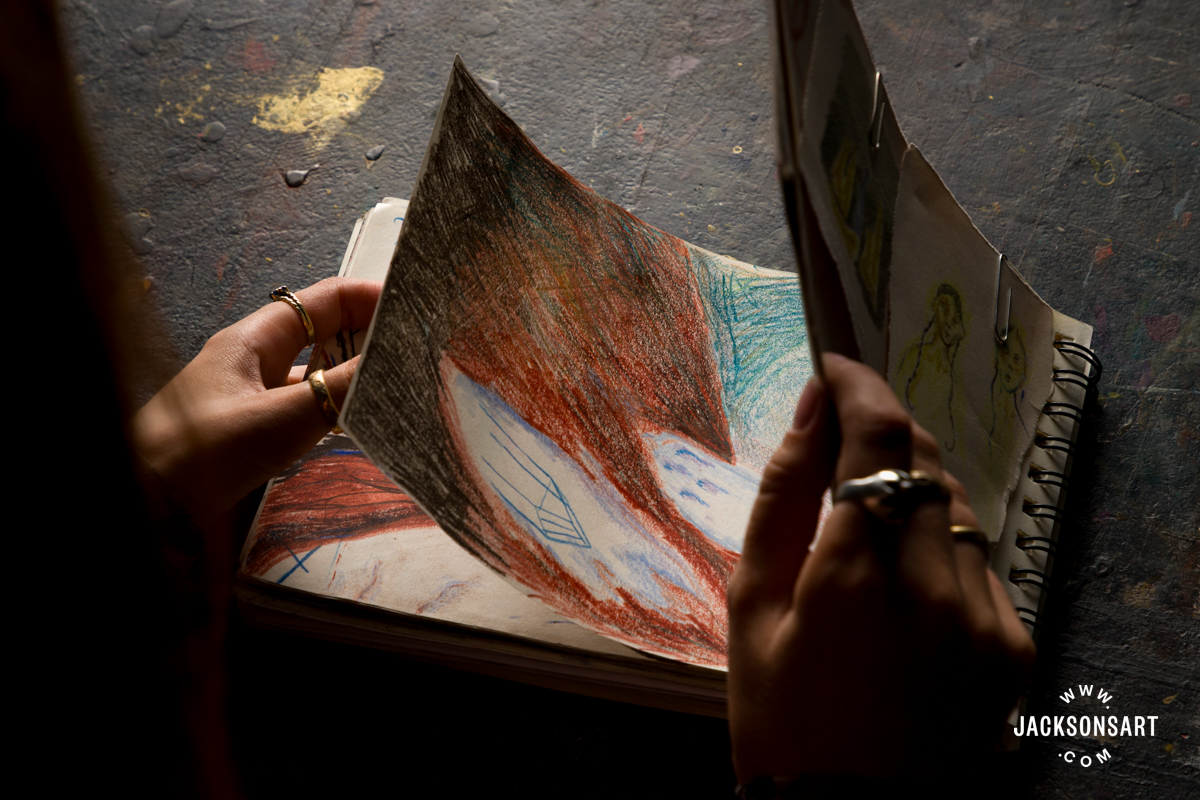
I also enjoy using Khadi Sketchbooks that contain handmade paper made from 100% long-fibred cotton rag. The 210 gsm paper has a smooth surface and features one deckled edge. The paper is incredibly forgiving and I frequently lay down a ground of ink before working over it with Conté pastels, soft pastels, and pastel pencils. They are also similar to the Midori MD Notebooks in that they can be opened up and laid flat, which is ideal when in the flow of drawing while on the move.
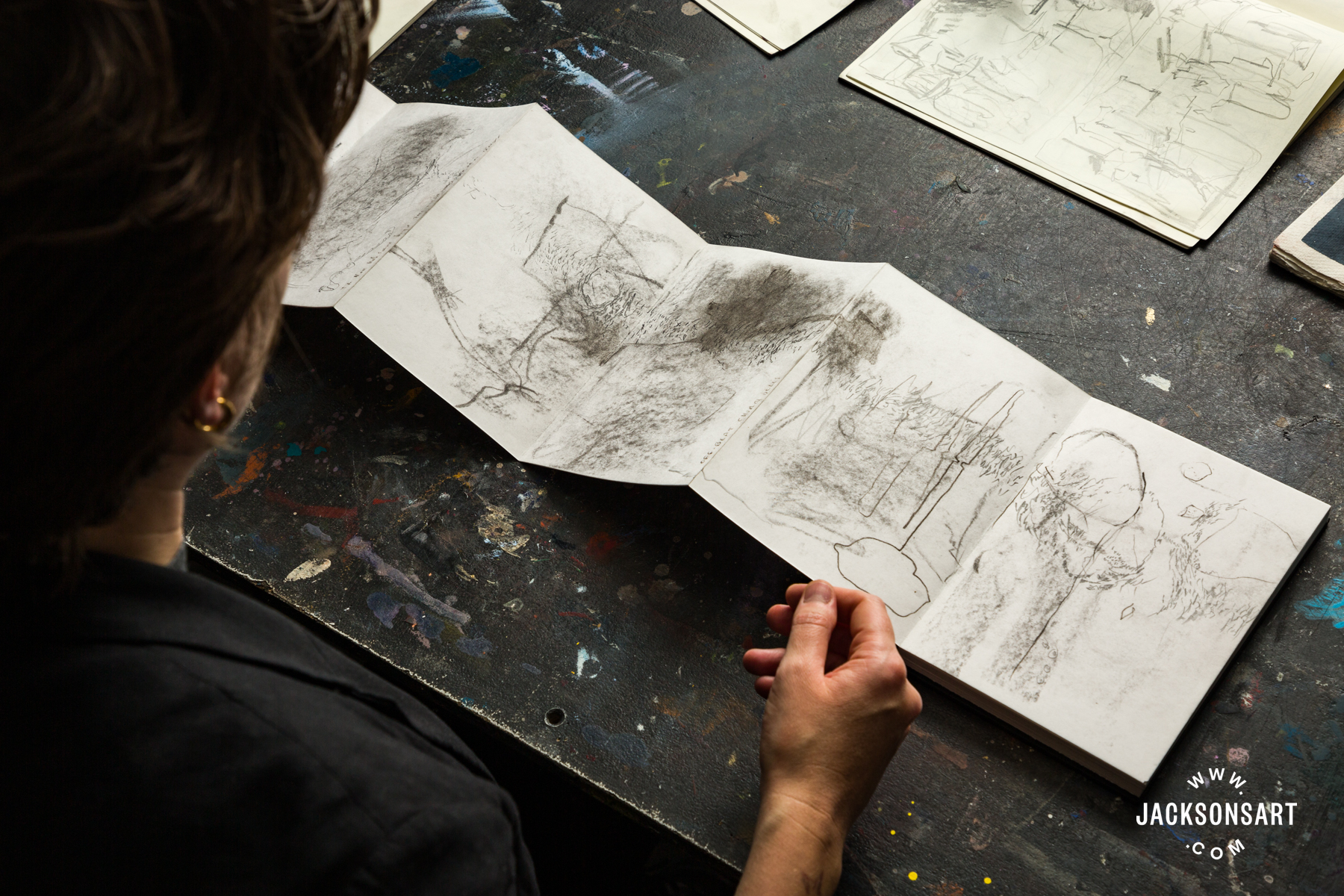
Occasionally, if I’m working from a specific location, I like to use a concertina sketchbook such as the A5 Seawhite Concertina Sketchbook. This is a brilliant format for developing a continuous drawing that evolves over time, and it’s always a great surprise to lay out flat when the drawing is finished.
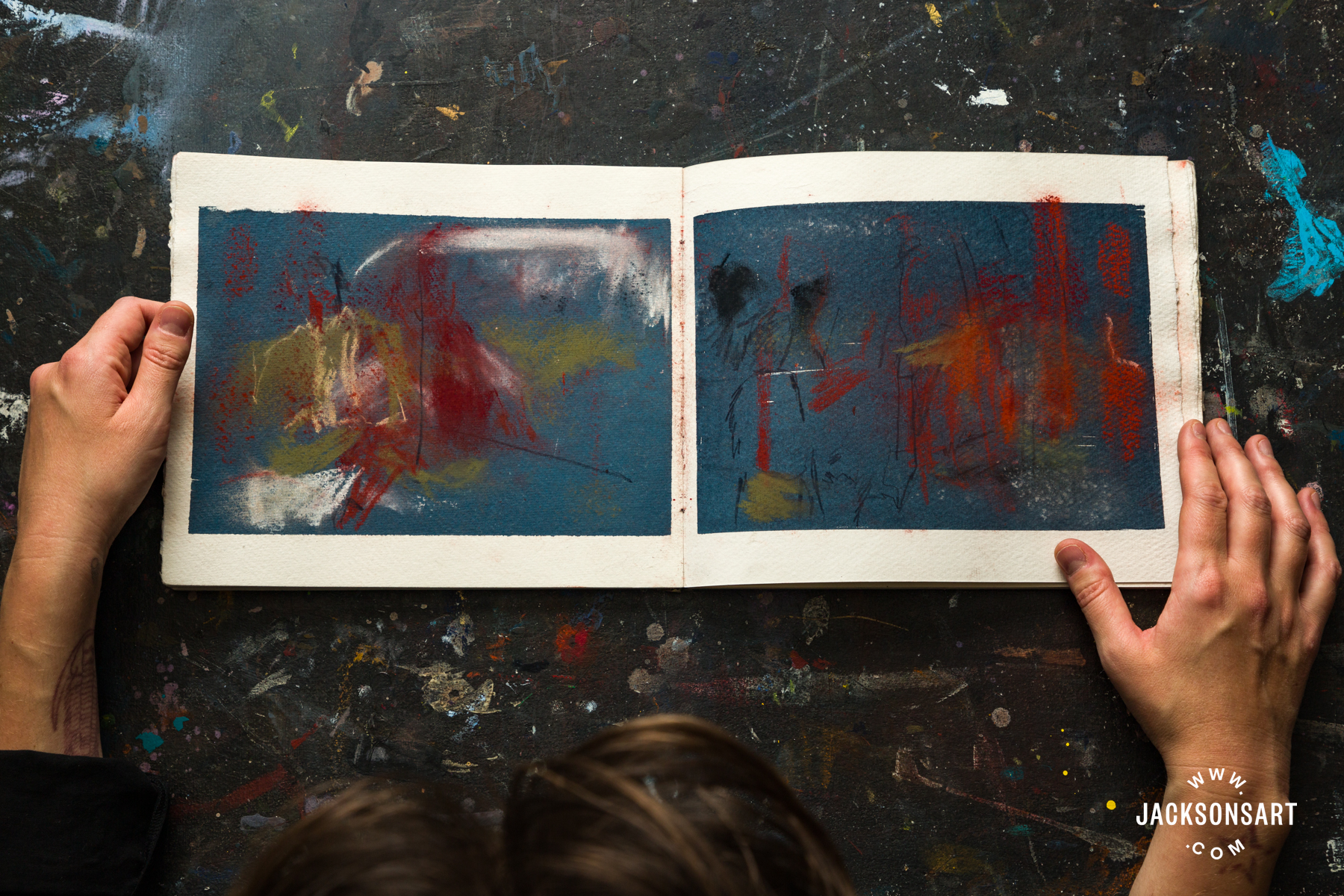
I use a lot of graphite in my sketchbooks. I frequently use a range of soft graphite pencils, graphite sticks, and Viarco ArtGraf Tailor Shape Watersoluble Graphite. Because the paper in the Midori MD Notebooks is very thin I only use dry materials in these sketchbooks, whereas the 210 gsm Khadi Paper allows me to prepare the surface with either Sennelier Ink or Rohrer & Klingner Inks before working into it with a small colour palette.
I enjoy the sense of touch when using the graphite – it can be manipulated by smudging and erasing. It is also perfect for ease and portability: I mainly work in my sketchbook while on the move and love creating a record of my journey, whether that’s through the rhythm of my hand while walking or the motion of a train journey.
I find that by preparing the Khadi Sketchbooks with coloured ground I am inspired to work with a colour palette that I wouldn’t normally work with. I frequently use shellac-based Sennelier Inks which give a satin sheen, or Rohrer & Klingner Inks which are acrylic-based and give a matt finish. I’ll then work over the ground with Conté à Paris Drawing Pencils, Conté Carre Pastels, Unison Colour Soft Pastels, and Stabilo: Carbothello Pastel Pencils.
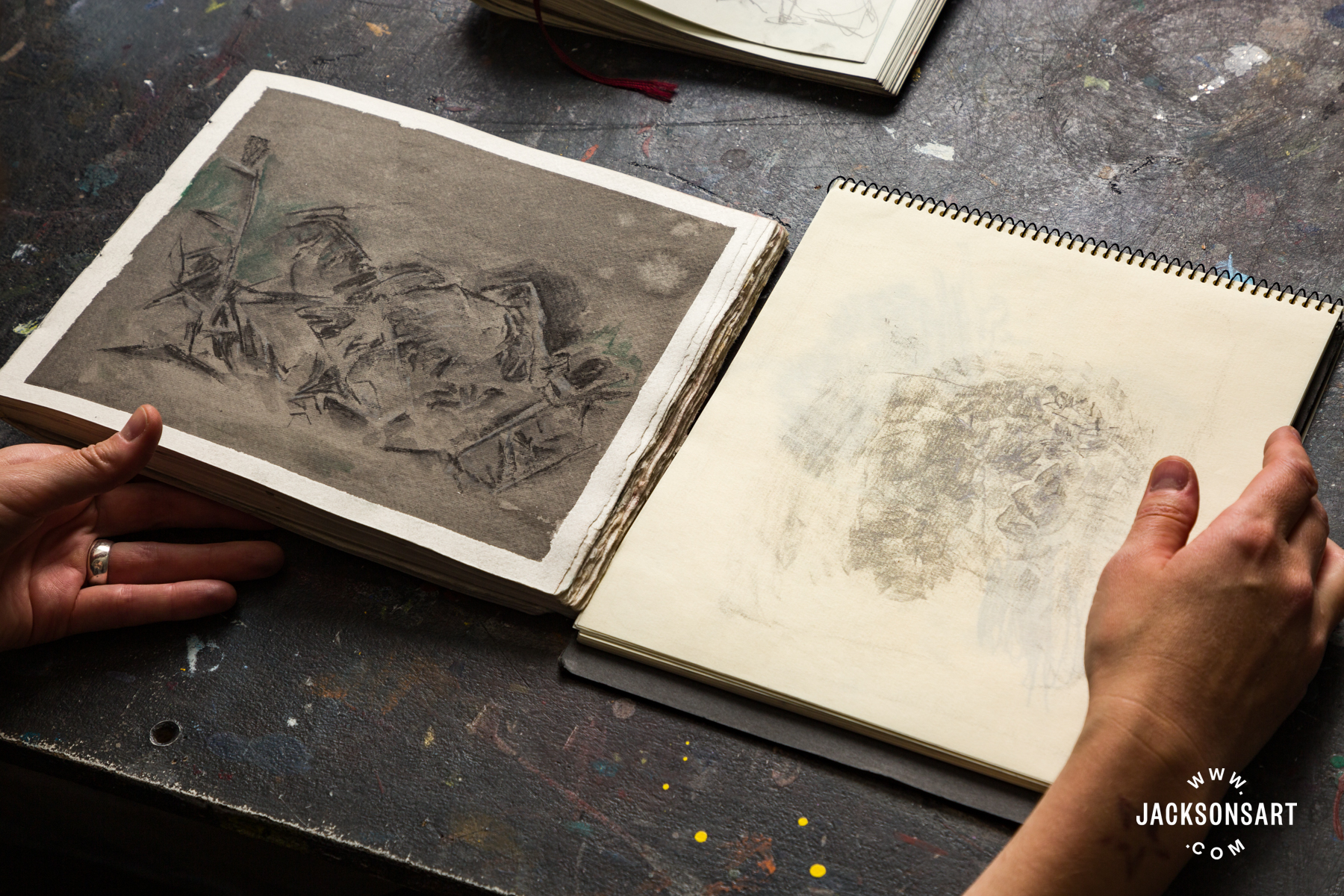
I aim to work in my sketchbook every day, even if I only have two minutes to spare. This way, I can build up a body of experiments and drawings that I can reference whenever I need to find new inspiration. Working in my sketchbook is also a great way for me to develop my muscle memory through repetition of mark-making in response to looking and listening.
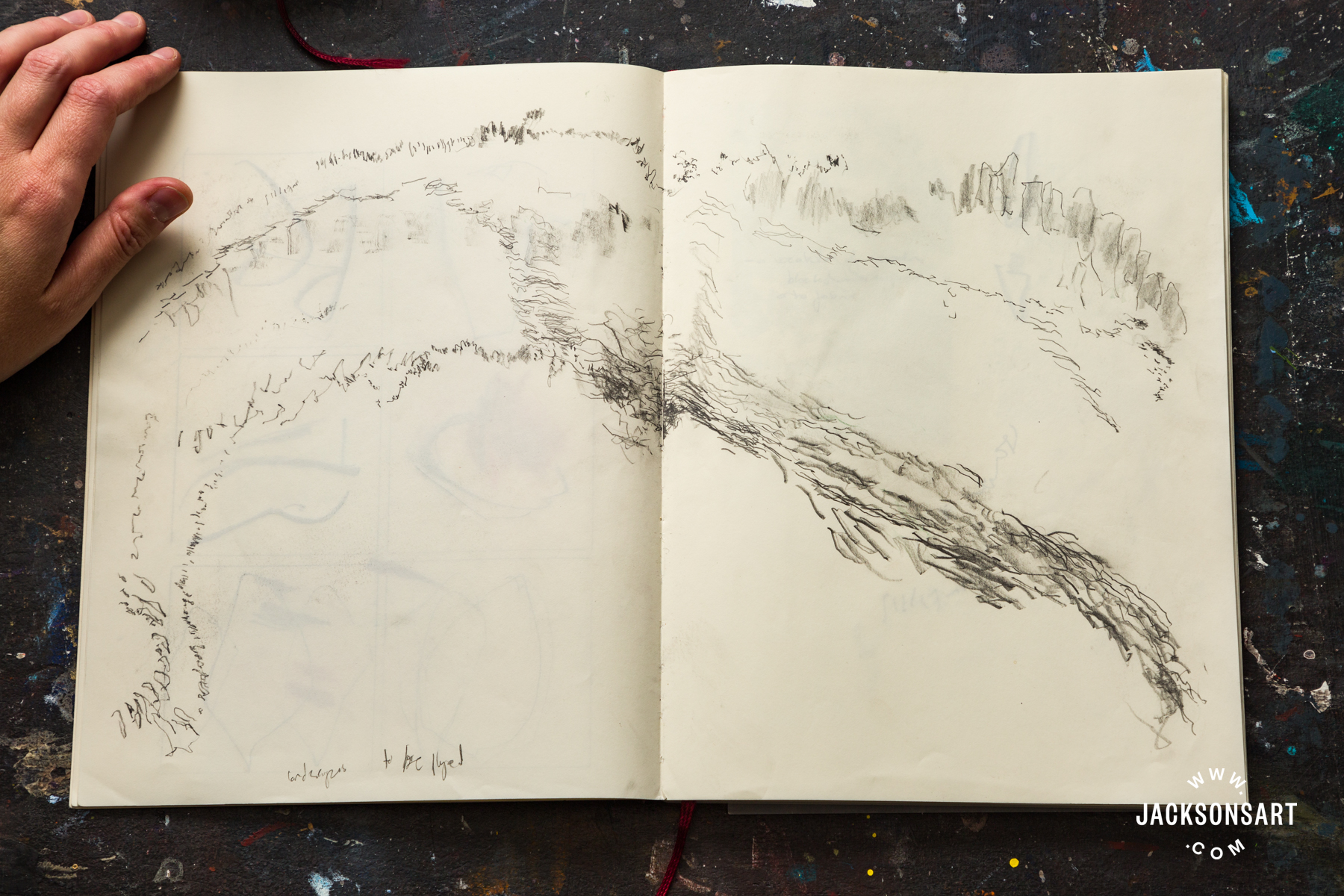
The experiments in my sketchbooks can be directly translated onto an etching plate or into wood engraving. Sometimes my sketchbooks contain elements of a larger drawing and I’ll use them as a reference to scale up a drawing or layer a couple of drawings onto a larger surface in the studio. Other times it is the action of drawing that translates into the finished work – the muscle memory developed through repetition.
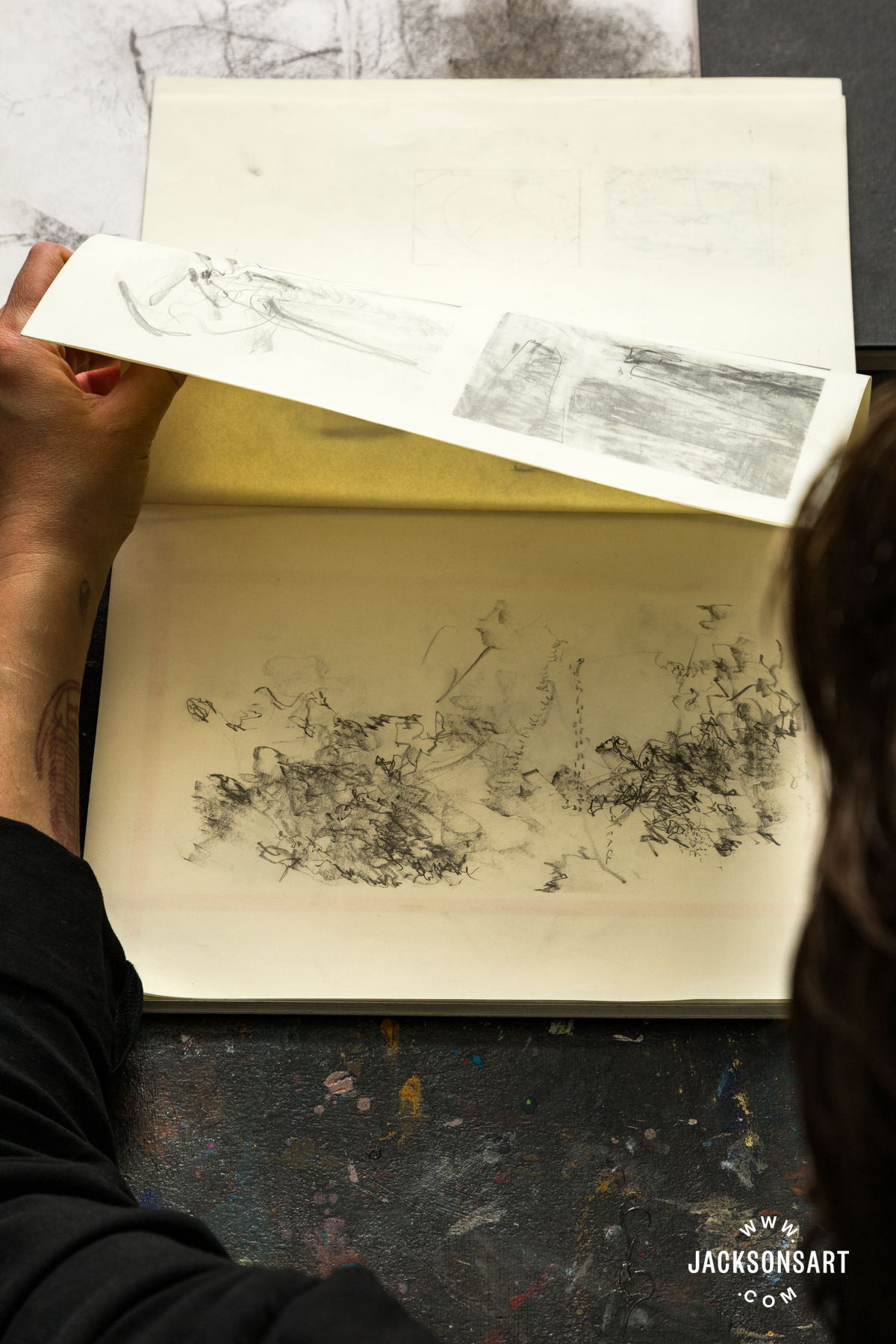
Working in my sketchbooks is such an important aspect of my practice because it allows me to catch a glimpse of how I experience the world. They are the starting point for all of my work and continue to excite me when I need to find inspiration.
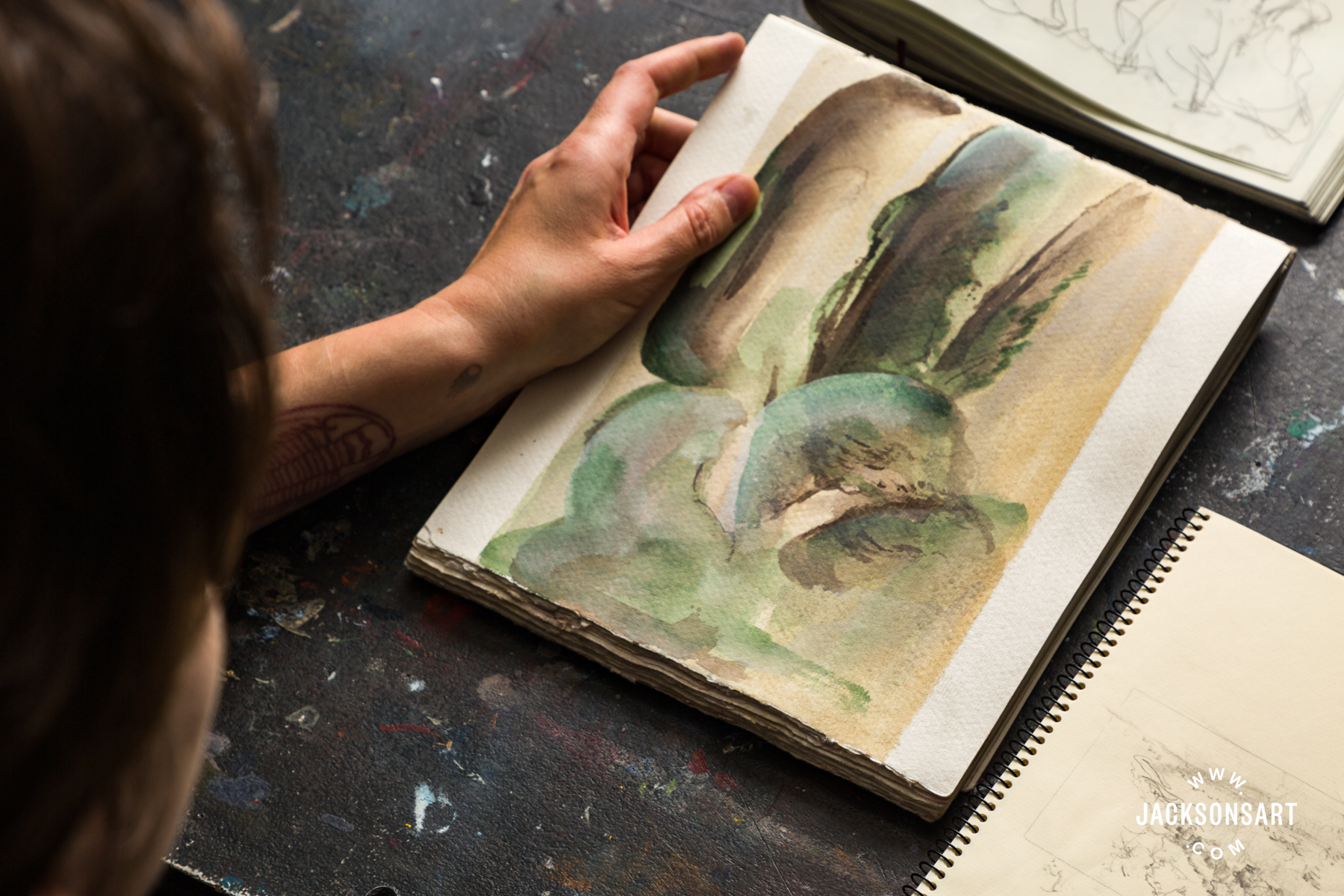
I think it’s important to be fearless when working in your sketchbook. It’s a place to take risks and develop your own mark-making language. The first step is to carry it with you wherever you go!
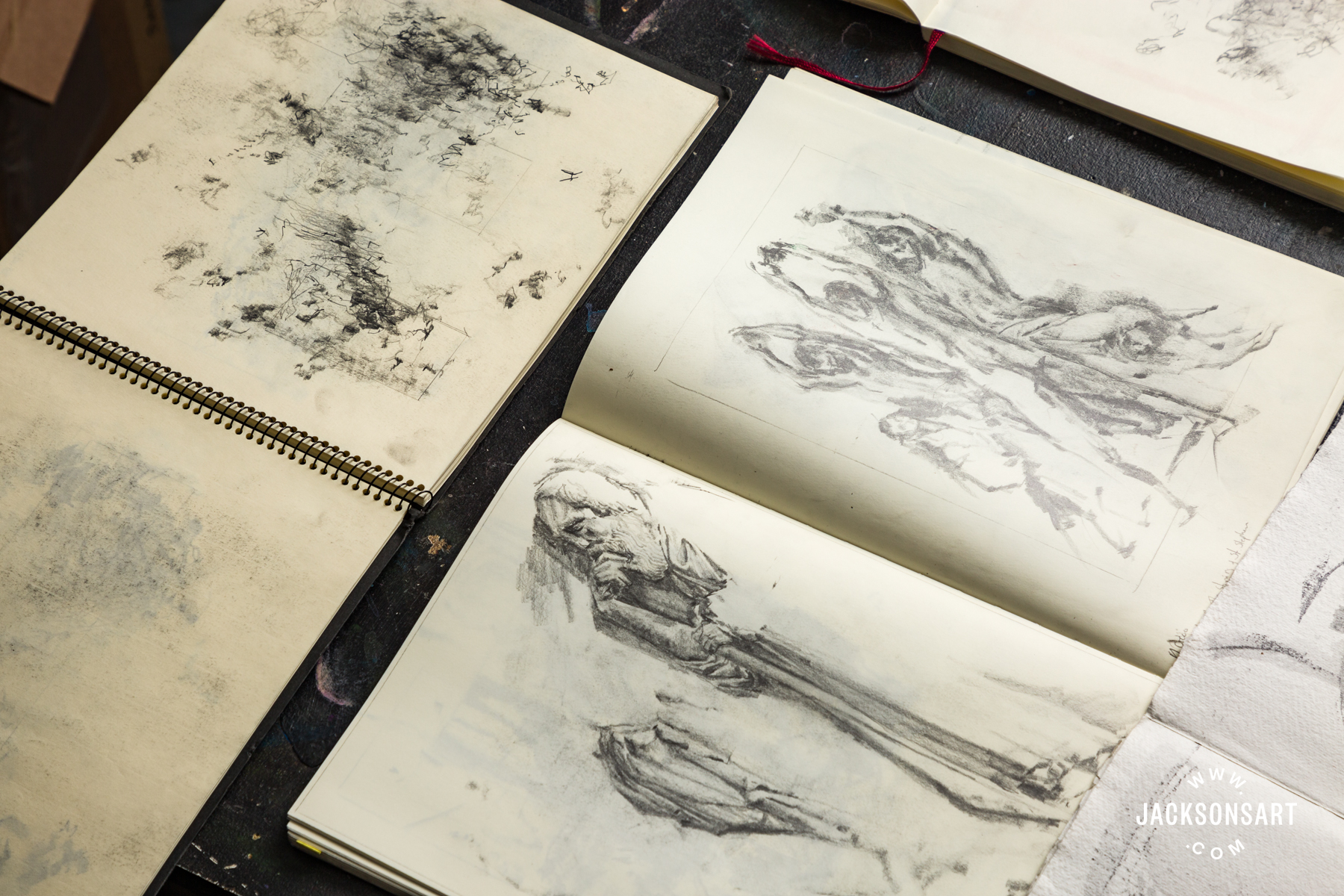
Materials Used
Viarco ArtGraf Tailor Shape Watersoluble Graphite
Palomino Blackwing Soft Graphite Pencil
Stabilo: Carbothello Pastel Pencils
Seawhite Concertina Sketchbook A5
Khadi Handmade Bound Sketchbook 210 gsm Smooth
Croquis Maruman Cream SS2 Sketchbook
Midori MD Notebook A4/Large
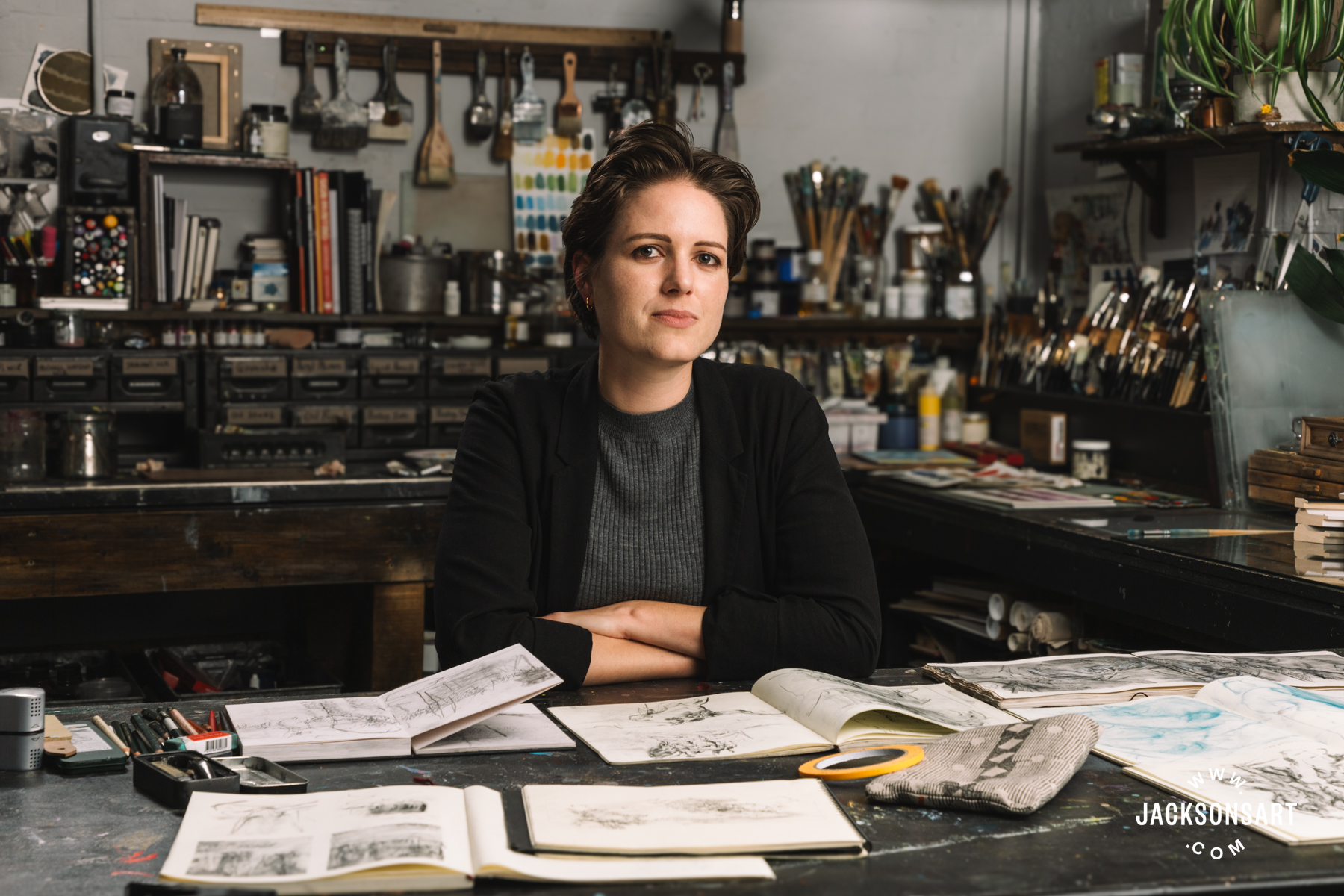
About Gemma Thompson
Gemma Thompson is a multidisciplinary artist who works through drawing, print, and sound to record sonic experience of place. She uses drawing to intuitively transcribe a sense or (intangible) feeling of place and to reimagine sound as physical presence.
Further Reading
Developing a Daily Drawing Practice with the Royal Drawing School
Inside the Pages of a Medieval Sketchbook
Combining Materials to Reinvigorate Your Drawing Practice
Preparatory Drawing Methods for Painting
Shop Sketchbooks on jacksonsart.com
2 thoughts on “Inside the Sketchbook of Gemma Thompson”
Lovely work. Can you clarify which Sennelier
and Rohrer & Klinger inks you use? The links
never seem to work for me…
Hi Mel, I asked Gemma and she has said she uses the Sennelier Inks linked above, and Rhorer & Klinger Traditional Inks, sometimes mixing them with Calligraphy Ink.
Comments are closed.