



Mark Entwisle is a professional artist, member of the Royal Watercolour Society, and winner of the Sunday Times Watercolour Competition 2020. Here he shows us through his sketchbooks and shares how many of the practices he learned in art school have remained with him throughout his career.
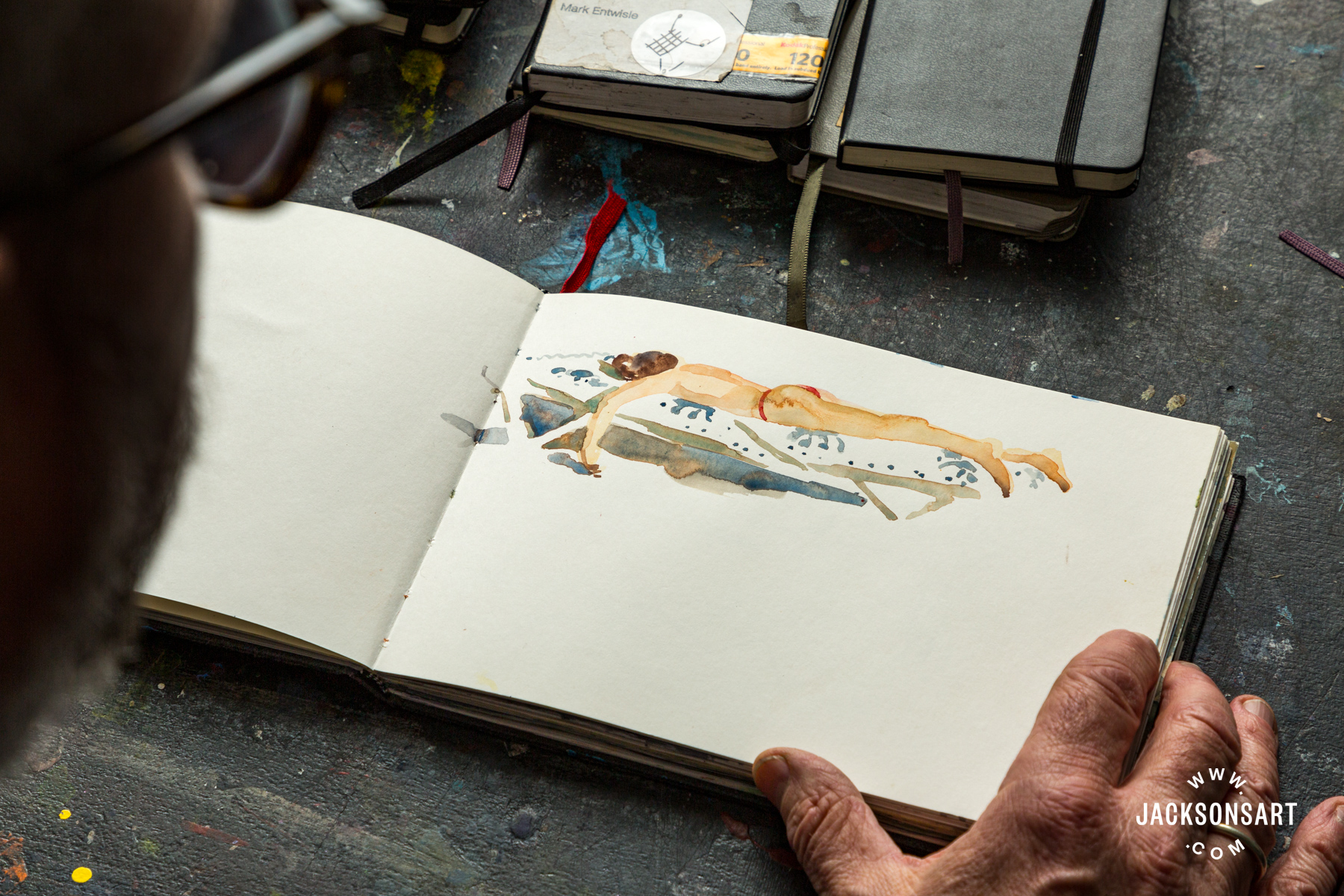
Mark Entwisle Takes Us Through His Sketchbook Practice
I generally have three sketchbooks on the go. An A6 sketchbook, permanently in my bag, an A5 one which is more for drawing at home, and an A5 watercolour sketchbook, more for travelling or when I’ll have time to paint.
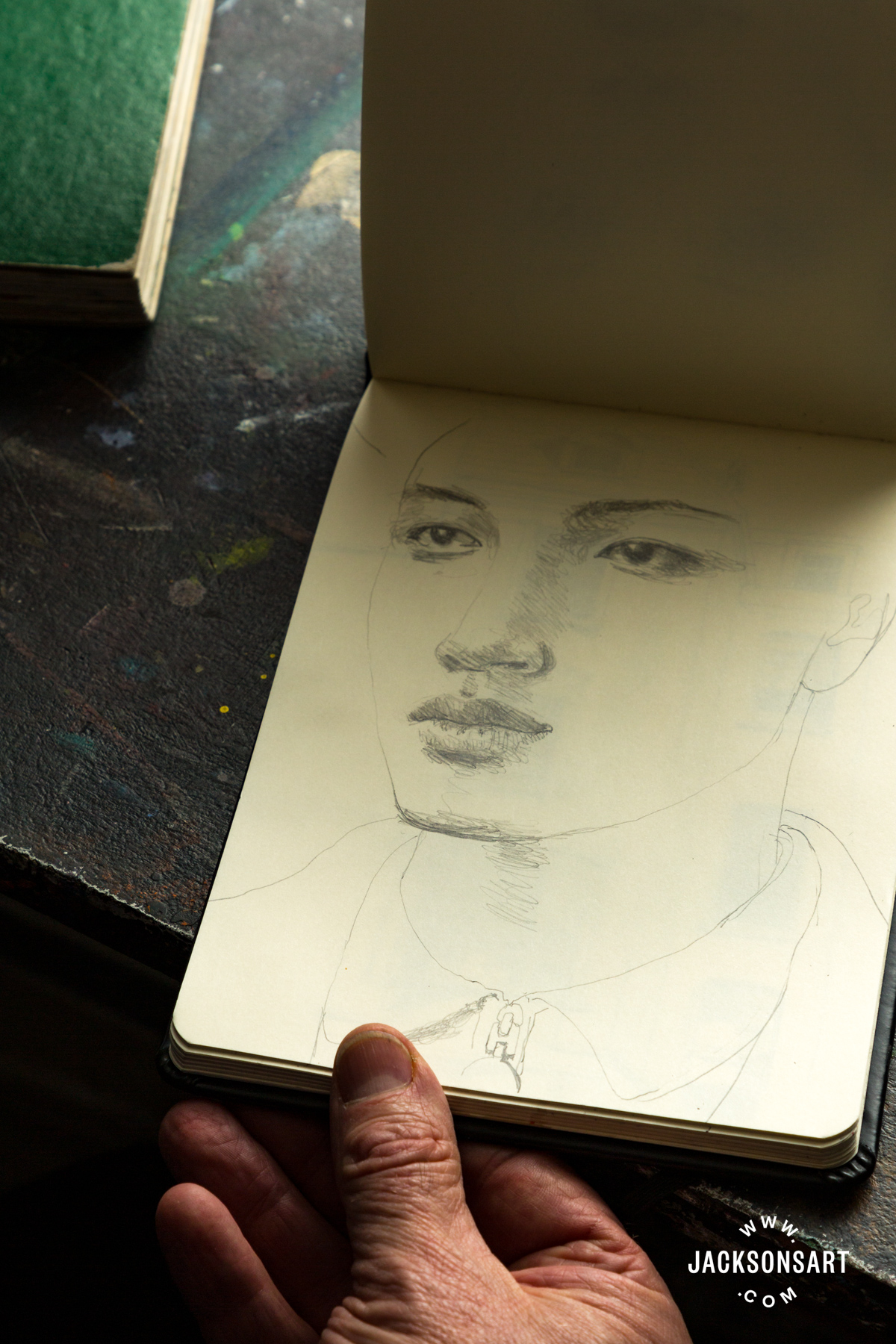
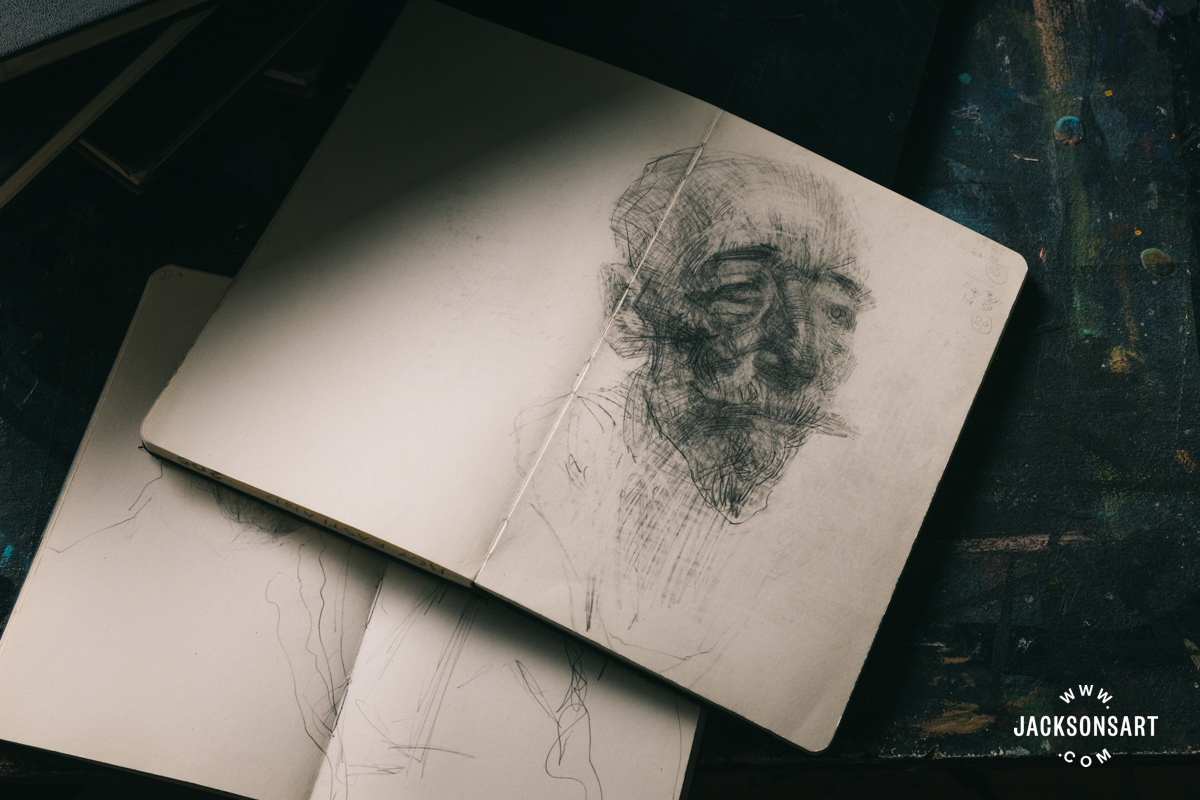
For drawing I mostly use the Moleskine Hardback Notebooks and Sketchbooks. I like the smooth paper.
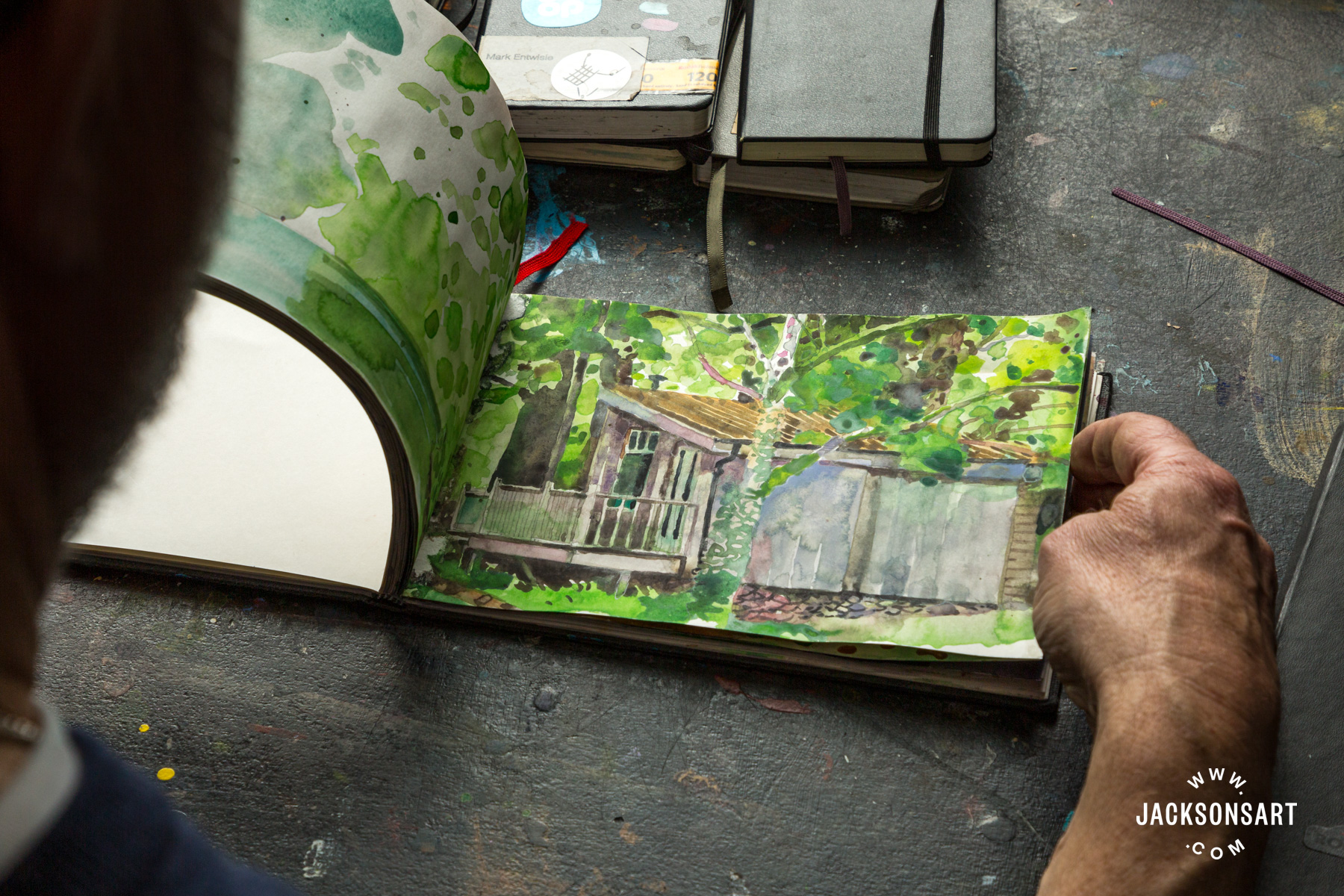
I favour notebooks that have more, thin pages as they don’t feel as serious, so I feel less of the restriction that each drawing has to be really good. Sketchbooks are a good place to experiment and feel free to make mistakes, make a note of something that interests you without wondering who else will be interested.
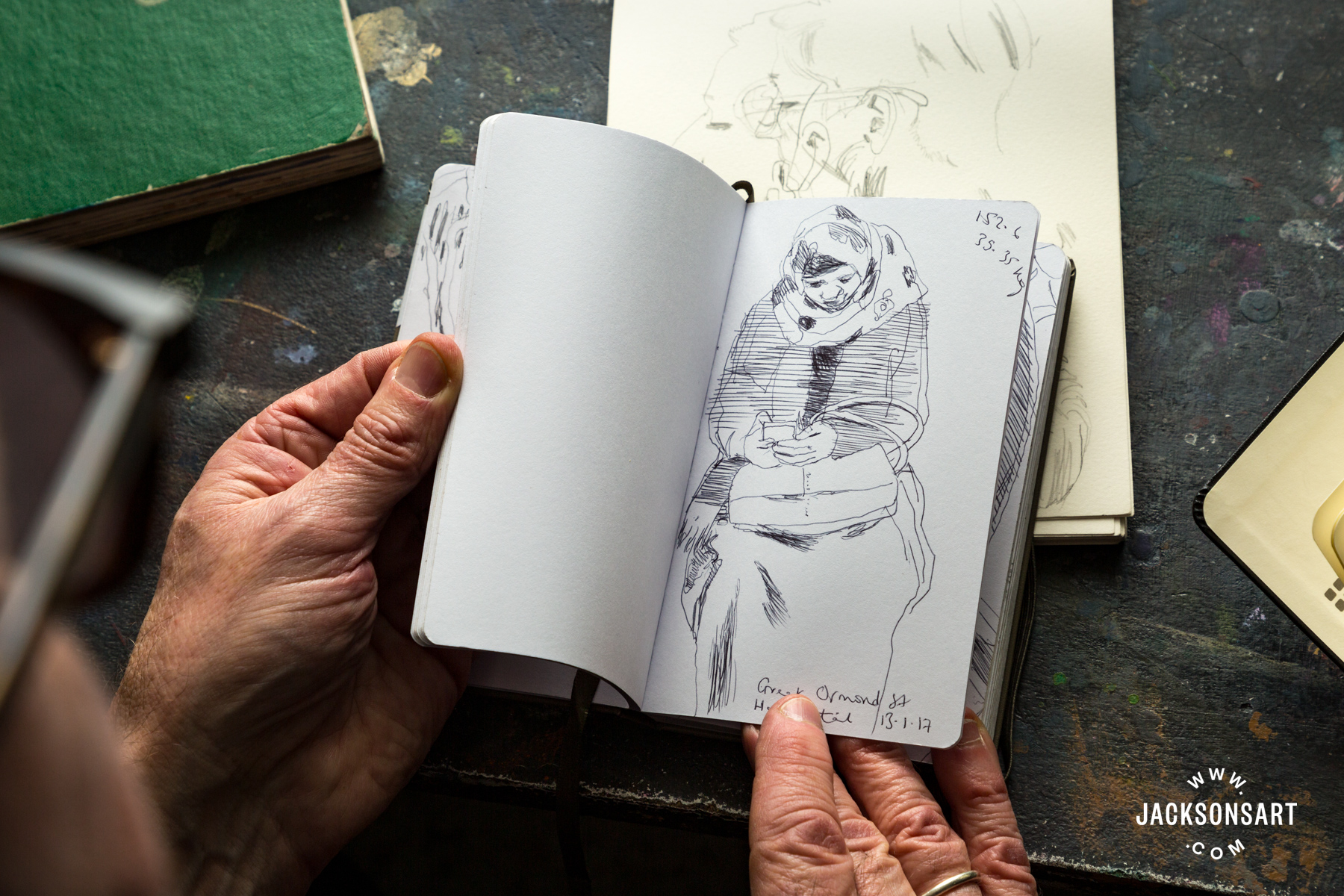
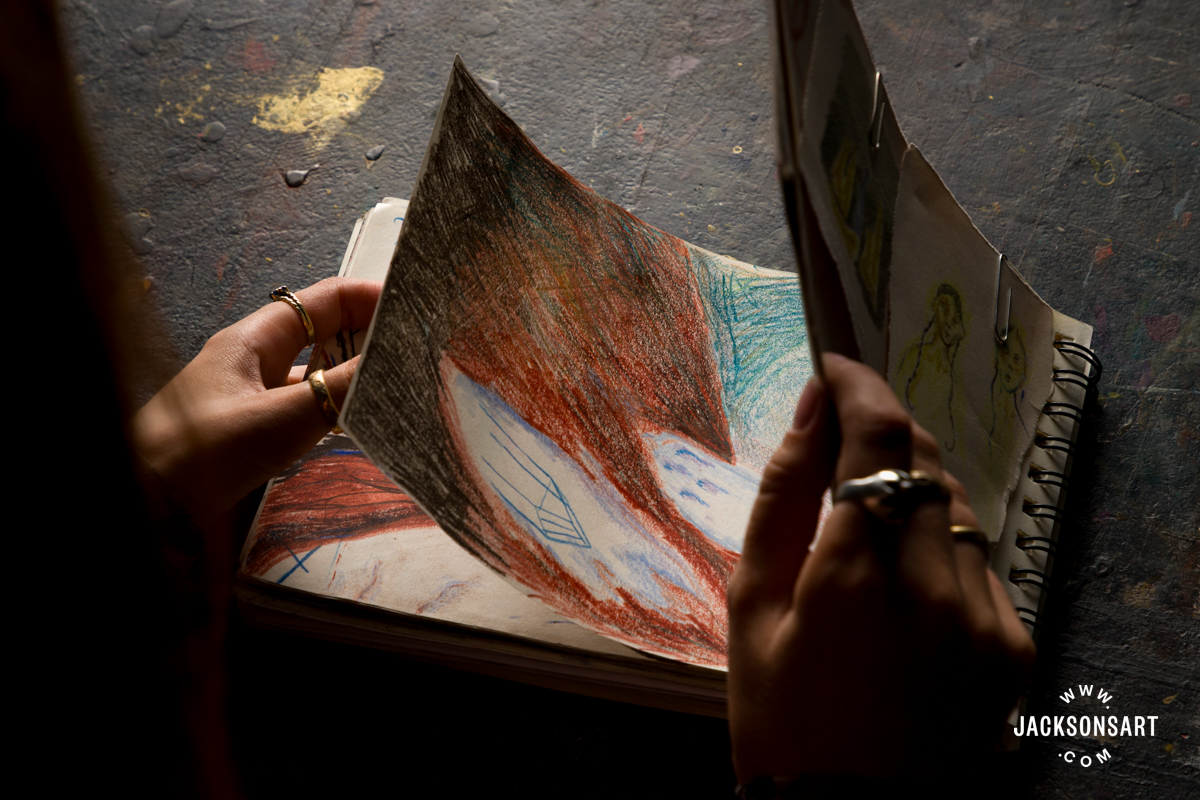
I use A5, hardback watercolour sketchbooks with hot press paper. I don’t particularly like textured paper, especially on a small scale. I’m trying out new ones at the moment as they have stopped making the ones I used to use.
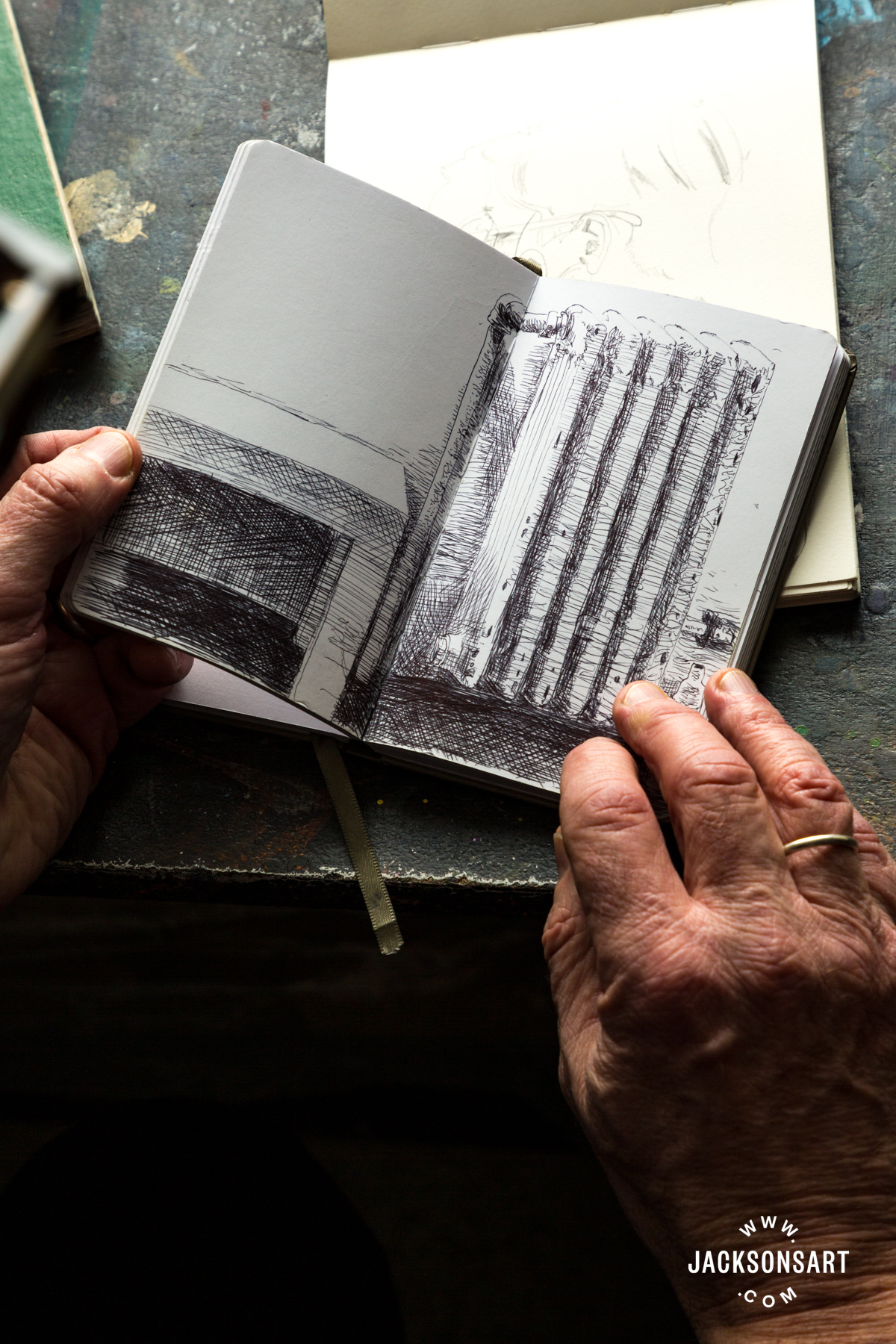
My current A5 watercolour sketchbook by Hahnemuhle, that I’ve painted in all summer, is very good, so I’ll probably stick with that. The paper seems to have equally good surfaces for watercolour on both sides. Not always the case!
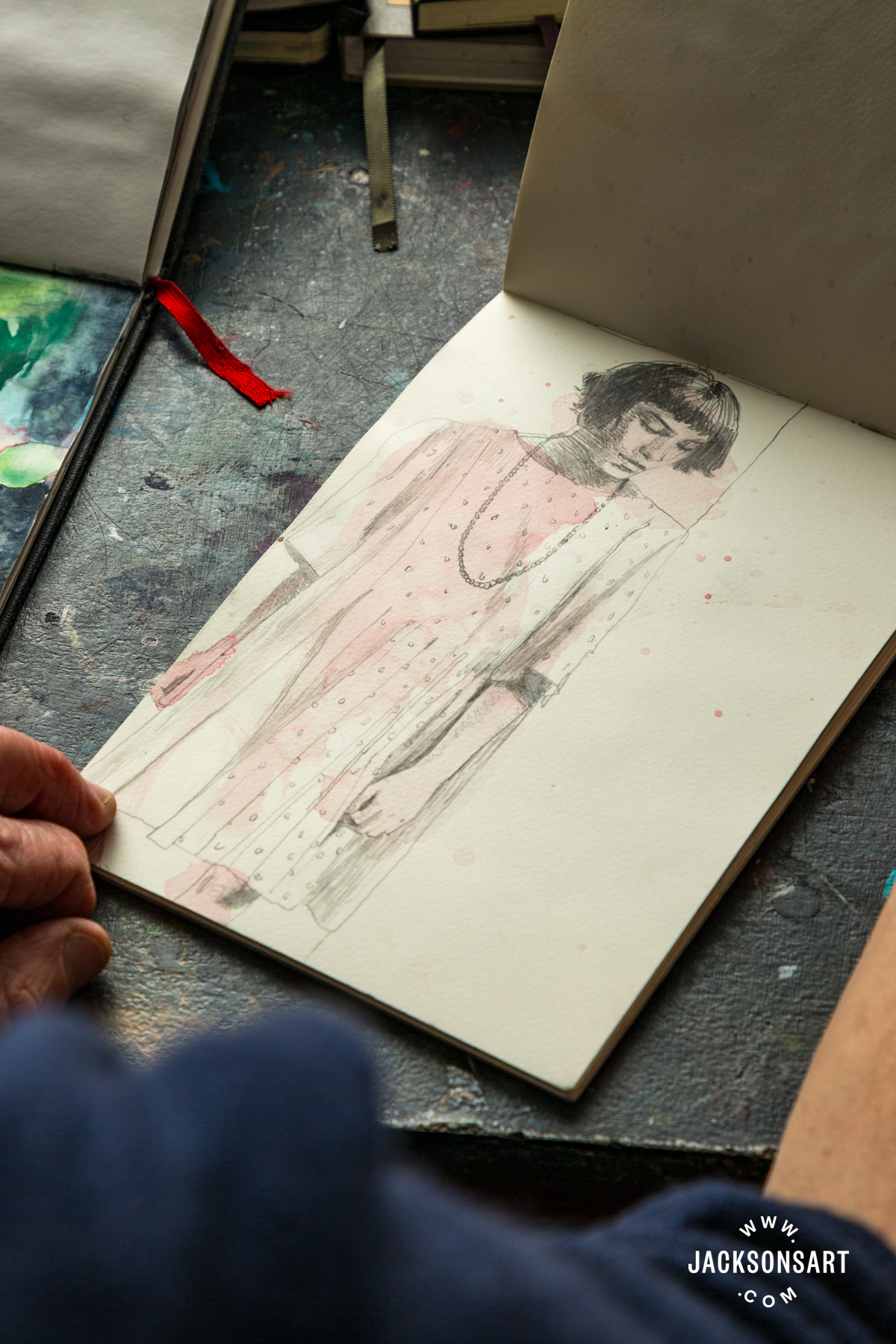
The two things I always carry with my sketchbook are a Pentel 0.9 Mechanical Pencil, the Architect’s Pencil. A bit thick for small A5 drawings, but I find the 0.5 leads snap too easily. I think I’m a heavy-handed draughtsperson.
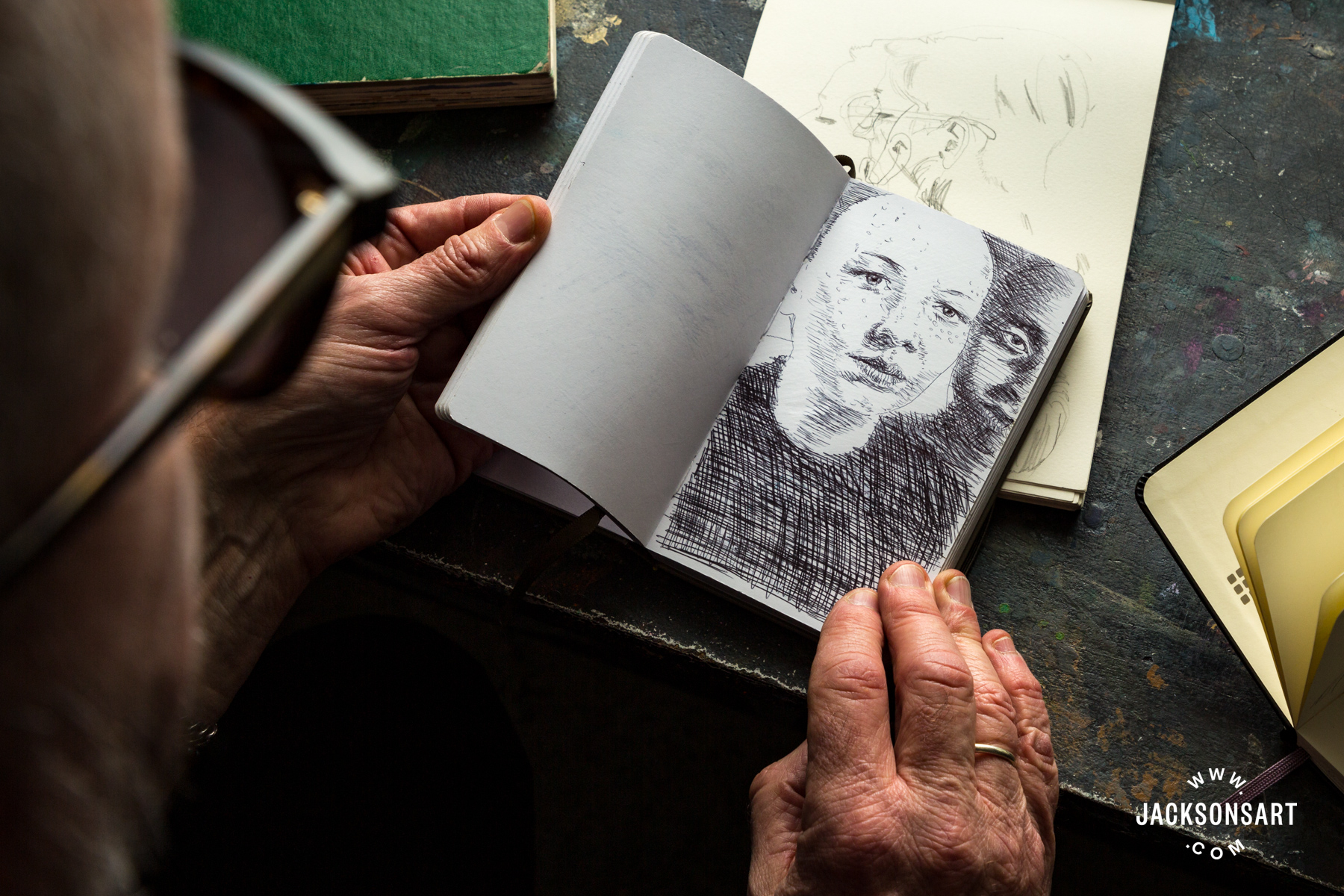
And an orange Bic Biro, Fine point and black ink. I think I draw better with a biro as its permanence sharpens the senses. I also like that you have to leave all the lines in. On my foundation course we were told not to use an eraser as you would just draw the same line again. I also like those bic biros with four different colours.
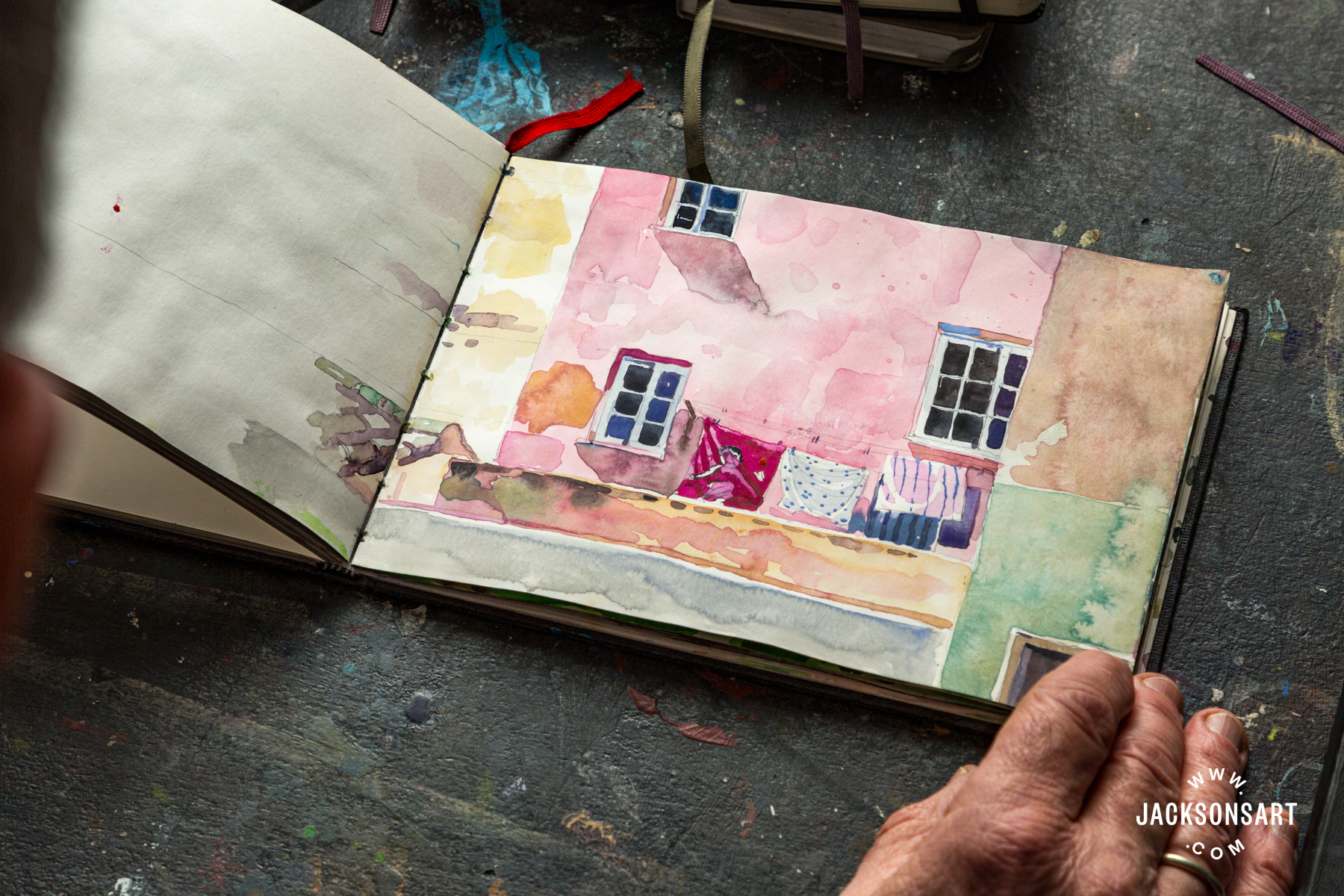
I do have a small watercolour tin with eight quarter pan colours and a sawn-off brush to keep things minimal and light if I’m planning on painting, but I generally carry a larger metal tin as I need the larger palette areas.
I use watercolours for their immediacy, unpredictability, and simplicity. I bought my first set, a small tin that said Rembrandt on the lid, when I was 13 or 14 at a jumble sale. It hadn’t been used. I found it quite easy and logical to paint with straight away. I’ve always found it’s a medium I just get, unlike oils which seemed like trials and tribulations for years, like painting with mud, as Roger Dean put it. A lot of artists I know find the opposite and feel that watercolours are some sort of wizardry! For 15 years as an illustrator I used watercolours exclusively, doing book covers, record covers, and theatre posters.
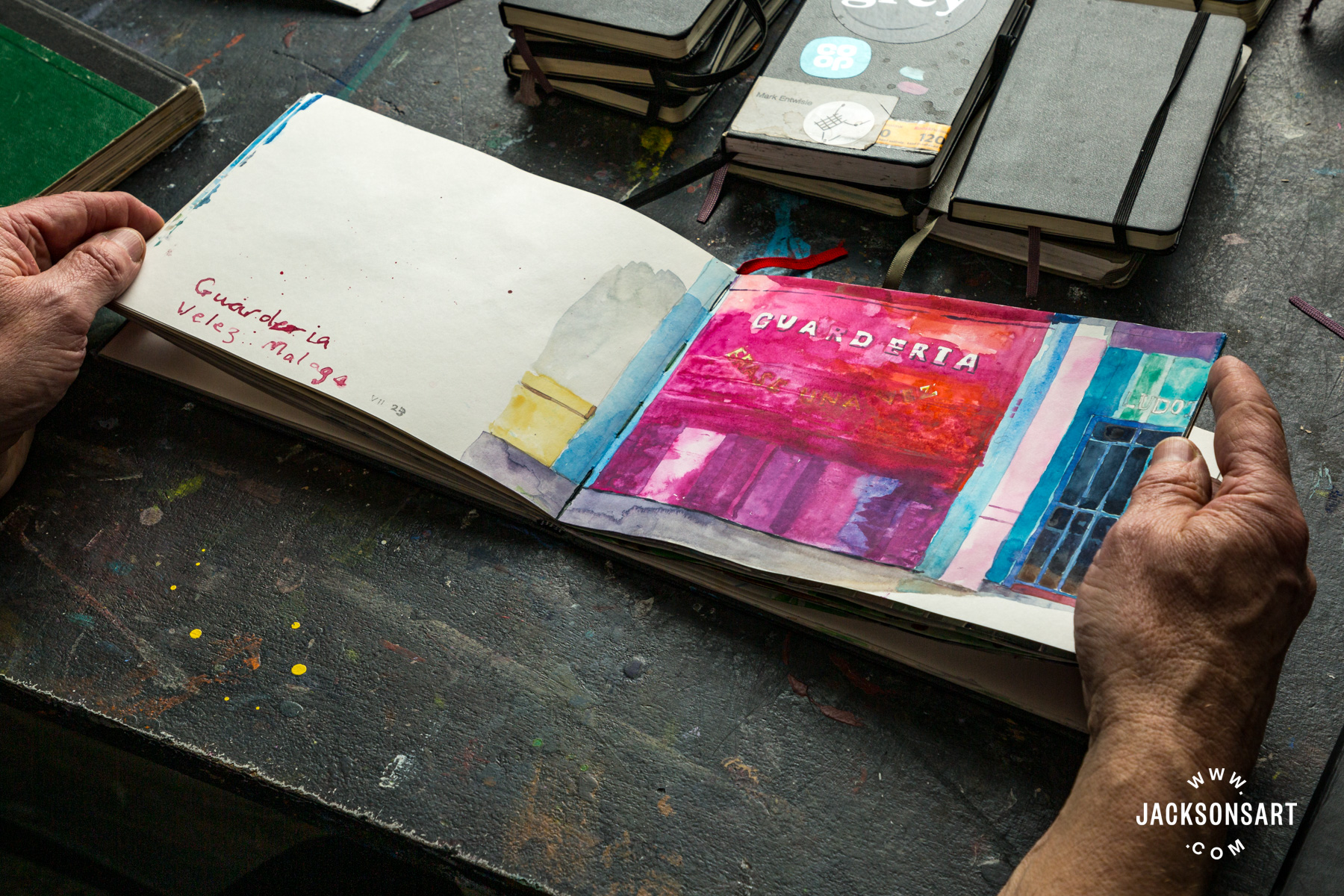
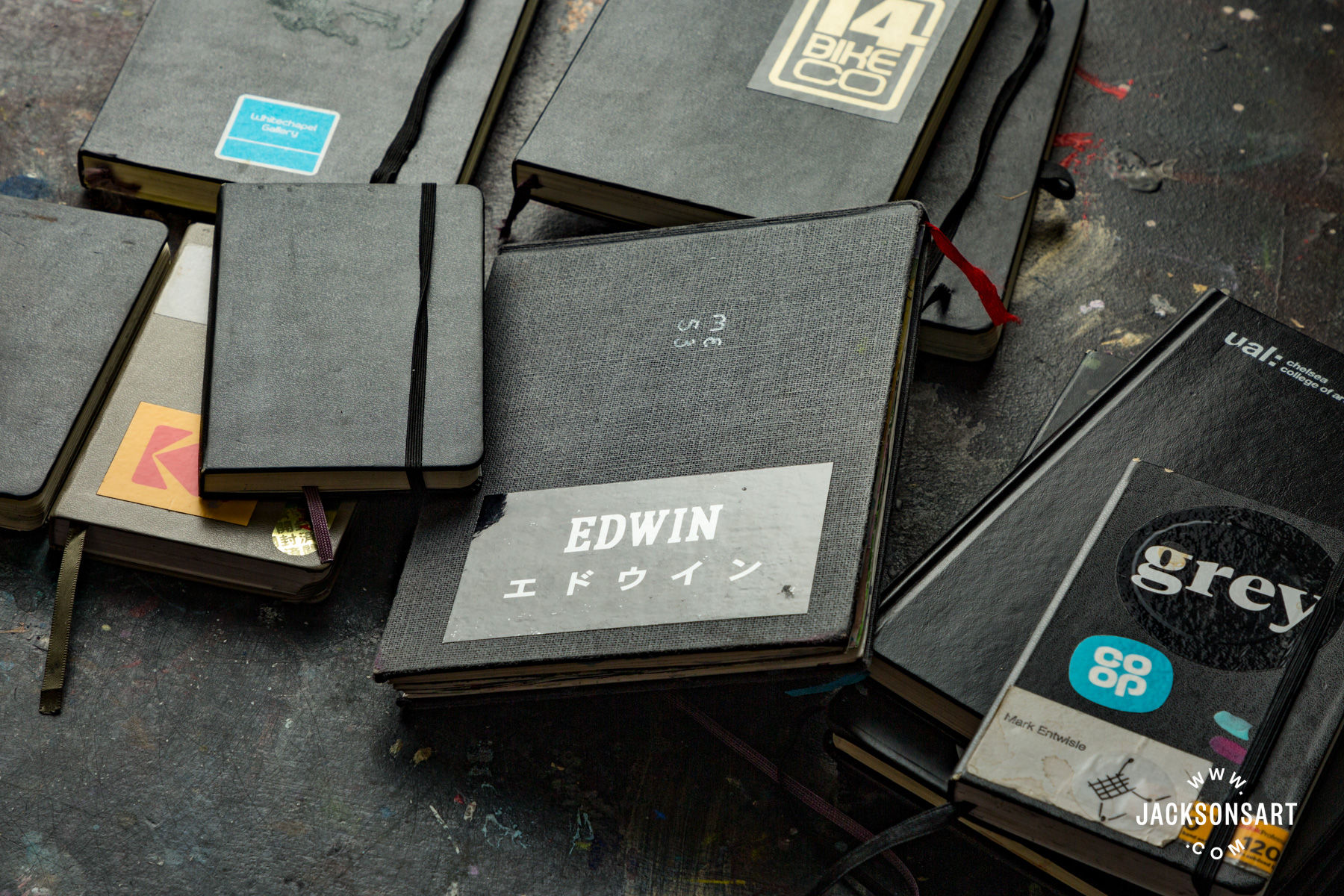
On my foundation course at Cambridge Art College we were told to draw something, anything every day, like a pianist might practice their scales. I think I’ve pretty much stuck to that and consequently have quite a large diary-like collection of sketchbooks.
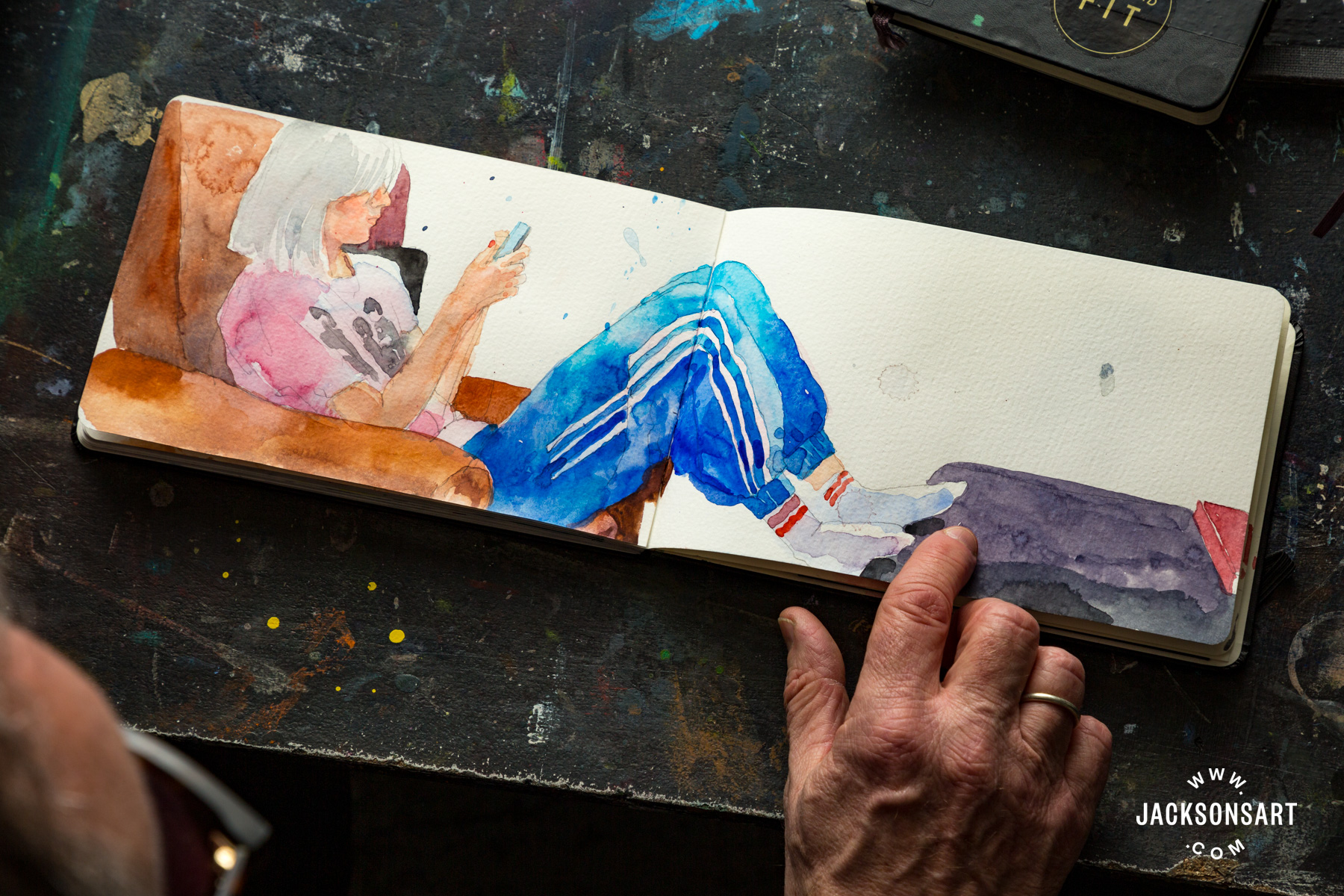
Being dyslexic, I draw where others might read. Waiting rooms, trains, beaches, watching telly. Pretty mundane things, the everyday, loved ones, things others might not have seen.
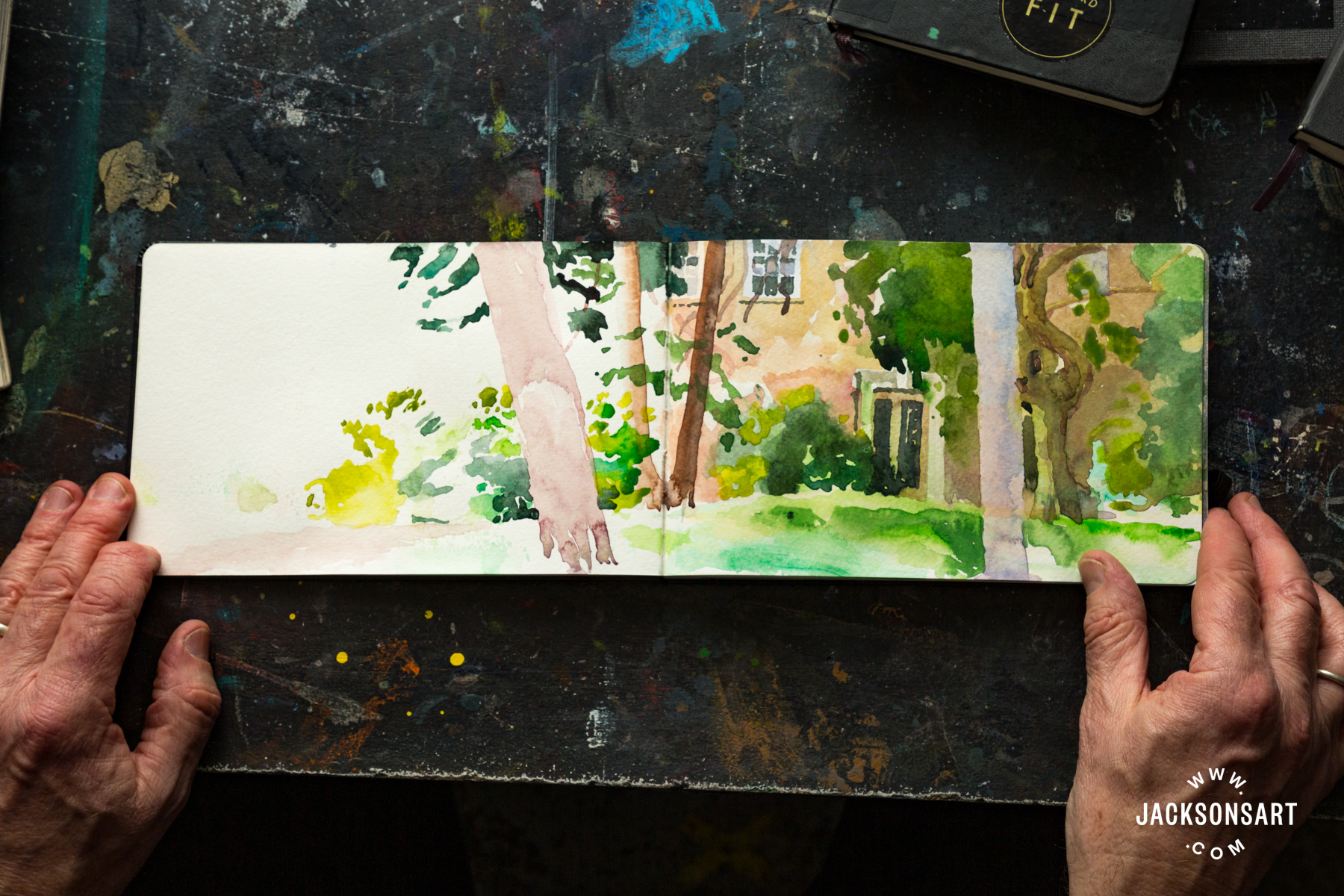
We were told that if you draw something you will remember it better than if you sat and really looked at it. I find now that looking through an old sketchbook, as I have been, preparing to write this piece! The sketchbooks are like diaries, not just remembering the thing you drew, but other things going on around you at the time. They seem to carry more pertinent information than photos.
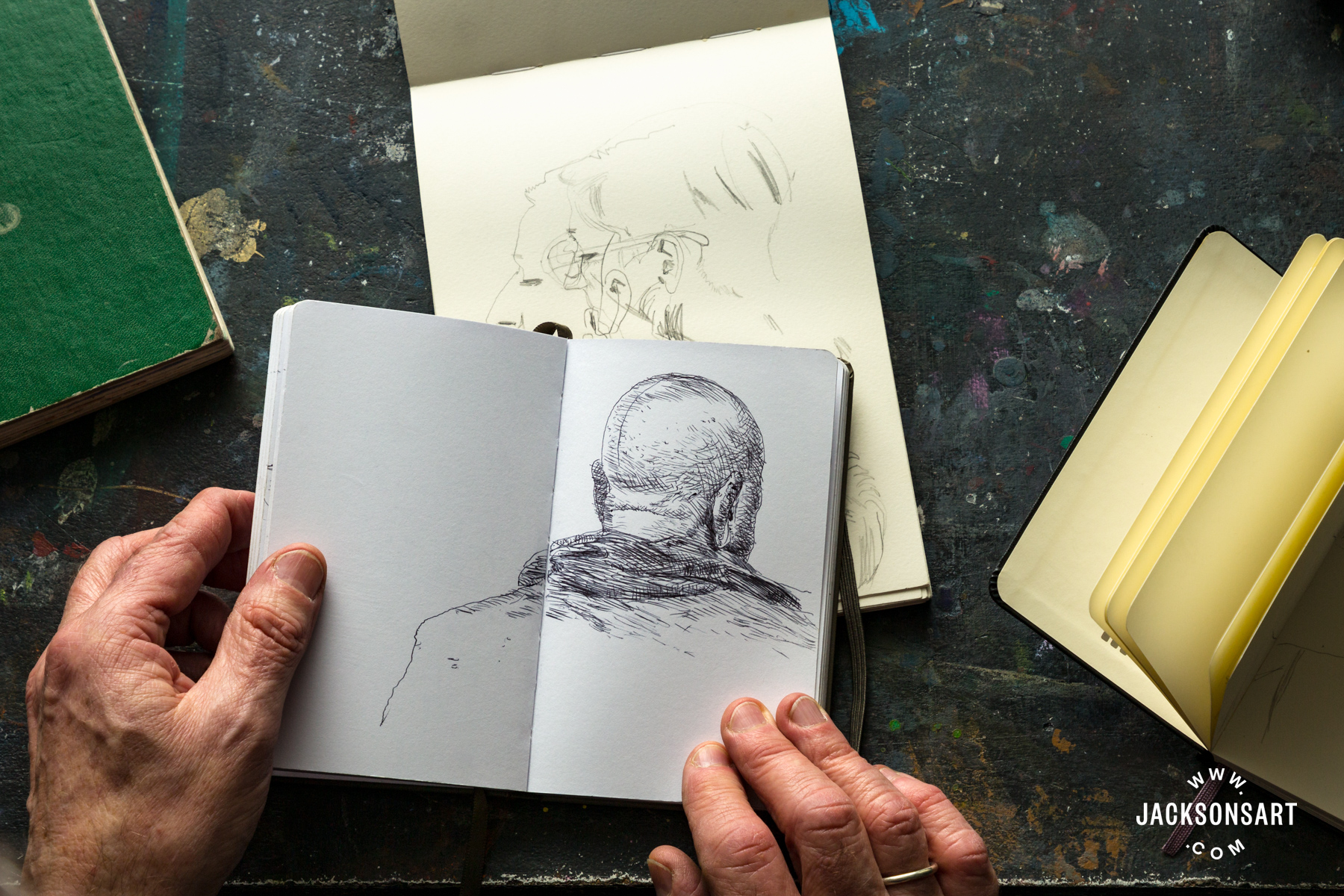
I don’t think I do translate my sketches into finished works directly, although they inform the way I paint. They either remain in my sketchbooks or are cut out and framed for exhibitions. There’s often a spontaneity about them due to the unpremeditated nature of them. You’ve literally sat in front of something and painted, often directly with a brush as someone is likely to move. You’ve sort of done it and would be hard pressed to get it again copying it but bigger. I think they work alongside larger paintings that I’ve done in the studio where I try to keep the same sense of immediacy. Similarly with the studio work, I don’t do preliminary sketches and compositions as I feel I’ve slightly used up the energy of the initial impulse. I try to avoid talking about what I’m painting next.
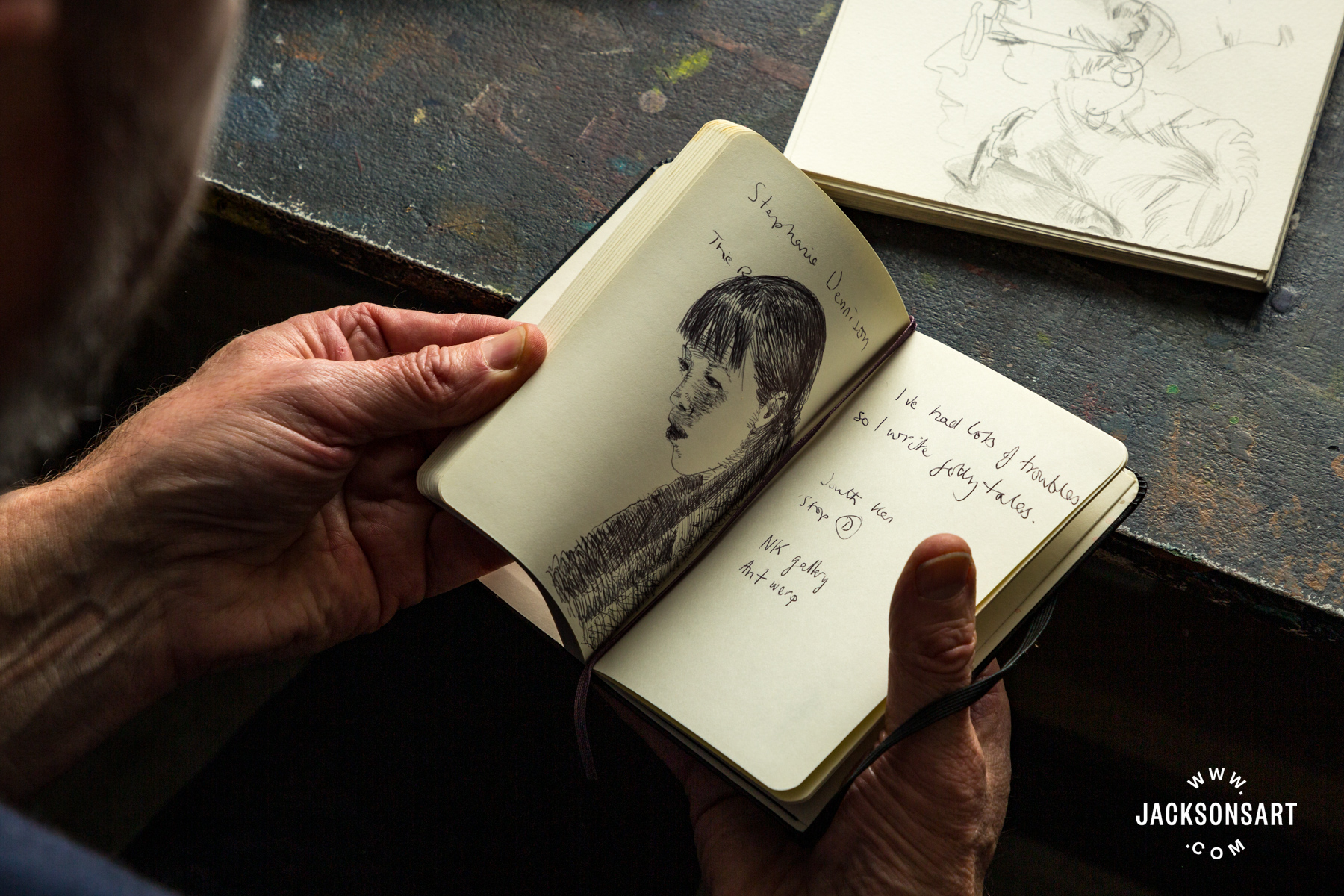
The use of sketchbooks is important mostly for keeping your hand/eye in. For practice, for inquiring, for doing things free from concern about other people’s opinions about it, free to get it wrong, ruin it, try doing it differently, and to get unexpected results.
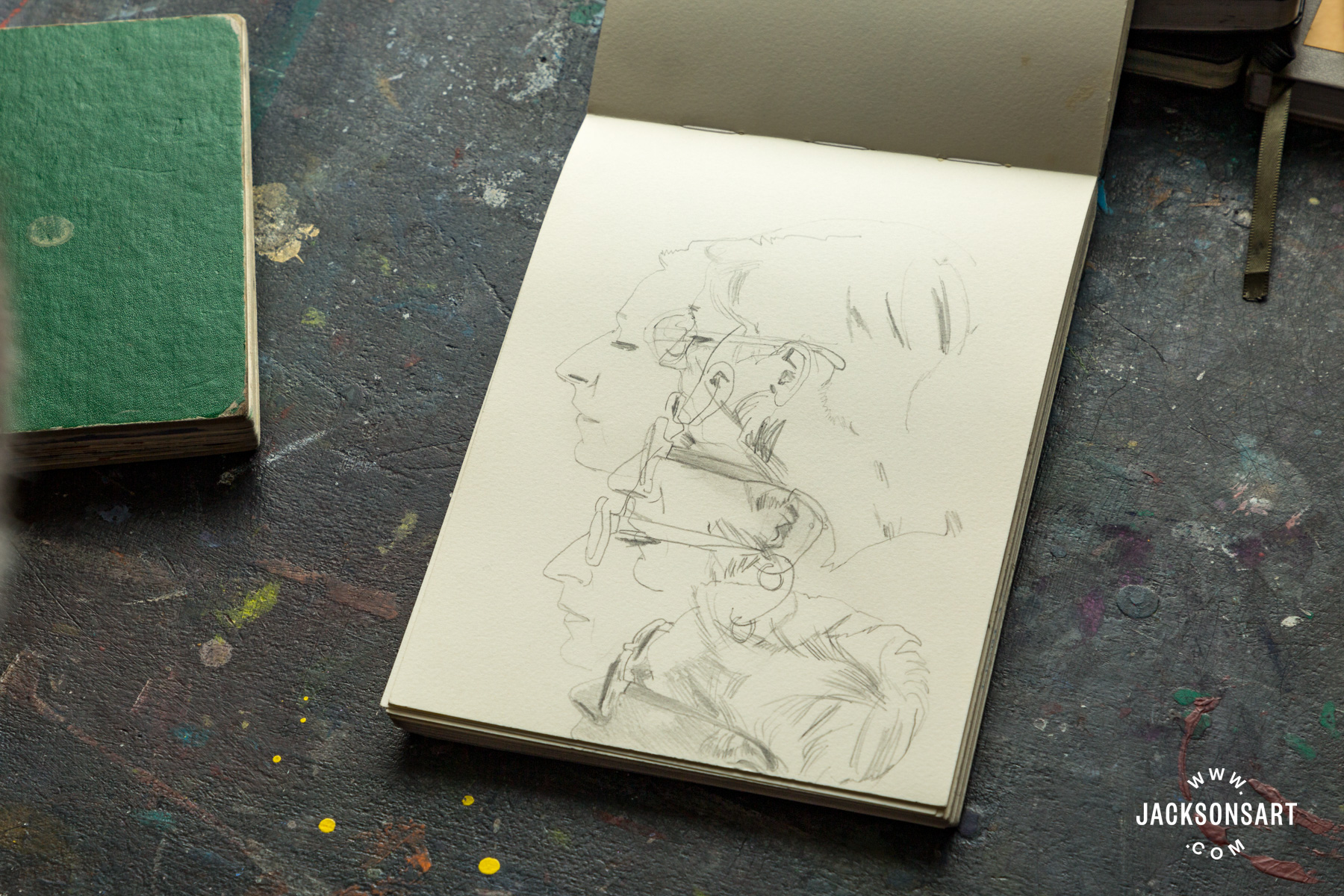
Draw every day. Draw anything. Draw for yourself. If you’re interested, it’s likely others will be. Don’t try to be someone else, concentrate on drawing everyday and your own style will emerge. Don’t over polish, embrace mistakes. Maybe being clumsy or heavy handed is your thing.
Picasso said, I believe in inspiration, but it has to find you working.
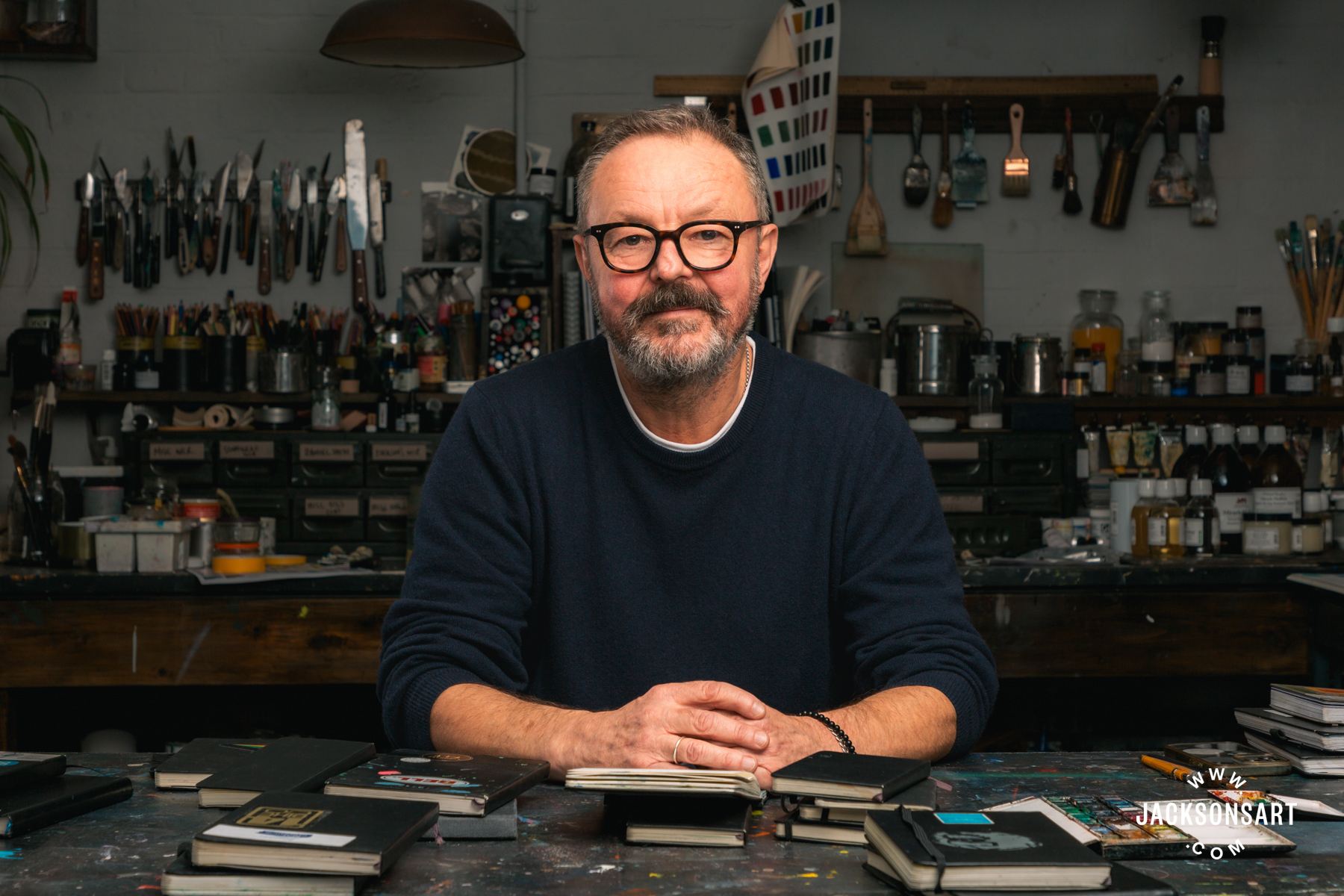
About Mark Entwisle RWS
The son of an RAF fighter pilot, Mark Entwisle was born in Amman, Jordan in 1961 and sent to boarding school in Berkshire aged seven. It was here that his passion for art was ignited and encouraged. Mark went on to take a foundation course at the Cambridge College of Art and Technology, specialising in printmaking, followed by a degree in illustration at Brighton, graduating in 1984.
Some of his first commissions were for major publishers such as Penguin, Random House, and Heinemann. He created book covers for Gabriel Garcia Marquez, Aldous Huxley and PG Wodehouse as well as many others. He also designed posters for the National Theatre production of Wind in the Willows and record covers for Chris Rhea.
During his 15 years as an illustrator, Mark continued to feed his need to paint and began showing at galleries in Bath and London.
Mark continues to exhibit widely both as a solo artist and at carefully chosen group shows. He is immensely proud to have been recognised with a number of respected art prizes, most recently winning a first in the Sunday Times Watercolour Competition 2020.
Further Reading
Inside the Pages of a Medieval Sketchbook
Two Painters Test Jackson’s Artist Watercolours
Artist Insights: Kayoon Anderson
Shop Sketchbooks on jacksonsart.com
6 thoughts on “Inside the Sketchbook of Mark Entwisle”
I just love Jackson’s blogs. Always really
interesting and inspiring and varied
content – like looking into Mark
Entwisle’s sketchbooks, as I did just
now. Something for everyone. Thank you
so much for these!
Great look into a very nice sketchbook.
Thanks for the look over the shoulder.
Hi Mark, Thank you for sharing your
sketchbooks and career. You have some
lovely sketches.
Lovely work, he creates mood so organically.
Absolutely useful, good writing blocks of
Jackson’s Art!
Thank you so much for this one too, to
Mark his story about his sketch books
and styles to work with a different
materials!
Thank you very much:)
So glad you enjoyed this article Violetta! Thanks for letting us know.
Comments are closed.