Painting People and Places: Capturing Everyday Life in Oils is a new book by Adebanji Alade that details his unique painting and drawing methods, and builds on his argument for the importance of strong sketching foundations. The book teaches readers to paint vibrant urban spaces and crowds, intimate portraits of individuals, green spaces, seascapes, and interiors. The following is an excerpt from the book on using the grid method for painting.
Search Press
Using the Grid Method for Painting
Getting an Image onto the Surface
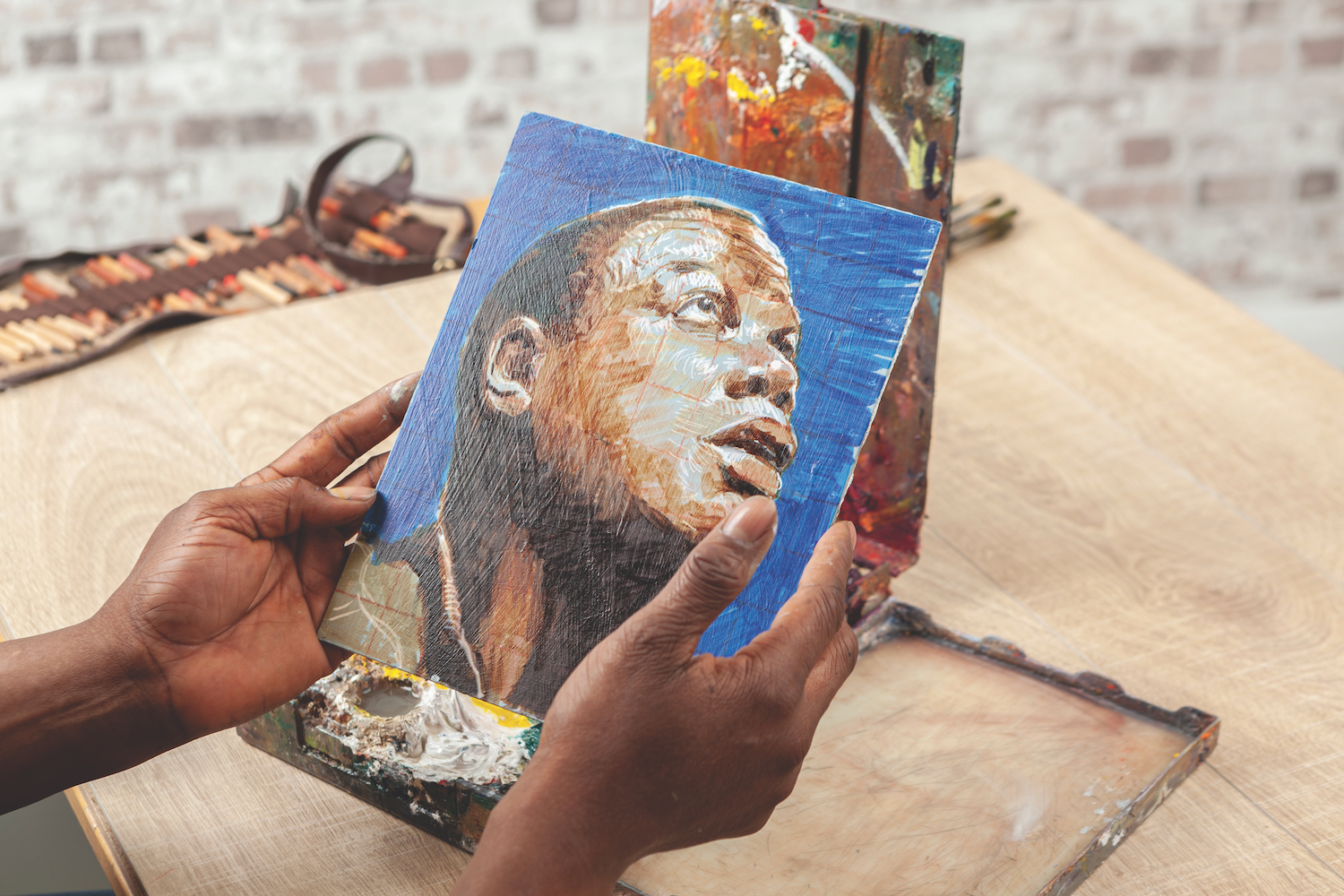
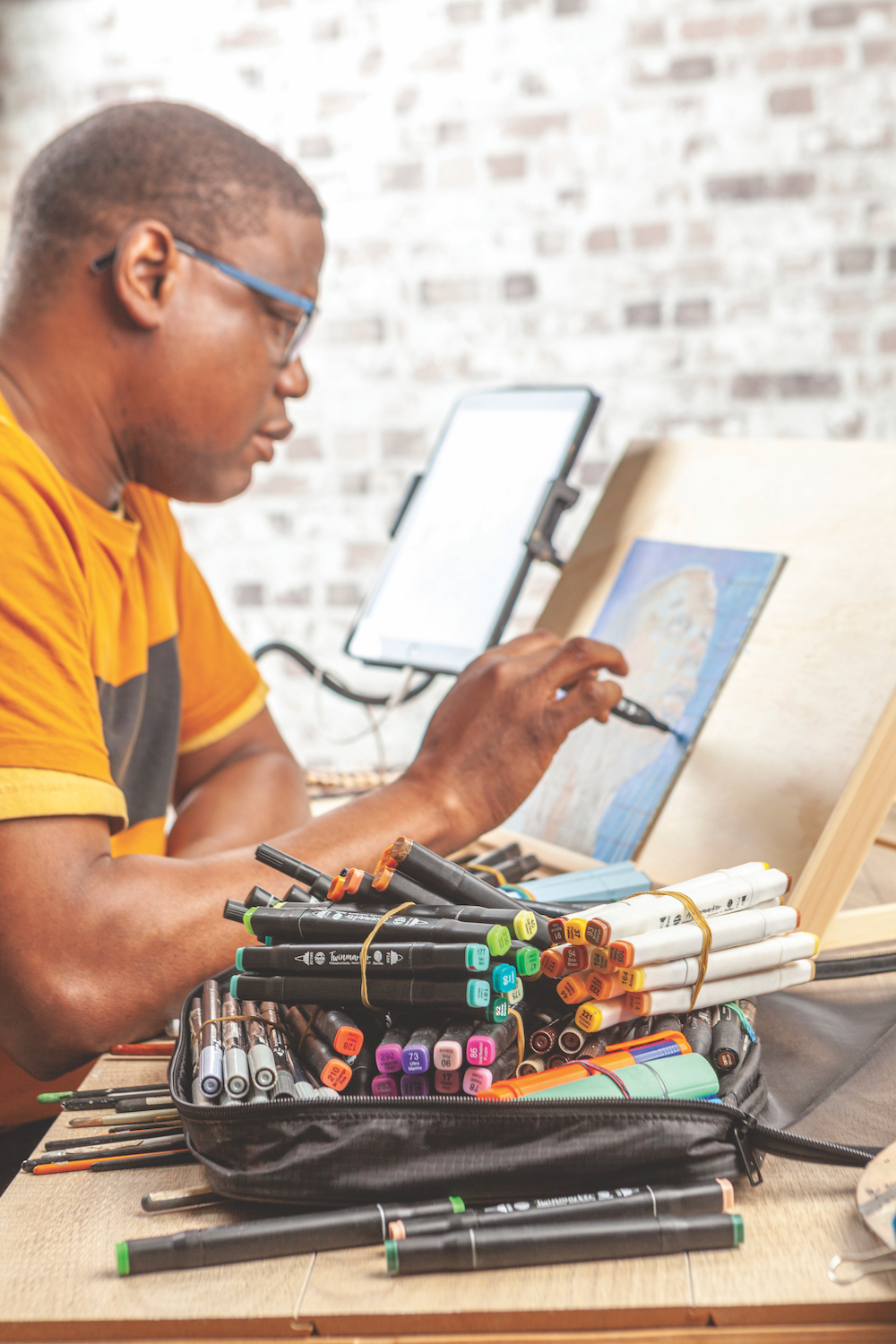
I bring my love of sketching into every aspect of my painting – in fact, I don’t make any distinction between the two. The work flows naturally from pencil and pen to paint, and each stage is important. With my reference close to hand, I will usually use coloured pencils to get the shapes in place and in proportion, and then switch over to using brush markers.
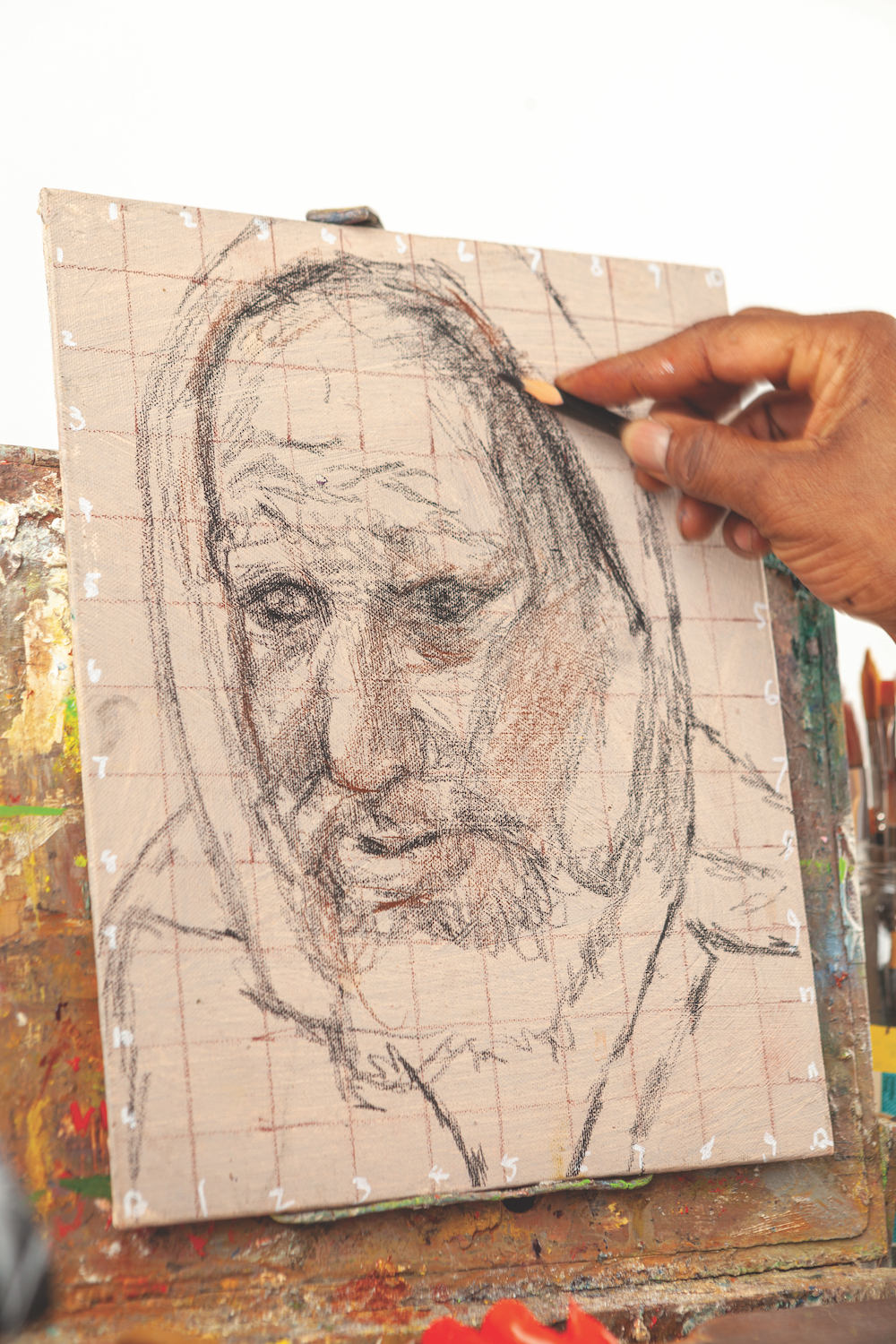
I don’t want to have to consider tone or line once I’m painting: that’s when I want to concentrate on colour. The underlying tonal drawing therefore needs to be just right – essentially, it’s a textureless painting. If you get this stage right, the painting is enjoyable and the process will flow smoothly.
Adding a Grid
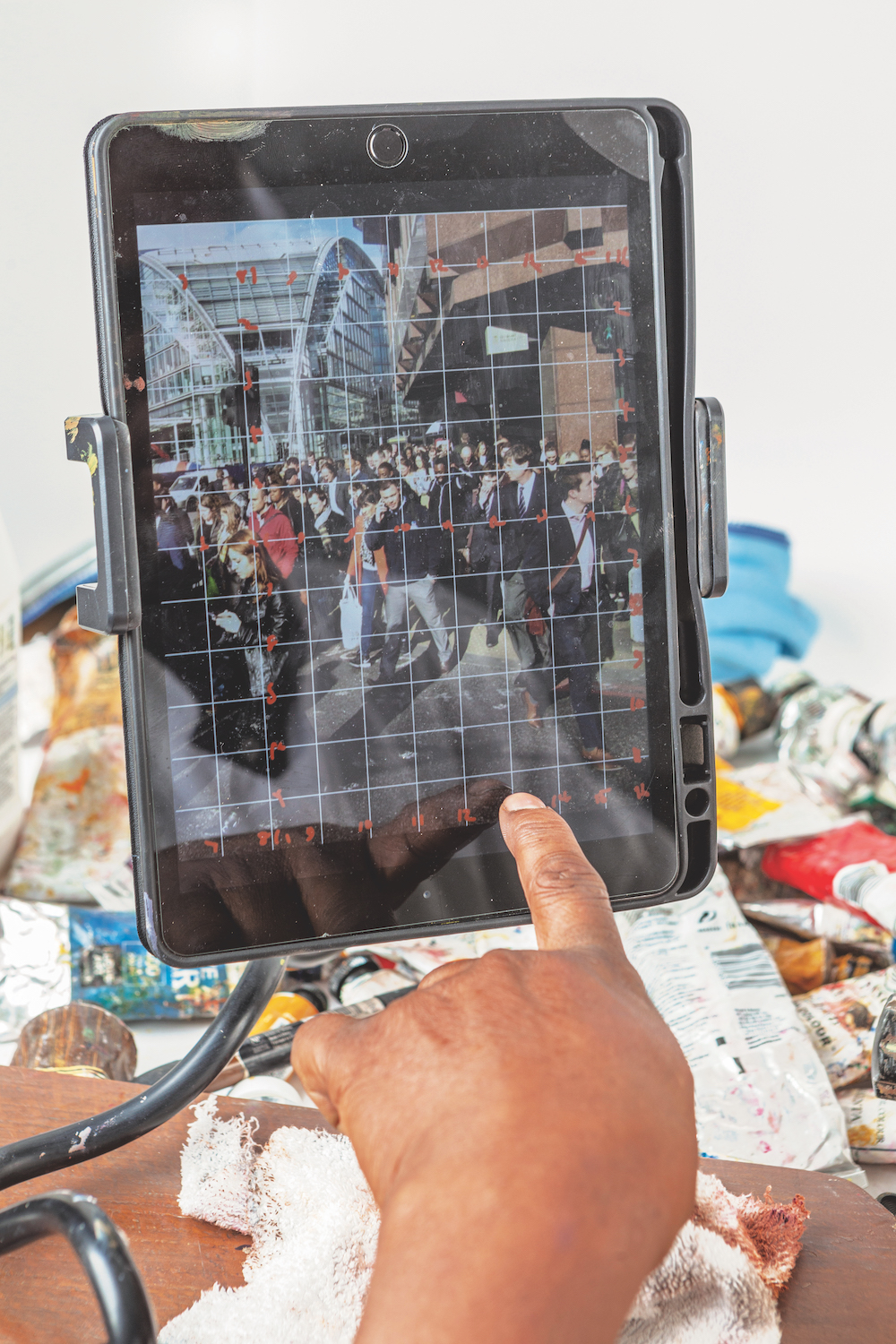
With a printed photograph, you can draw a grid freehand with a ruler and pencil. If you’re working from a screen, there are lots of free apps or websites that will let you add a grid, such as:
Using a Grid
Drawing a grid on both the photograph and the surface will break the image up into small ‘tiles’. Each tile can then be numbered and treated like a mini-painting, making the whole image easier to understand and approach. It’s important that the proportions of your surface match the photograph, or you’ll distort things.

Generally, a 3:4 ratio is what I prefer – though this is simply because the screen on the smartphone that I use is in that proportion. You can easily adjust the grid to use any proportion you want as long as both reference and surface match. Most smartphones will allow images to be quickly and easily cropped to various common ratios. Mine, for example, offers square (1:1), 9:16, 4:5, 5:7, 3:4, 3:5 and 2:3 ratios.
Triangular Tiles
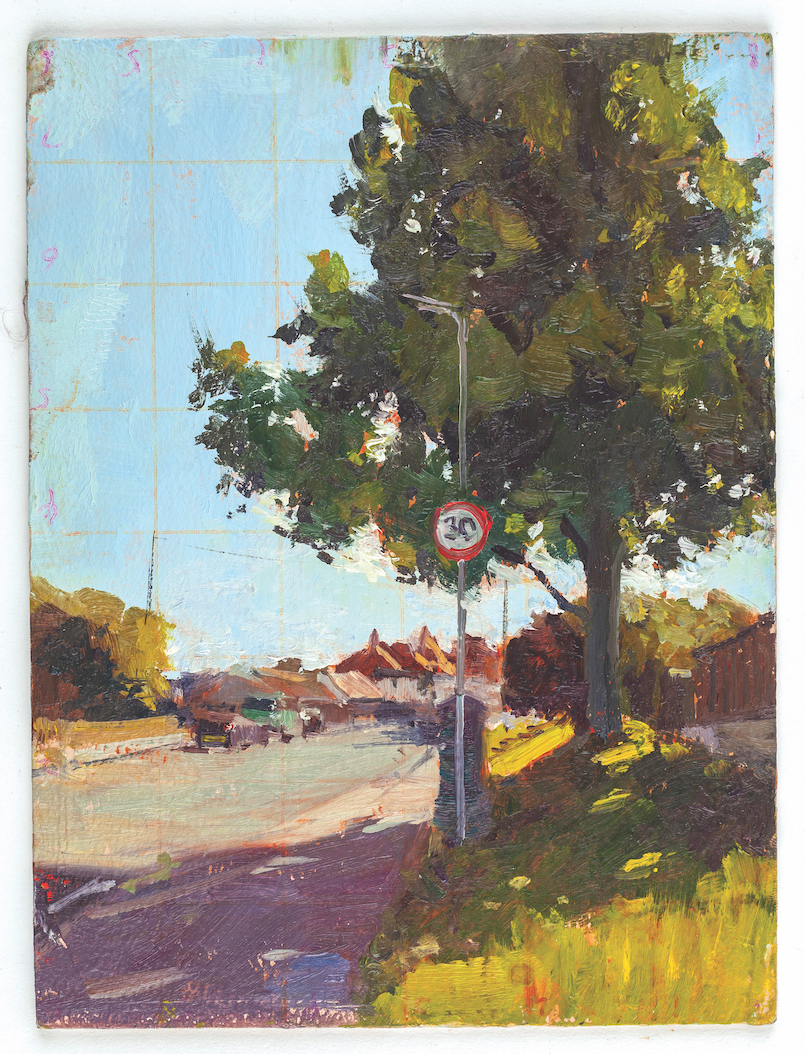
Instead of a simple square grid, you can use diagonal, vertical and horizontal lines to break the image into trianglular shapes. I discovered this style of gridding in a sculpture class while at Yaba College of Technology; there we used it to make relief sculpture from pictures, using clay as the base. The process is simple:
1 Start by drawing a line from one corner of the picture to the other.
2 Next, draw a vertical and horizontal line to cut through the diagonals.
3 Repeat this process to the four sections of the surface until you have enough grids to help you portray the image accurately from the picture to the surface you are painting on.
4 Number the horizontal and vertical lines on both the reference and the surface, and you’re ready to go.

Bleedthrough
I’m sometimes asked if the alcohol-based brush markers will bleed through the oil on top. It’s possible they can, if you work with thin layers, but I love rich, thick, luscious impasto-style painting, so I’ve never found it to happen.
Q & A with Adebanji Alade
Clare: This is the third book you’ve written. Can you tell us about your experience of writing it, and how it changed from the first time?
Adebanji: What has really changed since I wrote my first book is that I now have the experience of doing it before. As much as I like the first book, I think I was a bit timid with it. But in this one I was bold and courageous, ready to share my skills with the world and I’m really proud of it. I feel it represents everything I stand for and everything I believe in.
Clare: The book has been described as a love letter to cities, particularly London. What do you love about painting in the city? What are the challenges, and do you provide any advice for this in the book?
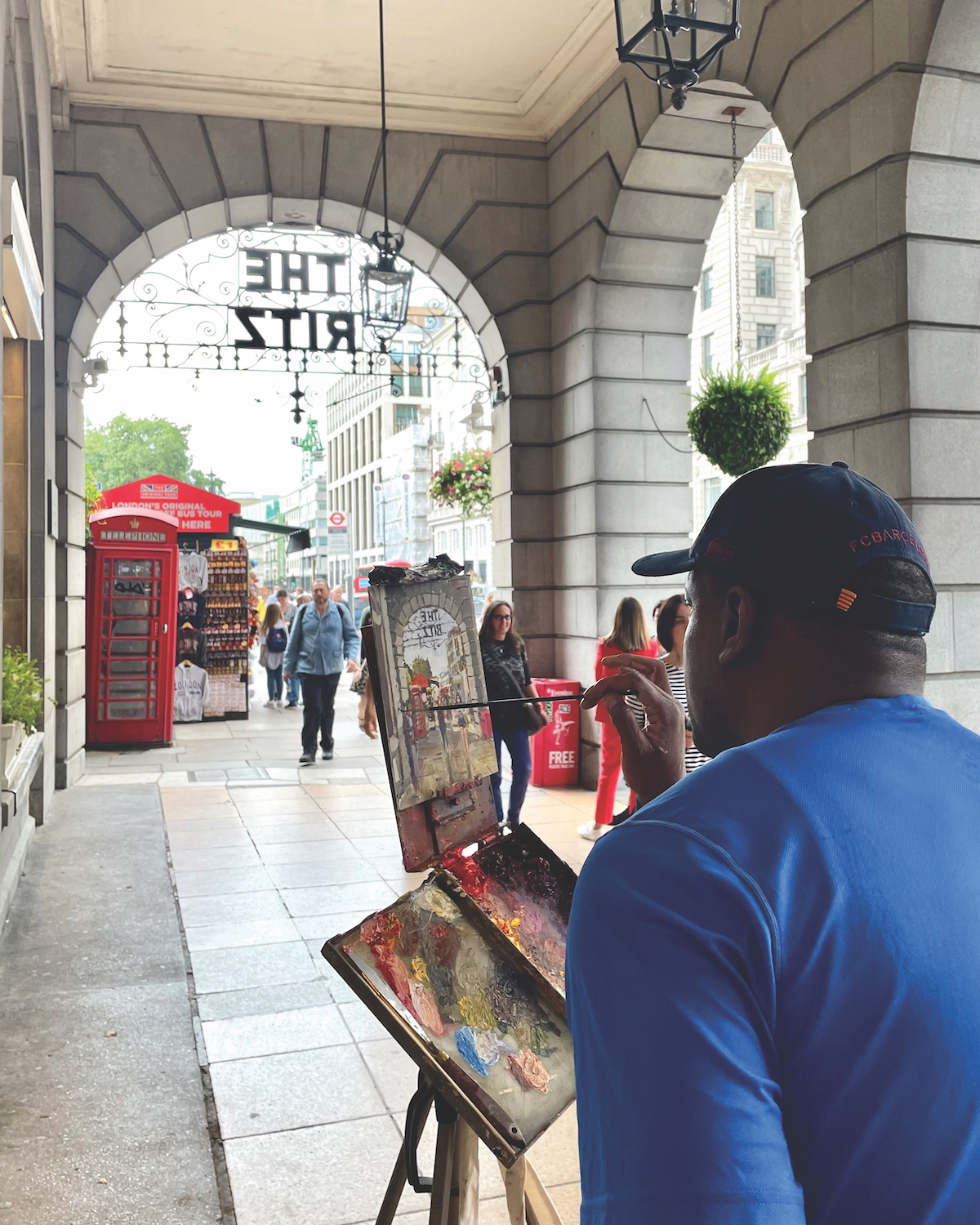
Adebanji: I love painting London, it’s where I was born and it’s a very well known city. I love the landmarks, and the places that have remained unchanged for hundreds of years. I love looking at paintings of London done in the past, and I love to compare them to how I paint it today. When it comes to challenges, there aren’t any major challenges because all the paintings in the book of London are painted from pictures. But if there’s a challenge I would say it’s getting a good drawing at the start. That’s the power of sketching. If the sketch is good then there’s a chance that the painting will be good. So in the book, I show how I make sure I get a solid sketch at the beginning of every painting. Before paint (oil paint) touches the surface, the sketch must be solid, sound, and inviting enough for me to be lured or tempted to want to paint it by all means.
Clare: What was the most challenging chapter for you to write in the Painting People and Places, and why?
Adebanji: The most challenging chapter was the one on how I paint crowded scenes. One thing is sure, I can paint crowded scenes but I wasn’t sure how I would go about teaching it. How I would go about demonstrating that. But I just followed my heart, painted the project in the book as I would normally do, but then I had my Editor right nearby to articulate in more clear terms what I was doing practically in a verbal sense.
Clare: Who do you think the book would be most helpful for?
Adebanji: This book would be most helpful for the advanced beginner, not the complete newbie to oil painting. It’s for anyone who can draw, can paint but wants to take their craft to the next level.
Clare: Do you have any exhibitions coming up? What is in the works for you in 2024?
Adebanji: I’ll be exhibiting with the Society of Graphic Artists in March at the Mall Galleries. That’s the nearest one I can think of. This year I’ll be doing more art documentaries with the One Show and I’ll be adding more members to my online sketching school called ‘The Addictive Sketchers Movement’. In terms of painting, I will be painting a little bit more plein air than normal because I want to enjoy the outdoors a bit more this year.
Photo credits: Search Press
ISBN: 9781800920323
Further Reading
Underpainting in Oil and Acrylic
Adebanji Alade: the Addictive Sketcher
A Guide to Stretching Watercolour Paper
Acrylic Painting, Microplastics, and the Environment
Shop ‘Painting People and Places’ on jacksonsart.com