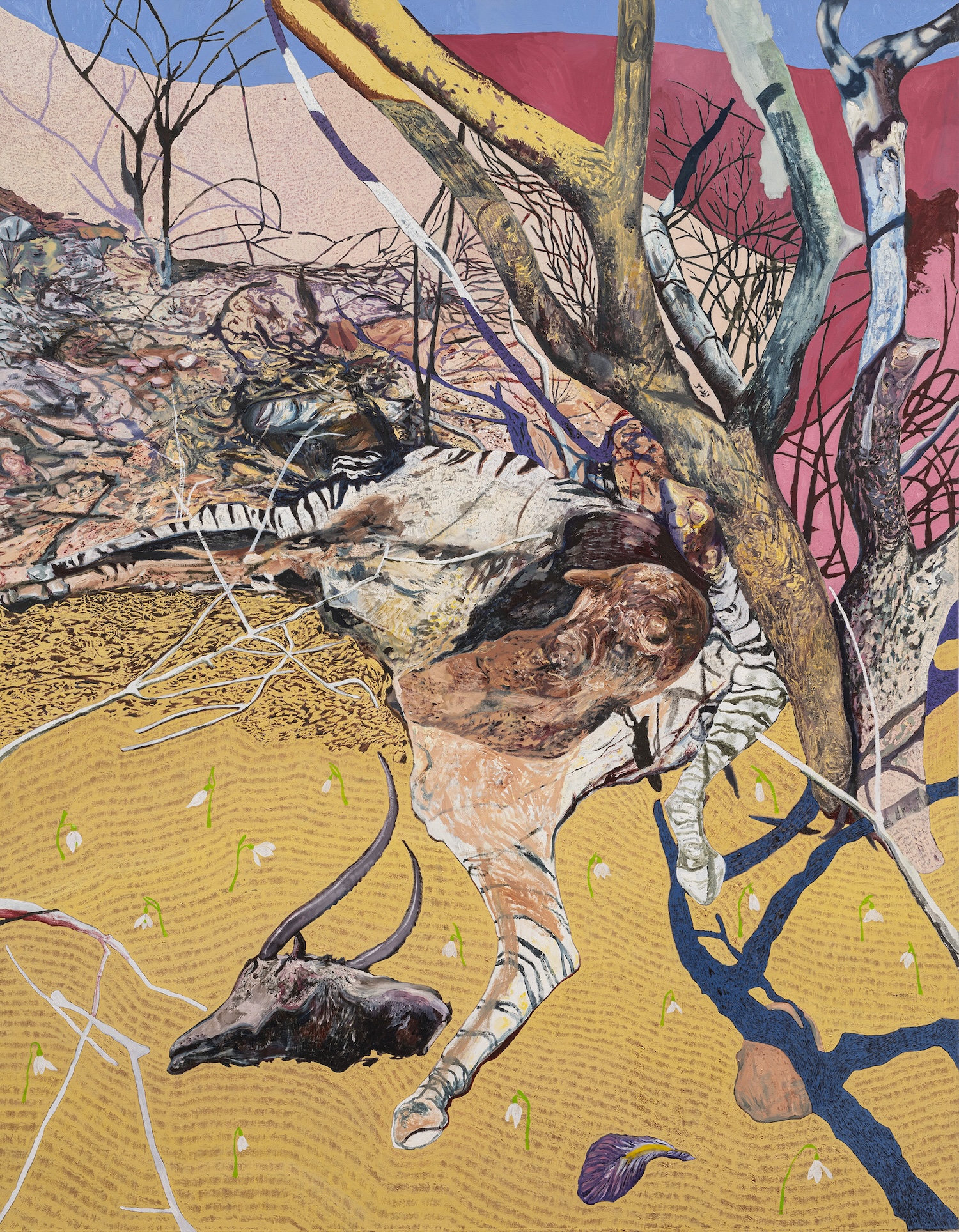
Lorenzo Aceto won a Judge’s Choice Award selected by Melissa Ling in Jackson’s Art Prize this year with his work Bucaneve. In this interview, Lorenzo discusses balancing parenthood with his studio practice, overcoming creative block, and how mistakes can be viewed as a valuable part of the painting process.
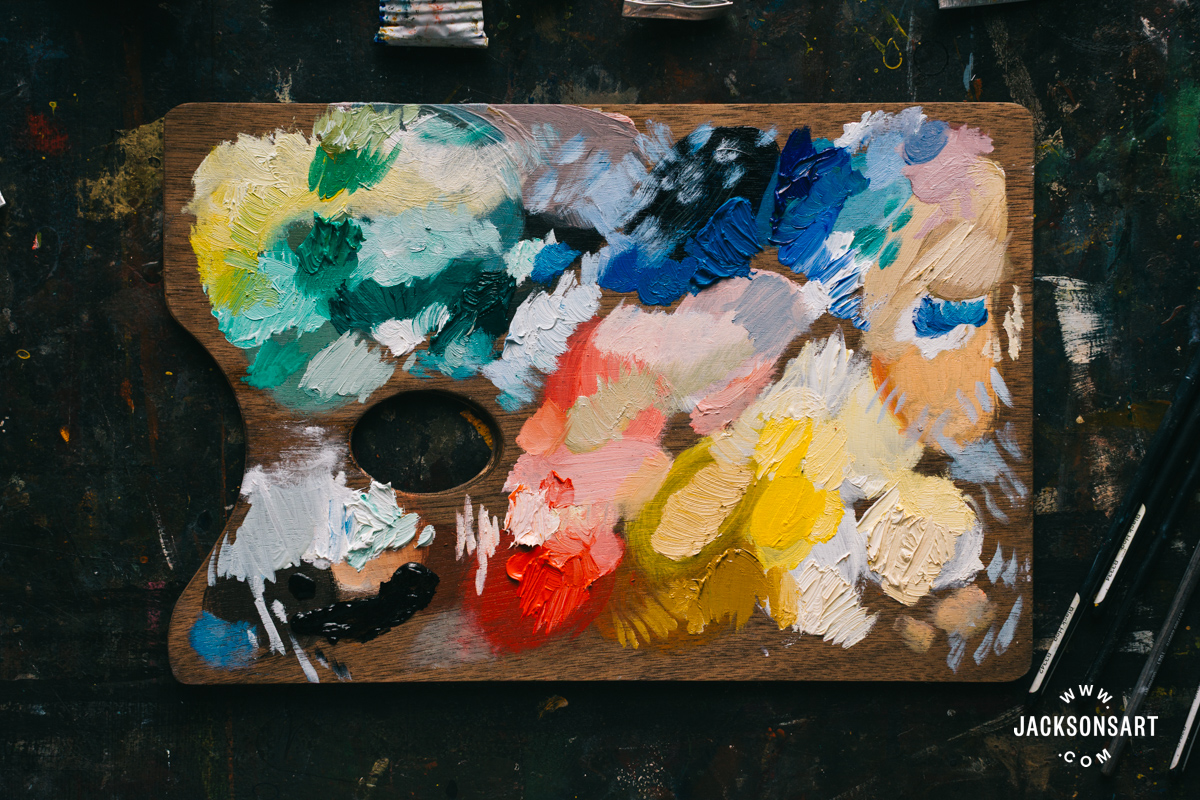
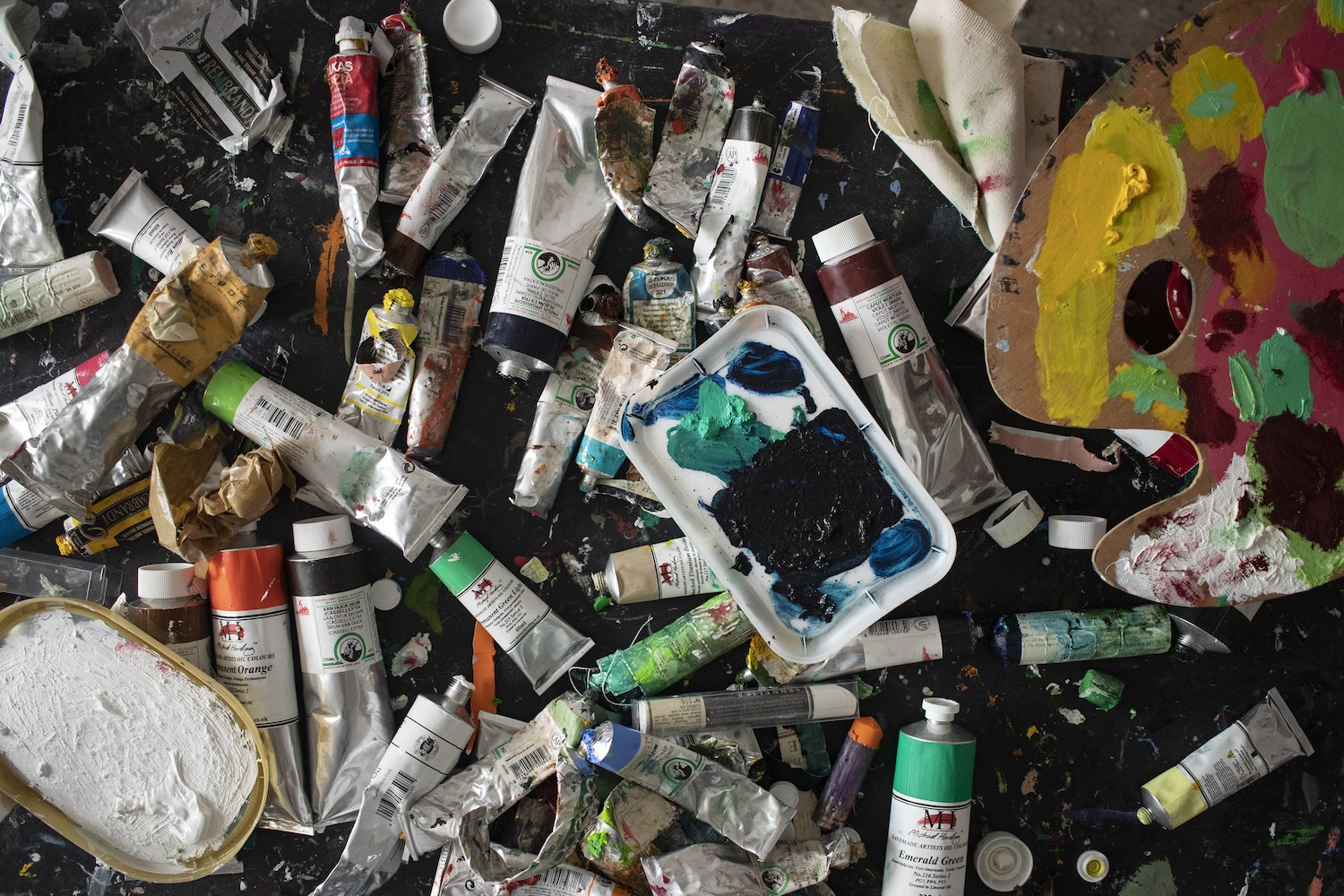
Above image: Materials and palettes in the studio of Lorenzo Aceto.
Lorenzo Aceto
Oil on canvas, 180 x 140 cm | 70.8 x 55.1 in
Josephine: Could you tell us about your artistic background?
Lorenzo: I began my studies at the State Art Institute of Pescara, initially enrolling because it had a reputation for requiring minimal effort. After repeating my first year due to poor performance, I found myself drawn to drawing by observing older classmates who excelled in comic art. I attempted to create comics but quickly realised it wasn’t my passion. Instead, I became captivated by the works of the great masters and spent considerable time copying Rembrandt, Van Gogh, and the Impressionists. Eventually, I started to develop my own style.
In Pescara, I often visited the Cesare Manzo Contemporary Art Gallery to show my work. The gallerist, a tough but insightful figure, was always willing to review my pieces, even though I was just 17 or 18 years old. Later, I enrolled at the Academy of Fine Arts in Urbino, where I studied under Professor Luigi Carboni. My work evolved significantly during this period, particularly in my final years when I focused on abstract drawing, creating large graphite works on paper and some stop-motion animations. A major turning point came in 2008 when I attended a large retrospective of David Lynch’s paintings, drawings, and animations in Milan.
In 2009, I began working with the Cesare Manzo Gallery and held my first solo exhibition there in 2010. Afterward, I pursued a master’s program in animated drawing at the Academy of Fine Arts in Tallinn, Estonia. However, after six months, I returned to Italy, as the program focused heavily on auteur animated cartoons, which did not align with my interests.
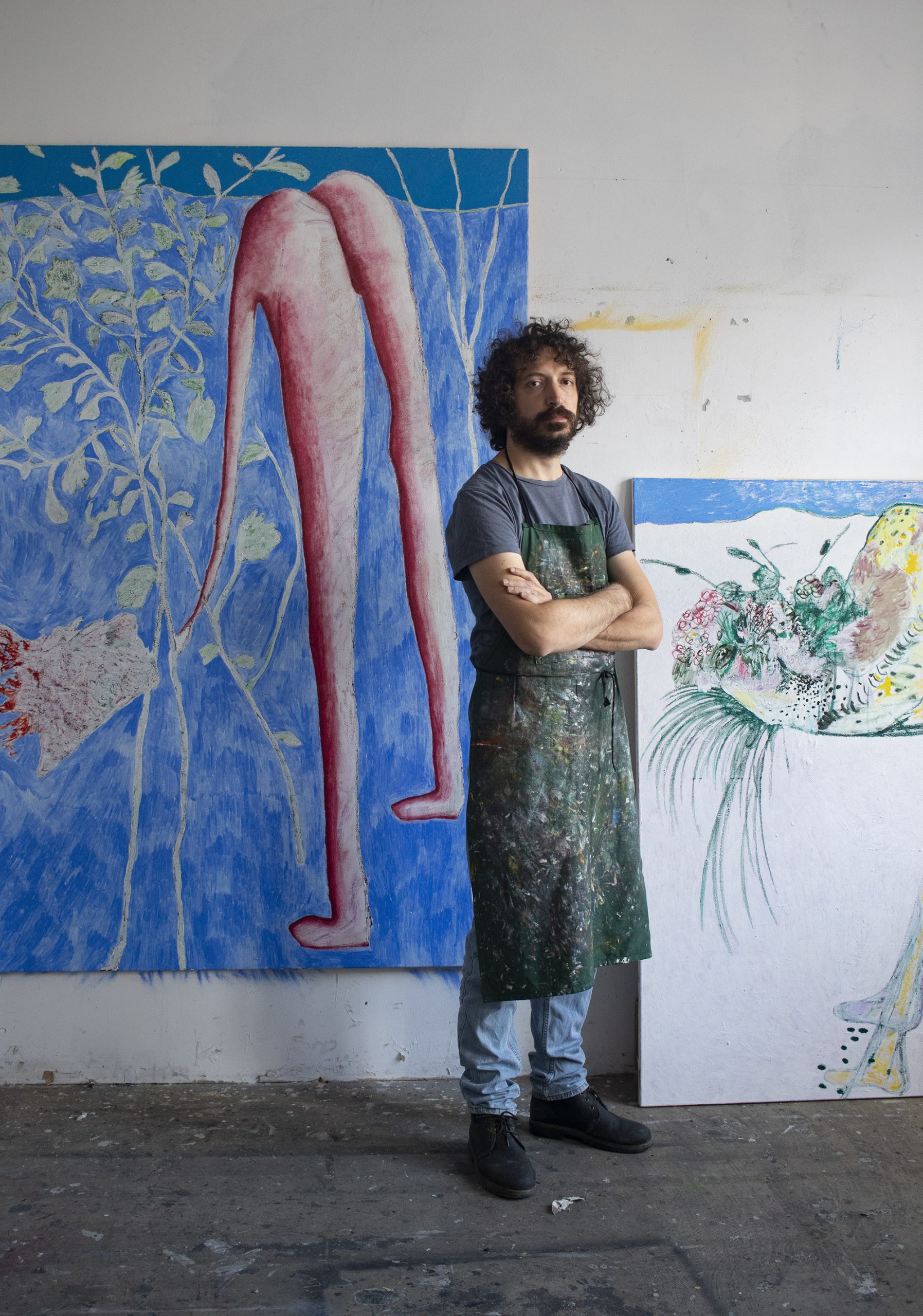
Back in Pescara, I rented a studio in a building shared with other talented painters, including Matteo Fato, Luca De Angelis, and Paola Angelini. This period was crucial for my artistic development as I began to focus more on painting.
Josephine: What does a typical working day in the studio look like for you? Do you have any important routines or rituals?
Lorenzo: I usually start my day in the studio early in the morning—a routine that began after the birth of my son two years ago. Before that, I never entered the studio before noon. My only ritual is a visit to the bathroom as soon as I arrive—perhaps it’s a way of physically clearing myself before starting work. Then, I dive straight into painting. With less time available now, I can’t afford to hesitate. I work until around 4.00 pm, and sometimes I do some drawing or computer work late at night before bed. Interestingly, I never draw in the studio.
Lorenzo Aceto
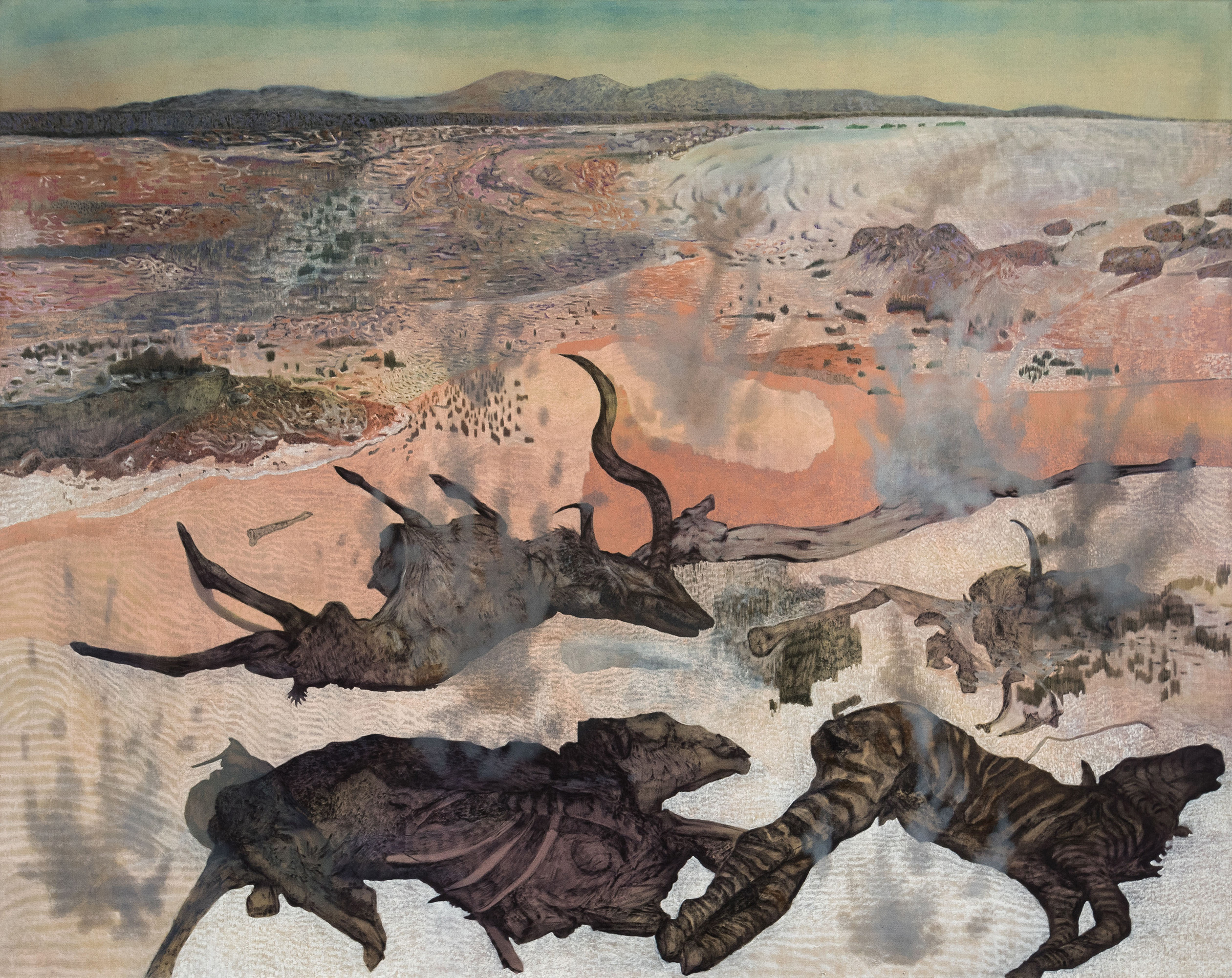
Oil on linen, 190 x 240 cm | 74.80 x 94.49 in
Josephine: Which materials or tools could you not live without?
Lorenzo: I couldn’t work without Sennelier Titanium White oil sticks, Old Holland Alizarin Crimson Lake Extra, Old Holland Hooker’s Green Lake Deep, Old Holland Titanium White, and a Koh-I-Noor 8B pencil.
Josephine: What are the stages of your work on a painting? Do you make drafts?
Lorenzo: Until recently, I relied heavily on photographs, but now I primarily use drawings, which often serve as subjects for my paintings. I never make sketches; I consider my drawings as complete works, equivalent to my paintings on canvas. On the canvas, I never sketch in charcoal—I go straight in with colour. For me, mistakes are a valuable part of the process. I view the canvas as a sort of blackboard, where anything added can be quickly erased, with the traces of erasure contributing to the composition.
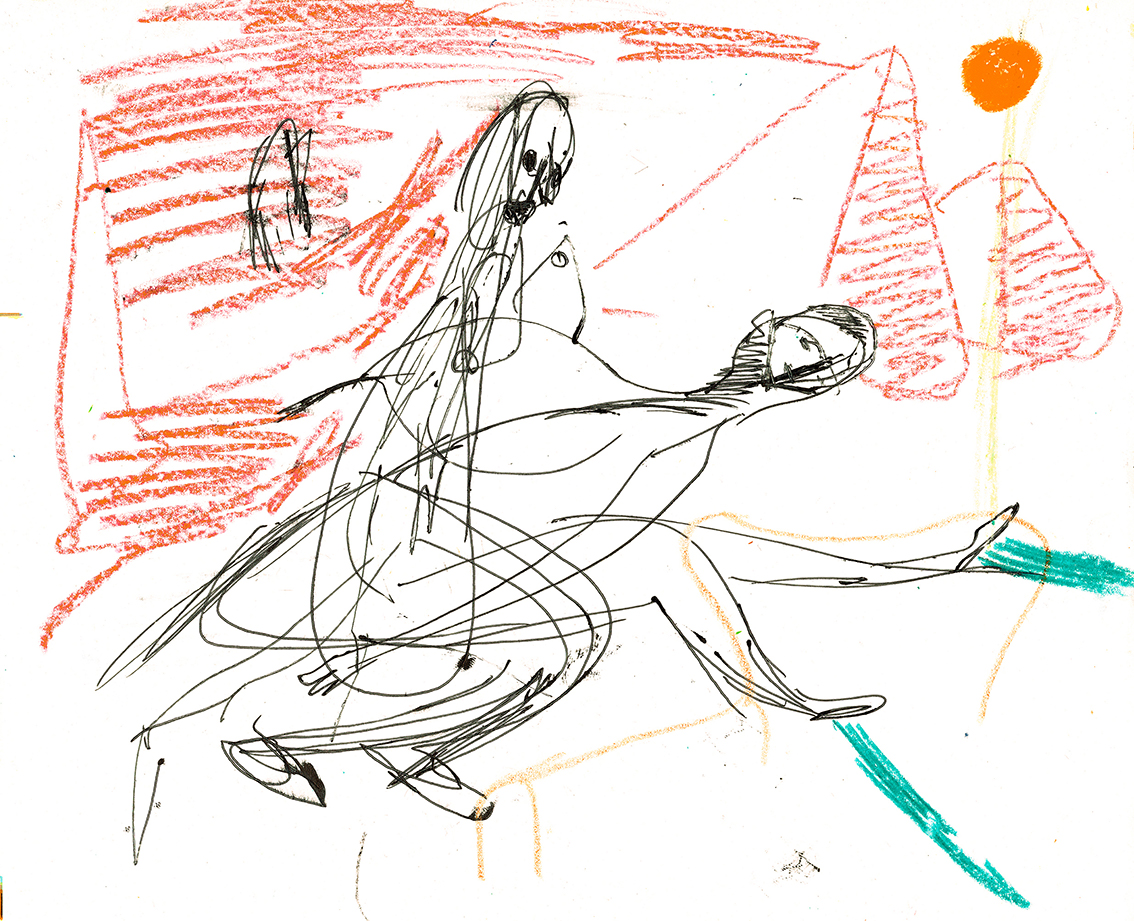
Lorenzo Aceto
Ink and wax colours on paper, 17 x 21 cm | 6.69 x 8.27 in
Josephine: Do you regularly draw or keep a sketchbook? If so, how does this inform your work?
Lorenzo: I draw a lot, but I’m not someone who carries a notebook around to capture whatever I see. When I draw, I prefer solitude, and my subjects are often mental or tied to memories and experiences. I don’t use a notebook; I draw on loose sheets so they can be displayed if needed. Drawing is central to my work; it helps me capture ideas quickly and keeps my approach to the canvas light and spontaneous.
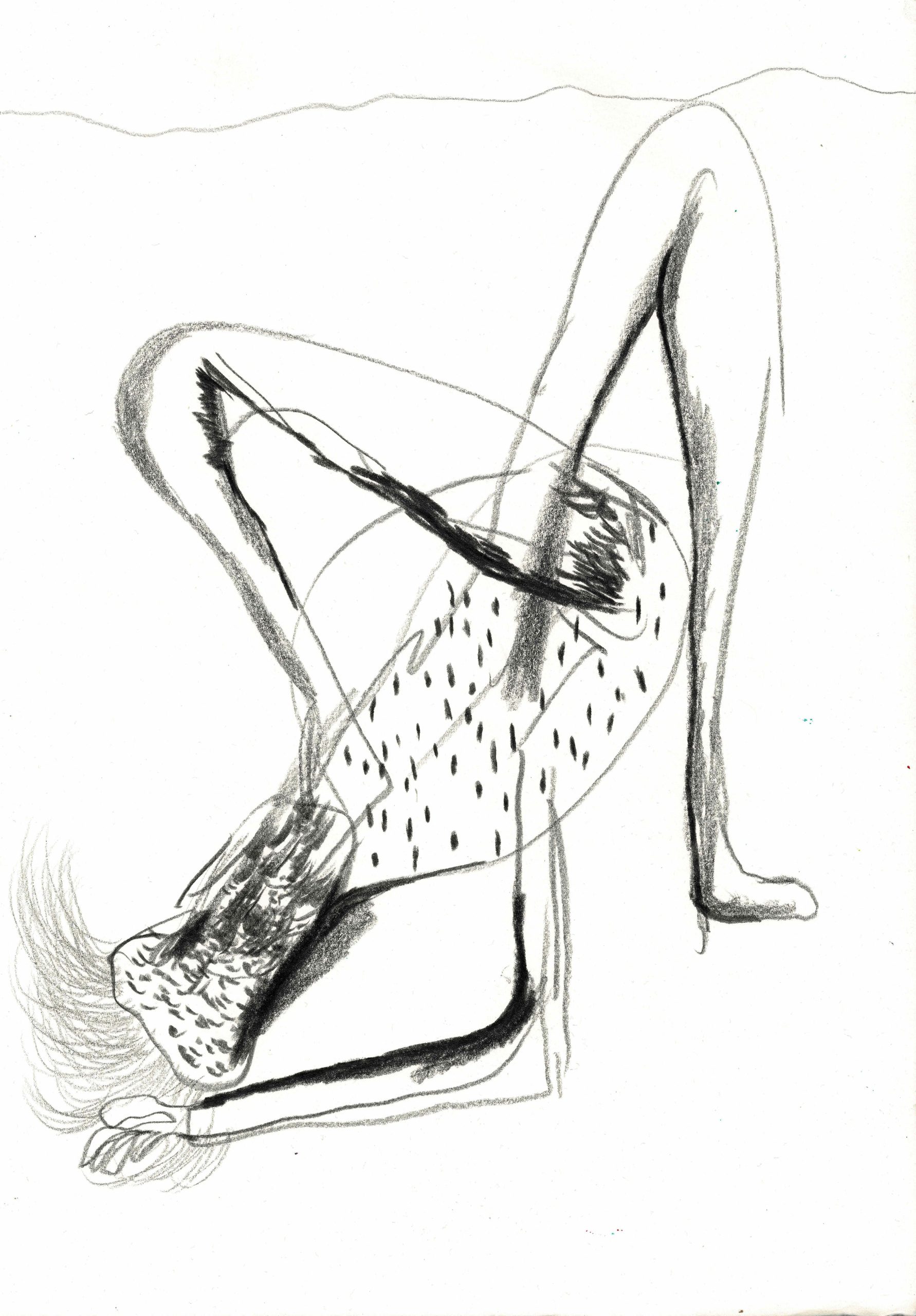
Lorenzo Aceto
Graphite on paper, 42 x 30 cm | 16.54 x 11.81 in
Josephine: Have you ever had a period of stagnation in creativity? If so, what helped you overcome it?
Lorenzo: When I moved to Leipzig in 2016, I experienced a period of creative stagnation. Despite its provincial character, Leipzig has a vibrant art scene, heavily influenced by the Leipzig School, which was both inspiring and overwhelming. Coming from a small town on the Adriatic coast in southern-central Italy, where contemporary art spaces and artists are far fewer, I found myself disoriented during my first two to three years in the city. I lacked a proper studio and struggled to find my footing. However, I eventually understood that the key to overcoming this creative block was to focus on what I felt internally, rather than being overly influenced by the external art world surrounding me.
Themes of time and the relationship between humans and the environment have always been central to my work, and a trip to Namibia helped me reconnect with these subjects, revitalising my artistic focus.
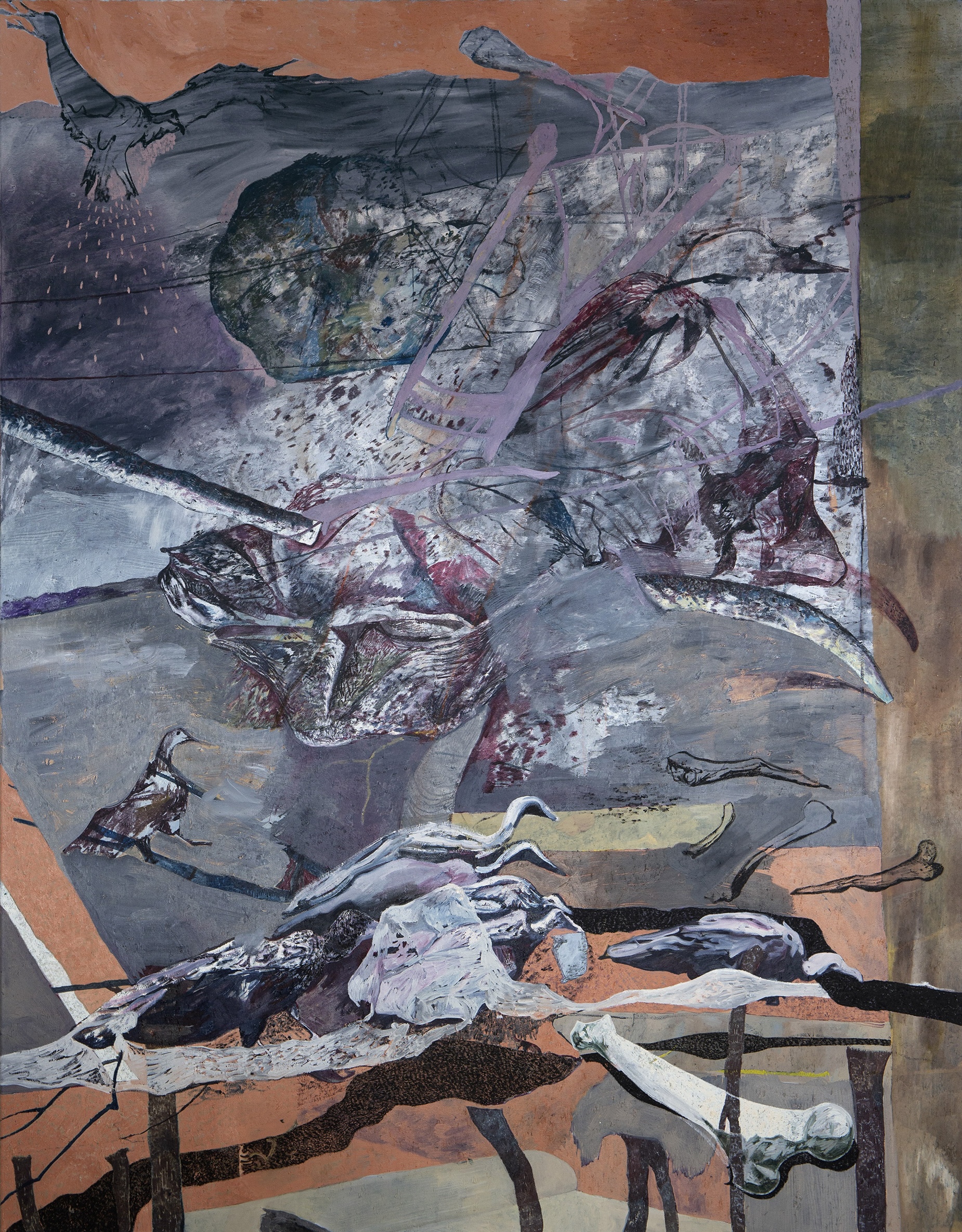
Lorenzo Aceto
Oil on canvas, 180 x 140 cm | 70.87 x 55.12 in
Josephine: Are there any specific artists or mentors who have inspired you?
Lorenzo: During my time at the Academy of Fine Arts, I was deeply influenced by artists like David Lynch, Piero Manai, Anselm Kiefer, and Georg Baselitz—creators whose work is visceral and introspective. Currently, I don’t have a single reference point; I look at many different artists like, Enzo Cucchi, Alessandro Pessoli.
However, I feel a strong connection with Graham Sutherland’s approach. Although I was aware of him before, it wasn’t until recently, when I closely examined some of his paintings, that I recognised a certain kinship with his style.
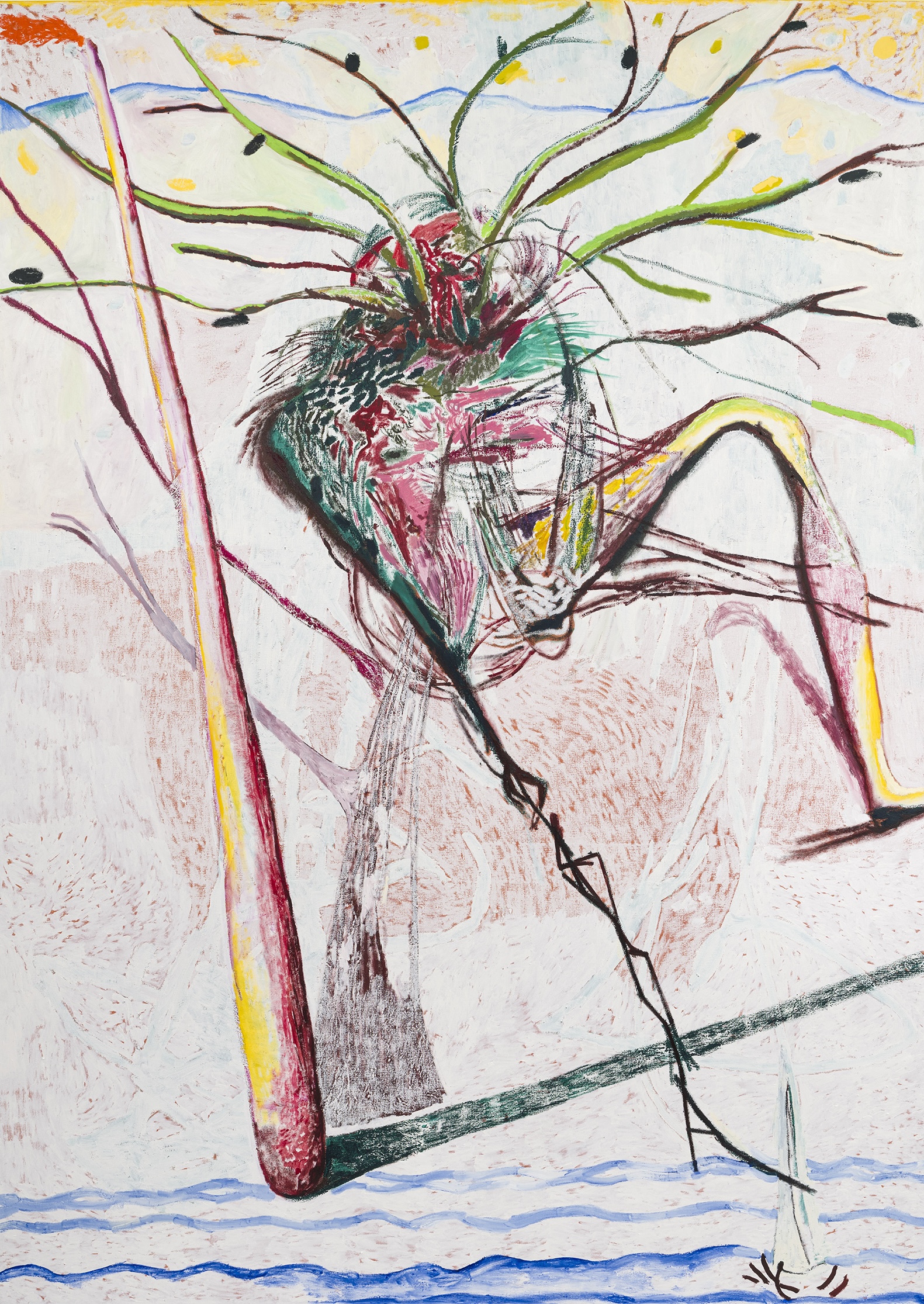
Lorenzo Aceto
Oil on canvas, 210 x 150 cm | 82.68 x 59.06 in
Josephine: How did it feel to realise you had won Melissa Ling’s Judge’s Choice Award?
Lorenzo: To think that I initially didn’t even want to participate! I wasn’t aware of the Jackson’s Art Prize until my partner found it on Instagram and encouraged me to enter. I quickly realised it was a well-organised competition, and in the end, I was convinced. I was delighted that my work was recognised for its quality.
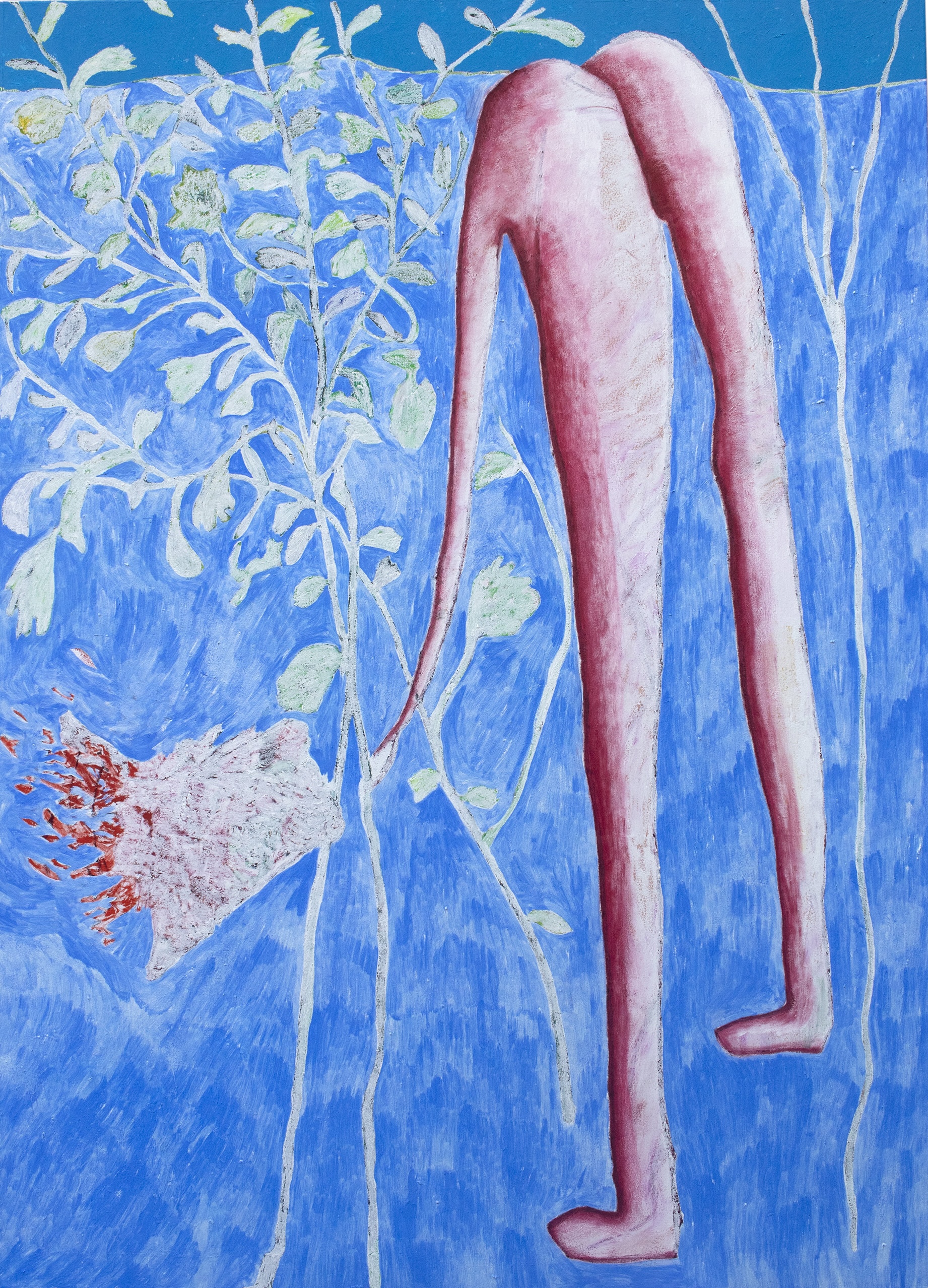
Lorenzo Aceto
Oil on canvas, 210 x 150 cm | 82.68 x 59.06 in
Josephine: Bucaneve is painted with a myriad of different marks and patterns. How did you decide what marks will make up each area of the piece, or does it come naturally as you paint?
Lorenzo: This is a defining aspect of my painting style—it comes completely naturally to me. I can’t adhere to a single method or technique. It’s both a mental and intentional process. I’m not a painter who relies heavily on chiaroscuro; my work is very much about drawing and maintaining a two-dimensional quality. I focus on the intensity of each mark and on varying the paint surface.
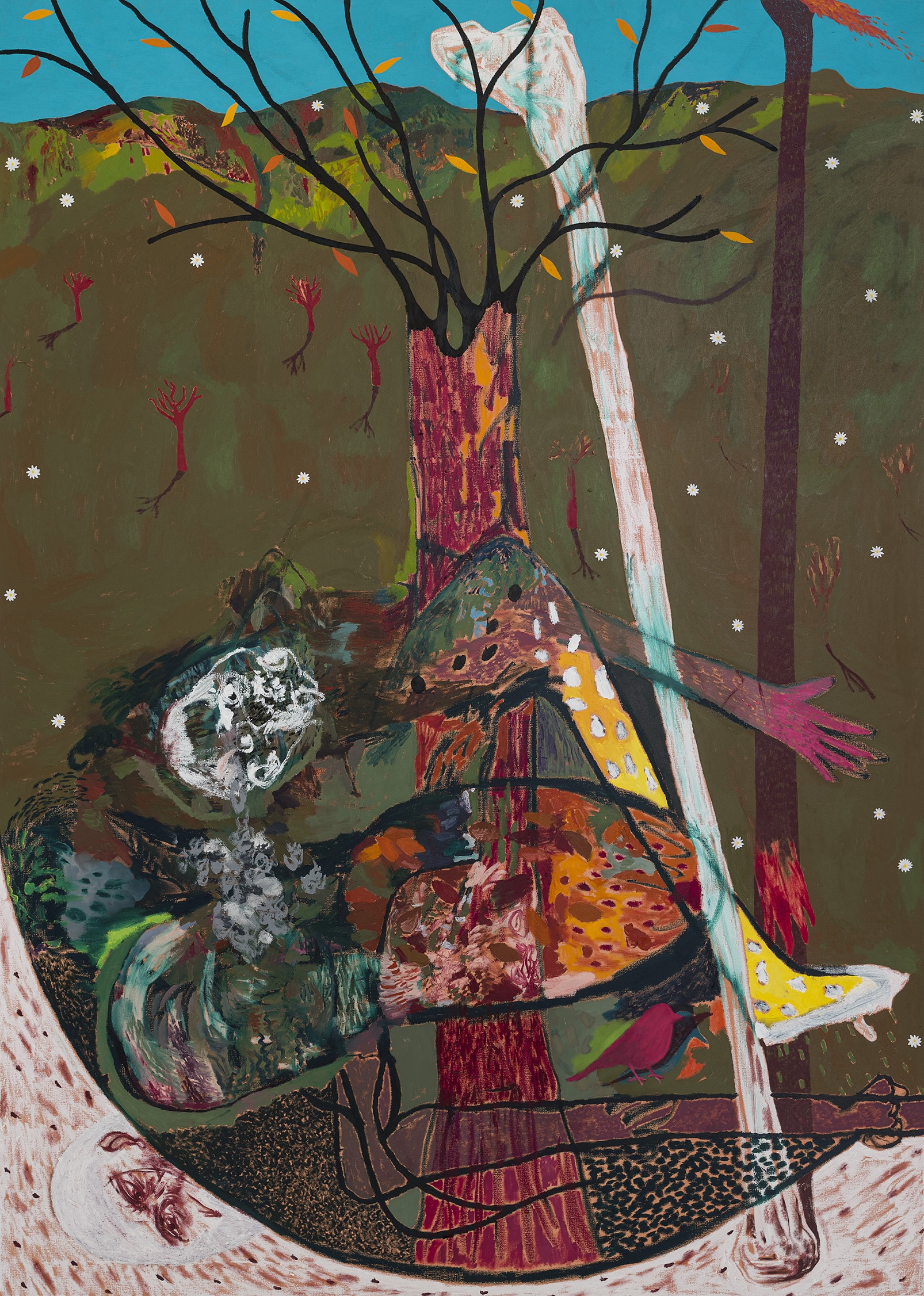
Lorenzo Aceto
Oil on canvas, 210 x 150 cm | 82.68 x 59.06 in
Josephine: In some areas, the marks appear quite scratchy and dry – do you use the oil paint in a specific way to create this effect?
Lorenzo: Often, I use oil paint undiluted and press hard on the surface with a worn brush, effectively scraping the colour onto the canvas.
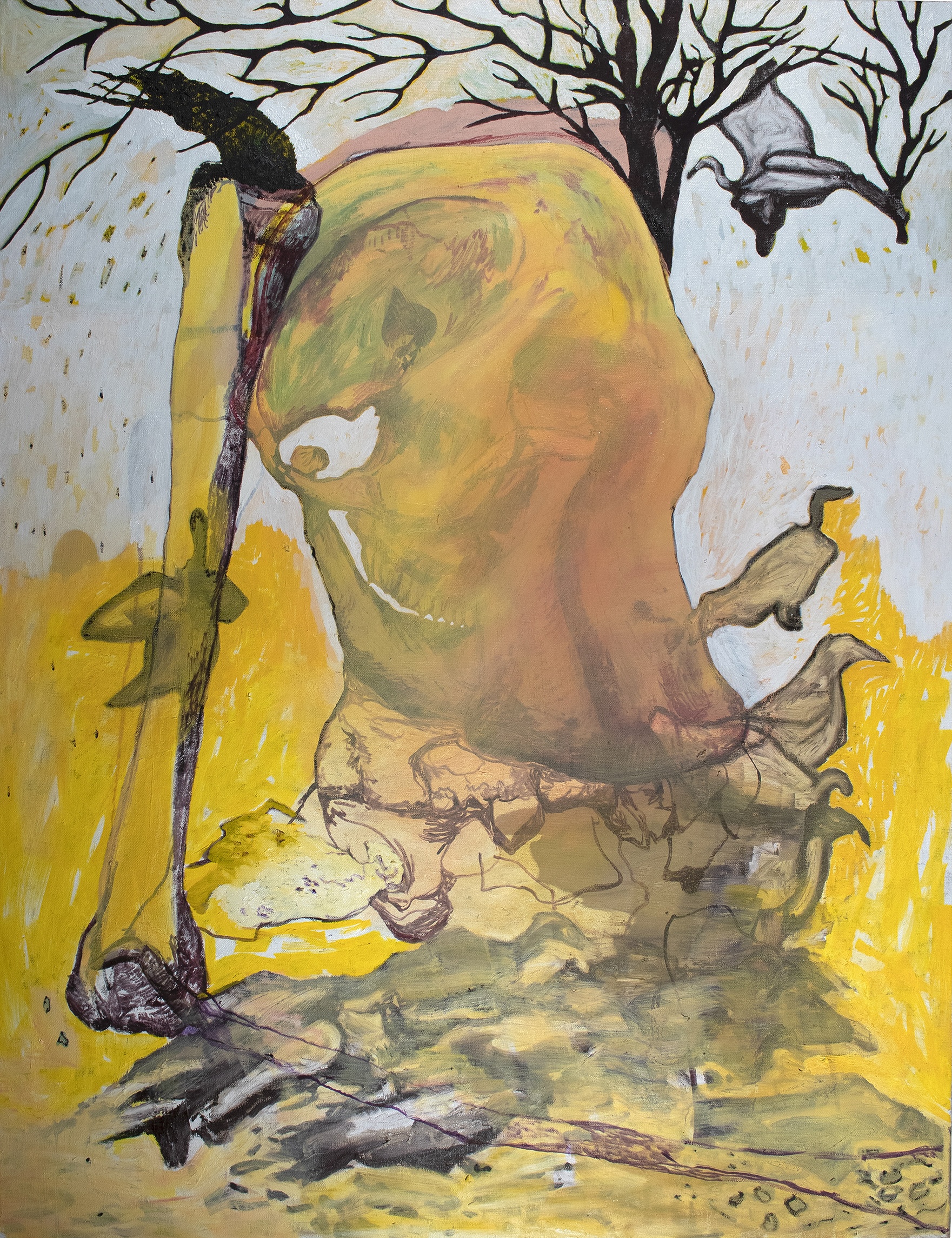
Lorenzo Aceto
Oil on linen, 130 x 100 cm | 52.18 x 39.36 in
What materials are you looking forward to purchasing with your voucher?
Lorenzo: As soon as I received the voucher, I spent it all on much-needed supplies. I bought oil paints, brushes, and watercolour paper. For the first time, I purchased Michael Harding paints, and the quality is excellent. Unfortunately, £160 went towards taxes and shipping costs.
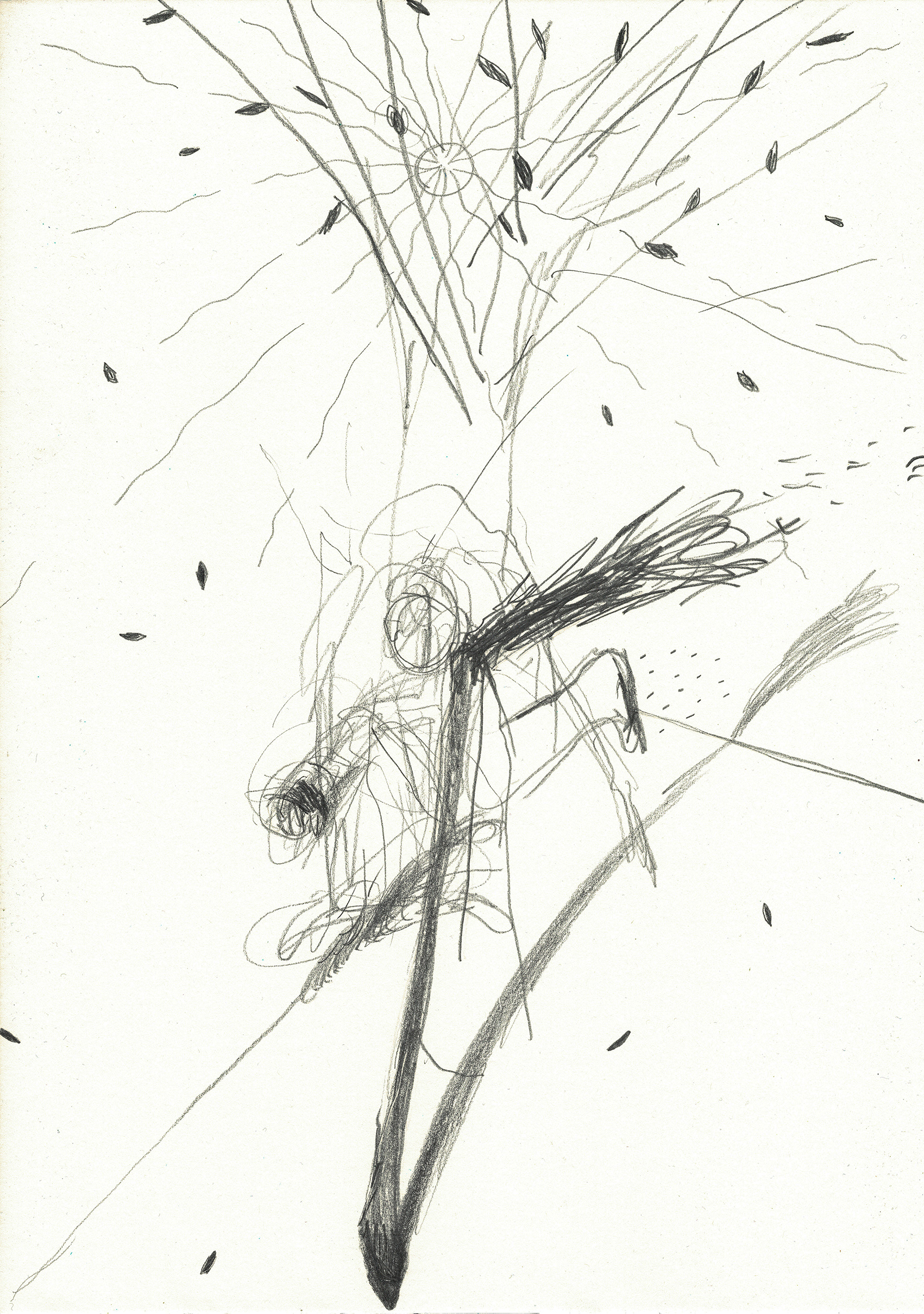
Lorenzo Aceto
Graphite on paper, 42 x 30 cm | 16.54 x 11.81 in
Josephine: What’s coming up next for you?
Lorenzo: On October 24th, two group exhibitions I’m participating in will open—one in Leipzig, Germany, and another at the National Library in Vilnius, Lithuania. I’ll be showcasing works alongside other artists from Leipzig. I have other projects in the pipeline, but nothing concrete at the moment, so it’s best not to mention them just yet.

Further Reading
Exploring the Impact of the Victorian Colour Revolution
Artist Insights: Will Rochfort
Using Black Gesso for Depth in Your Painting
Emeli Theander: Cut Out of a Dream
Shop Oil Painting on jacksonsart.com