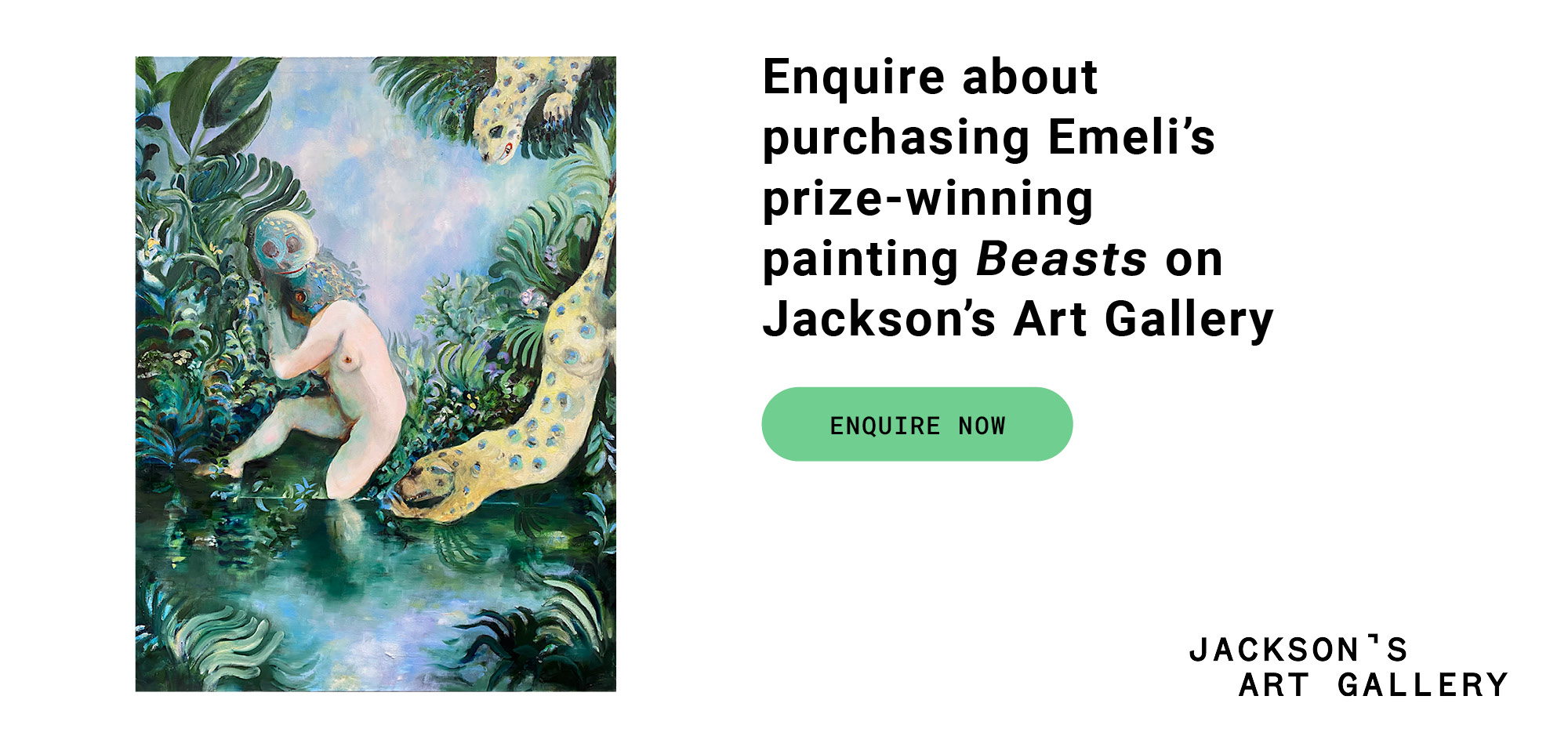
Emeli Theander won a Runner Up Award in the Jackson’s Art Prize this year with her work Beasts. In this interview, she talks about the counterbalance that exists in each of her paintings, the meditative process of mixing oil paint, and how she learned to trust the process, to become a better painter.
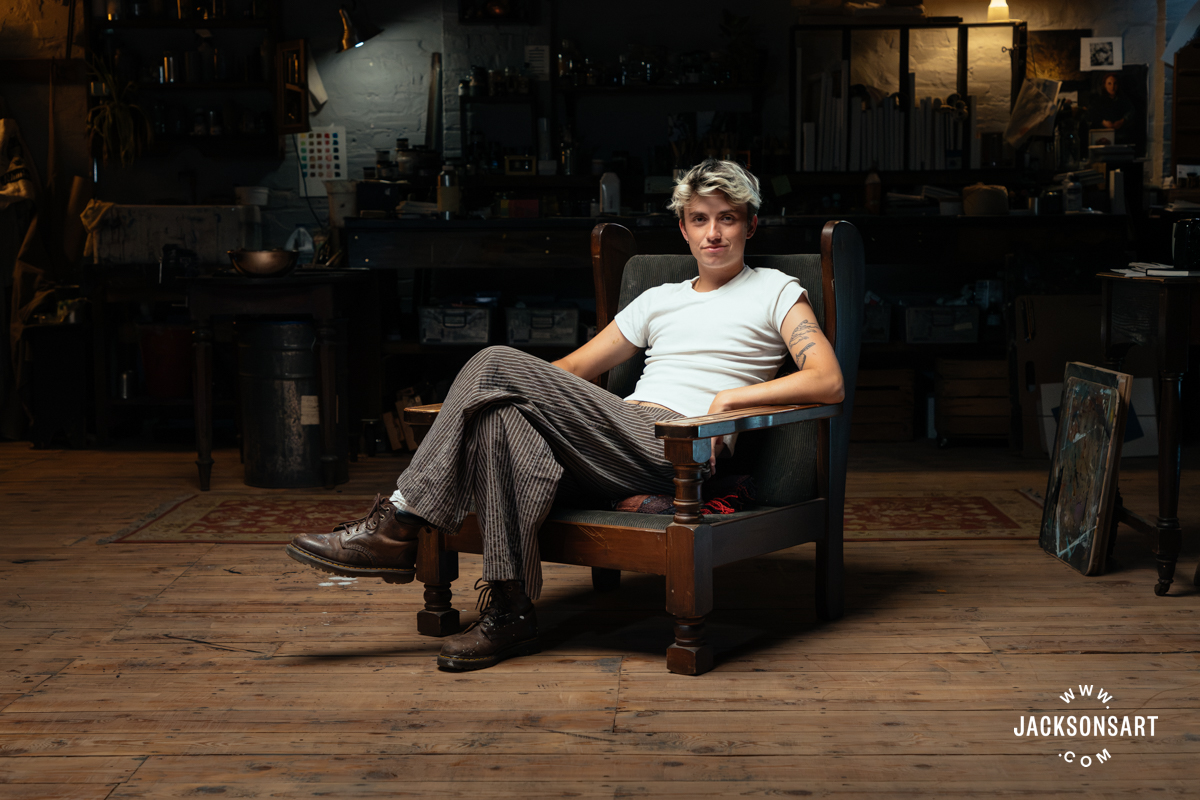
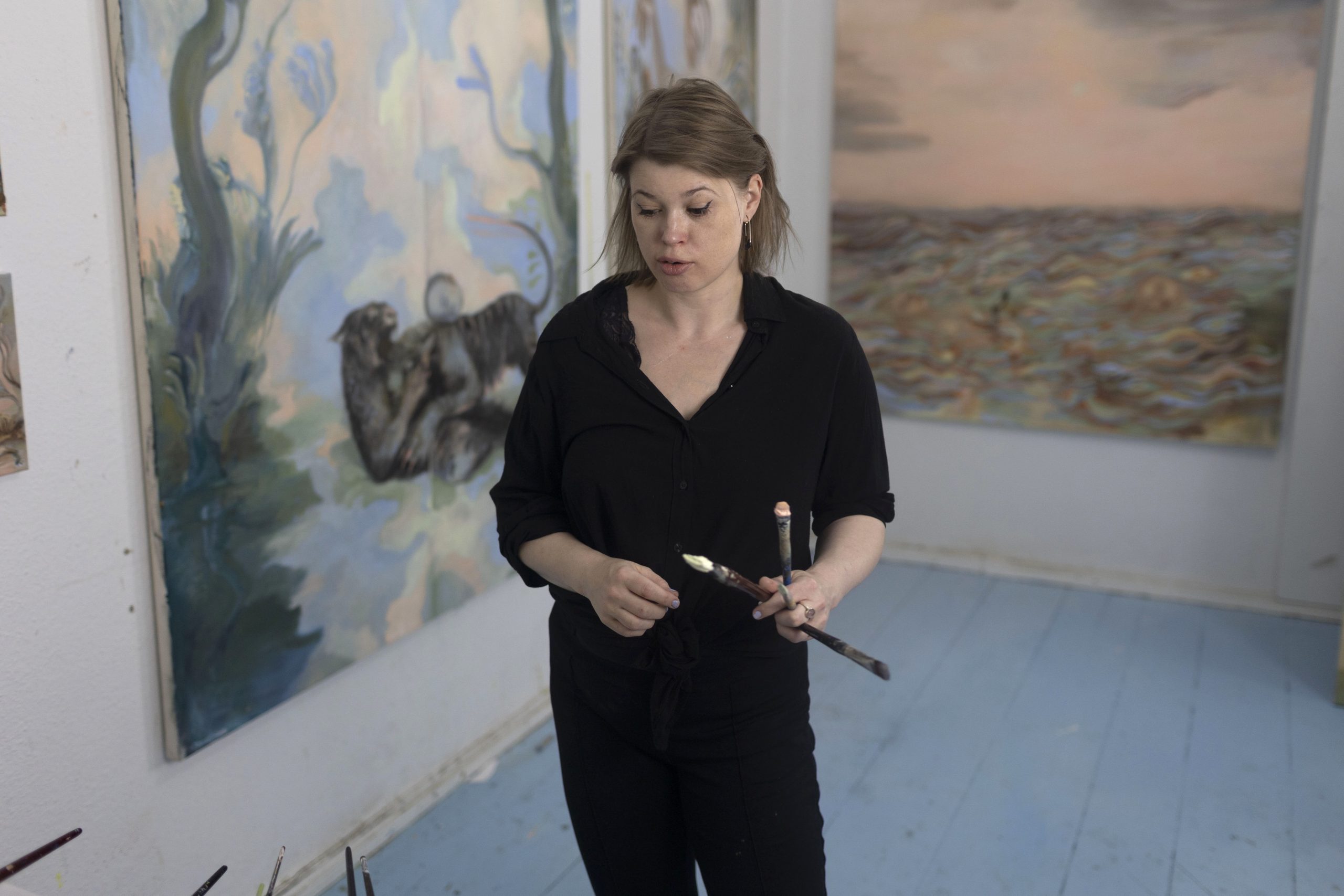
Above image: Emeli in her studio Photo credit: George Baroud
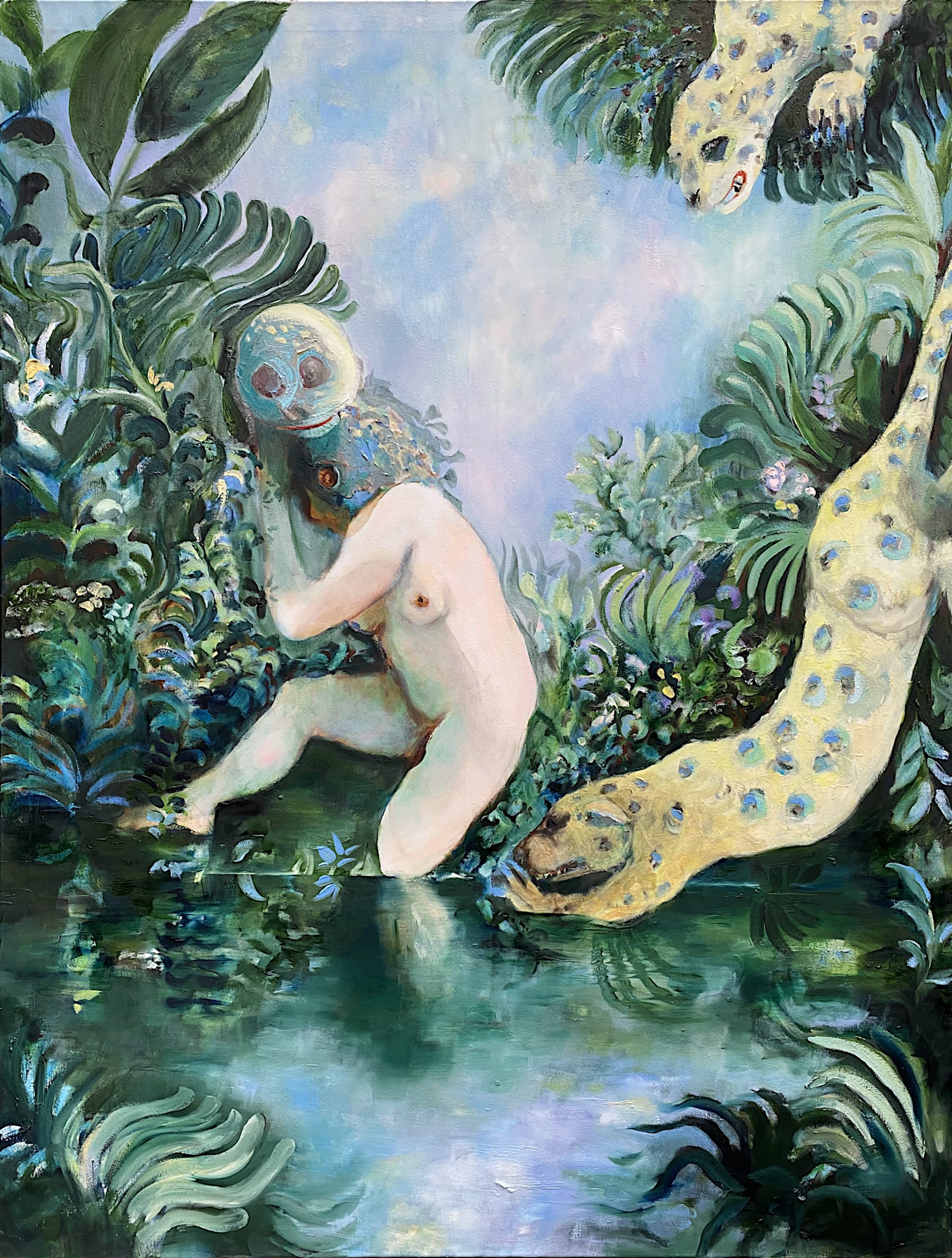
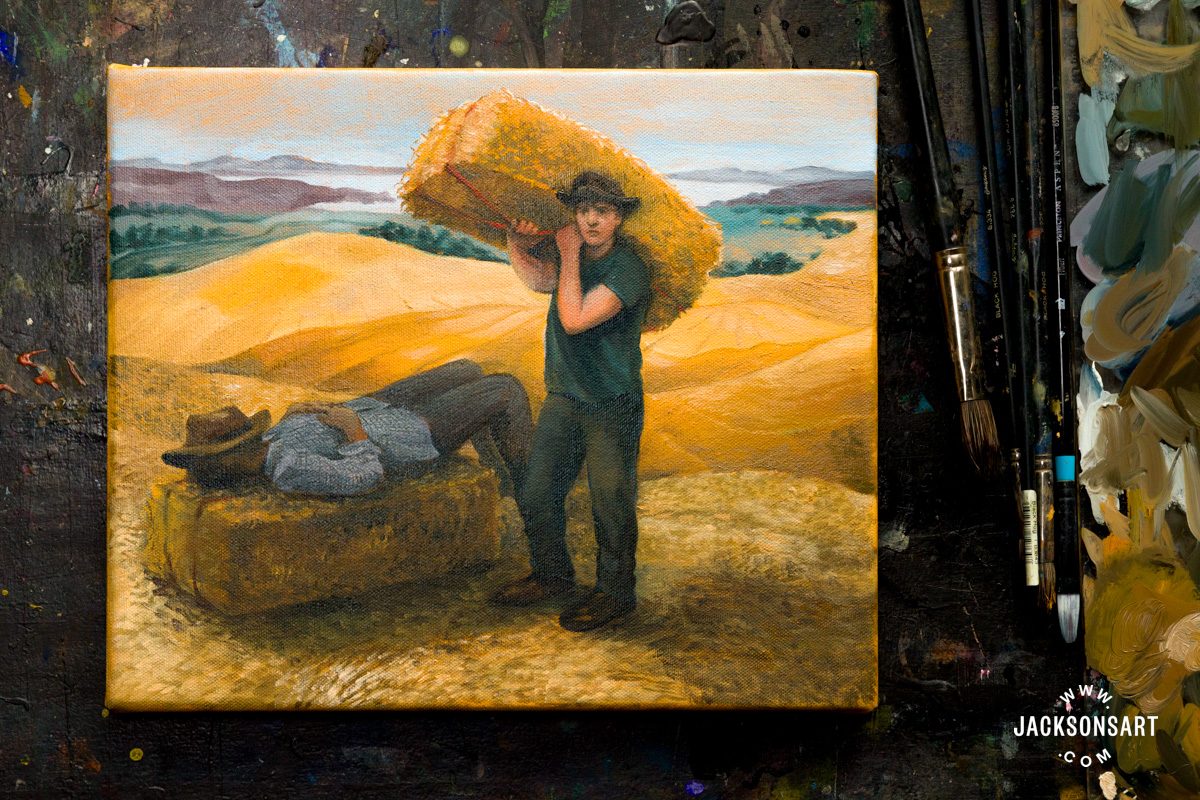
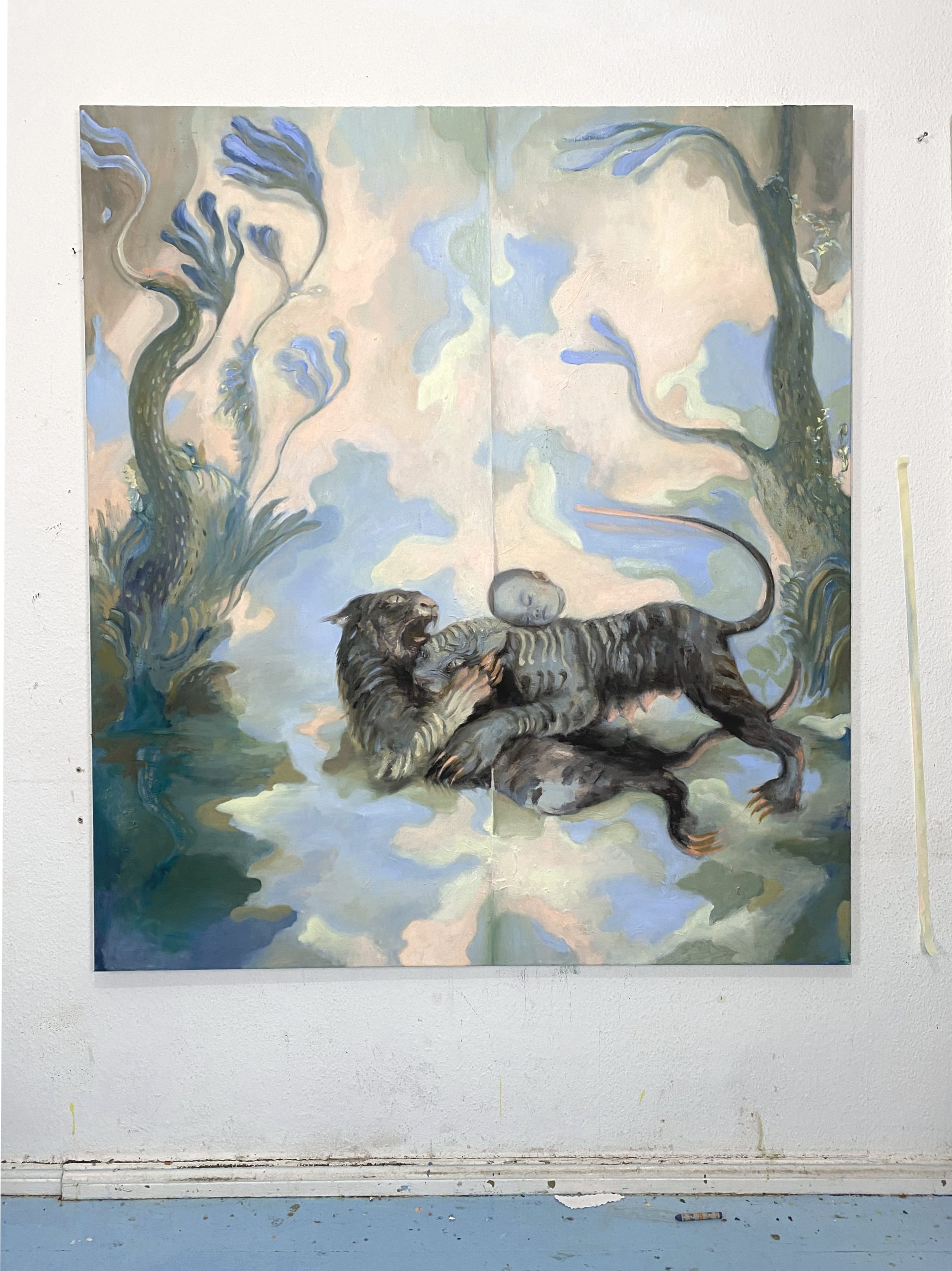
Emeli Theander
Oil on canvas, 160 x 120 cm | 62.9 x 47.2 in
Emeli Theander: Cut Out of a Dream
Josephine: Could you tell us about your artistic background?
Emeli: I grew up in Sweden, where I went to an art-focused high school. During this time, I started to paint, especially with acrylics. I was also involved in making fanzines (DIY paper magazines), and drawing is something I have always done. After finishing high school, I went directly to visit a friend in Berlin. It was a kind of escape. Instead of returning to Sweden, I learned how to make silk screen prints using my closet as a dark room, and earned my living by selling my drawings as prints on paper and second-hand clothes on a weekly market. Back then, it was very cheap and easy to live in Berlin. During this time, in the early 2000s, I got really into street art, and I was active under the name of Chin Chin. I painted big figures with acrylic on paper, cut them out, and glued them to the house walls at night. In 2006, I applied to the University of Arts Berlin and was accepted. During my time at the university, my interest in painting with oil grew very strong. I also got a stipend that made it possible for me to go live and work in Seoul, South Korea, for six months, and this period had a huge impact on me and my work.
Josephine: What does a typical working day in the studio look like for you? Do you have any important routines or rituals?
Emeli: On a typical day, I drop my kids off at the daycare in the morning, and then head to my studio. My mood decides what I work on (if I don’t have a particular deadline). If I feel happy, stressed, or just have high energy, I prefer to work on big paintings because they constantly make me move. When I am working on smaller paintings or drawings, I need to sit and focus and need a certain “calmness.” I prefer to draw at home in the evenings.
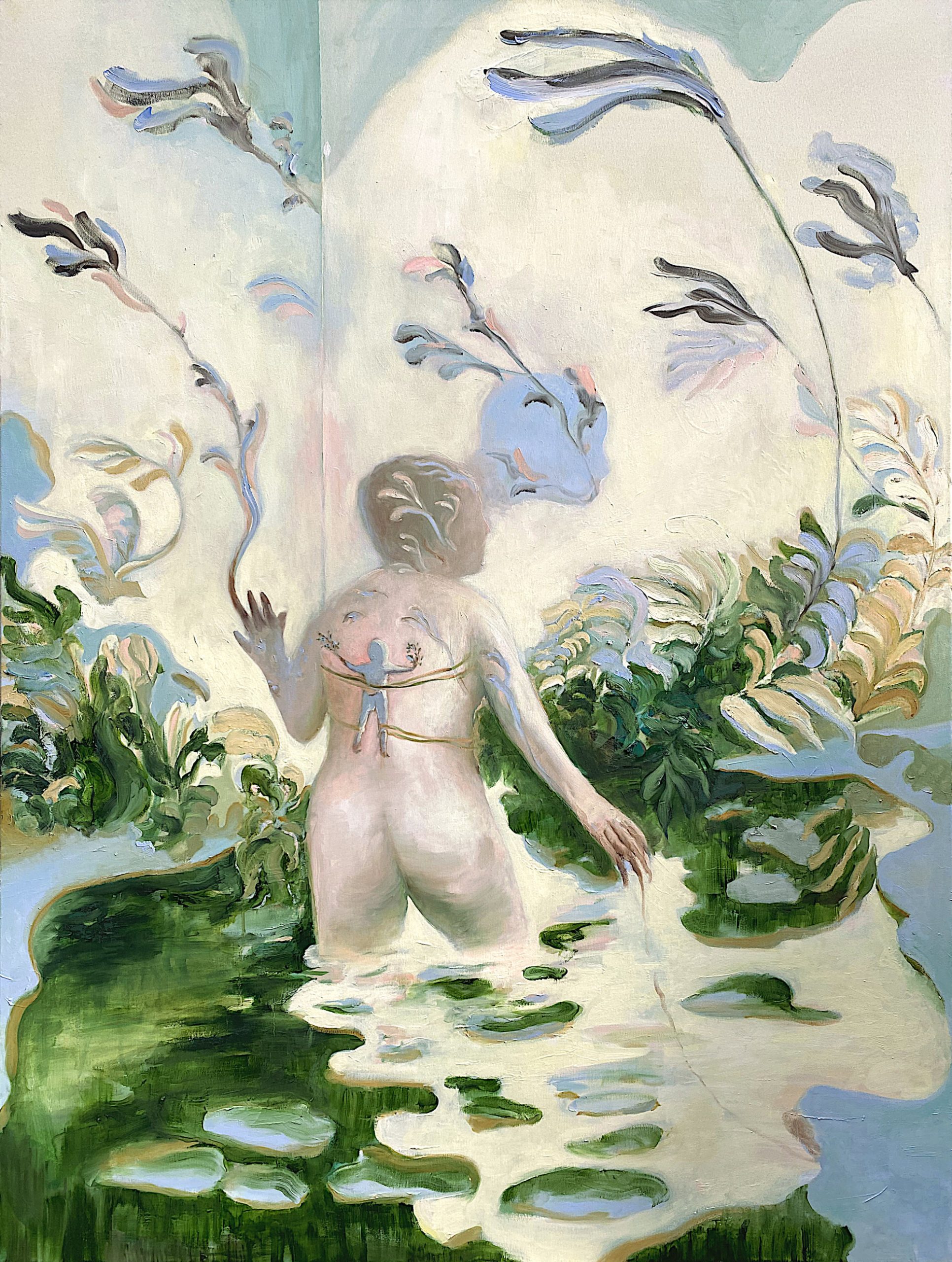
Emeli Theander
Oil on canvas, 160 x 120 cm | 63 x 47.2 in
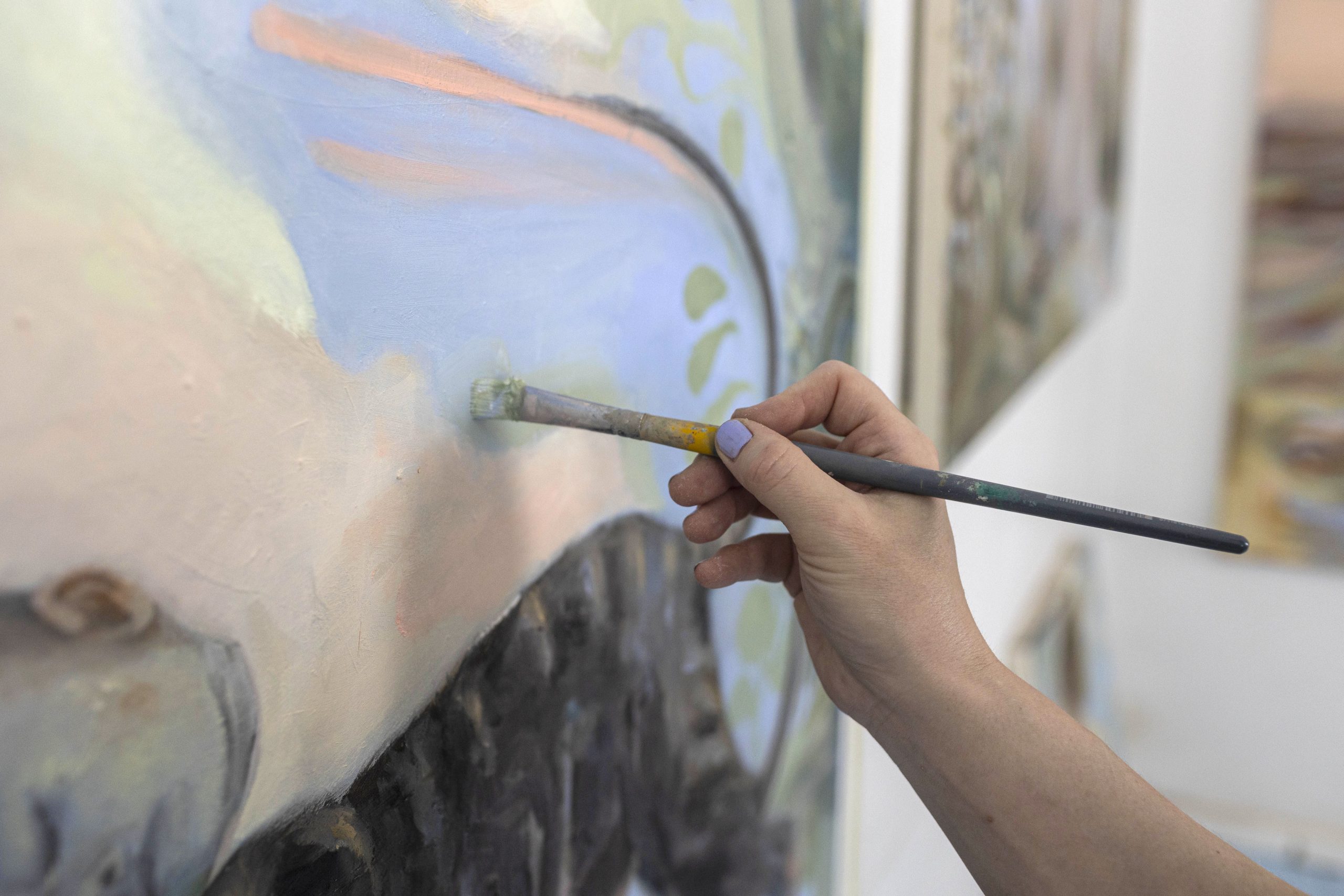
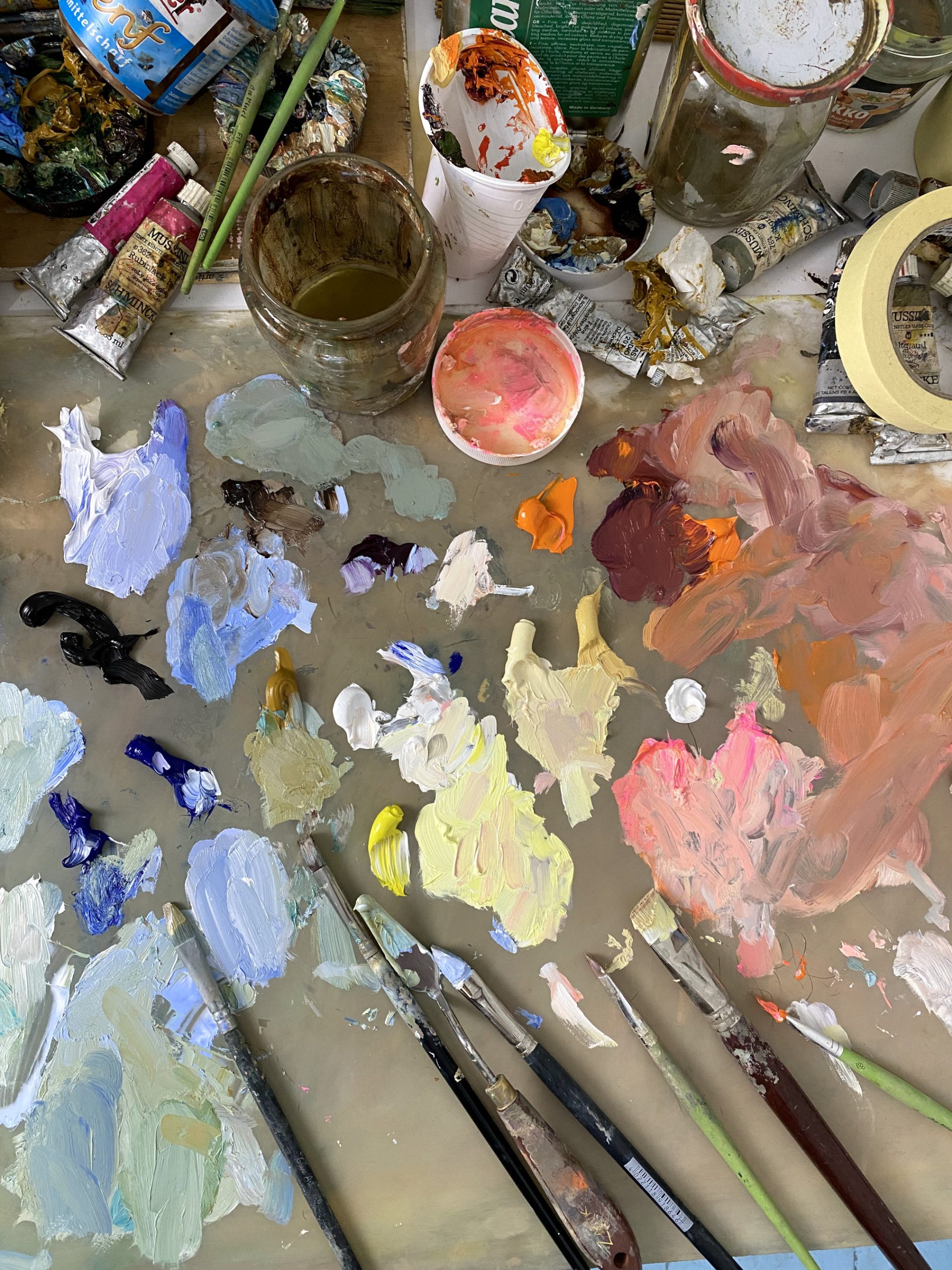
My work routine changed when I became a mother because I wasn’t able to work 24 hours a day whenever I felt like it. That was quite a hard adaptation for me, on the other hand, it made me more focused and I now use my time more wisely. In the studio, I mostly start with mixing oil paints. I find that it brings me something meditative and calming, it’s like a warm-up.
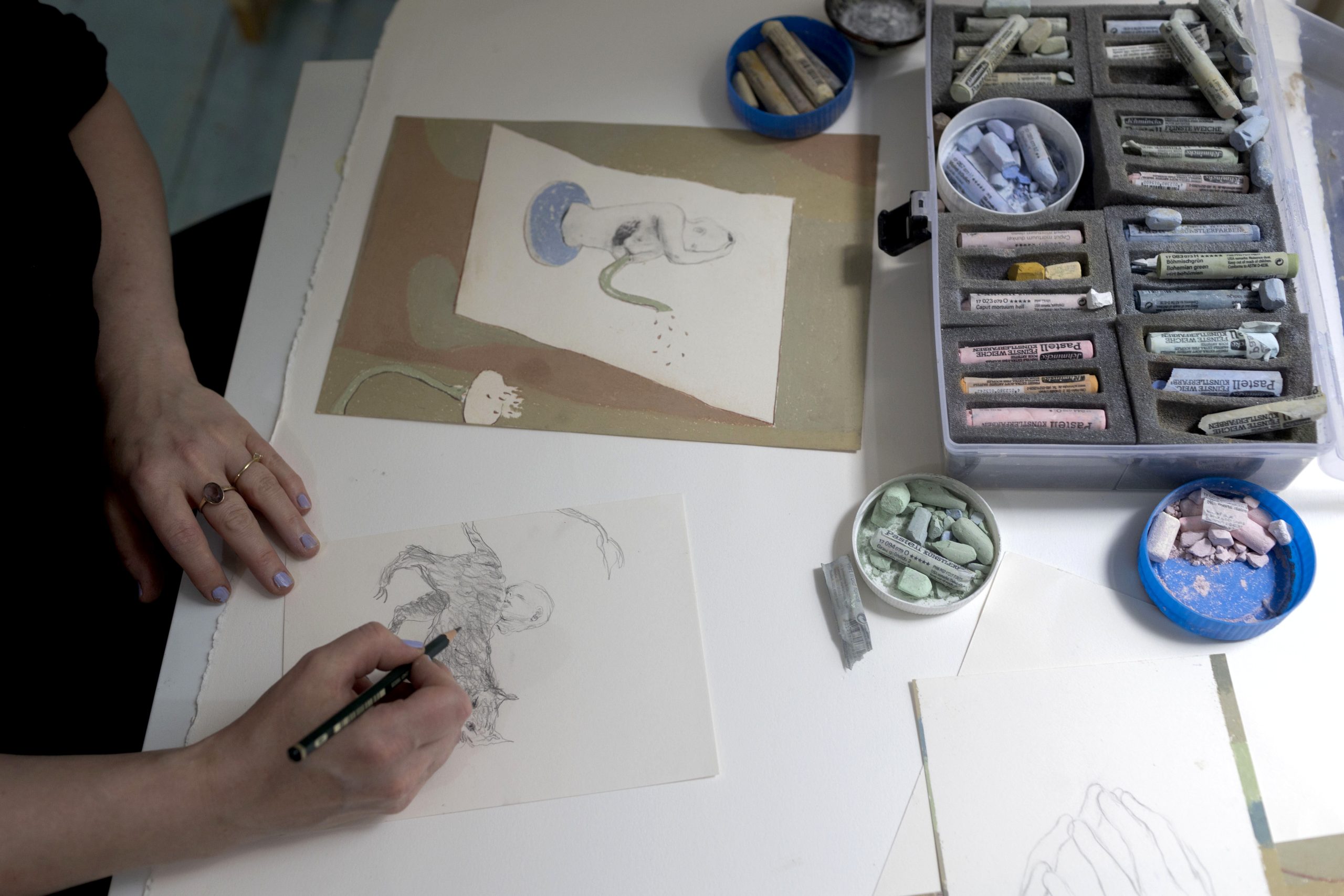
Photo credit: George Baroud
Josephine: Which materials or tools could you not live without?
Emeli: I get depressed if I don’t paint for longer times, I’d probably say I can’t live without oil paint. I have some brands I like more than others, but I’m not so picky when it comes to what brand to use. Also, I wouldn’t know how to live life without a B4 pencil, and I also prefer to have the soft pastels from Schmincke in my life. When it comes to soft pastels, I’m actually very picky.
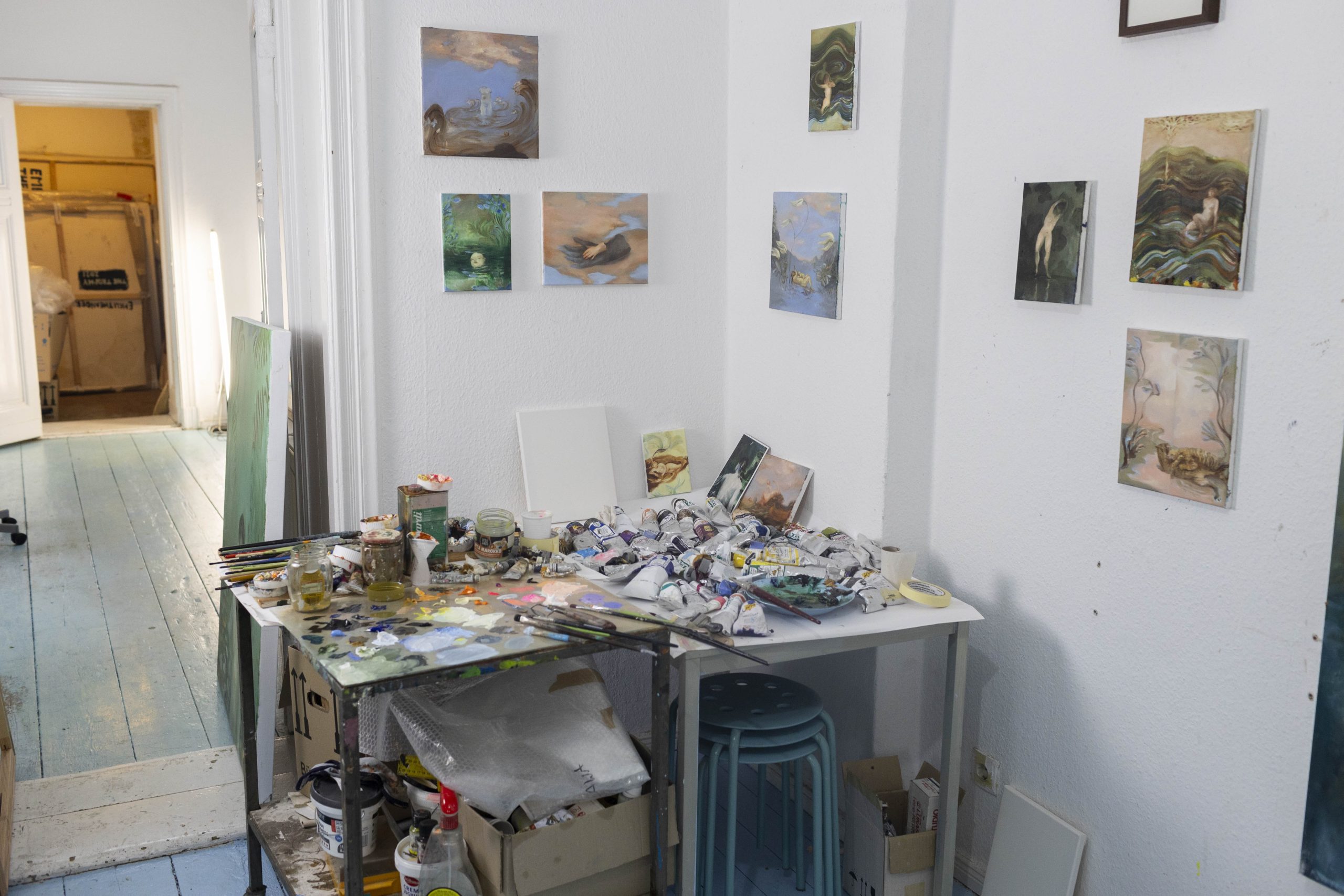
Photo credit: George Baroud
Josephine: What are the stages of your work on a painting? Do you make drafts?
Emeli: I never do drafts. Sometimes I transfer a drawing or smaller painting to a bigger canvas, or the other way around. I find it interesting to see how size, scale, or material change and develop the motif. I normally start a big painting by figuring out how I want it to be in my head, then roughly put paint on the canvas just to get it a bit “dirty” and not so white. I also often paint over old paintings that I have outgrown. Then I start by figuring out the composition, where the main figure could be, and such. After that, I mostly work on the main figure, but at the same time, I work on the whole painting.
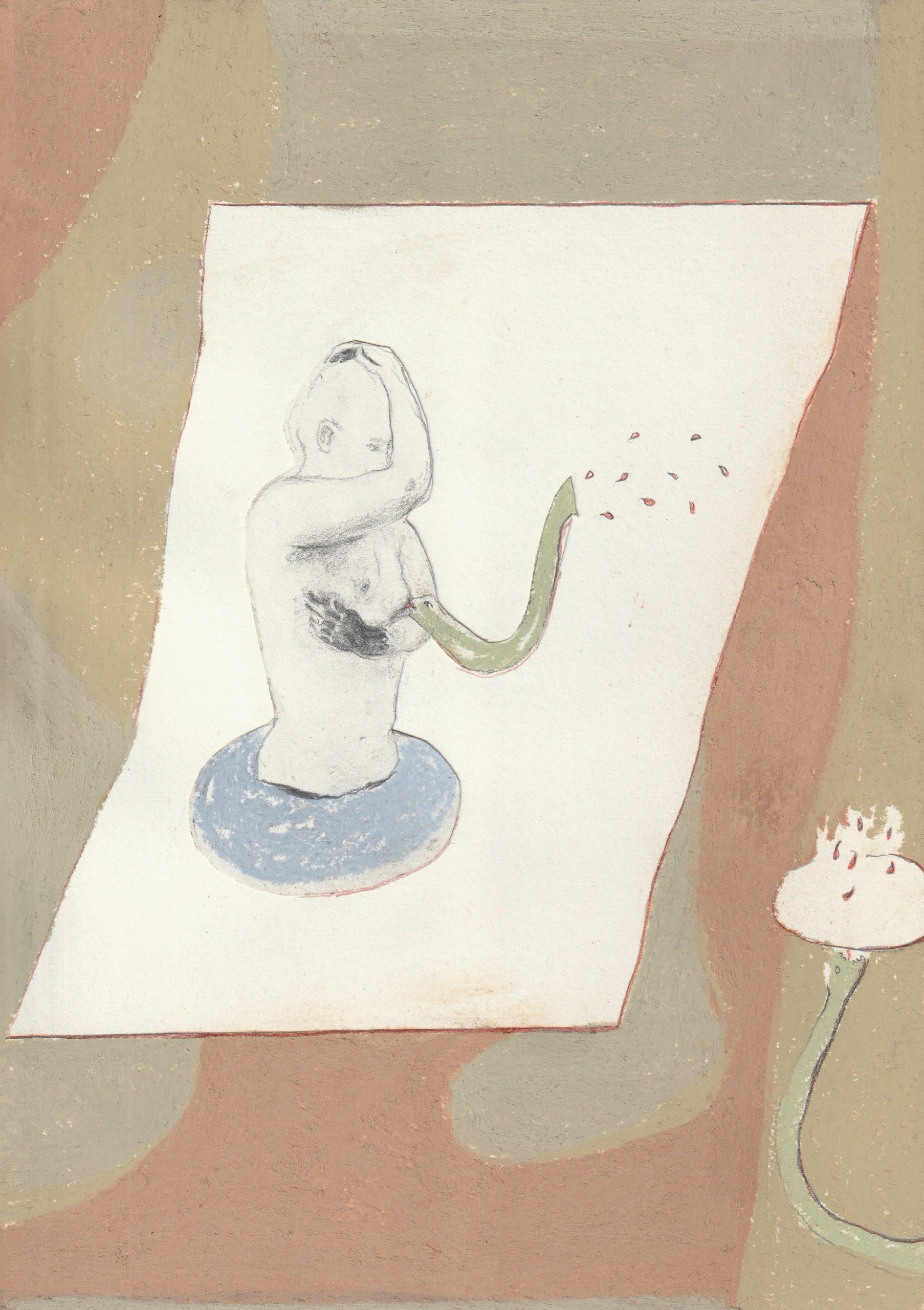
Emeli Theander
Graphite and soft pastel on paper, 29.7 x 21 cm | 11.7 x 8.3 in
I work “wet in wet” where I rarely let the paint dry much, except between sessions. During the process, a lot of things happen intuitively. And normally, in the middle of the process (maybe some sessions in), there is this image, and it starts to get really hard because one has to make clear decisions on what to keep and what to get rid of. The end is fun, just small gestures and maybe colour accents, but sometimes it’s also hard to know when the painting is finished; it’s easy to overdo it.
Josephine: Do you regularly draw or keep a sketchbook? If so, how does this inform your work?
Emeli: I draw a lot, but I have never used any sketchbooks.
Josephine: Have you ever had a period of stagnation in creativity? If so, what helped you overcome it?
Emeli: Instead of stagnation in creativity, I have stagnation in life, if I’m not able to paint regularly. Painting is the one thing keeping me sane. Of course, I have stagnation in creativity sometimes as well. I then try to tell myself to relax and stop being scared of ruining a painting; just work without everything “needing to become” something.
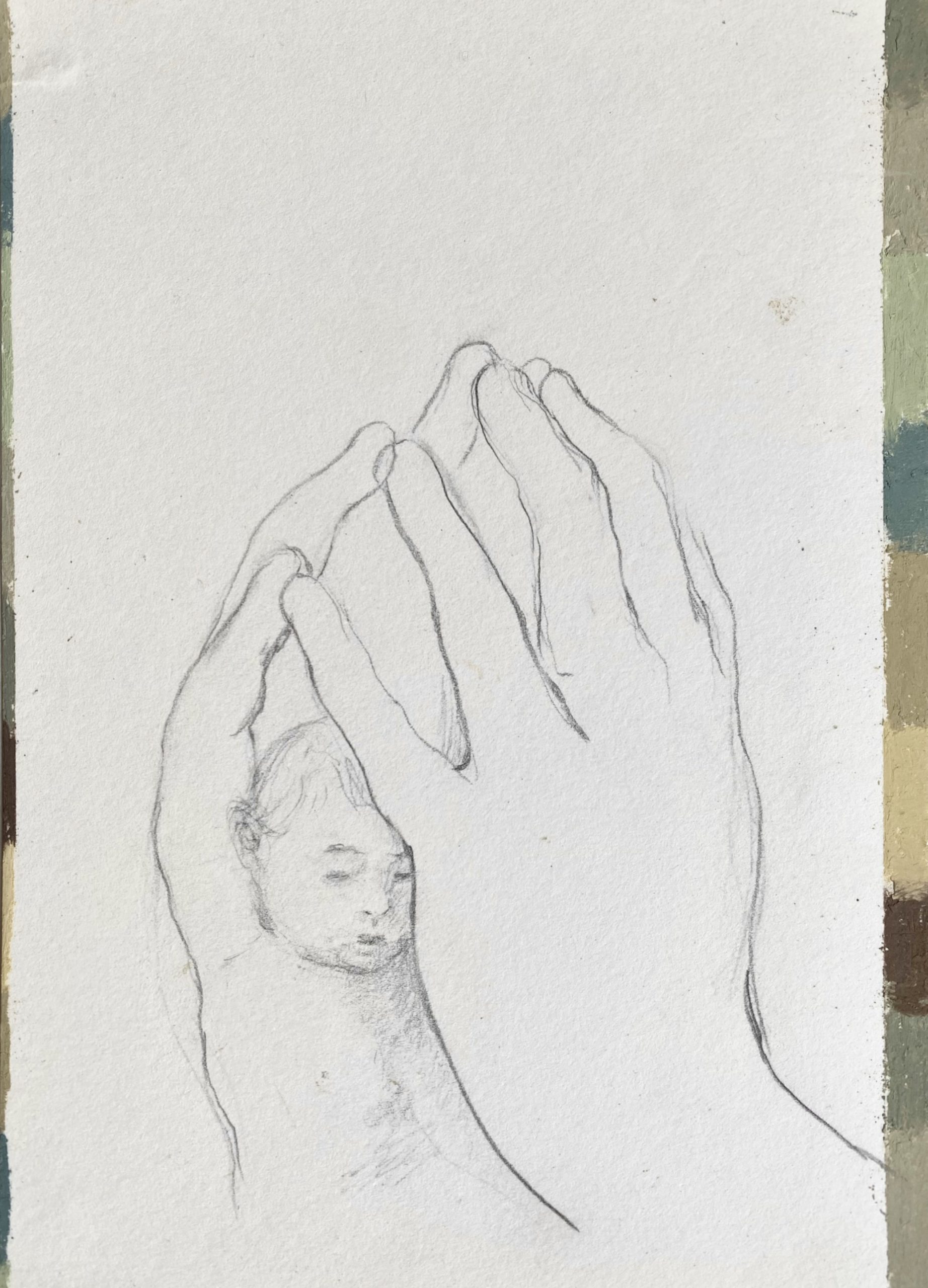
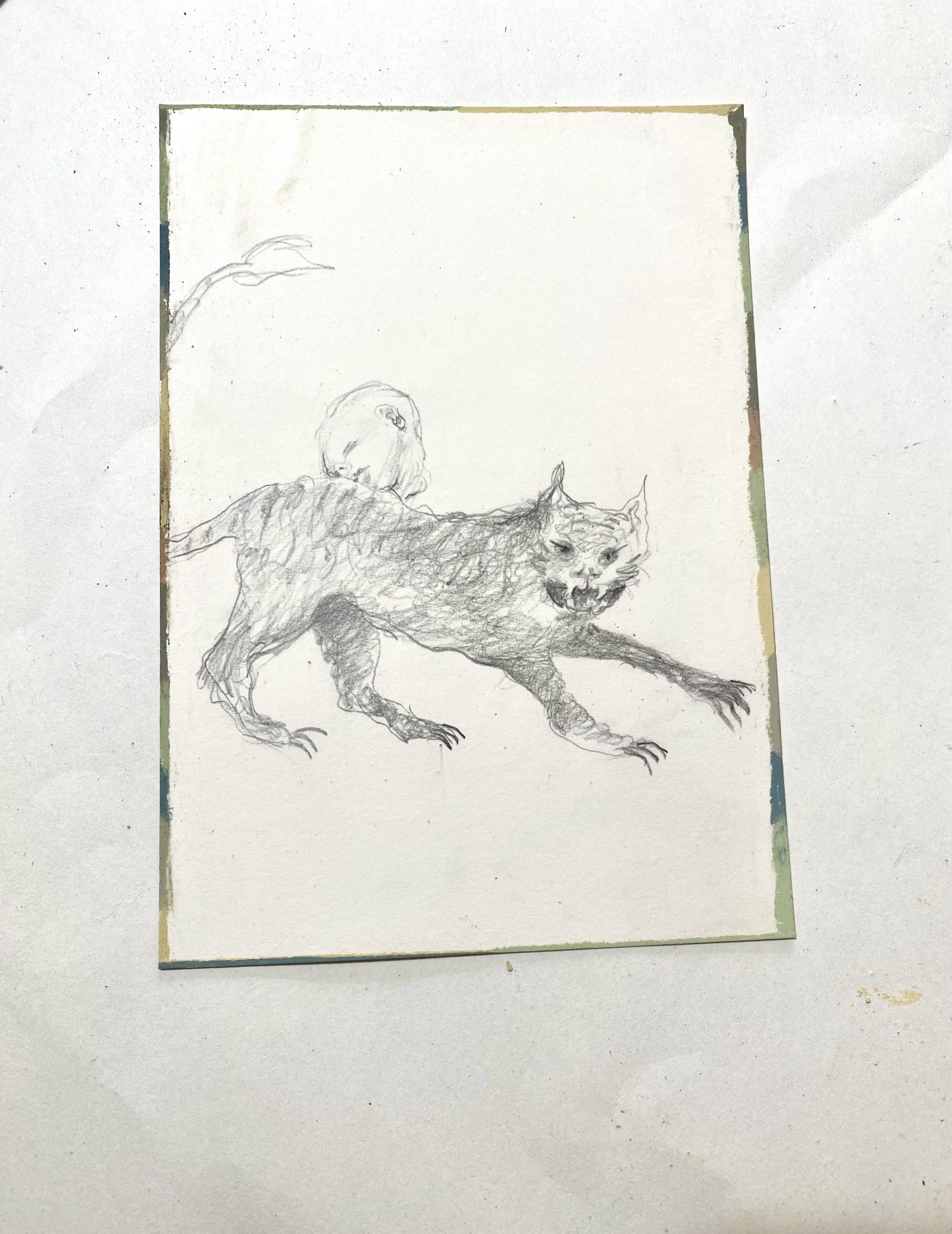
Emeli Theander
Graphite and soft pastel on paper, 21 x 14.7 cm | 8.3 x 5.8 in
Maybe try something one normally doesn’t dare to try, and something unexpected might come from it. Or one can use these periods for boring but necessary work, like building and stretching canvases. I think it’s also ok to just wait, try not to stress out, and let the period pass. I think it’s normal to have those kinds of feelings. For myself, I had a few life-changing events happen to me, and since then some kind of fear has dissolved, which has allowed me to trust the process much more. It made me a better painter.
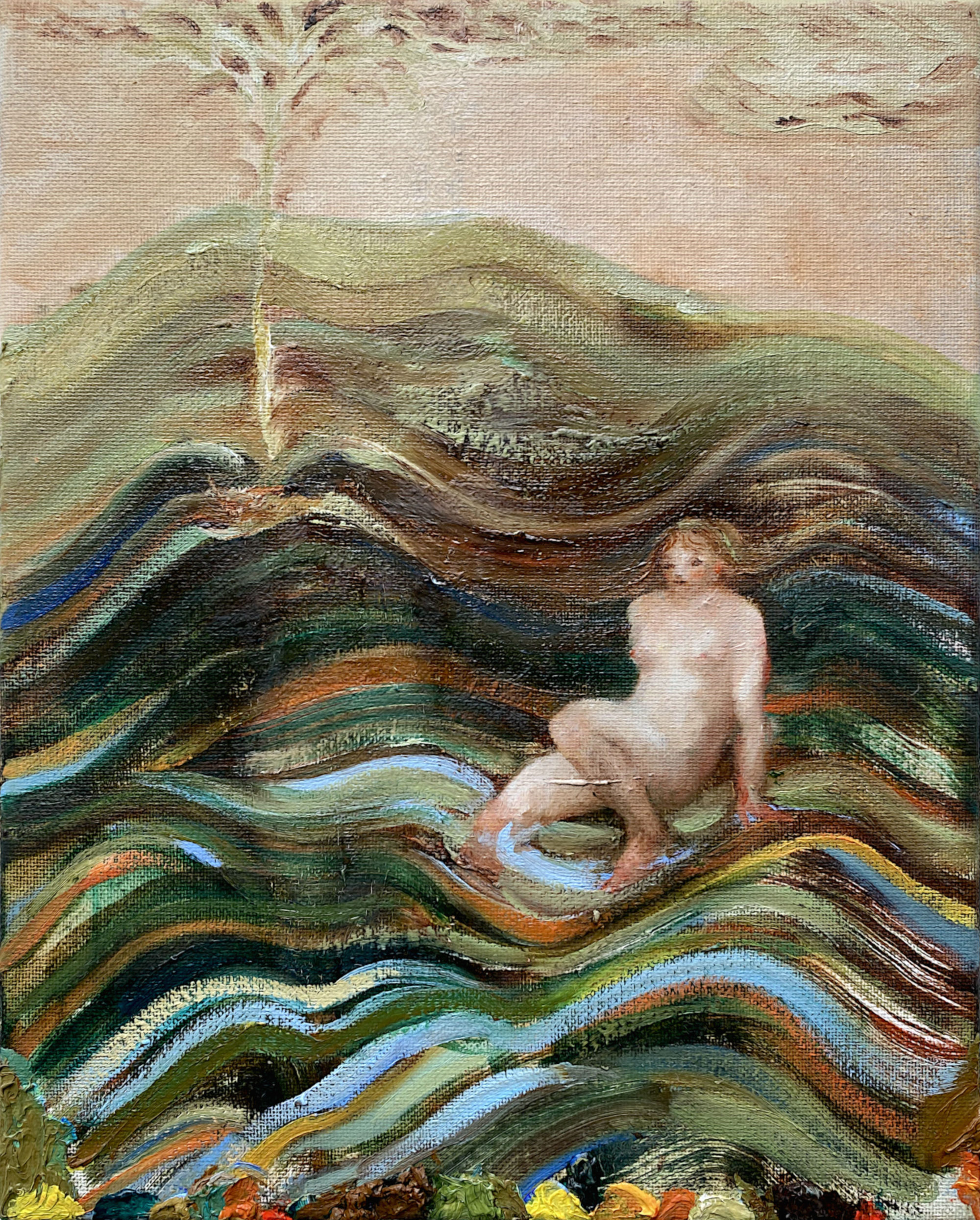
Emeli Theander
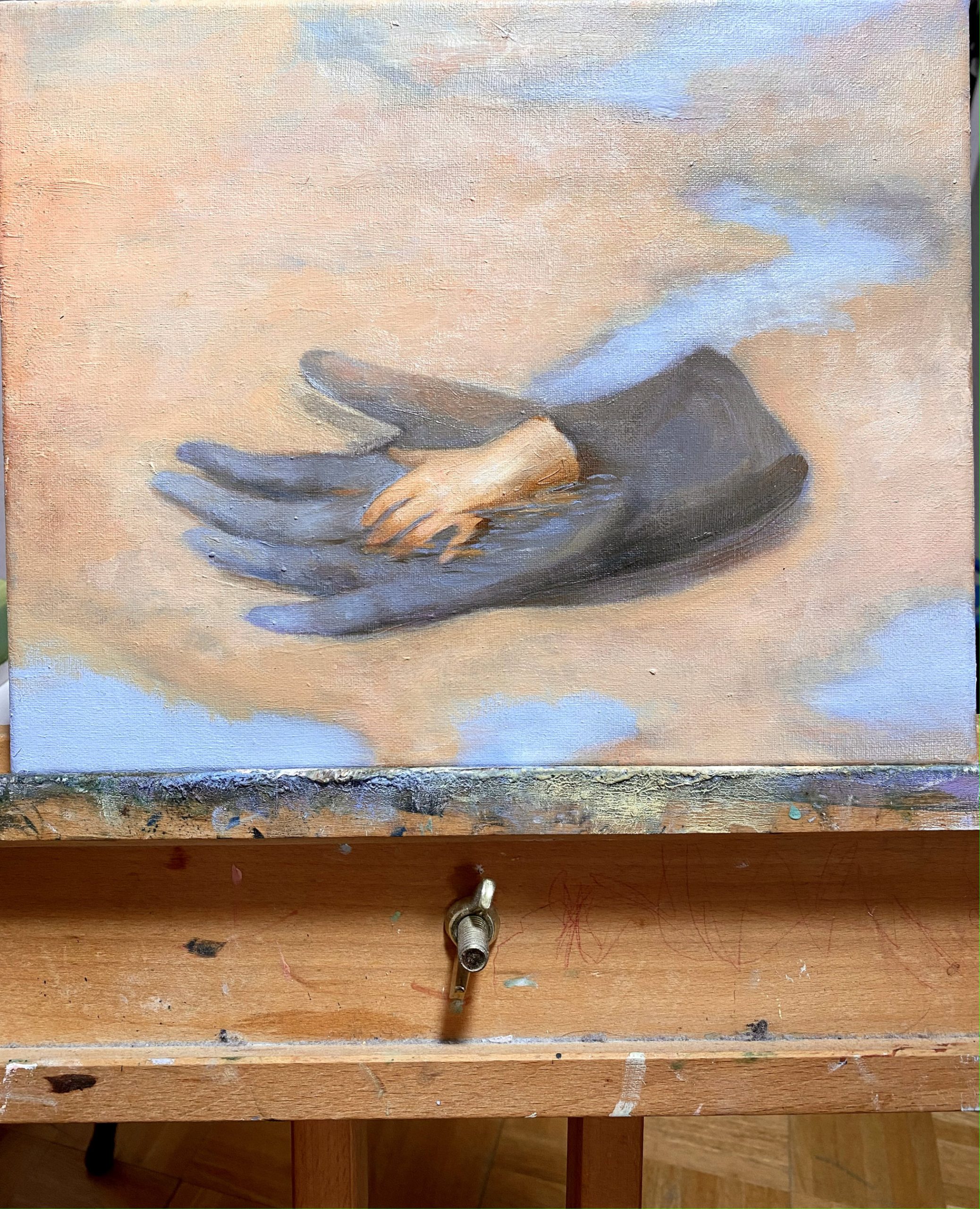
Oil on canvas, 30 x 24 cm | 11.8 x 9.4 in
Josephine: Are there any specific artists or mentors who have inspired you?
Emeli: There are many different ones at different times. Like a teenage love, the collages of Max Ernst (Une Semaine de Bonte: A Surrealistic Novel in Collage) or, for example, the Swedish painter Lena Cronqvist, Goya, Rubens, and Zorn – I have always appreciated them a lot. In university, I studied under Valerié Favre, and I was amazed by her big oil paintings of Autoscooter-Garages and Rabbits, and loved the thick colours and structure on the canvas, which one can’t see when only googling a picture of a painting. After always painting kind of dark, at some point, I got excited to start painting with lighter colours, and I was very inspired by post-impressionist painters like Bonnard, Vuillard, Monet, and Rousseau. Also, I’m a big fan of antique Japanese woodblock prints and the drawings of Louise Bourgeois. Some contemporary artists I admire are Mamma Andersson, Lars Elling, Guglielmo Castelli, and Victor Man. But there are so many more.
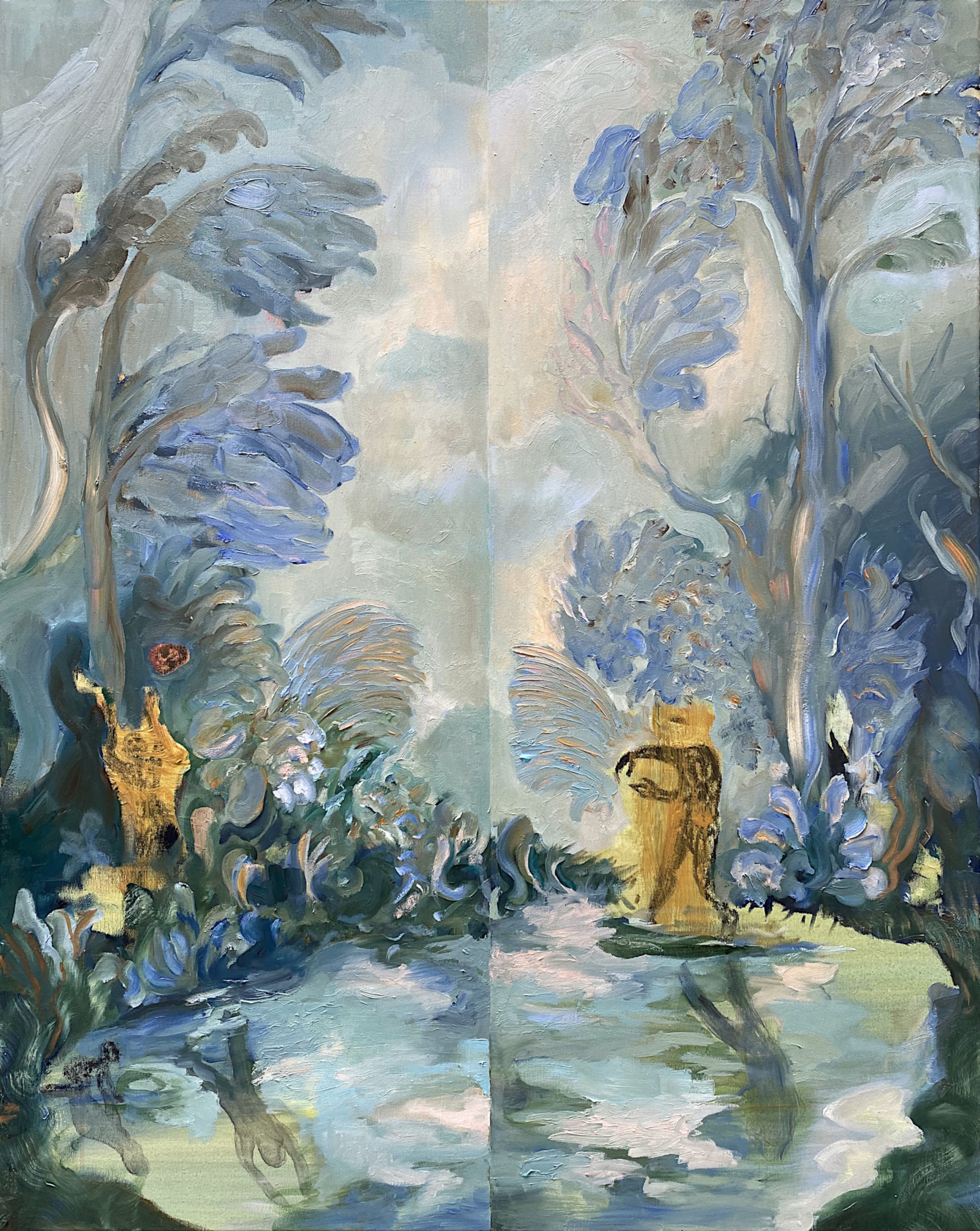
Emeli Theander
Oil on canvas, 100 x 80 cm | 39.4 x 31.4 in
Josephine: How did it feel to realise you had won a Runner Up prize?
Emeli: Going through all the stages of the contest was a thrilling experience. I was very happy and excited to win the runner up prize! It feels great to get this kind of recognition.
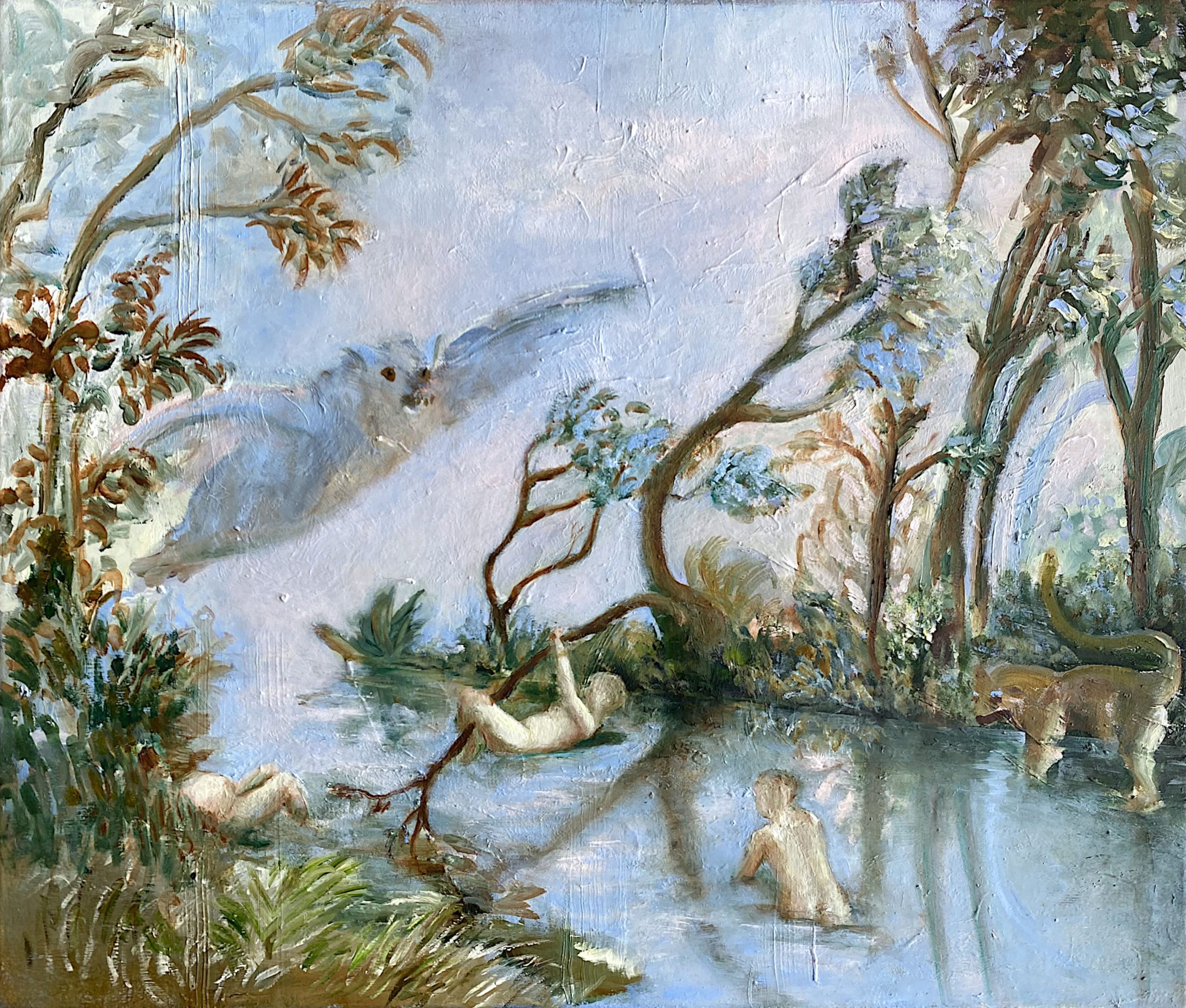
Emeli Theander
Oil on canvas, 50 x 60 cm | 19.7 x 23.6 in
Josephine: The Judging Committee commented on the movement of the figures in your work, which is counterbalanced by the stillness of the water. Is this tension intentional?
Emeli: Yes, the movement of the figures contrasting with the stillness of the water was something I wanted to emphasise in the painting. My paintings always contain different counterbalances, even in the material itself, like in the weight of the strokes, the movement of the paints, the choice of colours, or in the visual story and the feelings they might transport.
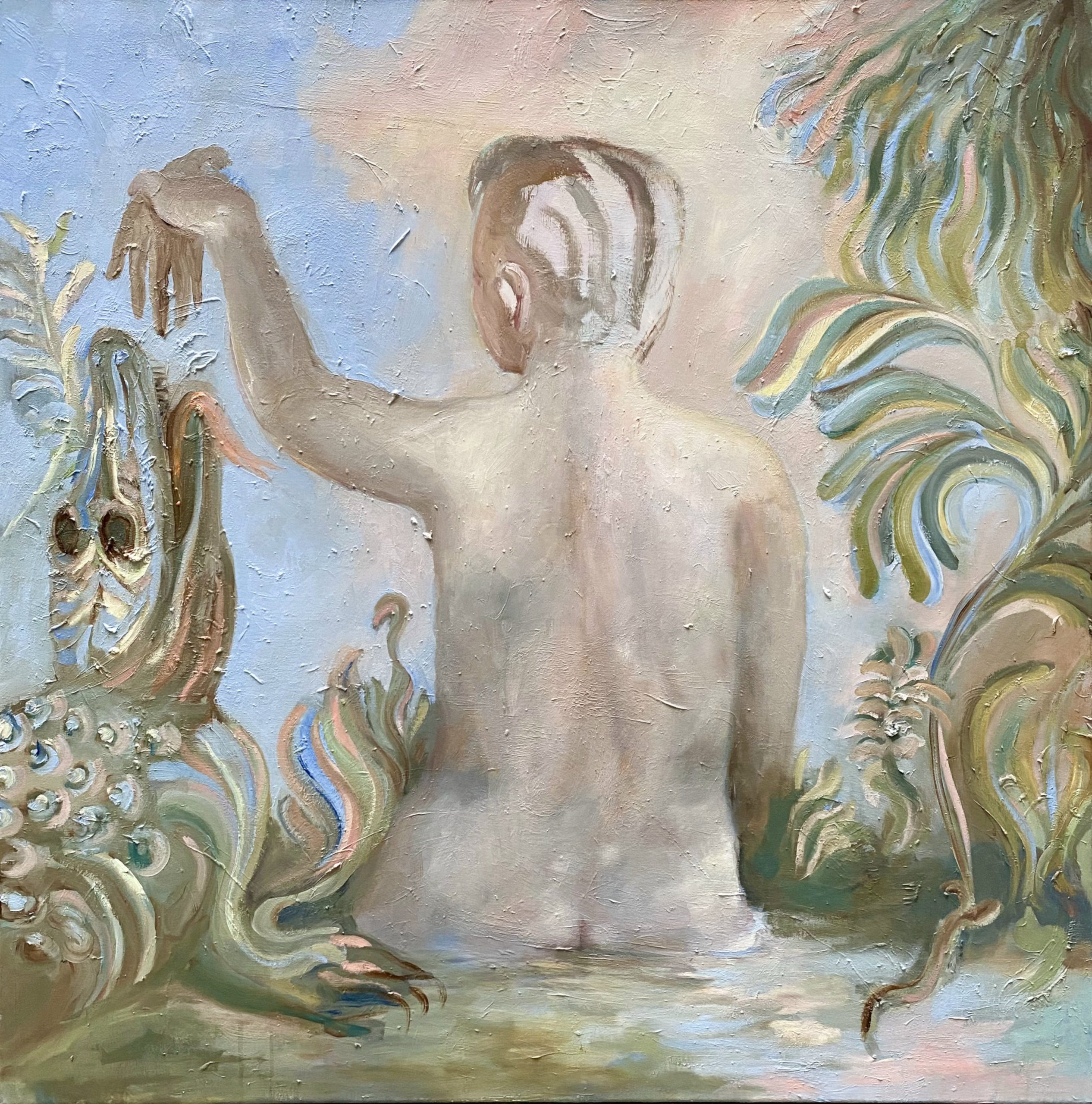
Emeli Theander
Oil on canvas, 110 x 110 cm | 43.3 x 43.3 in
Josephine: There’s something mythological or dream-like about your subject matter. What experiences or inspirations have informed your work?
Emeli: I see my paintings as dream collages. My figures are often static or “frozen”, like being suddenly cut out of a dream or a vision and then placed in a made-up landscape or room. I’m very interested in and inspired by psychoanalysis and dreams. I search for visual images or feelings in the subconscious. So none of my works are 100% intentional from the beginning. I associate freely while painting, grabbing all kinds of images and thoughts and transforming them into my own iconography and symbolic alphabet. This happens all the time, not only while actively painting. I mentioned before that I never use sketchbooks, but actually, I frequently write down ideas for images.
Josephine: What materials are you looking forward to purchasing with your voucher?
Emeli: I’m looking forward to trying out some new oil paints, for example, Sennelier. So far, I have only worked with the oil pastels from Sennelier and love them. I look forward to trying out some really nice, more expensive Michael Harding oil paints, and I will also order some new nice brushes; I can spend a whole day studying different brushes. I will purchase some soft pastels from Schmincke and also look for anything new I didn’t know about that I can try out.
Josephine: What’s coming up next for you?
Emeli: Right now I’m participating in a group show called “Summer of the snake“ in Galerie DYS in Belgium. I also just started working on a new series of works, which I am very excited to continue working on. I call it “Spökena glufsar mot jaget” in Swedish, but it’s hard to translate. It might be something like “the ghosts scenting the self”, but in a more dirty, messy way.
Further Reading
Inside the Sketchbook of Katie Eraser
Using Black Gesso for Depth in Your Painting
Michael Harding Explains His New Miracle Medium
Shop Oil Painting on jacksonsart.com