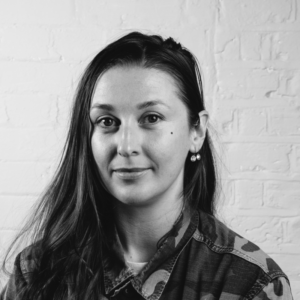
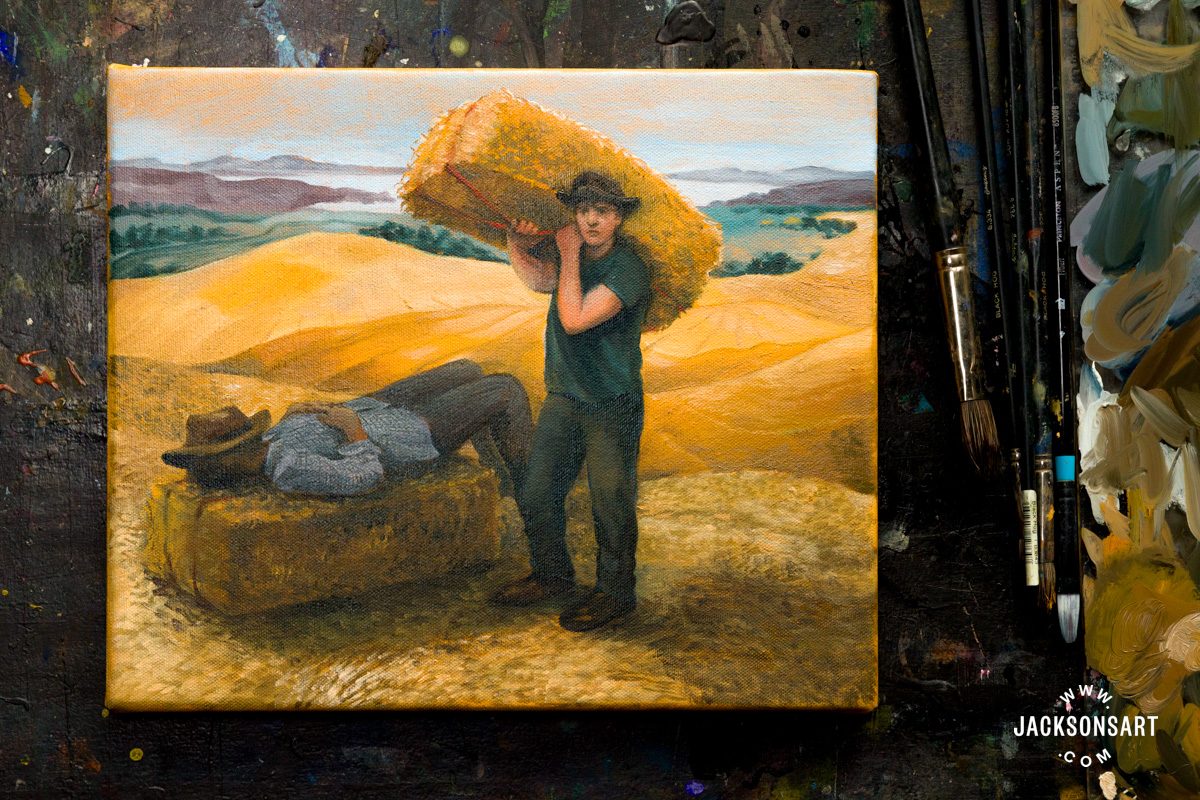
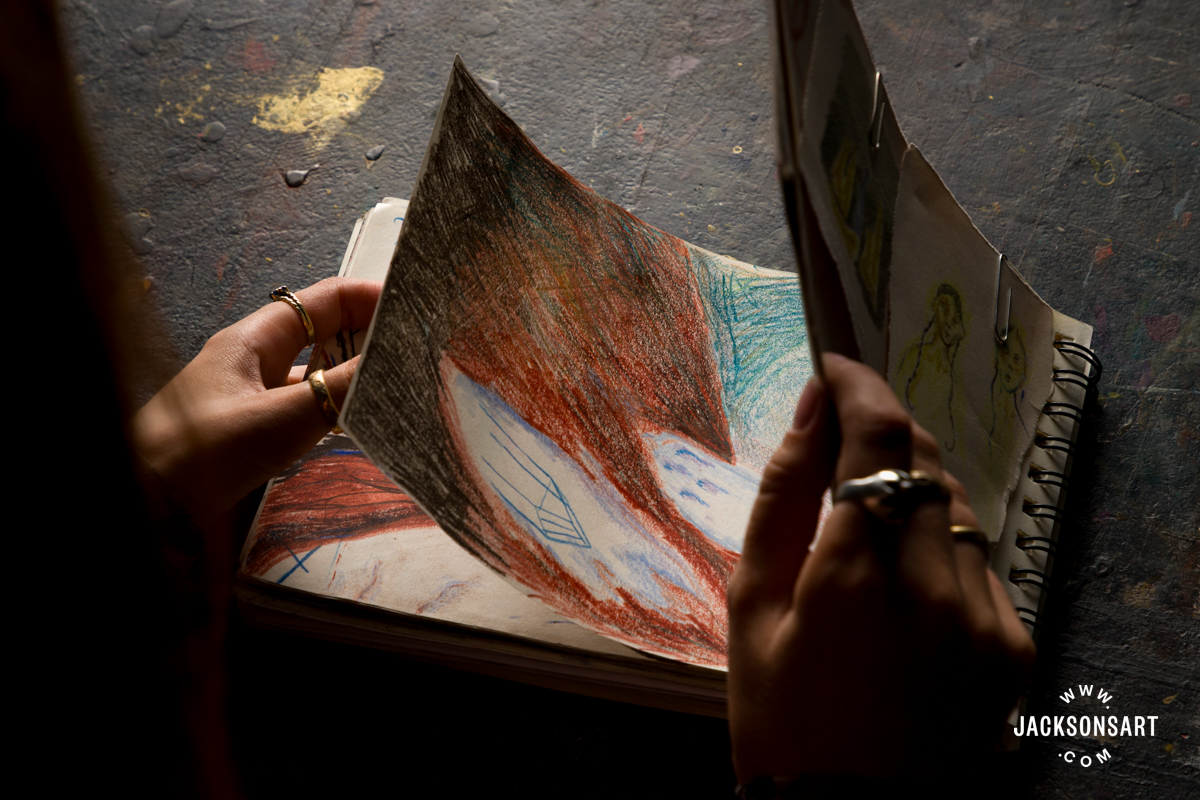
Originally from Los Angeles, Katja Farin is a London-based oil painter and ceramicist whose sketchbooks are never far from hand. Using a mixture of collage and the challenge of new mediums, Katja’s sketchbooks are a world for them to capture their thoughts and ideas, and experiment with compositions for their paintings.
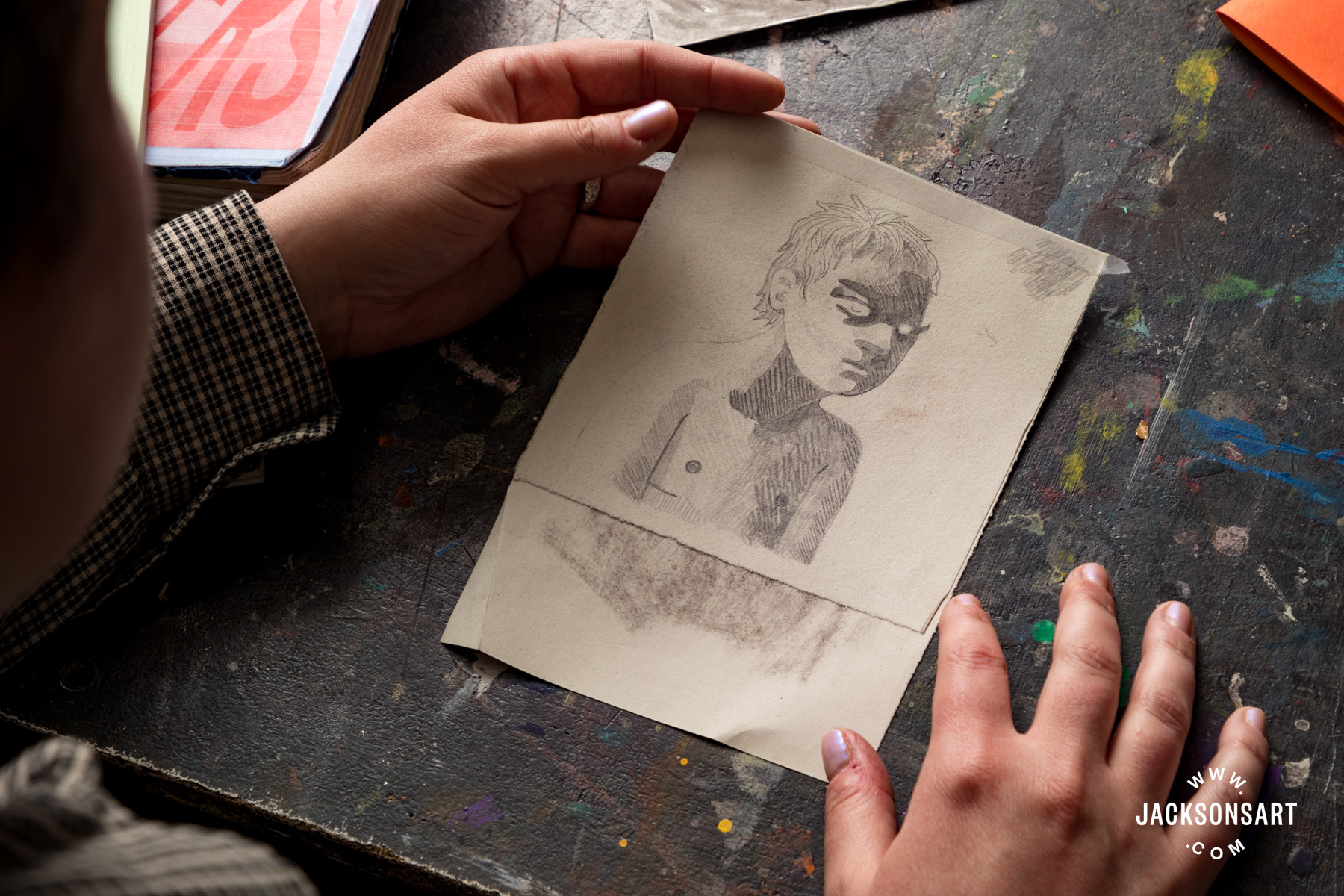
Inside the Sketchbook of Katja Farin
My work investigates the unconscious mind, the collective unconscious, identity, and the self. Emotions are central to the work – how we deal with them and how other people affect us. The trickster archetype is at play in the work. Tricksters point the way out, hiding in the margins, provoking from the outside – the hinges that open and close realms, guiding and allowing us to see a different perspective. When I am working in my sketchbooks I feel like the trickster, trying to unleash a new perspective and open my eyes to a new composition. It is what truly leads me to experiment in the final paintings.
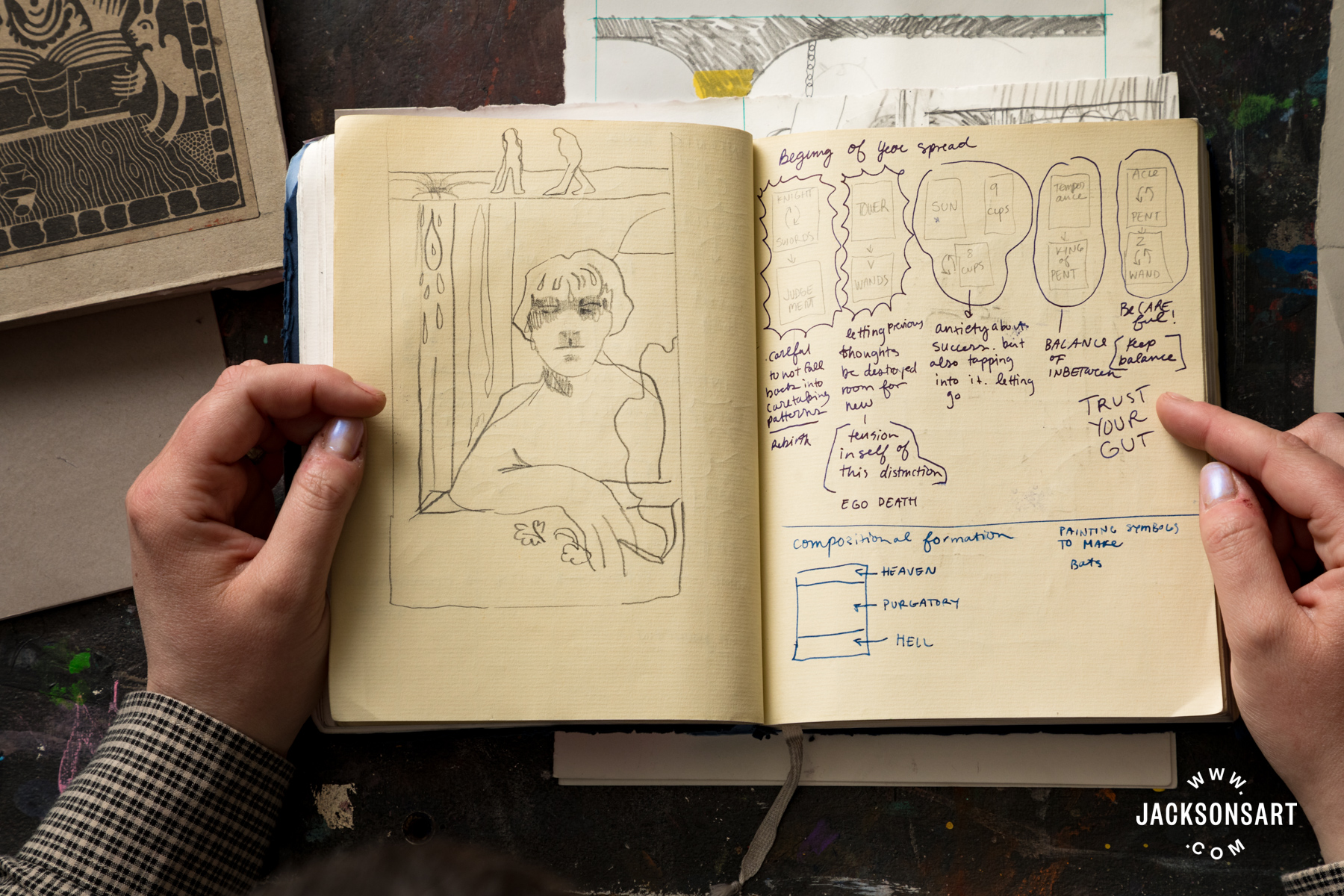
I have about three sketchbooks going at one time, for painting sketches, writing, drawing, and diagrams. They definitely have a lot of overlap. There is always a sketchbook on me wherever I go so I can jot something down to review later. I don’t really see my sketchbooks as pieces of work themself, just a way to jot down as many ideas as possible. My work is created a lot from delving into my subconscious and quieting my active mind. They feel like doodles that I can always come back to.
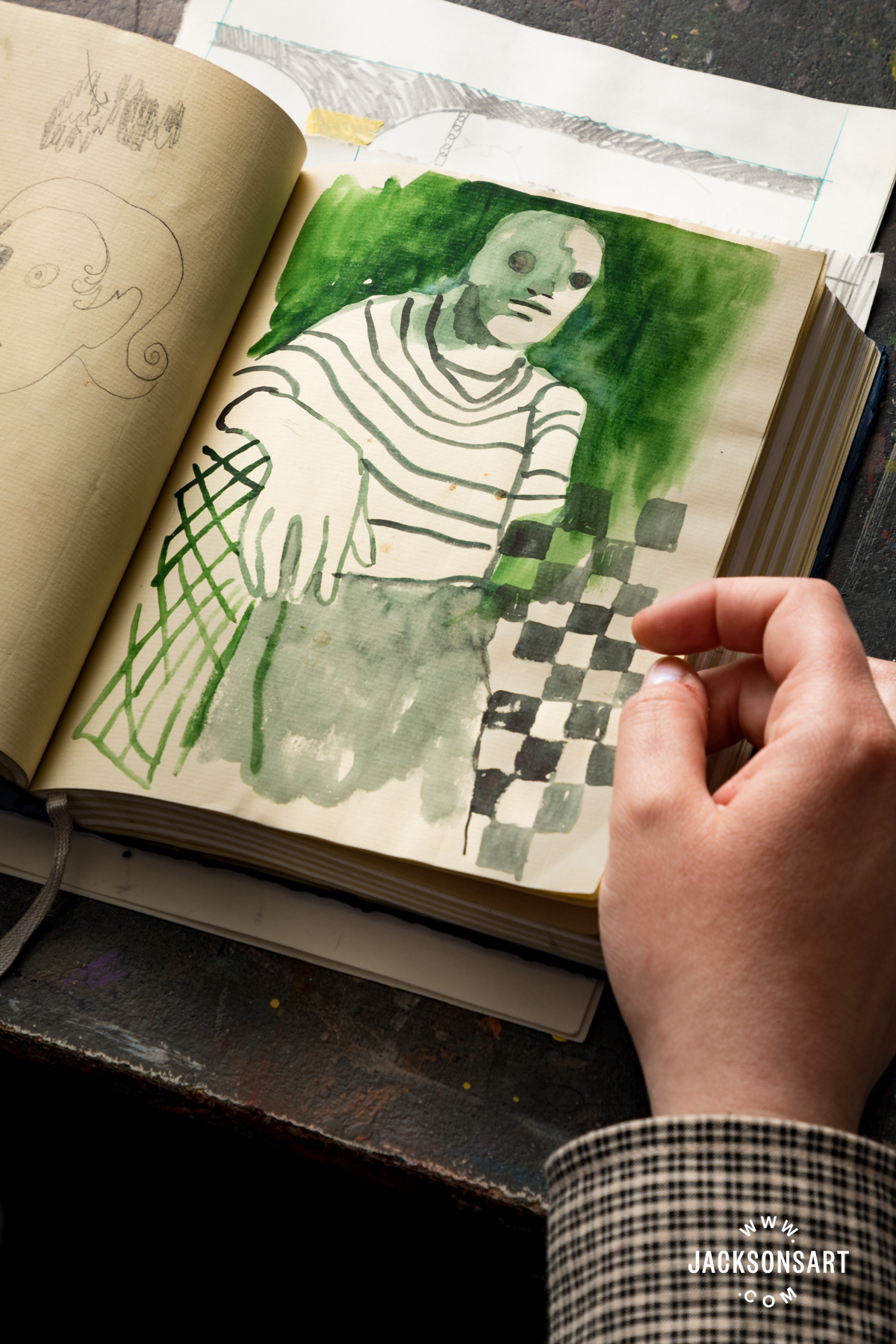
The sketchbooks act like an archive that I can tap into. I have saved every sketchbook I have ever made (sadly most of them are in Los Angeles) and will look at ideas and concepts from 10 years ago. What I find so thrilling is that I have been exploring the same themes in my practice for years in different ways. As I go through this personal archive, I can see my progression and look back to ways of working that I can pull from now.
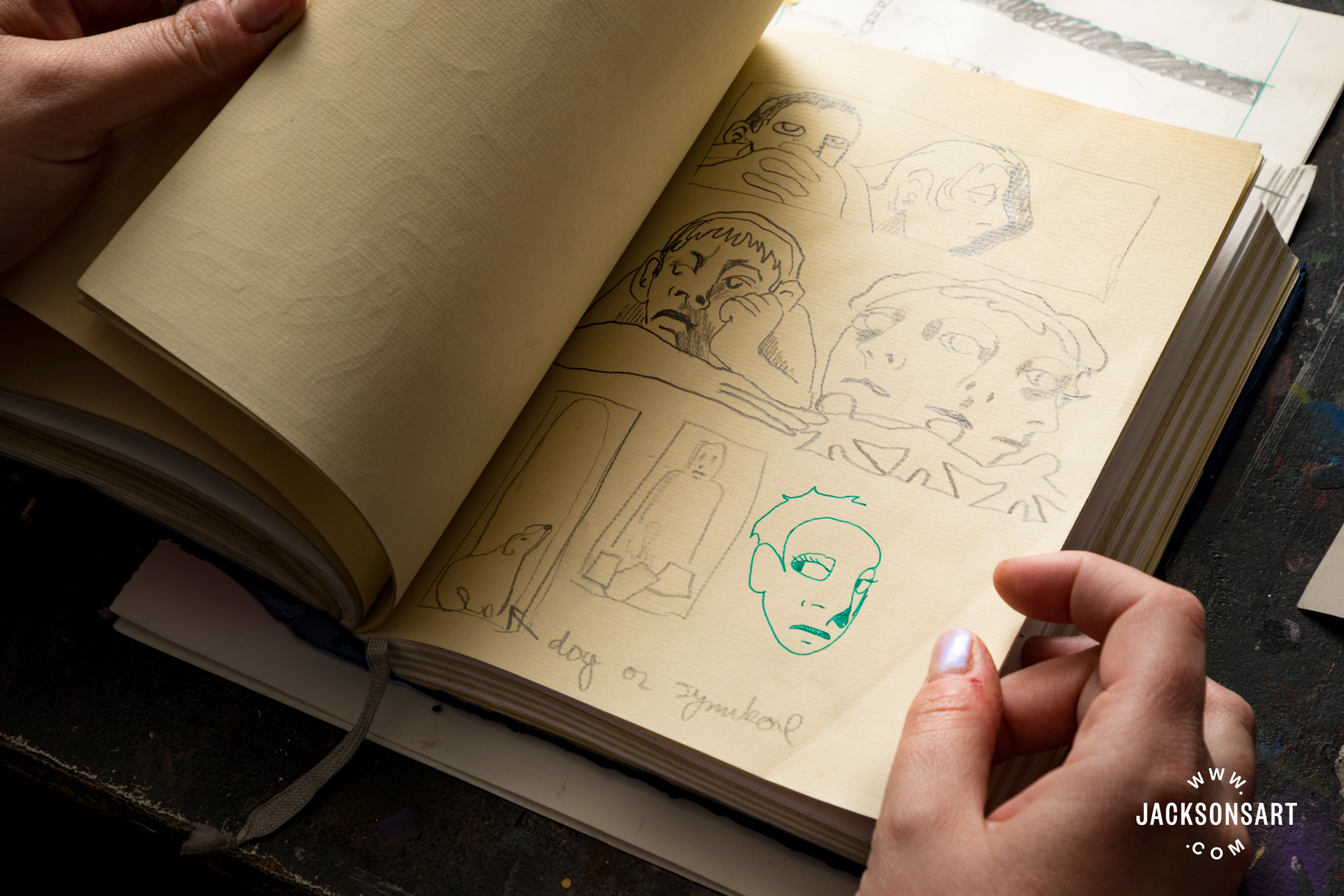
Sometimes I’ll have certain sketchbooks for certain projects, especially when I am working on a small zine or take away for an exhibition. I make a lot of zines and I’ll use a smaller sketchbook to flush out the ideas and compositions for each page. If I put too much pressure on the perfection of the sketchbooks the work starts to get tight and stressed. I try to allow myself to let the sketchbook be a beginning point for a work, a place to work my way around a specific concept or design.
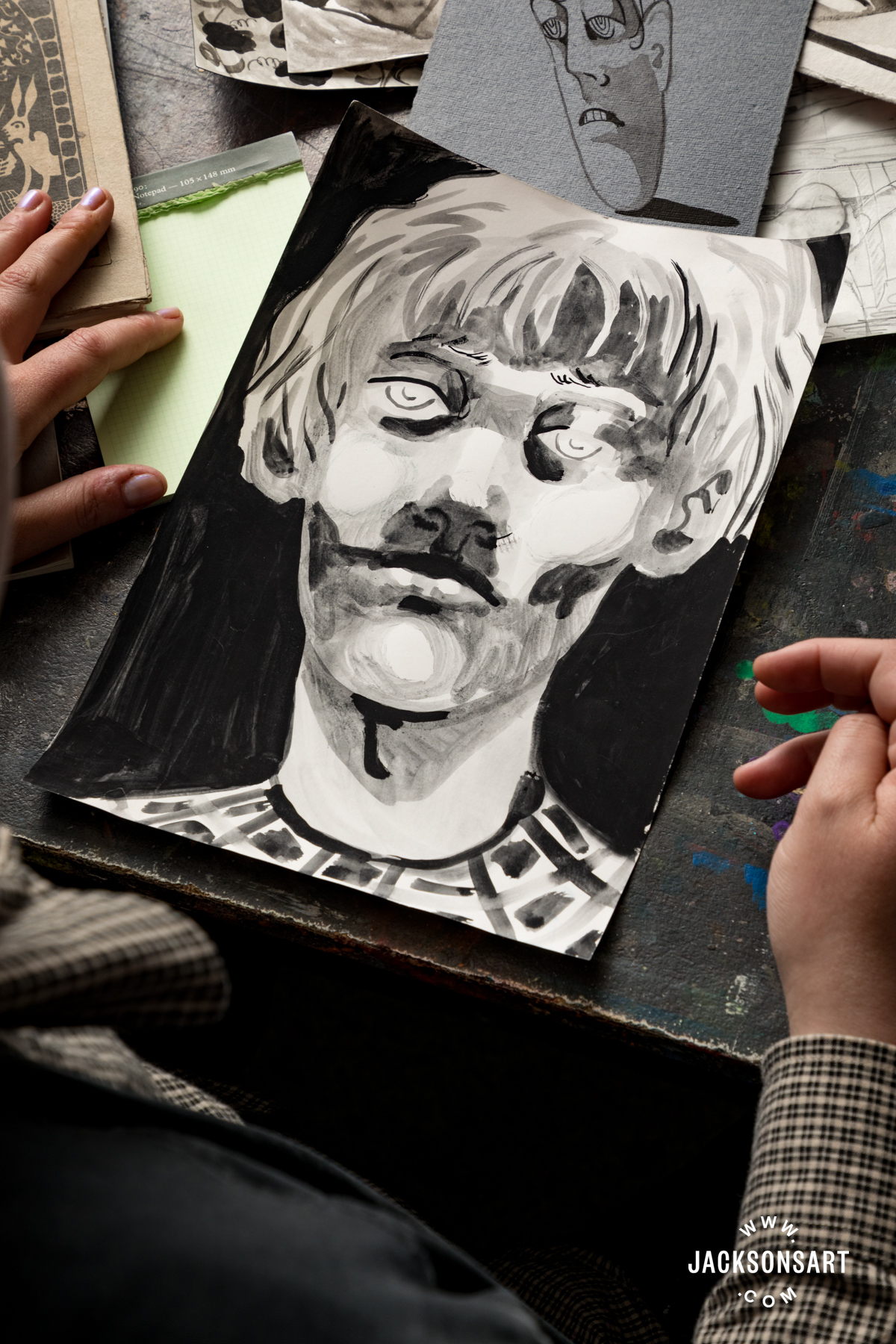
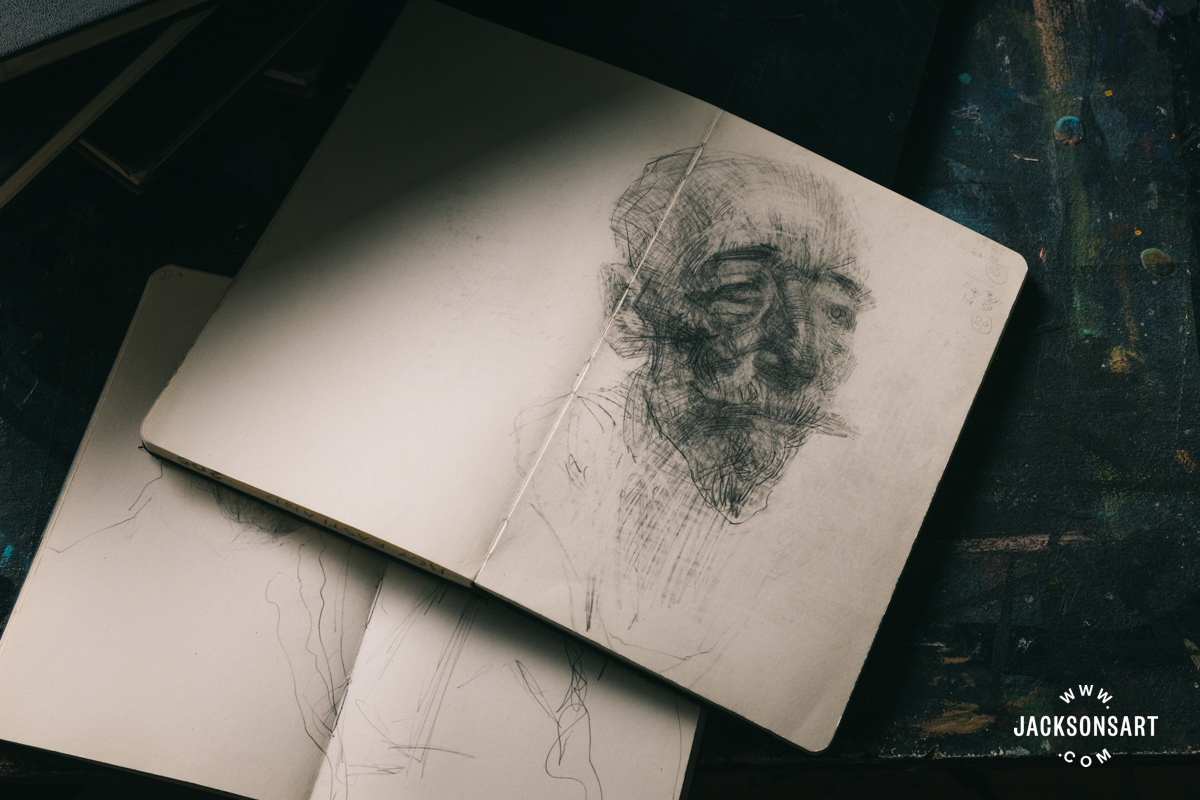
Sketchbooks allow me to fully experiment, make mistakes, and collect objects of interest. There are a lot of drawings in my sketchbooks I would never show anyone! I use all sorts of materials in my sketchbooks; watercolour, charcoal, pencil, and pen. The material is based on what either is closest to hand or the type of mood I’m in, and how vulnerable I can be. Most of my sketchbooks have some kind of decoration or personalisation to help make them feel a bit more exciting and personal.
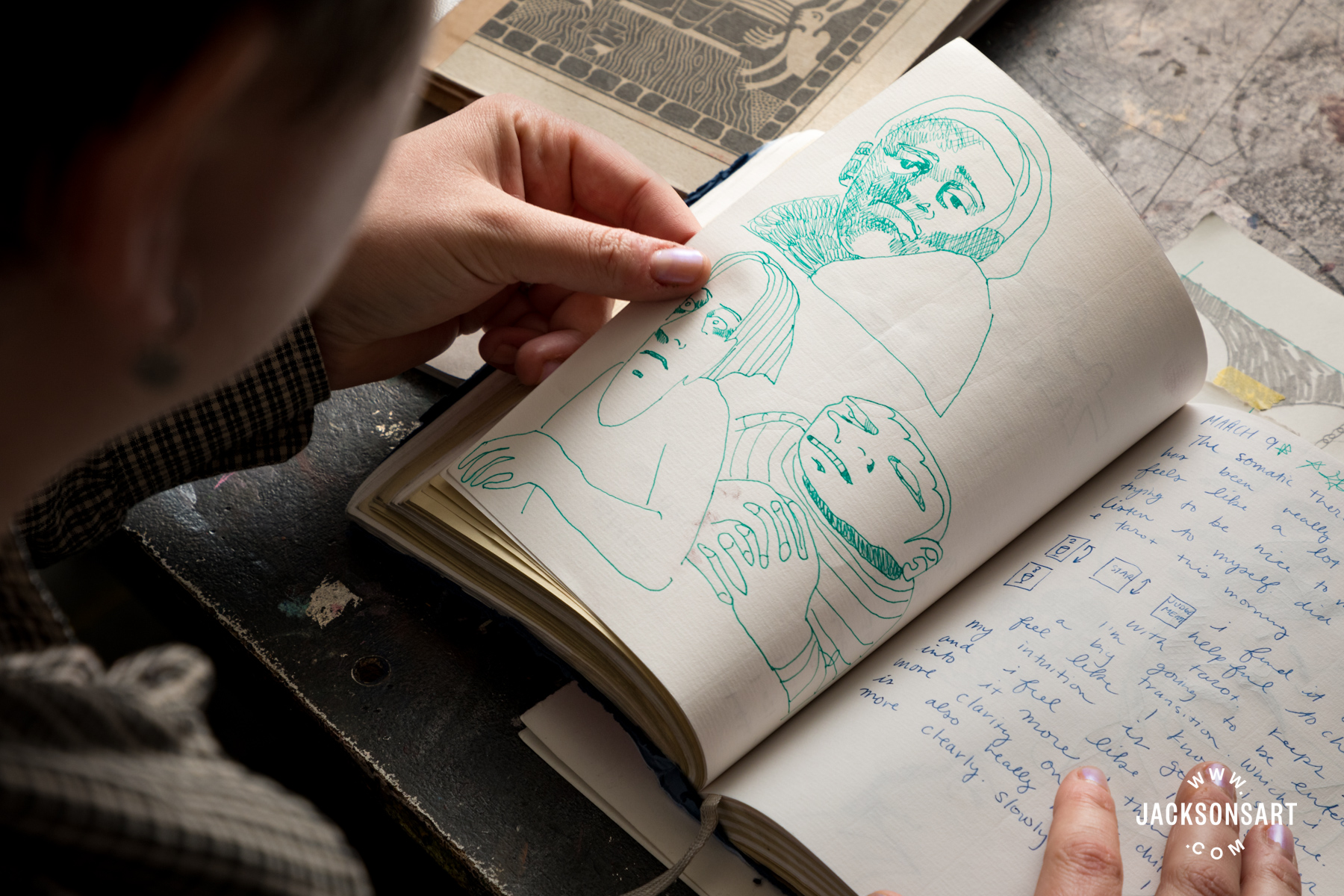
I have also made a bunch of sketchbooks myself, picking my own papers and materials helps keep them more varied and allows for happy accidents to happen. Each paper type offers its own unique texture and feel, making the creative process feel more spontaneous.
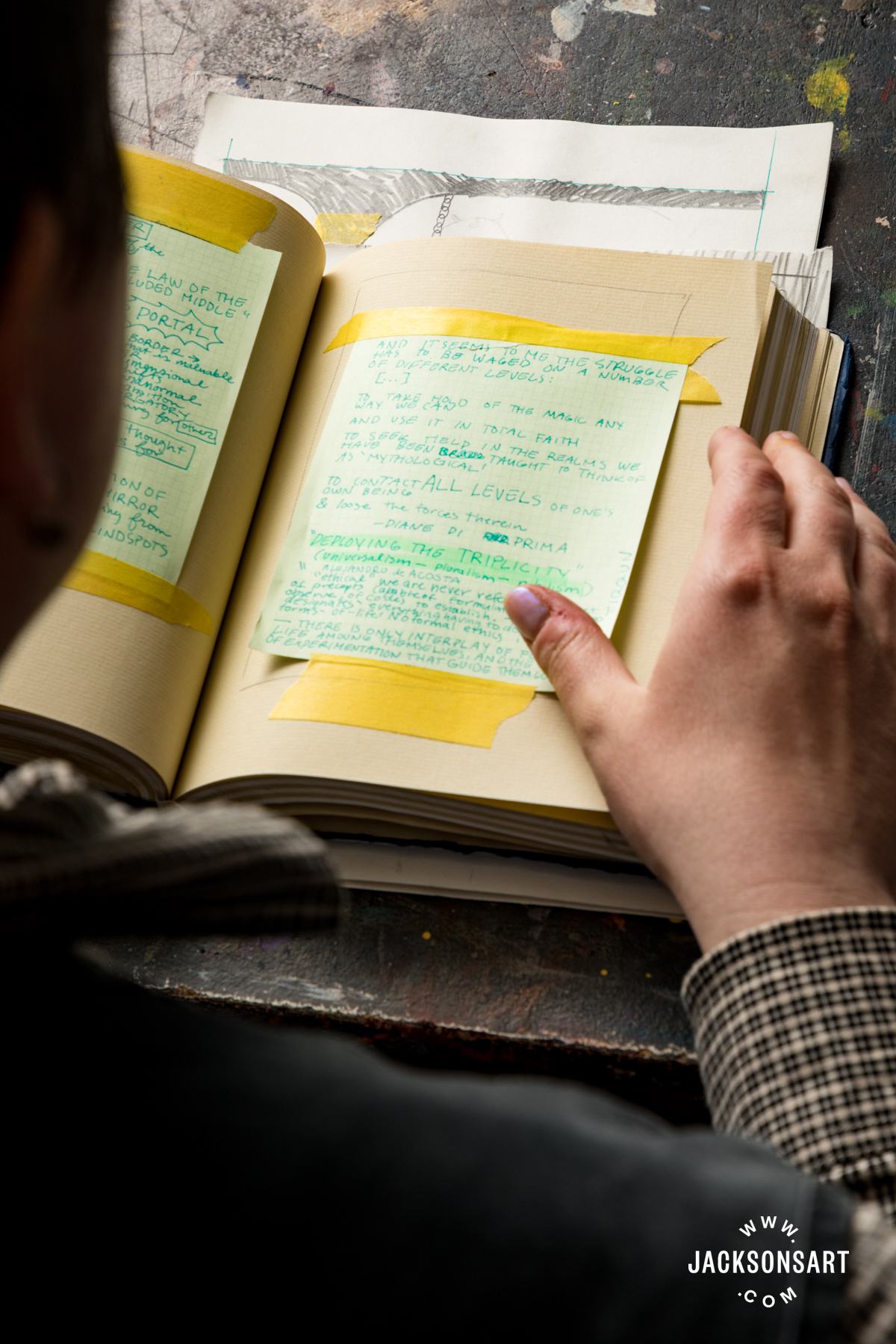
For example, I have pages that are tracing paper to allow layering, rougher watercolour paper to complicate the texture, various coloured papers to create a different ground to work from, or a rigid bristol board. The way each material interacts with different mediums (pencil, ink, watercolour, etc.) leads to unexpected results which really excites me.
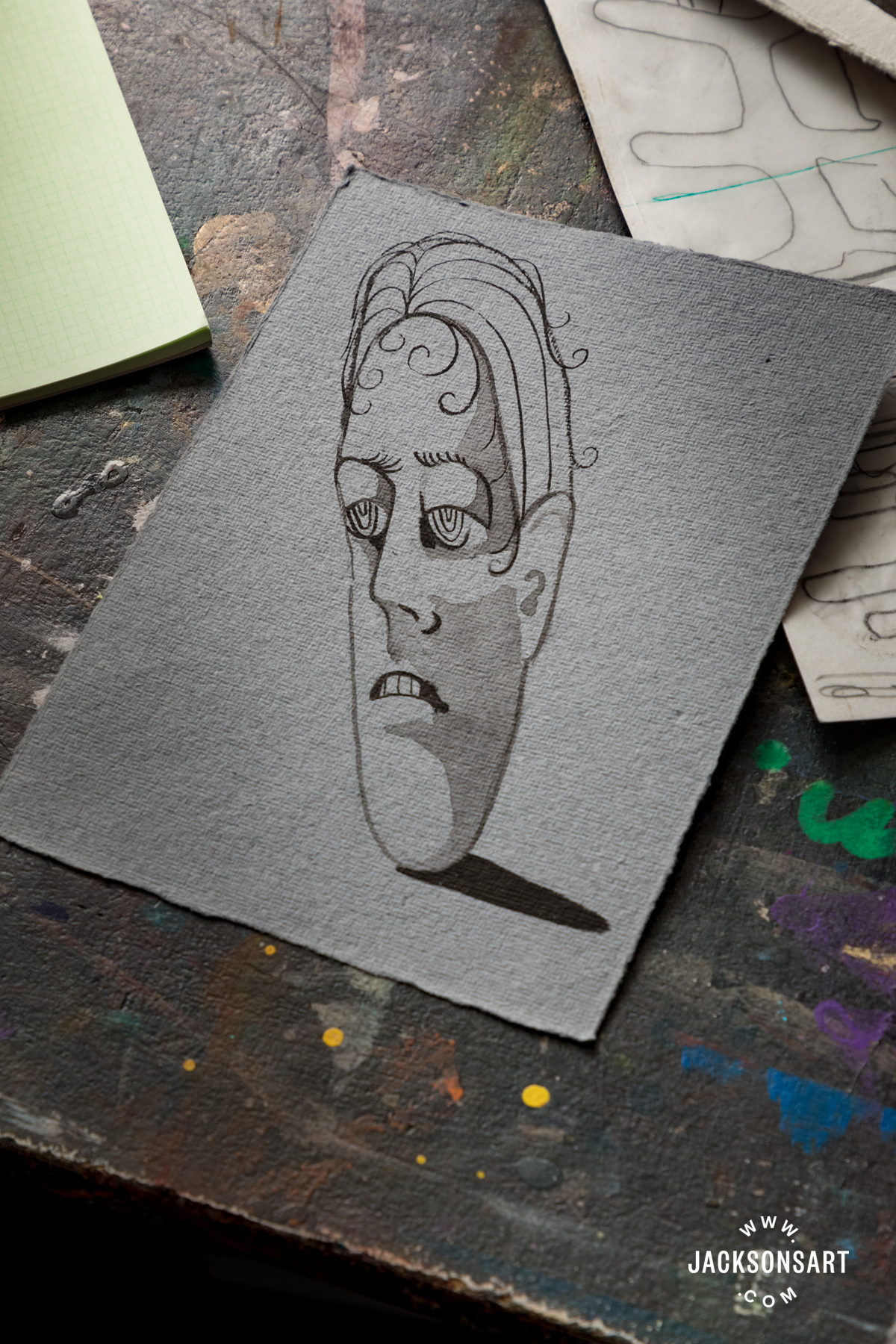
I like to try out different materials, to see if the materials themselves can complicate my gestures, which then translate to paintings. I use materials that I am not as comfortable with, like watercolour, oil pastel, or charcoal in my sketchbooks. This helps me vary my marks and let loose. As a painter, I am always trying to feel a little bit uncomfortable to push the work in a new direction.
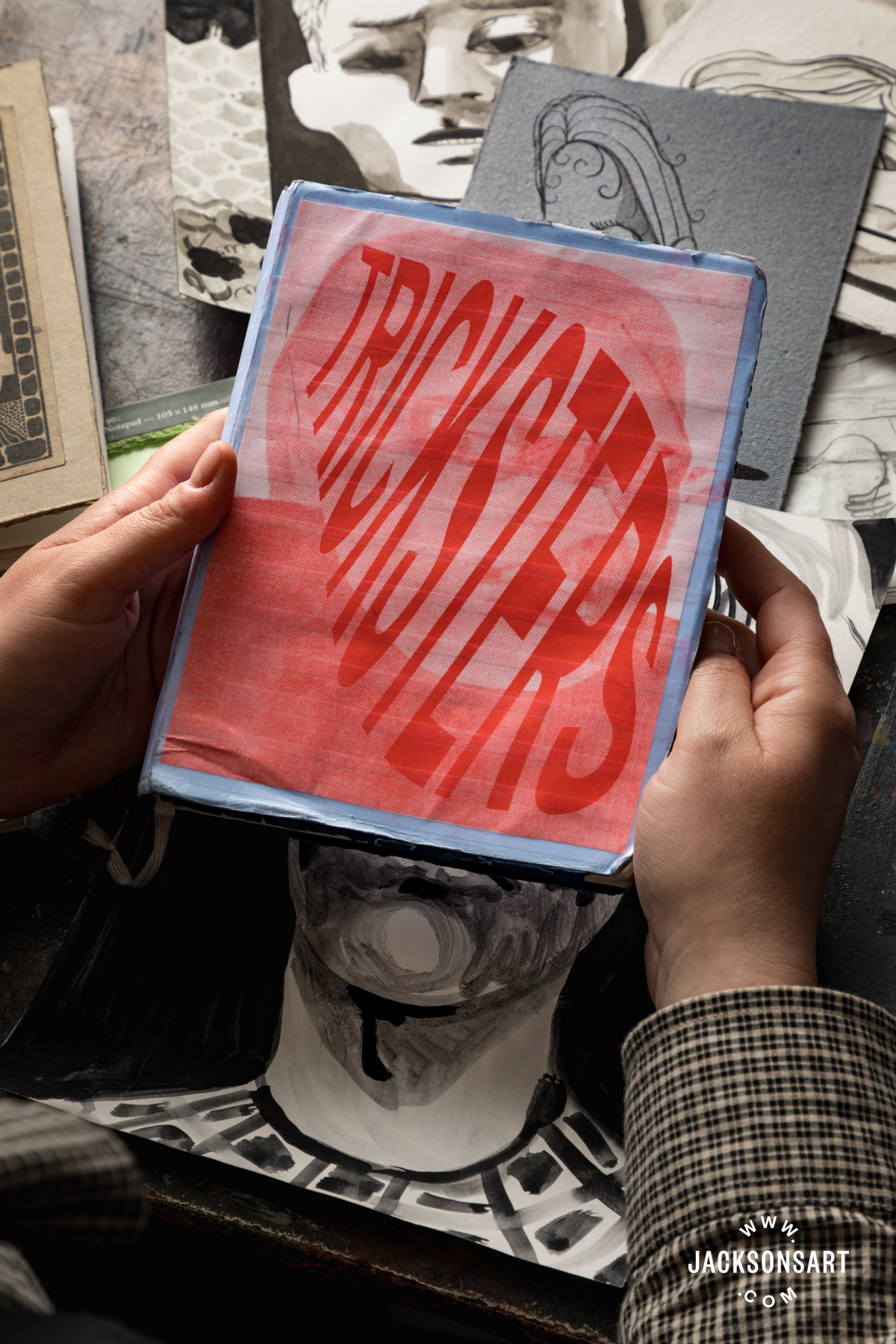
This uncomfortability is key to creating a great work of art, once I get too systematic or stagnant I realize something is wrong. For me, the process of painting and the end product is a relative afterthought in some way. Intuition is a huge part of my practice and allows images, ideas, books I’ve read, images I’ve seen, and whatever else to come into the picture plane. As I paint, I always have my sketchbook close, so that I can reference it directly.
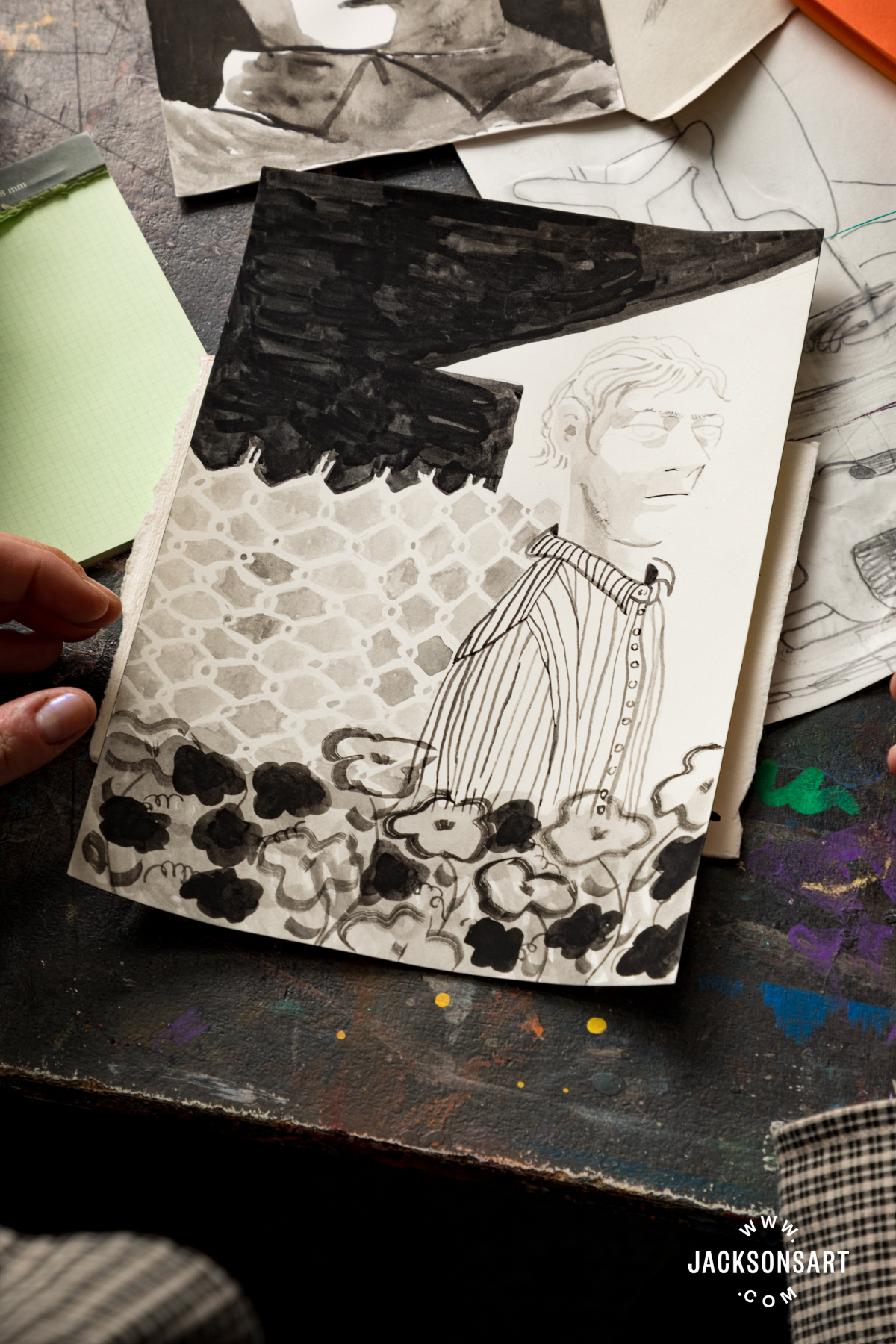
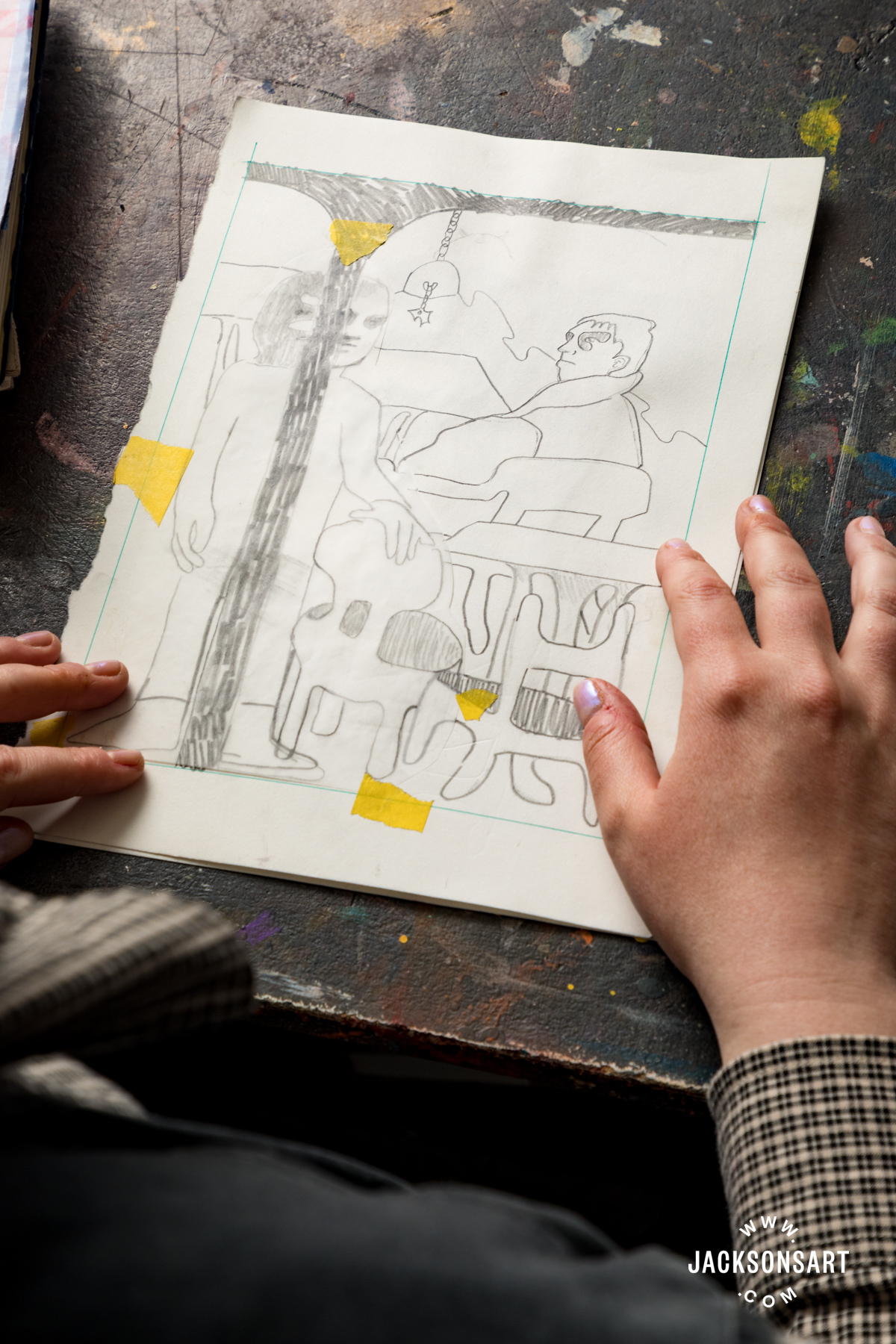
Most of my paintings and ceramics begin from simple sketches that I then repeat until I get a full composition. There will be multiples of compositions that I then continue to replicate and complicate. The sketch feels finished when the painting is finished.
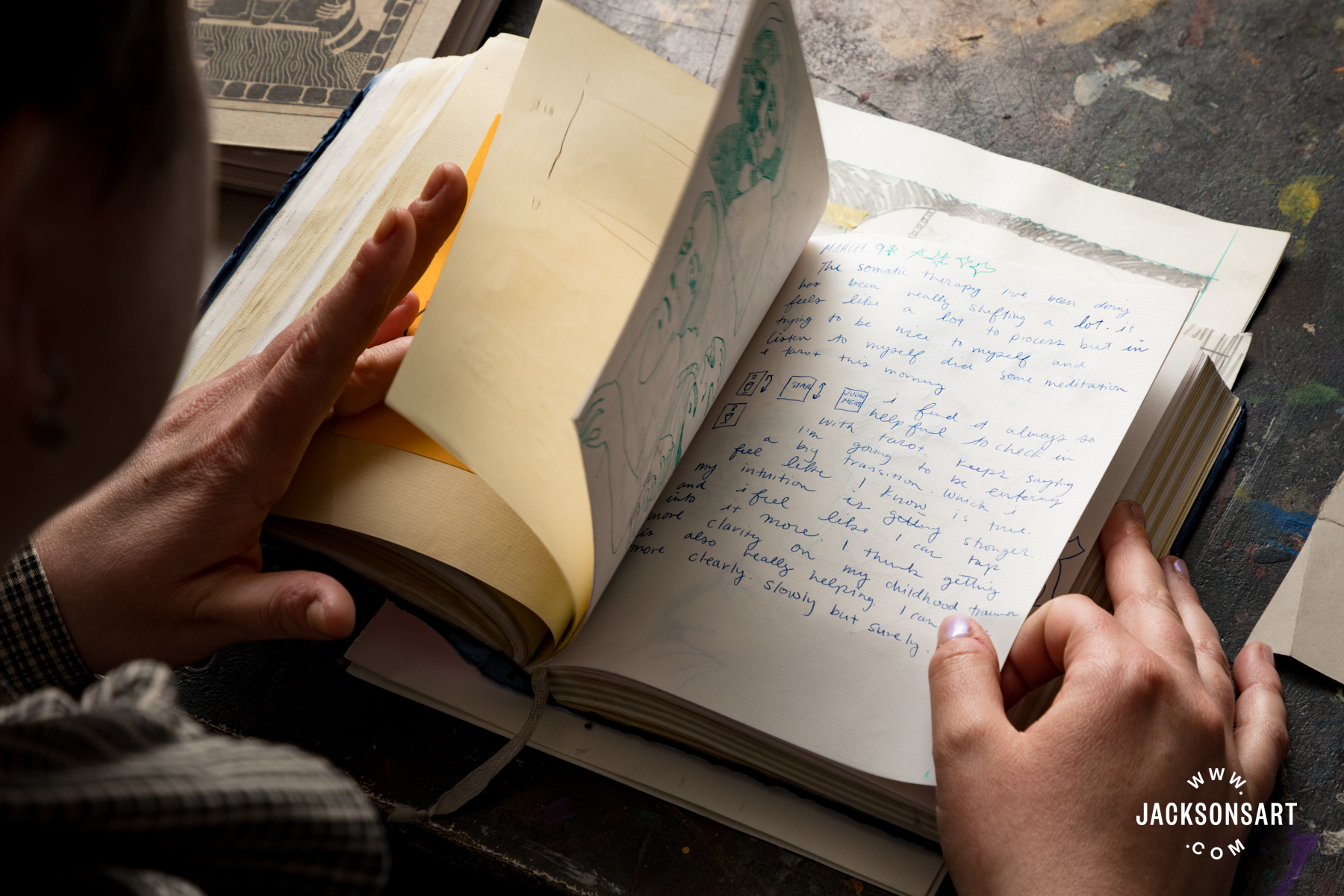
I really enjoy using tracing paper to help move compositions around in the sketchbooks, to play, and to see the different positions for figures and objects. Collage ends up being a very important establishing process for the paintings.
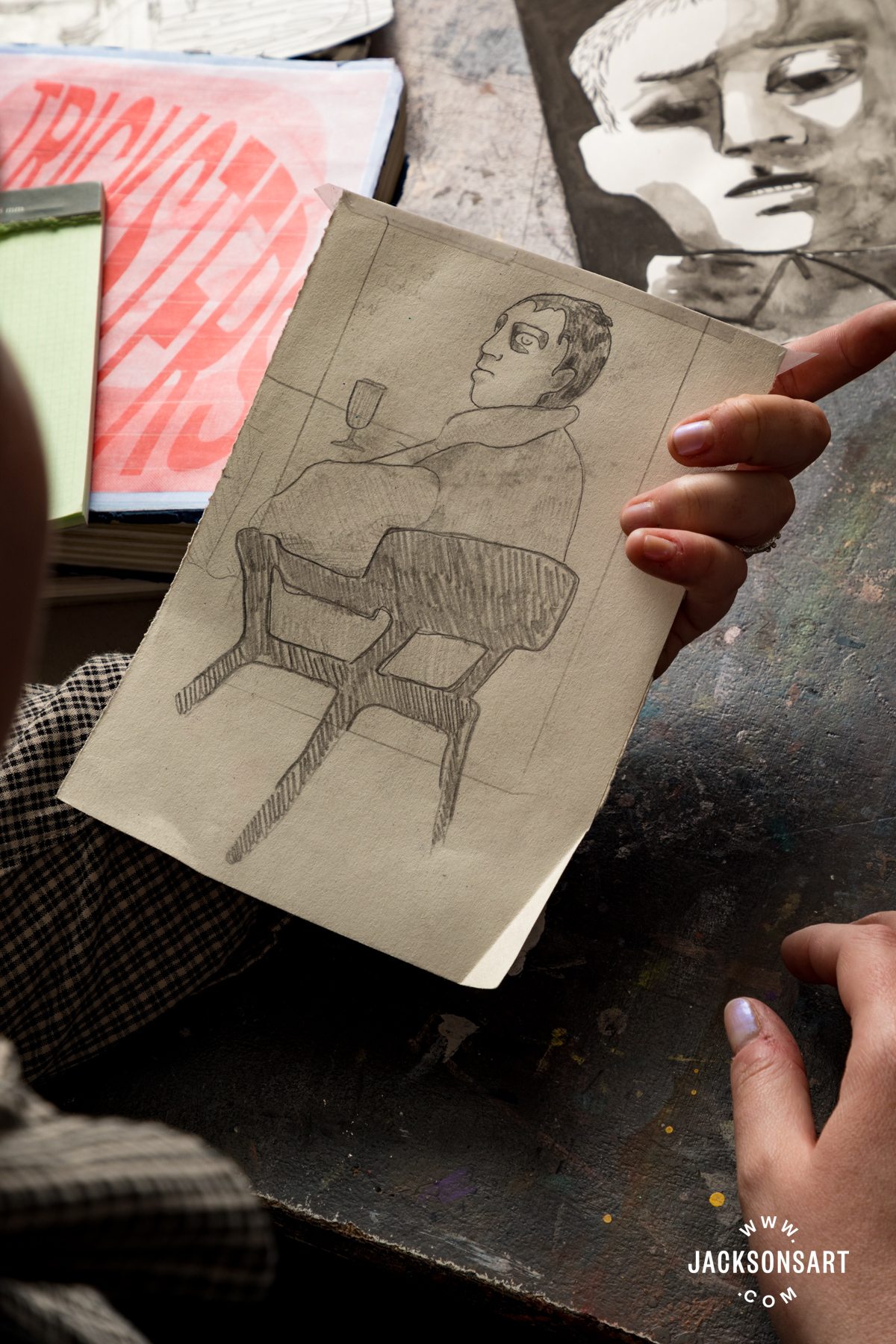
Every time I go into an art supply store or stationary store, the potential of a new sketchbook is so exciting. I end up buying so many that I don’t need. They feel like a collection of potential ideas. I have this theory that if I completely finish a sketchbook, I will have put a period or stopping point on my practice, so I always leave a few pages blank. Similarly, I think specific sketchbooks have certain lifetimes. I have to feel excited and good about the sketchbook to continue. Sometimes, they run their course very early leaving too many pages blank. The beginning of a sketchbook always signifies a new chapter or new movement in my mind. Before a big show, residency, or life change I will usually have a new sketchbook to signify that transition period. It’s silly but a nice way to commemorate a new change.
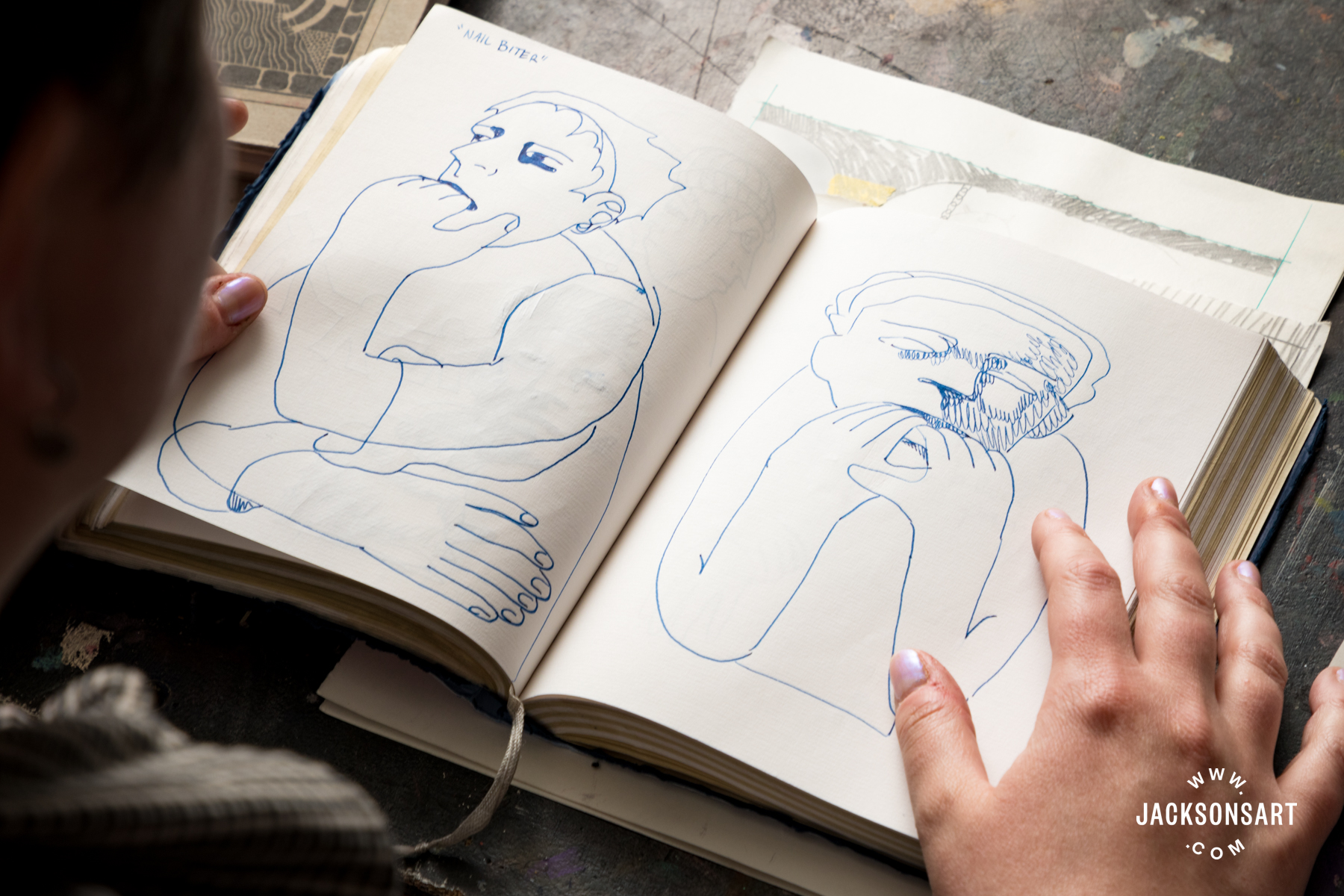
Sketchbooks are super important to consolidate ideas and maintain a practice that can leave the studio. I believe that half of art making is supposed to be outside the studio – drawing in parks, going to museums and libraries, making master copies, and exploring the culture around me. You never know when inspiration will strike so it’s always good to be prepared.
Materials
Kunst & Papier Sketchbook (or any with a cardboard hardcover that can lay flat)
Fabriano Classic Artists Journal
Variety of Pentel mechanical pencils
Glue Stick
Kremer Watercolour set
Rembrandt Oil Pastels
Lyra Assorted Charcoal Pencils
Pilot V5 Hi-Tecpoint Pens (various colours)
Lamy Fountain Pen
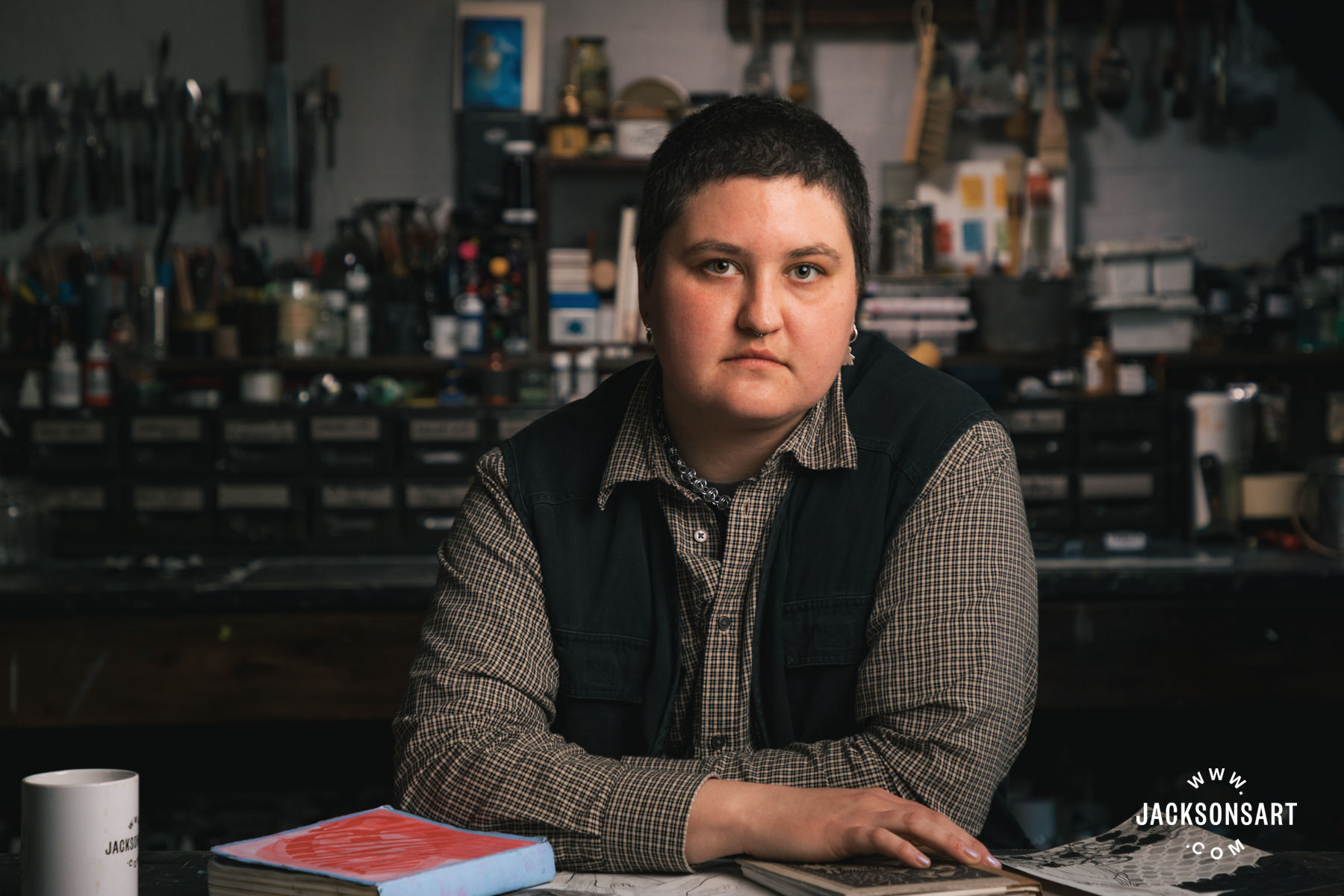
About Katja Farin
Katja Farin works in figurative painting, depicting the interactions between the subconscious and reality. The relationship between figures is uncertain; the everyday life of sitting at coffee shops, wandering in backyard gardens, answering boring phone calls becomes the backdrop for the internal dialogue with the self that contemplates traumas, coping mechanisms, dreams, and distortions. The works are dream spaces that allow the viewer to peek into the interior worlds of the figures, their relationships with the self, and others. Bright colours, glowing hands, and distorted bodies create the dreamlike dysphoric space that these androgynous figures embody.
Farin received a BA in Fine Art from the University of California, Los Angeles in 2018 and is a candidate for an MFA degree from the Slade School of Fine Art in London. Selected solo exhibitions include Friends Indeed (San Francisco), Gaa Gallery (New York), Asia Art Center (Taiwan), Lubov (New York) and in lieu (Los Angeles). Their art has been included in group exhibitions at Pace Gallery (Hong Kong), Alexander Berggruen (New York), Beers (London), Wilding Cran (Los Angeles) and Nicodim (Los Angeles). They live and work in Los Angeles, CA and London, UK.
Further Reading
A Guide to Mediums for Water-Mixable Oil Paint
Turner’s Yellow: A Tale of Two Turners
Inside the Sketchbook of Katie Eraser
Artist Review: Jackson’s Lay-Flat Hardcover Sketchbooks
Shop Sketchbooks on jacksonsart.com