This year’s Guest Judging Panel consists of six exciting names from the art world of today, each of whom will be tasked with selecting one favourite from the longlist to win their Judge’s Choice Award.
Faye Wei Wei joined us via video call from her studio at Yale University, Connecticut, where she is completing her MFA. She discusses the poets, writers, and philosophers that inform her work, the joyful permanence of seeing her work in print, and the sight of a donkey made of moonlight.
Interview
Josephine: Tell us about your background. Did you get into art from an early age?
Faye: I always loved painting and drawing. I had a lot of teachers who really encouraged painting, and they taught us how to paint with oil paints. I felt really liberated at school to have my own autonomy with how I was having an art practice. And we were encouraged to have a studio practice when we were 16, which was pretty incredible. I remember being really competitive with all the boys in my school, in the studios. The studios were always open quite late, and all of us who were really serious about art could go to the studios together, eat hot doughnuts, and paint into the night. I think that that was really important to me when I was younger – to be encouraged in thinking that being an artist wasn’t totally inaccessible, but actually just a really beautiful way to live life.
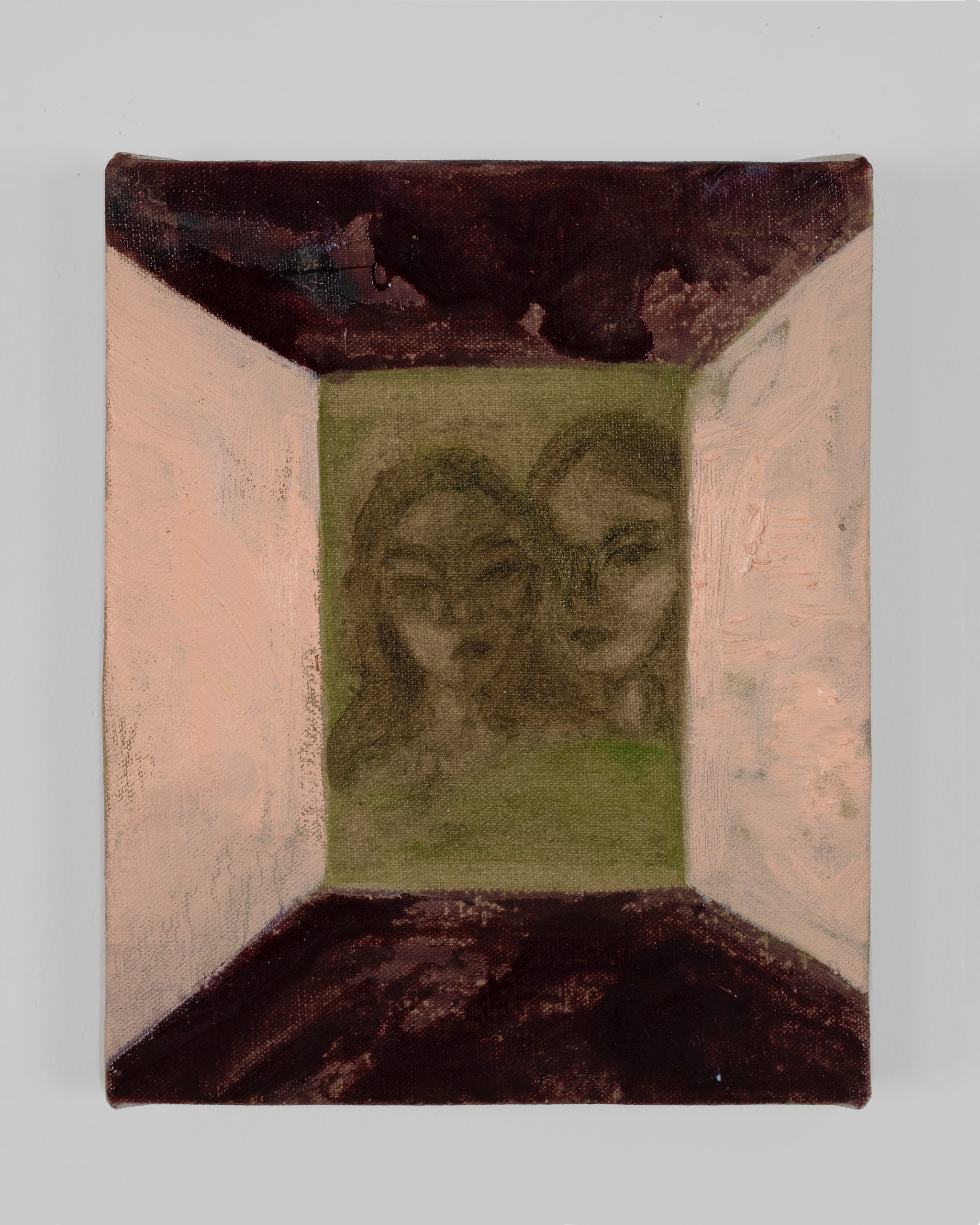
Faye Wei Wei
Oil and violin varnish on linen, 25 x 20 cm | 9.8 x 7.8 in
Josephine: You studied at Slade School of Fine Art. What kinds of ideas were you exploring in your work at this time, and how has your work developed since then?
Faye: I hope it’s evolved, but I think in my heart I’m probably still pretty similar. When I was younger, I was really in love with poetry, and I thought a lot about how words had a multitude of meanings within them. I still think about poetry a lot now and study poetry in the English department at Yale, which is really amazing.
When I was at the Slade, I was really thinking a lot about inscape, which is a theory of how poetry interacts with the world, with reality, and with imagination. I was looking at nature, landscapes, trying to investigate all the little crevices inside bones and trees and flowers and things. I’d try and paint the feeling of all these ineffable worlds within things in nature.
I was actually painting quite abstractly at the Slade, and then I think I had a studio visit with an incredible professor. He talked to me about abstraction being like a bag of tricks, and I felt really frustrated with not being able to push that gesture further, so I started painting figuratively. I remember going to the British Museum and looking at these beautifully articulated Egyptian heads and the linework of all the Egyptian paintings on papyrus, and thinking about the simplicity of a line and how that can transfer a feeling.
I started making paintings that still spoke to the language of abstraction and all the gestures that hold that, but I think they developed more into being figurative paintings that held a kind of poetry to me. And yeah, I think I’ve continued to develop that into the work that I’m doing now – I’m still really interested in poetry, the theories that poets write about, and what they think about about the visual world that’s conjured through words.
Josephine: Can you tell us about a career highlight or a memorable moment you’ve had as an artist?
Faye: Every time I get to do a show, I feel extremely lucky and very grateful. Being able to share is such an important part of making the work. Because often when I’m in my studio alone, it feels like this one-person choreographic dance performance that you’re doing for yourself, so I think what’s really important is to be able to have these conversations with people. Seeing how people respond to the work is such a blessing.
I really love books, and I published a hardback book of 300 of my paintings that I made since I was 16. It sort of felt like I could live forever because of that. I love print, the medium of print and the materiality. It feels like something really solid and important.
I did a show in Greece this summer with my friend and the boy I’m in love with; a two-person show that felt really temporal and fleeting because we were just there for a few weeks. We worked really intensely and collaboratively. I was really proud of the paintings we made because they felt just so full of love and also full of the light of summer, and full of the poetry that we were writing together. We collaborated on a book of poetry this summer, and again, I feel like because we were in print, it felt like an achievement that I was really proud of.
Josephine: Your work draws on mythological and romantic iconography – can you talk about the symbolism of the objects found within your paintings?
Faye: When I think about the poets that I admire, like Hart Crane or Wallace Stevens, they often have their own self-mythologising qualities. They have symbols or things that they return to over and over again, such as the sea, voyages, cycles in nature and the seasons, or weather. I also think about Wong Kar-wai, the director from Hong Kong (which is where my parents are from). His films often repeat these symbols in this cyclical way, and they’re all interwoven with each other through symbolism. I love these moments and these stories. Within my own practice, I hope to have a key of recurring symbols that appear over the course of the whole pageantry of paintings, because then I think the world that I’m building becomes tightly woven in itself.
Horses are really beautiful; they feel like stand-ins for figures. I think there’s a lot of romance that they hold, and I love the architecture that they make with their bodies that arch like a barrel. I’ve been painting a lot of miniature castles – I play a lot with scale. I’ve been painting Romanesque severed ears with particles of music coming out of them. I have these baseballs that I’ve cut in half, but inside they have different coloured yarn, which felt really poetic to me. I felt that it was almost as if the baseballs have their own different coloured souls, and you wouldn’t know that within them, they are encasing this secret that they hold different frequencies of colours, and I wonder if they change the speed at which they fly through the air.
I’ve always collected objects, and I think they become literal symbols within the paintings. That comes from my dad, as he’s an antiques dealer, and I grew up around really beautiful objects and antiquities. I have a deep love for them. Also, just growing up in London, you’re surrounded by such beauty. I remember going to Westminster Abbey and seeing the chapel of Henry VII. The ornateness and the decorativeness of that felt really inspiring to me. So yeah, I think the symbols are there to fortify and emphasise the world in which I’m trying to build in the paintings.
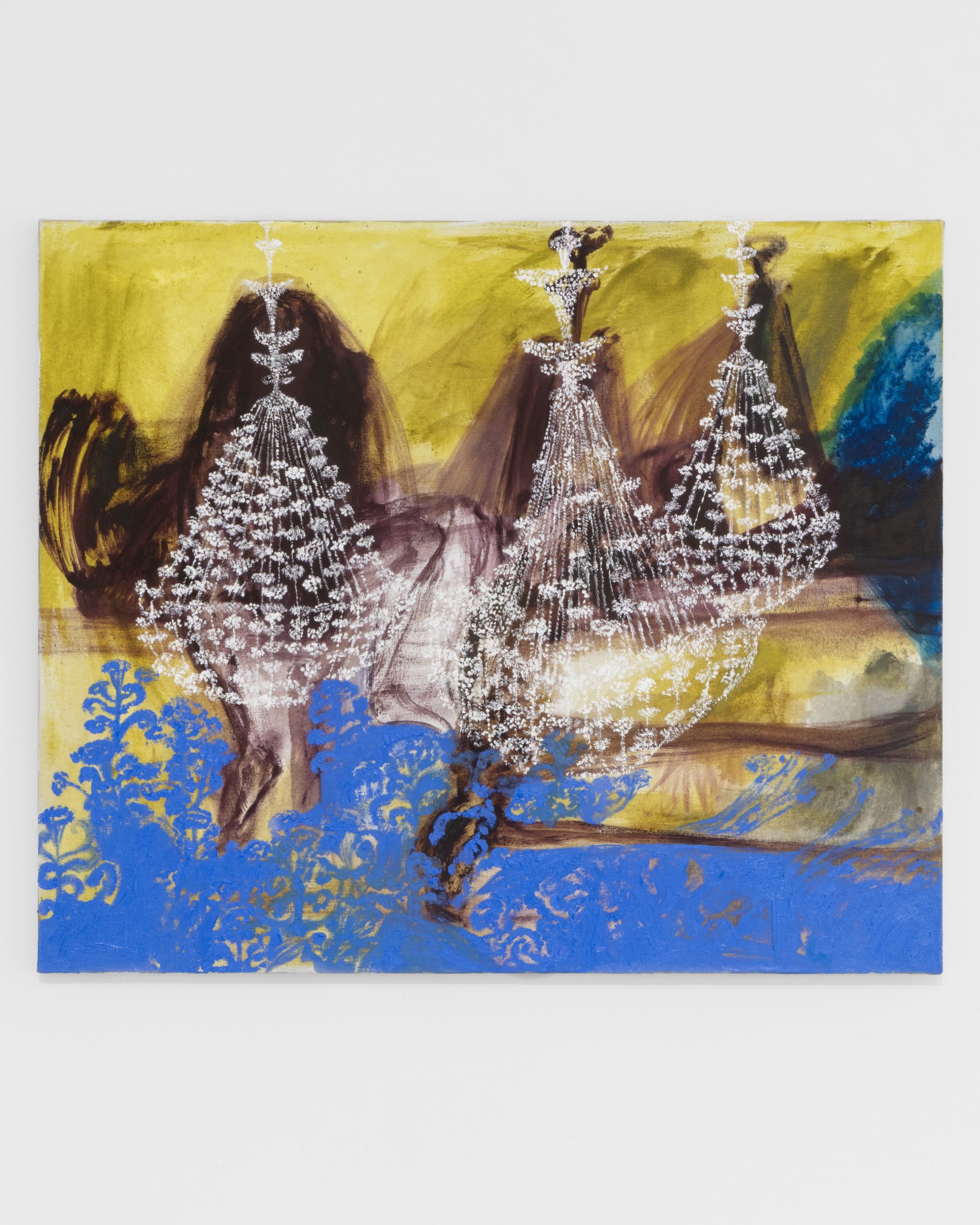
Faye Wei Wei
Oil on linen
Josephine: Do you tend to feel inspired by the change of season?
Faye: I think every painter is very sensitive to light – we’re almost like little plants, we need the light, it affects us so much.
I also think a lot about the nocturnal world. In Greece, we were walking up these stairs after dinner, and we both gasped because we saw a donkey, and it looked like it was made of moonlight. It was so silver, and it was emerging almost as a retinal thing where your eyes sort of develop, like a picture, and you see more and more. We just stood there in the deep, dark nighttime, and this silver donkey just appeared before us, and it was almost like watching a play, and the stone wall was like a theatre.
I always think about nighttime and how it’s not that you have an inability to see things, but more that things are things become desaturated. The colours that nighttime produces really inspire me. And now we’re going into winter, and there’s a lot more nighttime that we have to come in contact with, and I think that’s affected my paintings a lot lately. But I love summer in the sunlight, and especially spending the summer in Greece. Athens has such a particular light; it feels imbued with spirituality somehow. So yeah, light feels really inspiring to me.
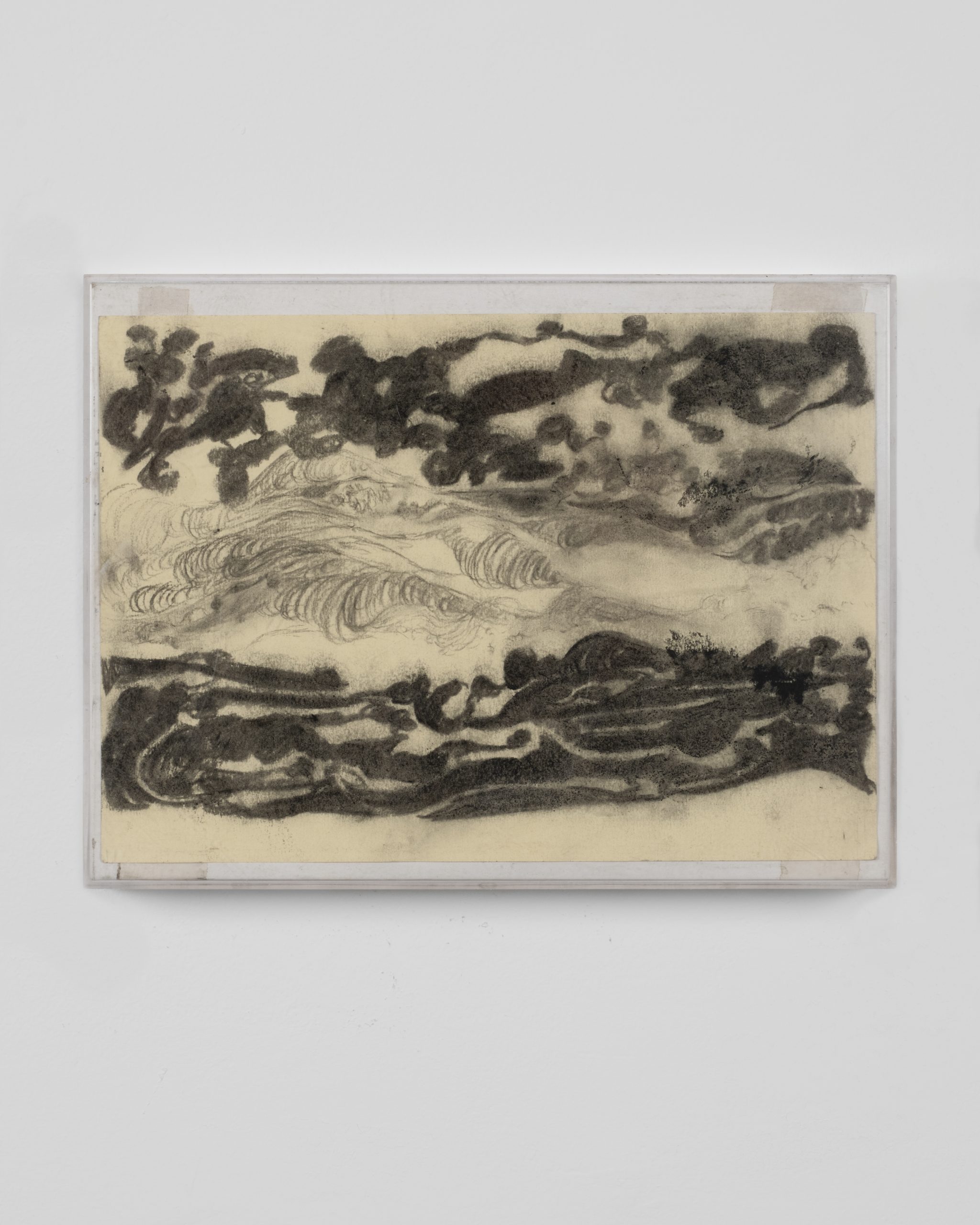
Faye Wei Wei
Charcoal on paper encased in a grubby perspex box, 31.5 x 23.7 cm | 12.4 x 9.3 in
Josephine: Which artists/mentors have influenced your artwork style the most?
Faye: I’m so influenced by my friends at Yale – we all have our own little studios and we always scurry to each other’s studios to discuss painting late into the night and eat ice cream and talk more about painting.
I was at the Met yesterday, and I looked at a lot of Odilon Redon’s paintings, and they were really beautiful. And I saw a lot of Monet paintings. There was one in particular that was a snowy landscape, and it was just barely conjuring itself into being through this very white impasto paint, and that’s really beautiful. Contemporary painters that I’m really into are Stanislava Kovalcikova; her work is so inspiring. And Sanya Kantarovsky, I saw his show recently in New York, and it was so beautiful, so touching and moving, and I felt really inspired by that.
Also, a lot of poets that we’ve been talking about. I think the visual world is conjured through metaphor and allegory, and things are incredibly inspiring to me.
Josephine: Do you feel like the words you read in poetry or literature can be a springboard into a painting?
Faye: Yeah absolutely. I was reading Wallace Stevens – he wrote a lot about metaphor and the imagination and nobility, and he thought that nobility was linked with the imaginative as a way of processing reality and holding the human spirit. I love the way that he talks about words and how they can hold an imagination that is really like a highway of thinking. He wrote a book called The Necessary Angel and a set of essays called The Noble Rider, and he talks a lot about the relationships between painting and poetry.
I think a lot about the way Stevens thinks through words, how Hopkins thinks about inscape, and T.S. Eliot thinks about the objective correlative, and the theories that they write about – how words can be this corruption of language and how they bloom into other things and contain multitudes in a visual way. I think a lot about that when I’m painting. I have a book that I keep of beautiful words, so that when I write, I can look at that and find a way into poetry through words.
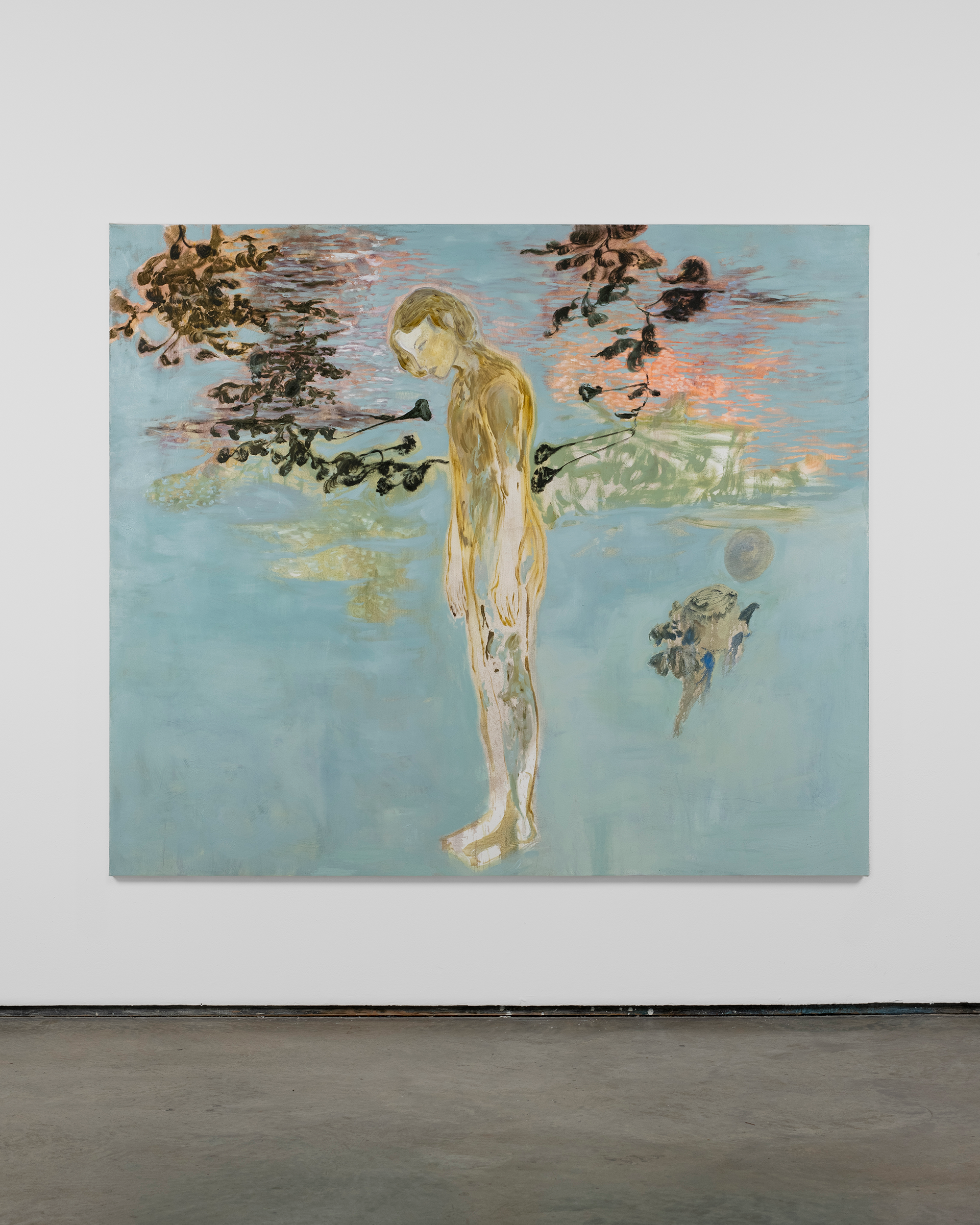
Losing-loose
Tender by half-light
Moon, moon
Umbilical-starlight
a half-light projected on a pause
Hysterical seed in midnight sod
An abyss no accountant can account for, 2025
Faye Wei Wei
Oil on canvas, 213.5 x 183.5 cm | 84 x 72.2 in
Josephine: What ideas or feelings do you hope people take away from viewing your work?
Faye: I always think about painting as a means of transferring feeling. And I really think that somehow this disobedient mud ephemera can really just hold a lot of feeling. I’m not sure how, it is like a kind of magic, I suppose, but I think when gestures are made meaningfully and with the heaviness of your mind being the anchor that holds those feelings. That it can really transfer when someone’s looking at the work.
I get accused a lot of being a romantic, which I like. But I also think that it’s fun to have people have an idea of what your work is like, and being able to subvert those expectations and play with a bias that people have with things that they consider decorative or romantic and ornate. I think it’s really fun to push those expectations and find ways of using beauty and pleasure and romanticism to go really obsessively through that, and to hold tension.
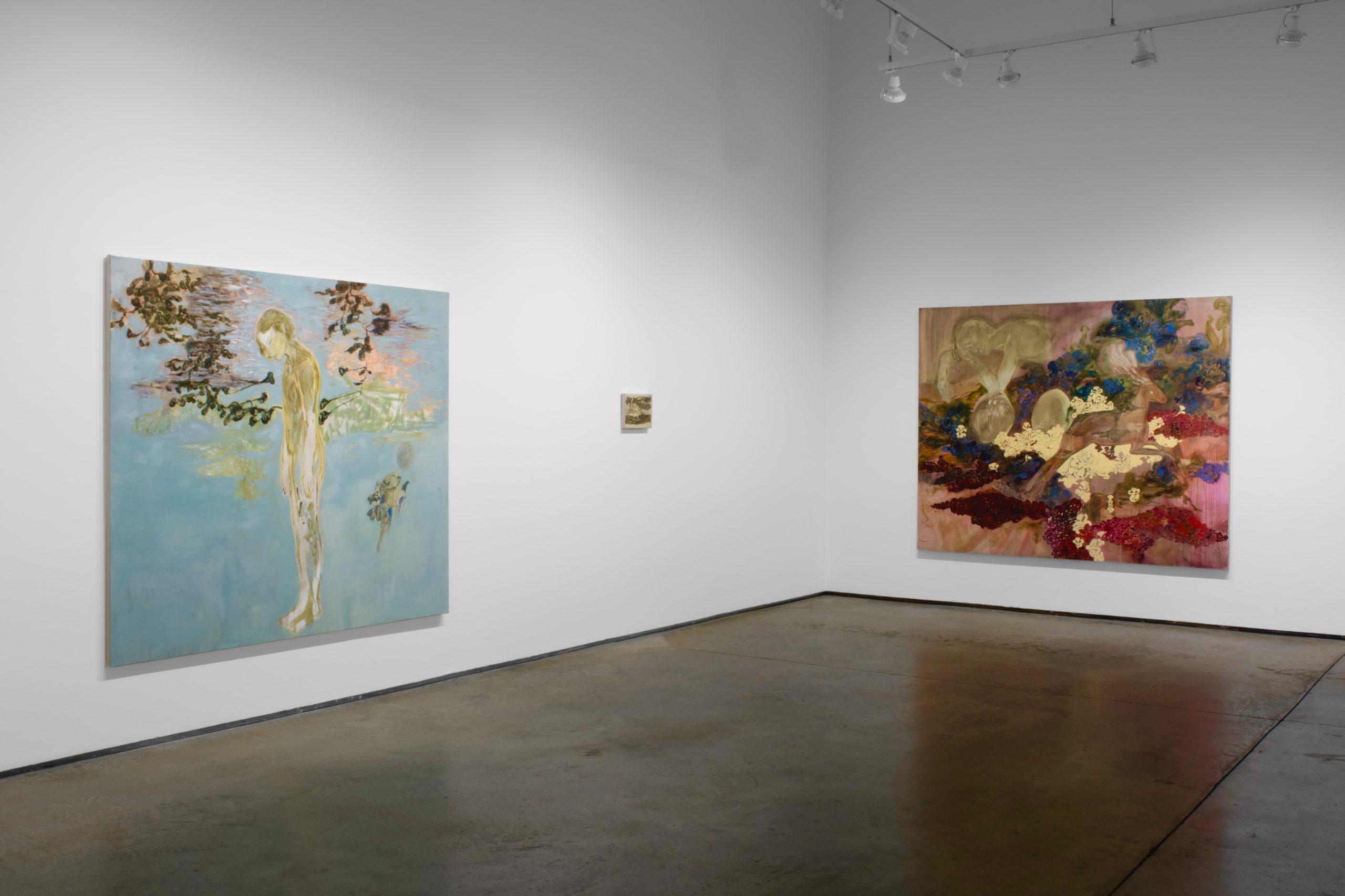
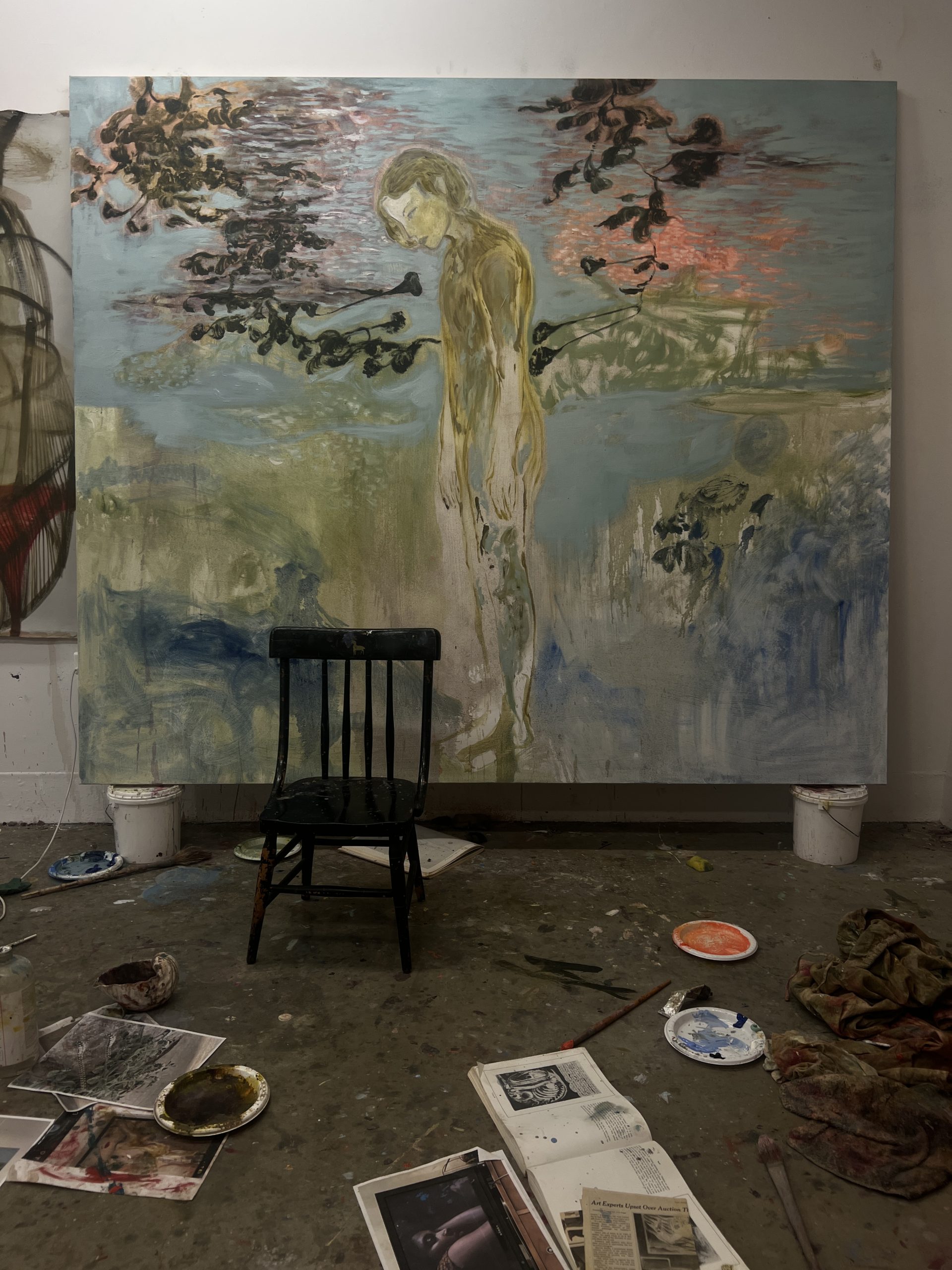
Like my paintings, for example, this one in the background, it’s so ornate, so romantic, so full of detail, but I think of them almost as blood platelets or like an infection of affection. It’s almost a chorus of how romantic you can be, and I think that’s really exciting to have a tension that you can play with in that way.
Josephine: What is a typical working day in the studio, and how do you get into the right mindset before working?
Faye: I like to sleep very well if I can. I just got a new projector, so I’ve started watching all the films I’ve ever dreamed of watching. Lately, I’ve been watching a lot of Criterion films. I watched this film called The Scent of Green Papaya, and it’s so beautiful. So this morning I watched that for about 15 minutes, made coffee, and had hot lemon water with chlorophyll.
Sometimes I wake up and feel like dressing like a boy, so it’s what I did today. And then I walked to the studio and, well, today I get to talk to you, which is such a pleasure. But normally I just sit in silence, read a little, and then I get a bit nosy and I try and figure out what my friends are doing and see if they’re painting. Then I get jealous of their paintings, go into my studio and start painting. I like a little competition; I’m quite competitive.
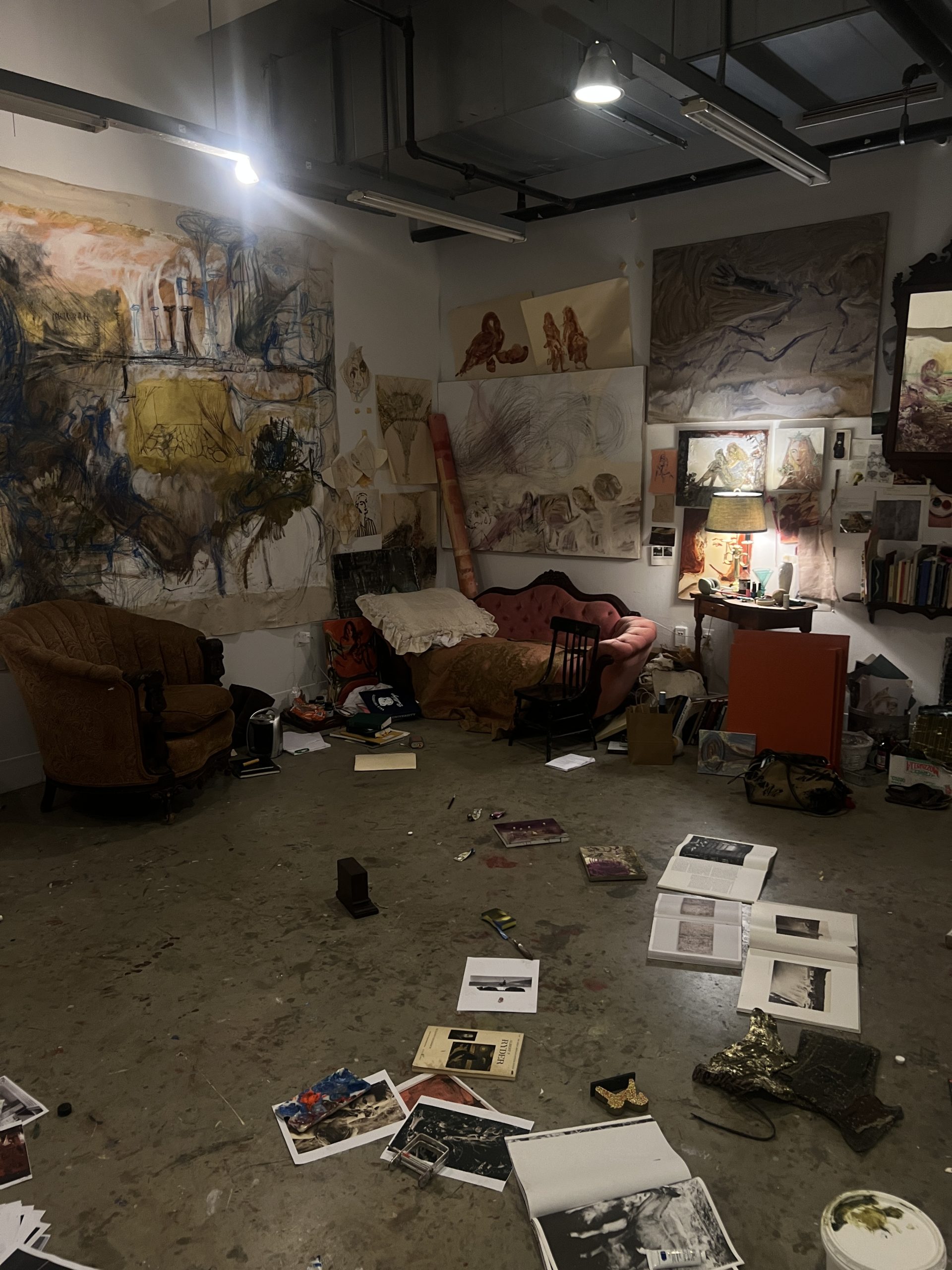
I think reading poetry really puts me in the right mindset, and then I’ll play music. I’m quite messy, but there is an order to the chaos – I tidy a little bit and make sure that I have a lot of white wall around the painting. Then I try and get in touch with what my heart’s feeling that day, and the romance of paint, and then I just have to put my phone away and concentrate.
Josephine: What kind of music do you listen to when you’re painting?
Faye: I love music, it’s the most magical thing in the world, but when I’m painting, I can’t listen to anything new, it has to be something I know really well. So honestly, I listen to so much Lana Del Rey, and I love her to bits, and I think she’s a wonderful, amazing artist and poet, and a romantic in a very cool way. When I lived in London, I listened to Radio Three all the time, or Radio Four, and I really miss that. I miss British voices.
Sometimes we go to my friend’s studio, and she’s an incredible sound artist, and we do ‘band practice’ where we just make up songs and scream. I can’t play guitar, but I play guitar, and then we scream and sing and let it out. We just sit together and give it to the night – we don’t record the songs, we just have them be their own unbound, ineffable, effervescent thing that just disappears. But yeah, I love sad girls singing.
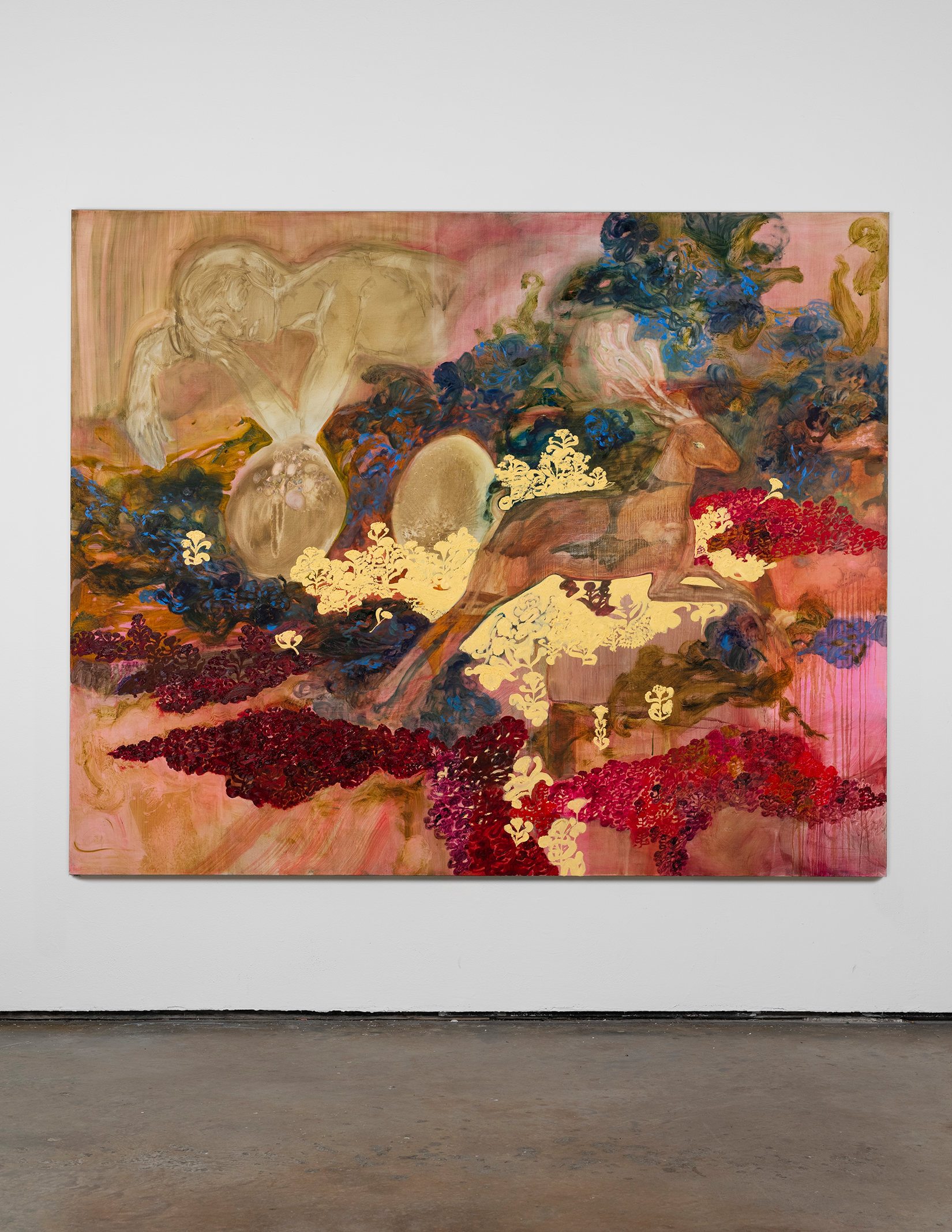
Faye Wei Wei
Oil on linen, 244 x 199 cm | 96 x 78.3 in
Josephine: Are there any special techniques or words of wisdom that help you create your work that you would be happy to share with us?
Faye: I don’t know if I have any wisdom, but I think about my professor, who’s amazing, and he came into my studio the other day. I was really frustrated with this painting. I was like, “I don’t know how to resolve it, I don’t know how to finish it”, and he said, “Faye, I think you need to reassess what you think a resolved painting is or how attached you are to this idea of what a resolved painting is, because they probably come from your own preconceived ideas of what a finished painting looks like”. I found that so liberating – when I let go of this idea of what a resolved painting was, it gave me a lot more freedom to have space to listen intuitively to when a painting is finished, or when it’s potently navigating its own world, and when it’s gaining its own momentum and wants to be stilled for a moment.
My advice would be to find people that you find really inspiring, that you admire, and that you want to be mentored by, and ask them everything they’ve ever read. Read the same things as them, and hold those opinions, but also trust yourself and your own instincts on what you think is working. Also, really stick with it because painting is really difficult, and very hard and disobedient, but so rewarding and such a beautiful way to live.
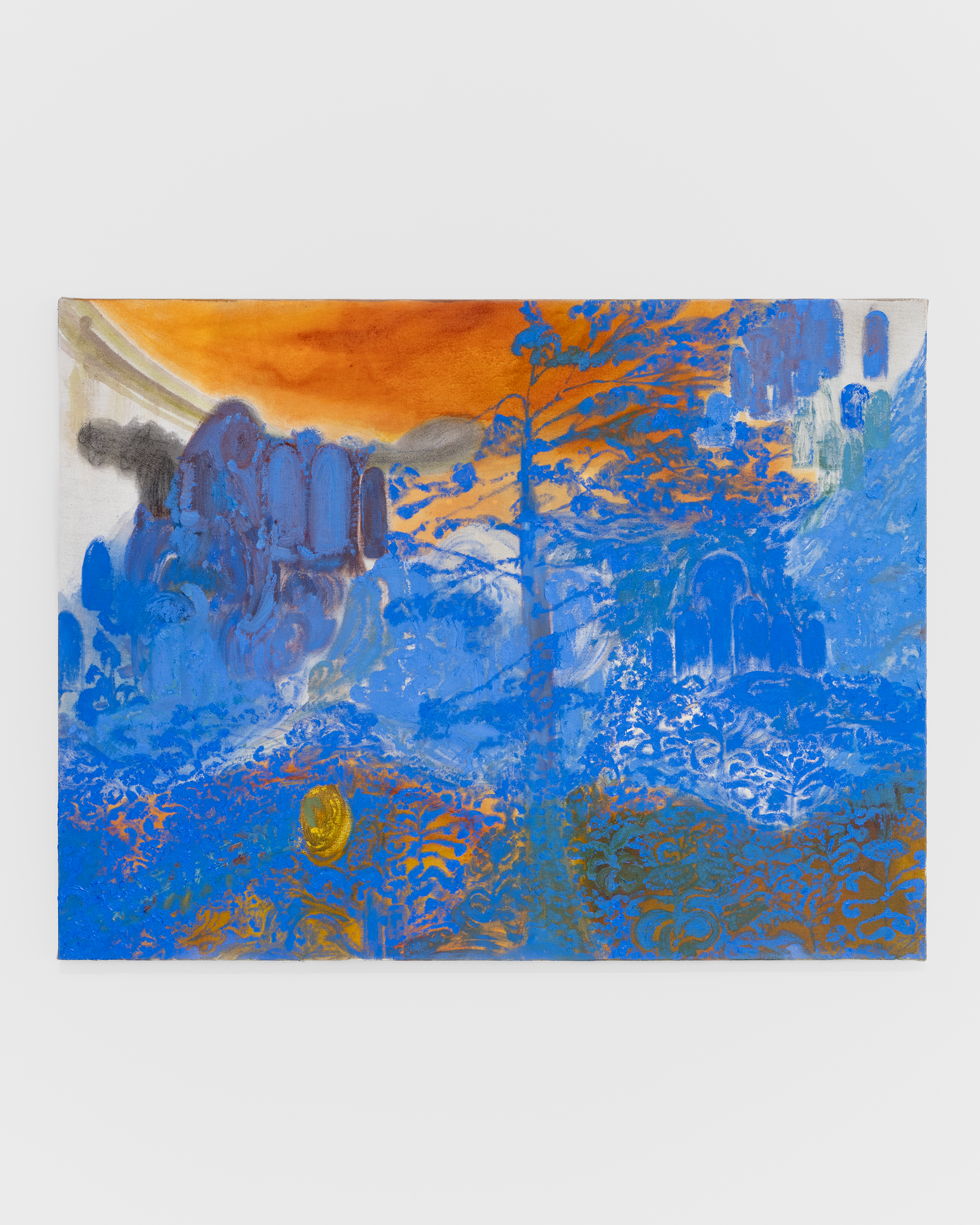
Faye Wei Wei
Oil on canvas, 105 x 81 cm | 41.3 x 31.8 in
Josephine: Have you ever had a period of creative stagnation, and if so, how did you overcome it?
Faye: Yes, definitely, constantly, but I think you have to have things in your life that you’re inspired by. So I try not to feel guilty if I feel uninspired or not able to paint, because I think the painting will suffer if you’re not really in the right headspace anyway.
I think it’s really important to live a really vivid and intense life, and if you’re feeling stuck, maybe just go on a solo adventure somewhere, or go and have dinner on your own or something. When I was in London, I lived in Soho opposite a restaurant, and I would go there on my own and have a candlelit dinner by myself and a glass of wine if I was feeling like I needed to feel grounded in myself.
But also, when I feel really sad or depressed, I feel really unable to work – there was a period in my life when I didn’t paint for like a year. That was quite difficult, but I got myself out of it by doing everything I could to heal myself – being around my friends and the people I loved, and trusting that creativity doesn’t disappear, it just changes and shifts. It’s elastic and fluid, and it will come back if you trust it. Living vividly in between your painting phases is a good way to deal with feeling uninspired.
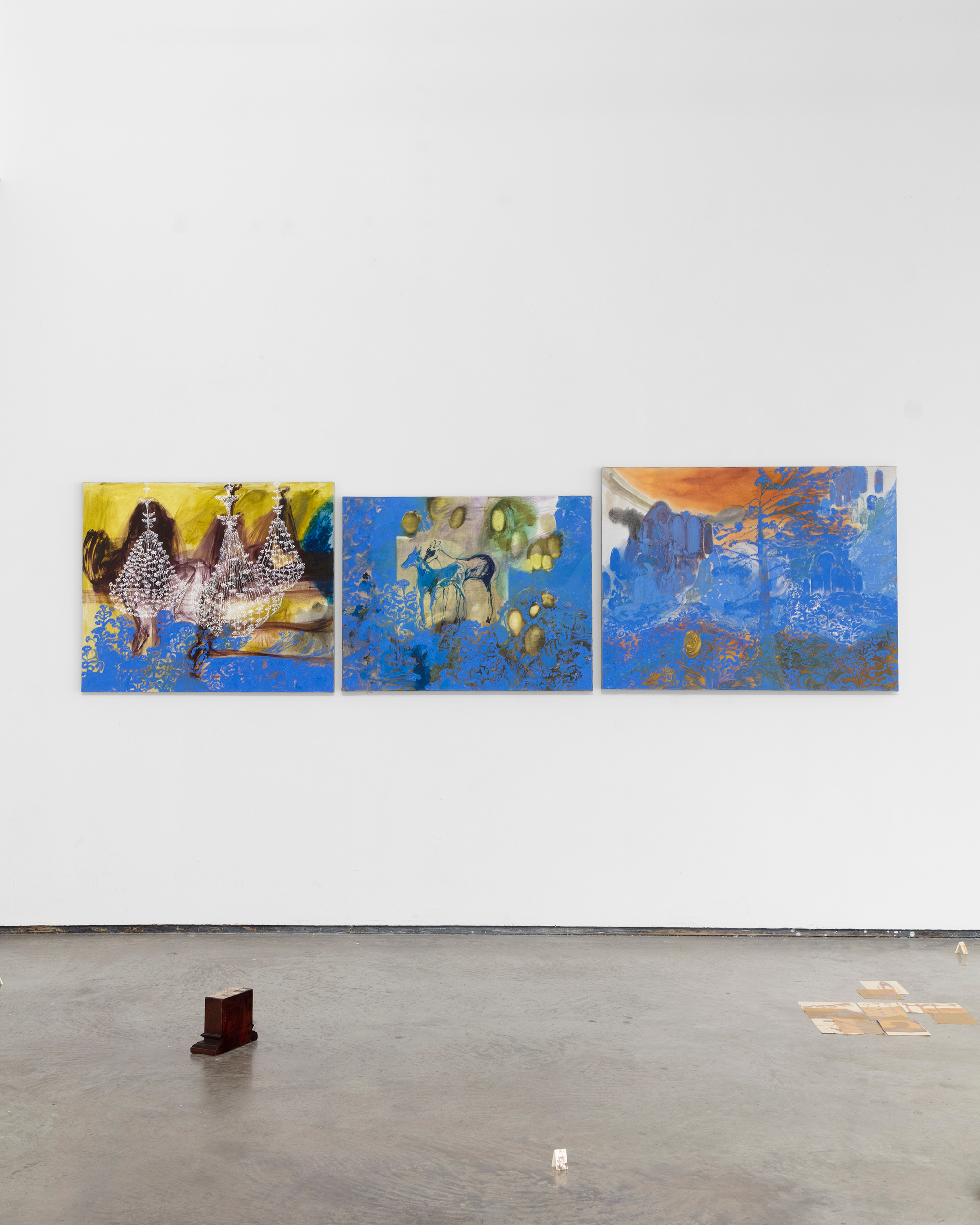
Josephine: What are you currently reading?
Faye: I’m reading so many things just because I’m doing my master’s, but I have some books here… This is a book called A Philosophical Enquiry into the Origin of Our Ideas of the Sublime and Beautiful by Edmund Burke, and it’s a set of really strange short essays and musings. They’re almost like prose poems on beauty and pleasure, and he’s investigating what makes things beautiful. It was written in 1757, so it’s a pretty old text. I quite love that the language is so old and strange, but still really relevant to the ways that we think about beauty. He writes about why we find a feeling of magnificence when we’re looking at the stars, and he talks a lot about this feeling of infinity that we feel. And he finds that beauty is due to its disorder rather than order: if the stars were all ordered in the sky and equally separated, we wouldn’t find it as beautiful. But because of this chaotic disorder, as if they were just a spray of milk on a velvet black table, there’s a randomness to the beauty, and that is what we find beautiful.
This book, called I Am The Brother Of XX by Fleur Jaeggy, it’s a collection of short stories, and they’re so strange and so beautiful. I could go on and on… Alice Oswald’s Woods etc. is a beautiful book of poetry that I’ve been reading over the summer.
I’ve been reading a lot of Hart Crane’s poetry. I love Voyages, particularly part five. I’m really obsessed with Hart Crane, I just ordered this book, A Concordance to the Poems of Hart Crane. Freud’s Oceanic Feeling, Plato’s The Symposium. We get to read a lot at school, which is fun.
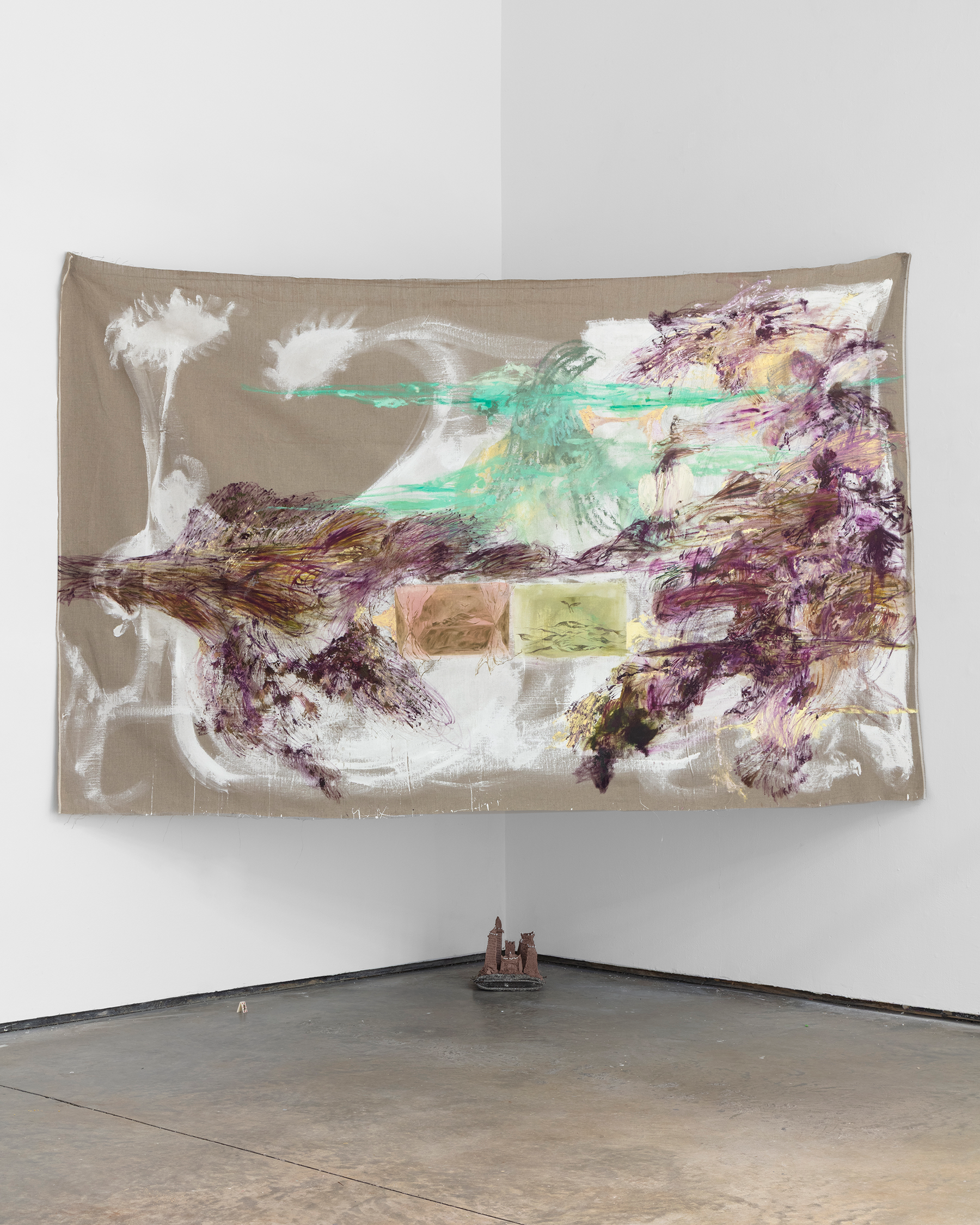
Josephine: What exhibitions or artists have inspired you over the last year?
Faye: I love all the shows that I’ve been to at 15 Orient in New York. As I said, the Sanya Kantarovsky show was so beautiful. The William Blake exhibition at the Yale Centre for British Art has been so inspiring.
I saw a Francis Picabia show in New York, and I saw a Robert Rauschenberg found object show. That was so beautiful, so inspiring, you had all these like wrought iron things and sculptures and these little boxes of things. Lately, fewer shows – I’ve just been really loving the permanent collections at the Met. There are always beautiful things on in New York.
Josephine: How important or helpful do you think awards and competitions are to artists today?
Faye: I think it’s extremely hard to be an artist and have the luxury to incubate and sit with your works. So I think prizes are really incredible because they give people the opportunity to just make paintings or make work, and hopefully be less burdened by the other horrible things that we have to deal with in life, the boring things, and just focus on the beauty of painting.
I think it’s really sad, especially since art funding has been lessened so much by the government, so I think prizes are really important to perpetuate the next generation of painters.

Faye Wei Wei
Oil on herringbone linen
Josephine: Have you had any unsuccessful experiences in the art world, and what did that teach you?
Faye: When I was younger, I applied to the Whitney Independent Study Program and some residencies like Skowhegan that I didn’t get. But I think not winning things is never personal; it’s such a good experience to try and to persevere with things, and it’s always good practice to apply for things. I think as an artist you have to apply for a lot of things, whether it’s Master’s programs, awards, funding, or residencies. It’s always great to consolidate what you think are the best paintings you’ve made, or to try and write an artist statement is always a really good exercise in trying to figure out what the major themes of your work are, or where your head is at, and thinking of your practice in writing – words are so important to my painting practice anyway.
I think I get disappointed, but it just fuels you to want to try harder and achieve those things that you really want to, and to not give up. And then when you do get things, like when I got into Yale, I felt extremely proud and like I’d really tried and worked really hard on the application and the interviews, and it felt like such a life achievement, and something that I felt and I still continue to feel very proud of.
You’re honouring your own practice through applying to things. And knowing that you are in this lineage of artists who have tried and failed and tried and failed, and that’s just what makes you stronger and more determined.
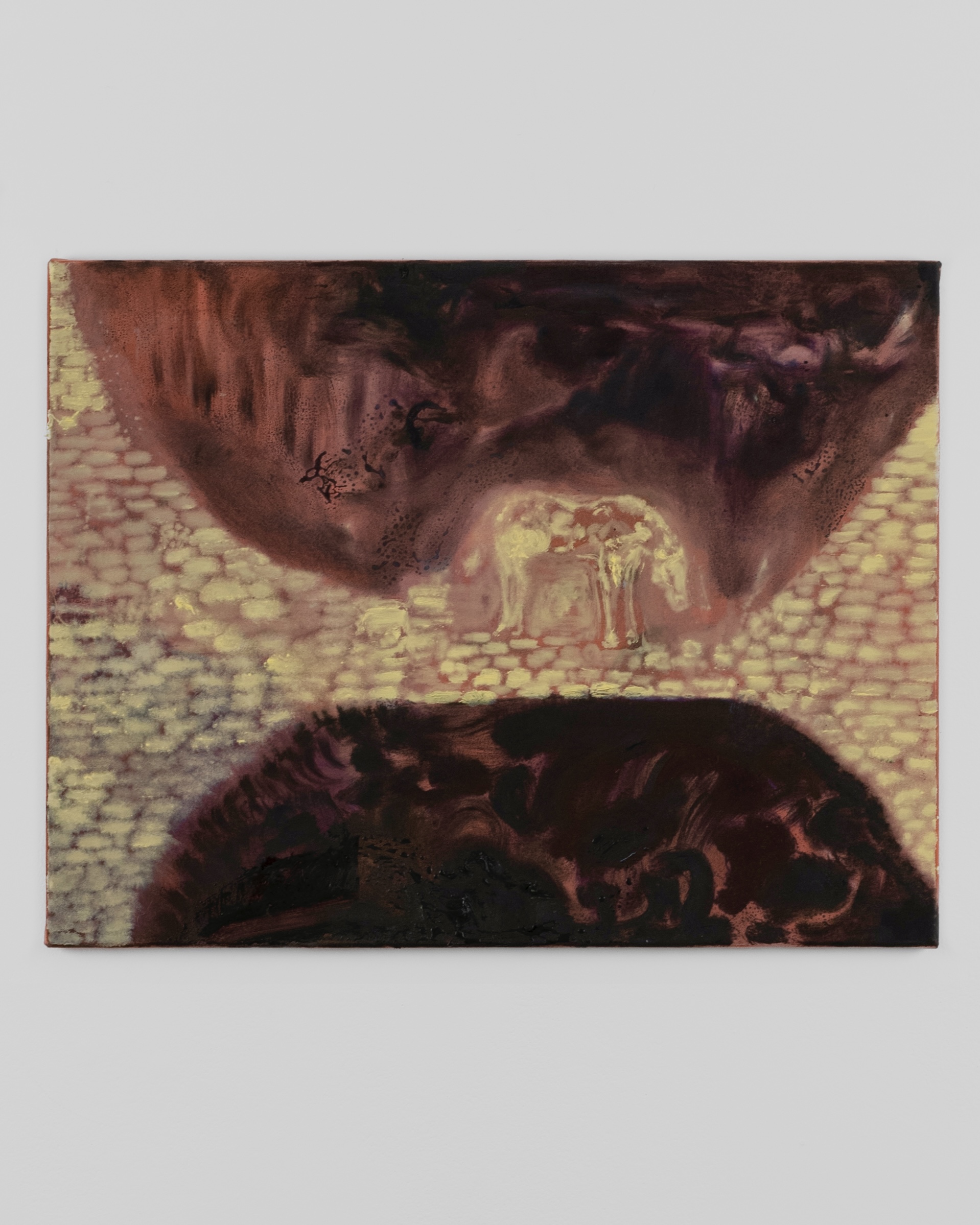
Faye Wei Wei
Oil and ink on orange linen, 66 x 51 cm | 25.9 x 20 in
Josephine: Are you looking forward to selecting the winner of your own Judge’s Choice Award? What will you be looking for amongst the submissions?
Faye: I feel very honoured to be asked to be a judge. I think I will be looking for work that feels really genuine and feels from a unique point of view, or that feels strange in its inspiration or references, or in its knowledge of its own beauty. What I really love are paintings that are not only beautiful, but full of tension and full of something that seems to butt up against its own identity, something that disrupts its own logic almost. And something that feels full of soul and just really genuine and and that comes from someone’s idiosyncratic kind of research or thinking. I just want to see something that feels like an alien or a mutant from another planet, that’s like, wow, what are you, you beautiful alien, and how can I see more of you?
Josephine: What advice would you give to artists who are thinking about entering Jackson’s Art Prize 2026?
Faye: I think just go with your intuition and your instinct of what you’re really proud of and what you want to share with other people, and what you think is a piece of work that feels challenging to you, or that holds a kind of tension and a kind of beauty that feels strange to you, that you don’t necessarily feel that you’ve resolved. Because I think the work that is in this place of beautiful tension and strangeness is often the painting that I find the most beautiful, that I go back to. Paintings that have challenged me have eked out a beauty in the difficulty of the making of the thing. I think enter with something that you’re really proud of, that you are maybe still questioning and that you think could unfold in this way that that will inspire you further in your practice.
About Faye Wei Wei
Faye conceives of the painting process as an intimate choreography between actual and pictorial space. A collector of antiquity, fragments of poems, found objects and images that for her are treasures that hold something of the spirit of Hopkins’s poetic theory of inscapes that anchors her imaginative world within the tangible. She is concerned with making as a means to hold the ineffable bound to the painting object – utilising imagined worlds through compositional disharmony, painterly gestures and colours that vibrate and jostle. She has a deep desire to conjure a transference of feeling.
Watch our interview with Faye Wei Wei on Instagram
Guest Judges
Deborah Smith: Curator, Former Director at Arts Council Collection
Caroline Walker: Artist, MA RCA, public collections include Tate and National Galleries of Scotland
Faye Wei Wei: Painter, featured in British Vogue’s ‘One to Watch’, exhibited internationally
Brogan Bertie: Winner of Sky Portrait Artist of the Year 2024
Max Naylor: Tutor at Royal Drawing School, first ever winner of Jackson’s Art Prize 2016
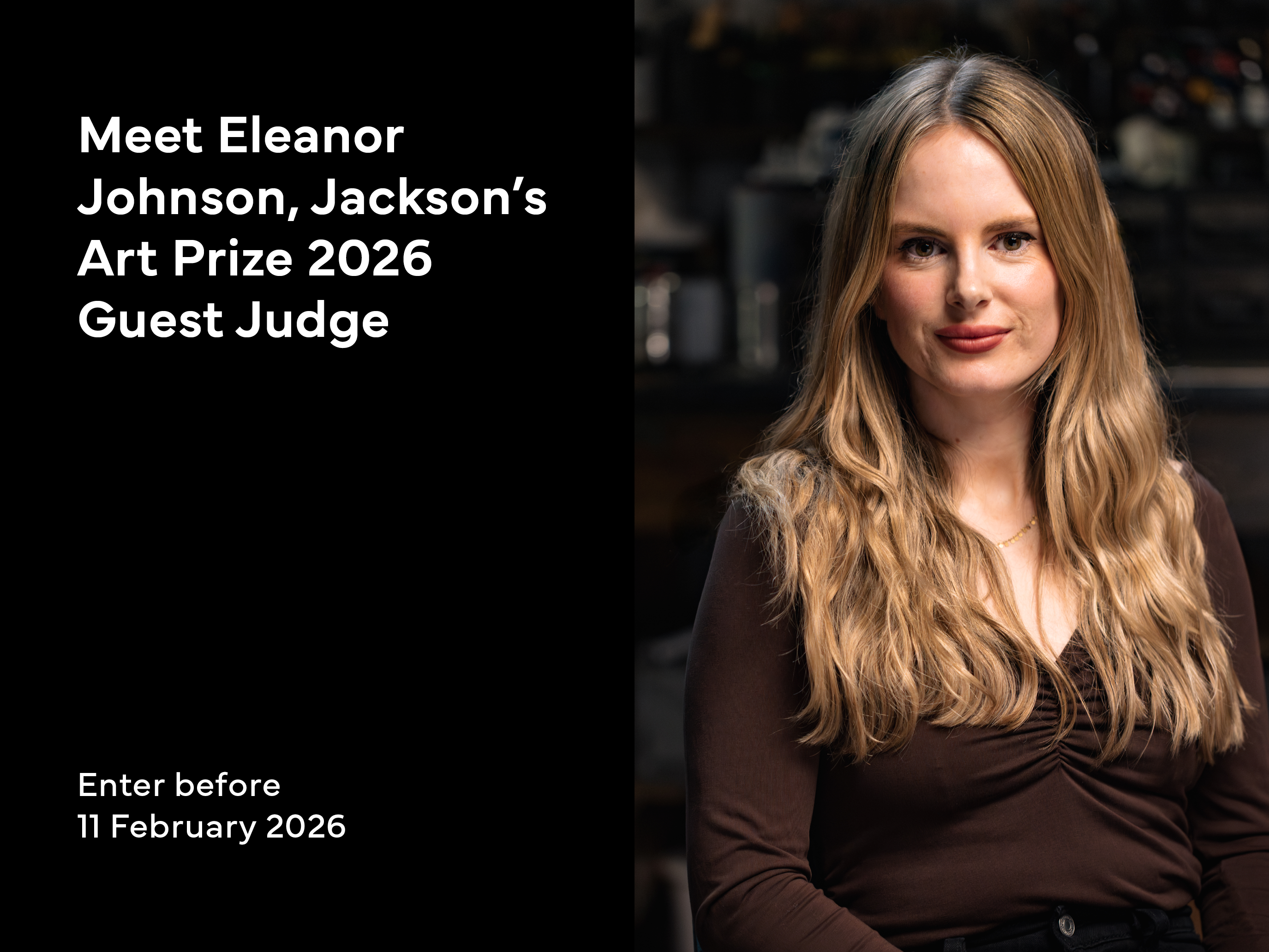
Eleanor Johnson: Painter, winner of Jackson’s Art Prize 2025, exploring myth and the human form
Further Reading
Jackson’s Art Prize 2026: Open for Submissions
A Step-by-Step Guide to Submitting Your Artwork to Jackson’s Art Prize 2026
Jackson’s Art Prize 2025 Finalists Exhibition at Bankside Gallery
How We Collaborate With Artists
Visit Jackson’s Art Prize website