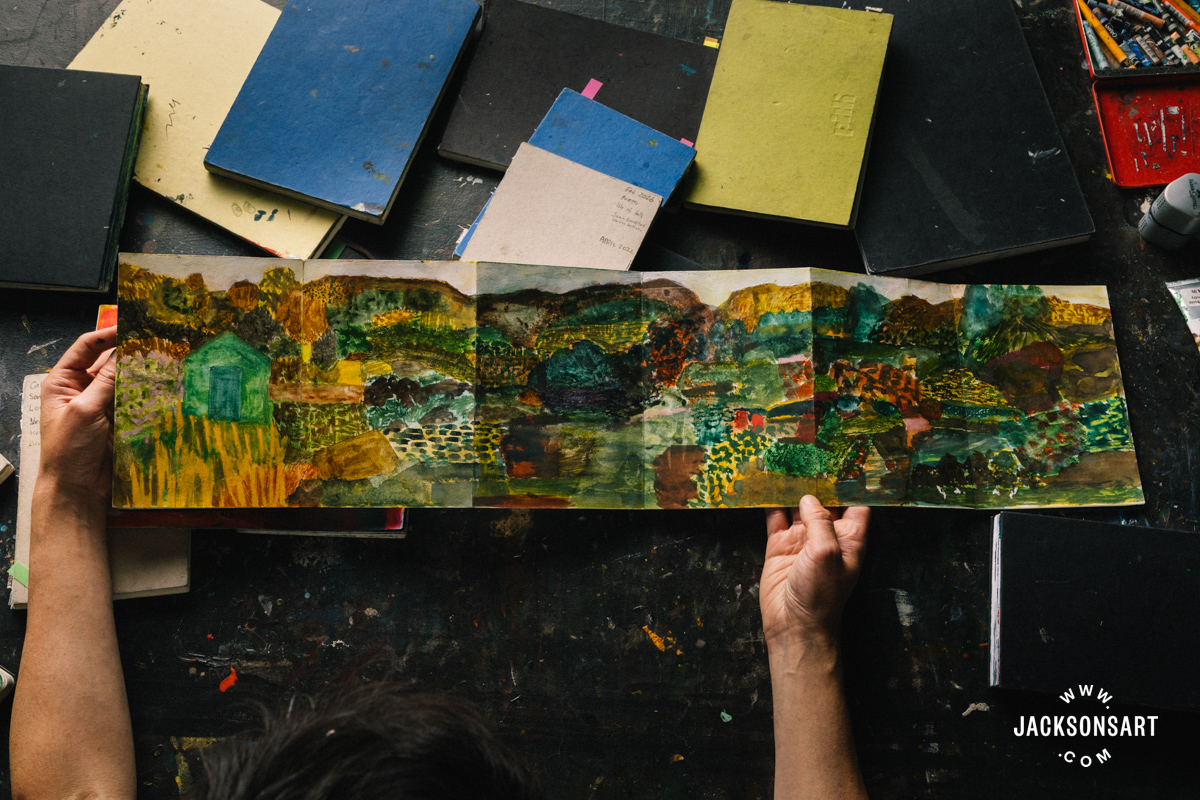
Billy Bagilhole is a painter, tattoo artist, and filmmaker from North Wales, currently based in London. In this article, he gives us a glimpse inside the pages of his sketchbook, describing the feeling of creative liberty it allows him – as a place where ideas ruminate and manifest into concepts and compositions for bigger works. His sketchbook is a safe place to let his imagination run free – without the pressure of a large canvas looming over him. Billy uses his sketchbook to experiment and be playful, using a wide variety of materials to match this exploratory energy.
Inside the Sketchbook of Billy Bagilhole
By Billy Bagilhole
A sketchbook to me is a place where I can be less uptight; I can be careless, I can work out, be playful and erratic. It is a place for rambling, for questioning, for trimming, and for measuring. It’s a place to build momentum and for experimentation.
Approaching a painting after some time spent drawing in the sketchbook sometimes feels like approaching the big race. There has been preparation, a quiet build-up of energy, building up to that point to guarantee some semblance of execution when it comes to the canvas. The canvas can feel as though it’s glaring in a spotlight; its large white surface dominating thought, while the sketchbook sits subtly in its shadow.
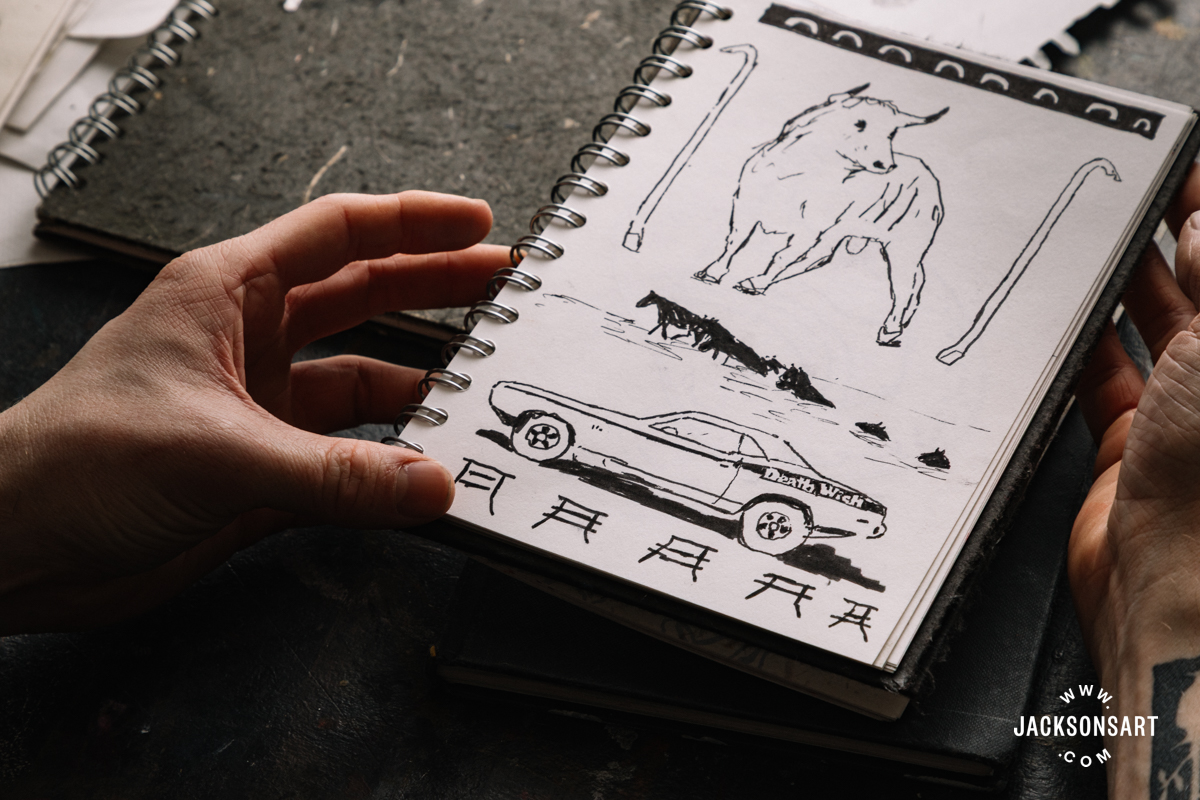
When working on the canvas, sitting in this imaginary spotlight, there can be a certain pressure that surges. It feels overwhelming at times, as though everything depends on that moment. The sketchbook, sitting in the shadows, gets pulled out at that crucial time and is a reminder to be playful and to be loose with the drawing and the concept behind a painting – to treat the painting as loosely as I did with the sketchbook.
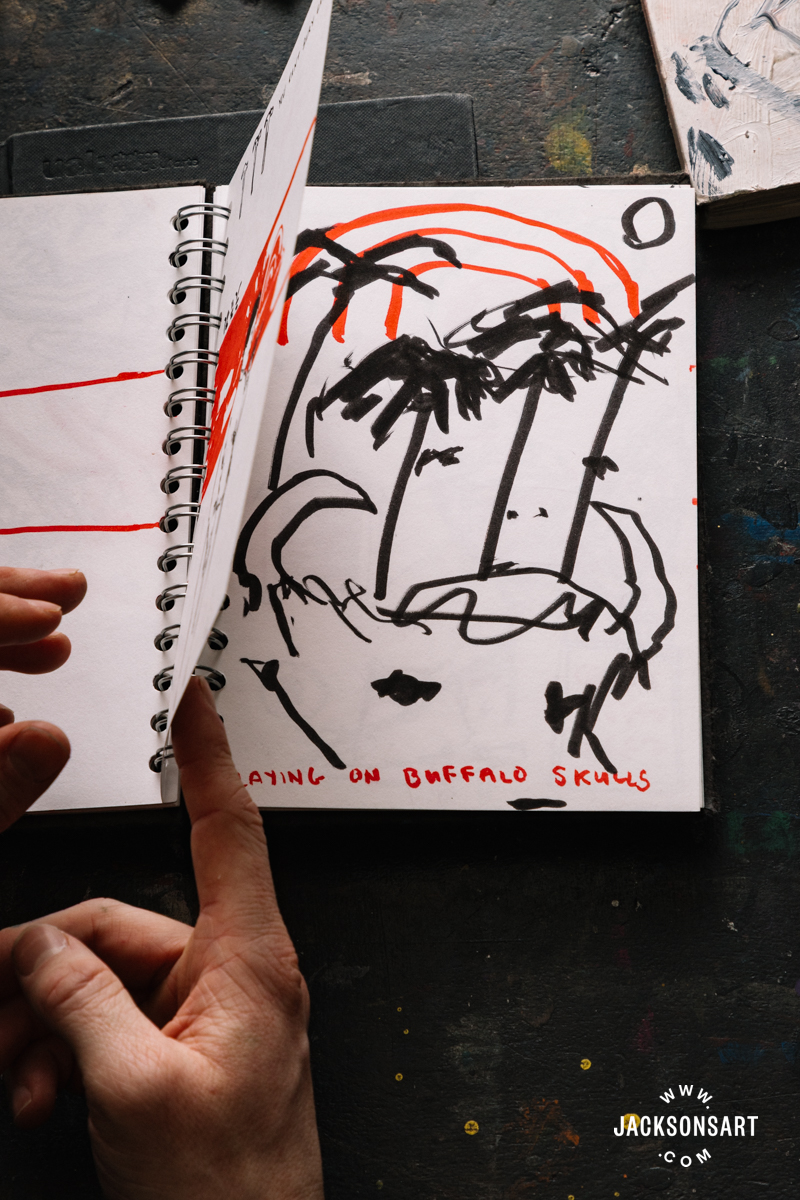
With every new series of paintings I make, I tend to start a new sketchbook. It’s a sort of mental trick to begin a new chapter and to allow room for headspace. The blank pages and fresh book always help too.
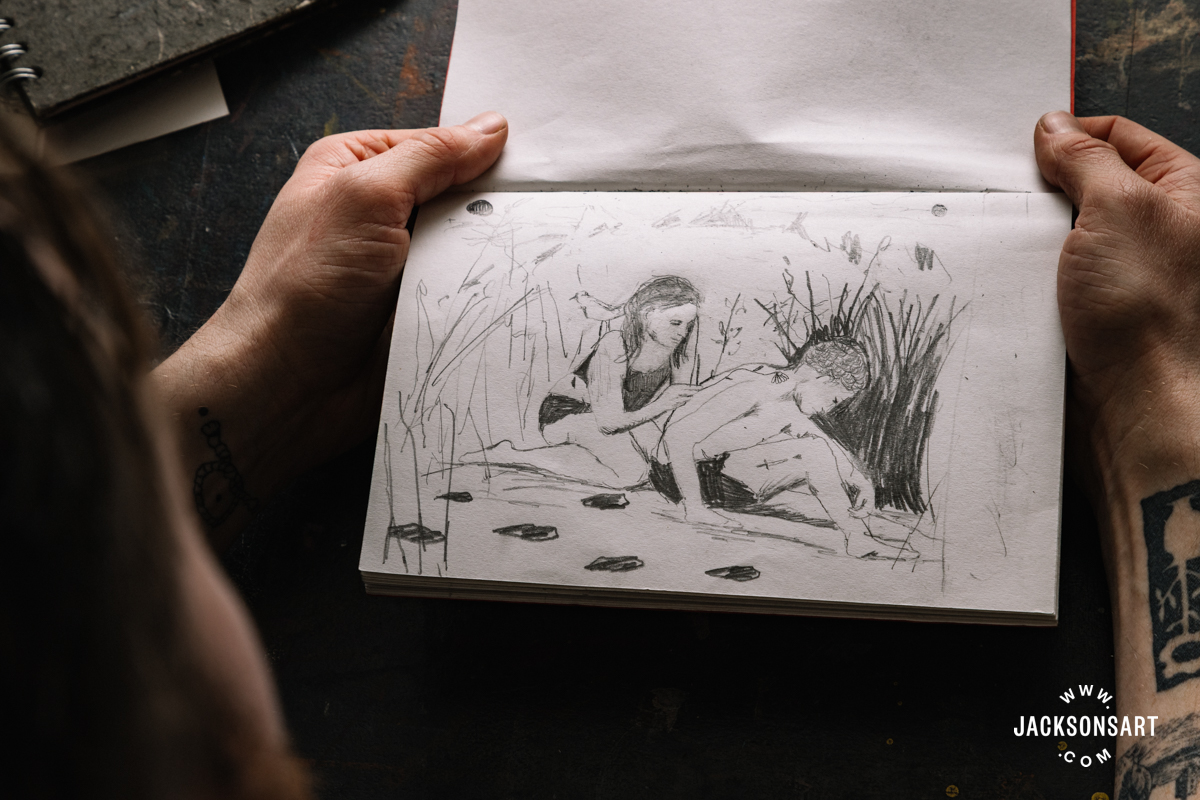
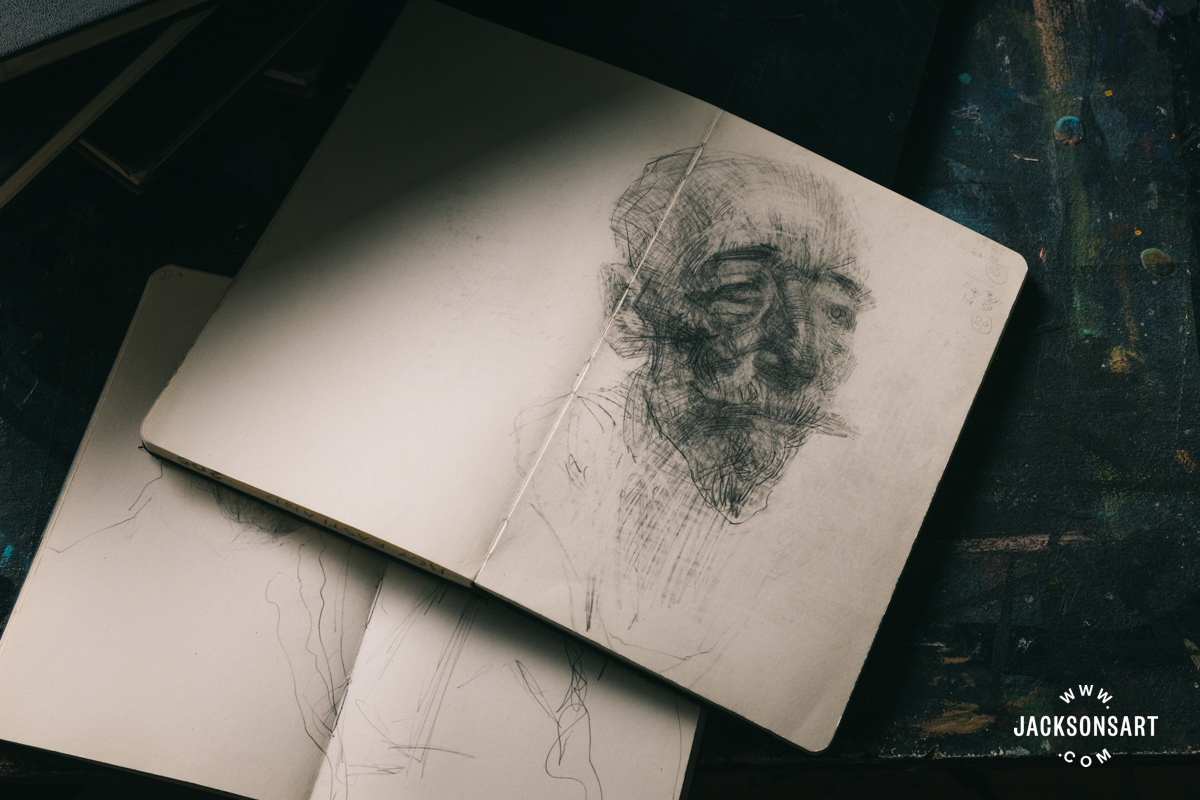
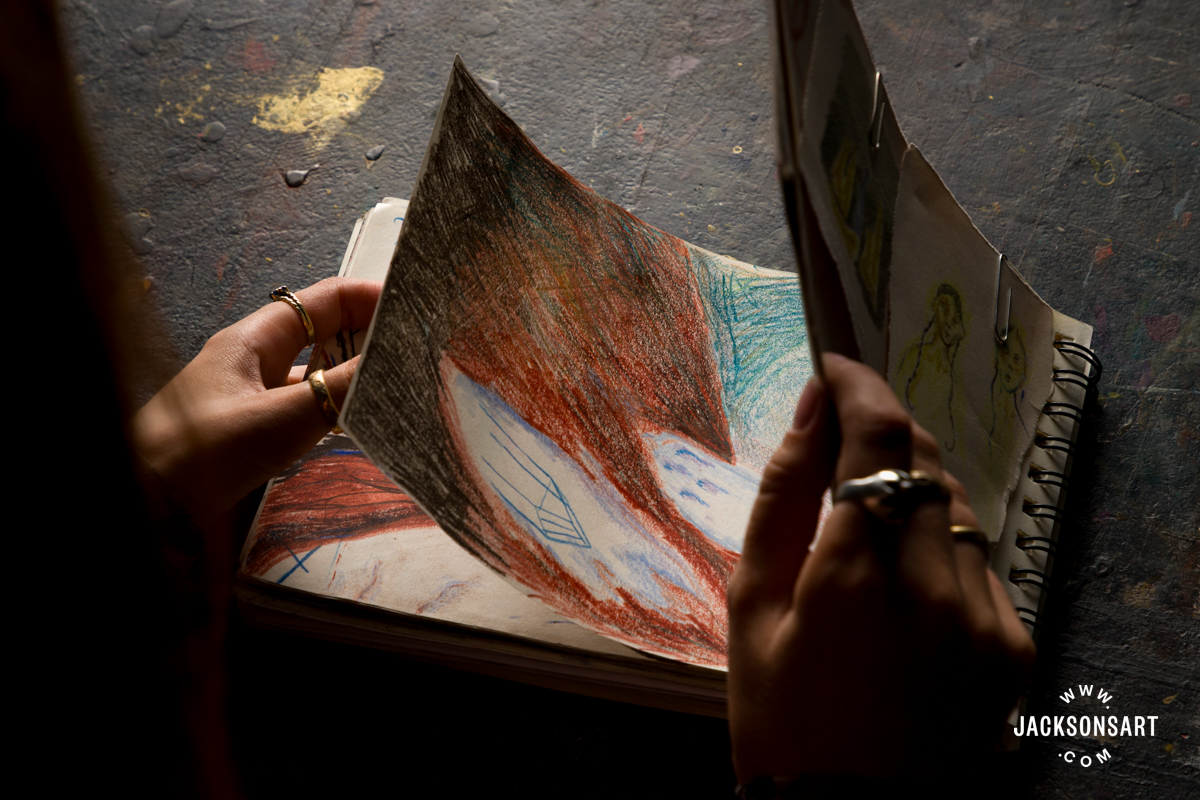
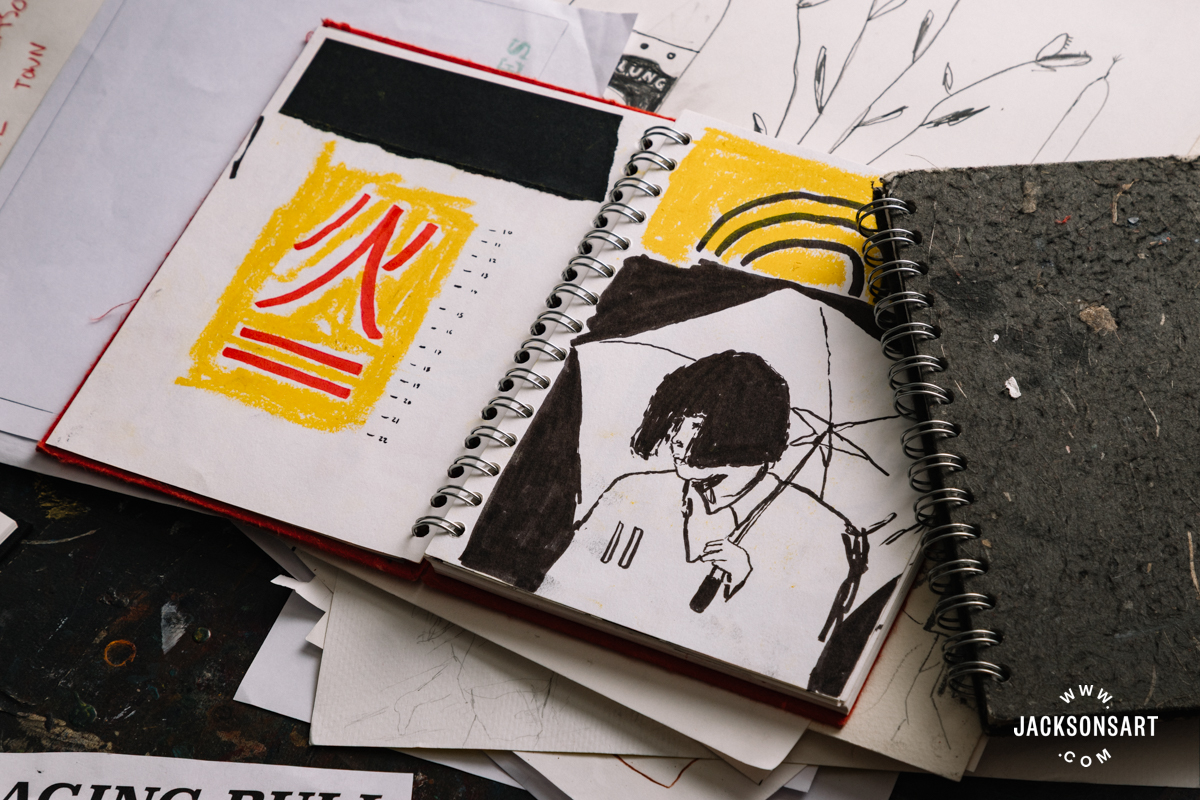
When a body of work has been completed, I want the sketchbook to be overspilled with torn pages, scribblings, bits of paint and dirt from the studio floor. The sketchbooks at that point look almost battered, like they’ve lived a rough old life.
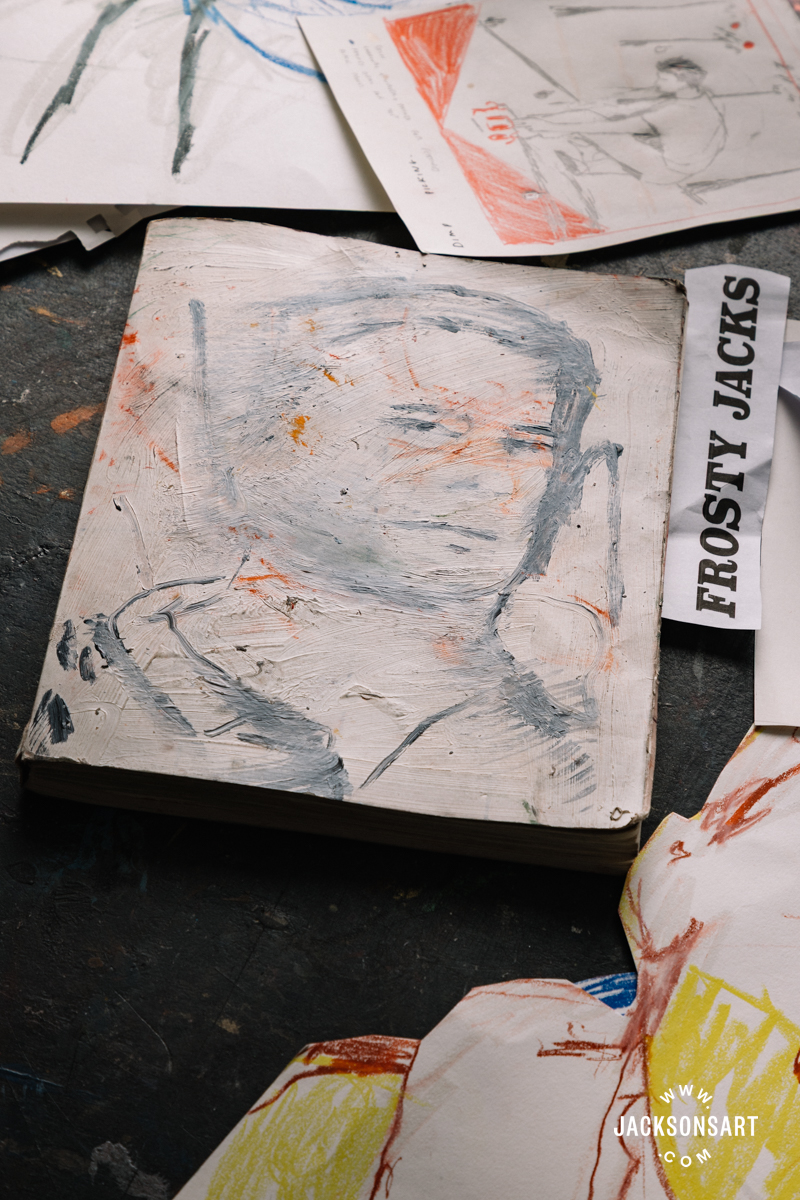
My old tutor, Iwan Gwyn Parry, who tutored at the art foundation course in Bangor, North Wales and who sadly recently passed away, used to place sketchbooks in the banks of lakes, sat in marshes or even in the sea for days. Then he’d go and retrieve them, let them dry out, and they had swelled up in places, gathered textures and transformed into something completely new. I found that idea very inspiring, and I’m very interested in the metamorphosis of where a sketchbook begins and where it ends.
Seawhite of Brighton produces my favourite sketchbooks as the paper is quite hardy and durable, but the type of sketchbook, paper, etc, usually doesn’t matter for me. When I was growing up, I’d like to save the nicer sketchbooks for ‘nicer’ sketches, and sometimes I still find that part of me hard to let go. So, if the sketchbook is actually cheaper or of lower quality, I’m a bit less strict and concise with my drawing and my ideas, which is ideally where I want things to be.
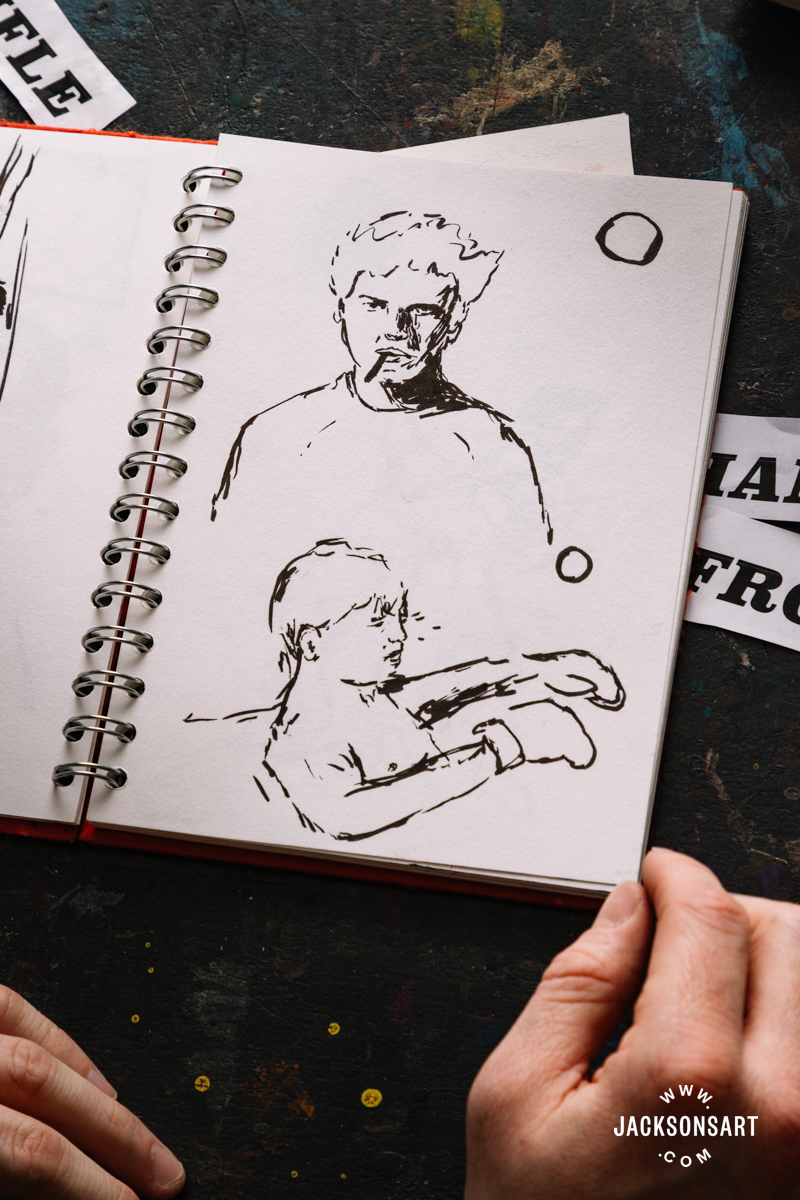
Sometimes, when things can feel a little too tight or I struggle with ideas, I’ll often have bunches of smaller, cheaper sketchbooks lying in the studio. I’ll pick one out and I’ll set myself the challenge of trying to make a drawing on each page until the book is finished before the end of the day.
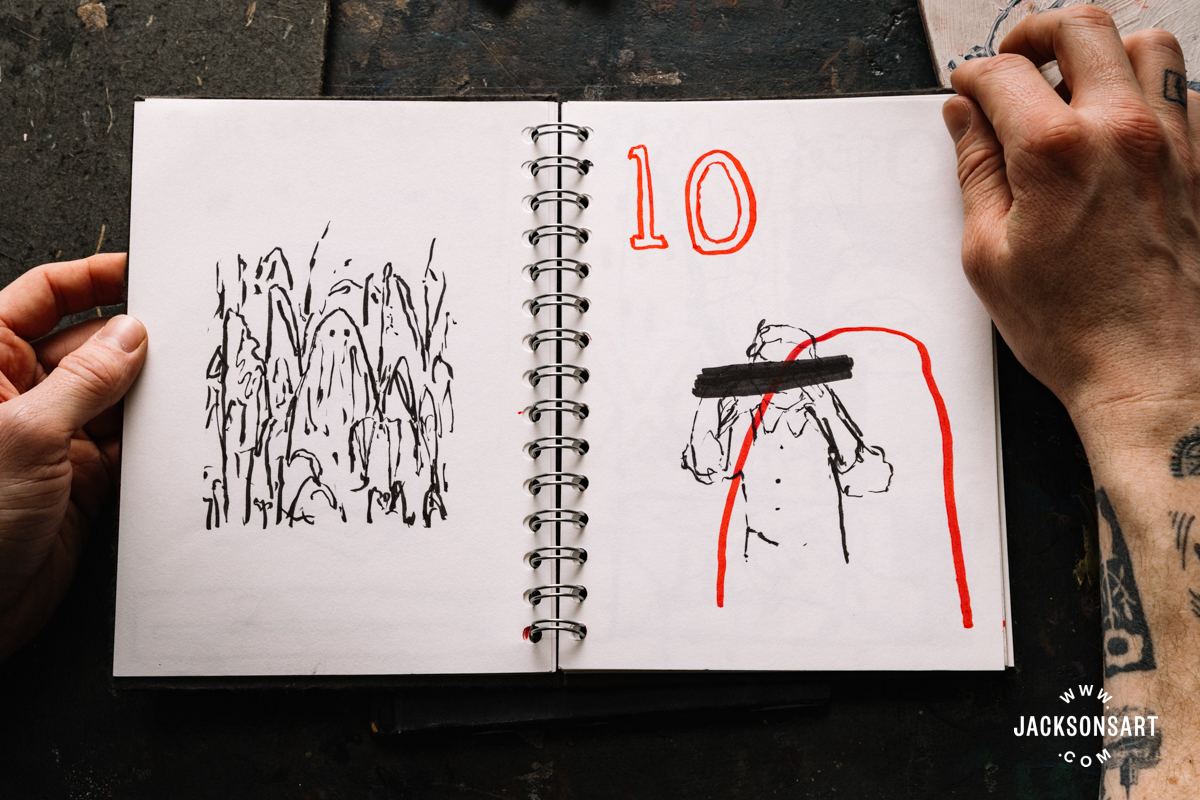
It’s inspired by an assignment we were faced with on the art foundation course in Coleg Menai, Bangor, where we had to finish a whole sketchbook back to back in 24 hours at home to bring it into college the next day. It forces ideas to be more fluid, and it sort of unclogs the mental block if you are facing one.
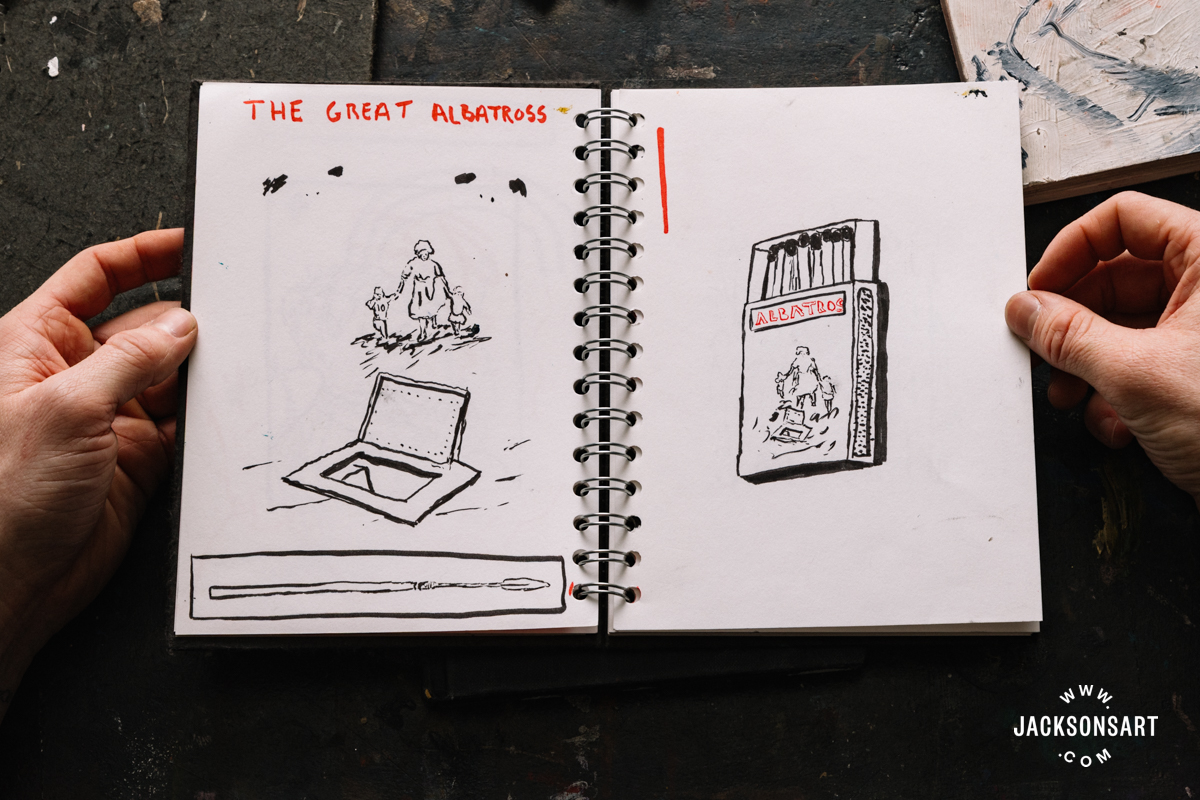
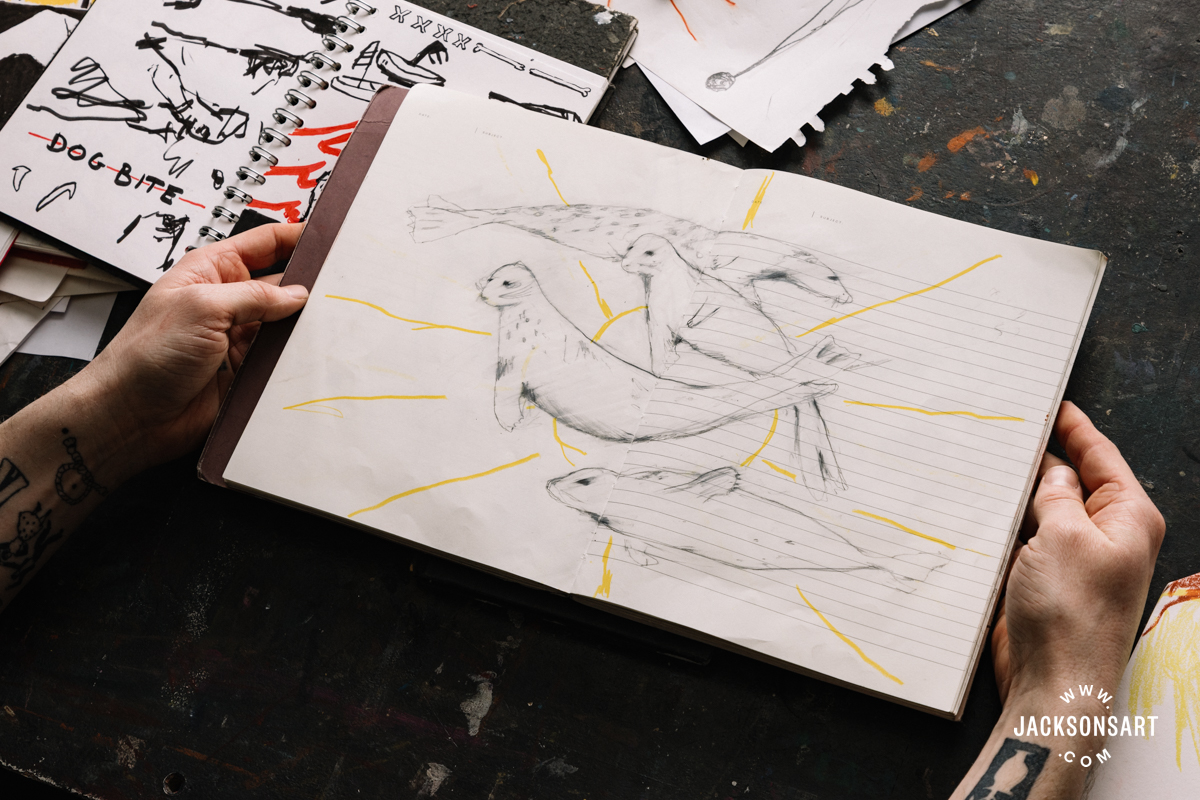
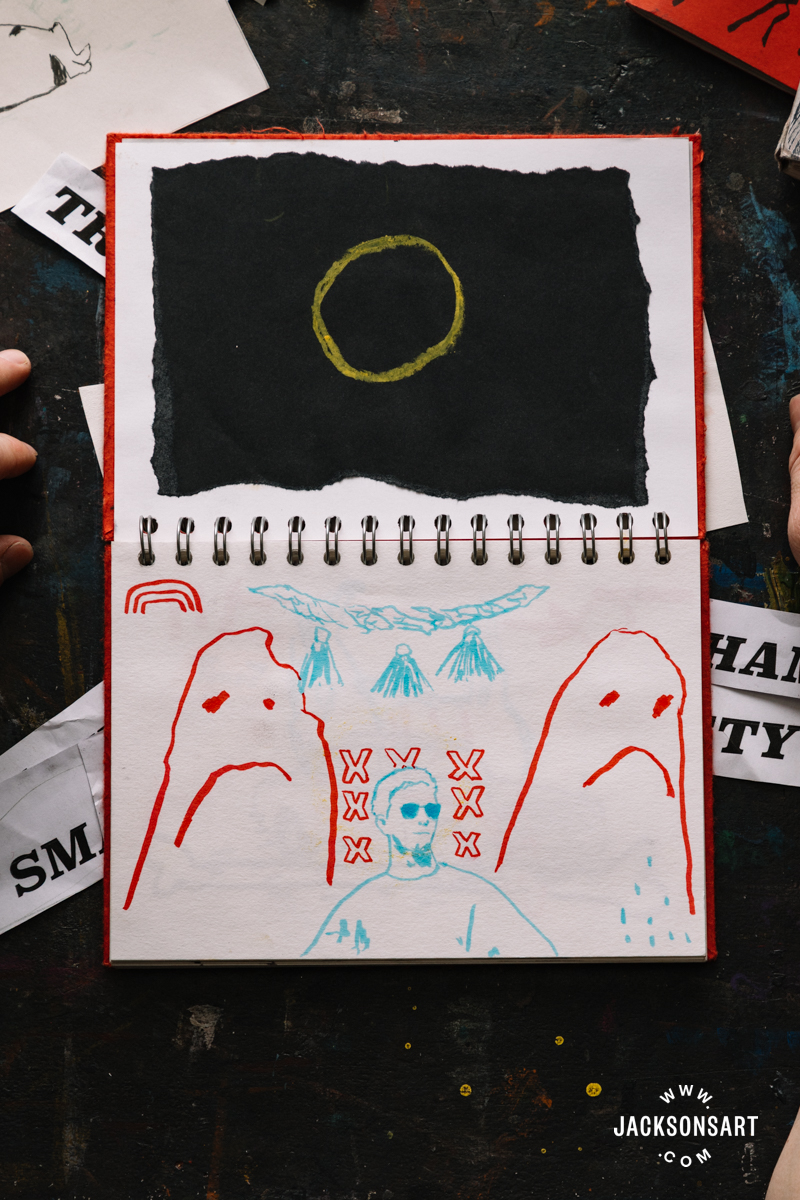
If you were to look into my sketchbook after finishing a body of work, you’d see all forms of mediums, from oil pastels to collaging, to pencil drawings and writings. I typically like to draw a lot of figures with Derwent Procolour pencils, and after I finish the drawing, I’ll lightly go over it all with a white pencil to give it a sort of misty, ghostly effect.
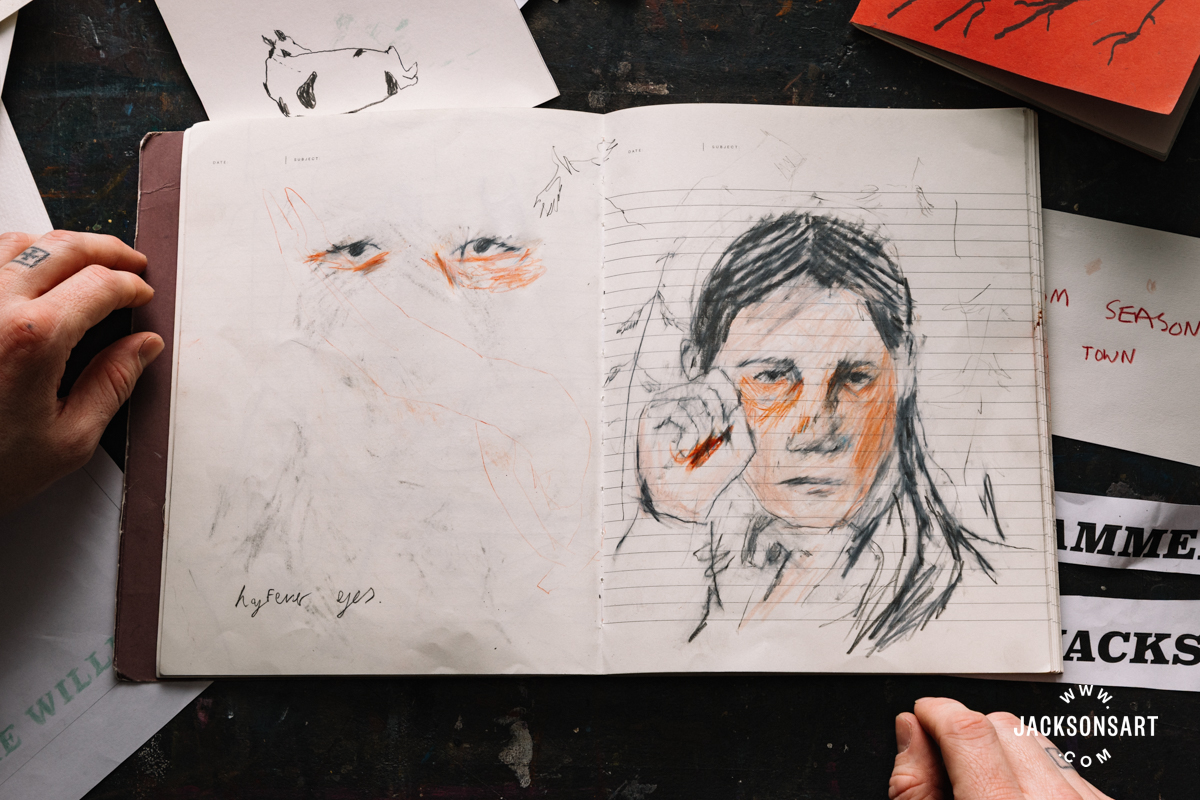
I refer to my sketchbooks multiple times a day, throughout the painting process. It’s a constant back and forth. I’ve even built a little shelf next to where I hang my big canvas so that it can sit close by and so I can refer to it for certain references.
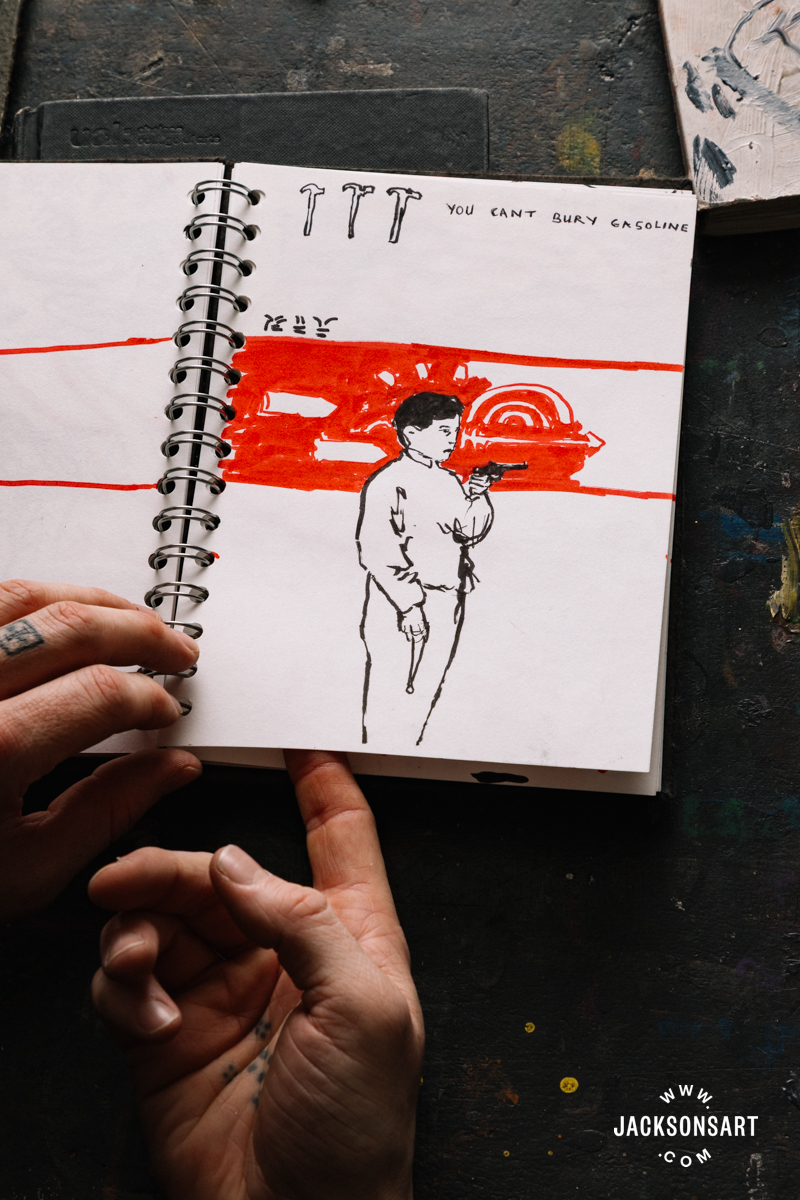
Sometimes I like to gather torn pages from sketchbooks and tape them up onto my studio wall, cosplaying as some kind of artistic detective. It helps me connect the dots between ideas for paintings if I’m working out a series, and it often sparks new ideas. I leave them there on the wall throughout the painting process so that I’m subconsciously taking in the information whilst I’m working elsewhere. And then whenever I take my hand to the paper or to the canvas, something will quite often emerge that has been marinating on the wall.
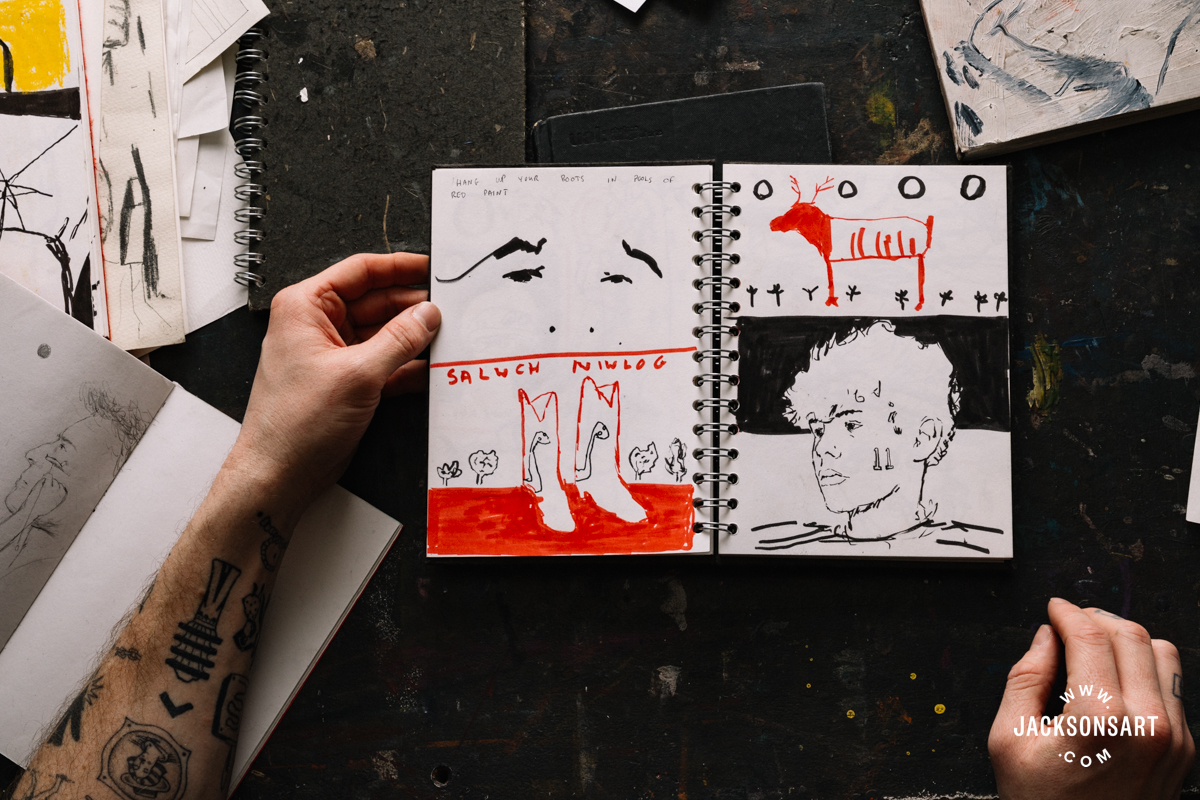
These loose drawings often inform a lot of what is painted. I try to keep my hand as loose as possible when drawing in the sketchbook. And sometimes if I’m planning out a whole painting on a page, I try to put in very arbitrary and abstract shapes, a lot of negative space as well, so that when I turn the drawing into painting, there is room for experimentation on the canvas.
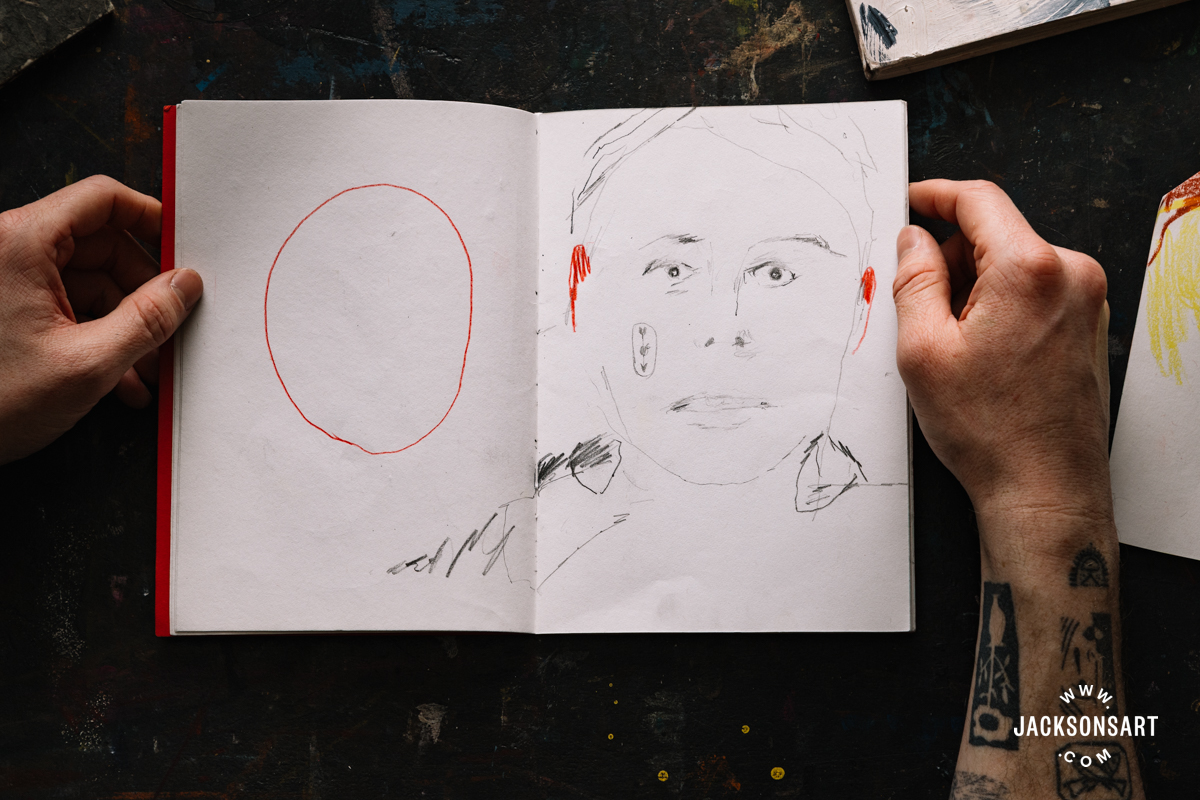
I’ve found through practice that the tighter the drawing is, the harder it is to let go of ideas and certain elements, and it can cause the painting to feel quite stiff. It’s a constant balancing act of things feeling overthought or too abstract. Finding the middle ground is often where the sketchbook comes into play.
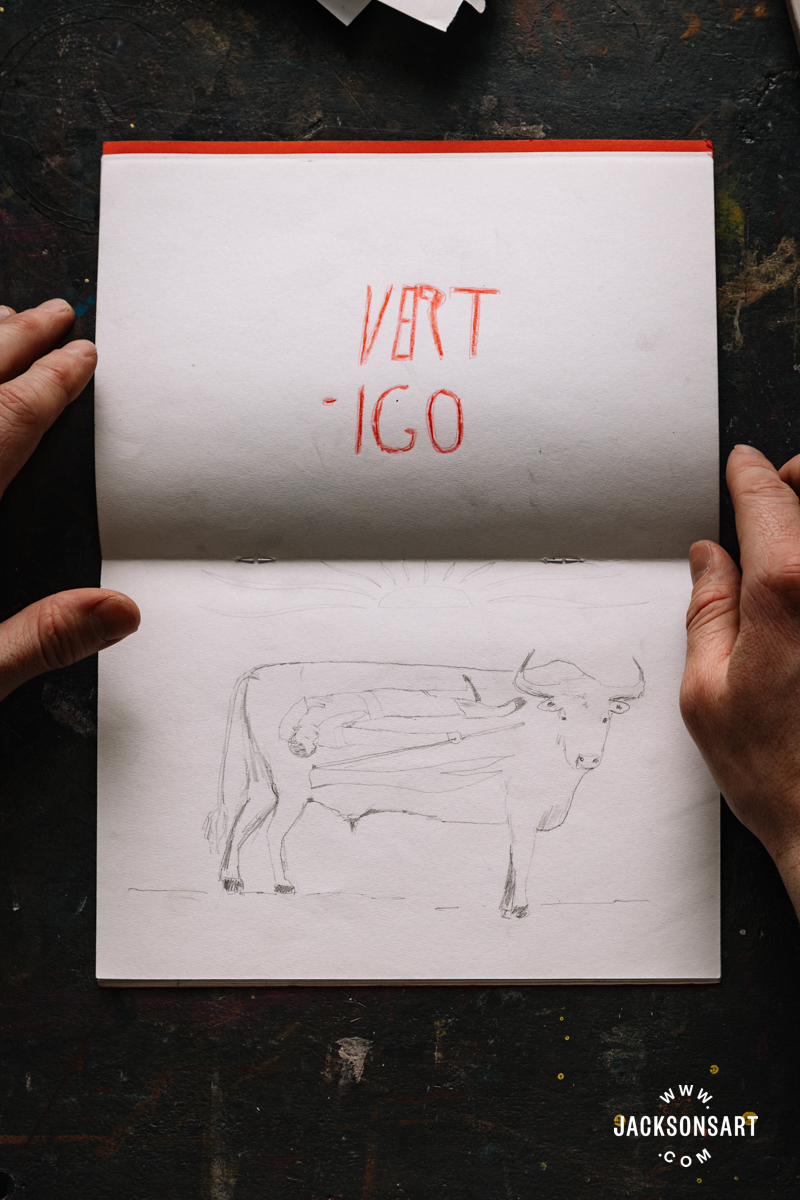
If I could advise anyone else on how to make the most out of their sketchbooks, I’d say have a lot of them at hand – sometimes it’s nice to have various ones for different purposes. I’ll always have my main sketchbook when I’m concentrating on a series. I’ll often have a ‘crap book’ where I will draw crude, terrible drawings that then get refined in the ‘main’ sketchbook. And then I’ll also have a scrapbook with a lot of collaged source imagery, colour palettes, and composition ideas printed out.
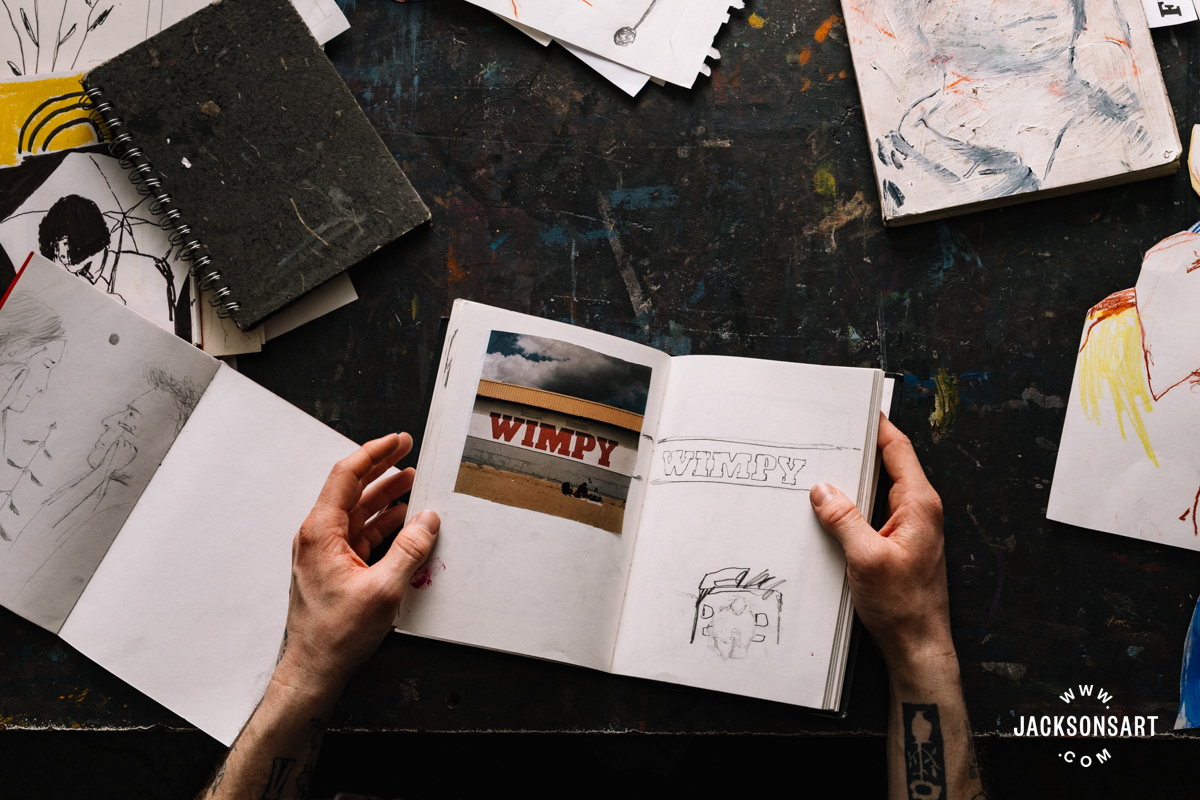
I find that by categorising them, I have a different space to work from depending on which headspace I’m in, which, for me in particular as a creative, fluctuates so much. It just helps to set me in a certain direction, rather than being overwhelmed with everything all at once.
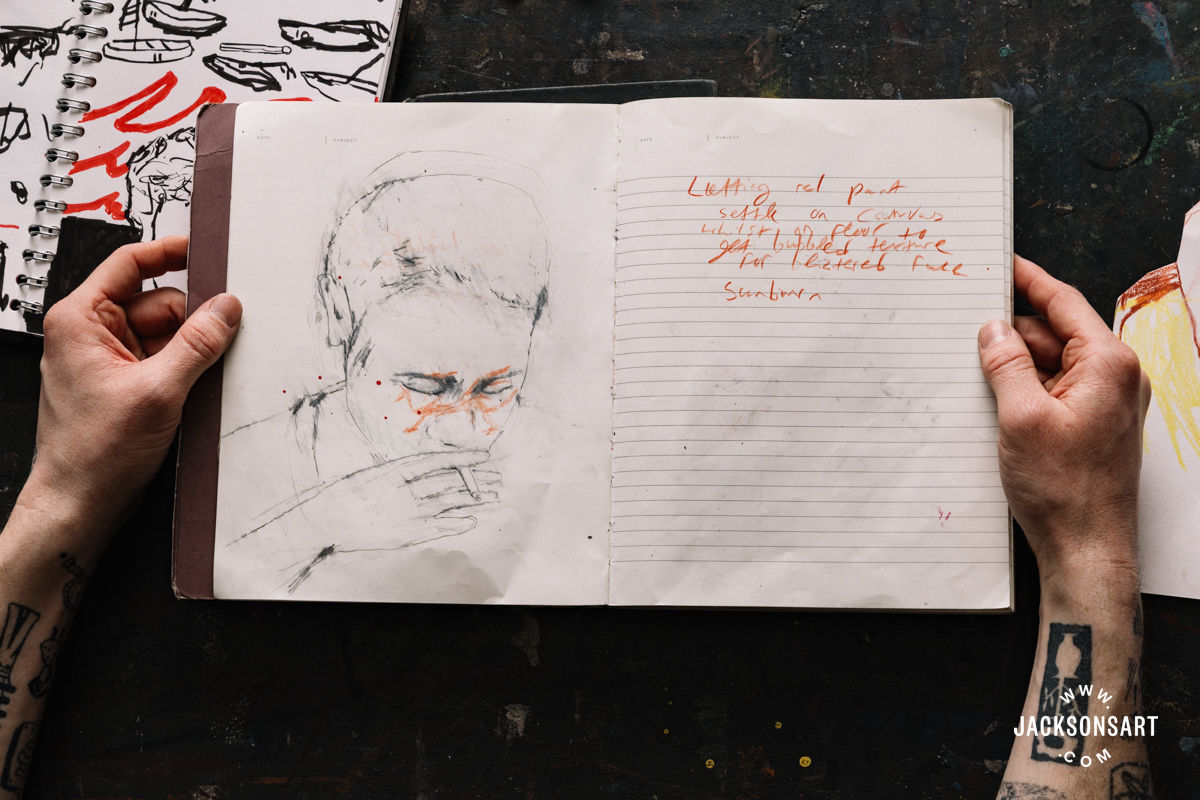
I think it’s also generally just an important tool that allows you to dive in. There’s no shame in a sketchbook drawing; you can draw a six-legged man with hammers for arms, and no one would bat an eyelid. It’s a space for all of your ideas, good and bad, to linger.
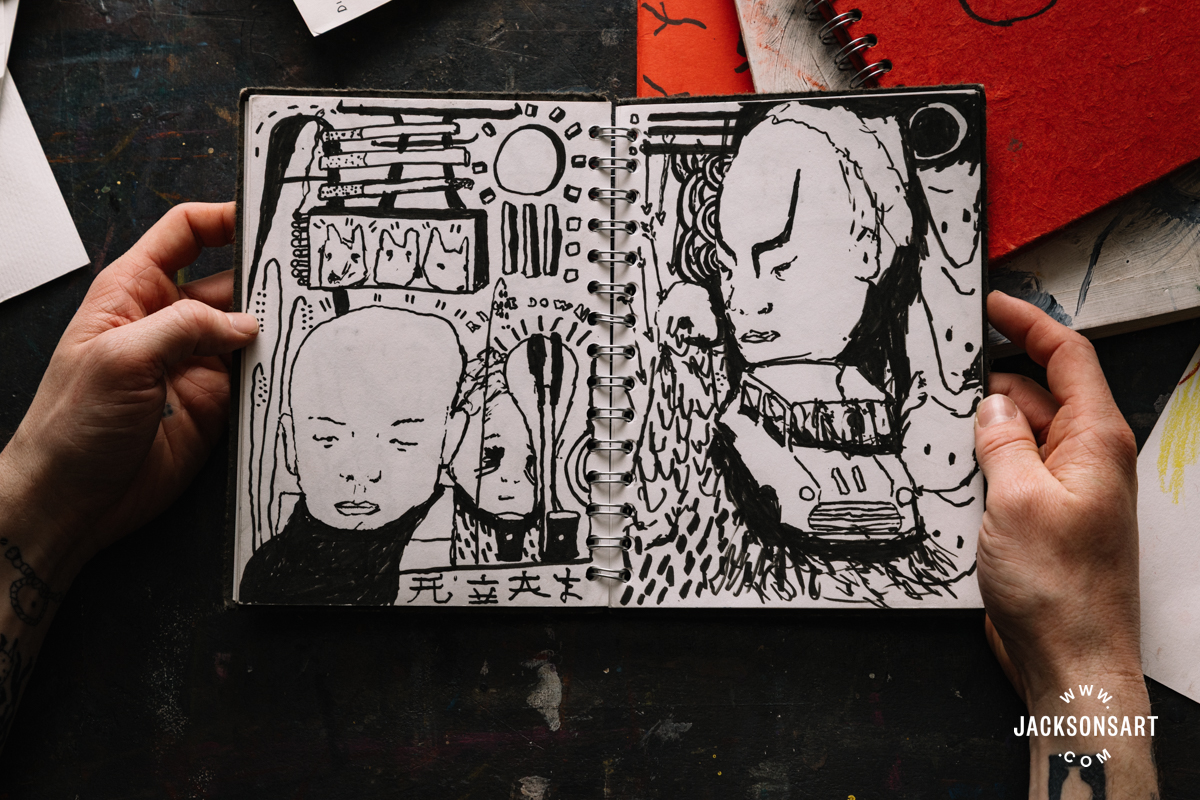
I think of my sketchbook as a journal. It’s the wall that I throw stuff at to see if it sticks. If it’s torn out of the sketchbook, then it usually means to me that the idea or the seed of an idea is worth pursuing.
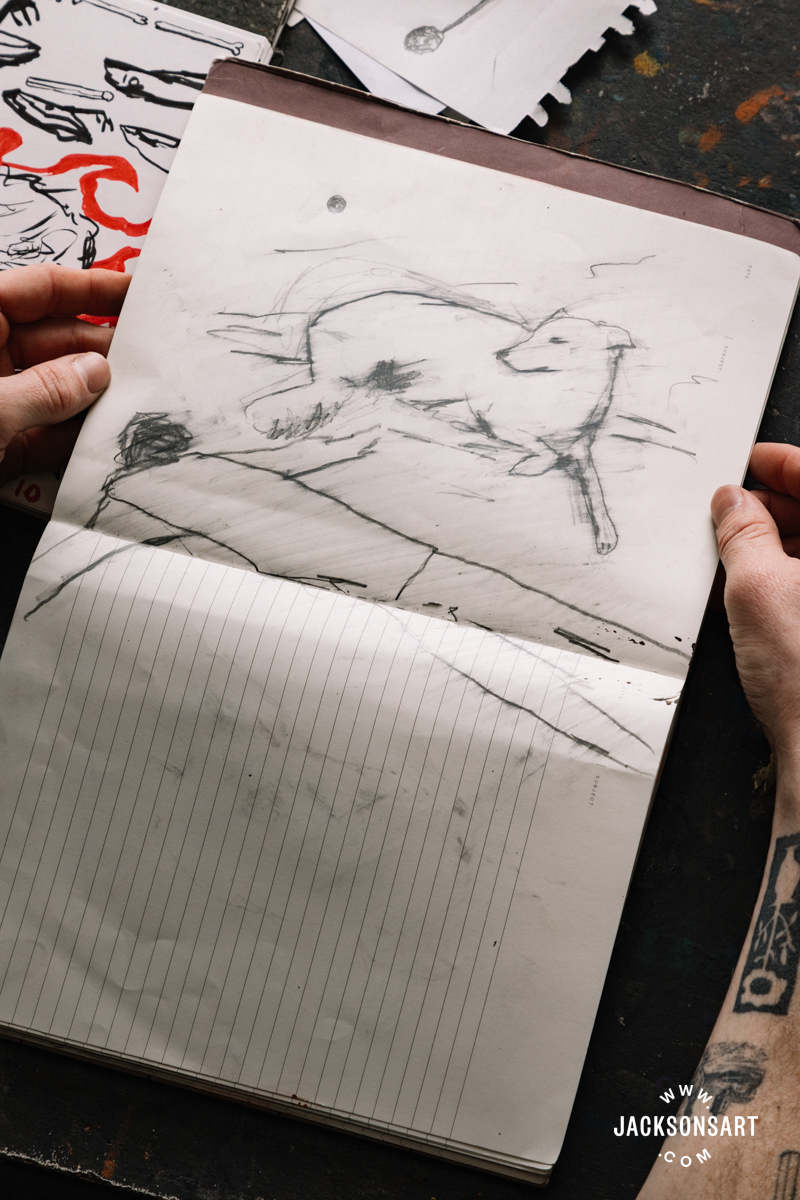
Materials
Faber-Castell Series 9000 Pencil 2B
Sennelier Soft Pastels Full Sticks
Derwent Procolour Colour Pencils
Coates Willow Charcoal Pack of 30 Half Sticks 3-12mm Diameter
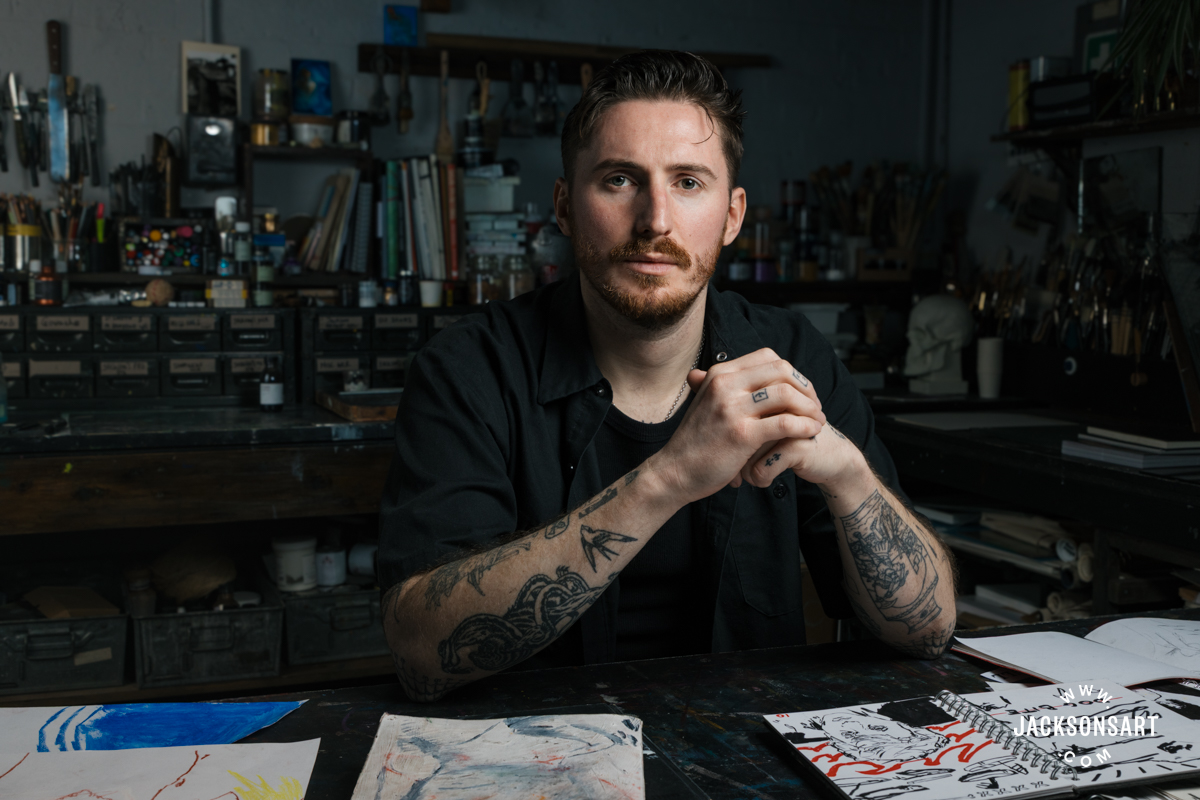
About Billy Bagilhole
Billy Bagilhole is an award-winning artist from North Wales working primarily across painting, filmmaking, and tattooing. His work explores ideas surrounding the supernatural and nostalgia, through the use of ghostly brushstrokes and recurring motifs such as bulls, dogs, and his enigmatic character, “Edwin.” Billy’s work has been exhibited internationally at the Saatchi Gallery, the Chengdu Biennale, Art Taipei, Bonhams, Delphian Gallery, and the Welsh Assembly, and is held in collections such as Soho House, Creative Debuts, and the National Eisteddfod of Wales.
Further Reading
Artist Insights: Billy Bagilhole
The Accidental Invention of Pyrrole Red, a Modern Pigment
From Field to Studio: Coates Willow Charcoal
Shop Sketchbooks on jacksonsart.com