



Songbirds cheerfully glide and perch throughout art history, taking on a plethora of meanings shaped by a combination of folklore, religion, superstition, and behaviour. In this article, I investigate the symbolism of different birds – from the healing goldfinch to the sinister raven – before detailing an art prompt which celebrates these charming creatures.
The Art Through Symbols series explores the interpretation of symbols throughout art history – whether cultural, religious, folkloric, or personal. Each article analyses a selection of artworks before offering an art-making tutorial inspired by the symbol for you to try.
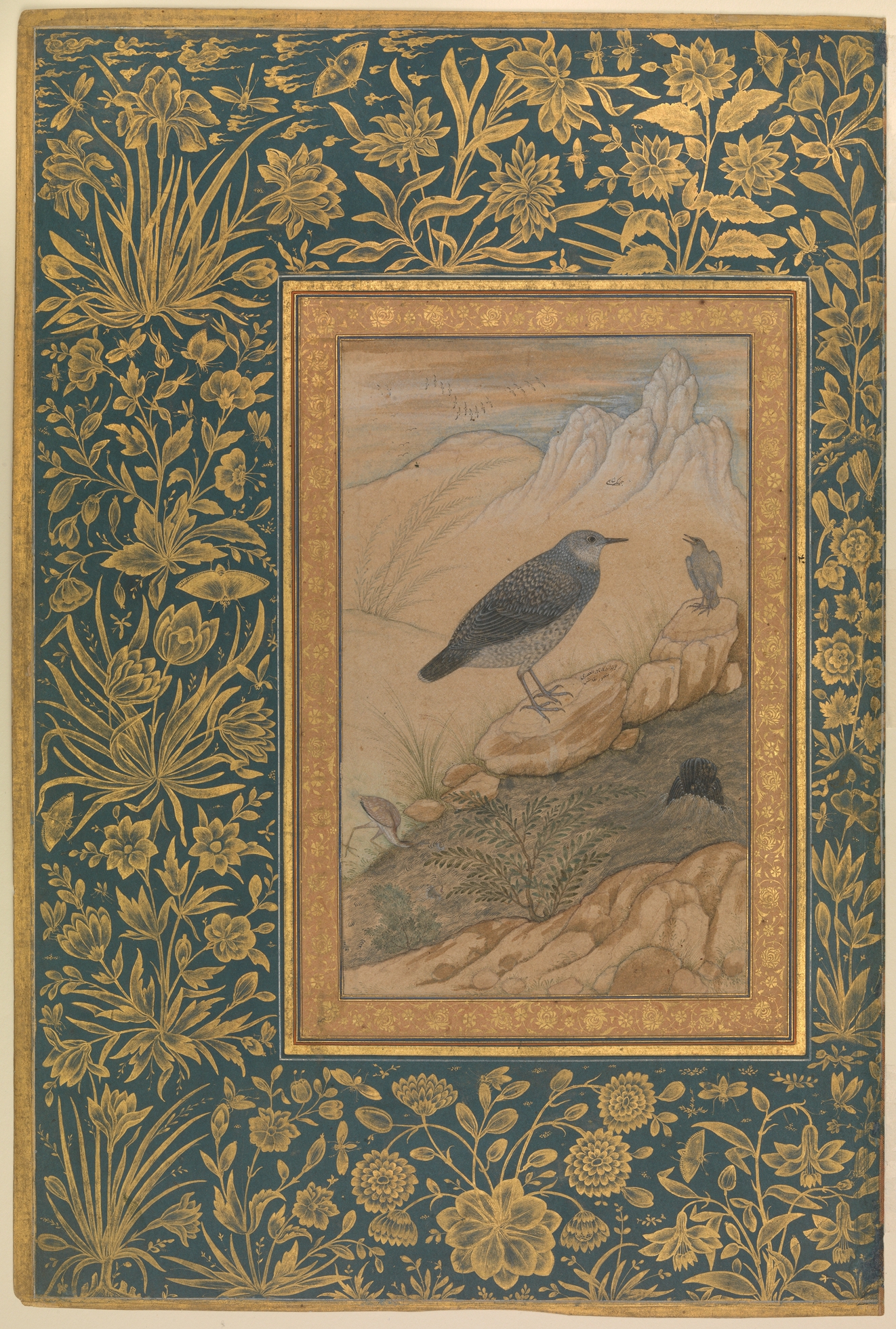
Mansur
Ink, opaque watercolor, and gold on paper, 39.1 x 26 cm | 15.4 x 10.2 in
The Metropolitan Museum of Art
Art through Symbols: Songbirds
Interpreting Songbirds
- “Once, Picasso was asked what his paintings meant. He said, “Do you ever know what the birds are singing? You don’t. But you listen to them anyway.” So, sometimes with art, it is important just to look.” – Marina Abramović
At surface level, songbirds are appealing motifs in art because they are beautiful. By rendering the delicate plumage of a bird and giving it personality, the artist expresses their skill at capturing life.
In the past, it was common for artists to use dead birds to paint from. For a great amount of history, prior to modern conservation concerns, trapping wild birds was totally permissible. It might seem unheard of in many cultures now, but for a long period, people were familiar with eating small birds, so studying them like a prop wasn’t outlandish. The symbolism of the wild bird takes on a completely different meaning than the caged or dead one, so their condition and environment is key to their interpretation.
Beyond their visual appeal, the symbolism of songbirds is an interesting thread in art history since the meaning of each species differs widely between countries and centuries. Many of the symbols I describe are rooted in superstition and folk tale, before being developed through religion or broader culture. It feels like a universal human characteristic to apply so much meaning to birds. From the Egyptian belief that the soul of the deceased manifested as a bird to travel between the world of the living and the dead, to the continued belief in saying good morning to a magpie to avoid bad luck. We can’t help but see more in songbirds and assign them the power to change our lives.
The Goldfinch – Prefiguration and Healing
A goldfinch can often be spotted clasped in the baby Jesus’ hand or attached to a string in devotional Christian portraits of the Madonna and Child. In a non-Biblical legend, when Christ carried his cross to the hill he would be crucified on, a small bird flew to him and pulled one of the thorns from his head. The bird’s head was splashed with Jesus’ blood, and legend would have it that goldfinches have red heads to this day because of this moment. Artists then adopted the image of the goldfinch in combination with the baby Jesus to prefigure his sacrifice and death.
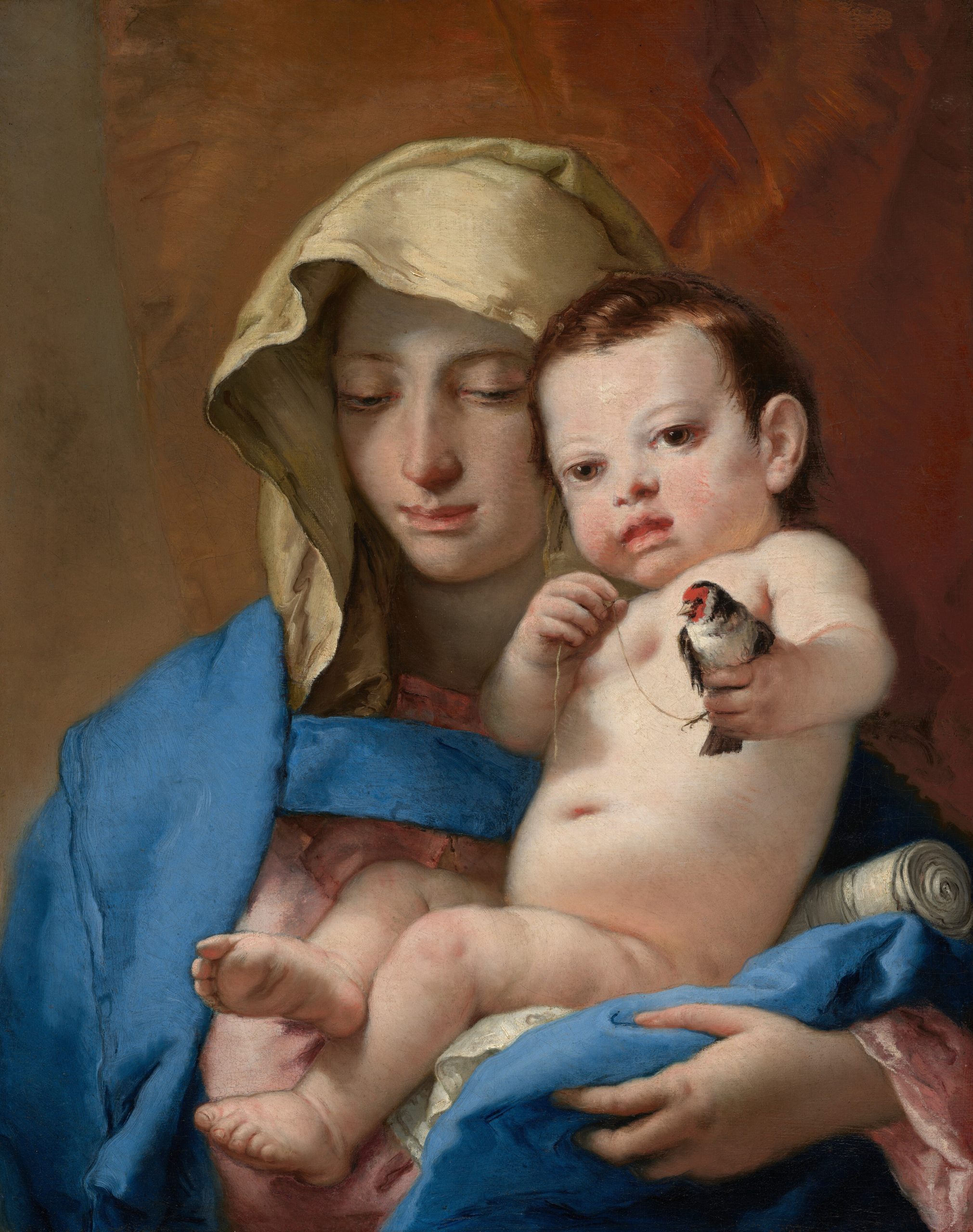
Giovanni Battista Tiepolo
Oil on canvas, 62 x 49.5 cm | 24.4 x 19.5 in
National Gallery of Art
The goldfinch was also a symbolic protector against illness and plague, which further linked them to Christ’s salvation. In medieval Europe, both gold, found on goldfinch wings, and thistles, whose seeds are a key food source, were thought to ward off plague. Plagues have devastated international populations throughout history, so by incorporating the goldfinch into paintings, artists imbued their works with a symbol of healing.
The association with healing is also tied to the Roman and Medieval myth of the caladrius or charadrius – a powerful white bird that could look directly into the eye of a sick person and take their disease in, before flying away to destroy it. If the bird turned away from the ill person, they would die. The belief in birds’ ability to cure sickness reinforced the goldfinch as a powerful image of hope.
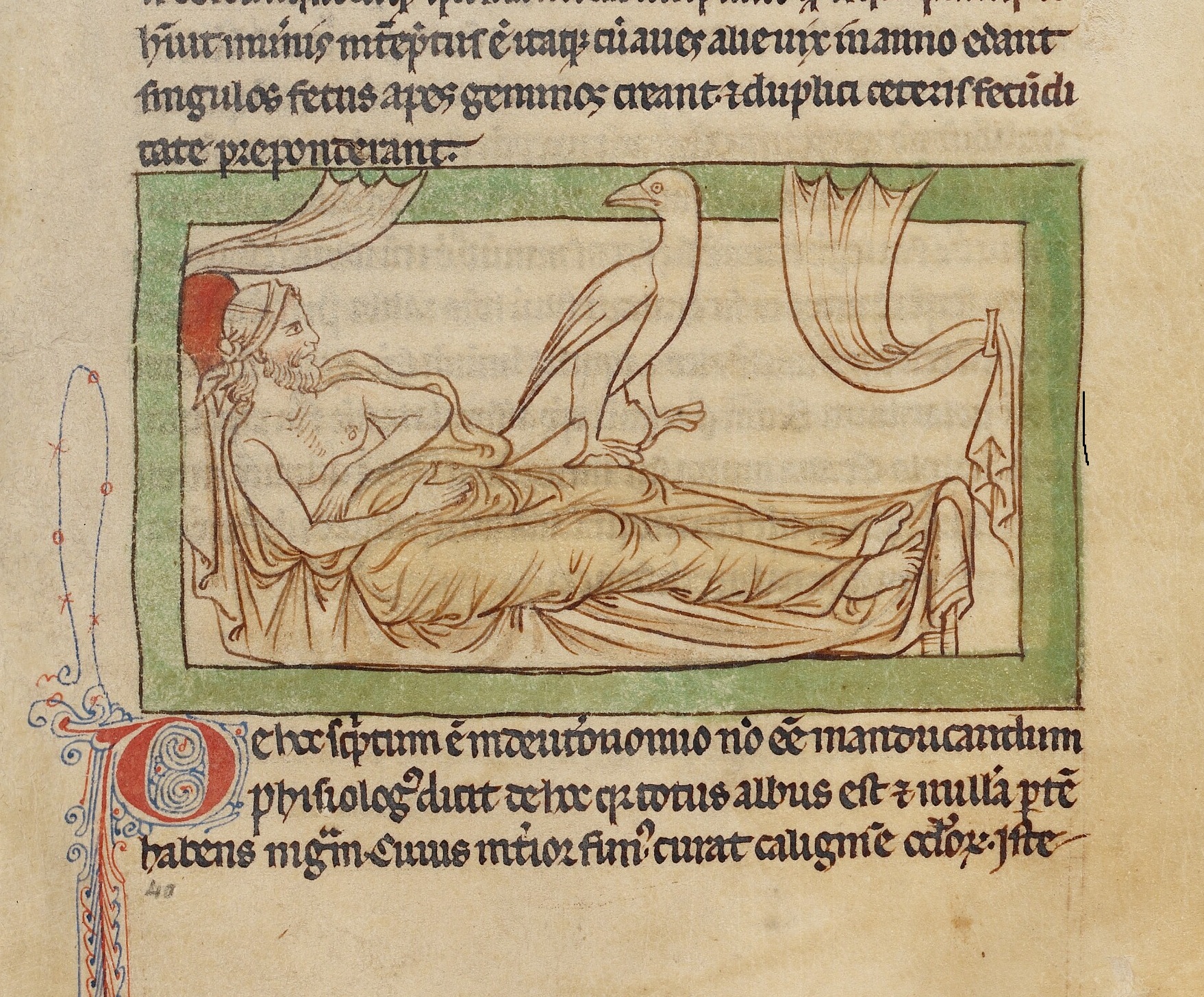
Unknown artist, Northumberland
Pen and ink drawing with body colour, 21 x 15.7 cm | 8.3 x 6.2 in
Getty Museum Collection
The Sparrow – ‘Badness’, Friendship, and Intimacy
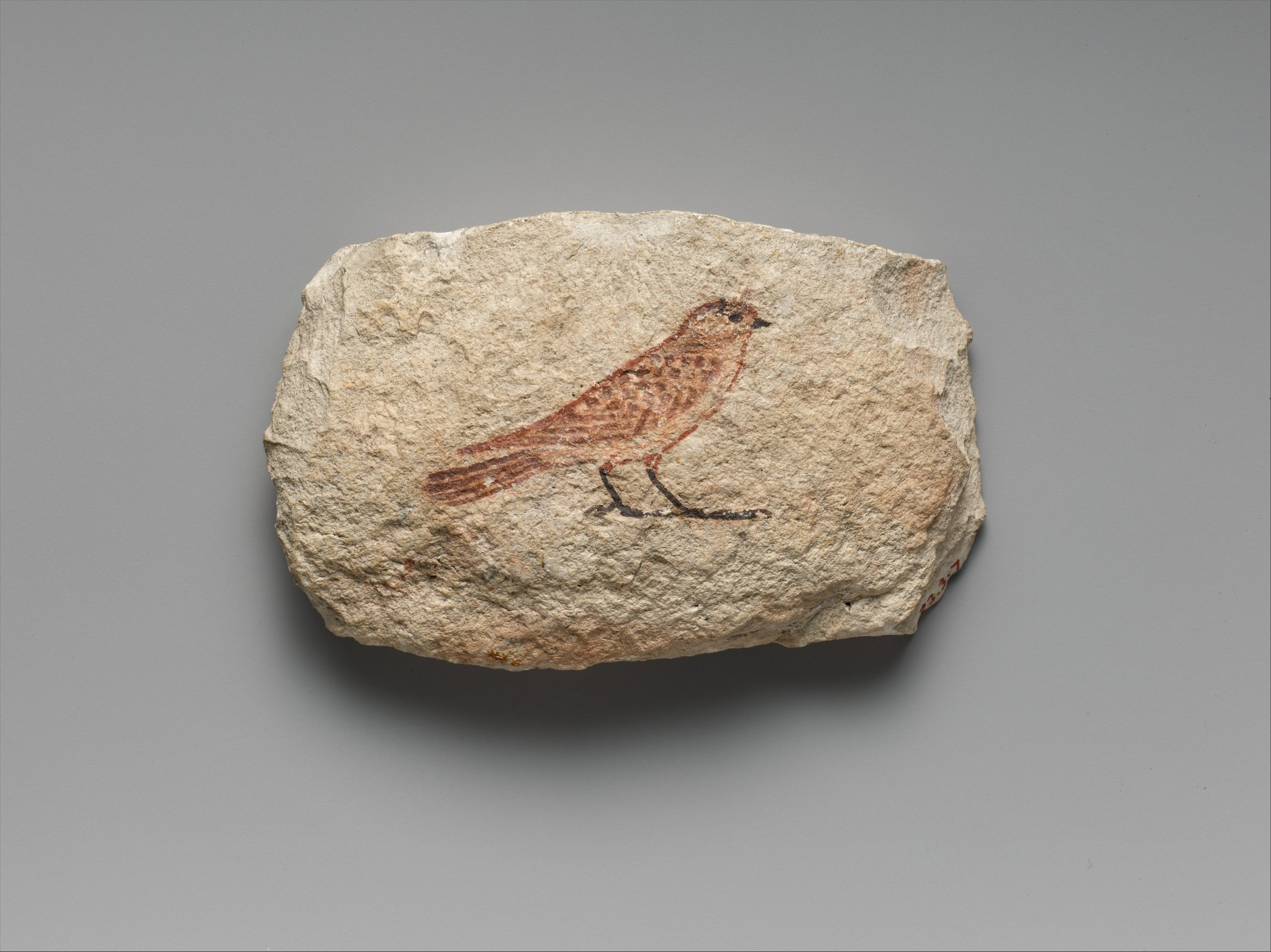
Egyptian, New Kingdom
Paint on limestone, 6.6 x 10.6 x 2.4 cm | 2.6 x 4.2 x 1 in
The Metropolitan Museum of Art
For the Ancient Egyptians, the sparrow was widely seen as a little crop-stealing pest. We know this because the sparrow hieroglyph was used to denote smallness, weakness, or badness.
This is in direct contrast with the Japanese interpretation of the sparrow, which appears in the fable Shita-kiri Suzume. In the story, an old man helped an injured sparrow that cried out to him. His wife was angry that he gave food to the small creature, so she cut out its tongue and set it free. The old man went to look for the sparrow and was guided to it by a flock of them, who presented him with the option of a small or large basket. He chose the small basket, which was filled to the brim with treasure, whereas his greedy wife went out to the forest to collect the large basket, which was full of snakes and dangerous creatures.
The story moralises that greed only leads to demise, and the prevailing power of friendship and kindness. Sparrows appear all over Japanese painting, representing abundance and prosperity.
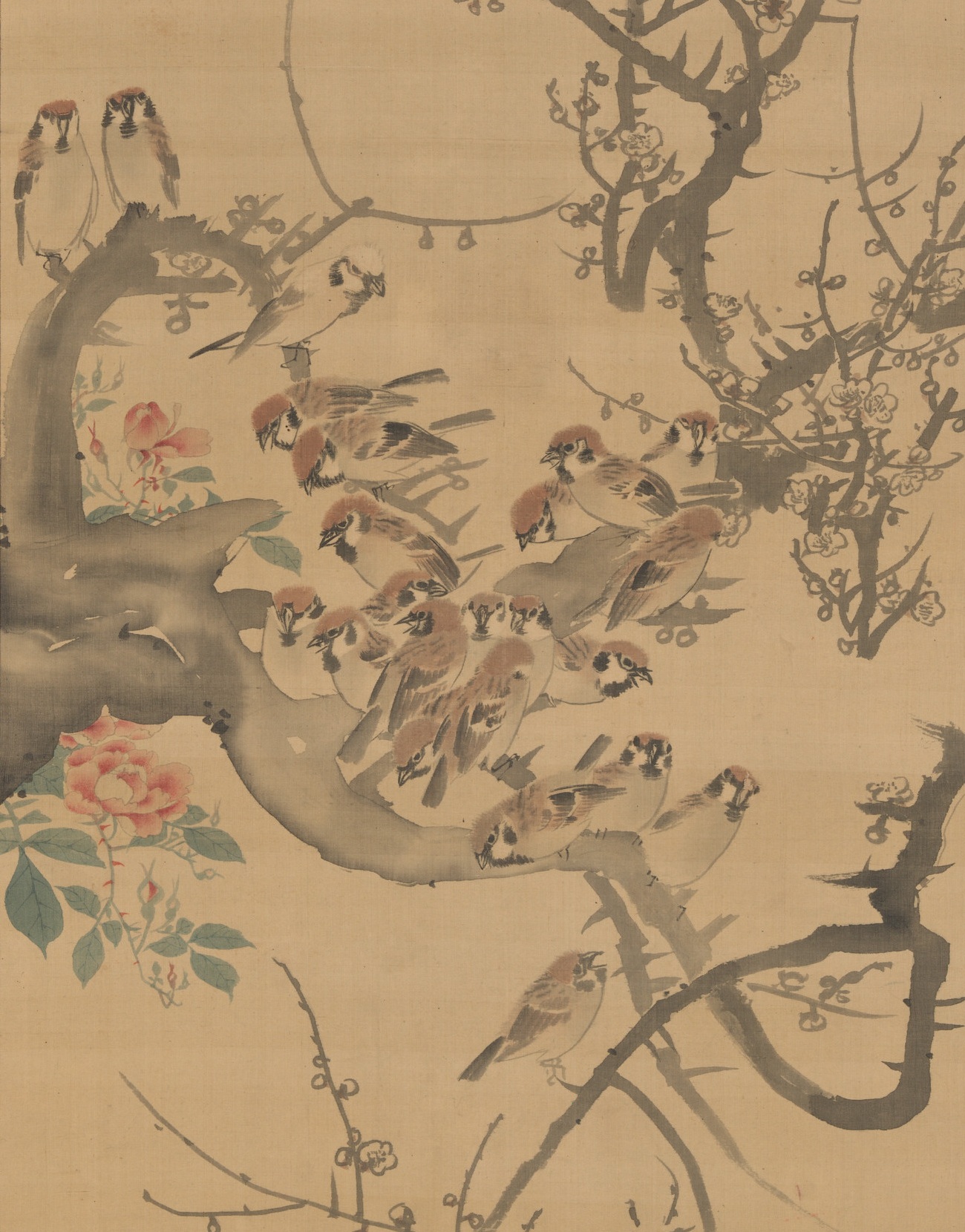
Nagasawa Rosetsu
Ink and colour on hanging silk scroll, 113 x 39.8 cm | 44.5 x 15.7 in
The Metropolitan Museum of Art
The Roman poet Catullus has 116 surviving poems to this day, and his lover ‘Lesbia’ is the subject of 25 of them. Her name is a literary pseudonym, and there are varying theories about her true identity. Lesbia kept a sparrow as a pet, which is mentioned in two of the poems. In the first, he declares his feelings for Lesbia by intimately describing the affection and fun she had with the bird. He wishes he could play with the sparrow too, indirectly implying that he wanted more attention from her. In the second poem, the sparrow has died, and Lesbia is in total despair since Death had snatched away a creature she loved “more than her own eyes”.
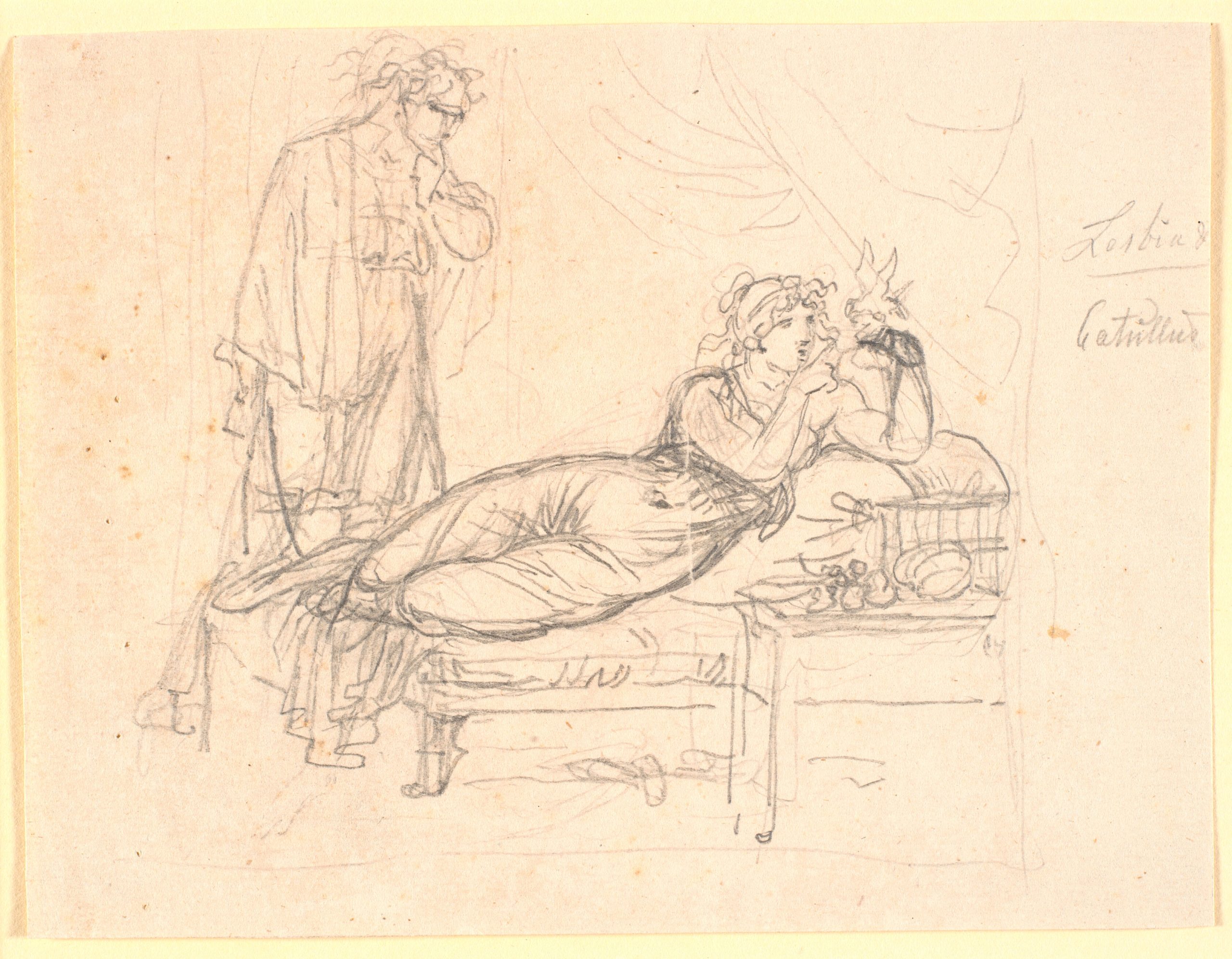
Nicolai Abildgaard
Pencil drawing on paper, 14.3 x 18.8 cm | 5.6 x 7.4 in
SMK.
Although this all seems very plausible and heartfelt today – to the Roman mind, a noblewoman wouldn’t keep a sparrow as a pet, since it’s such a common bird. It’s suggested that Catullus used the sparrow as a symbol for the intimacy in their relationship, and that the dead sparrow is actually a lament on his impotence. Centuries later, following the rediscovery of the sparrow poems, painters became enamoured with the symbol of the sparrow as a means to obliquely infer eroticism.
Crows and Ravens – Death and Care
Crows and ravens have long been associated with death because of their behaviour as scavengers – they swarm in a ‘murder’ of crows, or ‘unkindness’ of ravens – to feast on carcasses. In mythology from around the world, these birds are bound to death, for example, the Irish-Celtic ‘Morrígan’ is a goddess of war who appears as a crow to encourage bravery, strike fear in the enemy, and foretell death. Huginn and Muginn are a pair of ravens who served Odin in Norse mythology by feeding him information they gathered when flying around the world. Ravens are often associated with the gallows, ominously waiting to feast on the condemned. In this etching by Félix Bracquemond, a muscular raven is confrontationally stanced in front of us, threateningly marking its territory before the noose hung in the background.
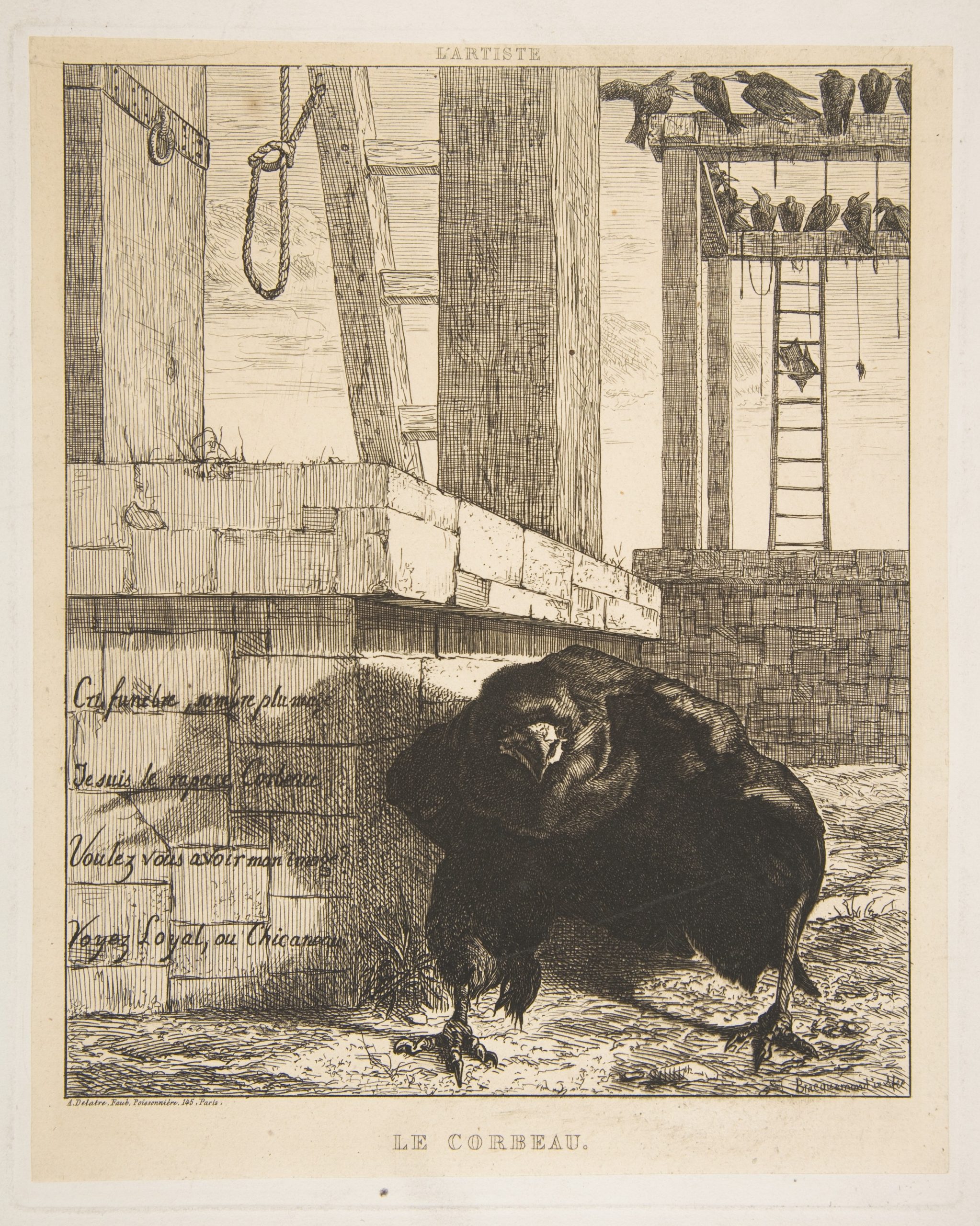
Félix BracquemondEtching on chine collé; fifth state of six, 31.2 x 32.7 cm | 12.3 x 12.9 in
The Metropolitan Museum of Art
It’s well known that ravens haunt art history as symbols of death – but they have delivered life too. Elijah was a prophet in the Old Testament of the Bible, who was instructed by God to hide by the stream Cherith after predicting a flood that would devastate the area. Whilst in hiding, Elijah was delivered food by ravens every morning and evening. The ravens in this story are unlikely helpers – acting as a reminder to the viewer to trust in divine power for help, making them a symbol of care. In Savoldo’s painting of Elijah, the bird is wide-eyed and carries a large chunk of bread in its mouth in comparison to its small stature – emphasising its determination to help, despite its discomfort.
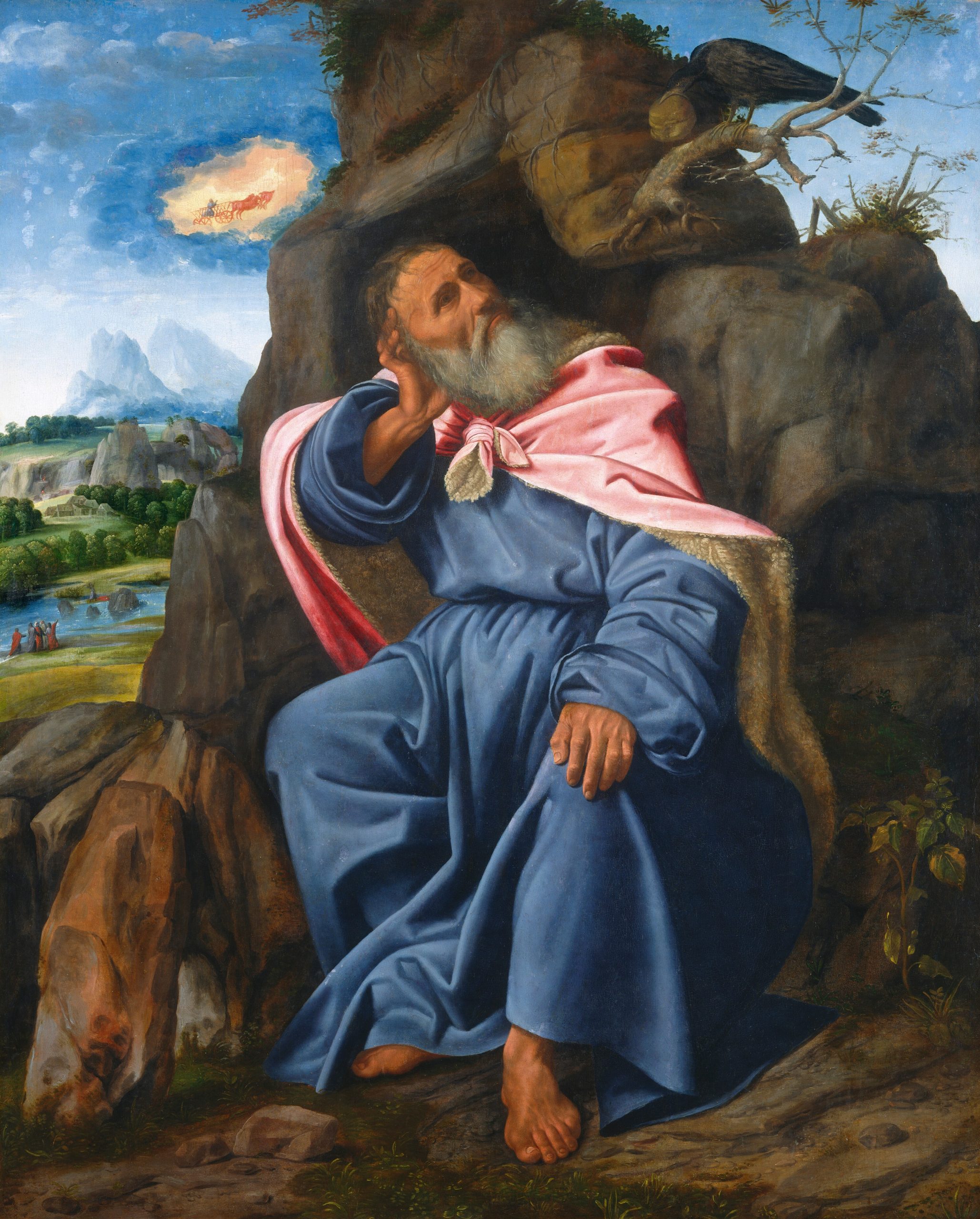
Giovanni Girolamo Savoldo
Oil on panel transferred to canvas, 168 x 135.6 cm | 66.1 x 53.4 in
National Gallery of Art
The Swallow – Spring, Travel, Familial Love, and Good Luck
Swallows embody a host of meanings inspired by their behaviour. Since they are migratory and return to countries to follow the warm seasons, they broadly signal the renewal of late spring. In some Christian paintings, the swallow is seen perched near the Madonna and Child, like in The Madonna of the Swallow by Carlo Crivelli. This is because swallows are considered caring mothers because they build elaborate nests for their chicks. Paired with the Madonna, they symbolise maternal love. Swallows often pair for life with their mate, so they sometimes represent romantic loyalty in art. Traditional sailors’ tattoos feature a pair of swallows, making them a nautical symbol for journeys that encircle the world, just as the birds themselves migrate vast distances before returning home each year. If a sailor drowned, some believed that the swallow tattoos would pull the man’s soul from the sea to deliver it to heaven.
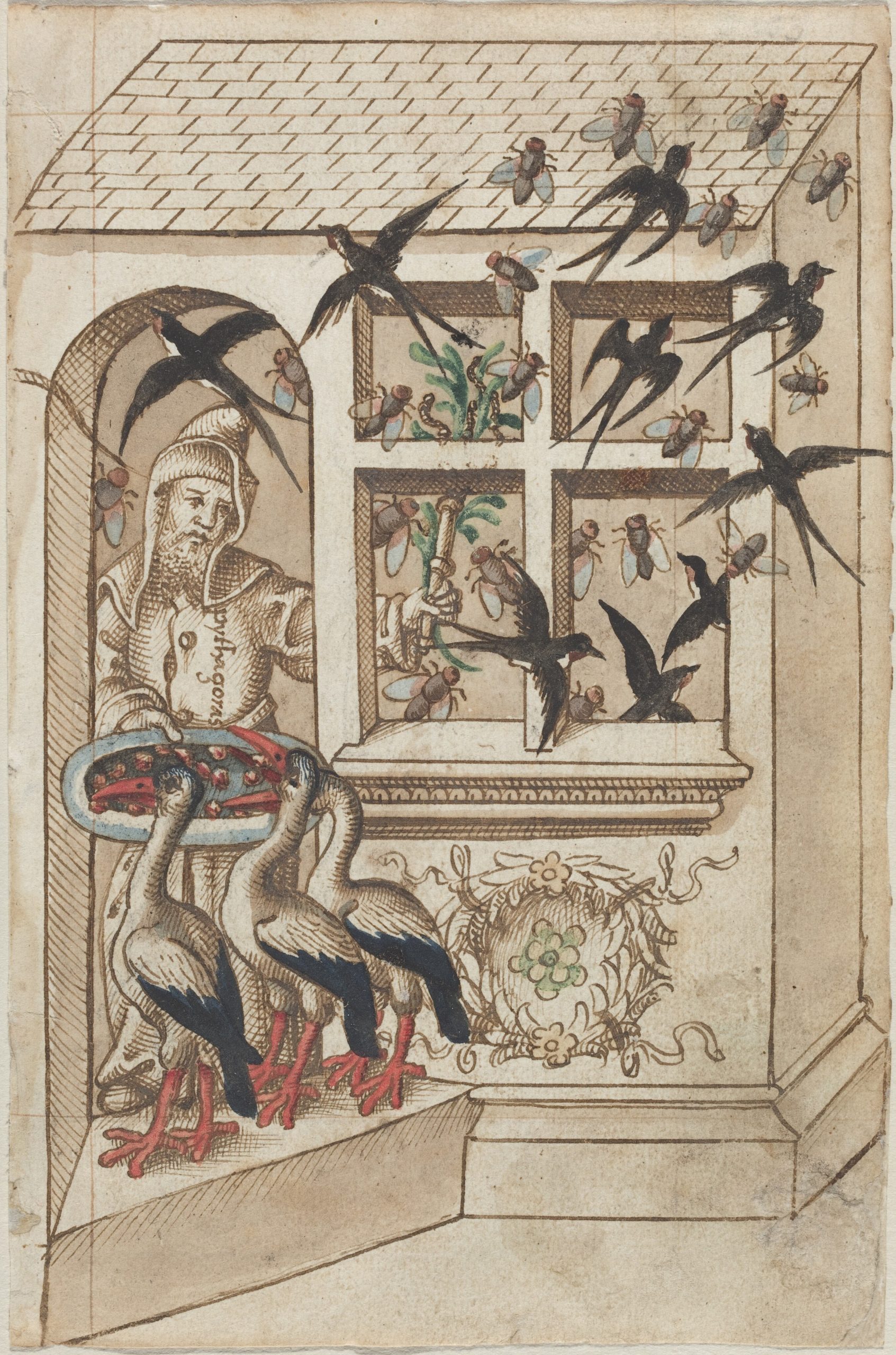
Unknown artist, France
Pen and brown ink with watercolour on laid paper, 16.3 x 10.7 cm | 6.4 x 4.2 in
National Gallery of Art
In Japanese culture, swallows or tsubame symbolise good luck and fertility. Since they return to the same nesting place each year, often in the eaves of houses, the occupants of the ‘host’ building are considered lucky for having them. Like the European interpretation, they’re also representative of loyalty and familial love. Due to these positive associations, the swallow appears throughout Japanese art, design and fashion. In this jovial woodblock print by Hiroshige, we see five swallows playfully dipping together through the air as they celebrate the cherry blossom buds during their return to Japan.
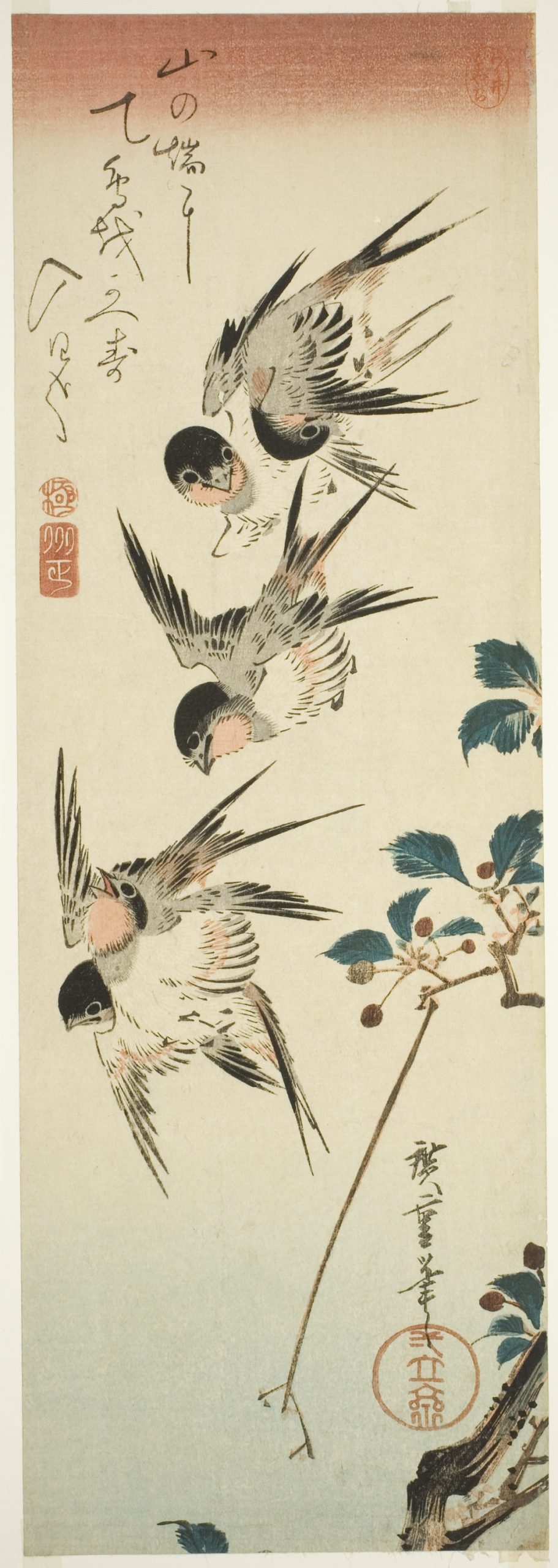
Utagawa Hiroshige
Colour woodblock print, 37.5 x 12.7 cm | 14.8 x 5 in
Art Institute of Chicago
The Magpie – Fortune, Misfortune, Romance, and Ridicule
Everyone knows that magpies are notorious for collecting shiny objects, but the emotive symbolism around this behaviour differs between cultures. In European tradition, they signified the error of greed, whereas Eastern cultures saw them as an omen of prosperity and fortune. Interestingly, the rest of their symbolism is just as polarising.
The superstitious British nursery rhyme ‘one for sorrow, two for joy’ has culturally imbued the magpie with the fear of bad luck, where the observer must say good morning to a lone magpie to protect their fortune. The earliest recorded version of the rhyme from 1780 also included ‘two for mirth, three for a funeral, and four for a birth’. This rolling of the dice is related to the general idea that magpies are thieves or tricksters. In A Hunter’s Bag, near a Tree Stump with a Magpie, we see a single magpie perched above a pile of dead birds, caught by a hunter. The single magpie may signal the other bird’s bad fortune, or act as an embodiment of luck to not have joined them.
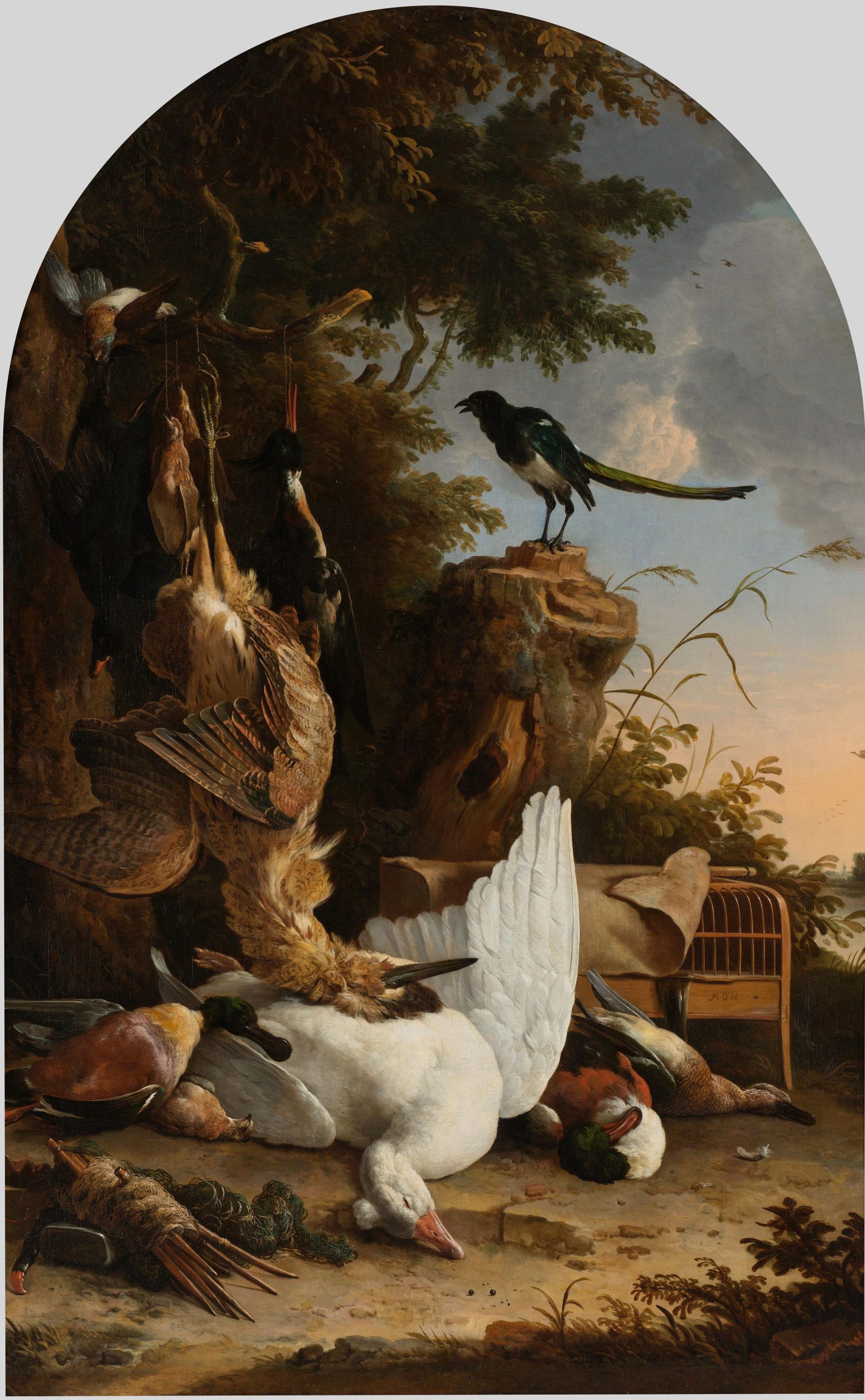
c. 1678
Melchior d’ Hondecoeter
Oil on canvas, 215 x 314 cm | 84.6 x 123.6 in
Rijksmuseum
In China, the magpie is a symbol for joy, which is instilled even in its Mandarin name. Xique contains the character xi, for happiness. In Chinese mythology, the romantic myth of the Magpie Bridge or Queqiao uses magpies as a physical means to reunite star-crossed lovers. In the tale, a girl in heaven fell in love with an earthly cowherd, and they had children, but when the gods found out, they exiled her back to heaven. Her lover took their children to heaven to find her again, but the gods created the Milky Way to separate them permanently. In resistance, the magpies flew across the sky to create a literal magpie bridge between heaven and earth – reuniting the lovers on the 7th day of the 7th lunar month each year. In China, this is considered an equivalent to Valentine’s Day for couples, called the Qixi or Qiqiao Festival.
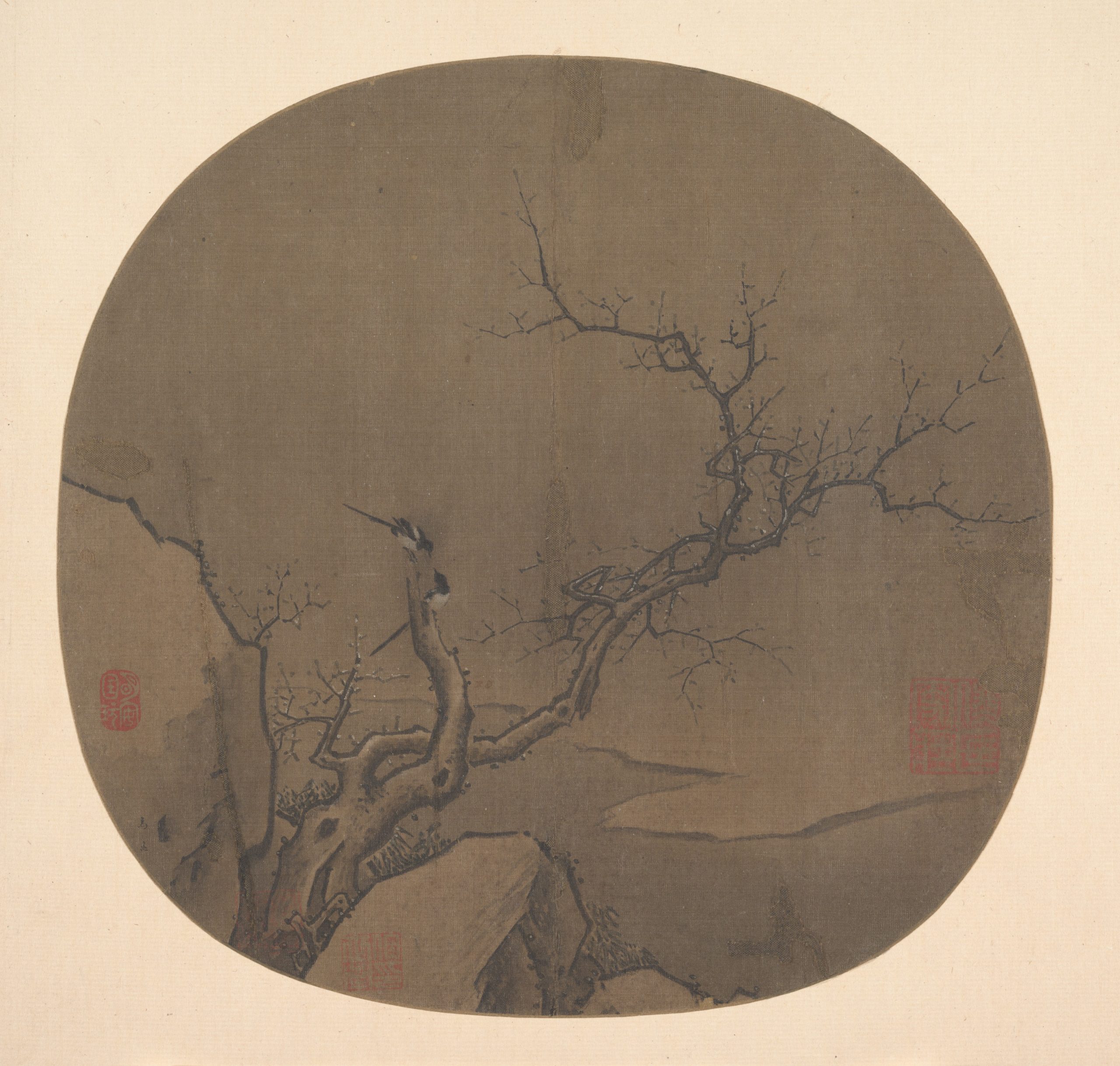
Ming or Qing dynasty, China
Unknown artist, in the style of Ma Yuan
Ink and white pigment on silk, 24.4 x 25.4 cm | 9.6 x 10 in
The Metropolitan Museum of Art
The Tame Magpie by Alessandro Magnasco sees a group of people observing a man foolishly trying to teach a magpie to sing. They gather in a ruin, signifying that they’re at the edges of society themselves. The man has a sheet of music in his hand, as he gestures up to the bird with its head back in a cry. The narrative intention of the painting is ambiguous, although he returned to the motif in several works. You could speculate that training the magpie to sing – whose song isn’t as ‘pretty’ as other birds – is a fool’s errand meant to make the audience laugh. From a more humanising perspective, maybe Magnasco intended to show the character heartfully entertaining the children despite the little means they have.
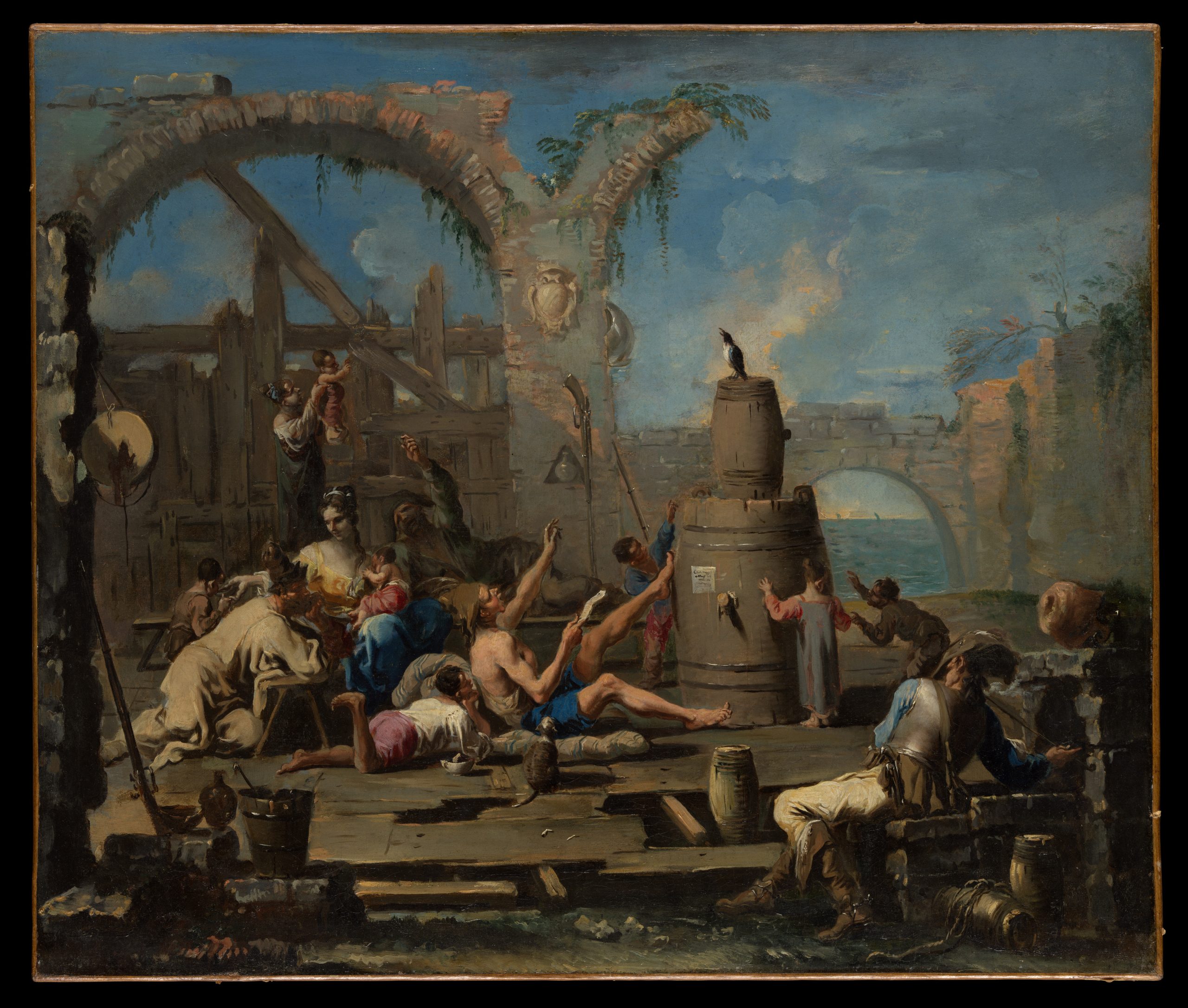
Alessandro Magnasco
Oil on canvas, 63.5 x 74.9 cm | 25 x 29.5 in
The Metropolitan Museum of Art
The Caged Bird – Conversation, Virginity, and Morality
Trapping wild birds is rightfully illegal now – but for centuries, people captured songbirds to keep in and around their homes. In the 17th century, it was common for Dutch townspeople to keep a goldfinch chained to a perch or birdhouse affixed to the exterior of their home next to a window, and in their living rooms. This was related to their social street culture, where people would talk from open windows with their neighbours.
Caged songbirds in Dutch paintings from this period sometimes symbolise virginity, when depicted in combination with a woman, and the open or empty birdcage suggests lasciviousness. The following painting by Hendrick Sorgh initially seems like a carefully rendered domestic scene, but to the Dutch eye of the time, the open birdcage, the cat stealing scraps, and the couple hidden in the shadows, barely visible between the maids, would have erotic connotations.
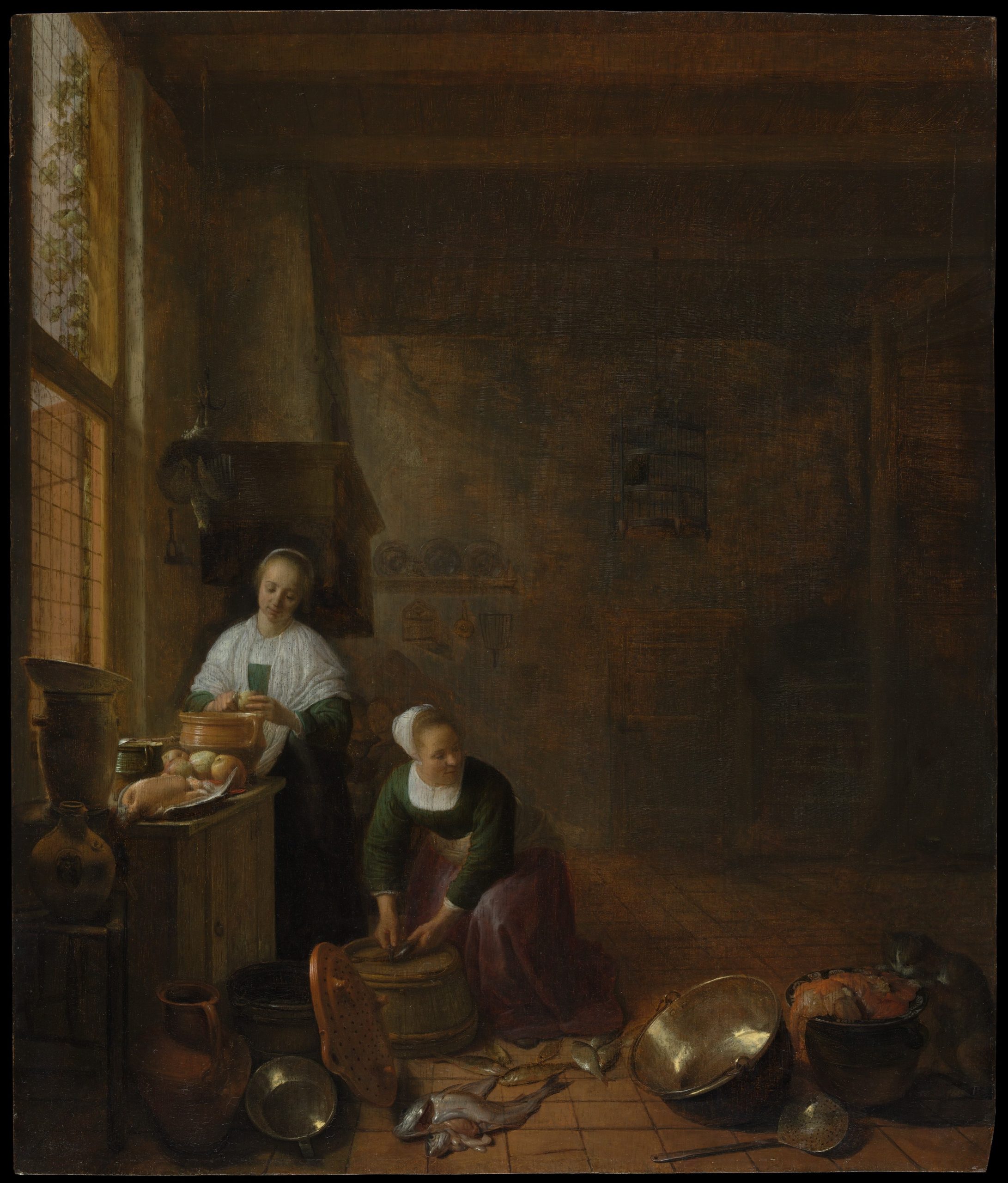
Hendrick Sorgh
Oil on wood, 52.1 x 44.1 cm | 20.5 x 17.4 in
The Metropolitan Museum of Art
The caged bird in a contemporary context represents restricted freedom and oppression, and resilience in the face of it. In art history, this idea was also explored, in images where the bird is threatened by a predator or completely hemmed in by the cage. In this etching, the bird’s cage is hung enticingly close to the ground, which the cat can gaze at with ease. There is a flock of birds flying in the distance above the hill, which underlines that this work presents a moral quandary.
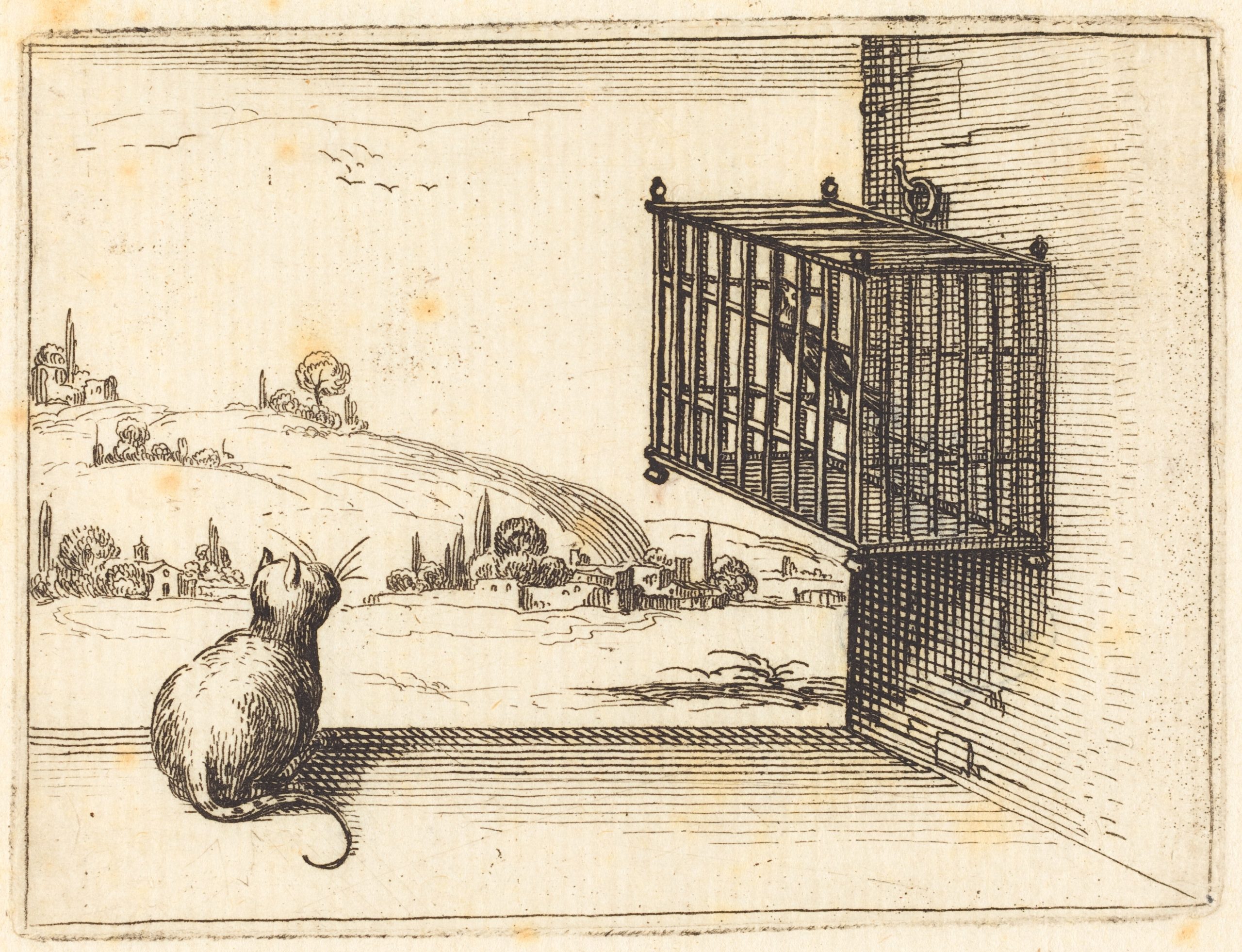
Jacques Callot
Etching on laid paper, 6.3 x 8.2 cm | 2.5 x 3.2 in
National Gallery of Art
The Songbird as Memento Mori
Paintings of dead birds recur in Dutch still life painting, in tabletops laden with prepared food, game and produce. In this particular dark-humoured painting by Georg Flegel, a blue tit perches on top of a bread roll, clutching a chunk of walnut, looking down inquisitively at the carcass of a similarly sized cooked bird and two eggs. This wry memento mori is more direct than many other paintings in this genre, with its morbid humour blatantly presenting the theme of mortality. The blue tit is considered a jovial bird with positive connotations, so the placement of it next to a carcass enhances the shock value of the painting, more so than if it were a crow or magpie. To the contemporary eye, it almost appears like a very early advocation for vegetarianism.
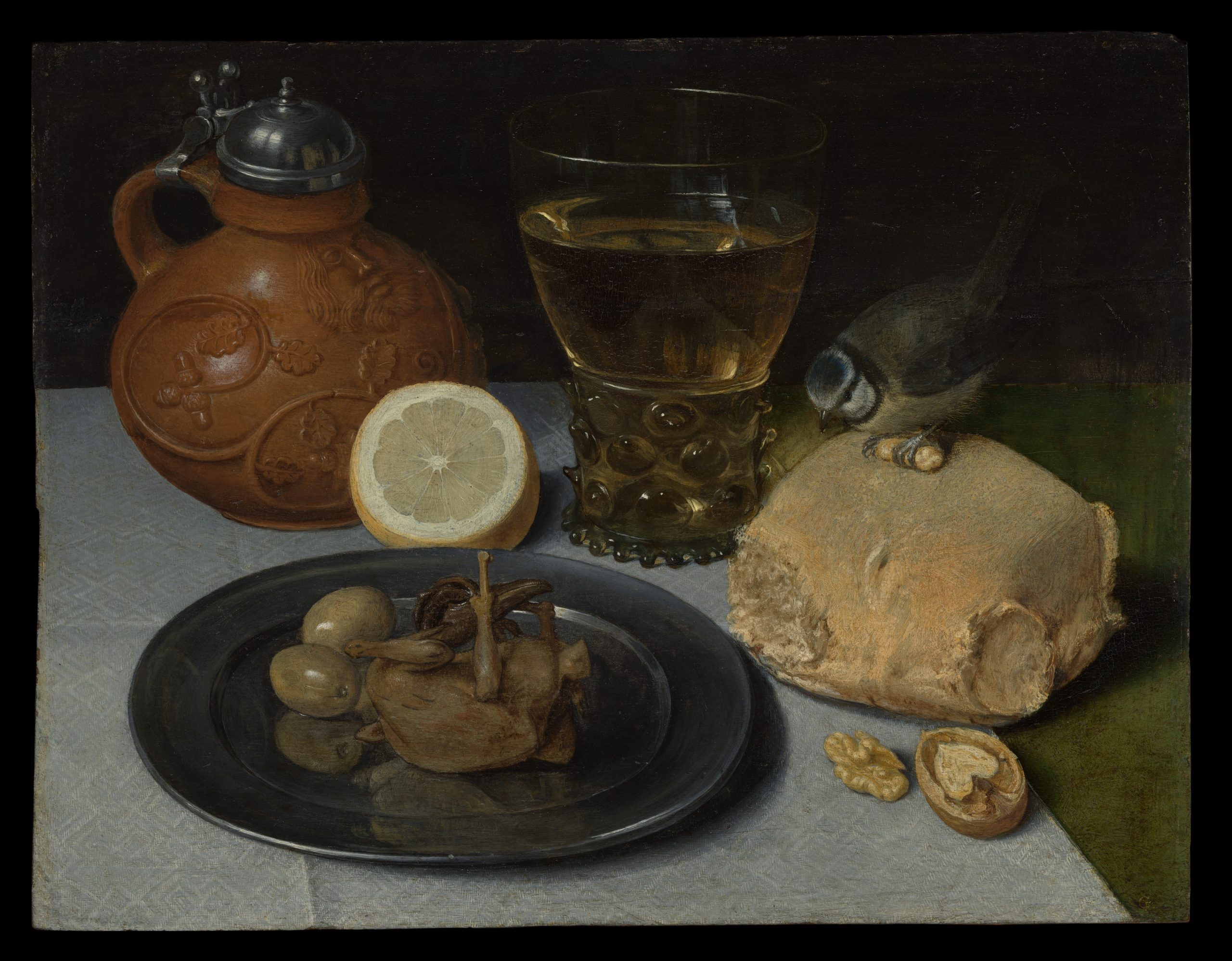
Georg Flegel
Oil on wood, 27 x 34 cm | 10.6 x 13.4 in
The Metropolitan Museum of Art
Songbirds – Art Prompt
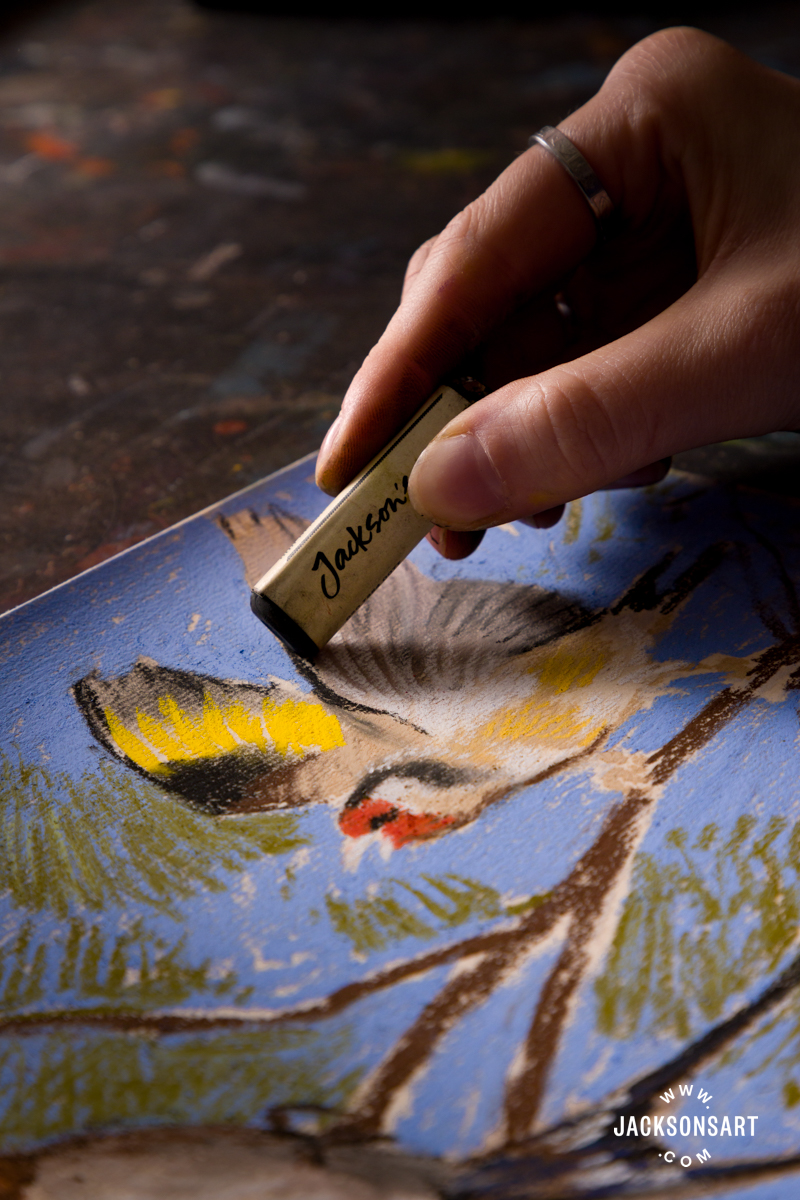
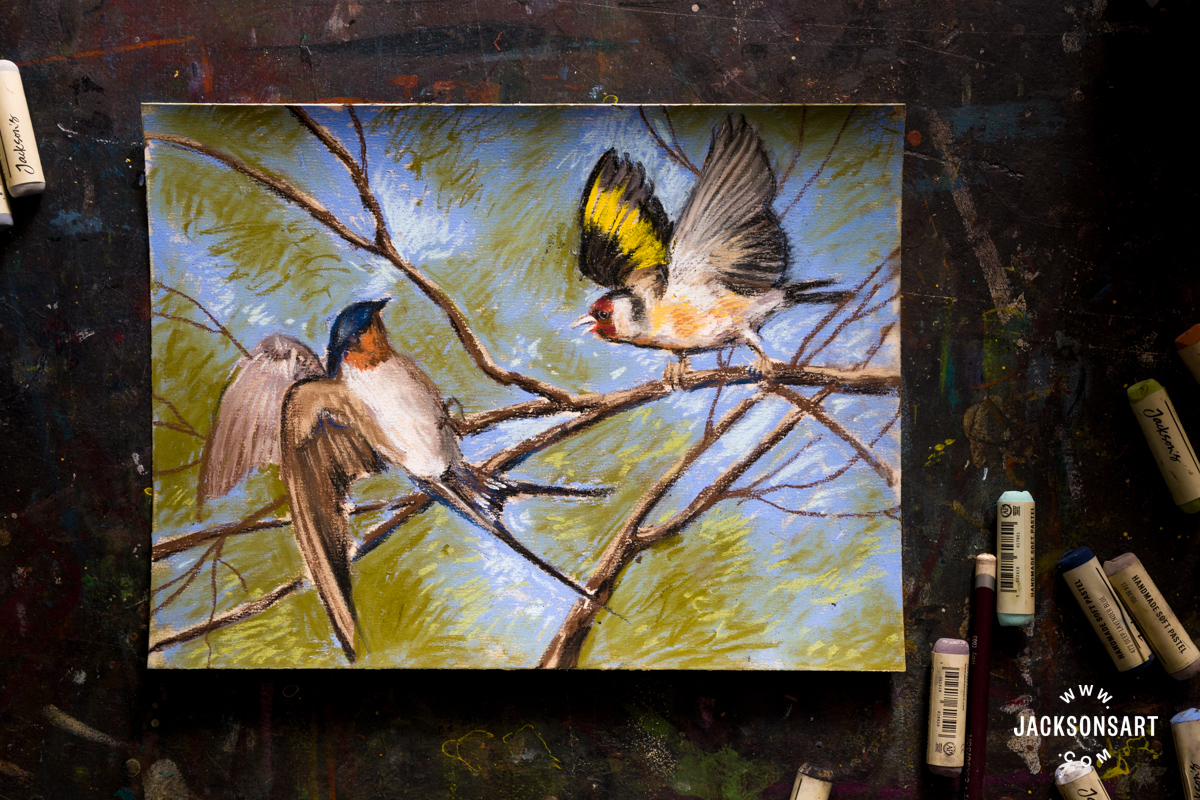
For my artwork example, I wanted to combine two of the birds I researched in flight together – the swallow and goldfinch. Stylistically, I took inspiration from the closely observed oil studies of birds, with some of the energy and joy of Swallows and Cherry Blossoms by Hiroshige.
For this art prompt, you’ll need:
A sheet of UART Light Sanded Pastel Paper
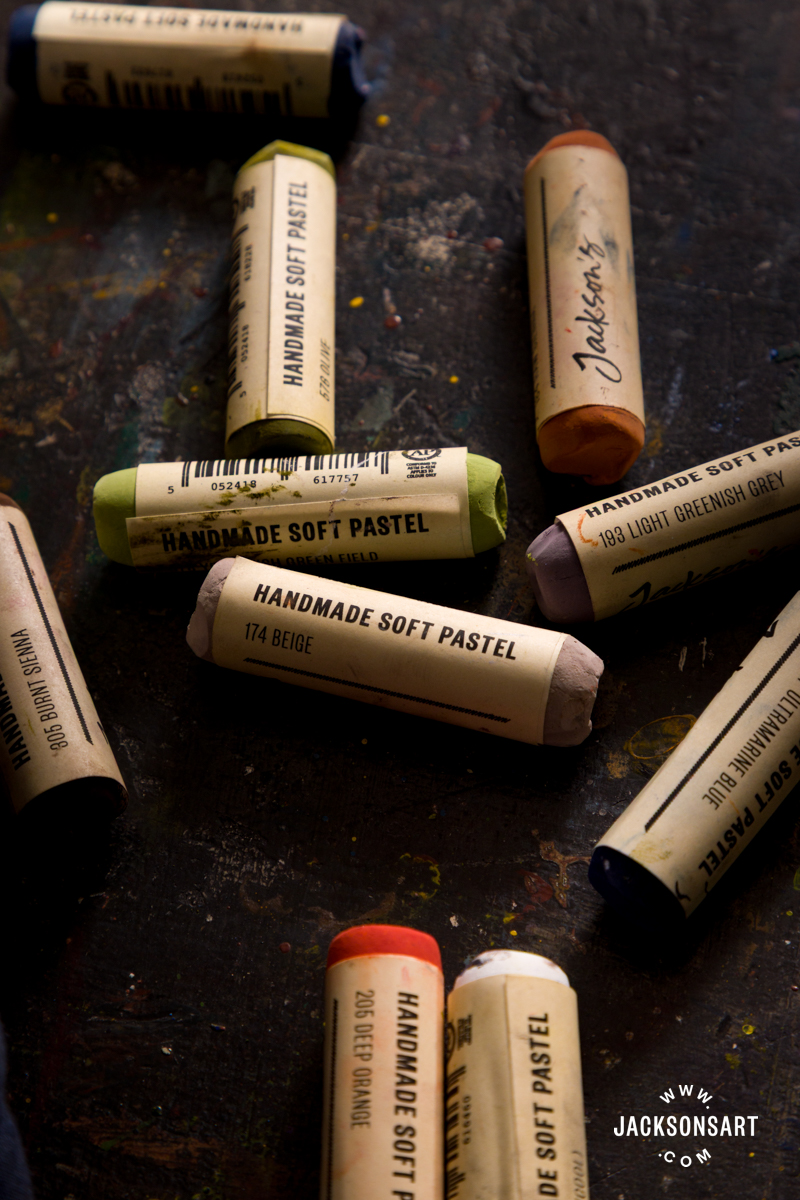
A selection of Jackson’s Handmade Soft Pastels I used: Yellowish Green Field, Deep Orange, Deep Ultramarine Blue, Beige, Deep Lavender Blue, Powder Lime Blue, Pale Cobalt Blue, Olive, White I (Cool), Black, Red Ochre, Light Ultramarine Blue, Cool Grey I, Raw Sienna, Light Green Ochre, Cool Grey II, Burnt Sienna, Deep Yellow, Lemon, Yellow Beige, and Light Greenish Grey
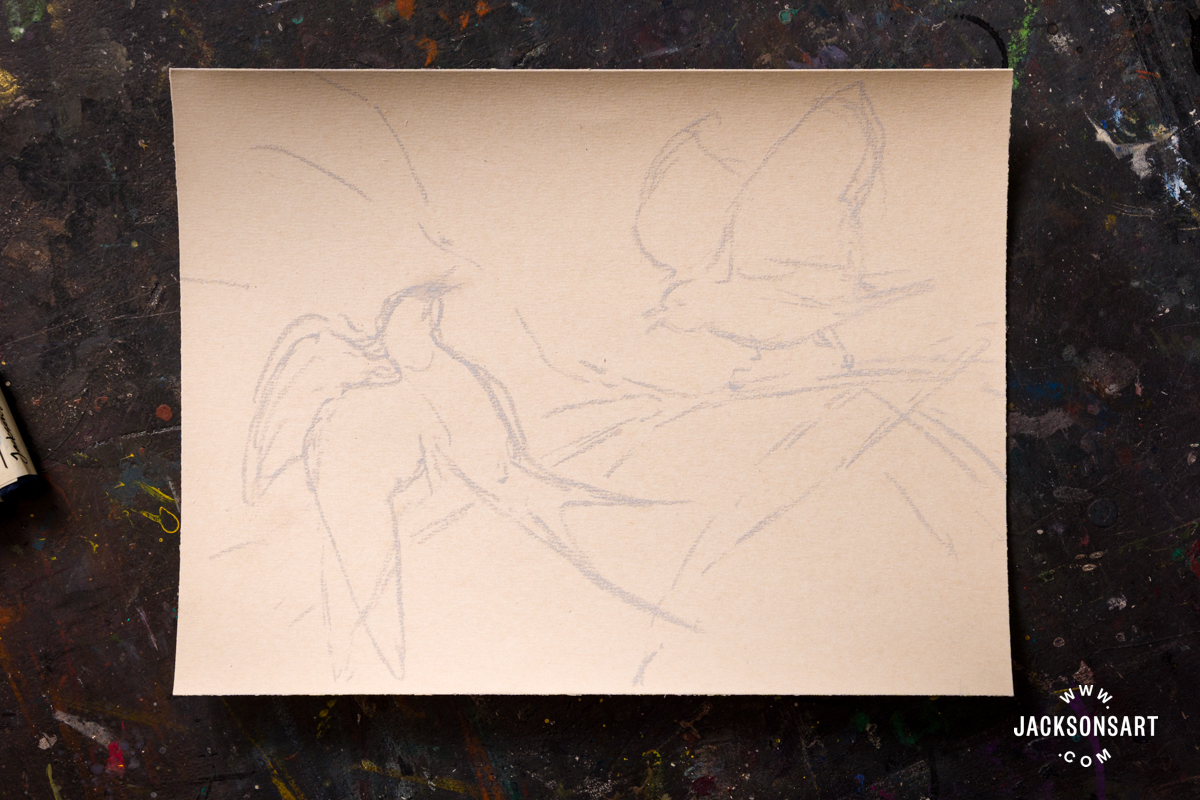
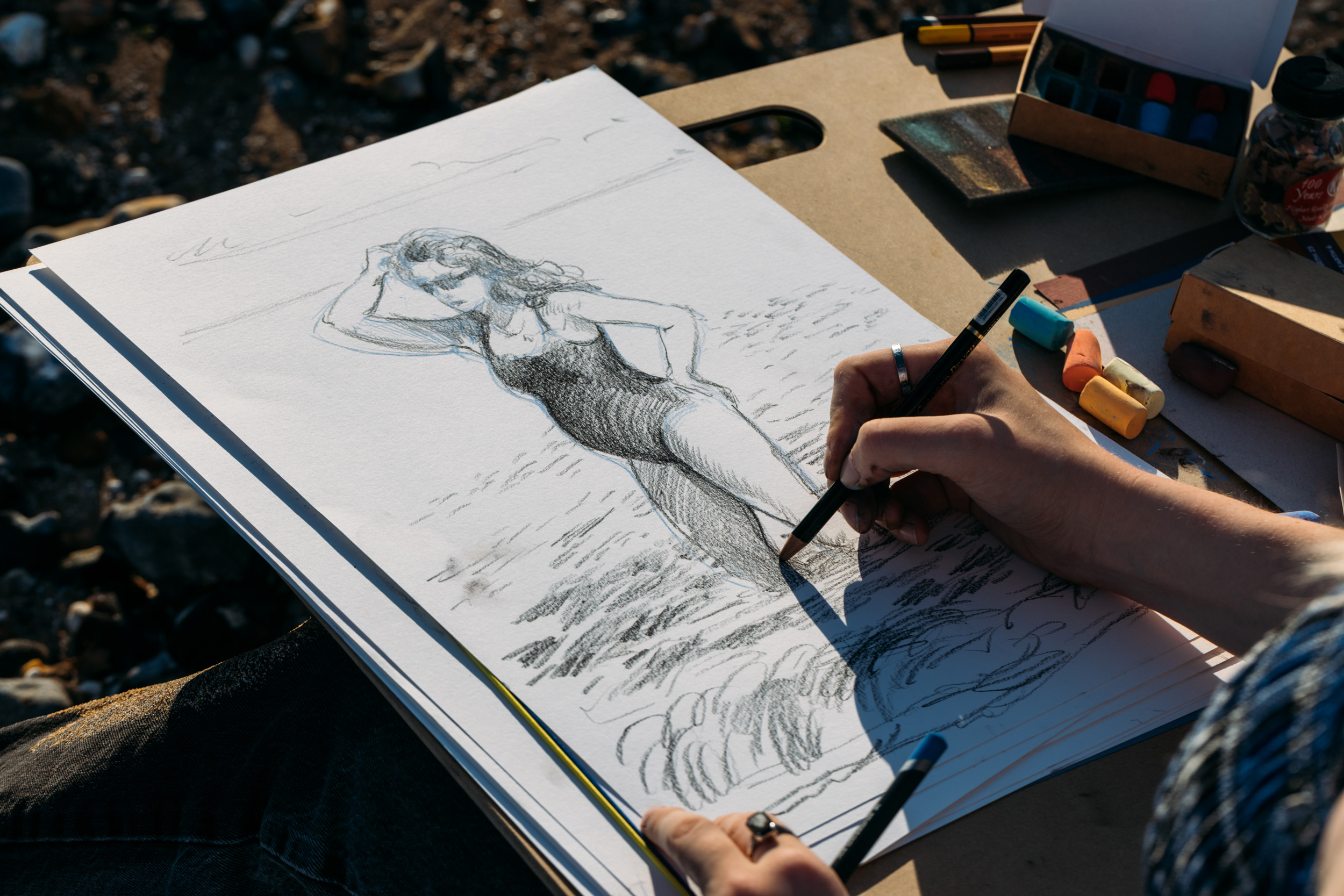
To begin my drawing, I lightly sketched the placement of my birds using a light neutral pastel so that the subsequent colours could meld and cover this initial drawing.
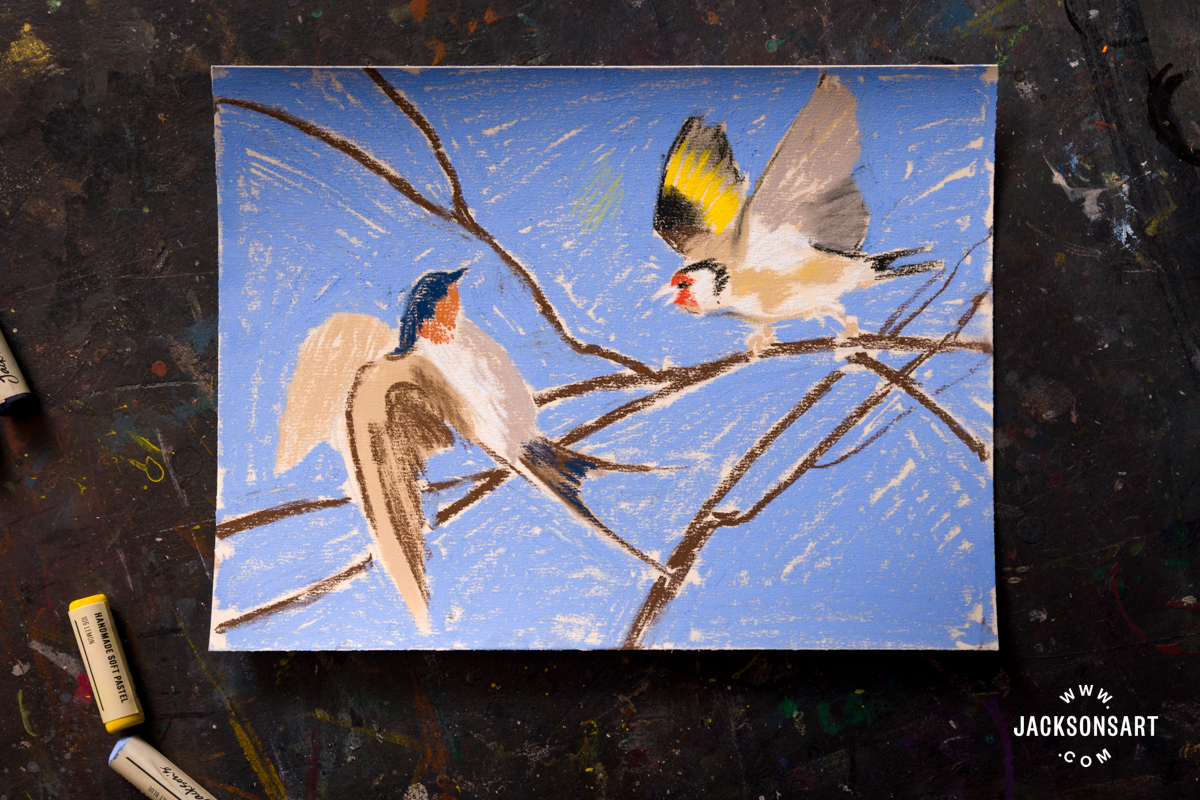
Next, I began blocking in the colours of the birds by applying the zones of colour in their plumage in broad areas, without worrying about refining individual highlights or textures. The Jackson’s handmade pastels are very pigmented and buttery, so a little product went a long way, without creating an excess of dust.
Once I blocked in the birds, I blocked in the dappled foliage in the sky in the background. I blended the green of the leaves to soften their form, to give the illusion of distance and place the sharper birds in the foreground.
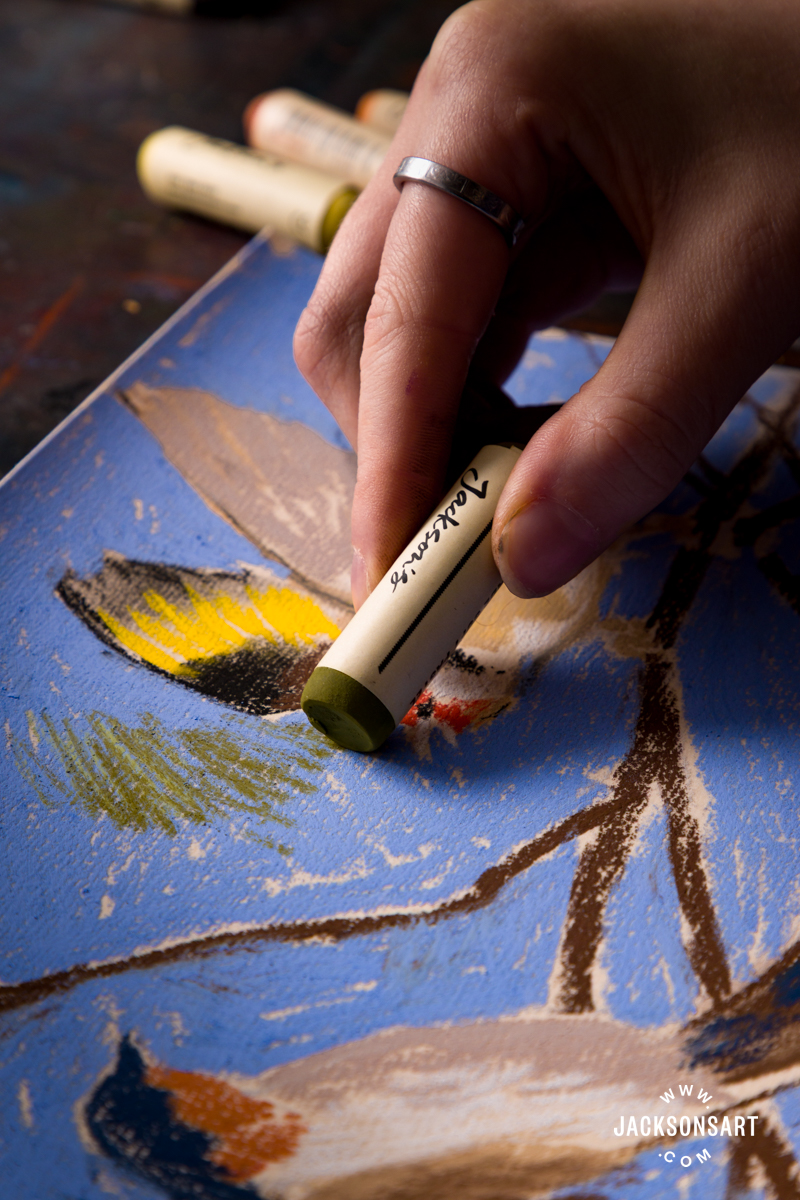
Next, I worked on the details of the birds by picking out the individual texture of fluffy down, strong, shiny wings, and smooth feathers.
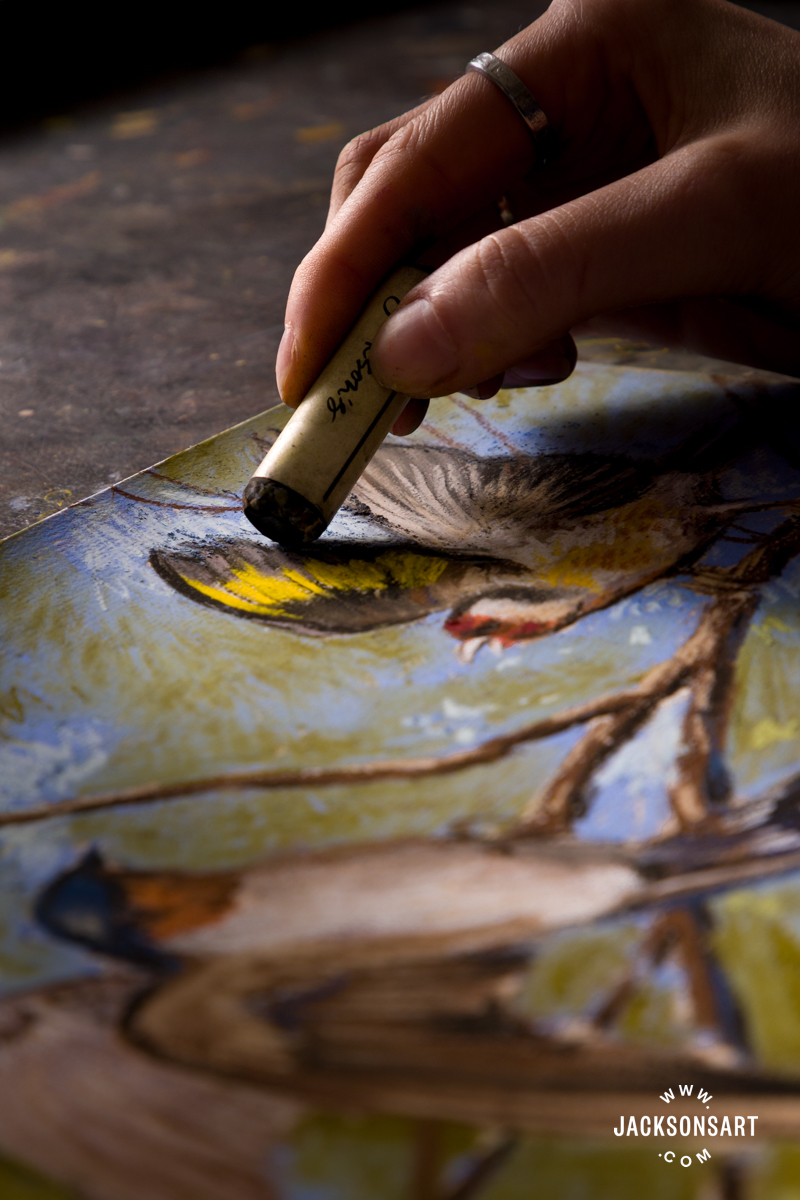
To complete my drawing, I used a pastel pencil to pick out a tiny highlight in the eyes of the birds, before spraying it with my pastel fixative.
Further Reading
Art Through Symbols: The Horse
Artist Review: Jackson’s Handmade Soft Pastels
Everything You Need to Know About Pastel Paper
Shop Art Materials on jacksonsart.com


2 thoughts on “Art Through Symbols: Songbirds”
The Goldfinch in the Mauritzhaus in the Hague was not mentioned.
Thanks for your comment Mary! Unfortunately images of the painting haven’t been put in the public domain by the gallery, so sadly I couldn’t use it
Comments are closed.