



Paula Modersohn-Becker (1876-1907) produced more than 700 paintings and 1000 drawings in her short life, dying after the birth of her child, Mathilde, aged just 31. The catalogue of work she left behind is a testament to her devotion to art and her quietly radical determination to chart her own path toward artistic freedom. Her life is a moving story of a courageous young woman, with unerring faith in her own ability, breaking boundaries in the face of conservatism at the turn of the century.
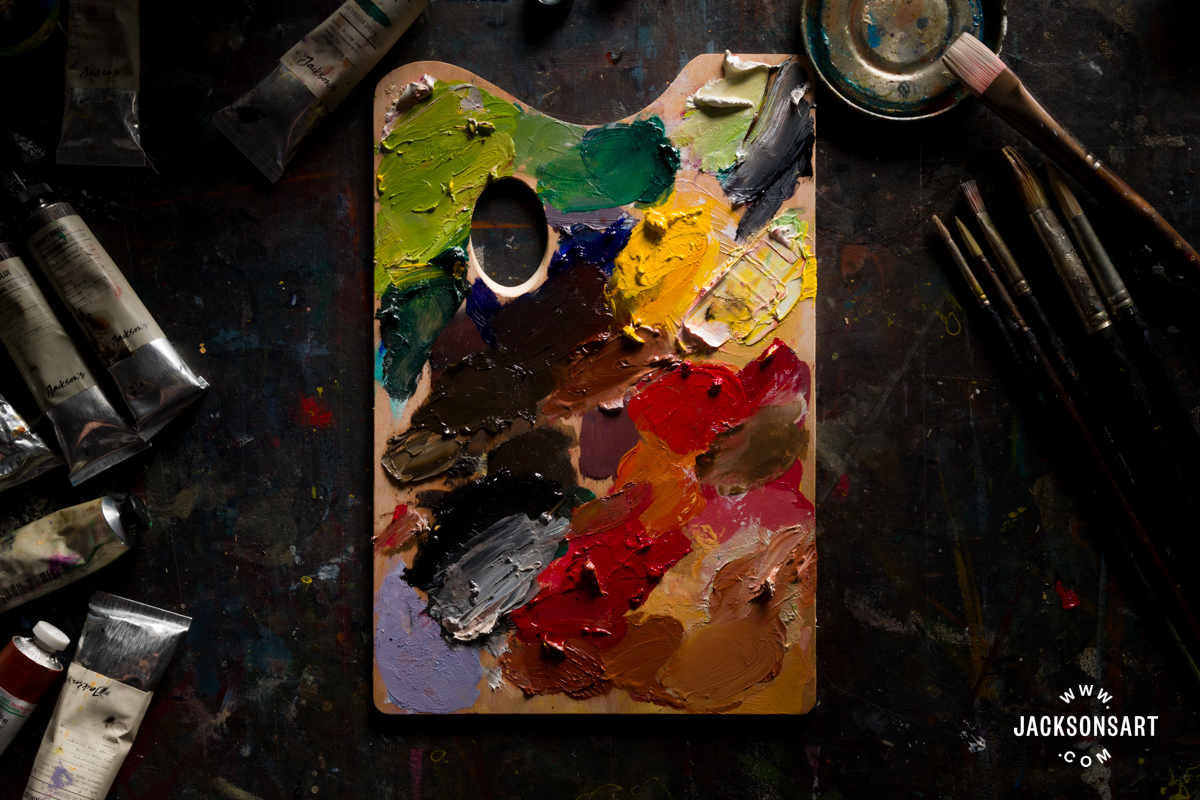
Paula Modersohn-Becker’s Life and Work
Modersohn-Becker is understood to be the first known female artist to paint herself nude and pregnant. And she was an important figure among the early German Expressionist painters.
She surrendered her marriage to pursue her calling, leaving her husband and escaping to Paris, an important centre for fine art education at the time. The vision she held for her life was, sadly, never realised. However, one cannot fail to admire her bravery and single-mindedness, as seen in her collection of letters and journals, written with great self-awareness and sensitivity.
Before her time in Paris, she had studied at traditional schools in London and Berlin, before settling in 1898 in Worpswede, an art colony on the north-German moors. Here, a group of artists devoted themselves to naturalist painting, though they were widely regarded by the poor locals as wealthy outsiders.
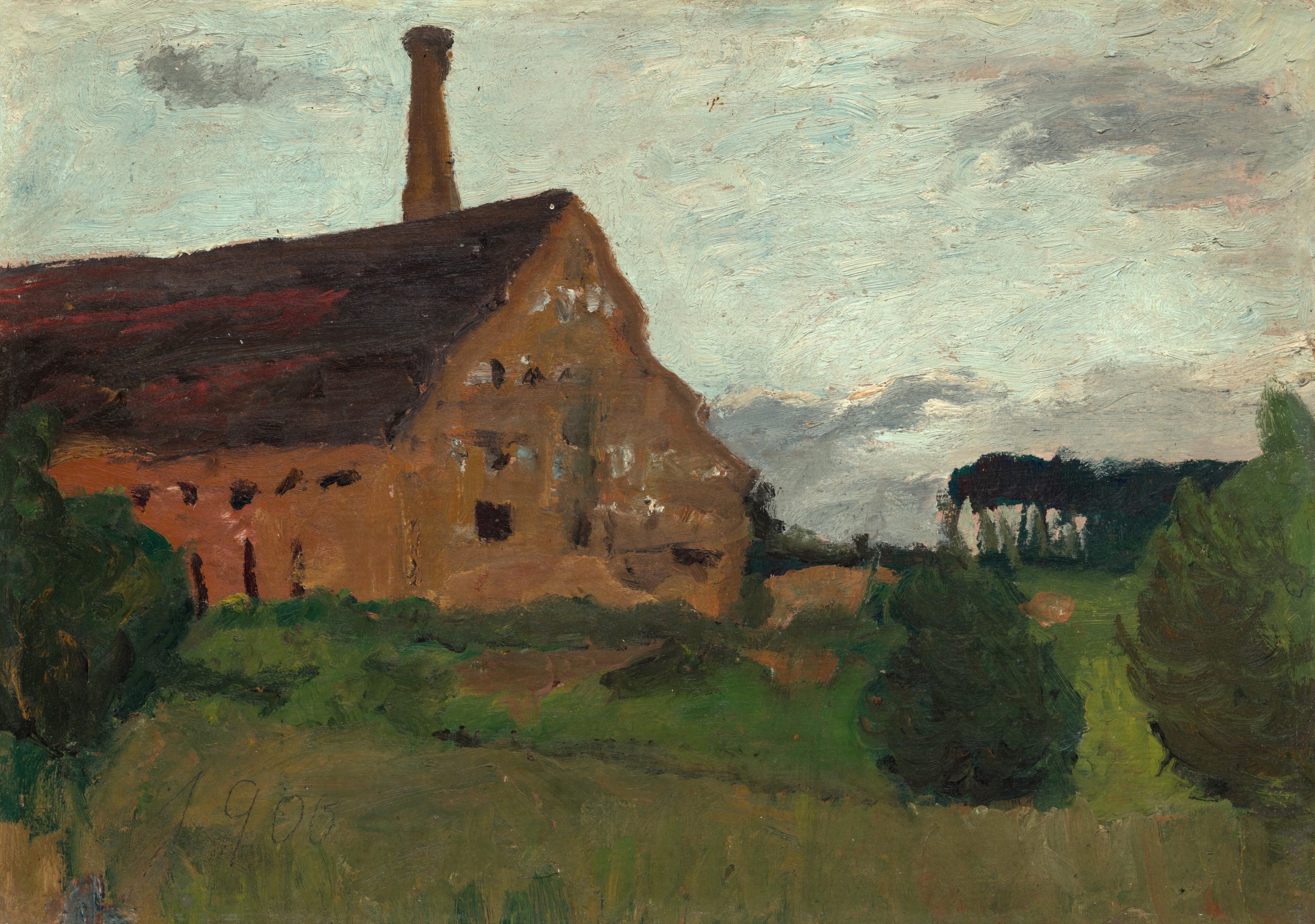
Paula Modersohn-Becker
Oil on paperboard, 38.7 x 53.7 cm | 15.25 x 21.1 in
National Gallery of Art
This was a seminal time in her artistic development – painting outdoors rather than in the studio, and studying under Fritz Mackensen. The ethos of the group was an escape from industrialisation, learning to paint from nature, and to develop a sentimental and melancholic style in a dark and earthy palette, typical of Northern European painters. She developed a romantic attachment to Otto Modersohn, the founder of the colony, falling in love with him and the landscape, describing it as “a wonderland of gods”.
Her early works can be easily identified by their subject matter and tonal palette. She became interested in capturing the inner expression of local peasants and farm workers and does so with an honest beauty. Note the beautiful solemnity and dignity in Sitting Old Peasant Woman, a painting whose palette I examine in further detail later in this article. The same honesty is extended to Half-length Portrait of an Old Farmer, exhibiting her skill as a portraitist. She also showed great aptitude for still life, for example, Still-Life with a Green Flower Vase. From around 1905-1907, she produced almost fifty still lifes.
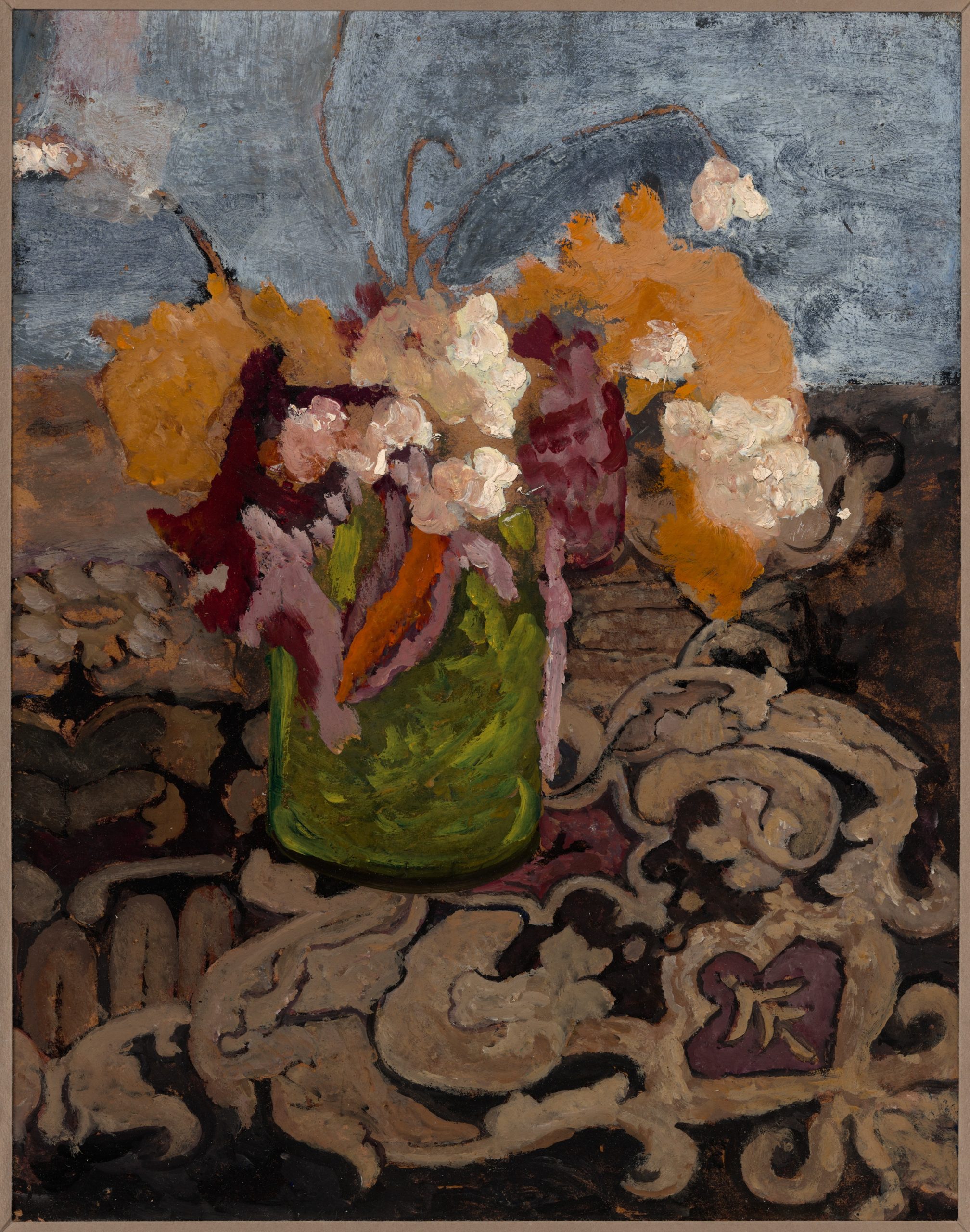
Paula Modersohn-Becker
Oil on brown wood pulp board, 37.7 x 29.1 cm | 14.8 x 11.5 in
Art Institute Chicago
Her muted palette of ochres, browns, and deep greens reflects the landscape and Northern European tradition of painting with a limited palette, and is associated with the Dutch Golden Age. This 17th-century tradition of low-toned palettes and tonal approach using browns, greys, greens, and ochres to create atmospheric, naturalistic and contemplative scenes directly influenced the Worpswede group.
Consider Van Gogh’s early work, The Potato Eaters, 1885, painted using an ‘authentic’ earthy palette to depict the De Groot family of local farmers and the honest potato. How significant then, in the cases of both Van Gogh and Modersohn-Becker, that their palettes lighten and become more vivid when he moved to Arles and she moved to Paris. Paul Cezanne and Vincent van Gogh were to prove aspirational figures to this young artist, and the body of work she created at the colony was ahead of its time.
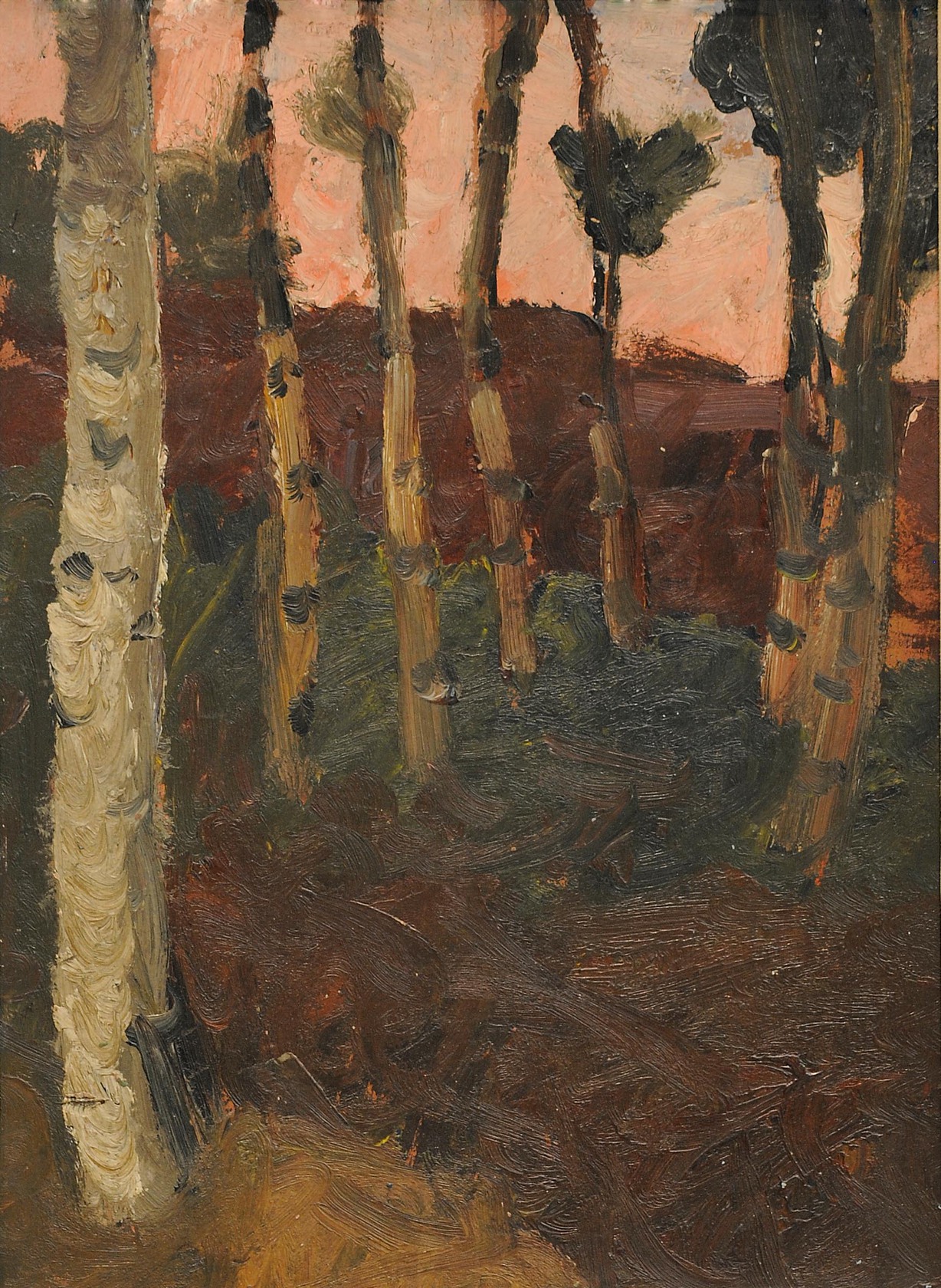
Paula Modersohn-Becker
Oil on cardboard mounted on Masonite, 50.2 × 36.8 cm | 19.75 x 14.5 in
The Carnegie Collection
Having married Otto in 1901, she became a stepmother but refused to give up painting, defying conventions at the time. She struggled with the monotony of rural married life, writing in 1902 that she felt ‘doubly misunderstood’ – she dreamed of a life beyond Worpswede and so, on 1st January, 1900, Modersohn-Becker made a 17-hour train journey to Paris, alone. It was a trip that would change her life. As the epicentre of artistic exploration, many artists felt its pull.
She thrived in the fast-paced city, absorbing all the paintings at the Louvre and soaking up creative inspiration. She continued to travel back and forth between Paris and Germany over the course of six years, until finally, in 1906, stifled by rural life and yearning for modernity, she left Worpswede and her husband Otto.
“I have left Otto Modersohn and stand poised between my new life. What will it be like? And what will I be like in my new life? Now it is all about to happen. I am becoming something – I am living the most intensely happy time of my life.”
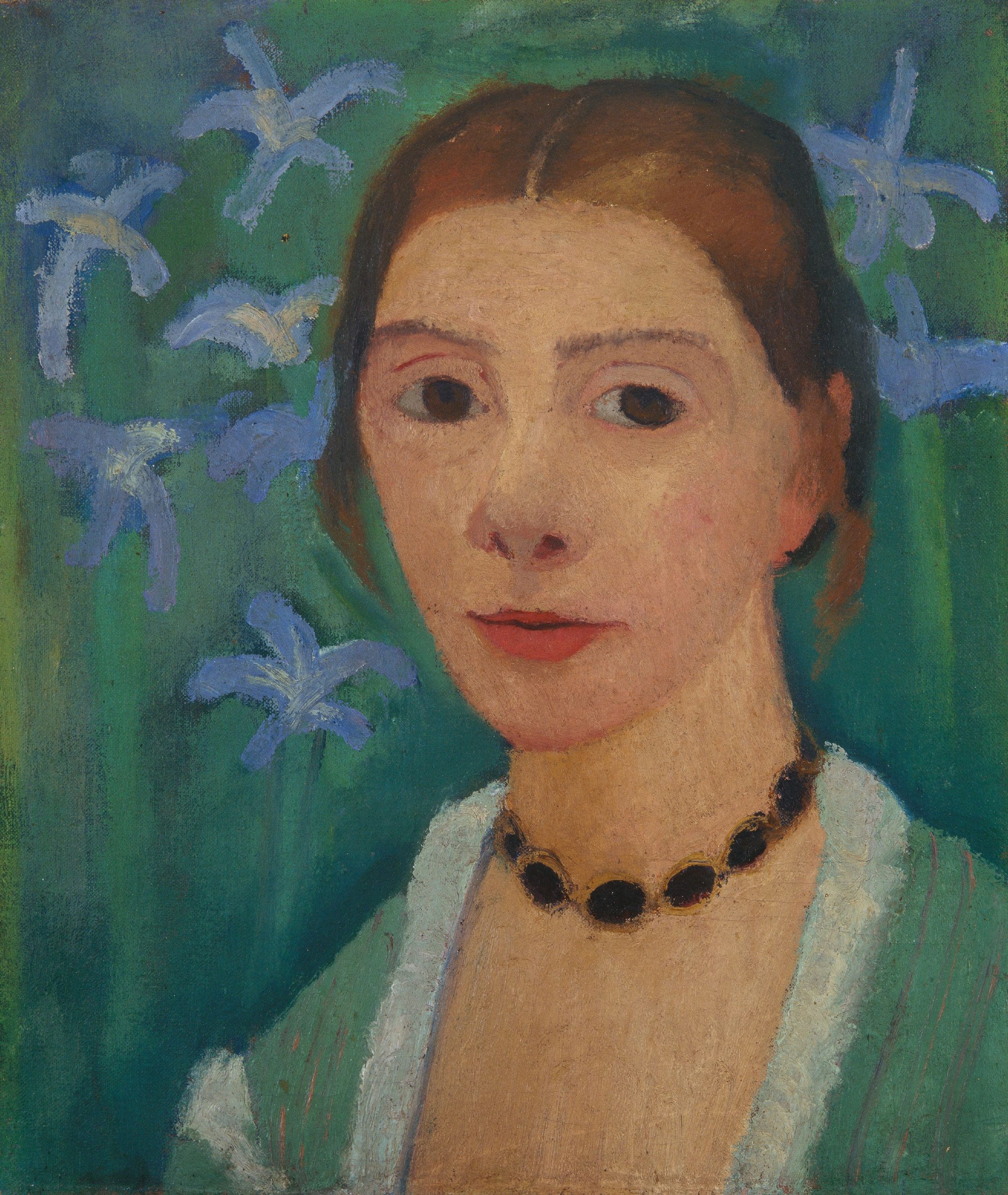
Paula Modersohn-Becker
Oil on canvas, 40.7 x 34.5 cm | 16 x 13.5 in
Kunsthalle Bremen
It is no surprise, then, that she produces one of her most recognisable pieces in the same year, Self-Portrait, Sixth Wedding Anniversary, 1906, along with dozens of expressive paintings and self-portraits as a woman revelling in her independence. In this piece, she works in a lighter palette of clean pastel tones, reflecting her newfound happiness. It is as if the sun is finally shining on her – these are works that were unprecedented for female artists. This is considered one of the first semi-nude self-portraits in Western art, painted by a woman. What looks like a pregnancy is, in fact, a metaphor for her burgeoning new life.
“And now here I am living here in the bustle of this great city. Everything rushes and swirls around me in a damp and foggy atmosphere. … I feel blissfully clear and serene. I can feel a new world arising in me.”
Her change of mood and Fauvist colour palette can also be seen in Self-Portrait as a Semi-Nude with Amber Necklace II, 1906, a work influenced by Dante Rossetti, as well as Self-Portrait with Hand on Chin, 1906.
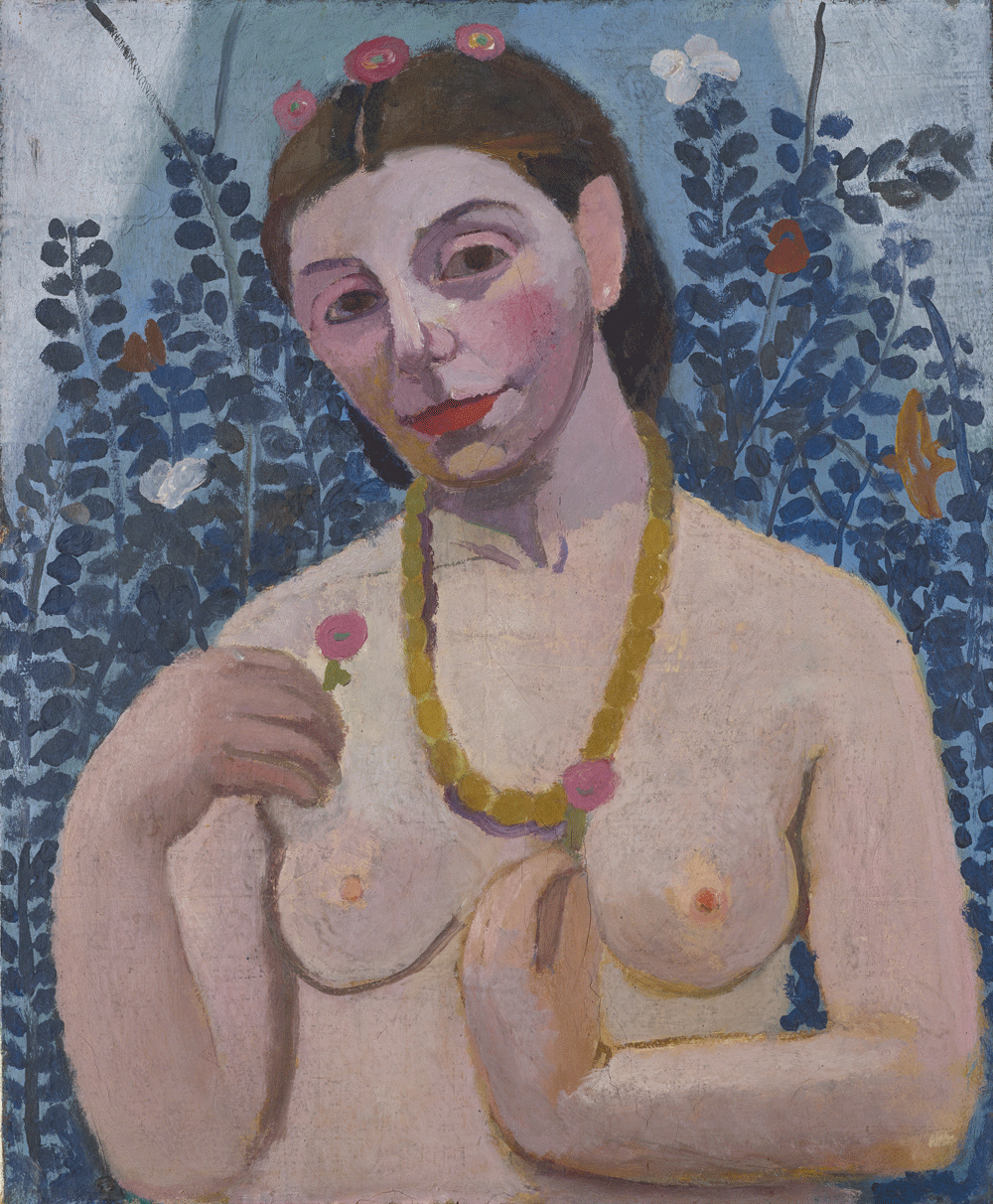
Paula Modersohn-Becker
Oil on canvas, 61.1 x 50 cm | 24 x 19.7 in
Kunstmuseum Basel
Pigment analysis of the Fauvist artwork Old Poor Woman with a Glass Ball and Poppies, 1907, shows traces of Zinc White, Cadmium Yellow, Viridian, French Ultramarine, and Red Ochre.
In the serene self-portrait, Self-Portrait with a Camellia Branch, 1907, Modersohn-Becker holds a camellia branch as a symbol of the natural life cycle, living and dying, blossoming, and withering. Her distinctive, large, almond-shaped eyes and half-smile stare out at the viewer with a knowing and tender submission. A diary entry from July 1900 is almost a premonition for what comes next:
“I know that I won’t live very long. But is that sad? Is a festival better because it’s longer? And my life is a festival, a short, intensive festival.”
Painted in Paris, it is all the more poignant as her last ever painting. Just seven months later, she was dead. Between 1906 and 1907, she produced a collection of incredibly expressive artworks, but sadly, due to limited finances, she returned to Worpswede and gave birth to her daughter, Mathilde. Just a few weeks later, following a postpartum pulmonary embolism, she died, leaving behind hundreds of artworks, never achieving recognition in her own lifetime. She was, however, championed posthumously with a solo exhibition in Berlin in 1919 and in 1927. The Modersohn-Becker Museum opened in Bremen, the first ever in Europe devoted to a female painter. Despite Nazi criticism of the museum’s ‘degenerate art’, the monument remains.
German Expressionism and the Modersohn-Becker Palette at the Turn of the Century

Paula Modersohn-Becker
Oil and tempera on canvas, 113 x 74 cm | 44.5 x 29 in
Staatliche Museen zu Berlin, Nationalgalerie Berlin
“I love colour. It must submit to me. And I love art. I kneel before it, and it must become mine. Everything around me glows with passion. Every day reveals a new red flower, glowing, scarlet red.”
The time in which Modersohn-Becker lived is significant in the development of her artistic practice. Creative women at the turn of the century had greater access to fine art education than ever before. Previously closed to females, life drawing ateliers allowed women to join, and Universities and fine art institutions finally offered places to women. The Slade School of Fine Art in London was one of the most progressive, opening its doors to women in 1871, the Royal Academy Schools opening their life classes to women in 1893, and the École des Beaux-Arts in 1897. Modersohn-Becker took drawing classes at the Julian Academy and benefited from new creative friendships with professional female painters.
Modersohn-Becker’s work anticipated many of the powerful ideas that would develop in the German Expressionist Movement (1905-1930). As a direct response to modern industrialisation and the First World War, these avant-gardes sought to represent inner psychology over realistic representation by using vibrant, clashing colours, quick and energetic brushstrokes, and raw emotion to evoke a visceral response. Becker used oil and tempera, frequently scratching into the wet paint to create texture, disrupt the surface and relieve tension.
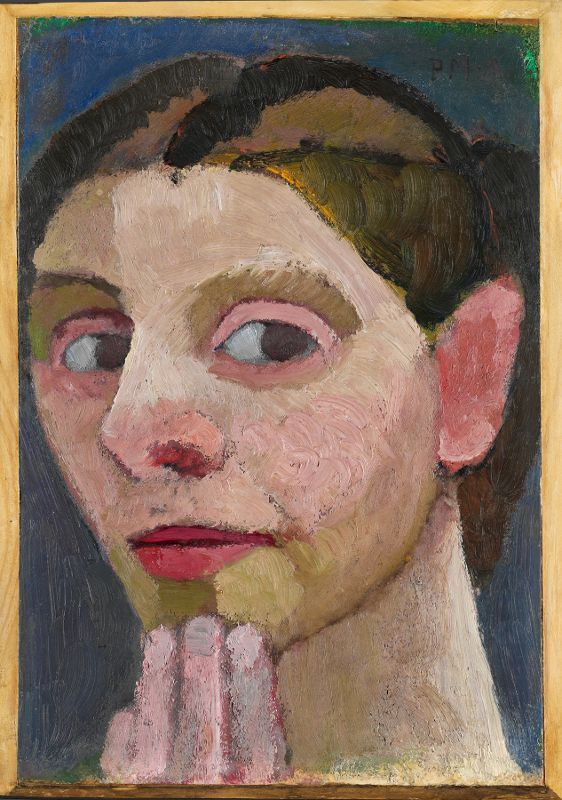
Paula Modersohn-Becker
Oil on wooden panel, 19.5 x 29 cm | 7.7 x 11.4 in
Niedersächsisches Landesmuseum Hannover
She began to experiment with a vibrant Fauvist palette, often using unmixed colours straight from the tube. One of her favourite colours was the new, synthetic ultramarine, also known as French Ultramarine, created by the French chemist Jean-Baptiste Guimet in 1824. By the 1870s, the relatively new and exciting Ultramarine had become affordable and accessible to artists in collapsible tin tubes.
The Fauves, or ‘Wild Beasts’, led by Henri Matisse and Andre Derain, used non-naturalistic bold colours with spontaneous brushwork (for example, Woman in a Hat, 1905, by Matisse, represented by a green face), which highly influenced Modersohn-Becker and spurred her to experiment with colour in new and exciting ways. Colour exploration was top-of-mind amongst the modern French painters, and Matisse in particular studied colour theory in great depth. His key findings included a liberation of colour from reality, colour as structure using contrasting areas of flat, pure colour, the power of complementary colours and using colour to represent emotional expression.
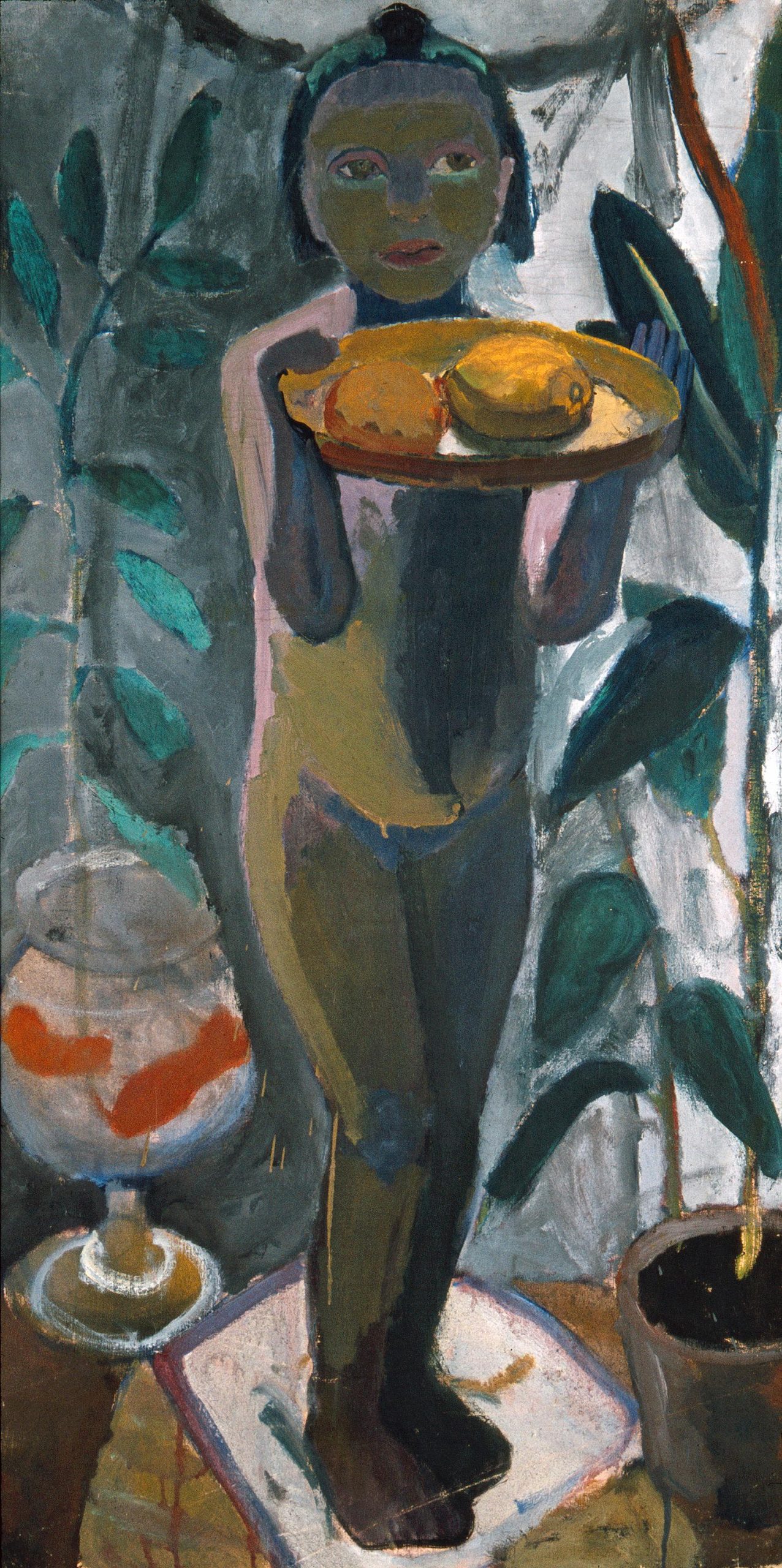
Paula Modersohn-Becker
Oil on canvas, 105.5 x 54.5 cm | 41.5 x 21.5 in
Bayerische Staatsgemäldesammlungen
These ideas are now accepted and understood as commonplace in modern art society, but at the time, they were quite radical – Modersohn-Becker would have been exposed to and inspired by these ideas. Her paint application became looser and more energetic, and her use of pure and primary colours is evident, as are the dark outlines that have a Van Gogh quality to them.
Although her life was cut short, she left behind hundreds of letters and journals, which form a picture of a woman on the cusp of an exciting life as an artist. We can glean much information about her inspiration and practice as an artist from these documents.
“I’m living here in a large, bright atelier. I love to fall asleep among my paintings and wake up with them in the morning. I’m painting life-size nudes and still lifes. My paintings look so dark and muddy here. I must get much purer colours.”
Perhaps a leading edge of the Modernist movement to come, her life was over far too soon. We can see her work and palette developing, already with a distinctiveness that is unusual in one so young. Over the course of ten intensive years, she sold just a handful of paintings yet left behind hundreds. Her work on the female nude and representation of women and children is unconventional, significant, tender, but never saccharine – for example, Reclining Mother and Child II, 1906. She struggled to balance her artistic ambition with gender expectations. She walked away from the life she was expected to live, and for that, we are grateful.
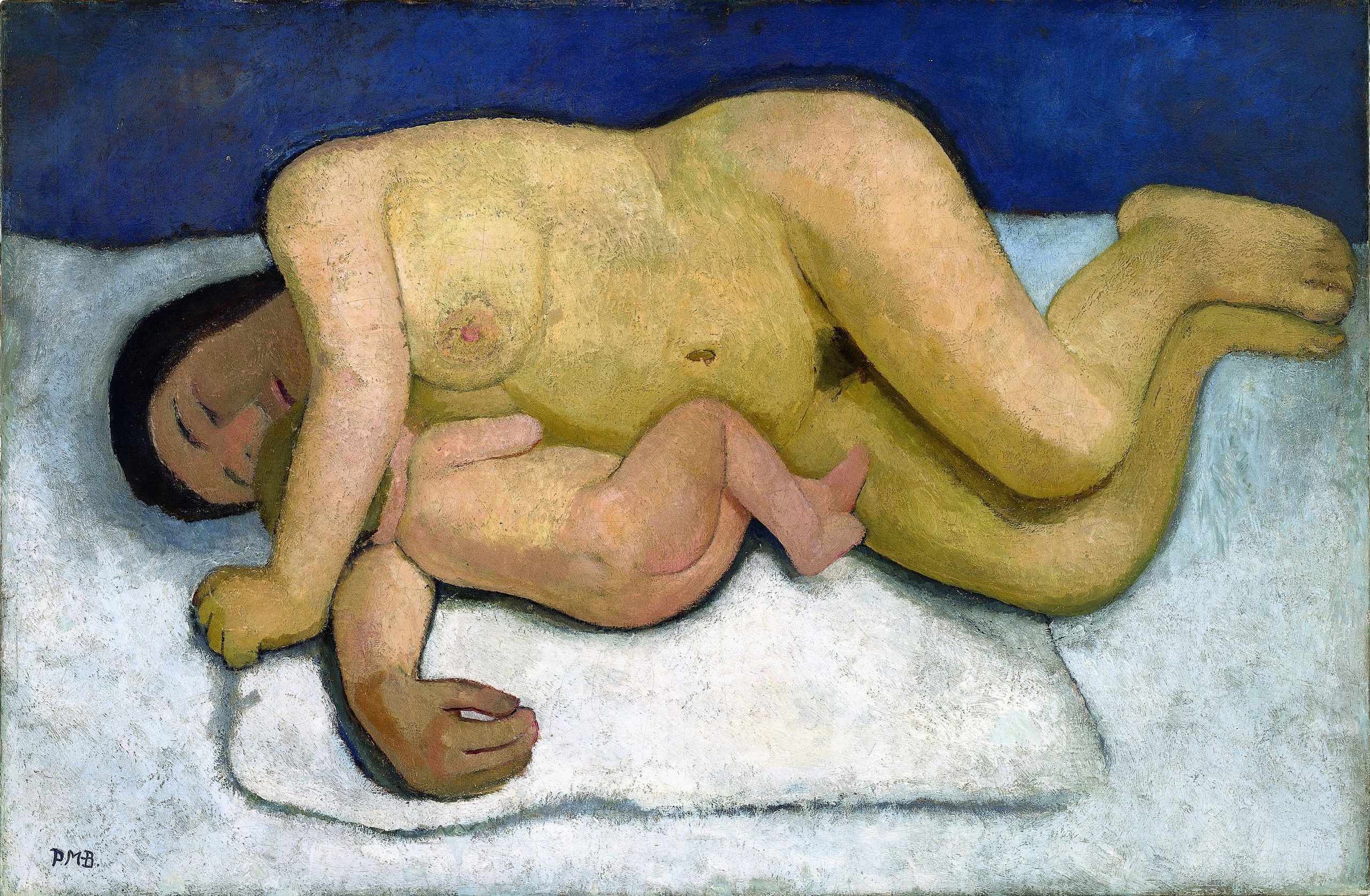
Paula Modersohn-Becker
Oil on canvas, 82.5 cm x 124.7 cm | 32.5 x 49 in
© Paula Modersohn-Becker Museum, Bremen
The Paula Modersohn-Becker Palette
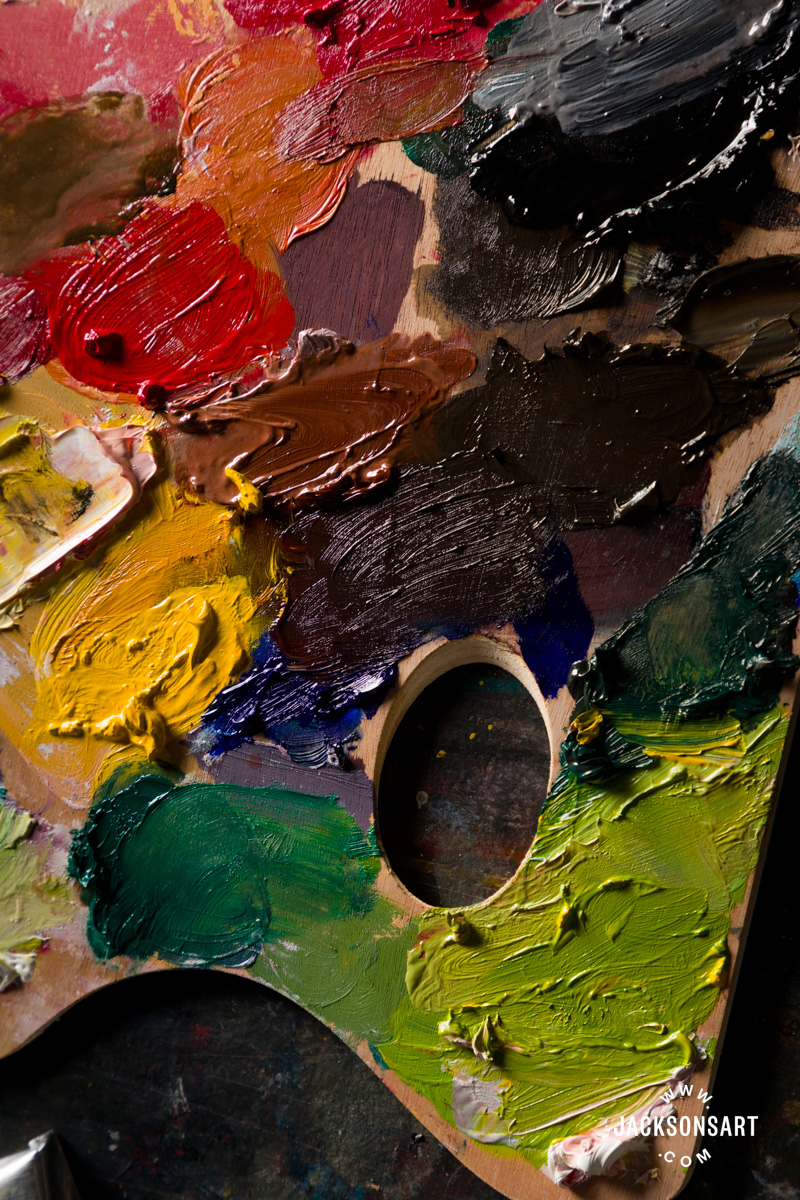
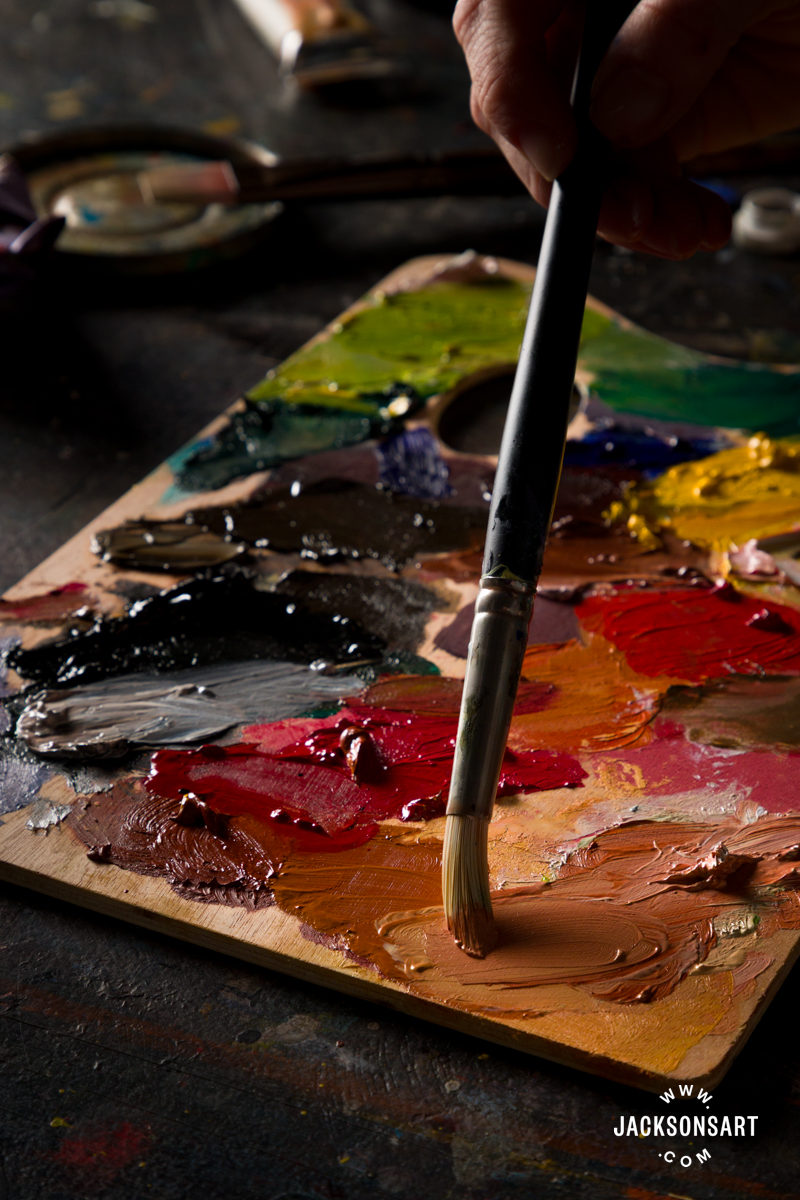
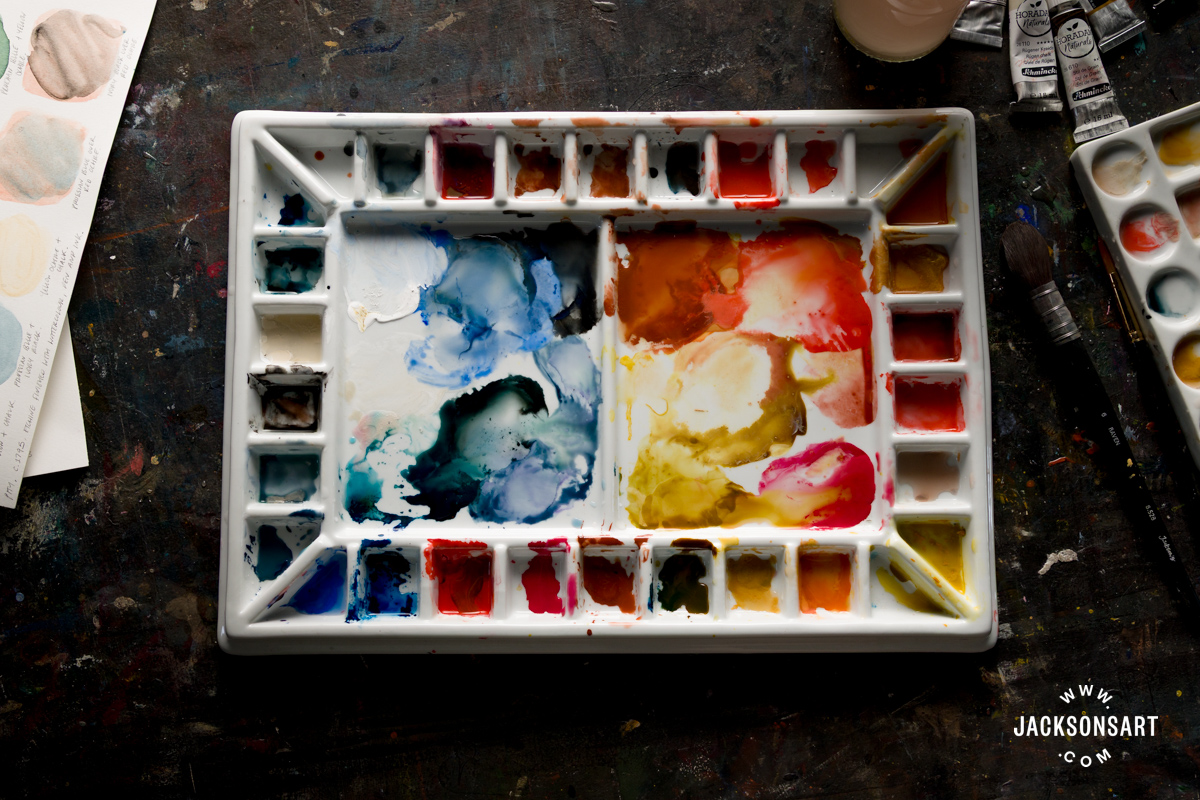
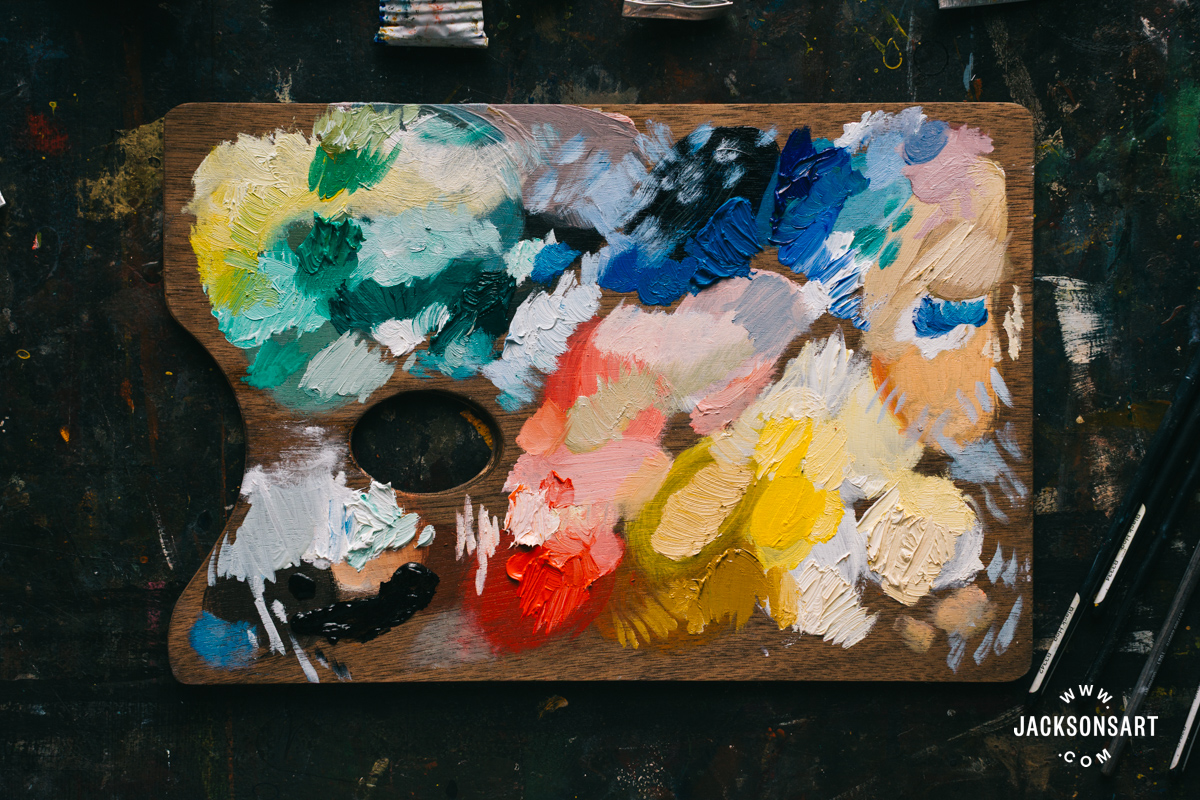
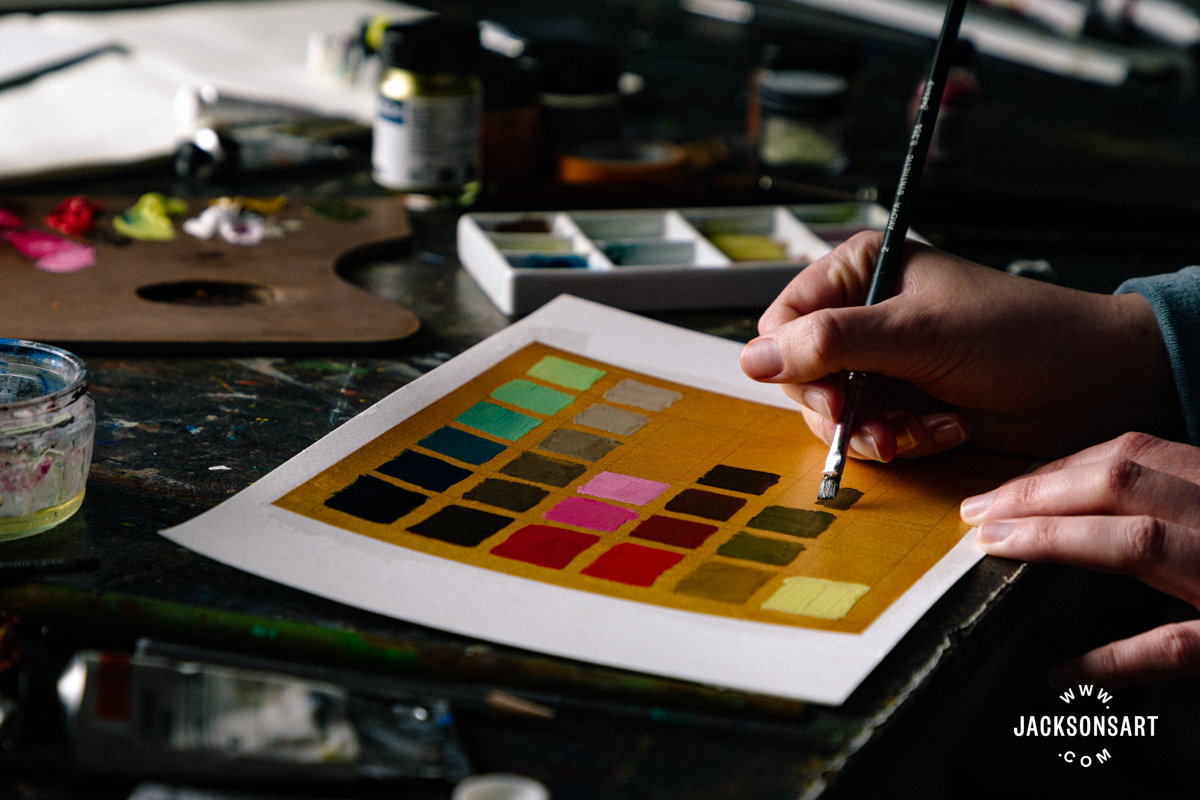
Although Modersohn-Becker painted in oils, she mostly used tempera. In recreating her palettes, I have used an oil paint palette as close to the original as possible. Her limited palette of primary colours included those we know of, including the following:
Zinc White, Cadmium Yellow, Viridian, French Ultramarine, and Red Ochre.
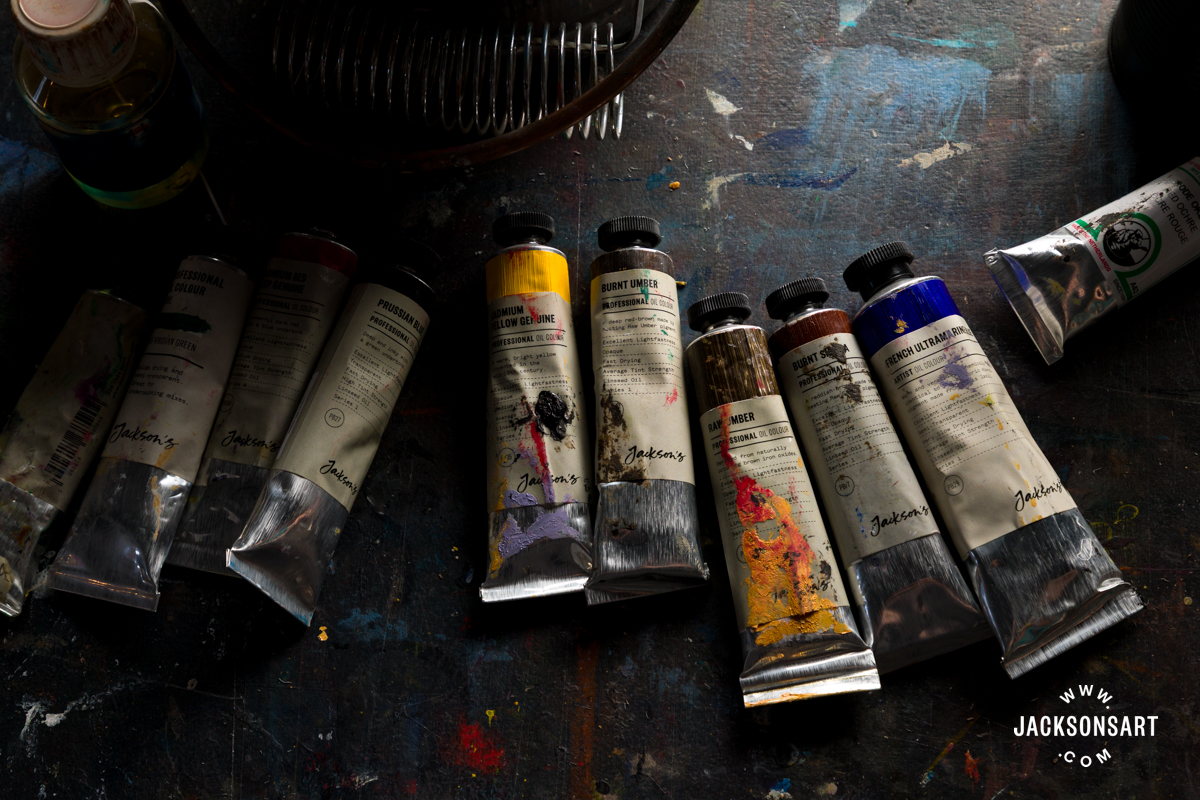
I am confident she would have also used Cadmium Red, Ivory Black, and Cobalt Blue.
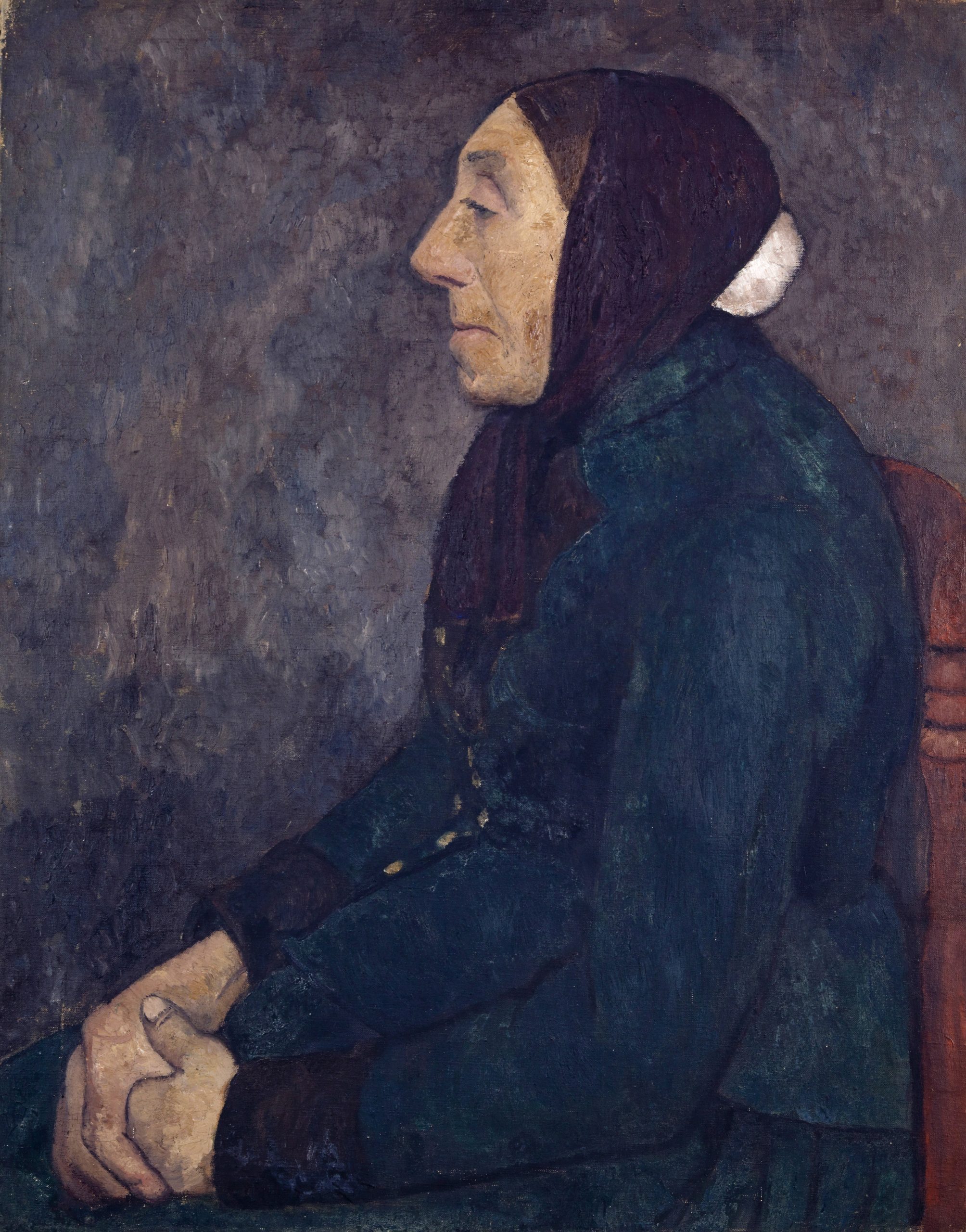
Palette One – Sitting Old Peasant Woman, 1903
Paula Modersohn-Becker, 1903
Oil on canvas, 81.8 x 65.5 cm | 32.2 x 25.75 in
Kunstmuseum Basel
This painting depicts a local peasant woman from her time living at Worpswede, painted in 1903. Modersohn-Becker was recently married to Otto Modersohn (1901) and had become a stepmother. She was interested in capturing the inner expression of the people around her and used a limited palette of earth colours in the style of the Dutch Golden Age. Typical of Northern European painters at that time, this was a tradition of low-toned palettes and a tonal approach using browns, greys, greens, and ochres to create atmospheric, naturalistic, and contemplative scenes, which directly influenced the Worpswede group.
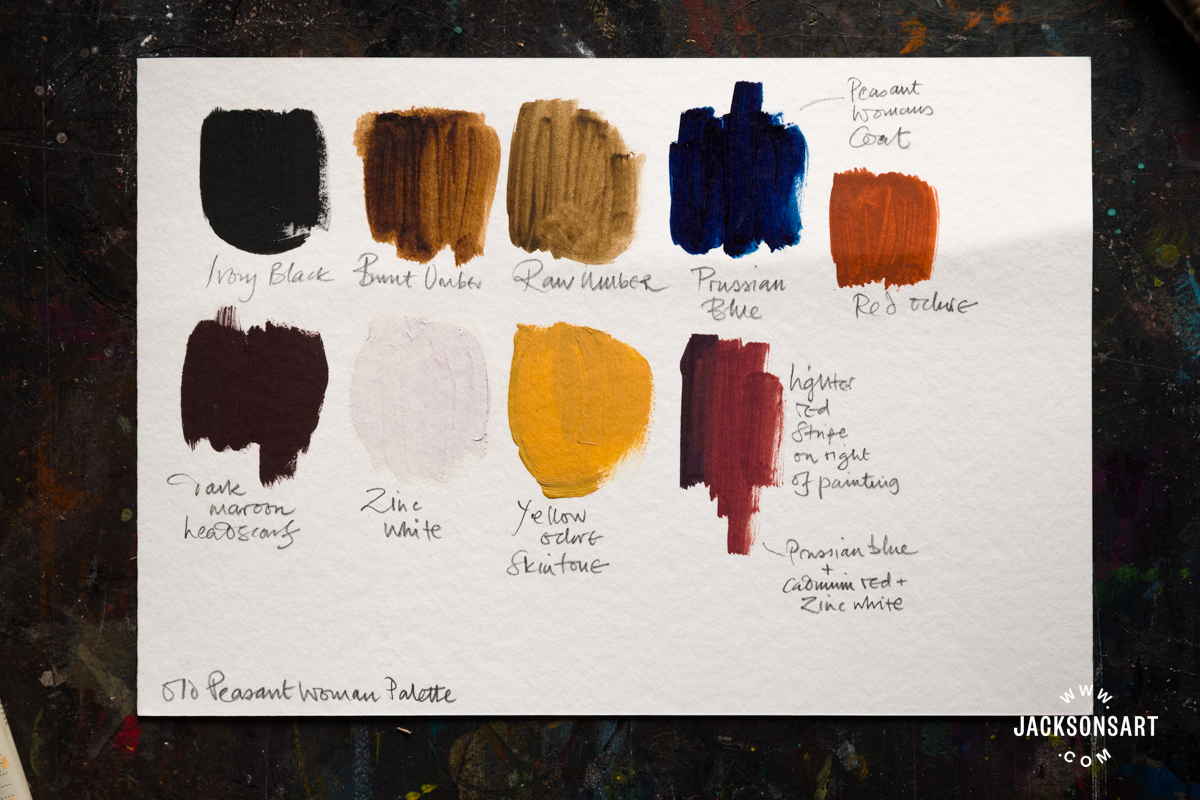
This palette consists of dark colours, including Ivory Black, Burnt Umber, Raw Umber, Prussian Blue, Red Ochre, Zinc White, and Yellow Ochre. It is a beautiful painting, capturing the dignity of her subject without embellishment.
Palette Two – Self-Portrait on her Sixth Wedding Anniversary, 1906
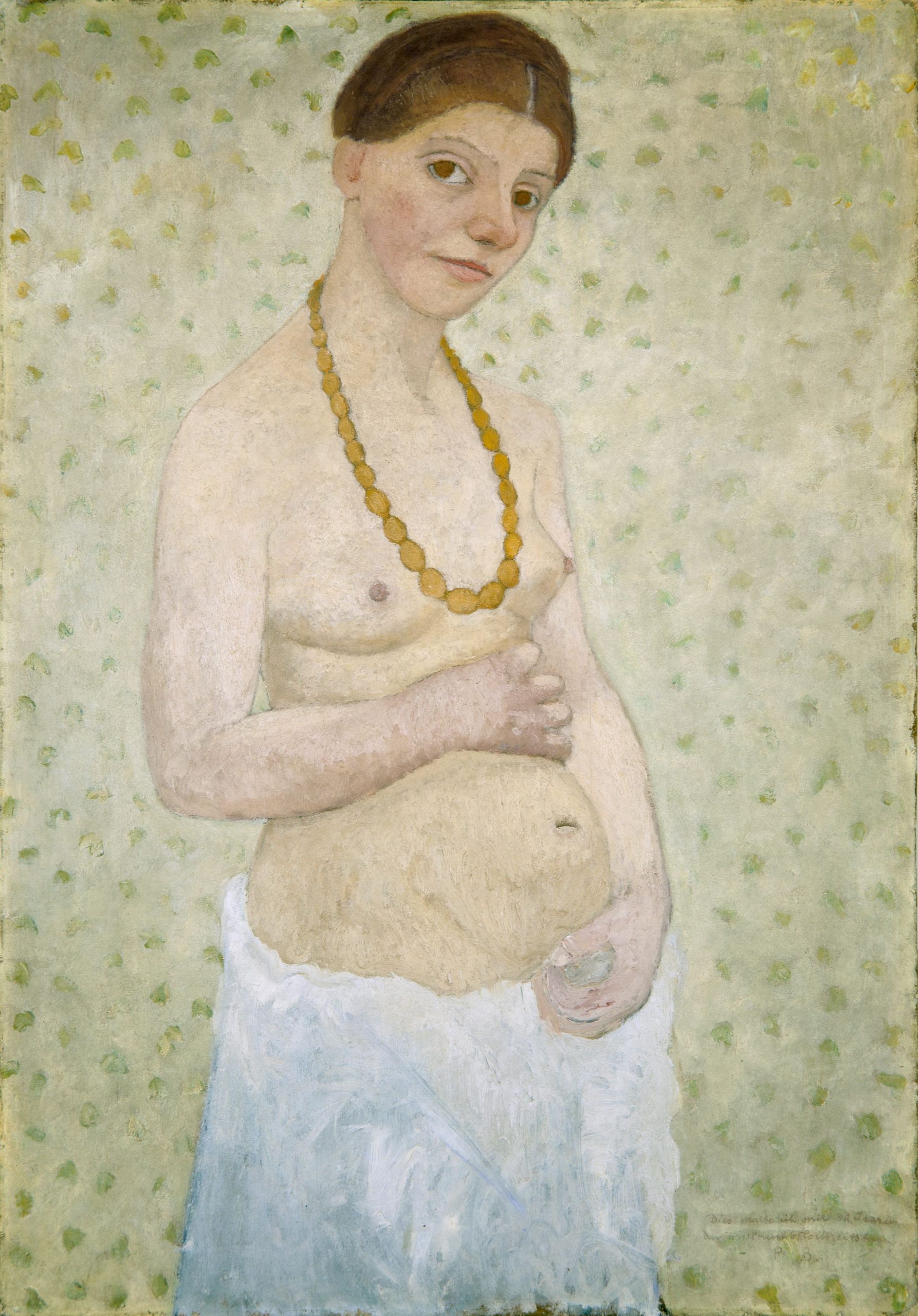
One of Modersohn-Becker’s most recognisable works, Self-Portrait on her Sixth Wedding Anniversary was painted on her permanent arrival in Paris, at the start of a new phase of life. She wasn’t actually pregnant in this painting; her full belly represents her new and exciting burgeoning life as an artist.
Paula Modersohn-Becker
Oil tempera on cardboard, 101.8 cm x 70.2 cm | 40.1 in x 27.6 in
© Paula Modersohn-Becker Museum, Bremen
This is a really significant artwork and is believed to be the first semi-nude self-portrait painted by a woman in Western art. Her colour palette is significantly different from that of Sitting Old Peasant Woman – although it was painted only three years later – and reflects her newfound optimism.
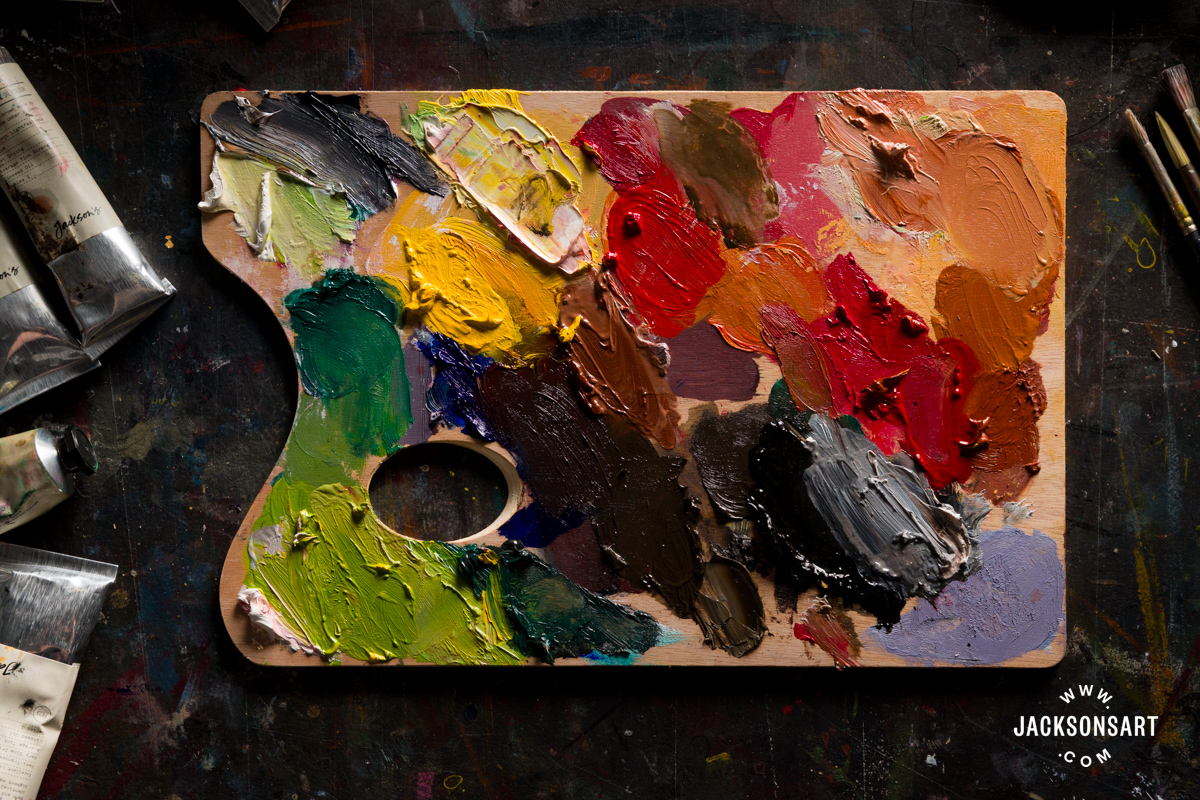
Complementary colours of calming apple green against the warm pink skin tones create a harmonious piece in a natural palette. It is painted in soft focus, with a background of mottled tones and a light white cloth around her hips. Only the glowing amber necklace that sits around her neck stands out as a hard object. This unconventional painting signals a shift towards personal happiness and growth.
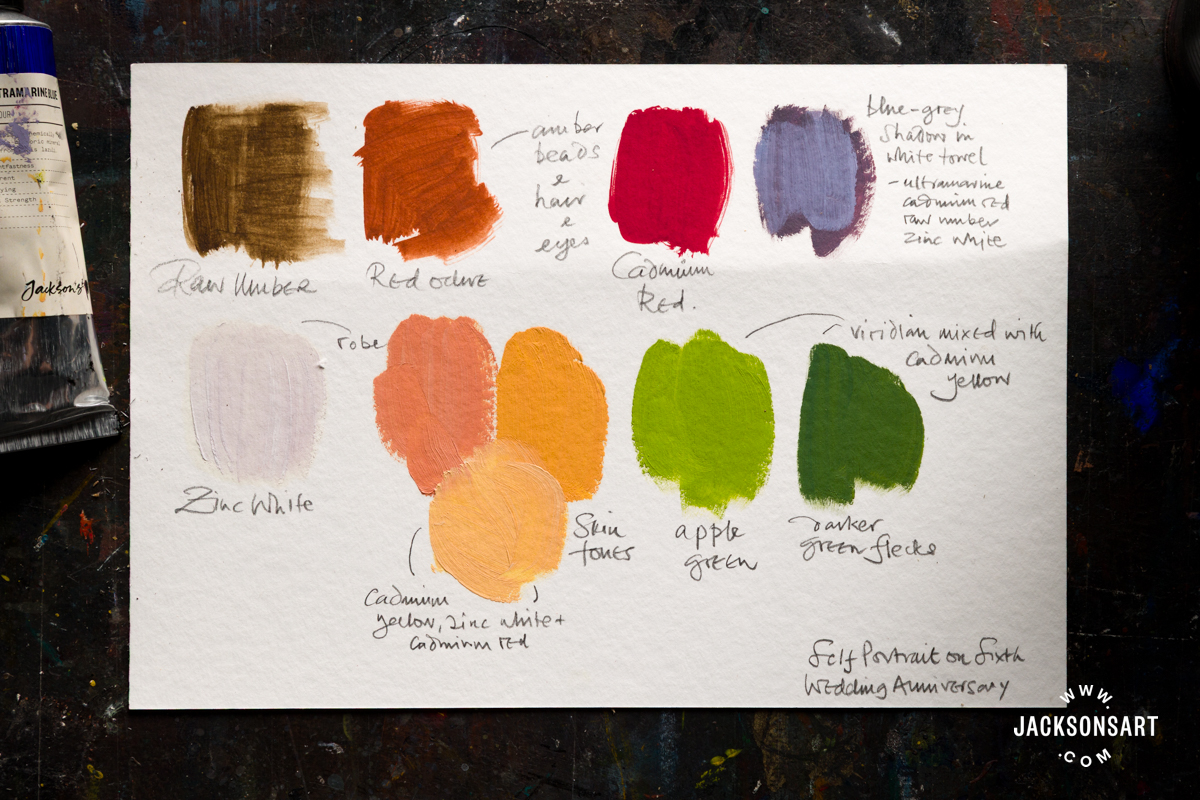
The palette includes Spring/Apple Green, Cadmium Red, skin tones mixed with Cadmium Yellow, Zinc White, and Cadmium Red, and Red Ochre and Raw Umber.
Palette Three – Old Woman with a Glass Ball and Poppies, 1907
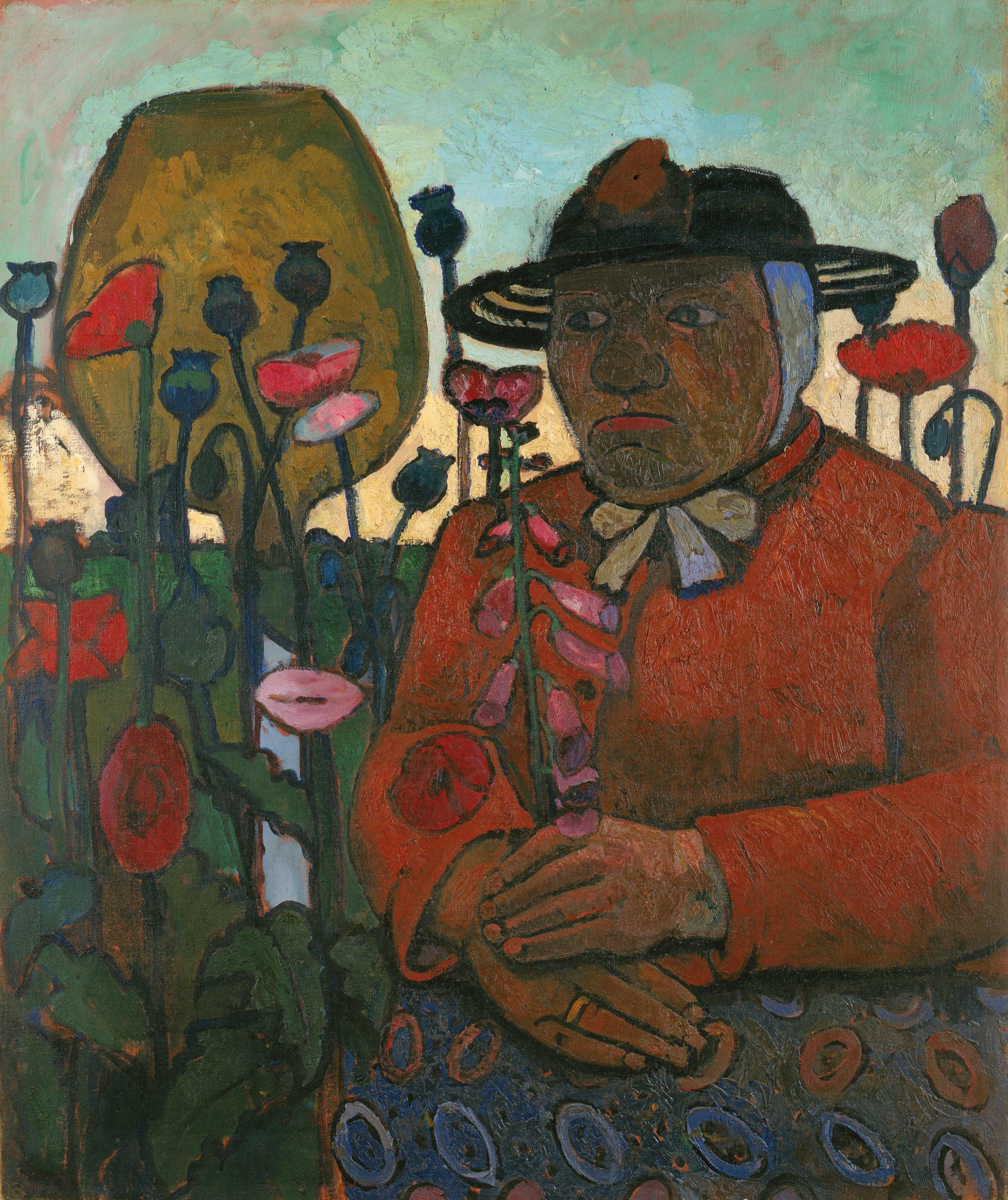
Paula Modersohn-Becker
Oil on canvas, 96.3 x 80.2 cm | 37.9 x 31.5 in
© Paula Modersohn-Becker Museum, Bremen
Pigment analysis of this Fauvist artwork shows traces of Zinc White, Cadmium Yellow, Viridian, French Ultramarine, and Red Ochre.
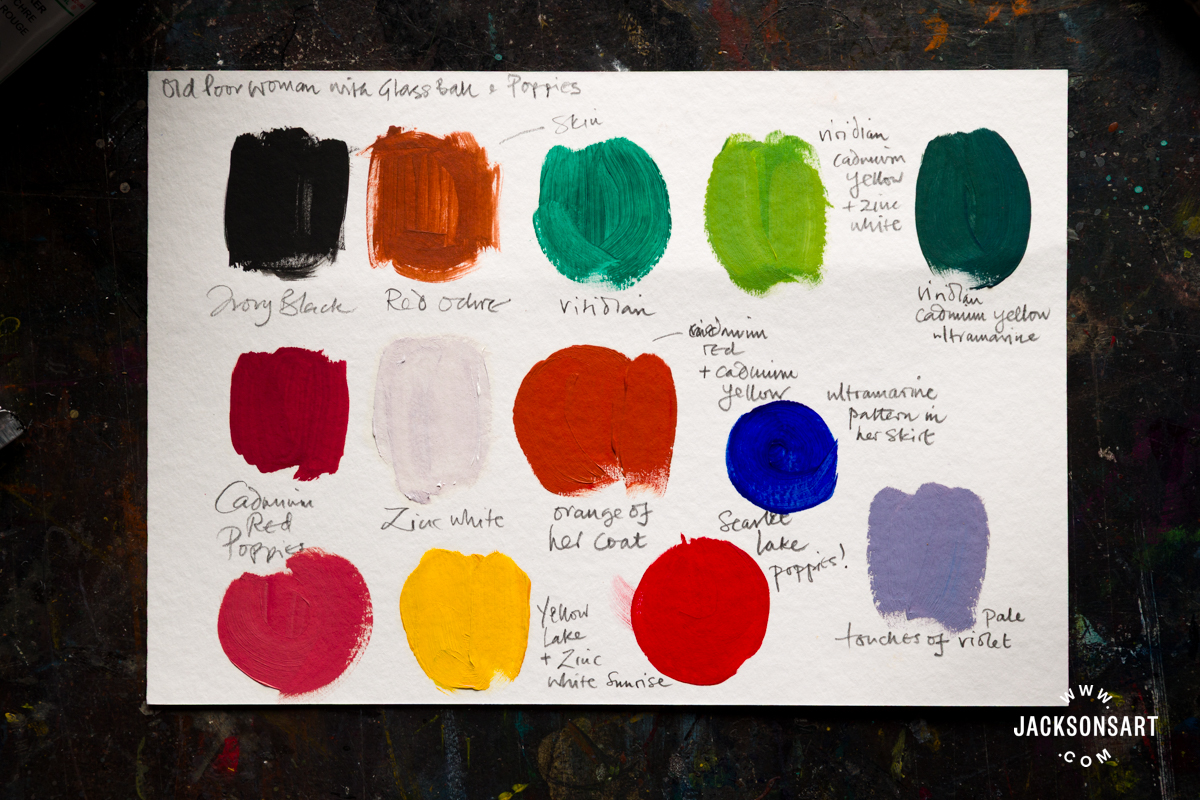
Painted the year she died, she is experimenting with colour, form, and shape with flat planes and black outlines. We can see the complex texture of the impasto paint, particularly in the face. The horizon line at the three-quarter height of the canvas creates balance and allows for the sun to rise from behind the poppy fields.
Further Reading
Painting with Sunshine: Van Gogh’s Yellows
Pigment Stories: Ultramarine Blue and French Ultramarine
Tonalist Techniques in Painting and Drawing
Recreating the Colour Palette of Henry Ossawa Tanner
Shop Art Materials on jacksonsart.com

3 thoughts on “Recreating the Palette of Paula Modersohn-Becker”
What a span of expression from one so young. Living in the middle of the repressed North German society at the turn of the century cannot have been much fun. To stand apart from the straightjacket of society must have taken a lot of courage – and then to express that freedom in such colour and form has left us with an enviable legacy to enjoy.
Very instructive and interesting!
Thank you for sharing your comprehensive research.
I really enjoyed that. Many thanks and very well researched and explained. I loved having the illustrations readily available.
Comments are closed.