Legion was founded in New York in 1994 when two rival paper sellers jointly set about sourcing the best fine art papers worldwide. The addition of Legion Aluminium Artist Panels expands upon that drive to meet the diverse surface requirements of artists. These surfaces combine the properties of Stonehenge papers with the advantages of a strong, archival panel. Each ready-to-use paper surface supports a variety of media. In this article, I will explore how they perform – demonstrating the results using a variety of mediums.
The Physical Characteristics of the Legion Paper-mounted Panels
These paper-mounted panels are neatly finished, with rounded corners and paper mounted flush to the edges. The paper is uniformly flat, securely glued with archival, acid-free, acrylic-based adhesive. At 1/8 in deep, they feel sturdy, yet lightweight and comfortable to hold. The range includes Stonehenge Watercolour Paper, Stonehenge Aqua Coldpress Watercolour Paper (in white and black), Stonehenge Oil Paper, and Yupo Medium Watercolour Paper. These come in four rectangular sizes, ranging from 5 x 7 in to 16 x 20 in, and one 6 x 6 in square.
Stonehenge Watercolour Artist Panel in 250 gsm
This is a smooth, white 100% cotton paper (250gsm), suitable for drawing and water-based media. I am testing on 8 x 10 in panels.
This surface feels ideal for detailed watercolour painting. I’d usually be wary of using too much water on paper of this weight, but warping will not be a concern in this case as the paper is securely mounted to the strong aluminium panel. I tested a range of drawing media alongside watercolour.
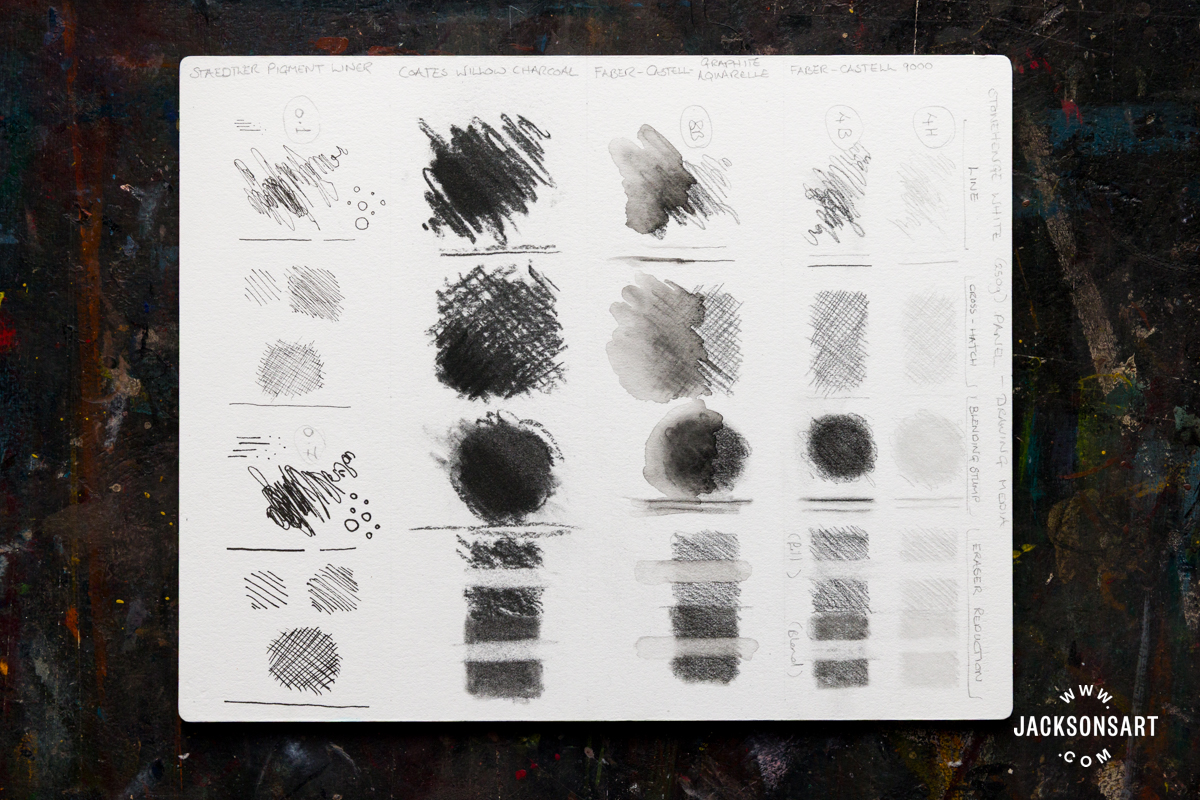
I used 4H and 4B Faber-Castell 9000 pencils, an 8B Faber-Castell Graphite Aquarelle Pencil, Coates Willow Charcoal, and Staedtler Pigment Liners in 0.1 and 0.7 thicknesses. The paper texture was ideal for smooth lines. My 0.1 pen skipped slightly but achieved fine detail at a steady pace. Graphite blended evenly with a blending stump, and light applications were easily erased, which is ideal for sketching out a composition. Darker graphite lifted to a soft grey, leaving the ghosts of pencil marks. Ink did not budge.
Painting into watersoluble graphite, I found the paper rather absorbent, with water wicking steadily under brush control. This allowed for fine detail as well as loose, washy strokes.
And the charcoal took impressively well to the paper, with minimal dust. Fixative held everything in place without disturbing the surface.
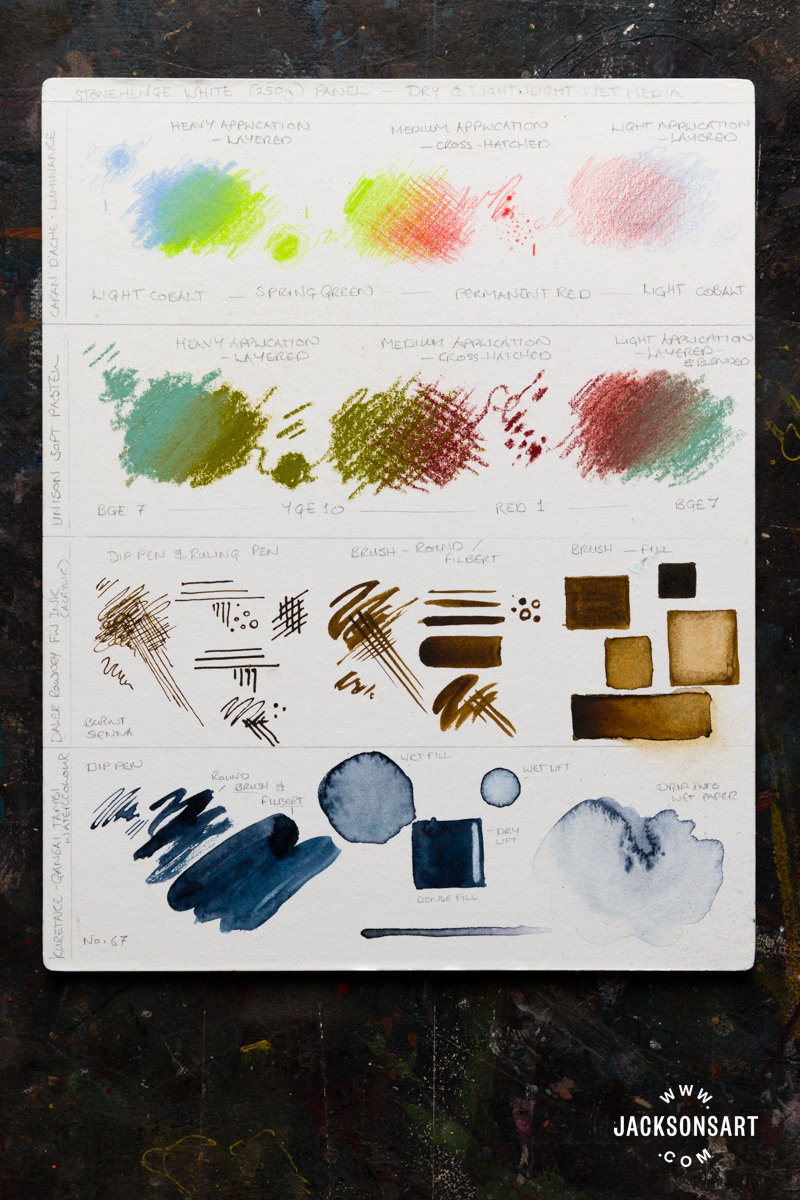
This Stonehenge paper is well-suited to colour pencil application. I tried blending methods using Caran d’Ache Luminance Pencils in Light Cobalt Blue, Spring Green, and Permanent Red. Sharp hatched lines and lightly overlaid colours applied well; each layer took to the paper evenly and with clarity. Building up dense layers produced a smooth blend. I repeated this with Unison Soft Pastels with similar results, and, as with the charcoal, it adhered well.
I sampled Daler-Rowney FW Acrylic Ink in Burnt Umber using a dip pen, ruling pen, and brush. The paper grain absorbed ink evenly at varying saturations without bleeding. There was one exception; having moved the panel soon after adding a big drop of ink, I caused a stain. I was unable to lift it completely, but it’s worth noting that, after repeated wetting, agitation with a brush, and mopping with a cloth, the surface appeared largely unscathed.
Finally, I tested watercolour, using Kuretake Gansai Tambi in Indigo, starting with minimally thinned watercolour, applied with a dip pen, then a brush. The paint formed dense, even marks; adding a drop of paint or water to a wet mark created variation. Lifting was more successful here; reworking dried paint created a cleaner effect than lifting while wet.
This panel is an all-rounder; one to have handy for whatever the day calls for. The panel’s rigidity allows for more confident use of water than the paper’s weight alone might suggest. It is well-suited to watercolour as well as drawing media and makes an elegant support for both.
Stonehenge Aqua Coldpress Black Artist Panel
This textured, 100% cotton watercolour paper (300gsm) is available in black or white. I used 5 x 7 in panels with black paper.
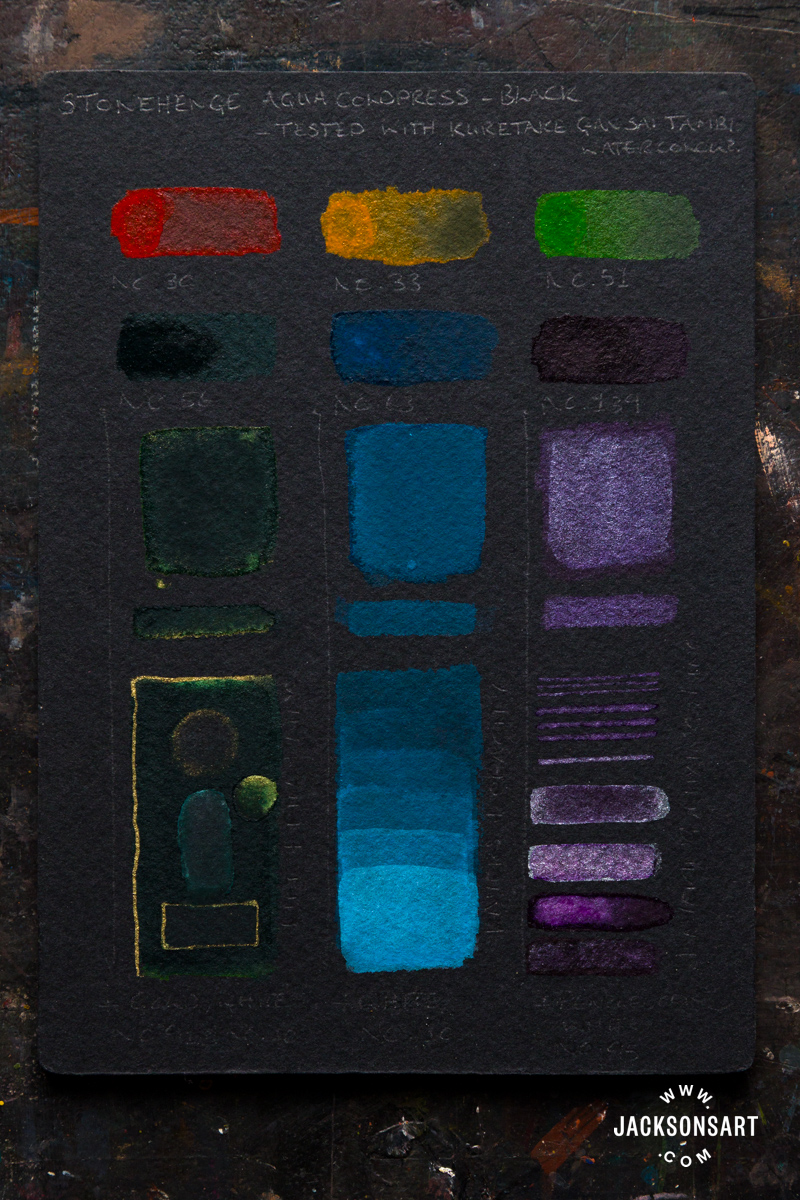
While experimenting with commonly used watercolour techniques, I considered what might suit the dark background. Using a Kuretake Gansai Tambi Watercolour Set, I swatched three bright, opaque colours (Cadmium Red, Cadmium Orange, Sap Green Light) that showed well on black, followed by three darker colours needing enhancement. Working into wet edges, I added Gold and White, creating soft outlines to define Forest Green areas, including shapes lifted from a wash. I layered Cerulean Blue with increasing amounts of white to create opaque tints, and mixed White Gold with Cobalt Purple to create a pearlescent paint. I varied the level of pearlescence through pre-mixing, wet-in-wet, and glazing.
Iridescent paints were striking on the black paper and brightened darker colours, while tints created a more traditional effect. Lifting, layering, and fine detail were all achievable, and the texture assists visibility, with raised areas reflecting more and recesses allowing pigment to pool.
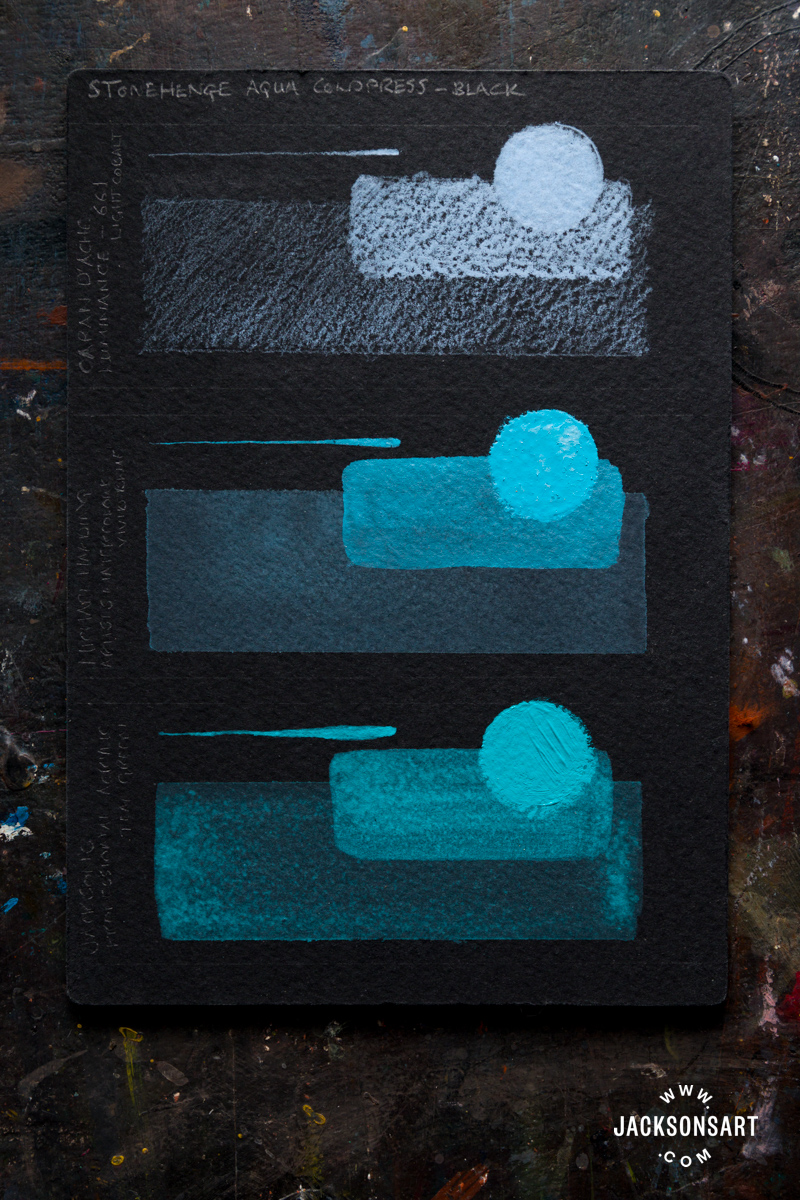
Next, I compared light, medium, and heavy applications of Luminance Colour Pencil Light Cobalt, Michael Harding Artists Watercolour in Vivid Blue, and Jackson’s Professional Acrylic in Teal Green.
The resistance of the panel allowed me to work with very dilute media, rework the surface through layering, use firm pressure for maximum pencil coverage, and apply a thick daub of paint. There was no risk of uneven tension that may have distorted an unmounted paper.
Absorbent clay surfaces are a popular support for watercolourists, but they behave differently to paper. Heavyweight watercolour papers allow for very wet or intensive work without stretching, though often in limited sizes. Legion Aluminium Artist Panels mounted with Aqua Coldpress meet all the expectations of a traditional watercolour paper with the added advantage of a damage and warp-resistant format.
Stonehenge Oil Artist Panel
This is a white, 100% cotton paper (320gsm), pre-sized for oil paint. It is also suitable for oil pastel, acrylic, and gouache. The paper has a fine-grain texture, providing good grip for the paint. I worked on 5 x 7 in panels.
Using Michael Harding Artists Oil Colours in Pale Violet, Terre Verte, and Perylene Violet, neat and with mediums, I tested a range of consistencies. Unaltered paint adhered well in a thick application, while a light skim showed the paper texture well. The panel supports both smooth application and heavier, textured marks such as those made with Pumice Powder. A thick build-up of paint, viable on a panel, is at risk of cracking on flexible surfaces.
The addition of Glazing Medium and Solvent revealed the paper’s high absorbency. Thinned paint levelled, sank in, and was resistant to lifting. Colours maintained their clarity and richness. On a less absorbent surface, the background colour would be more visible through the transparent Perylene Violet. This surface would be better suited to a light-to-dark approach, rather than reductive.
With a dry, stiff, hog brush, I roughly blended colours on the surface – the sort of handling a panel usually affords, while paper is usually treated more delicately. Reworking areas in this way, I did notice the surface begin to pill. A foundational layer of paint to work into, a little medium, or a gentler brush should mitigate that.
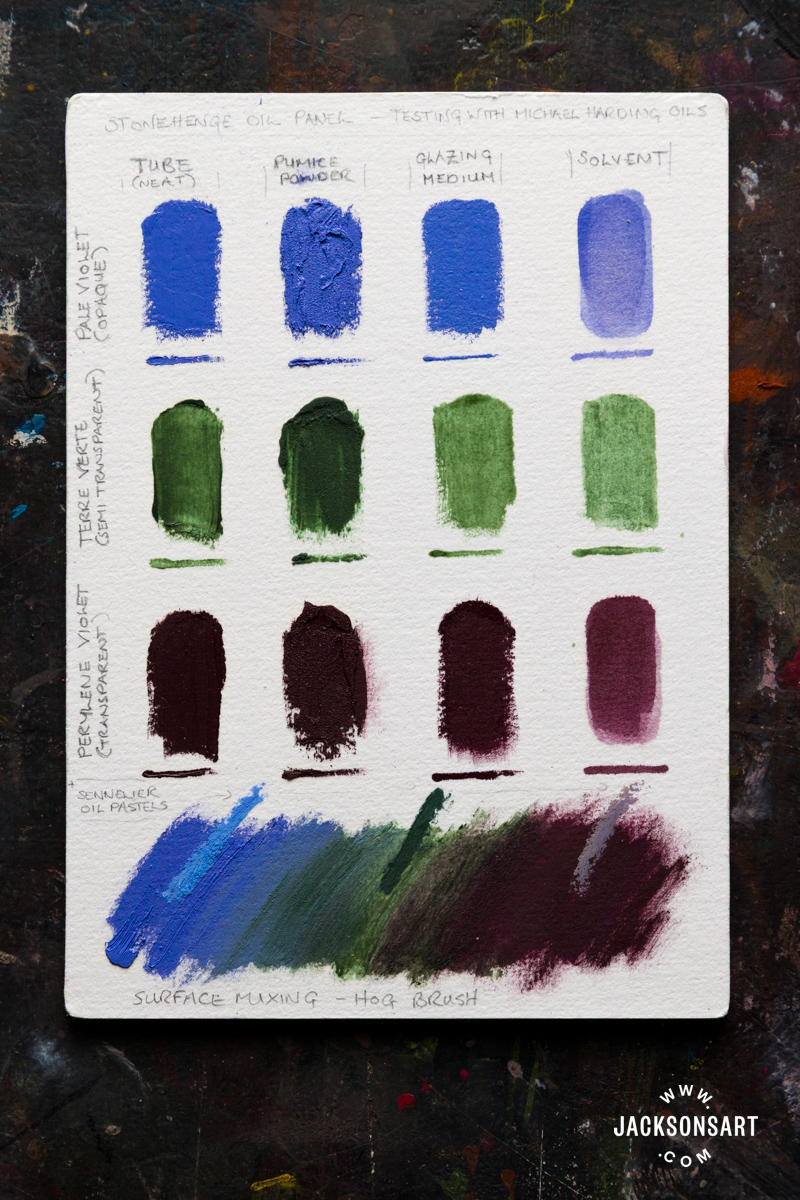
Over the dried oil paint, I added Sennelier Oil Pastel in Pale Blue, Pine Green, and Violet Grey. They applied well, picking up some of the paper texture. Though designed for the archival requirements of oil paint, this surface is also well suited to acrylic, oil, and oil pastel combinations.
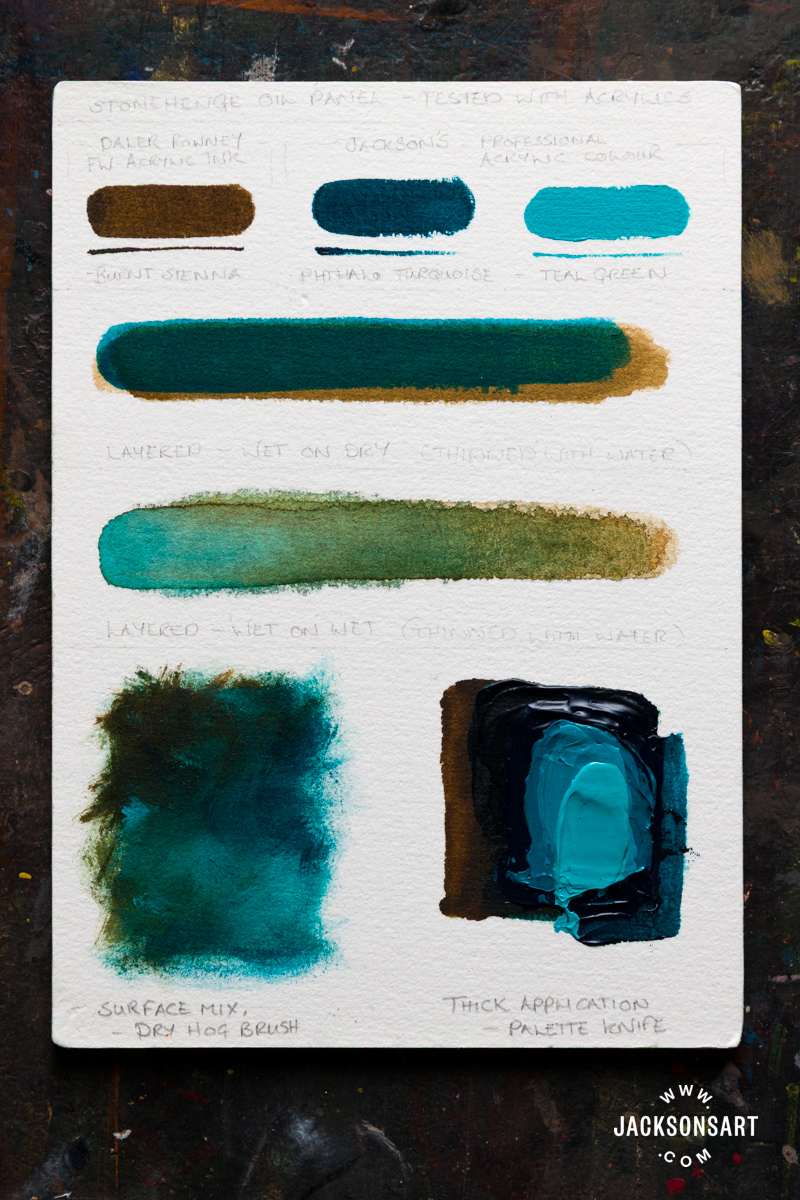
On the second panel, I repeated that experiment with looser acrylic paint and a less aggressive brush and the surface held up very well. Using Daler-Rowney FW Ink n Burnt Umber and heavy body Jackson’s Professional Acrylic in Phthalo Turquoise and Teal Green, expanding on the oil paint trials, I tried glazing, blending, and impasto applications. Working wet-in-wet produced a granulated ombre effect and, as the paint receded and dried, it left ‘tide-lines’ in the paper texture.
There are many ready-to-use oil papers on the market, but few with true paper qualities, texture and absorbency, rather than a resistant, canvas-texture. Combining these qualities with the resilience of its aluminium mount makes this an interesting, innovative option for painters. For paints that harden to a permanent finish, these surfaces can be displayed unglazed in a tray frame or even hung as they are.
Yupo Medium Artist Panel
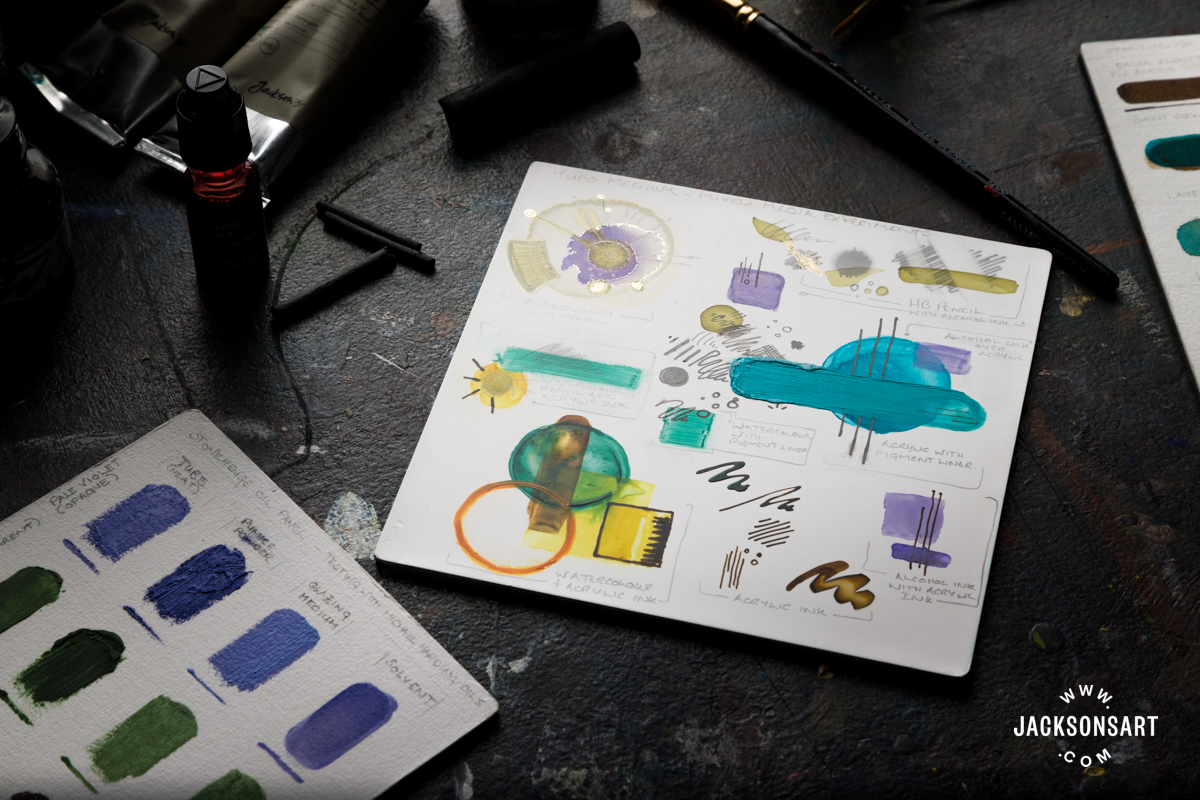
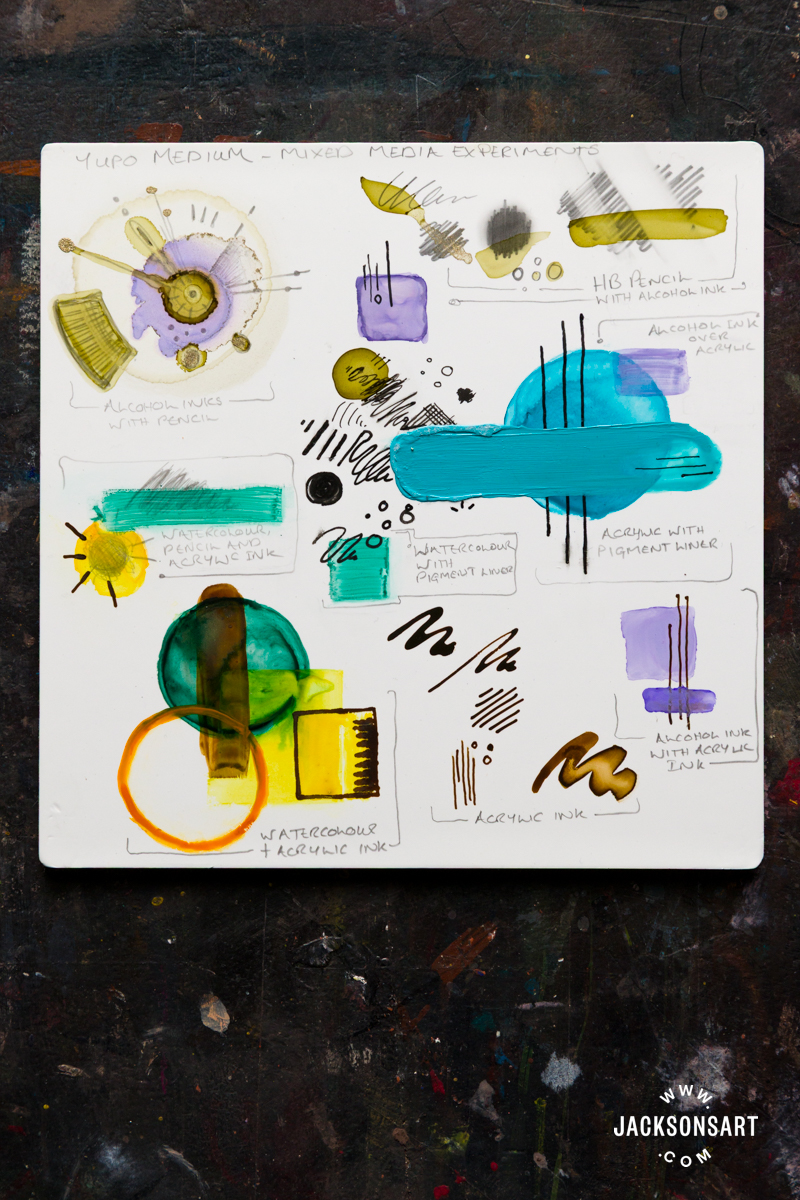
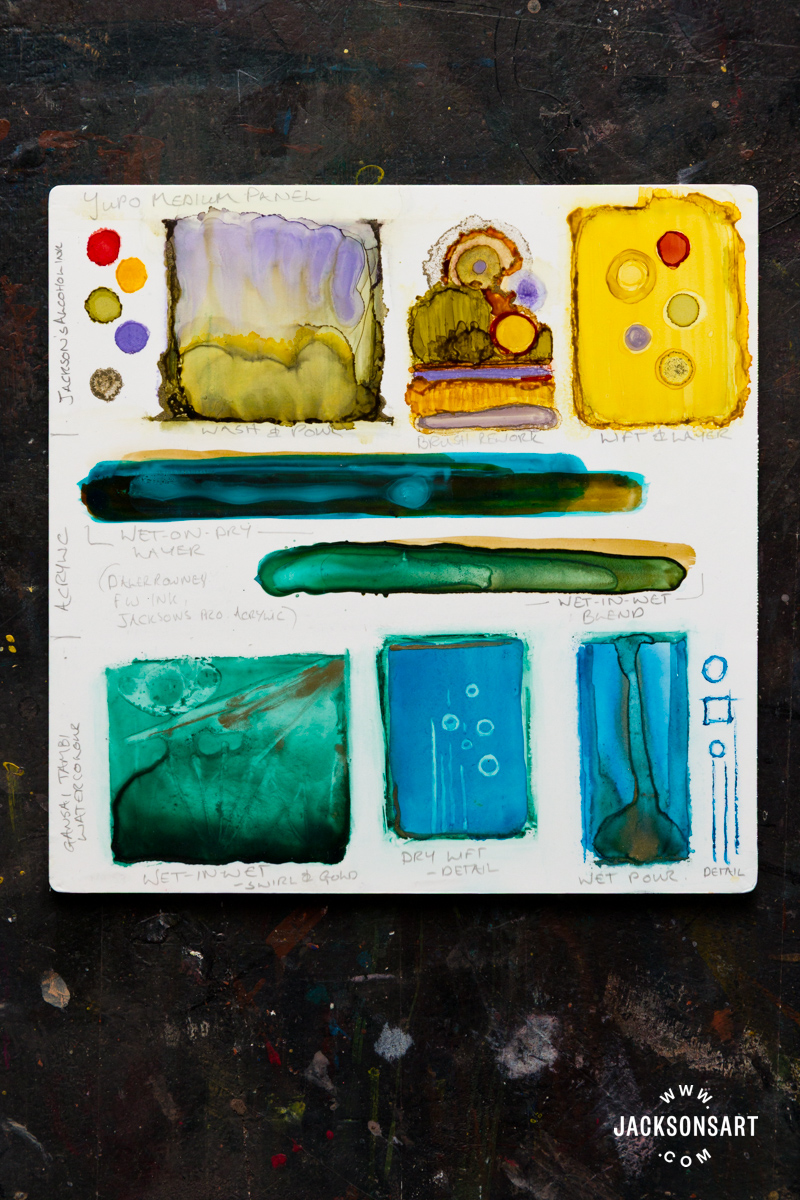
Yupo Medium is an extremely smooth, white, non-absorbent, polypropylene surface (200gsm). It can be used with a wide variety of materials and performs quite differently from traditional paper. I sampled two 6 x 6 in panels using Jackson’s Alcohol Inks, Jackson’s Professional Acrylics and Gansai Tambi Watercolour alongside pencil, pen, and Acrylic Ink.
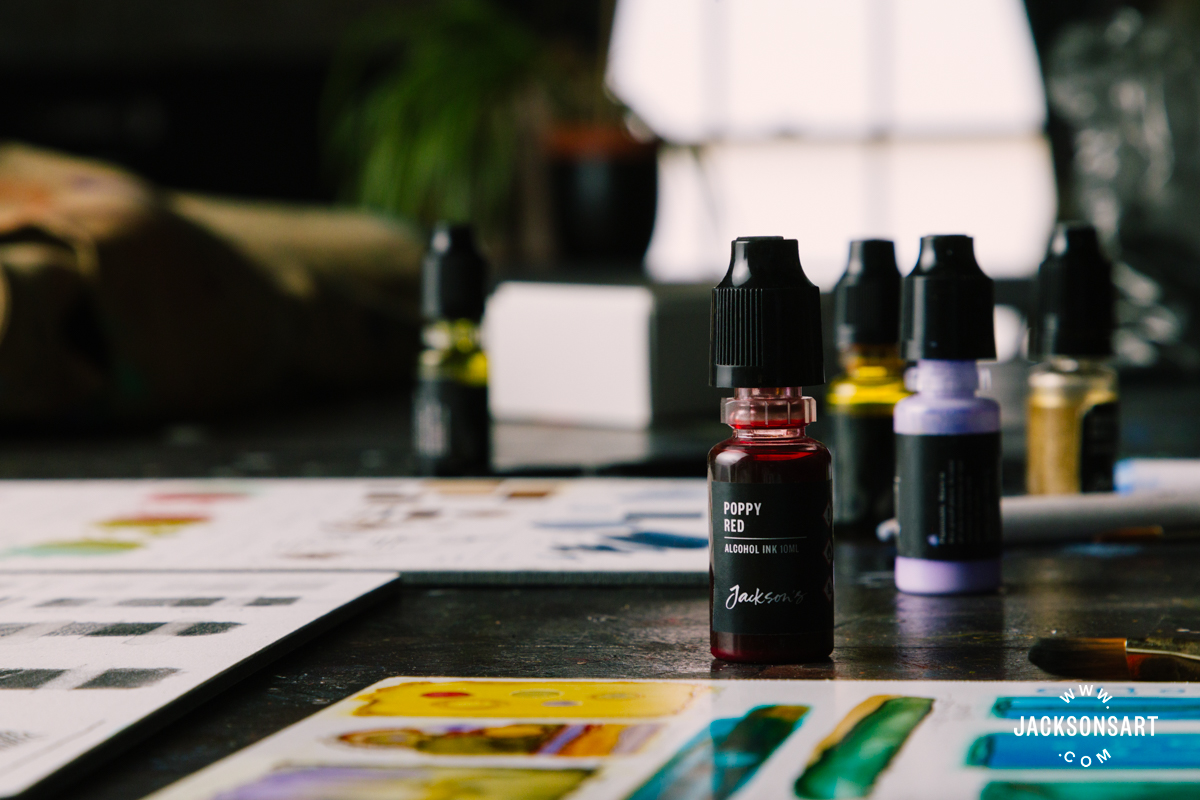
This surface lends itself to intuitive, exploratory work, with varied interactions between media. While testing combinations of colour and drawing materials, exploratory tangents were tempting. Pigment Liners dry incredibly slowly on bare Yupo, but not when applied over other media. Alcohol can lift pen ink and even disrupt dry acrylic ink. Pencil marks work best beneath paint or ink, though graphite alone has a distinctive shine on Yupo and looks beautiful on the surface.
A key advantage of Yupo is the ability to lift and rework most marks. Although stain-resistant, some colours prove more stubborn than others. Mounted on aluminium, it can withstand thorough cleaning and repeated use, all the better, enhancing its suitability for experimentation.
Yupo is perhaps best known as an ideal surface for alcohol inks. These fluid inks spread, repelling and interacting in unpredictable ways; their flow can be manipulated by dripping, blowing, pouring or with a blending solution. A panel is easier to handle than a loose sheet of Yupo, which can bend, disrupting the flow. It can be held flat and rotated precisely. I tried this with both alcohol ink and watercolour, allowing fresh colour to travel across wet areas. Lovely moments are lost as quickly as they appear; keep going, and a new scene will emerge. However, if the surface becomes overloaded, both can be wiped back, reworked, or layered.
Repeating my acrylic experiments from the Stonehenge Oil Panel, I tried wet-in-wet and glazing on this non-absorbent surface. Pooled colour remains visible in the end result, and the white ground shows through translucent passages. Working flat, initial layers largely stayed where placed; only with increased water, texture, or gentle manipulation did the paint begin to move more freely.
Paint and inks become easier to manipulate as they dry. Lines can be refined, excess colour lifted or redistributed, and subtle marks introduced. There can be both unpredictable fluidity and controlled mark-making.
The material weight and stability of the Yupo panels enhance the surface’s adaptability, allowing confident handling or stability as needed.
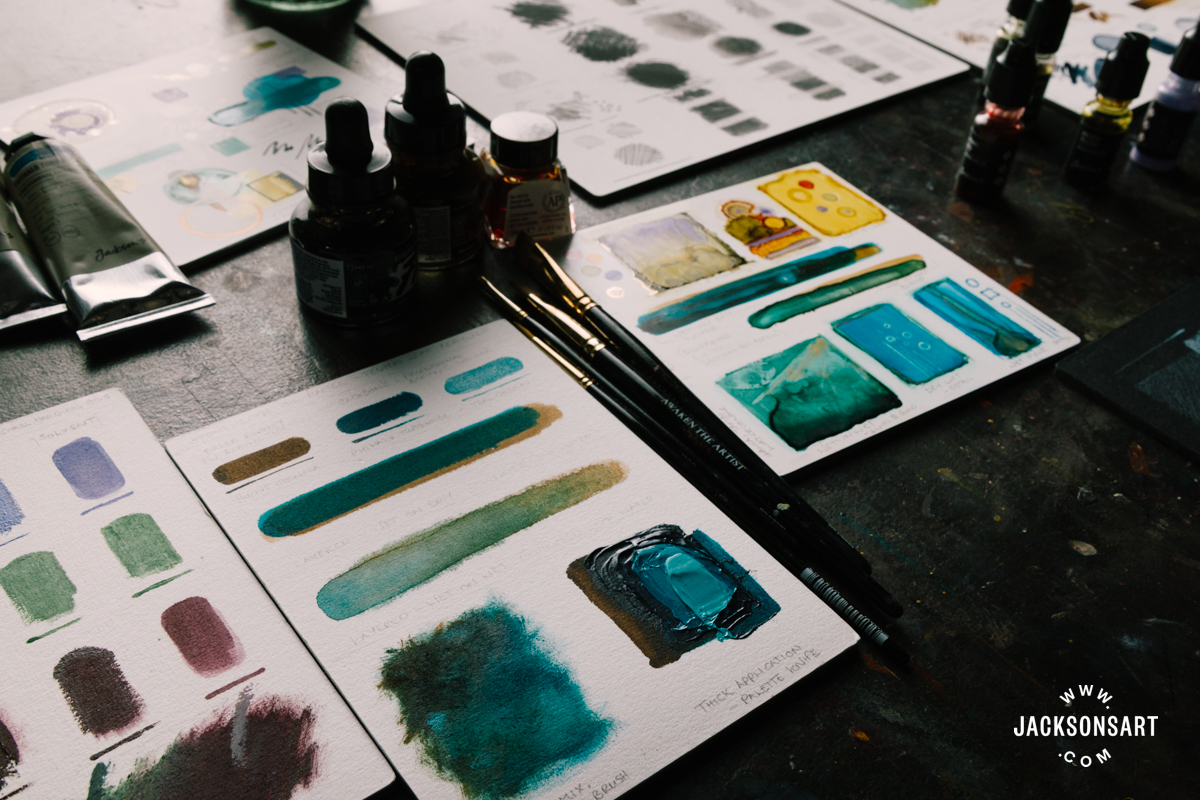
Paper can be fragile; that may be part of its allure. Some are soft, cushioning pencil lines, others drink colour into their fibres, reflecting it back diffused; surface texture can become a character in an artwork. Combining these qualities with an incredibly durable support is inspired. Legion Aluminium Artist Panels not only mitigate the risk of damage but also expand the versatility of these surfaces. They provide a portable support that can be handled, propped on an easel, and stored more safely than paper alone. There is no stretching or preparation required, and yet they can take heavier applications of paint than most papers, while still behaving as true paper surfaces.
What sets these panels apart is a balance between the familiar working properties of good quality paper and the longevity and stability of a rigid support.
Further Reading
Wet-on-wet Techniques for Watercolour, Gouache, and Ink
A Review of Yupo Paper: Lifting, Blending and Painting With Watercolours
Everything You Need to Know About Oil Painting Paper