

Kuretake : Gansai Tambi
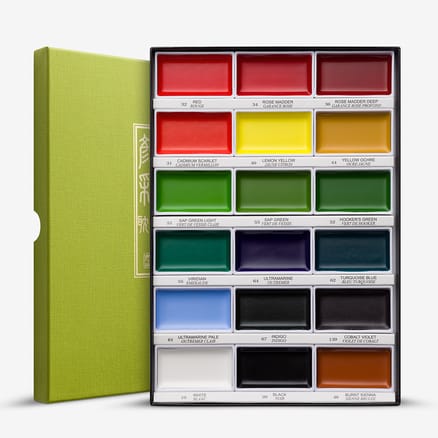
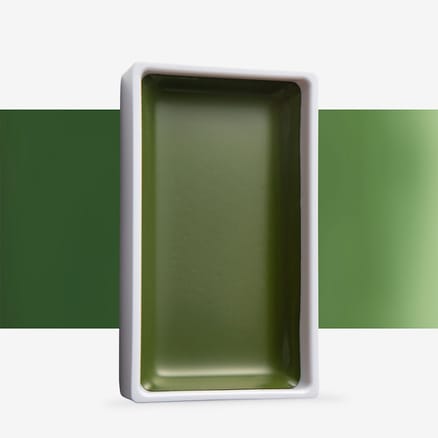
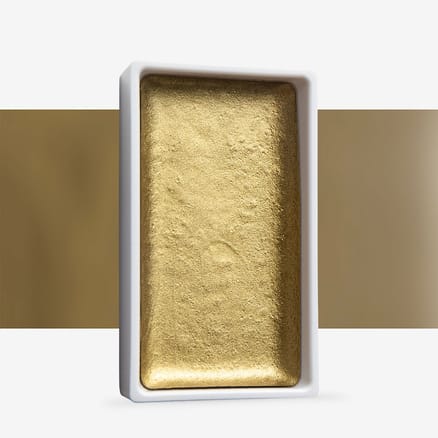
Traditional Japanese watercolours for professional artists and crafters alike. These extra large pans (4.5 x 2.5cm) of brilliant, luminous, high-performance paints are ideal for sketching, illustration, sumi-e, manga, calligraphy and more. The range includes a good selection of vivid colours with creamy consistencies.
Apply a wet brush to the pans to activate the colours. Gansai pans may exhibit cracking due to extreme dryness or appear rough in texture due to tiny air bubbles, however neither of these traits affect their quality.







Gansai Tambi Watercolours: Popular Questions from Artists
Gansai Tambi are traditional Japanese watercolours that differ from Western watercolours in several ways. They have a higher pigment concentration, creating more opaque coverage; have a slightly different binder that gives them unique flow characteristics; and offer colours popular in Japanese art. They can be used similarly to watercolours but provide more coverage and vibrant, saturated colour.
Yes, Gansai Tambi paints are beginner-friendly. Their creamy consistency and high pigment load make them easy to activate with water. They provide good coverage, which is forgiving for beginners, and the larger pans are easy to work with.
Gansai Tambi work well on watercolour paper, Japanese papers like Washi or rice paper, and heavier mixed-media paper. Due to their opacity, they're more forgiving on thinner papers than traditional watercolours, but 140lb/300gsm or heavier watercolour paper is still recommended for best results and to prevent buckling.
Yes, Gansai Tambi can be layered effectively. Due to their higher opacity compared to Western watercolours, they layer well without excessive transparency. Allow each layer to dry completely before adding the next. They can be used for both transparent glazing techniques and more opaque layering, making them versatile for various painting styles.
Yes, Gansai Tambi can be used for calligraphy and brush lettering. Their smooth, creamy consistency flows well, making them suitable for both traditional Japanese calligraphy and Western brush lettering. However, for sumi ink calligraphy, dedicated ink sticks or liquid sumi ink are a more traditional medium.
Kuretake Gansai Tambi are watercolours, though they sit between traditional transparent watercolours and gouache in terms of opacity. They're more opaque than Western watercolours due to higher pigment concentration, but more transparent than true gouache. They can be diluted for transparent effects or used more thickly for semi-opaque coverage.