The jab that artists and galleries charge outrageous prices to scam the public may seem like a contemporary line of attack – but the feud between James Abbott McNeill Whistler and John Ruskin brought this very accusation to a blistering court case in 1878. Both men had distinguished careers without ever crossing paths, until their two opposing factions – art critic and artist – came to blows in their infamous legal battle. So how did these two figureheads of the Victorian era establish a rivalry in the first place?
Connections between individual artists in art history remind us that at the core of art movements and the progress of visual culture were human individuals, with real personalities, fears, and dreams. Whilst we can never know their true feelings, documented relationships between artists – whether clashes or companionship – offer fascinating context to their lives. No artist truly creates in isolation, and competition and collaboration are as much facets of the art world as creation.
Introducing James Abbott McNeill Whistler
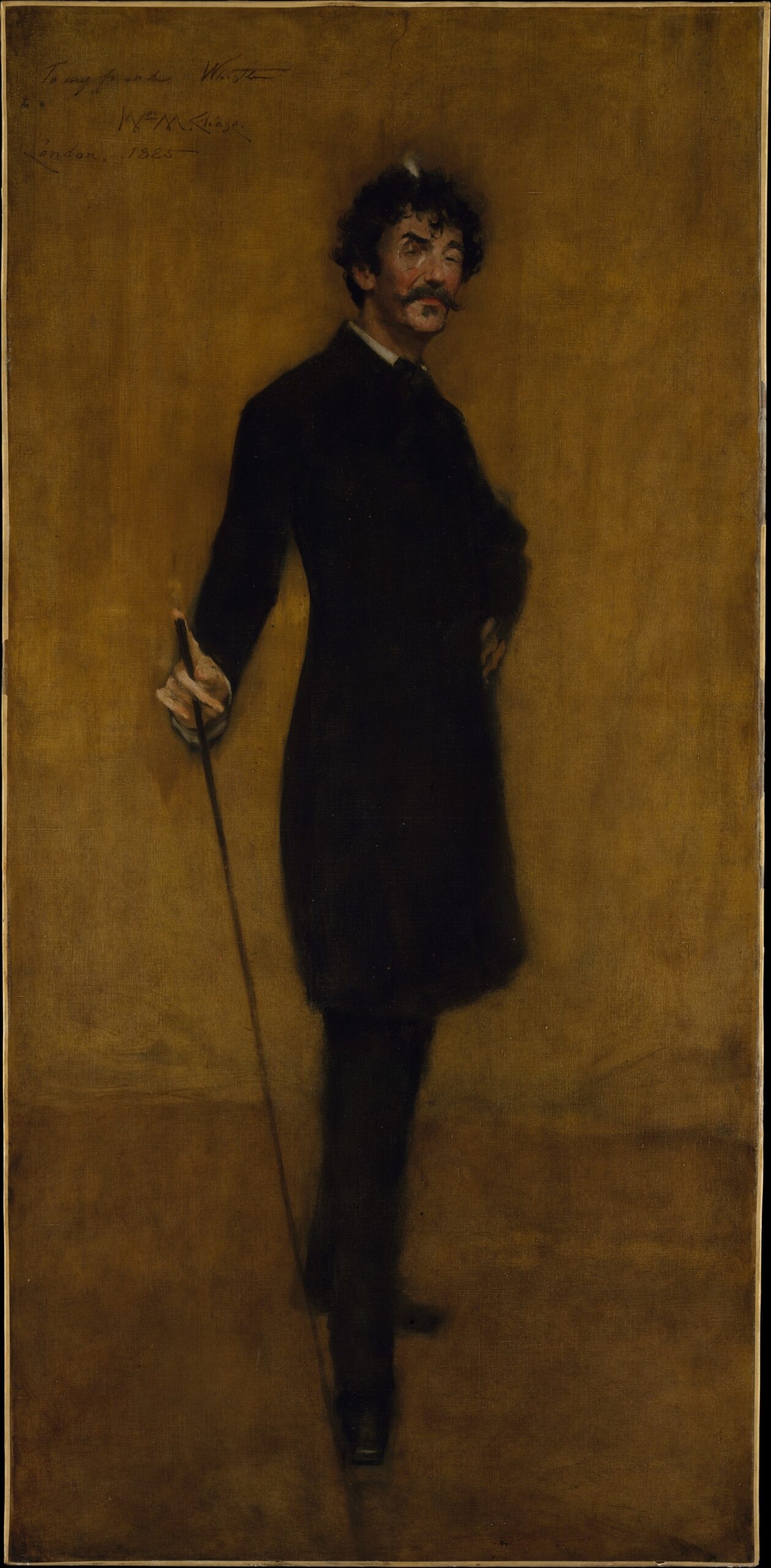
William Merritt Chase
Oil on canvas, 188.3 x 92.1 cm | 74.1 x 36.3 in
The Metropolitan Museum of Art
James Abbott McNeill Whistler is known as an eccentric artist whose life brimmed with creative innovation, travel, numerous relationships, and a deep passion for his work. His attitudes toward art were pioneering – with both his approach to early abstraction and his modern belief in ‘art for art’s sake’. His work spans various movements, from early beginnings in Realism, to becoming a founding figure in Tonalism, Aestheticism, and Modern Art.
Whistler was born in Lowell, Massachusetts, in 1834, and lived in America until the family moved to St Petersburg in Russia when he was nine. He famously claimed St Petersburg as his birthplace during his legal feud with Ruskin – ‘I shall be born when and where I want, and I do not choose to be born in Lowell.’ During their time in Russia, 11-year-old Ruskin was enrolled in the Imperial Academy of Arts, and trained in the traditional techniques of cast drawing and anatomical study. Sadly, his father died six years later, and the remaining family returned to America.
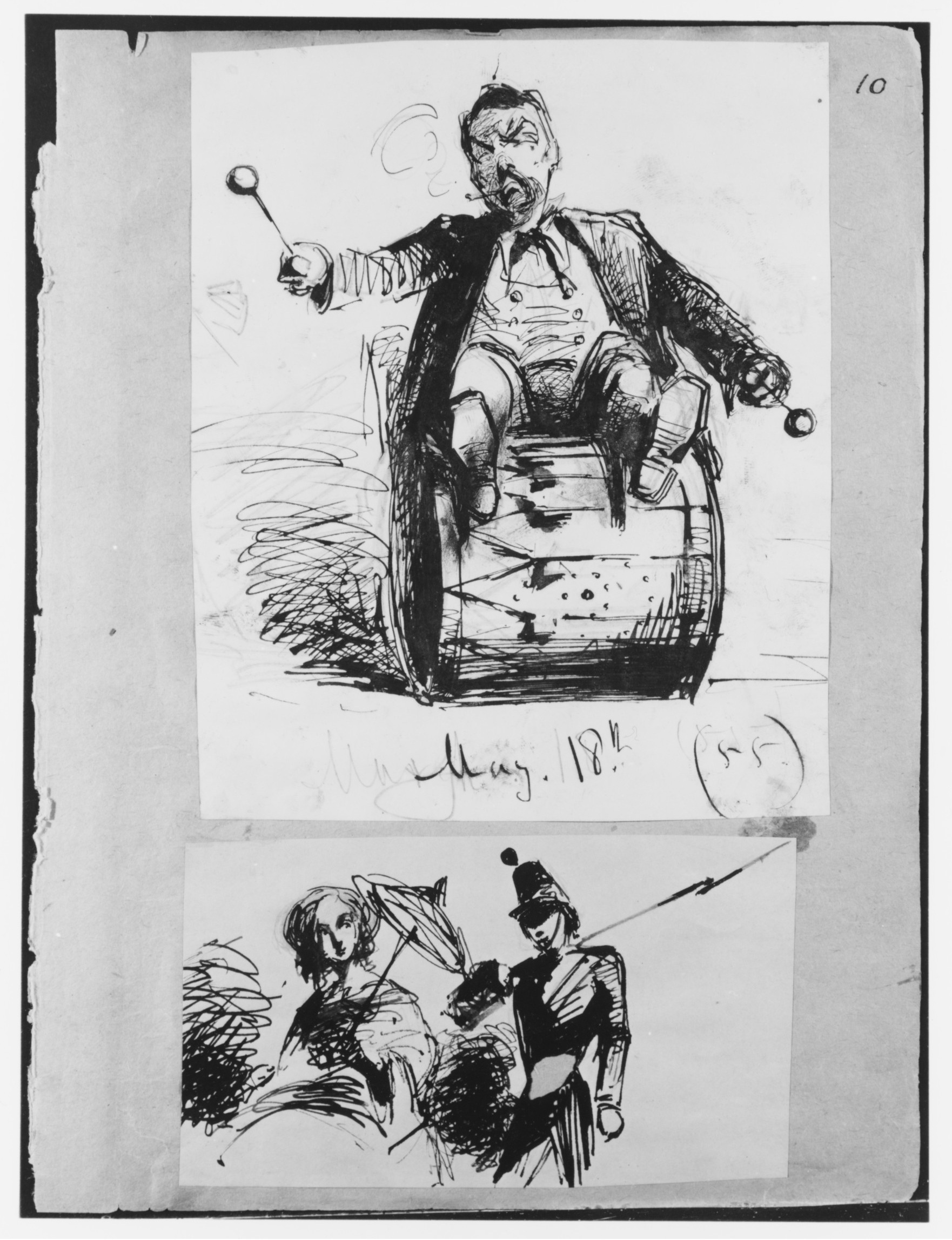
James Abbott McNeill Whistler
Brown ink and graphite on paper, 17.8 x 14.3 cm | 7 x 5.6 in
The Metropolitan Museum of Art
On his return, Whistler briefly trained as a minister before enrolling at a military academy. There, he learnt to draw maps, but was dismissed after three years due to poor chemistry grades. His first job was as a military draftsman, mapping the west coast of America, but after he was caught adding characters and mythical creatures to the margins of his maps, he was transferred to the etching division, where he lasted just two more months. Despite his short time there, the etching techniques he learnt would prove valuable for the rest of his career. After spending a few months in Baltimore with a friend who supported his new ambition to become an artist, Whistler left America for good to pursue the bohemian life in Paris.
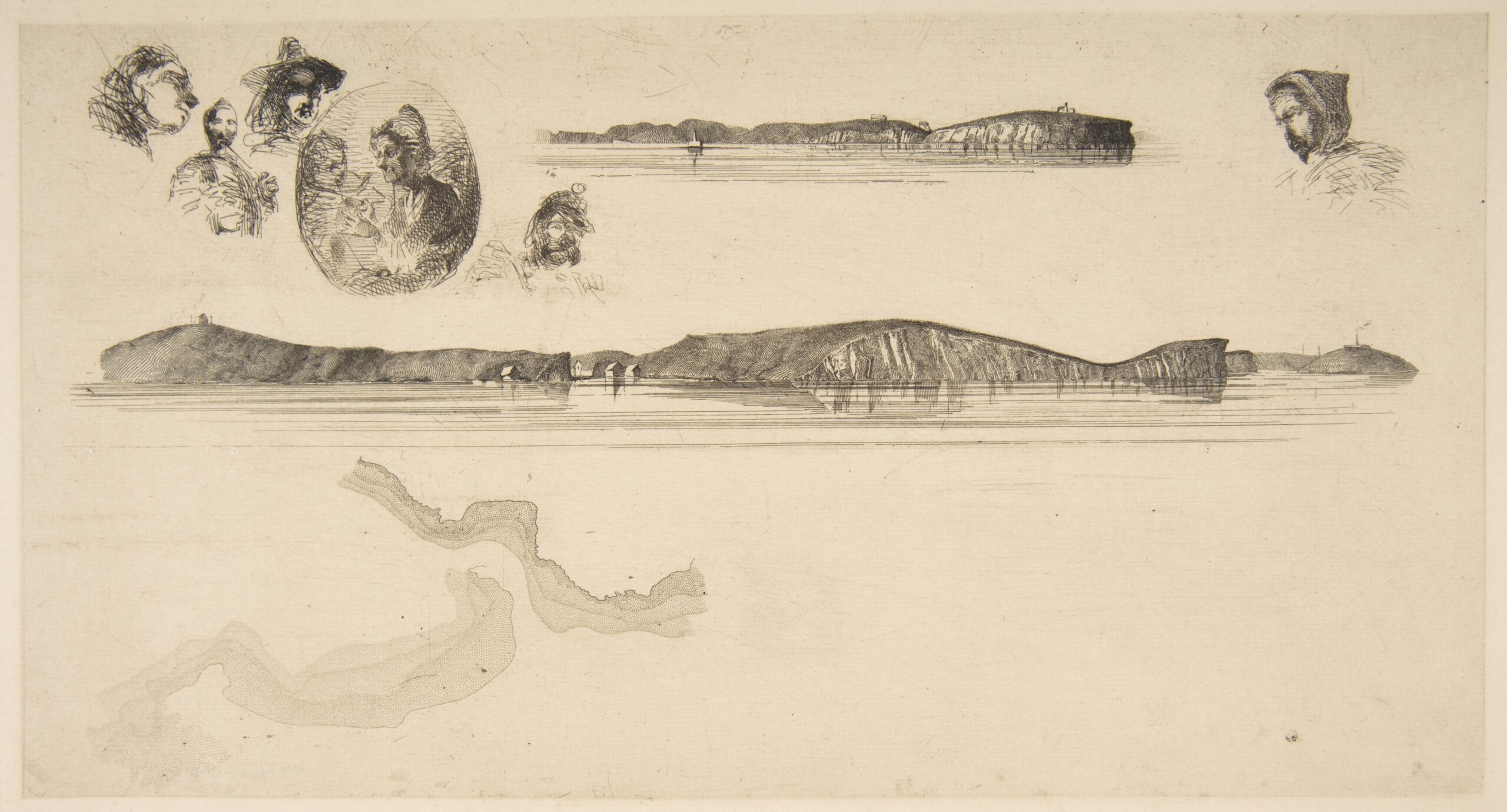
James Abbott McNeill Whistler
Etching, 14.6 x 25.9 cm | 5.7 x 10.2 in
The Metropolitan Museum of Art
Newly arrived in Paris at the age of 21, Whistler started a studio in the Latin Quarter and briefly studied traditional art making at the École Impériale and in the atelier of Charles Gleyre. However, he preferred self-directed study and the social circles of the city’s artist scene. After a period of debt and few sales, he supported himself by selling copies of paintings from the Louvre. Things began to pick up in 1858, when he travelled through France and the Rhineland, painting with the artist Ernest Delannoy. During this period, he painted his first self-portrait, Portrait of Whistler with a Hat, at the age of 24. The work clearly reveals the influence of Rembrandt in both its pose and palette.
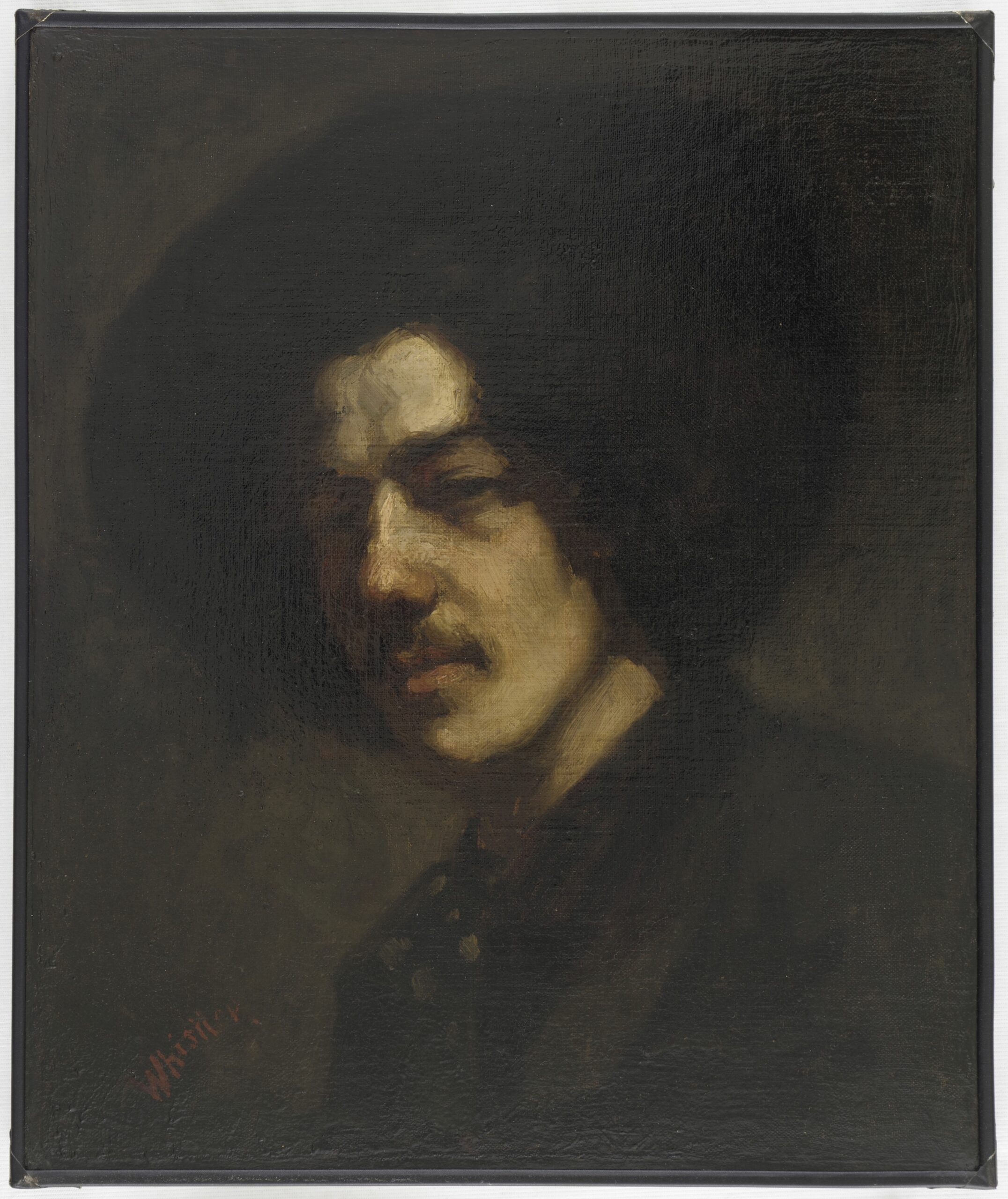
James Abbott McNeill Whistler
Oil on canvas, 46.3 x 38.1 cm | 18.2 x 15 in
National Museum of Asian Art, Smithsonian
Later that year, he was introduced to an important circle of peers through the artist Henri Fantin-Latour. He met the Realists Alphonse Legros, Carolus Duran, Édouard Manet, and the essayist and art critic Charles Baudelaire. Baudelaire asserted that artists should move away from allegory and mythology toward depicting the harsh realities of life. After adopting the philosophy of Realism, Whistler moved to London and began making portraits in this vein, and found some success exhibiting. He returned to Paris briefly in 1861 and made his first famous painting, Symphony in White, No. 1: The White Girl, of the artist’s model Joanna Hiffernan, who would become his muse for the next twenty years.
They began a relationship, but Whistler’s family disapproved because unmarried artists’ models were often looked down upon on the assumption that they were promiscuous – especially those who posed in the nude. In 1866, Hifferman became Whistler’s business manager, acting as the sales agent for his works and managing his accounts, and introducing herself as Mrs Abbott professionally. Their relationship ended after Whistler spent seven months travelling in Valparaíso, Chile, when it’s thought she had an affair with the painter Gustave Courbet, for whom she also modelled. Although their relationship ended, Hiffernan raised Whistler’s son born from an affair with another woman, and she was included in his will.
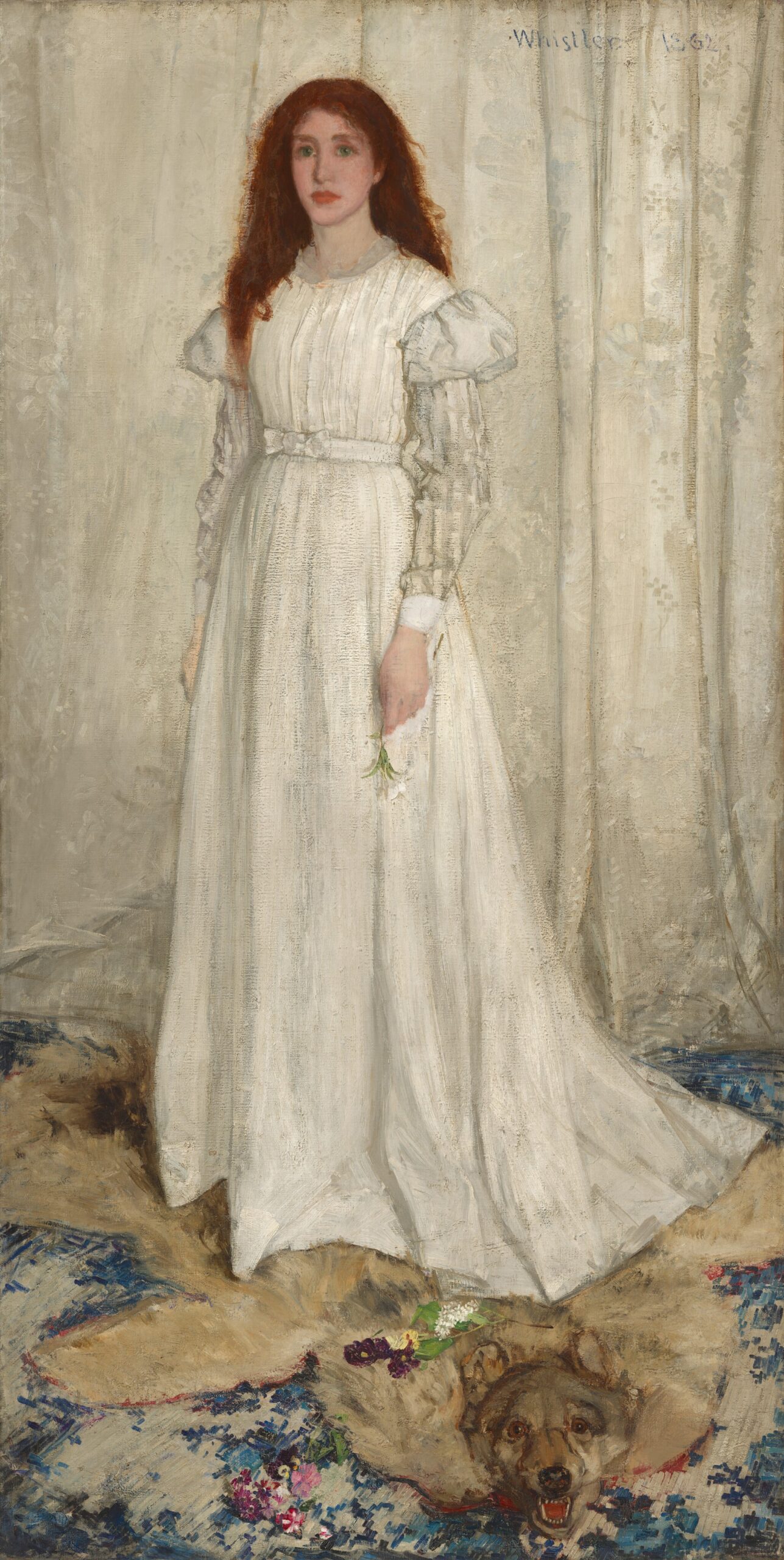
James Abbott McNeill Whistler
Oil on canvas, 213 x 107.9 cm | 83.9 x 42.5 in
National Gallery of Art
When Whistler was in Chile, he painted his first three nocturnal paintings. On his return to London, he continued painting his ‘nocturnes’ for the following decade. The titles were inspired by musical composition, which he credited the musician Frederick Leyland for in a letter:
‘I say I can’t thank you too much for the name ‘Nocturne’ as a title for my moonlights! You have no idea what an irritation it proves to the critics and consequent pleasure to me – besides it is really so charming and does so poetically say all that I want to say and no more than I wish!’
Many of these capture the River Thames and gardens at night, arranged using principles inspired by the composition of Japanese art. These works are essential to the Tonalist movement, which he pioneered alongside the American painter George Inness. From this point forward, he began titling and retitling older works using words from musical terminology, like symphony, harmony, and arrangement. In 1871, he returned to portraiture and made his most famous painting, Arrangement in Grey and Black No.1, commonly referred to as Whistler’s Mother.
In his personal life, Whistler was well aware of his polarising personality – he was charming and sociable, but could be equally harsh and off-putting. This was represented in the signature he applied to his works and possessions from the 1870s, a butterfly with his initials woven into the wings, with a stinger for a tail.
Introducing John Ruskin
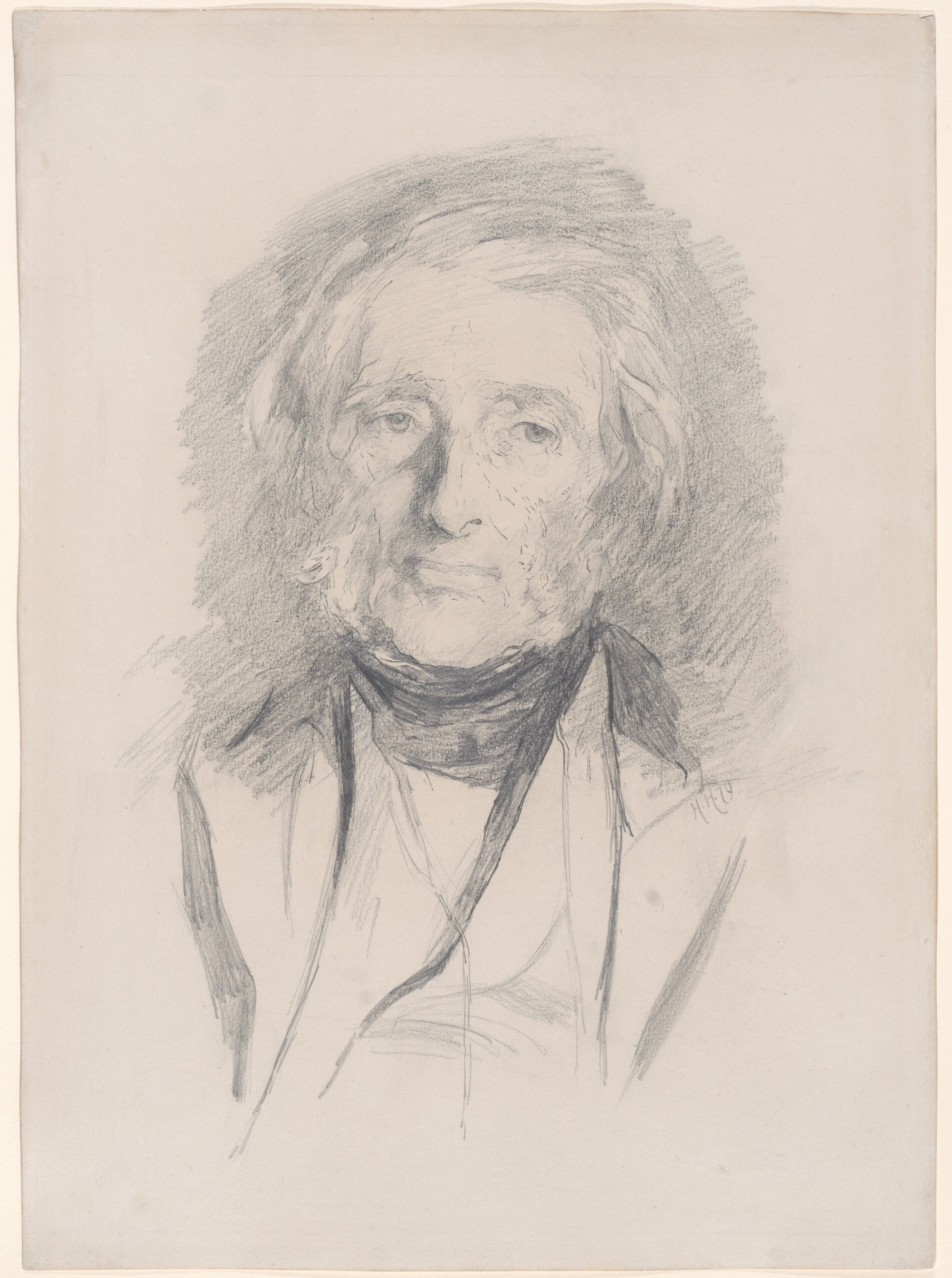
Sir Hubert von Herkomer
Graphite with touches of pen and black ink, 42.5 × 30.8 cm | 16.7 x 12.1 in
The Metropolitan Museum of Art
John Ruskin was an arbiter of Victorian taste who confidently made and ended careers with his pen. He was a man of broad interests, simultaneously working as an art critic, art historian, writer, lecturer, philanthropist, and artist in his own right. His defiant writings made him famous by fearlessly disparaging the traditional appreciation for the Old Masters, and asserting the superiority of his favourite artist, J.M.W. Turner, the Pre-Raphaelites, and artists who expressed the quality of ‘truth to nature’.
Ruskin was born in London in 1819 to a wealthy family, and was educated at home by his parents and private tutors. His childhood was privileged, and he travelled throughout Europe and the UK with his family, exposing him to art and culture from an early age. His artworks include delicately rendered studies from the outdoors of plants, people, and architecture.
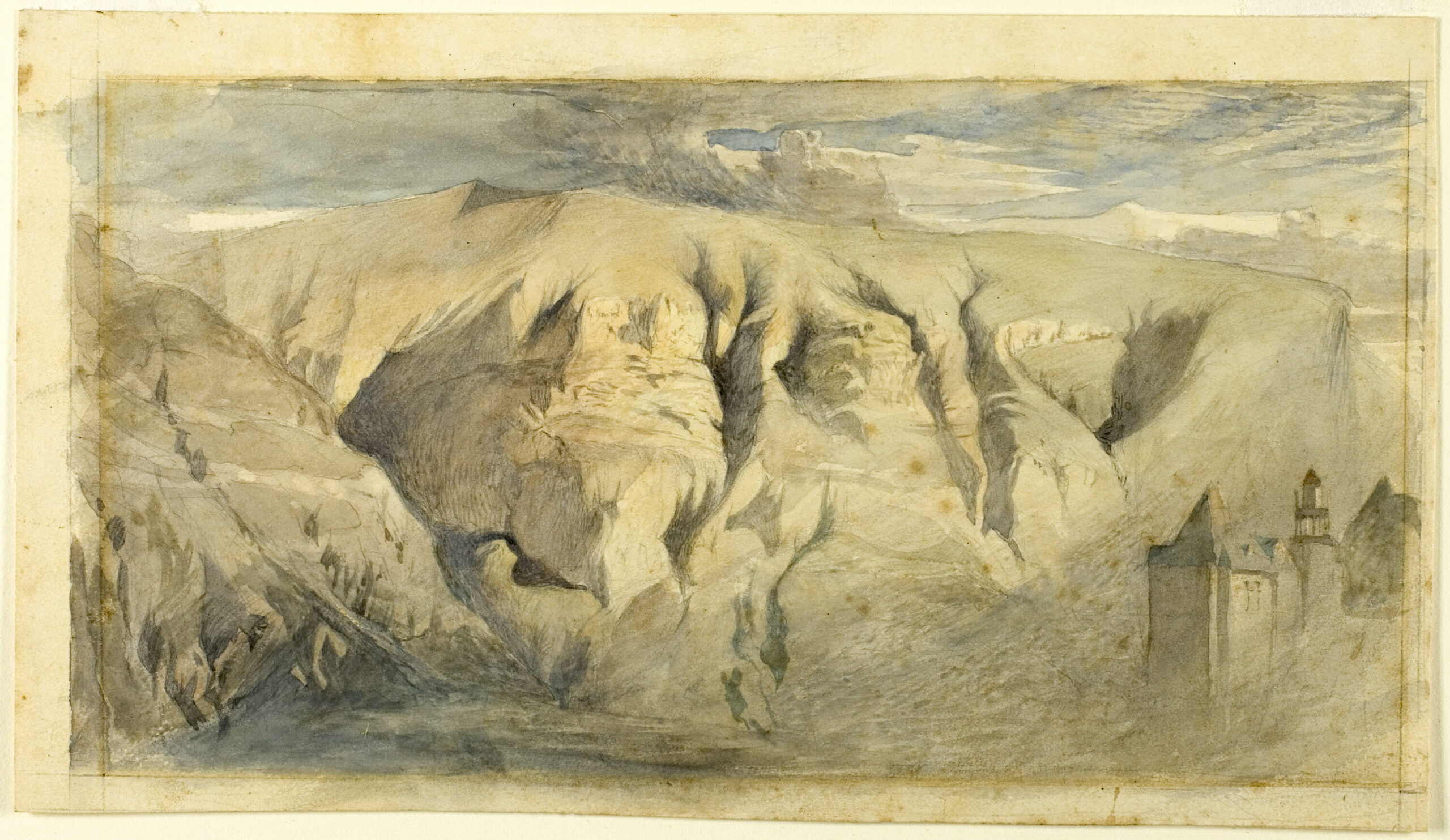
John Ruskin
Watercolour over graphite on paper, 15.3 x 26.8 cm | 6 x 10.6 in
Art Institute of Chicago
At 21, he wrote his first and only work of fiction called The King of the Golden River, after the 12-year-old daughter of a family friend, Effie Gray, asked him to write a fairy story. She would become his wife 7 years later, although they had an unhappy marriage. Their union was never consummated because of Ruskin’s reported ‘disgust’ at Effie’s body. Some have theorised this is because he was accustomed to the idealised, hairless bodies depicted in classical art, leaving him unable to accept the reality of an adult woman’s body, although the true reason remains uncertain. They divorced after five years of marriage, when Effie left him to marry Ruskin’s friend, the painter John Everett Millais. Together they had eight children, and Effie effectively became the manager of Millais’ career.
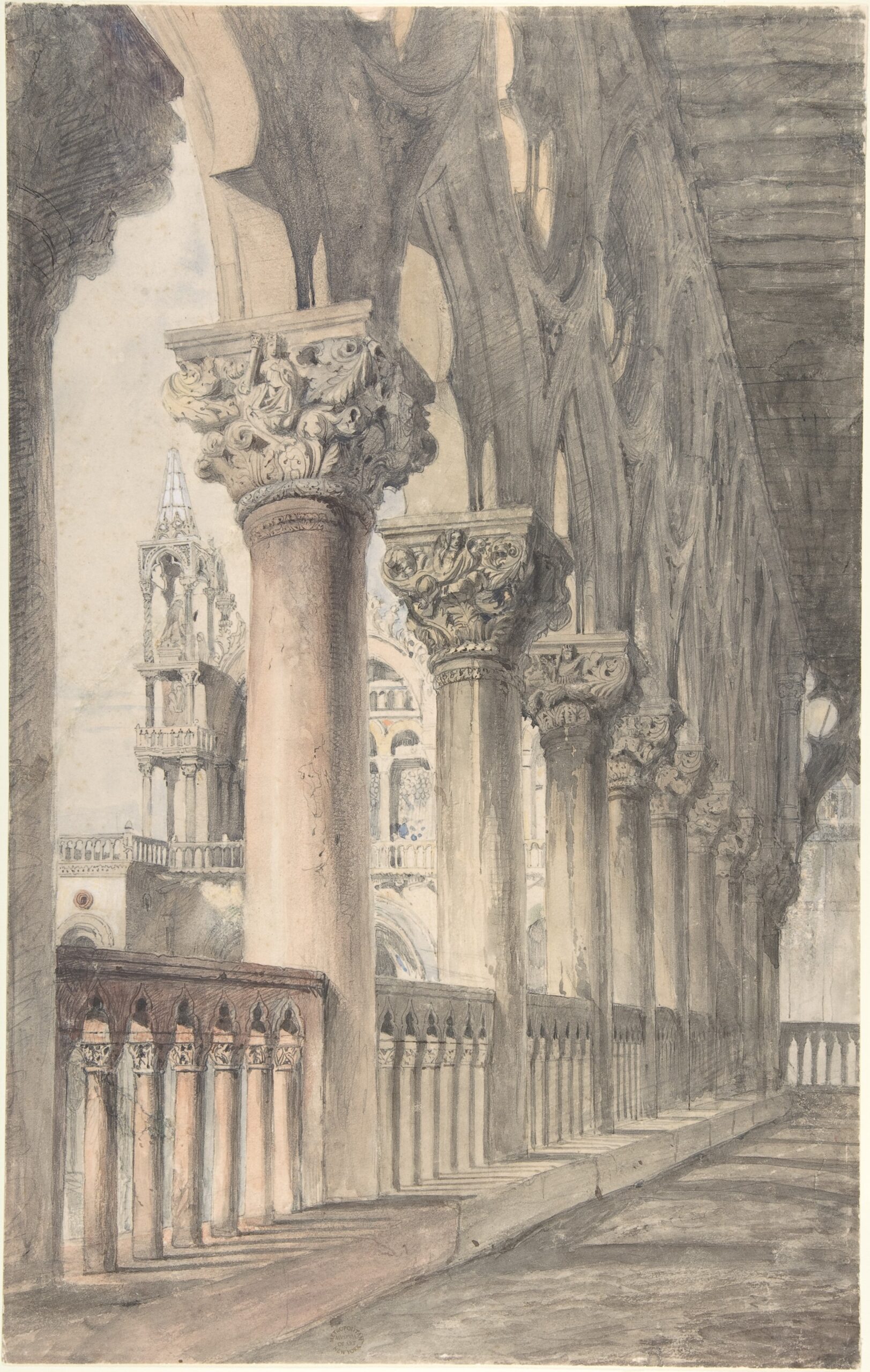
John Ruskin
Watercolour over graphite, 46 × 29 cm | 18.1 x 11.4 in
The Metropolitan Museum of Art
The first volume of his famous series of writings, Modern Painters, was published in 1843, where he boldly defended J.M.W. Turner from critics with unbridled confidence in the face of tradition. In it, he asserted that modern landscape painters, and in particular Turner, were superior artists to the Old Masters of the Renaissance. He believed that the true artist would observe and record ‘truth’ in nature, rather than invent and embellish it from the imagination. At age 26, Ruskin went travelling without his parents for the first time to study the art and architecture of Italy, France, and Switzerland. Pulling inspiration from these travels, he wrote Modern Painters Vol. II, where he argued that truth, beauty and religion are inseparably bound together, since beauty in nature is ‘a gift of God’.
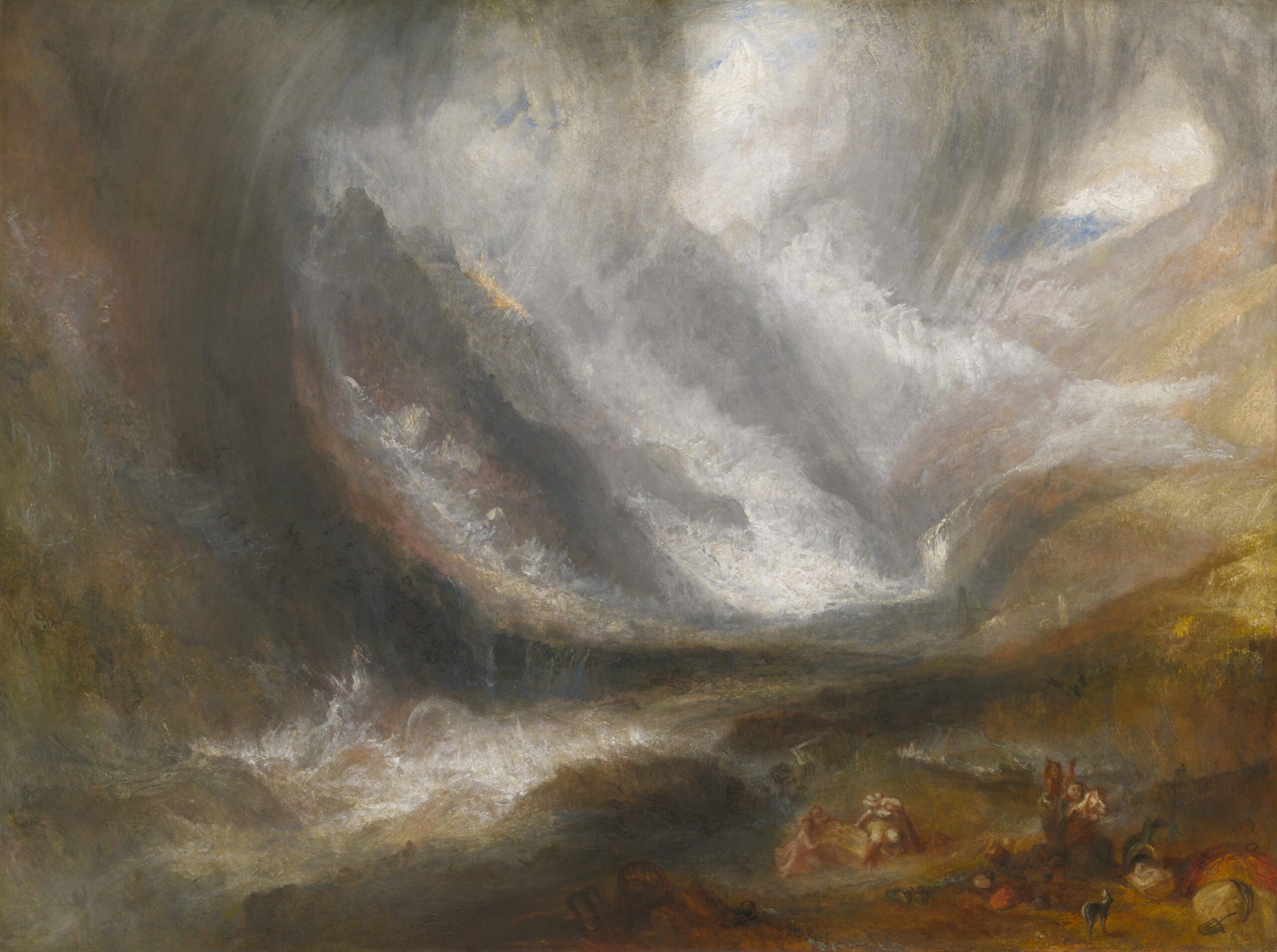
J.M.W. Turner
Oil on canvas, 92.2 x 123 cm | 36.3 x 48.4 in
Art Institute of Chicago
The Victorian Pre-Raphaelite Brotherhood was founded in 1848 by Dante Gabriel Rossetti, William Holman Hunt, and John Everett Millais. It was directly influenced by Ruskin’s writing. He supported the group financially and championed them in his writings. By this period, Ruskin was a highly influential art writer who could single-handedly make or break careers. The satirical cartoon magazine Punch mentioned him in 1856, ‘I paints and paints, hears no complaints, And sells before I’m dry, Till savage Ruskin, He sticks his tusk in, Then nobody will buy.’ In Modern Painters Vol. III, he coined the term ‘pathetic fallacy’ to describe the correlation of weather phenomena and objects to human emotions. He lectured more as he aged, but perhaps the greatest contribution to culture in this stage of his life was the Turner bequest. When J.M.W. Turner passed away in Venice in 1851, he catalogued the roughly 20,000 artworks Turner had left to the nation.
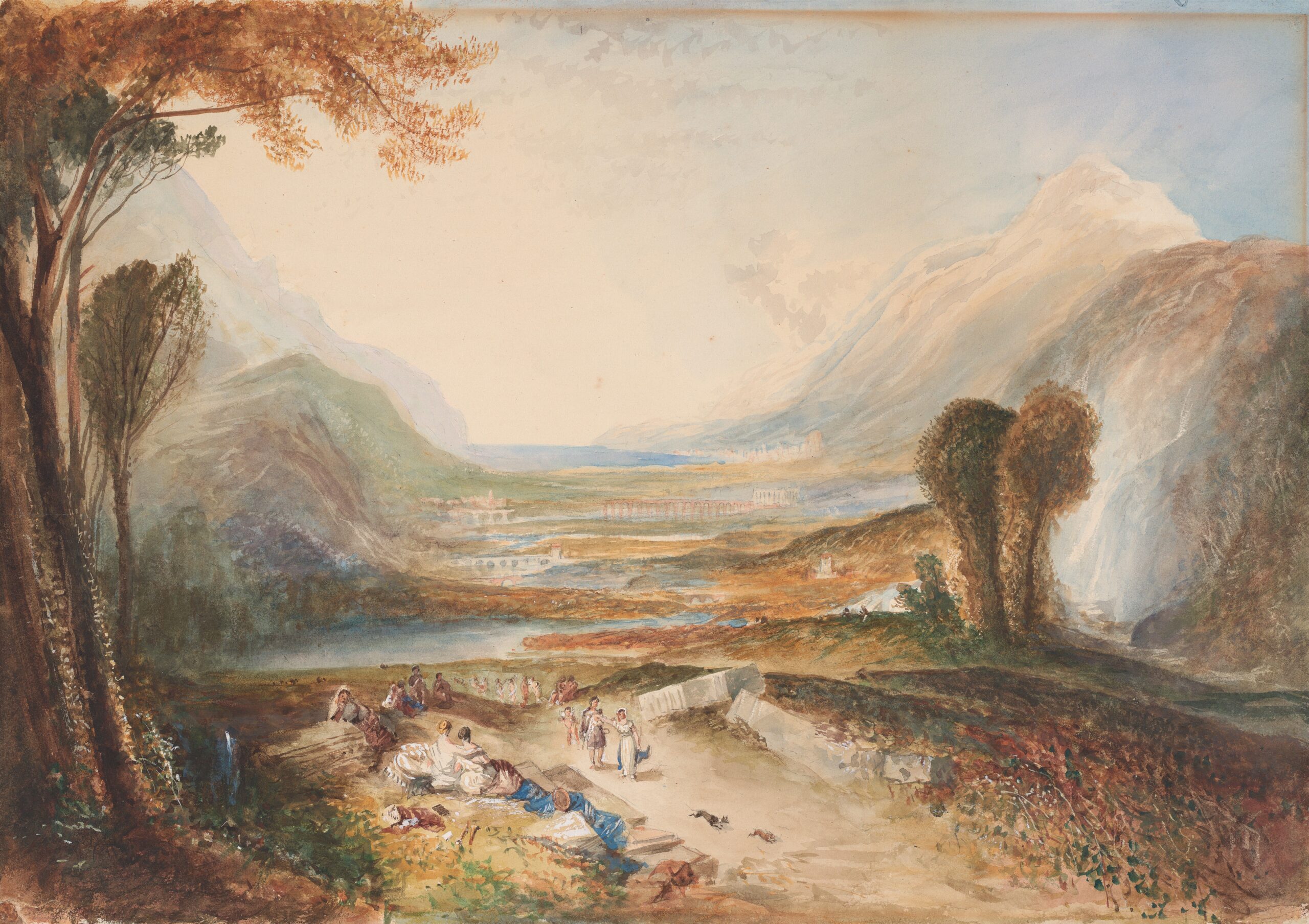
John Ruskin (after J.M.W. Turner)
Watercolour, gouache, and graphite on paper, 40 x 56.5 cm | 15.7 x 22.2 in
Yale Center for British Art
Ruskin’s legacy is marred by his inappropriate romantic obsession with Rose La Touche, a child he began tutoring in art when she was 10, and he was turning 39. From the beginning, he was romantically interested in her and carried around a letter she wrote to him as a child thanking him for his tutelage. He asked to marry her when she turned 18, but her parents forbade the union after speaking to his ex-wife, Effie Gray, about her experience being married to him. He asked again when Rose was 21, but once again the marriage was refused. Although there is no evidence that Ruskin had any sexual relationships in his life, his recorded infatuation with children and disgust at women is indefensible. Despite these stories, his reputation wasn’t tarnished, which is a sign of the era he lived in.
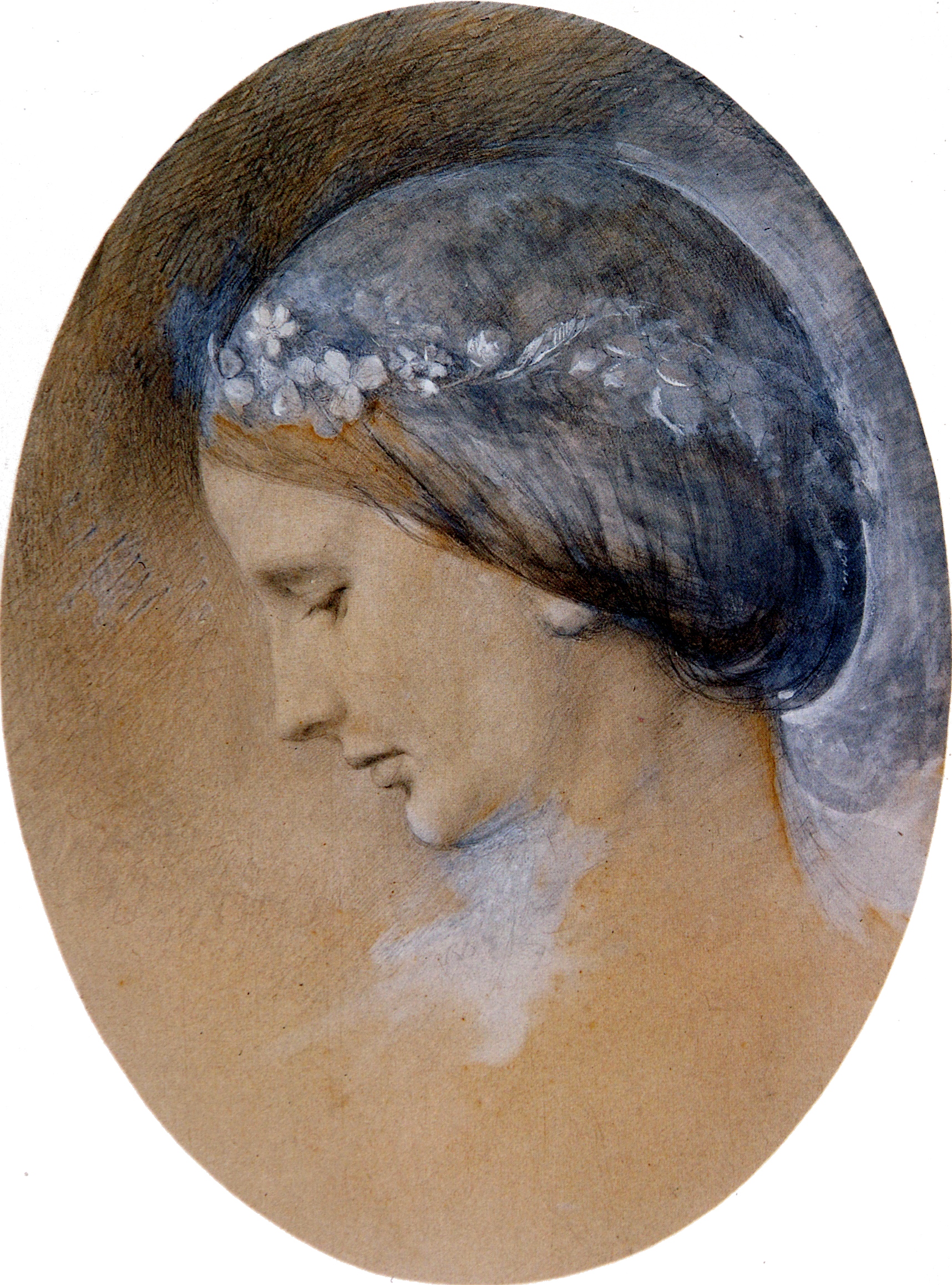
John Ruskin
Pencil with wash and bodycolour, 49.5 x 33 cm | 19.4 x 13 in
Private Collection
Rose died aged 27 in a nursing home after a period of poor mental and physical health, an event that dramatically shifted Ruskin’s own mental state and beliefs. He saw Rose in visions, which led to a newfound interest in Spiritualism and attempts to contact her in the afterlife through spiritual mediums. By the time of his infamous feud with Whistler, Ruskin was becoming increasingly detached from reality.
The Rivalry Between Whistler and Ruskin

James Abbott McNeill Whistler
Oil on panel, 60.3 x 46.7 cm | 23.7 x 18.4 in
Detroit Institute of Arts
In 1877, Ruskin visited the Grosvenor Gallery in London, which opened with a group exhibition of works that were rejected from the Royal Academy of Arts. Here, he encountered Whistler’s incendiary painting Nocturne in Black and Gold, the Falling Rocket. This nocturne captures trails of speckled light cast from exploding fireworks over the Thames at night. The tonalist palette envelops the spray of gold light in a blue-green haze. The brushstrokes lurch toward abstraction in their brevity and ambiguity, barely suggesting the crowd on the riverbank. He captured the sensation of standing surrounded by darkness, unable to perceive much else than the light defying it.
In Ruskin’s journal Fors Clavigera, he praised the pre-Raphaelite Edward Burne-Jones, before launching a scathing attack on Ruskin’s fireworks. He wrote:
‘For Mr Whistler’s own sake, no less than for the protection of the purchaser, Sir Coutts Lindsay ought not to have admitted works into the gallery in which the ill-educated conceit of the artist so nearly approached the aspect of wilful imposture. I have seen, and heard, much of cockney impudence before now; but never expected to hear a coxcomb ask two hundred guineas for flinging a pot of paint in the public’s face.’
– Letter 79 in Fors Clavigera
In other words, Ruskin publicly asserted that Whistler was no better than a conman for selling his painting for what he deemed an exorbitant price. The brazenness of the statement that Whistler and the gallery were trying to scam the public pushed Whistler to sue him for libel. Interestingly, it wasn’t the abstract quality of the work that had so offended Ruskin, since he was an advocate for J.M.W. Turner’s works, which also veered the landscape into abstraction. Instead, he felt that Whistler was focused on innovation in material, or forcing modernity, rather than expressing ‘truth to nature’. Whistler didn’t sue because his painting had been compared belittlingly to ‘flinging a pot of paint’ – rather, because he was accused of being an imposter in the art world.
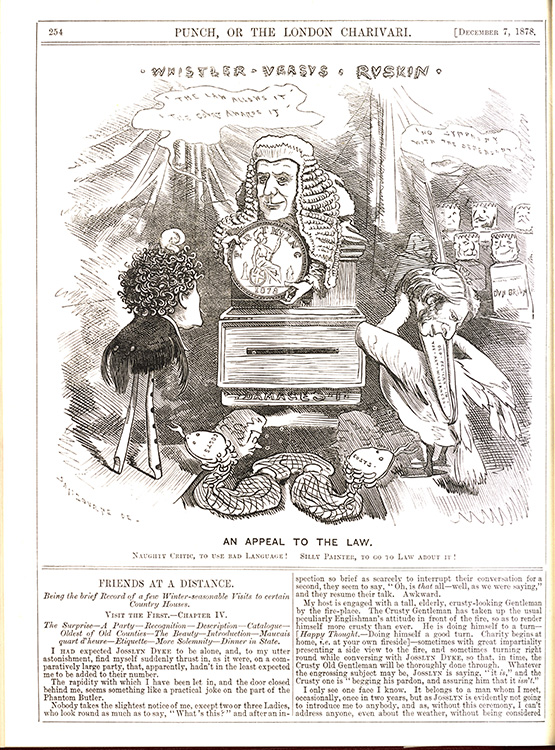
Edward Linley Sambourne
Drawing, printed in magazine, 22 x 28 cm | 8.7 x 11 in
University of Delaware Library
By the time the trial came to court in 1878, Ruskin was too ill to attend following a series of mental breakdowns in the wake of Rose La Touche’s death. The case allowed Whistler to confidently perform to a captive audience and explain at length his philosophies of art. Aspects of the trial verge on the ridiculous, like when a portrait of Doge Andrea Gritti by Vincenzo Catena was brought in as an example of valuable art. In response, Whistler argued that his work was not so dissimilar to Ruskin’s hero, J.M.W. Turner.
Whistler’s answers form part of the reason he is regarded as the ‘father of modern art’, articulating ideas about art that we now take for granted. For instance, when asked about the meaning of his Nocturnes, he explained that every painting is simply a problem to solve in terms of light, form, and colour. Later, when Ruskin’s representative asked whether he truly believed the painting was worth 200 guineas, he replied, ‘No. I ask it for the knowledge of a lifetime.’
Beyond the Rivalry
Although Whistler won the case, he was financially devastated by bringing it to court in the first place. He was awarded the measly fee of a farthing in damages, and none of his legal costs were covered. The court had allowed him to win the case on principle, but without any financial recourse for the trouble.
After the case, Whistler travelled to Venice to complete a commission of twelve etchings including The Doorway, below. He intended to be there for a few months, but ended up working there for over a year, living amongst other artists including John Singer Sargent. During this time, he produced a huge body of work, immersed in the city.
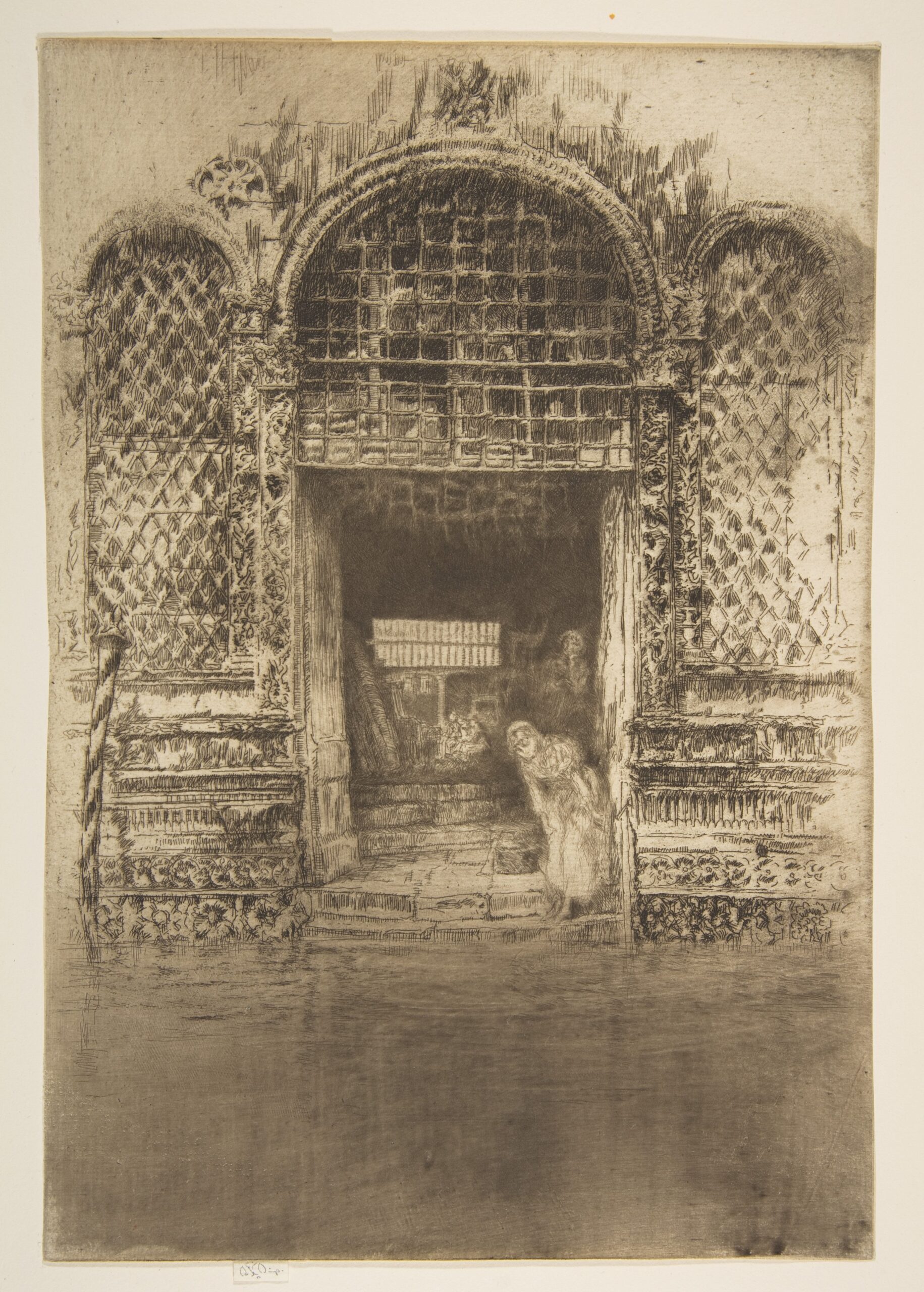
James Abbott McNeill Whistler
Etching, drypoint and roulette, 29.2 x 20 cm | 11.5 x 7.9 in
The Metropolitan Museum of Art
From this point forward, his career was on the rise in London and Paris, and he worked on a number of commissions. In this successful period, he published a book detailing his firsthand account of the court proceedings from the trial, made responses to other critics writing about his work, and explained some of his hopes for art. The book was aptly titled The Gentle Art of Making Enemies (1890).
For example, an article in The Times criticised his Symphony in White No. III for including other colours:
‘In the ‘Symphony in White No. III.’ by Mr. Whistler there are many dainty varieties of tint, but it is not precisely a symphony in white. One lady has a yellowish dress and brown hair and a bit of blue ribbon, the other has a red fan, and there are flowers and green leaves. There is a girl in white on a white sofa, but even this girl has reddish hair; and of course there is the flesh colour of the complexions.’
In response, Whistler cheekily wrote:
‘How pleasing that such profound prattle should inevitably find its place in print! (…)
Bon Dieu! did this wise person expect white hair and chalked faces? And does he then, in his astounding consequence, believe that a symphony in F contains no other note, but shall be a continued repetition of F, F, F.?… Fool!’
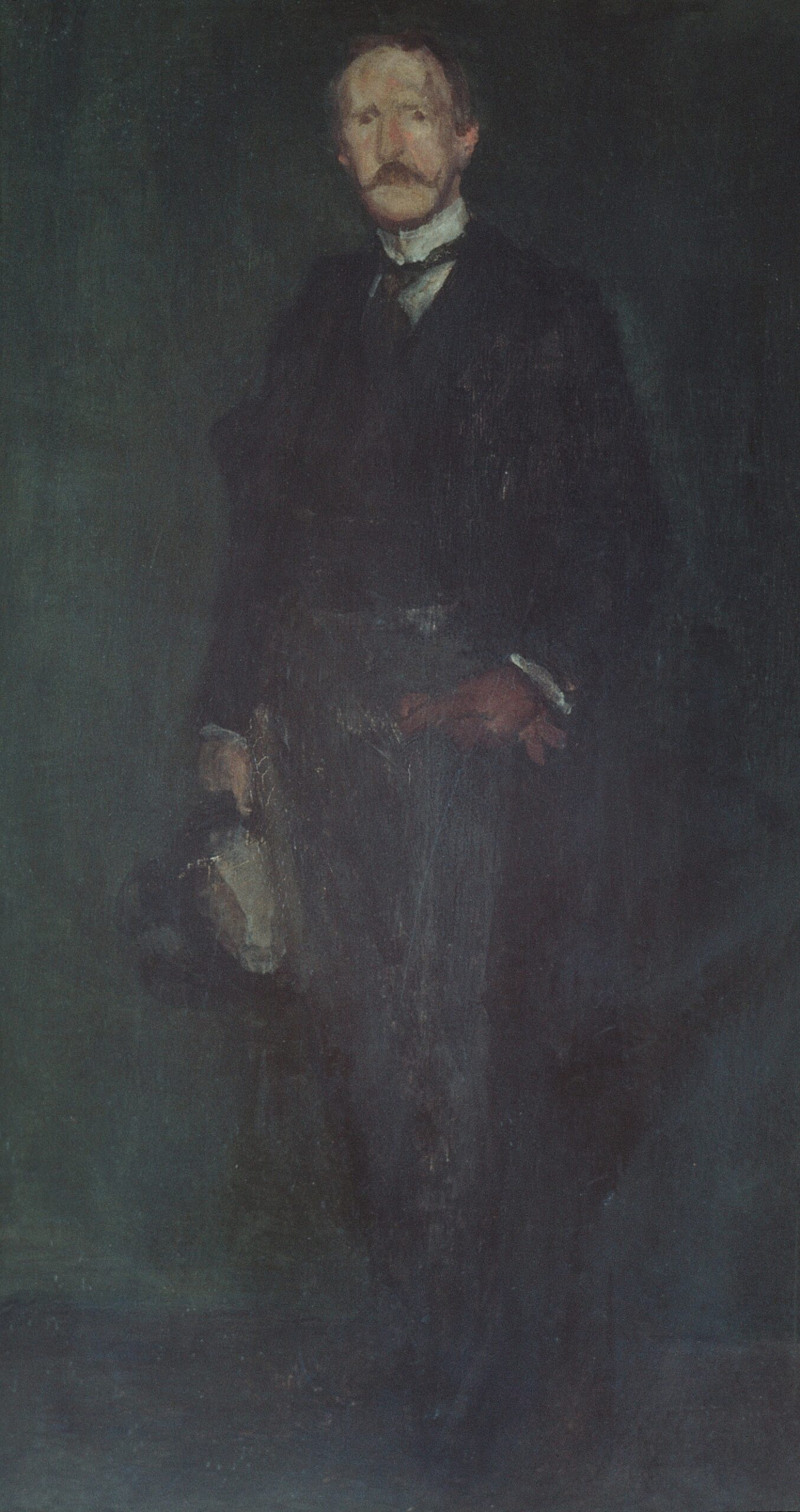
James Abbott McNeill Whistler
Oil on wood, 29.4 x 17.8 cm | 11.6 x 7 in
The Metropolitan Museum of Art
Although Ruskin didn’t attend the scandalous trial, he was aware of the outcome of the case, and felt that the legal system had ruled against his right to be an art critic. In indignation, he resigned as a professor of Fine Art at Oxford University. Despite his declining mental state and discouragement at the outcome of the case Ruskin remained highly regarded until his death 12 years after the court case in 1900, at the age 80. Sadly, Whistler died shortly after Ruskin in 1903, aged 69.
Both men were incredibly influential in their perspective and approach to art making, through both criticism and practice. The story of the trial set early precedents for attitudes to the art of the future. Ruskin’s line of attack, and Whistler’s defense, foreshadow the belittling criticism of the monetary value and validity of artworks, making Whistler the first in a long line of artists forced to justify the merit of their own work. The reassuring assertion of his belief in ‘art for art’s sake’ continues to resonate to this day.
Further Reading
Rivalries and Friendships in Art History: Labille-Guaird and Vigee Le Brun
Tonalist Techniques in Painting and Drawing
Exploring the Impact of the Victorian Colour Revolution
Recreating the Palette of J.M.W. Turner
Shop Art Materials on jacksonsart.com