Practicing as a woman artist in 18th century France was no easy feat. To be accepted into the Royal Academy of Art and Sculpture, they had to be nominated by the existing male members and deemed worthy, despite having restricted access to training. Only four women a year were allowed to join, and in 1783, they admitted two of the most sought-after painters in Paris – Elisabeth Louise Vigée Le Brun and Adélaïde Labille-Guiard. They were swiftly portrayed as bitter rivals to a captive public, but who really pitted these artists against each other?
Connections between individual artists in art history remind us that at the core of art movements and the progress of visual culture were human individuals, with real personalities, fears, and dreams. Whilst we can never know their true feelings, documented relationships between artists – whether clashes or companionship – offer fascinating context to their lives. No artist truly creates in isolation, and competition and collaboration are as much facets of the art world as creation.
Introducing Elisabeth Louise Vigée Le Brun
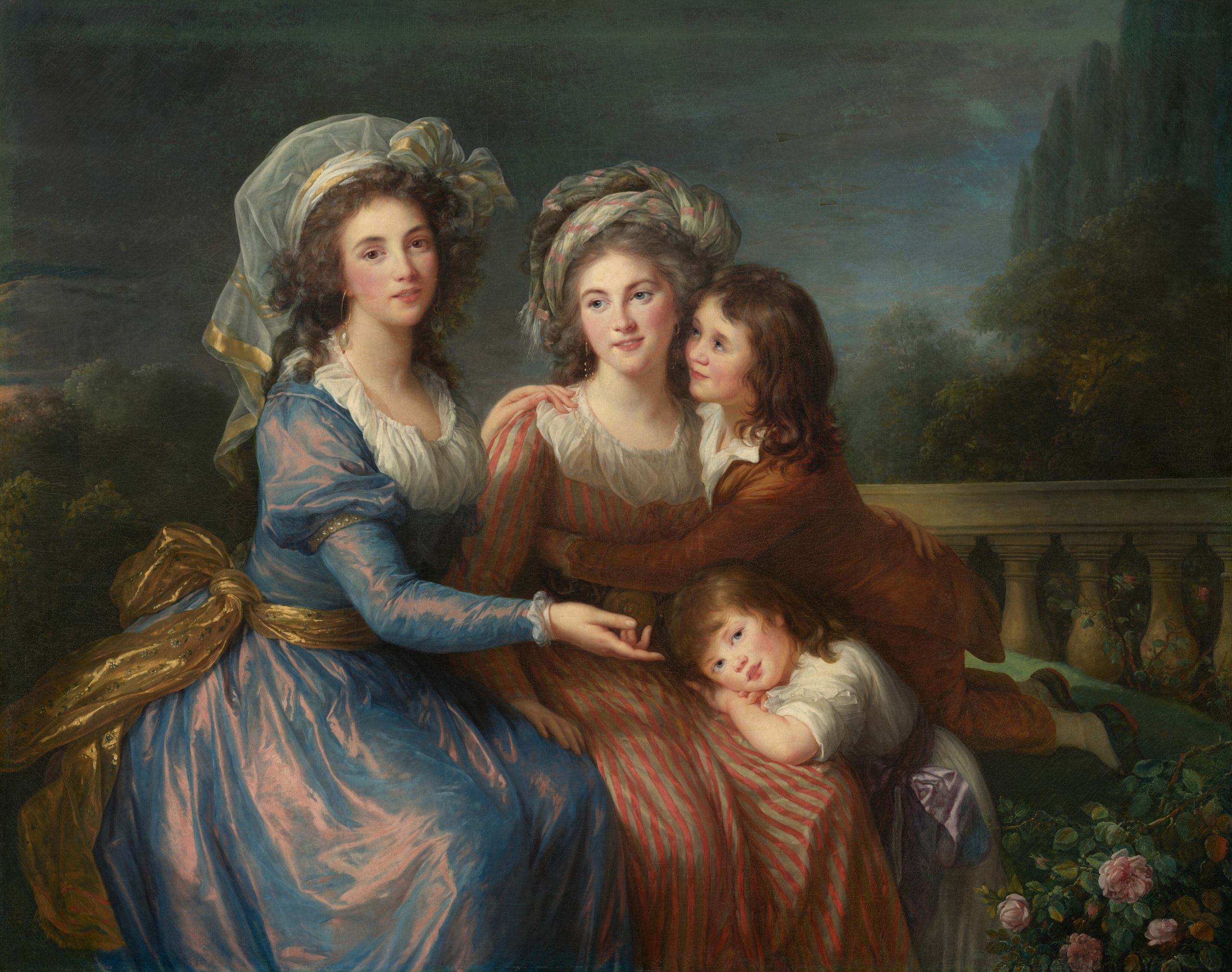
Élisabeth Louise Vigée Le Brun
Oil on canvas, 123.4 x 155.9 cm | 48.6 x 61.4 in
National Gallery of Art
Elisabeth Vigée Le Brun was born in 1755 and began training as an artist when she was a child under the mentorship of her father, the painter Louis Vigée. Sadly, he passed away when she was 12, but she continued her pursuit of art and remarkably became a working portraitist by the age of 15. At the time, it was illegal to be a working artist without a license, so after her initial studio was seized, she applied to join the Académie de Saint-Luc in 1774. This Académie was a sanctuary for artists who didn’t have access to the prestigious Académie Royale de peinture et de sculpture. After years of dedicated work, the Queen of France, Marie Antoinette, became Vigée Le Brun’s patron, and in their time together, she painted over 30 portraits of the Queen and her family. Her work straddles the Rococo movement – after its aesthetics were discarded post-Revolution – with Neoclassicism that followed.
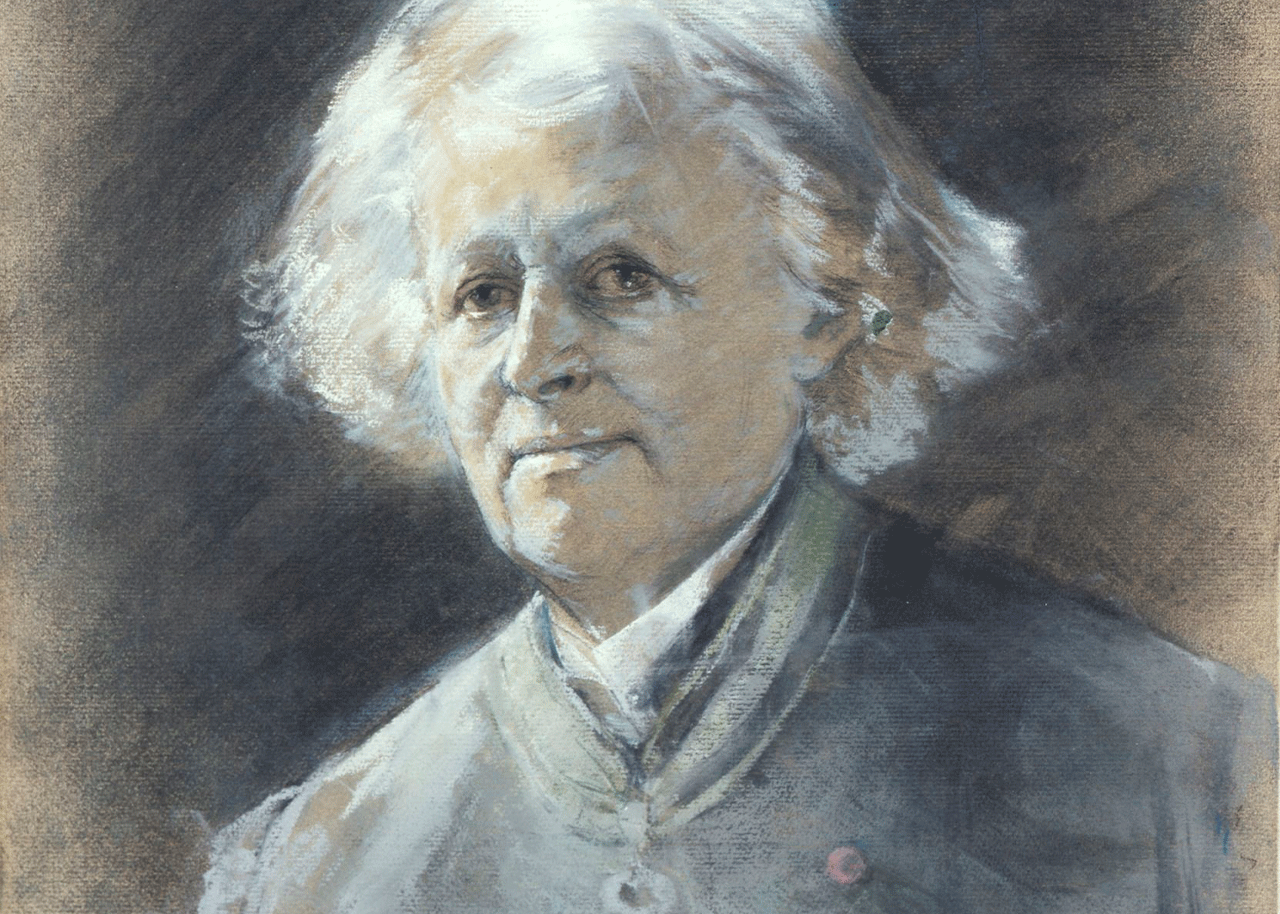
Introducing Adélaïde Labille-Guiard
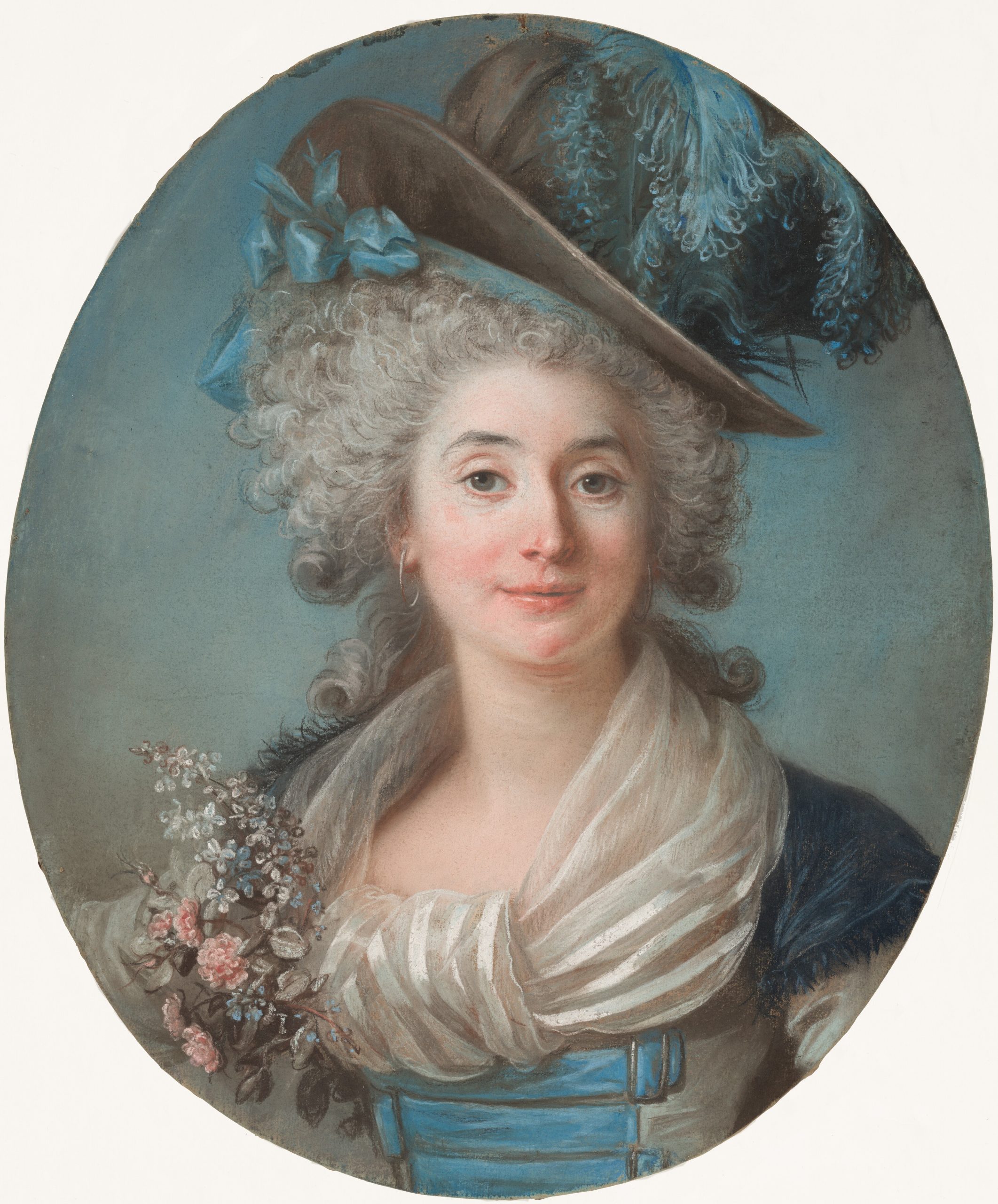
Adélaïde Labille-Guiard
Pastel on blue laid paper mounted on canvas, 55 x 46 cm | 21.7 x 18.1 in
National Gallery of Art
Adélaïde Labille-Guiard also had early success after studying with established artists from childhood. She was trained by the miniature painter François-Élie Vincent, and later the Rococo pastel master Quentin de la Tour. She was accepted into the Académie de Saint-Luc aged 20, in 1767, where she was able to practice professionally. Both Labille-Guiard and Vigée Le Brun found themselves in the same predicament when its doors were closed in 1776, after an exhibition they participated in was too successful. This threatened the Académie Royale, which appealed to the King to close it down. After the closure, Labille-Guiard learnt to paint with oils, since submitting an oil painting was a requirement of acceptance to the prestigious Académie Royale. She was mentored by her friend and fellow artist François-André Vincent, who would later become her husband. Like Vigée Le Brun, Labille-Guiard’s work is placed in the shift between Rococo and Neoclassicism.
The Rivalry Between Le Brun and Labille-Guiard
Pahin de la Blancherie was a curator, writer, entrepreneur, and journalist who hosted a curatorial project called the Salon de la Correspondance. He coordinated weekly displays to sell a wide variety of wares, from paintings and sculptures to household designs, animal specimens, curiosities, and books. He had noticed that the Académie Royale excluded a huge number of French artists and sought them out. He exhibited about 19 female artists over his 8-year-long project, including one show that directly compared Elisabeth Louise Vigée Le Brun with Adélaïde Labille-Guiard in 1782.
He hung the most provocative works he could to encourage speculation and comparison – a self-portrait by each artist, holding their palettes. He wrote, “The self-portraits of two women artists, which chance has brought together as pendants, have created a highly piquant spectacle.” This chance was, in fact, by design – he knew the audience would be stunned to see two women not just practicing professionally, but also portraying themselves.
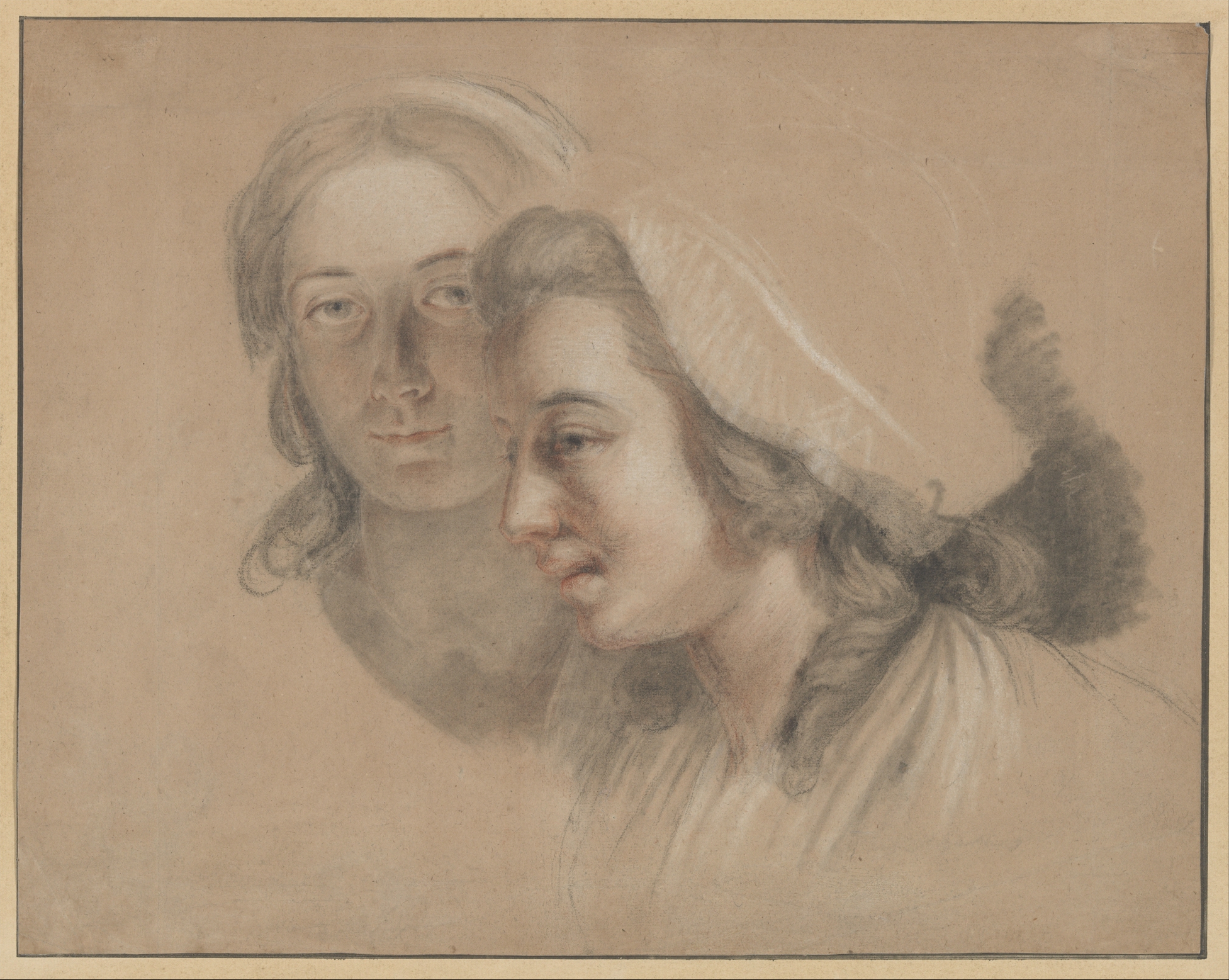
Adélaïde Labille-Guiard
Black chalk with stumping, red and white chalk, 38.1 x 48.3 cm | 15 x 19 in
The Metropolitan Museum of Art
La Blancherie wrote and distributed a pamphlet to promote the exhibition, where he described Vigée Le Brun’s paintings as “charming productions” and Labille-Guiard’s as having “perfect resemblance”. Their work was often compared stylistically from a similar angle, where Vigée Le Brun was considered ‘feminine’ for her stylised flattering figuration and loose brushstrokes, and Labille-Guiard as ‘masculine’ for her pursuit of realism through precise application and muted palette, since rigour was associated with men. From this exhibition forward, La Blancherie had sparked a rivalry that was perpetuated by their critical audiences, but not generated by the women themselves. Despite the speculation and critique, it seems that the women barely interacted with each other, and just crossed paths in exhibitions.
The following year, in 1783, Elisabeth Louise Vigée Le Brun and Adélaïde Labille-Guiard were two of the limited quota of four women artists to be accepted into the Académie Royale. This was not easily achieved, since the existing members had to nominate them in and deem them as equals. Labille-Guiard was admitted by the committee, and Vigée Le Brun was accepted at the personal request of Louis XVI, on behalf of his wife Marie Antoinette, who wanted to see her favoured portraitist admitted.
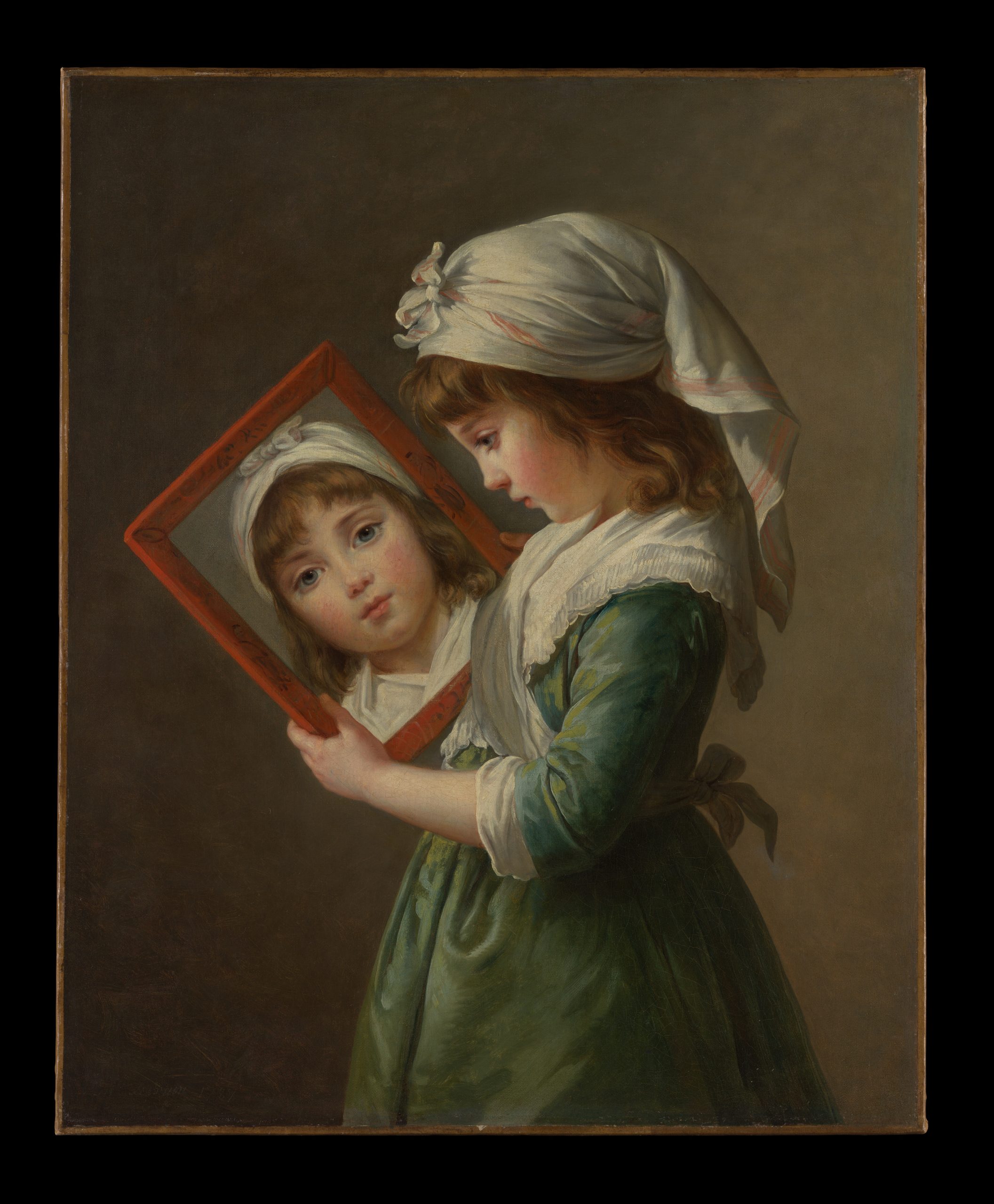
Elisabeth Louise Vigée Le Brun
Oil on canvas, 73 × 59.4 cm | 28.7 x 23.4 in
The Metropolitan Museum of Art
By entering the public sphere, these women challenged societal expectations, and were met with criticisms of their character that fanned the flames of their manufactured rivalry. At the time, the act of displaying their work was conflated with promiscuity, and both artists were dogged by salacious rumours. They were sexualised and defamed in a pamphlet after their debut at the Académie Royale called Suite de Malborough, which implied they and other female artists used sexual favours to gain careers. It also accused Labille-Guillard of having 2000 lovers through a pun on the name of her mentor and future husband, the Academician François-André Vincent (vingt-cents meaning 20 hundreds), and that his “love made her talent”. She appealed to the law about the pamphlet, writing, “One must expect to have one’s talent ripped apart,” but “who can plead on behalf of women’s morals?”
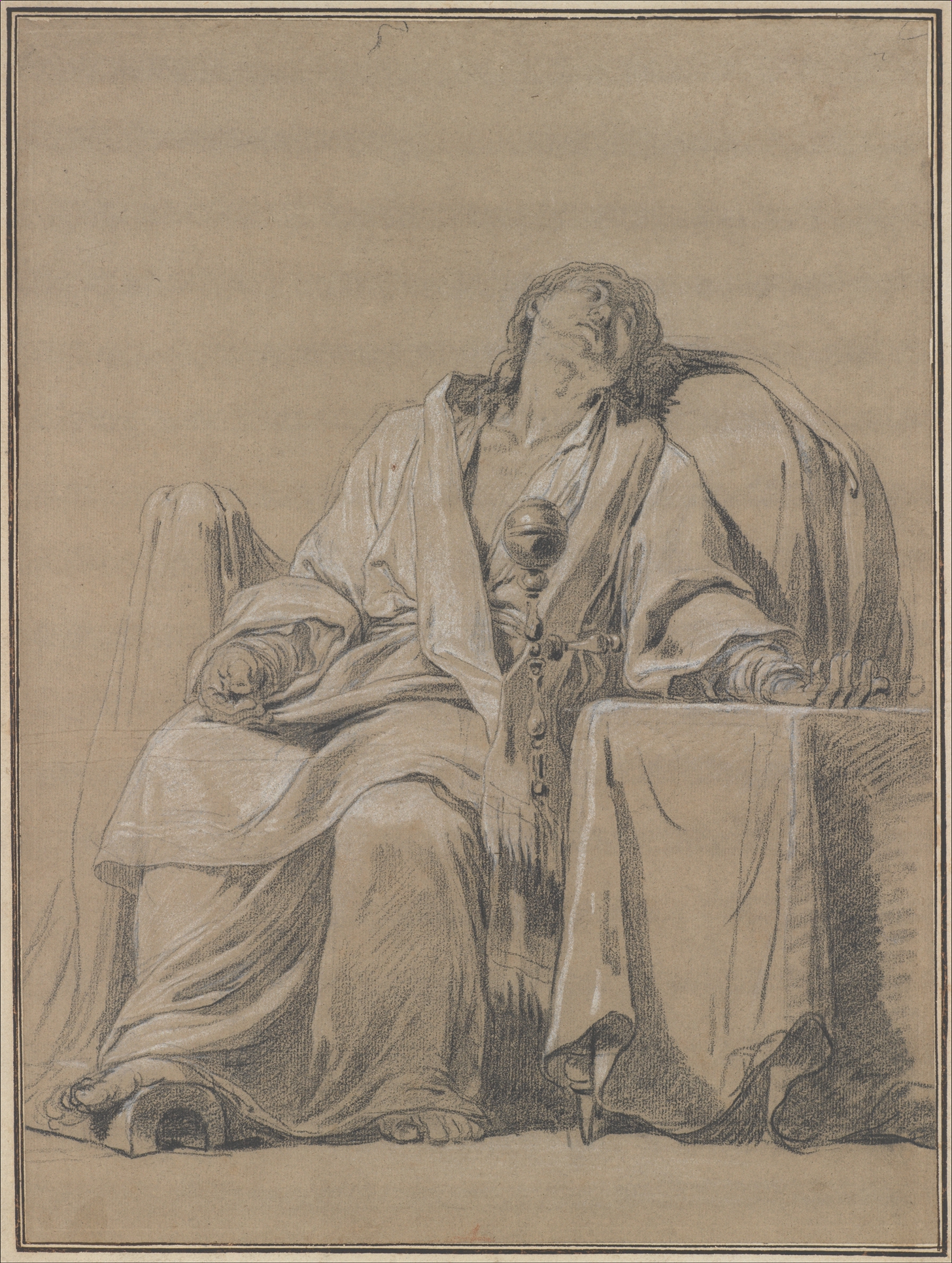
François-André Vincent
Black and white chalk on brown paper, 45 x 33.6 cm | 17.7 x 13.2 in
The Metropolitan Museum of Art
She gambled by making a painting in response to prove her modesty – the following Self-Portrait with Two Pupils, Marie Gabrielle Capet and Marie Marguerite Carraux de Rosemond. A watchful bust of her father sits in the background, she includes a sculpture of a vestal virgin, and paints herself in the role of the teacher, doing a demonstration for young women artists. This cast her in a new light to high society, whilst she quietly asserted that more women should have the opportunity to be artists. After this painting was exhibited, she received important commissions from members of the Royal family.
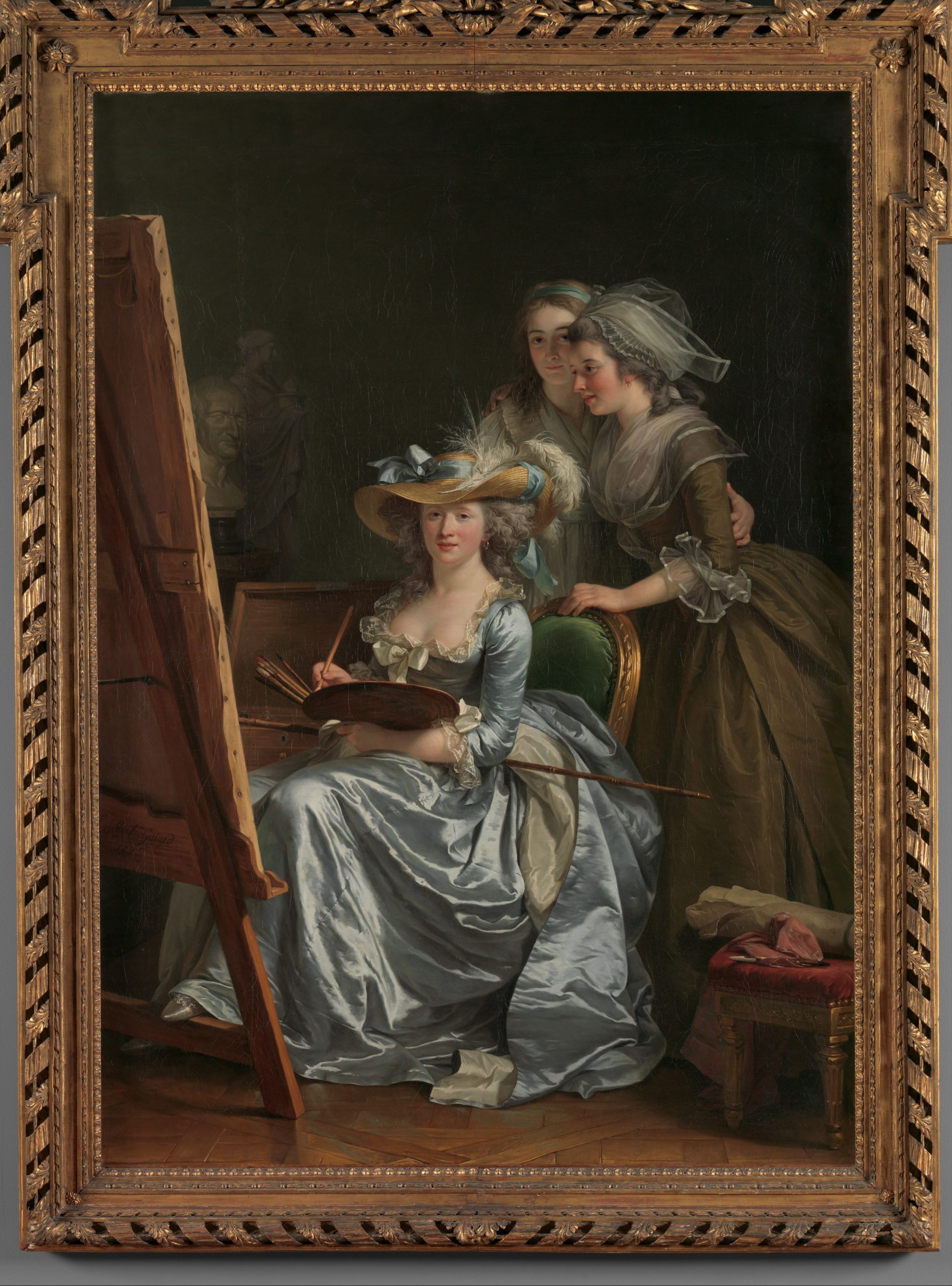
Adélaïde Labille-Guiard
Oil on canvas, 210.8 x 151.1 cm | 83 x 59.5 in
The Metropolitan Museum of Art
It’s clear that the male artists and audience of the time felt threatened by the skill of these brilliant, established artists, who happened to be women. We can only speculate how they may have discussed their challenges together, and how they felt about having to defend the pursuit of their careers. Writing remains intact from both parties, but it doesn’t include derogatory writing about each other. This rivalry was craftily engineered for attention, fuelled by the misogyny of their era.
Stylistic and Material Differences
The self-portraits that sparked Vigée Le Brun and Labille-Guiard’s notorious ‘rivalry’ both survive to this day. The Vigée Le Brun self-portrait is held in a private collection, although she made a copy of it called Self Portrait in a Straw Hat, which hangs in the National Gallery in London. Labille-Guiard’s Self-Portrait was thought to have been lost until it appeared at auction in Paris in December, 2025. It was acquired by the Palace of Versailles to prevent it from returning to a private collection again, after being recognised as a national treasure. Seeing each work today, it’s clear that the very different stylistic approaches in these works fed into the narrative of their artificial rivalry.
Vigée Le Brun’s self-portrait was executed in oils with vivid colour, whereas Labille-Guiard’s was a pastel drawing. Next to each other, the richness of the oil would have overwhelmed the sensitive naturalistic pastel browns and greys. Vigée Le Brun’s self-portrait was directly inspired by Portrait of Susanna Lunden by Rubens, which she admired for the effect of the reflected natural light and shadow from the hat across the subject’s face. She wrote:
“This painting delights me and inspired me to make my own portrait in Brussels in search of the same effect. I painted myself wearing a straw hat with a feather and a garland of wild flowers, and holding my palette. When the portrait was exhibited at the salon, I dare say it greatly enhanced my reputation.”
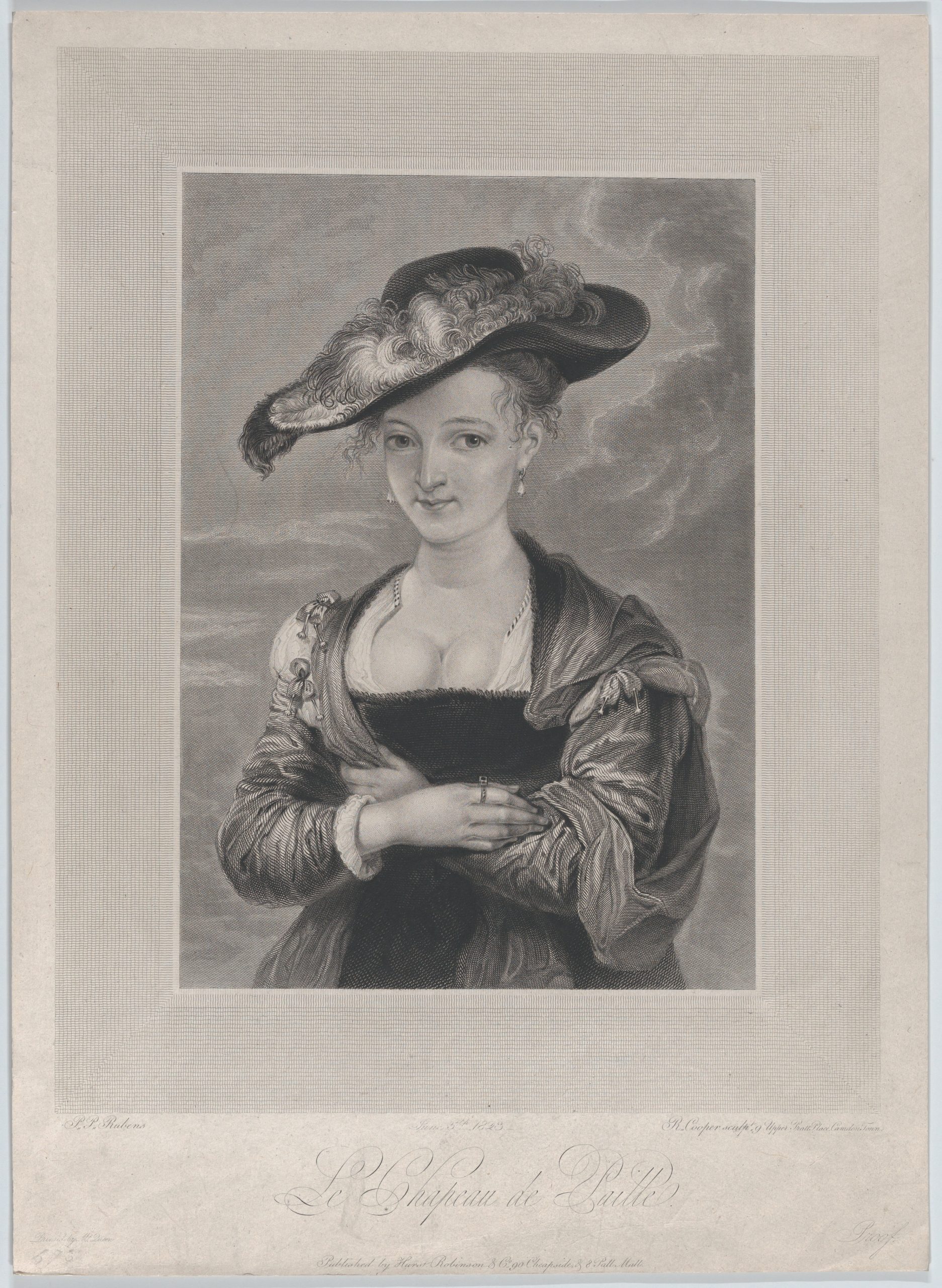
Robert Cooper
Engraving, 26.3 x 18.6 cm | 10.4 x 7.3 in
The Metropolitan Museum of Art
Unlike Susanna in Rubens’ portrait, Vigée Le Brun doesn’t appear coy with a downturned chin and crossed arms, but confidently meets our gaze holding the tools of her trade, and welcomes us with an open arm. Some elements of her appearance might seem normal today – but would’ve been surprising at the time. The dress exposes some of her cleavage, and she wears her own hair loose. At the time, high society women would’ve generally been expected to be painted wearing wigs in formal portraits.
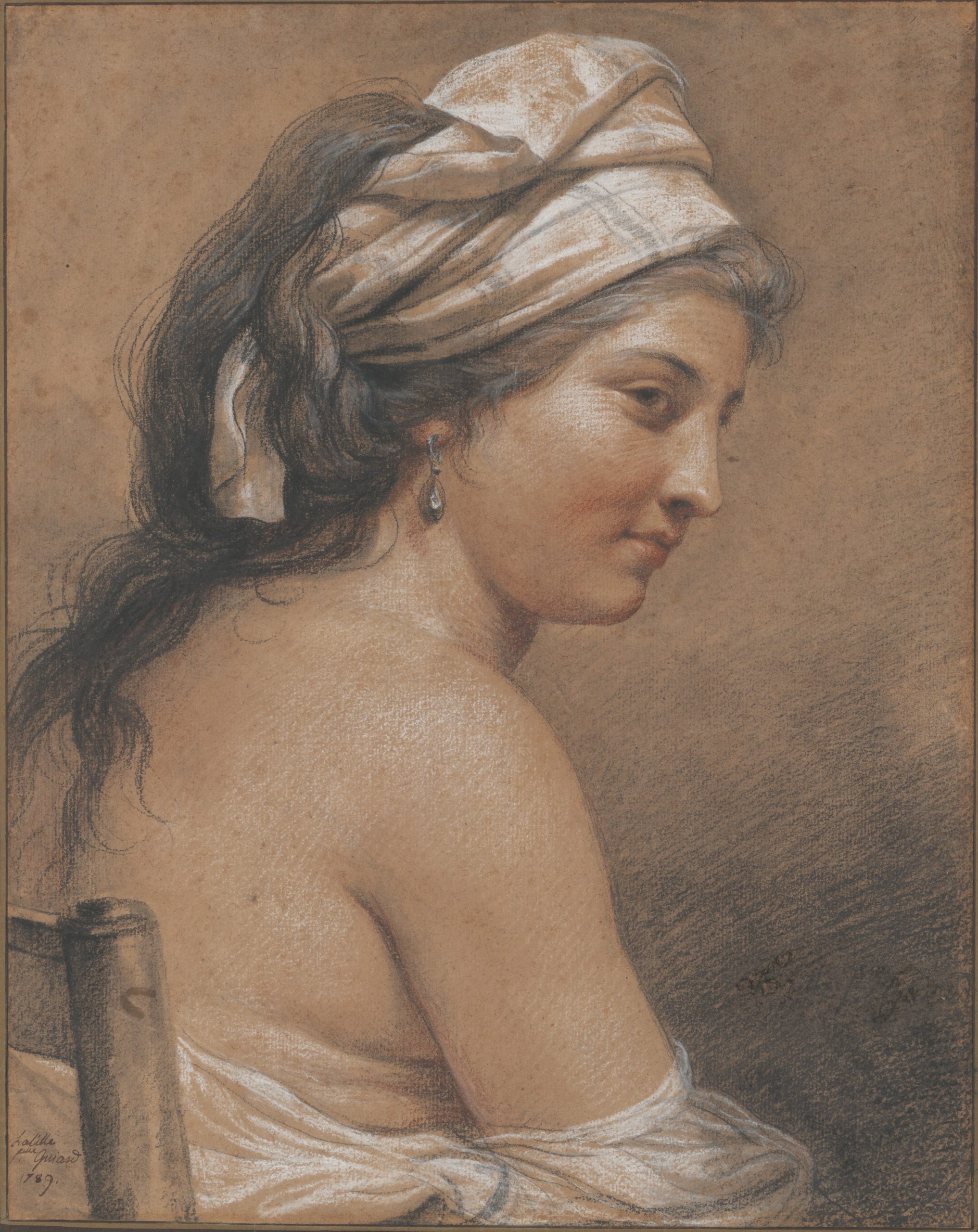
Adélaïde Labille-Guiard
Red, black, and white chalk on toned paper, 52 x 48 cm | 20.5 x 18.9 in
The Metropolitan Museum of Art
Labille-Guiard produced relatively fewer works compared to Vigée Le Brun’s prolific output, because her process was slow and careful. This traditionally acute care and simplicity in her compositions, along with Vigée Le Brun’s relatively greater renown, allowed critics to unfairly cast her in the role of the inferior, bitter artist.
Beyond the Rivalry
After the upheaval of the French Revolution and the breakdown of her marriage, Vigée le Brun left Paris amid backlash over her close relationship with the now beheaded Queen. She spent 12 years travelling around Europe amassing her fortune by painting aristocrats and royalty, from Italy to Austria, Russia, Germany, England and Switzerland, before returning to France in her later years. After the Revolution, Vigée Le Brun was physically outside of Labille-Guiard’s professional circles, although talk of their rivalry has endured to this day.
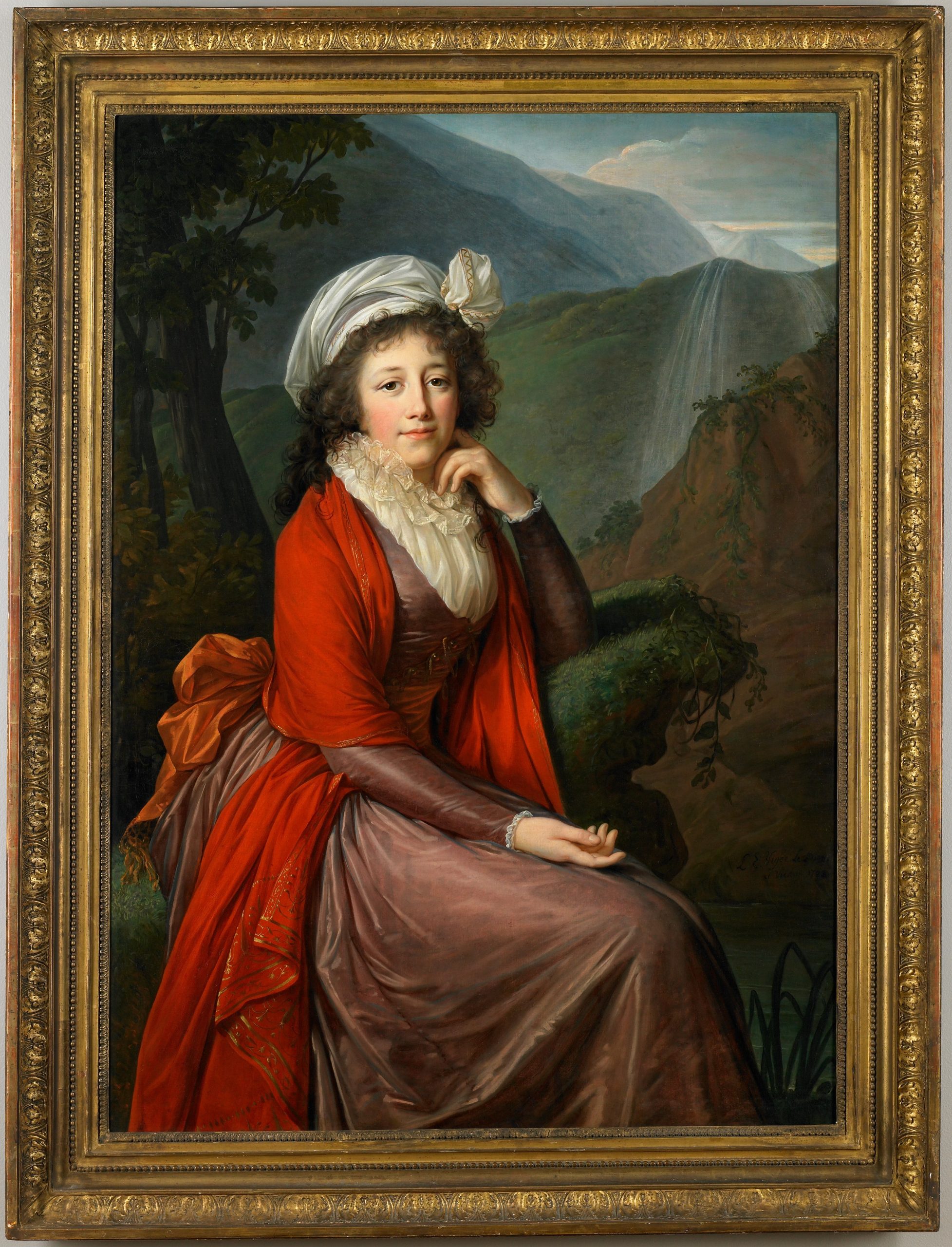
Elisabeth Louise Vigée-Le Brun
Oil on canvas, 135.9 x 99.1cm | 53.5 x 39 in
Minneapolis Institute of Art
Although Adélaïde Labille-Guiard also worked closely with the Royal family pre-Revolution, she never fled France. She positioned herself as an artist for the Republic and agreed to destroy an unfinished painting of Louis XVI and all preparatory work for it, without receiving any payment. Labille-Guiard managed to maintain her influence, and in 1790 persuaded the Académie Royale to allow women to be admitted in unlimited numbers, and that they should be allowed positions on the board. These motions were approved since she was a respected artist, although not without criticism from some male members. She then became the first woman artist to set up a studio and lodging in the Louvre in 1795, just six years after the Revolution. Labille-Guiard isn’t as well known as her ‘rival’ to this day, though she should be lauded for the doors she opened for other women artists, alongside the quality of her artworks.
Further Reading
Rococo Techniques for Painting and Drawing
Soft Pastel for Beginners: What You Need to Get Started
A Guide to Painting a Self-Portrait from Life
Techniques for Miniature Painting
Shop Art Materials on jacksonsart.com