



It’s that time of year again – The London Original Print Fair opens at the Royal Academy from the 23rd – 26th April. The Print Fair is the ultimate celebration in the original print – that means etchings, monotypes, silkscreens, linocuts, wood cuts and engravings….basically any kind of print not made on a mass production scale and usually within an edition. Collecting prints is a very popular way of starting an art collection as prints are usually more affordable than one- offs such as paintings or sculptures, but you still get to own a work that has been crafted with skill and love. The artist and illustrator and Paul Cleden shares with us his experiences of getting ready for the big event.
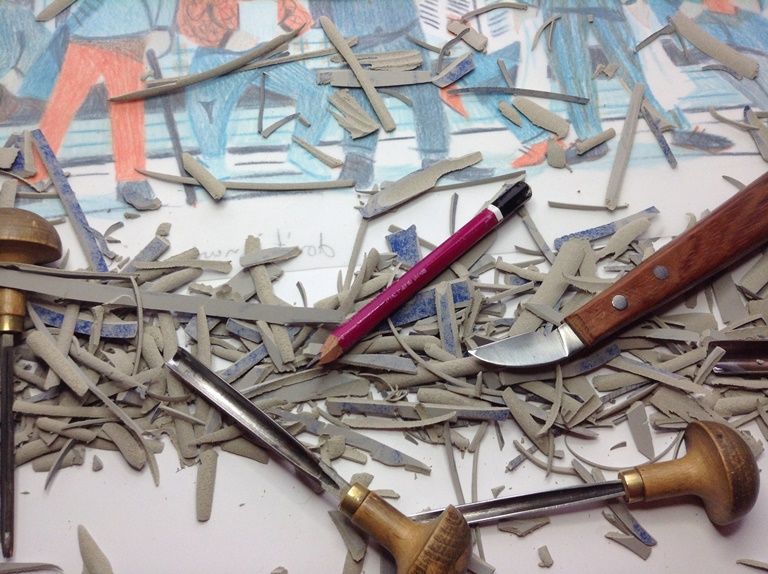
Whenever I start thinking about a new print it is always an exciting moment, and never more so than when it is destined for the London Original Print Fair, so imagine the prospect of four new prints; well that’s just what happened this year.
In a time when all too often original prints are still seen as the poor relation to other disciplines, it is a breath of fresh air to visit this exhibition, a chance for people to understand the fact that an original print is not a copy of a painting or photograph, but a unique original artist produced work. It’s refreshing, although I suspect that most visitors are already enlightened.
Once again I am exhibiting with the wonderful Brook Gallery, and back in January it was decided that I should produce four new prints to exhibit, an ambitious deadline even without any unexpected delays, and so with my next 14 weeks well and truly planned the studio beckoned.
I normally begin a print with numerous drawings covering sheets of paper with variations of ideas and designs. This is a vital tool to iron out problems before I start cutting. The colours are also explored at this stage, and with it a chance to analyse if a specific combination will work together and combine to create the other subtle variations that I need to define the design. To plan well at this stage should ensure that the later stages have no unpleasant surprises. All of the designs destined for this year’s exhibition are from ideas which have been growing in my sketch book for a while but needed the time to work up to a finished print.
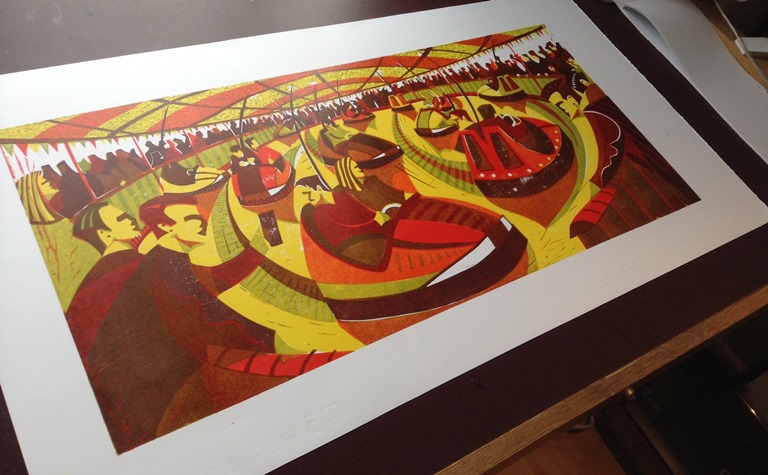
With the designs dealt with I chose the largest print first, a scene of Dodgem cars with a crowded surround. Any subject with people and movement will grab me. The figure is a key element in my work and it will always draw me, so this is a perfect choice. This is also the largest design I have made with lino for some time; just another challenge to add to all the others.
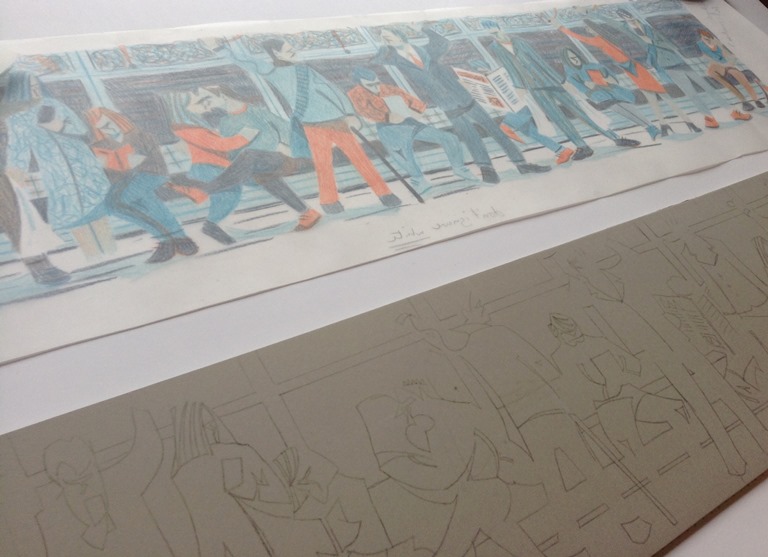
With all the design dealt with the cutting process is fairly straight forward. I always choose one colour to cut first and use this as a key for all the future colours, although on its own it is still a fairly random group of shapes; in this case the dark red. Having cut this, I print it as a proof and then offset this back onto the other three uncut blocks of lino while the ink is still wet on the paper. Having done this the registration becomes a far less daunting prospect, and the remaining three colours can be drawn out and cut using the offset image as a guide.
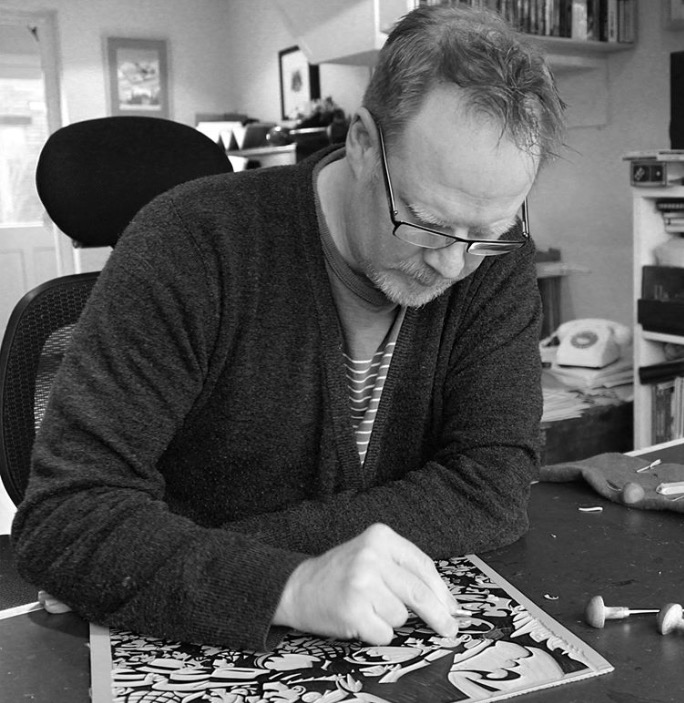
Cutting lino is a strangely compelling activity, the random shapes which appear, and even the direction of the cut need to be remembered, and deciding which marks to leave and which to remove is something I will often leave to chance, so the marks that appear are a pleasant surprise.
A week or so of cutting and the four blocks are ready for the next stage. After a day or two proofing the colours and some minor adjustments all should be ready to print, unless you do what I did and decide that you don’t like the final colours design, and spend a whole week cutting a new block, adding extra bits to other blocks and printing this, only to decide the first one was better!
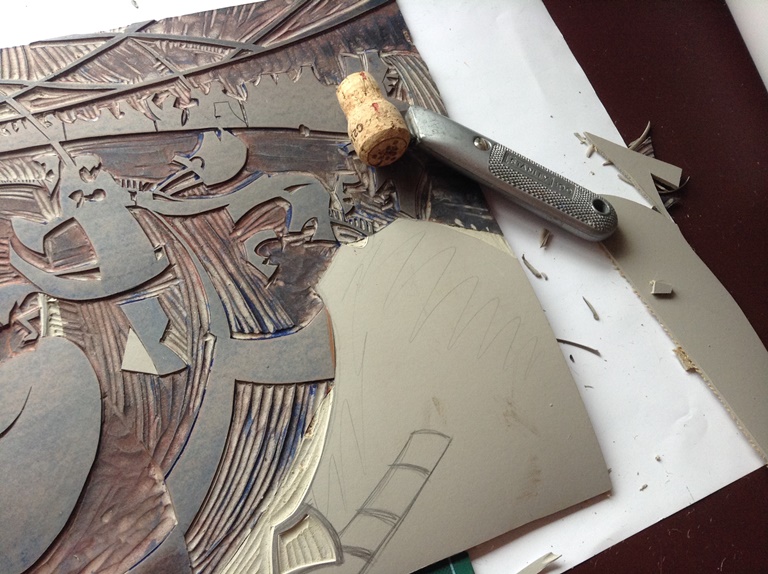
It is always essential to be accurate and methodical when making a multi block print, so time, carefully cutting the paper square and an accurate key block all influence the end product.
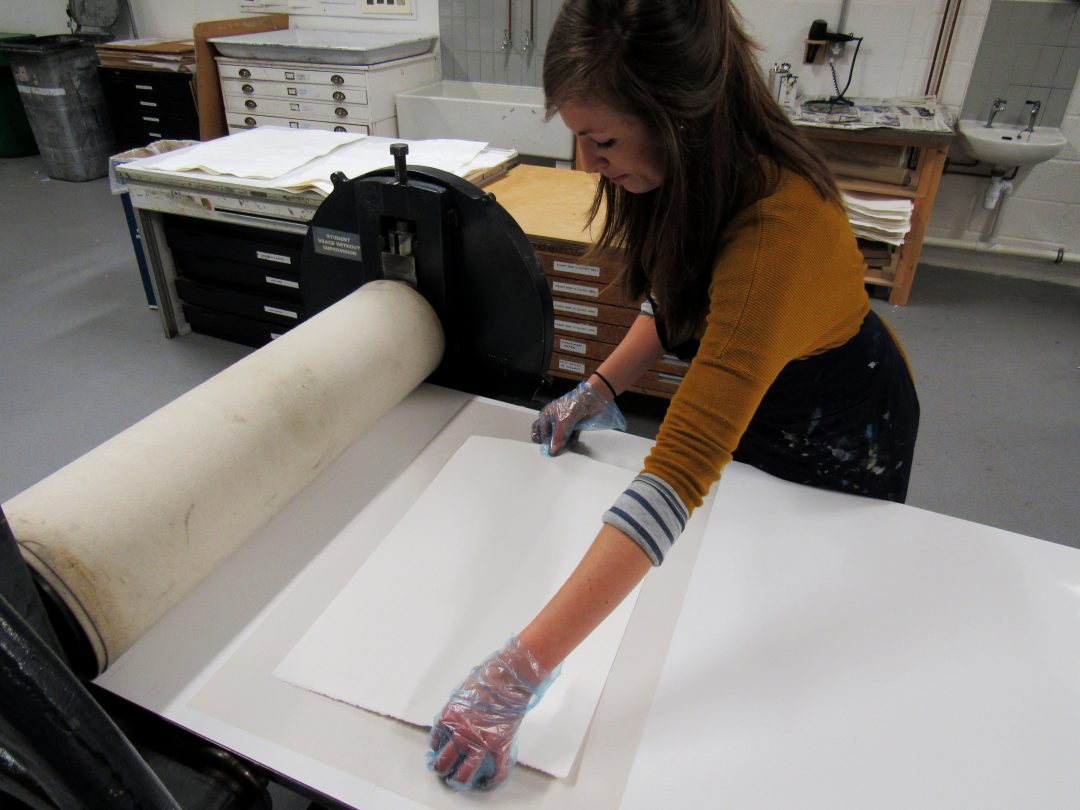
I really enjoy the process of printing, the gradual reveal of a design always creates unexpected results; the choice of paper,the amount of oil added to the ink. So many factors which all influence the end result, and each needs to be recorded to ensure a regular edition.
I like to use linseed oil based inks at the moment, they overlay to create wonderful colours. I mostly print from light to dark( but not always!). The paper on this occasion is a 300gsm Fabriano 5. Currently I tend to use this weight, although I do also like a thin Japanese paper called Kozo, but this is so fine it would be a nightmare to handle on really large images.
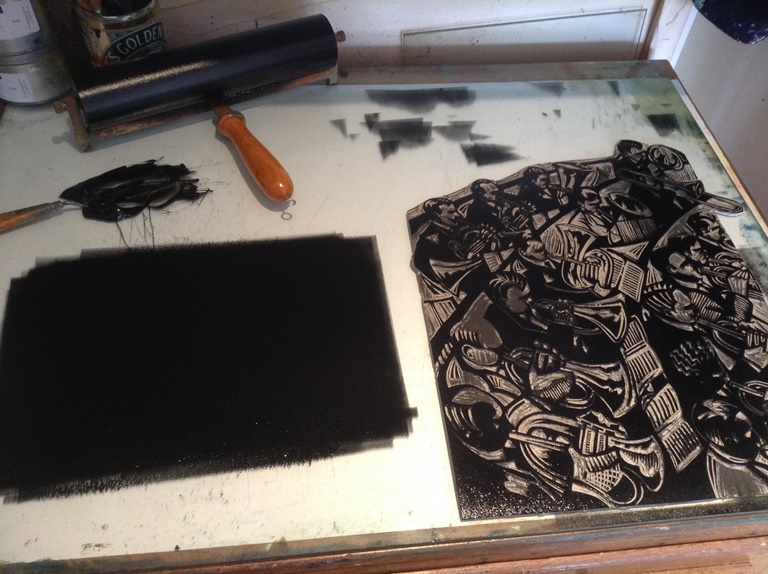
I generally endeavour to work a full day of printing when I am editioning, rather than spending time drawing elsewhere. This should enable consistency in results. I currently have a fairly small studio and with such big prints, drying space has become limited, and with four prints to dry I have been very strict with my timings, often printing half of one edition in the morning and cutting a block for another in the afternoon.
Now with only a couple of days left before I am to deliver the work to the Brook Gallery for framing, it is pleasing to see the finished work stacked for editioning, the final task. Even now there are one or two decisions to make. The title of a print can be interesting to decide. Recently it was commented that the titles I sometimes use might be more poetic, so I will be calling the work of the dodgems, ‘Counting Collisions’.
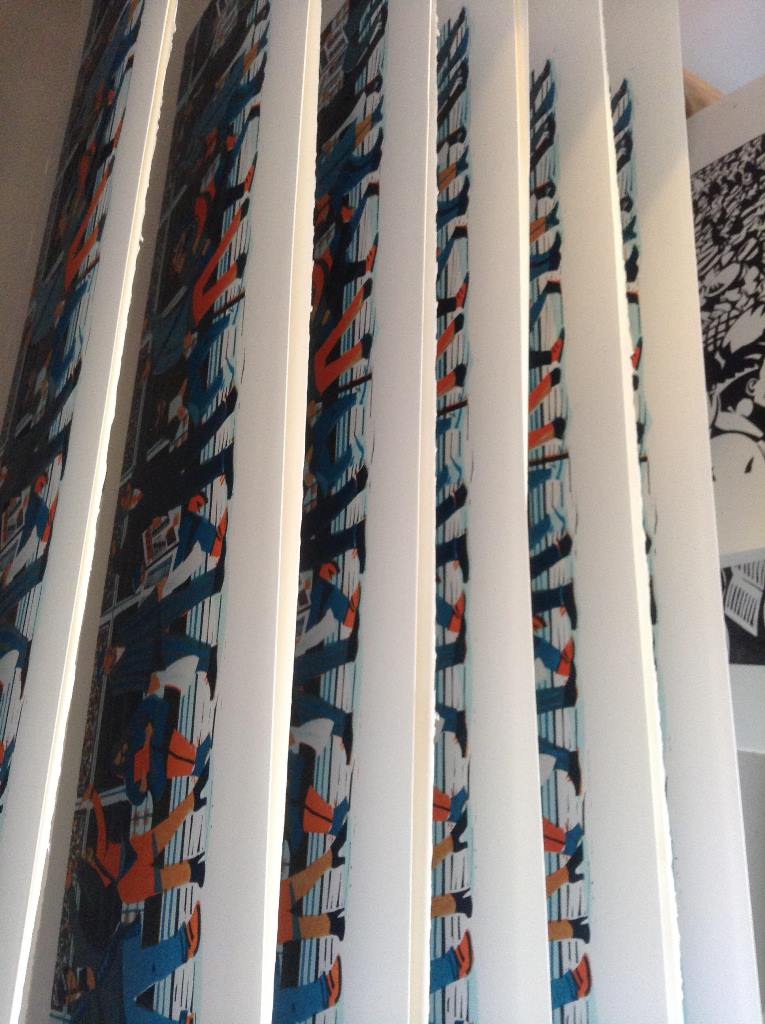
The final stage is left to the framer, one last surprise in this case when I finally see the work hung at the Royal Academy. After the splendid framing from last year I have no worries about the quality.
With the exhibition imminent it will be fantastic to make the trip to London and spend a few days looking at the stunning work, a celebration of print, given the status that it deserves, not just a poor relation but an equal partner. If you don’t know much about print or if you do, make a visit to the Royal Academy this April have a look at all the wonderful prints, and in my opinion one of the best shows you can see, and I am only slightly biased!
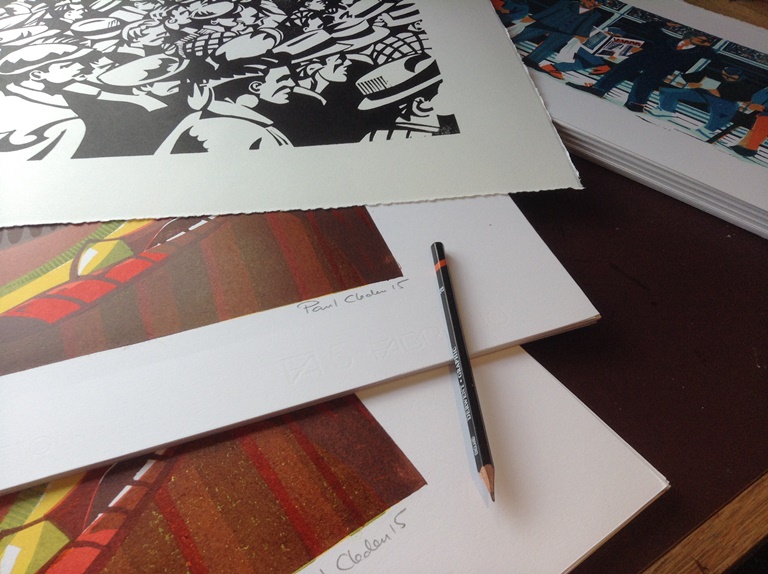
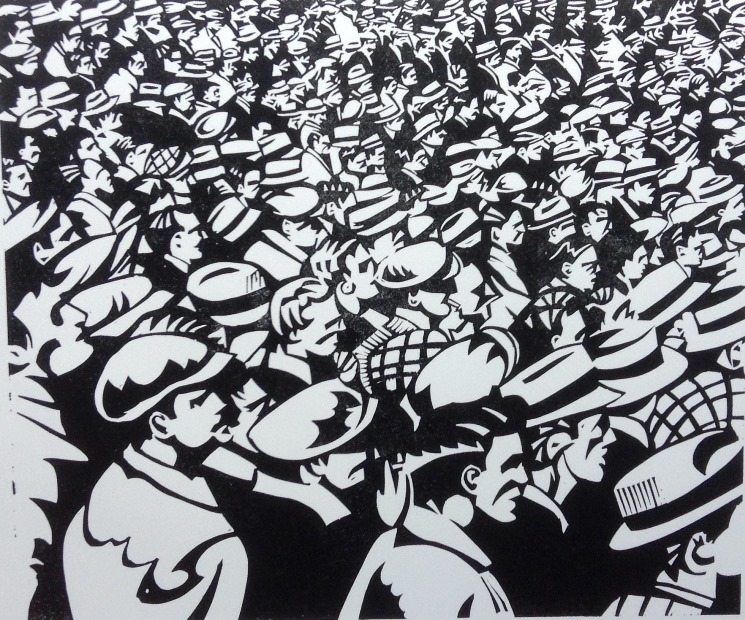
The finished works:
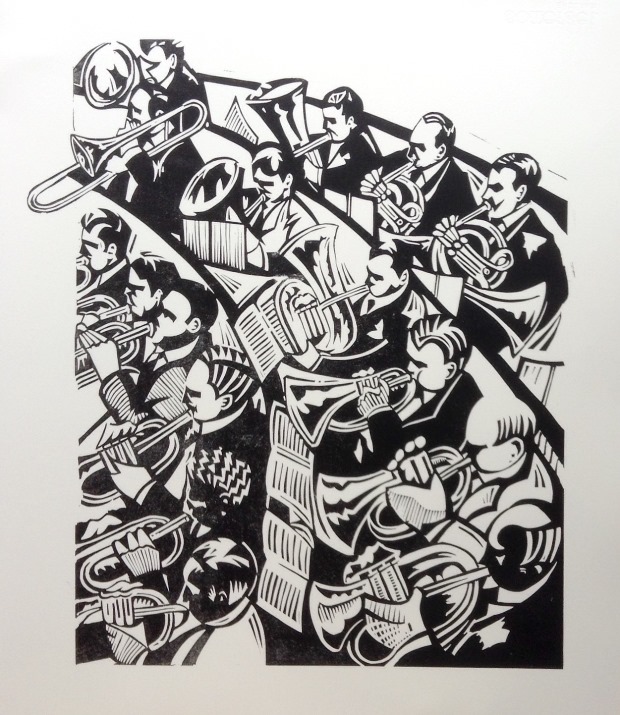
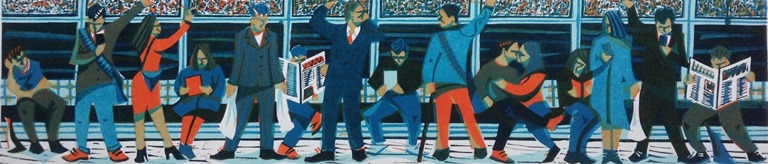
For more information visit www.paulcleden.co.uk , www.brookgallery.co.uk , and http://www.londonprintfair.com/


1 thought on “Paul Cleden Prepares for The London Original Print Fair”
Pingback: Experts of Printmaking Choose their Favourite Prints - Jackson's Art BlogJackson's Art Blog
Comments are closed.