


Paper is a biodegradable material and should be treated as such. The longevity of paper is dependent on the conditions in which it is stored, and how it is handled. Here is how to keep your paper at its best.
Storing Paper Before Use
Paper should be stored in a cool, dry place. As an absorbent material, paper is sensitive to atmospheric moisture. A damp environment could cause buckling, while humidity can lead to mould growth. Paper that is sized with gelatine, such as some watercolour papers, is particularly susceptible to mould or fungi.
Paper should also be kept out of direct sunlight, as prolonged exposure could cause it to become brittle. Additionally, papers that contain optical brighteners could fade back to their natural colour.
While environmental factors are important to consider, handling paper correctly is equally as important. It is best to handle paper as little as possible. The more frequently it is moved around, the more likely it is to be dented, marked, or get dog-eared. Paper often arrives packaged in plastic wrapping, and the paper can remain in this wrapping until it needs to be used to protect it from fingermarks or spillages in the studio. When taking a sheet of paper from a stack, take one sheet at a time from the top.

Of course, not all paper has to be treated in the same way. A sheet of watercolour paper that is intended for a developed artwork should be handled with care, but cartridge paper used for quick studies may not need the same careful attention.
Tearing Paper to Size
You may need to tear your paper to size, either to even out the margins on an original print, or to create a faux deckle that complements a true deckle on an adjacent edge.
To tear down your paper you will need a heavy metal ruler or tear bar. It works best if the tearing is done from the back of the paper. Holding the bar down firmly simply pull the excess paper from its top corner, back across the bar at an angle of 45 degrees. Any raised fibres left along the edge can be smoothed down with a paper folder. For long-fibred washi tearing can be quite tricky. You can best achieve this by running a wet paintbrush along the side of the tear bar. You will create a line of wet paper where you want to tear, which you can do whilst firmly holding down the tear bar. If you are trimming washi to a straight edge the long fibres can pull against your knife and wrinkle the paper. Trimming is best done with a very sharp knife held at a low angle against the washi’s surface.

Should I Apply a Coat of Varnish?
Varnish is usually applied to oil and acrylic paintings. Although water-colour varnishes are available, these are a recent development and framing finished watercolours behind glass is generally standard practice.
Varnish does four things:
- Gives a protective surface to the painting to prevent scratching.
- Acts as a removable barrier between the surface of the painting and any dirt or dust that lands on its surface.
- Seals the surface so that no more oxygen can be absorbed by it, preventing the paint from cracking.
- Evens out the sheen of the surface.
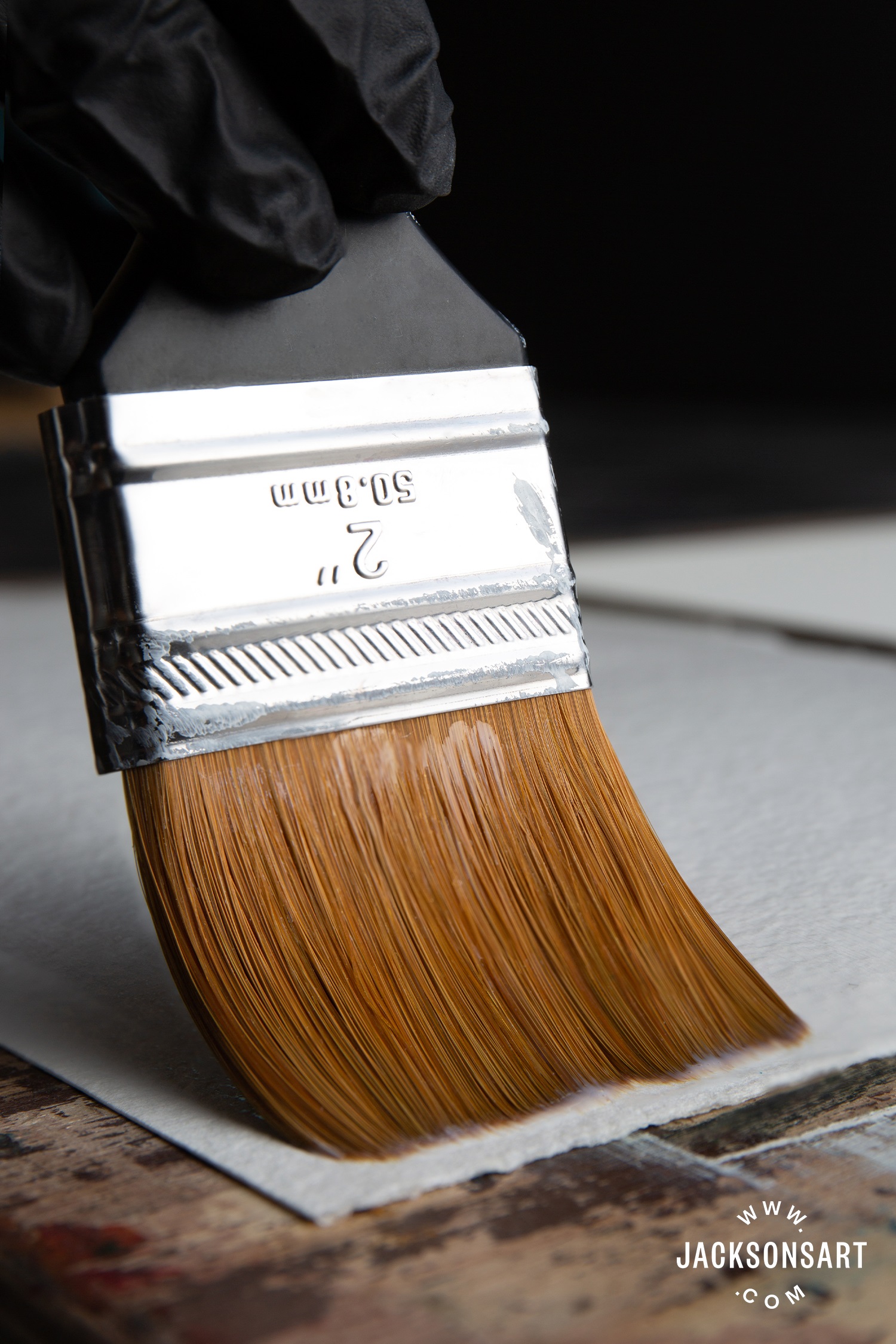
Varnishing papers lighter than 100 gsm is not advised as such papers are likely to wrinkle. Varnish is more inflexible than paper and will crack along any bends or creases, so it is a good idea to first fix it to a rigid board. Using archival glue for this purpose, such as acid-free PVA or adhesive film, will ensure maximum longevity. Weigh the work down with clean heavy boards while it is drying to ensure the paper dries flat against the board. All work must be fully dry before it is varnished.
Varnishing Acrylic Paintings on Paper
For acrylic paintings, application of an isolation coat prior to varnishing will allow the layer of varnish to be removed and replaced (if it becomes dirty). There are purpose made isolation coat mediums available, or alternatively you can apply soft gel gloss, watered down so it is two parts gel to one part water.
Varnishing Oil Paintings on Paper
A thinly painted oil based work can take up to six months to dry, while a thick impasto piece can take many years, although the use of a fast-drying medium will speed this up considerably. An isolation coat is not required prior to varnishing an oil painting. Removing a layer of varnish can be done carefully and slowly with solvent without the painting itself incurring damage. Oil paintings can be protected while drying with a layer of retouching varnish.
Storing Finished Artworks on Paper
Once an artwork is finished, it is best to keep the work flat in an archival portfolio rather than stacked. If the paper needs to be stacked, then a sheet of glassine paper between the sheets will protect the painted surface from abrasion. Keeping artworks on any support away from direct sunlight is particularly important, as certain pigments are prone to fading.
Framing Works on Paper
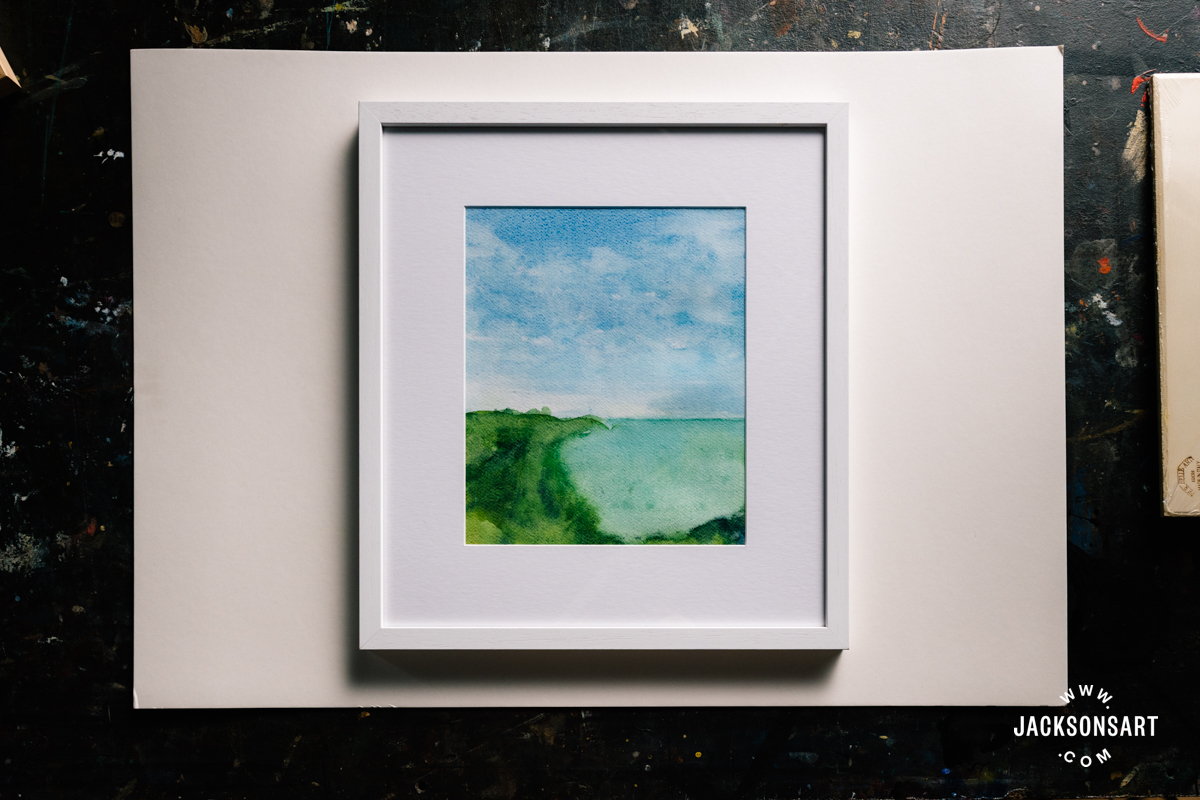
If work is likely to be put on display, then framing it behind glass will always offer a greater level of protection from dirt and humidity changes, even if you have also varnished or fixed your work. Pastel, charcoal and other soft, dry media works often benefit from being presented behind glass, as the surface can be fragile, and often loose pigment is easily brushed from its surface. Framing works such as this will offer a superior (yet more space-consuming) alternative to using fixative alone, which does not offer the same level of protection and can distort colours. UV resistant glass will help to minimise the risk of colours fading. However, unless you use non-reflective glass, framing behind glass will also introduce reflections.
As always, a mount should be used to prevent the glass from touching the surface of the work because condensation and temperature changes can cause the paper to wrinkle or stick to the glass. If you don’t want the mount to be visible it can be very narrow and hide under the lip of the frame moulding, or you could use spacers. Float-mounting the work will allow the work on paper to be seen right up to its edges.
Further Reading
How Sizing Determines the Absorbency of Artist Paper
What Makes a Long-lasting Art Paper?
Painting and Drawing Paper Map