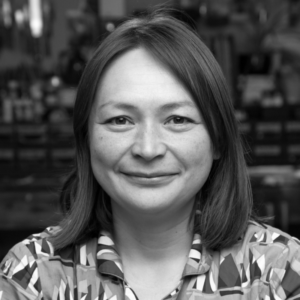
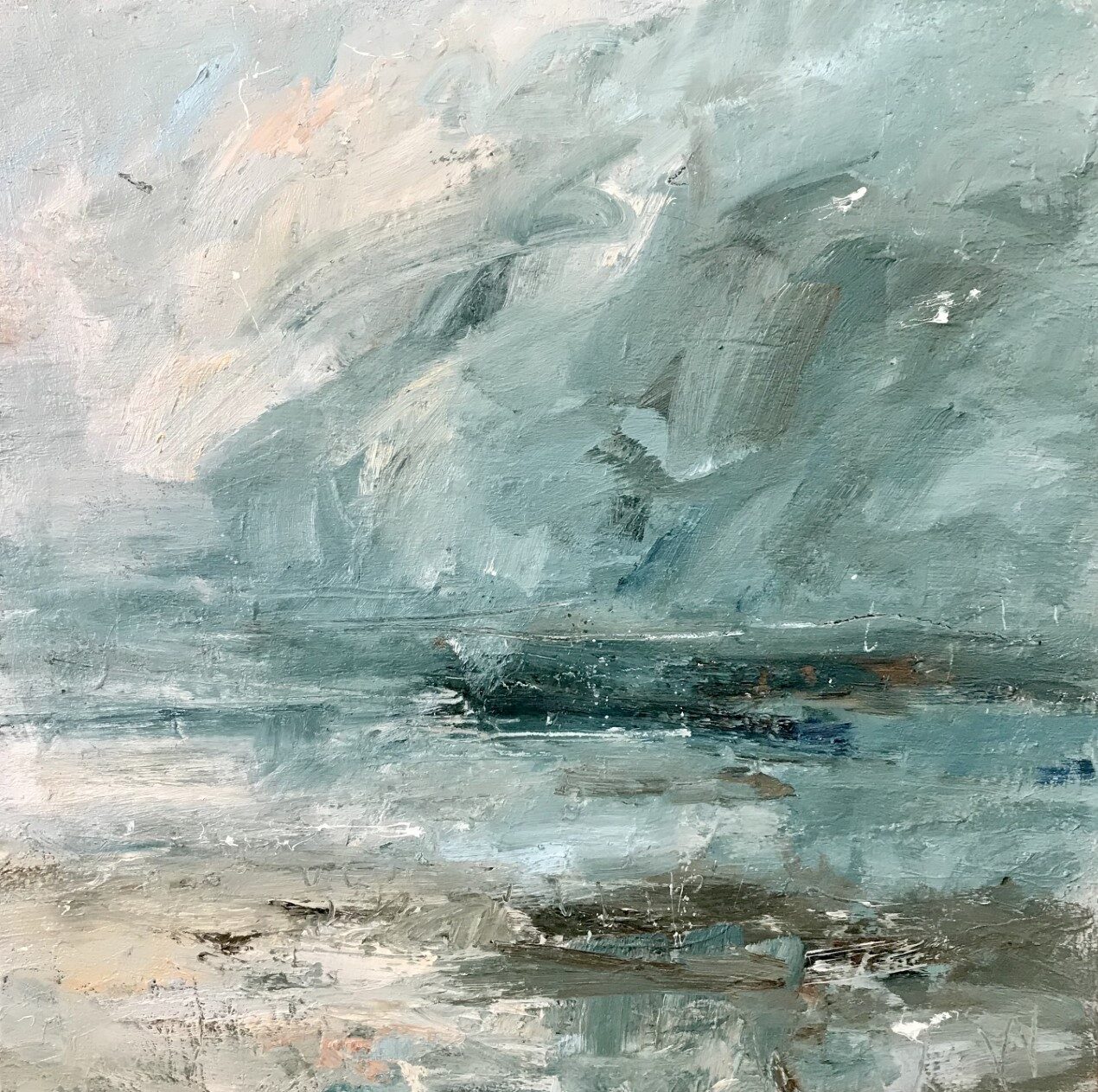
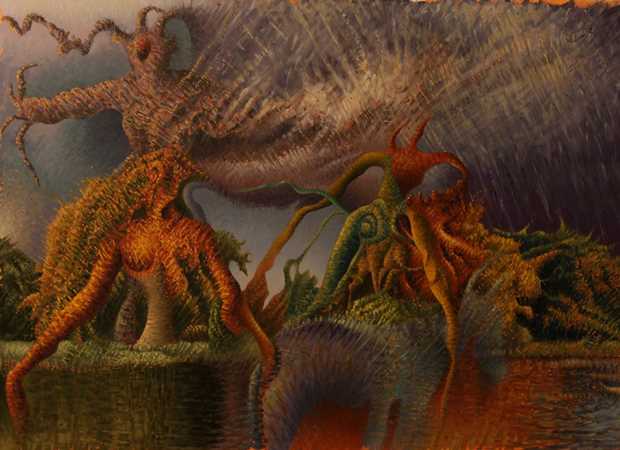
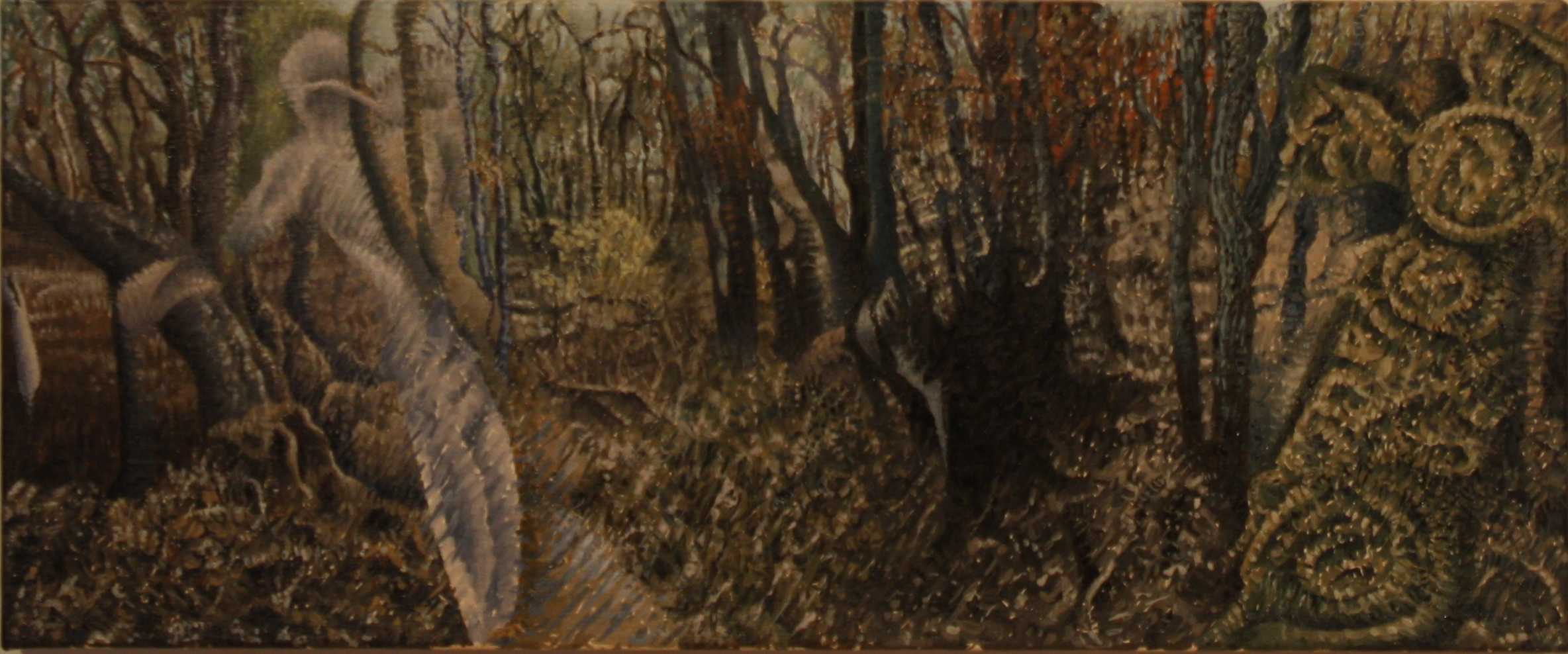
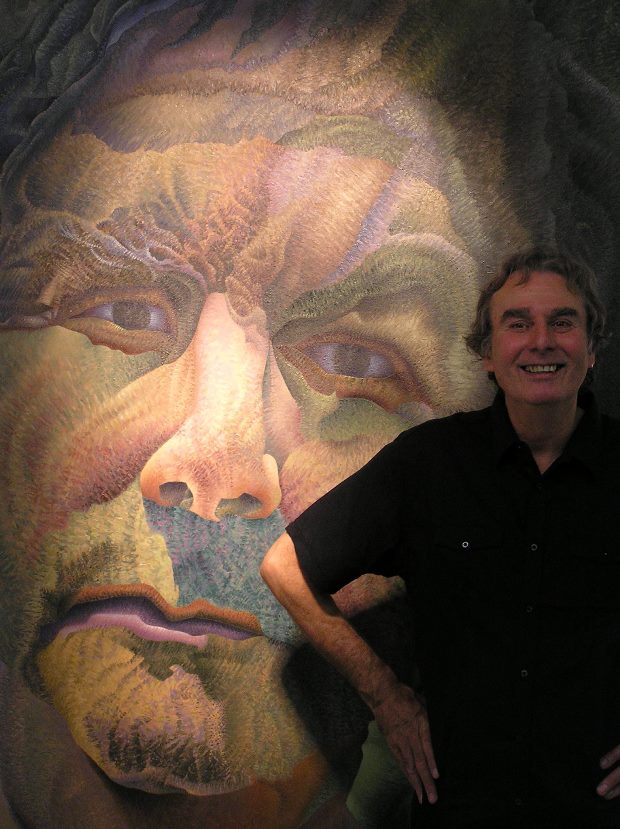
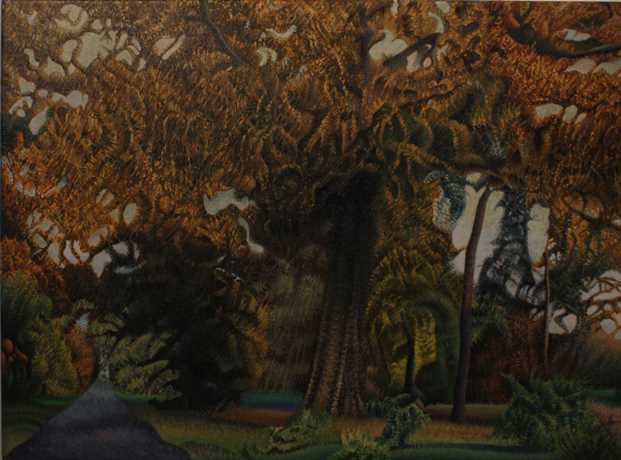
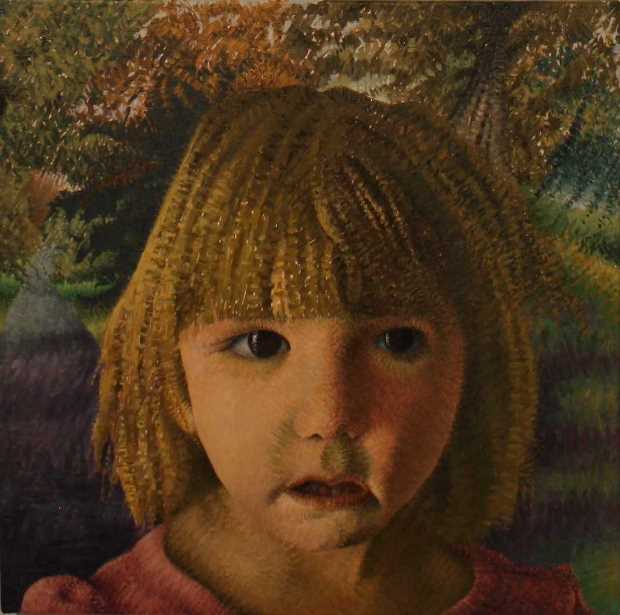
Godfrey Blow is an English painter based in Western Australia. His paintings describe the spirituality of nature in a way that echoes the mystique of Samuel Palmer’s landscapes; trees almost appear human with tales to tell. Conversely there is almost something plant-like to be seen in his portraits of humans, and one senses that Godfrey Blow sees no distinction between any of the living forms that inspire him.

Godfrey Blow trained as an artist at Sheffield Hallam University in England and migrated to Western Australia in 1982. His work features in many public collections including Artbank, The Art Gallery of Western Australia, University of Western Australia and Curtin University. He has taken part in numerous solo and mixed exhibitions in Australia, United Kingdom, India, China and Canada. In addition he has won several prestigious art awards in Western Australia and been a finalist in many national art prizes. We asked him some questions about his work.
Lisa: I realise this is not easy to describe in words, but can you try to describe what sort of ideas/emotions/messages you want to communicate in your paintings?
Godfrey: Through the use of light and colour I am working towards a certain vision of the world. This is a vision that is transformative and reveals the magic and spirit of the land. Much of my work deals with landscape images from Australia, Ireland and the British Isles. Visits to Britain have inspired a number of landscape paintings. Many of the places I painted will perhaps not exist in years to come. Preservation of these areas is, for me, very important. The special significance of the landscape is reflected in the fairy tales, ghost stories and myths of this isle. My art links in with these and creates a symbolic and metaphorical language. The forests, fields, hedgerows, ruins, waterways and oceans feature strongly in my recent works. Figurative images are integrated into landscape forms which create works of imaginative power. My work has often been called neo-surrealist for manifesting human shapes through trees, rocks and other natural forms but for me my painting refers to more ancient roots. The philosophy behind the artwork comes from the ancient pagan religions of the British Isles, combined with, and contrasting with Christian iconography. In many of the works there is an investigation into the part faith plays in our existence, whether it be religious or otherwise.
Lisa: What made you decide that you wanted to be a painter?
Godfrey: I remember quite clearly, when I was fourteen, a kindly teacher, who wasn’t an art specialist but took us for art, remarked on a landscape of mine. He told me he liked the variety of yellows I had used and I should look at Van Gogh. After school I raced to the library and looked at a book on the artist and discovered Vincent – what a revelation! I loved the intensity of his work but lamented his tragic short life. I resolved that I wanted to follow a similar path and dedicate myself to art. I so wanted to be an artist!
Lisa: Which artists inspire you?
Godfrey: After my initial enthusiasm for Van Gogh I was introduced to Constable and Turner, both amazing artists who inspire and delight to this day. Casper David Friedrich is also an inspiration to me.
Recently contemporary artists I am particularly interested in include the work of Neo Rauch, Jonas Burgert (there is a solo show of his work at the Blain Sothern Gallery on at the moment), Ged Quinn, Christopher Le Brun and Rick Amor.
Lisa: How long did it take for you to realise what it was that really drove you to keep painting?
Godfrey: Not long at all. Ever since I realized my vocation about the age of fourteen I have been totally obsessed. What drove me was the total conviction that this was what I wanted to do – express ideas in visual forms which reveal my creative passions.
Lisa: What ingredients make for a successful painting?
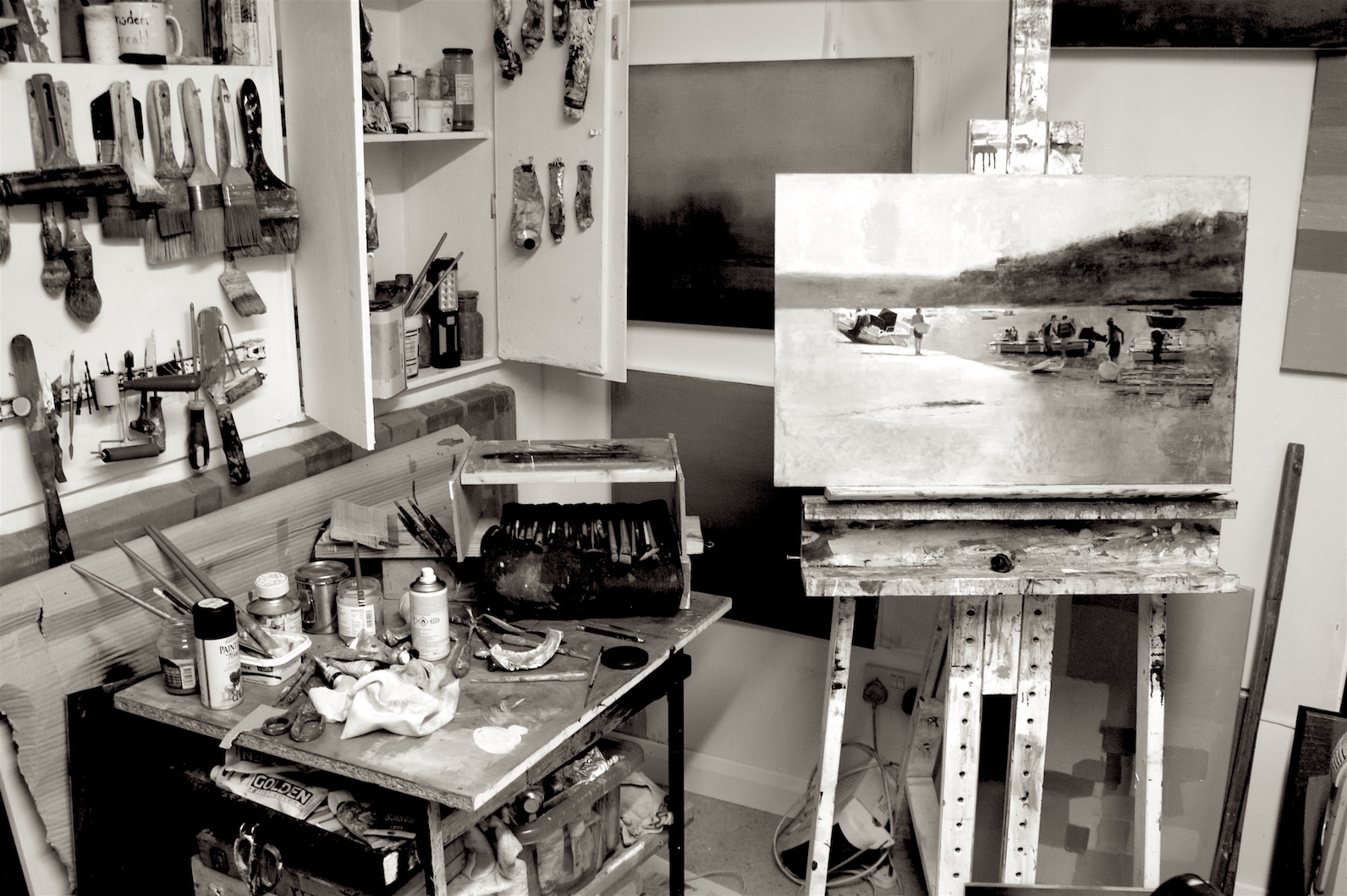
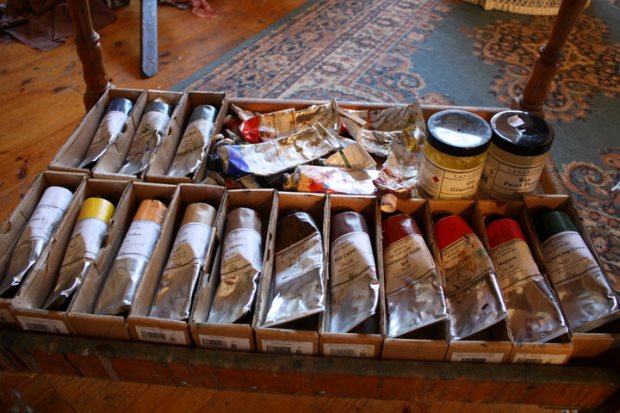
Godfrey: The ingredients for a successful painting are for me, the initial ideas/concepts and a desire to create an art which has an emotional and intellectual content. Following this one should allow time for ideas to ferment in the form of sketches etc and random notes. Eventually this leads to larger detailed studies in my drawing book. After the drawing stage I transfer the image to a canvas. The painting then proceeds, mixing oil colours and working from lean to fat areas with the occasional use of glazes. I try and allow the mind to roam free and at any stage I’m willing to change direction. The last point I wish to make is that for any sort of success one has to keep going when things get tough!
Lisa: Does how the public responds to your work (i.e. through awarding you prizes, or by rejecting your work for exhibition) effect your approach to your work, and if so in what way?
Godfrey: How the public responds to my work can effect one in the short term, either through positive or negative criticism. In the long term, however, these things pass and the best thing is to focus on the most important thing – the development of one’s art. I found over the years that the best thing is to concentrate on the way one feels about the world by responding in a clear and imaginative way and put everything else in perspective whatever the circumstance. Of course this is on occasions difficult to do.
Lisa: You have an affiliation with the Stuckists. Can you tell us a bit about how that came to be and what beliefs you share with them?
Godfrey: In 2002 I saw an article on Stuckism on the internet and could immediately relate to the things they were saying. Charles Thomson, founding member of the Stuckists, and myself exchanged several emails and I was added to one of the world wide groups. I’ve taken part in numerous exhibitions in both Australia and the United Kingdom, most notably The Stuckist Punk Victorian, Liverpool Biennial, The Walker Art Gallery, Liverpool, UK. I like the passion of their beliefs and the challenge they throw down to the art establishment, particularly regarding the Turner Prize and their pro-figurative art stance. The humour also shines through with items on the manifesto appearing to be contradictory. Being able to appear to change and change yet again within the space of a few words is for me a strength not a weakness. Beneath all that though is a passionate belief in the power of art to significantly change life. Stuckism has had a big impact on the British art scene and painting is more than a force to be reckoned with. Joseph Beuys, conceptual artist, once said that anybody can be an artist. For me that is like saying anybody can be a doctor, plumber or lawyer, absurd in simplicity and incorrect. It takes guts, hardwork, determination and ability to be an artist. The Stuckists recognize that.
Lisa: What are your aspirations for 2015?
Godfrey: My aspirations for 2015 are to further develop my work. At the moment I feel like I need ten lifetimes to fulfil my ambitions! I have so many plans for my work that I find it difficult to keep up with them on a practical footing. Sometimes it feels like my head is exploding with creative and imaginative energy!
Lisa: Where online or in the flesh can we see more of your work?
Godfrey: Examples of my work can be found on Facebook (Godfrey John Blow) and on my personal web site at http://www.godfreyblow.com.au. I have just had a major solo exhibition at the Harvison Gallery, Perth, Western Australia so my work can be viewed there. Further examples of my work can be found in numerous public collections including the Art Gallery of Western Australia, University of Western Australia, Curtin University and the cities of Bunbury and Albany.