



Landscape painter Louise Balaam’s work is an emotional response to the power of nature. In this account Louise reflects on the role of colour, and how a palette of mainly earth colours helps her to achieve harmony and subtlety – elements that complement the drama of her dynamic brush marks.
Above image: Dark Turquoise and Deep Cloud, Louise Balaam, Oil painting
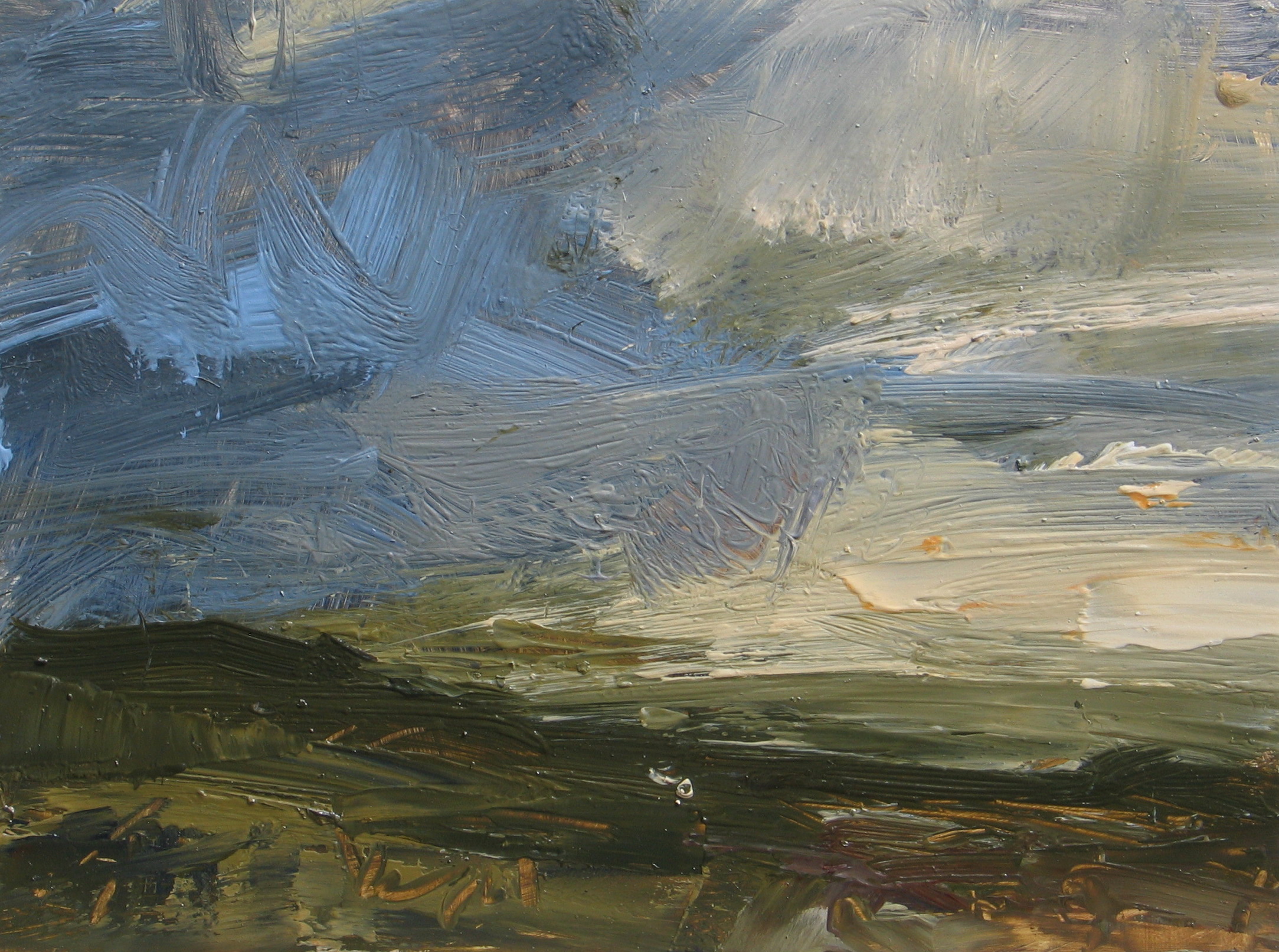
Thinking about Patrick Heron, Zennor
Louise Balaam NEAC RWA
Oil on panel, 18 x 24 cm
Painting With an Earth Palette
Words by Louise Balaam
As a landscape painter I’m concerned with the opposition and relationship of sky to earth, and you could say my core palette reflects this key duality: Ultramarine Blue (a fairly cool, water and air colour) and a range of warmer earth colours – mainly Yellow Ochre, Raw Sienna, Burnt Sienna, Burnt Umber, and Raw Umber, together with White. You could see the earth colours as close to a degraded orange, so they are complementary, or nearly so, to the blue. The blue/brown axis of the palette therefore gives me a huge range of beautiful chromatic greys, differing in character and temperature depending on the constituent earth. There are so many reasons I love earth colours – their beautiful subtle colours; the wonderful stories about their history; the fact that, as natural products, they each have their own specific characters, varying between source and different batches. I love the idea that I’m painting the land with pigments made from the earth itself. I feel more aware of the materiality of the paint, and the qualities of the raw earth – the gritty texture of some umbers, or the opacity of yellow ochre.
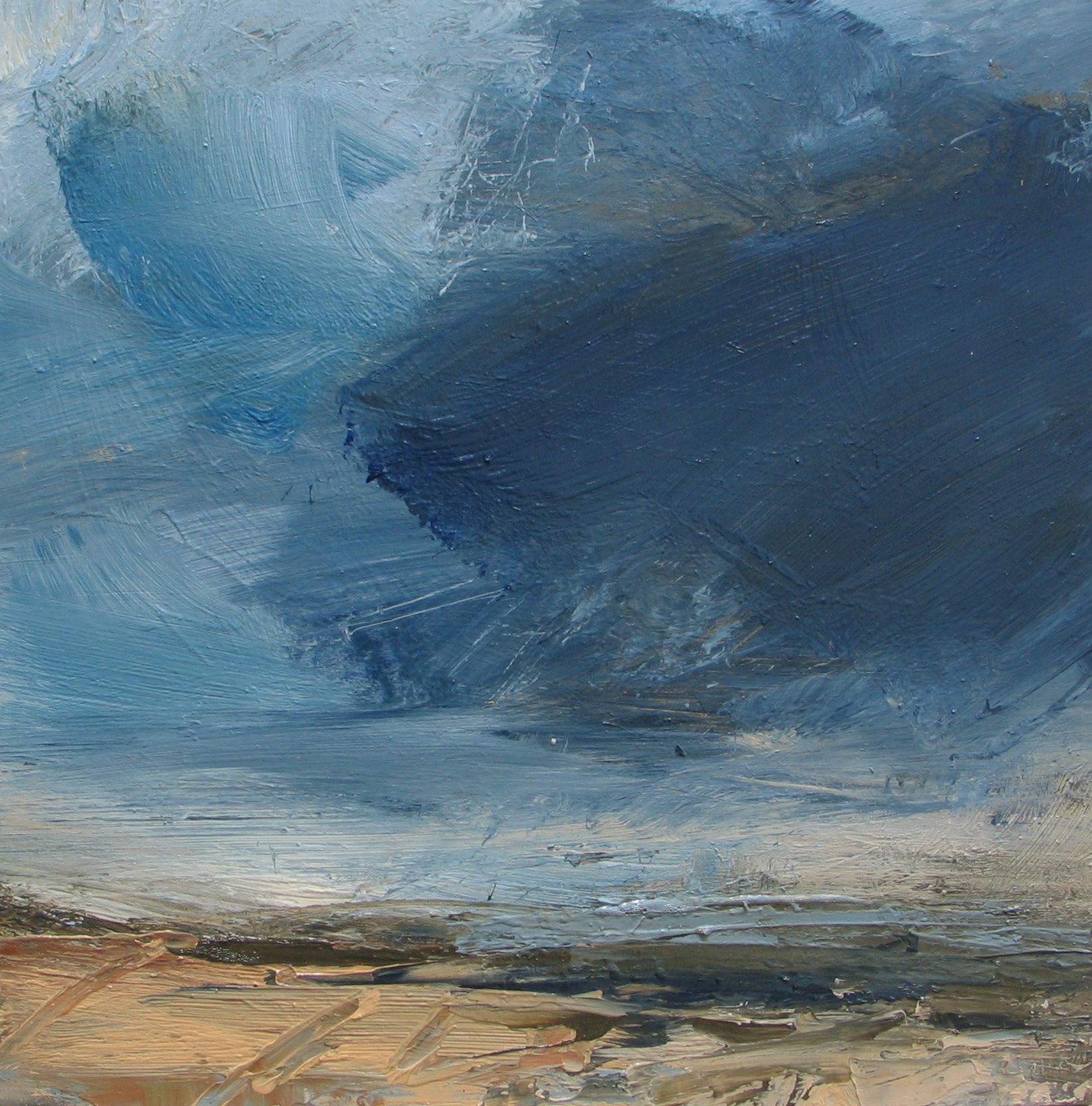
Deep blue cloud, summer storm
Louise Balaam NEAC RWA
Oil on panel, 30 x 30 cm
A limited palette gives me many advantages. I like to mix the paint so that the constituent colours are threaded throughout the painting – there are earth colours in the sky and blues in the land. I often use a small amount of earth colour to soften pure white or pale blue, which reveals another aspect of each pigment’s colour personality. There’s more likely to be a harmony and cohesiveness to the painting using a smaller number of pigments, and through familiarity I feel one is more likely to develop sensitivity to the qualities of a particular paint.

Wind rising, rain in the air
Louise Balaam NEAC RWA
Oil on canvas, 60 x 60 cm
I paint in my studio, and the starting point for any painting will be a sketch, so this will determine the colour mood of the painting. I often find though that I need to add colours as I go along, or that I’ve mixed up something I barely use – I like to respond to the painting as I work, and not have too fixed an idea of how it will develop. I’ve talked about my core palette, and I’ll start any painting by squeezing out these colours – they’re undoubtedly the ones I use the most. However I do supplement this palette with other pigments. Ultramarine is my workhorse, a strongly-pigmented, slightly reddish blue, but I sometimes want a blue which leans more towards turquoise or green, so I’ll use Cobalt or Cerulean.
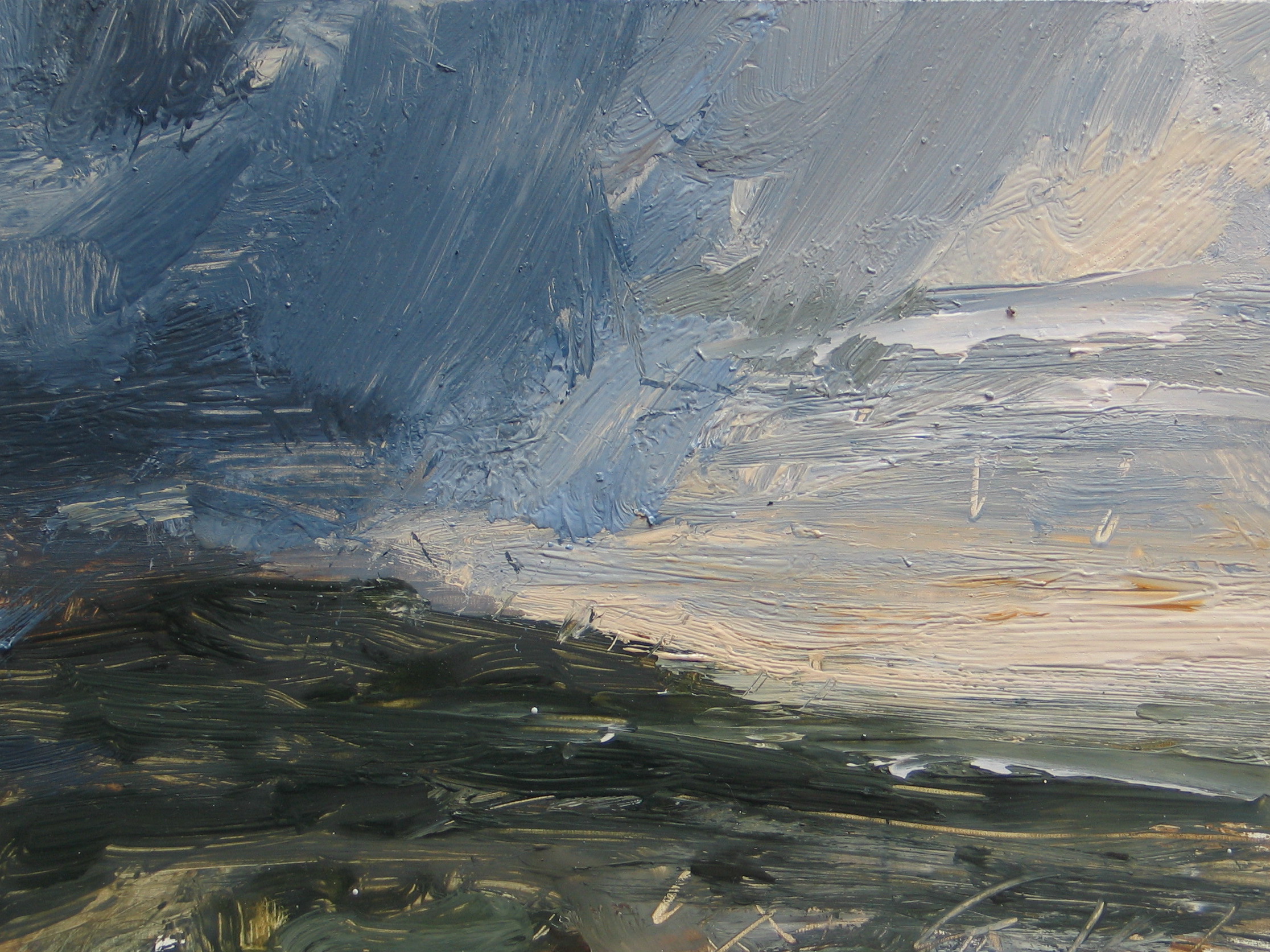
Deep blue cloud, near Zennor
Louise Balaam NEAC RWA
Oil on panel, 18 x 24 cm
My yellows are generally the earth colours I mentioned but I also use Lemon Yellow, which gives a much sharper accent. I also like Lemon Yellow (or other yellows) with a tiny bit of Black to make a range of greens, often softened with a reddish Burnt Sienna or Umber. I sometimes use tube greens – Sap Green or Olive, usually modified with blue and earth colours.
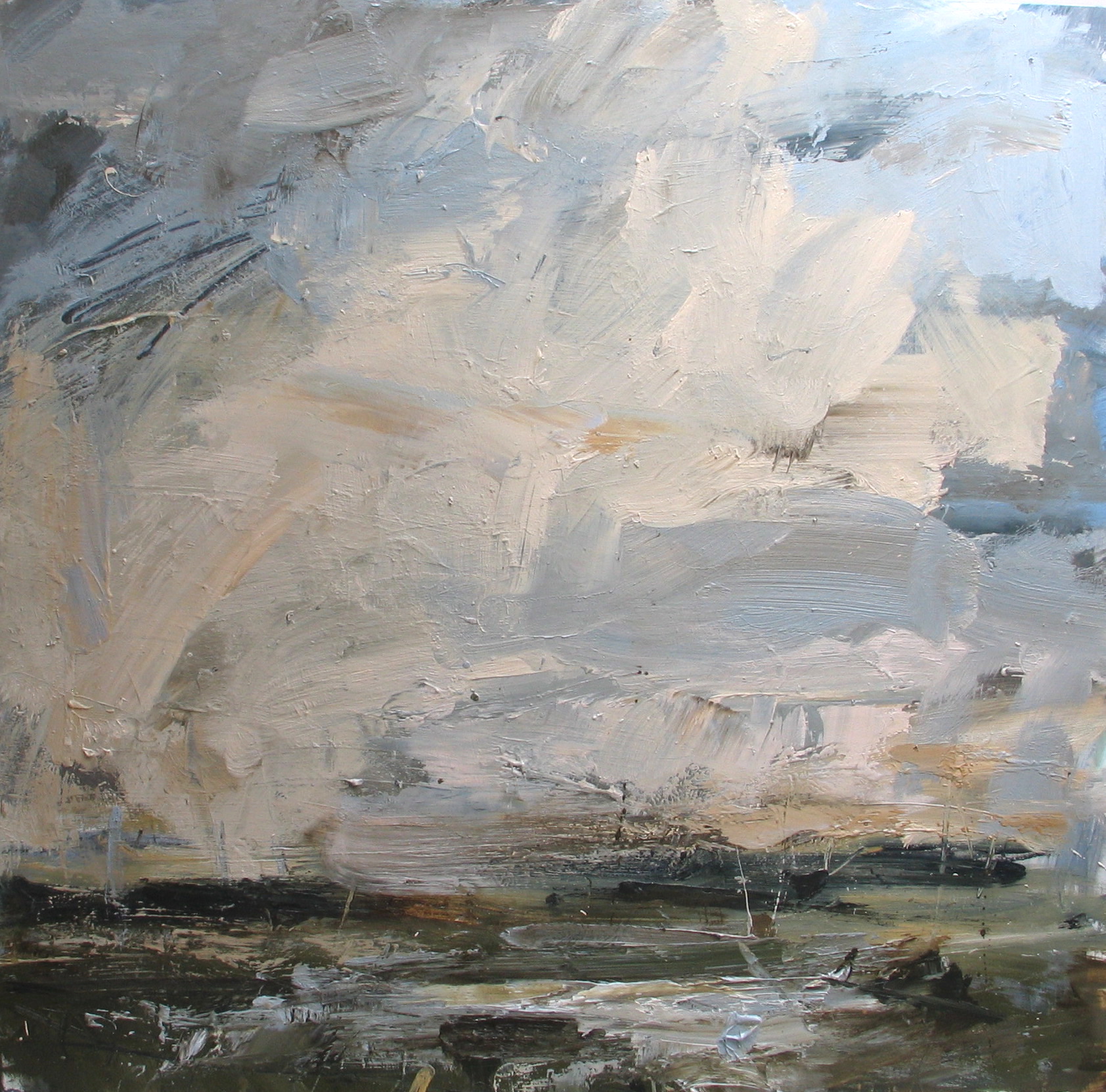
Edge of the land, Cape Cornwall
Louise Balaam NEAC RWA
Oil on canvas, 80 x 80 cm
I do have a tube of beautiful artists’ quality Cadmium Red, a gorgeous colour which I use occasionally in tiny quantities, often with some Burnt Sienna to bring it down and help it relate to the rest of the palette. Titanium white is another workhorse, strongly pigmented, opaque and indispensable. I occasionally use Flake White in smaller paintings (I’m lucky enough to have some hoarded – it’s no longer available I believe though there are modern replacements.) It’s a beautiful soft, creamy white, not so strongly pigmented.
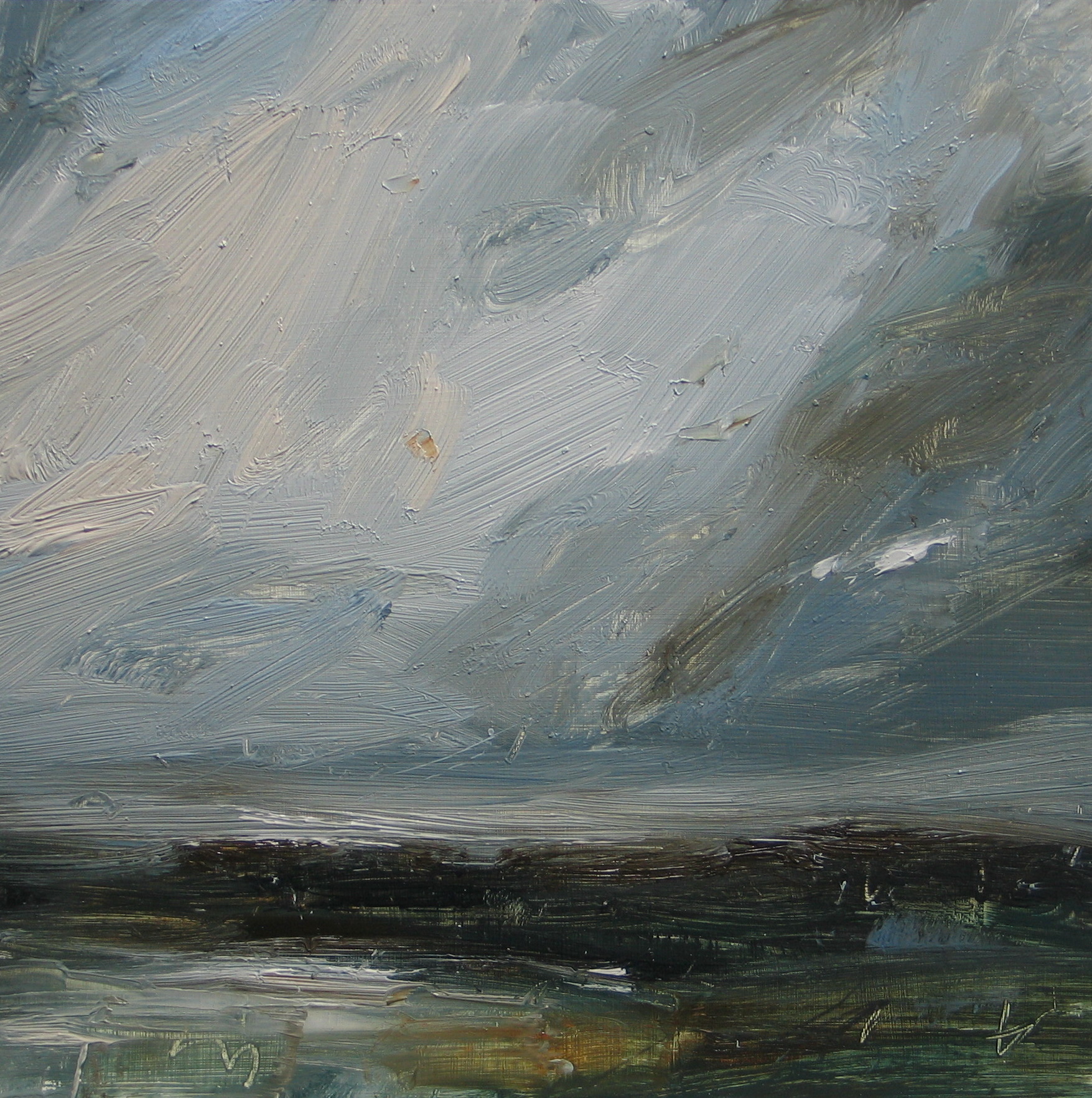
Tide running high, Cornish coast
Louise Balaam NEAC RWA
Oil on panel, 30 x 30 cm
I have to confess I have many other tubes of paint in my studio of course. There are so many beautiful and unusual pigments which I can’t resist trying – some I haven’t used very often, others seem difficult to use initially but then find their place. And of course the range of mixtures is infinite, we could all spend many years experimenting with and exploring colour mixing.
I should mention another advantage of my favoured palette – it’s cheap! Almost all the pigments are Series 1, and in many cases student quality is fine. Having said that, whichever paint you use should do what you want – if it’s weakly pigmented or too thick and pasty for your taste then try another brand. It seems to me that artists are more likely to experiment and be playful with the paint if it’s not hugely expensive. I work in a very energetic and gestural way, and I find it essential to be able to use (and waste) plenty of paint. It can take a while to work up the courage to squeeze out loads of paint, and load up your brush properly, but it’s so liberating when you do, and much more likely to happen if you have big tubes which didn’t cost too much.
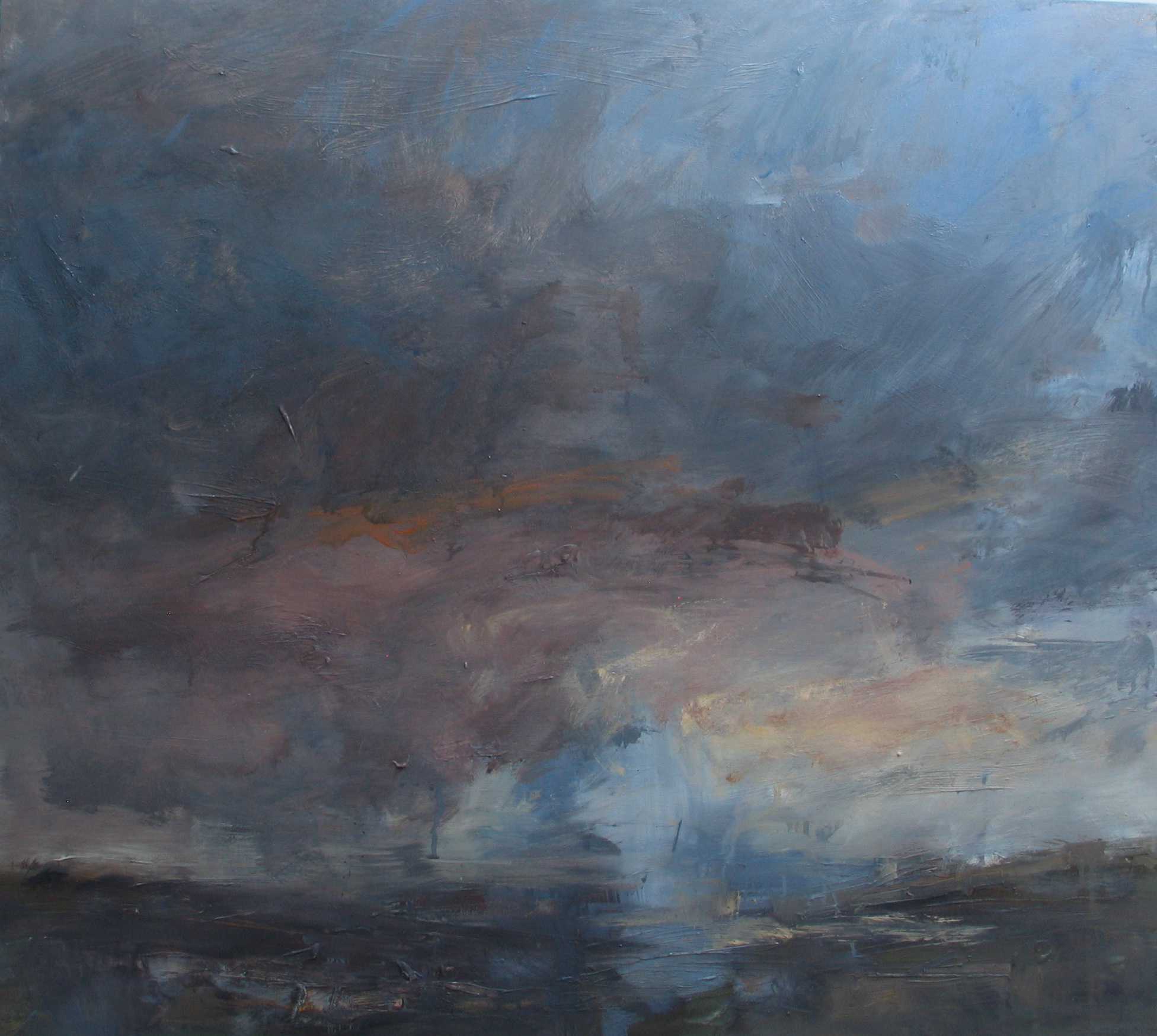
Sudden light, Carn Brea
Louise Balaam
Oil on panel, 80 x 90 cm
An artist’s palette is such a personal thing, almost a kind of signature. I think it’s helpful to have a balance between one’s own tried and tested and familiar mixtures, but also to be prepared to branch out and experiment. It’s all in how particular colours are used of course, and for any artist there’s no such thing as the right or wrong colour – the important thing is to find the palette which works for you.
“Why do two colours, put one next to the other, sing? Can one really explain this? No. Just as one can never learn how to paint.”
Pablo Picasso
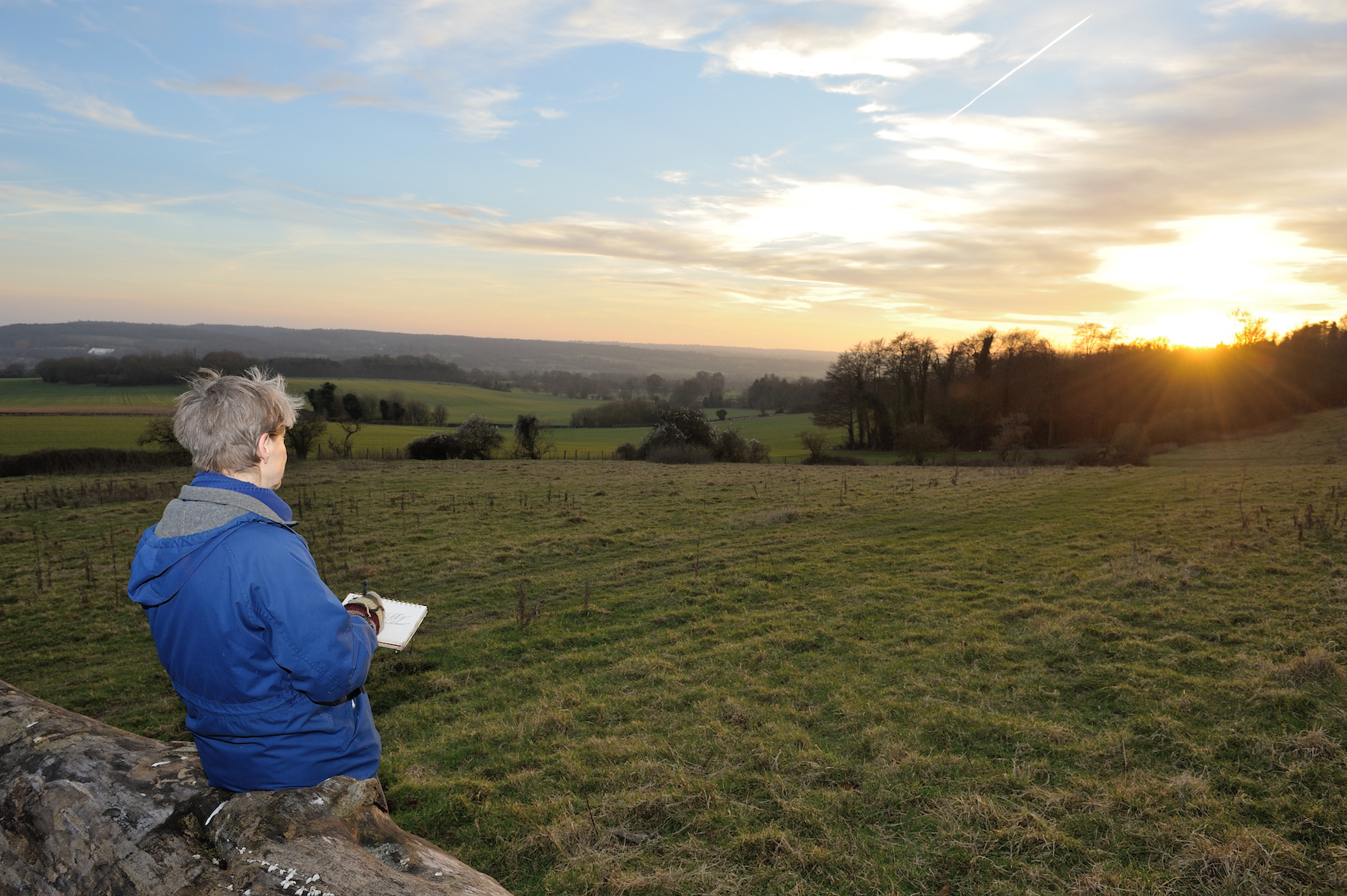
Louise sketching outdoors
About Louise Balamm
Louise Balaam NEAC RWA teaches at the New School of Art and the Jurassic Coast Studio.
Further Reading
Which Colours are On Your Palette? Six Landscape Painters Respond
Polly Townsend: Painting the Brutality of the Land
Recreating the Colour Palette of Helen Frankenthaler
Anne Carney Raines: Space and Illusion
Shop Art Materials on jacksonsart.com


3 thoughts on “Louise Balaam: Painting With an Earth Palette”
I’ve been lucky enough to study
with Louise Balaam and she is a
fabulously kind and
encouraging tutor. It helped
that I adore her work and her
very visceral way of painting.I
came away greatly inspired and
with an abundance of
confidence thanks to her
generous spirit and inspired
teaching.
Thanks Louise Balaam. Very experienced
and lovely work with fresh paint!
Thanks Dianne, yes Louise’s work is beautiful!
Comments are closed.