



Polly Townsend’s oil paintings are a deeply personal response to her experiences of the environment. By embarking on residencies in far flung corners of the world, she takes herself out of her comfort zone. This allows her to pay close attention to how she feels and what she sees when at the top of a mountain, or witnessing the hyper-real colours of Kashmir. In The Other Place, her Jackson’s Painting Prize 2019 shortlisted painting, a series of mountains are painted in meticulous detail and have a sensual quality that contrasts with a void – a passage of unpainted linen above it. The result is captivating and intriguing. In this interview Polly explains the importance of experiencing the land first hand, why she isn’t a ‘landscape painter’, and how she deals with the creative crisis that hits each time she completes a body of work…
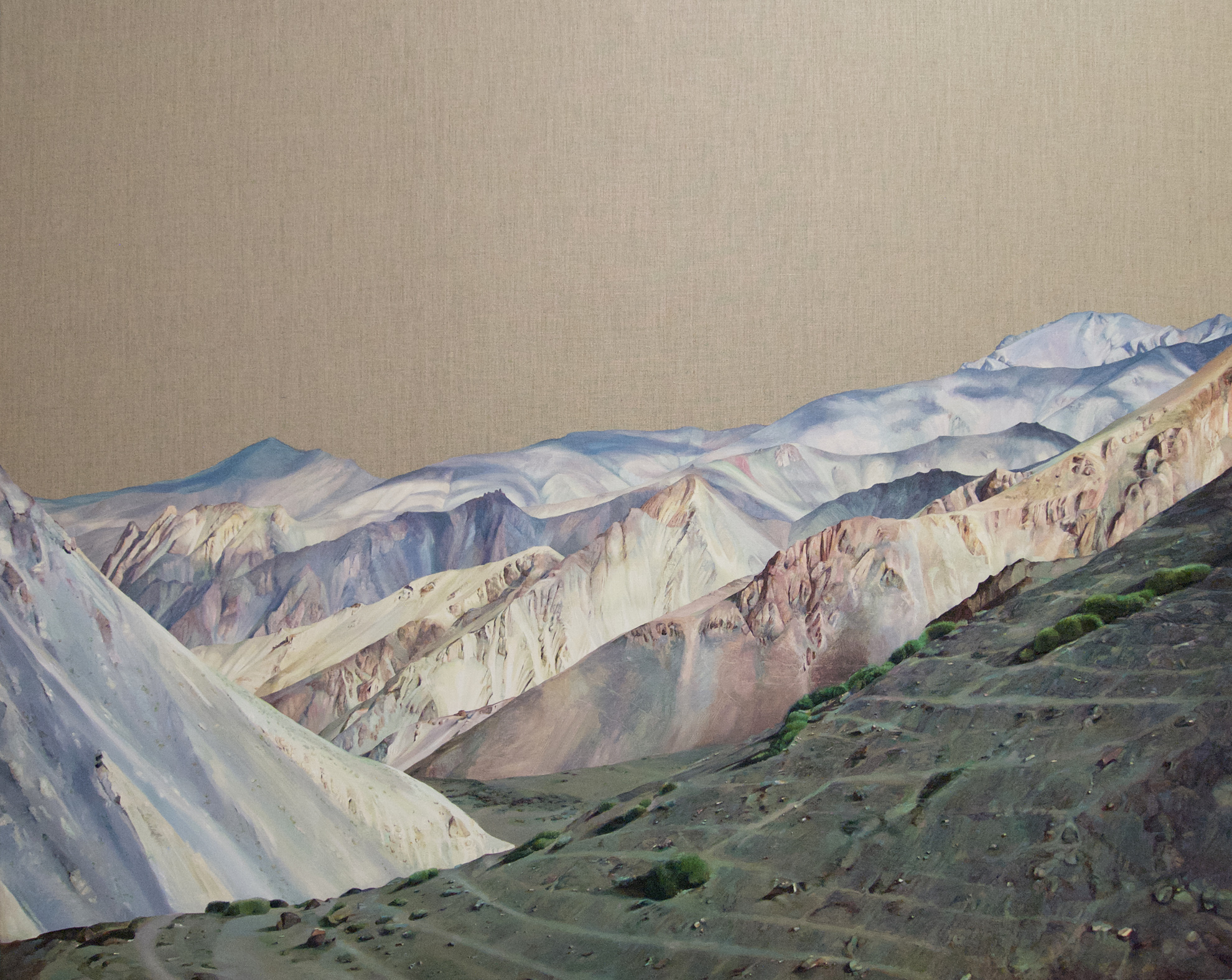
The Other Place
Polly Townsend
Oil on Linen, 60 x 48 in.
Lisa: How would you describe your paintings?
Polly: The work draws on journeys I have made to specific destinations around the world; places with a common type of geology. They are places where the land is stark and exposed, unfertile, remote and even hostile – I can’t easily explain why I’m attracted to them! But they are captivating and seem to energize me almost more than anywhere else. There are two main curiosities in the work – that of the very formal qualities of the land; how it is in terms of its physical attributes, and, how that basic formal physicality registers and filters through me. I find beauty in the raw savagery of these lands and tenderness within the minutiae of the monumental – disembodying the forms, as I often do in my work, serves to probe these relationships.
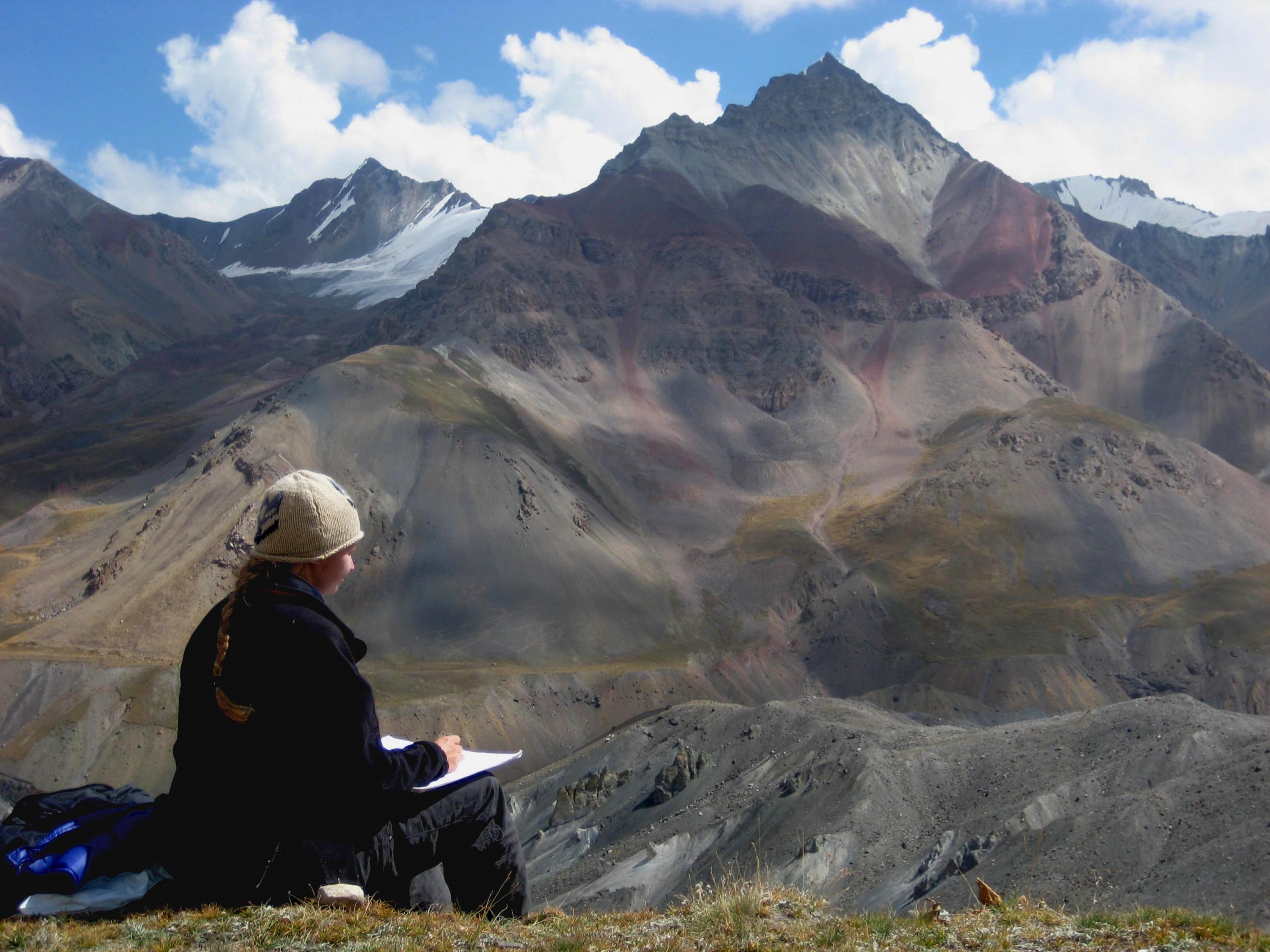
Drawing in Kyrgyzstan
Lisa: Can you tell us how you go about making your paintings – is there a lot of drawing before you get the paints out, do you work in front of the subject, and how do you choose the colours you will work with?
Polly: Each painting originates from an expedition or a residency. I travel with a basic lightweight kit (oils or acrylics depending on practicality) and a small easel, pencils, charcoals, and a camera. I do as much work as possible on site and I back this up with photography. Sometimes these small works succeed in their own right and sometimes they become the backbone of studio work. In the studio I do a lot of ‘knitting’, through drawings, paint sketches and digitally – putting things together until I have found a kind of truth; a mood, narrative or something representative of the experience I’ve had. Then I move this towards a painting. I have a stock palette, which I lay out in full but in varying amounts every morning, and some secondary colours, which come out when necessary.
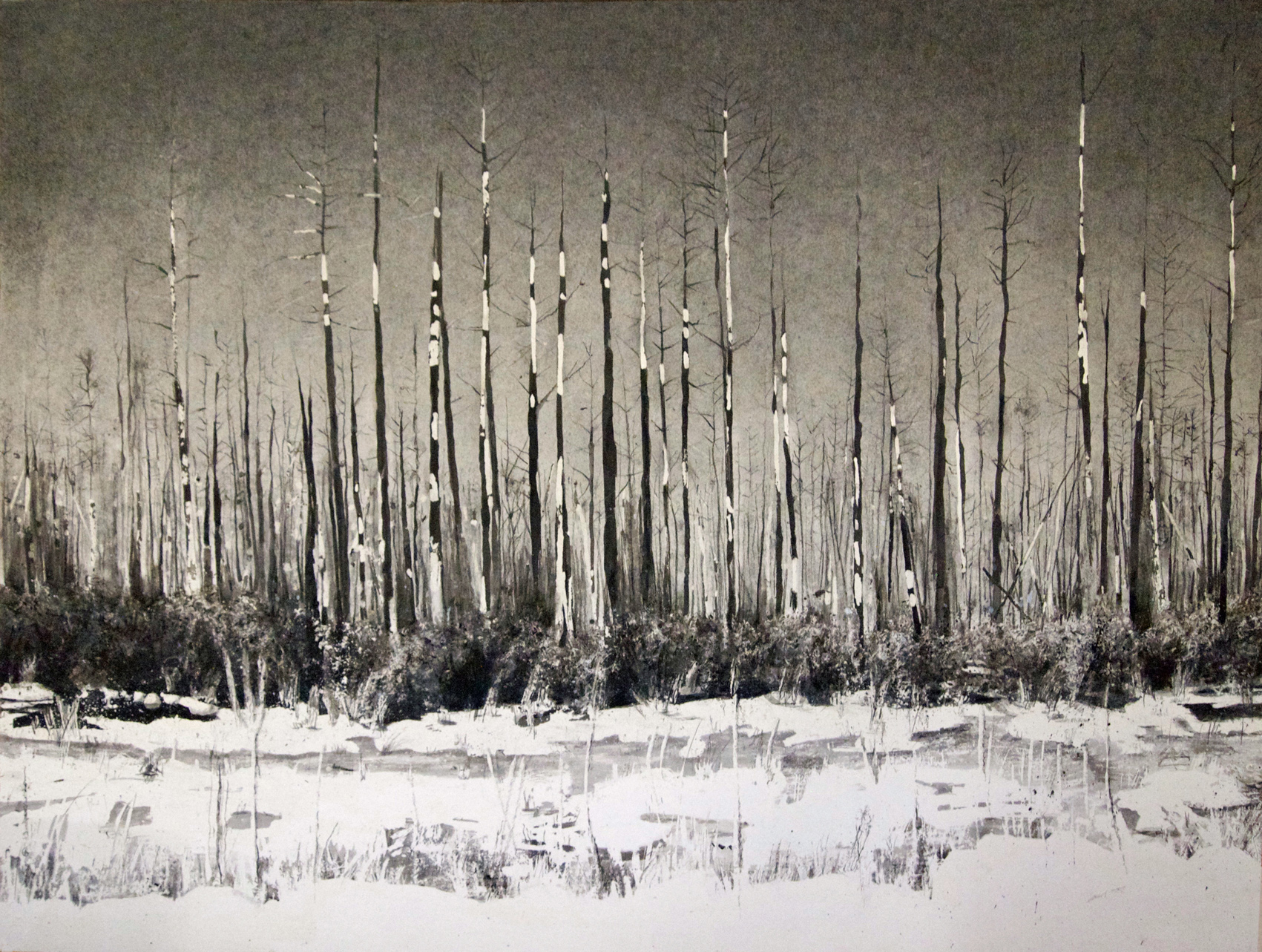
The Final Stages
Polly Townsend
Ink watercolour charcoal and graphite on paper, 18 x 24 in.
Lisa: In your JOPP shortlisted work The Other Place you left a lot of bare linen alongside the hyper-real depiction of the mountains – the effect of doing this was beautiful, a presentation of sublime natural textures. Were there reasons other than aesthetic ones for doing this?
Polly: The idea for this first came about when I was painting a lake in Tibet. Locals told me that the lake was being drained for hydroelectric power, but the water was not being replaced; it would be dry, or ‘missing’ within 10 years. I wanted to symbolise the significance by literally leaving the lake area blank within the painting. I continue to use this method to clarify what is important and what is not and it reflects my identification as a ‘land’ painter, not a ‘landscape’ painter – I approach ‘land’ with similar objectivity to a still life. The particular terrain I am drawn to is raw and exposed and the imbued qualities of linen/wood provide not only a complimentary holding environment for this, but also represent an honest connectivity with the land.
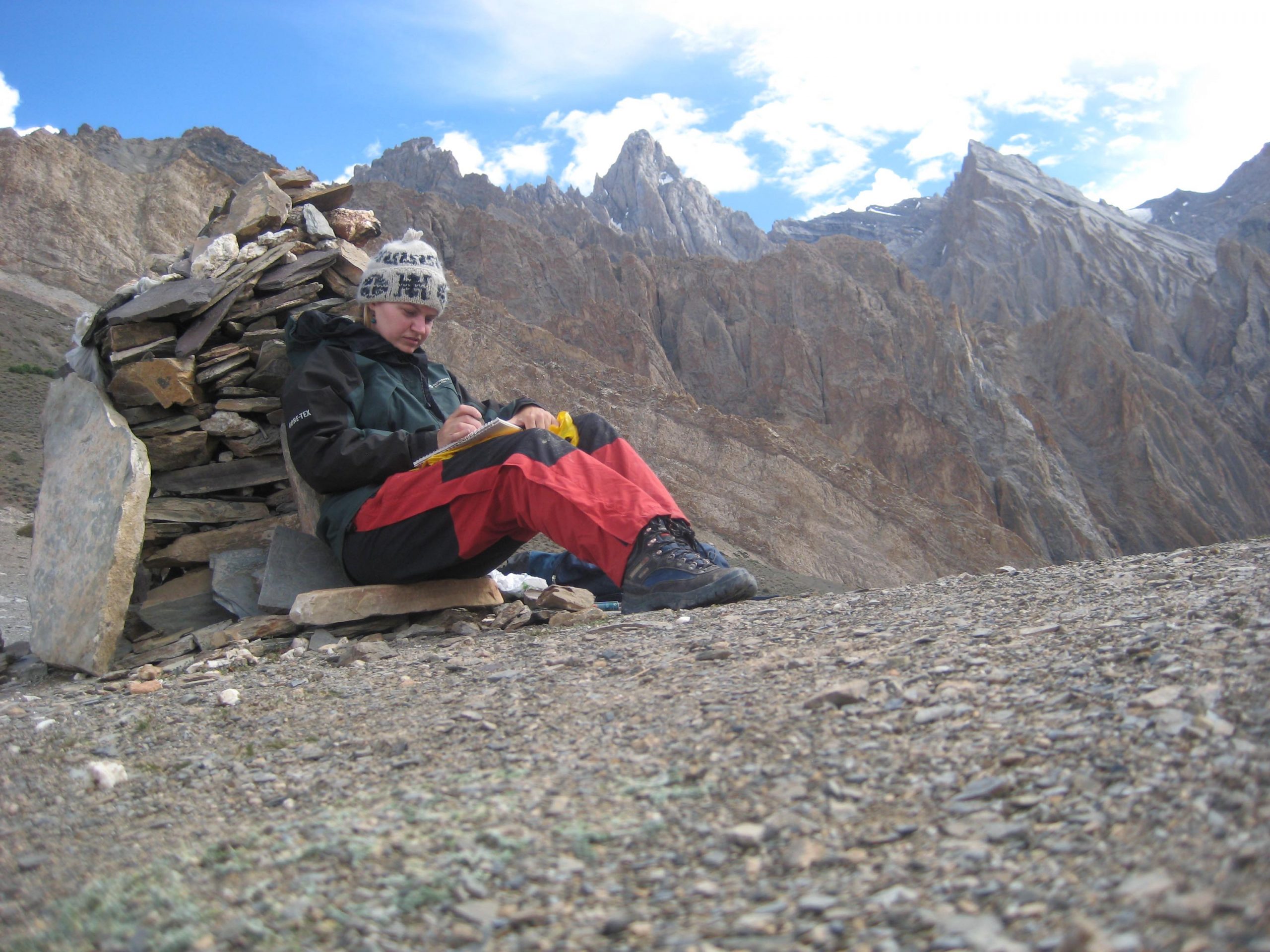
Drawing in Kashmir
At the same time, the graphic utilitarian use of the blank space is analogous to the cold hard environments I find myself working in. The counterplay of hard-edged void and softer paintwork seems to appeal to and almost represent the human condition – control, dissonance and harmony all in one. I certainly feel it reflects my own personal divisions! Having said all this, I am wary of it becoming mannered in my work and am noticing it becoming a trend in contemporary painting, so it may be time to move on.
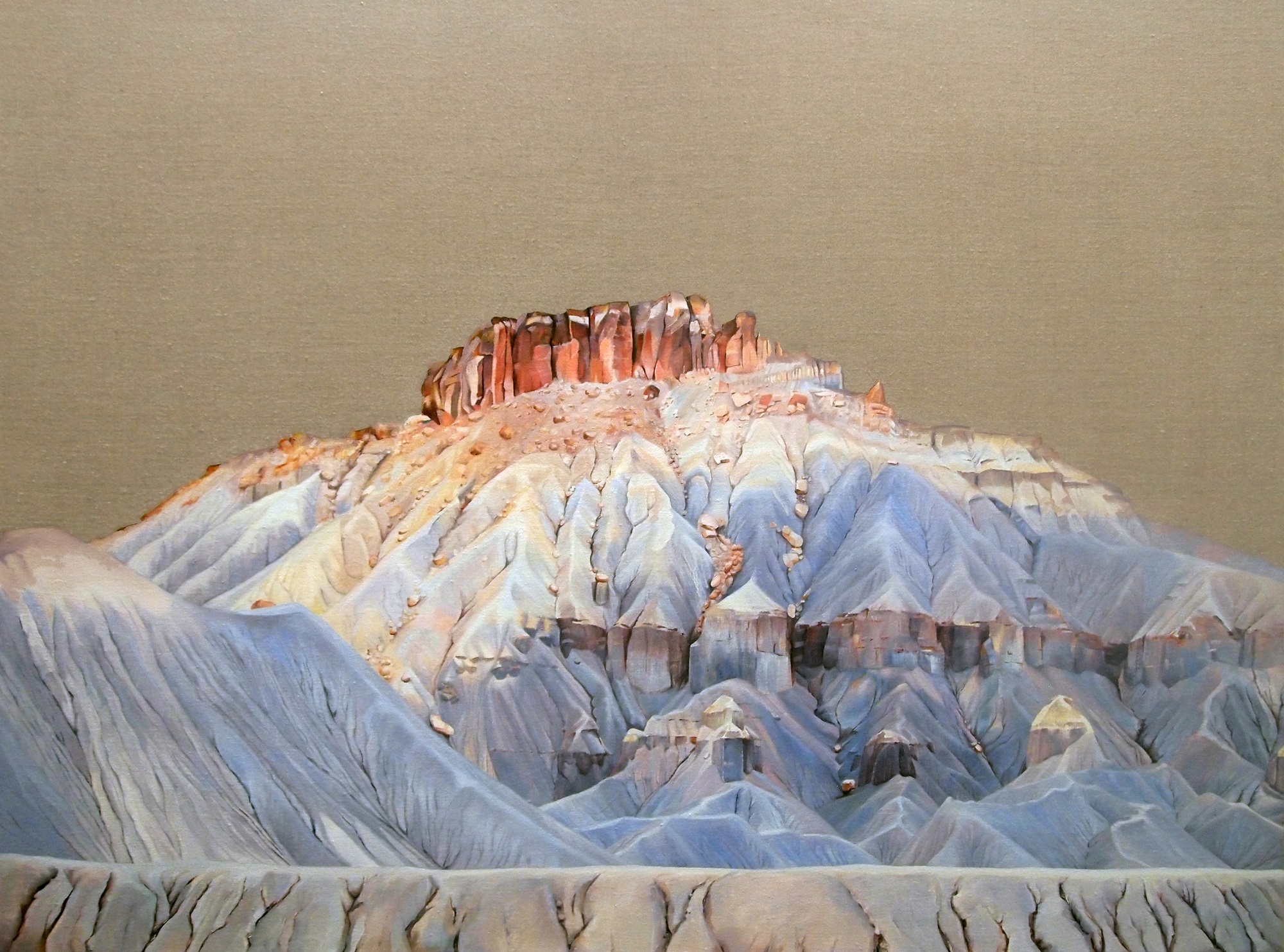
Butte
Polly Townsend
Oil on Linen, 36 x 48 in.
Lisa: Can you describe where you most like to paint?
Polly: As in still-life or life painting (which I was originally trained in), nothing can beat working in front of the subject in order to have the honest connection or truth of formal qualities (shape, line, colour etc). In that respect some of the most thrilling locations I have worked were in Kyrgyzstan and Kashmir, where the light and colours were, as you said in your previous question, almost hyper-real. However, the locations I choose are inherently hostile and added to that are the vulnerabilities of travelling as a lone female (in fact I often wear a male disguise or carry a fake companion because I have had so many unpleasant experiences). Back here I have a fantastic studio in London where I can work on lengthier pieces uninterrupted, intensely in (relative!) comfort.
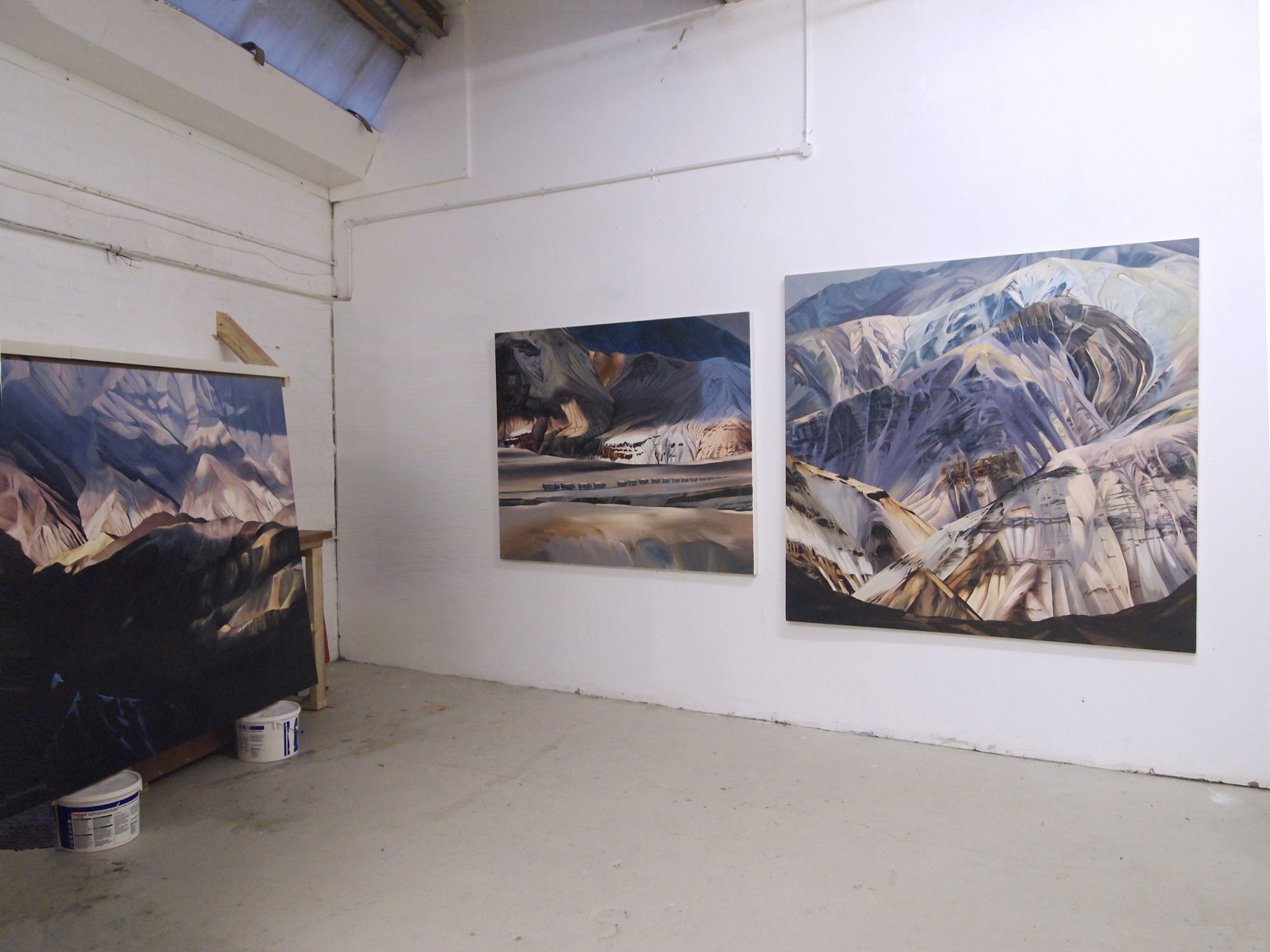
Polly Townsend’s Studio
Lisa: How important is drawing to your creative process?
Polly: The rigour and practise of observed drawing is extremely important to me and I still regularly life draw and draw outdoors, and I also make drawings in their own right – often spending as much time on them as a painting. I find dry media very freeing; I’m less precious than with paint, and there are surprising number of transferable techniques in either direction.
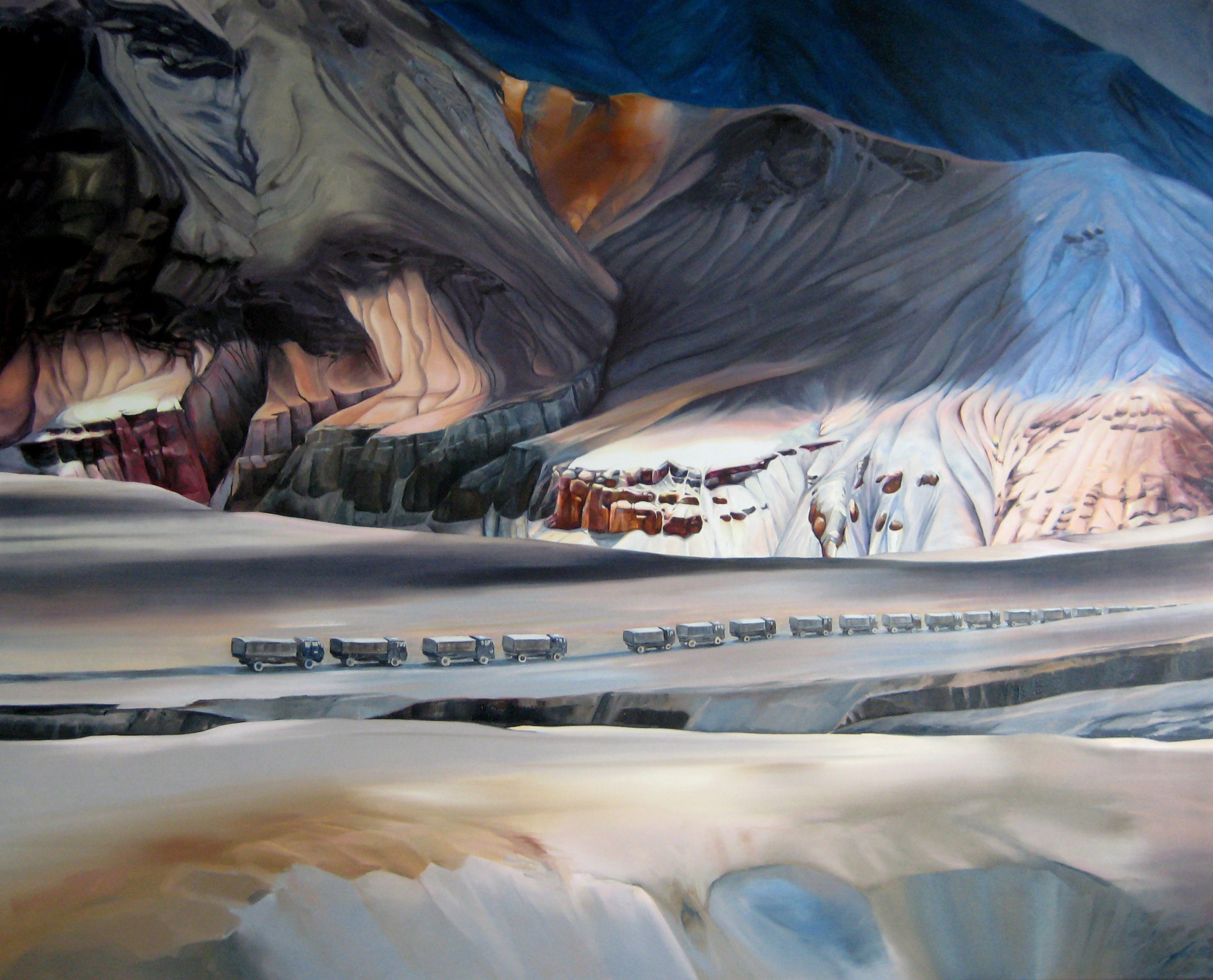
Kashmir (Passing Through)
Polly Townsend
Oil on Canvas, 63 x 51 in.
Lisa: What materials do you most like to draw and paint with?
Polly: Oils are my main medium – I have a range of brands and qualities but for certain colours – cadmiums, ultramarine, phthalo blue, emerald green, violet, etc I will only use the best quality. I don’t use animal bristle brushes but have the full gamut of quality synthetics. I use acrylics mostly for sketchwork and as a base under oils and I also have a lot of pencils, charcoals, inks, chalks etc.
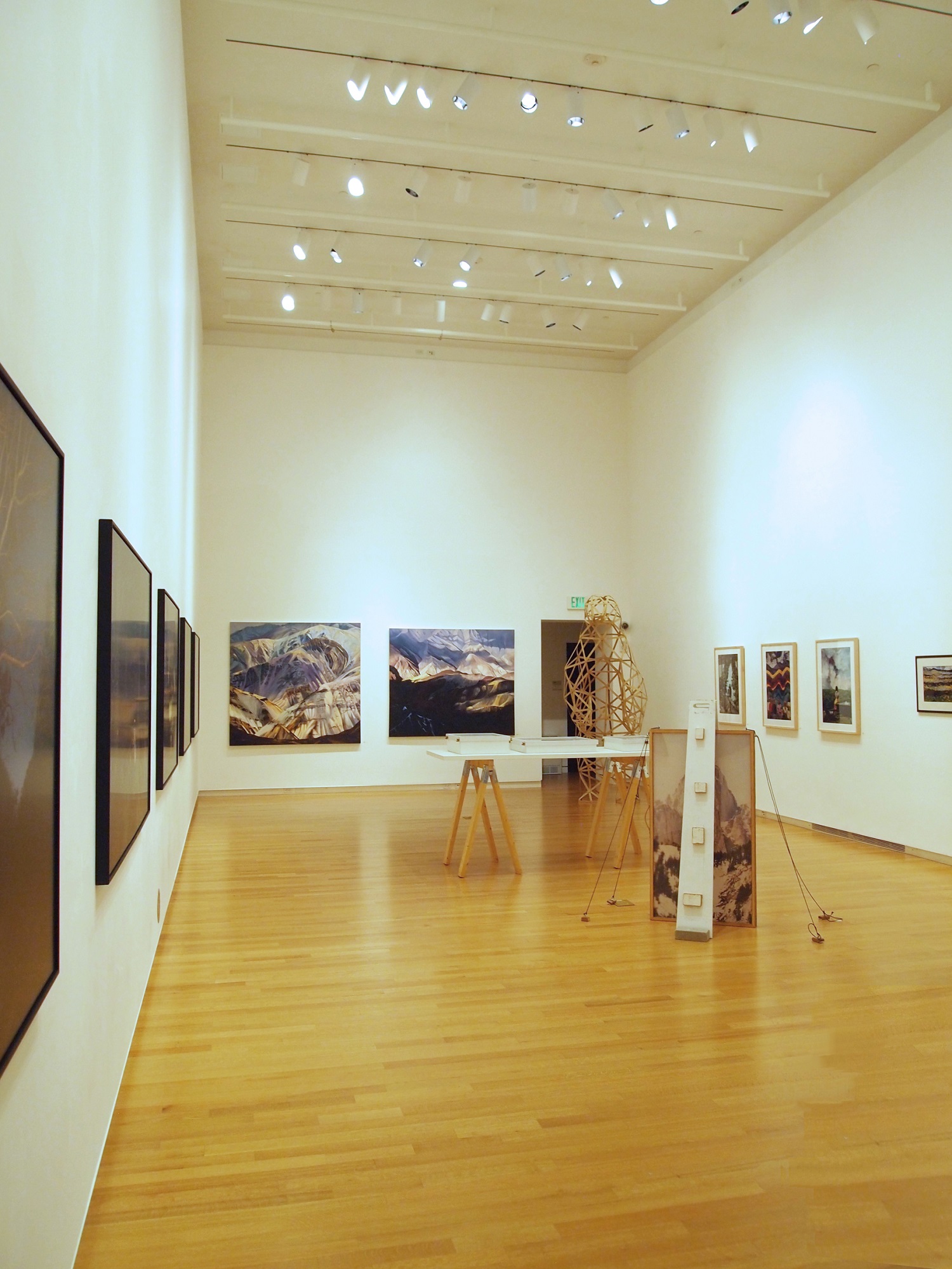
Polly Townsend’s exhibition in Baltimore
Lisa: Do you consider the act of painting a search for something? If so, what is it that you are searching for?
Polly: The challenge, risk and surprise of paint is what keeps me captivated – and in that respect I’m often surprised at the continuity of my work – but, beyond language, it’s a search for the truth in the sense of it being representative of my singular experience.
For example, if you stand on the top of a 6,000m mountain and there is nothing higher than you, and yet you feel claustrophobic, it’s not going to be enough to just paint ‘the view’. Something has moved you: the beauty, the ugliness, the bleakness, the almost imperceptible but inescapable trace of humans, the extremes of light/colour, and so on, and the search is in identifying that personal meaningfulness and feeding it into the spine of each painting.
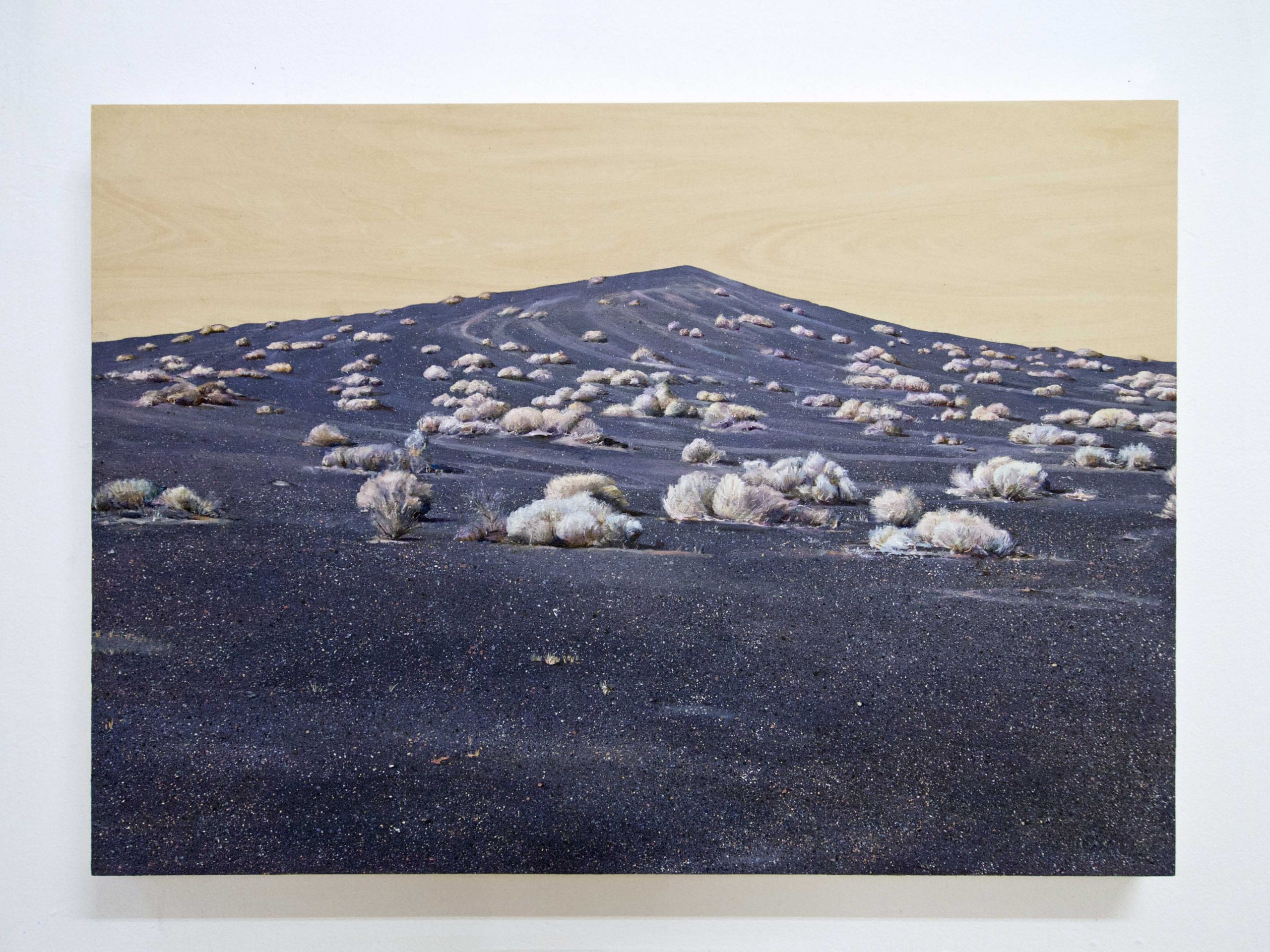
A Land Stripped Bare
Polly Townsend
Oil on panel, 50 x 70 cm
Lisa: Do you ever suffer from bouts of creative block? If so do you have any tips on how to overcome it?
Polly: I would not say creative block so much as creative crisis. It tends to come between each series or at the end of a lengthy piece and is about exactly your previous question….the search. It’s very difficult to trust whether what is meaningful to you is enough: enough for your art, enough to be taken seriously, and enough to justify this very difficult career choice. When there’s no clear way through it, the solution, although by no means assured, is to close the inner voice, take a leap of faith and launch into something, being hopeful that some unconscious enquiry or resolution will reveal itself.
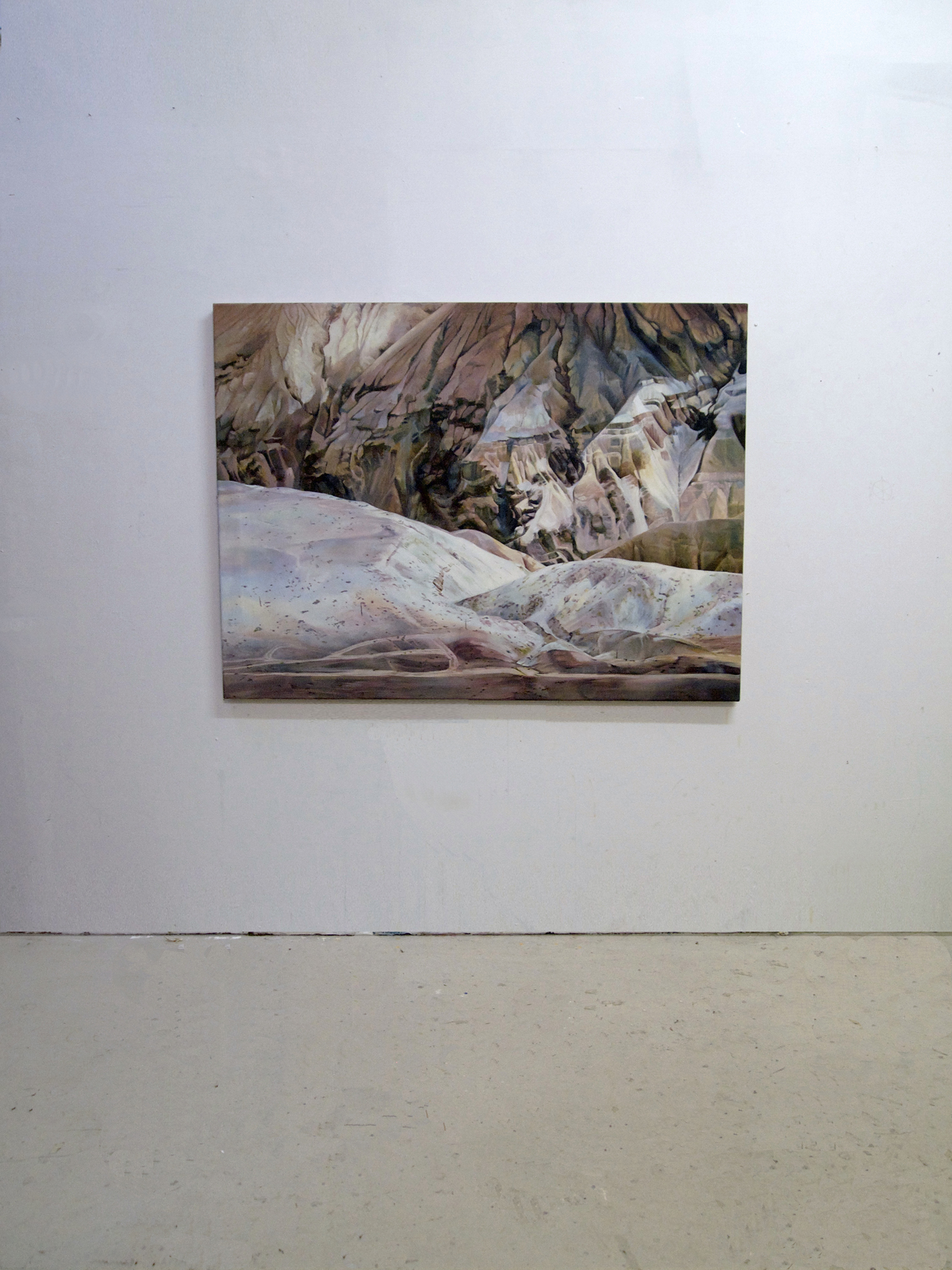
Not a Beauty Spot
Polly Townsend
Oil on Linen, 48 x 62 in.
Lisa: What are you working on at the moment?
Polly: I just moved studio and, in the process, revealed a lot of unfinished or abandoned paintings. I’m reworking those at the moment, but am desperately keen to move onto a series based on a recent trip to Iceland. I’m hoping to go back there for a residency later this year.
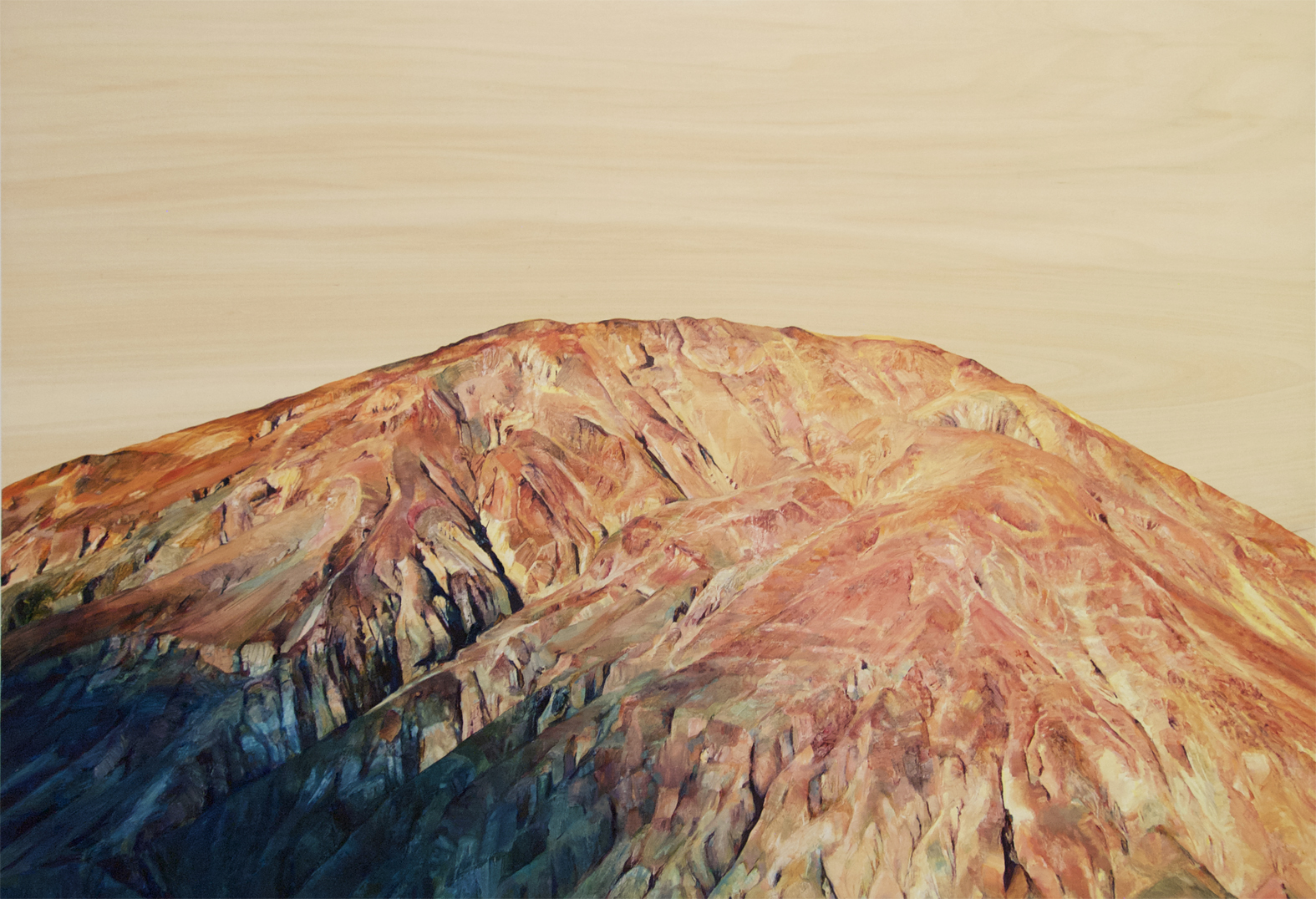
Shadow
Polly Townsend
Oil on Panel, 70 x 100cm
Lisa: Where online or in the flesh can we view more of your work?
Polly: My website is www.pollytownsend.co.uk and I’m polly_townsend on Instagram. I don’t have a gallery but I have a studio in London Fields, which I open annually to the public.
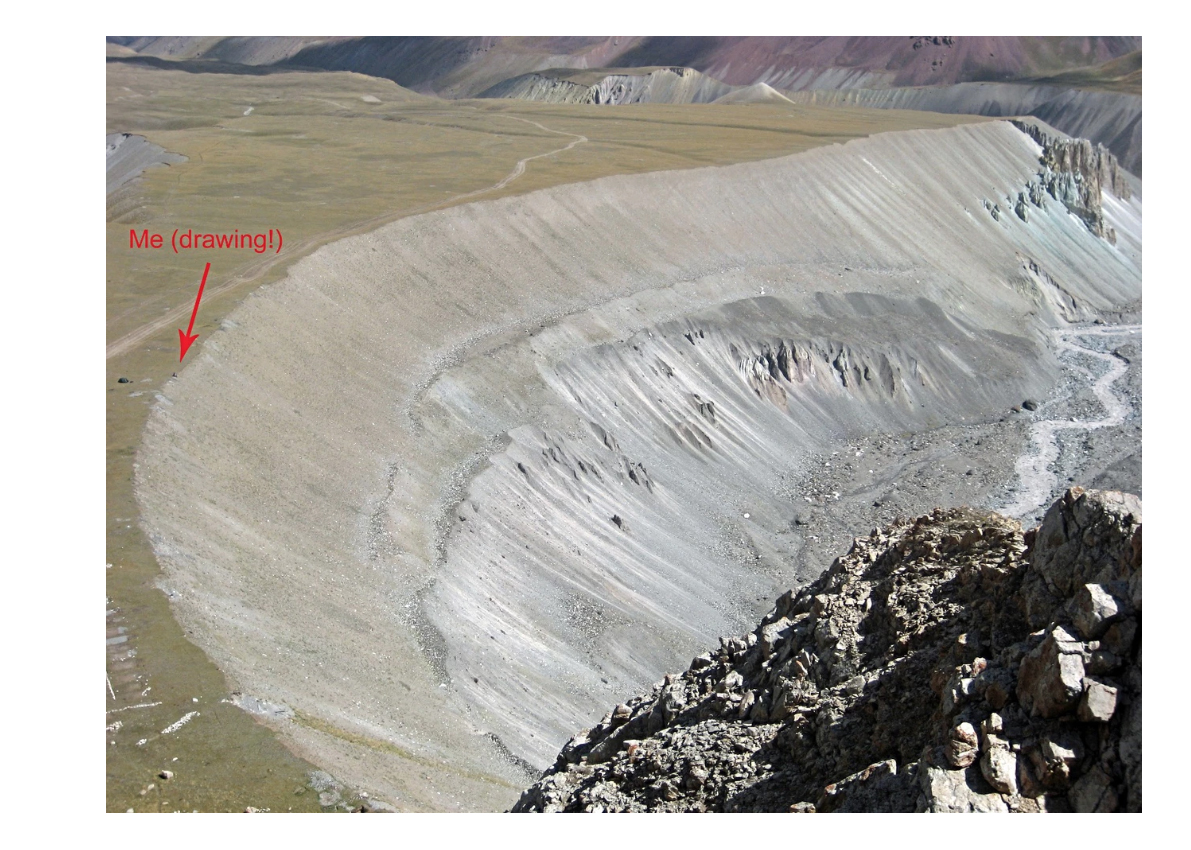
Drawing in Kyrgyzstan
Header image: Polly Townsend painting in situ
5 thoughts on “Polly Townsend: Painting the Brutality of the Land”
Polly, thank you for sharing these
paintings and your experiences; your work
is absolutely beautiful, and terrifying at
the same time. I think you were totally
correct when you used the expression ‘raw
savagery’. I work in environmental
subjects too (currently woodland indicator
species), and to me there is nothing more
exhilarating than being able to capture the
subtlety and transience of something so
precious and important. Whereas I am still
trying, you do so magnificently!
Its mountains remind me of those of Georgia O’Keeffe !!!
Hi Helene, interesting comparison! Thanks for reading.
I find your articles exciting and the photos make you want to create even more!
That’s so great, thank you!
Comments are closed.