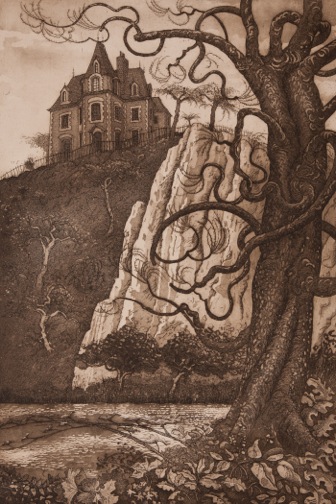
On The Brink
Etching
495x330cm
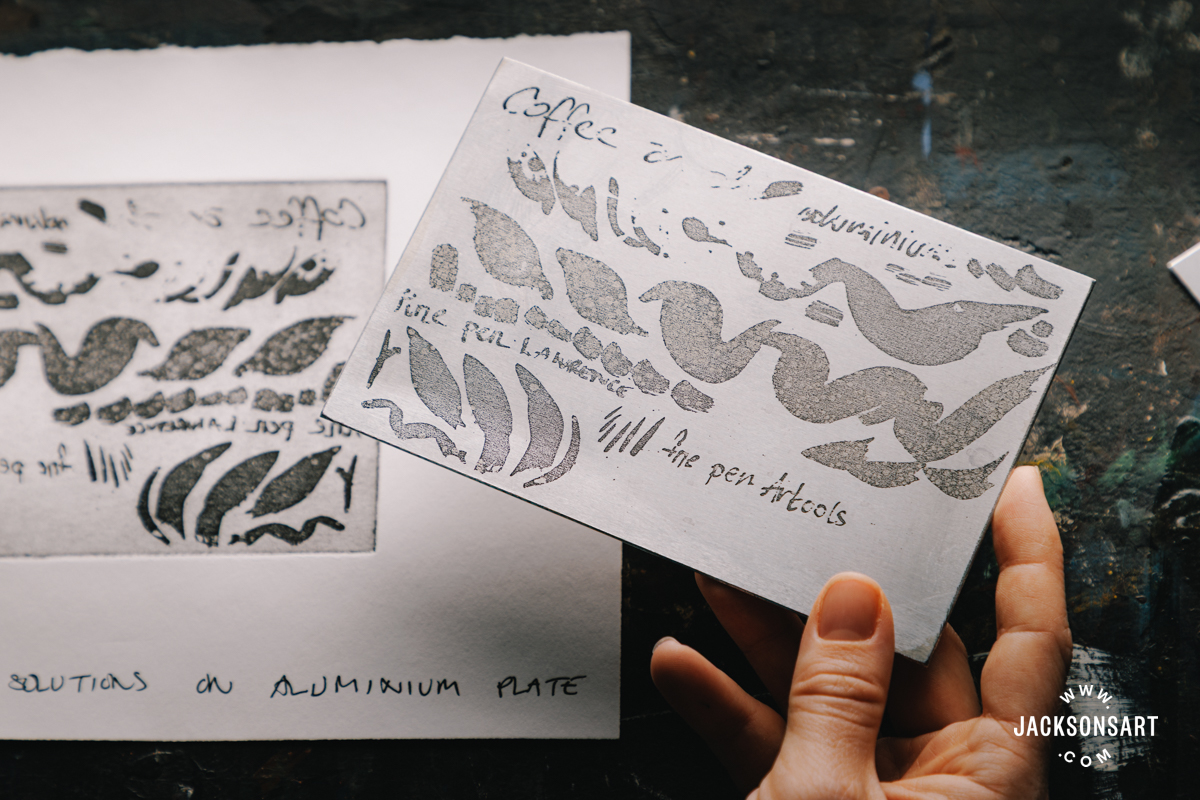
Imagine coating a copper plate thinly with wax, then blackening the wax with the smoke of lighted tapers, taking a metal point with a wooden handle and drawing on the black surface to reveal gleaming traces of the copper beneath. That’s the first step in making an etching. Child’s play, isn’t it? Next, if you protect the back of the plate with varnish and lower it into a shallow tray of acid, the chemical will bite into your drawn lines to create grooves. To make a print the plate must first be lifted from the tray, rinsed and dried; and then the grooves must be filled with ink. You are about to make an intaglio print. That is, one that lifts ink from the crevices of a surface rather than (as in the case of linocuts or woodcuts) from the surface itself.
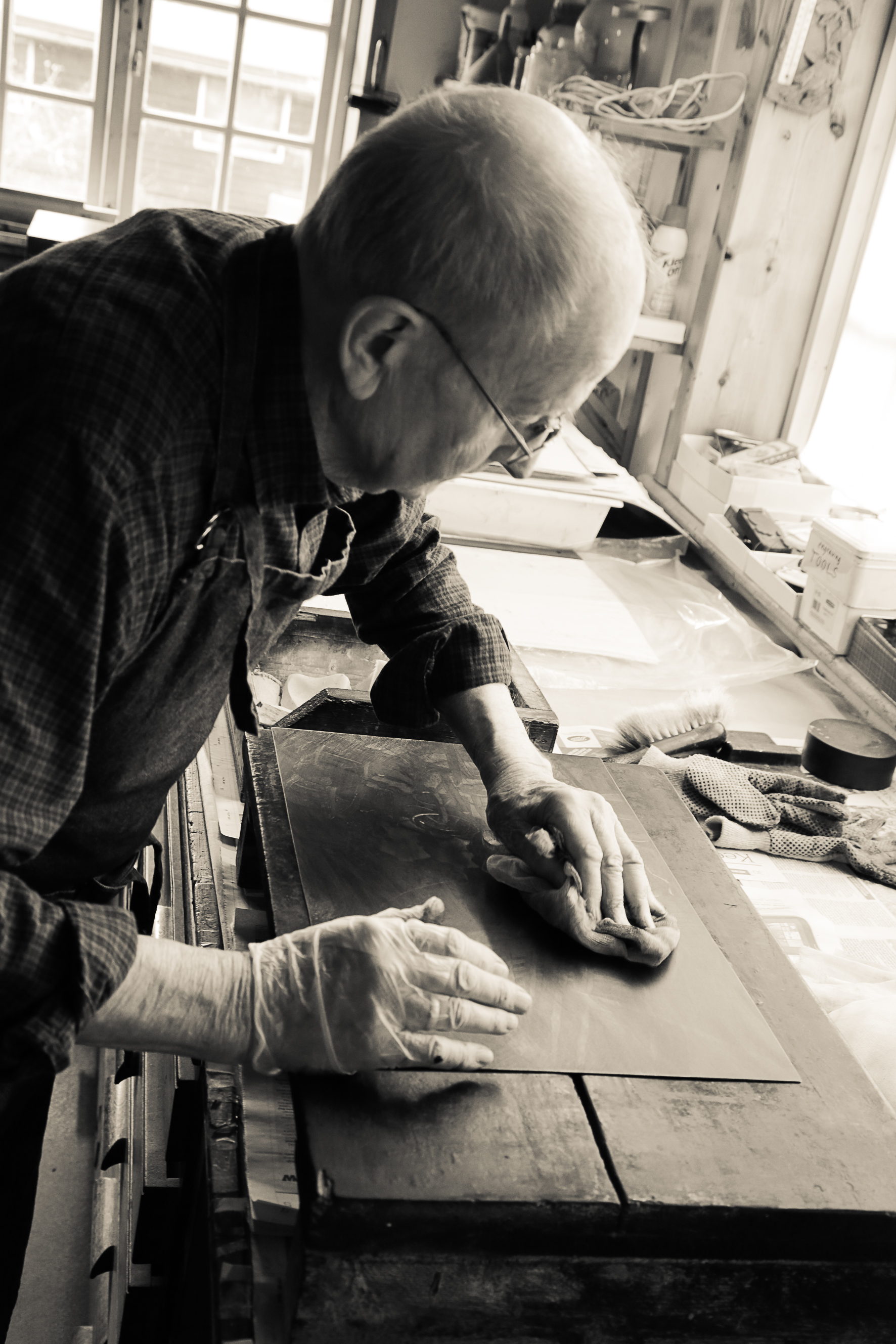
The ink, of thick consistency, is applied all over the plate’s surface with a ‘dabber’ (or, these days, a roller). The ink is then wiped off with a pad of scrim (an open-weave fabric) and this action not only cleans the surface but, at the same time, charges all the furrows, grooves and pits of the plate with ink. A skilled printer then uses the palm of a bare hand, lightly dusted with chalk, to complete the wiping; and can do this to different degrees so as to leave subtle variations of tone – delicate veils of ink – here and there on the plate’s surface. Still more can be done to complete the effect: a loose pad of fine cotton fabric may be dragged loosely over ink-filled lines to soften and enrich these areas. So, no two impressions from the same plate can ever be exactly identical; thus each is an original print.
Finally, the inked plate is laid on the bed of a rolling-press. This is a basically simple machine resembling the old-fashioned clothes wringer: a flat surface (the bed) running between two rollers and passing back and forth with the aid of a handle fixed to the end of, usually, the top roller.
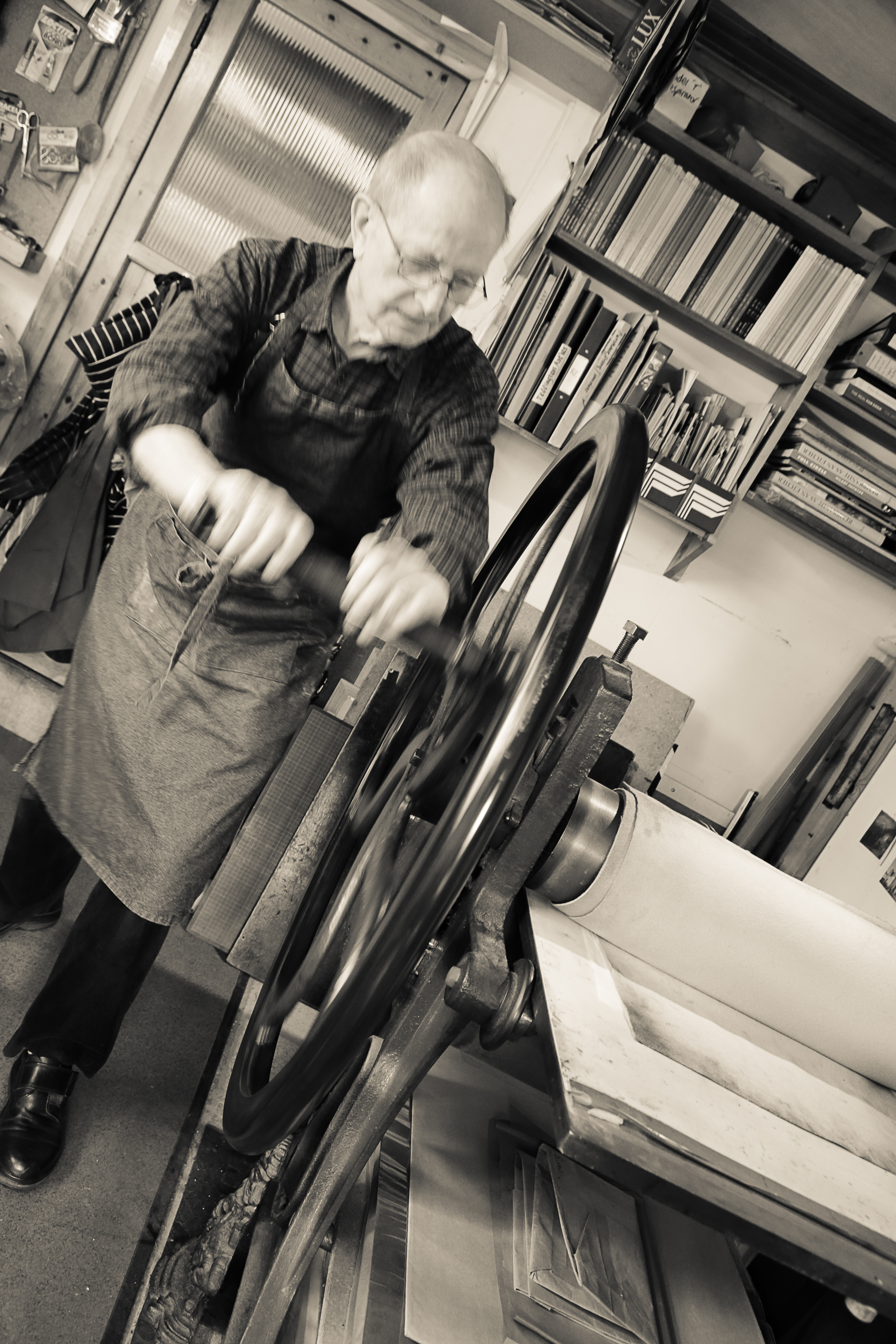
A sheet of paper (damped previously so that it will be flexible enough to be pressed into the grooves and pick up the ink) is laid on the plate and on top of this three or four layers of resilient woollen ‘blankets’ to provide the correct pressure; and the whole ‘sandwich’ is passed through the rollers to create the finished print – an original etching.
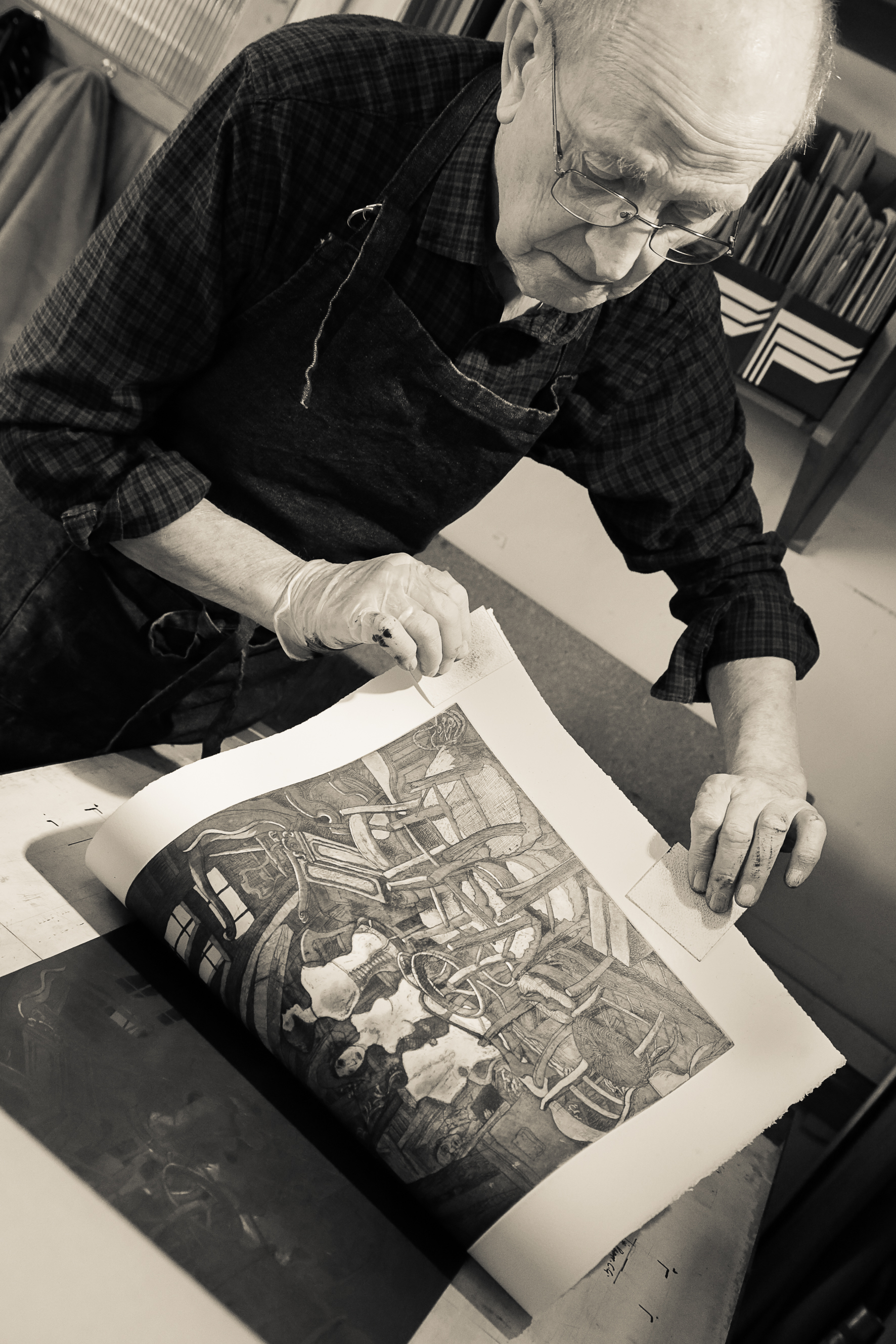
Anthony Dyson is a member of the Royal Society of Painter-Printmakers
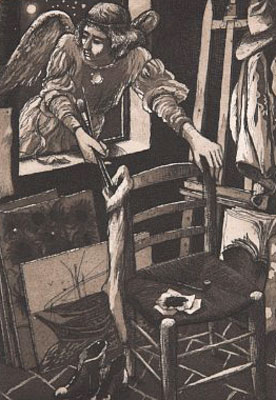
Theo’s Gift
Etching
13cm x 9cm