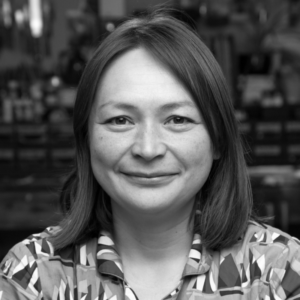
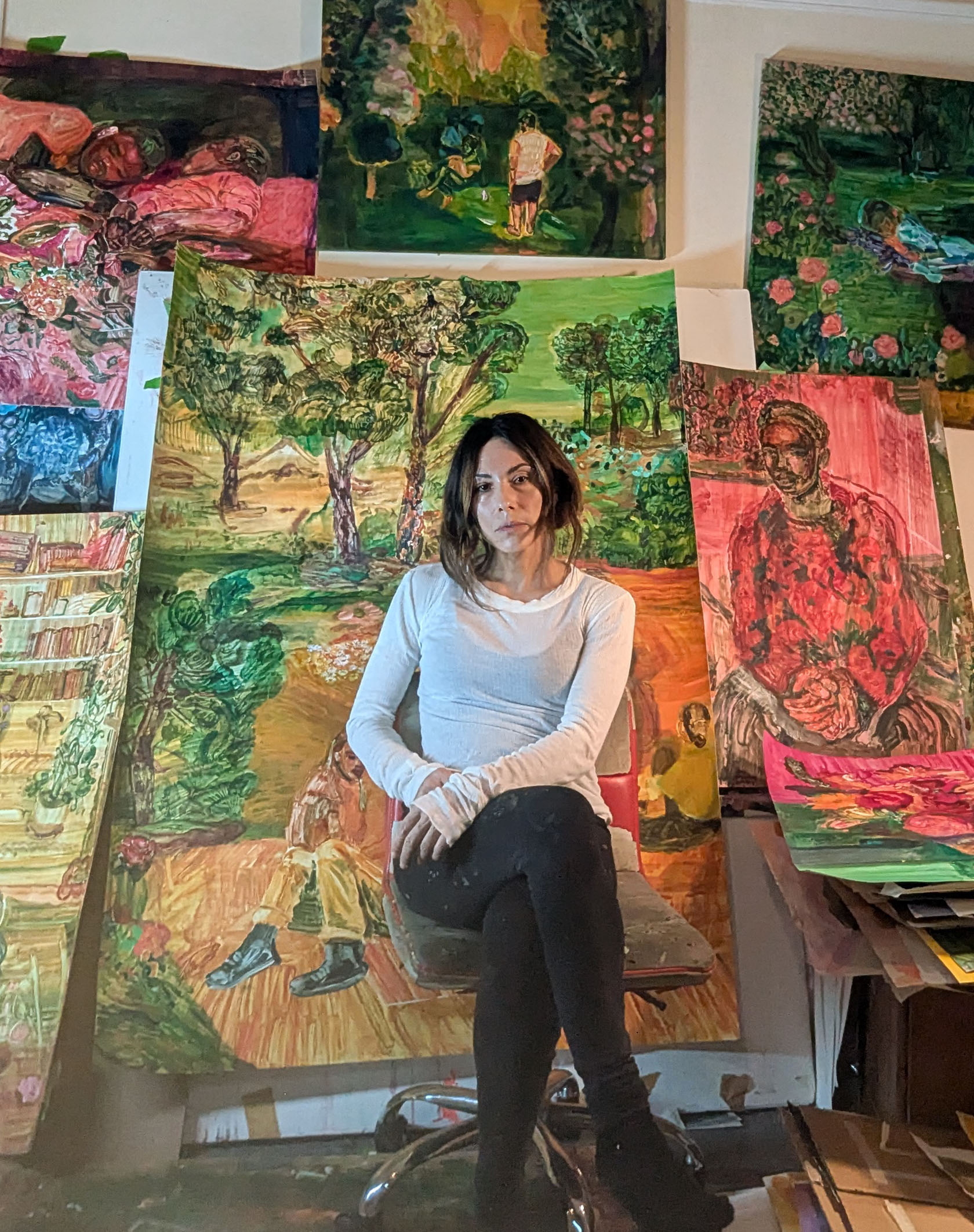
Whilst exploring the exciting world of printmaking at university, there were a few printmakers who repeatedly caught my attention at various exhibitions at the Mall Galleries and the Royal Academy Summer Exhibitions. One of these artists was Anita Klein R.E., whose images of contented figures engaged in everyday activities always seemed pure and simple – imagery that brought warmth to the heart and had none of the supposed ‘intellectual challenge’ that the YBAs presented (another group of artists who also repeatedly caught my attention at this time). In many ways Anita Klein’s work is more challenging to many – so many have a problem with art that celebrates simple pleasures, and gives us aesthetic pleasure too – where is the idea? Well, the idea is right there, staring us in the face, brought in the form of wonderfully bold compositions and sensitive palettes. Anita generously gave her time to answering some of my questions about her life as an artist.

Lisa: What first attracted you to trying your hand at printmaking?
Anita: Half way through my undergraduate degree at the Slade, I became bored with the abstract paintings I had been making since my foundation course, and returned to the figurative, autobiographical drawings that I had always done as a child. Paula Rego, who was a visiting tutor at the Slade at the time, was experimenting with printmaking herself, and she and Paul Colwell, who was the print technician in the postgraduate printmaking department, encouraged me to try printmaking using my new drawings as subject matter.
Lisa: Where do you find inspiration for your images?
Anita: My everyday life and my dreams.
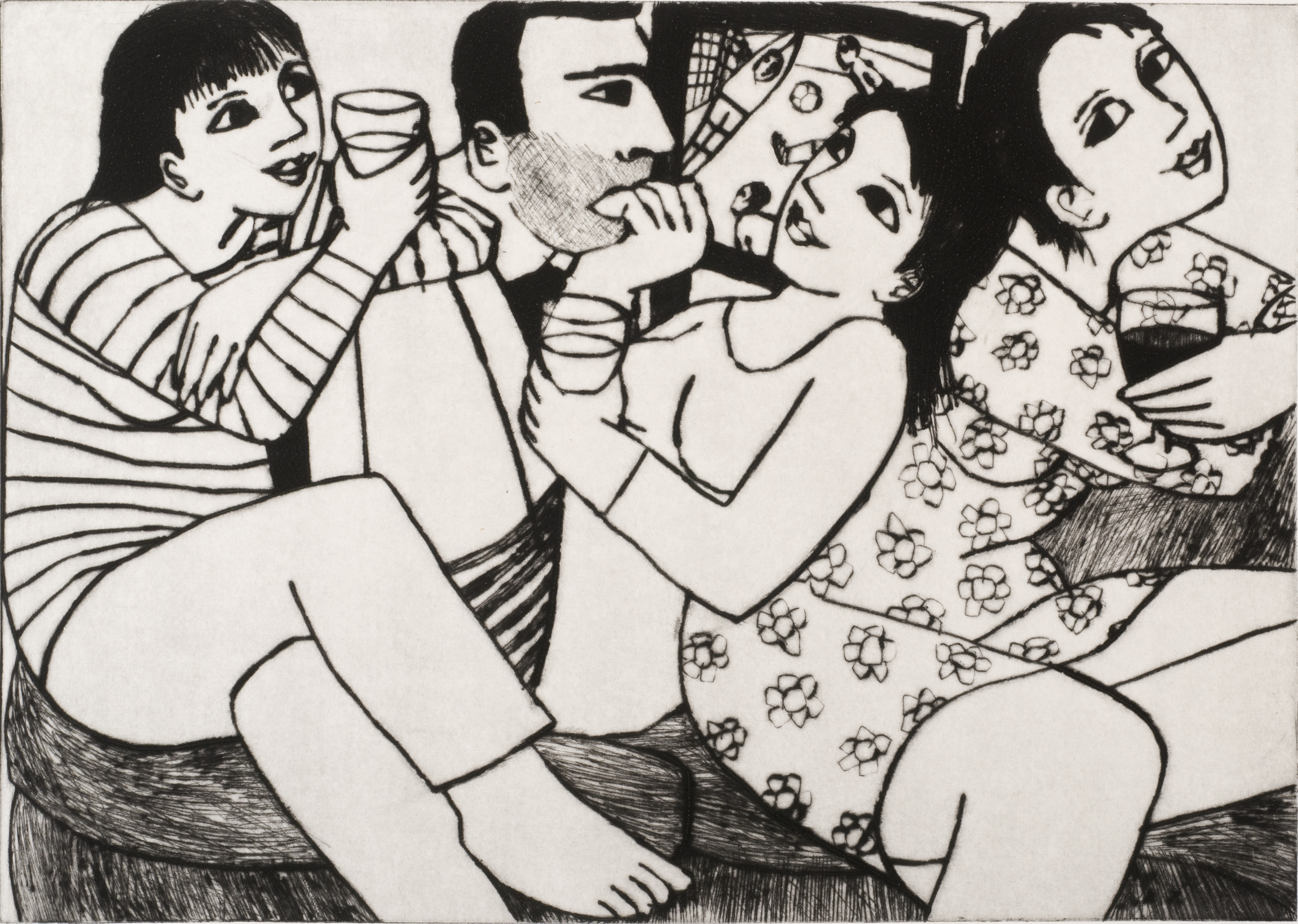
Drypoint – edition of 25
Lisa: How do you go about designing your compositions?
Anita: Composition, by which I mean the design of the picture, where it begins and ends at the edges, and the shapes that make up the image, is extremely important to me. The more tightly and carefully designed the internal space is, the less fleeting and more of an object the painting becomes. When I draw as preparation for a print or painting I use an eraser as much as I use a pencil, constantly correcting until I feel everything settle into a stillness, a bit like putting the last piece in a jigsaw. I don’t expect people to necessarily notice this about my work; I want it to seem simple. But I do hope that my quest for pictorial harmony means that people feel soothed and calmed by the end result.
Lisa: How do you decide when to use colour, and which colours to use?
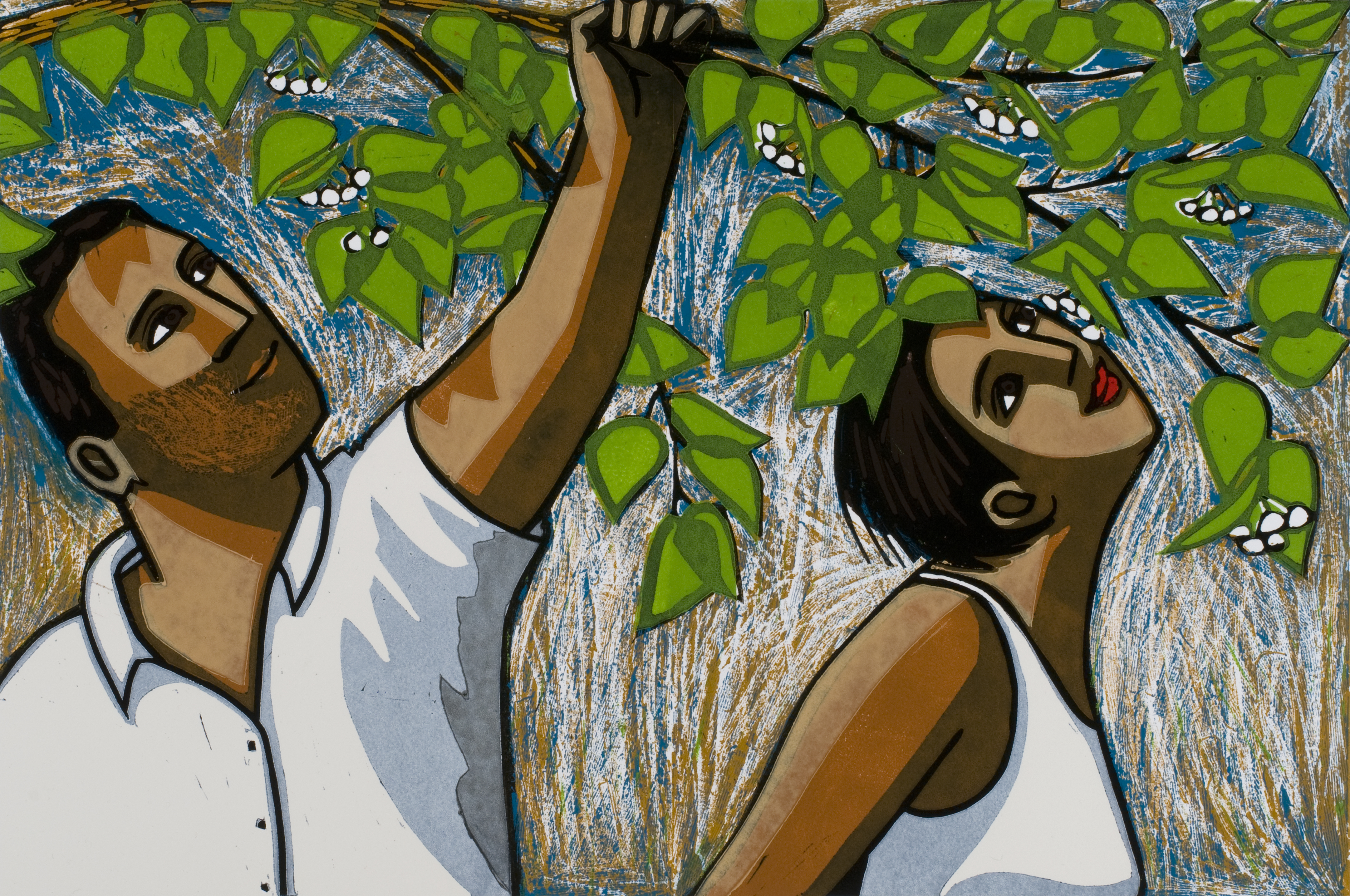
Anita: I don’t make any conscious decisions about colour in my paintings. I distract myself by listening to the radio and the colours just “happen”. I use the colours in a painting as a starting point for colours in prints, but I have to modify them as printing inks mix with each other in different ways when they are printed on top of each other.
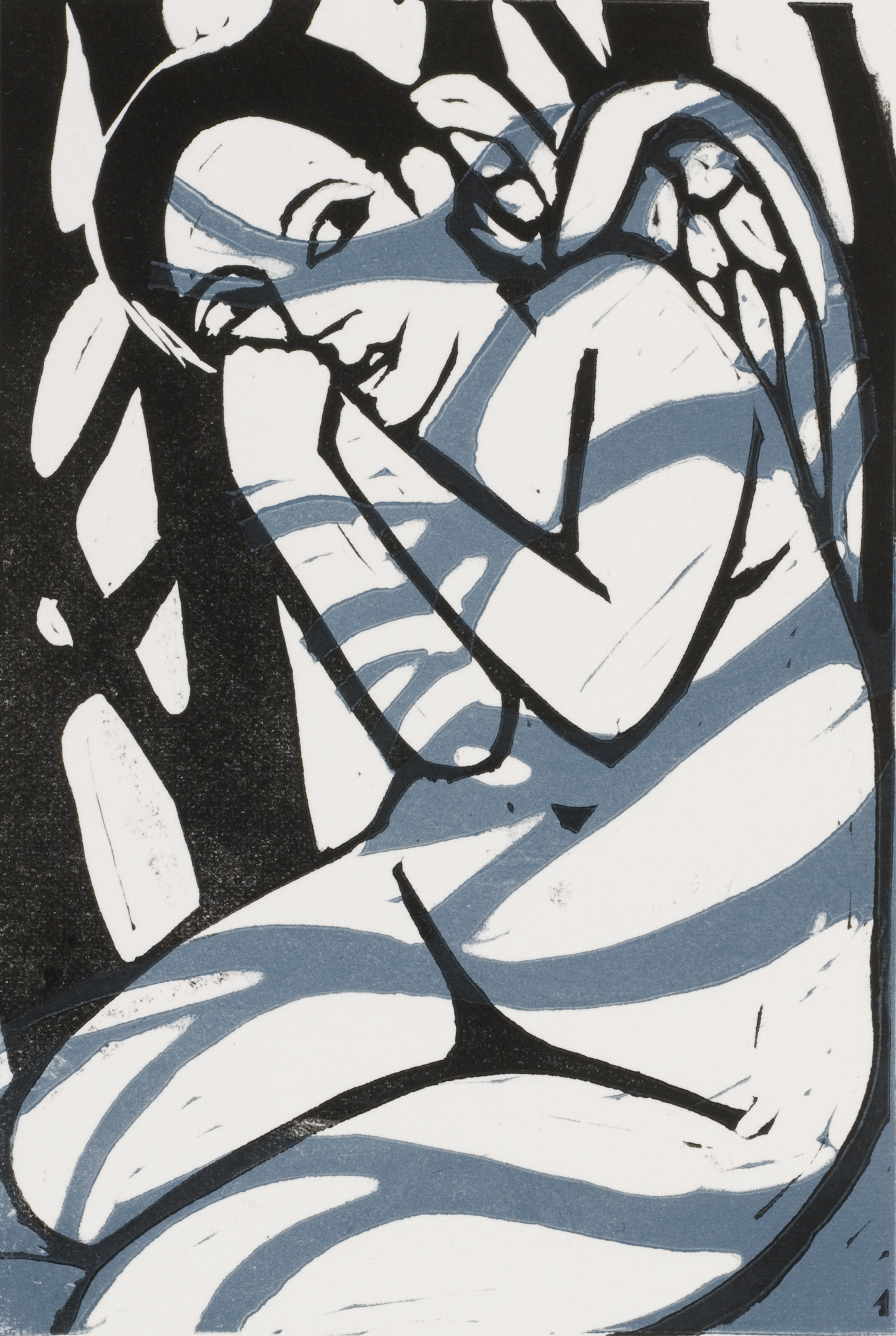
Linocut – edition of 100
Lisa: Do you have a favourite printmaking technique?
Anita: At the moment I am exploring the possibilities of linocuts and lithography. I used to use drypoint as a way of keeping a visual diary. I like simple direct processes best, but I choose which technique to use according to which type of mark best suits the emotion I want to express.
Lisa: What do you hope to communicate in your work?
Anita: If I could say that in words then I would use words.
Lisa: What is the biggest frustration you can face in your studio and how would you overcome it?
Anita: Interruptions and admin are the most difficult part, but they are only to be expected as I am lucky enough to make a living out of selling my work. So I work for one week every month in Italy so I can paint and try new things without distraction.
Lisa: Who are your favourite printmakers?
Anita: Picasso and Rembrandt.
Linocut – edition of 50
Lisa: Is there a link between your printmaking work and your work in other media (paintings/stained glass/sculpture)?
Anita: Sometimes I work in other media just to loosen up and try something new. It’s good to use techniques that you’re not practised at. That’s how the best happy accidents happen. All my work is connected.
Lisa: What plans do you have for the near future and where can we see more of your work (online or in the flesh)?
Anita: I have a few exhibitions planned this year, and will probably have a solo show of new paintings in 2015. You can see my work on my website; www.anitaklein.com as well as a listing of galleries and forthcoming exhibitions. Eames Fine Art and the Bankside Gallery in London have the best stock of my work. I also welcome visits to my London studio if they are arranged in advance.
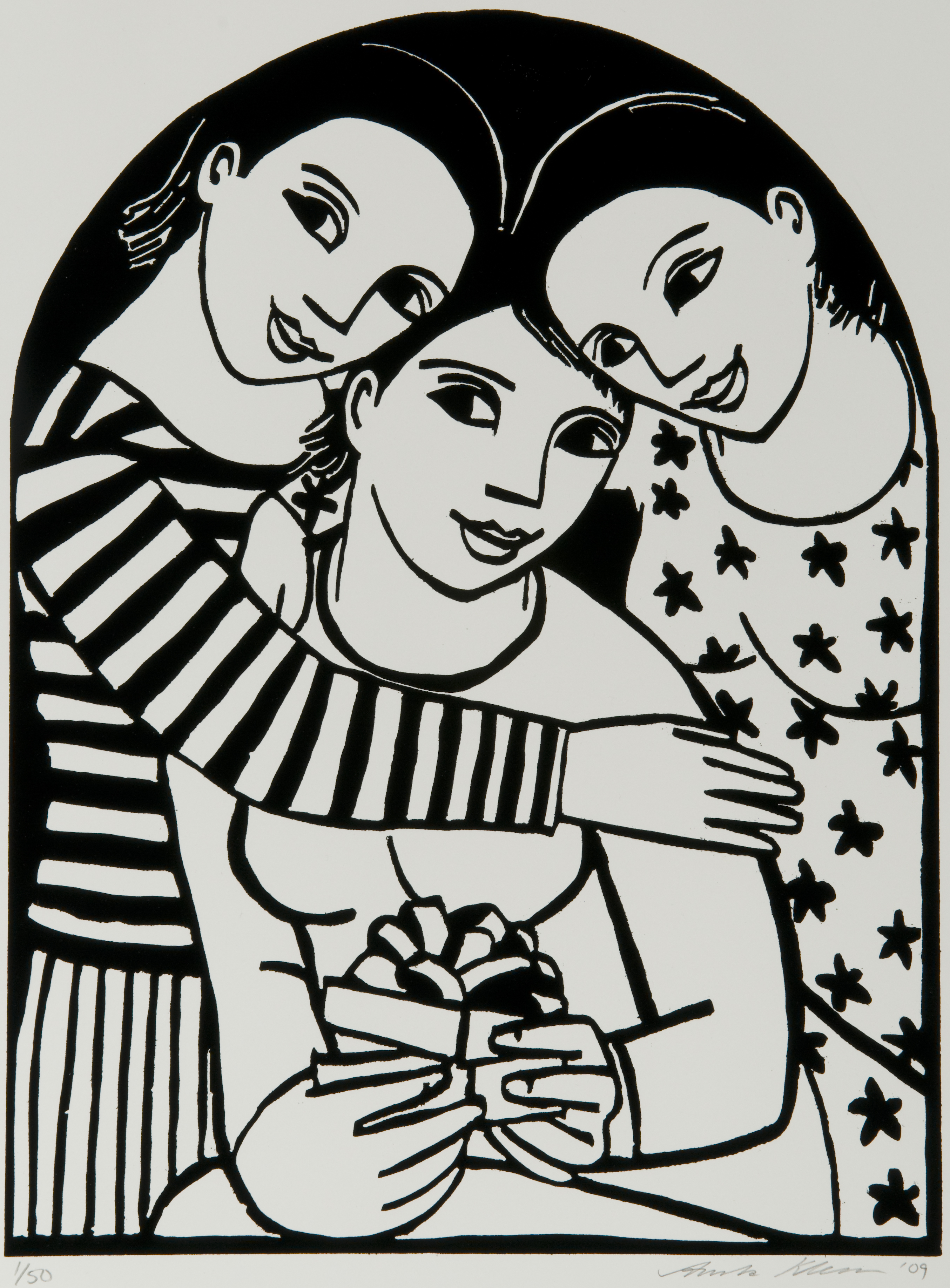
Woodcut – edition of 50
Anita Klein will have prints at the London Original Print Fair with Eames Fine Art, Advanced Graphics London and the Royal Society of Painter-Printmakers. She will also be giving a talk about her work at the London Original Print Fair at the Royal Academy on Sunday 27th at 3pm – more information at http://www.londonprintfair.com/events. People can book the talk in advance by e-mailing [email protected].
What do you think of the work of Anita Klein? Please let us know by commenting below!
To view the printmaking department at Jacksonsart.com click here