



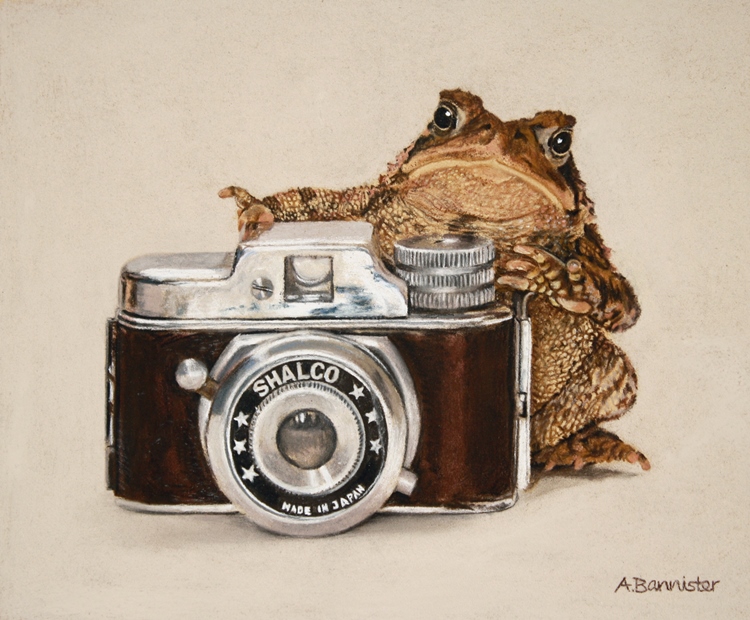
Ali Bannister was last week’s winner of the Jackson’s Art Supplies ‘Portraits in Pastel’ Competition for her portrait of a Tree Frog wittily titled ‘Your Pad or Mine?’. The Jackson’s Art Blog were lucky enough to get this insightful interview with Ali where she reveals much about her working methods as well as her life as an artist.
Lisa: How did you go about creating ‘Your Pad or Mine’? What sort of surface did you work on and what pastels did you use, and what was the most difficult aspect of making the drawing?
Ali: I stumbled across the photos on flickr.com, contacted the photographer, Sarah Dodd, and asked her permission to use the photo. Respect of people’s copyright is of the highest importance to me, not to mention an important legal issue. Luckily she said yes and I was able to get going.
Before I started the drawing, I took the photo and played with it a bit in Photoshop: upping the saturation of the colours, increasing the contrasts and hitching that smile up a bit. I like to play with reference photos in this way as I can try lots of different options (like cropping), compare them and decide which ones I like best before I start drawing. I like to make all of my decisions before I pick up a pastel as I find this simplifies the drawing process.
I also find that it helps to print my reference photo the same size as the final piece as my brain doesn’t have to worry about scaling the information then, it can simply move it across.
I used Sennelier pastel card (in antique white as this shows both my light and dark working lines well). The heavily textured surface means that it can hold a lot of pastel which allows for multiple corrections and means that you can build up colour in layers which gives it an added richness and allows you to ‘mix’ colours on the page.
I started by putting the outlines in faintly with pastel pencils. I then lightly worked in some shading – focussing on the darker areas first and then equally lightly putting in some highlights. This gave me an ‘underpainting’ of sorts to work on. Once I was happy that everything was in the right place I started to work into the drawing in more detail.
I generally put the darkest areas in first, then the mid-tones and only then the lightest areas so that I don’t risk contaminating the light areas with the darker colours. Things like the light coloured bumps under the chin I put in near the end. Details like that can be easily smudged by accident if I put them in too soon. In all honesty, looking at those bumps now, I feel that I should have blended them in better around the edges as that would have made them look more three dimensional. Damn, I hate it when I miss things!
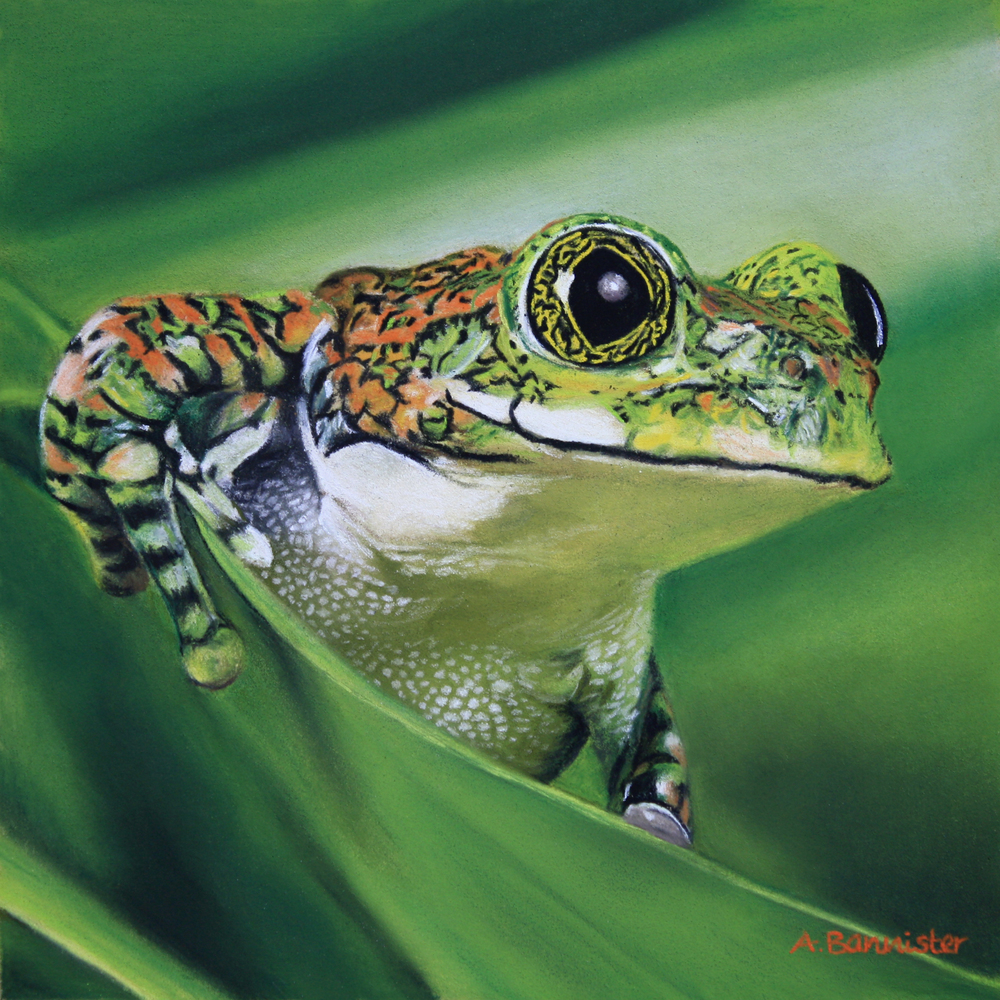
When I work on a drawing I tend to work all over the page keeping my layers quite light though so that the depth builds up naturally. At the end I will take sharp pastel pencils and crisp up any lines and edges in the drawing (say the line of the frog’s smile and anywhere where the body meets the background), darken down the darkest areas like the blacks of the eyeballs and lastly brighten any highlights as these can get dulled by the pastel dust.
The only area where I use a heavier application is the background. That’s where I use soft pastels.
Lisa: You are best known as an animal portraitist. What is it about animals that you love to draw so much?
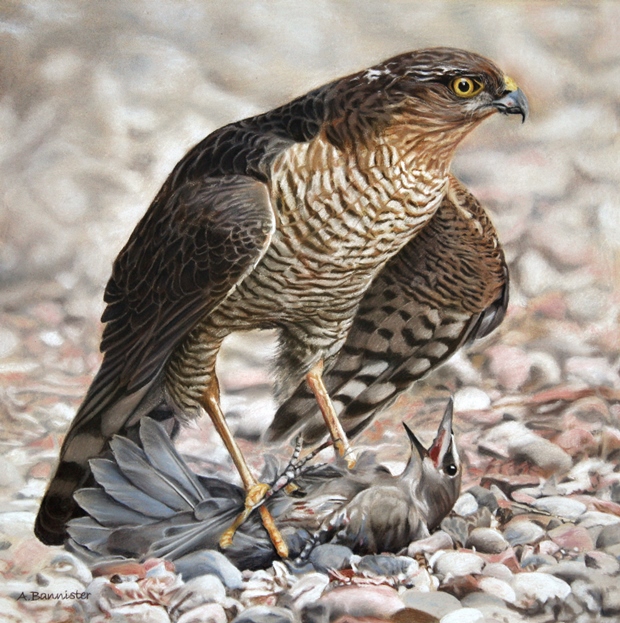
Ali: That’s a good question. I guess in comparison to landscapes or still life I’m drawn to the life and vibrancy of an animal; the character and expression. I find that there’s a sincerity in animals. They’re not worried about you what you think of them so there’s an honesty to their behaviour. I think that makes it easier to capture their character.
I often find a similar thing in children when they’ve relaxed around me, so when I draw people they tend to be children.
On a technical level you get a lot of different textures to work on with animals too. Quite often that’s challenging but I think that it keeps me interested. I also find animals pretty easy to like. You don’t tend to hear them being unkind about other animals!
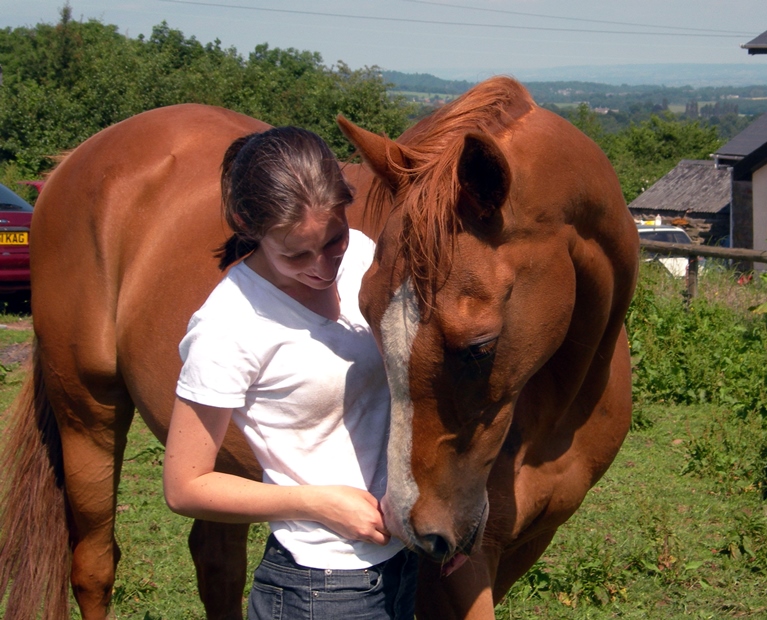
If you’re interested in something you will absorb visual information about it without even realising. If you love horses and spend a lot of time around them, especially grooming them, you become pretty familiar with the lumps and bumps and veins and changes of coat direction. I think that this helps you to see faster when something is ‘wrong’ with a drawing. You eye is already ‘in’ therefore your drawings of those things will be better.
Lisa: When did you first discover soft pastel and what do you particularly like about working with this medium?
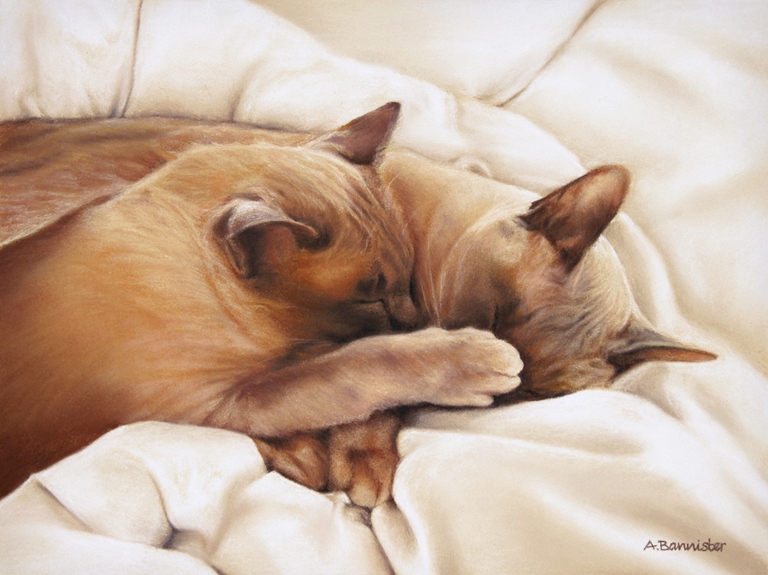
Ali: I went from producing portraits in pencil to portraits in charcoal when clients wanted larger pieces. I used compressed charcoal for the darkest areas. One day when the shop had run out I bought a black soft pastel instead. It worked well so I bought a white pastel to replace the harder white chalk that I had been using for the highlights. It was a natural progression to purchasing a grey mid-tone and leaving the charcoal in the box.
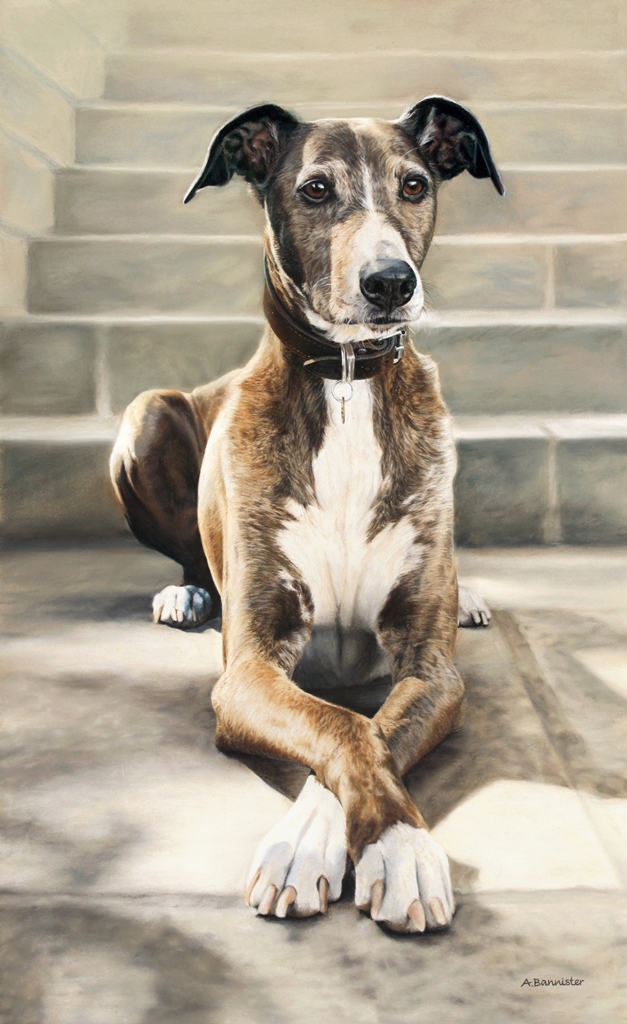
When a client asked for a portrait in colour, my nerves said “no” but my bank balance said “yes”. The dog was all one colour so it wasn’t a huge jump to replace my grey with a gold, my black with a brown and my white with a cream.
At a similar time I asked an artist, who’s work I admired, what type of pastel she used for the backgrounds of her portraits and she told me, ‘handmade soft pastels’. I bought some and noticed the difference right away: the smooth edges, the wonderful, buttery consistency and pigment rich colours. Quality, handmade soft pastels blend beautifully and their lightfast quality is essential for me for commission work. Add in pastel pencils for fine detail and this is the technique that I still use today.
Lisa: You often work to commission and have quite a few high profile clients, including Ringo Starr, Frankie Dettori and Andrew Strauss. Do you find working to commission more daunting than un-commissioned work and if so, how do you ensure the fear doesn’t impair your work?
Ali: On the contrary, I find commission work much more straight forward. Commissions are all about what the client wants. Their preferences and choices are what matters. If they wanted me to draw their horse or dog blue and have it upside down then that’s what I would do. It makes it simple for me. With work that I produce for myself there are almost too many options, too many different ways that you could do something. Too many possible subject matters, how do you ever narrow it down? I have a folder of pictures that I’d like to draw and paint from that’s full to bursting …and it just keeps on growing!
With clients you can say, “This little scar on the horse’s head, would you like that kept in or left out?” and you have your answer. When you do work for yourself you have to make all of those decisions yourself. When you work with a client you have the wealth of their knowledge of the animal or child to call on. Their knowledge is what helps you to capture the subject more accurately.
As for commissions being daunting. I used to think that working for high profile clients would increase my anxiety over getting a portrait absolutely spot-on but my partner summed it up neatly when he said, ‘Al, you’d agonise over every tiny detail whether a picture was for the Queen or a total stranger.’ And he’s right as the final piece is what matters to me; doing the very best job that I can is definitely my strongest motivating force. It’s the challenge that I set myself and it’s what keeps me interested in this job every day. I could no more hand over a piece that I was unhappy with than a chef would serve a weak dish to a critic.

Happy clients are by far my best form of advertising so it’s vital to me that they are pleased with what I produce. I’ve found that when I draw for myself and then sell the piece I really miss that personal element, that one-on-one involvement with the client that I have with commissions. I miss the emotion that’s present when you hand over a portrait to the people who love that person or animal the most. I also really enjoy the excitement and anticipation in the build-up. And surprises – I love being involved in surprises – and you don’t find many of those in gallery shows. It’s lovely to know the person who your work is going to and to see and hear about the enjoyment that they get from it, sometimes even years afterwards.
As for not letting fear impair my work: I do the easy bits first as that always makes for a positive start. When I get stuck I go back to the original photo, or look for more reference pictures to help me solve the problem. Sometimes you need to find a sharper photo or see something from a different angle, or see how other people have solved the same problems. When you feel yourself getting anxious about a certain area be pro-active, do research, do small trials on a different sheet, ask people. I have found other artists to be incredibly helpful and hugely generous with their knowledge. It’s genuinely heartwarming.
Before now I have asked a friend to take photos of her horses’ legs in particular angles because my one reference photograph wasn’t clear enough. Wherever there is a problem there is a way to make it easier to deal with – you just might have to be a bit creative!
Lisa: Can you tell us a bit about working for Steven Spielberg on ‘War Horse’? What did the work involve?
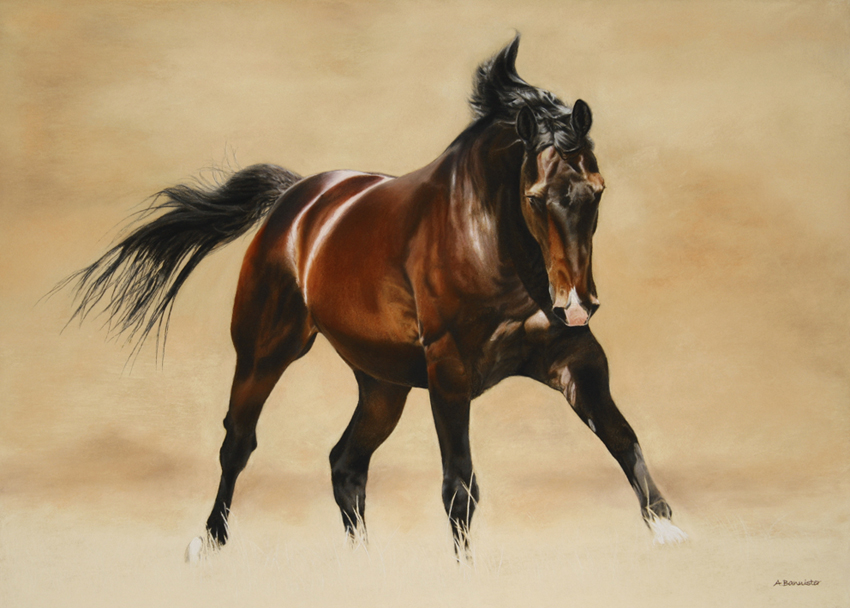
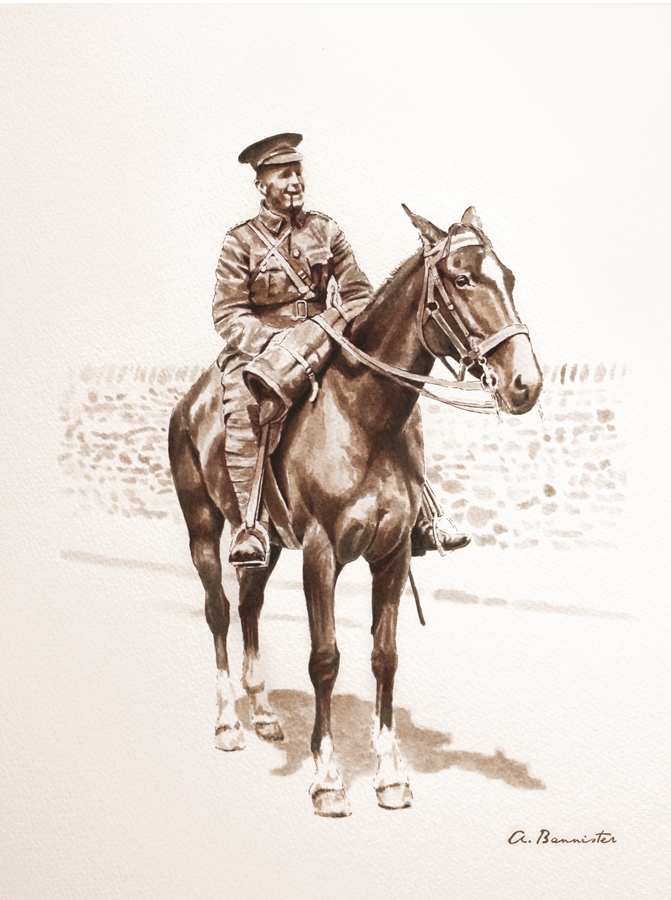
Ali: In a nutshell I got involved almost completely by accident, ended up as Head of the Equine Hair and Make-up department with the responsibility of making the 14 horses that played ‘Joey’ look identical and the appearance of all of the horses in the film (some days up to 250 of them). This included making pristine, clean horses look as if they’d been at the front line for years. The drawings that you see of the horse, ‘Joey’ in the film were mine. I produced around 30 sketches and Spielberg chose his favourite 5 or so to feature in the film.
I worked directly with Spielberg and Kathleen Kennedy (who I believe are the two most successful film producers of all time) and alongside Oscar-winning Production Designers, First Assistant Directors, Cinematographers and now famous actors such as Benedict Cumberbatch and Tom Hiddlestone who were both extremely complimentary about my work. We worked long and anti-social hours but I worked with profoundly talented people, made some wonderful friends, and we experienced some incredible things along the way.
Lisa: Are there any other tools/accessories that you use when you work in soft pastel?
Ali: I use my fingers for blending, smudging and smoothing even the smallest of details but now and again I use a paper pencil to apply very subtle pastel tones in areas where it’s vital that no lines are visible, or areas that are too small to use a soft pastel directly. I will scribble on a scrap piece of paper and then use the paper pencil to pick up the pastel dust and apply softly to my drawing.
Sometimes I will mix colours my scribbling onto spare paper in several colours and then blending them with a finger before applying them directly with that finger. Sometimes to break up a flat-looking background I will fold a piece of paper in half, open it up again and scrape quite a bit of dust off one or two pastels with a Stanley knife onto the paper. I then shake it into the fold and use the folded page to sprinkle the colour where I want it. I then blend it by hand. The slightly random result can add an interesting quality.
I keep a medium sized, paintbrush of a medium firmness to hand to ‘dust off’ any pastel particles that have become ‘stuck’ to the wrong area. I’ve found this a lot more effective than trying to remove them with a finger as that tends to smudge them in instead.
(I also use a Dremel to sharpen the tips of my pastel pencils. I find it faster with fewer breakages and considerably more fun than hand-sharpening!)
Lisa: Can you describe your workspace to us?
Ali: It’s a table by the window in the house. I know that it would be better for my back to work upright but working flat is what I’m used to and how I’m mentally more comfortable if not physically. I’m only just starting to want to work upright on an easel when I paint.
Lisa: On your website you say ‘If a drawing is done well it can evoke quite a different emotion from a photograph’. What is it about the medium of drawing that opens up the emotional content of an image?
Ali: Well I don’t know about ‘opening up the emotional content’ but I think that there’s a certain magic about a drawing. When we look at a photo we see a still capture of a moment in time. That moment existed and a photo is the capturing of that light. We can take photos so easily now. We can take hundreds if not thousands in minutes, add filters and edit them using our phones. There is no mystery left to it anymore and it’s a craft that is less and less appreciated.
A drawing isn’t a capture of an actual moment in time. It’s a fiction, a story, but that means that it can be written better than the truth. Small imperfections can be removed, time can be wound back. Backgrounds can be simplified to let the subject stand out. You can control the way that the eye of the viewer moves around the picture. Yes, all of this can be done with photos in Photoshop too but a drawing can be produced on the other side of the world to the subject and yet somehow coloured pigment on paper can become -through careful mark-making -an animal, or person; a much loved and recognisable friend that you could reach out and almost touch. I think the mystery of how that happens is where the magic lies. The brain knows that it’s looking at pastel and paper but the eye sees a liquid eye or a soft muzzle; and unlike a photo, every millimeter of the picture has been created by hand, from nothing. I think that people are drawn to and fascinated by a skill or craft that they don’t themselves have. I certainly feel that way about music.
I also feel that for people who have lost an animal it’s a way of having ‘one last picture of them’ when they thought that that was no longer possible.
Lisa: What are the biggest struggles that you face as an artist and how do you overcome them?
Ali: Without the slightest hesitation I would say that pricing your work and charging enough to make a living and continuing working as an artist is the hardest part. When your eye is in you are the most critical person of your work, the hardest critic. You need to be, to maintain high standards and to improve. However that makes you the worst person to value your work.
For me, looking at the wider picture has helped a lot. I’ve had to stop looking at the prices of my portraits as the value that I’d place on them and look at how much are they worth to the people who want them. Someone explained it to me once saying, “If you were to ask clients if four weeks of your work is worth a week or less of theirs to them, for a picture that they couldn’t produce themselves or buy anywhere wouldn’t they say ‘yes’?” I have to really focus on that.
Luckily I have good support around me; people who remind me that not everyone can do what I do and how much plumbers charge just come out to you and basic things like that.
Self-discipline can be hard. I have systems in place to help me with that. I have routines that I stick to and a way of measuring the time that I spend drawing so that I know when I have or haven’t done enough each day. I also take pictures at the start and finish of each day so that I can see that progress is being made.
It can be tough working from home. You never really get to get away from your work and some days you go to bed realising that you haven’t stepped outside your front door. It can be quite a lonely way to work too. I love people but can’t concentrate well with them around me so I get out and see people when I’m not drawing. Playing hockey really helps: I get to see a lot of friends all in one place twice a week and I get to run and move. It’s amazing how little you move when you spend hours and hours in one position drawing!
Lisa: Do you have any particular works in mind that you intend to make as soon as you receive your prize of a complete set of Jackson’s Soft Pastels?
Ali: Just yesterday I got talking to someone on the beach who surfs a lot, rides and is interested in drawing. She set up the facebook page Surf Senoritas and thought that there might be some members happy to let me work from their photos. It would be an interesting change of subject for me but one that I’m equally interested in. She may even come to me for one of my one-on-one drawing workshops and the soft pastels would definitely be part of that.
Lisa: Where online or in the flesh can readers view more of your work?
Ali: I have a website for my drawing and painting which is www.alibannister.com and a website about my involvement as the Equine Artistic Advisor on Spielberg’s War Horse www.warhorseart.com. My Facebook Page is https://www.facebook.com/pages/Ali-Bannister-Portraits/177316288732?fref=ts . The painting of ‘Joey’ that the author of War Horse, Michael Morpurgo, commissioned me to paint is hanging in the village hall in Iddesleigh, Devon, just as it is described in the book: ‘He stands, a splendid red bay with a remarkable white cross emblazoned on his forehead and with four perfectly matched white socks. He looks wistfully out of the picture, his ears pricked forward, his head turned as if he has just noticed us standing there’ (From War Horse by Michael Morpurgo).
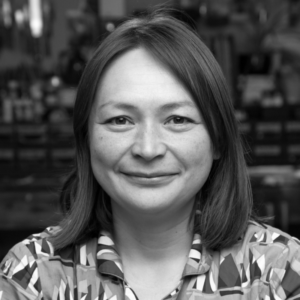
Portrait of Ali Bannister at the top of this article by Bridget Worth


4 thoughts on “An Interview with Portraits in Pastel Comp Winner Ali Bannister”
Liana Perry and I have loved reading all about your
work. Your portraits are AMAZING. Thanks for your
positivity at archery competitions – Liana loves being in
your company.
Thanks for this comment Rita – I’ll make sure Ali sees it!
Lisa
Ahh, that’s SO lovely :0) Thank you.
Liana was at the first archery competition that I ever
did and walked me through the process of head-to-
heads etc. for which I was hugely grateful as I was
pretty nervous! She’s been a friendly face ever since
and I always look forward to seeing her :0) I have so
much respect for what she has achieved and what she
can do whilst still so young in shooting terms. But
equally, Dave and I admire her individuality. We
genuinely love to see her do well and there’s no one I’d
rather be beaten by :0)
Thanks again for your lovely words. Ali
🙂
Comments are closed.