If you find your watercolour painting is too tight or overworked then perhaps this technique will help you to paint looser, fresher watercolours!
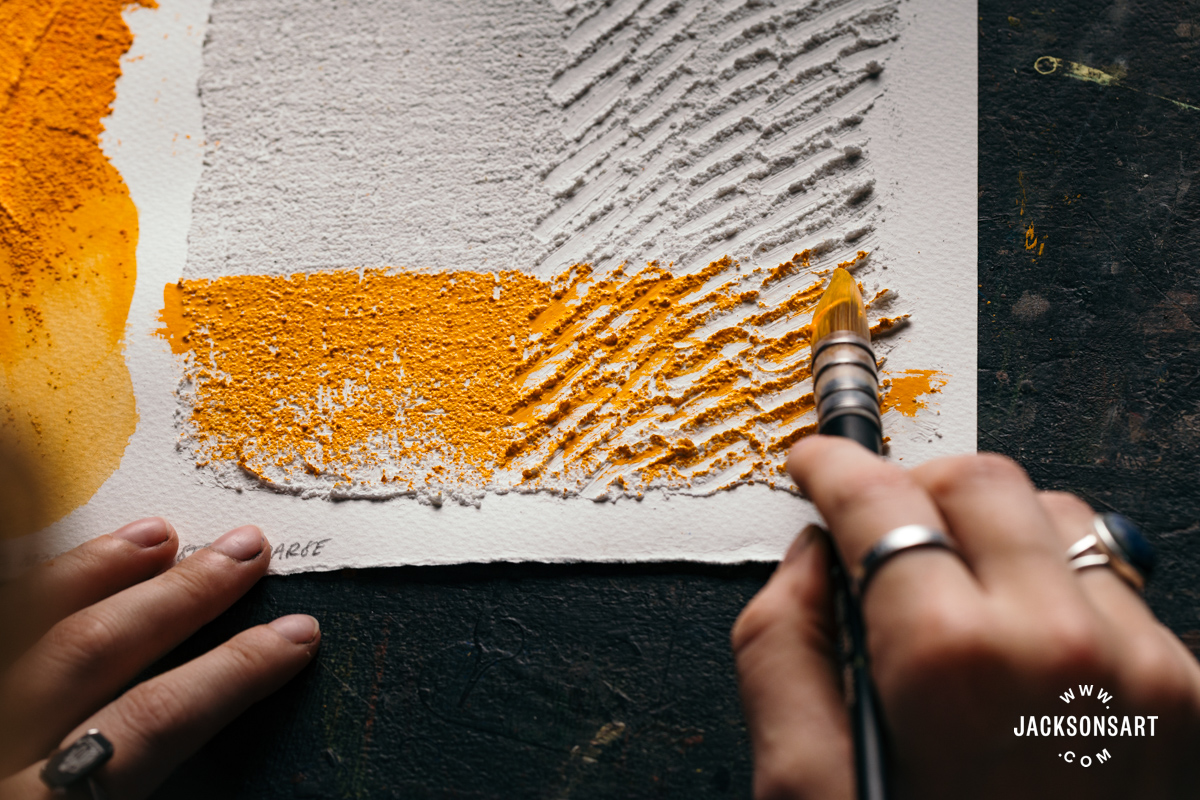
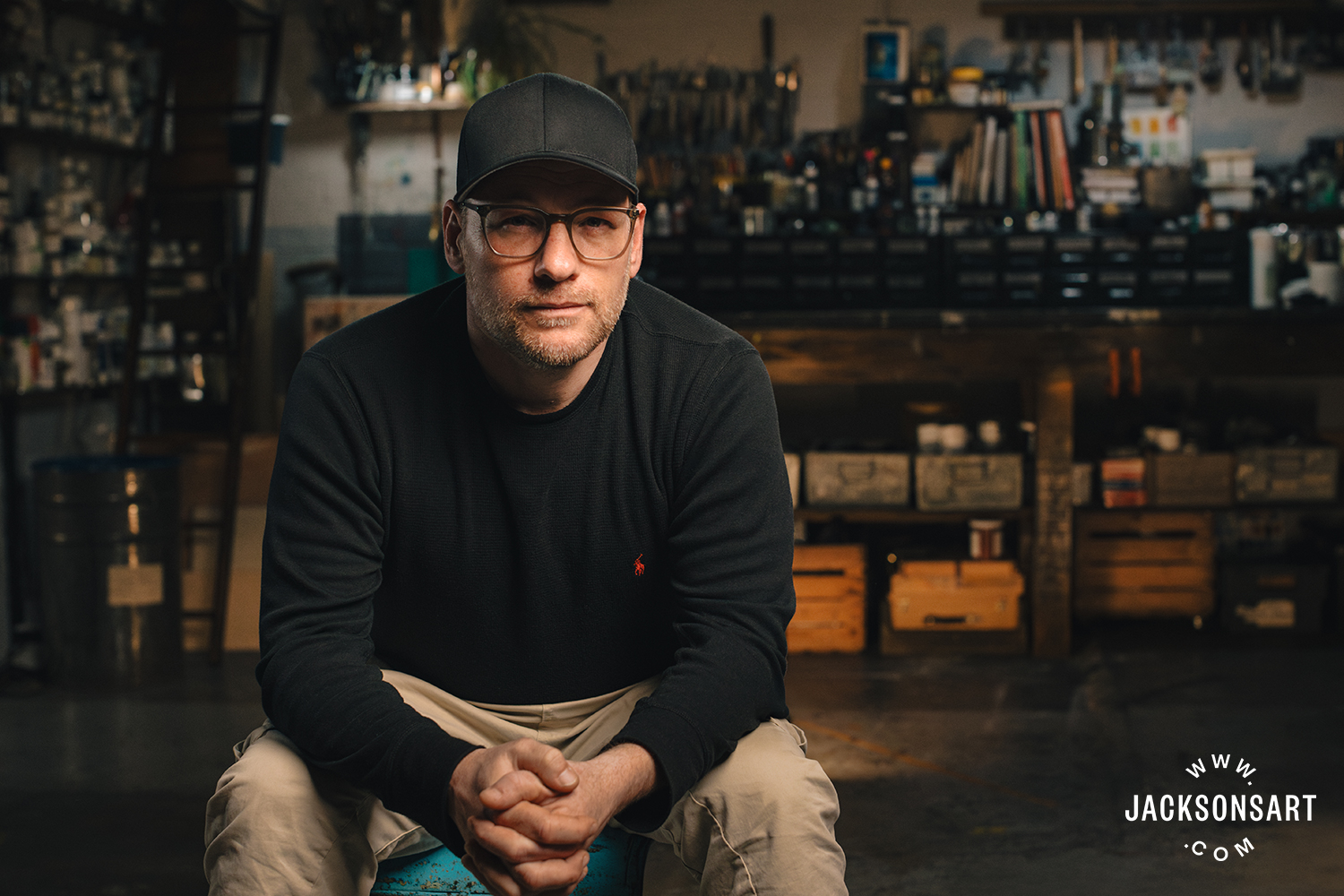
German artist, teacher and author Sabine Hilscher creates beautiful watercolour landscape and cityscape paintings. Here she shows us a technique for using a palette knife instead of a brush for watercolour painting. Palette knives (painting knives or spatulas) are most often used in oil and acrylic painting techniques, using them for watercolour is very unusual. She uses Schmincke Horadam watercolours in tubes for this painting demonstration.
Artist, teacher, author Sabine HilscherMaterials that Sabine Hilscher uses in this demonstration
Materials
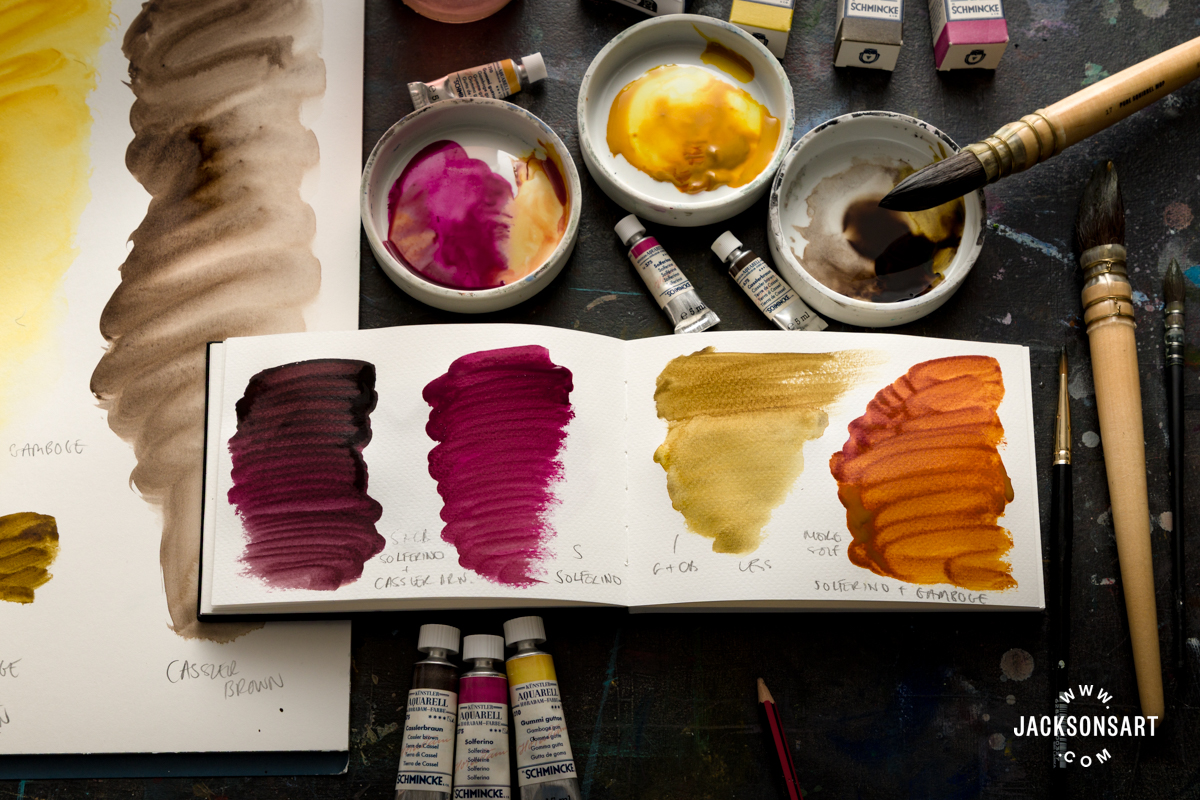
Materials that Sabine Hilscher uses in this demonstration:
To achieve a clean and fresh watercolour painting in spite of all the uncontrolled colour flow, Sabine Hilscher uses a reduced colour palette. This reduces the chances of creating muddy colours. She chose to use the complementary colours of orange and blue shades which allows for good colour contrast without the painting becoming too colourful. Horadam watercolours in 5ml and 15ml tubes in Translucent Orange, Magenta, Delft Blue, Prussian Green.
Watercolour Painting with a Palette Knife Demonstration
First she lightly draws a simplified sketch of a flower subject with a graphite pencil onto the watercolour paper.Then she carefully applies Magenta and Translucent orange watercolours directly from the tubes onto the paper, tracing the half circles of the blossoms, which form the colour base of the flowers. She notes that is is better to apply the colours sparingly and leave sufficient space blank.She lightly wets the watercolours carefully with the spray bottle, so that they begin to flow into each other in larger areas. They will spontaneously mix themselves and begin to bloom, which means they form irregular edges.To fill out the blossoms and to work out their forms she spreads the colours using a palette knife. To create areas of intense, vivid colour and areas of light colour it is important to vary the intensity of application, so some areas are applications of pure, strong colour and some are diluted colour flows.She then creates the greenery using cool colours, the blue and green watercolours, drawing loose stems and leaves directly from the tube. She notes that as always, less is more.As before she then lightly wets the watercolours carefully with the spray bottle, so that they begin to flow in different directions. She then uses a brush and palette knife to create the forms by creating a separation of the flowing colours and determining colour areas. The more she works on it the more the subject becomes clear and visible.To avoid the paint becoming too thick and to emphasise that it is a watercolour, she uses a big watercolour brush and applies a wash to the background. She uses a palette knife to give further effects. While doing this, she says you should pay attention to the colour flow as it helps to underline the character of the painting.With a small brush she applies details, fine lines and contours, which enliven the painting and add structure at the same time. Using Aero Color Professional Supra-White and a larger wet brush she adds splashes of white, with a smaller brush she adds some fine lines. Finally she thins some of the colours she has used and applies splashes with a big and wet brush to finish this fresh and abstract watercolour painting.The finished painting by Sabine Hilscher.
Click on the underlined link to go to the current offer on Schmincke Horadam Watercolours on the Jackson’s Art Supplies website.
Postage on orders shipped standard to mainland UK addresses is free for orders of £39.
Julie Caves is a long-standing contributor to Jackson’s Art Blog and previously served as its Editor for ten years. With an encyclopaedic knowledge of art materials, she writes in-depth articles, particularly about oil and acrylic painting, bringing an extensive research background to each piece. Julie studied journalism in California, fine art at the University of Texas at Austin, and completed both an MA at Camberwell College of Art and the Turps Studio Painting Programme in London. She exhibits her work regularly and continues to write part-time for the blog.
4 COMMENTS
LEAVE A COMMENT
4 thoughts on “Watercolour Painting with a Palette Knife”






4 thoughts on “Watercolour Painting with a Palette Knife”
Beautiful and creative. Love it.
It’s beautiful. ..I may try this method.
Fascinating and informative.
Love the technique, I will certainly try it, thank you
Comments are closed.