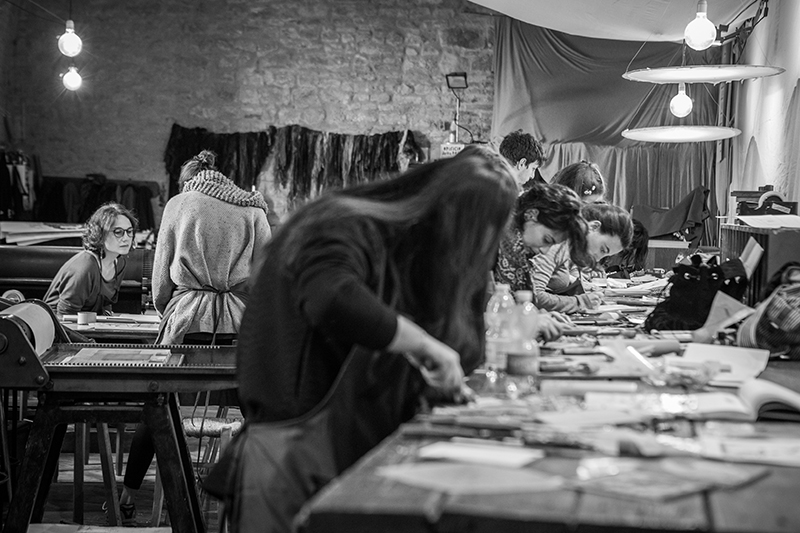
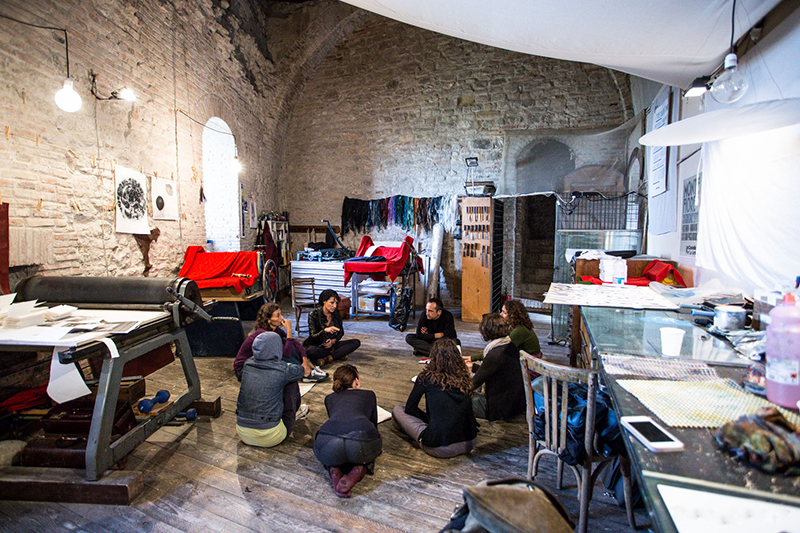
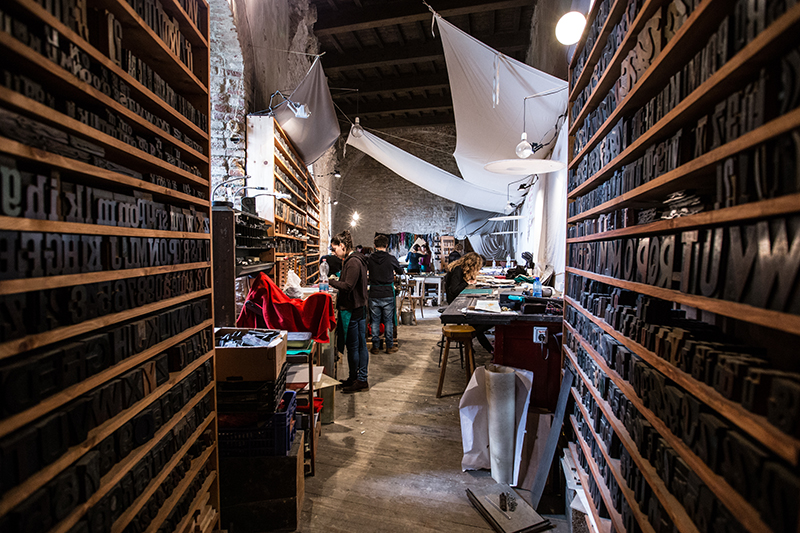
Located in the beautiful Medieval Castle of Montefiore Conca, Opificio della Rosa is Italy’s first studio and centre dedicated to environmentally safer printmaking. Founded by Italian artist and lecturer Umberto Giovannini in 2009, Opificio della Rosa is specialised in printmaking processes such as Linocut, Woodcut and Letterpress. Here we speak with Umberto about setting up the studio, his love of woodcut, and the importance of minimising our environmental impact as artists.

Sophie: When did your interest in the environmental ethics of printmaking begin?
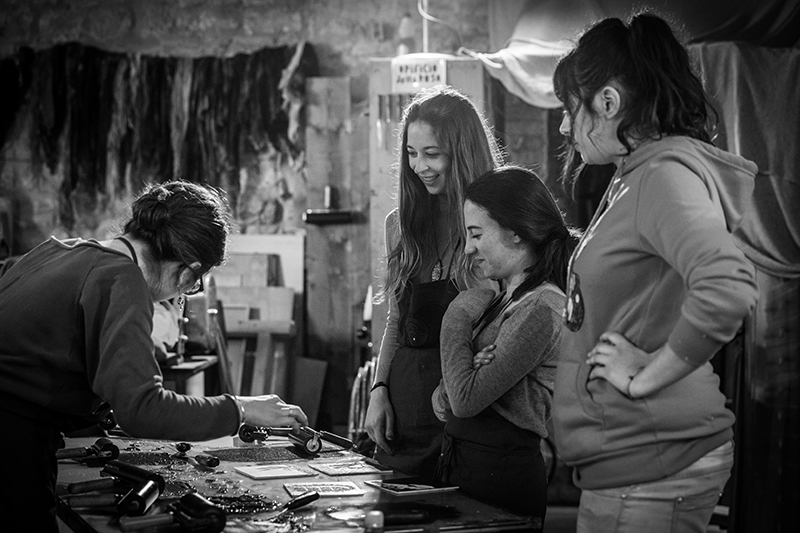
Umberto: I was born in Italy in an area between the sea and the mountains where the feeling of nature is very strong. In 2009, I returned there with a group of artists and we set up our new studio and printmaking centre, ‘Opificio della Rosa’. The studio is in a medieval village of 200 people surrounded by woods – we needed to feel part of the nature. We made a studio based on the full respect of the environment and of the artists.

Sophie: As an artist, I’m interested to hear your view on how the green printmaking movement has changed since you began working? Would you still consider it to be niche?
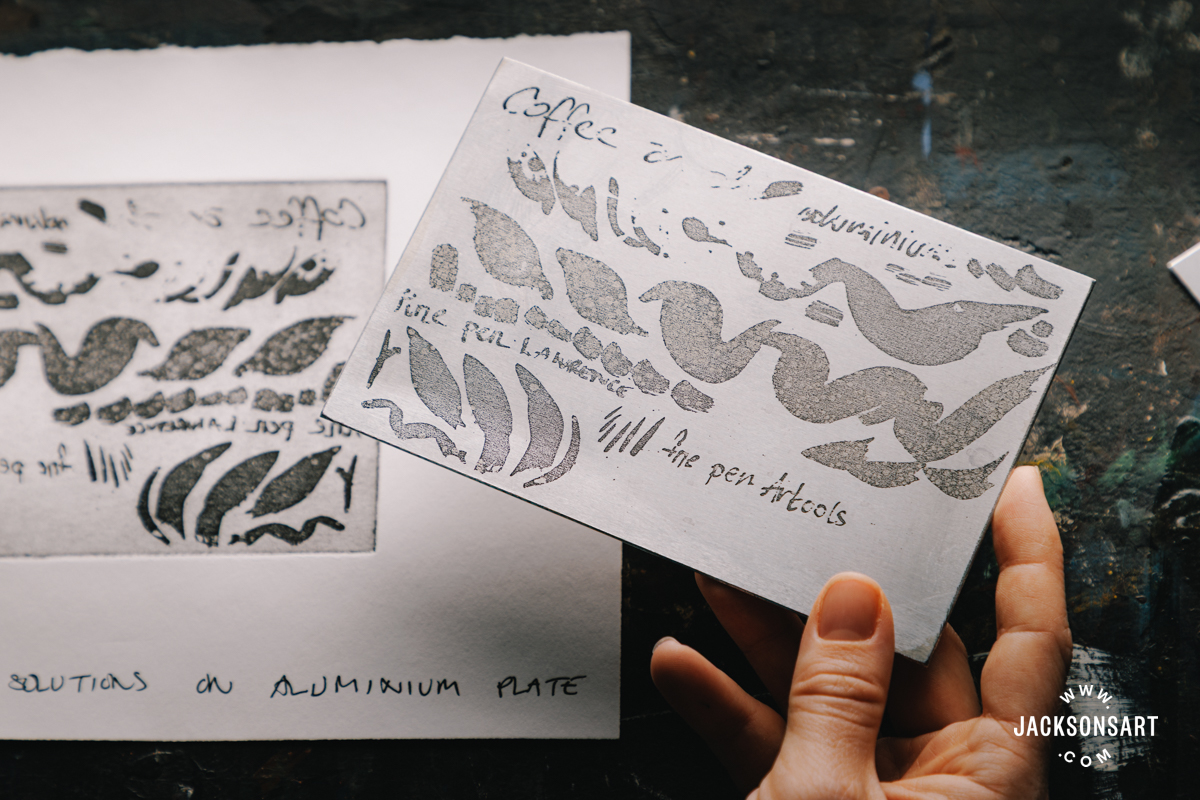
Umberto: Every change from traditional culture needs to be strong and revolutionary in some sort of way. I’m happy to see studios converting to greener processes and materials, step by step. But I’m not convinced about the total conversion to green techniques: sometimes, especially with etching, the quality is not the same. In our studio, we use natural products instead of solvents and acids, there is a lot of experimentation to do. For example, we use the non-toxic etching process of blue etching, which uses copper sulphate instead of nitric acid.
In recent years, several studios around the world have been using this process in order to substitute the nitric acid, although it is not a complete substitution. A lot of people I know have adopted blue etching and they are very happy as there are no side problems in the studio and it is an environmentally friendly process. But to be used in the best way, the process has to be experimented with in the right way – it is tricky and you have to experiment a lot. In Opificio della Rosa, we are using this process for etching, as pioneered in Italy by Rome-based engraver Fabiola Mercandetti.
Sophie: Are you one of the only environmentally safer studios in Italy?
Umberto: We are the first studio in Italy to be dedicated to low environmental impact printmaking techniques. In recent years, more and more studios have been converting their processes in this direction.
Sophie: Can you talk about some of the key innovations in this field?
Umberto: The big change was to use copper sulphate instead of nitric acid and green cleaning up products. We are investigating good quality, environmentally friendly inks, such as water-based inks. The quality of water-washable Charbonnel inks compared to their oil-based one is not the same – the same goes for Caligo water-washable inks. They are easy and quick to clean in a classroom but they are not really suited for professional work.
Sophie: What are some of your favourite (environmentally sound) processes & materials to work with?
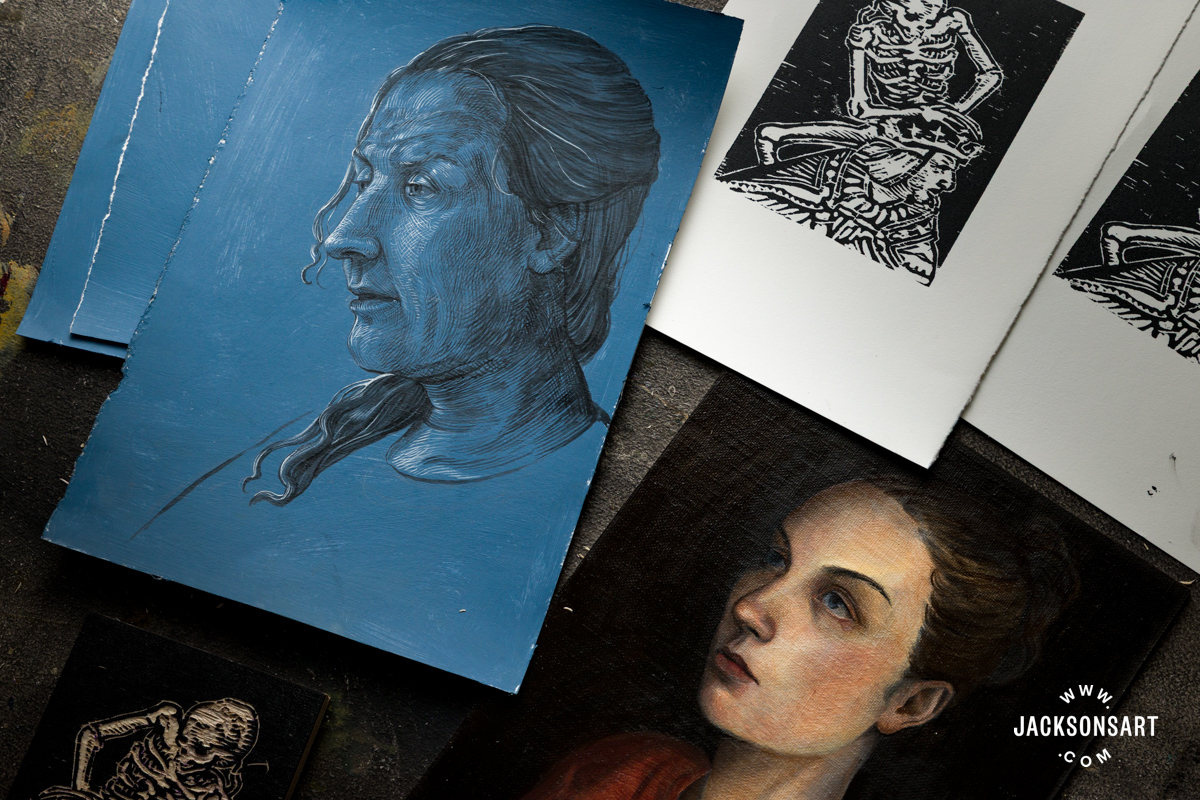
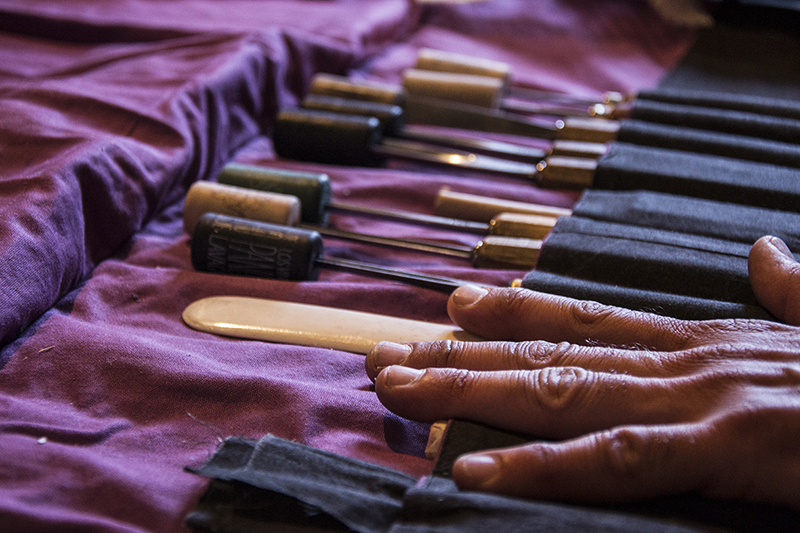
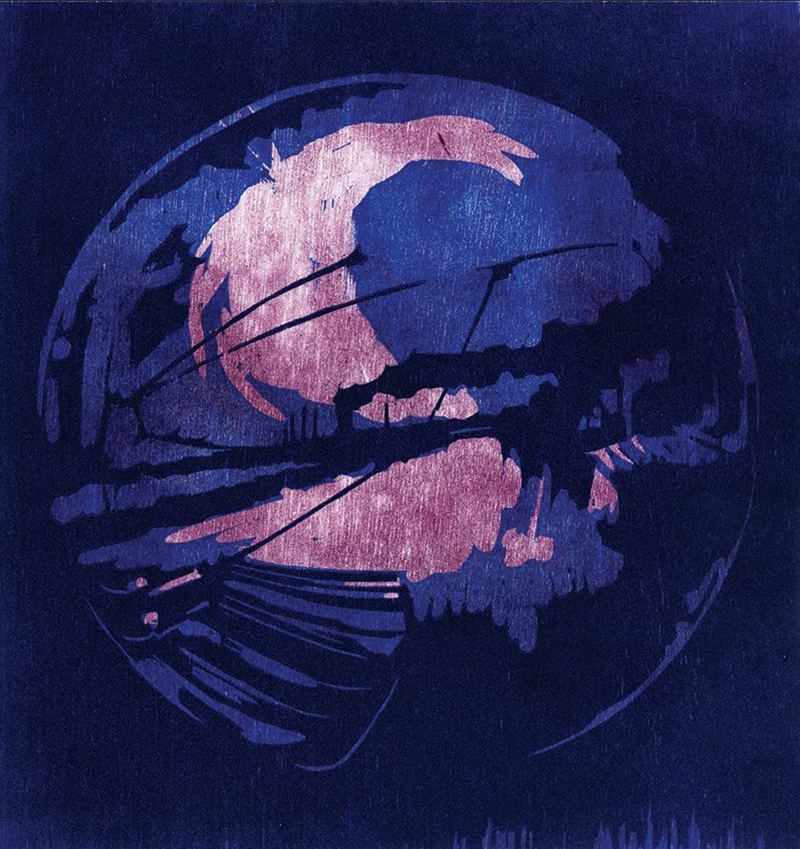
Umberto: I work mainly in woodcut. It is a direct process and it is very easy to go in the green direction with this printmaking process – all you need is a block of wood, some tools (which you will usually use for the rest of your life) and energy in your arms. Flakes of wood are the only waste. The environmental impact is very low.

All human activity has an environment impact. I think that an artist has to create – and creating something has an environment impact. That said, I think it is important to look for the less dangerous processes both for us and the environment.
Sophie: As an artist, what are some of the challenges you have personally faced in order to transition to environmentally sound practices?
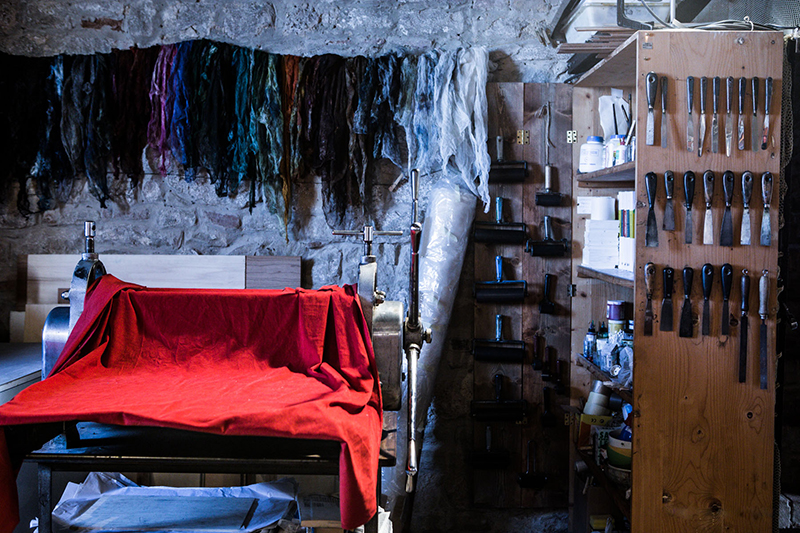
Umberto: For the past decade, we have been using essential oils and vegetable-based washes for our cleaning process – we are very pleased with the results. With 2 bottles of citronella oil (2 euros per litre), we clean rollers, spatulas and inking surfaces of the studio for one year.

Sophie: What are some of the main printmaking processes practiced at Opificio della Rosa?
Umberto: Opificio della Rosa is specialised in Woodcut, Linocut, Letterpress. Master Jurgen Czaschka is running a symposium on burin on copper. We are also using non-toxic processes like blue-etching and lithography on paper.
Sophie: What advice would you like to give to an artist or studio who is looking to explore safer & environmentally sound alternatives to traditional printmaking?
Umberto: Experiment with new processes and new materials. Spread and share the information throughout the printmaking community.
Sophie: Can you tell me about upcoming projects and plans for the studio?
Umberto: Opificio della Rosa has a lot of projects, in particular now with printmaking illustration and artist-books. We are designing special projects with universities such as Central Saint Martins in London, RUFA (Rome University of Fine Arts) and Academy of Fine Arts of Catania. You can find all the open courses on the website www.opioficiodellarosa.org We also have a program of artist residencies for special projects, which we design internationally with artists.
Opificio della Rosa’s website: www.opificiodellarosa.org
Umberto Giovannini’s website: www.umbertogiovannini.it